




1. Introduction
Marine pilotage is the act of employing a marine pilot, who is a skilled seafarer very knowledgeable about the local waterways, to direct ships through challenging or congested waters, such as harbours, rivers or canals (Uğurlu et al., Reference Uğurlu, Kaptan, Kum and Yildiz2017). Their extensive familiarity with the local waterways serves to avoid incidents, such as groundings or collisions, which have the potential to result in environmental catastrophes, loss of life or damage to vessel and port infrastructure (Aydin et al., Reference Aydin, Uğurlu and Boran2022; Kececi and Arslan, Reference Kececi and Arslan2017). The marine pilots possess specialised knowledge in the navigation of the particular local conditions, such as tides, currents and hazards (Carral et al., Reference Carral, Tarrío-Saavedra, Sáenz, Bogle, Alemán and Naya2021; Yildiz et al., Reference Yildiz, Uğurlu, Loughney, Wang and Tonoğlu2022). They are often required by law to embark aboard the ship in dangerous waters as directed by the local authorities and take on the control of its navigation during these challenging sections of its voyage. Although the ship’s captain maintains overall control of the vessel, the marine pilot assumes the duty for ensuring the ship’s safe passage strictly within their assigned waters (Tunçel et al., Reference Tunçel, Akyuz and Arslan2023).
The significance of pilotage waters in ensuring the safety of global sea transport lies in their position as vital hubs within the maritime supply chain, where the likelihood of navigational risks is greatly increased (Wu et al., Reference Wu, Jia and Wang2020). Due to the significant proportion of global commodities being transported by sea, safe transit through pilotage waters has a direct impact on the reliability and efficiency of international shipping networks (Kartoglu et al., Reference Kartoglu, Senol and Kum2022). Thus, pilotage is essential to sustaining the flow of international trade, protecting the marine environment and the economies that rely on the uninterrupted movement of maritime trade (Demirci et al., Reference Demirci, Canımoğlu and Elçiçek2022b).
Accidents during pilotage operations occur despite the substantial risk reduction provided by marine pilotage, which can be attributed to various complex factors (Camliyurt et al., Reference Camliyurt, Choi, Kim, Guzel and Park2022). One of the primary reasons is human error, which remains a persistent challenge in any maritime operation (Altinpinar and Başar, Reference Altinpinar and Başar2022; Xue et al., Reference Xue, Røds, Haugseggen, Christensen, Batalden and Gudmestad2025; Yildirim et al., Reference Yildirim, Ugurlu, Basar and Yuksekyildiz2017; Yıldırım et al., Reference Yıldırım, Uğurlu and Başar2015b). Although marine pilots possess exceptional expertise, navigational errors can arise due to various circumstances including fatigue, stress, failures in communication and improper judgments (Demirci et al., Reference Demirci, Canımoğlu and Elçiçek2022a). Our study investigates reasons for these errors that lead to grounding accidents along with interrelations between these contributory factors. Our research is expected to enhance safety in maritime transportation by revealing the cause of accidents and the interrelationships among these causes, thereby significantly reducing the occurrence of accidents.
2. Literature review
Although contemporary bridge equipment, new technologies and enhanced safety measures have been implemented, marine accidents continue to occur. Therefore, it is crucial to analyse the reasons for these incidents to prevent future occurrences (Yıldırım et al., Reference Yıldırım, Uğurlu and Başar2015a). An analysis of the main variables contributing to ship groundings is crucial for authorities to implement preventive measures against these mishaps, which are among the most common types of accidents experienced in the maritime domain. Fu et al. (Reference Fu, Yu, Chen, Xi and Zhang2022) analysed grounding accident causation factors in arctic shipping. The findings indicate that improper traffic situation, weak situational awareness and ineffective use of navigation technology are significant contributors to grounding accidents. He et al. (Reference He, Xiaoxue, Weiliang and Yang2022) conducted research to identify the complicated relationship and causality of numerous variables in the seafarers’ unsafe act that lead to ship grounding incidents. The findings indicate that organisational factors have a substantial impact on the causal mechanism of unsafe acts among seafarers. Furthermore, the only variables that directly affect unsafe acts are the preconditions for the unsafe acts. Hasanspahic et al. (Reference Hasanspahić, Vujičić, Frančić and Čampara2021) studied the vitality of the human error in maritime accidents. Their study identified preconditions for unsafe acts, organisational influences and unsafe acts as the prevailing factor types. The study also underlines that condition of operators, organisational climate, organisational process and routine violations are the most common factors observed at the second level causal factors, respectively. Sakar et al. (Reference Sakar, Toz, Buber and Koseoglu2021) conducted a study to assess risk factors of grounding accidents. Among the 34 parameters associated with navigation safety, the study revealed that groundings are strongly influenced by violation of the look-out rule in COLREG, inefficient use of ECDIS and inefficient use of radar. Furthermore, the results suggest that it is essential to maintain an effective navigation watch to avoid future accidents. Turna and Öztürk (Reference Turna and Öztürk2020) examined the causal elements of grounding incidents associated with the use of ECDIS. Research findings suggest that the procedures associated with ECDIS and the insufficient training have resulted in inaccurate configurations of the device, particularly in terms of alert settings. It is recommended that ECDIS devices, which provide significant information for navigation safety, can be enabled to operate with greater efficiency by implementing efficient training for operators. Yıldırım et al. (Reference Yıldırım, Başar and Uğurlu2019) conducted research to discover the factors causing collision and grounding accidents. Their findings revealed that the primary reasons include decision errors, resource management mishaps, violations, communication errors and skill-based errors. Uğurlu et al. (Reference Yıldırım, Uğurlu and Başar2015a) analysed grounding accidents in oil tankers, and mentioned that they led to economical loss with 91% and pollution with 9%. According to their research, the main contributing factors to grounding accidents are interpretation failure of the officer on watch and lack of effective communication in the bridge team management. Akyuz (Reference Akyuz2015) conducted research for obtaining grounding accident causal factors. According to this research, a poor and improper work environment, which can be defined as poor safety requirements, untidy and dirty work places, heavy workloads and extended shifts, is the primary cause of grounding accidents. Time limitation and adverse weather condition are found to be the second and third most critical contributing factors to grounding accidents, respectively.
The repercussions of piloted ship accidents can be so significant that in certain instances, they can profoundly impact commodities prices and constitute a determinant in defining global commerce. Following a significant incident aboard a piloted ship, researchers have shown an increased interest in pilotage accidents. Yet, research on maritime accidents that have occurred during pilotage is substantially limited. A study conducted by Öztürk et al. (Reference Öztürk, Kartal and Aydin2024) examined the influence of human errors on the interchange of information between master and marine pilots during pilotage operations in maritime accidents. The researchers’ findings indicate that the most important activities in the information exchange process are discussing the ships’ contingency plan and navigational information. Experience, knowledge and the degree of teamwork are described as the three most important contributors among the identified affecting the performance with the highest human error probability in the tasks indicated. Demirci et al. (Reference Demirci, Canımoğlu and Elçiçek2022a) conducted a study to obtain human error effects on ship accidents during pilotage. Their study revealed that experience of the master and the marine pilot, and crew training are key determinants in comparison to other human risk factors. Furthermore, the results of this study suggest that enhancing the cooperation and communication between the master and the marine pilot can be successful in avoiding accidents. Demirci et al. (Reference Demirci, Canımoğlu and Elçiçek2022b) attempted to find out causal factors of ship accidents and the relationship between these factors onboard ships under pilotage operations. In their study, the researchers underline that the most critical relationships are between the human factors. Factors in addition to human errors that contribute to ship accidents under pilotage include ship length, ships’ manoeuvrability, weather conditions and harbour design. Abreu et al. (Reference Abreu, Maturana, Droguett and Martins2022) studied the human reliability in marine pilotage operations. The research findings indicate that local waterway knowledge, training and experience, and commitment to safety culture are the primary determinants of performance. Furthermore, it is emphasised that the inclusion of an extra marine pilot on board decreases the likelihood of accidents by approximately 2.38 to 3.49 times, but the removal of a marine pilot raises the accident probability by approximately 5.15 to 8.92 times. Oraith et al. (Reference Oraith, Blanco-Davis, Yang and Matellini2021) conducted a study to evaluate the impact of human factors on safety of pilotage operations. Their research suggests that primary causes of pilotage accidents are non-technical errors in bridge team management and lack of technical skills. Language barrier, lack of efficient communication and master–marine pilot information exchange failure are identified as the primary causes of non-technical errors. This study identifies the main factor contributing to pilotage accidents as the inadequacy in ship-handling abilities caused by insufficient training and lack of experience. This factor is given the greatest importance among the lack of technical skills. The study conducted by Zhang et al. (Reference Zhang, Chen, Xi, Hu and Tang2020) aimed to identify the contributing elements that led to accidents in marine pilotage. Their findings indicated that unsafe acts and preconditions are the primary determinants in the causes of accidents. The main causes of unsafe acts are identified as negligence, routine errors, pilotage experience and violations of the rules, while preconditions are attributed to teamwork and individual safety consciousness. Erol et al. (Reference Erol, Demir, Çetişli and Eyüboǧlu2018) analysed ship accident causation factors for the Istanbul Strait passage. As concluded in their research, absence of pilotage service or having an inexperienced marine pilot greatly heightens the likelihood of accidents in the Strait. Ernstsen and Nazir (Reference Ernstsen and Nazir2018) investigated the human errors in pilotage accidents. Their conclusions indicate that human errors in pilotage operations are especially susceptible to communication and omission errors in actions. Chauvin et al. (Reference Chauvin, Lardjane, Morel, Clostermann and Langard2013) conducted research to discover human and organisational factors leading to maritime accidents. Although they did not specifically study maritime accidents during pilotage, their research provided evidence that the effective implementation of bridge resource management during navigation with a marine pilot plays a crucial role in avoiding maritime accidents in confined waters.
An examination of the current literature indicates a significant lack of research on the primary factors underlying grounding incidents during marine pilotage operations. While a number of studies have examined general patterns and factors associated with marine accidents, research specifically focusing on pilotage-related grounding incidents is limited. Furthermore, research investigating the interactions among these causative factors is absent. To the authors’ knowledge, no research has comprehensively examined these interrelationships within the marine pilotage context using a data-driven methodology. This work makes a unique contribution by integrating a qualitative assessment of causal factors with a quantitative evaluation of their interconnections, thus addressing an essential shortcoming in maritime safety analysis.
3. Methodology
The research methodology is structured over three primary stages to examine the correlations between human elements in grounding incidents occurring on ships navigating with a marine pilot. Step 1 focuses on extracting data to gather accident causes from accident investigation reports and expert opinions. During Step 2, accident causes are categorised into HFACS structure and layers, the construction of an accident causes dataset takes place. An analysis of accident causes in each layer is conducted using the Knowledge Discovery in Database (KDD) process in Step 3. Comprehensive elucidations of steps and implemented procedures, together with their corresponding sub-steps, are illustrated in the flowchart shown in Figure 1.
Flowchart of the study.

3.1. Phase 1: data extraction
The first step involves collecting investigation reports of grounding accidents involving marine pilots. An overall number of 26 accident reports have been analysed. Then, an expert team is formed to determine the reasons for accidents by examining the gathered accident reports. Through analysis, 159 factors have been determined as causes of accidents. In this phase, the five experts employed a consensus-based coding procedure, jointly reviewing each report and agreeing on the categorisation of causal factors. The obtained dataset represents a single collective coding rather than multiple independent rating sets. The consensus approach is widely recognised in HFACS-based studies as a valid method for ensuring conceptual consistency and strengthening the interpretive reliability of the final classifications.
3.2. Phase 2: human factor analysis and classification system
A significant percentage of accidents in various industries are caused by human factors. In light of this, it is imperative to comprehend the factors that contribute to human error to ensure the safety of these industries, including the maritime domain. Using Reason’s Swiss Cheese Model, HFACS was invented by Wiegmann and Shappel to analyse and categorise human factors in aviation incidents (Shappell and Wiegmann, Reference Shappell and Wiegmann2000). HFACS is a thorough analytical approach specifically developed to address the fundamental factors contributing to human error. The HFACS approach is a well-established technique used to detect human errors and allows for the analysis of incidents within a hierarchical framework (Kaptan et al., Reference Kaptan, Sarıalioğlu, Uğurlu and Wang2021). Through this approach, it becomes feasible to methodically analyse the impact of human elements on accidents and to pinpoint underlying causes.
The original HFACS framework analyses accident causes on four layers. Layer 1 examines the organisational influences, such as deficiencies in organisational structure, effective allocation of resources and organisational culture. Layer 2 focuses on deficiencies in supervision. This layer covers the items such as insufficient supervision, inadequate operational planning, inability to rectify identified problems and supervisionary violations. The third layer analyses the factors that may lead to operators committing errors. This layer takes into account variables such as the physical and mental state of the operators, the environmental parameters, and the suitability of personnel for duty. Layer 4 concerns the unsafe acts, which are mainly considered as violations of the rules and unintentional errors (Shappell and Wiegmann, Reference Shappell and Wiegmann2000). Within HFACS-MA, sub-factors of the pre-conditions and unsafe acts layers have been modified, while organisational influences and unsafe supervision layers remain the same. In addition, HFACS-MA incorporates a novel main layer of external factors that highlight concerns related to legislative, design and administrative problems (Chen et al., Reference Chen, Wall, Davies, Yang, Wang and Chou2013). HFACS-MA is specifically designed for the analysis of marine accidents and its prevalent application in the literature demonstrates its recognition by researchers.
In the literature, investigations using HFACS-MA frequently categorise the errors within the established hierarchical framework of the conventional HFACS-MA model. This study uses the HFACS framework as a basis, enhancing root cause analysis by integrating expert judgment in identifying causal elements to a fourth level. For example, within the traditional HFACS-MA framework, errors classified under Unsafe Acts (Level 1), Violations (Level 2) and Routine Violations (Level 3) are examined at three hierarchical levels. The suggested approach further separates routine violations by defining the particular rules and procedures violated as determined by expert assessments. This methodological innovation provides a more detailed description of accident causation, and is expected to improve the sensitivity and accuracy of accident analysis results. The conventional HFACS-MA structure is illustrated in Figure 2.
HFACS-MA structure (Chen et al., Reference Chen, Wall, Davies, Yang, Wang and Chou2013).

3.3. Step 3: Knowledge Discovery in Databases
Knowledge Discovery in Databases (KDD) encompasses the systematic process of identifying and extracting valuable insights or patterns from large datasets. The aim of KDD is to transform raw data into meaningful and actionable information that can inform decision-making, enhance predictive capabilities, and support a wide range of applications across various fields (Cios et al., Reference Cios, Pedrycz, Swiniarski and Kurgan2007). By employing sophisticated analytical techniques, KDD enables organisations to uncover hidden relationships and trends within their data, facilitating more informed strategies and outcomes. In this step, the raw data established in Step 2 are used in the KDD process with the following sub-steps, respectively.
In data preprocessing, raw data are transformed into a transaction dataset to be eligible for analysing in the Apriori algorithm employed as data mining. The Apriori algorithm proposed by Agrawal and Srikant (Reference Agrawal and Srikant1994) is widely used technique in association rule. Association rule learning is based on conditional probability and involves a distinct collection of items known as itemsets. For the association rule X ⇒ Y, itemsets are categorised into two groups: the antecedent (or left-hand side, LHS), represented by X, and the consequent (or right-hand side, RHS), represented by Y. To create a meaningful rule for contributing factors and root causes, three key parameters must be taken into account: Support, Confidence and Lift (Osman et al., Reference Osman, Yuli, Li and Senin2021).
The initial step of the Apriori algorithm involves counting the occurrences of each individual item, referred to as support. Support reflects how often the itemsets appear in the dataset, as shown in Eq. 1 and the support value for the rule is calculated as shown in Equation 2. ${\boldsymbol{Support}}\;\left(\boldsymbol X \right) = \displaystyle{{{\boldsymbol{Number}}\;{\boldsymbol{of}}\;{\boldsymbol{transaction}}\;\boldsymbol X} \over {{\boldsymbol{Total}}\;{\boldsymbol{number}}\;{\boldsymbol{of}}\;{\boldsymbol{transactions}}}}$ ${\boldsymbol{Support}}\;\left( {\boldsymbol X \Rightarrow Y} \right) = {{{\boldsymbol{Number}}\;{\boldsymbol{of}}\;{\boldsymbol{transaction}}\;{\boldsymbol{with}}\;{\boldsymbol{both}}\;\boldsymbol X\;{\boldsymbol{and}}\;\boldsymbol Y} \over {{\boldsymbol{Total}}\;{\boldsymbol{number}}\;{\boldsymbol{of}}\;{\boldsymbol{transactions}}}}$
Confidence represents the value of conditional probability that reflects how often the rule is true. In summary, confidence can be calculated using ${\boldsymbol{Confidence}}\;\left( {\boldsymbol X \Rightarrow Y} \right) = {{{\boldsymbol{Number}}\;{\boldsymbol{of}}\;{\boldsymbol{transaction}}\;{\boldsymbol{with}}\;{\boldsymbol{both}}\;\boldsymbol X\;{\boldsymbol{and}}\;Y} \over {{\boldsymbol{Total}}\;{\boldsymbol{number}}\;{\boldsymbol{of}}\;{\boldsymbol{transactions}}\;{\boldsymbol{with}}\;\boldsymbol X}}$
Support and confidence values indicate the usefulness and reliability of association rules, respectively. With the aim of generating all potential rules, support and confidence values are defined as 0.01, initially. Next, during the pattern evaluation, all generated rules are visualised within the support–confidence framework to assess their distribution and identify threshold values. Thus, strong association rules were obtained.
Result exploitation in data mining encompasses the process of deriving meaningful and actionable insights from the results of data mining techniques and analyses. Following the discovery of patterns, associations or knowledge, the next phase involves using these findings to generate value or make informed decisions. Therefore, the lift value was used to evaluate the obtained strong rules. Lift is a valuable metric in association rule mining for predicting the consequent in future datasets. A higher lift value indicates a stronger dependency between itemsets. In the rule {X ⇒ Y}, lift reflects the correlation between X and Y. It is calculated using Eqs. 4 and 5. If the lift value equals 1, X and Y are independent. A lift value below 1 indicates a negative correlation between X and Y, while a lift value above 1 suggests a positive correlation. Higher lift values signify stronger associations, making these rules more intriguing and potentially useful for decision-making. ${\boldsymbol{Expected}}\;{\boldsymbol{Confidence}}\;\left( {\boldsymbol X \Rightarrow Y} \right) = \displaystyle{{{\boldsymbol{Number}}\;{\boldsymbol{of}}\;{\boldsymbol{transaction}}\;{\boldsymbol{with}}\;Y} \over {{\boldsymbol{Total}}\;{\boldsymbol{number}}\;{\boldsymbol{of}}\;{\boldsymbol{transactions}}}}$ ${\boldsymbol{Lift}}\;\left( {\boldsymbol X \Rightarrow Y} \right) = \displaystyle{{{\boldsymbol{Confidence}}} \over {{\boldsymbol{Expected}}\;{\boldsymbol{Confidence}}}}$
In the KDD process, knowledge refers to meaningful and actionable information extracted from data through a systematic and iterative methodology that includes selection, preprocessing, transformation and evaluation. The objective was to transform raw data into valuable insights to support decision-making and foster positive outcomes across various domains. During this stage, the relationships among the causes of accidents were analysed using the strongest association rules identified. KDD analysis was conducted specifically for the root causes defined within the HFACS framework.
4. Results and discussion
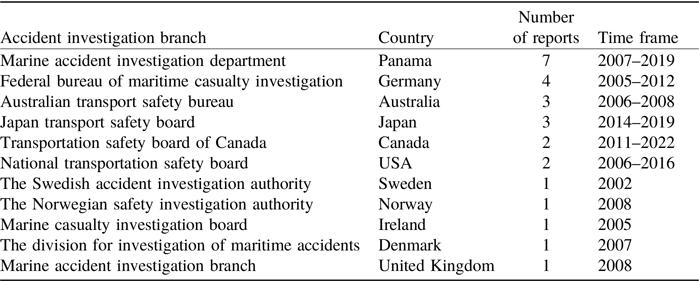
To examine the relationships among the root causes of grounding accidents, 159 contributory factors identified in 26 maritime accident reports were categorised using the HFACS-MA framework. The analysed reports consist of investigations of grounding incidents in which marine pilots were actively involved as members of the bridge team. Each factor was then aligned with the relevant items defined across the layers and levels of the framework based on expert judgment. Table 1 shows the maritime accident report details used in our study.
Details of the maritime accident reports

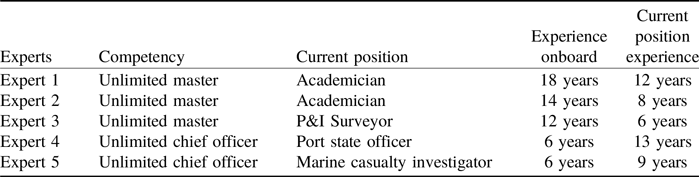
The categorisation of data from accident reports according to the HFACS-MA framework was conducted through a series of online meetings organised by a team of five experts. Table 2 presents the details of the experts who contributed to our study.
Details of the experts

The dataset is constructed in this manner. The dataset includes the following feature columns of the ship IMO number, ship age, ship type, ship length, navigation area and contributory factors extracted from the accident investigation reports. Table 3 illustrates the details that were influential in our investigation, in addition to the HFACS-MA structure.
Details of the factors other than the HFACS-MA structure

The length of the ships is strongly connected with size criteria such as tonnage and breadth; therefore, these specifications were excluded from the dataset as determined by the experts. Factors contributing to the incident were classified into four levels built on the HFACS-MA framework inside the dataset as mentioned in Table 4.
HFACS-MA structure of the study

The frequency of the ‘Preconditions for Unsafe Acts’ layer is 74, representing 46.54% of the errors. Our findings demonstrate that this layer substantially affects accident causation. Significantly, ‘Liveware’, a sub-factor of ‘Preconditions for Unsafe Acts’, exhibits the highest frequency at Level 2 with 53 errors. In Level 2, ‘Environment’ and ‘Violations’ are the second and third most common sources of errors following ‘Liveware’, with 21 and 20 errors, respectively. There are 37 occurrences of ‘Bridge Resource Management’ issues, which are more prevalent in Level 3 than other factors. Contributing factors of ‘Routine Violations’, ‘Physical Environment’ and ‘Adverse Mental States’ are also notable with their high frequency in Level 3.
Table 4 illustrates that the first level comprises the most general factors, while level four pertains to the incidents’ underlying causes. In Table 4, the subsequent level is a sub-factor of the preceding one. The HFACS-MA structure is employed to classify the contributory factors extracted from the accident investigation reports to construct the root causes that are exhibited at Level 4. Subsequently, ARM is implemented to identify the associations between the underlying causes. The ‘Ship’s Length’, ‘Ship’s Age’, ‘Ship Type’, ‘Navigation Area’ and the unique ‘Ship IMO number’ were incorporated into a Microsoft Excel sheet that contained the criteria in Level 4. Transaction identification is accomplished through the use of the Ship IMO number. The class of ship length, age, type and navigation area of the ship were only used as input features to ascertain whether they had any relation with contributing factors, as former studies (Bye and Aalberg, Reference Bye and Aalberg2018; Eleftheria et al., Reference Eleftheria, Apostolos and Markos2016; Fan et al., Reference Fan, Yang, Wang and Marsland2022; Uğurlu et al., Reference Uğurlu, Yıldız, Boran, Uğurlu and Wang2020; Uğurlu et al., Reference Uğurlu, Yildirim and Yüksekyildiz2013; Uğurlu et al., Reference Uğurlu, Yildirim, Yuksekyildiz, Nisanci and Kose2015b) explored the relation between the features and contributory factors. ARM technology was employed with the ‘arules’ package in the R programming language. Figure 3 presents all identified root causes along with their corresponding support and confidence values.
Achieved 10,909 association rules for root causes.

With the initial support (0.01) and confidence (0.01) value, 10,909 association rules were obtained. The obtained rules are presented in Figure 3, within the support and confidence framework. This figure presents a scatter plot visualising the distribution of all association rules based on their support (y-axis) and confidence (x-axis) values. Each point represents an extracted rule, where higher position on the vertical axis indicates more frequent occurrence of the rule in the dataset (higher support), and further right on the horizontal axis indicates greater reliability of the rule (higher confidence). The colour intensity reflects the relative magnitude of each rule’s lift value, with darker tones representing stronger positive associations. This visualisation enables a comparative assessment of rule strength and highlights rules that combine high support with high confidence, which are generally more robust and meaningful within the dataset. Based on the scatter plot in Figure 3, with the aim of achieving strong rules, the support and confidence threshold values were assigned to 0.15 and 0.60 by expert judgements, respectively. Then, it is achieved that 9 association rules have a lift value over 1. The association pattern of the achieved rules is presented in Figure 4. As seen in Figure 4, three features and five contributory factors are associated with each other. In Figure 4, each rectangular node represents an item (i.e. a causal factor) appearing on the LHS or RHS of the discovered rules. Circular nodes represent the rules themselves. The colour intensity of the rule nodes indicates the magnitude of the lift value, with darker tones reflecting stronger association strengths. Directed arrows illustrate the direction of the rule from LHS items towards the RHS item. This visual structure enables an integrated interpretation of how individual factors interact within the rule set and highlights high-lift relationships that contribute most strongly to the network.
Network for the achieved strong rules.

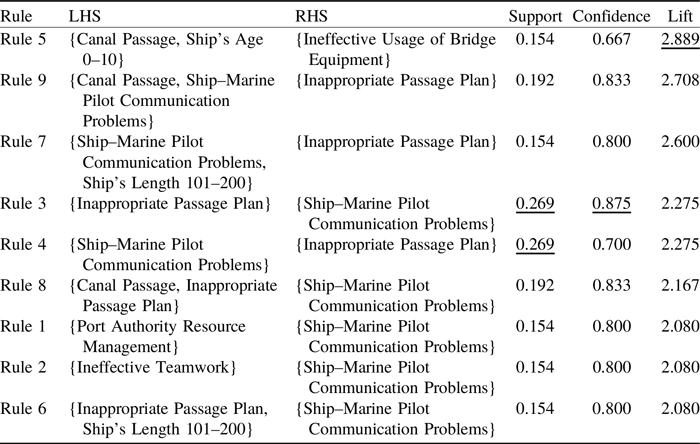
Table 5 lists the strong association rules together with their support, confidence and lift values. Support provides the proportion of records in which the entire rule (LHS → RHS) appears. Confidence indicates the conditional probability of observing the RHS when the LHS conditions are present. Lift values indicate the co-occurrence of LHS and RHS is more frequent than expected by chance. These metrics collectively allow for a quantitative assessment of the relative strength and reliability of each rule. The table outlines the root cause relations with the LHS and RHS. The highest values are underlined in Table 5.
Association rules for grounding accident root causes

The ARM results – characterised by support values between 0.154 and 0.269, confidence values between 0.667 and 0.875, and lift values consistently above 2 – indicate that the identified rules capture strong, recurrent and meaningful associations. This combination of frequent co-occurrence (support), strong conditional reliability (confidence) and significant deviation from independence (lift) confirms the robustness and interpretive value of the extracted patterns.
Rule 5 has the highest lift value, with relative low support (0.15) and confidence (0.67) values. The rule implies that if a new ship navigates in a canal with a marine pilot, errors occurring from ineffective usage of bridge equipment can result in the ship’s grounding. The occurrence rate of all three factors mentioned in Rule 5 is 0.15 in all datasets. Despite this relatively low support, the high lift value (2.889) indicates that the co-occurrence of the conditions in Rule 5 produces a nearly threefold increase in the likelihood of the consequent compared with its baseline probability. This statistical amplification confirms that the relationship captured by Rule 5 is highly meaningful even if not very frequent. This rule sheds light on the importance of maintaining effective usage of bridge equipment especially on new ships passing through a canal with a marine pilot onboard. Considering minimal error tolerance in narrow waterways like canals, effective usage of bridge equipment will play a crucial role to prevent dangerous situations. Consistent with our findings, Papanikolau and Eliopoulou (Reference Papanikolau and Eliopoulou2008) discovered in their study that new vessels are more often implicated in grounding incidents. Moreover, they stated that larger accident rates among young vessels are associated with inadequate crew training, communication issues and the crew’s proficiency in operating new technological equipment. In the review of grounding investigation reports, effective usage of echo-sounding equipment has been highlighted among the other bridge equipment. The primary function of echo sounding equipment is to offer accurate information about the water depth beneath a vessel, which assists navigation, especially in shallow waters. Luo et al. (Reference Luo, Shin and Chang2017) argued in their research that ship age and ship accidents may be negatively correlated as the older ships are often high quality and maintained properly. This finding suggests that new ships possess certain disadvantages regarding accidents as compared with older vessels, aligning with our findings in this regard. The echosounder must always be used during landfalls and remain activated in coastal and pilotage waters. If the echosounder is equipped with a shallow water alarm, the alarm must be calibrated to a suitable safe depth to alert of impending shallow water (ICS, 2016).
Except the Rule 5, the other strong rules have a mutual factor in the RHS or LHS group of the rules, which is ‘Ship–Marine Pilot Communication Problems’. Moreover, the factor of ‘Inappropriate Passage Planning’ is found in the other strong rules, except Rules 1, 2 and 5. Additionally, Rule 3 and Rule 4 are in direct opposition to each other, and both have the highest support value (0.269). In other words, nearly one-third of grounded ships have exhibited both of these factors simultaneously.
According to Rule 3, ‘Inappropriate Passage Planning’ would highly increase the possibility of having ‘Ship–Marine Pilot Communication Problems’, with the highest confidence value (0.875). This high confidence demonstrates that nearly 9 out of 10 cases involving an inadequate passage plan also exhibit communication issues, while the lift value (2.275) indicates that this co-occurrence is more than twice as likely as random expectation. Rule 4 shows the reverse relationship with a confidence of 0.700 and the same lift value (2.275). The statistical symmetry between Rules 3 and 4 highlights a bidirectional and mutually reinforcing association.
Rule 6 indicates that when an inadequate passage plan is identified in medium-sized vessels, the likelihood of encountering communication issues between the ship and the marine pilot is significantly elevated. Rule 7 suggests that when communication problems occur in medium-sized ships, ‘Inappropriate Passage Planning’ arises with a probability of 0.80. The confidence values of 0.800 in both Rule 6 and Rule 7 underline the consistent dependency between these two factors. That is, if an unsuitable passage plan is identified in medium-sized vessels operating with a marine pilot, enhancing ship–marine pilot communication can mitigate the risk of grounding incidents. Rule 8 reinforces this interaction by asserting that an inadequate passage plan in canal navigation exacerbates ship–pilot communication issues (confidence 0.833; lift 2.167). Rule 9 indicates that when communication problems occur during canal passages, inadequate passage planning is identified among the contributing factors with 0.833 confidence. The lift value (2.708) in Rule 9 represents one of the strongest associative effects in the dataset.
Fan et al. (Reference Fan, Yang, Wang and Marsland2022) stated that passage planning has the strongest influence on grounding accidents in restricted waters. They also indicated that well-prepared passage plans significantly reduce grounding probability. Our results align with theirs, as Rules 9, 7, 6 and 3 pertain to inadequate passage planning in the LHS or RHS of the rules. Fan et al. (Reference Fan, Yang, Wang and Marsland2022) also emphasise that although ship length has little direct influence on accidents, its interaction with other factors increases its significance, aligning with Rule 7.
Mazaheri et al. (Reference Mazaheri, Montewka, Nisula and Kujala2015) suggest that inadequate communication and coordination significantly influence grounding incidents with a dominance rate of 10.3%. Our findings indicate that ‘Ship–Marine Pilot Communication Problems’ and ‘Inappropriate Passage Planning’ are two critical and closely related factors. Examination of accident reports revealed inadequate information exchange between captain and pilot, and language differences as primary communication issues. For inappropriate passage planning, key issues included the pilot navigating independently from the ship’s plan, lack of readiness for deviations from planned route, absence of a pilot-driven passage plan and missing chart details, such as wheel over point, current details and contingency plans.
Rule 1 indicates that for grounding accidents, if ‘Port Authority Resource Management’ failures occur, ‘Ship–Marine Pilot Communication Problems’ would be found with a probability of 0.80 as the cause of accident. The confidence (0.800) and lift (2.080) values indicate a strong but less frequently occurring association (support 0.154), suggesting that while this condition is not widespread, it is statistically significant when present. Port authority resource management failures encompass the ineffective organisation and management of navigational aids, personnel, and tugs, which are expected to be properly arranged by port authorities. Additionally, port resources, which are well known to the marine pilot, should be effectively communicated to the ship’s master to ensure safe and efficient navigation. Failure to manage these aspects appropriately can contribute to navigational challenges and increase the risk of accidents. Sánchez-Beaskoetxea et al. (Reference Sánchez-Beaskoetxea, Basterretxea-Iribar, Sotés and Machado2021) asserts that the conclusions of numerous past research fail to extend beyond identifying the individuals implicated in the cause of the accidents. They stated that doubt exists regarding whether the cause of human errors lies with the ship’s crew or of other parties, and the literature provides limited discussion on this matter. Their findings indicate that 39.2% of human errors on merchant vessels are attributable to individuals outside the ship’s crew, including port authority staff. Human errors attributable solely to ship personnel constitute 22.6%, whereas instances involving both ship and other personnel committing concurrent errors represent 20.6%. The findings of this study indicate that port personnel are capable of errors that may lead to accidents and that resources managed by the port authority can be insufficiently managed by the relevant staff. Rule 1 suggests that the management of port authority resources will exacerbate the communication deficit between ship crew and marine pilots, aligning with the findings of this study. Heilig and Voss (Reference Heilig and Voß2017) have stated that port authorities should take measures to facilitate ship navigation, increase visibility, efficiency and safety due to the effects of increasing ship traffic and ship sizes in ports, which make manoeuvring and navigation difficult. The significance of the resources managed by the port authority in facilitating navigation and manoeuvring for a ship crew is more clearly recognised in contemporary practice, particularly in light of the additional steps suggested by Heilig and Voss. The marine pilot must proficiently convey specialist local knowledge, information and guidance to the bridge team in English or a designated working language that is comprehensible to the master, marine pilot and bridge team (ICS, 2016).
Rule 2 stipulates that the occurence of ‘Inadequate Teamwork’ in a grounding accident indicates the existence of ‘Ship–Marine Pilot Communication Problems’ with a probability of 0.80. The statistical parameters (support 0.154; confidence 0.800; lift 2.080) indicate that although the pattern is less frequent, the dependency is strong and non-random. Effective teamwork necessitates robust communication among involved parties; therefore, if teamwork fails, it will hinder the establishment of effective communication. Hasanspahic et al. (Reference Hasanspahić, Vujičić, Frančić and Čampara2021) emphasise the significance of onboard leadership in fostering good communication between the ship’s crew and external parties, including marine pilots, VTS officers and local authorities. In other words, they asserts that if the captain encourages the bridge team for conducting effective teamwork, it will enhance communication efficiency. This finding is in line with Rule 2 in our research. Furthermore, Sanyal and Hisam (Reference Sanyal and Hisam2018) conducted research to discover the impact of teamwork on work performance and they found that positive communication is one of the most effective factors influencing teamwork efficiency.
5. Conclusions
HFACS is an effective accident cause classification method widely used in maritime accident analysis. Our study examined 26 grounding accident reports containing 159 factors in total and these factors were classiefied using HFACS-MA categories. As a result of the classification, the root causes of the accidents were determined and the relationships between these root causes were analysed using the ARM method. As a result of the analysis, nine remarkable association rules were found. The most striking of these rules is the rule stating that new ships conducting canal passage may have problems in using bridge equipment effectively. Another striking result is that 8 out of the 9 rules identified had ship–marine pilot communication problems, either on the LHS or RHS of the association rules. Our study reveals that ship–marine pilot communication problems are most critical factors in grounding accidents of piloted ships. Another noteworthy factor is inappropriate passage planning, which is present in 6 of the 9 rules, either on the LHS or RHS side. This data indicate that an inelaborate passage plan could significantly increase the possibility of a grounding accident in piloted ships.
This analysis suggests prioritising thorough training among marine professionals involved in the bridge team to ensure effective usage of bridge equipment. Improving communication procedures and cultivating a culture of collaboration and common responsibility among marine professionals involved in the bridge team is crucial to decrease ship–marine pilot communication problems. Along with these measures, using an electronic document to conduct master–pilot information exchange will increase productivity and help avoid communication breakdowns between the ship crew and the marine pilot. More rigorous attention to voyage plan details could be encouraged during port state controls to ensure that they are prepared before the voyage and followed during navigation accurately. Additionally, exchanging passage plans between the ship and marine pilot with the purpose of conducting the checks and understanding each others intentions before the pilotage would have a corrective effect for passage plan errors.
It is quite impossible to collect all the information when there is a human component. During accident investigations, some aspects may be difficult to evaluate accurately, such as stress, working-resting hours, fatigue and hidden mistakes. As a future study, researchers could concentrate more on how these factors influence accident causes. Also, the dataset comprising 26 accident reports may be considered a relatively small sample size. Future study could improve the robustness and generalisability of the findings by using larger and more thorough datasets.
Acknowledgement
This study is derived from the doctoral thesis entitled ‘Analysis of Maritime Accidents Under Pilotage’ by Refik Canımoğlu at Karadeniz Technical University the Graduate School of Natural and Applied Sciences.
Competing interests
The authors declare none.






 Open access

