


Introduction
The mechanical properties of naturally occurring ice are complex and varied. In large measure the complexity stems from the usual proximity of ice to its melting temperature, while the variability reflects the wide range of modes of occurrence of ice in the natural environment. Accordingly, investigations of the quantitative rheology of natural ice necessitate particular caution both in experimental design and in the interpretation of results.
The elastic properties of ice represent the simplest aspect of ice rheology and have been comparatively well studied. Nevertheless, discrepancies in sets of results quoted by various investigators sometimes lie outside probable experimental uncertainty. It is not always clear whether such discrepancies are due to variations in experimental technique or to real differences in the elastic properties of different ice samples. Only by applying a single technique to samples representing differing modes of formation can sample-to-sample variations be definitively assessed.
The present investigation specifically addresses the latter point. The work represents the first application of a single measurement technique to determine the dynamic elastic moduli (i.e. the elastic stiffness constants) in local homogeneous regions of ice samples representing four different environments of formation. These included artifical ice frozen from distilled water (Reference GammonGammon and others, 1980), glacial ice, bubbly lake ice, and sea ice.
Review of previous work
The hexagonal phase of ice, found in the natural environment and designated ice Ih, is only one of a large number of polymorphs of solid H2O (Reference Whalley and RiehlWhalley, 1969; Reference FletcherFletcher, 1970; Reference HobbsHobbs, 1974; Reference GlenGlen, 1974). Ice Ih is presumed to belong to the space group P63/mmc. The elastic behaviour is therefore concisely described by a set of five elastic moduli (Reference NyeNye, 1957; Reference Landau and LifshitsLandau and Lifshits, 1959; Reference MusgraveMusgrave, 1970), the determination of which has been the subject of a series of previous investigations.
Work on elastic properties of ice up until 1940 is reviewed in a text by Reference DorseyDorsey (1940). Most measurements were made using static techniques applied to polycrystalline samples. A few dynamic (sound velocity) measurements were carried out using polycrystalline samples, but the results were quite imprecise.
In 1948 Reference PennyPenny (1948) reported a quasi-theoretical determination of the elastic moduli of monocrystalline ice. Penny assumed (i) that the oxygen atoms were in perfect tetrahedral coordination, (ii) that the hydrogen atoms were located at the midpoints of nearest-neighbour O–O bonds, and (iii) that only nearest-neighbour interactions need be included in the dynamical model. The analysis, which was based on the usual theory of lattice dynamics, led to expressions for the five elastic moduli of ice in terms of two atomic force constants. These force constants were, in turn, fitted to Reference NorthwoodNorthwood’s (1947) acoustic measurements of Young’s modulus and Poisson’s ratio for polycrystalline ice, and the values were linked to the monocrystalline elastic moduli via the averaging procedure of Reference VoigtVoigt (1910).
The first experimental determination of the full set of elastic moduli of monocrystalline ice was reported by Reference Jona and ScherrerJona and Scherrer (1952). The samples employed were artificially formed monocrystals of ice at −16 °C. The application of the Schaefer-Bergmann technique yielded reasonably precise values for all five elastic moduli and the results were used to test the three theoretical relations of Reference PennyPenny (1948). Agreement was within experimental uncertainty.
In 1956 Reference Green and MackinnonGreen and Mackinnon (1956) measured the transit times of compressional and shear acoustic pulses along the c-axis of monocrystalline ice samples. These measurements yielded values for c 33 and c 44 which were in turn used to calculate the other three elastic moduli by way of Penny’s relations. Agreement with the values of Reference Jona and ScherrerJona and Scherrer (1952) was approximately within experimental uncertainty.
A measurement of the complete set of elastic compliance constants of artificial monocrystalline ice was reported by Reference BassBass and others (1957). However, for purposes of comparison with other measurements, the elastic compliance matrix must be inverted to obtain the elastic stiffness-constant matrix (i.e. the elastic moduli) and this significantly increases the uncertainty in the results.
The first measurement of the full set of elastic moduli for monocrystalline natural ice was reported by Reference BogorodskiyBogorodskiy (1964). The samples consisted of large clear monocrystals extracted from bulk ice samples from Lake Ladoga in the U.S.S.R. The elastic moduli were determined from measurements of acoustic pulse transit times in three crystallographic directions. However, the relatively large uncertainty of 10% in the elastic moduli, precludes detailed comparison with more precise measurements on artificial ice samples.
The elastic moduli of artificial ice at temperatures ranging from −20 °C to very near the melting point were measured by Reference Brockamp and QuerfurthBrockamp and Querfurth ([1965]). An ultrasonic pulse method was used and the resulting values were in fairly good agreement with those of Reference Jona and ScherrerJona and Scherrer (1952). Also at this time, the temperature dependence of two of the elastic moduli of ice, c 11 and c 33, was investigated by Reference Zarembovitch and KahaneZarembovitch and Kahane (1964) using the Schaefer-Bergmann method. The agreement between their measurements at −16 °C and those of Reference Jona and ScherrerJona and Scherrer (1952) was excellent.
The first comprehensive investigation of the elastic moduli of ice at low temperatures was reported by Reference ProctorProctor (1966). Monocrystalline samples frozen from distilled water were tested over a temperature range from −223 °C to −23 °C. The complete set of elastic moduli was determined over the range from −213 °C to −163 °C using an ultrasonic method. The resulting elastic modulus data were fitted with a quadratic least-squares temperature-dependence curve.
In 1967 Dantl (Reference Dantl1968, Reference Dantl and Riehl1969, Reference Dantlunpublished) reported measurements of the elastic moduli of ice over the broad temperature range −140 °C to −0.7 °C. Frequency dependence over the range from 5 MHz to 140 MHz was also investigated. Particular caution was exercised in forming the monocrystalline ice samples utilized in these measurements. They were grown slowly from water prepared in a quartz multiple-distillation apparatus. Following freezing, the monocrystalline ice samples were aged for at least eight months at a temperature near the melting point before being used in the acoustic experiments. The elastic moduli of the ice samples were measured by Dantl using a combination of two acoustic techniques. He used the conventional pulse-echo technique to obtain precise relative measurements of the elastic moduli, including temperature and frequency dependence, while he used the double-pulse interference method to check the absolute values of the velocities. The measurements were interpreted to yield least-squares quadratic temperature-dependence curves for the elastic moduli of ice over the range − 140 °C to 0 °C. The curves revealed a very gradually decelerating increase in the moduli with decreasing temperature. The slope of the curves in the neighbourhood of the melting point was of the order of 1.5 parts per thousand per °C. No significant frequency dependence of the elastic moduli of ice was noted by Dantl.
The most notable observation which stems from the comprehensive set of measurements carried out by Dantl relates to the absolute or systematic values obtained. The elastic constants averaged about 5% below the values obtained by other previous authors, in particular Reference Jona and ScherrerJona and Scherrer (1952), and the discrepancy could not be accounted for by the estimated experimental uncertainty in the respective sets of results. A similar inconsistency with Dantl’s measurements was noted as a result of recent work by the present authors (Reference GammonGammon and others, 1980).
Dantl (Reference Dantl1968, Reference Dantl and Riehl1969, Reference Dantlunpublished) attributed his apparently low elastic moduli to a fundamental difference in elastic properties of aged pure ice samples (used in his work) versus the unaged samples used by other authors. Dantl offers a tentative explanation for this in terms of preferential H2O dipole orientation during time of freezing, this, in effect, tending to pull the crystal structure slightly together and hence yield increased elastic moduli. He then argues that during ageing at or near the melting point the dipoles reassume random orientations so that the density and elastic moduli thereby decrease with age. Dantl substantiates his arguments by pointing out a tendency for ice of minimum age to have maximum density (Reference Dantl and GregoraDantl and Gregora, 1968). This however, is not borne out by the precise density measurements of Reference Ginnings and CorrucciniGinnings and Corruccini (1947), Reference ButkovichButkovich (1955), and Reference CampCamp (1978) (who attempted to measure volume changes of a freshly formed ice sample held for 60 days at −4 °C and essentially obtained a null result). Dantl’s polar structure hypothesis is also not consistent with neutron crystallographic data (Reference Kamb and WhalleyKamb, 1973), tests for piezoelectricity in ice (Reference Teichmann and SchmidtTeichmann and Schmidt, 1965), and determinations of the zero-point entropy of ice which are in excellent agreement with a theoretical value based on assumed disorder in the proton arrangement (Reference FletcherFletcher, 1970; Reference HobbsHobbs, 1974).
It can nevertheless be noted that the measurements of Dantl, when compared to those of other authors, do imply a sample-to-sample variation in the elastic moduli of ice. However, the explanation put forth by Dantl seems improbable in the light of existing data. It may thus be advisable to look for some other explanation, such as differences in impurity concentration or in crystal quality or, alternatively, unnoticed systematic error in sets of measurements made in different laboratories using different techniques.
Brillouin spectroscopy
In a previous publication (Reference GammonGammon and others, 1980) it was demonstrated that Brillouin spectroscopy is an effective technique for accurately measuring the fundamental local elastic properties of artificially formed ice monocrystals. From the present work it is clear that this is also the case for natural ice samples, notwithstanding their heterogeneous composition and the fact that they may contain inclusions of material other than ice, such as air, water vapour (air bubbles, internal cracks, etc.), or liquid water (Tyndall figures, brine cells, brine channels, etc.). In fact Brillouin spectroscopy can be used to probe the elastic properties of small regions (as small as 0.2 mm) in such samples, and this has been clearly demonstrated by the present authors in studying the local acoustic properties of a natural ice sample near a crystal grain boundary (Reference GammonGammon and others, 1981[a]).
The technique of Brillouin spectroscopy involves the scattering of light from hypersonic (acoustic) waves which are thermally induced and hence arise spontaneously within a sample. The incident light is effectively Doppler-shifted upon scattering from these propagating density fluctuations. This permits accurate spectroscopic measurement of hypersonic velocities by means of the Brillouin equation:

where V denotes sound velocity, Ω Brillouin frequency shift, λ wavelength of incident (laser) light, n refractive index of a transparent medium, and α scattering angle.
The equations linking acoustic propagation velocities to the density and elastic moduli of a solid medium are derived via Hooke’s law. This yields, in the general case, three independent acoustic modes or frequency-shifted components; one is predominantly longitudinal (L) and two predominantly transverse (T1 and T2), (Reference Landau and LifshitsLandau and Lifshits, 1959; Reference Benedek and FritschBenedek and Fritsch, 1966; Reference Stoicheff and FeldStoicheff, 1973, Reference Stoicheff, Klein and Venables1977). Measurement of L, T 1, and T 2 in different crystal orientations in turn leads to accurate determination of the elastic moduli.
In summary, the most relevant characteristics and advantages of the Brillouin scattering technique are, (i) the inherently good precision of measurement, (ii) the relative simplicity of identification and evaluation of systematic errors, and (iii) the regions of observation are highly localized. In view of the principal objective of this work, the technique is therefore particularly appropriate since it can be applied uniformly to a variety of different samples with the capability of detecting small variations in the elastic moduli from sample to sample
Experimental technique
The most commonly used arrangement for observing Brillouin scattering in transparent media involves a highly monchromatic laser light source, incident on a sample at an angle α (usually of 90°) with the precisely defined axis of an optical dispersion and detection system (Reference Durand and PineDurand and Pine, 1968; Reference SandercockSandercock, 1975; Reference Stoicheff and FeldStoicheff 1973; Reference Stoicheff, Klein and Venables1977). Because the frequency shifts yielded by the Brillouin equation are typically a very small fraction (c.10−5 to 10−6) of the frequency of the incident radiation, an accurate analysis of the Brillouin spectra requires an instrument capable of very high resolution. Likewise the low intensity of Brillouin scattering necessitates a sophisticated optical detection and data-acquisition system.
In the present experiments the incident light source was a single-mode argon-ion laser (Spectra Physics 165-08) operating at a power output of about 100 mW and a wavelength of 514.5 nm. The scattered light was analyzed by using a piezoelectrically scanned, triple-pass Fabry–Perot interferometer (Burleigh Instruments RC110) with a free spectral range of 11.101 GHz. A cooled photomultiplier detector (ITT FW 130) was coupled to the multichannel analyzer of a data-acquisition system (Burleigh DAS 1) for accumulating the spectral data in the form of photon counts versus frequency or channel number. Feedback electronics associated with the data-acquisition system automatically compensated for drifts in the laser frequency and separation/alignment of the Fabry–Perot reflectors. This feature permitted continuous spectral accumulation for arbitrarily long periods of time (Reference GammonGammon and others, 1978). A block diagram of the optical set-up can be found in a previous publication on artificial ice (Reference GammonGammon and others, 1980).
The natural ice samples were held in a precision rectangular (1 cm × 1 cm × 3.2 cm) spectrosil optical cell which was enclosed in a specially designed housing and cooling system (substantially different from the cylindrical cell arrangement used for the artificial ice experiments (Reference GammonGammon and others, 1980)). The sample housing was built to accommodate small ice chips of arbitrary shape. The housing also provided a high degree of flexibility in positioning ice samples relative to the Brillouin scattering optics. This flexibility was essential in order to avoid optical flaws in the path of the incident or scattered laser radiation and to select specific scattering volumes within heterogeneous samples.
The principal features of the sample housing are illustrated in Figure 1. Cooling and temperature control were provided by a combination of three thermoelectric modules for which the low-temperature contact was a copper enclosure (D) immediately surrounding the sample cell, and the high-temperature heat sink consisted of the water-cooled outer enclosure (O) made of copper. The temperature of the sample was monitored by a (in situ) calibrated thermistor attached to the enclosure D. The sample temperature could be maintained within a range of ±0.2 deg during spectral accumulation.
Sample housing and cooling system for Brillouin spectroscopy in natural ice samples. A—ice sample; B—indium-coated steel wires; C—Spectrosil optical cell; D—copper cell enclosure and heat sink; E—teflon stopper; F—coil sping; G—hex bolt; H—stainless steel tube; I—thermoelectric module for temperature control; J—thermoelectric modules for cooling; K—copper plate; L—semirounded brass plate; M—O—ring seal; N—brass cover; O—copper cylindrical outer housing; P—dry N2 input and output; Q—cooling water pipe.

Thermal contact between the suspended ice chip and the cell walls was provided by a liquid in which the sample was immersed. The most appropriate immersion liquid was selected on the basis of several required physical properties: namely optical transparency, minimal absorption or scattering of X-rays, immiscibility with water, a refractive index precisely matching that of ice, and a liquid range at atmospheric pressure which included the desired sample temperature. The particular liquid, 1, 2-dichlorotetrafluoroethane (Freon 114) met all these requirements with the exception of X-ray transparency, and hence was used in some of the work on sea ice where Laue diffraction photographs were not required. In all other work, 2, 2-dimethylpropane (neopentane) and perfluoromethylcyclohexane were mixed in the ratio of 5:8, respectively, to match the refractive index of ice and thereby permit the incident and scattered light to pass undeflected through the irregular surface of the ice chip.
An assembly at the top of the sample enclosure permitted rapid insertion of the ice into the cell as well as subsequent raising and lowering of the sample, and rotation of the sample by measured amounts about a vertical axis (parallel to the incident laser beam). A releasable gripping device made from thin indium-coated steel wires was used to hold the sample. A fused quartz bottom plate allowed the incident laser beam to enter the cell, while scattered light exited through a 2 cm Mylar covered hole drilled in the side of the housing D. Moisture accumulation on the windows and other internal cold surfaces was prevented by a continuous flow of vaporized liquid nitrogen through the enclosure.
Careful optical alignment of the sample cell was necessary in order to ensure accurate knowledge of the Brillouin scattering geometry. The outer cell housing was consequently mounted on an X-Y translation stage to permit small adjustments of the sample position relative to the detection optics. A quartz refracting plate of appropriate thickness was also inserted in the path of the collected light for similar reasons. Rotation of this plate about an axis normal to the plane of scattering resulted in a finely controlled translation of the region of observation along the path of the incident light.
The precise orientation of a given monocrystal was determined by the Laue X-ray diffraction technique. The required X-ray source (Philips MG101), lead collimator, and camera (Polaroid XR-7) were accurately aligned on the axis of the optical system used to collect the scattered light. The orientation of the crystallographic axes with respect to a laboratory coordinate system was calculated from the positions of spots on the Laue photograph using a program written for the HP 9825 electronic calculator (Reference CullityCullity, 1956; Reference GammonGammon, unpublished [a], Reference Gammon[b]).
Brillouin spectra were recorded for each of several (known) orientations of single crystals of glacier ice and lake ice. Since the directional dependence of velocities of sound waves in a hexagonal crystal involves only the angle γ between the acoustic wave vector and the crystal c-axis (Reference Landau and LifshitsLandau and Lifshits, 1959; Reference MusgraveMusgrave, 1970), efforts mere made to correlate the high-resolution Brillouin spectra with a series of γ values distributed over the full (0°–90°) range. The spectra were typically obtained in time intervals of the order of a few hours and showed the longitudinal, and usually one or both transverse Brillouin components. The resulting frequency-shift data were analyzed to yield the elastic constants using least-squares fitting techniques to invert the closed-form equations given by Reference MusgraveMusgrave (1970). A typical Brillouin spectrum showing all three components is shown in Figure 2.
Representative Brillouin spectrum from Mendenhall ice at −16 °C. One and a half overlapping orders are shown, with two central components. L designates the longitudinal Brillouin component and T1 and T2 the transverse components as shifted from the central component U. The intensity ratio U:L = 150.

The very poor optical and crystallographic quality of the sea ice necessitated substantial changes in the procedures for the acquisition and analysis of Brillouin data. X-ray orientations were not obtained since the Laue photographs could not be interpreted to yield crystal orientation. However, acoustic data from hexagonal monocrystalline grains of unknown orientation can be fully analyzed via procedures which have been described and demonstrated in a recent publication (Reference GammonGammon and others, 1981[b]). Acoustic data consisting of simultaneous velocity measurements of two independent acoustic modes propagating in a single crystallographic direction are required for this purpose. This corresponds to the usual case where more than one Brillouin component is observed on a single spectrum. In particular, however, the data must include five or more pairs of frequency shift measurements of the form (T1, L), (T2, L), or (T1, T2) where at least two pairs of measurements must include T1. A least-squares fit procedure is then used to determine all five elastic constants.
Before a Brillouin spectrum could be obtained from sea-ice samples a suitably clear region for the scattering volume had to be located. More specifically, it was necessary to ensure that neither the incident nor the scattered light encountered any significant obstruction along their respective paths towards and away from the scattering volume. This usually required a careful search procedure which involved both the precise positioning of the sample via the X-Y translation stage, and the precise selection of the desired scattering volume by rotation of the quartz refracting plate.
An example of a Brillouin spectrum from sea ice is shown in Figure 3. The accumulation times usually exceeded 24 h. For some of the spectra the Fabry–Perot interferometer was switched from the three-pass to the five-pass mode of operation. The segmented time base feature of the DAS-1 system was also used to reduce the time required to obtain a suitable signal-to-noise ratio in the transverse components.
Representative Brillouin spectrum from sea ice (taken over 24 h). One and a half overlapping orders are shown. L designates the longitudinal Brillouin component and T1 the transverse component as shifted from the central component U. The intensity ratio U: L = 2 500.

A uniform sample temperature of (−16 ± 0.5)°C was chosen for the Brillouin spectroscopic measurements of the elastic moduli for each type of natural ice. This temperature was the same as that used by Reference Jona and ScherrerJona and Scherrer (1952) in their determination of ice elastic moduli and lay within the range of temperatures investigated by Reference Dantl and RiehlDantl (1969) and by Reference BassBass and others (1957). As well, − 16 °C lies within the range of those temperatures most frequently associated with the occurrence of ice in the natural environment. The elastic moduli determined at − 16 °C can be corrected to correspond to a range of temperatures using Reference Dantl and RiehlDantl’s (1969) temperature correction coefficients.
Results and analysis
Glacier ice
One of the glacier ice samples was taken from Mendenhall Glacier in Alaska. Mendenhall Glacier is a temperate glacier providing ideal conditions for the growth and subsequent annealing of large unflawed ice monocrystals. Prolonged annealing at the freezing point has reduced impurity concentrations in melt water from monocrystals of Mendenhall ice to levels resembling those in distilled water (Reference Higashi and RiehlHigashi, 1969). Hence, crystal quality and age are the principal factors distinguishing Mendenhall ice from the artifical samples used in the previously reported Brillouin experiment (Reference GammonGammon and others, 1980). A second type of glacier ice, namely that from an iceberg (off the coast of Newfoundland) was selected for use in a few measurements but was not subject to detailed study.
Samples of the Mendenhall ice were provided by the Cold Regions Research and Engineering Laboratory (CRREL) of Hanover, New Hampshire. The samples were collected in the summer of 1965 and stored at −35 °C until September 1979, when they were shipped by air to St John’s Newfoundland in an insulated box. Pending their use in the Brillouin experiment the samples were stored for one month in a chest freezer at −25 °C.
The selected working samples of Mendenhall ice were monocrystalline and completely free of optical imperfections. Laue photographs showed large uniform oval spots, typical of an unstrained crystal, and crystal orientations could readily be determined to facilitate analysis of the Brillouin data.
A total of 18 Brillouin spectra were obtained from two crystals of Mendenhall ice. The crystals were mounted so that subsequent rotation about the vertical axis permitted by the apparatus yielded a good distribution in values of the angle γ (see Table I). The second crystal was housed in the apparatus for a total of 30 d. The Brillouin spectra showed no evidence of any change in elastic properties occurring over this period.
Brillouin spectroscopic data for Mendenhall ice, −16 °C

The excellent optical quality of the Mendenhall ice facilitated observation of at least one transverse commponent in all but one of the 18 Brillouin spectra. In 10 of the spectra, both transverse components were observed. A total of 45 Brillouin frequency-shift measurements were obtained, and the values are listed in Table I. The estimated standard deviation in the measurements of frequency shift was ±0.040 GHz.
Elastic constants were least-squares fitted to the data in Table I. The resulting curves of frequency shift (sound velocity) versus γ are shown in Figure 4. Before calculating the elastic constants, it was necessary to specify values for the density ρ and refractive index n of Mendenhall ice at − 16 °C. Precise measurements of the density of 11 apparently perfect monocrystalline samples of Mendenhall ice were made by Reference ButkovichButkovich (1955) at temperature near −4 °C. These values, corrected to correspond to a temperature of −3.5 °C, yielded an average density of 917.18 kg m−3. The linear thermal expansion coefficients of several types of ice were measured by Reference ButkovichButkovich (1959) and averaged to yield an equation for the expansion coefficient over the temperature range 0 °C to −30 °C. This equation was used to produce the following expression for the temperature dependence of the density of ice:

Measured Brillouin frequency shifts (indicated by the solid dots) versus angle γ and best-fit curves for Mendenhall ice at −16 °C.

In the above equation, ρ denotes density, ρ 0 denotes the density at 0 °C, and T is the temperature in Celsius degrees. Accordingly, the value quoted above for the density of Mendenhall ice at −3.5 °C was found to correspond to a density of 919.10 kg m−3 at −16 °C.
The uncertainty in density determination for individual samples of Mendenhall ice was estimated by Reference ButkovichButkovich (1955) to be ±0.021 kg m−3. However, the empirical standard deviation in the density measurements from the 11 perfect monocrystals was ±0.056 kg m−3 indicating a small but measurable difference in density among the samples. The maximum standard deviation in values of the linear thermal expansion coefficient given by the expression from Reference ButkovichButkovich (1955) leading to Equation (2) is ±1.5%. Hence an uncertainty of ±0.03 kg m−3 in the calculated density of Mendenhall ice at −16 °C results from the application of Equation (2) in correcting the density from −3.5 °C. A final contribution to the error in the density results from uncertainty of ±0.5 deg in the temperature of the ice sample. This gives rise to an uncertainty of ±0.08 kg m−3 in the density. Combining the four statistically independent error terms noted above yields a value of 919.10 ± 0.10 kg m−3 for the density of the Mendenhall ice samples used in the present determination of elastic moduli.
The value for the refractive index of ice at −3° stated in Reference GammonGammon and others (1980) was n = 1.312 ± 0.001. This value, when corrected using the Lorentz–Lorenz relation (Reference JacksonJackson, 1975), for the increase in density which occurs upon cooling becomes n = 1.312 7 ± 0.001 for ice at −16 °C. Values for the remaining parameters in the Brillouin equation, namely λ = 5.145 × 10⁻⁷ m, α = (90 ± 0.2)°, are taken as in Reference GammonGammon and others (1980).
The elastic moduli determined for Mendenhall ice at (−16 ± 0.5) °C are given below (see also Table IV):

The error terms associated with the individual elastic constants were determined empirically as a standard deviation in the least-squares fit routine. This random error resulted from uncertainty in the shift measurements and in the orientation of the ice crystals. The systematic error, common to all five elastic constants was calculated from the uncertainties in ρ, n, and α indicated above. The systematic error was primarily due to uncertainty in the scattering angle α.
The measurements for iceberg ice were consistent with the above results.
Lake ice
Ice crystal growth conditions in the fresh-water lake environment are considerably more complex than those existing in a temperate glacier. Rapid temperature changes lead to variable and high freezing rates and large thermal gradients. Thus grain size is irregular and often small. Crystal growth may be modified by dissolved gaseous and solid impurities in the water. The Brillouin experiment on lake ice was consequently undertaken to determine whether non-ideal crystal growth conditions in the fresh-water lake environment modified the elastic properties of monocrystalline lake ice relative to those in glacier ice.
A sample of lake ice was obtained from Paddy’s Pond, near St John’s. The sample was taken from the 0.4 m thick ice cover near the middle of the lake using an ice auger and saw. The sample was stored for five months in a chest freezer at −25 °C.
The bulk sample of lake ice contained air bubbles dispersed throughout its volume, but primarily concentrated in horizontal layers. The working sample was chipped from a layer of minimum bubble density and included no visible air bubbles. The sample appeared clear although optical flaws were present as evidence by occasional bright scattering in the focused laser beam. These flaws were noted to be due to either tiny air bubbles or particles of embedded foreign (solid) material. The Laue photographs showed spots of slightly less regular shape than for glacier ice. The photographs were again analyzed to determine the crystal orientations. The sample was in fact found to be bicrystalline, with a flat grain boundary clearly visible through crossed polaroids, and dividing the volume of the sample in the approximate ratio 1:3. The presence of this boundary was neglected in the measurements by choosing the scattering volume to lie a few millimetres above it in the larger monocrystal.
The Brillouin spectra from the lake-ice sample did not differ significantly from the Mendenhall ice spectra in terms of line widths or relative intensities of the various spectral components. A total of 14 Brillouin spectra were obtained from a single bicrystalline sample of lake ice. Again the sample was mounted and rotated so that a good distribution in values of γ (see Table II) was obtained, thereby facilitating accurate determination of the elastic moduli. All but two of the 14 Brillouin spectra showed at least one transverse component while three of the spectra showed both. A total of 29 Brillouin frequency shift measurements were obtained from the lake-ice sample. The estimated standard deviation in the frequency-shift measurements was ±0.044 GHz.
Brillouin spectroscopic data for lake ice (Paddy’s Pond), −16 °C

Elastic constants were least-squares fitted to the data in Table II to yield the curves of least-squares frequency shift versus γ shown in Figure 5. With the exception of the density, the muliplicative parameters in the Brillouin equation, along with their uncertainties, were set equal to those values used in the determination of elastic constants for Mendenhall ice. The density was calculated from the value used for artificial ice at −3 °C (Reference GammonGammon and others, 1980) since an accurate measurement of the microscopic density of lake ice could not be obtained. The density value therefore reflected results of several measurement techniques applied to a variety of types of ice and included an appropriately large uncertainty. The previously quoted density of ice at −3 °C, 917.5 ± 1.5 kg m−3, was corrected to correspond to −16 °C via Equation (2). Accordingly, the density of lake ice at −16 ±0.5 °C, neglecting the insignificant uncertainty in temperature and thermal expansion coefficient, was taken to be 919.5 ± 1.5 kg m−3.
Measured Brillouin frequency shifts (indicated by the solid dots) versus angle γ and best-fit curves for lake ice at −16 °C.

The elastic moduli determined for lake ice at − 16 ± 0.5 °C are given below (see also Table IV). The error has been divided into its unsystematic and systematic components as above.

Because of the good agreement between the values quoted above and those quoted for Mendenhall ice and for artificial ice (see Reference GammonGammon and others, 1980), an intended second determination of the elastic moduli of lake ice, utilizing a different sample, was not carried out.
Sea ice
The high concentration of dissolved impurities in ocean water gives rise to ice crystal growth conditions very different from those present in any fresh-water environment. Since several types of impurity ions are present in concentrations far exceeding those which may be dispersed uniformly within the ice crystals, the freezing process is accompanied by the expulsion of these ions to regions which have not solidified. The resulting substance is heterogeneous, consisting of regions of ice interspersed with air bubbles and liquid inclusions containing concentrated dissolved (and at lower temperatures precipitated) impurities.
A sample of sea ice collected from the Weddell Sea (lat. 73° 56′ S., long. 42° 46′ W.) in the Antarctic was provided by CRREL. The sample was the bottom 0.14 m of a 1.5 m core drilled in what was characterized as first-year columnar sea ice, sampled at the end of the first summer (personal communication in 1980 from G. Lemieux). The temperature of the sample at the time of collection was around −2° to −3 °C. Following collection in mid-February 1980, the sample was stored at −17.8 °C for about two months while in transit to CRREL and was subsequently stored at −28.9 °C for about three months prior to being flown to St John’s. While awaiting its use in the Brillouin experiment, the sample was held for one week at −25 °C in a freezer.
The bulk sample of sea ice contained a high density of tiny air bubbles and other optical flaws making it translucent even when viewed in sections only 0.005 m thick. In observation through crossed polaroid filters, most samples chipped from the bulk appeared polycrystalline with grains of millimetre dimensions in some cases. Brine inclusions could not be visually identified in the chip samples but nevertheless were most probably present.
Laue photographs from the samples of sea ice used in the Brillouin measurements showed numerous small, irregular, and smeared spots indicating a fine-grained polycrystalline texture with considerable disruption of the constituent monocrystals. Diffraction spots of size comparable to the spot formed by the undeflected X-ray beam suggest that a few crystallites of multi-millimetre dimensions were also present in the samples. As mentioned before, the Laue photographs could not be interpreted to yield crystal orientation and hence different and novel analysis of the Brillouin data was required (Reference GammonGammon and others, 1981 [b]).
The poor optical quality of the samples was reflected in the very large ratio of the intensity of the unshifted central component to that of the longitudinal Brillouin components; it was ten times greater than that obtained in Brillouin spectra from any other type of ice.
A total of 23 Brillouin spectra of sea ice were obtained from two samples. These spectra yielded 19 pairs and 4 triples of acoustic velocity measurements or a total of 50 Brillouin frequency-shift measurements. The overall error in frequency-shift measurements was estimated to be ±1 channel or ±0.03 GHz.
Table III shows the data for sea ice (as well as simulated values for the angle γ). The frequency-shift data were converted to the format (L2,


Measured Brillouin frequency shifts (indicated by the solid dots) versus synthesized γ values and best-fit curves for sea ice −16 °C.

Brillouin spectroscopic data for sea ice, −16 °C

Accurate values could not be obtained for either the density or the refractive index of sea ice. hence the values were set equal to those used in the analysis of the Brillouin data from lake ice.
The elastic constants determined for local, apparently homogeneous regions of ice within a sea ice sample are given below (see also Table IV):

Measurements of the adiabatic elastic moduli of ice Ih

The quoted uncertainties were calculated numerically.
The numerical error calculation was based on 25 computer-simulated repetitions of the process of determining the elastic constants. In each repetition, a normally distributed random number with mean of zero and standard deviation ± 0.03 GHz was added to each of the 50 frequency shift measurements listed in Table III. The uncertainty in an individual elastic constant was then taken to be the square root of the empirical second moment about the mean of the set of 25 determinations of that elastic constant. The numerical error analysis not only yielded estimates for the standard deviations, but also yielded further information on the probability distributions of the values for the elastic constants. In particular, a significant statistical bias in the estimates for each of three of the elastic constants was noted. The mean of the set of 25 determinations of c 11 was 6% higher than the least squares value for c 11. Similarly, the mean for c 12 was 8% high, the mean for c 33 was 2% low, while the means for c 13 and c 44 were not significantly biased.
The above results imply that the transformations used in calculating the elastic constants translate unbiased error in sound velocity measurements into biased expectation values for the final results. More specifically, the values determined for c 11 and c 12 are likely to be high, the value determined for c 33 is likely to be low while the expected values of c 13 and c 44 are likely unbiased. These observations should be noted when comparing the elastic constants determined for sea ice with those determined for the fresh-water ice samples where knowledge of crystal orientation obviated the need for application of the methods of Reference GammonGammon and others (1981[b]).
Discussion
Experimental observations
The results of four independent determinations of the elastic moduli of ice by Brillouin spectroscopy are quoted above and in Table IV. The ice samples utilized in these measurements represented widely varying environments of formation. Aside from the resultant variations in crystal quality and purity of the samples, all experimental parameters except the temperature were kept as nearly constant as possible. Hence, conclusions regarding the dependence of the elastic properties of ice on the environment of formation can be drawn from the data obtained. The elastic constants of artificial ice have been corrected to correspond to a temperature of −16° using the temperature correction equations of Reference Dantl and RiehlDantl (1969). The systematic and unsystematic components of the uncertainties in the elastic constants have been combined in Table IV. While the systematic error component is common to all five elastic constants determined for an individual sample, random variation in this component occurs among the sets of measurements from each of the four samples.
Inspection of the data listed in Table IV shows general agreement among the elastic moduli of the four ice samples determined by Brillouin spectroscopy. Among the 30 pairs of elastic constants which may be selected for comparison, 21 show agreement within the quoted uncertainties, that is within one standard deviation, while no pair is separated by more than 2.3 deviations. The maximum discrepancy is found in comparing c 13 for artificial ice with the corresponding value for lake ice.
It is thus concluded that no significant variation in the elastic moduli of local homogeneous regions in ice can be identified from the present results. In view of the wide range of conditions under which the samples studied were formed, it is further concluded that any differences exceeding 1% in the elastic properties of arbitrary samples of natural ice are almost certainly attributable to factors other than variability in the moduli of local homogeneous regions of ice. Curves showing ω (Brillouin frequency shift) versus γ (angle relative to c-axis), specified by the elastic constants determined for each of the four samples of ice, are shown in Figure 7.
Comparative plots of Brillouin frequency shift (Ω) versus propagation direction relative to c-axis (γ) for sound waves in ice. artificial ice; M.G.I.—Mendenhall glacier ice; L.I.—lake ice; SEA I—ice.

The tendency of the elastic moduli of ice to decrease with sample age, as noted by Reference Dantl and RiehlDantl (1969), has not been demonstrated in the present measurements. Accumulation of Brillouin data from the artificial ice crystals was commenced only a few hours following freezing and was continued for up to six weeks. During such time, no appreciable change in the dependence of sound velocity on crystal orientation was noted. Furthermore, while samples of Mendenhall ice were presumably annealed at the freezing point for time periods greatly exceeding the eight months over which the samples of Reference Dantl and RiehlDantl (1969) were aged, the agreement of their elastic constants with those of the unaged artificial ice samples is excellent.
The concentration of dissolved ionic solids in water at the time of freezing does not significantly affect the elastic properties of the resulting ice monocrystals. This conclusion arises from comparison of the elastic moduli of sea ice with the moduli determined for the three types of fresh-water ice. Clearly, the concentration of solid ionic impurities present at the time of freezing varies over several orders of magnitude between sea-water and the doubly distilled water used in growing the artificial ice samples. The glacier ice and lake ice samples presumably include intermediate levels of dissolved impurities. The results of partial water analyses from the four samples are listed in Table V.
Analyses of melted ice samples

It is concluded that the process of ion rejection accompanying freezing and subsequent annealing of the natural ice samples studied in the present work is, probably, relatively efficient. That is, it has reduced impurity concentrations to levels yielding insignificant or non-varying distortion of the ice crystal lattice as evidenced by the uniformity in the elastic properties of the four samples. Consequently, it appears that in assessing the microscopic elastic behaviour of most types of ice occurring in the natural environment, the presence of impurities in the water at the time of freezing can be disregarded. Of course, the bulk elastic properties will be strongly influenced by air, brine, or salt inclusions which may be present in a given sample. While a discussion of the potential effects of such inclusions lies outside the scope of the present work, the results obtained here are immediately applicable in one respect. That is, they establish a relatively precise and experimentally verified limit for the elastic properties of porous ice (sea ice) as the fractional volume of the pores approaches zero. Such a limit forms an important component of most elastic models for sea ice (Reference Weeks and AssurWeeks and Assur, 1967; Reference Schwarz and WeeksSchwarz and Weeks, 1977).
The present Brillouin spectroscopic measurements indicate that disruption of ice crystals by strains exceeding the elastic limit does not give rise to significant volumes of ice possessing elastic properties differing from those of unstrained monocrystalline ice. Laue photographs from the sea-ice samples show considerable disruption of the constituent monocrystals. If this disruption extended continuously over volumes comparable to the Brillouin scattering volume, then the effects of the resulting change in the local symmetry of the ice could be expected to appear in the Brillouin spectra. No discrepancy (in terms of satisfying equations (6) and (10) in Reference GammonGammon and others (1981[b])) was observed in the sound-velocity data determined from any of the Brillouin spectra of sea ice. In addition, Brillouin spectra from a sample of bubbly iceberg ice showed all three acoustic components having velocities satisfying the above-mentioned equations with the Si set equal to the quoted values for monocrystalline ice. The fact that crystal disruption does not appear to affect the observed local elastic properties of ice is probably a consequence of annealing or recrystallization which occurs following disruption.
Since no significant variation was observed among the elastic properties of the four ice samples studied, the four sets of elastic constants were averaged to form a single set for use in calculating the derived quantities discussed below. Each elastic constant in the averaged set was taken to be the arithmetic mean of four values for that constant, obtained from the four types of ice and weighted by the reciprocal of their respective standard deviations. The weighted mean values thus form the best estimates for the elastic moduli of an aribtrary ice sample which can be obtained from the present data.
Derived parameters
(a) Monocrystals
Table VI lists the weighted mean elastic constants calculated from the four sets of Brillouin measurements, along with several quantities derived from these elastic constants. Uncertainties in both the mean elastic constants and the derived quantities have been calculated assuming statistical independence of the uncertainties in the five individual elastic constants. The comments in the following paragraph pertain primarily to the procedures adopted in determining the various listed values.
Elastic parameters for ice monocrystals at −16 °C

The elastic compliance constants sij are the elements of the matrix which is the inverse of the 6 × 6 matrix [cij ]. The expression used for the sij in terms of cij were adapted from Reference NyeNye (1957) as appropriate for hexagonal media.
The dynamic bulk modulus K for media of hexagonal symmetry is given by

where


where β 1 = (c 33 − c 13)/c 2 and β 2 = (c 11 + c 12 − c 13 − c 33)/c 2. The small value of β 2 (see Table VI) implies near isotropy in the linear compressibility of ice, and further suggests that the c/a ratio in ice Ih should be independent of pressure.
In monocrystalline media, Young’s modulus E depends on the direction of the applied stress relative to the crystal geometry. The expression for E, for hexagonal media is

where

The values for e 1, e 2, and e 3, together with the coefficients Ki as defined by equations (4) in Reference GammonGammon and others (1981[b]), are also listed in Table VI.
The phase velocity for sound propagation in an arbitrary direction in ice can be determined through equations (1)–(3) of Reference GammonGammon and others (1981[b]), using the coefficients Ki (Table VI) and the value for density ρ = 919.5 kg m−3. Table VII shows the velocities of acoustic modes in ice at −16 °C for two specific directions.
Sound velocities in monocrystalline ice, −16 °C

(b) Polycrystals
The elastic properties of homogeneous polycrystalline ice (no inclusions) are in general a complex function of the monocrystalline elastic constants, and the sizes, shapes, and orientations of the grains comprising the polycrystalline sample. However, if the grain orientations are assumed to follow a uniform random distribution and a sample includes a large number of such grains, then the bulk elastic properties should be very nearly isotropic. Furthermore, only two elastic parameters are then required to describe the bulk elastic behaviour completely. In dealing with polycrystalline ice, one of these parameters is conveniently taken to be the bulk modulus, K (because of the very near isotropy in the linear compressibility), and the second can be chosen to be ρ( V L)2 where V Lis the velocity of the longitudinal acoustic mode in polycrystalline ice. An estimate for V Lcan be obtained from monocrystal data via the integral

which for cylindrical isotropy of the monocrystal reduces to

Using Simpson’s rule, V Lwas found to be 3 844.94 m s−1 for homogeneous ice at −16 °C.
Under the stated assumption of elastic isotropy for the polycrystalline sample, the Lamé constants λ and μ (Reference NyeNye, 1957; Reference Landau and LifshitsLandau and Lifshits, 1959; Reference MalvernMalvern, 1969) can now be introduced,

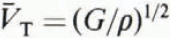
and further elastic parameters can be calculated. Accordingly the values for λ and μ, as well as the calculated values for shear modulus G, Young’s modulus E, and Poisson’s ratio σ, are given in Table VIII. The shear velocity, which for (isotropic) polycrystalline ice is given by
Polycrystalline (isotropic) averaged elastic parameters, −16 °C

In a more general approach, the above treatment can be adapted to account for preferred grain orientations by including an appropriate statistical weighting factor p(γ) in the integrand of Equation (6).
(c) Isothermal values
All elastic parameters quoted thus far are dynamic or adiabatic values. These are invariably yielded when acoustic measurement techniques are used. In situations where stress is applied gradually, static or isothermal elastic parameters are, in principle, appropriate. The following equation links the adiabatic and isothermal elastic compliances of an arbitrary monocrystalline medium:

Here S (T) denotes the isothermal elastic compliance tensor, S (S) the adiabatic elastic compliance tensor, α the thermal expansion tensor, T the absolute temperature, ρ the density, and Cp the heat capacity per unit mass at constant stress. Based on the data of Reference ButkovichButkovich (1959), the thermal expansion tensor for ice at −16 °C was assumed to be isotropic and was taken to be αij = 50.83 × 10⁻⁶ δij (the Kronecker delta). Measurements of the heat capacity of ice by Reference Giauque and StoutGiauque and Stout (1936) have been tabulated by Reference DorseyDorsey (1940) and indicate a value for Cp of 1 985.4 J (kg deg)−1 at −16 °C. Accordingly, the isothermal elastic moduli of ice at −16 °C were determined to be:

These yield an isothermal bulk modulus K (T) =86.47 × 10⁸ N m−2. The bulk modulus is most amenable to precise measurement by static techniques since non-elastic deformation of a monocrystalline pure sample will not result from moderate changes in applied hydrostatic pressure.
(d) Temperature corrections
The temperature dependence of the elastic constants was not specifically measured in the present work. However, the present results may be corrected to correspond to various temperatures using the data of Reference Dantl and RiehlDantl (1969). He measured the elastic moduli of pure monocrystalline artificial ice at a large number of temperatures over the range −0.7 °C to −140 °C. For the range of temperatures normally encountered in the natural environment Dantl’s corrections can be considerably simplified without a significant loss of accuracy. This simplification results from neglecting quadratic terms and assuming that all elastic parameters vary according to a common linear equation as follows

Here X denotes an arbitary elastic parameter (with units of pressure), T denotes the temperature in °C and T m denotes the temperature at which a measured value for the parameter X exists. The Brillouin measurements at −16 °C and at −3 °C (Reference GammonGammon and others, 1980) yield a = 1.418 × 10⁻³ deg−1, while Dantl’s data (at the same two temperatures) yield a = 1.427 × 10⁻³ deg−1. Analogously, and based on the Brillouin data at −16 °C and −3 °C, the linear temperature correction equation for acoustic velocity was found to be:

where b = 6.196 × 10⁻⁴ deg−1.
Comparison with other work
Comparison with previous work (see Table IV) suggests that the present results possess the smallest overall uncertainty. This is in part due to the large volume of data (a total of 189 measurements of sound velocity) obtained at two closely spaced temperatures. As well, the quasi-random distribution of the data over the values of the angle γ leads to comparable uncertainties in all five elastic constants. This contrasts with the results of conventional acoustic experiments where measurements at a small number of specially chosen orientations yield wide variations in the accuracy with which the five elastic constants are determined. In particular, these experiments tend to yield good values only for c 11, c 33, c 44 (and c 66) since they can be measured directly.
Although the sources of systematic error in the Brillouin measurements are readily identified (as above), the possible importance of such errors in acoustic velocities and elastic constants determined by other techniques is not readily assessed. Nevertheless, in comparing the various sets of elastic moduli in Table IV it is important to establish some criterion for identifying possible systematic error associated with these different sets. The parameter 2ρ( V 2has been chosen for this purpose. The value of 2ρ( V 2was determined directly for each set of elastic constants (Table IV) by calculating the square of the mean of the three acoustic velocities averaged uniformly over γ (Gammon, unpublished [b]). Because of (i) the absence of the factor sin γ in this calculation, (in contrast to the polycrystalline average), to account for the nonrandom crystal orientations used by the various authors, (ii) the strong dependence on c 11, c 33, c 44 (and c 66), and, (iii) the weak dependence on the less accurately determined c 13 and c 12, 2ρ( V 2is a sensitive and reliable indicator of the overall trend in the five elastic constants, whether measured by Brillouin spectroscopy or by ultrasonic techniques (utilizing non-random crystal orientations). From Table IV it is apparent that the variations of 2ρ( V 2are very small for each of the four sets of elastic constants determined by Brillouin spectroscopy. These variations are, in particular, considerably smaller than the uncertainties typically quoted in the individual elastic constants.
A preliminary inspection of Table IV reveals that the general agreement of the present results with those of previous authors is fairly good. The only obvious discrepancies are found with respect to the c 44 value as determined by Reference Jona and ScherrerJona and Scherrer (1952) and the full set of elastic moduli as determined by Reference Dantl and RiehlDantl (1969). The agreement among values of 2ρ( V 2is good for all sets of measurements except those of Reference Dantl and RiehlDantl (1969).
Because the results of Dantl have been widely accepted as standard values for the elastic moduli of ice, their comparison with other measurements bears special significance. While difference between the average sound velocities measured by Dantl (Reference Dantl1968, Reference Dantl and Riehl1969, Reference Dantlunpublished) and those measured in the present instance (and by other previous authors) may be real, the possibility of an unnoticed systematic error must not be neglected. Error in the absolute determination of acoustic velocity by pulse-echo techniques (as were employed by Dantl) is known to result from several effects. These include diffraction within the sample (Reference LordLord, 1966), phase changes at the point of reflection and at the point of coupling to the transducer, multiple reflection and consequent pulse-shape changes within the transducer or coupling device, as well as a variety of other effects stemming from the inherent acoustic complexity of the layered transducer–coupling–sample system (Reference Williams and LambWilliams and Lamb, 1958; Reference McSkiminMcSkimin, 1961). In this connection, a survey of the variations in nine acoustic velocity measurements from one sample was carried out by Reference Einspruch and TruellEinsprach and Truell (1962). A single sample of carefully prepared fused silica was circulated among nine laboratories, each of which measured the transit time for longitudinal vibrations at 10 MHz. It was found that the standard deviation in the measurements of the 0 °C reference temperature was ±0.5%, and this corresponded to an uncertainty of at least ± 1% in determination of elastic modulus. (Possibly significant errors in measurement of the density or length of the sample would lead to larger uncertainty in modulus determination but these errors are neglected here.) The maximum variation in transit time measurement was 1.4% (2.8% in modulus determination), with the largest deviations being associated with values lying above the mean. Thus, the authors (Reference Einspruch and TruellEinspruch and Truell, 1962) note that “errors in measurement tend to produce results in velocity measurements which are too low.” Finally, it should be noted that uncertainties quoted in association with the various measurements were not, in general, sufficient to account for the observed scatter, particularly in the case of those measurements lying furthest from the mean. This emphasizes the difficulty in accurately assessing the absolute uncertainty in ultrasonic measurements.
The uncertainties in the elastic moduli quoted by Dantl (Reference Dantl1968, Reference Dantl and Riehl1969, Reference Dantlunpublished) were determined from the root-mean-square deviations of a large number (greater than 35) of individual determinations of the moduli at different temperatures. Apparently, no allowance was made for possible systematic error, this being assumed negligible. However, in connection with the application of the pulse-echo method, Reference Dantl and RiehlDantl (1969) notes that “variations of pulse shape due to multiple reflections cause relatively large errors in the determination of the absolute value of the moduli.” A double pulse interference (pulse superposition) method was therefore used by Dantl (unpublished) to check the absolute values of the moduli, c 11, c 33, and c 44. The checks showed no detectable error in the initial determination of c 33 and c 44, while c 11 was found to be 1.16% low in the initial determination. This discrepancy was neglected and the final values for the moduli were taken to be those determined by the pulse-echo method. As shown by a careful analysis of Reference Williams and LambWilliams and Lamb (1958), because the phase shift at the transducer–sample interface varies with applied frequency, the pulse-superposition method requires varying the applied frequency over a range determined by the acoustic transit time in the sample. With the apparatus used by Dantl (unpublished), this range corresponded to approximately the resonance halfwidth of the transducer. It was thus necessary to utilize applied frequencies deviating substantially from resonance. In brief, the error analysis carried out by Dantl leads to negligible error only under near-ideal experimental conditions. It does not specifically address the problem of estimating error under non-ideal or uncertain experimental conditions and hence tends to yield a lower limit for the measurement error. All factors being considered, it is not possible to assess the validity of his error analysis or his assumption of negligible uncertainty in velocities measured by the double pulse interference technique. Hence it does not appear to be fruitful to attempt to verify or discount the hypothesis of sample-to-sample variations in the elastic moduli of ice by comparison of the present results with those of Dantl (Reference Dantl1968, Reference Dantl and Riehl1969, Reference Dantlunpublished).
The possibility of systematic error in Dantl’s measurements cannot be ruled out as an explanation for the fact that his value of 2ρ( V 2is significantly lower than that in any other set of data in Table IV. Indeed this seems to be a particularly appropriate explanation in view of the further observation that, from the standpoint of internal consistency, the present Brillouin results are in best agreement with those of Dantl. Thus it appears that the unsystematic error components are comparable for these two sets of results. In any future investigation of the relative importance of systematic errors associated with the two different techniques it should therefore be sufficient to concentrate on a single, conveniently chosen, elastic parameter.
The data from Table IV show small or insignificant acoustic dispersion in ice over frequencies ranging from 5 kHz to 10 GHz, since, as noted previously, the average of the values of 2ρ( V 2obtained from ultrasonic measurements agrees well with the corresponding average from the present hypersonic measurements. Thus, it appears appropriate to look for possible dispersion in the relative values of the moduli. While the scatter in the measurements makes comparisons uncertain, the ultrasonic value for c 11 does tend to be slightly less than the corresponding value determined by Brillouin spectroscopy. The converse is true for c 44.
Comparison of the present results with the temperature-corrected results of Reference ProctorProctor (1966) shows surprisingly good agreement in view of the large difference in the temperatures of measurement. The temperature corrections were made using the data of Reference ProctorProctor (1966) and the data of Reference Dantl and RiehlDantl (1969). Barring coincidental compensation of errors, the following two conclusions can be drawn from the good agreement of the present results with those of Reference ProctorProctor (1966). First, there is small or negligible systematic discrepancy between the present results and those of Proctor. In this respect it is important to note that the ultrasonic apparatus of Proctor was tested on several specially prepared samples of aluminium so as to verify accuracy of the method. Quoted uncertainties in the results ranged from 0.04% for c 11 to 1.2% for c 12. Second, existing data on temperature dependence appears to be reliable over the range −213 °C to −0.7 °C (combination of results of Proctor and of Dantl).
Figure 8 shows curves of velocity versus γ specified by the present data and by the data of Jona and Scherrer and of Dantl. The systematic difference between the present results and those of Dantl is clearly evident in Figure 8 as, also, is the disagreement between the value of c 44 as measured by Reference Jona and ScherrerJona and Scherrer (1952) and that determined from the present data.
Comparative plots of sound velocity versus γ in ice. BR. AV.—weighted mean elastic constants from present measurements; J. & S.—elastic constants measured by Reference Jona and ScherrerJona and Scherrer (1952); DANTL - elastic constants measured by Reference Dantl and RiehlDantl (1969).

The present values determined for the elastic moduli of ice can be used to test the results of the simplifying assumptions of Reference PennyPenny (1948) regarding ice structure and intermolecular forces. These assumptions led to three equations among the five elastic moduli thus facilitating calculation of all five elastic moduli from two experimentally determined elastic parameters.
The agreement of the present results with the equations of Reference PennyPenny (1948) is fairly good in absolute terms, although not within experimental uncertainty. The fact that the first of Penny’s equations is satisfied by the present results to within 1% is of particular significance since this equation effectively requires that the compressibility of ice be isotropic. Thus it in turn relates to the restriction that the four nearest neighbours of an oxygen atom in the ice crystal structure lie at the vertices of a regular tetrahedron, giving rise to a constant c/a ratio of (8/3)1/2.
The present results can be further compared with the theoretical results of Reference PennyPenny (1948) by calculating elastic constants from the present data subject to Penny’s constraints. This procedure appears more appropriate than simple comparison with the elastic constants quoted by Penny since these elastic constants were based in part on experimental data differing significantly from the present measurements. In particular the theoretical calculations were based on the dynamic measurements of Young’s modulus and Poisson’s ratio in quasi-isotropic polycrystalline ice, as quoted by Reference NorthwoodNorthwood (1947). These values (98 × 108 N m−2 and 0.335, respectively) differ from those quoted in Table VIII, possibly as a result of preferred grain orientation in the polycrystalline samples. The values from Table VIII were thus used in calculating elastic constants analogous to those calculated by Reference PennyPenny (1948) so as to eliminate the effects of experimental error in comparisons with the present results. Accordingly, the atomic force constants α and β (Reference PennyPenny, 1948) were found to have values α = 0.782 27 N m−1, β = 9.028 9 N m−1, yielding the following values for elastic constants which satisfy Penny’s equations: c 11 = 138.57, c 12 = 68.83, c 13 = 59.55, c 33 = 147.85, c 44 = 31.08 (units of 108 N m−2). It is hoped that the present measurements of elastic moduli will assist in the ongoing theoretical analysis of the molecular processes underlying the complex mechanical properties of ice.
In conclusion, it has been demonstrated that the technique of Brillouin spectroscopy is effective for determining the “local” elastic properties of ice. By using this technique it was found that the local elastic constants of ice formed under very different conditions are basically the same. Consequently, the hypothesis of sample-to-sample variation (in particular, the correlation with sample age as suggested by Reference Dantl and RiehlDantl (1969)) has not been substantiated. Finally, it is believed that the elastic constants obtained in the present work are subject to smaller overall uncertainty than values measured previously. Given the range of samples studied, it is consequently felt that the present results are the most reliable obtained to date for use in scientific or engineering applications involving either artificial ice samples, or ice formed in the natural environment.
Acknowledgements
The authors are very grateful to Dr S. F. Ackley and Dr G. Lemieux, at the U. S. Army Cold Regions Research and Engineering Laboratory, Hanover, New Hampshire, for providing samples of Mendenhall glacier ice and Antarctic sea ice (as described in the text).



