





1. Introduction
Conspiracy theories can be defined as “claims that the public is being pervasively lied to regarding some aspect of reality, to allow some group(s) to achieve a self-serving agenda” (Nera & Schöpfer, Reference Nera and Schöpfer2023).Footnote 1 Such beliefs—and particularly, the subset of conspiracy theories that have been argued to be epistemically unwarranted (Tagand et al., Reference Tagand, Muller, Nurra, Klein, Aubert-Teillaud and Nera2025; see also Frenken et al., Reference Frenken, Reusch and Imhoff2025)—have gathered much attention from the public and researchers alike (Douglas & Sutton, Reference Douglas and Sutton2023). However, economic science has only produced limited knowledge on this topic. For instance, the relatively recent interdisciplinary handbook edited by Butter and Knight (Reference Butter and Knight2020) does not include a chapter written by an economist, even though behavioural economics methods and theoretical insights may fruitfully contribute to the study of conspiracy theories. Indeed, conspiracy theories, and the controversies surrounding their warrantedness, involve the detection—by spectators considering the costs of letting the conspiracy go undetected—of potential coordinated cheating by third parties (Aubert-Teillaud & Vaidis, Reference Aubert-Teillaud and Vaidis2024). Although such questions have long interested behavioural scientists, examination of conspiracy theories using behavioral economics tools is new. To our knowledge, Balafoutas et al. (Reference Balafoutas, Libman, Selamis and Vollan2021) was the first study on conspiracy beliefs employing behavioural economics methodology.
A robust finding in the psychology literature is that endorsement of different conspiracy theories is highly positively correlated (Goertzel, Reference Goertzel1994), which suggests that individuals differ in some general propensity of believing in them: such propensity is called “conspiracy mentality” (Bruder et al., Reference Bruder, Haffke, Neave, Nouripanah and Imhoff2013; Imhoff & Bruder, Reference Imhoff and Bruder2014; Moscovici, Reference Moscovici, Graumann and Moscovici1987). Imhoff and Bruder (Reference Imhoff and Bruder2014) define conspiracy mentality as a trait-like propensity to interpret world events as resulting from plots hatched in secret. Moreover, this propensity should be viewed as “a continuum ranging from naïve trust in the canonical version of contemporary history to extremely paranoid conspiracy thinking” (Imhoff & Bruder, Reference Imhoff and Bruder2014, p. 40). Nera (Reference Nera2024) shows that, even with conceptual shortcomings, conspiracy mentality captures a relatively context-free propensity to believe in conspiracies, highly correlated with beliefs in specific conspiracy theories. The fact that beliefs in disparate conspiracy theories are strongly correlated allows them to be studied as a relatively homogeneous category, despite their heterogeneity (Klein & Nera, Reference Klein and Nera2020).Footnote 2
A key component of a conspiracy is the intentional manipulation of others by a small group of actors, and conspiracy mentality encompasses the belief that the public is being manipulated by secretive groups (Bruder et al., Reference Bruder, Haffke, Neave, Nouripanah and Imhoff2013; Imhoff & Bruder, Reference Imhoff and Bruder2014). Hence, an important question is whether strategic modes of thinking are associated with conspiracy mentality. Economists have long considered the notion of strategic sophistication, namely “the extent to which players’ behaviour reflects attempts to predict others’ decisions” (Costa-Gomes et al., Reference Costa-Gomes, Crawford and Broseta2001). It is worth examining whether conspiracy thinking may be associated with a tendency to ponder about others’ incentives and goals, and the implications of this.Footnote 3
If indeed there is a positive relationship between conspiracy mentality and strategic sophistication, it would support conspiracy believers’ claim that they are sophisticated ‘critical thinkers’ (Harambam & Aupers, Reference Harambam and Aupers2017) who are smarter than the mindless “sheeple” (Franks et al., Reference Franks, Bangerter, Bauer, Hall and Noort2017; Nera et al., Reference Nera, Jetten, Biddlestone and Klein2022). So far however, the evidence shows that, contrary to this claim, participants scoring high on a conspiracy beliefs scale exhibit higher intuitive (as opposed to analytical) thinking (e.g., Pytlik et al., Reference Pytlik, Soll and Mehl2020; Biddlestone et al., Reference Biddlestone, Green, Douglas, Azevedo, Sutton and Cichocka2025; Bowes et al., Reference Bowes, Costello and Tasimi2023) and lower critical thinking (Lantian et al., Reference Lantian, Bagneux, Delouvée and Gauvrit2021).
Contrasting with these findings, Balafoutas et al. (Reference Balafoutas, Libman, Selamis and Vollan2021) reported a study in which exposure to conspiracy theories was associated with higher strategic sophistication. Participants in the experimental group watched a conspiratorial video, and their subsequent behavior was consistent with the notion that they reflected more carefully about other subjects’ goals and intentions, which may be viewed as a form of heightened analytical thinking. It is unclear, though, whether this result is an effect of mere exposure, or of conspiracy beliefs induced by the video (i.e., the manipulation check in their study was successful only on the moon landing conspiracy theory, out of five tested theories). In this regard, it is worth noting that exposure to conspiracy theories is typically used to induce their endorsement (e.g., Jolley & Douglas, Reference Jolley and Douglas2014).
We therefore pursued two goals in this research. First, we wished to examine if the stable propensity to believe in conspiracy theories—conspiracy mentality, as measured by the Conspiracy Mentality Questionnaire (Bruder et al., Reference Bruder, Haffke, Neave, Nouripanah and Imhoff2013)—is associated with strategic sophistication, as measured by a version of the Money Request Game of Arad and Rubinstein (Reference Arad and Rubinstein2012) (Studies 1-2). If we find a positive correlation, it would nuance the notion that conspiracy believers exhibit poorer analytical thinking abilities. If we do not, it will be consistent with the broader psychological literature. Second, we attempted to replicate the study of Balafoutas et al. (Reference Balafoutas, Libman, Selamis and Vollan2021) and examine whether exposure to conspiracy theories can situationally heighten strategic sophistication (Study 2).
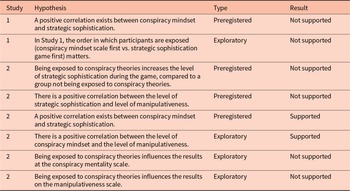
Finally, in Study 2, we also measured manipulativeness—operationalized as a subcomponent of Machiavellianism (Jones, Reference Jones2017). Manipulativeness is a robust correlate of conspiracy beliefs (Biddlestone et al., Reference Biddlestone, Green, Douglas, Azevedo, Sutton and Cichocka2025; Dosenović & Dinić, Reference Dosenovic and Dinić2024; Douglas & Sutton, Reference Douglas and Sutton2011; Kay, Reference Kay2021; March & Springer, Reference March and Springer2019) and it involves pondering about the intentions of others—an attribute of strategic sophistication. As a result, we hypothesize a “confound” pattern of relationships: we expect participants that score higher in manipulativeness to exhibit both more conspiracy beliefs and higher strategic sophistication, thereby creating a positive relationship between conspiracy mentality and strategic sophistication. A summary of our hypotheses for both studies can be found in Table 1.
Hypotheses
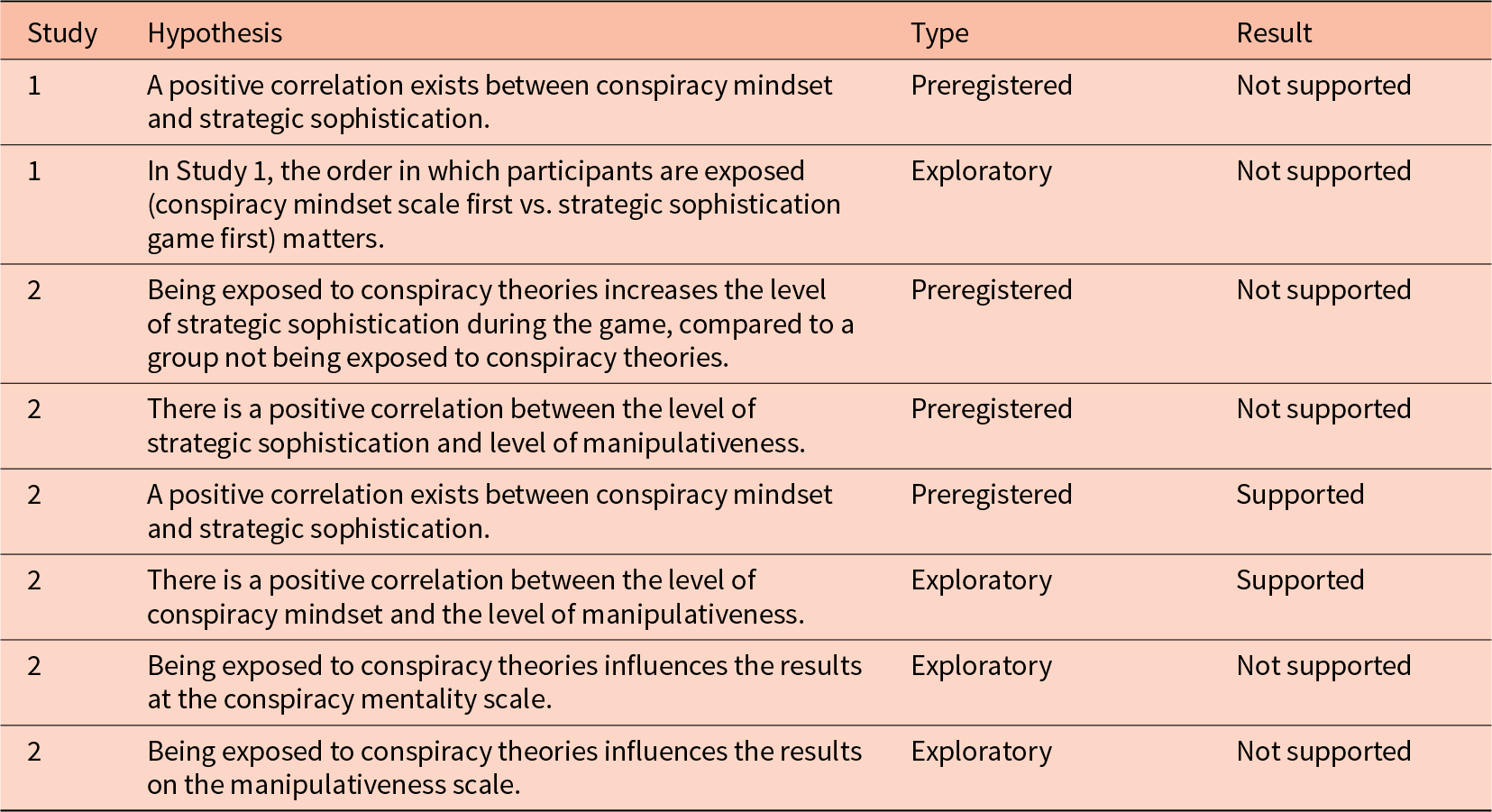
Our results from the first study did not confirm the hypothesized correlation between the construct of conspiracy mentality and the level of strategic sophistication. In the second study, this correlation was positive but relatively weak.Footnote 4 Finally, we did not reproduce the main findings of Balafoutas et al. (Reference Balafoutas, Libman, Selamis and Vollan2021), as we did not find a significant difference between the level of strategic sophistication in the treatment (i.e., the condition with the conspiracy theory priming) and in the control group.
1.1. Study 1
A few organizational details were identical across our two studies. First, participants were recruited via Prolific (https://www.prolific.com). The experiment took place on a Heroku deployment server via Otree (https://www.otreehub.com/). Finally, participants first completed a consent form and then received instructions on how to proceed with the experiment. Study 1 was pre-registered on OSF: https://osf.io/p54n7.Footnote 5
In Study 1, we explore the possible link between the generic propensity to believe in conspiracy theories (i.e., conspiracy mentality, Bruder et al., Reference Bruder, Haffke, Neave, Nouripanah and Imhoff2013) and strategic sophistication.Footnote 6 We hypothesized a positive relationship between conspiracy mentality and strategic sophistication. The study consisted of two parts: a conspiracy mentality questionnaire and a strategic sophistication game. The Conspiracy Mentality Questionnaire (Bruder et al., Reference Bruder, Haffke, Neave, Nouripanah and Imhoff2013) is an instrument designed to assess differences in the generic tendency to engage in conspiracist ideation. The questionnaire is comprised of five items on an 11-point Likert scale ranging from  $0\%$ “certainly not” to $100\%$ “certain”. Items are as follows: “I think that…” 1) “many very important things happen in the world, which the public is never informed about.”, 2) “politicians usually do not tell us the true motives for their decisions.”, 3) “government agencies closely monitor all citizens.”, 4) “events which superficially seem to lack a connection are often the result of secret activities.”, 5) “there are secret organizations that greatly influence political decisions.” The items were averaged into a single conspiracy mentality measurement.
The level of strategic sophistication was measured using a version of the “Money Request Game” by Arad and Rubinstein (Reference Arad and Rubinstein2012). The players are divided into pairs, and each player is asked to bid an amount between 0.1 and 1 pound, with possible increments of 0.1, for a total of 10 possible choices. Participants are told that they will receive the amount of their bid, but that if they bid exactly 0.1 pound less than the other player, they will receive an extra pound. Hence, bidding 10 pence less than the other player is the optimal (expected own-payoff maximizing) response to any choice of the opponent, except when the choice is 10 cents, in which case the optimal response is 1 pound. The level of strategic sophistication can be captured by the number of times a player applies this best response rule in their strategic reasoning. The two players chose their bids simultaneously and they played the game only once with a real opponent. The game in Study 2 follows the same structure, the only difference being the use of points instead of pounds, following Balafoutas et al. (Reference Balafoutas, Libman, Selamis and Vollan2021).
A fully naive participant bids 1 pound, the highest possible amount, and we call this behavior level-0 (strategic sophistication) reasoning. A participant who responds optimally to a level-0 opponent by choosing 0.9 pounds exhibits level-1 reasoning. A participant who best-responds to a level-1 opponent by choosing 0.8 pounds exhibits level-2 reasoning, and so on. In summary, our measure of strategic sophistication is an integer number from the 0-9 scale, which corresponds to the level of strategic reasoning, as described before. We get the level of strategic sophistication by the formula  $10-10*Choice$, where $Choice$ is the observed bid of the participant.
The theoretical foundation for our measurement of strategic sophistication is the model of level-k thinking. Participants are assumed to optimize, in the sense of expected own-payoff maximization (with risk-neutral preferences), given subjective beliefs about the other participants’ choice. Observed strategies have a straightforward connection to levels of strategic thinking. A level-k model is characterized by its anchor—the presumed choice of level-0 participants—and the proportion of level-0 participants in the population. In this game, we naturally assume that a player omitting strategic considerations chooses the seemingly highest-payoff bid of 1 pound. The best response of a level-k type is also straightforward. Due to the continual incentive to undercut the opponent’s bid, there is no pure strategy Nash equilibrium in the Money Request Game, in which both players best-respond to each other’s choices. However, there is a unique Nash equilibrium in mixed strategies, which we use as a benchmark.Footnote 7 With the level-k model in the background, we can elicit strategic sophistication based on observed choices in the game. This was also the approach followed in the original study of Balafoutas et al. (Reference Balafoutas, Libman, Selamis and Vollan2021).
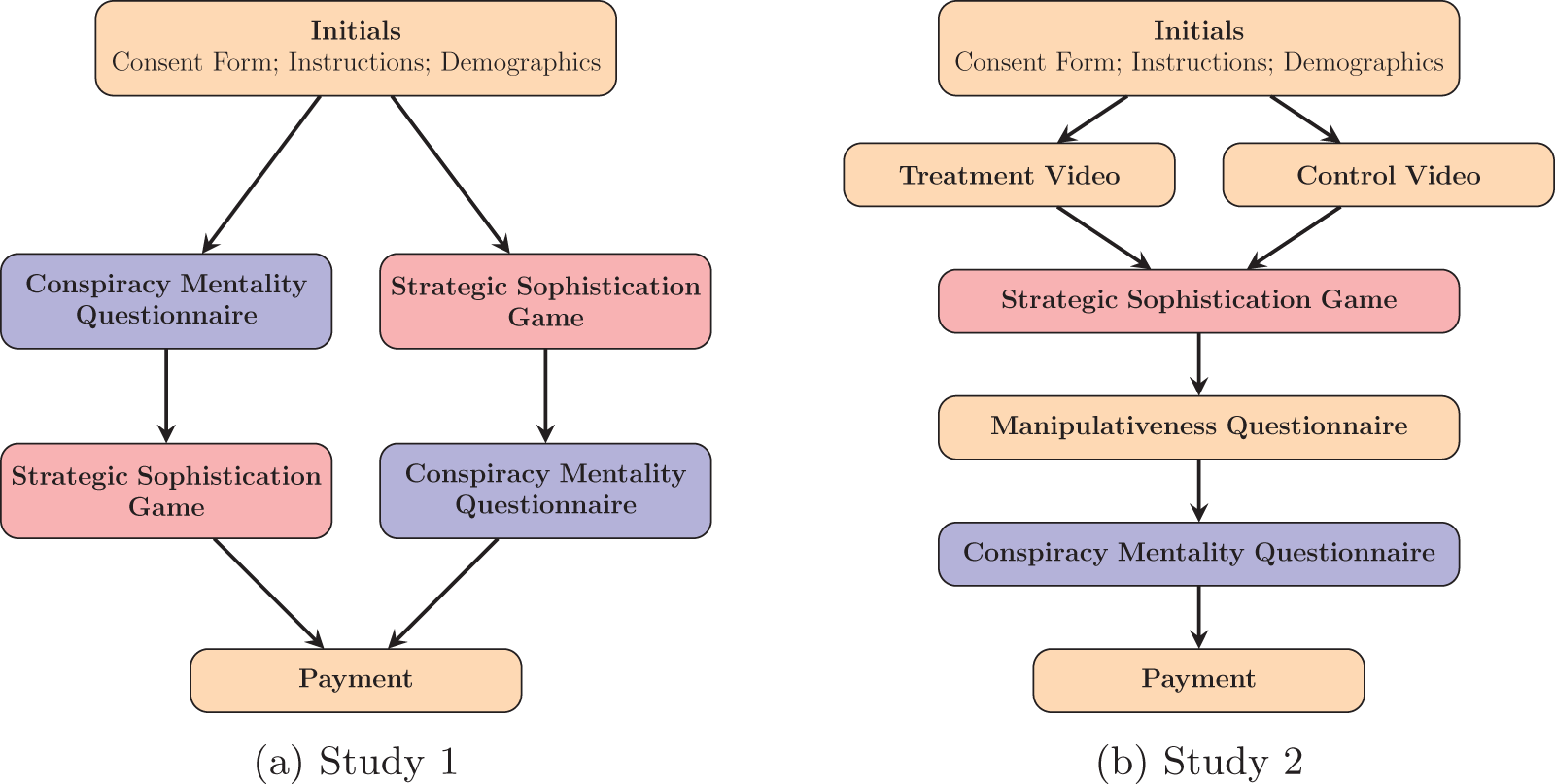
Figure 1(a) depicts the experimental process followed in Study 1. After reading the consent form and instructions, and answering demographic questions, half of the participants were randomly assigned to start by filling out the conspiracy mentality questionnaire, and then participated in the strategic sophistication game. The remaining half of the participants were exposed to the game before completing the questionnaire. Following the game, participants were asked to explain the reason for their choice with a one-sentence answer. Finally, the last page provided payoff information to participants before redirecting them to Prolific, where they could collect their payments.
Flow charts of the experimental process (a) Study 1 (b) Study 2

The main hypothesis in Study 1 is a positive correlation between the level of strategic sophistication and conspiracy mentality. Additionally, we tested for order effects (placing the conspiracy mentality scale before or after the game) on participants’ responses in the Money Request Game. If there is no such effect, this will weaken the possibility that the Conspiracy Mentality Questionnaire itself acted as an exposure to conspiracies. Overall, in Study 1, we can measure merely the correlation between strategic sophistication and conspiracy mentality. The causal effect of exposure to conspiracies was tested in Study 2.
1.2. Study 2
Study 1 drew from Balafoutas et al. (Reference Balafoutas, Libman, Selamis and Vollan2021), but it did not experimentally manipulate exposure to conspiracy theories and the monetary incentives were slightly different. Study 2 follows more closely the procedures of Balafoutas et al. (Reference Balafoutas, Libman, Selamis and Vollan2021), the main difference being that the experiment was conducted online. Study 2 was also preregistered on OSF (https://osf.io/vm67j).
In Study 2, in line with the procedure of Balafoutas et al. (Reference Balafoutas, Libman, Selamis and Vollan2021), half of the participants watched a video presenting a conspiracy theory, while the other half watched a neutral video. The videos were provided to us in English language with German subtitles by the authors of the original study, and we replaced the German with English subtitles. Both videos were about space programs. In the conspiracy video (which lasts for 6 minutes), various people explain their doubts that the US actually landed on the moon (https://youtu.be/fN8tgPDDfQk).Footnote 8 The control video (of equal duration) is a NASA video explaining a space program (https://youtu.be/fDKUakBRG5Y). The screen displaying the videos also contained two comprehension checks. The questions for the conspiracy video were: “According to one protagonist, how many days Saturn 5 orbited the Earth?” (3, 5, 8, correct answer = 8) and “Who is Bill Kaysing?” (A journalist, An engineer, An astronaut, correct answer = An engineer). The questions for the video concerning NASA’s program were: “Where are the astronauts trained to work?” (In a pool, In a void room, In a “no-gravity” zone, correct answer = In a pool) and “Where are the boosters created?” (In Michoud, In Clearfield, At NASA’s Kennedy Space Center, correct answer = In Clearfield). If a participant did not answer both questions correctly, they could not access the next page.
The stages and timing are shown in Figure 1(b). After reading the consent forms and instructions, and after answering the demographic questionnaire, participants watched either the treatment or control video and completed the comprehension questions. After this, they proceeded to the strategic sophistication game, which we modified to make it closer to the original experiment from Balafoutas et al. (Reference Balafoutas, Libman, Selamis and Vollan2021); participants could choose a number ranging from 5 to 14 points. Choosing 5 corresponds to choosing 0.1 and choosing 14 corresponds to choosing 1 in the game of Study 1. The rules were similar to before, with each participant winning the points they bid, and additionally, if one of them bids exactly one point lower than the other, they got an additional 10 points. Experimental points were converted to British pounds according to the formula  $(Points-4)*0.1$. Participants were informed about the conversion rate. As a benchmark, we calculated the mixed strategy Nash equilibrium under the same assumptions as in Study 1. The results can be found in Table 4.
After the strategic sophistication game, participants completed the Manipulativeness Questionnaire. This questionnaire consists of 5 questions (Du et al., Reference Du, Collison, Vize, Miller and Lynam2021): “I think it is important to be charitable to others.” (reversed), “I am better than others.”, “Being honest all of the time won’t lead to success.”, “I’m not a particularly sympathetic person.”, and “I tend to assume the best about people.” (reversed). This questionnaire corresponds to the “antagonistic factor” of the Machiavellian Personality Scale. ‘Antagonism’ refers to the personality factor associated with manipulation and selfishness, which we hypothesize (see Table 1) to be correlated both with belief in conspiracy theories, as well as with strategic sophistication (Kay, Reference Kay2021).
Finally, participants completed the Conspiracy Mentality Questionnaire (Bruder et al., Reference Bruder, Haffke, Neave, Nouripanah and Imhoff2013), mirroring Study 1. Since the two questionnaires took place after the procedures adopted from Balafoutas et al. (Reference Balafoutas, Libman, Selamis and Vollan2021), they do not affect the results of our attempt to replicate the original experiment. Before the last screen, participants had to wait for the paired participant from the game to play, in order for the amount of the bonus payment to be calculated. The last screen displayed to participants the amount they won in the study, before redirecting them to Prolific, where they could collect their payments.
Our main, preregistered, hypothesis in the second experiment concerns the replication of the main finding of Balafoutas et al. (Reference Balafoutas, Libman, Selamis and Vollan2021): The group watching the conspiracy video will exhibit a higher level of strategic sophistication than the group watching the control video. We also examined, in two additional preregistered hypotheses, whether there was a positive correlation between the level of strategic sophistication and conspiracy mentality (which was also hypothesized in Study 1), and whether there was a positive correlation between the level of strategic sophistication and manipulativeness. We tested, in the exploratory sense, the correlation between manipulativeness and conspiracy mentality. Finally, we also ran exploratory analyses to test whether the type of video influenced participants’ conspiracy mentality and manipulativeness.
2. Results
For our results in Study 1 and in Study 2, the reported correlations are Pearson’s correlations, while we used a Welch’s t-test to compare the means between groups.
2.1. Study 1
In total, 107 subjects participated in the first study. The average payment to the participants was £3.09. After excluding 10 participants who indicated that they answered randomly,Footnote 9 the dataset from Study 1 was comprised of 97 individuals (M age = 38.55, SD age = 13.30, 61 women, 35 men, 1 other). Of those, 48 played the game before the questionnaire (M age = 35.64, SD age = 13.29, 31 women, 16 men, 1 other) and 49 completed the questionnaire first and then played the game (M age = 41.39, SD age = 12.80, 30 women, 19 men). Cronbach’s  $\alpha$, a measure of internal consistency, was equal to 0.86 for the Conspiracy Mentality Questionnaire. Accordingly, it was appropriate to average the items into one conspiracy mentality measure. The average conspiracy mentality measure was 64.29 (SD = 19.14) and the average level of strategic sophistication among all participants was 2.40 (SD = 1.84). The exact distribution of participants’ choices in the strategic sophistication game and the benchmark distribution according to Nash equilibrium can be found in Table 2.
Study 1, empirical distribution of choices and associated theoretical prediction

Contrary to our main hypothesis (preregistered), we did not find a significant correlation between conspiracy mentality and choice at the strategic sophistication game (i.e., level of strategic sophistication),  $r(95)=-0.04\;\lbrack-0.24,0.16\rbrack$,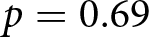 ${p} = 0.69$. We then performed an exploratory test on the influence of the presentation order and found no difference for conspiracy mentality (t(92.92) = 1.35, p = 0.18, $d=0.27\;\lbrack-0.13,0.67\rbrack$), and choices in the strategic game ( ${t}(94.95) = -0.14$, p = 0.89, $d=-0.03\;\lbrack-0.43,0.37\rbrack$).Footnote 10
As a robustness check, we ran two secondary analyses, one including all 107 participants, and the other one excluding (in addition to those excluded in the main analysis) seven participants who indicated that they chose a number for the sake of the number, and not because of the rules of the game.Footnote 11 These alternative analyses yielded similar results that can be found on the OSF page of the project.
2.2. Study 2
Two hundred and eighteen subjects participated in the second study. The average payment to the participants was £2.61. After excluding 1 participant whose answers were incomplete and 14 participants who indicated that they answered randomly,Footnote 12 the dataset from Study 2 was comprised of 203 individuals, 98 of whom watched the conspiracy video (M age = 40.44, SD age = 12.65, 52 women, 46 men) and 105 watched the control video (Mage = 42.51, SD age = 12.61, 55 women, 50 men). A description of mean values can be found in Table 3. The exact distribution of participants’ choices in the strategic sophistication game and the benchmark distribution according to Nash equilibrium can be found in Table 4.
Descriptives: means (SD)

Note. n = 98 for the Conspiracy Video, n=105 for the Control Video. The strategic sophistication level runs from 0 (not strategic) to 9. The conspiracy mentality scale ranges from 0 (not certain) to 10 (certain). The manipulativeness scale ranges from 1 (not agree at all) to 5 (completely agree).
Study 2, empirical distribution of choices and associated theoretical prediction

Cronbach’s  $\alpha$ for the Conspiracy Mentality Questionnaire was 0.82. We thus averaged the items into one conspiracy mentality measure. Cronbach’s $\alpha$ for the Manipulativeness Questionnaire was 0.63, which is lower than the typical threshold of 0.70, indicating a lack of reliability. We still decided to average the items for the sake of simplicity and in order to comply with the preregistration.
We first examined the relationship between the level of strategic sophistication, conspiracy mentality, and manipulativeness. Contrary to Study 1, strategic sophistication was weakly correlated to conspiracy mentality (preregistered, r = 0.17 [0.04, 0.30], p = 0.013). Conspiracy mentality was also correlated to manipulativeness with about the same magnitude (r = 0.16 [0.02, 0.29], p = 0.02). However, the manipulativeness scale was not correlated with the level of strategic sophistication (preregistered, see Table 5).
Correlations between strategic sophistication level, conspiracy mentality and manipulativeness scale

Note: n = 203 for the Whole sample, n = 98 for the Conspiracy Video, n=105 for the Control Video. CM = Conspiracy Mentality, M = Manipulativeness.
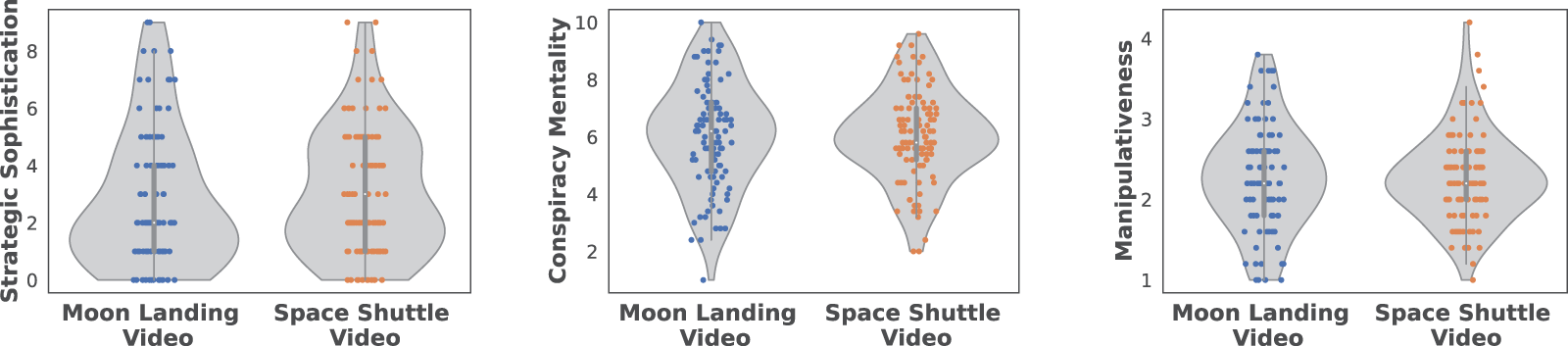
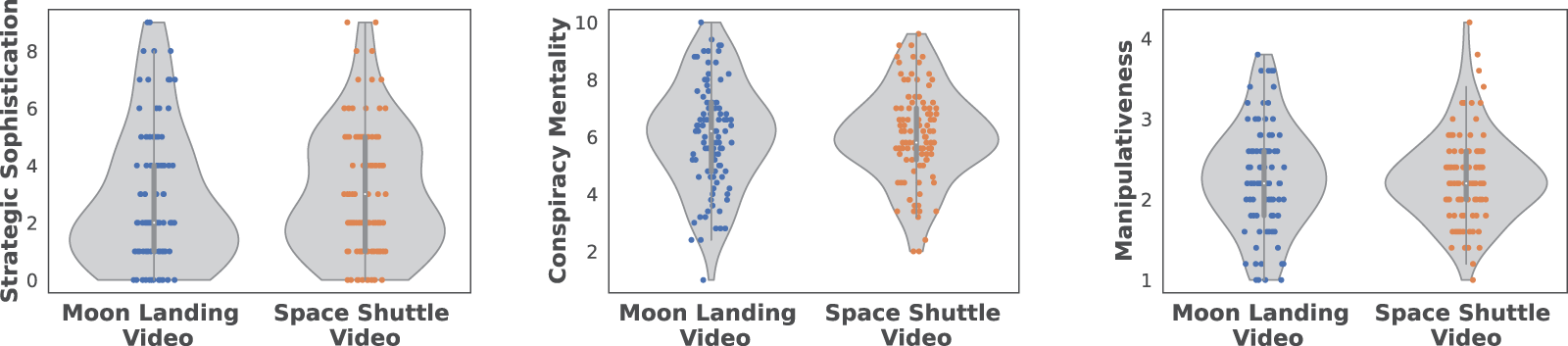
As Balafoutas et al. (Reference Balafoutas, Libman, Selamis and Vollan2021) did, we tested the influence of the conspiracy video on the level of strategic sophistication. Contrary to their results, we did not observe a significant effect of the video on the level of strategic sophistication (preregistered,  ${t}(195.04) = -0.71$,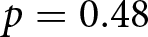 ${p} = 0.48$, $d=-0.10\;\lbrack-0.38,0.18\rbrack$). Further exploratory tests were also non-significant for the effect of the video on conspiracy mentality ( ${t}(191.14) = 0.13$,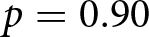 ${p} = 0.90$, $d=0.02\;\lbrack-0.26,0.29\rbrack$) and on manipulativeness ( ${t}(190.04) = -0.11$,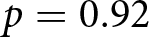 ${p} = 0.92$, $d=-0.02\;\lbrack-0.29,0.26\rbrack$). A graphical display of our results can be found in Figure 2, which presents violin plots, where the grey area displays the density of the data distribution.
Comparison of the effects of conspiracy (Moon Landing) and control (Space Shuttle) videos on strategic sophistication level, conspiracy mentality and manipulativeness in the full sample. The vertical, mirroring curves represent the scores distribution in each group
We conducted several robustness checks. Our first two robustness checks were identical to those in Study 1; one included all participants, except the one with incomplete record (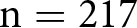 $\mathrm{n} = 217$), and the other one excluded (on top of the participants excluded in the main analysis) 14 participants who—according to their explanations—picked a number for the sake of the number ( $\mathrm{n} = 189$). These analyses produced similar results, which can be found at the OSF page of the project.
In two additional robustness checks, we ran analyses on participants for whom we could credibly assume level-k reasoning. To this end, we excluded all participants who indicated strategic sophistication level-4 or above. The rationale behind this exclusion was the argument by Arad and Rubinstein (Reference Arad and Rubinstein2012), who claimed that thinking beyond the third iteration in the level-k types of models is extremely rare. Furthermore, they showed that the model including types from level-0 to level-3 fitted their data the best. Therefore, it can be assumed that participants selecting an answer suggesting higher levels of strategic sophistication did not actually engage in level-k thinking, but acted according to other models (i.e., they picked their number based on other considerations, or they best-responded to subjective beliefs which differed from our assumptions).
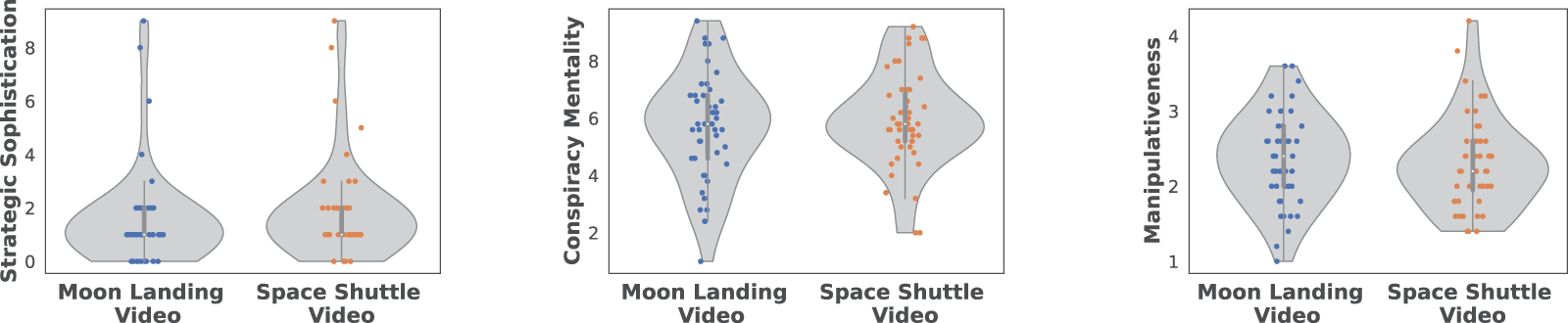
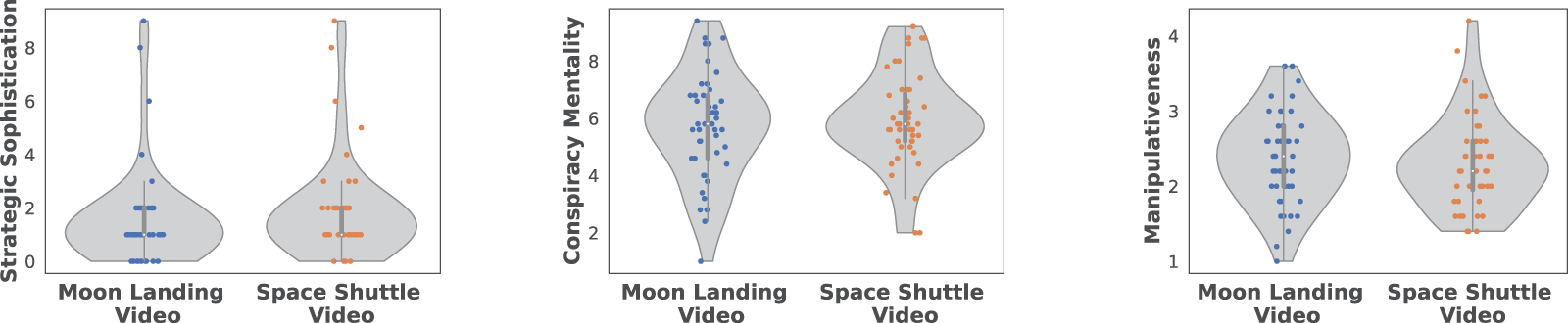
In our fourth robustness check, we kept only participants whose explanation explicitly referred to the two key aspects of level-k thinking; they tried to undercut the other player and used the number 14 as the anchor, or they chose 14 and mentioned profit maximization as a justification. We identified 95 such participants and we expected most of them to exhibit strategic sophistication levels between 0 and 3, as we discussed above, hence we expected that the average level of strategic sophistication is lower in the restricted group than in the rest of the sample. We indeed found a significant difference, as the level of strategic sophistication was lower in the restricted group than in the group of participants that did not indicate level-k thinking in their explanations  ${t(199.73)} = 7.46$,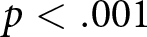 ${p} \lt .001$. This is consistent with the idea that in the group of participants that did not indicate level-k thinking in their explanations, the observed choice is a more noisy proxy of strategic sophistication, as they might have failed to accurately understand the game. We examined the effect size of the conspiracy video on strategic sophistication for the restricted subsample of 95 participants, and we again failed to find a significant effect ${t}(92.97) = -0.74$,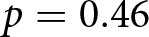 ${p} = 0.46$, $d=-0.15\;\lbrack-0.55,0.25\rbrack$. Results are also non-significant for the conspiracy mentality and the manipulativeness scales (Figure 3).
Comparison of the effects of conspiracy (Moon Landing) and control (Space Shuttle) videos on strategic sophistication level, conspiracy mentality and manipulativeness in the fourth robustness check
Finally, we attempted to apply exclusion criteria close to Balafoutas et al. (Reference Balafoutas, Libman, Selamis and Vollan2021). We excluded one participant with incomplete answers and 14 additional participants who indicated that their answer was random, as in the main study (n=203). We then re-coded the choice variables for the participants whose explanation revealed a certain level of strategic sophistication, but their chosen number did not reflect it.Footnote 13 Altogether, 5 participants were re-coded following this method, which we reported in detail in the tab “strategic level” of the dataset. However, even after these adjustments, we did not find a meaningful effect of the video on the level of strategic sophistication,  ${t}(196.06) = -0.91$,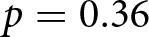 ${p} = 0.36$, $d=-0.15\;\lbrack-0.42,0.13\rbrack$.
3. Conclusion
We conducted two preregistered studies on the relationship between conspiracy thinking and strategic sophistication and found very weak effects (unlike prior literature). Several features of our second study could explain the difference in results relative to the initial study of Balafoutas et al. (Reference Balafoutas, Libman, Selamis and Vollan2021). Two key differences are the language employed and the online environment. The online environment utilizes a different subject pool and changes the subjects’ experience in many ways, as it is more prone to distractions, it lacks a given time frame, it uses smaller monetary incentives and does not allow subjects to physically see other subjects. We did not find in the literature comparable online studies which utilize the Money Request Game, therefore we could not analyze the effect of these features further. Moreover, our exclusion and re-coding criteria are likely different from the original study of Balafoutas et al. (Reference Balafoutas, Libman, Selamis and Vollan2021), which did not record full details on these aspects.
Since it is not possible to determine which of these factors has driven the results, we merely conclude that our study cannot corroborate the original results by Balafoutas et al. (Reference Balafoutas, Libman, Selamis and Vollan2021). In addition, we tested the hypothesis that a relatively stable tendency to believe in conspiracy theories (i.e., conspiracy mentality) is associated with greater strategic sophistication. Our results were mixed, as the hypothesis was corroborated in Study 2, but not in Study 1. These inconclusive results encourage further exploration of the link between conspiracy mentality and strategic sophistication in future research. The positive relationship observed in Study 2 hints at the possibility that conspiracy believers, despite their stronger reliance on intuitive thinking (Biddlestone et al., Reference Biddlestone, Green, Douglas, Azevedo, Sutton and Cichocka2025; Bowes et al., Reference Bowes, Costello and Tasimi2023; Pytlik et al., Reference Pytlik, Soll and Mehl2020), might be more prone to carefully reflecting on the intentions and goals of others. Finally, we did not find an indirect positive relationship that operates via participants’ level of manipulativeness: this variable was associated with conspiracy mentality (which is consistent with past research, Biddlestone et al., Reference Biddlestone, Green, Douglas, Azevedo, Sutton and Cichocka2025; Dosenović & Dinić, Reference Dosenovic and Dinić2024; Douglas & Sutton, Reference Douglas and Sutton2011; Kay, Reference Kay2021; March & Springer, Reference March and Springer2019), but not with strategic sophistication.
We note that our elicited levels of strategic sophistication fell relatively far from our theoretical benchmark (see Tables 2 and 4). The reason could be the increased amount of distractions in the online environment, as it was discussed above. However, it is also possible that this is an indication that subjects may not act as predicted by our level-k model. A particularly interesting case of deviation from our assumptions would be the presence of alternative subjective beliefs. In our studies, we asked subjects to explain the reasons for their choice, so we could filter out those who clearly did not exhibit level-k thinking. However, we did not explicitly elicit (with incentives) subjects’ beliefs about their opponent’s choice. This element would be worth adding in future study designs, in order to further refine the strategic sophistication index.
A possible limitation of our studies concerns the reliability of the measure of strategic sophistication based on the Money Request Game. We chose this method for its relative simplicity, and for consistency with the original study of Balafoutas et al. (Reference Balafoutas, Libman, Selamis and Vollan2021). Arad and Rubinstein (Reference Arad and Rubinstein2012) argue that there are several aspects which make this game suitable to measure strategic sophistication, including its robustness to the specification of level-0 actions and each type’s beliefs about others’ choices. An important caveat regarding the Money Request Game is the rather counterintuitive prediction that the most strategically sophisticated individuals would choose the lowest guaranteed payoffs, believing that this way they can undercut the other player’s bid. This limitation is mitigated by Arad and Rubinstein (Reference Arad and Rubinstein2012)’s theoretical argument and evidence, which show that strategic sophistication above level-3 is relatively rare.
Moreover, in a recent study, Li and Rong (Reference Li and Rong2018) put forward another possible explanation of the observed data. Using an experiment, they showed that high risk aversion is correlated with the choice of higher bids in the Money Request Game. Hence, what we interpret as a low level of strategic sophistication may be partially driven by risk aversion. In our theoretical framework we assume risk neutral players, hence we do not elicit risk preferences in the experimental design. The presence of risk aversion could lead to alternative interpretations of our results, in particular a connection between risk preferences and conspiracy mentality. There exist several other explanations to the subjects’ observed choices in the Money Request Game. For example, Goeree et al. (Reference Goeree, Louis and Zhang2017) present alternative models, which combine level-k thinking, noise in the actual choices of the subjects, and common knowledge of this noise, which fit the observed data well. These arguments may weaken our employed measures of strategic thinking. Nonetheless, the analysis of each of these alternative interpretations is beyond the scope of the current study, where the Money Request Game is used as a simple tool to elicit a proxy of individuals’ levels of strategic sophistication, replicating prior work.
Conspiracy theories have become a major social phenomenon and are already an active area of research in psychology, sociology, political science, history and other fields (Butter & Knight, Reference Butter and Knight2020). Economics is only starting to study the topic. Conspiracy theorists often argue that they are willing to question the incentives of other decision-makers (Harambam & Aupers, Reference Harambam and Aupers2017). In other words, they claim for themselves a high level of strategic sophistication. Using an economic measure of strategic sophistication, we found limited support for this assertion.
Of course, our null results are not conclusive about the (in)existence of a relationship between conspiracy mentality, exposure to conspiracy theories, and strategic sophistication. Our results should be incorporated into future meta-analyses of the phenomenon and as such, they may be viewed as a building block for future knowledge.
Supplementary material
The supplementary material for this article can be found at https://doi.org/10.1017/esa.2026.10033.
Author contributions
Conceptualization: Erika Dömötör, Adrien Fillon, Zacharias Maniadis, Kenzo Nera; Methodology: Erika Dömötör, Adrien Fillon, Zacharias Maniadis; Formal analysis and investigation: Erika Dömötör, Adrien Fillon; Writing - original draft preparation: Erika Dömötör, Adrien Fillon; Writing - review and editing: Zacharias Maniadis, Kenzo Nera; Funding acquisition: Zacharias Maniadis; Supervision: Zacharias Maniadis.
Funding statement
This project has received funding from the European Union’s Horizon 2020 Research and Innovation Programme under Grant Agreement number: 857636 — SInnoPSis — H2020-WIDESPREAD-2018-2020/H2020-WIDESPREAD-2018-04. This project has also received funding from the European Union’s Horizon Europe Research and Innovation Programme under grant agreement No 101079196 (Twinning for Excellence in Management and Economics of Research and Innovation [TWIN4MERIT]).
Competing interests
Authors declared no competing interests.








 Open access

