

Introduction
Crop wild relatives (CWRs) are critical reservoirs of genetic diversity, offering traits such as drought tolerance, disease resistance and adaptation to poor soils (Hajjar and Hodgkin Reference Hajjar and Hodgkin2007; Castañeda-Álvarez et al. Reference Castañeda-Álvarez, Khoury, Achicanoy, Bernau, Dempewolf, Eastwood, Guarino, Harker, Jarvis, Maxted, Müller, Ramirez-Villegas, Sosa, Struik, Vincent and Toll2016; Dempewolf et al. Reference Dempewolf, Baute, Anderson, Kilian, Smith and Guarino2017; Mammadov et al. Reference Mammadov, Buyyarapu, Guttikonda, Parliament, Abdurakhmonov and Kumpatla2018; Coyne et al. Reference Coyne, Kumar, von Wettberg, Marques, Berger, Redden, Noel Ellis, Brus, Zablatzká and Smýkal2020; Bohra et al. Reference Bohra, Kilian, Sivasankar, Caccamo, Mba, McCouch and Varshney2021). As climate change, land degradation and population growth intensify, conserving this diversity has become essential for global food security.
Türkiye, located in the Fertile Crescent, is a major centre of origin for crops such as wheat, lentils and chickpeas, as well as their wild relatives. The Karacadağ region, situated in the Mesopotamian part of Southeastern Anatolia, holds a special status in the conservation of genetic diversity due to its role in the evolution of wild relatives of cultivated plants and its unique habitat characteristics.
The province of Şanlıurfa offers an overview of humanity’s agricultural history, bearing traces of the transition to agriculture in early Neolithic centres such as Göbeklitepe, Nevali Çori and Çayönü. Karacadağ, located within the borders of Şanlıurfa and Diyarbakır provinces, is the genetic heir to this ancient agricultural heritage. The region has retained its enduring importance for agricultural history to this day. Seven archaeological sites have been identified in the Karacadağ area (FAO-TOB 2021a, 2021b), including Zinare Zer Ruin, Kamer Seku Mevkii Ruin, Acem Hill, Selamün Aleyküm Hill Tumulus, Mendel Ruin, Zinnare Ziçey Ruin and Zinnare Ziçey Temple Area. Based on the identified ruins and cultural assets, it is understood that the region has been inhabited since the Chalcolithic Age (c. 5000 BC).
The Karacadağ region in Southeastern Anatolia can be considered part of the steppe and dry grassland ecosystems characterized by semi-arid to arid climatic conditions, low precipitation and open, herbaceous vegetation. These habitat types are widely recognized as components of dryland vegetation systems in Türkiye (Uğurlu Reference Uğurlu2010; Ambarlı et al. Reference Ambarlı, Bilgin and Duelli2016). It is recorded as the first domestication area of cultivated wheat (Özkan et al. Reference Özkan, Willcox, Graner, Salamini and Kilian2011). This ecosystem contains numerous CWR populations, particularly from the Poaceae and Fabaceae families, which are valued for their drought resilience.
Crucially, historical human activities in the Karacadağ region have inadvertently contributed to preserving this rich genetic reservoir. The region’s long-standing nomadic lifestyle and low-intensity agricultural practices, together with its sparse settlement pattern, have created a dynamic yet balanced disturbance regime. This has prevented the large-scale destruction of habitats and the genetic erosion often associated with intensive monoculture-based agriculture. Furthermore, traditional knowledge and the seasonal use of the landscape have enabled wild crop relatives to continue evolving in situ, maintaining their adaptive potential and ensuring their survival to this day (FAO-TOB 2022).
However, recent changes in land use, grazing pressure and agricultural intensification have begun to alter this delicate balance. Despite their significance, many of these species remain underrepresented in ex situ gene banks and are increasingly threatened in situ due to habitat loss and climate change. The importance of CWRs, and the conservation priority they deserve in light of their contribution to food security and the economy, is universally accepted. However, until the beginning of the 21st century, little effort had been made to protect these genetic resources (Maxted et al. Reference Maxted, Avagyan, Frese, Iriondo, Magos Brehm, Singer and Kell2013). As with other plant genetic resources, there are two basic approaches to conserving CWRs: ex situ conservation (outside the natural habitat) and in situ conservation (in the natural habitat). Castañeda-Álvarez et al. (Reference Castañeda-Álvarez, Khoury, Achicanoy, Bernau, Dempewolf, Eastwood, Guarino, Harker, Jarvis, Maxted, Müller, Ramirez-Villegas, Sosa, Struik, Vincent and Toll2016) have stated that the diversity of CWRs is poorly represented in gene banks. In recent years, efforts to protect CWR and to address the existing gaps in their inventories and ex situ conservation have become increasingly widespread (Khoury et al. Reference Khoury, Greene, Wiersema, Maxted, Jarvis and Struik2013; van Treuren et al. Reference van Treuren, Hoekstra and van Hintum2017; Zair et al. Reference Zair, Maxted, Brehm and Amri2021; Khaki Mponya et al. Reference Khaki Mponya, Chanyenga, Magos Brehm and Maxted2021; Ulrich et al. Reference Ulrich, Moreau, Luna-Perez, Beckett, Simon, Migicovsky, Diederichsen and Khoury2022). In order to fully harness the genetic diversity of wild populations for the development of new crop varieties, it is essential to allow these populations to evolve and adapt to changing environmental conditions in their natural habitats. Consequently, there is growing momentum at national and regional levels to develop in situ conservation strategies (Magos Brehm et al. Reference Magos Brehm, Maxted, Ford-Lloyd and Martins-Louçao2008; Khoury et al. Reference Khoury, Greene, Wiersema, Maxted, Jarvis and Struik2013; Jarvis et al. Reference Jarvis, Fielder, Hopkins, Maxted and Smart2015; Phillips et al. Reference Phillips, Asdal, Magos Brehm, Rasmussen and Maxted2016; Taylor et al. Reference Taylor, Kell, Holubec, Parra-Quijano, Chobot and Maxted2017; van Treuren et al. Reference van Treuren, Hoekstra and van Hintum2017; Tas et al. Reference Tas, West, Kircalioglu, Topaloglu, Phillips, Kell and Maxted2019).
In situ protected areas can be designated for one or more taxa (IUCN/SSC 2008; Maxted and Kell Reference Maxted and Kell2009). Conservation areas for multi-species have the obvious advantage of making efficient use of limited conservation resources. Developing multi-species conservation strategies is an efficient and ecologically meaningful way to protect the genetic diversity of CWRs in areas where multiple species coexist and face similar threats and habitat requirements. However, the biggest challenge in identifying such areas is that some priority taxa are found only in areas where no other priority CWRs exist (Phillips et al. Reference Phillips, Magos Brehm, van Oort, Asdal, Rasmussen and Maxted2017). The Karacadağ Steppes, which contain different priority taxa of wheat and legumes, are, therefore, quite suitable for a multi-species conservation approach.
Dryland steppes like Karacadağ are ecologically diverse but highly vulnerable. Unsustainable grazing practices and land-use pressures often disrupt seed production and regeneration cycles of annual CWR species. Climate change – marked by reduced precipitation and temperature extremes – exacerbates these challenges. Although many CWRs are drought-adapted, they remain sensitive to ecological disturbances and are often overlooked in traditional conservation frameworks. To address these issues, a multi-species action plan (MSAP) tailored to the Karacadağ region was developed within the scope of the ‘Conservation and Sustainable Management of Türkiye’s Steppe Ecosystems’ project (FAO-TOB 2021a, 2022; FAO 2024). This initiative represents Türkiye’s first landscape-level, participatory strategy focusing on the in situ conservation of multiple CWRs in a dryland ecosystem. Target species were selected among CWRs that naturally grow in the region: Triticum dicoccoides (Körn. ex Asch. & Graebn.) Schweinf., T. baeoticum Boiss., Aegilops speltoides Tausch, Lens culinaris Medik. subsp. Orientalis (Boiss.) Ponert, Pisum sativum var. arvense (L.) Poir. and Cicer echinospermum P.H.Davis.
The research aims to present an MSAP for a dryland ecosystem and focuses on sharing a replicable model for in situ conservation planning, based on field observations and existing inventory data. The MSAP consisted of (1) identifying and prioritizing conservation hotspots, (2) developing sustainable, community-supported management practices and (3) implementing long-term monitoring to evaluate ecological trends and management effectiveness. Accordingly, this paper presents the MSAP’s development process, site selection criteria, threat assessment results and conservation strategy.
This study is the first landscape-level, multi-species conservation planning effort focused on CWRs in Türkiye’s dryland ecosystems. Its novelty lies in integrating ecological data with participatory stakeholder input to create a replicable in situ conservation model. Given the rapid loss of agrobiodiversity in dryland regions and the global need for climate-resilient food systems, the timing and scope of this approach are both urgent and highly relevant.
Materials and methods
Study area
The study was conducted in the Karacadağ region of Southeastern Türkiye, an ecologically diverse steppe system located on a volcanic plateau mountain, Şanlıurfa, Diyarbakır and Mardin provinces (Fig. 2). Karacadağ, which is 1000–1981 m in altitude, consists of basaltic lava fields covered by steppe vegetation. The area is characterized by basaltic soils, semi-arid climate and a mosaic of grassland, shrubland and forest patches. The region is known for its high agrobiodiversity, including numerous wild relatives of cultivated cereals and legumes.
Target species
Six CWRs distributed in the area were selected for inclusion in the MSAP based on their ecological and genetic significance (Table 1).
Key characteristics of the six target crop wild relatives (CWRs) selected for the multi-species action plan in the Karacadağ Steppe

* Conservation status based on national red list (Ekim et al. Reference Ekim, Koyunce, Vural, Duman, Aytaç and Adıguzel2000) or IUCN, where available.
All target species are self-pollinating, herbaceous annuals, with life cycles adapted to the semi-arid climate, typically germinating in spring and completing their reproduction by early summer. Due to their overlapping habitat preferences and shared threats, all six steppe-adapted species were addressed through a multi-species conservation approach. Target species were selected based on their genetic proximity to cultivated crops and their potential to contribute to future breeding efforts.
The six target species of the MSAP were Triticum dicoccoides, T. baeoticum, Aegilops speltoides, Lens culinaris subsp. orientalis, Pisum sativum var. arvense and Cicer echinospermum, the latter being endemic to Türkiye. Though not narrowly distributed, these taxa originate from the Middle East and represent globally significant centres of diversity (Harlan Reference Harlan1992; Ladizinsky Reference Ladizinsky1998; Özkan et al. Reference Özkan, Willcox, Graner, Salamini and Kilian2011). Their conservation priority stems from Karacadağ’s role as a gene pool for key crops. Currently, most protected areas do not prioritize CWRs, and in the absence of targeted monitoring, genetic erosion is a growing concern (Maxted et al. Reference Maxted, Avagyan, Frese, Iriondo, Magos Brehm, Singer and Kell2013). Species descriptions, abundance and habitat characteristics were documented during field surveys based on Cabi (Reference Cabi2010) and Davis (Reference Davis1970). The number of individuals, accompanying species, Braun-Blanquet degree of abundance and coverage were recorded during surveys. The information on taxonomy, related crops, habitat preferences, life cycle and conservation status, together with their threat category according to the IUCN threat categories, was given for the target species.
Data sources and workflow of the MSAP
This study draws on the results of earlier baseline surveys conducted under the ‘Conservation and Sustainable Management of Türkiye’s Steppe Ecosystems’ project (FAO-TOB 2022; FAO 2024), which revealed significant gaps in the in situ conservation of genetic resources in the Karacadağ Steppes. Through these surveys, five conservation priority areas (CPAs) were identified according to ecological and habitat criteria, covering diverse taxa from flora to mammals. Importantly, CPA 1 was recognized as a gene centre of global importance, containing wild relatives of wheat, chickpea and lentil, yet lacking any formal conservation status. These CPAs, as defined in the earlier project outputs, provided a foundational ecological zoning system; in the current MSAP, the term ‘hotspot’ is used consistently to refer to selected priority sites for in situ conservation. The CPA terminology is retained here solely to acknowledge its role in informing initial site selection. These findings provided the foundation for the prioritization of species and sites in the current MSAP, in which baseline data from the previous project were complemented with a literature review of national inventories, herbarium records, gene bank databases and additional field surveys conducted in 2021–2022. Quantitative population metrics and genetic diversity indices were beyond the scope of this study, which focused on hotspot identification using presence-based criteria and expert-informed field assessments.
The MSAP for CWRs in the Karacadağ Steppe was developed through a structured, multi-step workflow integrating ecological fieldwork, stakeholder engagement, conservation planning tools and long-term monitoring design. The workflow is summarized in Fig. 1.
Workflow for the development of the MSAP for CWRs in the Karacadağ Steppes. The process began with data collection from previous inventories, literature and field surveys. Six priority CWR taxa were identified based on ecological and genetic criteria. Fieldwork confirmed their distribution across three key hotspots where at least three taxa co-occurred. Threats were identified and classified using IUCN standards. A participatory vision and objectives were developed, followed by the prioritization of actions, roles and timelines. Stakeholder input was integrated through two thematic workshops. A 10-year implementation schedule and monitoring framework were co-designed, including species, habitat and management indicators. Evaluation processes include annual follow-ups and a mid-term review in year 5.

Six priority CWR taxa were selected based on their relevance to crop improvement, ecological significance, threat levels and their representation in the region.
Field studies were conducted to determine the distribution, ecology and population status of the target species. A total of 40 sites in Karacadağ region were surveyed during the 2021–2022 seasons, and species presence, habitat characteristics, phenological stage and observed threats were recorded. Sites where at least three target taxa co-occurred were identified as conservation hotspots. Sites were selected using a purposive sampling strategy based on previous inventory data, expert input and known or potential CWR occurrence areas to reflect ecological variation and land-use gradients across the region. Population-level measurements such as individual counts or coverage estimates were not conducted. Instead, the presence of each target species was recorded at each site to map its distribution and assess overlap. Field surveys were conducted in spring and early summer (April–June) of 2021 and 2022, timed to coincide with the flowering and fruiting periods of target taxa to ensure accurate identification. Each site was visited once; repeated surveys were not conducted due to time and resource constraints.
Permanent plots were not set, but the identified hotspots are proposed for long-term monitoring under the MSAP. Using field data and existing floristic records, three main hotspots were identified where at least three target taxa co-occurred: (1) Soydan Relic Oak Forest Glades, (2) Karacadağ Honey Forest Glades and (3) Simo Creek Valley. These areas were selected based on species richness, ecological integrity and feasibility for site-level conservation.
Threats were assessed through a participatory process conducted during two thematic workshops. These workshops brought together a diverse group of stakeholders, including representatives from local authorities, regional development agencies, factory owners, farmers, experts from the ministries and academics from universities.
During the workshops, participants collaboratively identified major threats and long-term conservation objectives. Each threat was evaluated in terms of its severity and scope using a structured visual framework shared by facilitators. Although no standardized form was used, individual scoring was conducted, and the results were later aggregated and averaged to produce final impact values. This approach allowed for a transparent, consensus-based assessment process.
The vision and draft action plan were presented at the second workshop, where they were refined based on participant feedback. While all participants contributed equally to threat identification and prioritization, no formal analysis was conducted to assess the relative influence of different stakeholder groups.
In addition to workshop-based assessments, field observations collected during species surveys were used to document evidence of threats such as grazing pressure, habitat degradation and land-use change. These observations complemented stakeholder input and informed the final threat prioritization. Using the IUCN–CMP Unified Classification of Direct Threats (IUCN 2012a) and Impact Scoring System (IUCN 2012b), participants individually assigned severity and scope values to each threat. Final impact scores were calculated as the average of these inputs, reflecting a consensus-based assessment approach grounded in expert judgement.
A long-term conservation vision was developed collaboratively, aiming to ensure the in situ survival and evolutionary continuity of the six target taxa. Objectives focused on safeguarding key habitats, improving habitat management and integrating local communities into conservation efforts. Conservation activities were prioritized based on ecological urgency, feasibility and stakeholder capacity. Actions were assigned to specific habitats and species, with defined responsibilities and implementation timelines.
A 10-year implementation plan was designed in two 5-year cycles, including action delivery, capacity building and adaptive monitoring. Roles were assigned among public institutions, NGOs and local land users to ensure coordination and local ownership. Monitoring protocols were developed for key indicators, with defined responsibilities, data collection schedules and adaptive feedback loops.
Results
Species distribution and conservation hotspots
Field surveys confirmed the presence of all six target CWR taxa at multiple sites across the Karacadağ Steppe. Most species were found in anthropogenically influenced habitats such as forest glades, shrublands and rocky open slopes. Species were generally found in low to moderate densities, with reproductive individuals highly sensitive to grazing timing and intensity. Phenological observations indicated that early-season grazing frequently prevented successful seed set, particularly for annual species.
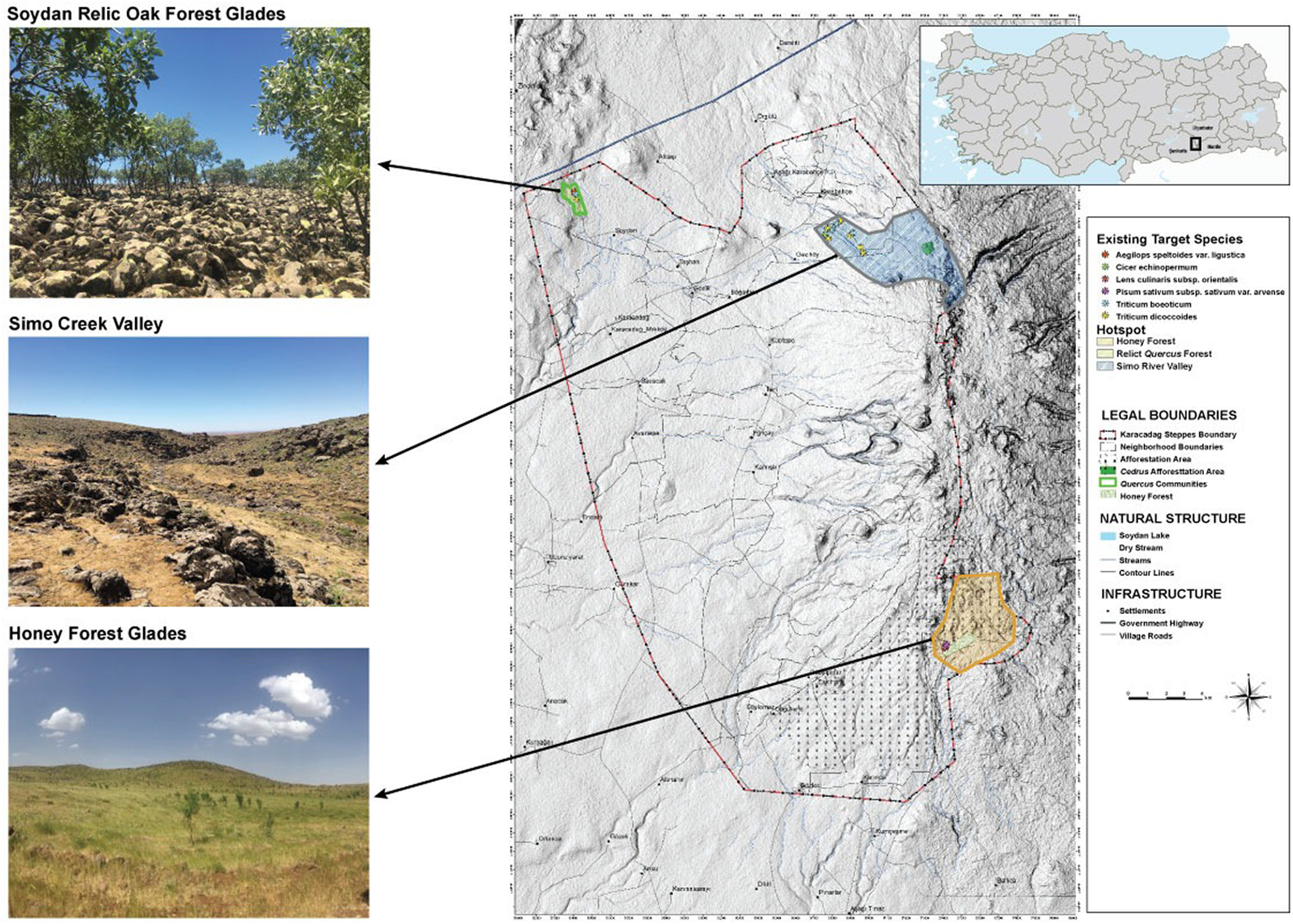
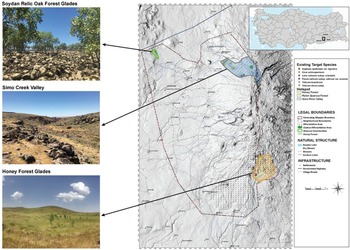
Three primary conservation hotspots were identified based on species co-occurrence, ecological integrity and feasibility for site-level protection (Fig. 2, Table 2). For example, Triticum dicoccoides was found in all three hotspots, while Cicer echinospermum occurred only in Simo Creek Valley. These site-specific patterns informed their selection as core areas in the MSAP. Figure 2 illustrates the geographic distribution of the hotspots and associated taxa, while Table 2 summarizes the criteria used in their prioritization.
In situ conservation hotspots for target crop wild relative (CWR) species in the Karacadağ Steppes. The map shows three prioritized hotspot areas: (1) Soydan Relic Oak Forest Glades, (2) Simo Creek Valley and (3) Honey Forest Glades, with accompanying photographs. Species distribution is based on field surveys and previous inventories. The inset map shows the location of the project area within Türkiye. Map layers include administrative boundaries, vegetation types and infrastructure. Background topographic and thematic layers were prepared under the ‘Conservation and Sustainable Management of Türkiye’s Steppe Ecosystems’ project 2022.
Conservation hotspots and target species presence

Threat classification and impact assessment
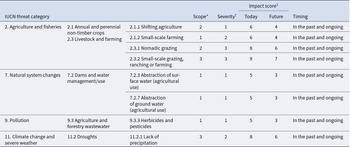
Threats were evaluated and scored using the IUCN–CMP classification system. The most critical threats identified were overgrazing, climate change impacts and habitat degradation.
The impact level indicates the extent to which the target species of the MSAP are threatened in the Karacadağ Steppes. IUCN Threat Classification and analysis of timing, scope and severity in the scoring of each threat is given in Table 3.
Classification and analysis of threats
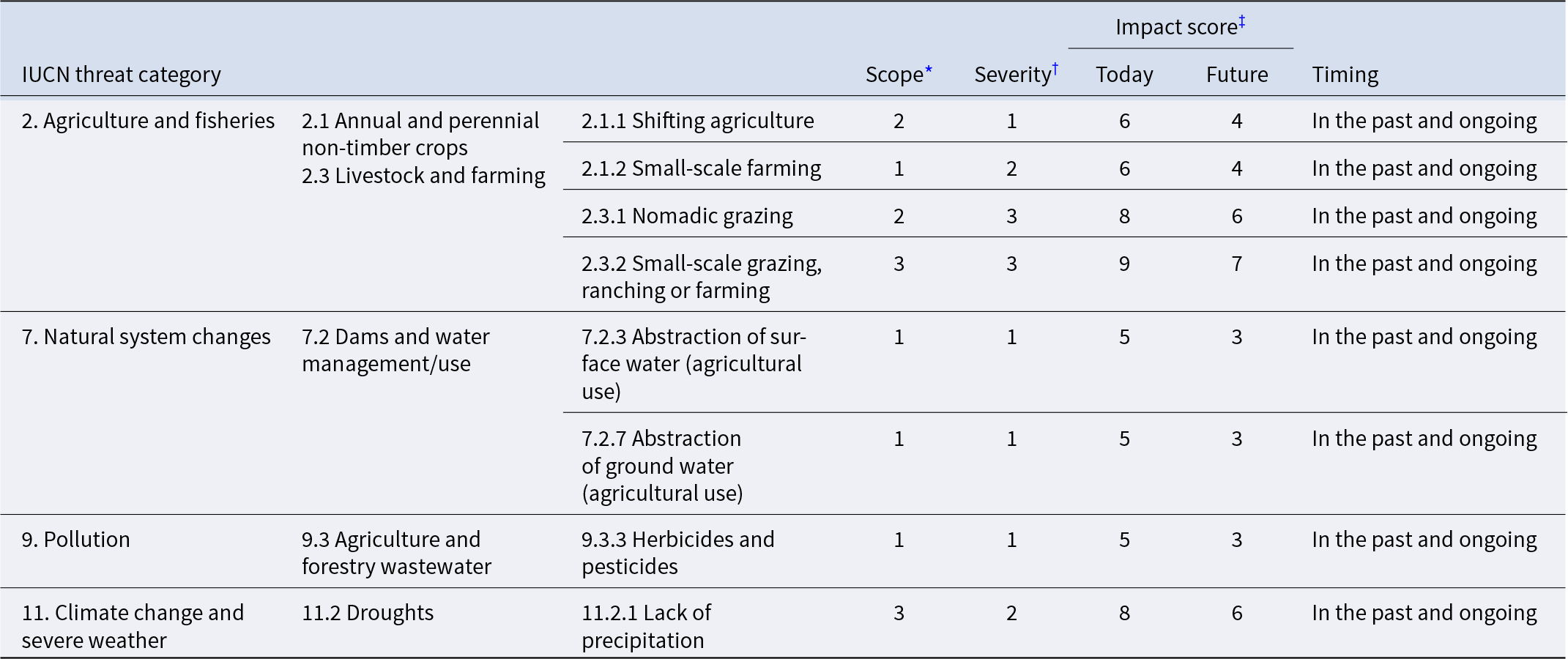
* Scope score: Affects the whole population (>90%) (3), Affects the majority of the population (50–90%) (2), Affects the minority of the population (<50%) (1), Unknown (0).
† Severity score: Very rapid (3), Rapid (2), Slow (1), Fluctuating (1), Negligible (0).
‡ Impact score:
High (8–9)
Medium (6–7)
Low (3–5)
All six taxa were found to be vulnerable to at least one of these pressures. Combined effects of grazing and drought were particularly damaging to annual species’ reproductive success.
Action plan
A 10-year MSAP was developed through two participatory workshops with experts and local stakeholders. These sessions helped identify and prioritize threats to six target CWR taxa and informed a set of integrated conservation actions aligned with ecological urgency and implementation feasibility.
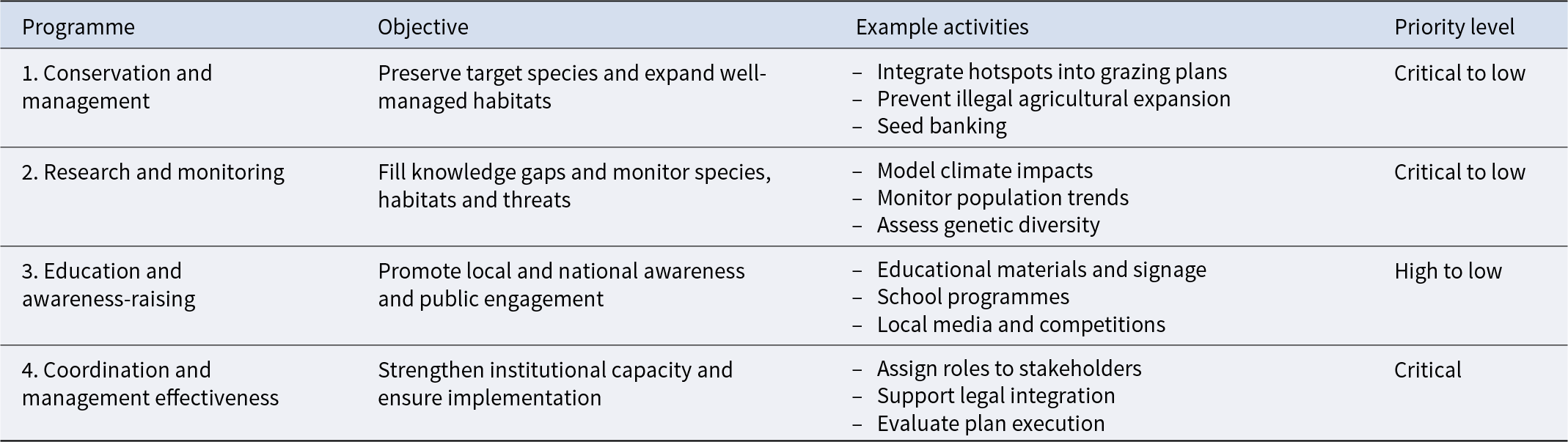
The plan’s overall goal is to protect and expand the natural habitats of wild relatives of cultivated plants in the Karacadağ Steppes and ensure their long-term in situ conservation as genetic resources. The plan aims to protect and expand the habitats of CWRs in the Karacadağ Steppes and ensure their in situ conservation as genetic resources over the next 25 years. Activities were grouped under four strategic programmes (Table 4). Each programme defines specific, measurable objectives and corresponding activities, which were ranked as Critical, High, Medium or Low based on their urgency and conservation value. Full details of the activities, timelines and success indicators are provided in Supplementary Table S1.
Strategic programmes and activity focus areas of the Karacadağ Multi-Species Action Plan (MSAP)
Discussion
Alignment with global and national frameworks
Global frameworks such as UN Sustainable Development Goal 2.5 and Aichi Target 13 highlight the urgent need to protect the genetic diversity of crops and their wild relatives (CBD 2010; UN 2015). Nevertheless, these frameworks are rarely integrated into national or regional conservation strategies. Türkiye’s strategic framework provides opportunities for action, even though it does not directly reference CWR. At the national level, the outcomes of this study and the proposed action plan are consistent with Türkiye’s National Biodiversity Strategy and Action Plan (Republic of Türkiye Ministry of Agriculture and Forestry 2019). While this plan does not explicitly mention CWR, the third national target highlights the importance of conserving the biodiversity of areas affected by agriculture, forestry and fisheries through sustainable management practices. Against this backdrop, our study demonstrates that participatory, site-specific approaches can effectively translate global commitments into practical conservation measures. Thus, the proposed multi-species plan contributes to scientific knowledge and conservation practice relevant to policy.
From threats to actions: The role of the MSAP in dryland CWR conservation
Developing and implementing an MSAP for CWRs in the Karacadağ Steppe is a novel approach to in situ conservation in dryland ecosystems. By targeting multiple co-occurring taxa, the MSAP provides a more efficient, ecologically coherent framework than traditional single-species action plans. This is particularly relevant in regions such as the Karacadağ Steppe, where species share habitat preferences and face similar anthropogenic and climatic threats.
Identifying six priority taxa enabled conservation hotspots to be pinpointed, where management interventions could have a broader impact. This spatial overlap enhances the cost-effectiveness of conservation actions and reduces redundancy. Furthermore, incorporating local knowledge and stakeholder participation increases the likelihood of achieving long-term sustainability. The multi-species approach also supports the conservation of associated biodiversity since CWR-rich sites often harbour distinctive assemblages of grassland and woodland flora. These areas act as micro-refuges, particularly in the context of increasing climate stress, helping to maintain the ecological processes vital for species adaptation.
Two main outcomes emerged from our study. Firstly, drought and grazing pressure were identified as the most significant threats, so the activities proposed in the action plan were structured accordingly. Secondly, the participatory process of preparing the action plan produced results consistent with existing literature and field observations. This may increase the plan’s feasibility and strengthen its prospects for successful implementation.
As emphasized in our action plan, and in line with Gudka et al. (Reference Gudka, Davies, Poulsen, Schulte-Herbrüggen, MacKinnon, Crawhall, Henwood, Dudley and Smith2014), who highlight that water limitation drives species adaptations and that many dryland subtypes are underprotected, climate-sensitive grazing regimes are crucial for mitigating biodiversity loss in arid landscapes. Evidence from field investigations and participatory assessments further aligns with broader findings from dryland ecosystems worldwide. A recent literature review on biodiversity conservation in arid regions concluded that plant biodiversity is increasingly threatened by the combined impacts of climate change and grazing pressure, emphasizing the importance of adaptive management practices (Timis-Gansac et al. Reference Timis-Gansac, Dinca, Constandache, Murariu, Cheregi and Timofte2025).
Global studies reinforce this perspective. Grazing pressure and aridity have been shown to interact synergistically, intensifying vegetation fragmentation and reducing regeneration potential (Zhao et al. Reference Zhao, Kéfi, Guirado, Berdugo, Eldridge, Gross, Le Bagousse‐Pinguet, Saiz, Asensio, Ochoa and Gozalo2025). Similarly, biodiversity and ecosystem multifunctionality in arid regions decrease in response to grazing intensity, emphasizing the importance of sustainable grazing practices adapted to local climatic conditions (Zhang et al. Reference Zhang, Wang and Niu2021). In Central Asia, the combined effects of grazing pressure and climatic variability have decreased water-use efficiency further, exacerbating drought sensitivity (Han et al. Reference Han, Li, Zhao, Zhang and Li2018).
At a regional level, studies in Jordan have shown that populations of CWR are particularly vulnerable to heavy grazing and land degradation. However, they have also shown that participatory management strategies, such as deferred grazing, soil conservation and water harvesting, can enhance their persistence (Ajlouni et al. Reference Ajlouni, El-Oqlah, Amri and Goussous2010). Overall, these findings imply that, while CWR taxa may be drought-tolerant, their long-term survival depends on proactive management strategies that integrate local participation, protect key populations in situ and preserve evolutionary potential in the face of changing climatic conditions.
The proposed action plan emphasizes the urgent need to develop targeted in situ conservation strategies for CWRs. This aligns with broader international guidance emphasizing the importance of creating specific national strategies and action plans for CWR conservation, despite the fact that most national biodiversity strategies and action plans rarely, if ever, explicitly reference CWRs (Maxted et al. Reference Maxted, Kell, Ford-Lloyd, Dulloo and Toledo2012). The MSAP framework shows how CWR conservation can be incorporated into national biodiversity strategies and land-use planning. Through participatory governance, shared responsibility and a phased 10-year implementation plan, this approach provides a scalable model for other dryland regions in Türkiye and beyond. The development of National Strategic Action Plans has been recognized as an effective conservation planning approach and a useful mechanism for raising policymakers’ and stakeholders’ awareness of the importance of CWRs (Magos Brehm et al., 2019). In this context, our proposed MSAP for the Karacadağ Steppe provides a practical, site-specific example that could inform broader national strategies. However, its successful implementation requires institutional commitment, regulatory support (e.g. grazing exclusion zones or seasonal controls) and continued investment in monitoring and capacity building. Integration with agri-environmental and rural development programmes could enhance the approach’s impact further.
While elements such as participatory governance, species co-occurrence mapping and threat-based prioritization are scalable and can inform conservation planning in other dryland regions globally, certain features of the MSAP – such as the specific taxa selected and land-use dynamics like open grazing – are context-dependent. Recognizing this distinction enhances the model’s utility by identifying both its transferability and its locally grounded components.
Implementation, limitations and policy integration
Although the MSAP provides a robust conservation roadmap, there are still several limitations. These include data gaps for certain species, a lack of high-resolution climate projections for the region and uncertainties regarding land tenure and long-term enforcement. Future studies should focus on population-level genetic analyses and monitoring of target taxa, their interactions with other species and the complementarity between in situ and ex situ conservation approaches. Integrating such data with population viability assessments would strengthen the prioritization framework and support adaptive management of the identified hotspots. Furthermore, replicating this model in other priority steppe zones, such as the Inner and Eastern Anatolian plateaus, would help to test its generalizability and refine best practices for multi-species conservation planning in dryland landscapes.
As Rouget et al. (Reference Rouget, Fenouillas, Cazal, Caubit, Ajaguin, Balard, Becker-Scarpitta, Calichiama, Karczewski, Lavergne and Lequette2024) argue, collaborative approaches that integrate multiple stakeholders improve operational efficiency and strengthen the science–policy interface. This suggests that including the responsible and collaborating institutions listed in our action plan during the development process, alongside clearly defined roles and responsibilities, can significantly enhance the effectiveness of conservation actions. Our approach, therefore, emphasizes that well-structured stakeholder involvement is indispensable for the success of MSAPs. The participatory workshops involved diverse stakeholder groups. While all participants contributed equally to threat identification and scoring, no formal assessment of stakeholder influence was conducted, which may be addressed in future work. In addition, although the MSAP includes seed collection and gene bank storage for target taxa, its integration with national breeding programmes remains limited. Future efforts should aim to better align ex situ conservation outputs with crop improvement strategies to maximize the genetic resource potential of wild relatives.
Conflicts between biodiversity conservation and traditional land-use practices, such as open grazing, are inherent challenges in steppe ecosystems. In Karacadağ, grazing is not only an ecological pressure but also a key livelihood strategy. The MSAP approach aimed to address this tension by incorporating grazing regulation into conservation planning and engaging land users directly in the decision-making process. While consensus was not always possible, this participatory process helped to build mutual understanding and identify acceptable trade-offs for hotspot protection. Other land uses, such as small-scale beekeeping, were noted in certain hotspots – for example, the Karacadağ Honey Forest Glades – and may be compatible with conservation goals if properly regulated, though further evaluation is needed.
Although multi-species approaches to management and conservation programmes have primarily been developed for protected areas, especially for faunal species (Hierl et al. Reference Hierl, Franklin, Deutschman, Regan and Johnson2008; Franklin et al. Reference Franklin, Regan, Hierl, Deutschman, Johnson and Winchell2011; Leyrer et al. Reference Leyrer, Brown, Gerritsen, Hötker and Ottvall2018; Karp et al. Reference Karp, Link, Grezlik, Cadrin, Fay, Lynch, Townsend, Methot, Adams, Blackhart and Barceló2023), similar planning approaches have yet to be applied directly to plant taxa, particularly CWRs. This study addresses this gap by adapting a multi-species planning framework for plant conservation, with a specific focus on CWR in steppe ecosystems – environments characterized by high biodiversity and ecological sensitivity. In doing so, the study demonstrates that multi-species conservation strategies, which have been proven to be effective for fauna, can also be applied to plant diversity conservation in challenging ecological conditions. As Barrows et al. (Reference Barrows, Swartz, Hodges, Allen, Rotenberry, Li, Scott and Chen2005) observed, multi-species conservation efforts have often been limited by methodology, particularly with regard to monitoring and adaptive management. By emphasizing a participatory, stakeholder-driven approach throughout the process, from planning to implementation and monitoring, our study addresses these limitations while also aligning with broader policy frameworks such as the CBD and the NBSAP for Türkiye. This highlights the importance of participatory governance as a critical element for the successful conservation of multiple species in sensitive ecosystems such as the steppe.
To support long-term sustainability, the MSAP outlines clearly defined institutional responsibilities and monitoring mechanisms. However, further work is needed to formalize governance structures for conflict resolution, adaptive management and cross-sectoral coordination.
Supplementary material
The supplementary material for this article can be found at https://doi.org/10.1017/S1479262126100653.
Acknowledgements
This study was prepared on the basis of the ‘Conservation and Sustainable Management of Türkiye’s Steppe Ecosystems Project’ that was carried out in 2021–2022 (GCP/TUR/061/GFF). The project is financed by GEF and implemented by the FAO in close cooperation with the Ministry of Agriculture and Forestry, the General Directorate of Nature Conservation and National Parks, the General Directorate of Plant Production and the General Directorate of Forestry. The authors would like to thank Sadık Serhat Arda for accompanying field excursions and all project team members for providing information on the region (Süha Berberoğlu, Zeki Aytaç, Bülent Gülçubuk, Bahattin Çelik, Emel Baylan, Sevgi Görmüş Cengiz, Ahmet Çilek, Murat Bayramoğlu, Serhat Cengiz, Meryem Bihter Bingül Bulut, Gülden Beşirbellioğlu, Ünal Satı Yılmaz, Zekiye Çetinkaya).
Author contributions
All authors contributed to the study conception and design. Material preparation, data collection and analysis were performed by Ş.B.T. and B.T.H. The first draft of the manuscript was written by Ş.B.T. and B.T.H. N.Y.A. contributed to the final draft of the manuscript, and all authors commented on previous versions of the manuscript. All authors read and approved the final manuscript.
Competing interests
The authors have no relevant financial or non-financial interests to disclose.
Ethical standards
This research adheres to ethical standards, ensuring participant anonymity, voluntary participation and the ethical treatment of all data. No personally identifiable information has been disclosed in the study.
Data availability statement
The datasets generated during and/or analysed during the current study are available from the authors on reasonable request.





 Open access

