


Background
There is a gap between theory and practice in health care, which hinders the provision of optimal evidence-based care (Dopson et al., Reference Dopson, Fitzgerald, Ferlie, Gabbay and Locock2002; De Maeseneer et al., Reference De Maeseneer, Van Driel, Green and Van Weel2003; McGrath et al., Reference McGrath, Lawrence and Richardson2004; Sanson-Fisher, Reference Sanson-Fisher2004; Helfrich et al., Reference Helfrich, Blevins, Smith, Kelly, Hogan, Hagedorn, Dubbert and Sales2011). Although methods for implementing research findings in clinical practice have been developed and introduced on a continuous basis, the uptake is generally slow (Berwick, Reference Berwick2003; Graham et al., Reference Graham, Logan, Harrison, Straus, Tetroe, Caswell and Robinson2006; Estabrooks et al., Reference Estabrooks, Midodzi, Cummings and Wallin2007). To facilitate implementation, it is essential to identify and analyse the barriers and opportunities. This can be achieved by, for example, enhancing the willingness to assimilate new findings through the creation of a scientific mode of thinking and a positive attitude towards change among staff members before the implementation of evidence-based practice (EBP).
The implementation of EBP in health care is a complex process (Greenhalgh et al., Reference Greenhalgh, Robert, MacFarlane, Bate and Kyriakidou2004; Grimshaw et al., Reference Grimshaw, Thomas, MacLennan, Fraser, Ramsay, Vale, Whitty, Eccles, Matowe, Shirran, Wensing, Dijkstra and Donaldson2004) involving the existence of some sort of evidence (a scientific base) and professional management during the implementation phase. Although a positive attitude towards scientific discovery and a willingness to change work practices on the part of physicians and nurses are conducive to the implementation of EBP (Francis et al., Reference Francis, Eccles, Johnston, Whitty, Grimshaw, Kaner, Smith and Walker2008), such a culture is not widespread today among health professionals. Thus, EBP is not always an integrated part of everyday health care practice.
The importance of context
Because of the complexity of the relationship between context and culture, there is an increased need to understand the context as a specific environment in which implementation takes place (McCormack et al., Reference McCormack, Kitson, Harvey, Rycroft-Malone, Titchen and Seers2002). The context can be viewed from different perspectives, including culture, leadership and evaluation, all of which must be taken into consideration before implementation (Rycroft-Malone, Reference Rycroft-Malone2004; Cummings et al., Reference Cummings, Estabrooks, Midozi, Wallin and Hayduk2007; Reference Cummings, Hutchinson, Scott, Norton and Estabrooks2010; Carlfjord et al., Reference Carlfjord, Lindberg, Bendtsen, Nilsen and Andersson2010). To achieve more efficient implementation, the context must be prepared in advance. It is in this respect that the attitude of the primary care staff towards research in terms of new thinking and willingness to change plays a major role (Morténius et al., Reference Morténius, Marklund, Palm, Björklund and Baigi2011a). One way of overcoming these barriers and contributing to a positive attitude towards EBP is through systematically structured communication between the scientific theoretical platform and clinical practice (Weiss, Reference Weiss1977; Rogers, Reference Rogers2003; Lee, Reference Lee2004; McGrath et al., Reference McGrath, Lawrence and Richardson2004). Communication that is planned and implemented on a continuous basis with the aim of facilitating a willingness to change contributes to a cultural shift and lays the foundation for the implementation of EBP in the health care organisation. Such a shift in culture requires that individuals seek out scientific evidence, thus creating evidence-based thinking (EBT) within the organisation.
Strategic communication
Strategic communication has been defined as the purposeful use of communication by an organisation to fulfil its mission (Hallahan et al., Reference Hallahan, Holtzhausen, Van Ruler, Vercic and Sriramesh2007). However, such communication must occur in combination with technical, administrative and economic advances to achieve specific goals (Dobbins et al., Reference Dobbins, Hanna, Ciliska, Manske, Cameron, Mercer, O'Mara, Decorby and Robeson2009). Strategically implemented communication relies on the above principle, where implementation is planned and the goals are quantifiable. Strategic communication is optimal when there is a willingness to adopt innovative ideas in advance of or in connection with the acceptance process (Kitson et al., Reference Kitson, Rycroft-Malone, Harvey, McCormack, Seers and Titchen2008). Different models exist for communicating and disseminating information within an organisation (Rogers, Reference Rogers2003). There is ongoing debate within the fields of sociology and organisational theory concerning the importance of networking among researchers (Russell et al., Reference Russell, Greenhalgh, Boynton and Rigby2004), and such networks are present within health care, where the exchange and communication of knowledge also take place (Rycroft-Malone et al., Reference Rycroft-Malone, Kitson, Harvey, McCormack, Seers, Titchen and Estabrooks2002; Berwick, Reference Berwick2003; Stetler et al., Reference Stetler, Legro, Rycroft-Malone, Bowan, Curran, Guihan, Hagedorn, Pineros and Wallace2006). A theoretically adapted model built on the diffusion of innovation uses a network of information agents who are part of the ordinary activities of the organisation (Rogers, Reference Rogers2003). Innovation theory describes the implementation of knowledge in a social context, building on stage-of-change presumptions about the adoption of the innovation on the part of innovators as well as reluctant adopters (Rogers, Reference Rogers2003; Grol et al., Reference Grol, Bosch, Hulscher, Eccles and Wensing2007). One way of utilising networks is to involve innovators and early adopters in the mission of disseminating knowledge. The introduction of such a model becomes more effective if all health professionals are involved in the network, thereby contributing to a positive and sustainable attitude towards change based on commitment and participation. The aim of this study was, therefore, to evaluate the utilisation of strategic communication as an indication of long-term willingness to change work practices among primary care staff. The research questions were:
-
• In what way does strategic communication contribute to a new way of thinking and willingness to change work practices over time?
-
• What is the attitude of the primary care staff towards the use of communication channels over time?
-
• Does the utilisation of the communication channels contribute to a willingness to change and, if so, in what way?
-
• In what way does the synergistic effect between the communication channels influence the flow of new thinking and the willingness to change work practices among primary care staff?
-
• What role is played by a network of early adopters who act as ambassadors in the staff change process?
-
• In what way do organisational changes and years of practice influence the willingness to change among primary care staff members?
Methods
Design and setting
This longitudinal evaluative study was conducted among a primary care staff cohort in a medium-sized region in south western Sweden, which comprised approximately 7000 health care employees, of whom one-fifth worked in primary care. Swedish health care is organised into three levels: national, regional and local. The regional level, which is the responsibility of the county councils, constitutes the basis for the health care, which is primarily financed by taxes. The goal of primary care is to improve the overall health of the population as well as treating diseases and health problems that do not require hospitalisation (European observatory on health systems and policies and World Health Organization. Regional office of Europe, 2005). All primary care regions in Sweden have the same goal. The majority of care providers operate within the public sector.
Measurements were obtained 7 and 12 years after formation of the cohort. It was assumed that a long-term effect reflected the impact of the intervention and not the influence of a campaign or an ad hoc consequence. At the beginning of the study, the primary care organisation had no history of performing research, nor any systematic communication channels to the scientific community, apart from the availability of scientific journals in medical libraries. An additional factor was that all employees had access to a computer. The region decided, therefore, to create a unit for research and development (R&D) comprising scientific experts within the fields of medicine, nursing, midwifery, biostatistics, public health, behavioural science and communication science to promote the introduction of science in primary care.
Strategic communication intervention
The goal of the communication activities was to contribute to a culture characterised by new thinking and willingness to change, which was to be achieved by the activities of the R&D organisation. The work process comprised three sequential phases. The first phase was intended to create knowledge of and interest in R&D among all primary care staff (Morténius et al., Reference Morténius, Marklund, Palm, Fridlund and Baigi2011b). The second phase was aimed at gaining acceptance for new thinking and bringing about a willingness to change work practices (short-term; Morténius et al., Reference Morténius, Marklund, Palm, Björklund and Baigi2011a). The purpose of the third phase was to sustain and increase the acceptance of new thinking and a willingness to change over time (long-term; this study), Figure 1.
An overview of strategic communication in a primary care staff cohort in 1997–2009. The process, from the creation of knowledge of and interest in research and development (R&D) to the implementation of a new way of thinking and willingness to change work practices in a primary health care context over time.

The strategic communication involved quantifiable goals for all primary care staff. The purpose was to increase the knowledge and awareness of, as well as interest in, R&D as a step towards promoting a new, creative scientific mode of thinking and a climate of increased willingness to change existing work practices. The communication was provided by means of three established channels as follows: oral (ie, research seminars and annual research days), written (ie, research bulletins and popular science reports) and digital (ie, intranet and internet websites). The content of these channels was based on a communicative platform (McGuire, Reference McGuire1968; Bandura, Reference Bandura1977; Rogers, Reference Rogers1995; McGrath et al., Reference McGrath, Lawrence and Richardson2004; Windahl et al., Reference Windahl, Olson and Signitzer2008). The choice of a forum for dialogue was intended to motivate staff members to assimilate research information and incorporate it in clinical practice. The content of the seminars was adapted to the target group and took a popular science form rather than a purely scientific approach (Morténius et al., Reference Morténius, Marklund, Palm, Björklund and Baigi2011a; Reference Morténius, Marklund, Palm, Fridlund and Baigi2011b). The mission of the research bulletin was to disseminate research news and scientific evidence to various professional categories with different educational backgrounds. The digital channel was used as a complement to the oral and written channels (Morténius et al., Reference Morténius, Marklund, Palm, Björklund and Baigi2011a; Reference Morténius, Marklund, Palm, Fridlund and Baigi2011b). Considerable efforts were made to ensure that all the three channels covered primary care staff members’ need for information about R&D in the organisation. Interaction between the channels was expected to lead to a synergistic effect that was intended to meet the long-term objective of the study.
The first measurement, which took place on completion of phases 1 and 2, revealed the need to accelerate EBT at the organisational level. Therefore, strategic communication was combined with a network that acted as a component of the implementation (Macfarlane et al., Reference MacFarlane, Shaw, Greenhalgh and Carter2005; Stetler et al., Reference Stetler, Legro, Rycroft-Malone, Bowan, Curran, Guihan, Hagedorn, Pineros and Wallace2006). Primary care staff members who exhibited the greatest interest (early adopters) and had a basic knowledge of scientific theory and method (15 credits or more) were nominated to form this network (R&D ambassadors). These ambassadors represented all professional primary care categories with no systematic hierarchical order. Unlike the other communication channels, the network strategy was based on direct influence through personal contact (Rogers, Reference Rogers2003) with a view to achieving a long-term impact on dissemination, first within the network and subsequently among the rest of the staff. The mission of these R&D ambassadors was to ensure that the introduction of EBT was positively received by as many primary care staff members as possible. They also acted as part of the co-creators of a culture of new thinking before the start of the process, in addition to being scientific role models (R&D course graduates, involvement in R&D projects) for their own colleagues. The network of ambassadors had a dual effect: (1) their knowledge of the context enabled them to market, communicate and transfer EBT to their own activities and (2) familiarity with the need for EBP in their own organisation enabled them to identify the correct form of EBP for implementation (Rycroft-Malone et al., Reference Rycroft-Malone, Kitson, Harvey, McCormack, Seers, Titchen and Estabrooks2002). The success of the network of ambassadors relied on these persons gaining something in return. They became part of a social network and received research information through news sheets, meetings and further education together with like-minded people (Fenton et al., Reference Fenton, Harvey, Griffiths, Wild and Stuart2001). These objectives were to be achieved by profiling the network (short-term effect) to function as a platform for future interventions aimed at preparing for an acceleration of innovative thinking.
Participants and data collection
At the beginning of the study in 1997, all primary care staff were invited to participate (N = 1206). In total, 846 employees (70%) agreed to take part. In the final phase, the 352 individuals who had been followed since 2004 were identified. This figure corresponded to 60% of the primary care staff members who remained in the organisation after 12 years. Drop-outs consisted of non-responders, those who did not take part in the study for various reasons, including parental leave or sick leave, or incomplete questionnaires as well as those who had stopped working in primary care (lost to follow-up). Because of the long study period and the high turn-over in primary care, the participants were deemed a relevant population for the analysis. Furthermore, the proportion of participating socio-economic status (SEI) groups in the study was equal to the original population at the time of the first measurement (Morténius et al., Reference Morténius, Marklund, Palm, Fridlund and Baigi2011b). The responses included in the present study were obtained after two dispatches of the questionnaires followed by two reminders.
Instrument
A 41-item questionnaire was designed pertaining to the influence of R&D communication on changes in primary care staff attitudes over time. The items were formulated by a research team composed of a communications expert, a researcher in the area of health care communication, two experts in health care research and a biostatistician (Morténius et al., Reference Morténius, Marklund, Palm, Fridlund and Baigi2011b). The following 15 questions were used: five items on background (age as a continuous, sex as a dichotomous and profession as a category variable) and years of practice as a continuous variable in addition to one question that served to identify the R&D interest as an effect of the strategic communication. Furthermore, there were two items on the role of strategic communication: Adoption of a new way of thinking and Willingness to change work practices, both as a result of R&D communication. Moreover, six categorical items with an ordinal scale; Have the Scientific seminars and Annual research days made you interested in finding out more about R&D? Have you read the Research bulletin and has it made you interested in learning more about R&D? Have your visits to the R&D Intranet and Internet websites made you interested in acquiring more information about R&D? covered the role of the communication channels (Cronbach's α = 0.85; Morténius et al., Reference Morténius, Marklund, Palm, Fridlund and Baigi2011b). A further two items were included that pertained to whether or not the R&D ambassadors had created a distinctive image for themselves among the staff (dichotomous) and whether or not primary care staff members were easily influenced by the larger organisational changes within primary care (dichotomous).
Statistical analysis
The responses were processed using the SPSS statistical program (Norusis, Reference Norusis1993). Descriptive statistics with frequency tables including the mean and standard deviation (SD) were employed to describe the variables in the analysis. For a comparison between dichotomous variables over time, the McNemar test was used. The paired t-test was employed to compare two variables that were approximately normally distributed. For an analysis of the influence of the communication channels on new thinking and the willingness to change, multiple logistic regression with an odds ratio (OR) and confidence intervals (CI) was utilised. The level of significance was set at 0.05. Items in professional categories were translated into SEI using the National Socio Economic Dictionary (Statistiska Centralbyrån, 1982). The SEI groups were divided into four sub-groups: I: assistant nurse; II: dental nurse (assistant), medical secretary, administrative staff; III: nurse, district nurse, midwife, dental hygienist, physiotherapist, occupational therapist; IV: physician, dentist, psychologist. The SEI groups were divided according to a ranking of principle taking account of the social position of a profession with emphasis on educational level. This sequential ranking order was in turn expected to exert an impact on the attitude to new thinking and willingness to change. The four SEI groups were approximately evenly distributed across the participating primary care units. A new variable was created by relating the years of practice to the propensity to be influenced by organisational change. An additional multivariate regression analysis using SPLine (Zhan and Yeung, Reference Zhan and Yeung2011) was included to estimate the probability of the willingness to change work practices as a function of the years of practice with regard to larger organisational change.
Ethics
All participants were invited to complete the questionnaire voluntarily and their confidentiality was guaranteed. They were advised about the aims and structure of the study, after which they gave their informed consent. The study conformed to the principles outlined in the Declaration of Helsinki (The World Medical Association, 2005) and was approved by the Ethics Committee at Lund University, Sweden.
Results
The mean age of the participants, 92% of whom were women, was 53.8 years (SD 7.4). The distribution across primary care staff revealed that SEI group III was the largest (48%), followed by SEI group II (28%) and SEI group IV (16%). The lowest level of participation was found in SEI group I (8%).
A new way of thinking and willingness to change
The continuous provision of strategic communication contributed to a significant improvement over time in terms of new ideas and the intention to change work practices. This improvement was independent of sex, age and SEI group (Table 1).
Utilisation of the communication channels and the attitude of primary care staff towards changing work practices (n = 352)
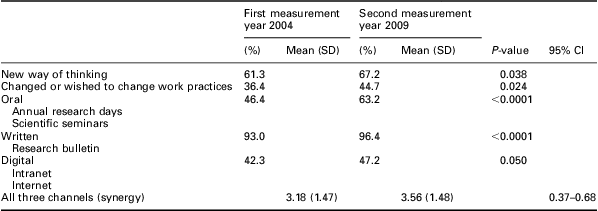
McNemar and paired t-test were taken into account.
The role of the communication channels
A comparison of the first and second measurements revealed a significantly increased use of all three communication channels. A significant synergistic effect became clear when the interaction between the three channels was analysed (Table 1).
Impact of the communication channels on willingness to change
Increased use of the oral channel contributed to a positive change in relation to new thinking (OR = 3.09; CI = 1.53–6.23). Similarly, improvements in the digital channel had a positive effect on new thinking among primary care staff over time (OR = 3.11; CI = 1.55–6.22). The findings were similar in terms of the willingness of the primary care staff to change with respect to the oral channel (OR = 2.32; CI = 1.13–4.77) and digital channel (OR = 3.41; CI = 1.72–6.74). There was a statistically significant synergistic effect on new ways of thinking (OR = 1.97; CI = 1.47–2.64) and willingness to change work practices (OR = 1.96; CI = 1.47–2.61). The analysis was adjusted for sex and age (Table 2).
The influence of the communication channels and their synergistic effect on the new way of thinking as well as willingness to change work practices among health care professionals

OR = odds ratio; CI = confidence intervals.
Multiple logistic regression was used with regard to the background variables of sex and age.
Improvement: difference between two measurements, in 2004 and 2009
Because of the very small difference between the two measurements, the written channel was not included in the analysis. Multiple logistic regression was employed to estimate the OR with regard to the background variables.
The role of networks in the intervention
The intervention included a network of ambassadors. During the final two years (see Figure 1) this network managed to create a distinctive image for itself in the sense that the primary care staff members were aware of it (24%) and its activities. This awareness was associated with a positive change in terms of new thinking among primary care staff when compared with those who were not aware of its existence (OR = 5.3; CI = 1.79–15.73).
The importance of years of practice for willingness to change
The results show that primary care staff members who had been in practice for a longer time were less willing to change, and this difference was constant over time. Those who were easily influenced by larger organisational changes were also more inclined to change their attitude (Figure 2).
Willingness to change as a function of years of practice and great organisational changes. A higher value of the variable Years of practice decreased the probability of a favourable value of Willingness to change work practices when the influence of great organisational change was taken into account (n = 352).

Discussion
The results reveal a significant improvement over time in terms of new thinking and a willingness to change among primary care staff. Strategic communication, in particular the digital and oral channels, had a significant impact on this process. Staff with fewer years of practice and a tendency to be open to influence by larger organisational changes exhibited a higher level of willingness to change their work practices. Furthermore, awareness of the existence of the R&D ambassadors was significantly correlated with the willingness of the primary care staff to change their work practices.
Long-term effect of the strategic communication
The systematically implemented strategic communication had a positive effect on the willingness of the primary care staff to change their work practices, which supports earlier findings that the use of theory-inspired strategic communication has a great influence (Morténius et al., Reference Morténius, Marklund, Palm, Björklund and Baigi2011a; Reference Morténius, Marklund, Palm, Fridlund and Baigi2011b). The results also indicate a positive and stable attitude towards willingness to change over time, which is in line with Drucker's (Reference Drucker1998) emphasis on behavioural change as a function of time. It should be noted that a long-term intervention can, to some extent, be affected by external factors not considered in the process, which may exert an independent influence on the results. However, in our study such influence was limited, as we included a questionnaire to investigate whether R&D communication was the only explanatory factor behind staff members’ willingness to change. Explanations for the success of the process can therefore be sought in the way that the communication was managed, in which the pedagogical platform played a central role. The results also reveal that the degree of influence on the change of attitude among primary care staff differed between the communication channels. This is consistent with the results of a short-term study (Morténius et al., Reference Morténius, Marklund, Palm, Björklund and Baigi2011a), where the oral followed by the digital channel contributed the most to the willingness of the primary care staff to change. The difference is probably because, compared with the written channel, the message of the oral channel was better adapted to the knowledge, attitudes and understanding of the target group (McGuire, Reference McGuire1968). Another likely contributor to the strength of the oral channel is the positive influence of role models, which is described in Bandura's social learning theory (Bandura, Reference Bandura1977). According to this theory, the learning process is cognitive, that is, the individual learns and imitates by observing the behaviour of others (model learning). In our study, the learning process was based on the creation of role models in the form of R&D ambassadors. In addition, the role of the digital channel in the change process became stronger than in the short-term study (Morténius et al., Reference Morténius, Marklund, Palm, Björklund and Baigi2011a). This development can probably be explained by the natural progression of the use of digital media in everyday health care, although the path to full-scale utilisation is still a long one, which agrees with data from other studies in Europe (Nijland, Reference Nijland2010). A study on health communication found that social media is gaining ground, but so far only as an adjunct to reach specific groups, such as young people (Atkinson, Reference Atkinson2009). On the other hand, the written channel had no significant influence on the change in behaviour, despite the high number of readers of the research bulletin. Nevertheless, this channel contributed to the acceptance process by promoting the other channels (synergy effect), see Figure 3. This finding is supported by studies from other research fields, such as marketing, communication and the media (Naik and Raman, Reference Naik and Raman2003).
The role of the communication channels and the synergy among them. A hypothetical factor of significance in the implementation of innovation in primary care.

R&D ambassadors as part of a theoretical approach
In the choice of a theory for knowledge translation, more than one is preferable, as there is considerable complexity in health care (Blackwood, Reference Blackwood2006; Estabrooks et al., Reference Estabrooks, Thompson, Lovely and Hofmeyer2006; Grol et al., Reference Grol, Bosch, Hulscher, Eccles and Wensing2007; Wallin, Reference Wallin2009). In addition to the traditional communication channels, a social network was used during the intervention to gain acceptance of EBT within the different areas of practice. The complex relationship between context and culture (McCormack et al., Reference McCormack, Kitson, Harvey, Rycroft-Malone, Titchen and Seers2002) requires a deep understanding of the context as a specific environment in which the implementation is to take place. An important aspect of this study was, therefore, the preparation of the primary care context before the implementation of EBP. Diffusion of innovation was chosen as a platform, where the emphasis of the intervention was on the long-term process aimed at social change (Rogers, Reference Rogers2003). The advantage of this method is that the effect achieved is continuous and lasting, which ensures stability over time. Furthermore, a social network of R&D ambassadors was created to start the facilitation process. It is likely that this process accelerated and prepared the ground for innovative thinking, as the R&D ambassadors were familiar with, lived in the context and had a scientific approach that could be communicated over time (Stetler et al., Reference Stetler, Legro, Rycroft-Malone, Bowan, Curran, Guihan, Hagedorn, Pineros and Wallace2006; Valente and Pumpuang, Reference Valente and Pumpuang2007).
Years of practice as a factor of importance
The results also demonstrate that the willingness of the primary care staff to change was likely to be greater for those who had fewer years of practice and those who had positive attitudes towards larger organisational changes over time. One reason may be that there is a positive co-variation between few years of practice and age. Another explanation is that employees with a positive attitude towards change are also willing to change their work practices. However, we have been unable to identify any studies that account for the presence of a positive attitude towards organisational change in the context in question. Our results are interesting in view of future plans to disseminate knowledge and promote the willingness to change.
EBT is a multidimensional process that needs to be underpinned by a high level of evidence. This, in turn, demands that the process, including its context and facilitation, rests on a scientific basis where the sustainability of the results is measurable (Rycroft-Malone, Reference Rycroft-Malone2004). To achieve this, descriptive studies where the results are often hypothesis-generating are not sufficient (Greenhalgh et al., Reference Greenhalgh, Robert, MacFarlane, Bate and Kyriakidou2004; Wallin and Ehrenberg, Reference Wallin and Ehrenberg2004; Blackwood, Reference Blackwood2006; Estabrooks et al., Reference Estabrooks, Squires, Cummings, Birdsell and Norton2009). This was the reason for choosing to conduct our intervention study using a prospective design that covered all primary care staff over time (longitudinal cohort), thus providing the best opportunities to correctly analyse and evaluate the causality between different activities. In addition to measuring the effect of the resources invested in the implementation process, the basic idea was the formation of a platform for the planning of future implementations. It can be assumed that, in the future, social media will play a significant role in the implementation and dissemination of research findings within health care. This is also true of social networks, which are not only characterised by personal commitment but also make use of social media. The use of strategic communication with a clear goal-oriented design contributed to quantifiable results (Hallahan et al., Reference Hallahan, Holtzhausen, Van Ruler, Vercic and Sriramesh2007).
Methodological issues
The study had a longitudinal design that covered a long period. It can therefore be assumed that the effect obtained between the two measurement occasions has a higher level of confidence compared with cross-sectional studies (Holford, Reference Holford2002). The fact that Cronbach's α (0.85) was satisfactory for validation of the questions on communication increases the reliability of the instrument (Morténius et al., Reference Morténius, Marklund, Palm, Fridlund and Baigi2011b). In addition, the multivariate analyses performed with regard to possible confounders increased the confidence. Moreover, it was not possible to find relevant controls for the participants, as approaches among R&D units in Sweden vary (Tydén, Reference Tydén2009). The theory-driven methodological implementation process, together with a validated evaluation instrument, should be considered a reliable tool in the implementation of EBT (Estabrooks et al., Reference Estabrooks, Squires, Cummings, Birdsell and Norton2009).
Conclusion
The results of this study, which are based on a 12-year cohort, indicate that the association between strategic communication, new thinking and the willingness to change prepares the way for a shift in culture. The fundamental step towards the incorporation of new thinking involves the readiness of primary care staff members to adopt new ideas and change their work practices to improve patient care. For this purpose, strategic communication, including a network of the R&D ambassadors, plays an important role.
Implications for practice
In the long term, strategic communication may lead to a more evenly distributed commitment among all primary care staff to promote high-quality patient care using new methods and research findings. As it takes considerable time to change attitudes, implementation models should be based on the results of longitudinal studies. Furthermore, the role of R&D ambassadors in the intervention process should be planned for the long term, as they require time to create a distinctive image for themselves, gain status within the organisation and enable a permanent change of attitude. Another important factor is that the organisational culture presents an obstacle to the interest in acquiring knowledge of R&D. This issue can be resolved by professional management that recognises the benefits of integrating theory into practice by means of a long-term policy. We were able to increase the integration of R&D within the organisation by promoting a higher educational level among primary care staff and recruiting recent graduates who are more adaptable to change.
Acknowledgements
We are grateful for the financial support received from the Department of Health Care, Region Halland, Sweden.


 Open access

