


1. Introduction
Digital twin technology has emerged as a transformative approach across manufacturing and product development domains (Reference Tao, Zhang and ZhangTao et al., 2024). Recent literature reviews indicate growing adoption in automotive, manufacturing, and various product development topics, with documented applications including predictive modelling of product behavior, condition monitoring and product and process optimization (Reference Anwer, Stark, Tao and ErkoyuncuAnwer et al., 2025; Reference Fett, Wilking, Goetz, Wartzack and KirchnerFett et al., 2025a; Reference Medina and HernandezMedina & Hernandez, 2025).
However, the space systems domain exhibits slower digital twin adoption compared to terrestrial industries (Reference Liu, Wu, Wan and XuLiu et al., 2024). This disparity persists despite identified potential applications in satellite development, mission operations, and lifecycle management (Reference Kessler, Messina and GolkarKessler et al., 2024). While product development research has established methodological frameworks for digital twin implementation (Reference Fett, Wilking, Goetz, Wartzack and KirchnerFett et al., 2025b; Reference Trauer, Mac, Mörtl and ZimmermannTrauer et al., 2023), their transferability to space-specific constraints remains underexplored (Reference Kessler, Gadzo and KochKessler et al., 2025).
The space industry is experiencing fundamental structural transformation. The New Space paradigm shift, coupled with increased military interest in space, has catalyzed significant market growth, with the global space economy reaching $613 billion in 2024 (Space Foundation, 2025). This growth is driven by increased usability of small satellites and constellation deployments, requiring serial production of hundreds of satellites annually (Reference Golkar and SaladoGolkar & Salado, 2021). This transition from artisanal single-unit manufacturing to industrial-scale production creates conditions analogous to sectors where digital twins have demonstrated value (Reference Medina and HernandezMedina & Hernandez, 2025).
Yet critical differences persist. Space systems face unique domain-specific constraints such as inaccessibility for post-deployment maintenance and extended operational lifetimes under extreme environmental conditions that necessitate adaptation of digital twin methodologies beyond direct application of product development frameworks. In this context, digital twins are anticipated to deliver value for space systems by enabling more informed design and verification decisions and supporting improved reliability and resilience in mission-critical operations (Reference Anwer, Stark, Tao and ErkoyuncuAnwer et al., 2025).
A previous systematic literature review by the authors identified potential knowledge transfer pathways between product development and space systems in digital twin implementation (Reference Kessler, Gadzo and KochKessler et al., 2025). The review mapped implementation challenges against established solution approaches from product development literature based on challenge similarity and domain analogy. Transfer potential was assessed through literature-based analysis and visualized as a Sankey diagram illustrating hypothesized solution-challenge relationships.
However, this approach exhibits inherent limitations. Literature-based analysis may not capture current industrial implementation realities, as research often lags practice, particularly in rapidly evolving fields. Beyond this disconnect, assessing cross-domain transferability requires specialized expertise that literature synthesis alone cannot provide. Theoretical frameworks need empirical validation through practitioners to move from theoretical possibility to practical feasibility (Reference HevnerHevner et al., 2004).
No prior study has systematically validated digital twin transfer potential through structured expert elicitation across both source (product development) and target (space systems) domains. This study addresses this validation gap through semi-structured expert interviews designed to validate, refine, and extend the literature-based transfer assessment. By triangulating perspectives from space systems practitioners (Panel A) and digital twin/product development experts (Panel B), the research evaluates both challenge criticality and solution transferability.
Two research questions guide this investigation:
RQ1: Which digital twin implementation challenges identified in literature are critical in industrial practice, and how do priorities differ between space systems and other product development domains?
RQ2: Which digital twin solutions and practices established in product development demonstrate transferability to space systems, and how do contextual factors moderate solution applicability across domains?
These questions enable systematic evaluation of the previously published transfer framework, facilitating evidence-based refinement through expert validation.
2. Methodology
This paper employs the design science research methodology based on Reference Hevner and ChatterjeeHevner and Chatterjee (2010) as the overarching methodological framework. The authors utilize the cycles described in Reference HevnerHevner (2007), as this methodology enables rigorous integration of the digital twin knowledge base with practical implementation requirements from the space context through iterative development and evaluation cycles, thereby providing a systematic framework for cross-disciplinary knowledge integration.
The research approach illustrated in Figure 1 comprises three phases.
Research approach adopted from Reference HevnerHevner (2007)

Figure 1 Long description
The flowchart illustrates the research approach for digital twins in space systems development. It is divided into three phases: Environment, Design Science Research, and Knowledge Base. Phase 1 begins with observations, discussions, and workshops, leading to the presumed need for digital twins in space systems development. This phase includes a literature review and a relevance cycle. The Knowledge Base phase involves a literature review and state of the art analysis, culminating in a comparative analysis of digital twin implementations. Phase 2 involves an interview study, results of the study, and contribution to the knowledge base. It includes a framework for defining objectives and validation in the current development environment. Phase 3 focuses on requirements and acceptance criteria for development support and the design of the support, leading to the publication of the results. The rigor cycle connects the design science research and knowledge base phases.
In the first phase, a systematic literature review was conducted. Phase 2 validated these results through an interview study that additionally generated further insights. The research project is currently at the end of Phase 2. This paper therefore presents the study results and provides input for goal definition, which represents the starting point of Phase 3. Based on the findings presented here, requirements and acceptance criteria for developing systematic development support will be elaborated in the next step. The methodology section is structured into four chapters and provides comprehensive detail to ensure full reproducibility of the study results.
2.1. Study design
To validate and extend the literature-based challenge analysis, a comprehensive qualitative interview study was conducted with two expert panels representing distinct but complementary domains. Panel A comprised space systems experts with practical experience in satellite development and operations (n ≥ 5), while Panel B consisted of product development and digital twin specialists (n ≥ 5). The target sample size was determined based on pragmatic resource constraints and the empirical expectation of reaching thematic saturation within this range (Reference DöringDöring, 2023; Reference Guest, Bunce and JohnsonGuest et al., 2006). One pilot interview per panel was conducted to refine the interview guide and ensure question clarity; these were excluded from final analysis.
Semi-structured interviews were selected to balance structure with flexibility, enabling systematic comparison while allowing exploration of unexpected themes. Interviews lasted 45-60 minutes and were conducted in German or English according to participant preference. All interviews were audio-recorded with informed consent, transcribed verbatim and verified for contextual accuracy.
Experts were asked to: (1) evaluate the importance and relevance of literature-identified topics within their domains, (2) assess transfer potential between product development and space systems contexts with explicit justification, and (3) identify missing aspects not captured in the literature-based framework. This approach facilitated both validation of existing findings and discovery of practice-based insights. Figure 2 illustrates the study design and procedure.
Interview study design and analytical workflow

2.2. Participant selection
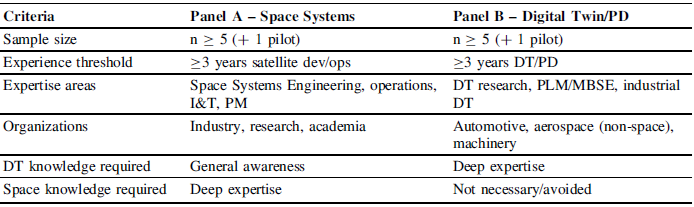
Table 1 provides an overview of the selection criteria applied to both expert panels.
Overview of participant selection criteria

Panel A participants were selected using purposive sampling based on minimum three years of professional experience in satellite development or operations (Palinkas et al., 2015). Relevant expertise areas included satellite systems engineering, mission operations, integration and testing, or project management. Participants were recruited from industry organizations and academic institutions to ensure diverse perspectives. General awareness of digital twin concepts was sufficient; deep digital twin expertise was not required.
Panel B participants required minimum three years of experience in digital twin implementation or product development research. Expertise areas encompassed academic digital twin research, industrial digital twin implementation, or product lifecycle management and Model-Based Systems Engineering (MBSE) applications. Participants represented automotive, aerospace, and machinery sectors to capture diverse digital twin applications and maturity levels. Prior space systems knowledge was not necessary and sometimes deliberately avoided focusing on transferable methodologies rather than space-specific technical knowledge.
2.3. Data analysis
Interview transcripts were analyzed using MAXQDA 2024 (Reference Palinkas, Horwitz, Green, Wisdom, Duan and HoagwoodVERBI Software, 2024) following a deductive-inductive hybrid coding approach (Reference Mayring, Fenzl, Baur and BlasiusMayring & Fenzl, 2019). This methodological combination enabled systematic application of theoretically derived categories while maintaining openness to emergent themes from the empirical data. A hierarchical bilingual codebook (English/German) was developed to ensure coding consistency across language contexts. Twelve interviews were coded within days of their completion. The codebook comprised three main categories, each serving distinct analytical purposes:
Product Development Solutions: This category contained 16 deductive codes derived systematically from the product development digital twin literature and represented on the left side of the Sankey diagram. These codes captured established approaches from product development practice including technical solutions, methodological approaches and challenges, and organizational topics. During the coding process, inductively developed codes were added to capture expert-proposed approaches, best practices, workarounds, and innovative solutions emerging organically from interview data. This inductive expansion was essential for discovering practice-based knowledge not yet documented in academic literature, representing a key contribution to the empirical study.
Space Systems Challenges: This category contained 13 deductive codes derived systematically from the space systems literature review and represented on the right side of the Sankey diagram. These codes encompassed technical, methodological, and organizational challenges and enabled systematic assessment of which literature-identified challenges resonated with expert experience, and which were considered less relevant or missing from the theoretical framework. As with the Solutions category, inductively derived codes were added during analysis to capture emergent challenges identified by experts but not present in the initial literature-based framework.
Meta Codes: This category comprises 16 analytical codes organized into four subcategories: Transfer Assessment, Context Factors, Expert Assessment, and Domain Specificity. These meta-level codes enabled analysis of expert judgment processes, validation of the literature-based Sankey diagram connections, and identification of consensus levels across panels.
Manual coding was employed rather than automated approaches due to several methodological considerations: the bilingual complexity of the dataset requiring nuanced language understanding, the requirement for context-sensitive interpretation of technical terminology that varies across domains, and the need to capture implicit meanings and expert reasoning patterns that automated systems struggle to identify (Reference Mayring, Fenzl, Baur and BlasiusMayring & Fenzl, 2019). Multiple codes per text segment were explicitly permitted to capture the multidimensional nature of expert responses, acknowledging that single statements often addressed multiple challenges, solutions, or meta-analytical dimensions simultaneously.
Inter-coder reliability was established through systematic procedures involving two independent coders: training sessions on the codebook structure and coding principles, pilot coding of sample transcripts with subsequent comparison and discussion, calibration meetings to resolve coding discrepancies and refine code definitions, ensuring methodological rigor (Reference Mayring, Fenzl, Baur and BlasiusMayring & Fenzl, 2019).
2.4. Validation approach
The study employed methodological triangulation, integrating literature-derived findings with empirical perspectives from both expert panels (Reference DenzinDenzin, 2012). This triangulation enabled systematic identification of convergences and divergences between theoretical frameworks and practical expert knowledge. The Sankey diagram visualization served as both a validation and synthesis instrument to map relationships between challenges, solutions, and assessed transfer potential, facilitating pattern recognition and expert feedback on overall transferability coherence.
3. Interview outcomes
This chapter addresses the two research questions through expert interview analysis. Section 3.1 establishes definitional alignment. Sections 3.2 and 3.3 present challenge validation and solution assessment from Panel A and Panel B respectively, addressing RQ1 and RQ2. Section 3.4 synthesizes findings into a validated transfer framework.
3.1. Digital twin conceptualization and definitional alignment
To ensure shared understanding, the interview protocol began by assessing participants’ understanding of digital twins. All participants received the definition of the German Scientific Society of Product Development in pre-interview materials (Reference Stark, Anderl, Thoben and WartzackStark et al., 2020), emphasizing three core components: physical product instance, digital representation, and bidirectional data exchange.
The Space Systems experts in Panel A initially highlighted digital modelling and simulation fidelity as the main features of the digital twin, with less explicit mention of the physical counterpart. When prompted with concrete examples, participants acknowledged all three components, though their conceptualization prioritized behavioral accuracy of digital representations. This perspective reflects an operational focus on predictive fidelity rather than system architecture.
The Product Development/Digital Twin experts from Panel B demonstrated closer alignment with the provided definition, consistently articulating digital model, physical counterpart, and data exchange components. Several experts noted that bidirectional interaction is often supported by human agency.
These findings confirm sufficient definitional alignment across both panels to ensure validity of subsequent challenge and solution assessments. Minor conceptual variations reflect domain-specific contexts rather than fundamental disagreement on digital twin characteristics.
3.2. Panel A: space systems expert perspectives
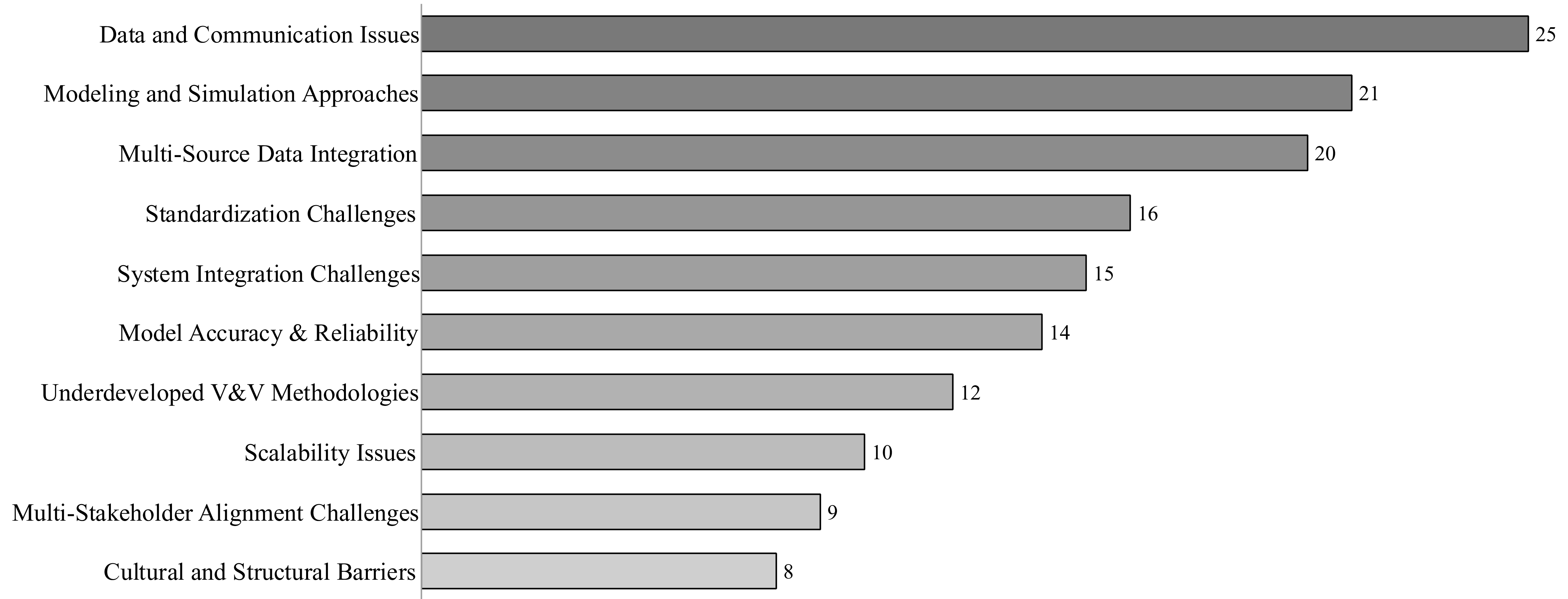
Figure 3 presents the ten most frequently discussed challenges in Panel A interviews. Technical challenges dominated attention (90 of 168 segments), followed by methodological (48 segments) and organizational challenges (30 segments). All literature-identified challenges were confirmed as relevant. However, expert assessments of importance revealed differing perspectives, which did not fully align with their frequency of appearance.
Ten most frequently referenced challenges for space systems in Panel A interviews (n=number of mentions)

Data and communication issues emerged as most frequently discussed yet received divergent importance ratings, particularly regarding asynchronous communication, protocol heterogeneity, and unified data authority. High-importance perspectives emphasized fundamental space constraints that prevent real-time digital twin operation: limited bandwidth, sparse ground station contact windows, and sensor mass/power trade-offs. Conversely, low-importance perspectives characterized these same issues as standard design trade-offs requiring acceptance rather than novel solutions. This divergence reflects differing views on whether digital twins must overcome inherent space constraints or adapt to them.
System integration challenges, despite moderate discussion frequency, received consistent high-importance ratings. Experts identified integration as the critical phase where irreversible decisions and cost escalation occur. Digital twins were identified as having high potential to pre-validate integration procedures. Standardization evoked mixed views, ranging from seeing existing standards as a burden to calls for digital twin-specific standards and the use of digital twins as tools for managing compliance. These contrasting views reflect varying operational contexts within the space sector.
Among methodological challenges, underdeveloped V&V methodologies, while moderately discussed, received high importance ratings due to the space sector’s risk-averse culture and necessity of trusting digital twin predictions for mission-critical decisions.
Organizational challenges were confirmed as significant obstacles, although individual challenges were mentioned the least. Experts suggested framework refinements: distinguishing individuals from organizational resistance, clarifying cultural barriers to encompass international collaboration contexts, and reframing cost categories for satellite-specific operations.
Panel A validation confirms the literature framework while revealing critical domain emphases: system integration and V&V emerge as high-priority despite not dominating discussion frequency, data constraints show acceptance as operational realities, and the challenge terms require domain-specific refinement for space contexts.
3.3. Panel B: product development/digital twin expert perspectives
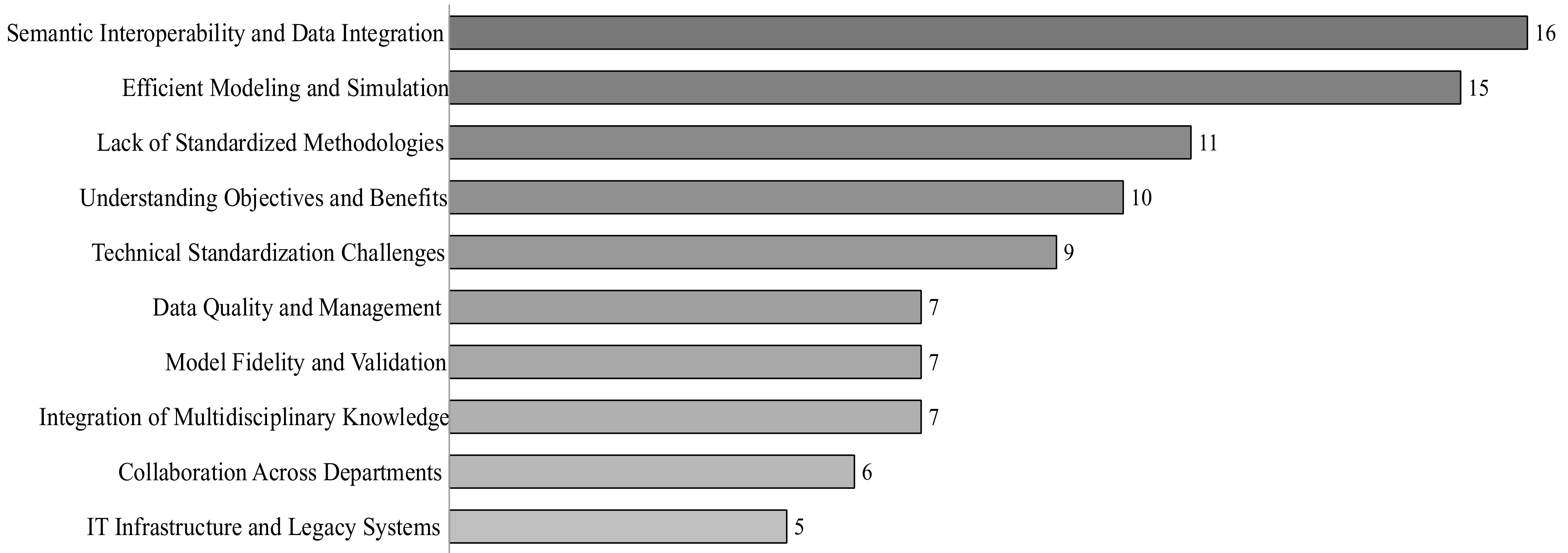
Figure 4 presents the ten most frequently discussed solution approaches in Panel B interviews. Unlike Panel A’s technical dominance, discussions showed balanced distribution across categories: technical (52 segments), methodological (48 segments), and organizational (45 segments) solutions. This balance reflects product development experts’ holistic perspective on digital twin implementation.
Ten most frequently referenced solution approaches for digital twin in product development in Panel B interviews (n=number of mentions)

All literature-identified solution approaches were validated as relevant and actively pursued. Experts characterized digital twin implementation as an evolving landscape with ongoing research activities across all solution categories, suggesting broader industrial adoption in non-space sectors is imminent. However, experts criticized inconsistent framing within the solution framework.
Semantic interoperability and data integration emerged as the most frequently discussed technical solution, with experts emphasizing fundamental interdependencies with other approaches. Experts noted that sensor technology enabling digital twins simultaneously increases data management complexity, requiring robust quality assurance. Industry responses are visible through specialized tools and standardization initiatives. Experts attributed highest implementation potential to technical solutions due to active industry development and clear value propositions.
Methodological solutions centered on efficient modeling and simulation, which experts identified as the core of digital twin implementation. The integration of heterogeneous models and simulations dominated discussions, complemented by frequent references to the lack of standardized methodologies. Experts noted critical gaps in the framework: lifecycle assessment of digital twins themselves and AI methodology integration were insufficiently represented.
Organizational solutions diverged from Panel A perspectives, with experts assigning higher importance to these approaches. Understanding objectives and benefits was emphasized, with experts stressing that objective clarity must precede implementation and involve all stakeholders to ensure data sharing and interaction capabilities. Supply chain integration was identified as particularly critical.
Notably, regulatory compliance and cost considerations received low importance ratings, contrasting with Panel A’s emphasis on these organizational barriers. Experts acknowledged costs as relevant but manageable, emphasizing that with top-down support and resource allocation, organizational challenges become tractable. Regulatory drivers, particularly digital product passport requirements, were viewed as potential accelerators of digital twin value. Experts emphasized solution interdependencies: efficient modeling requires cross-departmental collaboration, which depends on shared understanding of objectives and benefits, illustrating the interconnected nature of organizational enablers.
Panel B validation confirms active solution development across all categories while revealing framework refinements. Organizational solutions were assessed as most transferable across domains due to their domain-agnostic nature, whereas technical and methodological solutions require context-specific adaptation. The framework requires two key refinements: reformulation of problem-oriented topics toward solution orientation, and integration of emerging topics such as lifecycle perspectives and AI methodologies to comprehensively represent product development digital twin implementation.
3.4. Cross-panel synthesis: transfer assessment and contextual moderators
The updated cross-panel analysis, summarized in Figure 5, reveals distinct challenge prioritization patterns reflecting domain-specific operational realities. Panel A discussions concentrated heavily on technical challenges, while Panel B exhibited balanced distribution across categories. This divergence reflects differing professional contexts: space systems experts encounter technical constraints as primary operational barriers, while product development experts’ implementation experience surfaces organizational enablers and methodological integration challenges as equally critical.
Domain-specific characteristics shape challenge perception. Space sector experts emphasized risk-averse culture, conservative approaches, high trust requirements, prototype manufacturing, diverse mission types, and extreme product costs as contextual factors. Conversely, product development experts highlighted regulatory drivers, sustainability focus, higher production volumes, lower unit costs, and emphasis on maintenance, reuse, and recycling. These divergent operational contexts explain differing challenge prioritizations despite addressing the same digital twin implementation framework.
Revised transfer assessment with expert-identified connections across categories (blue/technical, orange/methodological, green/organizational); line thickness indicates transferability strength

High transfer potential characterizes organizational solutions and data management approaches due to their domain-agnostic nature. Cross-cutting methodological themes also demonstrate high transferability when abstracted from technical implementation: model validation principles connect to model fidelity challenges, technical standardization addresses scalability problems, and semantic interoperability enables multi-source data integration across domains. Experts identified these connections as valuable despite requiring domain-specific instantiation. Medium transfer potential applies to emerging solution approaches still under active development, such as ontology frameworks, and domain-specific regulatory compliance mechanisms requiring adaptation. Low transfer potential characterizes concrete technical implementations requiring adaptations for space-specific constraints.
The required framework refinements were implemented after the interview study, including explicit interdependency representation between challenge categories, AI/ML methodology integration, lifecycle perspectives, uncertainty quantification, and business model considerations.
3.5. Contextual factors shaping digital twin implementation
Challenge prioritization and solution applicability depend fundamentally on contextual factors varying within and across domains. New Space versus Traditional Space paradigms emerged as critical moderators. Traditional Space exhibits risk-averse cultures, extensive documentation, and prototype manufacturing with single-mission focus, creating organizational overhead for digital twin adoption. New Space demonstrates convergence with product development through agile approaches, Commercial Off-The-Shelf components, and constellation missions with multiple identical satellites: “New space is much more willing to pay the cost of taking risks”. This convergence enables higher solution transfer potential from product development to New Space than Traditional Space contexts.
Product volume emerged as a critical moderator of digital twin business case viability across both domains. Experts emphasized distributing initial digital twin development costs across all instances to achieve economies of scale at higher volumes. Quality management benefits scale with volume, and instance-level digital twins enable data aggregation across product populations.
Lifecycle phase emphasis reveals domain differences. Space experts consistently prioritized pre-launch validation: “In the ideal case, you solve all challenges on ground” emphasizing ground-based digital twin utilization to avoid in-orbit troubleshooting. Product development experts focused on operational phase monitoring and end-of-life value extraction. Regulatory drivers reinforce this pattern: Digital Product Passport requirements, battery passport mandates, and R-strategy compliance (reuse, recycling, remanufacturing) create institutional incentives for lifecycle-spanning digital twins.
System complexity demonstrates positive correlation with digital twin value proposition while simultaneously increasing implementation challenges. Subsystem or payload focused implementations offer pragmatic entry points, balancing feasibility against functional completeness.
4. Discussion
4.1. Interpretation of transfer patterns
This study reveals that digital twin knowledge transfer potential correlates with solution approach abstraction level rather than challenge-solution similarity matching. While the literature-based framework (Reference Kessler, Gadzo and KochKessler et al., 2025) mapped solutions to challenges based on domain similarity, expert validation demonstrates that transferability depends on whether solutions address domain-agnostic versus domain-specific problems. High-abstraction organizational and methodological approaches transfer readily across different domains, whereas low-abstraction technical implementations require fundamental redesign despite apparent challenge similarity.
Divergent challenge prioritization reflects implementation maturity and expert background differences. Panel A’s technical focus (90 of 168 segments), shaped by systems engineering backgrounds, contrasts with Panel B’s balanced distribution from cross-functional implementation experience. Product development experts recognize organizational barriers including stakeholder alignment, objective clarity, and cross-functional collaboration as persistent impediments that technical solutions alone cannot address. This suggests space sector adoption will follow similar maturity trajectories, with initial technical focus yielding to organizational priority as implementation experience accumulates. Expert assessments revealed consensus on high-abstraction solution transferability but divergent perspectives on context-specific technical solutions, highlighting that transfer potential depends on solution specificity rather than categorical assignment. The validated framework provides systematic assessment methodology accounting for abstraction level, domain constraints, and operational context.
4.2. Practical implications
The framework enables evidence-based digital twin implementation decisions for space systems practitioners by transferring solution approaches from product development into the conceptual and architectural design of satellite systems. The diagram contributes to the design of digital twins in space systems by providing a structured starting point that serves as a reference for selecting suitable solution patterns under different organizational and mission constraints. Organizations should prioritize high-abstraction organizational solutions (e.g., stakeholder integration frameworks for defining digital twin roles within the system concept and objective definition methodologies for deriving digital twin requirements from mission goals) as foundational enablers before investing in technical infrastructure. In practice, New Space organizations can often benefit from a more direct transfer of product development solutions, while Traditional Space contexts typically require stronger adaptation and integration into existing system engineering processes. Implementation should follow a phased approach for structuring digital twin design activities: first establish organizational foundations, then implement methodological frameworks, and only thereafter deploy technical solutions. Volume considerations determine business case viability and thus the initial granularity of the digital twin design, guiding designers in scoping the twin implementation: constellation missions justify comprehensive investments through cost amortization and fleet-level learning, whereas single-mission applications benefit from starting with lower-granularity, subsystem-level twins and approaching the problem stepwise, expanding scope only if early implementations prove their value. Lifecycle emphasis further guides capability prioritization: initial implementations should focus on pre-launch validation capabilities, while operational-phase value extraction emerges as implementation maturity increases.
4.3. Limitations
Sample composition (n=12, min 5 per panel) was skewed towards academia, limiting commercial space industry and program management perspectives. Panel A comprised predominantly systems engineers, potentially amplifying technical challenge emphasis. Geographic concentration in German-speaking regions and limited New Space startup representation restrict global transferability. Volunteer participation may be biased towards digital twin advocates. Interview methodology enables deep expert insight but precludes statistical generalization. Framework validation through expert assessment rather than empirical implementation requires subsequent operational deployment validation to confirm practical applicability.
5. Conclusion
This publication contributes to the digital twin knowledge base within a design science research perspective by empirically grounding a framework for identifying cross-disciplinary knowledge transfer potentials between product development and space systems. Drawing on expert interviews from both domains, it addresses the gap between the maturity of digital twin applications in product development and their comparatively limited adoption in the space sector.
With respect to RQ1, the analysis shows that perceived challenge criticality differs systematically between domains: space systems experts emphasize technical integration, data constraints, and verification-and-validation, whereas product development experts foreground organizational and process-related enablers. Regarding RQ2, the findings indicate that transferability is strongly associated with abstraction level: organizational and methodological solutions tend to transfer with minor adaptation, while concrete technical implementations generally require substantial re-contextualization to address space-specific constraints.
Three theoretical contributions emerge. First, abstraction level is a more informative moderator of transferability than domain similarity alone, providing an alternative view for assessing cross-domain digital twin knowledge transfer. Second, the identified influence of operational paradigm (New Space versus Traditional Space), product volume, and lifecycle emphasis on solution applicability challenges universal “best practice” recommendations and underscores the need for situationally aware guidance. Third, expert-validated mappings between challenges and solution patterns reveal cross-categorical interdependencies that motivate exploring network-based representations in future work.
For practitioners, the framework suggests that organizational and methodological solutions should be established before investing in technical implementations, with New Space contexts generally exhibiting higher transfer potential than more traditional space environments. Future research should design and test requirements frameworks that operationalize the abstraction-based perspective, conduct New Space case studies to validate the framework in concrete projects, and further evaluate its robustness through operational deployment in industrial space system development.
Acknowledgement
This research is funded by dtec.bw – Digitalization and Technology Research Center of the Bundeswehr through the Project SeRANIS. dtec.bw is funded by the European Union – NextGenerationEU.




 Open access

