




Introduction
Until recent centuries, if not recent decades, beardless young males had been distinct social figures in various societies and cultures. In the Islamic world alone, for more than a millennium, adolescent males had been among the objects of desire for adult men, and transgenerational relationships between older men and younger males were not uncommon. Indeed, it was only in the aftermath of the colonial encounter and through various modernization processes that such figures and relationships began to lose their social intelligibility. The emergence of new regimes of knowledge around “proper” gender and sexual expressions pushed homoerotic male (and female) behaviors beyond the purview of social decency and respectability. In the course of the nineteenth and twentieth centuries, witty and playful characters such as köçek, the dancing young male in Ottoman Turkey, or amrad, the beautiful beardless male in Iran, gradually diminished in their societies or merged with other categories of personhood.Footnote 1 In contrast, Afghanistan is one of the few places where the category of bachah—the beardless youth—has survived and maintained its aesthetic and erotic aspects in the public imagination. The sheer bulk of folksongs, folktales, jokes, humorous stories, and insults with bachah as their constitutive theme points to the vitality and liveliness of this character in the Afghan cultural context.Footnote 2
In this article, I provide an introduction to the history of the various possibilities and features of man-bachah relationships in Afghanistan from the rise of the Afghan kingdom in the late eighteenth century. In so doing, I ask: What meanings and implications has the bachah invoked in Afghanistan's recent history, and what discourses and practices has it given rise to over these turbulent decades? The discussions here are based on both primary and secondary sources from the past 200 years, as well as on stories I gathered when conducting fieldwork in Afghanistan between 2016 and 2021. As such, this article is not meant to replace a book-length historical research, but merely provides sketches of historical landscapes, so to speak. The following discussions thus hint at the gender and sexual mores of their time, helping us locate the figure of the beardless male within a broader temporal context and understand its shifting signification. In the absence of any scholarly work on male (homo-)sexuality and homoeroticism in Afghanistan, this essay serves as a modest attempt at generating more conversation on the subject.
To that end, this inquiry is divided into five parts. First, I discuss a ferocious incident that occurred between two communities over the fate of a beardless male in Kabul in 1803, from which I derive a number of relevant themes. Second, I examine the institution of gholām-bachahs in the court of Amir ʿAbd al-Rahman Khan (r. 1880–1901; written ʿAbdur Rahman Khan in English sources)—the all-powerful ruler of Afghanistan in the late nineteenth century—and explore its social and political implications. Third, I focus on the spectacle of dancing-boys, which are arguably the best-known exhibition of bachah-bāzi (liaising with bachahs) in Afghanistan.Footnote 3 Fourth, I discuss the bachahs’ vulnerability during the mujahidin war of the 1980s and 1990s, which is followed, in the fifth and final section, by an exploration of how the international community and local elite approached older man-younger male relationships after 2001. Although the following sections are structured chronologically, I move rather liberally back and forth through time to foreground continuities and ruptures. More broadly, I show how the content and implications of the category of bachah have been in constant flux and intimately connected to wider social, political, and economic developments inside Afghanistan and beyond.
The dishonored amrad: a sectarian fight
Written in the 1860s by Sultan Mohammad Khales, Tārikh-e Soltāni (The History of Kings) covers the history of Afghan kings—their accessions to and removals from the throne—up to the death of Shah Shojāʿ (d. 1842). The book is written in literary prose and, until recently, was one of the main sources for historians of Afghanistan. Among the stories included in the book is an account of the ousting of Shah Mahmud (r. 1800–1803 & 1809–1818), the fourth ruler of the Durrani kingdom, in 1803. According to Khales, a Shiʿi Qizilbash man lured a good-looking Sunni Tajik amrad (beardless youth) into his house and asked some close friends to join for a bazm (celebratory event). A few Qizilbash men gathered and intoxicated the “helpless” (bichārah) amrad, forcefully committing “improper” (nāshāyestah) and “despicable” (shaniʿ) acts on him for days. Upon his release, the young male went to his father and shared the story, who in turn pleaded to the court for Shah Mahmud to punish the perpetrators. However, as the Qizilbash had played a significant role in helping the Durranis come to power, Shah Mahmud expressed a neutral position.Footnote 4 Dissatisfied by the king's approach, the Sunnis went to the prominent cleric of the time, Mir Wāʿez, who issued a religious decree against the Qizilbash, which led to sectarian violence in Kabul. According to Khales, 3000–4000 people were killed from both sides each day. Shah Mahmud's opponents among tribal leaders seized this opportunity and thus unseated the king.Footnote 5
Not every historian agrees with the accuracy of this story, and at least one account points to an entirely different chain of events that led to the first sectarian fight between the Shiʿi Qizilbash and Sunnis in Kabul.Footnote 6 More important than the veracity of the story, however, is the way in which it is narrated in Tārikh-e Soltāni, as the telling elucidates the social and cultural norms of the time in which the book was written and from which the entire narrative is derived. To begin, the author initially introduces the Sunni young male as tefl-e sādah-ʿozār-e amrad (a beardless, downy-cheeked adolescent male). His “beauty” (hosn) is said to have been exemplary and unrivaled, with a face “as shining as the day of consummation/union [with the beloved]” and hair “as long as the night of separation.” Included in the story is a poem from the nineteenth-century Persian poet Qāʾāni, which praises the amrad's beauty and commends his “chubby buttocks,” “narrow waist,” “sweet words,” and “refractory manners.” It is only after the Qizilbash men force themselves upon him that the tone of the story shifts and the author condemns their despicable behavior.
As Khales's writing reveals, a young beardless male in mid-nineteenth-century Afghanistan could be avidly complimented and characterized by the beauty of his lips, eyes, cheeks, hair, face, waist, and the like, without him necessarily losing his honor. What drew condemnation was not the praising of his beauty or even falling in love with his allure and charm; rather, it was the (forceful) penetrating sexual relationship that was strongly rebuked and characterized as “improper” and “despicable.” We learn from this story that such carnal relationships were frowned upon and harshly punished according to religious laws and social norms.
It is perhaps difficult for a contemporary reader to imagine how an adult man could poetically praise a young male's “chubby buttocks” (farbeh sorin) but have no sexual fantasies about him, as such explicit characterizations of the human body's erotically charged organs seem to carry sexual overtones. Yet, drawing a clear distinction between a refined aesthetic sensibility towards beardless males on the one hand, and initiating sexual contact with them on the other, has historically worked as a compelling excuse for the permissibility of transgenerational relationships among males. While pederasty has persistently been deemed a grave sin in Islam and among Muslims, there has always been more leniency around expressing love for adolescent males, especially if lovers did not fall into excess and continued to properly fulfill their other social and familial responsibilities. At times, expressing passionate but chaste love towards handsome youth was even seen as part of a wider ideal of refined sensibility, or, in Sufi circles, “a means of personally experiencing the overwhelming beauty of God.”Footnote 7
Had the relationship between the Qizilbash men and the Sunni Tajik amrad remained concealed, it would perhaps have not led to public anger and the ensuing violence. What Stephen Murray aptly characterizes as “the will not to know”—or the Islamic ethos of avoiding public recognition of deviations from the norm—was not observed in this case.Footnote 8 If anything, there was a collective will to know more and investigate the matter further. Indeed, the abuse of the amrad had not only dishonored him and his immediate family. Given that he also belonged to wider Tajik and Sunni communities with different ethnic and religious affiliations than the non-Afghan Shiʿi Qizilbash, the incident was also interpreted as a violation of the dignity of those Afghans who could not condone this affront to their collective pride. The amrad's body therefore became a vessel that exposed existing political and religious tensions between the Qizilbash and the king's rivals. Had Afghans remained silent or shown cowardice in the face of such public shame, they would have been deemed bē-ghayrat, a charged term Afghans use for men who are incapable of defending their honor.Footnote 9 Penetrating the body of that youth was thus understood as an act of aggression, providing his wider communities with a just excuse to penetrate the perpetrators’ neighborhoods in retaliation.
In today's Afghanistan, such ideals of beauty can still be effortlessly related to adolescent males, and it remains culturally intelligible for one to feel thrilled by them. Same-sex relationships with young males is also widely condemned and may threaten the reputation of the perpetrator, especially if the carnal aspects of the relationship become public knowledge. Indeed, one rarely hears a man with shawq (fever/fervor) for bachahs willingly admit to any carnal desire. Instead, the bachahs’ companionate nature, manners, beauty, and charm are emphasized. In our conversations, men interested in bachah-bāzi often noted that they are not bachah-gāy—they do not penetrate bachahs—but instead bachah-khosh—that they like to socialize with bachahs and enjoy their beauty and companionship.Footnote 10 Until recent years, bachahs continued to represent their patrons’ honor and status, especially in Afghanistan's northern and southern regions and among certain groups and communities in Kabul, for whom keeping a good-looking bachah was a way to publicly display their fortune and prestige.
Gholām-bachahs: the homoerotics of the Afghan court
Similar to both earlier and contemporary Persian and Ottoman kings, Afghan rulers kept gholāms in their courts. Gholām is usually translated as “slave” in English, but the affective features of the term are lost in translation. In fact, gholām also denotes “the good-looking adolescent male” in Arabic (plural: ghilmān) and “the male beloved” in classical Persian and Urdu poetry in which the language of slavery was (and still is) a major trope in representations of the relationship between the (male) lover and the (male) beloved.Footnote 11
The gholāms of Afghan courts largely came from Central Asia, India, and East Africa, and worked as beardless servants (pishkhedmat), bearded royal bodyguards (gholām-e shāh), and castrated eunuchs (khwājah). With the colonial powers’ expansion into new territories, it became difficult for Afghan notables to take gholāms from nearby regions, and thus the late-nineteenth-century Afghan court adopted a new gholām arrangement. ʿAbdur Rahman Khan (r. 1880–1901) populated his court with tens of gholām-bachahs (translated as “slave boys” or “page boys” in English sources): a group of handsome, young, and shrewd males who were sometimes kidnapped but most often gifted to the king by influential, wealthy, mostly non-Pashtun families. Perhaps inspired by the Ottoman janissaries, ʿAbdur Rahman Khan sought to create a body of high-ranking administrative and military officials whose loyalty to the state (and to the king himself) surpassed their allegiance to their respective regions and tribes.Footnote 12
In the second volume of The Life of Abdur Rahman (1900)—also known as the (auto)biography of the amir, but written in English by his chief secretary, Sultan Mohammad Khan (Sultan Mahomed, Mir Monshi)—the author provides more detail about the court practice of keeping gholām-bachahs.Footnote 13 Unlike the book's first volume (published originally in Persian), in which the author (the amir himself) presented the events of ʿAbdur Rahman's life for a general readership, Europeans were unmistakably the second volume's intended audience. In a chapter on the court's structure and amir's daily routines, the author discusses the status of gholām-bachahs, making sure to distinguish them from the institution of slavery, which was perceived as ill-considered in Britain. “To tell the truth,” Mir Monshi writes on behalf of the amir, “the word slave [gholām] is only a name; the real sense of the word slave in Afghanistan during my reign is this: they [gholām-bachahs] are more […] honored than any other officials of the kingdom.” As we learn from this, gholām-bachahs were treated decorously as members of the royal family. Being under the direct tutorship of the king, they received government allowances, dressed as prestigiously as the amir's kinsmen, and were provided with accommodation and life necessities. The amir even arranged and covered his gholām-bachahs’ marriage expenses, thus further consolidating the rising Afghan state.
There is no mention of the amir's erotic inclination for young males in the (auto)biography under discussion.Footnote 14 If anything, the nature of the king's relationship with his gholām-bachahs is characterized as utterly asexual patronage, a benevolent father-son relationship. Even if ʿAbdur Rahman Khan had not been fully aware of everything Mir Monshi wrote, he likely would have agreed with this paternal characterization. In the first volume of the book, which first appeared in 1883 under the title Pandnāmah-ye Donyā wa Din (The Advice Book on Life and Religion), the amir himself narrated a relevant incident. According to ʿAbdur Rahman Khan, when he crossed Amu Darya on his way to Bukhara in the mid-1860s on the advice of his father, he was asked by the king of Bukhara to gift him three good-looking gholāms. ʿAbdur Rahman, who was a guest in the territory of the king of Bukhara, declined the request, saying: “These gholāms that you see, all I have raised as my sons.”Footnote 15
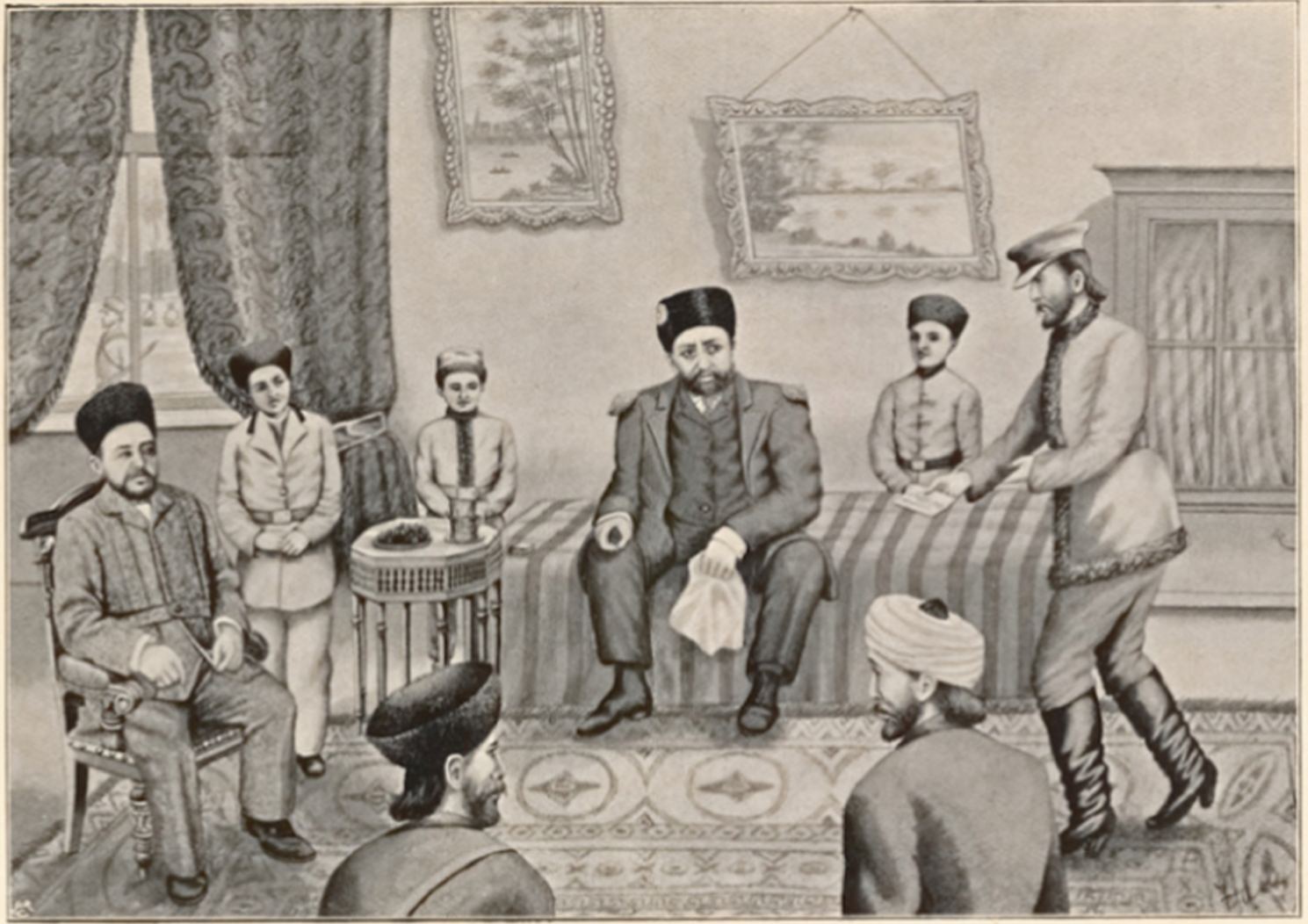
Nevertheless, as contemporary Afghan historian Mohammad Sediq Farhang convincingly suggests, the amir's lack of interest in his wives was perhaps due to his favoring “young and good-looking boys” (pesarān-e jawān wa khosh surat).Footnote 16 Indeed, while we know that the amir rarely spent time in the harem with his wives, we also know that the “beauty, ability, and fidelity” of his gholām-bachahs helped them rise up the court ranks (see ×Image 1).Footnote 17 Understanding the power interplay between the amir's harem and his crowd of astute, handsome, young male companions requires further exploration, alongside understanding the extent to which homoerotic bonds with the king facilitated the youths' economic and political advancement in their career. At any rate, it is evident that gholām-bachahs were among the most trusted courtiers. The amir's (auto)biography introduces a gholām-bachah from Chitral (a town in today's Northwest Pakistan) as follows:
[He] is the most trusted official of my court; he keeps my seal in his hands to put to any document, and to my food and diet—–in short, he has the full confidence of my life as well as my kingdom in his hands.Footnote 18
Some of the amir's gholām-bachahs grew to become commanders-in-chief, lords of the treasury, and the amir's personal bodyguards.Footnote 19
Amir ʿAbdur Rahman (in the middle) surrounded by three of his gholām-bachahs in the court. His son/successor, Habibullah Khan, is sitting on the left. The drawing was done by Frank A. Martin, the engineer-in-chief to both ʿAbdur Rahman Khan and Habibullah Khan in the late nineteenth and early twentieth centuries. The drawing is derived from Martin's own memoir, Under the Absolute Amir, 40.
The amir's grandson, Amir Amanullah Khan (r. 1919–1929), apparently ended the courtly practice of recruiting and raising gholām-bachahs due to its incompatibility with his larger modernizing and anti-slavery efforts.Footnote 20 Article 170 of the first General Penal Code of Afghanistan, which was adopted in 1921 and called for a fine and jail time for “keeping bachah for the purpose of bachah-bāzi” (emphasis added), was the first law on bachah-bāzi in the history of modern Afghanistan. In the time of Amanullah Khan however, unlike today, the signification of “bachah-bāzi” was less about having bachahs dance than having sexual liaisons with them, as another set of articles dealt with young male dancers.Footnote 21 Article 170 called for a fine of 1000–5000 rupees and five years in prison for keeping bachahs for sexual purposes, which was a severe punishment compared to various other crimes, suggesting that the legislator considered bachah-bāzi a most grievous offence.Footnote 22 Furthermore, in the General Penal Code of 1924, which returned the power of deciding punishment to the clerics, the following clause was added: “The amrad would be sentenced to the same punishment [that the judge decides for the older man] should he have participated [in the sexual encounter] willingly.”Footnote 23
Nevertheless, the implication of the 1920s’ Afghan Penal Codes was that one could keep bachahs for purposes other than that expressly forbid by the law, and it is difficult to imagine that any man (including Amanullah Khan's late grandfather, ʿAbdur Rahman Khan himself) would have admitted to keeping young males for the purpose of bachah-bāzi, that is, to satisfy his own sexual urges. Indeed, as the oral histories of many elder Afghans with whom I conversed attest, the practice of keeping bachahs did not vanish from Afghanistan's social landscape after Amanullah Khan was ousted from power: landowners (zamindār), tribal and clan chiefs (khān, mālek & arbāb), well-to-do merchants (māldār), teahouse and restaurant owners (hotaldār), butchers (qassāb), barbers (salmāni), bakers (nānwā), tailors (khayyāt), musicians (sāzandah), Sufi masters (pir), and, in later times, lorry drivers (deriwar) and car mechanics (mesteri) continued to keep young males as social and sexual companions. The younger partners, in turn, played the role of servants (gholām), apprentices (shāgerd & pāydaw), friends (dust), or disciples (morid & shāgerd), and sometimes were even treated as members of the man's extended family, enjoying proper care and education.Footnote 24 At times, the younger male was singled out for his loyalty and devotion, and treated as a reliable companion and servant; at others, the relationship's pedagogical aspects were considered more significant, and thus the younger partner received certain instruction and training. In all such scenarios, there was no doubt about the younger males’ desirability and appeal to their patron, as patrons often took pride in exhibiting the young males in public.
I suggest that ʿAbdur Rahman Khan's relationships with gholām-bachahs stood as the royal and overarching archetype for man-bachah arrangements in Afghanistan at the turn of the twentieth century. Similar to ʿAbdur Rahman Khan's decision regarding the gholām-bachahs of the court, it was not unusual for patrons to find wives for their bachahs after they reached manhood (even the man's own daughter could become the wife), nor was it uncommon for bachahs to establish intimate relationships with their patrons’ families. Just as the presence of handsome gholāms among ʿAbdur Rahman Khan's retinue attested to the amir's affluence and power (in the face of king of Bukhara, for instance), possessing a good-looking and tactful bachah also reflected the patron's status and wealth in their sector. Bachahs associated with wealthy and prestigious men garnered just as much respect and reverence as their patron, as not honoring them often implied not honoring the patron. As long as these relationships remained outwardly discreet, they were socially intelligible and could last for several years. Such perceptions and practices remained alive throughout the twentieth century—and to this day.Footnote 25
Dancing-boys (and girls): the aesthetics and perils of a spectacle
The spectacle of dancing-boys has perhaps, over the past two centuries, been the most recognizable and visually stimulating display of the bachah-bāzi tradition and male homoeroticism in both Afghanistan's urban and rural areas. Historical and ethnographic records from the past 200 years point to male dancers performing both in troupes and alone at palaces, mansions, tea-houses, in the streets, and for the entertainment of kings, courtiers, land-owners, tribal chiefs, villagers, and more common people. In a strictly gender segregated environment that generally prohibited females from entering (let alone dancing in) male spaces due to religious proscriptions and social norms, bachahs who could dance (and sing) had few rivals in the entertainment of their men-only audiences. As regular participants and players in entertainment culture, young male dancers enlivened and animated both private and public events. Such celebratory occasions were/are integral to Afghans’ way of life, ranging from shirini khori and toy (engagement and wedding ceremonies), shaw-shash (the sixth evening after a child is born), and khetnah-suri (circumcision celebrations), to shaw-neshini (night get-togethers), mahfel (celebratory events), and mēlah (joyful circles, mainly in the countryside, often with dance and music). The available records attest to the frequent recruitment of young males for such occasions, alongside their popularity among people of different socioeconomic standings.
For example, Lord Curzon, who visited the court of ʿAbdur Rahman Khan in the late nineteenth century, refers to “dancing-boys” as “an amusement much favored in Afghanistan”;Footnote 26 and John Alfred Gray, a British physician who served as the amir's surgeon in the early 1890s, describes a scene of a dozen boys, “aged about thirteen to fourteen,” with long hair and in girls' dress, dancing at the court.Footnote 27 Mahmud Tarzi, a leading intellectual of the time, also makes a non-judgmental (if not affirmative) reference to the presence of both bāzengar (dancing-boys) and kanchini (dancing-girls) in public gatherings of late-nineteenth-century Kabul in his memoire.Footnote 28 Similarly, Gunnar Jarring, a Swedish diplomat and ethnographer who studied the Turkish dialects of Andkhoy in the mid-1930s, heard from an Andkhoy resident about a “current custom” among Afghan Turkmens and Uzbeks in the northern provinces who would keep boys in a cellar for a few years to teach them to dance. “If young boys are to be found,” writes Jarring, “[the people of Afghan Turkistan] never let women dance.”Footnote 29
Non-Muslim dancing girls from India had also been performing in Kabul since the late eighteenth century, as the first group of Indian entertainers and musicians were invited to Afghanistan during the reign of Timur Shah (r. 1773–1793), and there are reports of them performing in Afghan courts of the early nineteenth century.Footnote 30 We also know that Habibullah Khan, as a gesture of his adherence to Islamic rules, forced female dancers to leave their quarter in Kabul's Kharābāt neighborhood in the 1910s.Footnote 31 Those female performers, however, never replaced Afghanistan's indigenous young male dancers because, as I suggest: there were always far fewer female dancers than young males; female dancers were mainly based in urban areas, meaning they were not part of the entertainment culture of villages where the overwhelming majority of Afghans lived; and, perhaps most importantly, female dancers conspicuously breached Islamic ideals of female modesty and respectability and violated the norms of gender segregated environments. The presence of women in men-only spaces—especially as dancers and objects of the male gaze—always came with the potential for social unrest and major objections (as it does today).
Dancing-boys faced restrictions every now and then as well. Perhaps most notably, under the 1921 Penal Code's Practices against Public Morality and Manners (Harekāt-e Mokhālef-e Akhlāq wa Ādāb-e ʿOmumi) section, both bāzengari (young male dance) and bāzengar-bāzi (having a bāzengar dance) brought fines and jail sentences.Footnote 32 The punishment for the former (one year in prison) was curiously the same as or harsher than that of the latter (400–500 rupees and six months in prison), suggesting that the legislature held young male dancers fully accountable. It is possible that the 1920s’ ban on bāzengari and bāzengar-bāzi (and bachah-bāzi) was an act of appeasement by Amanullah Khan with oppositional clerics. Such appeasements notably took place in the context of gender and family reforms, which had caused immense social tensions and objections. However, it is more likely that the ban was intended as a marker of “modernization,” as bāzengari and bachah-bāzi were not practices favored among Europeans at the time, to whom many modern ideas were associated. Male homoerotic practices in Iran, Central Asia, and Ottoman Southwest Asia had already met the reproachful judgment of European travelers, representatives, and statesmen, who saw such behaviors as “the vice,” and discussed the performance of young male dancers with repugnance and disdain in their widely read travelogues and diaries.Footnote 33 It is therefore reasonable to suggest that, similar to their counterparts in nearby regions, young Afghan male dancers of the early twentieth century faced opposition from both local conservatives and modern reformists, the latter of whom could have been influenced by European ideas of sexual and gender prudery and bourgeois respectability.
That early legal ban on bāzengari, however, was ineffective, as it could not remove young male dancers from Afghanistan's social landscape. After his ousting, Amanullah Khan's policies were generally discarded, as subsequent leaders adopted a more gradual, Kabul-centered approach. In other words, unlike male dancers in Iran and Soviet Central Asia who were gradually pushed to the margin of dance culture or replaced by female dancers, the spectacle of bāzengari in Afghanistan did not necessarily experience a massive blow in the following decades.Footnote 34
Several 1960s and 1970s ethnomusicologists and anthropologists of Afghanistan included passing references to the culture of bāzengari in their respective works; a few of their observations are worth mentioning here as they provide a general picture of the world of dancing-boys in Afghanistan in the second half of the twentieth century. Hiromi Sakata, in her study of Herat music and musicians in the late 1960s, saw several musicians in the company of bāzigars (bāzengars). She tells the story of a Pashtun musician who had “fallen in love” with a Qandahari dancing-boy whom he then “kidnapped” from the “boy's lover” in Qandahar and took to Herat.Footnote 35 John Baily, who also worked with professional musicians in Herat in the 1970s, suggested that dancing-boys had historically been “important stimulus for musical creativity.”Footnote 36 He described a private dancing event in a village around Herat, where a bachah with “padded breasts, a long skirt, a lengthy scarf, and ankle bells” danced to a few regional musical instruments.Footnote 37 Furthermore, Mark Slobin, in his study of northern Afghanistan's music in that same period, observed that the dancing styles of the Uzbek and Tajik boys of the northern provinces were different from those of Pashtun dancing-boys of the southern and eastern regions.Footnote 38 Louis Dupree, in his film-essay about a northern Afghan village in the 1970s, took his readers/viewers to the village tea-house where two dancing-boys performed for an exhilarated audience. Dupree suggested that dancing-boys were, at times, itinerant, especially if they could find a lover among the lorry drivers to travel with from town to town.Footnote 39 Dancing-boys could indeed rise to prominence in their profession, and their beauty and dancing skills were much celebrated and sought after. In a series of conversations I had with a 75-year-old musician in Kabul, he once told me of two male dancers, Qand and Moʾmenah, who were famous in the capital during the reign of Dāwud Khan (r. 1973–1978). “They were incredibly good dancers,” he said, “they knew how to dance to our sāz [musical instrument]. One cannot find such dancers anymore.”
The most comprehensive study of young male dancers in Afghanistan in the second half of the twentieth century perhaps belongs to German folklorist Ingeborg Baldauf, who studied bacabozlik (bachah-bāzi) among Uzbeks in the north.Footnote 40 Baldauf's study, published in 1988 in German under the title Die Knabenliebe in Mittelasien: Bacabozlik (Boy Love in Central Asia: Bachah-bāzī), which I believe is not adequately discussed in the English-speaking world, contended that a significant percentage of the Uzbek male population in Afghanistan's northern provinces were involved in bachah-bāzī at some point in their lives—either as a dancing-bachah or a bachah-lover (or perhaps both in the course of their lives). Bachahs were expected to be familiar with Persian and Chagatai literature, have a good grasp of music, know how to sing and dance, have good manners, and accompany their lovers in homosocial occasions. In return, their lovers, or bachah-bāz, had to generously spend money to outdo their rivals, otherwise the bachah would leave for a wealthier man. While the exchange of a few kisses and caresses was permissible between the bachah and bachah-bāz, no sexual intercourse was allowed, or the relationship would end abruptly. According to Baldauf, some men even ruined their families and went bankrupt after spending lavishly on bachahs for years.Footnote 41
A critical reading of the aforementioned writings reveals one significant point: none of these early researchers felt it necessary to provide a justification in their writing about the bachah-bāzī subculture. There are no major remarks on whether bachahs should be considered “children” or any extensive discussion on young male dance as a form of “sexual abuse.” On the contrary, their writings were inspired by an appreciation for the aesthetics and social implications of a long-lasting socio-erotic tradition, as illustrated through the authors’ description of the dancers’ flamboyant appearance, sartorial markers, use of cosmetics, modes of recruitment to the dancing world, musical tunes and instruments they danced with, and the nature and boundaries of their relationships with their lovers/patrons. We also learn from these writings that local officials sporadically banned such gatherings, though not in the name of saving young dancers from exploitation. According to Baldauf, it was not bachah-bāzi that was problematic per se, but the crimes related to it, ranging from fraud in gambling over dancers, to robbery, assault, and murder.Footnote 42 Similarly, John Baily notes that organizing gatherings with dancing-bachahs was not allowed in Herat in the 1970s, mainly because violent fights often erupted at such events.Footnote 43
The sober, matter-of-fact approach taken by early writers differs significantly from recent discourses around dancing-boys circulating among NGO circles, civil society activists, politicians, journalists, artists, and academics alike. As will be clear by the end of this article, the language of “children's rights violations” and “pedophilia” now sets the tone for almost all public conversations on the subject. A number of significant social and political developments may account for such a profound shift in the mainstream signification of bāzengari and older man-younger male relationships in both Afghanistan and the West. In the remainder of this historical inquiry, I unpack what these developments might have been and how they formed a new understanding of the category of bachah in recent years.
At war: the vulnerable (non)masculinity of bachahs
With the rise of the armed conflict in the 1980s, both the working environment of dancing-bachahs and the mainstream perception of man-bachah relationships changed drastically. The conflict initially started as armed resistance to the Soviet occupation, but after the withdrawal of Soviet forces from Afghanistan in 1989 and the subsequent collapse of the Najibullah government in 1992, it shifted into a civil war among ethnic and tribal factions of the mujahidin. The war destroyed the country's infrastructure and created millions of Afghan refugees. Under such harsh conditions, the spectacle of dancing-bachahs could not survive in its old framework, as there was neither much enthusiasm for holding celebrations and music gatherings nor a sense of public safety and security to organize such events. Indeed, even the legality of music events and performances was in question, as the new Islamist rulers had deemed such entertainment as non-Islamic, associating it with the preceding communist regime.Footnote 44
Bachahs who worked as dancers prior to the rise of the mujahidin found this new setting unusually threatening and hostile. According to 45-year-old Naeem, who began dancing when Najibullah was still in power,
At the time of Dr. Najib, we used to gather in front of Forushgāh [in central Kabul]. We were called Goruh-e Labsirin [The Lipstick Group]. The host of a wedding would come to the Zarnegār Park, pay us upfront, and take us to their events. We would dance for a few hours and return to our homes afterwards. We were treated as artists. The worst times came when Rabbani [Burhanuddin Rabbani, President of Afghanistan from 1992 to 1996] came to power. One day, one of the mujahidin groups abducted me on the streets of Kabul and forcefully took me to where I later realized was Gardez [a city to the South of Kabul]. The mujahidin had taken a village, and everyone had escaped. I remember them entering into village houses and giving us the clothes of women who had run away. There were five of us: two bachahs and three girls. Every night, the fighters would bring a sāz [musical instrument], and we would dance for them. They held me there for a month. Several soldiers did this to me in Gardez [they forcefully had sex with me].
Many of the ex-dancers I spoke to shared similar stories, revealing that the autonomy they enjoyed before the war in choosing their patrons or performance settings was lost when the new rules dictated by war reorganized both private and public life. The bachahs’ desirability made them vulnerable in the men-dominated, militarized cities and villages turned into war zones. As the country was divided among various “warlords” who had come to power and gained wealth through foreign-state support during the anti-Soviet war, young beardless males were increasingly recruited or kidnapped and kept on military bases. The threat was so real that many Afghan families prevented their beardless sons from leaving home. Such handsome males were not only objects of desire in the homosocial milieu of war; referred to as nafari or bē-rish (beardless) by their militant patrons, they were also a marker of their commanders’ authority in the regions under their control.Footnote 45 Akin to the bachahs’ symbolism for their patrons in other sectors in earlier decades, keeping a bē-rish and exhibiting him in public gradually became a recognizable display of commanders' masculine prowess, their military strength to protect their property and territories, and testimony to their authority and power. In such a volatile context, bachahs themselves preferred to be under the control of a (more benevolent) strongman. Through conversations with men who danced in the 1990s, I realized that the more influence and power their patron enjoyed, the safer they felt under the patron's protection. In some cases, these young males could even ascend the military hierarchy, serving as commanders’ personal attendants, soldiers, and bodyguards.
While possessing bachahs became a point of rivalry among militant fighters, bachah-bāzi became increasingly associated with warlords’ abuse of power. Among the myths explaining the lead up to the rise of the Taliban in the mid-1990s, one popular story centers around the Taliban's role in fighting the prevalence of bachah-bāzi among the mujahidin.Footnote 46 According to this account, the Taliban movement gained momentum in the aftermath of a violent dispute between two mujahidin commanders over a bachah in Qandahar, when Mullah Omar (the then-leader of the Taliban) ordered his followers to intervene and the bachah was rescued. “Public appeals started coming in for the Taliban to help out in other local disputes,” writes Ahmad Rashid in Taliban, which boosted the rising Taliban's image as being capable guardians of security and order.Footnote 47 According to Rashid, this puritanical savior image was crucial to the Taliban's subsequent efforts to establish political authority and legitimacy in later years.
Upon seizing power, the Taliban imposed a set of uncompromising rules and regulations. Perhaps most famously, in the name of protecting female chastity and dignity, the Taliban severely restricted women's mobility and access to public spaces: they shut down girls’ schools, barred women from nearly all types of employment, and prohibited them from leaving their homes unless accompanied by a close male family member. Such harsh measures to limit women's appearance in public were not only the result of the Taliban's drastic interpretation of Islamic texts and traditions. Given that their power was primarily based on the zeal of a large number of young militant fighters who had been ideologically trained in the isolation of men-only religious schools in Pakistan, there was also fear among top Taliban figures that their militia “may easily be led astray” if exposed to women in public.Footnote 48 As “arbiters of Islamic rectitude,” argues Nancy Dupree, Taliban fighters also bore the responsibility of ridding “the city of its sinful ways,” and saw women as “instruments of moral corruption and agents of sexual anarchy.”Footnote 49
The Taliban were not only concerned with controlling female bodies, however. Similar to the danger women were/are imagined to pose to the moral strength of Taliban fighters, beardless youth were/are also viewed as equally troublesome and threatening—a topic largely neglected by both academic and journalistic circles. In a 1995 decree, Mullah Omar banned all ministers, governors, and military personnel from recruiting “bare-faced” youths (berahnah-ruy) to live or work in their offices or military bases, even if such youth were close relatives.Footnote 50 In this decree, Mullah Omar argued that a pious Muslim must “protect oneself from any accusations,” implying that the presence of bare-faced youths among the Taliban's ranks might give the impression that fighters were engaged in bachah-bāzi or lewātat (sodomy). Mullah Omar issued another decree in 1999, further requiring that Taliban members not be seen with the bare-faced.Footnote 51 The Taliban's more recent Code of Conduct, Lāyehah, first published in 2006 but modified and re-issued in 2009 and 2010, has a relevant article. According to Article 69 of the 2010 version, “Youths whose beards have not yet grown because of their age cannot be kept by the mujahidin [Taliban fighters] in barracks/hostels or military bases.”Footnote 52
The figure of beardless youth and the fear of falling for one thus persistently haunted the Taliban's homosocial spaces. The Taliban's leaders frequently articulated their concern about the “bare-faced”; an unmistakable sign of the threat the visibility of such youths posed to the maintenance of public morality and rectitude. The impermissibility of keeping beardless young males as attendants or companions was meant to mark the Taliban's superiority over the mujahidin in terms of character, as the Taliban movement had initially gained momentum and public support by standing against mujahidin “vices.” By removing both women and beardless youth from the public sphere, the Taliban attempted to regulate and discipline their men-only spaces, making them appear homogeneous and de-eroticized. They also related sexual promiscuity and sodomy to the widespread corruption and decadence of their enemies.
Nevertheless, the Taliban's ban on the bare-faced among their ranks had an unintended consequence. If, in earlier decades, the line between homosociality and same-sex desire could not be easily drawn—in that bachahs could be more agreeably accommodated in male-only spaces without causing social unrest, and their sexual activities were not necessarily points of concern—the Taliban's ban on the bare-faced meant their homosocial spaces were always haunted by the specter of sodomy and same-sex sexuality. By disallowing their recruits from being seen or socializing with the bare-faced, the Taliban perhaps made the beardless youth even more visible and alluring. Rahim, an ex-dancer and father to four children, shared the following about when he was young and handsome in the late 1990s:
I was living in Mazar [Mazar-i-Sharif]. It was around the noon prayer time. A car stopped and a Talib from the [Department of] Propagation of Virtue [and Prevention of Vice] told me to get into their car. I was so scared. I thought, what if they found out [that I regularly had sex with men]? Bachahs like me, in particular, were so fearful of Talibs. He took me to their office, locked me in a room, and did this to me that same night [he had sex with me]. He told his colleagues in the morning that I'd been going to Jalalabad [in eastern Afghanistan], and that I'd looked suspicious. They let me go.
The above attests to not only the extent to which beardless youth haunted the sexual fantasies of both mujahidin and Taliban fighters; more broadly, the above examples shed light on how the increasing militarization of Afghanistan in the 1990s—with its emphasis on forms of masculinity that celebrate militancy, muscularity, violence, and the denial of public space to women—made adolescent, handsome males more accessible prey. As we learned earlier, even prior to the onset of the anti-Soviet war, the category of bachah had maintained its centuries-old aesthetic and erotic characteristics in Afghanistan, with bachahs recognized as apprentices, social companions, and dancers in wider Afghan society. Yet, as the culture of war pushed women further into the domestic sphere and degraded femininity, bachahs became the more accessible and noticeable objects of desire, publicly conspicuous for embodying a desired (non-)masculinity that contrasted with the militant masculinity of the armed fighters. For both the mujahidin and Taliban who sought to establish their dominance in areas under their control, the sexualized bodies of bachahs—similar to women—were sources of pleasure, amusement, anxiety, and fear that required discipline and containment through various mechanisms of power and control. The measures taken by militants on all sides included removing such intimidating bodies from the public scene, verbal and physical assault, kidnap, sexual harassment, rape, and even murder.Footnote 53
With the American and NATO invasion of Afghanistan, the category of bachah faced yet another social and political upheaval. Indeed, American-allied Afghan war commanders became some of the most notorious participants and initiators of bachah-bāzi dancing events around the country. At the same time, a transformative regime of knowledge entered Afghanistan; a regime that did not recognize “bachah” as a category of selfhood and showed no understanding of its history and cultural implications. I explore this latest development in the next and final part of this inquiry.
Bachah or child? State-building anxieties under the Western gaze
In the two decades following the Taliban's fall in 2001, bachah-bāzi came under the intense scrutiny of Westerners and the Afghan elite. This investigative (and at times exoticizing) gaze translated into many media accounts, NGO reports, photo series, film documentaries, articles in military journals, and research conducted by military-embedded social scientists. Such accounts were almost always ahistorical, with striking similarities to colonial depictions of male-male relationships among Muslims (and other colonized people) in earlier times. Enabled in and by the context of the “war on terror,” such accounts frequently referred to bachah-bāzi as “an Afghan tragedy,” “culturally sanctioned rape,” “modern sexual slavery and child trafficking,” and “Afghan pedophilia,” among other tropes. Through neglecting the history of the category of “bachah,” such accounts invariably opined that strict gender segregation and religious prohibitions against sex with women out of wedlock, alongside mass poverty, insecurity, corruption, and no rule of law, were the major “causes” of the practice.Footnote 54
By foregrounding the Afghan government's incompetence in bringing bachah-bāzi perpetrators to justice, some accounts argued that the international community and U.S. government had the responsibility to intervene on behalf of bachah-bāzi victims and “rescue” them.Footnote 55 In a controversial story of recent years, for instance, the New York Times spotlighted a US soldier who was killed by “one of a large entourage of boys” accompanying a notorious Afghan commander in Helmand province. An American sergeant quoted in the report said, “morally we could no longer stand by and allow A.L.P. [the Afghan Local Police] to commit atrocities,” including having “sex-slave boys.”Footnote 56 The image of a racialized and sexually perverse Afghan man was thus occasionally invoked to justify the presence of foreign militaries in Afghanistan. In addition to the rhetoric of “saving Afghan women,” a moral excuse used to wage war in 2001, American soldiers were also imagined as responsible for rescuing Afghan boys from Afghan men—as if Gayatri Spivak's famous formulation of the colonial encounter was amended to read, “White men saving brown women and brown boys from brown men.” Given the unparalleled stigmatization of boy-lovers in Western societies, fighting “pedophilia” was an even more convincing argument in selling the Afghan war to targeted audiences than fighting “misogyny.”Footnote 57
The juxtaposition of the notions of “pedophilia,” “tradition,” and “Afghanistan” in the aforementioned accounts made many Afghans profoundly unsettled, especially the educated, middle-class urbanites who were acutely aware of Afghanistan's negative image on the global stage and sought a different representation. Among Afghan officials and the educated elite, it was common to react to stories of bachah-bāzi in Western media by questioning their accuracy and claiming that bachah-bāzi did not happen in their respective regions.Footnote 58 In this sense, the Afghan elite's defensive reaction was not unlike the view of earlier native modernists of Central, Southwest, and West Asia, who perceived older man-younger male relationships as cultural indicators of “backwardness”; indicators that needed to be addressed in the context of their nations’ quest for progress and modernity.Footnote 59 In the 1970s, during Baldauf's research on bachah-bāzi in northern Afghanistan, such stances were also prevalent among Afghan intellectuals, who either “denied the existence of the phenomenon in Afghanistan or among their own ethnic group” or associated it with illiteracy, gender segregation, and the limited sexual possibilities of rural areas.Footnote 60
Public condemnations of man-bachah relationships increased after Ashraf Ghani was elected president in 2014. While Hamid Karzai and his administration—many of whom came from the mujahidin—stayed almost silent on the issue, Ghani and his young, technocratic, Western educated allies were more vocal against the practice. The association of bachah-bāzi with “warlordism” on the one hand, and the urgency of convincing the international community that the Afghan state was on the path to integrating into the global economic and political order on the other, gave the new generation of Afghans a powerful platform from which to both condemn bachah-bāzi and distance themselves from the mujahidin's scandalous past.Footnote 61 Following ʿAbdur Rahman Khan (r. 1880–1901) and his establishing of a centralized state through crushing the autonomy of self-governing and resistant tribes and ethnic communities, curbing the power of (mostly non-Pashtun) strongmen was one of the pillars of Ghani's state-building project. His administration's aggressive and public stance against bachah-bāzi was, outwardly, geared towards protecting the rights of adolescent Afghan males and satisfying civil society and Western donors and governments’ expectations. Nevertheless, his administration's position on bachah-bāzi also always carried an implicit attack on the entertainment culture of the war commanders and strongmen considered as rivals, if not enemies, of the Afghan state.
Thus, it was not only the result of several legitimate concerns for the well-being of very young boys, but also against the backdrop of political rivalries and under an investigative gaze that the Ministry of Justice crafted new legislation on bachah-bāzi in 2017. The revised 2017 Penal Code of Afghanistan had a section on Crimes against Public Morals and Ethics, the fifth chapter of which was dedicated to bachah-bāzi under the title “Leading Children to Moral Perversions.”Footnote 62 According to Article 653 of the Penal Code, “A person who keeps a […] child for the purpose of sexual gratification or to make him dance in public or private event […] is considered the perpetrator of Bacha Bazi crime.”Footnote 63 Additionally, the legislation considered jail sentences for holding or participating in “bachah-bāzi events,” and the sentence was aggravated if committed by members of the military—a reflection of the widespread occurrence of bachah-bāzi in the army.
As Amanullah Khan banned bachah-bāzi in the 1920s and the Taliban forbade it in the 1990s, this was the third time in Afghanistan's modern history that the state introduced a ban on bachah-bāzi. The description of bachah-bāzi in the 2017 Penal Code, however, was qualitatively different from its two predecessors, at least in one important aspect: the implicit sense of “bachah” suggested in the 2017 Penal Code was an innovation in the history of bachah-bāzi, a novel reading of transgenerational relationships between males. We previously learned that the 1921 Penal Code of the Amani period referred to the younger males in such relationships as bachah and amrad, and Taliban decrees characterize(d) them as “the bare-faced.” Yet, the 2017 Penal Code made reference to the category of “child” (tefl) when describing the younger participant in these relationships; a child, who, according to the same body of legislation, was defined as “anyone under the age of eighteen” (Article 95).Footnote 64 As should be clear by now, bachahs had never been defined by being below a certain numerical age. Indeed, in the context of man-bachah relationships, a young male in his late teens or even early-to-mid-twenties could have been perceived as a bachah as long as he had not yet grown a beard or married and settled. It was only after these shifts in his facial features and social character that he would enter the stage of manhood/adulthood. Furthermore, different from the 1924 Penal Code, which held the younger male fully accountable should he have engaged in a sexual encounter at his will, the 2017 legislation exempted the younger male from prosecution.
It seems, therefore, that an ontological shift has occurred in the mainstream understanding of older man-younger male relationships in both Afghanistan and the West. Once perceived as a type of socio-erotic partnership between two males, which could still be opposed on anti-sodomy grounds, bachah-bāzi is now considered a grievous form of pedophilia, opposed mainly in the name of protecting children's rights.Footnote 65 The global circulation of the juridical category of “child” and its subsequent adoption in Afghanistan have apparently led to a disagreement, a divergence in law and culture regarding “who is a bachah” and “what bachah-bāzi involves.” The under-eighteen-year-old child and the desirable, beardless bachah are neighboring personas, but they are not the same category. The constitution of the former, initially among urbanites of the Western world, was the effect of profound changes in marriage and gender relations, in the economic activities of families and societies at large, and in official systems of education, leading to the formation of a constellation of human and children's rights discourses that culminated in the 1989 UN Convention on the Rights of the Child, to which Afghanistan is a signatory.Footnote 66 The beardless bachah, on the other hand, is the living legacy of a long-lasting social and sexual arrangement between males in Islamic cultures (and beyond). Characterizing transgenerational relationships among males as “culturally sanctioned pedophilia” or an “Afghan tragedy,” therefore, displays not only anachronism and a lack of historicity, but also ethnocentrism and orientalist thinking. Such characterizations have arisen out of the collision of the two aforementioned regimes of knowledge, with their overlapping but distinct set of histories, values, norms, ethics, and aesthetics giving rise to the formation of different subjects. While the human rights of very young boys must be protected, the recent cultural tensions and social outcries emerging around the practice of bachah-bāzi in Afghanistan are also born out of the incommensurability of these two perceptions of selfhood.
A brief allusion to the Ottoman justice system may be revealing for our discussions here. In her study of gendered and sexual subjects in the Ottoman Empire's sixteenth and seventeenth-century legal records, Leslie Peirce shows how various terms were used to correspond to different stages of an individual's life-cycle. Importantly, in order to acknowledge the multiple transitory stages from male childhood to adulthood, the Ottoman legal discourse had distinct words for a variety of persons, including the pubescent male (oğlan), the (beardless) sexual object of other men (emred), the sexually mature young man (ergen), the socially disruptive and sexually predatory young man (levend), the newly married man (bennak), and the socially mature married householder or adult man (er). Peirce suggests that this multiple vocabulary reflected both the insignificance of age to the Ottoman justice system and the ambivalent characteristics of the stage between male childhood and adulthood.
Bachah-hood in Afghanistan is perhaps in a similarly liminal state, located uncomfortably between the two poles of childhood and adulthood. Bachahs are not children but they are also not adults, as they are affectively pleasant to socialize with as desirable subjects. As Victor Turner reminds, “The attributes of liminality […] are necessarily ambiguous, since this condition and these persons elude or slip through the network of classification that normally locates states and positions in cultural space.”Footnote 67 In other words, the age-marked category of “child” cannot encompass the elusive and slippery category of bachah, as the liminality of the latter always escapes the determinacy of the former. Nevertheless, in both “achieving compliance with international standards” and “protecting children's rights,” the previous Afghan state seems to have exercised epistemic violence on the category of “bachah,” thus reconfiguring social reality in its own image.
Conclusion: from a socio-sexual mate to the abused child
This article has shown that, in earlier times, various arrangements of older man-younger male relationships were common in Afghan society and culture. Such relationships were not formed exclusively around sexuality, but also various other social nodes, including: pedagogy (between Sufi masters and their disciples, for instance); apprenticeship (among barbers, tailors, butchers, and the like); alliance (notably, in the court of ʿAbdur Rahman Khan); patronage (among Uzbeks living in the north, for example); and partnership and collaboration (between dancing-bachahs and musicians, among many others). It appears as if there was no rigid line of demarcation drawn between homosociality and same-sex desire/homosexuality. While such arrangements have not died out in today's Afghanistan, they have receded from public view in recent times, especially in Kabul, where the state's presence is felt more concretely and a growing urban and educated population has given rise to new ways of thinking about “who a child is” and “what constitutes a proper male-male friendship.”
More broadly, this discussion has revealed that the figure of the beardless male has become a constitutive theme of a discursive field in which a set of binary (and, at times, oppositional) categories—Afghanistan/West, barbaric/civilized, obscene/decent, warlord/statesman, uncultured/elite, rural/urban, criminal/lawful, and bachah/child—has been constantly negotiated and reified. Since the escalation of armed violence in the 1980s, the culture of militarism has become the major venue through which the bachah-bāzi tradition was conceived, with abusive sexuality increasingly seen as the paramount node of man-bachah relationships. While the “uncivilized” rural strongmen were imagined as committing the “obscene and criminal” act of bachah-bāzi, the growing population of urban elite and educated statesmen represented the voice of “international human rights,” which opposed such “outdated practices.” Both the Taliban and Ghani administration policies and legislation further foregrounded the sexuality of adolescent males, turning homosocial spaces with handsome, beardless adolescents present into suspicious and problematic gatherings. Such developments took place against the backdrop of persistent warfare, in the midst of national political rivalries, and under the Western gaze. In this politicized and moralistic context, discussing the contents, ethics, and aesthetics of older man-younger male relationships often seemed irrelevant—if not apologetic—to what is widely referred to as the “violation of children's rights.” Still, the category of bachah is an essential part of the fabric of Afghan culture and society, and any understanding of the world of gender and (homo)sexuality in Afghanistan is incomplete without consideration of this figure and its wider implications.
Acknowledgments
I would like to thank the two anonymous reviewers of the Journal of Iranian Studies for their constructive comments. The funding for this research and completion of the article was provided by Wenner-Gren Dissertation Fieldwork Grant, Afghan Digital Scholarship Award (Aga Khan University), Fund for Lesbian and Gay Studies (FLAGS, Yale University), The Alan H. Smith Fund (Department of Anthropology, Yale University) and The MacMillan Dissertation Fellowship (Yale University).


 Open access

