


At the end of the nineteenth century, several Romani families left the Russian Empire and reached Spain via Bessarabia. The story of their journey has been passed down from generation to generation:
One afternoon, as the sun was shining and nature seemed to be at its best, Chief Chaeco Juro was sitting at the door of his tent. A native, passing by, stopped to chat with him, and the conversation drifted from one subject to another. Finally, the stranger spoke of a beautiful country across the sea. The stranger related some very wonderful stories that his son had written about in his letters to his father, and told Chaeco Juro that the name of this wonderful country was called America.Footnote 1
Shortly after their stay in Spain, these families embarked in small groups for the United States. Over the next few years, they established themselves in New York. In the 1930s, their descendants became active as part of the Romani community there, notably through Steve Kaslov, Chaeco Juro’s great-grandson, who worked for the recognition of Romani rights in the United States, including with President and Mrs. Roosevelt.Footnote 2
Like the Juro and Kaslov families, many other Romani families left Europe at the end of the nineteenth century to settle in the Americas, Oceania, Asia and Africa.Footnote 3 Those who departed represented only a small part of European Roma at the time although they often shared common professional specializations, held similar views of the world and intertwined historical and geographical trajectories. For these family groups, the beginning of the twentieth century marked a turning point, with the development of genuine expertise in movement. This expertise was already being deployed in the context of intra-European mobility. But crossing the Atlantic led to the transposition of this knowledge and know-how into new legislative, political, economic, social and cultural contexts, a process that reshaped their expertise. This chapter analyzes how Roma who left Europe at the turn of the twentieth century acquired and expanded their expertise of international movement on the American continent.
This expertise was part of a genuine “mobility capital.” Anticipating the border, negotiating the time of interaction with the inspectors and then reinvesting one’s experience for the future constituted the arc of this capital’s development. Over time, Romani families acquired significant experience of the border. They learnt the rules of international movement that were being put in place around the world and gradually mastered the codes of face-to-face interaction with immigration authorities.
Writing the history of families who traveled the world means breaking away from “methodological nationalism.” Without denying the importance of state frameworks in understanding international mobility, I shift the gaze to consider the articulations between the different scales of belonging, in the perspective of “forging a framework of analysis capable of comprehending the life experiences of transnational migrants.”Footnote 4 Kinship offers a decisive change of scale to overcome the dichotomy between the microscale of the biographical approach and the macroscale of the global.Footnote 5 Family groups become fluid entities whose contours are redefined over time and through exchanges, as members move away from each other or, on the contrary, come closer together.
My approach follows that of historical anthropology inspired by the methods of microhistory applied on a global scale. In contrast to any methodological nationalism, I try to draw the threads of a complex web of archives scattered throughout the world. This work is based on biographical fragments collected in genealogical databases, national and local archives, the press, personal papers of scholars and memories of the families themselves. It is thus possible to draw narratives of lives that are, admittedly, incomplete and sometimes reduced to the status of hypotheses, but which restore the complexity of family itineraries.
Families Spanning the Globe
From the 1860s onward, Romani families from the Russian, Austro-Hungarian and Ottoman empires began to travel more often and more visibly to Western European countries. To take just one example, in 1868, Belgian authorities became concerned when a group of around fifty Roma from Hungary entered their country: “Les papiers, dont ils sont porteurs, constatent qu’ils sont originaires de la Hongrie, leurs passeports sont visés par les autorités autrichiennes, vus et signés par les autorités hollandaises et portent pour destination, la Hollande, la Belgique, la France et l’Italie” (The papers they carry show that they come from Hungary, their passports are stamped by the Austrian authorities, seen and signed by the Dutch authorities, and indicate destinations in the Netherlands, Belgium, France and Italy).Footnote 6 Administrative, police and newspaper archives enable us to follow the itineraries of this group, confirming what French scholar and archivist Paul Bataillard observed at the time, namely: “le cercle plus étendu de ces pérégrinations et … le nombre plus grand des voyageurs” (the wider circle of these peregrinations and … the greater number of travelers).Footnote 7 The 1860s was indeed a key decade for Romani mobility in Europe. The decade saw a change in the geography of routes, networks and anchorages. Far from being a homogeneous whole, the various family groups who traveled across Europe from that time forward differed from each other not only in their geographical origins, but also in the trades they practiced, the way they dressed and the ways in which they moved and settled. However, in most cases, their mobility was guided by specific economic specializations: coppersmithing, horse trading and entertainment.
Their arrival in Western European countries aroused curiosity and media interest, giving great prominence to numerically small groups. In 1886, for example, when a group of around one hundred Roma from the Ottoman Empire landed in the heart of London, the authorities were extremely concerned, and the newspapers published hundreds of articles in just a few months. However, such mobility during the late nineteenth century remained the work of a few pioneering groups who paved the way for others to extend their routes worldwide in the first half of the twentieth century. From the 1900s onward, what had hitherto been nothing more than pioneering initiatives became a well-established mobility. The routes opened up by the first travelers became well-marked paths, regularly taken by other families across every continent.
Some of the groups traveling through Europe embarked for the Americas. This was the case, for example, of several of the families belonging to the group that landed in London in 1886. Some families eventually settled in the United States, Canada or elsewhere in the world. US and Canadian immigration records and ship passenger lists shed light on the complexity of trajectories, which were far from linear. There was much back and forth between Europe and America, for instance. Entire families could return, or sometimes it was a single individual, usually a man, who played the role of go-between, traveling back and forth between two continents to accompany the arrival of new family groups.
A case study that traces one family’s itinerary over several generations illustrates the complexity of long-term trajectories. In 1926, John Dyneley Prince, an American linguist and founder of the Slavic Studies Department at Columbia University, was appointed consul in Belgrade. A polyglot, he mastered the Romanes language perfectly.Footnote 8 While in Belgrade, he met a group of some forty Brazilian Roma of American nationality who had been living in South Africa, where they claimed to be trading in diamonds.Footnote 9 Born in the United States, they held American passports and had traveled to Serbia to marry their sons to local women. But at the time, Yugoslavia was in the process of joining the International Convention for the Suppression of the White Slave Traffic.Footnote 10 They were accused of trafficking in women, and Dyneley Prince found himself in charge of their defense as an American consul. The group’s leader, George Montes, told Dyneley Prince in Romanes: “Aviljém man andé Srbjía, de lá mande düi boriá peandurjú múrlo šavén. Ai le(m) mande düi boriá sukár, kai dem pe lende dešefta-mî dinár” (I came into Serbia to get for myself two daughters-in-law and marry them to my sons. And I got for myself two beautiful daughters-in-law, when I gave for them seventeen thousand dinars).Footnote 11 The charges were eventually dropped thanks to Dyneley Prince’s intervention and explanation of the practice of bride price, but they had to leave Serbia without the women they had come for.
The Montes family claimed multiple territorial affiliations spread over several continents. They presented themselves as a family of Greek origin, although Dyneley Prince related their Romanes language to that of the Romanian Roma. They traveled between the United States and Cuba in the 1910s and the early 1920s. Numerous visa applications and passenger lists attest to their presence in the region between North Carolina and Florida during this period, as well as in the Cuban cities of Cienfuegos, Santiago and Havana. These trips to Cuba corresponded to the period of the United States’ involvement in World War I. But the men in the group were not trying to avoid enlistment; they were registered for the various phases of conscription by the American authorities in Alabama and Virginia.Footnote 12 These visits were part of their professional activities and motivated by transnational family ties. As coppersmiths, they also appeared to have traveled to Guatemala, Mexico, the Dominican Republic and Puerto Rico. In the course of their travels, they put down roots and forged ties, notably through matrimonial alliances, in the territories they crossed.
During the 1920s, the Montes family traveled between South America and South Africa. Marriages and births, always duly registered at the American consulates in the various countries where they lived, made it possible to sketch a map of the countries they visited. From Florida, they continued to the Caribbean, traveling in Cuba and Puerto Rico. One of George Montes’ sons traveled to Argentina, registering with the American consulate in Buenos Aires in 1925. Two years later, he declared the birth of his son in the province of Cordoba, five hundred kilometers west of Buenos Aires.Footnote 13 Another son disembarked in South Africa in 1926. Registered with the American consulate in Johannesburg as a “coppersmith (with traveling show),” he circulated throughout the country, as witnessed in records made noting the births of his children.
In the early 1930s, members of the family group moved between South Africa, Europe, Argentina, Central America and the United States. George Montes, his wife and several of their children, for example, were recorded as living in the port of Las Palmas in the Canary Islands in June 1930. They boarded a ship bound for San Juan, Puerto Rico, with passports issued in Johannesburg. From there, they traveled between Puerto Rico and the Dominican Republic. The couple, who had later been living in Argentina, moved to South Africa, where they seemed to settle permanently in the autumn of 1931. During the 1930s, the birth of several children in South Africa showed that the entire family group had become firmly rooted in the country.Footnote 14
In 1937, a journalist from the Johannesburg Sunday Times visited the Montes family camped in the veldt near Rosettenville in Johannesburg. “I was introduced to the chief, Leo John, a big man, aged 32. Broad-faced. Big-muscled. He wore a boater. A fair man. All along he spoke quietly.” The journalist described the scene before him as follows: “Gipsy girls with necklaces of gold coins … coins minted in almost every country in the world … golden bracelets and earrings, and silver, too … girls with natural sun-tan and long black plaits, black eyes … and here and there a girl whose complexion, for a gipsy, seems fair. Men who know almost every country in the world … .”Footnote 15 When the journalist asked where they came from, they replied: “From South Africa. Most of us were born here.” They said they had traveled all over the world and spoke English, Afrikaans, French, Spanish, German, Portuguese, Russian, Romanes, Serbian and Turkish. The journalist maliciously asked if they spoke Chinese, and to his surprise: “A young fellow spoke Chinese. He has just come back to the tribe after eight months in Shanghai. ‘I can buy and sell anything in Chinese’ he said.” They admitted they could not speak Welsh but could recite the names of almost every town in Wales. The visitor’s attention was drawn to a Johannesburg police car. He asked Leo John Montes what the police were doing in their camp. Montes laughed: “We’ve got three of them. Anybody can buy them. You can pack a lot in them.” They simply bought old police vehicles, finding them handy for transporting their belongings.
The family’s anchorage in South Africa did not mean that transatlantic connections were lost. Thus, in October 1931, George John Montes, his son Leo and their respective families embarked from Southampton for Lisbon, where they stayed for some time and celebrated the marriage of one of the sons to a young Portuguese woman, before returning to South Africa. In 1938, they set sail for Argentina. Arriving in Buenos Aires, they took another boat bound for Los Angeles. In September 1939, one of the sons applied for a visa from the Brazilian Consul General in Cape Town.Footnote 16 They disembarked in Rio de Janeiro and took a boat to New York. The various family groups then met up again in Miami, from where they resumed their circulations in the Caribbean in the early 1940s.Footnote 17 They remained highly mobile throughout the 1940s and 1950s: censuses, immigration documents and civil records enable us to locate them in Puerto Rico, New York, New Orleans, Virginia, Texas, Mexico, Panama, Brazil, South Africa and Great Britain, among other places. The archives nevertheless highlight the importance of solid territorial roots built up through mobility. South Africa, Argentina, the United States, the Caribbean and Europe were all points of anchorage for movements that had been mastered and proven over generations.
Over the years, both through and for such movements, Romani families like these acquired experience of the border. They learnt the rules of international mobility that were being established around the world and gradually mastered the codes of face-to-face contact with immigration authorities. This process of learning took place over a number of different temporalities. It involved anticipating and handling the moment of interaction with the inspectors, and then reinvesting the experience for the future, thus building up mobility capital, the knowledge and skills to guide movement.
Ways of Presenting Oneself
The families’ mobility capital was reflected above all in how they presented themselves at a border.Footnote 18 This can be seen in several ways: in the configuration of groups, in the papers they presented to immigration officials, and in how they dressed and wore jewelry. At the turn of the twentieth century, some Roma still traveled in large family groups of over a hundred people. In 1886, the Ottoman Roma who had come to London consisted of a large group of this kind. In another example, from 1904, a ship landed in New York coming from Liverpool with over 250 Roma on board. They were excluded and sent back to Europe.Footnote 19 Such massive arrivals tended to frighten the authorities, giving the impression of what used to be called “invasions.” Families quickly realized that their extreme visibility when arriving in such large numbers led to their exclusion. As a result, they gradually adopted new strategies at the border, preferring to split up into smaller, more discreet family groups.
An early example of this can be seen with some of the Ottoman Roma who had arrived in England in 1886 and planned to continue on to America. They quickly divided into small groups to take their chances. A journalist underlined the relevance of their strategy:
It appears that the gipsies are not a tribe, but simply a collection of families brought together by the shippers in Greece. That ought to simplify matters a good deal, for there is nothing to prevent the various families from being separated and gradually emigrated one by one. The American authorities may naturally enough object to receiving a tribe, but they can hardly exclude a family.Footnote 20
Indeed, this strategy proved highly effective most of the time. Over the next few years, for instance, most of the other Ottoman Romani families managed to leave Europe for various destinations after splitting up into smaller groups.
People can also influence the way they are perceived through the papers they present at the border. Illustrated here is both a growing awareness of the importance of “paper identities” and the choice of what to show. At the end of the nineteenth century, Romani families were already in the habit of carrying numerous consular certificates guaranteeing their identity and, above all, their good conduct in the towns and countries they had passed through. For example, a large family group of Kalderash Roma from Austria-Hungary, the Ciurons, systematically obtained letters of recommendation from the consulates of the countries they were crossing. On their arrival in Montreal in August 1913, two Ciuron brothers held passports issued by the Austro-Hungarian consulates in Berlin, Florence and Liverpool. The following year, one of them produced a certificate from the Austro-Hungarian consulate in Rio de Janeiro for immigration inspectors in Philadelphia. Another brother presented certificates from the Austro-Hungarian consulates in Naples in 1906, Florence in 1910, Galveston, Texas in 1913, New Orleans in January 1914 and San Francisco in April 1914. These documents attested to their honesty and guaranteed their freedom of movement to work as coppersmiths.
Over the first half of the twentieth century, Romani families’ relation to paper identities evolved in line with changes in the political and legislative context. For instance, from 1917 onward, the United States required its citizens to have a passport to re-enter the country. Without one many thus found themselves blocked at the Mexican border.Footnote 21 They gradually became aware of the importance of passports, and, over the following decades, showed a constant concern to possess identity papers and to register with the various consulates in the places where they were staying.
As they moved between South Africa, the United States, Argentina and various Caribbean countries, the Montes family systematically visited American consulates to register new births and obtain passports allowing them to travel as US citizens. Indeed, it was usually national affiliation that enabled Romani groups to negotiate their presence locally. In 1926, for example, authorities in the Dominican Republic were concerned about the presence of Roma in their territory. The governor of the province of La Vega reported complaints about: “la cantidad de Gitanos que en distintas partes del Cibao viven en campamentos asquerosos atrayendo la gente campesina con sus promesas de buena ventura” (the number of Gitanos that in different parts of the Cibao live in filthy camps attracting the peasants with their promises of fortune telling). To find out how much latitude he had to expel them without contradicting the government line, he asked the Dominican government: “¿cuales las razones que ha tenido el Departamento de Inmigracion para dejarlos desembarcar?” (What are the reasons that the Immigration Department has had to let them disembark?). The answer came a few days later: “La Oficina de Inmigración ha permitido la entrada de los gitanos en cuestión debido a que presentaron documentación de ciudadanos americanos y entonces la Ley no les impide la entrada” (The Immigration Office has allowed the entry of the Gitanos in question because they presented documentation of US citizens and therefore the law does not prevent their entry).Footnote 22 Thus, national belonging allowed these groups to remain on Dominican soil. The archives contain many other similar cases from the Americas, Europe and South Africa. As their nationality prevented authorities from refusing migrants considered undesirable, some countries, particularly in South America, took specific measures to prohibit the immigration of individuals identified as Gitanos (for example, Uruguay in 1890, Costa Rica in 1904 and Mexico in 1931).Footnote 23
Inspectors categorized those they identified as “Gypsy migrants” on the basis of various criteria, one of the most important being the visibility of clothing and jewelry. US Boards of Special Inquiry often concluded with phrases such as: “From the manner of dress, appearance and evidence submitted, I am fully convinced that these aliens are in reality what are termed gypsies.” For example, in 1912, at Del Rio, on the Mexican border, a family was excluded on the grounds that they were “Gypsies”:
From their appearance, the men being dressed in Gypsy style, having their wearing apparel fastened with large gold coins, all of them displaying gaudy jewelry, watches, watch chains, fobs, and rings on their fingers, and the women of the party being dressed in gaudy colors, wearing earbobs, neck chains of large and fancy patterns, and each having on their fingers from five to fifteen rings, this, together with their dirty baggage, and their tan complexions.Footnote 24
While the administration defined its own identification categories, Romani individuals were constantly recomposing the ways in which they presented themselves. These shifts in identity took place at different times, sometimes intertwining and influencing one another; identities were redefined in anticipation of, during or in reaction to, a face-to-face encounter with the authorities.
A reading of transcripts of the interviews with immigration inspectors allows us to postulate the existence of strategic decisions made about the staging and concealment of identity. While the inspectors’ questions reveal how the local administration elaborated the figure of the “Gypsy,” the migrants, in their choice of answers, enable us to discern their strategies and the constitution of an expertise in migration. Some families set up ways of presenting themselves that explicitly distinguished them as “Gypsies.” They played with their appearance, notably through the wearing of specific clothing and gold and silver jewelry, to be recognized as such. Some members of the Ciuron family recounted that while en route to the United States in 1914, the men replaced the silver buttons on their coats with huge gold coins: “Worsho, the chief, having discarded his silver buttons, now wears 16 sovereigns on his waistcoat, 8 on each side. His sons Kola and Janko have bought gold chains each weighing half a kilo and costing 1000 francs.”Footnote 25 When one of the Ciuron brothers landed in Canada, the inspectors questioned him:
– Why do you dress as you do in such colors and wear so many rings on your fingers?
– Well, this thing is divided in two questions: for the rings and ornamental things, that is in our ambition and belief to have lots of gold; that is our enjoyment, but wearing whiskers and different colors, that is in our faith and belief, to give some confidence to the people, because if you are wearing necktie and colors and shaving, there is no distinction between any of us, and so if we do anything bad nobody could know us, but we do such thing like that in order to be known to everyone and if we do anything bad we can be locked up right away. That is my idea and it came from the beginning. … If it is necessary, I can change my shirt and shave our whiskers, but that is the way we dress.Footnote 26
Such examples illustrate an understanding of what historian Henriette Asséo speaks of as “assumed exoticism”: “Ces groupes ne cherchaient nullement à dissimuler ce qu’ils étaient et l’exotisation assumée fut un facteur d’inclusion sociale” (These groups made no attempt to conceal what they were, and assumed exoticism was a factor of social inclusion).Footnote 27 For sociologist Erving Goffman, such staging allows the interlocutor to “place the situation into a broad category around which it is easy for him to mobilize his past experience and stereo-typical thinking.”Footnote 28 The Roma voluntarily acted on an image in order to be identified as such. If they were reduced to the figure of the “Gypsy,” albeit extraterritorial and nomadic, they were nonetheless allowed to enter American soil, since no law forbad them from doing so.
But assuming this exoticized demeanor could harm as much as help them. If the state authorities did not exclude them on the grounds that they were Roma, they were still discriminated against. They had to wait while inspectors investigated, questioned them, checked their documents or had others vouch for them. They might then, on the contrary, develop strategies of invisibility and concealment of their identity, which has been written about as “passing.”Footnote 29 Harvey Sacks speaks of the strategy of “doing being ordinary” as a counterpoint to the category of foreigner, that is, of acting in such a way as to no longer be distinguished as other.Footnote 30 The Canadian government, for instance, deplored this shift to invisibility: “Gypsies have applied for admission at our ports of entry without bearing any particular marks of being gypsies … Had they come with their gypsy wagons and in gypsy dress there would have been no excuse for our failure to discover them.”Footnote 31 In another example, a family connected to the Ciurons arrived in Philadelphia in 1915. They were soberly dressed, and the inspectors, having identified them as Roma, asked them why they had left their colorful clothes and jewelry. It is likely that the Ciurons, who had arrived a few months earlier, had warned them of the inconvenience caused by their extreme visibility.
Gold Coins to Travel the World
In North America, playing with clothes and jewelry were ways to become visible as a Roma, a category of migrant not legally barred from entering either the United States or Canada. These were also ways of displaying wealth, a decisive argument for being admitted at the border. An analysis of the files of migrants classified as “Gypsies” in Canadian and US archives highlights the inconsistency with which Roma were treated by immigration services. Considered as “undesirable migrants,” Roma could be excluded as “likely to become a public charge.” But this argument was of no use with wealthy horse traders, coppersmiths or artists. An inspector concluded his examination in 1904: “the fact that they may have some money is perfectly consistent with their being gypsies. Those people usually carry all their possessions with them.”Footnote 32
To avoid exclusion as “likely to become a public charge,” the Roma knew they had to present a certain sum of money at the border. In 1902, a group disembarked at Ellis Island from Buenos Aires. They were detained by immigration authorities but eventually allowed to enter because they had $25,000 in gold coins, as well as over $10,000 in jewelry.Footnote 33 In 1905, a group of Roma on their way to Australia landed in Honolulu. Observers initially described them as poor, but one journalist remarked: “But they had the money. The chief of the crowd planked down $1000 in the San Francisco office of the Oceanic Company to purchase tickets for the crowd to the Colonies and his hands were full of gold pieces besides, dug up from innumerable pockets.”Footnote 34 In 1905, a family denied entry at the border between the US and Canada took advantage of an inspector’s visit to their camp to prove their wealth: “they showed me a collection of gold and silver pitchers and a woman’s coat lined with silver dollars, a solid silver belt and numerous girdles, bracelets and trinkets of all sorts.”Footnote 35 Wealth opened the doors to most of the countries to which they applied for admission. In addition to paying the costs associated with the journey, their wealth meant they were not excluded as poor, they could hire lawyers to defend themselves, they could live while waiting at the border, and they could deposit bonds with the immigration authorities.
Immigration inspectors did not always understand the point of this form of gold hoarding, and some even concluded that Roma would never be able to adapt to American life because they did not trust banks. This practice, however, had sound justification. A man replied to the inspector who asked him why they were “covered in gold”: “Sometimes paper money will get wet. So, we always have it changed into gold. On paper money the market changes. But gold never varies. … All the money we have is with us.”Footnote 36 The possession of precious metals allowed them to cross borders without worrying about currency changes, and thus to have universally recognized financial capital, at a time when the gold standard was still the basis of the international monetary system. They could also use pawnbrokers to obtain liquidity quickly. The use of gold by these Romani families demonstrates, therefore, not an archaic survival, as the American inspectors seemed to think, but rather a very good understanding of the rules of international monetary circulation.
A World of Economic Opportunities
The mobility capital of these Romani families also relied on professional expertise constantly adapted to the different economic, social, political and cultural contexts of the places they traveled through. Movements were guided by the search for economic opportunities. Coppersmiths, for instance, worked for distilleries, sugar mills, food or chemical factories, hospitals, universities, hotels and restaurants. They usually set up their workshops in city centers. When they arrived in a new city, they collected addresses from informants, then visited the institutions likely to provide them with work. They also posted signs and distributed leaflets and business cards. One of these, entitled “The Austrian Copper and Tinsmiths,” stated:
We are famous coppersmiths; we make and repair all kinds of copper utensils; no matter what size or shape; we differ from the ordinary coppersmith inasmuch as we make and repair without riveting or patching, or even soldering. If you require any new work or have any repairs that want doing, we will repair you one article, the more damaged the better, absolutely free of charge to enable you to judge our skill. A trial solicited.Footnote 37
Others had cards and sheets of paper made on which they noted their skills and the details of the services they offered. Some published classified ads in newspapers. In the archival file that accompanied the aforementioned business card, a document explained how they proceeded: “we go to one place and set up our laboratory, our shop, and put up a sign for the kind of work we do, and the people passing through know it, and let other friends know what we are doing, and so they bring those things to us.” They also directly contacted customers: “We establish our work in one place and we look in the directory for the biggest places for those things as boilers, etc., and we send them letter and let them know what our work consists of, and the people bring us the work at the place where we work.” These techniques enabled them to find customers quite easily in places where they were not known. In addition to advertising, they established a relationship of trust with their customers thanks to the large deposits paid in gold coins. The Episcopal Hospital of Philadelphia, for example, attested to having received, in September 1914, five gold coins as a guarantee for the repair of nine copper kettles.Footnote 38
Their professional identity was an asset when it came to obtaining admission at the border, as it enabled them to justify a certain level of income. When confronted by immigration inspectors, professional identity was systematically put forward. In the course of questioning, some endlessly repeated: “I am a coppersmith” or “we are coppersmiths.” This strategy could be successful. In 1914, an American inspector issued a favorable decision, stating: “They all have a trade of coppersmithing in which they are very proficient and in which all their money was earned.” Their lawyer added: “the trade of coppersmithing as practiced by these people is a lucrative one and that the demand for their services is very great … it seems to be a popular and common knowledge that these people are coppersmithers of a superior order.”Footnote 39
But the professional skills of these groups could be a source of hostility and rejection. In 1928, an Ohio law firm petitioned the Canadian Immigration Department in Ottawa on behalf of a group of Romani coppersmiths. The petition requested permission from the Canadian authorities to practice their industry in Canada. Canadian immigration authorities refused: “there is little or no demand for coppersmiths in this country and our experience with this class of people has been that they seldom remain long engaged in that trade.”Footnote 40 These groups were also opposed by professional coppersmith guilds and unions. For example, a few days after the Ciurons arrived in Philadelphia in 1914, a coppersmith’s union there petitioned the immigration commissioner for their deportation. They denounced the unfair competition they represented: “Coppersmiths are a small craft. We have only about 75 in Philadelphia and you can readily see that the presence here of an irresponsible band of 50 Gypsies in our business is a very serious proposition for us.”Footnote 41 Union members accused them of not respecting labor regulations and not paying taxes. They did not understand how the newcomers could accumulate so many work orders in such a short time and suspected them of being in breach of the Alien Contract Labor Law.
Drawing on a Constellation of Expertise
Romani families also relied on the expertise of others, whether these others belonged to the family, larger community network or were from outside the Romani world. In this context, the key issue is the circulation of information. Scattered in family groups around the world, individuals kept in touch despite the distances, exchanging information about places and resources. In this way the first group to leave became pioneers who would then inform the other groups whether or not they should join them. This was the case, for example, for some forty Argentinean Roma who landed in Melbourne, Australia, in the spring of 1902. One of the members of the group explained the reason for their arrival in Australia:
Sixteen months ago, two of them set out to investigate. Leaving the steamer at Fremantle, they bought a horse and vehicle, and commenced the task of visiting the various States before advising their friends. After traveling across Western Australia, South Australia, and Victoria, they reached this State, earning their living en route as tinkers. New South Wales found favor in their eyes, and advice was sent to their friends accordingly. Others, they say, are likely to follow their example, if their reports are favorable.”Footnote 42
Perfectly familiar with the various means of communication at their disposal, families exchanged letters, telephone calls and telegrams to find out about the potential of their destination. They would also send messengers who sometimes crossed several countries to carry the news.
Information circulated mainly via letters and telegrams, but classified ads were also a good way of disseminating messages. Archival files contain numerous examples of telegrams sent by Romani families, who kept them as proof of their presence in a particular town or of their connection with their guarantors. In 1917, the American Bureau of Investigation was looking into the case of Serbian coppersmiths applying for admission to the United States at the Mexican border. On this occasion, they discovered several telegrams and letters testifying to the intensity of communications.Footnote 43 In the same year, the search of an encampment in Pennsylvania revealed an abundance of correspondence. For example, a telegram from Buenos Aires stated: “Business bad. Letter will follow.”Footnote 44
The circulation of information was key for highly mobile Romani families. Letters, telegrams and messengers had to follow a constantly shifting map of addresses. Some families chose a fixed point to act as a postal hub to concentrate the flow of mail and telegrams and then to redistribute them. In the United States, in just one instance, a drugstore in Fort Smith, Arkansas, became a genuine “Romani post office” during the 1920s and 1930s. The place was first and foremost a meeting point for many Romani families, who stopped there whenever they were passing through the town. The families brought back “curiosities, antiques and all sorts of oddities” from their travels, which were displayed in the drugstore.Footnote 45 But more than just a collection of Romani families’ travel souvenirs, the place became a true postal hub for Roma around the world. The couple who ran the drugstore received letters from all over the world, which they then redistributed. They also kept a precise map of the movements of each of the families. In 1918, the pharmacist explained to Immigration and Naturalization Service inspectors: “Prior to the war, and since it began, I have received many letters from Nicholas Costello, while he was located and lived at Roanoke, W/Va. I have those letters in my possession or under my control at this time.”Footnote 46 Most of the messages concerned the location of different groups around the world, but also announcements of weddings, deaths or births, and even calls for help.Footnote 47 In 1918, for example, the drugstore owners received a telegram from a family informing them of their new address in Mexico: “I received your letter tell if you get my letter. My address Calle Zaragoza number 3.”Footnote 48 In another example, a family of Russian origin wrote from Johannesburg in the early 1930s: “Business is poor. How are things back in America?”Footnote 49 Mary Cole, the pharmacist, explained the circumstances of their encounter: “The way I come to know Nicholas Costello was about four years ago his sister Mary Miller had a child baptized in the German Catholic Church and I was Godmother to the child, and at that time Nicholas Costello was in the city and I saw him.”Footnote 50 This testimony sheds light on another aspect of social relations: The service as godparents to Romani children by local notables was a long-established practice through which Romani families were integrated into local social networks.Footnote 51
The case of this drugstore converted into a postal hub illustrates how information circulated and how social networks were formed and consolidated in a context of intense mobility. Certain locations became veritable hubs, concentrating information flows and redistributing them around the world. These fixed points in the cartography of Romani families traveling the world could be long-lasting, as in the case of Fort Smith. They could also be more temporary, as in the early 1910s with the Gypsy Lore Society in Liverpool. Members of the Gypsy Lore Society, founded in Great Britain in 1888 with the goal of studying Romani people, also played a role in these communications in the 1910s. They received and redistributed letters and telegrams and even conversed with messengers. The social networks deployed were not just family- or community-based but were closely linked to economic and scholarly networks. Families developed their expertise on migration by drawing on both their own experiences and the knowledge and know-how of others.
The Ciurons, for example, used the network of Gypsy Lore Society scholars between 1911 and 1914 to gather information on potential destinations and to maintain contact with each other. On his way to Brazil in 1912, Nicolas Ciuron stopped in Madeira, from where he sent a letter informing the other members of his group of the limited opportunities on the island. He addressed his letter to Robert Andrew Scott Macfie, secretary of the Gypsy Lore Society, to be forwarded to his brothers back in England:
They made us read and translate a letter (in French) which he had written to them from Madeira, and they commissioned Gilliat-Smith to write to the authorities there to ask if Kola was still in the island! He said he had been all over the island, but that there was not a living to be made in it, and he asked if the Manchester party wished to join him there. The date of the letter was May 31, so I expect by this time he has gone on to South America. We also read letters for them in other languages: but in Birkenhead their correspondence (and telegrams) were generally in French, though when Adam Kirpats went to Czenstochoa [Częstochowa, Poland] I think we helped to send and read some wires in German.Footnote 52
Andreas, one of the Ciuron brothers, corresponded from Uruguay with Scott Macfie, who gave them news of those who had not yet left: “Mr Michael (Milos) Tschuron, with his four sons – Franz, Anton, Johan and Todor – is still in Manchester: but last week, when I paid them a visit, they were finishing their work and were planning to go to Nottingham soon.”Footnote 53
But the Ciurons also sought to draw on the knowledge of scholars to guide their trajectories. In their exchanges with members of the Gypsy Lore Society, they constantly questioned them about the economic opportunities of potential destinations:
When strangers were present, Fardi sometimes improved the occasion by producing a little ragged map of the world to question them about the amenities of different countries. It was a projection after the method of Mercator, in which Greenland appeared, grossly exaggerated, as an attractive patch of bright colour in equal size to the whole of Europe and pleasantly unspotted by the names of icy mountains or any other geographical complexities. This image of Greenland had for Fardi the same attraction as the bellman’s chart for the Snark-hunting crew, and he was convinced only with difficulty that, the climate being intolerable and the natives poor, he was unlikely to do there a great trade in mending copper pots.Footnote 54
Just as the Gypsylorists were using their Romani informants to understand Romani life and culture, so too did Romani travelers use the Gypsylorists to access the knowledge that they desired.
To understand this phenomenon, scholarly archives are extremely valuable. Today, they are the subject of critical attention, and rightly so, as they are marked by the preconceived ideas and stereotypes of the materials’ creators. It is, however, possible to avoid a pitfall that has long been an unthought-of aspect of using Gypsylorist material. The first strategy is to turn these scholarly archives upside down and consider material in them as ethnographic materials in their own right, without forgetting their biases and limitations. The second is to cross-reference these scholarly sources with administrative sources related to mobility control and with sources from the Romani societies themselves. A transversal question links these very different sources: to what extent can we detect circulations, transfers and borrowings between all these writings? Contrary to popular belief, Romani societies are not totally trapped by stereotypes; rather they participate in their development, and transform, reappropriate and divert them. Observing the interplay of resonances from one text to another sheds light on the construction of modalities of self-presentation and ways of thinking about oneself in the world. In this way, we can observe how stereotypes are seized upon and reinvested by those who are their object. This approach reverses the discourse that pits populations against each other and ignores the transitions between worlds that are never absolutely separate but always closely intertwined. Observing the interactions between Gypsylorists and Ciurons between 1911 and 1914, for example, clearly shows how knowledge and skills circulated and were reappropriated on both sides. A few years earlier, at the beginning of the 1900s, contact between Romani families in the United States and the Boston Gypsylorist Albert Thomas Sinclair similarly demonstrated how knowledge and skills circulated and were reinvested on both sides.Footnote 55
Conclusion
The intensification of European immigration to the Americas and the expansion of transatlantic routes in the last third of the nineteenth century was an opportunity for many Central and Eastern European Romani families to develop and adapt an expertise in mobility that had until then been confined to European territories. This expertise had several aspects. It involved acquiring the specific skills needed to cross borders, overcome administrative obstacles and adapt to the various regulations of the countries crossed. This ability to understand and circumvent border control regulations was linked to the creation of social networks. These played a crucial role in providing financial and logistical support. Individuals shared information on routes, economic opportunities and regulatory contexts. These networks were made up of family and friends, but also of professional, personal, artistic and scholarly contacts. The circulation of information throughout these contacts enabled many Roma to develop a deep understanding of the cultural, linguistic, social, economic and political contexts of the countries they crossed.
This expertise was built up over the travels of Romani families and, in turn, enabled their intense mobility. Their ability to constantly adapt to new contexts and circumstances explains why they were able to cross borders relatively easily, despite real discrimination on the part of administrators when they were identified as Roma. This mobility capital was the result of a combination of knowledge, practical skills, the activation of social networks and resilience. This does not mean that border-crossing strategies were always successful. But a study of files produced by inspection boards at various ports of entry across the Americas shows that deportations were quite rare. The first decades of the twentieth century were thus a key moment for certain Romani families, as they adapted and reshaped their mobility expertise in the context of transatlantic circulation between Europe and the Americas. By the late 1930s, some of them even extended their circulation beyond the transatlantic space and spread their itineraries across the Pacific to Asia and Oceania. Each time they did so, they adapted old strategies to new contexts.
Transatlantic Crossings: “Twenty Servian Gypsies” on the SS Tennyson
Stepping aboard the SS Tennyson at the port of Buenos Aires in July 1904, the extended Estevanovich (Ištvanović) family ventured together to join a scattered but resilient network of Roma who had already established a foothold in North America.Footnote 1 Most in the group were born in Šabac, Serbia – likely making them Mačvaya Roma – and had migrated to Argentina in the early 1900s.Footnote 2 To join family in St. Louis, Missouri, the group would first have to carefully maneuver obstacles faced while trying to enter the US via Ellis Island. Upon landing, however, the family was detained, held for Special Inquiry, and each member summarily declared a “Likely Public Charge” (LPC) – a category of exclusion that could provoke deportation. Although the group would fight the claim, they were unable to overcome unwritten law, which singled out Roma for exclusion.Footnote 3 As they waited in legal limbo for over ten weeks of detention, family members filed several formal appeals to overturn the decision, to no avail. Augustus Sherman, then a high-ranking clerk at Ellis Island, captured at least three photo portraits of the group before a final deportation order was handed down, which blocked their entry and resulted in the entire group being returned to South America.Footnote 4
Less than four months after the group’s deportation, photomechanical reproductions of their portraits were nationally syndicated in the US press, including books, magazines and even a postcard, which declared that this “picturesque” group of “undesirables” had been deported. Carefully deciphering the images and determining the identity of their subjects reveals an uneasy backstory that can only be reanimated through archival material. A narrative- and data-rich flipside to the photo portraits is exposed, one that outlines transatlantic Roma migration during the early 1900s, persistently shadowed by discrimination and hostility. Detailing the lives of some of these Roma migrants through their own words and experiences exposes the struggles and heartbreak many endured while encountering the power and prejudice of immigration bureaucrats. The combined and linked antigypsyism of the media and the state kept the “Golden Door” at Ellis Island locked for many early twentieth-century Roma arrivals (Figure 5.1).
Group photo of part of the Estevanovich families as they awaited debarment at Ellis Island.
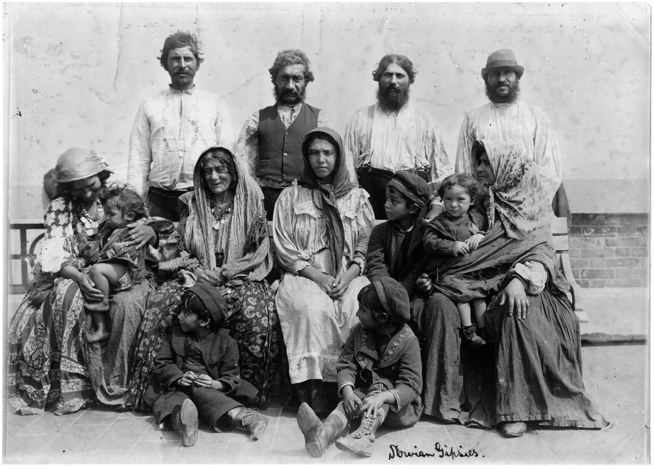
Throughout the late nineteenth and early twentieth century, Roma were regularly characterized in the press as an undesirable and untrustworthy people who could never be fully assimilated or Americanized; the attention they received came in the form of disparaging, even demonizing copy. Carol Silverman notes that Roma were being “racialized as dangerous others” in the media, where frequent allegations of child theft/kidnapping, menace and mayhem, poisoning wells and fraud would surface – while more and more Roma were slipping across the borders.Footnote 5 Dozens of syndicated stories in the US and Canadian press in 1904 alone reported on Roma groups’ constant movements, suspicious activities and deportations. Dalen Wakeley-Smith has shown that this was not an aberration but rather the ramping up of a decades-long practice on the part of the popular press, as well as the public, for whom Roma could both fascinate (through orientalist fantasy) and appall (through scapegoating) in equal measure. Unsurprisingly, these same stereotypes and prejudices impacted the decisions of immigration officials.Footnote 6
Two newspaper stories track this one family’s arrival, and the Tennyson’s manifest records the landing of eight adults and twelve children, seven of whom were two and under.Footnote 7 All were listed as Servians originally sailing from Buenos Aires with six stops at ports in Uruguay, Brazil and Barbados. Four of the adults were literate, and all were judged to be in good health. The men were all listed as laborers and collectively carried $595 ($20,960 in 2024 dollars).Footnote 8
One of the women was pregnant, and two of the children were less than two months old, further complicating what was already a precarious journey. They had spent nearly four weeks traveling by steamship up the coast of South America and through the Caribbean until reaching New York. However, their journey was not yet halfway over in terms of distance and was just beginning in terms of duration. The New York Times bluntly noted that while the group was “picturesque,” they were not “desirable immigrants” and were to be deported despite efforts underway to appeal the order.Footnote 9
Discrimination, Detention, Deportation
The Estevanovich family was detained on the grounds that if allowed to enter the US, they would become a public charge, a frequently employed but, in this case, entirely disingenuous claim, considering that the family was financially well-off, had immediate family members in the US, and was judged to be in good health.Footnote 10 Regardless, the group was unable to overcome the LPC charge.Footnote 11
Final dismissals came over a week after news reports claimed the decision to deport had already been made. The appeals took longer to accommodate, in part because the family was waiting for two witnesses to arrive and submit sworn affidavits on behalf of the group. In any case, denial meant deportation; after four hearings and four appeals, the outcome would remain unchanged. Although there was no state provision, law or federal statute that marked Roma for exclusion at ports of entry, the real reasons for their detention and ultimate deportation had more to do with a hybrid race/class/behavior-based discrimination rather than any regulatory provision put in place to limit the influx of public charges into the United States.Footnote 12
Statements from Ellis Island officials made during appellant hearings would echo the language of the press and vice versa. Transcripts of Special Inquiry hearings and related documents for the Estevanovichs and others have been preserved, offering a fascinating glimpse into the forgone conclusions of the Board. In each case, after a half dozen perfunctory questions by the Board, a similar motion ordering deportation was abruptly made for each family. Hearings for each family head in the Estevanovich party took place on July 24, 1904, just a day after the group’s arrival.
Mr. Paul: How did you support yourself before you came to this country?
Jeverem Estevanovich: We have been farm hands.
Mr. Paul: Did you ever attempt to enter this country before and were refused admission and deported at that time?
Jeverem Estevanovich: I have never been in this country before.
Mr. Paul: I move the exclusion of the alien immigrants before the Board as likely to become a public charge. This alien is encumbered with his wife, who is pregnant and two very young children; he has an inadequate sum of money to preclude the possibility of their becoming public charges until such time as they would become self-supporting if at all. This class of immigrants are as a rule wandering, professional beggars, fortune tellers, and on the whole very undesirable for admission to this country.Footnote 13
The motion was seconded, and then the chair declared the aliens to be unanimously excluded as LPCs and ordered them deported at the expense of the steamship company that brought them to the US. The line of questioning concluded with the motion’s acceptance, and with each testimony, a copy of a letter from the Consulado de la República Argentina en St. Louis, dated six weeks prior to the family’s arrival, was entered into the record. The letter had been sent to Ellis Island Commissioner William Williams before the group’s arrival on the Tennyson. In a perfectly unequivocal manner, it stated that the entire family was expected by family members in St. Louis – who were ready to accommodate them – and that the group should come to the consulate for any assistance in locating relatives. Though the letter appears not to have been discussed to any substantial degree, it nonetheless shows a high level of preparation on the part of the group.
“Did Your Wife Ever Tell Fortunes?”
On July 31, a rehearing was held for the case of Andreas Estevanovich and his family, apparently at the request of Commissioner Williams. Andreas was ostensibly the head of the entire group and was now being accused by a “man from the Deporting Division” of having attempted to enter the country in November 1903, only to have been denied entry and deported; Andreas rejected the claim made by the inspector in this and subsequent statements. During the proceedings, it was revealed that three of his children were already in the US and that one of them, 25-year-old Stefan Stevanovich, had traveled from St. Louis to serve as a witness for his father.
Chairman Coe: On what ship did you come to this port sometime last fall?
Andreas Estevanovich: I don’t know, I could not tell.
Chairman Coe: What month was it you were sent back?
Andreas Estevanovich: I could not tell you; I do not recollect it.
Chairman Coe: Was it in October or November?
Andreas Estevanovich: (no answer)
Chairman Coe: What was the name under which you came here last fall?
Andreas Estevanovich: Only one name I have.
[Stefan Stevanovich is sworn in]
Mr. Hise: Have you any money saved?
Stefan Stevanovich: Yes, sir
Mr. Hise: How much?
Stefan Stevanovich: $500
Mr. Hise: Where is that money?
Stefan Stevanovich: With me
Mr. Hise: Show it?
Stefan Stevanovich: (Shows $500 in gold)
Mr. Jackson: What have you been doing in St. Louis?
Stefan Stevanovich: Working at any kind of work, underground, in factories, and any kind of work. I will pay for him if I have to pay $500, he is my father.
Mr. Jackson: These aliens came to this country on the SS Tennyson, November 20, 1903; were made S.I. [Special Inquiry], and were excluded by a Board of Special Inquiry on November 23, 1903 as persons liable to become public charges. At that hearing the opinion of the Board was unanimous … special stress was laid upon the fact that “if there is such a thing as an undesirable class of immigrants that come to this country, the immigrants before the Board are certainly within that class.” I also believe that they do belong to a peculiarly undesirable class. My opinion is that he is a Gypsy or has maintained himself after the fashion of a Gypsy. I move to exclude them as likely to become a public charge.
Mr. Hise: There being no evidence submitted before the Board that these people are other than what they profess to be, viz, farmers; also the fact that the man, to my mind, is capable of supporting his family; he shows £41, which he says he has obtained by his own exertions; he has three children in this country, one of whom appears here and exhibits $500, in gold, of his earnings; he appears to be a hard working man. Believing there is no likelihood of these people becoming public charges, I, therefore, move to admit them.
Chairman Coe: They are excluded.Footnote 14
The one dissenting voice throughout all of the hearings came from Hise, and his opinion was referenced in subsequent documents filed on behalf of the family, to no avail. Despite the outcome, Stefan remained in New York, and together with another relative of Andreas who had just come forward – a younger brother named Thomas Michael – they hired an attorney from a Manhattan law firm to represent the entire family in an attempt to reverse the Board’s decision.
The head of each family wished to appeal the Board’s initial decision and request a formal rehearing, but new evidence would be required. Stefan and Thomas made sworn affidavits in support of an appeal to be made before another convening of the Board of Special Inquiry (BSI). Thomas’ affidavit stated that he had been in the US since the mid-1880s, that he and his brothers were all born in Šabac, Serbia, but was now a naturalized US citizen who at no point had become a public charge, that he was a successful small-business owner as a coppersmith in New York with $5,000 in savings, and was willing to support the family financially if needed. The family presented additional evidence, including copies of telegrams from the Argentine Consulate in St. Louis, dated from January to June 1904, which indicated that Andreas had not attempted to enter the US in November 1903. Within a week, the sworn affidavits and evidence were sent to both Commissioner Williams at Ellis Island and to the US Commissioner–General of Immigration, F. P. Sargent.
On the same day that attorneys for the family submitted their first affidavit, there was an unsuccessful attempt to deport the entire group. According to a letter by steamship agents to Commissioner Williams, the Tennyson could not accommodate such a large group at the last minute, so they were sent back to detention. Within a few days, the affidavits were submitted and received. The four briefs filed on behalf of the appellants concisely address the unfounded statements made by Board officials and offer sound arguments against their unfairness. Moreover, the prejudice of Board officials was forthrightly called out by attorneys for the family:
There is nothing in the law prohibiting gipsies [sic], whatever that term signifies, from entering this country. The law does require the exclusion of “professional beggars”; but these immigrants are neither gipsies nor beggars. There is not the slightest evidence in the case to support the statements of the inspector… The law of the land does not permit even aliens to be excluded because they belong to an “undesirable class of immigrants.” There is nothing in the statute that gives the Board of Inquiry the power arbitrarily to determine who is and who is not desirable for admission to this country. Their duty is to administer and obey the law.Footnote 15
The attorneys were correct, but in the end, their arguments mattered little. In this case, the Board had deferred judgment on the next steps to the Department of Commerce and Labor, where officials reviewed the material and quickly set out a course of action, recommending deportation on two flimsy provisions:
“If he elects to appeal from said order of deportation, he must … file notice of such appeal promptly.”
“No appeal will be considered after any such alien has in consequence of an adverse decision of a Board of Special Inquiry, been transferred from an immigrant station to be deported.”
The Department must, therefore, decline to entertain the appeal, leaving the decision of the Board of Special Inquiry as the final adjudication as to the right of the appellants to land in the United States.Footnote 16
Thus, not acting promptly with their appeal (a dubious claim nowhere mentioned before) and because the physical act of having the group transferred out of detention and taken to the pier for deportation violated Rule 8 – even though the group was not accepted on board the Tennyson – is what ultimately nullified their final appeal. None of the letters between Ellis Island and Washington, DC officials acknowledged the new affidavits or evidence, and the case ended abruptly due to the technicalities referenced above. The letter from the Department of Commerce and Labor to the Commissioner of Ellis Island was dated August 18; all appeals were dismissed on August 19.
Despite the quick dismissal, the group remained on Ellis Island for another six weeks. However, no additional records concerning their detention survive, except for notes entered into the ship’s manifest detailing their deportation, including that of a newborn. Maria Estevanovich, age 24, gave birth to a child in the hospital at Ellis Island on September 19. The unnamed child was barely two weeks old when the entire group was deported. That was not the end of the Estevanovichs’ attempts to emigrate to the US, nor was it for other groups of Roma.Footnote 17
“Picturesque” Roma on the RMS Carpathia
The same passenger liner that carried the Estevanovich family to Ellis Island also transported other extended families of Eastern European Roma from South America to the United States, starting even before the Estevanovichs’ attempted emigration in 1904 and continuing until at least the 1910s. Some would successfully enter, while many Roma would also be deported back to their port of embarkation – and again have their detention and deportation reported on in the press.Footnote 18
From another ocean liner departing from Liverpool, a story would emerge that overlaps in time and narrative with the Estevanovich deportation – at a scale more than ten times larger. In early September 1904, while the Estevanovich family was still in detention, a packed steamer arrived in New York, ferrying its passengers to Ellis Island. It was the RMS Carpathia, which carried nearly 2,000 emigrants from all over Europe; 202 Roma were among the passengers in steerage, likely making it the largest single attempted migration of Roma to North America during the early 1900sFootnote 19 (Figure 5.2).
A nationally syndicated photo with the caption “Gypsies to settle down in Canada.”
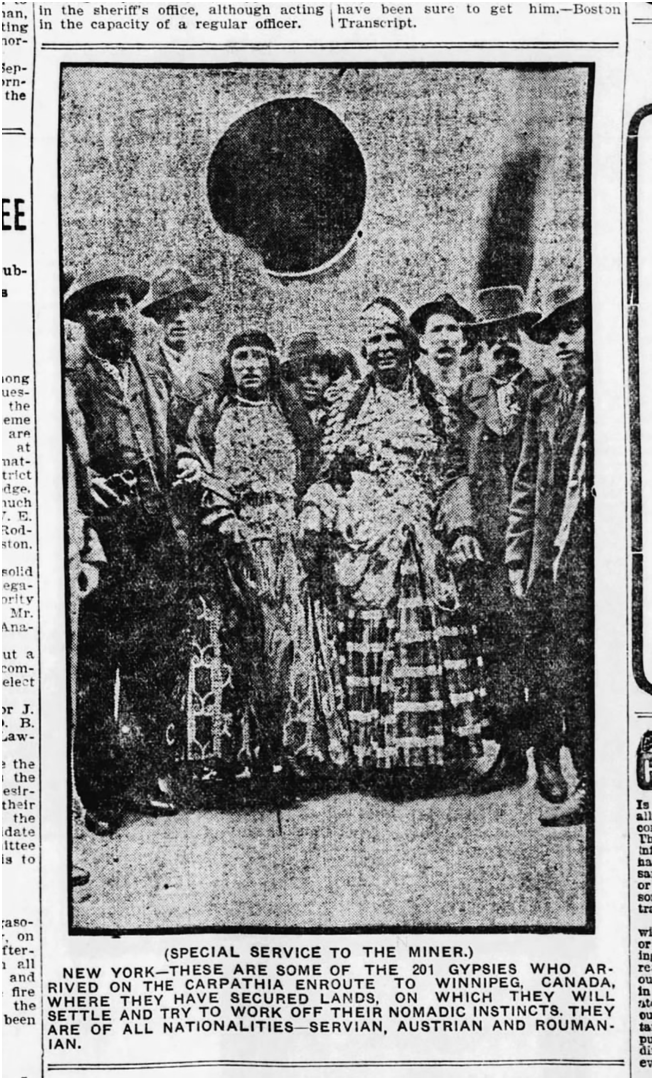
Amounting to more than 10 percent of the passengers aboard the ship, their collective presence did not go unnoticed during the voyage. An unlikely eyewitness account, written by a steward from the Providence Art Club, included crass observations of “the most picturesque-looking gang of cut-throats you can ever wish to see” aboard the Carpathia:
There was a band of two hundred and sixty of them. The cap’n refused to have them aboard; so the tender cast off hawsers and took them back. We waited for orders to sail; but pretty soon the tender came alongside again, and this time after some shouting of orders through the megaphones, they were admitted. I put my son to bed about nine … then a dozen or so of us visited the streets of Cairo – that was the Gypsies’ quarters, where you could see a free show every night.Footnote 20
Tom Mitchell, a Romani American based in New York, claimed to be responsible for the migration itself, stating: “I brought these 260 men, women and children here to go to Winnipeg and take up lands. They have money. I will bring 1,800 more of them out in a few months for the same purpose. They are not paupers and they can look out for themselves. The Government will pass them.”Footnote 21 The plan would fail to materialize, and additional news reports, which claimed to cite immigration officials, asserted that the scenario playing out from the Carpathia was about to end in the largest deportation of a single (ethnic) group arriving at Ellis Island.Footnote 22 On the surface, the reason behind the mass exclusion was to minimize the “Gypsy menace,”Footnote 23 but public health was also raised as a concern; approximately 20 percent of the Roma arrivals, primarily children, had contracted measles toward the end of their journey across the Atlantic. A fear of contagion, now associated with an already undesirable ethnic group, was a competing factor in their being singled out for exclusion. Other news reports would claim that while most of the Roma intended to transit on to Winnipeg and not settle in the US, immigration officials knew better; this was just a ploy, and if the Roma were allowed into Canada, they would inevitably try to reenter the US and wreak havoc upon its citizenry. Transcripts made by immigration officials that dealt with the Carpathia’s Roma tell a different story, one that points toward wholesale discrimination rather than a legitimate concern over the spread of contagious diseases.
Periodically annotated over the course of seven weeks after the group’s arrival, entries on the ship’s manifest, as well as BSI records, shed light on the motivations and fate of this “picturesque” group. Concurrently, their plight at Ellis Island was also the subject of articles and photographs in the US and international press; the group’s size, coupled with their being simultaneously exoticized and made undesirable, ensured good copy at the time. By early October 1904, 187 of the 202 Roma arrivals (95 percent) had been deported back to the UK; four children would die in detention. Ten of the eleven allowed entry and “discharged on pier” were already US citizens, leaving only one Roma from the 202 that successfully emigrated.
Except for the native-born or naturalized Romani Americans, none of the Roma aboard the Carpathia had previously visited the US. Within hours of their arrival, all would be held for Special Inquiry and summarily declared an LPC – meaning indefinite detention and possible debarment. While the health of the children was a factor in the group’s detention, the LPC charge is not substantiated by the recorded data on the manifest. None of the Roma were marked “deformed or crippled” or in “poor mental/physical health,” nor were any entries annotated with certifications from Ellis Island medical examiners that detected problems after landing, as was the case with other individuals detained under an LPC charge. Moreover, most of the adult males possessed skilled trades (coppersmith, horse trader/stock dealer) and, collectively, they carried greater wealth than any others in steerage: $8,990 ($316,685 in 2024 dollars).Footnote 24 While nearly 40 percent of all passengers aboard the Carpathia were either detained or held for Special Inquiry after landing, the scrutiny the Roma passengers faced was the obverse of all others onboard. For perspective, of the 209 non-Roma on the Carpathia held for inquiry, only eight were deported (3.8 percent), while a staggering 99.5 percent of the Roma held for inquiry were deported.
“We Are Not Gypsies, But a Band of Rovers”
The Roma on board were classified by Cunard Line inspectors in Liverpool as Russian, Austro-Hungarian, Serbian and Greek nationals – in most cases with the term “Gypsy” penciled in by immigration officials at Ellis Island.Footnote 25 Among the 202 Roma, there were somewhere between eighteen and twenty separate families and only eleven surnames among the entire group: Mitchell, Radu, Sava, Magdi/Magai, Stefanowitcz, Tanassa, Grautcha, Risko, Michailov, Gorgis and Karpolia. The last recorded residence for most was Libau, Russia (Liepāja, Latvia); this entry, along with other documents, indicates that the group was, or had just become, cohesive before leaving the Russian Empire and that, despite the diverse origins of its members, could be mobilized en masse. After weeks of travel by ship and train, the group first assembled in London before departing from Liverpool to the US.
According to news reports, much of their detention was spent onboard the Carpathia due to an outbreak of measles, which had stricken over forty of the Roma passengers, likely a key factor in the group’s detention, as signs would have been apparent during the mandatory medical inspection.Footnote 26 Children twelve and under, who made up more than half of the group, were hardest hit, and many required medical treatment onshore at the Kingston Avenue Hospital for Contagious Diseases in Brooklyn; four died while in detention, and two more on the ships that deported them back to the UK (Figure 5.3).Footnote 27
First reproduced in National Geographic with the caption “Excluded Gypsies about to be deported.” This photo likely captures some of the mass debarment and deportation of Roma from Ellis Island during September and October 1904.
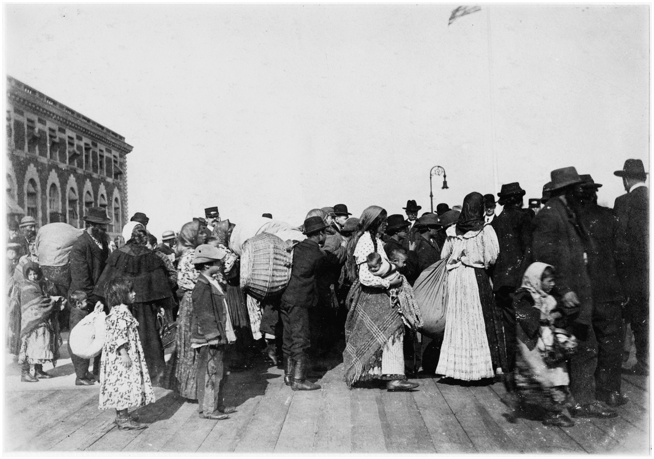
During their detention, men and women were segregated into fenced-off holding areas. The additional separation of the sick children from their parents would eventually cause a serious conflict, one that was reported on in a sensationalistic manner by the New York Times. According to reports, a rumor had circulated among the Roma in detention that the children taken to the hospital were “being drowned,” sending the terrified mothers on “the warpath” with a demand that they see their children. Several children had died due to complications from contracting measles, and the parents were likely suspicious of the cause of death as reported by Ellis Island health officials; an unnamed Roma detainee stated that the mothers were “fighting for the lives of their children” in desperation. Nowhere in the reporting is it mentioned that four children had died (two before the first article was published), only that the parents acted hysterically and violently toward officials who tried to calm them. The Times frames the episode as an overreaction on the part of the Roma, who jumped to wild conclusions but were eventually assuaged when one set of parents was allowed to visit their sick child in the hospital and witness the good care all the Roma children were receiving.Footnote 28
The Sava Family
Among the dozens of Roma families aboard the Carpathia, only one, an extended family of fifteen named “Sava,” appealed the deportation order levied against them. Like the Estevanovich family, the Savas denied being Roma or “living in the manner of a Gypsy” and hired an attorney who filed affidavits and legal briefs on their behalf to fight the LPC designation and deportation order. Adults gave sworn testimony and presented affidavits from immediate family in the US, along with two sworn statements of support from professional acquaintances of the relatives. Heads of each family submitted appeals via their attorney (no aid societies were involved), but only one part of the family was granted a rehearing. As with the rest of the Roma aboard the Carpathia, and despite immediately pursuing legal channels, the Savas were eventually deported.Footnote 29
The Sava case file reveals details about the family but also the logistics of the mass migration of the group they were part of and the tactics used by immigration officials to assure their debarment. Like nearly all the other Roma families aboard the Carpathia, the Savas carried a substantial amount of money: over $3,000 ($105,679 in 2024 dollars).Footnote 30 In fact, the Savas carried more money than any single (immigrant) family aboard the Carpathia. With a substantial amount of capital, skilled trades, good health and relatives in the US willing to support them if needed, entry should have been granted. The Savas’ attorney forcefully asserted that the Board’s decision to deport was being “based upon a suspicion of the life they might lead … that of Gypsey [sic] taking in horses and living on the public, making their money through trickery, after the manner of Gypsies” and not upon established law or statute.Footnote 31
Family members were all from Lamía, Greece, but during the early 1900s they migrated to Liepāja, Latvia – the same route the rest of the Roma took before reaching London. The adult males stated they were coppersmiths and horse traders, two professions Roma often practiced at the time. According to testimony, the Savas planned to continue their trades either in Canada or Mexico if they were refused entry at Ellis Island. One of the legal briefs for the appeal stated that “[the family] … are not Gypsies as tagged by officials through mishap of chance acquaintance of meeting a certain Mitchell family en route, but people of homes, families, worthy trade and ample means, and relatives to come to and be guided by, also ply successfully some trade and well fixed.”Footnote 32 Besides their avowed association with Mitchell, their stated occupation was likely a key factor in the BSI’s decision.
Legal briefs claimed that the LPC designation was unsubstantiated and that the families had been “taken in” while en route to the US by a passenger on the Carpathia named José Michel (i.e., Joe Mitchell), a Brazilian-born naturalized US citizen and apparent translator and spokesperson for the entire Roma group. Mitchell traveled from the United States to Russia to assist in facilitating the group’s voyage to the United States. The Savas claimed that they would be “under his [Mitchell’s] charge” if allowed to enter the US but that they were not Roma and were being erroneously associated with the rest of the group. Mitchell was interviewed by the New York Times and claimed that he and the entire group were “not Gypsies, but just a band of rovers.”Footnote 33 It would seem that everyone denied “being Gypsy,” but immigration officials thought they knew better:
Mr. Paul: I move the exclusion of the aliens appearing before the Board, including members of the family in the hospital, said motion subject to the action of the Medical Department – for the reason that they have no one here legally or morally bound for their care, support or maintenance in case of their inability to secure self-supporting employment: They expect to go to one Mitchell and be by him directed as to their future course, presumably that of traveling from place to place trading horses and preying upon the public – on the whole, a very undesirable class of people to be admitted to the United States and likely to become a Public Charge.
Mr. Jackson: I second the motion. Probably these aliens would not become public charges in the usual sense of the term – viz., being supported in charitable institutions, but they would, in reality, become a burden on the public immediately upon their admission to this country, owing to the life which they would lead, that of a Gypsy, trading in horses and living on the public, making their money through trickery after the manner of Gypsies.
Chairman Parbury: They are excluded.Footnote 34
While the questions posed to each of the adults at the hearings varied slightly, focusing on the family’s origin, occupation, contacts in the US and mobility, the Board’s decision was word-for-word identical in both hearings. Accompanying the Savas’ appeal to the Commissioner-General of Immigration, Ellis Island’s Acting Commissioner, Joseph Murray, strongly advised a dismissal of their appeal, claiming they “are not physically strong and are not adapted to work in this country,” that they were “extremely unkempt and filthy in their appearance and habits” and likely “professional beggars.”Footnote 35
Within three days of sending formal appeals, the Savas’ attempts to fight debarment were dismissed and deportation ordered. After a month in detention, they were sent back to the UK on two separate ships. Less than a month later, another attempted migration of Roma to the Americas, again involving the Carpathia and with parallels to the Estevanovich story, would play out at the US Immigration Service in Montreal, Canada.
Transatlantic Crossings and the Canada–US Border
Arriving at the Port of Quebec on October 22, 1904, the SS Ionian brought two Roma families with the surnames of “Mitchell” and “Towvitch” who were transiting on to the US.Footnote 36 What is extraordinary about their migration story is that although they were already naturalized US citizens and possessed valid US passports and naturalization certificates, immigration authorities thought their documents were forgeries or had been obtained fraudulently. The families were first held up by the Canadian Superintendent of Immigration in Ottawa, who assessed them as “Gypsies” and deferred to the US Immigration Service in Montreal for advice on how to process them, stating that “If not accepted by you and sent on to States, [we] want them deported.”Footnote 37
The families were detained aboard the Ionian pending a decision from a BSI hearing, which was held aboard the ship two days after its arrival. Robert Watchorn, then Commissioner of Immigration for the United States–Canada border, served as interrogator during the proceedings. Questions put to the group focused less on labeling them as “Gypsies” or claiming that family members were likely to become public charges and more on discrediting their claims to US citizenship, as well as denigrating their overall moral character. Officials alleged that the families were part of the Roma group who had been onboard the Carpathia just seven weeks earlier and who had been deported back to the UK. Watchorn claimed that just after they arrived in Liverpool, they boarded the Ionian with false papers and were now attempting to reenter the US via Canada; these were similar to the claims that had been made just months before against the Estevanovich family. Three of the women were accused of being prostitutes, and the two men who held citizenship papers for the families were quizzed on US governance, geography and their personal chronology. They were also periodically belittled by Watchorn, who at one point asked one of the defendants, Emilio Mitchell, “How many are 16 and 8?” and commented in his final report that “the alleged Ivan Towvitch … is one of the most stupid persons it has ever been my duty to interrogate”Footnote 38 (Figure 5.4).
One of several sketches made of the families during Canadian court proceedings.
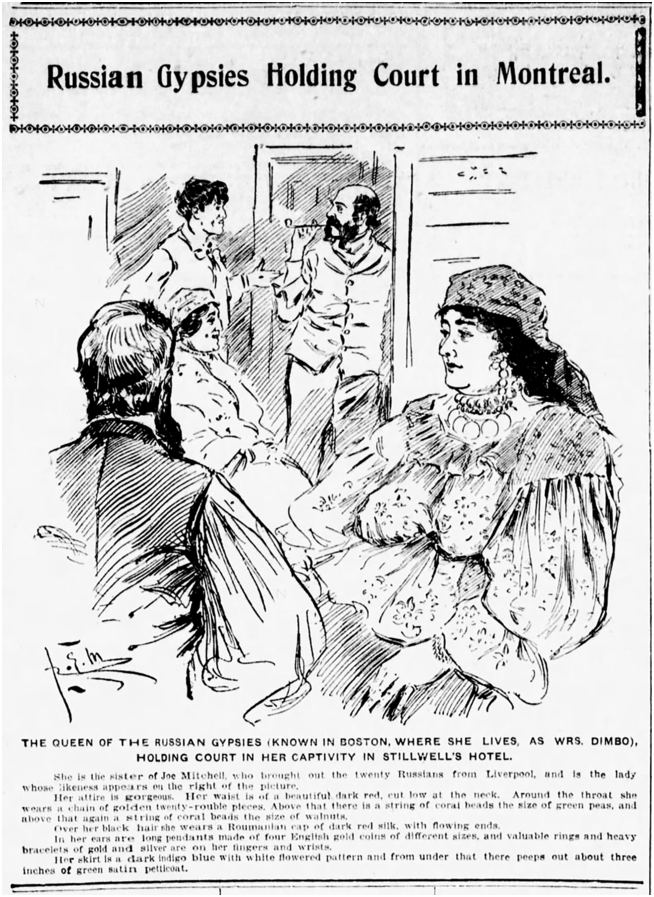
Ultimately, the recommendation to deport was upheld, and the group was barred from entering the United States.Footnote 39 Naturalization records, Census returns, and copies of passport applications, which were likely out of immediate access at the time, substantiate the families’ claims and refute the findings of immigration authorities: they were indeed who they claimed to be.Footnote 40 However, attorneys for the Mitchell/Towvitch families simultaneously fought for them to be allowed entrance into Canada and were ultimately successful. A brother and sister of Emilio Mitchell traveled from Boston to Quebec to support the families, offering to pay bonds for their release and corroborate the defendants’ stories. The proceedings were covered by the Canadian press and focused on their exoticism (and wealth), even including photos and illustrations of the defendants and their relatives.Footnote 41
“You Are a Gypsy?” “Yes, They Say We Are”
Not all migrations of Roma to the United States ended in deportation during the early 1900s. According to ship manifests, some families entered without incident, and some, whose status raised as much concern among immigration authorities as the families discussed earlier, were allowed entry. Slovenian-born Sokor Stanlie arrived at Ellis Island in January 1905 with her two sons and was nearly deported. However, their appeal was successful, and the family was allowed to enter – on the condition (through bond) that they did not become a public charge. In many ways, their situation differed from the cases discussed above but led to an equally unexpected outcome. After living in the US for more than a decade, the eldest son, James, returned to Europe to bring his mother and younger brother over. Although not a US citizen, James was cleared for entry; however, his mother and brother were not, so a potential (immediate) family separation loomed. In contrast to the other Roma migrations discussed, the Stanlies admitted to “being Gypsy” and were not traveling with a larger group of Roma. At the same time, the mother was a widow and had no money at all. Her fifteen-year-old son was judged by Ellis Island medical inspectors as possessing “mental weakness, and poor physique, affecting ability to earn a living.”Footnote 42 On paper, this should have put them in a far more precarious position than with the other groups, yet they were allowed to enter.
As with the Estevanovich, Sava, Mitchell and Towvitch families, the BSI’s decision to deport the Stanlies was supported by the Commissioner of Immigration at Ellis Island in a letter accompanying their appeal. While the excluding decision was then sustained by the Acting Commissioner General of Immigration in Washington, DC, he concluded that “as the deportation of the aliens would involve the separation of members of an immediate family, you [Commissioner William Williams] are authorized to accept the usual bond and permit them to land, provided you are satisfied as to the financial responsibility of the sureties offered.”Footnote 43 In this case, “family separation” was expressly to be avoided and the Stanlies were released after eight days of detention.
Success at Other Ports of Entry
Besides individual cases like the Stanlies, larger groups of Roma were successful in entering the United States without any documented scrutiny, but not via Ellis Island. The early 1900s saw other ports of entry, such as New Brunswick and Halifax, Canada, serve as first stops for passengers ultimately destined for the United States. Such ports were smaller and more rudimentary in operation, shorter staffed and lacking in detention quarters. Passengers could land, get on a rail car headed across the Canadian border and likely face less scrutiny with US customs officials than at Ellis Island.
One extraordinary case from December 1900 involving over 130 Eastern and Central European Roma on the RMS Lake Superior who landed at the Port of Saint John in New Brunswick, Canada, stands out.Footnote 44 None had been to the US before, but, as with the Roma on the Carpathia four years later, the group collectively carried enormous wealth, was comprised of mostly coppersmiths and horse dealers and appears to have been a cohesive group in Russia before leaving from Liverpool. They were bound for Boston and Baltimore, and most stated they were from the Kingdom of Serbia (Negotin, Šabac, Belgrade), as well as Brazil (Pernambuco), Greece (Athens), Russia (St. Petersburg) and Hungary (Budapest).Footnote 45
Other members of the wider Estevanovich family would also successfully emigrate to the US. Two ship manifests from 1910 and 1911, which document the emigration of this second group of Estevanovichs, first from Cuba and then via Puerto Rico to Ellis Island, provide a great deal more insight into their identities and origins. Markings on the manifest, entered decades later, indicate that some individuals became naturalized US citizens.Footnote 46
Despite the long history of Roma being turned away at immigration stations and border points throughout the US, this part of the Estevanovich family appears to have passed through the inspection regime at Ellis Island without incident. No detention, no Special Inquiry hearing, no scandalous reporting in newspapers – no deportation. While it remains unclear just how this family is related to the 1904 Estevanovich arrivals, it does point to the fact that Romani peoples tenaciously found ways to enter the US during the early twentieth century despite numerous obstacles. These cases also point to the arbitrary policing of Roma at US borders. Decisions to deport or allow entry defy consistent logic or uniform application of border policies. This suggests that the prejudices held about “Gypsies” influenced the judgments made by border officials, which then impacted Roma experiences of immigration in distinctive ways. Even though these crossings took place during the age of mass migration (1850–1914), with its “open borders” and overall low debarment rates, Roma would routinely have to navigate a fierce uncertainty.Footnote 47 But the immigration regime’s efforts to block Roma migration, combined with public anti-Roma prejudice and the media’s consistently biased lens, could not hold them back.Footnote 48
Conclusion: Tari Amerika
Early US laws banning the entry of a race or people, such as the Chinese Exclusion Act (1882), were brutally effective tools for delivering race-based exclusion. As nativism grew in the ensuing years, however, so too did the nuance immigration restrictionists used in applying their biases against certain ethnic groups. They often did this without delineating nationality. The list of excludable classes expanded to incorporate behaviors (e.g., literacy, vagrancy, professional begging), religious and political beliefs (polygamy, anarchy), social class (pauperism, public charge) or geography (Asiatic Barred Zone). These categories could be warped and wielded upon various “undesirable classes,” including Roma, to prevent entry. Roma exclusion is concealed in these categories, folded into statistical tabulations on exclusions dutifully sent from immigration stations to the Bureau of Immigration for annual reports. However, there is no specific information on the migration or deportation of Roma – nor do naturalized Roma appear as such in US and Canadian Census counts. Statistically speaking, Roma are virtually invisible, which has led to a paucity of reliable data concerning Roma migration throughout the AmericasFootnote 50 (Figure 5.5).
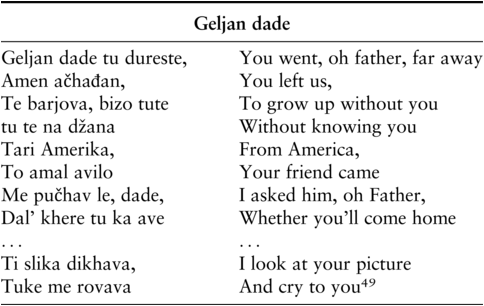
Table 5.01 Long description
The table titled Geljan dade presents the lyrics in Romani in column 1 and the English translation in column 2.
Column 1 reads as follows.
Geljan dade tu dureste,
Amen achadan,
Te barjova, bizo tute
tu te na dzana
Tari Amerika,
To amal avilo
Me puchav le, dade,
Dal’ khere tu ka ave
Ti slika dikhava,
Tuke me rovava.
Column 2 reads as follows.
You went, oh father, far away
You left us,
To grow up without you
Without knowing you
From America,
Your friend came
I asked him, oh Father,
Whether you’ll come home
I look at your picture
And cry to you.
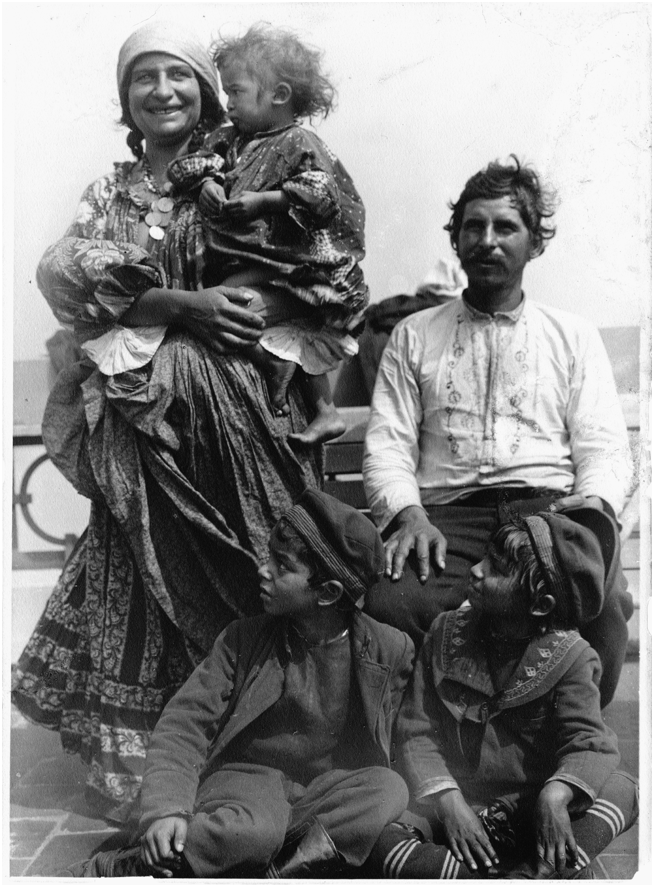
Untangling the Estevanovich and other Roma families’ suspended time at Ellis Island reveals a strong undercurrent that upends most classic “Golden Door” narratives, but one that does not dislodge the agency families like these possessed. While the reconstructed narratives can indeed be characterized as sad and most of the outcomes as, at best, distressing, seeing the unwritten exclusionist policies in practice helps to reveal the immensity of what Roma peoples faced in circumnavigating the Atlantic or crossing borders between the US and Canada. This makes their collective persistence utterly remarkable, and the smiles some of them wore in photographs while awaiting deportation, defiant and undefeated.
Seeing this, albeit only in fragments, puts the reader at eye level with what Roma were up against as they attempted to navigate the immigration maze. We have some of their actual testimony as they faced interlocutors at Special Inquiry hearings and through interviews in the press, simultaneously demonstrating their vulnerability and strength while exposing the tactics used to achieve an unwritten agenda to “Keep out the unworthy of the nomadic type.”Footnote 51
Introduction
At the end of the nineteenth century in Europe, Romani people faced racism, social control and limited social integration within both urban and rural contexts. “Gypsies” fell behind in “social progress,” according to official national discourses that attributed traits of itinerancy and barbarism to Romani people and that claimed they were incompatible with modern society.Footnote 1 During the same period, economic, social and cultural modernization efforts transformed not only the labor market, but also available modes of transportation and communication. As European migrations across the Atlantic reached new levels, more than ten million people arrived in Latin America.Footnote 2 Unsurprisingly, many Roma came to view transatlantic migration as one possible response to the complex social conditions they faced. Like other Europeans, they undertook this journey in search of new opportunities, which they occasionally found in the Americas.
Between 1900 and 1950, numerous Romani families – mostly associated with Sinti, Manouche and Roma subgroups – immigrated from Central and Southern Europe. Although many families went to the United States in search of new opportunities, many others tried their luck in Latin America.Footnote 3 They arrived by sea, mainly to ports in Argentina, Chile, Brazil and Uruguay; they came from Italy, Greece and Spain on ships that connected the two continents. Their journey was not as simple as buying tickets, which was already complicated in economic terms; they also faced immigration policies, port controls and maritime inspections that regulated access to the receiving countries on the other side of the Atlantic.
Argentina serves as a prime example of this, as its immigration control policy had been harshly enforcing exclusion criteria since the middle of the nineteenth century. In addition, it had become the final destination for many families who had previously passed through other countries on the continent. One instance of this involves the case of the Serbian Stankovich family, who traveled between Europe and Argentina during the second half of the nineteenth century.Footnote 4 In Chapters 5 and 4 respectively, in this volume, Louis Takács and Adèle Sutre analyze the cases of the Stevanovich and Montes families who traveled to several countries – including Puerto Rico and Cuba – before settling in Argentina.
I will approach the discrimination of Gitanos in the migratory processes between Europe and Argentina from several vectors of analysis. Late-nineteenth through mid-twentieth-century histories will contextualize the reports produced by the Departamento General de Inmigración between 1891 and 1947.Footnote 5 These reports include the prior legislation that was still enforced as well as statistical and quantitative data on newly arrived immigrants. The legal texts came from the Immigration and Colonization Law of 1876, enacted during the government of President Nicolás Avellaneda to regulate immigration to Argentina. The statistical data details place of origin, sex, age, profession, ethnic affiliation, health status, disability, religion and political affiliation. Although scholars have increasingly carried out research on passengers identified as Gitanos among the maritime immigrants to Argentina, a deeper analysis is necessary to understand how the conceptualization of Gitanos as undesirable immigrants intersected with Argentina's immigration policy to produce the denial of their entry.Footnote 6
Beginning in the late nineteenth century, moralistic, eugenic and hygienist discourses spread across the Atlantic and decisively influenced patterns of antigypsyism. Throughout Latin America, not just in Argentina, authorities concerned about the racial characteristics of their nation applied these discourses in particular ways to immigrants. Authorities considered new immigrants in the context of official opposition to miscegenation, their concerns about the presence of Indigenous peoples (whom they considered inferior) and the consolidation of national projects founded on notions of social progress.Footnote 7 This chapter will focus on these issues as a necessary prologue to an analysis of the Argentine rejection of Gitano immigrants, based on the latter’s preliminary identification as an undesirable population in the contemporary immigration process.
This chapter is organized into several sections. In the first, I will briefly review the literature related to the transatlantic immigration of European Gitanos to Latin America. The second section, which deals with Gitano immigration to Argentina, is divided into two parts. First, the evolution of Argentina’s migratory policies will be placed within transatlantic and nationalist frameworks to reveal Argentine attitudes toward race and integration. I will then address the rejection of Gitanos based on the criteria established in the immigration reports. Analysis of these reports will result in an assessment of Gitanos who were refused entry between 1900 and 1950. Finally, the conclusion will summarize the key findings and identify possible roadmaps for future studies. This chapter will show that the classification criteria for accepting or denying immigrants into Argentina influenced Romani immigration on the basis of their ethnic condition, thus reinforcing antigypsyism on both sides of the Atlantic Ocean. I argue that, as a consequence, studies of Romani immigrants should be centered around the logics of their identification.
Fear and Rejection of the Undesirable
Histories of migration and mobility have been approached from many different perspectives. However, the recognition of Romani subalternity requires these histories to respond to their pending debts. Paradoxically, although “Gypsies” have been studied through the clichéd lens of nomadism, historians have seldom concerned themselves with addressing Romani migration, one of the most significant expressions of mobility among human groups in general. Although some scholarship has been published in this regard within the last decade, there is still a lack of research in relation to migration flows – specifically to Latin America – prior to the second half of the twentieth century. For example, Eszter Varsa shares an illustrative reflection made by Martin Fotta, who “argued for the inclusion of the Atlantic space in talking about Romani migration. Not only because Roma were present in Central America before they had reached certain parts of Europe but because this location would enable a comparative perspective on Roma in relation to other racialized groups.”Footnote 8 Fotta has pointed out that the marginalization and social rejection of Romani people in the Americas were not a simple transposition of European experiences. Rather, they were part of a process of interaction that can help us better understand antigypsyism as a transnational phenomenon. The case of Argentina in particular was studied in a similar sense more than a decade ago by Polish historian Aleksandra Pudliszak, on whose research my own work builds.Footnote 9 Yet Argentina is not an exception; it is one of many examples of the transatlantic nature of Romani migrations.Footnote 10 Therefore, in presenting this case, this chapter widens the scope of Romani studies by expanding its transatlantic perspective. In so doing it raises new questions and considerations about transatlantic Romani experiences.Footnote 11
It is worth noting the importance of antigypsyism in relation to Romani migrations from the end of the nineteenth century. Fear, rejection and the marginalization of Romani people have underpinned much of the discrimination against them. Because Roma have been associated with heresy, immorality, crime and delinquency in all its forms, they have become scapegoats of the state and individual citizens. Discrimination against Roma is a transversal phenomenon: frequently, those who share social problems and challenges with Romani people discriminate against them more harshly.Footnote 12
For the above reasons, an analysis of the immigration reports produced by the Argentine government between 1891 and 1947 requires a novel approach to archival sources. Romani anthropologists Iván Periáñez-Bolaño and Cayetano Fernández have analyzed the negative social position of Gitanos in relation to colonial narratives that connected the Romani population to barbarism, anti-progress and disorder.Footnote 13 These narratives have influenced issues ranging from the social control of Gitanos to the limits placed on academic research studying these communities in their own historical contexts. In this respect, I will depart from the construction of the concept of “Gitano” as a sociological category imagined in response to a need to control undesirables. A consideration of the fears of the Argentine government and the attitudes authorities adopted during immigration processes reveals an established a priori mechanism to deal with Gitanos who faced prohibition only by being identified as such. These immigration reports filtered the colonial experience of Argentina’s new nation-building project, which discriminated among immigrants and thus affected Gitanos. Doing so should help us develop a counternarrative through the historical reconstruction of who the Gitanos were, by going beyond a straightforward reading of the documentation created by the same power structures that classified them, rejected them and consequently contributed to the propagation of antigypsy stigmas and social panics. At the same time, adopting a bottom-up social history approach to immigration processes can help us understand how the receiving countries constituted themselves as part of these processes. It also provides us with a new perspective through which to observe the people who undertook the adventure of crossing the Atlantic in search of a better life.
Protect the Nation, Control Immigration
Argentina promoted immigration throughout the second half of the nineteenth century, intending to combat depopulation in the interior and attract workers who could boost the labor market.Footnote 14 At the same time, the country’s immigration policies aimed to nationalize these immigrants and place them at the service of a nation hoping to establish itself as a world power.Footnote 15 The elites promoting this project, however, did not believe this objective should be fulfilled at all costs; authorities took parallel measures to control immigration that were largely influenced by race science and eugenics. Eugenic discourses in Europe gained strength throughout the nineteenth century in the face of the postulates of Social Darwinism. Broadly speaking, this ideology contributed to the belief that society was made up of fit and unfit individuals.Footnote 16 Ideas related to eugenics were rooted in Spain, which ruled Argentina until the beginning of the nineteenth century and whose cultural impact continued throughout the century.Footnote 17 And the Romani population, which represented the most prominent ethnic minority in the Iberian Peninsula, inevitably had to face the results of eugenicist assumptions.Footnote 18
The formative period of eugenic thought began at the end of the nineteenth century and peaked during the interwar period. Beyond the Spanish colonial influence, the Catholic Church also impacted the evolutionist and biological approach on both sides of the Atlantic.Footnote 19 As Eduardo Lautaro Galak points out, two issues must be taken into consideration in the Argentine case. On the one hand, a certain equivalence was established between eugenics and race, thus promoting discourse on racial progress. On the other hand, as opposed to Nazi eugenics that focused on violently eradicating the procreative abilities of those deemed inferior, Argentine eugenics promoted the procreation and perpetuation of a healthy and desirable society whose members embodied recommended aptitudes, such as avoiding delinquency and vagrancy. Such plans were inspired by the proto-criminology of Cesare Lombroso. Nevertheless, in certain cases, especially later in the twentieth century, this did not prevent Argentine eugenics from becoming more closely related to the Nazi model, as seen with the sterilization of prisoners.Footnote 20 In any case, the backdrop is that there was a project to create a white Argentina. This project was not hidden at any time, but on the contrary, it was decisively undertaken with the aim of wiping out the Black and Indigenous populations.Footnote 21 It also influenced migratory controls of the late nineteenth century. It pushed the authorities to classify and prevent the entry into Argentina of those deemed socially undesirable, which thus preemptively managed the progress of the white race and the Argentine nation. Such management considered factors such as one’s medical condition, type of work performed or ethnicity, as we will see below. This can be observed especially in maritime immigration, since ports were the first places where immigrants were screened and assessed regarding their ability to appropriately enrich the nation and thus gain entry to the country.
As Sergio Caggiano argues, all immigrants who arrived in the mid nineteenth century were affected by the “white Argentina” project, where “racism hidden in plain sight” prevailed.Footnote 22 As Caggiano explains, the modern Argentine nation-state suppressed race as a criterion of social classification, precisely to homogenize the culture and establish the narrative of “white Argentina.” What was hidden was the desire to disintegrate and eliminate the cultures, customs and languages of immigrants, as well as of Indigenous and Black people already in the country.Footnote 23 Despite the intention of avoiding racial categorization, these processes of segregation, “invisibilization” and even “barbarization” led to the marginalization and misery of Indigenous and Black people.Footnote 24 Whites even used violence to manage these “Others,” as seen with the massacre of gauchos and Indigenous people by the politician and military man Domingo Faustino Sarmiento in the 1860s. This was later repeated by former President General Julio A. Roca, who led campaigns of conquest toward the interior of the country to extend economic and political power over places where Indigenous resistance prevailed.Footnote 25
Gitano immigrants arrived in the second half of the nineteenth century to an Argentina shaped by these conditions. Not only did they encounter immigration policies structured to facilitate the entry of desirable immigrants, but they faced a differential treatment based on other “races” that already populated the national territory. Immigration control was also influenced by hygienist precepts that sought to protect the nation. The authorities in charge of migratory control worked to avoid the spread of diseases – such as the highly contagious cholera and typhus – as well as vices – such as vagrancy or public disorder. This effort affected Gitanos, who were still portrayed as vagrants and delinquents as well as bearers of diseases they spread through their supposedly incorrigible nomadism.Footnote 26 In this context, immigration authorities treated Gitanos with greater suspicion by associating them with such diseases, even though there was no mention, as we shall see, of sick people among Gitano families who arrived in Argentina.Footnote 27 In this regard, Romani migrations instilled fear and reinforced the negative image of “Gypsies” as dangerous people doing evil throughout the Atlantic world.Footnote 28 In Argentina specifically, the government’s preemptive measures, including port control and the direct identification of Gitanos, prevented their entry with the aim of avoiding those situations that other countries feared, or which the government itself portrayed as threatening.
In the case of Argentina, two phases can be identified in relation to Gitano immigration. In the first phase, Gitanos were not identified as a distinct group; in the second, after 1911 they began to be identified as such. Why the shift in identification, and why were they not identified before? The reasons probably lie in the resurgence of hygienism, as well as nationalist and eugenicist circumstances. During the first phase, under the presidency of Nicolás Avellaneda between 1874 and 1880, the Immigration and Colonization Law of 1876 was enacted. This law, which established regulations regarding immigration and the distribution of immigrants within the nation, proposed favoring immigration to attract labor, especially farmers, but not at all costs. The law forbade ships from transporting the diseased, beggars, criminals, convicts and workers over sixty years old.Footnote 29 According to Article 32 of this law, all those deemed unfit would be deported immediately upon arrival and returned to their ports of origin.Footnote 30 The fundamentals of the 1876 law prevailed in the following decades, when the country’s industrialization and economic development demanded more workers. At the same time, managing the arrival of immigrants fleeing conflicts, wars and famine in Europe remained imperative. In other words, hygienism and the desire to strengthen the nation under specific precepts contributed to tightening Argentina’s already restrictive immigration requirements.
The first report made after the 1876 law that helps frame Gitano experiences, the Report of the General Department of Immigration of 1891, expresses how immigration should serve to improve the demographic conditions of the interior. For this reason, it assigns the largest contingent of workers to these areas.Footnote 31 Fifteen years after the publication of the Immigration and Colonization Law of 1876, the goal remained the same: to promote the growth and improvement of the Argentine nation. Although nothing is said explicitly about Gitanos in this report, nor about discrimination criteria, it does call attention to the need to prevent Europeans with no motivation for work from settling in Buenos Aires, as doing so could generate pockets of poverty among immigrants: “The European villager who stops in the capitals, becomes a consumer, a hoarder, sometimes a businessman skilled in making money, with as much business as he can, and sometimes a victim of poverty.”Footnote 32 The reports that followed, made between 1892 and 1910, provided nothing more than statistical data, although they did emphasize the need to control the arrival of sick people. However, the 1909 Report of the Dirección de Migración mentions that “1,168 permits were granted to enter the country to people whose condition was: sexagenarians, infirm, crippled, deaf and dumb, mute, visually impaired, blind, paralyzed and retarded.”Footnote 33 As stated in the report, they had been allowed to enter despite the fact that “at first sight they were considered a public charge.”Footnote 34 Though unfit for work, they had working families to take care of them and, most importantly, their medical condition could not lead to contagion. In these cases, no eugenic discourse on migration issues appeared.Footnote 35 Thus, until 1910, Gitanos had perhaps been able to travel without any issues, since no racial criterion obliged their identification. The data collected in Table 6.1 reveal Argentine authorities’ prime concern with contagious disease and disability as criteria for immigrant rejection in these years.
| Causes | 1908 | 1909 | 1910 |
|---|---|---|---|
| Trachomatous | 7 | 11 | 21 |
| Tuberculous | 9 | 6 | 8 |
| Insane | 14 | 10 | 6 |
| Syphilitics | – | – | 1 |
| Invalids | 3 | 2 | 1 |
| Blind | 3 | 2 | 1 |
| Sexagenarians | 10 | 7 | 11 |
| Total | 46 | 38 | 49 |
Gitanos as a Paradigm of Undesirable Immigration
May 1910 marked the 100th anniversary of the May Revolution, an important phase of Argentine independence. The centennial celebrations, combined with worker discontent, provoked Argentine elites to demonstrate national legitimacy, especially to European audiences, by emphasizing the nation’s whiteness. Although racism had been common in Argentina throughout the nineteenth century, especially toward Indigenous, Black and Afro-descendant people, a new phase of racist reasoning emerged in the 1910s. Previously, white Argentine elites marginalized Black laborers and even wanted them to disappear.Footnote 36 This was similar to the experiences of the Mapuches and Tehuelches, who had experienced racism as part of Spanish colonial domination and remained impacted by daily interethnic relations with the new settlers.Footnote 37 The project of whitening the nation and extinguishing Black and Indigenous people did not stop in this later period. Estanislao Zeballos, Minister of Justice and Public Instruction in 1908, stated while visiting Harvard University that it was “worth remembering the favorable situation that in Argentina the inferior races, Indians and Blacks, had been almost extinguished during the first century of independence.”Footnote 38 Shortly afterwards, in 1913, Joaquín Víctor González, Zeballos’ successor and later a senator, pointed out “that the country [had] long ago eliminated the degenerative and unadaptable components, such as the Indigenous and the Black … owing to the European race, pure by origin and pure by selection.”Footnote 39 In other words, explicit racist and eugenic discourse was evident in Argentina on the eve of World War I.
In 1911, two years after the report discussed in the previous section, the Gitano population was first identified in immigration records. The data appeared in the Memoria de la Dirección General de Inmigración de 1913, which gathered statistical information on immigrants arriving in Buenos Aires during the previous two years. When Argentine port authorities first identified Gitanos, those coming mainly from Eastern Europe were mentioned.Footnote 40 The evidence is not sufficient to conclude whether Gitanos identified themselves as such to authorities, or rather, if authorities judged individuals as Gitanos based on preconceived assumptions. Considering the previously described processes and discourse, few would have welcomed Gitanos to Argentina at the time. White elites considered them “underdeveloped” and racially inferior, similarly to Blacks and Indigenous people, two groups they bragged about eliminating.
In these two years, médicos de inmigración (immigration doctors) inspected the sick and identified Gitanos on board the ships. They included this information in the maritime inspection reports compiled at the port before passengers disembarked.Footnote 41 This was aimed at preventing suspect individuals from crossing the port borders. They remained on the dock waiting to be returned, as is shown in Figure 6.1, a photograph taken in the port of Buenos Aires. The 1913 report claimed that “the intervention of the employees of the Oficina de Desembarco (Bureau of Landing) was decisive” in preventing undesirable passengers from crossing the border.Footnote 42
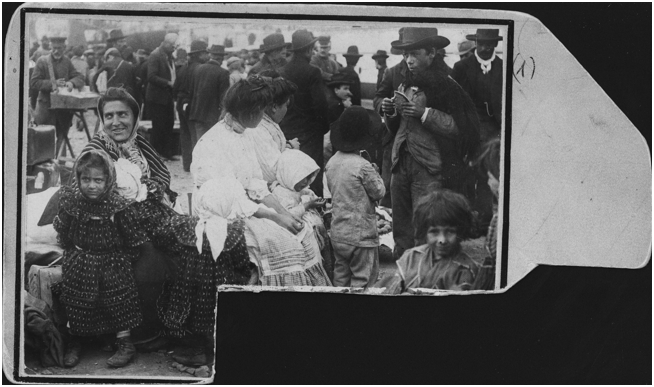
Against the backdrop of racism toward Indigenous peoples and people of African descent, only Western Europeans were considered to be desirable immigrants, not Africans, Asians or even Eastern Europeans.Footnote 43 In addition to ethnicity and geographical origin shaping Gitano immigrants’ acceptability for entrance into Argentina, so did prejudices about their assumed delinquency and vagrancy. The latter became criteria that allowed discrimination at arrival. This prejudiced perception of Gitanos influenced, for example, the Memoria de la Dirección General de Inmigración correspondiente a los años 1914–1915 (Report of the General Directorate of Immigration for the years 1914–1915), which stated the following:
The President of the Argentine Nation establishes that they will be considered as:
(a) Physically defective and therefore unfit for work: the blind, the deaf-mute, the paralytic, and those without functioning limbs (both arms, the right arm, both legs) or other vice or defect that diminishes their ability to work.
(b) Insane: idiots, imbeciles, epileptics and those affected by any form of mental disorder.
(c) Beggars: those who had practiced begging in the country of origin, single women with children under ten years of age, Gitanos and other individuals likely to be in the care of public charity.Footnote 44
Those who fell into any of these categories were to be “included in the provisions of article 32 and therefore returned to their port of origin, and the captain subject to the payment of the fines established in article 35 of the law.”Footnote 45 In other words, even Gitanos without disabilities or noncontagious diseases were not allowed to enter. In addition, the fines imposed on boat captains were intended as a deterrent. Forcing increased inspection of vessels could better help to identify such travelers and prevent them from even boarding ships destined for Argentine ports. However, the most interesting thing to note is that the Roma were seen as beggars, with a tendency to live on public charity. Therefore, the Argentine state intended to protect Argentine citizens from accepting this public charge.Footnote 46 In relation to this, Article 32 of the Immigration and Colonization Law of 1876 should be taken into particular account. Although this article only discussed beggars and did not specify Gitanos within this category, it is logical to think that it also affected them. For centuries, Gitanos had been associated with begging and delinquency, but the idea of Gitanos as a specific type of more dangerous beggar was increasingly gaining popularity at the end of the nineteenth century. They were considered a genuine underclass of unworthy poor who were susceptible of becoming a public burden.
Sanitary prophylaxis in migratory controls also affected Gitanos, who were seen as dirty, lacking in good hygiene habits and able to spread contagion due to their itinerancy.Footnote 47 In this sense, the typhus and cholera epidemics in Argentina probably had a negative influence on the public perception of Gitanos, who already carried these associations with them.Footnote 48 The promulgation of the Law of Social Defense of 1910 could not have had positive results for the Roma either. The legislative apparatus for this law, which was intended to reinforce the objective of achieving a “white Argentina,” was intensified, in part, because the Roma phenotype did not generally coincide with that marked by whiteness. Fear and rejection of the Other resulted in punishments and prohibitions directed toward undesirable would-be immigrants.Footnote 49 As a consequence, numerous Gitano families were identified on ships between 1911 and 1915. They arrived in Buenos Aires and, once inspected, were sent back to their ports of origin in Europe. The Memoria de la Dirección General de Inmigración correspondiente a los años 1914–1915 (Report of the General Directorate of Immigration of the years 1914–1915) includes some statistics in this regard as detailed in Table 6.2.
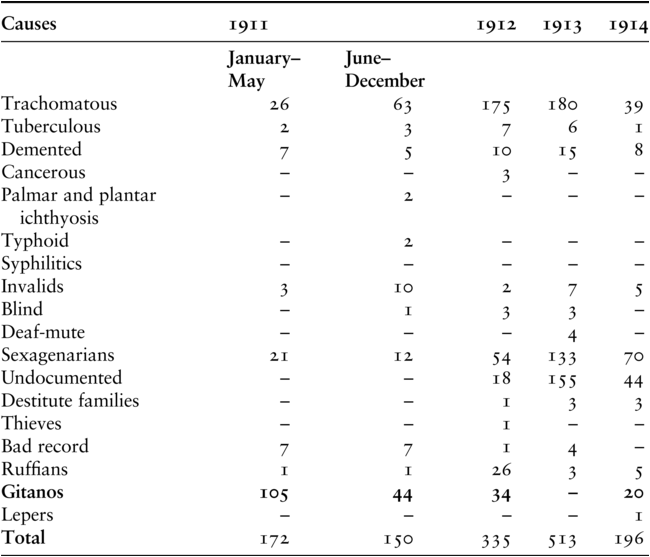
Table 6.2 Long description
The table consists of six columns in total. The first column header is titled, Causes. This is followed by five data columns. The first two data columns are headed January forward slash May and June forward slash December, respectively, both appearing under the year 1911. The remaining three columns correspond to the years 1912, 1913, and 1914.
Trachomatous: 26, 63, 175, 180, 39.
Tuberculous: 2, 3, 7, 6, 1.
Demented: 7, 5, 10, 15, 8.
Cancerous: dash, dash, 3, blank, blank.
Palmar and plantar ichthyosis: blank, 2, blank, blank, blank.
Typhoid: dash, 2, blank, blank, blank.
Syphilitics: blank for all.
Invalids: 3, 10, 2, 7, 5.
Blind: dash, 1, 3, 3, blank.
Deaf-mute: blank, blank, blank, 4, blank.
Sexagenarians: 21, 12, 54, 133, 70.
Undocumented: blank, blank, 18, 155, 44.
Destitute families: blank, blank, 1, 3, 3.
Thieves: dash, dash, 1, blank, blank.
Bad record: 7, 7, 1, 4, blank.
Ruffians: 1, 1, 26, 3, 5.
Gitanos: 105, 44, 34, blank, 20.
Lepers: blank, blank, blank, blank, 1.
TOTAL: 172, 150, 335, 513, 196.
These reports do not specify on what basis these persons were identified as Gitanos. They are documented as such in maritime inspection reports issued by ship captains, but whether or not they self-identified as Gitanos is unknown. My own research reveals that the records from those years only mention Romani passengers aboard the ships Re-Umberto, Silvia, Formosa, Parana, Cap. Arcona and Ravenna, and who were subsequently returned to their ports of departure in Italy, Spain or France. However, it is likely that other ships also transported Gitanos, but their records never survived in the archive. It is also noteworthy that the countries of origin of the known Gitano passengers – typically Austria, Serbia and Bulgaria – differed from the ports or countries from which they departed.
Furthermore, there were Gitano families that obtained other nationalities during the immigration process, such as French and even Mexican.Footnote 50 As shown in Table 6.2, about two hundred Gitanos were identified and returned to their countries of origin between 1911 and 1914. This constitutes a very small percentage of the hundreds of thousands of people arriving each year at the port of Buenos Aires. Although it is impossible to quantify how many Gitanos arrived in Buenos Aires, those who were identified as such were rejected.
In the following years, the legislation did not change, but the nature of reporting did. According to reports from the years 1923, 1924 and 1937, Gitanos no longer constituted a category as they had for the 1911–15 period. Perhaps this change was connected to the anti-Jewish and anti-labor government of Hipólito Yrigoyen (1916–22).Footnote 51 This new Argentine political orientation may have limited the country’s desirability as a destination for Gitanos. Concern that they may have been perceived as revolutionary agents, anarchists or Bolsheviks from the recently created Soviet Union in 1922 may also have prompted them to make other migratory choices. Alternatively, they could have developed effective passing strategies to enter undetected.Footnote 52 Most likely, Gitanos who continued to arrive were simply no longer recorded as such, being included instead into broader categories such as “undesirable persons” or “illegal entrants” (people sneaking onto ships as stowaways) or identified as caldereros (tinkers), a trade considered typical for Gitanos. The 1923, 1924 and 1937 reports are contained in Table 6.3.
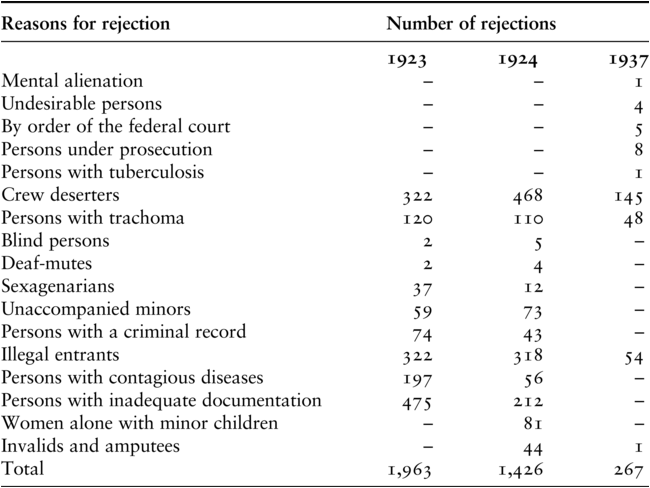
Table 6.3 Long description
The table includes two columns labeled Reasons for Rejection and Number of Rejections which is further categorized into years 1923 and 1924. The data breakdown is as follows.
• 1923. Mental derangement blank. Undesirables blank. Federal justice disposition blank. One-armed blank. Prosecuted blank. Tuberculous blank. Deserting crew members (first entry) blank. Trachomatous 120. Blind 2. Deaf-mute 2. Sexagenarians 37. Minors without family 59. With a bad track record 74. Clandestine 322. Deserting crew members (second entry) 675. Infectious diseases 197. With insufficient documentation 475. Single women with minor children blank. Disabled blank. TOTAL 1963.
• 1924. Mental derangement blank. Undesirables blank. Federal justice disposition blank. One-armed blank. Prosecuted blank. Tuberculous blank. Deserting crew members (first entry) blank. Trachomatous 110. Blind 5. Deaf-mute 4. Sexagenarians 12. Minors without family 73. With a bad track record 43. Clandestine 318. Deserting crew members (second entry) 468. Infectious diseases 56. With insufficient documentation 212. Single women with minor children 81. Disabled 44. TOTAL 1426.
All the above coincided with a complex European political scenario that by the 1930s was impacted by the rise of totalitarianism and the Great Depression. Mussolini’s rule in Italy hindered the maritime departure of Gitanos, many of whom had traveled there from countries like Romania and Hungary, with intention to emigrate. Fascist policies shaped European migration, especially for those economically and administratively deprived, such as Gitanos. According to Leonardo Senkman and Mónica Quijada, immigration policy in Europe had been tightening since the 1920s, which discouraged workers from migrating due to racial and ideological reasons.Footnote 53 This reduced their ability to relocate to Argentina in search of work and a life free from stigma.
It was not until the end of World War II, after the intensification of persecution that resulted in the genocide of the Sinti and Roma during the Holocaust, that Gitanos were again identified as passengers on ships departing to Argentina. This new attempt to flee Europe after the war was most likely motivated, at least in part, by knowledge of those who had managed to successfully settle in the Americas.Footnote 54 However, during the first government of Juan Domingo Perón (1946–55), immigration officials once again rejected Gitano immigrants; the law had not changed, and neither had negative attitudes toward the Romani population. According to the final immigration report issued in 1947, although World War II had paralyzed migration, after its end Argentine authorities successfully encouraged the growth of immigration motivated by the desire for more laborers.Footnote 55 Although they emphasized “a moral, humanitarian, and neighborly obligation to help others,” there were limits to this stance.Footnote 56 The report’s authors explained that the 1876 law should be revised because “the country needed immigration, without a doubt, but good immigration.”Footnote 57 This limited welcome undoubtedly affected Gitanos, who were reinstated as a distinctive category both as tourists and during transit in 1947 (Table 6.4).
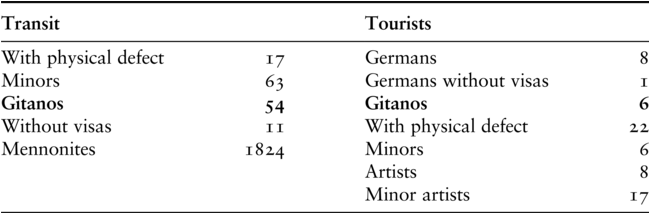
Table 6.4 Long description
The table is divided into two primary categories, Transit and Tourists, with the following numerical data.
Transit.
With physical defect: 17.
Minors: 63.
Gitanos: 54.
Without visas: 11.
Mennonites: 1824.
Tourists.
Germans: 8.
Germans without visas: 1.
Gitanos: 6.
With physical defect: 22.
Minors: 6.
Artists: 8.
Minor artists: 17.
In the decades that followed, Gitanos remained unwelcome in Argentina. The situation only worsened with the rise of social conflicts and new dictatorial regimes during the second half of the twentieth century, none of which brought a positive change to laws affecting the Gitano population.
Conclusions
This chapter has shown that the criteria used by the immigration department of the Argentine government to admit or reject immigrants influenced the ability of Gitanos to enter Argentina. Certain negative ethnic attributes ascribed to Gitanos, such as their itinerant lifestyle or the performance of certain trades, further reinforced their poor image due to the stereotypes and prejudices retained from the past. This fueled existing antigypsyism throughout the Atlantic. When Gitanos were sent back to their ports of origin, the stigma that already weighed on them was reinforced by their status as a population rejected abroad. This contributed to a further deterioration of their social integration in the Americas; they were not wanted on either side of the ocean.
Antigypsyism became even more evident when, in the transition from the nineteenth to the twentieth century, Gitanos were identified in the records as maritime immigrants. In the context of Argentine nation-building, authorities enforced entry criteria, such as ability to work or health conditions, during the same years Gitanos were migrating to Argentina. Although race was not specified among these immigration criteria, racist immigration practices did indeed exist, and Gitanos were at times labeled as an explicit category of people. What remains unclear is whether Gitano migrants who arrived in Argentina from the late nineteenth though the mid twentieth centuries were counted in other categories by immigration officials. Thinking beyond the limits imposed by legislation allows for a consideration of how specific agents (captains, immigration officials, immigration doctors, crew, etc.) identified and affected the trajectories of Gitano migrants, as well as why the categories related to Gitanos changed over these decades. Non-Gitano passengers were allowed entry by passing medical and administrative examinations, while for those identified as Gitanos, ethnicity seemed to be the leading cause of their exclusion. Although the rejection of Gitanos was part of a logic of control that affected the sick, religious minorities and other marginalized people, Gitanos were the only ethnic group specified in Argentina’s migration reports and statistics.
For these reasons, it would be interesting to carry out archival research in reverse order – that is, to examine documentation at the ports of origin to understand how Gitanos were identified there. Determining what criteria were applied to certain individuals at their point of departure that led to their identification as Gitanos in Argentina could shed light on how a person’s status as a Gitano could change during the Atlantic crossing itself. This could have led to overlooking Romani passengers who went unnoticed as such and may have even made possible the paradox of classifying other people as “Gypsies” who were not. In any case, this study of the logics of identification of Gitanos in Argentine ports reveals the stigmatization Romani people faced there as well as the precarity of Romani transatlantic migrations during the early twentieth century.
Introduction
In November 1921, an article in the New York Times asserted that “the American gypsy has little in common with his European brother.” Instead of telling fortunes, the “American gypsy” makes fortunes. Instead of buying or selling horses, the “American gypsy” deals in “second-hand automobiles.”Footnote 1 The people who in Europe were “wrapped in song and melody” have now “lost all faculty for music.” In short, “because of new conditions, [the gypsy] has changed occupation, dress, has forgotten his language, [and] has neglected his song.”Footnote 2 The article’s author was Konrad Bercovici (1882–1961), a Romania-born, Paris-educated, Jewish American immigrant and transatlantic popularizer of his interpretation of Romani culture through some forty books, including The Story of the Gypsies (1928) and an autobiography titled It’s the Gypsy in Me (1941).
Less than four years later, the New York Times expressed nearly identical concerns in an unsigned magazine article, “Three Contend for Crown of Gypsies.” Describing the death of Nicholas John, “King of the Gypsies,” the reporter observed that “The Americanized gypsy is rapidly casting his Old World ways to the winds.”Footnote 3 Instead of traditional horse-drawn wagons to convey the “King’s coffin,” there was an “automobile hearse.” Instead of traditional use of the patteran, the news of the “King’s” death traveled by “Telephone and telegraph wires.” In sum, the reporter concludes, “The truth is the gypsy is conforming to the new civilization.” If it were not for “the brilliant coloring of the women’s clothing … they would pass unnoticed among the many foreigners that crowd the streets. The advent of the automobile has changed their customs.”Footnote 4
These two New York Times articles provide a useful starting point for this chapter’s examination of concerns regarding Romani acculturation and identity in the United States from the 1920s through the 1950s, especially as expressed by anthropologists, Gypsylorists, journalists, literary figures and members of Roma communities in New York. In so doing, it will also explore how members of these groups have held different concepts of acculturation – sometimes concurrently – throughout much of the twentieth century. Assumptions held about Romani people by diverse Americans impacted expectations about their culture, especially how, and even if, it should change with a transatlantic crossing. This is especially important to consider within Romani history because during these decades Romani people were so often posited as primitive, timeless and thus outside normal cultural and historical forces.Footnote 5 Despite this, Romani immigrants themselves made strategic choices about if, when and how to adopt to new circumstances they encountered in the United States.
Definitions of Acculturation and Gypsylorism
As defined by the anthropologist Margaret A. Gibson, “Acculturation is the process of culture change and adaptation that occurs when individuals with different cultures come into contact. … Although in much of the literature on immigrant acculturation there is a presumption that the new culture acquired is some homogenous or standard form of American culture, the reality is often quite different.”Footnote 6 Accordingly, scholars have differentiated among three primary forms of acculturation based on the extent to which an immigrant group succeeds in its coming into contact with the host culture. The conventional wisdom posits that the most “successful” form is “the traditional model of linear acculturation and assimilation whereby the immigrant group advances economically and is integrated socially, culturally and politically into the middle class.”Footnote 7 At the opposite end is a marginalized form of acculturation, which leads the immigrant group “into an underclass” and “downward into poverty or … trapped at the bottom of the economic ladder,” with limited “opportunities for upward mobility.”Footnote 8 In between the two is what anthropologists and sociologists have termed “selective acculturation,” in which the immigrant group maintains “a strong ethnic enclave coupled with the deliberate preservation of the homeland culture, albeit in an adapted form more suitable to life in the host country.” No scholar today would posit that a person’s culture could remain stable or unchanged after a migratory experience.Footnote 9
The two New York Times articles published in the 1920s ran counter to these conventional contemporary views of acculturation and identity. For Bercovici, the Romanies’ ability to acculturate successfully and to make fortunes rather than tell fortunes was lamentable, not laudable. He did not welcome what could have been interpreted as their economic advances and integration into the middle class – a perspective representing several aspects of what present-day scholars have identified as Gypsylorism. As defined conceptually by Ken Lee’s seminal article, Gypsylorism is a “discursive formation that emerges from asymmetrical exchanges of power of different sorts (political, economic, cultural, intellectual and moral) that in turn help to re-constitute and perpetuate the unequal exchanges that underlay the initial discursive formation.”Footnote 10 If “Orientalism is the discursive construction of the exotic Other outside Europe,” then Gypsylorism is a “particular variant” that constructs an “exotic Other within Europe – Romanies are the Orientals within.”Footnote 11
Another characteristic that Lee attributes to Gypsylorism, and more particularly to Bercovici, is to regard Romanies “as exotic and anachronistic outsiders in a modern setting – the exotics/primitives within.”Footnote 12 In that sense, the two New York Times articles partially qualify as Gypsylorist: lamenting how American Roma have cast their “Old World ways to the wind” of modernity, and how Romani people in the Americas were acculturating to the point of losing their distinctiveness, even while Romani culture remained perceived as anachronistic.
Certainly, the 1920s was not the earliest decade when interested witnesses suggest the decline, if not loss, of Romani identity and culture. Earlier, there were the “folklorists, linguists, ethnologists and (amateur) historians” who had founded the Gypsy Lore Society in 1888, “intent on preserving the remains of Gypsy culture, searching to achieve this end as romantically inspired ‘archaeologists’ for the last traces of a people they saw as vanishing.”Footnote 13 Significantly, the organization’s founders regarded the Gypsy Lore Society as a truly transatlantic organization, based on an initial suggestion from William John Ibbetson in 1887 “that the Anglo-American Romany Ryes should form themselves into a club or correspondence society, for the purpose of compiling and publishing” Romany songs and words.Footnote 14 The Gypsy Lore Society’s first officers were Charles G. Leland (1824–1903), an American folklorist and poet who served as president, and Henry Thomas Crofton (1848–1928), an Anglo-Irish solicitor who served as vice president. Leland had even earlier lamented “the picturesque traits” that were “so rapidly vanishing” among the Roma.Footnote 15
The Popularity of Konrad Bercovici
However, neither Leland nor most Gypsy Lore Society members could equal Bercovici’s influence, at least in terms of readership, making him hugely responsible for spreading and entrenching primitivist assumptions about Romani people. The editor’s introduction to one of Bercovici’s stories in American Magazine referred to him as “one of the widely known authors of this country.”Footnote 16 Moreover, firms in the United Kingdom published several of his books – most notably Gypsy Blood (1922), Love and the Gypsy (1923), Between Earth and Sky (1925) and The Story of the Gypsies (1928) – and publishers in Moscow and Leningrad translated at least fifteen of Bercovici’s short stories into Russian during the 1920s.Footnote 17 These publications and translations suggest that Bercovici was not only popular abroad but also part of an intellectual movement that was fully transatlantic.
In 1939, an appreciation in the Los Angeles Times Sunday Magazine called Bercovici “the world’s favorite writer of Gypsy tales.”Footnote 18 According to another account, Bercovici “competed with [Irving] Brown during the interwar period for the title of ‘greatest authority in the United States on gypsies.’”Footnote 19 Irving H. Brown (1888–1940) was a member of the Gypsy Lore Society and author of several publications on Romani lore in the United States, most notably Gypsy Fires in America: A Narrative of Life among the Romanies of the United States and Canada (1924) and “The Gypsies in America” (1929). However, when Brown falsely claimed to have “Gypsy blood,” Bercovici gained an advantage and greater book sales by suggesting that Brown was “a ‘counterfeit Gypsy’ scholar.”Footnote 20 In short, Konrad Bercovici – although relatively little-known today – was perhaps the most prolific and influential conveyor of representations of Romani culture during the first half of the twentieth century. The extraordinary popularity of Bercovici’s writings, both inside and outside the United States, suggests that his views on Romani culture struck a responsive chord at the time and that they merit further examination, particularly as they relate directly to early twentieth-century thinking about transatlantic acculturation.
Additional support for Bercovici’s significance in this context comes from Dalen C. Butler Wakeley-Smith’s dissertation, “They Came Like Gypsies in the Night: Immigration Regimes, Race, and Romani Representations in New York City, 1890–1960.” Wakeley-Smith noted how the 1920s (when Bercovici and Brown were at the height of their popularity) was a time when “‘Gypsies’ were showing up more and more in newspapers across the country, [but] the ‘Gypsies’ being shown and discussed were increasingly becoming domesticated ‘Gypsies,’ Americanized versions of their European counterparts.”Footnote 21 Many of those reports of “actual ‘Gypsies’” displayed “a tension between ‘old’ and ‘new’ ways with the automobile and networks working to move some groups into more permanent patterns of settlement, thereby shoring off some of the more noticeable vestiges of ‘Gypsy’ life.”Footnote 22 The tension between these old and new ways – between maintaining cultural identity and acculturating to American customs and lifestyles – was one of the most important issues related to immigrants being debated during the first decades of the twentieth century in the United States.
Bercovici’s critique of acculturation was important because he was so well known at the time. When Bercovici died in 1961, the New York Herald Tribune summed up his career as “nomad, blacksmith, teacher, farmer, musician, sailor, newspaperman” and (incorrectly) as a “Romanian gypsy.”Footnote 23 In fact, Bercovici was born and raised in the Moldavia region of eastern Romania, in Galaţi and Brăila – but to a family that was Jewish, not Romani. Following anti-Jewish pogroms in Romania in the 1880s and 1890s, he moved with his family abroad – first to Brussels, ca. 1897, then to Paris, ca. 1899, and finally across the Atlantic to New York (by way of Southampton), ca. 1904. Described as “a big, fierce-looking fellow – broadly built with a shock of unruly hair and a Stalinesque mustache,”Footnote 24 he knew that some people mistook him for Roma, but he almost always let the misconception stand. As he explained in his autobiography:
The legend of my being a Gypsy was growing, and I didn’t care to dispute it. I wore flamboyant cravats and vests and welcomed the excuse to wear them; everybody said I was a Gypsy. … I bought a dozen of the most vivid scarfs and cravats and let my love for color run riot. No one had ever worn such red, yellow, and green shirts as I dared to wear at that time.Footnote 25
Perhaps to counter what he lamented as the waning of colorful Romani culture, Bercovici sought not only to identify as Roma himself, but also to flaunt that identity in public.
Bercovici continued his critique of Romani acculturation in an article published in the “Book Review and Magazine” section of the New York Times in 1923, following up on what he had articulated in the same newspaper two years earlier. Referring to New York, Bercovici observed, “There are hardly any tent gypsies now in and about the city. They live mostly in abandoned, empty stores on the lower east side.”Footnote 26 Perhaps justifying his own colorful attire, Bercovici added, “the gypsies are becoming more soberly dressed from day to day. Those living in the city limits replaced their colored garb with a more sober one, trying hard to be as little conspicuous as possible.”Footnote 27 He even lamented that “Their musical names had been Americanized to Mike and Jake.”Footnote 28 In the words of a social worker quoted by Bercovici: “Look at them. They are getting so nice and white that in another few years they will be hardly distinguishable from the other people.”Footnote 29 A racialized perspective clearly colored assumptions about acculturation.
Bercovici’s observations in daily newspapers and popular magazines certainly enhanced his reputation as an authority on Romani lore – which may have led Wakeley-Smith to label him “an avid ‘Gypsyologist’ of the period [early 1920s]”Footnote 30 rather than a Gypsylorist. Bercovici’s own transatlantic identity – born in Romania, living in New York and with publications in the United Kingdom, United States and Soviet Union – may have drawn him to the transatlantic Gypsy Lore Society, which he joined in 1927. He remained a member for two years, but he let his membership lapse in 1929.
The Gypsy Lore Society vs. Konrad Bercovici
The Journal of the Gypsy Lore Society had positively reviewed Bercovici’s book, Ghitza and other Romances of Gypsy Blood (1921), noting that “Mr. Bercovici’s matter is so fresh, and his narrative style so graphically vivid, that he both arrests and holds one’s attention, stamping scene after scene on one’s mind as with a die; tense, passionate, dramatic scenes for the most part, but now and again, and with equal clearness of definition, some picture of workaday life.”Footnote 31 However, when the Journal of the Gypsy Lore Society reviewed Bercovici’s The Story of the Gypsies (1928), it was not wholly positive. The review contained two sections – the first written by Bercovici’s friend Victor Weybright, whose opening paragraph enthusiastically endorsed Bercovici’s credentials as an authoritative expert:
Mr. Konrad Bercovici is better endowed by nature for the rôle of aficionado than any man I have ever beheld. He looks like a Gypsy; he acts like a Gypsy. He was born in Rumania where Gypsies are plentiful as blackbirds; he studied music in Milan and Paris, roamed the Levant, touched India. He came to America thirteen years ago to seek his fortune, and found it. For the popular periodicals he writes stories of his own Rumanian Gypsies which are splendid and poignant, and which sandwich genuine romance into the prevailing loaf of drab fiction. An entire village suddenly catching fire could be no more dramatic than a village invaded by Gypsies in a Bercovici story. His English, like that acquired by many Continental linguists, is bold and ingenuous and composed of astonishingly effective rhetoric. Theodore Dreiser, the American novelist, calls Mr. Bercovici “The Gypsy,” and there is no reason why he should not.Footnote 32
Following Weybright’s byline, the review contained an unsigned addendum, which began:
As Mr. Weybright has confined himself in the preceding review of Bercovici’s book almost entirely to the chapter on American Gypsies, it has been thought better to add some more general criticism of the work, especially as many of the reviewers who have dealt with it seem to accept Bercovici as an omniscient authority on the Gypsies.Footnote 33
This “general criticism” referred to “inaccuracies” in the book, which were “probably due to carelessness and ignorance,” including what the reviewer termed a “slipshod and imaginative treatment of his subject.”Footnote 34 The review concluded by advising that The Story of the Gypsies “should be read, like the rest of Bercovici’s books, solely for amusement. Of that the reader who knows anything about Gypsies or their history will derive more from it than the author intended.”Footnote 35 It seems likely that these criticisms motivated Bercovici to let his Gypsy Lore Society membership lapse in 1929.
Nevertheless, Bercovici’s reputation in the popular press at the same time remained high. For instance, an article, “The Romantic Gypsy,” which Bercovici had written for American Magazine, introduced him with considerable hyperbole, as follows:
Mr. Bercovici writes about the Gypsies from the inside out. He speaks their language; he has lived with various tribes as they wandered here and there in many lands. He is a native of Roumania, and when still a boy he left home to live and sing and dance with the colorful bands of wanderers who scorn permanent homes. Mr. Bercovici came to America as a musician, but soon began to write, and is now one of the widely known authors of this country. He recently completed “The Story of the Gypsies,” a book which interprets these mysterious, gay, and romantic folk as no other work has done. His fiction, written around the gypsies, has long been eagerly read by the American public.Footnote 36
Much of Bercovici’s popularity appears to have come from his ability to promote traditional assumptions about supposedly authentic Roma among a US population driven by nostalgia.
Debates over Acculturation
Konrad Bercovici’s aforementioned article in the “Special Features” section of the New York Times in November 1921 seems to be his first published piece on Romani acculturation, appearing just before the publication of Ghitza and Other Romances of Gypsy Blood (1921), his first collection of short stories with Romani characters. The news article’s opening paragraphs certainly grab the reader’s attention:
Gypsies no longer tell fortunes; they make them! They no longer steal, buy or sell horses; they deal in second-hand automobiles.
The gypsy woman wears $20 shoes and $5 stockings. The gypsy man keeps his cash in the bank and sends his daughters to college.Footnote 37
The article continues with numerous examples of Romani acculturation to mainstream American life, including claims that “beautiful shawls” are being “discarded, in favor of feather boas” and that the “younger set even bobs its hair.”Footnote 38 Unlike in Europe where they lived in large, extended families, the Roma now have “small families … and even divorces.”Footnote 39 Rather than tending to animals as “miracle-working veterinarians, … They are mechanics today; piecing together broken parts of an engine with copper wire, welding, melting and remolding with molten lead, tin and copper.”Footnote 40 Bercovici concludes by referring to the transatlantic places of “recent origin … Russia, Rumania, Brazil, Hungary, Spain or England,” but laments, “[B]ecause of new conditions, he has changed occupation, dress, has forgotten his language, has neglected his song.”Footnote 41 All of these changes point to inevitable acculturation in America, but Bercovici’s one hope is that the Roma will be able to resist “assimilation” so long as American society does “not impose upon him the four walls of a permanent habitation.”Footnote 42
Bercovici’s resistance to Romani acculturation and assimilation in the early 1920s was very much part of an intellectual zeitgeist, which sought to salvage and preserve the cultural identity of other marginalized groups in the United States, particularly African Americans and Native Americans, for fear that they and their cultures might be vanishing. For instance, the Harlem Renaissance was on one hand a broad cultural awakening for African American artists, writers, musicians and others, which began in New York’s Harlem in the early 1920s and continued through the 1930s. However, one of the underlying principles for this cultural awakening was a fear that African Americans were losing their cultural distinctiveness – and especially their Africanness – through the processes of assimilation and acculturation, especially as they migrated from the rural South to the urban North. The distinguished scholar Henry Louis Gates Jr. (writing in 1974 as Skip G. Gates) observed that the anthropologist (and noted Africanist) Melville Herskovits had lamented that “the African heritage of black Americans has disappeared through the process of acculturation. … what there is today in Harlem distinct from the white culture which surrounds it, is, as far as I am able to see, merely a remnant from the peasant days in the South. Of the African culture, not a trace.”Footnote 43 White visitors to Harlem feared that acculturation could change it from “being exotic, colourful, and sensuous; a place laughing, singing, and dancing; a place where life wakes up at night.”Footnote 44 As a result, “White fascination transformed Harlem into a fantasy land more miraculously than Walt Disney ever could. Harlem became a national symbol, the symbol of the Jazz Age. Everything that Main Street, Zenith, and Gopher Prairie were not, Harlem was: Xanadu come to New York, full of the thrilling, the bizarre, the sensuous.”Footnote 45
Similar concerns led some whites in the 1920s to lament the acculturation and assimilation of some Native American tribes in the United States, particularly in the early 1920s, when the Harlem Renaissance was awakening and when Bercovici was writing cautionary articles in popular magazines and newspapers. For example, Paramount Pictures produced The Vanishing American (1925), a silent film directed by George Seitz, based on the 1925 novel of the same title by Zane Grey, which had appeared initially in serial form in 1922. Grey’s goal was “to write a tribute to the American Indian,” which “dramatizes the Indians’ struggle for survival” in the face of advancing white characters – particularly missionaries and Indian agents – who sought to acculturate Native Americans.Footnote 46 The notion that Native Americans were “vanishing Americans” corresponds closely to the whites who sought to keep Harlem exotic and to the Gypsylorists who regarded Romanies “as exotic and anachronistic outsiders in a modern setting – the exotics/primitives within.”Footnote 47
Throughout the 1920s, Bercovici continued to express concerns about Romani acculturation, even while he also continued to publish numerous short stories – all highly romanticized and almost all taking place in Europe – in magazines (such as Country Gentleman, Current Opinion, Delineator, Good Housekeeping, McCall’s and McClure’s) and in the edited collections of those stories, such as Love and the Gypsy (1923), Iliana: Stories of a Wandering Race (1924), Singing Winds: Stories of Gipsy Life (1926) and The Story of the Gypsies (1928). These fictional stories were attempts to keep alive what Bercovici had called “the old gypsy lore”Footnote 48 in the face of acculturation taking place in the United States during this time.
Several final examples appeared in Bercovici’s The Story of the Gypsies (1928), which includes chapters on groups from England, France, Germany, Hungary, Macedonia, Russia, Spain and the United States. In the latter chapter, Bercovici again pointed to acculturation and loss of identity. Traveling west with a group of “Russian gypsies” led by “Chief Marco” with horses and wagons from New York City, Bercovici asked, “Why did you come to America? What made you come here?”Footnote 49 Marco’s response contained a mocking question of his own:
And why shouldn’t I have come? Because there was a strip of water between this country and the one I was last in? Why does anybody come here? The only difference is that everybody else will stay here, while we will go on further; and tomorrow somebody will ask me in another country: “Why have you come here?”Footnote 50
Marco’s initial response to Bercovici suggests that he considered crossing the Atlantic Ocean from Europe as neither a barrier nor a path to acculturation, but rather a conduit to new worlds and the maintenance of Romani identity. However, three weeks later, when the group reached Toledo, Ohio, Bercovici noticed a dramatically different dynamic and what he perceived as a notably acculturated Marco:
By that time, there wasn’t a single horse or van in the tribe. The four-footed animals had all been traded and sold and bartered for automobiles. Chief Marco and his people had become motor enthusiasts, and had, in three weeks, learned all about machinery and its possibilities. No car had been with us longer than two days. There was continual bartering, exchanging, and selling. Everyone helped; even the women, who had hitherto been busy telling fortunes, were neglecting their profession for the newer and more exciting one of second-hand automobile trading. But somehow, the colors of the dresses of my Gypsy women friends had become subdued. When we reached Toledo, there was not a single scarlet scarf around the women’s heads. At least two hundred American words had gone into the Calo language which my friends had been speaking among themselves. The Gypsies were still very gay, very spirited and happy; but it was a different sort of gaiety. With the change from horses to automobiles, something had gone out.
Even Marco, the chief had seen the change in his people; for one day looking at his people, whose hands and faces were smeared with blackened grease, he asked me, “Why have we come to this country?” And pointing out John, his son, and a very good violinist, who had developed into the best mechanic of the tribe: “How will he ever play the violin again with fingers coarsened by the touch of steel and iron?”Footnote 51
In Bercovici’s eyes, the United States and acculturation to American ways had negatively transformed Marco and his group. They may have been wealthier in material possessions, but poorer in cultural identity. Although Bercovici thrust his framing of acculturation upon “Chief Marco,” some Romani Americans engaged with it to make sense of their own US experiences.
Steve Kaslov and Positive Views of Acculturation
Just as Marco considered and made choices necessary to live successfully in his new home, so too did Steve Kaslov (ca. 1888–1949), variously described “as a leader of Kalderaš,” “a leader of the Rusuya ‘Russian’ Rom group”Footnote 52 or as “a constant fixture of New York’s ‘Gypsy’ life in the 1930s and 1940s.”Footnote 53 For Kaslov in New York, much like Marco in Toledo, Ohio, some degree of acculturation was desirable, not something to be lamented. Kaslov believed “that gypsies must change” in order to adjust to their circumstances in the United States.Footnote 54 Moreover, “in many ways, Kaslov was an ideal ‘Gypsy’ for the public to consume in the press. He was large, loud, and by most accounts charismatic in his leadership and his affect. His persistence and use of relief funds enabled many of his kin to have work during a period of inactivity for many.”Footnote 55 Somewhat ironically, at least in part because Kaslov met, or had thrust upon him, some of the expectations of an authentic “Gypsy” in the eyes of interested Americans, his perspectives on Romani cultural change were able to reach a broad audience. The US book publisher Victor Weybright romantically – but falsely – claimed in the pages of the Survey Graphic, that “Kaslov was born fifty years ago beside a green lane in Lowndes County, Georgia. He grew up in tent and caravan, always on the move. Married at an early age, he never spent a day of his life in school.”Footnote 56 However, what Sheila Salo determined through research in census and immigration records is that “Kaslov was born in Russia in 1888,” and emigrated with his family in 1901 – first to New Brunswick, Canada, and subsequently to the United States.Footnote 57 Accordingly, Kaslov knew a great deal about transatlantic migration.
Although Kaslov had hoped to publish a complete autobiography, in order to “make a book about my people,” we have today only portions of the intended book, which Kaslov either dictated to an “unnamed scribe” or that Carlos de Wendler-Funaro (one of Kaslov’s non-Romani supporters) edited.Footnote 58 In one such portion, Kaslov describes exactly what Bercovici had observed about Roma living in stores, rather than tents. Moreover, in Kaslov’s version, the decision to make this transition to stores was one that he made himself and one that specifically calls for acculturation to some mainstream American ways:
We came to Newark, New Jersey. Then one day I said to the tribe, “Let’s go to New York and rent ourselves some stores.” Then the whole tribe started to holler, “We will not go to New York to live in stores. Because if the law finds out they will take our children and send them all to the poor house.” “If you will do what I’m telling you to do, when we’ll move into the stores, I want you all to dress your children like the American children and send them to school. Then nobody’s going to take your children away. But if the children’s society takes them, I will pay all expenses to get them out. The reason why I want you all to stay in stores is that you will not have to live in tents in cold rains and snow, and besides that, we all could make a good living in the stores by telling fortunes, and also it is closer for us to look for copper work.”
“So the next morning we went to Brownsville, East New York [Brooklyn], and rented about twenty stores around Pitkin Avenue, also a big stable for the horses and wagons. The next day we moved in our stores and stored our horses and wagons in the stable. In about a month or two all my tribe said, “It is very good to stay in stores in the winter and to send the children to school.”Footnote 59
Here Kaslov demonstrated the practicality of this residential acculturation – of living in stores in the city, rather than tents outdoors.
For similarly practical reasons it seems – although we lack Kaslov’s own words on this matter – Kaslov sought to establish a Romani Coppersmiths workshop in June 1939, “thanks to money raised for rent, equipment, and running expenses by private philanthropists.”Footnote 60 However, in May 1940, the workshop closed because “at no time during the eleven months it operated were sufficient orders received to meet the expenses.”Footnote 61 Confirming Bercovici’s observation on the demise of “the gypsy coppersmith and tinker” is the fact that Kaslov tried to keep the shop running and “assumed entire responsibility for its further operation,” but eventually accepted the reality of the mid twentieth century that “demand for the art of coppersmithing as practiced by the Gypsies had largely passed. Old cooking utensils are now more often discarded for new than mended, and cartons are generally used in place of tin cans.” Occupational acculturation was less appealing to Kaslov, at least at first.Footnote 62
Around this same time, Kaslov received additional kudos for his efforts to promote reading and writing skills among members of his group. Calling him “king of the Russian Gypsies in the United States,” the New York Herald Tribune in March 1940 applauded Kaslov for having “selected thirty of his young men subjects to be the first to study simple English” so that “they can settle down at trade and become useful citizens.”Footnote 63 As per Bercovici’s observations from twenty years earlier:
Kaslov explained that the gypsy’s three time-honored methods of making a living, horse-trading, copper-smithing and fortune telling had all been taken away. Automobiles and aluminum ware have taken the place of horses and of copper, and fortune-telling, outlawed in many states, is not as popular as it used to be.Footnote 64
Similarly, Weybright – one of Kaslov’s advocates and who had also “frequently visited the Riverside Drive apartment of Konrad Bercovici, who always entertained a remarkable group of characters”Footnote 65 – describes how:
in the old days, such work [i.e., mending stock-pots, steam-tables, mixing-vats, and so on] was suited to rovers. A month or two in one place, and the men would complete all available jobs, and move on. The women would likewise exhaust the fortune-telling market, and seek new clients to conquer. To-day a new generation of purchasing agents and foremen, who order things done through requisitions and trade union men, don’t wait for itinerant tinkers. The ascendancy of aluminium and alloys has limited opportunity, too.Footnote 66
Weybright – also considered as one of “the more informed observers of American Rom”Footnote 67 – noted that “the most precious item Steve Kaslov possesses is a brief-case that bulges with correspondence: copies of letters that he has dictated and of the replies from public and private agencies that he has sought to interest in adjusting his people to modern times.”Footnote 68 Whether Kaslov would have put it in precisely the same way, his advocacy does reveal the pragmatism with which he approached new possibilities in support of the retention of community cohesion.
One of those letters was written by Kaslov (or more likely dictated by Kaslov – and typewritten by someone else) to President Franklin D. Roosevelt and First Lady Eleanor Roosevelt, dated June 18, 1937.Footnote 69 In the letter, Kaslov speaks of “the suffering that my people are enduring in this terrible crisis and depression.” He explains:
My people have money enough to travel, and are trying to make their livelihood; But they cannot do so anymore. For Telling-Fortunes and Copper-Smith, for they are chased out of town. … FOR THIS REASON THEY ARE NOW WILLING TO BE LOCATED AND ESTABLISHED IN ONE PLACE OR COMMUNITY; AS A GYPSY SETTLEMENT. That then they will be under the supervision of the law, and will do whatever the law, and other agencies require of them to do; THEY WILL NOT DO ANY FORTUNE TELLING. … My people THE GYPSIES ARE IN NEW YORK at the present time; they are mostly on Home Relief; We are having a most terrible time of it to live from that money; WE are handicapped from earning our own bread; And would be able to forgo home relief, if we had your most esteemed assistance in this matter; WHICH WOULD MAKE US SELF SUPPORTING, AND WOULD NOT BE COMPELLED TO RECEIVE HOME RELIEF ASSISTANCE; As we are doing at present. … BUT WITH YOUR MOST CHARITABLE, AND WORTHY HEARTS, I plead your help, and aid in this terrible time, and hour of my people; So that thru you they may be able to become, and be at all times hereafter, honest, hardworking, AMERICAN CITIZENS. … Most Humbly, and Gratefully yours. [Signed] Steve Kaslov, 208 Bowery, Borough of Manhattan, City of New York.Footnote 70
Kaslov’s personal appeal to the Roosevelts reinforced his desire that members of his community become more like other Americans: to be not only self-supporting, but also to give up fortune-telling, to stop moving from place to place, and to seek (as Bercovici had observed in the 1920s) more permanence in one place or community.
Acculturation of American Kalderaš
One additional example of documentation that reinforced the previous discourse on transatlantic Romani acculturation from Europe to the United States in the first half of the twentieth century is a dissertation in political science completed by Rena Cotten in 1951 at Columbia University, titled “The Fork in the Road: A Study of Acculturation among the American Kalderaš Gypsies.” Unlike Bercovici’s lamentations or Kaslov’s ambivalence, acculturation is here seen as a neutral taken-for-granted reality. Based on fieldwork conducted among members of a Kalderaš community in New York from December 1947 through March 1949, the dissertation identified three distinct historical periods of acculturation in the twentieth century:
(1) The “pre-acculturation base” from 1910 to ca. 1925, when “Families wandered freely over the United States; tents pitched in out-of-the-way places. This period is, more or less, a direct continuation of the life in Europe and South America.”
(2) A “transition” period from ca. 1925 to ca. 1933, when there was a “Gradual decrease in the frequency of pitching tents and increase in the tendency to stop in cities and towns while traveling.”
(3) A “period of crisis,” from ca. 1933 to the present, marked by an “Inability to leave the city at will.”Footnote 71
Confirming the same changes with regard to housing noted by Bercovici and Kaslov in earlier decades, Cotten observed:
The Kalderaš housing patterns have changed from an encampment of tents in a secluded rural location in Period I to a store in a large city in Period III, Period II being a combination of a Period-I-type of summer existence and a Period-III-type of winter settlement. The nomadic habit has been altered both as a result of post-1933 Relief and of World War II’s gasoline rationing in that the families do not wander as often or as far as in Periods I and II, but there is still a considerable amount of individual mobility and store-locations are changed very frequently within the same city and neighborhood.Footnote 72
Similarly, Cotten confirmed earlier observations about changes in attire:
In Period II, the men abandoned their distinctive costumes and adopted American suits, hats, coats, and shoes. At the same time, the children were prevented from going naked although no sex differentiation was observed in their clothing, dresses being used for out-of-doors attire and slips for within the home; Period III saw an increased insistence on being clothed at all times.Footnote 73
Likewise for the changing ways in which Kalderaš men might earn a living:
In Period I, they did their coppersmithing as a group in camp; in Period II, they tended to work on their employers’ premises or at least away from their stores; in Period III, they were forced to abandon coppersmithing and turned to fender- and furnace-repairing to be done on the employers’ premises and without much assistance from the other members of the extended family or vitsa.Footnote 74
Just as Kaslov complained to the Roosevelts about members of his community being on relief, Cotten noted that “The Gypsies themselves say that they came into the cities in order to reap the benefits of relief checks. Now relief is something all the Bigbys [pseudonym used by Cotten] desire and which many need. In order to receive it, the Gypsies will do almost anything, even to the point of sacrificing their most cherished traditions.”Footnote 75
Cotten’s conclusions pointed to “modern American civilization with its emphases on industrialization, commercialism, and urbanization” as the primary forces behind the transitions and acculturation of the Kalderaš in New York.Footnote 76 She observed “forks in the road” ahead, even though acknowledging that “it is difficult to see which path will be chosen.”Footnote 77 However, very few of Cotten’s conclusions would have surprised anyone who had read the earlier observations of Bercovici and Kaslov about Romani communities in New York, including the American Kalderaš themselves.
Conclusions
One final observation is to note that the lamentations about acculturation from observers such as Bercovici in the early twentieth century ran counter not only to the dominant historical theories, but also to many of the popular attitudes and beliefs of the time. Rather than mourning the loss of European customs and traditions, proponents of the prevailing social and political forces argued the opposite – that acculturation and assimilation were unequivocally desirable, and the quicker the better. For instance, the leading arguments behind passage of the paradigm-shifting Immigration Restriction Act of 1924 (also known as the Johnson–Reed Act) were that “a sufficient reduction in the volume of immigration [would] give assurance that the country would not admit more annually than it can accommodate” and most importantly that it would “give assurance of the more rapid assimilation of those admitted.”Footnote 78 Also in 1924, Georgia Governor Clifford Walker, “advocate[d] for a ‘wall of steel, as high as heaven’ to keep America for Americans and keep immigrants out.”Footnote 79 Exactly 100 years later, similar rallying cries for acculturation, assimilation and Americanization seem eerily reminiscent, when proclaiming that “America is for Americans and Americans only.”Footnote 80
Starting with two New York Times articles that expressed concerns over Romani acculturation and identity in the United States in the early 1920s, this chapter has explored and analyzed some of the varying views expressed by individuals representing diverse groups over the course of three decades. The perspectives of anthropologists, Gypsylorists, journalists, literary figures and members of Romani communities in New York have revealed both tensions and contradictions in assessing the benefits and detriments of deciding if and how transatlantic Romani migrants should change. Some of those figures lamented a loss of identity in the process of acculturation; others saw acculturation as a necessary if not inevitable path to advance economically and socially. Not surprisingly, many of those same tensions and debates remain defining features of Romani American immigrant lives today.
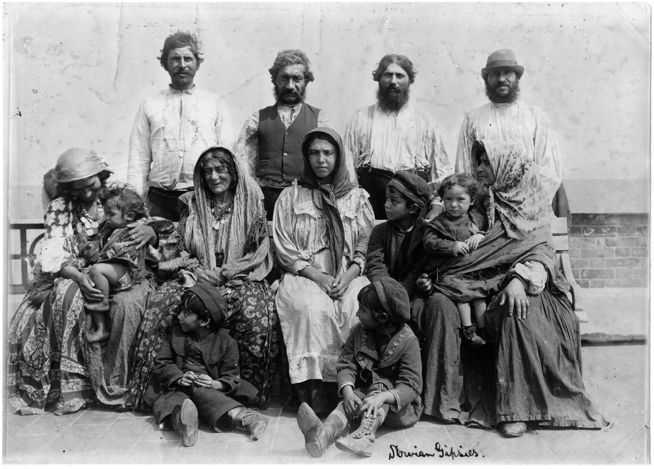
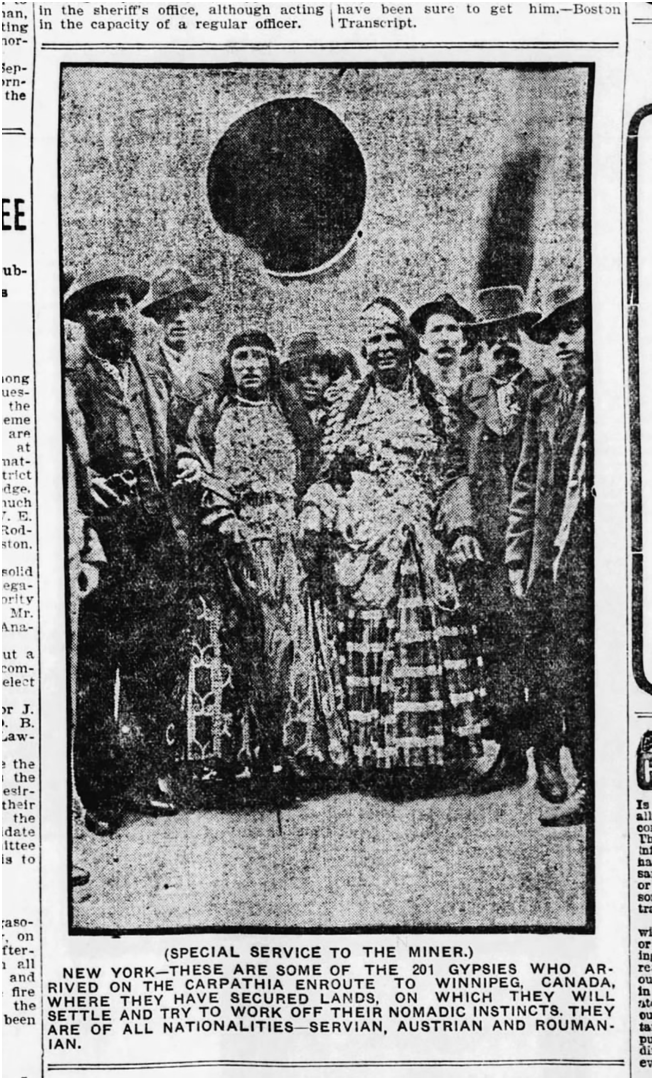
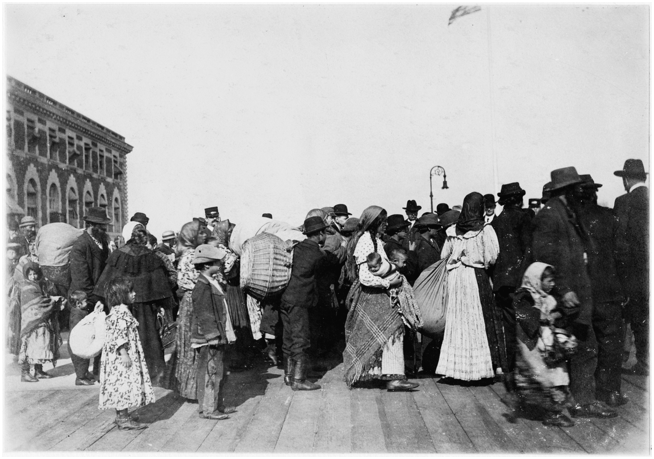
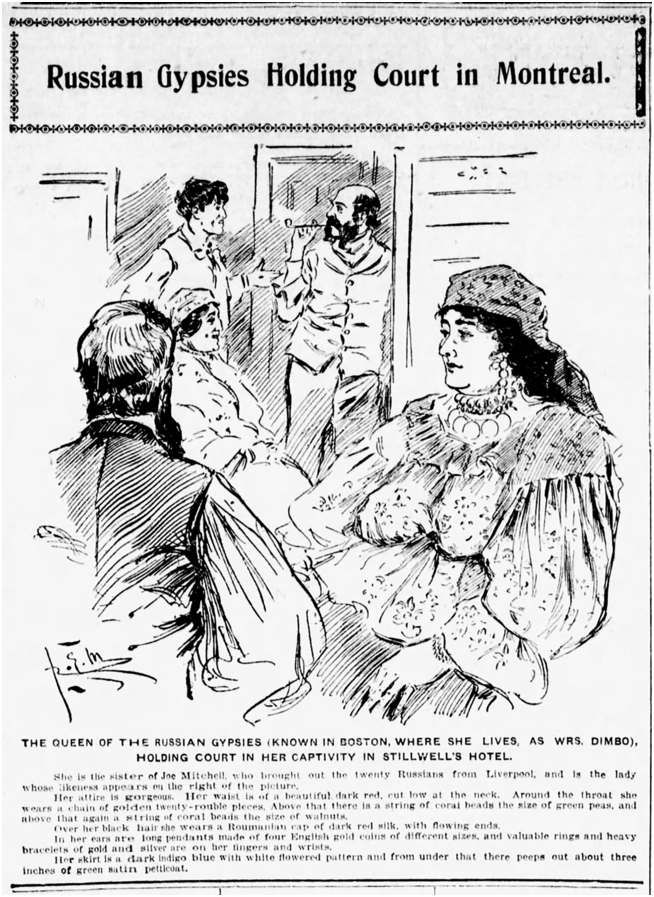
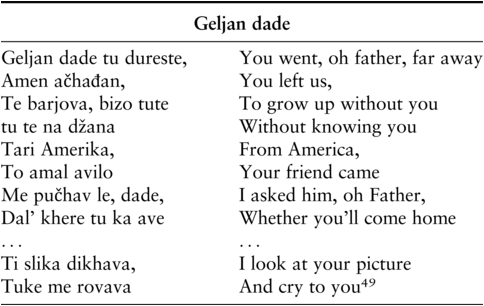
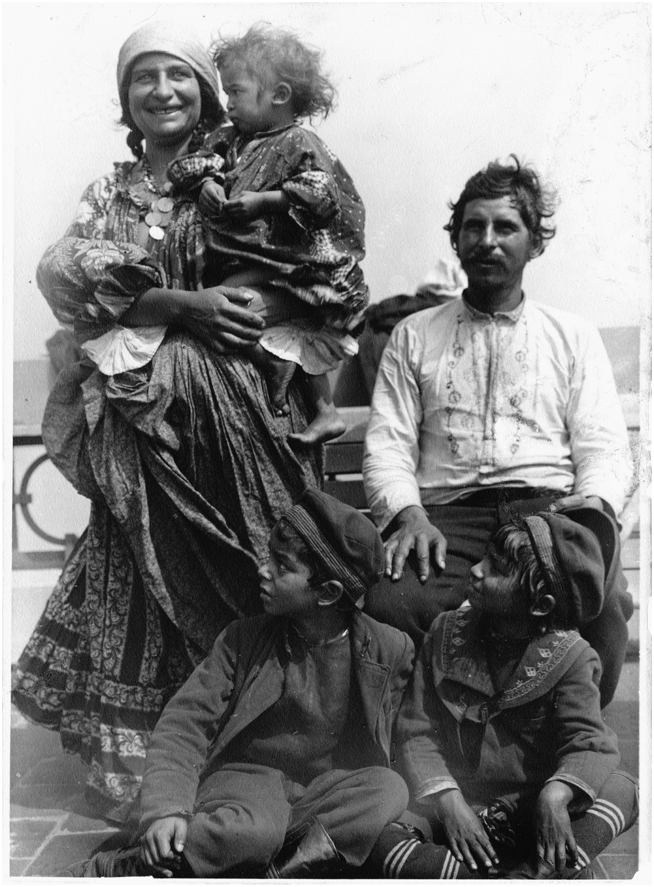
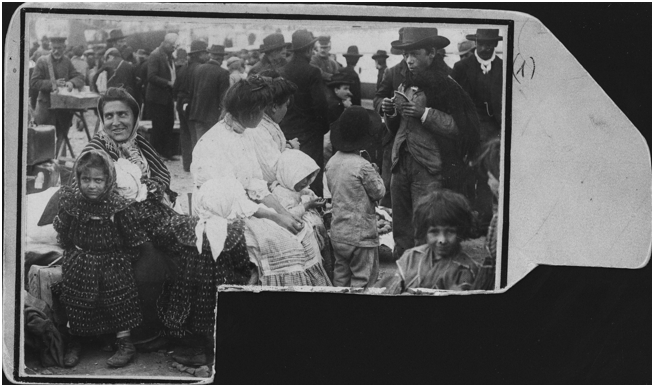
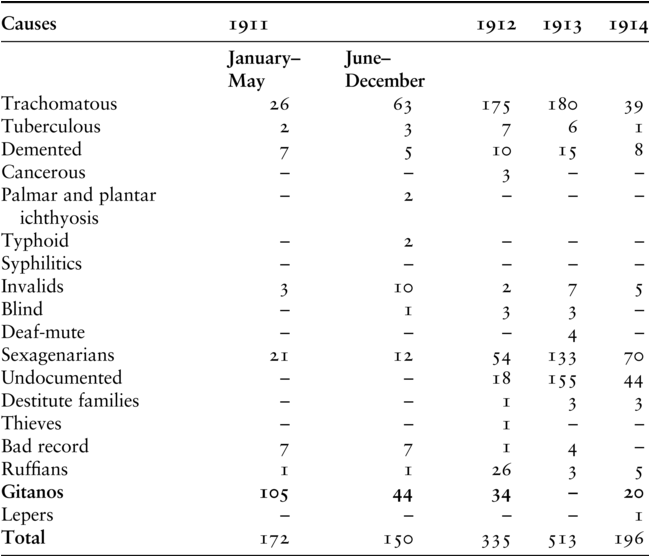
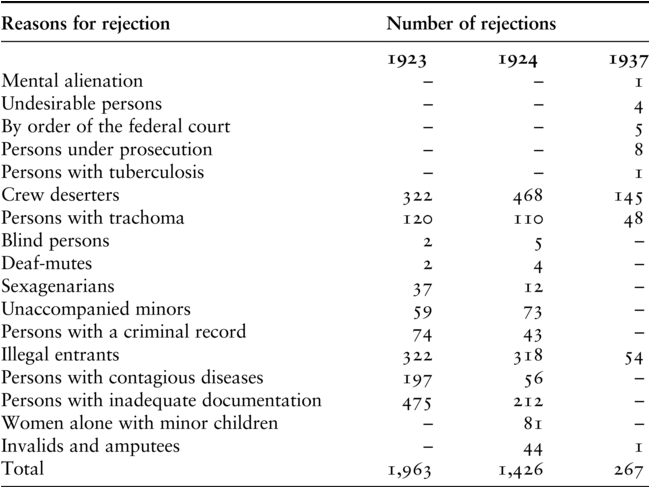
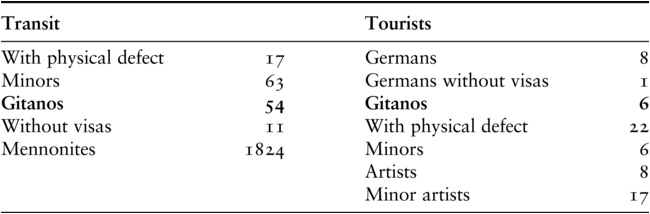

 Open access