

Conventional urban studies literature has largely framed the understanding of the struggling cities at the margins of modernity almost exclusively through the distorting lens of so-called “Third World” urbanization where overburdened cities – swamped by large numbers of people without regular wage-paying work, lacking up-to-date infrastructure, and hampered by lax planning guidelines – lag behind the developed, globally ambitious, and mature cities of the West.Footnote 1 In part, it is this neo-orientalist framework – restricting imaginings of sprawling megacities of hypergrowth to a stereotypical litany of slums, squalor, informality, and overcrowding – that have made it difficult to theorize the global unevenness of spatial landscapes, particularly the dynamics of extreme socioeconomic inequalities and their relationship to urban form.Footnote 2 This problematique of “backward cities” in poor countries is no longer a helpful way of making sense of what is actually happening on the ground. Binary oppositions like First World and Third World cities (or “developed” and “developing”) cities – categorical distinctions that achieved a great deal of popularity in the “development decades” after World War II – have long provided key points of reference and starting points for analysis for conventional urban studies and planning theory. But these outdated and redundant conceptual distinctions have proven themselves to be ill-equipped to make sense of the proliferation of the “enclave spaces” and the resulting spatial unevenness that increasingly characterize urban landscapes in China, India, Southeast Asia, Africa, Latin America, and the Middle East.Footnote 3
One strong current in the scholarly literature has suggested that the globalizing impulses unleashed at the end of the twentieth century – especially the shifts driven by the revolution in information and communication technologies (ICTs) – heralded the “end of geography,” the “death of distance,” and the emergence of a “borderless world.”Footnote 4 This line of reasoning has suggested that the new age of connectivity, characterized primarily by the deregulation of market competition and increased economic integration in an emergent friction-less capitalism, have contributed to a marked space–time compression of socioeconomic processes.Footnote 5 The consensus among these commentators in this subfield of globalization studies is that technological progress has effectively detached the socioeconomic activities from the “spatial fix” that tied them to specific locations.Footnote 6 Deterritorialization – a term coined “to describe the rearranging and restructuring of spatial relations as a consequence of the technological, material, and geopolitical transformations of the late twentieth century” – implies that location and place – that is, territory – have lost their significance and power in everyday life. To speak of deterritorialization in the discourse of contemporary globalization is to suggest “a generalized dismantling of the complex of geography, power, and identity that supposedly defined and delimited everyday life in in the developed world for most of the twentieth century.” As a spatial trope, deterritorization acquires its distinctive catchet by reference to a new condition of speed and information flows, the transgression (and hence porosity) of inherited (fixed and stable) borders, the transcendence of taken-for-granted divides, and the advent of a more interconnected “globalized” world. While regimes of territoriality are constantly in flux and subject to negotiation, the various “discourses of deterritorialization tend to ascribe a unique transcendency to the contemporary condition, defining it as a moment of overwhelming newness.”Footnote 7
The rhetoric of deterritorialization rests, of course, on “sweepingly superficial representations of boundaries, borders, and territories” at the start of the twenty-first century. These celebrations of the inevitable borderless world marked by the unimpeded movement of capital, ideas, and goods tend to operate with normative prescriptions that promote neoliberal visions of what the emergent “information age” (or the “telecommunications revolution”) should create, namely, a “friction-free” capitalist marketplace that knows no barriers or limitations. Yet despite its widespread and popular rhetorical appeal, the supposed “transcendence of territoriality” has overlooked and ignored asymmetrical concentrations of flows, informational disparities, the spatial unevenness of networked infrastructures, and nodal connections that are layered upon and embedded within existing territorial relations of power.Footnote 8 In the contemporary age of globalization, the hyper-mobility of capital, information, and commodities has gone hand-in-hand with a deepening of social inequalities across the globe, rearranging rather than abolishing borders, boundaries, and territories.Footnote 9
At the start of the twenty-first century, metropolitan regions are quickly becoming agglomerations of unequal districts and precincts, sharply divided by race, class, and other social distinctions that mark difference, and often physically separated by a combination of “hard” and “soft” barriers. This type of enclave urbanism is not a random occurrence. “Enclaving” reflects the deliberate adoption of policies that shape the physical and social life of the metropolis. As Tom Angotti has argued, these enclaves are not the unintended outcome of the lack of planning regulations, but the intentional consequence of new kinds of privatized planning.Footnote 10 While cities have always consisted of splintered and fractured spaces, the current spatial geography of enclave urbanism is significant because of the ways in which these largely self-contained entities are “superimposed upon existing patterns of human settlements.”Footnote 11
The Limits of “Imitative” Urbanism
Generally speaking, most scholarly work looking at the rising tide of corporate-led urban development in aspiring world-class cities over the past several decades has tended to attribute the visible patterns of spatial polarization to be “wholly the outcome of contemporary globalization.” Yet in looking at Metro Manila, for example, Marco Garrido has suggested that the enduring patterns of segregation commonly associated in conventional urban studies literature with polarization – that is, “urban landscapes fragmented into networks of privatized elite spaces overlaying the public city” – actually has as much to do with modernist-inspired city building under colonialism as it has with the contemporary era of globalization. In short, in order to genuinely understand the nature of the postcolonial “dual city,” it is necessary to look behind and beyond the contemporary manifestations of globalization, and consider as well “the enduring influences” of city building under colonialism, particularly its modernist ethos of progress.Footnote 12
The production of enclaves and the proliferation of slums are increasingly blended together in new hybrid forms of city building that resemble nothing like what came before. The (so-called) “super-gentrification” of leading world-class cities in the Global North, which has produced heightened sociospatial disparities and sites of exclusivity, has spilled over to cities large and small around the world.Footnote 13 Yet instead of conceiving of the global spread of gentrifying impulses solely through the lens of “imitative urbanism” (or the idea that struggling cities of the so-called Global South simply copy, or plagiarize, from the Global North), it is more productive to think relationally, that is, to adopt the conceptual frameworks of comparative and “cosmopolitan urbanism,” which view the conjoined processes of redevelopment and displacement not in terms of universalizing one-size-fits-all models but in the context of their local specificities.Footnote 14
One key aspect of how globalization and planning practice are inextricably linked together is that the traveling of policy recommendations across borders has accelerated and gained momentum, reaching “historically unprecedented” levels of intensity.Footnote 15 In the current age of globalization, planning ideas and practices have not just spread along a single pathway from the “West to the rest,” or the “developed” to the “developing” world, or the “Global North” to the “South.” Comingling and blending of policy recommendations have produced cross-fertilizing movements that represent the “synthesized products of an international planning community.”Footnote 16 The worldwide proliferation and cross-border circulation of strategic planning has meant that ideas and practices have become detached from their origins, and thus from their “original” identities and sources of inspiration.Footnote 17 The “transnationality” of “policy tourism” has meant that these ideas and practices can both be locally anchored but also easily flow across borders, decisively shaping the adoption of strategic planning interventions in a variety of locations.Footnote 18
“Urban policy mobilities” have become an integral part of transnational norm-making. The showcasing of best-practice cases of strategic planning has created viable channels for the dissemination of ideas and the global circulation of expert knowledge.Footnote 19 Yet this making of transnational urban policy interventions is an uneven process in which only specific ideas on urban development are chosen to become a new global standard. Instead of holistic morphological planning that aims to stitch the urban fabric into a coherent whole, the revitalization strategies that have become the most popular have laid particular stress on the construction of attention-getting (but sometimes ill-fitting) mega-projects inserted incongruously into the existing urban fabric.Footnote 20
Scholars in urban studies have become increasingly intrigued by the ways that urban policy and planning ideas travel from city to city, particularly when they gravitate to cities outside the “heartlands” of the capitalist core of the world economy.Footnote 21 To paraphrase Idalina Baptisa, one must take great care not to engage in an over-investment in the hegemonic status of key “traveling ideas” (such as neoliberalism) as uniformly applicable theoretical concepts and as unassailable analytical frameworks as they take root in fragile cities at the borderlands of core zones of the world economy.Footnote 22 Instead of stressing the diffusion (i.e., the straightforward mimicry, borrowing, and copying) of urban policies as they move from city to city, it is more instructive to emphasize the translation (i.e., open to multiple interpretations) of these “traveling ideas” that assume hybrid “lives of their own” as they mutate and evolve under place-specific circumstances. In short, emulation is not identical to unidirectional imitation or unilineal replication. The epistemological break from simplistic diffusionist accounts enables us to see that “traveling ideas” do not operate as stable artifacts of “policy-on-the-move” that effectively colonize diversity and difference through their homogenizing effects, but instead are produced relationally in historically specific contexts. Within the framework of serial repetition that seem to identify the patterns of spatial fragmentation and enclave format, there exist certain underlying logics of differentiation and difference-making. Within the broad contours of global urbanism at the start of the twenty-first century, one can observe that luxury enclaves and autonomous zones have appeared “everywhere.” The steady proliferation of luxury enclaves in globalizing cities with world-class aspirations – specifically, struggling cities outside the “heartlands” of the core zones of the world economy – has become both a visible sign of being cutting-edge and hypermodern, and, at the same, time symbolic markers of becoming different, that is, more independent and less peripheral and marginal.Footnote 23
Globalization of Urbanization: The Emergence of “New Urbanisms”
Aspiring world-class cities at the margins of capitalist modernity cannot be treated as merely sites where the contradictions of globalization, neoliberal economic reforms, and the outside imposition of structural adjustment are simply played out in exaggerated ways. Rather these cities actualize these contradictions by inventing “new urbanisms” that bring the “global” into direct contact with the “local.” These “new urbanisms” depend on the adoption of new regulatory regimes, the creation of “new” spaces of luxury consumption, the proliferation of “new” microeconomies, and the forging of “new” arenas for land speculation and property investment. New urbanisms function as social mechanisms for the management of urban residents through a hybrid mixture of unrelenting market discipline and vigilant state monitoring. The disappearance of formal employment opportunities, the promotion of subcontracting and outsourcing, the establishment of special economic zones, the suffocation of labor unions, the enabling the production of enclosed enclaves for the wealthy, the carrying out of slum clearances, and the displacement of informal trading all contribute to the production of new urban environments that favor the well-to-do, affluent residents of the city. These new patterns of social exclusion, spatial partition, and marginalization reflect the desire of new urban property-owning elites to both manage the disorderly effects of urban informality and to insert themselves favorably into global financial and commodity circuits. These “new urbanisms” are also contested sites of negotiation and compromise, and conflict and resistance. Social movements, political coalitions, and cooperative associations of all kinds engage in efforts, through organized collective action or unorganized forms of resistance, to reclaim the city.Footnote 24
What has been too often overlooked in the existing scholarly literature on aspiring world-class cities outside the core areas of the world economy are the ever-changing dynamics of spatial fragmentation and social polarization.Footnote 25 From Shanghai to Saigon (Ho Chi Minh City), from Delhi to Mumbai, and from Manila to Managua, cities scattered across the rapidly urbanizing world have become experimental sites for improvisational engagements with modernity, cosmopolitanism, and globalization. Whether triggered by a massive influx of overseas capital investment in real estate or driven by “home-grown” local propertied interests (or some hybrid combination of the two), city builders in “globalizing cities” around the world have turned to large-scale redevelopment schemes as a way to achieve world-class status and to carve out a distinctive identity for themselves. These mega-projects typically take the form of large-scale, iconic, and expensive office complexes, cutting-edge infrastructure, commercial and tourist-entertainment sites, and luxury housing.Footnote 26
In aspiring world-class cities around the globe, self-sufficient, sequestered enclaves have become a common template for new city-building projects that cater to corporate business clients and wealthy residents.Footnote 27 As a distinctive mode of spatial organization, the enclave format includes a variety of building typologies, ranging from large-scale mega-projects, securitized office complexes, leisure-and-entertainment sites, vacation getaways, and even entire satellite cities built at the edges of existing metropolitan landscapes. As spatially demarcated zones physically detached from the surrounding urban fabric, urban enclaves have unsettled the classic modernist paradigm of the integrated and holistic city organized around functional specializations. In contrast to the modernist vision of integrated and holistic cities, the enclave format has produced fragmented urban landscapes, where the city comes to resemble an assemblage of discrete parts. Essential to this emerging “enclave urbanism” is the introduction of social, legal, and physical boundaries, often relating to differentiated regimes of governance.Footnote 28 While the enclosure of public and private space in cities is nothing new, the rationale that has accompanied the formation of these luxury enclaves and autonomous zones at a time of neoliberal restructuring has a historical specificity all its own. The choice of building typologies, the mechanics of land-use planning, and the aesthetics of architectural design reflect the dominant logic of marketplace competition for landed property and the power of real-estate capital to shape the built environment.Footnote 29
Urban enclaves typically rely on a combination of architectural design (walls, gates, and barriers) along with elaborate technologies of surveillance and policing to maintain their separateness. Not only are these sequestered enclaves protected from unwanted intrusion, but they are also linked to other spaces of exclusion such as urban mega-projects and upscale leisure-and-entertainment venues through dedicated transit corridors, pedestrian skyways, and highway bypasses. Looking at elevated flyovers, underground passageways, skywalks, and fortified high-rise buildings enables us to see cities as assemblages of three-dimensional spaces. The horizontal and vertical extension of modes of spatial governmentality has produced three-dimensional landscapes of inclusion and incorporation, on the one side, and exclusion and polarization, on the other.Footnote 30
Urban enclaves are spaces of both global engagement and entanglement. As such, they are vehicles through which city-builders in “globalizing cities” seek to realize the “expectations of [late] modernity.”Footnote 31 In aspiring world-class cities around the world, real-estate developers – acting either alone or in concert with municipal authorities – have launched ambitious schemes designed to lure international investments and global tourists.Footnote 32 City boosters have stressed public–private partnerships, place-marketing, and culture-led development as the key components of competition-based and market-led strategies to jump-start revitalization projects. This “fight for the global catwalk” (to borrow a useful metaphor from Monica Degen) has typically involved the sponsorship of flagship property-led redevelopment projects where “cities compete with each other by parading made-up images of different areas of the city which advertise these spaces as favorable and attractive to business and leisure.”Footnote 33 Faced with the imperatives of global competitiveness, city builders in so-called “developing countries” have turned to up-to-date mega-projects with modern infrastructure as a way of “securing optimal productive platforms for mobile and local capital.”Footnote 34 This frantic race to fashion world-class cities on the margins of modernity recasts city-building efforts into a business operation, where privately led strategic initiatives undermine holistic planning under the watchful eye of a vigilant public administration, and where “profitability replaces the public good.”Footnote 35
Perhaps the most emblematic symbols of spatial fragmentation in the ordinary cities at the edge of global capitalism are the juxtaposed polarities of gated residential communities and slums – physically proximate sites that nevertheless produce (and reproduce) fundamentally dissimilar social worlds.Footnote 36 It is possible to sketch an urban topography in the megacities of hypergrowth that is marked by the exponential growth of slums and entrenched patterns of social and class segregation. Slums constitute a pervasive and diverse ecology with multiple processes of development and consolidation, constituting a significant portion of the built environment in poor cities characterized by extreme socioeconomic inequalities.Footnote 37 What has often been overlooked is that the proliferation of slums and informal settlements has proceeded in tandem with the steady growth of sequestered enclaves like gated residential communities, upscale shopping complexes, and securitized office buildings catering to the affluent residents. Urban enclaves ranging from sequestered residential estates to new suburban towns and full-sized satellite cities are increasingly embraced as spectacular, technical signifiers of global cosmopolitanism and urban economic progress – the material symbols of late modernity.Footnote 38 These self-contained precincts for the wealthy function as “pivots” between spaces and flows, providing leverage and connection with the core financial centers of the world economy.Footnote 39
The spatial logic of neoliberal globalization has reproduced extreme patterns of social segregation and zoned consumption. These urban enclaves signal the voluntary segregation of the rich.Footnote 40 If the celebrated iron-and-glass arcades of the mid-nineteenth century were the glimmering “enchanted forests” of early consumer capitalism, then the luxury-themed environments of twenty-first-century urbanism – including “city-sized supermalls, gated residential estates, “faux downtown ‘lifestyle centers,’” along with similar artificial island-like enclosures – aptly “function as alternative universes for privileged forms of human life.”Footnote 41 The proliferation of these “theme park” landscapes for the wealthy testifies to the rootlessness of the new urban middle class across the world. The patterns of spatial fragmentation – produced by the dual processes of deliberately planned (sequestered) enclaves, on the one hand, and unplanned “peripheral informality,” on the other – starkly represent the accelerating spatial polarization and social cleavage that has engulfed the “globalizing” cities outside the core areas of the world economy.Footnote 42
Off-Worlds: Surreal Dreamscapes of Late Modernity
In the contemporary discourse on globalization, such building typologies as gated residential communities, securitized office parks, retail precincts, export processing zones, and tourist resorts stand out as concrete manifestations of urban fragmentation.Footnote 43 As a general rule, the scholarly literature has identified these exclusive urban enclaves as the iconic spaces of neoliberal urbanism that are largely disconnected from the existing urban social fabric and facilitate the steady encroachment of private management of the cityscape.Footnote 44 Peter Marcuse, for example, had similar relationships between spatial fragmentation and social disparities in mind when he distinguished residential “enclaves,” “citadels,” and “ghettoes.”Footnote 45 Surely, as Marcuse argued a long time ago, there is nothing particularly new about divided cities.Footnote 46 Historically speaking, spatial clustering and partitioning seem to be an enduring feature of urban life.Footnote 47 Michael Dear and Steven Flusty identified the formation of enclaves as a general tendency of what they called postmodern urbanism. In introducing the term “patchwork city,” they sought to draw attention to the patterns of urban fragmentation.Footnote 48 What is new about urban fragmentation at this time of contemporary globalization is that city builders seem to be under no illusions about the need to gesture toward urban coherence through comprehensive master-planning, or adhering to holistic visions of urban landscapes – ideas that they often regard as hindering their freedom to improvise. Polarization and division of modernist city building have thus been superseded by intensified fragmentation and segregation in the current age of globalization, not only in the overall functional patterns of land use but also in the agglomeration and clustering of infrastructure, the proliferation of enclosed building typologies, and the microsocial fabric of cities (namely, the expansion of walls, gates, and other barriers).Footnote 49 As a general rule, the territorial restructuring of metropolitan landscapes that has unfolded at the start of the twenty-first century has replaced the polycentric metropolis of the high-modernist era with a reticular pattern and diffuse network of interconnected nodes. The resulting fragmentation of urban landscapes has ring-fenced some territories inside the functional networks of the city while leaving others outside.Footnote 50
Inspired by glimpses of global cosmopolitanism, the wealthy classes of the highly unequal cities of the world have attached themselves to a utopian view on the future that projects an image of globally connected social world consisting of hypermodern central business districts, gated residential communities, and luxury shopping malls juxtaposed against the messy spatial realities of slums, informality, and stalled development. These sequestered enclaves, or what Mike Davis has called “off-worlds,” are often carefully designed to replicate, mimic, or even plagiarize the suburban landscapes of North American (but specifically Southern Californian) cities.Footnote 51 These “imagineered” lifestyle spaces have become a distinctive trope in an emergent culture of conspicuous consumption in such cities as Hong Kong and Singapore, and Jakarta and Cairo.Footnote 52 As a general rule, upscale housing estates in new Chinese cities bear a striking resemblance to gated residential communities in the United States.Footnote 53 Similar to their U.S. counterparts, “sealed residential quarters” are master-planned precincts: walled compounds with guarded entry gates, sometimes supplemented by high-tech surveillance equipment, such as closed-circuit cameras and infrared alarm systems at the edges.Footnote 54 The high-end versions have unabashedly imitated the architecture and design stylistics of gated residential communities in North America. For example, the nouveau riche in Beijing commute north by freeway to gated residential estates with names like “Beverly Hills,” “Sun City,” and “Orange County” (designed by a Newport Beach architect with Martha Stewart décor).Footnote 55 These gated suburban subdivisions of sprawling million-dollar California-style homes draw their inspiration from a faux Los Angeles imaginary and attract upper income residents who desire the luxuriating image of a leisurely American lifestyle.Footnote 56
These urban enclaves represent a kind of inverse (self)-ghettoization and the physical fortification of privilege and wealth. Like slums, these urban enclaves exhibit some regularity in spatial design, but there are marked differences in the processes of their development as well as their implications for wider urban place-making.Footnote 57 There remains a nuanced and complex interweaving of an elite global urban repertoire – of which fortified enclaves are an established and integral part – and local circumstances.Footnote 58 Nevertheless, as Teresa Caldeira has suggested, the forms of enclosure and exclusion under which current spatial transformations have occurred are so common that it is indeed tempting to treat them as a shared formula adopted by real-estate developers, architects, and urban designers in aspiring world-class cities everywhere.Footnote 59
Perhaps not so surprisingly, conventional urban studies literature tends to focus either on privileged spaces of wealth, on the one side, or on distressed spaces of decay, on the other. Yet in the “globalizing cities” where socioeconomic inequalities are deeply entrenched, new patterns of spatial fragmentation have become normalized (and even “naturalized”) features of everyday life, where insulated compounds for the wealthy and depleted zones of urban marginality reproduce and expand in an interdependent manner, both intersecting and dependent upon each other. On the one side, inward-looking and self-contained enclaves, where the privatization of management and provision of services is the typical mode of urban governance, have become showcases of a new kind of cosmopolitan urbanity indifferent to local surroundings. On the other side, deprived sites of involuntary isolation bring together concentrated forms of economic vulnerability and neglect. Looking at the interdependence between these seemingly diametrically opposed poles gives us clues as to how city building under the sign of neoliberal globalization has left its mark on global urbanism at the start of the twenty-first century. Processes of spatial restructuring have divided urban landscapes into socially distinct zones where separation, insulation, and containment constitute the key operative principles governing city building. Yet unlike the walled cities of premodern Europe, porous membranes instead of insurmountable barriers allow for the selective inclusion – and not the enforcement of total exclusion – of the laboring poor to provide services and amenities requisite for the luxury-lifestyles of affluent urban residents. Correlatively, with the adoption of neoliberal modes of urban governance, the privatization of provision of social services has gone hand-in-hand with limited access to public resources.Footnote 60 These kinds of layered cities have become harbingers of a new urbanity at the start of the twenty-first century.Footnote 61
Enclave Urbanism: Spatial Fragmentation and the Splintering of Urban Landscapes
The explosive growth of super-sized mega-urban regions in the Asia Pacific Rim, the Middle East, and coastal Africa over the past three to four decades is inseparable from the intensifying processes of contemporary globalization.Footnote 62 As the magnitude of global flows of capital has expanded in quantum leaps and bounds over the same timeframe, megalopolises with world-class aspirations have become more open to the impulses of globalization. With each decade, the folding of additional circuits of global capital into these aspirant world-class cities have brought about the reconfiguration of urban landscapes, transforming them from dependent “colonial cities” that primarily served as entrépots for primary commodity transfers to distant markets in the core areas of the capitalist world economy, to industrializing cities absorbing direct investment in assembly operations and manufacturing in the 1970s, and, finally, to centers of global consumption beginning in the mid-1980s.Footnote 63
With a population that has already surpassed the 20-million threshold, Jakarta is one of the largest and fastest growing megacities in the world, the biggest metropolis by a wide margin in Southeast Asia. The spatial form of Jakarta (the Dutch colonial historic center called Batavia) has expanded outward, and has become integrated with the bordering areas (Tangerang in the west, Bekasi in the east, and Bogar in the south), forming a new megalopolis that is generally known as Jabodetabek. The indigenous settlements (known as “old-kampong”) that were once on the agricultural fringe of Jakarta have increasingly become isolated and marginalized, hemmed in by superhighways, industrial sites, and gated housing estates, and squeezed by newer informal settlements (known as “squatter-kampong”). The mushrooming of satellite cities, new gated housing estates, and enclosed shopping complexes on the ex-urban fringe has created a patchwork metropolis, a lattice-like mosaic of highly differentiated and unequal urban spaces. This reticular pattern of urban development has produced uneven growth through polarization.Footnote 64
According to a popular slogan, “Jakarta is not really a city, but a conglomeration of villages.” This claim conveys the image of a fragmented metropolis characterized by haphazard and irregular sprawl.Footnote 65 Conceiving of Jakarta as a loose assemblage of discrete parts suggests that the urban form is an amorphous pastiche of districts, neighborhoods, and precincts, where the city is not adequately equipped with proper infrastructure and social amenities, and municipal authorities lack sufficient regulatory mechanisms to manage land development through careful zoning.Footnote 66 The greater Jakarta metropolitan region exemplifies an overburdened megalopolis struggling with problems of rapidly expanding population, overstretched infrastructure, poor-quality housing, high unemployment, inadequate defective public transportation, and extensive environmental degradation.Footnote 67
At the same time, like many other megalopolises with world-class aspirations, Jakarta at the start of the new millennium is a city infused with the global ambitions of a new generation of enterprising, corporate, and professional middle-class urban residents. Luxury enclaves like mega-malls, high-rise apartment complexes, clustered office parks, and new private cities have begun to appear with increasing regularity across the broader metropolitan region.Footnote 68 The realization of these class-based aspirations is almost always synonymous with the commodification of urban space. The (re-)valoration of urban space makes city life more attractive to property owners and affluent users. The conjoined processes of redevelopment and revitalization – otherwise known as gentrification – have become an aggressive force, reclaiming the city for those affluent urban residents by excluding the poor through a combination of rising property values and land values, forcible evictions, and the introduction of regulatory regimes that work against the poor. Large-scale real-estate interests have accomplished this aggressive valorization of the inner city of Jakarta through a combination of rising property values and land prices, forcible evictions, and the introduction of new regulatory regimes hostile to the urban poor.Footnote 69
The absence of effective state regulatory regimes in the management of urban development has resulted in the dual process of urbanization where unauthorized settlements and self-built housing coexist with large-scale, self-contained “new towns” scattered across the sprawling metropolitan landscape. The majority of urban dwellers in the Jakarta metropolitan region, notably lower middle-income groups and the poor, still reside in unplanned and unregulated settlements, particularly urban slums (known as “kampungs”) close to the city center and semirural settlements on the periphery.Footnote 70 Although master plans and land-use zoning instruments have long been in place, there has been little if no effective spatial planning in Jakarta, and nonexistent building regulations for most residential quarters and kampungs has meant that construction has been haphazard, unregulated, and uncontrolled.Footnote 71 Rapid population growth has meant that state management of physical space has been beyond the capacity of the poorly equipped and financiallystrapped municipal authorities. For the most part, city officials have employed the formal rules of land-use planning and building codes in order to achieve their grand development visions, and they have not used these tools for the regulation of microspaces of the city. State funding has largely been directed at key priority areas like new business districts, civic centers, expressways, and face-lifting mega-projects. In spite of efforts to improve conditions in informal settlements, kampong life is still largely concealed by a thin veneer of modern commercial buildings constructed along major roadways.Footnote 72
The paucity of affordable housing has meant that unauthorized land subdivision has become the main source of supply for households to construct dwellings for themselves outside of municipal regulation. Unregistered title deeds have gone hand-in-hand with informal housing developments and the expansion of kampongs. Persistent demand for low-cost housing has meant that land subdivision has become unstoppable. Because of ongoing fragmentation of land holdings that results in miniscule-sized plots, the practice of informal self-built housing has tended to ignore planning guidelines in order to maximize the built-up floor space. The lack of effective regulation has produced substandard, inferior, and poor quality habitation. High population densities have induced great land scarcity, thereby giving rise to intensive competition over access to limited resources. The installation of urban infrastructure and social amenities has not kept pace with rising land-use intensification. Once a certain tipping point has been reached, kampongs have slipped into slums.Footnote 73
Ambiguous property regimes go hand-in-hand with inconsistent tenancy rights. A significant majority of poor urban residents lack formal (that is, legally recognized) title to the land upon which they have built rudimentary housing, but instead occupy unregistered plots that exist largely outside state regulatory and corporate financial systems. This dualism in land markets goes a long way toward explaining the hyper-fragmented character of the patterns of land-use development in Jakarta.Footnote 74 The failure of public regulatory regimes to provide for rigorous land-use planning has created a void that private real-estate developers have filled. Despite the conspicuous absence of municipal planning regulations, land assembly for private “new town” developments was unable to succeed without the visible helping hand of municipal officials in facilitating the acquisition of property and development permits. In the greater Jakarta metropolitan region, real-estate developers and property speculators have gobbled up sizeable amounts of prime agricultural land on the fringes of the historic downtown core, converting these sites into expansive satellite cities on the urban edge.Footnote 75 The construction of privately built “new towns” like Lippo Karawaci [Lippo Village], Lippo Cikarang [City], and BSD [Bumi Serpong Damai] City on the outskirts of Jakarta exemplify this trend toward enclave development and urban fragmentation.Footnote 76 This corporate mode of city building has facilitated the transfer of urban infrastructure and services into the hands of private real-estate developers who in turn have taken charge of providing the kinds of amenities needed to fulfill the aspirations of affluent urban residents for upscale residential housing, luxury leisure and entertainment sites, and high-quality work environment. Municipal planning authorities have not only failed to perform a regulatory role over informal urban development, but also have turned over its regulatory functions to corporate real-estate developers in the planning of new towns, gated residential communities, and other luxury enclaves.Footnote 77 These satellite cities reflect the world-class aspirations of the real-estate developers who have built them and the corporate elites who inhabit them.Footnote 78 These privatized “corporate cities” are virtually self-governing entities that have seceded from the public administration of the greater Jakarta metropolitan region.Footnote 79
More than simply monochromatic suburban residential estates, these multi-functional “new towns” were modeled on the design principles of the Garden City movement. Originating as an imagined radically utopian alternative to the overcrowded, unplanned, and insalubrious modern industrial city, the Garden City movement promised a reconnection of nature to the city and the establishment of alternating rhythms of work and leisure through the planned integration of industrial, commercial, residential, and recreational activities in a self-contained setting. Privately built corporate cities like Lippo Karawaci, Lippo Cikarang, and BSD City bear a striking resemblance to nineteenth-century “company towns” incubated in the largely unregulated managerial culture of paternalistic capitalism. As a general rule, these “new towns” have conformed to carefully planned spatial designs, bringing together up-to-date infrastructure along with high-rise office buildings, skyscraper apartment blocks, leisure and entertainment amenities, upscale shopping malls, and themed residential estates that have cloned similar ones in Orange County, Irvine, and other corporate city developments in Southern California.Footnote 80
Variations among these new towns, satellite cities, and gated residential communities obviously exist. Yet as a general rule, these luxury enclaves all tend to draw upon the same utopian imaginaries: they aspire to reach the promised land of becoming truly world class. By offering global connections and a new urban cosmopolitan culture, they wish to remain private, exclusive, secure, and self-contained.Footnote 81 Together with related services and infrastructure connecting them with each other, they form “interdictory spaces” that systematically exclude people who do not fit the targeted market profile of desirable residents.Footnote 82
What made BSD City a watershed in the history of city building in Indonesia was because private real-estate developers – and not state authorities – originally conceived of its master plan and have carried out the actual construction and management of this sprawling mega-project. The spatial plan for this 6,000-hectare “new town” development includes residential, commercial, and industrial land uses with an expected population of 600,000 residents. In order to bypass heavy traffic congestion, real-estate developers constructed a 13-kilometer private toll road linking a number of upscale “new towns” (Bintaro Jaya, BSD, Citra Raya, Puri Jaya, Teluk Naga, and Pantai Papuk Indah). The proliferation of luxury enclaves around the greater Jakarta metropolitan region has resulted in the displacement of disenfranchised residents who literally have had no choice but to build informal dwellings wherever land was available. Without legal title or official permits (the symbolic currency of the institutional order), these informal squatters have become vulnerable in the extreme.Footnote 83
The Shift from Holistic Master Planning to Strategic Planning through Mega-Projects
In the urban Middle East, it is clearly the case that “stand-alone” mega-projects are at the core of contemporary city planning.Footnote 84 These large-scale interventions into the urban fabric are laboratories for experiments in engineering and design, platforms for the introduction of new technologies for urban governance and management, and visible expressions of “composite models and hybrid ideologies embedded in these planning processes.”Footnote 85 Like master-planned mega-projects elsewhere in the contemporary urban world, the challenge for city builders is to produce holistically designed urban enclaves that both gesture toward local specificity – thereby making claims to “uniqueness” – and incorporate building typologies, design motifs, and aesthetic standards that reflect familiar packages found in world-class cities. Many mega-projects, such as City of Silk in Kuwait, Al-Abdali in Amman, Solidère in Beirut, Saphira and Bou Regreg in Rabat, represent a clear movement away from holistic urban planning on a grand scale and the adoption instead of a city-building model that stresses the assemblage of discrete “stand-alone” fragments.Footnote 86
Urban integrated mega-projects in the Middle East and North Africa have largely converged around stylized models of city building that include mixed-use business districts, high-end residential accommodation, and the predictable range of “playscapes” (such as upscale malls, leisure parks, and entertainment sites).Footnote 87 These pre-packaged “spatial products” are designed for successful performance in the capitalist marketplace.Footnote 88 As such, they reflect neoliberal urban planning principles whose mission is to put on the market new “globalized spaces” that acquire world-class status.Footnote 89
The greater Cairo metropolitan region consists of a relentlessly expanding, distended, and bloated conurbation spread haphazardly across vast geographical space. Low-density sprawl, combined with automobile dependency and the lack of reliable public transit, has produced a formless, unplanned, and uncontrolled megalopolis where the peripheries have become detached from the historic downtown core. Starting in the late 1970s, Western aid agencies, particularly the U.S. Agency for International Development (AID) and the World Bank, stepped in to assist Egyptian state authorities in planning the future growth of Cairo in order to accommodate population oversaturation. The aim was to foster a competent Egyptian state administration capable of responding to informal urbanization that was rapidly gobbling up the agricultural periphery. However, these initiatives that sought to channel the city's growth into planned and serviced desert sites were almost entirely unsuccessful. The projects became enmeshed in bureaucratic struggles over control of valuable state-owned desert land. In large measure, these ambitious planning exercises failed to achieve their goals because of the authoritarian nature of state power and the exclusionary political order that constrained independent action by spatial planners.Footnote 90
In order to absorb the population overspills from the densely packed and overcrowded residential precincts closer to the older central city, various government ministries began in the 1970s to adopt a “desert development strategy” that aimed to create far-flung galaxy of satellite cities and new desert towns built on the fringes of Cairo City. Despite these efforts to relieve the housing crisis, informal settlements and unauthorized squatting has continued unabated. The failure of various policies (Greater Cairo Regional Master Plan, “new settlements” schemes, new town plans) to accommodate the housing needs of middle- and low-income people has resulted in the paradoxical imbalance between the expansion of exclusive gated residential communities for the wealthy, on the one hand, and the construction of nearly empty new satellite cities for middle-income residents, on the other.Footnote 91 Since the 1990s, inordinate amounts of human and financial resources have been directed at building these new satellite cities in order to provide public housing, private compounds, individual subdivisions, and, in some instances, manufacturing complexes. However, the overall success in attracting new residents has been insignificant. Not even a fraction of the target twelve million residents has been absorbed. This pattern of unplanned growth has merely aggravated social injustice and housing inequality.Footnote 92
Cairo is a diverse city of stark contrasts – a chaotic megalopolis on the verge of careening out of control.Footnote 93 The steady, incremental expansion of unplanned housing and unauthorized squatting in the interstices of the built environment has continued to be the dominant mode of urbanization. State-led relocation programs and emergency housing development converted large parts of publicly owned desert land to informal settlements. The absence of adequate programs for affordable housing triggered unauthorized encroachment on state-owned desert lands, the massive expansion of informal settlements on privately owned agricultural land on the peri-urban fringes of the city, and the illegal extension of existing buildings in the already overcrowded, low-income resident precincts.Footnote 94
Despite thirty years of attempts by state authorities to limit unplanned growth and urban expansion on agricultural land around Cairo, informal settlements around Cairo sheltered an estimated 65 percent of the total metropolitan population (or 10.5 out of 16.2 million inhabitants) by the first decade of the twentieth century, with numbers increasing an estimated 2 percent per annum.Footnote 95 These residential neighborhoods consisting of unauthorized housing differ in size, shape, and living conditions. Yet what they all have in common is that they were not officially planned, but rather grew spontaneously without municipal oversight. Despite circumstances where this informal housing is de facto illegal, municipal authorities have more or less tolerated the auto-construction of housing units. The adoption of policies of brutal eradication has never been a realistic option.Footnote 96
The metamorphosis of Cairo over the past three or four decades from the classic European model of a “compact city” radiating outward from an historic urban core (akin to, say, Brussels or Amsterdam) to the North American pattern of horizontally oriented spatial diffusion on a vast scale (resembling Los Angeles or Tucson/Phoenix) has produced a hybrid urban form, where new private (satellite) cities have lured the super-rich escaping from high densities, traffic congestion, air and noise pollution by offering a rich plethora of opulent amenities. Starting in the last quarter of the twentieth century, the greater Cairo metropolitan region has experienced what Asef Bayat and Eric Denis have called “a trend in urbanization outside the [conventional] administrative definition of cities, a sort of spontaneous urbanization of agglomerations” at the outer edges of the historic urban core.Footnote 97 The emergence and subsequent development of this new pattern of “diffuse urbanization” has signaled a shift from the conventional expectation of a universal, state-managed, and incrementally planned urbanization to a more spontaneous, unplanned, and privately led process of urban transformation. This “postmetropolitanization” signifies a “diffusion of urbanity” over vast geographical space, incorporating “agro-towns” (where agricultural activities continue to dominate), urban villages, new industrial zones, and satellite cites (catering for the wealthy) into an extended and interconnected agglomeration of discontinuous fragments. The accompanying car-dependent mobility system that these diffuse residential settlement patterns brought into being not only reflects but also intensifies the onerous inequalities that characterize contemporary Cairo.Footnote 98
Although informal housing has become the dominant mode of residential accommodation, there are very few shantytowns and horrific “slums” in Cairo. Apart from some inner pockets and some of the more remote urbanized fringes, the overall quality of construction in informal areas is reasonably decent, especially in areas where it has been incrementally consolidated over time. Nevertheless, because of their unplanned and “random” construction – from which they derive their name in Egyptian Arabic, ashwa'iyyat (meaning “disordered” or “haphazard”), these areas of informal shelter suffer greatly from problems associated with accessibility, narrow streetscapes, the absence of vacant land and open spaces, very high residential densities, and woefully inadequate infrastructure and municipal services. Although it contravenes the building standards established by the state authorities, informal urbanization cannot be regarded as totally clandestine and invisible.Footnote 99 Long aware of what was happening outside formal regulations, city officials and planning authorities have for decades adopted a laissez-faire approach, supported by a well-consolidated system of clientelism and corruption that has ensured the de facto tolerance of the administration. Yet at the same time, official pronouncements have aimed at “pathologizing” informal housing by presenting it as social threat and a disease that should be removed from the city.Footnote 100 In the official discourse of municipal authorities and policymakers, “unplanned” and spontaneously built settlements are often described as “cancer cells,” “devilish expansions,” “ugly deformities,” “shelters for criminals,” and “breeders of terrorists.”Footnote 101
Some places have acquired a certain degree of notoriety because of their distinctiveness and historical peculiarity. At the bottom end of the informal settlement called Manshiet Nasser, where most of rubbish of Cairo is brought to be sorted and recycled, there is a large cemetery, also known as the “City of the Dead.”Footnote 102 It is here in this funerary space among the tombs where the very poor have carved out accommodation for themselves. There is a long tradition of illicit occupation of abandoned or rarely visited funeral courtyards. Some of the mausoleums date back hundreds of years. Egyptians bury their dead in chambers under the earth. A small house with an open yard is usually constructed above this chamber. This arrangement allows the relatives to mourn in peace, and take shelter in case they wish to spend the night. This cemetery district has been restructured by shifting modes of occupation.Footnote 103 From the start, poor people have always lived in the mausoleums and have taken care of the graves. Since the 1950s, more and more of these caretakers began to bring their families to live with them, and had children and grandchildren. These residents usually do not pay rent. Instead, they care for and keep guard over the graves in return for permission to stay. Many mausoleums have electricity, and some have access to water. In some sections of the cemetery, residents have built actual apartment blocks. Over time, this cemetery has acquired new meaning with the addition of a medical center, a post office, and two schools.Footnote 104
Perhaps not so surprising, by transferring the responsibility for the production of lower middle class housing to “irregular” (and hence unauthorized) constructors, state officials have discovered a convenient way to exempt themselves from what has become nearly impossible obligations to provide decent resident accommodation. This disengagement of the authorities is indeed only too apparent. This “policy of negligence” toward informal neighborhoods has actually reinforced the political dependence of the urban residents.Footnote 105 Knowing the impossibility of relying upon legal housing rights since informality is by definition outside the laws), the inhabitants of informal accommodation largely depend on the “concessions” and the “benevolence” of municipal authorities. Consequently, clientelism and patronage networks become the singular vehicle through which local communities can negotiate the tolerance of the government and the partial provision of the necessary infrastructure. Rather than guiding these informal building processes through the supply of serviced sites, state authorities relied upon a series of decrees aimed at increasing the fines and penalties for illegal construction on agricultural land.Footnote 106
For at least the last two decades, property developers have gobbled up vast expanses of the public domain on the desert plateaus bordering the city to the east and to the west, where private building contractors have produced countless numbers of apartment blocks and commercial clusters. To conform to the new national “ethics” of neoliberalism, corporate builders who once produced massive amounts of public housing at the behest of state authorities have become private contractors, constructing luxury properties while benefiting from easy credit furnished by state-owned banks. This financing is gauged according to the speculative and overvalued worth of land purchased at a very low price, under conditions where state authorities have ensured minimal costs for property developers.Footnote 107
Along with upscale shopping malls, dozens of luxury gated residential communities (accompanied by golf courses, amusement parks, private schools, and health clinics) have proliferated along the arterial beltways. In contrast to the ideal model of a dense, compact, organic historic urban core (which orientalist geographers have long celebrated as the traditional “Asiatic” city), the greater Cairo metropolitan region has grown and expanded by leaps and bounds, resembling the nonlinear patterns of a new city more akin to Los Angeles or Las Vegas, where distance is gauged according to the speed of the automobile.Footnote 108 This new “horizontal city” is marked by the steady exodus of urban elites away from the historic downtown core and to the rapidly developing edges. Sprawling mixed-used precincts like New Cairo City (nearly three times the size of Manhattan Island and consisting of high-end residential accommodation, leisure-entertainment sites, and private hospitals, international schools, and universities) represent the apotheosis of escapist urbanism. Upscale residential districts like Masr El Gedida, postcolonial Nasr City (with pseudo Bauhaus-Nasserite matchbox housing units), Heliopolis (with its neo-Mamluk apartment architecture), and Maadi have been rebuilt in the image of cosmopolitan modernity where wealthy residents can escape traffic congestion, overcrowded streetscapes, and visible expressions of enduring poverty.Footnote 109 In what Mona Abaza has termed “nomadism of the rich,” the mass exodus of wealthy urban residents have abandoned decaying districts close to the historic downtown core, leaving behind them run-down derelict spaces that once housed mansions and palaces. They have decamped to new satellite cities created on both sides of the desert. These “islands of luxury” consist mainly of the serial repetition of gated residential communities, landscaped compounds, and high-rise condominium complexes, connected by highways that are easily accessible to upscale shopping malls. The imagined landscape of a new up-market Disneyfied Cairo, with Dubai as its ideal model, offers an escape route to faux suburbia, “together with endless private cars with chauffeurs and servants commuting with public transport, and multiple ring-roads surrounding Cairo, flying over unwanted hidden slums.” Despite the hard-branding exercises mounted to advertise these places as the high point of urban living, these new satellite cities that have been built without sound planning principles and with woefully inadequate infrastructure, including public transport, which deliberately excludes the underprivileged.Footnote 110 A far-flung network of highways and arterial ring roads has tethered these self-contained enclaves into an expansive inland empire of privilege.Footnote 111
This radical reconfiguration of the metropolitan landscape – which its promoters invite us to celebrate as an urban renaissance (or nahda umraniya) – is completely in line with the parameters of economic liberalization and market-driven property development. Property-holding elites have placed themselves at the center of this new way of life, stitching together this vast “archipelago of ‘microcity communities’ that they administer as if they were so many experimental accomplishments of a private democracy to come.” Functioning like a large-scale experimental land-use plan almost completely in private hands, the proliferation of gated residential communities – along with the attendant sequestered leisure sites – has literally “authorize[d] the elites who live there to continue the forced march for economic, oligopolistic liberalization, without redistribution,” while shielding themselves from the deleterious ill effects of environmental pollution and overdevelopment.Footnote 112 With such fancy-sounding names as Utopia, Qatamiya Heights, Beverly Hills, Palm Hills, Jolie-Ville, Mena Garden City, New Cairo City, and Dreamland, these places appeal to the escapist fantasies of the well-to-do who wish to emulate the global phantasmagoric idea of “California-living” in a semiarid desert setting that resembles the eponymous Los Angeles. These self-enclosed “villas of the desert” epitomize the trend toward the fragmenting postmetropolitan ideal of sprawling satellite cities that connect the twin imaginaries of fortress urbanism and utopian Valhalla.Footnote 113
Sprouting out of the desert west of the Giza pyramids and only minutes from central Cairo on the newly constructed ring road, “Dreamland” has brought together all the accoutrements of a luxury-themed environment in an enclosed setting. Copied from Celebration, the private residential community built by the Walt Disney Corporation in Orlando, Florida, “Dreamland” is more than simply a collection of luxury residences. This gated community complex also includes a faux-California theme park, horse-racing tracks, conference facilities, a hospital and health clinics, state-of-the art fitness center, schools catering to foreign diplomats, and an upscale hotel. Dreamland provides unimpeded views of the plateau of the pyramids of Giza, access to a private amusement park, and membership privileges at a golf course.Footnote 114 Along with similar self-contained domiciliary sites constructed for those wealthy urbanites fleeing the central precincts of Cairo, Dreamland offers what Farha Ghannam has called “flexible urbanity,” that is, a means of bringing together the benefits of urban life while avoiding actually living in the city. As a kind of malleable strategy, this mode of escapist urbanism means that wealthy residents can acquire all the benefits of resources and facilities linked to everyday life in Cairo (sports and entertainment venues, healthcare, schools, retail shopping), and yet, at the same time, providing the means to evade its crowded streetscapes, environmental pollution, and broken-down infrastructure. Above all, Dreamland promises to regulate and limit social interactions with the urban poor and their “informal” way of life.Footnote 115
This rejection of the metaphorical “chaotic city” conforms to an antiurban “risk management discourse” that naturalizes the accumulated anxieties about urban living and, by identifying them with poverty, criminality, and violent protests, incorporates them into a single story of uncertainty and danger. In the mindscape of wealthy Cairenes, “old Cairo” has become a complex of unsustainable nuisances and aggravations “against which nothing more can be done, except to escape or to protect oneself.”Footnote 116 The word ashwa'iyyat, which derives from the Arabic root that signifies “chance,” appeared in popular discourse at the beginning of the 1990s to designate slums, shantytowns, self-made settlements housing the influx of newcomers from the rural provinces. Seen through the dystopian lens of the unwanted “Other,” the designation ashwa'iyyat came to signify “unnatural communities” that were “ruralizing” urban centers and thereby transforming metropolitan Cairo into a “city of peasants.” These informal settlements signified a “Hobbesian locus of lawlessness and extremism, producing a ‘culture of violence’ and an ‘abnormal’ way of life.”Footnote 117 By the end of the 1990s, the term ashwa'iyyat came to describe not just illegitimate and illegal places, but the peoples who inhabited them, thereby labeling a near majority of urban dwellers as risky, “hazardous,” shiftless wanderers. For long-term residents, these peasant newcomers represented anomie, poverty, disease, criminality, and political extremism. This errant figure of the wayward nomad is that which has most unsettled the cosmopolitan image of Cairo as a “globalizing” city with world-class aspirations. Seen as “the invading silhouette of the decidedly peasant migrant” slowing surrounding and strangling the city, the fellah [fellahin] (peasants) came to represent all that was wrong with urban life in “old Cairo.” This designation also reanimates the classic Muslim opposition between the fellah (nonmodern, illiterate outsider) and the hadari (modern, civilized, and literate insider).Footnote 118
As a globalizing metropolis at the time of neoliberal globalization, Cairo exists at the intersection of competing ideological fault lines: on the one side, the headlong rush into the hypermodernity of global connectivity; and on the other, an enduring crisis of failed dreams and broken promises. The old modernization solutions are no longer tenable, because religious radicalism and authoritarian state practices have produced a kind of stalemate where a shared vision of the future has literally disappeared. The proliferation of cocooned urbanoid enclaves like gated residential communities, upscale malls, and private leisure sites for the wealthy represent perhaps the most striking and revealing outcomes of “this new ecology of risk and the monopolization of politics.” These building typologies reveal processes disorganizing and reorganizing conventional modes of living and cohabiting in the city. In short, these spatial assemblages expose the underlying dynamics of a new neoliberal “moral order” that is justified through escapist discourse of risk aversion.Footnote 119
These new building typologies have mimicked the globalized “traveling idea” of the self-contained “protected city,” that is, an assemblage of “desert colonies” encircled by high walls and offering a totally managed autonomy. But these spatial products represent something more than the straightforward importation of a universal model as a kind of one-to-one correspondence between originating source and eventual outcome. What is also visible is the influence of the Persian Gulf oil monarchies and their extravagant taste for luxurious living. Stylized fashions borrowed from the Persian Gulf have appeared in the grand reinforcements of baroque guilding, imposing balconies, and neoclassic colonnades. The architectural stylistics and built form of upscale villas and mansions reveal clear gestures toward the appropriation of worldwide trends, but in a “hybridized” form mixing local and Arab-regional motifs.Footnote 120
This tendency to think of informality, or the informal city, and the “aswaii way of life” as producing unwanted outsiders has proceeded in tandem with the steady expansion of newly minted and privately managed satellite cities on the metropolitan edge. Wealthy urban residents have joined the silent march to the urban periphery, escaping high densities, overcrowded streets, traffic congestion, air and noise pollution, and the spatial constraints of living close to the historic urban core. Once the status symbols of cosmopolitan urban living, the old spacious villas in the Zamalek and Maadi inner suburbs of Cairo have been slowly demolished and replaced by densely packed high-rise apartment blocks. The new ring roads around the city have enabled the wealthy to retreat to the new opulent private satellite cities at the peri-urban fringe. This duality of peripheral informalization, on the one hand, and privately planned exclusive suburbanization, on the other, is a “stark manifestation of the urban polarization and social cleavage” that has come to characterize the greater Cairo metropolitan region at the start of the twenty-first century.Footnote 121
In early 2014, Emaar Properties PJSC (the real-estate developers behind the world's tallest building, the Burj Khalifa in Dubai) reached an agreement with the Egyptian defense ministry. The agreement cleared the way for the construction of Emaar Square (referred to as a “city within a city”), the commercial-retail centerpiece of a mixed-use real-estate development called Uptown Cairo. Promoted as an isolated island disconnected from the urban headaches of downtown Cairo, the 4.5 million square meter Uptown Cairo complex includes amenities ranging from open-air shopping for specializing in global luxury brands, exclusive residential accommodation (including townhouses, penthouses, and villas featuring Italian, Mediterranean, Spanish, and Arabian architectural stylistics), and leisure and entertainment venues. The defense ministry, which owns the massive tract of land upon which the planned Uptown Cairo will be built, is largest landowner and property manager in Egypt. In 1997, a presidential decree gave the military establishment the right to manage all undeveloped nonagricultural land. By one estimate, this right to ownership amounted to an incredible 87 percent of the land mass of the country. In the city of Cairo, this pattern of ownership has translated to “massive, walled plots of land in lucrative locations, monitored from watchtowers.”Footnote 122 For the most part, these tracts of land have remained vacant, awaiting their turn to be magically transformed into upscale shopping malls, fancy hotels, or exclusive housing for military officers. Emaar Square is one of the latest (and perhaps the largest) of these military-secured real-estate developments.Footnote 123 A system of private roads will link this private city to the main ring-road network, and in all likelihood requiring the removal of poor homeowners in the Jabal al-Ahmar area.Footnote 124
Under the political regime led by Hosni Mubarak (1981–2011), the state administration and its business cronies initiated a development plan called Cairo 2050. This redevelopment scheme called for the mass eviction of thousands of families in order to transform the metropolitan landscape into pockets of high-end shopping complexes, leisure sites, and gated residential communities for the wealthy. Real estate developers and corporate financiers from Kuwait, Saudi Arabia, and the UAE were the primary source of investment capital. Despite the interruption brought about by the 2011 popular protests in Cairo and elsewhere, the large-scale real-estate projects that characterized the “Dubai-zation” of Cairo are back on track, including the Maspero Triangle and Uptown Cairo.Footnote 125
As Mohamed Elshahed has argued, those city builders who celebrate Dubai's urban model and seek its expansion across the middle east region make the unethical choice of ignoring the fact that the “instant cities” of the Persian Gulf emerged out of a very specific relationship between political power and real-estate capital: namely, that they are often one and the same. The expansion of this model into cities such as Cairo, where the military establishment has unchallenged access both to politics and capital (land, resources, construction), has already had a disastrous impact on the urban majority – those who have been marginalized, “moved out of the way when necessary, and put to work under unacceptable conditions, with no power to mobilize and with little pay.”Footnote 126
“Going Global”: Rebuilding Istanbul in the Image of a World-Class City
In seeking to achieve its globalist aspirations of becoming a genuine ‘world-class’ city, Istanbul has undergone an accelerated process of urban transformation since the end of the last century that has not only reconfigured the historic downtown core but also fundamentally reshaped the metropolitan fringe.Footnote 127 As the built environment has been subjected to the powerful force of real-estate capitalism, the evolving metropolitan landscape has experienced feverish and unprecedented expansion – both upward and outward.Footnote 128 Following in the footsteps of other globalizing cities with world-class aspirations, city builders in Istanbul have set out to re-build central areas of the city, both in the historic downtown core and at the edges, to conform to the global image of cosmopolitan modernity. Ironically, these isolated enclaves have blossomed at a time when Istanbul has rapidly become a sprawling metropolis without easily recognizable limits. New roadways, bridges, subway lines, and tunnels have cut through tightly knit (if not largely claustrophobic) neighborhoods, bulldozing the last remaining barriers to market exchange. Huge mega-projects, gated residential estates, and other introverted spaces represent – at least symbolically – efforts to maintain the semblance of order amidst this growing urban maelstrom, places walled off from the discord of a seemingly endless and rapidly evolving city in the throes of unprecedented transformation.Footnote 129
For the past half century, urban redevelopment in Istanbul has largely consisted of highly heterogeneous pattern of differentiated land ownership, combined with various building typologies, architectural styles, and building heights tied to narrow streetscapes. This complex, idiosyncratic layering of form and function – what Jesse Honsa has called a “dense and pixelated urban form” – was able to easily absorb dramatic shifts in economic activities and in urban land use.Footnote 130 But the current process of urban transformation has consolidated these loosely interconnected cells into monochromatic, monopolistic pockets. Lacking uniformity, these self-enclosed parcels have become the foundation for a latticework of highly uneven urban development characterized by social polarization and spatial segregation.Footnote 131
The explosive growth of high-rise building construction over the past several decades has dwarfed the once picturesque scenographic tableau of historic mosques with their shiny domes and slender minarets – a panoramic view that, along with presence of water, oriented the distinctive skyline of the city until the late 1970s. As part-and-parcel of ongoing efforts to integrate Istanbul into global circuits of capital, city builders have engaged in a two-pronged strategy involving not only the construction of numerous showcase mega-projects that reflect the global ambitious of a new propertied elite but also the erasure of much of the fine-grained fabric of older residential neighborhoods close to the city center.Footnote 132 The redevelopment program for Istanbul – what John Lovering and Hade Türkmen has called “neoliberal modernization,” or a historically distinct kind of free-market modernity – has assumed “a highly authoritarian form of neoliberalism, in which global discourses and policy models are combined with local traditions and institutions to rationalize a radical–conservative project to rebuild the city and its sociocultural characteristics.”Footnote 133 With the adoption of a more entrepreneurial and market-driven outlook, Istanbul has become less inclusive and less accommodating of the urban poor and new immigrants.Footnote 134 The symbolic markers of globalization – such as glamorous sites of entertainment and high-end consumption, the commodification of urban real estate and subsequent gentrification – have become ever more visible throughout the city, resulting in accelerating conflict and contestation over urban space.Footnote 135 The kind of urban restructuring that Istanbul has experienced reflects the neoliberal agenda of improving the city's competitive advantage and enhancing its visible profile.Footnote 136 The resulting sharp increase in social polarization has produced new sites of wealth, on the one hand, and burgeoning squatter settlements and their declining opportunities for socioeconomic improvement on the other. In promoting their vision of property-led redevelopment, municipal authorities have portrayed their efforts to install new regulatory regimes that formalize land markets and property sales as a necessary and inevitable means required to achieve the end goal of becoming a world-class megacity.Footnote 137 Acting to aid and abet large-scale real-estate developers, municipal authorities have used urban renewal and regeneration projects as a convenient tool of dispossession, expropriating vulnerable residents from prime lands and uprooting them from their long-standing social networks. Under the cover of housing improvement, state officials have introduced various “transformation projects” grounded in private homeownership schemes in order to incorporate the urban poor into new “property regimes” that employ strict market criteria to allocate differentiated access to housing in the city.Footnote 138
Like other globalizing cities with world-class aspirations, Istanbul remains trapped between two competing logics: on the one side, the top-down political ambitions to globalize the city have succeeded through their rebuilding efforts to transform many parts of the city into the cosmopolitan and secular image of late modernity. In seeking to achieve an outward-oriented “competitive image” for Istanbul, a loose coalition of large-scale real-estate developers, property financiers, architects, urban designers, and local politicians have virtually turned entire sections of the city into a gigantic construction site in itself. The cityscape has been subjected to significant interventions that aim to re-shape many of the major cultural sites, historical landmarks, and natural ecological zones of the city.Footnote 139 As Istanbul has entered the new millennium, virtually every part of the city has been exposed to radical transformation, as more and more underutilized and noncommodified land is pulled into the market for landed property, catapulting the whole of the city into an irreversible process of large-scale urban redevelopment. In short, İstanbul has undergone a series of mega-scale construction operations – such as the mixed-use complex called the Zorlu Center, shown in Figure 4.1 – that have unalterably reconfigured the social fabric of the city.Footnote 140 In anticipation of the future, large-scale real-estate developers have engaged in speculative investment in high-rise office towers, luxury hotels, and high-rise apartment complexes. The construction of mass housing projects has created ribbons of high-rise, high-density suburbs in the peri-urban periphery, not only creating more socially homogeneous residential environments and fundamentally altering the social geography of the city.Footnote 141
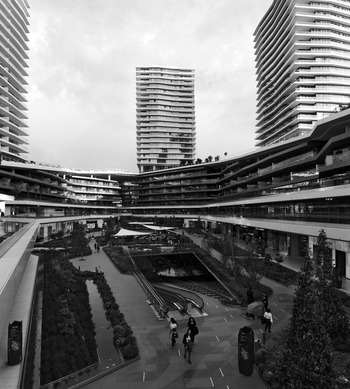
Figure 4.1. Zorlu Center, multiuse complex, Istanbul.
On the other hand, the particular brand of pious free-market conservatism that has come to dominate the property-led redevelopment agenda has been unable to deal adequately with unplanned metropolitan growth. Istanbul has become a patchwork of very different building typologies, fueled in part by property speculation and in part by spontaneous self-built accommodation. Municipal authorities have no serious strategy to deal with further expansion, as the city has continued “to swallow the forests around it.” Current plans for dealing with the growing congestion caused by the insertion of new mega-projects, towering office buildings, and sprawling shopping malls close to the city center calls for an ambitious program of large-scale demolitions around highway exits, in order to make way for the construction of brand new avenues and arterial roadways. Informal residential districts are particularly vulnerable to such clearances, and disgruntled residents have organized militant resistance campaigns against such demolitions in several neighborhoods.Footnote 142
First- and second-generation squatters, who register more than half the population of Greater Istanbul, have constituted a double problem for the “world-city” image to which city boosters have aspired in the neoliberal era. Sensing their own marginalization and abandonment, these poor residents have not only mounted impromptu militant campaigns against the highways and other infrastructural “improvements” scheduled to be driven through their neighborhoods but also provided a vast “vote bank” for Islamic political parties that have proclaimed their opposition to “the architectural pretensions of global capital” – high-rise condominium buildings and skyscrapers, conspicuous consumption, and luxurious lifestyles for the aspiring wealthy.Footnote 143
The shift toward a top-down kind of property-led urban redevelopment unfolded over time in stages.Footnote 144 Starting in the mid-twentieth century, a half-century-long period of unplanned and uncontrolled urbanization – brought about by rapid influx of rural-to-urban migrants and coupled with inefficient urban management – produced a chaotic urban landscape that defied any real sense of order or stability. Beginning in the 1950s, municipal authorities allowed newcomers who were migrating from rural areas to construct self-built housing – squatter settlements known as gecekondu (literally, “built overnight”) – on illegally occupied (largely state-owned vacant) land on the fringes of Istanbul. Without official permission or any form of state legitimacy, this kind of informal housing became a habitus deeply ingrained in the social fabric of everyday life.Footnote 145 Built either by the settlers themselves or by land speculators, this officially tolerated mode of informal urbanization quickly became the dominant means of gaining access to residential accommodation.Footnote 146 Istanbul was literally “a city without slums,” where virtually penniless new arrivals could easily find inexpensive housing and tap into opportunities for making a living. The city was a place where successive waves of new migrants could gradually and incrementally integrate themselves into the social and economic mainstream of urban life, albeit always at the precarious margins.Footnote 147 In the absence of planned (formal) social housing policies, the widespread reliance upon self-built housing and informal markets became the only mechanisms through which the urban poor could be absorbed into makeshift residential neighborhoods. The particular solution to the “housing problem” that municipal authorities adopted in the 1980s revolved around legalizing unauthorized land appropriations and inner-city squatting.Footnote 148 This mode of “crude urbanization” – epitomized by the gecekondu –resulted in irregular patterns of urban growth, inadequate urban infrastructure, disorderly public spaces, unsafe build practices, and low-quality housing stock.Footnote 149 The retroactive extension of private ownership rights to unauthorized squatters by means of several “building amnesties” helped to sustain a populist coalition between industrialists in need of cheap labor, political parties seeking to obtain the loyalty of the urban poor, and lower-class residents in search of affordable housing.Footnote 150
By the end of the twentieth century, housing provision to low-income residents moved from the phase of de facto occupation to de jure legalization, and from financialization to speculation.Footnote 151 Municipal authorities gave squatters permission to build four-story residential units, thereby enabling these new property owners to expand their makeshift houses into low-quality apartment blocks, sometimes for the use of their children but sometimes for rent to provide extra income. Such investments in property improvements were usually beyond the means of newly arrived immigrants, so building contractors (yapsatçılar) filled the void, collecting the lion's share of the burgeoning rental income, and thereby creating a multilayered class hierarchy among the squatters “that was partially distinct from their position in the labor force.” These building contractors upgraded these makeshift shanties on small irregular plots of land into concrete-built apartment blocks, often using cheap and inadequate materials that left them exposed to periodic flooding and highly vulnerable to unexpected earthquakes. The new lax zoning regulations imposed few restrictions on choice of building materials or standards. The result of this largely unregulated building process has been “to create an uncanny architectural cityscape,” where the poor have continued to live in their own unfinished multistory concrete buildings and renters squeeze into overcrowded upstairs units. This new type of dwelling is informally called an apartkondu – a hybrid term combining gecekondu (squatter residence) and apartman (middle-class apartments).Footnote 152
After decades of relatively slow and incremental transformation, Istanbul has undergone a largely privately planned, neoliberal restructuring of metropolitan space at the start of the twenty-first century. Ever-taller and multiplying high-rise office blocks, bank buildings, elite residential towers, and colossal luxury hotels compete for attention in the increasingly crowded skyline. The multistory towers that provide the vertical definition of the Zorlu Center – as shown in Figure 4.2 – epitomize this trend. Rapidly increasing numbers of exclusive shopping malls, restaurants, cafes, and night clubs have crowded the downtown urbanscape.Footnote 153 Along with other culture-led redevelopment projects involving the regeneration of abandoned factory and warehousing sites, the wholesale retrofitting of the disused waterfront zone has brought Istanbul into the global spotlight.Footnote 154
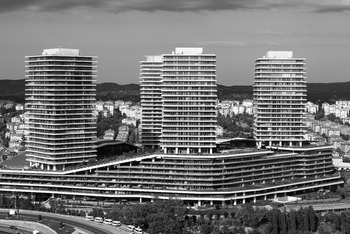
Figure 4.2. High-rise buildings, Zorlu Center, Istanbul.
These large renewal projects – or what Tuna Kuyucu and Özlem Ünsal refer to as large “urban transformation projects” (UTPs) – have become the principal mechanisms by which real-estate developers and municipal authorities have imposed a capitalist logic on urban land and housing markets, especially in only partially commodified informal housing areas and “rundown” inner-city neighborhoods not fully subject to the logic of market exchange. Real-estate developers look upon gecekondu neighborhoods as underutilized spatial resources that can be mobilized in commodified as the key building blocks for urban renewal. By redefining the rules of private ownership and instituting market dynamics, these UTPs – or “neoliberal market-making tools” – achieve two main goals: the “physical and demographic “upgrading” of particular localities within the city and the construction of a neoliberal regime of governance that no longer tolerates the legal ambiguities and the incompletely commodified market structure” that prevails in these areas. These radical interventions into the management of urban space disproportionately benefit loosely aligned coalitions of real-estate developers, banking and credit institutions, and state officials with an interest in accelerating urban transformation via the institutionalization of a neoliberal regulatory regime. Yet this process has subjected highly vulnerable urban residents, those whose livelihoods depend in large measure on populist redistributive mechanisms, to the logic of the capitalist marketplace.Footnote 155
Given a free rein to bypass the regulatory frameworks of comprehensive planning and rely instead on project-based fragmented interventions, prominent real-estate developers have valorized this process of urban redevelopment through large-scale, property-led renewal schemes. As can be seen in the artist rendition of the Batishir mega-project depicted in Figure 4.3, these fast-paced efforts at urban redevelopment have transformed disused waterfronts, industrial wastelands, existing public spaces, historic inner-city neighborhoods, unauthorized self-help (squatter) housing, and natural protection zones into the gigantic construction sites that have blossomed haphazardly across the urban landscape. Large-scale redevelopment programs have targeted “neighborhoods with low-quality housing or derelict but historically valuable properties.”Footnote 156 Demolition and land clearances have gone hand-in-hand with profit-seeking investments in land property and widespread land speculation.Footnote 157 In seeking to resolve problems associated with rapid and unplanned urbanization, these large-scale, property-led renewal schemes have become the model of urban redevelopment: they function as instruments of what amounts to a kind of “urbicide,” or self-inflicted destruction of the built environment.Footnote 158
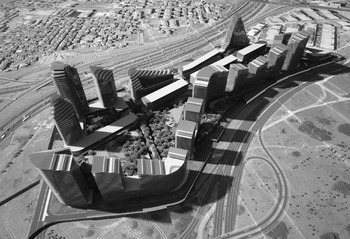
Figure 4.3. Batishir mega-project, Istanbul.
The “new Istanbul” consists in the main of four distinct housing typologies: gated residential estates, clusters of high-rise condominium towers, serially reproduced ranks of nondescript apartment slabs, and suburban tracts of individual homes serving a range of income groups. Despite their ostensible differences, the common denominator “seems to be precisely the fear of openness.” The force fields of globalization have shaped the urban landscape, but in ways that appear in the guise of a deeply conservative approach to fundamentalist neoliberalism.Footnote 159
Urban space has been subjected to large-scale private investments in real estate. Spatial transformation has occurred not only at the metropolitan fringes but also in the central neighborhoods in the historic urban core. In what amounts to a snowball effect, gated residential communities and their attendant comfortable lifestyles have become widespread among the new upper and middle classes of the city.Footnote 160 Since the 1980s, enclosed enclaves ranging from the ubiquitous gated residential communities and luxury housing estates to self-contained islands of modern office space and commercial enterprises in the inner city, and to new suburban towns and entirely new satellite cities at the peri-urban periphery, have been the driving force behind urban real-estate markets and housing development.Footnote 161 Unlike earlier “self-building” phases, the production of mass housing in Istanbul has largely been organized predominantly through the Housing Development Agency, or the Toplu Konut İdaresi Başkanlığı (TOKI). As a general rule, TOKI has employed a single urban typology: gated residential complexes of repetitive tower clusters on open land on the peri-urban fringe. These patterns of TOKI development have paralleled the emergence of a new middle class in Istanbul for whom a TOKI flat is an integral part of the dream of home and automobile ownership, even if these scenarios bring social isolation, long commute times, and long-term debt.Footnote 162
Ongoing practices of neoliberal restructuring has fundamentally recast the urban landscape by producing a steady increase in high-rise residential towers, colossal office buildings, luxury hotels, and spacious shopping malls. The evolving urbanscape has continued to be filled in with new residential compounds sequestered behind gates and walls. At the same time, new spaces of production, consumption, and leisure are kept under constant surveillance through strict security measures. Put simply, what has emerged is an ongoing gating of the cityspace, enclosing new forms of wealth and luxury lifestyles. New modes of governance and social relations have taken root in these enclosed enclaves.Footnote 163
While North American-style tract housing and fenced-in suburbs have long been a stable feature of Istanbul's periphery, gated residential estates have evolved into a new building typology that has increasingly begun to encroach upon the high-density urban core. Smaller parcel sizes and higher Floor-Area Ratio (FAR) have resulted in distinct enclaves that appear as densely packed clusters of high-rise buildings that bear little or no relationship to their immediate surroundings. While estimates vary, it can be said with a high degree of certainty that more than one thousand gated residential estates have been built in Istanbul in the new millennium, ranging from dense clusters with few social amenities to huge complexes with multiple lifestyle options. Marketed for their safety and ample social facilities, their hidden agenda for status-conscious middle-class residents is their exclusivity.Footnote 164
The logic of the ex-urban gated residential estates has invaded the urban core. If the utopian dreamscape of the modern city revolved around the monumentality of public space, the kind of building typologies that have come to characterize the built environment of Istanbul offer a different vision for contemporary urbanism: clusters of high-rise buildings wrapped around an enclosed garden space, detached from the surrounding urban landscape by their self-imposed autonomy. Recalling the walled spaces of the Ottoman Era, this contemporary iteration of an enclosed paradise has emerged as a new, and almost universally applied, building and architectural typology. For architects and real-estate developers, interior garden space has become the single most preferred stylistic feature regardless of building typology: gated residential estates, schools, luxury hotels, office complexes, and government facilities all follow a similar principle. This kind of introverted space is an accoutrement that offers a simulation of shared community and collective living while simultaneously utterly denying genuine plurality.Footnote 165
Real-estate developers routinely advertise and market multiuse complexes “as cities unto themselves.” Like prepackaged tourist vacations, they contain all the essential ingredients of what it seems urban life should be, but they invariably lack the sense of belonging and community that comes with actual community. Advertised as “creating an unequalled living space at the heart of Istanbul” and the “new meeting venue in the city,” the multiuse Zorlu Center is only one of many high-profile projects close to the downtown city center that exemplify the “continued dynamism of the high-end real estate market.”Footnote 166 Close to the financial district and with easy access to major transportation corridors, this mixed-use project, with its wide interior spaces and grand-scale buildings, brings together five separate but inner-connected components – world-class retail shopping, high-rise office facilities, elite residences, luxury hotel accommodation, and a state-of-the-art multipurpose theater for the performing arts. Despite its hermetically enclosed setting, the architects who designed the site somehow refer to the expansive interior courtyard as a “public space” and a historic “town square.” Surrounded on all sides by highways, the most convenient way to reach the complex is by an underground tunnel that connects to the city metro system. This method of connecting to the city exemplifies the pattern of how up-to-date transportation infrastructure links isolated, stand-alone architectural building sites, while flagrantly bypassing the less-luxurious streetscape that surrounds it.Footnote 167
At one and the same time and in parallel fashion, informal gecekondu housing (informal squatter accommodation), which historically absorbed and housed the successive waves of massive rural-to-urban migration required to fill the labor needs of national developmentalist project since the 1950s, has lost its original raison d'etre.Footnote 168 Expected to fade away as the project of modernization deepened, gecekondu have come to be seen as impediments blocking the path of urban redevelopment.Footnote 169 In the neoliberal discourse of market triumphalism, these vast, informally developed gecekondu neighborhoods are eyesores and breeding grounds for crime and drugs. The creation of the “new stigmatizing topographic lexicon” has renamed these places varofl, thereby denoting a permanent marginality and trapping them in new forms of poverty. Official discourses have routinely portrayed gecekondu residents as unwanted “invaders” and illegitimate occupiers, thereby justifying the withdrawal of services.Footnote 170 This language distress and decay has rendered these neighborhoods vulnerable to all sort of repressive interventions, including physical destruction and forced removal.Footnote 171
With little or no interference from public authorities, these largely self-contained, proprietary enclaves (defined by the private provision of requisite services) have shaped the urban macro-form, not only fostering suburban sprawl but also radically transforming the historic inner core.Footnote 172 Mass middle-class housing projects have formed ribbons of high-rise, high-density suburbs along the periphery. While these have created more socially homogeneous residential environments, they have developed in tandem with the emergence of sprawling informal settlements on the metropolitan fringe.Footnote 173 The incongruous juxtaposition of new shopping malls and high-rise apartment blocks, old gecekondu districts, and empty lands has produced a bizarre kind of uneven, patchy landscape. Urban enclaves like gated residential estates have become the new symbols of global consumerist culture and an ideal lifestyle formula for the emergent propertied classes to display their economic and cultural capital. Creating distance from the crowded, unhygienic, and violent city life has crystallized in the formation of a new middle-class identity. Private ownership of residential housing in a natural environment with perfectly designed living spaces and set apart from the urban poor have become symbolic markers that correspond to a class ideology of modernizing urban elites seeking to find their rightful place in the global space of flows.Footnote 174
From the start of the new millennium, there has been a radical shift in the governance of urban land and housing markets in Turkey from a “populist” to a “neoliberal” mode. Large-scale UTPs are the main mechanisms through which neoliberal modes of urban governance are instituted in incompletely commodified urban areas.Footnote 175 These emergent patterns of urban restructuring has meant that anonymous housing projects (that could be anywhere in the world) have steadily replaced long-standing “finely meshed street patterns of the gecekondu (informal squatter housing) and yap-sat districts, with their intricate social and microeconomic structures, their vibrant street activities and their small-scale character.”Footnote 176 The resulting functional segregation brought about by these new modalities of urban development does not allow for small-scale economic improvisation and investment that take the form of street guilds and bazaars specializing in particular types of goods – the everyday lifelines of the poor. The competition engendered by the proliferation of street trading and hawking has created “an orientation toward public spaces – and greater visibility – in front of the buildings,” thereby forcing commercial activity onto the sidewalks and into the streets. This spatial condition depends upon mobility of people and goods while at the same time it brings congestion and oversaturation of markets. This vibrant situation contrasts sharply with upscale shopping centers and gated residential estates with their stress on order and predictability. These building typologies represent an entirely different concept of the city and the commercial goods and everyday experiences it produces. “Precisely tailored to the specific needs” of a restricted range of privileged user groups, enclosed shopping malls and gated enclaves contradict the uncertainties, ambiguities, and openness that define informal urban life. As “secluded islands [of exclusivity], they orient themselves in opposition” to the small-scale entrepreneurialism and informal commercialism that thrive in the interstices of public space.Footnote 177
In the new global imaginary, the “projected city” consists of an assemblage of gentrified spaces that conform to the logic of the marketplace and respond to the expectations of cosmopolitan modernity.Footnote 178 Instead of maximizing permeability within a specific enclosed space, such faux-public spaces as luxury shopping centers and gated residential communities turn the actually existing spatial codes of the city inside out, by minimizing points of intersection and operating in isolation. Organized events at distinct destinations have replaced chance encounters and unexpected interactions. Instead of the vibrancy of urban life generated by serendipitous street activities, the focus has shifted to one of “convenience and composed interior spaces.” The negative consequence of these patterns of deliberate segregation into urban enclaves is as obvious as it is as unavoidable: while isolated islands use private investment capital to “hide themselves in ever-more grandiose stage-set-like pieces of architecture,” the actual city fades into the background, and the real-life dynamism and plurality of urban living dwindle.Footnote 179
Metro Manila: Building the Partitioned City of Enclaves
Mega-project real-estate development has long been an integral feature of the explosive growth of Metro Manila in the post–World II era.Footnote 180 Looking at the long arc of corporate-led city-building efforts in Metro Manila over the past half-century reveals a longer story that complicates conventional understandings of spatial restructuring in the contemporary age of globalization.Footnote 181 First unveiled in the 1950s, the development of the Makati central business district (CBD) was an early prototype for the corporate master-planned “new city” projects that originated well before the contemporary era of globalization. Built and operated by the powerful Ayala Land Corporation, Makati quickly became the financial and commercial center for the Manila metropolitan region. Inspired by a modernist ethic of progress, the urban planners behind this early mega-project conceived of it as a self-contained (i.e., bundled) and nominally integrated space that offered a solution to the problematic features of “backward” Manila – with its overcrowded streetscape, broken-down infrastructure, and weak public regulatory authority. Seen in this light, “by embodying the highest standards of development, New Makati constituted a space of progress.”Footnote 182
But this trend toward carving up the metropolitan landscape of Metro Manila into large-scale real-estate projects has expanded significantly in recent years.Footnote 183 While Makati City has remained primus inter pares as a premier financial center because it has continued to house the lion's share of headquarters office complexes for leading global corporations, a number of rival mega-projects have emerged. One of the most notable exemplars is Bonifacio Global City (BGC), a master-planned, mixed-use, real-estate development that can trace its origins to the sale of development rights to a 214-hectare portion of Fort Bonifacio, a former military base, to a consortium of businesses for U.S. $1.6 billion in 1995. Originally an American fort built during the American colonial period that served as a detention center for political dissidents under the Ferdinand Marcos regime, BGC is located 11 kilometers (6.8 miles) southeast of the center of Manila in an area disputed between the cities of Makati and Taguig. An interlocking network of private corporations, property-holding companies, and public agencies managed by a public–private partnership including Ayala Lands, Evergreen Holdings, and the Bases Conversion Development authority (a state corporation with public authority to release military properties for real-estate development), Fort Bonifacio Development Corporation has taken control of “master planning” operations for Bonifacio Global City. Nicknamed “the Fort,” this corporate-led real-estate mega-project has become a highly stylized high-rise financial center replete with corporate office space, upscale shopping districts, and upscale residential accommodation. The real-estate developers behind Bonifacio Global City have tried to create a planned environment that is the antithesis of the congestion of central Manila and the somewhat old-fashioned stylistics of Makati City, bringing together an assemblage of global corporations, public facilities (schools and universities), retail and leisure facilities (gigantic shopping malls and high-end restaurants) and high-rise condominium complexes for the well-to-do. The master plan of Bonifacio Global City bears an undeniable resemblance to both the classical layout of the city-states of the Italian Renaissance with their formal circulation grids and separate precincts integrated into a seemingly coherent whole.Footnote 184
The serial reproduction of these new urban mega-projects has brought to light the significant role of public–private partnerships in facilitating the process of place-making for the benefit of corporate enterprise. As a general rule, these large-scale real-estate developments have followed the template that originated with the Makati CBD, using the tools of land-use planning, setting limits to vehicle entry points, carefully controlling setbacks and floor-area ratios, and employing “a variety of other mechanisms to create an attractive environment for foreign investors and consumers.”Footnote 185 Each of these mega-projects offers corporate tenants and residents a full palate of social amenities: an integrated environment with opportunities for corporate investment, shopping and entertainment, and residence.Footnote 186 In essence, what has occurred is the privatization of planning where public authorities increasingly act as facilitators of private real-estate investment in city-building projects, providing inexpensive land, enabling development, and financing infrastructure linkages.Footnote 187
New Makati became the dominant prototype for real-estate development characterized by a deliberated strategy of spatial enclosure: the steady accretion of corporate mega-projects bundling social services within exclusive spaces and the rapid expansion of walled residential subdivisions euphemistically called “villages” that proliferated throughout the 1990s. Like Makati, these enclaves were developed according to standards aimed at class exclusivity. Yet unlike Makati, these corporate mega-projects have emerged “within a network of elite spaces,” with proliferating citadels (such as gated residential estates, luxury condominium complexes, and high-rise office buildings) linked to such upscale spaces of luxury consumption as exclusive shopping malls and elite recreational sites through a network of high-speed toll highways and elevated flyovers, and outfitted with up-to-date telecommunications, power grids, and water infrastructures that barely extend into the surrounding public city.Footnote 188
Set within the context of entrenched class inequalities, and where the regulatory capacity of the state administration is relatively weak, privatized corporate planning represents a spatial fix for the propertied classes, “a way to wall out the disorder of the public city and, at the same time, preserve within its perimeter a standard of spatial order” equivalent to the imagined cosmopolitan urbanity found in the leading cities of North America, Europe, and the Asia Pacific Rim. In the urban imaginary of the propertied classes, “disorder” signified more than just unregulated building, overcrowded streets, and clogged patterns of traffic circulation, but also crime, density, noise, noxious smell, illegal squatting, “unsanitary conditions, and general backwardness – that is, spaces associated with, and adulterated by, the masses.”Footnote 189
Spatial segregation in Metro Manila is largely characterized by latticework patterns of world-class business enclaves and upscale residential neighborhoods interspersed with deteriorating building stock and impoverished slums, where aspiring middle-class residents and urban poor live virtually side-by-side in separate (and distinct) spaces divided by physical and symbolic boundaries.Footnote 190 Safely cocooned inside these upscale enclaves, wealthy residents have come to “experience the city as an archipelago of carefully planned spaces,” ranging from spacious shopping malls, luxury condominiums, gated residential estates, and leisure sites, connected by elevated, climate-controlled transport corridors.Footnote 191 The expanded role for privatized planning has transformed the urban landscape of Metro Manila into a postcolonial “dual city,” where rich and poor live in proximity, but in urban environments that separate and unequal. These distinguishable social worlds consist of a largely planned “private city” thoroughly embedded in an ethos of world-class aspirations, on the one side, and a “public city” characterized by a degraded built environment suffering from neglect and abandonment, on the other.Footnote 192
Enclosures within Enclosures
The opportunistic intervention of real-estate developers and property speculators in urban reconstruction often becomes visible in distressed cities in the aftermath of catastrophic events like (so-called) natural disasters, war-related devastation, and industrial ruination, especially at moments when the destruction of the material and social fabric of cities gives rise to a “state of exception” discourse.Footnote 193 By calling for the suspension of conventional regulatory frameworks, this rhetoric of “exceptionality” seeks to legitimize extraordinary (and extralegal) spatial interventions in postdisaster reconstruction, typically in the name of the public good, quick recovery, and restoring economic growth.Footnote 194 As Jane Schneider and Ida Susser have suggested, “The necessity or opportunity for reconstruction exposes a city immediately and powerfully” to market-driven pressures, namely, through the demand “to generate profits for transnational corporate interests associated with finance, name-brand shopping, and tourism.”Footnote 195
The building and rebuilding of the world-famous resort enclave at Cancún, Mexico, as a main destination in the global tourist market provides a telling example of the dynamics of enclosure and the catalytic role that natural disasters can play in them.Footnote 196 The reconstruction efforts undertaken after Hurricanes Gilbert (1988) and Wilma (2005) facilitated the creation of an evolving logic of “enclosures within enclosures,” whereby real-estate developers and hotel owners – always aided and abetted by municipal authorities – carried out the privatization of public lands, particularly ocean beaches and shorelines, for exclusive use of the global tourism market. In practice, this process took shape as a far-reaching, spatial, aesthetic, and socioeconomic reconfiguration of the Hotel Zone in Cancún from a low-density luxury resort to a mass tourism, all-inclusive entertainment destination after Hurricane Gilbert, and the emergence of a timeshare high-rise condominium model after Hurricane Wilma. With this successive unfolding of new business models, real-estate developers strategically took advantage of “posthurricane reconstruction to redefine space, displace risk, and reposition themselves and the city in global circuits of capital accumulation.”Footnote 197
The strategic appropriation of catastrophic events like tsunamis, hurricanes, and floods as destructive but creative occasions by real-estate developers is not unique to such places as Cancún, Aceh (Indonesia), and other tourist zones of what has been called the “pleasure periphery.”Footnote 198 Unexpected devastation often provides real-estate developers and property speculators with sufficient justification to create “regimes of exception” that give them virtually carte blanche authority to rebuild in disaster-devastated spaces. Suspension of conventional regulatory regimes and substitution of ad hoc exceptional measures facilitate the exemption of real-estate developers from conventional planning and legal protocols.Footnote 199
A great deal of scholarly research has shown that cities such as New York after 9/11 and New Orleans after Hurricane Katrina became important laboratories for real-estate developers and municipal officials to experiment with post-disaster rebuilding as an opportunity to advance far-reaching neoliberal policy reforms. This one-sided emphasis on the use of market-centered approaches for urban recovery and rebuilding in New York and New Orleans should be seen not as coherent or sustainable responses to urban disaster, but rather as flawed and contradictory restructuring strategies that have only intensified the inequities they have claimed to remedy.Footnote 200
Kevin Fox Gotham and Miriam Greenberg have suggested that New York City and New Orleans have emerged as paradigmatic “crisis cities,” where free-market approaches to postdisaster recovery have increasingly become the dominant models for crisis-stricken cities around the world. These laissez-faire strategies of rebuilding – which Gotham and Greenberg have appropriately labeled “crisis-driven urbanization” – emphasize the privatization of disaster aid, the devolution of recovery responsibility to local administrative bodies, and the generous use of corporate tax incentives, federal grants, and financial subsidies to underwrite market-centered revitalization and undertake aggressive branding campaigns designed to market the redeveloped city for business and tourism.Footnote 201 Rather than target the residential populations and ecosystems where the impact of the disasters were most acute, the kinds of monetary assistance designed to aid in recovery has actually subsidized luxury development and urban rebranding campaigns that accelerated incipient gentrification and displacement of the most vulnerable residents. By critically examining both the pre- and posthistory of the devastating events in New York and New Orleans, it is possible to see how long-neglected landscapes of potential risk and vulnerability combine with starkly inequitable redevelopment strategies to turn sudden disaster into long-term crises. Such uneven and contradictory postdisaster recovery and rebuilding not only impeded community recovery efforts but also exacerbated risk of future crisis.Footnote 202 These market-centered policies remove public accountability and oversight from the decision-making and implementation process, thereby shielding private real-estate developers from unwanted scrutiny.Footnote 203
Faced with dwindling public funds and with no choice but to downsize functions and outsource services, city officials around the world have backed away from their once dominant role in overseeing the management of urban space. In those struggling cities faced with dwindling revenues combined with overstretched social services and neglected infrastructure, what scholars have called “austerity urbanism” has produced its own set of historically specific conditions that have become a “new operational matrix for urban politics.”Footnote 204 For at least the past three decades, neoliberal modes of urban governance have repeatedly demanded strict market discipline as a defining feature of restoring prosperity by kick-starting growth.Footnote 205 In times of financial and economic crisis, cities that have suffered from loss of manufacturing and jobs have become sites of austerity measures, such as permanent fiscal restraint, making do with declining tax revenues, bankruptcies, retrenchment of public expenditures, and deep cuts to municipal services.Footnote 206 “Austerity urbanism” has produced its own repertoire of juridical regimes that bypass conventional approaches to land-use planning, service delivery, and electoral democratic governance. In distressed cities undergoing bankruptcy, the outside imposition of top-down governance regimes clustered under the rubric of “emergency management” have dispensed with conventional electoral-democratic process of local government and generally closed off avenues for public participation.Footnote 207 At the level of local municipal administration, this approach to restoring competitiveness has translated into “fiscal discipline, local-government downsizing, and privatization.”Footnote 208


