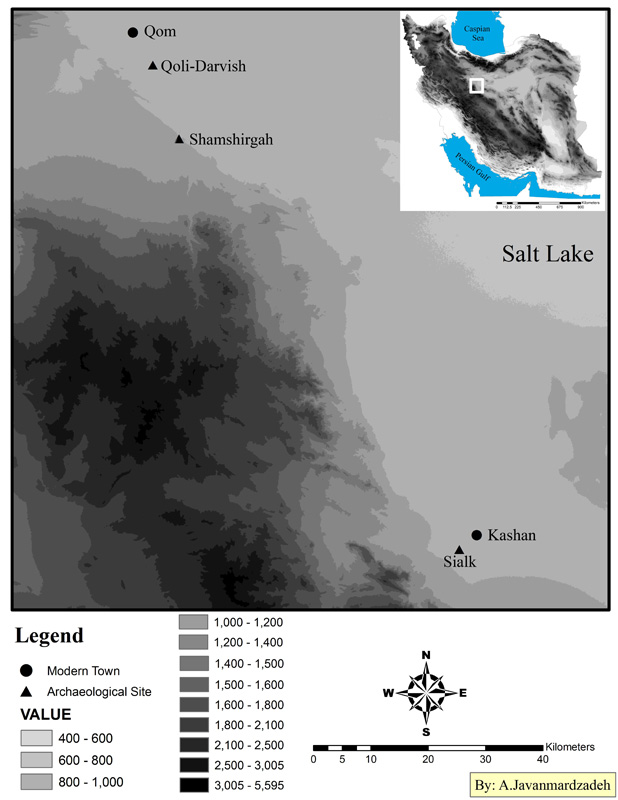


Map of the central Iranian plateau, showing locations of Qoli-Darvish-e Jamkarān, Shamshirgāh and Sialk.

The Late Iron Age in eastern Media: Sialk, Sarm and Qoli-Darvish
The Iron Age of the Iranian central plateau was first investigated 70 years ago at Tepe Sialk near Kashan (Ghirshman 1939). At this site, the upper archaeological levels indicate the remains of the Iranian-speaking people who founded the Median kingdom and subsequently the Achaemenid Empire. Today, as well as Sialk, we know of several important Late Iron Age sites such as Shamshirgāh (Reference KleissKleiss 1983) and Qoli-Darvish (Reference SarlakSarlak 2011). For example, the recently discovered Late Iron Age cemetery at Sarm has produced archaeological materials which are so similar to those found at Sialk that the site could even be thought of as a 'second Sialk' in southern Qom (Reference FahimiFahimi 2004).
Shamshirgāh
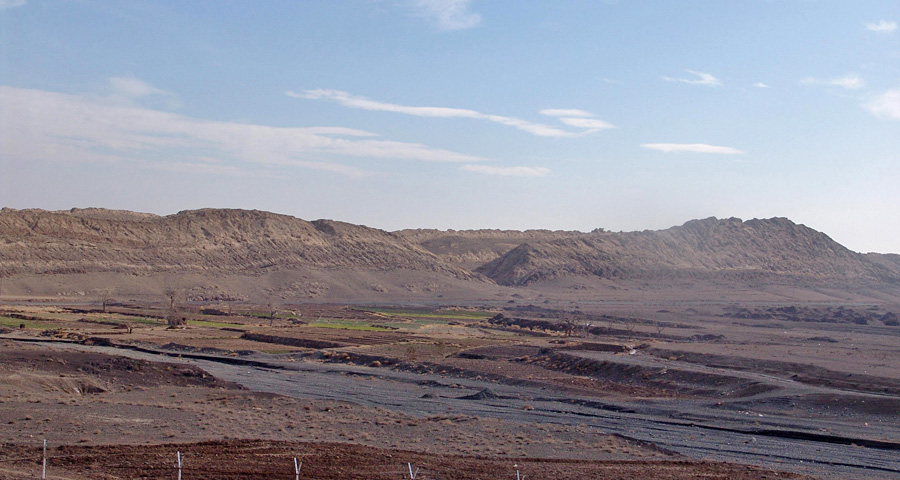
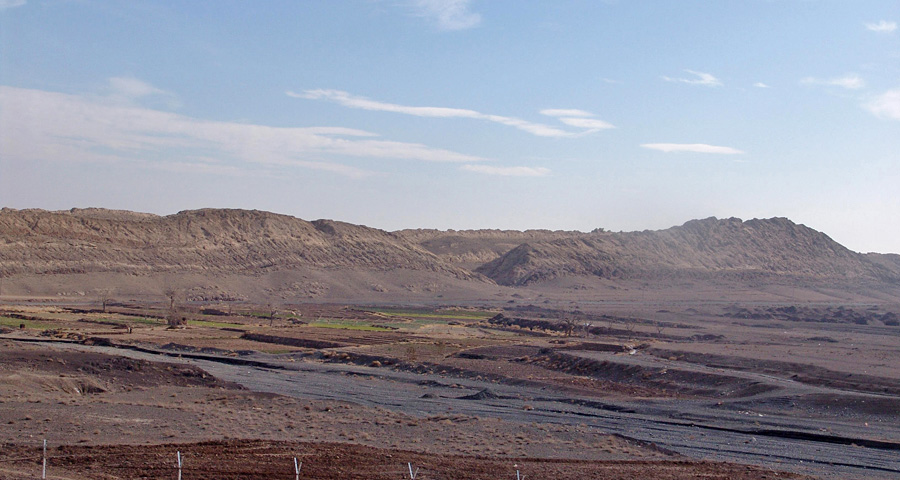
Shamshirgāh is an Iron Age fortress located 20km south-east of Qom in the vicinity of the village of Khowrabād (50 57 51.03 E / 34 30 04.95 N) (Figures 1 and 2). The site of Shamshirgāh was first discovered by Wolfram Kleiss, who published it under the name of Khowrabād (Reference KleissKleiss 1983). Interest in the site then waned until the discovery of the cemetery of Sarm, just 700m away. A surface survey at Shamshirgāh has collected material which shows close affinity between the site and nearby Sarm cemetery (Reference FahimiFahimi 2004), and subsequent excavation indicates that Shamshirgāh dates back to the Iron Age II / early Iron Age III (Reference FahimiFahimi 2010).
Shamshirgāh-e Khowrābād, general view.
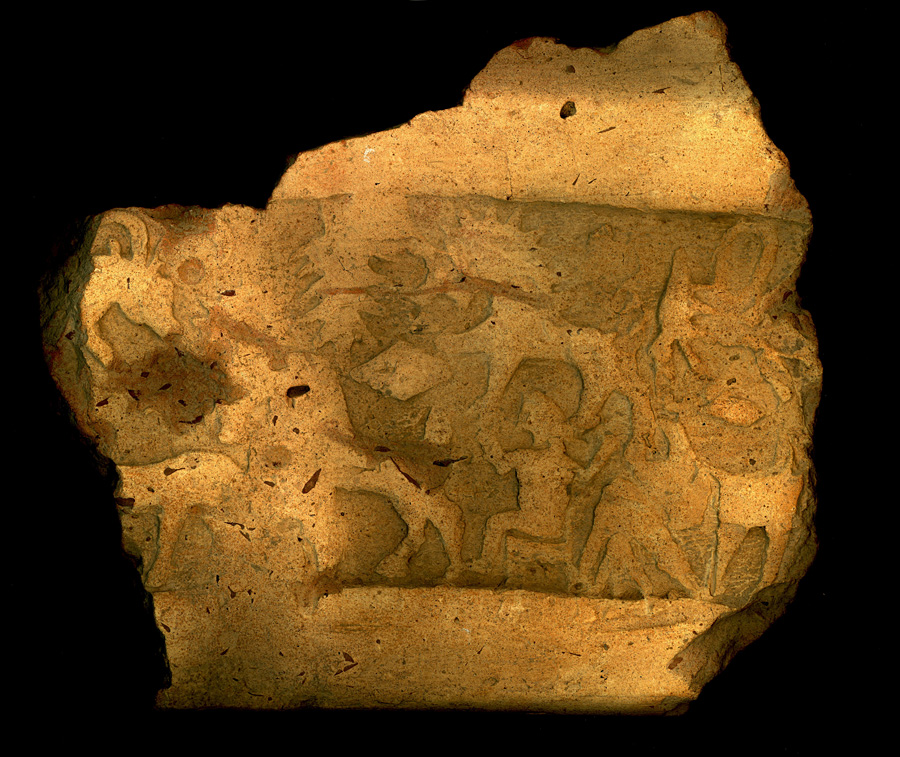
Decorated brick from Sialk, Sialk VI, Iron Age III (850–550 BC).

Bricks
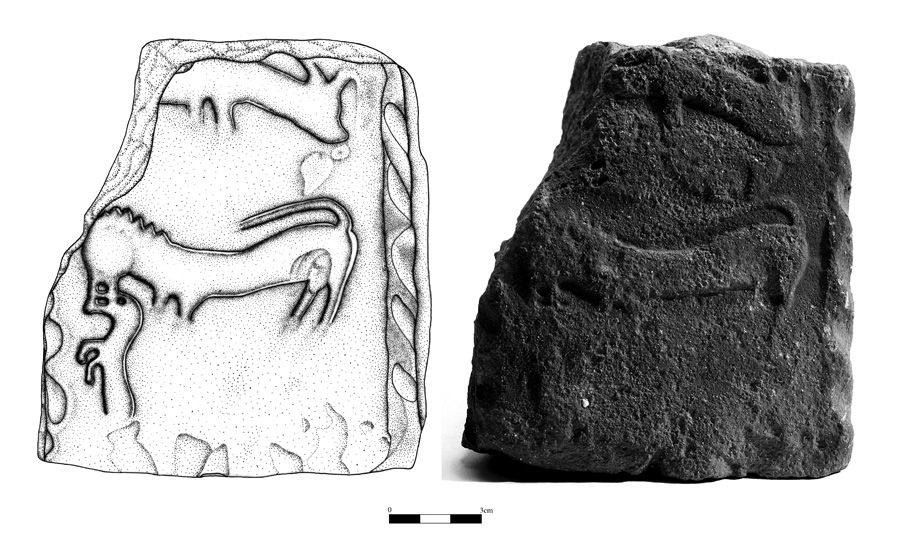
During the 1930s, a number of decorative bricks were discovered during excavations at Tepe Sialk (Ghirshman 1939: figs. 5–6, pls.21, 98–99) and six similar brick fragments (Figure 3) were found during more recent investigations (Malek Shahmirzadi 2002: 206, pl. 8). The bricks from Sialk lacked any comparanda until the recent discovery of similar artefacts at Qoli-Darvish-e Jamkarān (Reference SarlakSarlak 2007: 202). Here, seven decorated bricks were found during excavation (Figure 4) and a further three fragments were collected from the surface (Reference SarlakSarlak 2010: 168, 281). Meanwhile, at Shamshirgāh, 14 bricks with impressions depicting human and animal figures, and 26 fragments with geometric motifs, were collected during survey (Malekzadeh & Naseri 2005). The surface material from Shamshirgāh indicates that three types of bricks were used as decorative elements on the outer (and perhaps inner) walls of several buildings.
Decorated brick from Qoli-Darvish-e Jamkarān, Iron Age II (1250–850 BC) (Sarlak & Reference MalekzadehMalekzadeh 2005).

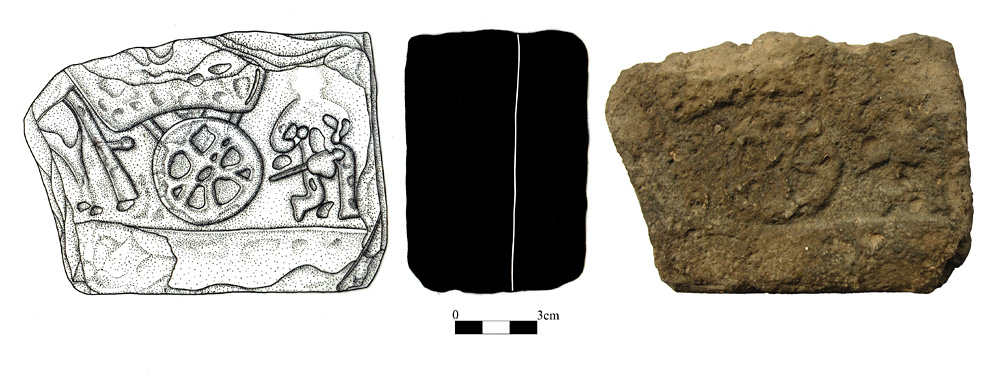
By virtue of its iconography, one of the bricks from Shamshirgāh deserves particular attention (Find no: sham.1383.001). The brick measures 9.8cm long, 13cm wide and 6.8cm thick (Figure 5), and its surface is severely abraded. The brick is grey in colour (Munsell 2.5Y 4/2) and would have been covered by a dark cedar slip (GLEY1 6/10Y) which has been almost entirely lost, surviving only in some finger impressions (Reference NaseriNaseri 2011).
Decorated brick from Shamshirgāh-e Khowrābād, Iron Age II (1250–850 BC).

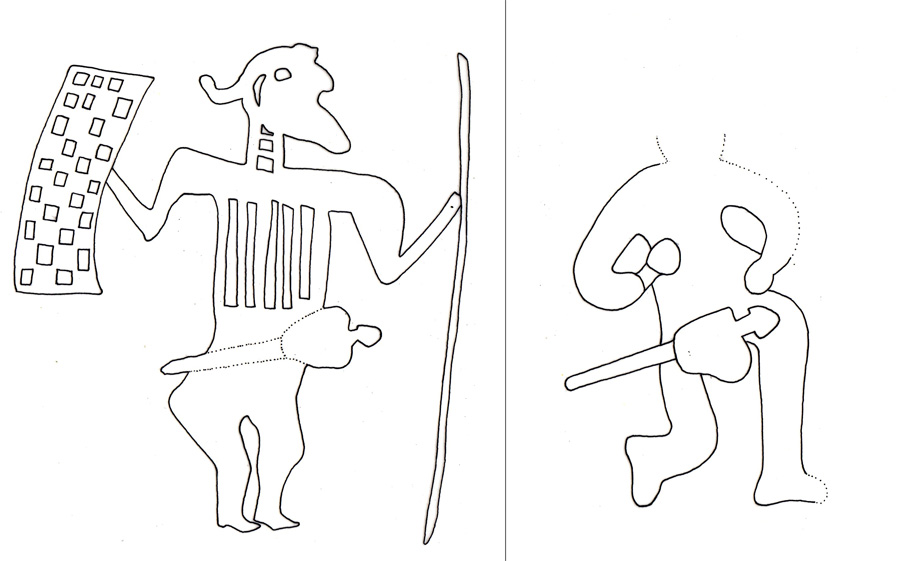
Median akinakes in painted pottery from Sialk and decorated brick from Shamshirgāh-e Khowrābād.

The decorated scene depicts a chariot, the wheels of which are still recognisable. The chariot is pulled by a horse, though only its tail and part of its haunch survive. The scene also depicts a kneeling man, holding a sphere in his right hand, with his left hand on his hip. Details of his head are poorly preserved, but he appears to wear a light helmet with an upturned brim. On his waist, the figure has a dagger within a prominent scabbard, both of which have been delicately embossed.
Chronology
At Late Iron Age Sialk, the structure known as 'La Grande construction' is assumed to be a Proto-Elamite ziggurat (Malek Shahmirzadi 2002). This dating is controversial not least because it relies on the attribution of decorated bricks to this period while, as will be discussed below, they are actually dated to the Iron Age.
On one of the pottery vessels from Sialk VI, now preserved at the Museum of Fine Arts, Boston, a heavily armed warrior is depicted with a long spear in his left hand, a rectangular shield in his right, with a blade in its scabbard on his waist (Ghirshman 1963a & b). This warrior is represented standing in profile, with white eyes on a black background, a curved nose, long chin with beard and a stretched neck; his long hair seems to be tied at the back of the head. The posture and features of this figure are also known from the iconography of Sialk VI pottery and seals (Ghirshman 1939: pl. 96).
The depiction of the warrior's blade and scabbard is iconographically very similar to the decorative brick found at Shamshirgāh (Figure 6) which represents the blade and scabbard known as the Median akinakes (Reference MalekzadehMalekzadeh 2002). The recognition of this specific type of blade and scabbard on the decorative bricks of Shamshirgāh has an important chronological implication. The decorative bricks of Shamshirgāh and Qoli-Darvish are similar to the pottery of the late western grey ware horizon at both of these sites and therefore date back to Iron Age II (1250–850 BC). The Sialk pottery, however, was concurrent with late western buff ware horizon and therefore dates back to Iron Age III (850–550 BC). Hence, the terminus ante quem for the grey decorative bricks of Qoli-Darvish and Shamshirgāh is c. 850 BC and the terminus post quem for the presence of the Median akinakes blade is also c. 850 BC. The decorative bricks as an architectural component known in eastern Media must therefore have appeared around 850 BC. Accordingly, the dating of 'La Grande construction' at Tepe Sialk, as well as the mud-brick platforms at Qoli-Darvish-e Jamkarān, should be revised.
Conclusion
Based on the ancient geographers, the Median territory included not only the western Iranian areas but also those regions to the east where modern Ray, Qom and Kashan are now located. Investigating the Iron Age of these eastern areas will help archaeologists to better understand the Median period as a basis for the later Achaemenid Empire. The decorated bricks of the Late Iron Age in the eastern areas should be understood as a Median artistic introduction which then later developed globally during the Achaemenid period.