


INTRODUCTION
Rabies is one of the oldest recognized zoonotic diseases affecting humans. Once clinical signs develop, human rabies is universally fatal. Each year, an estimated 55 000 people die from rabies, and these deaths mainly occur in the rabies-endemic countries of Asia and Africa [Reference Knobel1]. In Bangladesh, rabies is a major public health problem, and recent studies have shown that it is the rural parts of Bangladesh that are largely affected by rabies [Reference Hossain2, Reference Dey3]. Therefore, a rabies control programme must be formulated in this country that focuses on rural areas. However, as in most rabies-endemic countries of Asia and Africa, information on rabies in the rural areas of Bangladesh is scarce. Therefore, the epidemiological parameters of its endemicity are largely unknown. With an area of 147 570 km2, Bangladesh is one of the most densely populated countries on earth. At present, 76·5% of its population live in rural areas, so this large number of people is vulnerable to a high incidence of rabies. The epidemiology of rabies is multifactorial, and various factors contribute to its high incidence in rural Bangladesh. The only referral centre for rabies and animal bite victims in the country, the Infectious Disease Hospital (IDH), is situated in Dhaka, but economic or transportation constraints prevent many victims of animal bites and rabies in rural areas reaching it. As a result, large numbers of people receive treatment locally or no treatment at all. Consequently, these people are overlooked in the mainstream statistics for animal bites and rabies. According to the World Health Organization (WHO), 1550 people die of rabies in Bangladesh each year [4] and 60 000 seek post-exposure prophylaxis (PEP) [5]. However, these figures may not present the true picture. It is assumed that the death rate from rabies in developing countries may be 100 times higher than officially reported [Reference Knobel1]. Therefore, this study was conducted to clarify the levels of human rabies and animal bites in rural Bangladesh, and also to shed light on the treatment-seeking behaviour of people suffering animal bites or rabies in rural Bangladesh.
METHODS
A cross-sectional study was designed to determine the levels of animal bites and rabies in the rural areas of Bangladesh and to explore the treatment-seeking behaviour of animal bite victims. The study was conducted during the period from April to June 2008.
All six administrative divisions of Bangladesh were included in the study. Each division comprises a number of districts, which are subdivided into upazilas, or subdistricts. Currently, there are 508 upazilas in Bangladesh [6]. In total, 30 upazilas were selected from the six divisions as follows: seven upazilas from Dhaka, six from Chittagong, five from Khulna, seven from Rajshahi, three from Sylhet, and two from Barisal. The number of upazilas selected from each division was proportional to the total number of upazilas in that division. Thirty supervisors were appointed to supervise the data collection by field workers. Each supervisor was responsible for one upazila. Each upazila is divided into a number of unions, depending on its area. Two interviewers were deployed in each union. The data collectors visited each village in a union and contacted the key informants to enquire about any cases of animal bite or rabies that they knew had occurred in the previous year. If such a case were reported, the data collectors visited and interviewed an adult member of the family involved about the incident. At the end of the interview, the data collectors asked whether the interviewee was aware of any other such incidents in his/her locality. Thus, animal bite victims and rabies deaths were identified using a snowball technique. A structured, pretested questionnaire was used to collect the relevant information. In all cases, verbal consent was obtained after the nature of the study was explained and an assurance of respondent anonymity was given.
In this study, a case of rabies was identified by asking the respondent: (i) whether the patient was diagnosed with rabies by a qualified physician; and/or (ii) whether the patient had hydrophobia, aerophobia, photophobia, agitation, or hypersalivation plus a history of animal bite 3 months before the development of one or all of those symptoms.
The annual incidence rate was calculated per 100 000 population, with 95% confidence intervals (CIs). Frequency distributions were determined for age, sex, site of the bite, type of animal that caused the bite, provocation of the bite, wound care, history of vaccination, type of vaccine used, and where the vaccine was obtained. The national incidences of rabies and animal bites were then calculated, based on the population of Bangladesh of 150 000 000 [7]. ArcGIS 10.0 software [Environmental Systems Research Institute, Inc. (ESRI), USA] was used to illustrate the upazilas surveyed in the different districts of Bangladesh.
The correlations between the population density in each upazila and the numbers of rabies and bite victims were determined. Spearman's rank correlation, appropriate for experimental data that display a non-Gaussian distribution was used to calculate two-tailed P values. Whether the data displayed a Gaussian or non-Gaussian distribution was determined with the Kolmogorov–Smirnov test.
Results
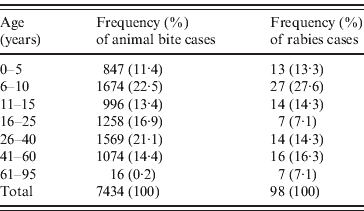
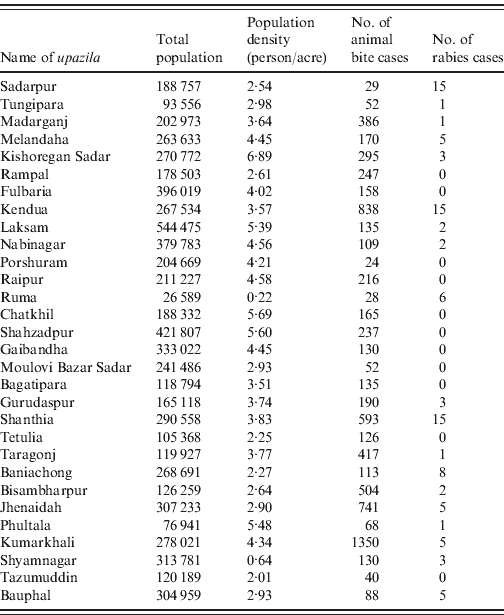
In total, 7766 cases of animal bite were recorded during the recall period of 1 year. The ages of the victims ranged from 1 to 95 years (Table 1). The majority of these victims were in the 6–10 or 26–40 years age group. Among the animal bite victims, the numbers of males and females were 4606 (59·3%) and 3160 (40·7%), respectively. From these 7766 victims of animal bite, 98 cases of rabies could be tracked, i.e. one case of rabies was detected for every 179 cases of animal bite. Most of the rabies patients were in the 6–10 years age group, after which the numbers gradually declined with increasing age, but peaked again in the 41–60 years age group. There were 69 (70·4%) male and 29 (29·6%) female victims of rabies. The population of each upazila (Fig. 1) was obtained from the Gram Web website [8]. Bases on these findings in Bangladesh, the annual incidence of rabies was calculated to be 1·40 (95% CI 1·05–1·78)/100 000 population, and 2100 (95% CI 1575–2670) people were estimated to die of rabies annually throughout the country. A modest estimate of animal bite cases in Bangladesh was 166 590 (95% CI 163 350–170 550) per year. The population densities and numbers of animal bites and rabies cases in each upazila are given in Table 2. There was no significant correlation between population density and the number of people with rabies (Spearman's r=−0·3701, 95% CI −0·7130 to 0·1155, P=0·1188) or animal bite cases (Spearman's r=0·2796, 95% CI −0·1009 to 0·5887, P=0·1346).
Map of Bangladesh showing studied upazilas in each district. The key to the map shows the names of districts represented by different colours. Surveyed upazilas are shown in orange.

Age distribution of animal bite and rabies cases
The population density and numbers of animal bite and rabies cases in each upazila
In this study population, those participants aged ⩽15 years were considered to be children, as was the practice in Bangladesh during the study period. These children were estimated to constitute 40% of the total population. The frequencies of animal bites and rabies in children (3517 and 54, respectively) and adults (3920 and 44, respectively) in the total populations of the study upazilas (2 796 921 children, 4 195 381 adults) are shown in Table 3. The numbers of bites and rabies cases/100 000 population were 125·7 (95% CI 121·3–129·9) and 1·93 (95% CI 1·45–2·31), respectively, in children, and 93·4 (95% CI 90·9–96·1) and 1·05 (95% CI 0·7–1·43), respectively in adults.
Animal bite and rabies cases in children and adults

CI, Confidence interval.
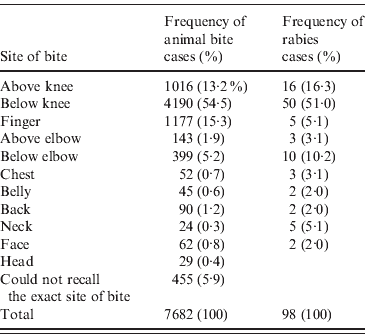
Analysis of the data showed that, animal bites were below the knee in 54·5% of cases, on the finger in 15·3%, and above the knee in 13·2% of cases (Table 4). The frequency of bites on other parts of the body decreased in proportion to the distance from the lower limbs. Consequently, most bites occurred on the lower limbs rather than on the upper part of the body. In patients who contracted rabies, the bite was below the knee in 51·0% of cases, above the knee in 16·3%, and below the elbow in 10·2% of cases (Table 4).
Site of bite in animal bite and rabies cases
Information about the type of animal that had caused the bite was obtained in 7734 cases. Of these, dog bite was the most frequent, reported in 5824 (75·3%) victims followed by cat bite in 1752 (22·7%) victims and unidentified in 158 (2·0%) victims. In 7624 cases, 4134 (54·2%) were caused by free-roaming ownerless animals, 3279 (43·0%) by free-roaming owned animals and 211 (2·8%) by wild animals. Among the 7720 respondents, the bites were provoked and unprovoked in 2714 (35·2%) and 5006 (64·8%) cases, respectively. In those who had contracted rabies, dog bite was frequent (89 cases, 90·8%) followed by cat bite (eight cases, 8·2%) and unknown animal bite (one case, 1·0%). The bites were provoked and unprovoked in 13 (13·3%) and 74 (75·5%) cases, respectively. In 11 (11·2%) cases, the respondents could not recall whether the bite was provoked or unprovoked.
Information on wound care was obtained from 6322 bite victims. Of these, 3552 (56·2%) washed the site with water only, 1191 (18·8%) washed it with soap, 1036 (16·4%) applied antiseptic after washing with water and/or soap, and 543 (8·6%) took other measures, such as traditional first aid, including the application of crushed grass or leaves or treatment by traditional healers. Among the bite victims who contracted rabies, 54 (55·1%) washed their wounds with water only, 16 (16·3%) washed them with soap, 25 (25·5%) applied antiseptic after washing with water and/or soap and three (3·1%) took other measures, as described above.
Information regarding vaccination as PEP was obtained from 7734 animal bite victims, among whom 5629 (72·8%) were not inoculated with any vaccine, and 1970 (25·5%, 95% CI 25·51–26·45) had been vaccinated. From these data, we estimated that 42 424 (95% CI 40 831–44 063) animal bite victims per year in Bangladesh receive PEP. In 135 (1·7%) cases, the respondent could not recall whether vaccine was given. Only 1934 subjects could provide conclusive evidence of the type of vaccine with which they were inoculated: nerve tissue vaccine (NTV) was used to inoculate 880 (45·5%) subjects and tissue culture vaccine (TCV) was used to inoculate 1054 (54·5%) subjects. Data were obtained from 1921 bite victims regarding the source of the vaccine: 1186 (61·7%) patients bought it from a private pharmacy, 424 (22·1%) patients obtained it from a nearby city office, 223 (11·6%) obtained it from the IDH, and 88 (4·6%) could not remember. In total, 5437 victims of animal bites responded to the question about why they were not vaccinated: 2735 (50·3%) were unable to purchase vaccine for financial reasons, 1887 (34·7%) did not believe in the effectiveness of the rabies vaccine, and 815 (15·0%) could not obtain the vaccine because it was out of stock.
Information was obtained from 96 rabies victims about their vaccination after the bite: 61 (62·5%) were not inoculated with a vaccine, whereas 32 (33·3%) were vaccinated. In three (3·1%) cases, the respondent could not remember whether the patient concerned was vaccinated. Among the vaccine recipients, 19 (59·4%) were inoculated with NTV and 11 completed the full course of vaccination. Thirteen (40·6%) were inoculated with TCV, none of which completed the full course of vaccination. The reasons for not completing the vaccination programme were not documented. All of the vaccine recipients had been bitten by dogs. Among the unvaccinated patients, the reasons given for not being vaccinated were as follows: 35 (57·4%) were unable to purchase a vaccine because of financial constraints, 15 (24·6%) did not trust the effectiveness of the vaccine, and 11 (18·0%) could not obtain the vaccine because it was out of stock. In 63 rabies cases, 48 (76·2%) died at home, nine (14·3%) in a hospital and six (9·5%) on the way to hospital.
DISCUSSION
To the best of our knowledge, this is the only comprehensive community-based study conducted to determine the situation regarding rabies in Bangladesh. The study reveals that not only improper PEP but also a lack of knowledge about the appropriate first aid for animal bites results in a significant death toll. Washing with soap, recommended by WHO for the management of animal bites, can significantly reduce the probability of acquiring rabies [9]. However, about 60% of individuals who suffered rabies and animal bites did not wash the wound with soap. This indicates that the population is not conversant with the care of animal bites, which resulted in a higher death toll from rabies. The other setback was vaccination: more than 60–70% of people were not vaccinated after an animal bite. This is unsatisfactory, but is still better than the finding in India, where about 80% of people with rabies received no vaccination [Reference Sudarshan10]. In the present study, 50% of the unvaccinated bite victims were not vaccinated because of financial constraints, distrust of the vaccine, or its unavailability. Rabies immunoglobulin (RIG) is recommended by WHO in addition to vaccination, for type III exposures [9]. However, none of our patients were treated with RIG. Although we did not examine the reason for this, a previous study [Reference Hossain2] has shown that financial constraints was again the reason for lack of RIG treatment. This emphasizes the importance of establishing a mechanism by which people have easy access to safe and effective treatments for animal bites. Whether the population is unaware of the potentially critical situation that can arise from an animal bite warrants further research.
In Bangladesh, it is common practice to acquire post-exposure vaccination rather than prophylactic vaccination for rabies. Only one-third of rabies sufferers and one-quarter of animal bite victims received PEP. Although nearly half these victims were treated with NTV, a hospital-based study showed that more than 80% of animal bite victims were treated with NTV [Reference Hossain2]. Bangladesh is one of the few countries in Asia, together with Pakistan and Myanmar, still using NTV [Reference Burki11]. The use of NTV might be one of the factors affecting the frequency of rabies in vaccine recipients in the present study. Other factors that might have been responsible for the failure of vaccines to prevent rabies include improper vaccine storage conditions, incomplete courses of vaccination, lack of RIG, and the length of time between the bite and vaccination. In 2010, the Bangladesh Government undertook an initiative to introduce TCV and phase out NTV for human use.
As far as we know, rabies vaccine is not given free of charge in any hospital in Bangladesh. The affected people in our study predominantly purchased their vaccines from nearby pharmacies. This indicates that private business enterprises may supplement future efforts to make vaccines and RIG available throughout Bangladesh. However, it should not be forgetten that the government maintains the basic healthcare facilities with qualified healthcare professionals in all upazilas of Bangladesh. Therefore, rabies prevention, treatment, and control efforts can be decentralized with minimum effort. The provision of vaccines to people at an affordable price is another possible approach. Studies in India and the Philippines have shown that utilizing existing physicians, in a franchise model, can reduce the costs of providing affordable treatment for rabies [Reference Masum12].
In this study, we estimated that, 2100 people die of rabies in Bangladesh every year, which is 1·35 times higher than the current WHO estimate. It is assumed that in developing countries, the number of patients who die from rabies is 100 times greater than the official estimates, but our results show that the number is not as high, at least in Bangladesh. We also calculated that the annual incidence of rabies in Bangladesh is 1·40/100 000, which is lower than that in India (2–3/100 000 population) but higher than the current WHO estimate for Bangladesh (0·14/100 000 population) [5] and for other rabies-endemic Asian countries (0·03–0·48/100 000 population) such as China, Indonesia, the Philippines, Sri Lanka, Thailand, and Vietnam [Reference Dodet13]. WHO has estimated the number of animal bite victims in Bangladesh to be 2·8 times fewer than we found in the present study. This study has also shown that more than 40% of animal bite victims receiving PEP in Bangladesh do not get their treatment from the IDH [Reference Hossain2]. Most people received no treatment at all because of financial constraints, ignorance, or lack of vaccine availability. One of the measures that might improve the management of bites to prevent rabies is the countrywide introduction of economical intradermal (ID) regimens of TCV, which would make vaccines more accessible to the population. Sharing an ampoule of vaccine between patients may be economical in upazilas with a significant number of bite cases. It has been reported that a new four-site ID regimen given on days 0, 7 and 28 after a bite might be an economic method more suited to rural areas [Reference Warrell14]. The decentralization of animal bite treatments might improve the incidence of rabies in Bangladesh. To improve the situation further, public awareness and education will be required.
We also found that children were the main victims of animal bites and rabies in rural Bangladesh, similar to the findings of previous studies in Bangladesh and other countries [Reference Knobel1–Reference Dey3, Reference Sriaroon15–Reference Hampson17]. As in other studies [Reference Hossain2, Reference Dey3, Reference Sudarshan10, Reference Singh18], males were the major victims of animal bites and rabies. Males spend more time outdoors, which might increase their vulnerability to animal bites and rabies. Human lower limbs are the body parts most accessible to animals, which might be why the bites were below the knee in half the individuals with rabies and animal bites. Similar results have been reported in other studies [Reference Dey3, Reference Sudarshan10, Reference Singh18, Reference Ly19]. In this study, we found that the bite was unprovoked in most rabies and animal bite victims. These findings have public health implications in designing interventions for rabies control.
Dogs, followed by cats, were mainly responsible for the bites and the transmission of rabies. Our study revealed that in the community, a significant number of bites were caused by free-roaming owned dogs and cats, whereas these accounted for only 10·6% of bites (81·8% were by dogs and 18·2% were by cats) in a previous hospital-based study [Reference Hossain2]. Currently, there is no vaccination programme for free-roaming dogs in Bangladesh. Rabies vaccination for pets is mandatory in Bangladesh. Data on the number of vaccinated pet dogs is not available in the public domain. However, the number of rabies cases implies that the number of responsible pet owners is limited. A countrywide mass campaign and continued education to ensure that pet owners take responsibility in this regard might be another component of rabies control.
In some upazilas, the incidence of rabies and animal bites was significantly higher than elsewhere. However, these higher numbers were not affected by the human population density or proximity to a major city. Because the dog population density in each upazila was not known, we could not determine its effect on the numbers of human rabies cases. Determining the factors that increase the numbers of human rabies cases is important for its control.
Three-quarters of rabies patients in this study died at home and only a fraction of them reached hospital. This emphasizes the fact that rabies mortality is not always accurately estimated in hospital-based studies. We assume that this is the situation not only in Bangladesh but also in other developing countries, where taking a rabies patient to hospital and bringing the dead body home is a burden for poor families. Therefore, the majority of rabies deaths are missed by the mainstream data-collecting centres.
Rabies continues to be a public health problem in Bangladesh. Although rabies is a horrifying, fatal, and incurable disease, it is 100% preventable, and it is still not properly addressed by the health sector. In this context, the prevention of rabies requires public awareness through mass education and communication, which would be the most appropriate approach to ensure improvement. Therefore, it is time for special attention to be focused on this issue, to prevent and eliminate this disease in Bangladesh.
Our study has some limitations, which may be unavoidable in this type of work. The diagnosis of rabies could not be confirmed by a qualified physician in this study. This may be inevitable in large community-based studies undertaken in developing countries. It was also not possible to determine the frequency of paralytic rabies, which is impossible to diagnose on clinical grounds without proper laboratory tests. However, had we not followed the approach used in this study, we would have overlooked a large number of victims because, as our study revealed, most rabies deaths in Bangladesh occur at home rather than in hospital. Because a large population was surveyed, the estimated annual incidence of rabies in Bangladesh and the other epidemiological parameters determined in this study should be representative of the whole population. The figures determined in this study are probably not overestimates because we actively avoided consulting the same household twice. However, we are aware that we might have missed some cases because not all households were actively consulted, and some study participants could not accurately recollect events during the interview. Despite these limitations, we consider that our study has generated useful information about rabies in the rural areas of Bangladesh, which could be utilized in the effort to control rabies in this country. We consider that this kind of rural-based study should be performed in other rabies-endemic countries, because this is where the majority of the population live, where the population of free-roaming dogs is large, where the treatment for bite victims is inadequate, where the vaccination of pets against rabies is relatively unknown, and where the level of rabies awareness is low.
In conclusion, we found that the numbers of human rabies and animal bite victims in Bangladesh exceed the current estimates. Most animal bite victims do not take proper care of their wounds due to lack of knowledge, lack of access to a physician, financial constraints, and the unavailability of proper PEP. These were the main factors contributing to the development of rabies in the patients reviewed. Therefore, access to proper healthcare facilities and increased public awareness are necessary to prevent deaths from rabies in Bangladesh.
ACKNOWLEDGEMENTS
This study was in part supported by a Grant-in-Aid Scientific Research B from the Japan Society for the Promotion of Sciences (grant no. 20406026).
DECLARATION OF INTEREST
None.



