


Introduction
What are the potential psychological consequences of being physically assaulted? It is well recognized that a significant minority of people develop post-traumatic stress disorder (PTSD) (e.g. Kessler et al. Reference Kessler, Sonnega, Bromet, Hughes and Nelson1995; Kleim et al. Reference Kleim, Ehlers and Glucksman2007; Darves-Bornoz et al. Reference Darves-Bornoz, Alonso, di Girolamo, de Graaf, Haro, Kovess-Masfety, Lepine, Nachbaur, Negre-Pages, Vilagut and Gasquet2008). Less discussed is that an assault is likely to raise fears about the intentions of other people. Thoughts that other people are trying to harm you that are exaggerated or unfounded can be considered paranoid (Freeman & Garety, Reference Freeman and Garety2000). Thus, being assaulted may understandably skew thinking in a paranoid direction. Consistent with this view, a number of cross-sectional studies in recent years have shown associations between being victimized, PTSD symptoms, and current persecutory ideation (e.g. Campbell & Morrison, Reference Campbell and Morrison2007; Gracie et al. Reference Gracie, Freeman, Green, Garety, Kuipers, Hardy, Ray, Dunn, Bebbington and Fowler2007). For example, an analysis of a national epidemiological survey found very strong associations of a probable diagnosis of PTSD with paranoid thinking, with an odds ratio of 3.5 for mild paranoia and an odds ratio of 27 for strong paranoia (Freeman et al. Reference Freeman, McManus, Brugha, Meltzer, Jenkins and Bebbington2011). In this report we investigate for the first time: the occurrence of paranoia and PTSD longitudinally in the months immediately after an assault; how distinguishable paranoia is from PTSD; and, drawing upon cognitive models, the factors that lead each to persist over time.
Understanding PTSD
One perspective on understanding negative reactions to traumatic events such as an assault is provided by the PTSD model of Ehlers & Clark (Reference Ehlers and Clark2000). The central idea is that PTSD occurs when a trauma leads to a sense of current threat. The feelings of threat are hypothesized to arise from a combination of a poorly elaborated and uncontextualized emotional memory of the event that is easily triggered into consciousness and a range of related catastrophizing appraisals about the self or the world. Crucially, the way that the trauma is processed at the time – in particular, a reliance on data-driven processing (focusing on sensory impressions) – contributes to the likelihood of intrusive memories. The intrusive memories lead to appraisals of ongoing external or internal threat. Mental defeat at the time of the assault, the perceived loss of psychological autonomy, can set the tone of the future negative thoughts about the self in relation to the trauma. Importantly, the person with persistent PTSD tries to control or minimize the sense of threat, but with unhelpful strategies. For example, avoidance and other safety behaviours prevent the person learning that their catastrophic appraisals are inaccurate. Rumination keeps the trauma and unhelpful appraisals in the person's mind and prevents them from moving on with their lives, and attempts to suppress upsetting memories of the trauma lead to them bouncing back.
Understanding paranoia
The paranoia spectrum that we have been studying comprises ideas of reference and of persecution. Our theoretical understanding has been influenced by models of anxiety disorders, since cognitions of current threat are clearly central to both experiences (Freeman et al. Reference Freeman, Garety, Kuipers, Fowler and Bebbington2002). Affective processes, especially anxiety, worry, negative beliefs about the self and interpersonal sensitivity, are given a central role in this paranoia model. It is hypothesized that the individual experiences a changed (and confusing) anomalous internal state (e.g. perceptual disturbances occur). This may be triggered by, for example, life events, difficulties with sleep, or illicit drugs. In essence, the person feels different and this needs an explanation. Importantly, a negative affective state makes a threatening interpretation likely: anxiety leads to the anticipation of danger; negative beliefs about the self and interpersonal sensitivity highlight the person's vulnerability to harm; and engagement in worry results in more negative, implausible ideas. The fears reach a delusional level of conviction when reasoning biases, such as belief inflexibility and jumping to conclusions, are present. Many of the same processes contribute to the persistence of the paranoid fears. These include, just as for anxiety disorders, maladaptive attempts to reduce the threat such as safety behaviours, thought suppression, worry and rumination. For example, individuals with persecutory delusions may not travel on a bus for fear of attack and therefore fail to learn that they were safer than they had realized.
Current study
One method used to test models of PTSD has been the longitudinal investigation of individuals in the months after a trauma (e.g. Dunmore et al. Reference Dunmore, Clark and Ehlers2001; Halligan et al. Reference Halligan, Michael, Clark and Ehlers2003; Kleim & Ehlers, Reference Kleim and Ehlers2008). We used this method to study both paranoia and PTSD after individuals had attended hospital following injuries received in an assault. The individuals were also initially assessed for factors predictive of PTSD from the model of Ehlers & Clark (Reference Ehlers and Clark2000) and factors predictive of paranoia from the model of Freeman et al. (Reference Freeman, Garety, Kuipers, Fowler and Bebbington2002) and then followed up over the following 6 months. We were mindful of what has been termed ‘the paranoia problem’ (Freeman, Reference Freeman, Freeman, Bentall and Garety2008), the difficulty of determining whether persecutory ideation is unfounded. This difficulty is obviously exacerbated in individuals who have just been victimized, who may understandably be in fear of a repeated attack. Therefore in our assessment of paranoia we: explicitly excluded thoughts concerning the perpetrator of the assault; used self-report and interviewer-rated methods; assessed for paranoid responses that the person acknowledged as exaggerated; assessed associated but different phenomena (ideas of reference); and also used a virtual reality experimental method. This is arguably the most detailed battery of paranoia measures used in a study.
Study hypotheses
In the Diagnostic and Statistical Manual of Mental Disorders, 4th edition, text revision (DSM-IV-TR) description of PTSD it is noted that ‘persecutory ideation can be present in some severe and chronic cases’ (APA, 2000). In contrast, we hypothesized that persecutory ideation is relatively common in people after an assault, and especially common in those with PTSD reactions. We expected raised rates of paranoia to be apparent across all forms of our assessment battery, and hence that reports of paranoia from the self-report, interviewer and experimental methods of assessment would be positively correlated. It was hypothesized that reports of PTSD and paranoia symptoms would be separable, distinct experiences, as tested by factor analysis; that is, paranoia would not simply be a symptom of PTSD, nor PTSD simply a reaction to paranoid experiences. The strongest element of assault studies is the longitudinal design. We hypothesized that paranoia and PTSD would share many of the same predictors (e.g. worry, insomnia, interpersonal sensitivity, safety behaviours), since perceptions of threat are central to both experiences. However, we also expected there to be differential predictors of the two experiences. Perceptual anomalies were hypothesized to be one of two key differential predictors. In the context of an individual feeling anxious, the additional occurrence of odd internal perceptual experiences would lead to delusional ideas via a sense of ‘things not seeming right’. Perceptual anomalies are commonly reported by patients with schizophrenia (e.g. Bunney et al. Reference Bunney, Hetrick, Bunney, Patterson, Jin, Potkin and Sandman1999; Parnas et al. Reference Parnas, Handest, Sæbye and Jansson2003), often considered to be a product of core cognitive dysfunction underlying psychosis (e.g. Maher, Reference Maher, Oltmanns and Maher1988; Uhlhaas & Mishara, Reference Uhlhaas and Mishara2007), and have been found in two virtual reality studies to be differential predictors of the occurrence of paranoid ideation and social anxiety (Freeman et al. Reference Freeman, Garety, Bebbington, Slater, Kuipers, Fowler, Green, Jordan, Ray and Dunn2005, Reference Freeman, Gittins, Pugh, Antley, Slater and Dunn2008a). In contrast, it was hypothesized that how the trauma was processed at the time, and consequent disorganized memories of the event, would be particularly linked to PTSD symptoms. Disturbance in autobiographical memory of the traumatic event is considered a core feature of PTSD (e.g. Foa et al. Reference Foa, Molnar and Cashman1995; Brewin et al. Reference Brewin, Dalgleish and Joseph1996; Ehlers & Clark, Reference Ehlers and Clark2000).
Method
Participants
A total of 106 individuals were recruited to the study. The inclusion criteria were: experienced a distressing assault within the previous month; attended the Accident and Emergency (A&E) Department at King's College Hospital, London for related injuries; were aged 18–65 years; and could attend a baseline assessment between 4 and 6 weeks after the assault. The main exclusion criteria were: the assault was part of on-going abuse; a history of diagnosed severe mental illness (schizophrenia spectrum disorders or bipolar disorder); diagnosed alcohol or drug dependence; and insufficient command of English so that the assessments could not be completed. The study was called ‘Reactions to an Assault’ and participants were informed that:
Every year several thousand people pass through the Accident and Emergency Department after an assault. This study concerns reactions to the assault over the next six months. We want to find out how many people have difficulties coping with the incident (e.g. remain distressed by it) and how many people are relatively unaffected by the incident (e.g. rarely think about it). Importantly, we want to identify the factors that may lead to the different reactions.
That the specific focus was upon paranoia and PTSD was not explained until the end of the study in order not to bias the sample during recruitment and testing.
Recruitment took place prospectively over 12 months and a detailed record was kept. Using the hospital computer records, all the A&E attendees recorded as having been assaulted, within the correct age range, were written to and then contacted by telephone. In the course of the year 1482 people attended the A&E department following an assault; of these, 851 people had working contact details, and 426 people were successfully reached by telephone (there were at least four attempts to reach individuals at the contact numbers). A total of 175 people were uninterested in the study, 75 people were ineligible, and 176 people agreed to take part. In all, 106 people attended the baseline assessment and 70 people did not attend the arranged appointment. The hospital records had information on the age and sex of the A&E attendees, and therefore it was possible to compare the group tested with the non-participants. Overall, the group tested did not significantly differ from those 1376 hospital attendees who were not tested either in sex (χ 2(1) = 2.52, p = 0.112), or in age (t 1480 = −1.65, p = 0.100).
Broadly, the types of assault experienced were confrontations (n = 33) (e.g. the person tried to break up a fight but got punched and jumped on), random attacks (n = 24) (e.g. the person was walking down the street when hit from behind and attacked by a group of boys), muggings (n = 22) (e.g. on the way home from work, a man grabbed the person's bag, and the victim did not let go and was then punched), one-off attacks from family member or friends (n = 19) (e.g. an argument with a friend led to being attacked) and attacks in the context of work (n = 8) (e.g. support worker attacked by boy being looked after). All participants reported sustaining injuries during the assault. Injuries reported included minor cuts/bruises (n = 59), major cuts/bruises (n = 71), unconsciousness (n = 7), broken bones (n = 28), head injuries (n = 31), injuries to internal organs (n = 4), facial injuries/scars (n = 45), stab wounds (n = 1), and other injuries such as broken teeth (n = 29). The clear majority of participants had injuries in two or more of these injury categories; only 19 people (12.9%) reported injuries in just one category. A total of four people reported only minor cuts and bruises.
Assessments
The study variables are summarized in Table 1. For the assessment of paranoia and PTSD we used self-report, interviewer, and experimental methods. Paranoia was assessed at baseline with the: Green et al. Paranoid Thoughts Scale (GPTS; Green et al. Reference Green, Freeman, Kuipers, Bebbington, Fowler, Dunn and Garety2008); positive items of the Positive and Negative Symptom Scale (PANSS; Kay, Reference Kay1991); the Psychotic Symptoms Rating Scale – delusions (PSYRATS; Haddock et al. Reference Haddock, McCarron, Tarrier and Faragher1999); and four visual analogue 0–100 scales (VAS) (‘Since the assault, I feel suspicious of other people’, ‘Since the assault, I feel fearful of all males’, ‘Since the assault, I feel fearful of all females’, ‘Since the assault, I feel more fearful of other people than I should’). For these assessments participants were reminded not to include thoughts or feelings about the person who recently assaulted them. We also assessed persecutory ideation using the identical virtual reality experimental methodology described in Freeman et al. (Reference Freeman, Pugh, Antley, Slater, Bebbington, Gittins, Dunn, Kuipers, Fowler and Garety2008b). Individuals spent 4 min on a train ride populated by neutral computer characters, presented using a head-mounted display within a room where the person's movement could be tracked enabling a fully immersive experience, and were then assessed for paranoid responses using the State Social Paranoia Scale (SSPS) (Freeman et al. Reference Freeman, Pugh, Green, Valmaggia, Dunn and Garety2007). Because the environment is neutral, any perceived hostility is known to be unfounded. Consistent with factor-analytic and epidemiological studies of psychotic symptoms, our conceptualization of paranoia is that there is a hierarchy comprising ideas of reference and of persecution. Persecutory ideation, thoughts that a perpetrator is actively trying to harm the person, typically builds upon ideas of reference that the person is being monitored or communicated about (Freeman et al. Reference Freeman, Garety, Bebbington, Slater, Kuipers, Fowler, Green, Jordan, Ray and Dunn2005; Green et al. Reference Green, Freeman, Kuipers, Bebbington, Fowler, Dunn and Garety2008). PTSD at baseline was assessed with the self-report Posttraumatic Diagnostic Scale (PDS) (Foa et al. Reference Foa, Cashman, Jaycox and Perry1997) and the interviewer version of the PTSD symptom scale (PSSI) (Foa et al. Reference Foa, Riggs, Dancu and Rothbaum1993), combined with the PTSD section of the Structured Clinical Interview for DSM-IV (SCID; First et al. Reference First, Spitzer, Gibbon and Williams1996) to determine whether the symptoms had been present in the last month. We also assessed for PTSD symptoms during the virtual reality train ride, using a newly constructed 13-item state self-report scale, adapted from items in existing measures, assessing re-experiencing (e.g. ‘Upsetting thoughts or images about the assault came into my head when I didn't want them to’), avoidance (e.g. ‘I tried not to think about or have feelings about the assault’) and arousal [e.g. ‘I felt jumpy or easily startled (for example, by sudden noises)’]. At the 3-month follow-up we used only the GPTS (Green et al. Reference Green, Freeman, Kuipers, Bebbington, Fowler, Dunn and Garety2008), the paranoia visual analogue scales and the PDS (Foa et al. Reference Foa, Cashman, Jaycox and Perry1997). At the 6-month follow-up, which was prioritized above the 3-month assessment, we used all the measures listed above, apart from the virtual reality assessment. The reliability of the two assessors (postgraduate psychologists) for the PSSI, the PANSS positive items and the PSYRATS was assessed using 12 audiotapes of the assessments. The intra-class correlation coefficients indicated very high levels of reliability (PSSI = 0.99, PANSS = 0.92, PSYRATS = 0.99).
Summary of the study measures

PTSD, Post-traumatic stress disorder; DSM-IV, Diagnostic and Statistical Manual of Mental Disorders, 4th edition.
At baseline there were assessments of descriptive information on the recent assault (Dunmore et al. Reference Dunmore, Clark and Ehlers1999) and factors derived from the cognitive models of paranoia and PTSD. For factors at the time of the trauma the Thoughts and Feelings During the Assault scale (Halligan et al. Reference Halligan, Clark and Ehlers2002, Reference Halligan, Michael, Clark and Ehlers2003); Mental Defeat Scale (Dunmore et al. Reference Dunmore, Clark and Ehlers1999) and Cognitive Processing Questionnaire (Halligan et al. Reference Halligan, Clark and Ehlers2002; Reference Halligan, Michael, Clark and Ehlers2003) were used. Trauma memory was assessed with the Trauma Memory Questionnaire (Halligan et al. Reference Halligan, Michael, Clark and Ehlers2003) and Intrusion Qualities Questionnaire (Michael et al. Reference Michael, Ehlers, Halligan and Clark2005). Trauma appraisals were assessed with an updated version of the Posttraumatic Cognitions Inventory (Foa et al. Reference Foa, Cashman, Jaycox and Perry1997), Perceived Negative Responses of Others (Dunmore et al. Reference Dunmore, Clark and Ehlers1999), and Interpretations of PTSD Symptoms Inventory (Dunmore et al. Reference Dunmore, Clark and Ehlers1999). Social support was measured by the Crisis Support Scale (Joseph, Reference Joseph and Yule1999). Maintaining behaviours and cognitive strategies were assessed with the Safety Behaviour Questionnaire (Dunmore et al. Reference Dunmore, Clark and Ehlers1999) and Response to Intrusions Questionnaire (Clohessy & Ehlers, Reference Clohessy and Ehlers1999; Murray et al. Reference Murray, Ehlers and Mayou2002).
The additional paranoia process measures were not tied to the trauma event but assessed affective processes, anomalous experiences and reasoning. The affective measures were: the Penn State Worry Questionnaire (Meyer et al. Reference Meyer, Miller, Metzger and Borkovec1990); Catastrophizing Interview (Vasey & Borkovec, Reference Vasey and Borkovec1992); Interpersonal Sensitivity Measure (Boyce & Parker, Reference Boyce and Parker1989); Brief Core Schema Scales – other scales (Fowler et al. Reference Fowler, Freeman, Smith, Kuipers, Bebbington, Bashforth, Coker, Gracie, Dunn and Garety2006); and the Depression Anxiety Stress Scales (Lovibond & Lovibond, Reference Lovibond and Lovibond1995). Factors related to anomalous experiences were assessed with the Cardiff Anomalous Perceptions Scale (Bell et al. Reference Bell, Halligan and Ellis2006), Insomnia Severity Index (Bastien et al. Reference Bastien, Vallieres and Morin2001) and Maudsley Addiction Profile (Marsden et al. Reference Marsden, Gossop, Stewart, Best, Farrell, Lehmann, Edwards and Strang1998). Reasoning style was assessed with the Cognitive Flexibility Scale (Martin & Rubin, Reference Martin and Rubin1995). The socio-economic classification of the participants was carried out using the occupationally based National Statistics Socio-economic Classification analytic classes (Office for National Statistics, 2005).
Statistical analysis
All analyses were carried out with Stata version 11 (StataCorp LP, USA). The first stage of the analysis was a description of the levels of paranoia and PTSD in the participant group. The second stage explored patterns of correlation between paranoia and PTSD items using an exploratory factor analysis to look for evidence of structure in the correlation matrix and, in particular, evaluate whether paranoia and PTSD are distinct experiences (at this stage it would not have been appropriate to use a confirmatory analysis). The exploratory factor analysis (based on an initial extraction of principal components) was carried on all of the paranoia and PTSD items. Examination of the initial eigenvalues (through the use of a scree plot) was used to determine the number of factors for subsequent rotation using promax and varimax algorithms. In order to aid our decisions concerning the complexity of the resulting factor structure, these analyses were supplemented with maximum-likelihood factor analysis runs (assuming multivariate normality), assessing goodness of fit using the Bayesian information criterion (BIC). The possibilities being examined included a single-factor solution (all paranoia and PTSD items apparently being indicators of a single concept), a two (or possibly more)-factor solution but with no obviously explicable pattern of loadings on these factors, and, again, a two (or possibly more)-factor solution with loadings being consistent with prior expectations that the paranoia items, on the whole, indicate levels of one concept (paranoia) and PTSD items indicate another (PTSD). A further question then related to whether the two concepts are orthogonal (independent or uncorrelated) or non-orthogonal (correlated).
The third stage of the analysis examined the separate prediction of paranoia and PTSD at the 6-month follow-up using a series of simple univariate linear regressions. The fourth stage of the analysis examined the differential prediction of paranoia and PTSD. For this fourth stage, both the paranoia and PTSD scores at the 6-month follow-up were first standardized to have a standard deviation equal to 1. They were then analysed using a random-effects model (using Stata's xtreg command) incorporating both responses in the model (as in a repeated-measures analysis), distinguished by a new variable labelled ‘type’, with type equal to 0 for paranoia and equal to 1 for PTSD. The aim of the analysis was to provide a test of the putative predictor variable by type interaction (and the reason for the prior standardization was to give the two responses a common measurement scale, ruling out the scale of measurement as an explanation of the differential prediction, as tested by the interaction).
Results
Demographic details
As would be expected for a physical assault group, there were more male participants than female (79 men and 27 women), and the mean age was relatively young (mean age = 34.4, s.d. = 11.6 years). The ethnicities were white (n = 55), black Caribbean (n = 14), black African (n = 15), black other (n = 5), and other (n = 17). Most people were single (n = 81), but a minority were married (n = 19) or divorced/separated (n = 6). The educational qualifications obtained were: none (n = 11), GCSE (n = 23), AS/A-level (n = 9), diploma/foundation degree (n = 23), degree (n = 26), postgraduate diploma (n = 11), and doctorate (n = 3). Employment statuses were: full time (n = 47), part time (n = 11), unemployed for less than 1 year (n = 18), unemployed for more than 1 year (n = 15), retired (n = 1), homemaker (n = 1), and student (n = 13). The distribution of the group across socio-economic categories was: large employers and higher managerial occupations (n = 3), higher professional occupations (n = 9), lower managerial and professional occupations (n = 15), intermediate occupations (n = 10), small employers and own account workers (n = 11), lower supervisory and technical occupations (n = 6), semi-routine occupations (n = 10), routine occupations (n = 12), never worked and long-term unemployed (n = 15), and students (n = 13).
Presence of PTSD
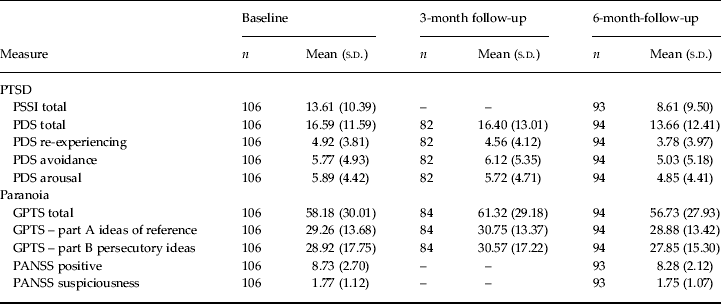
Mean scores on the PTSD measures at each time point are displayed in Table 2. At baseline there was a high correlation between the total scores for the self-report (PDS) and interviewer-rated (PSSI) PTSD assessments (r = 0.89, p < 0.001). Similarly these two measures correlated highly at the final follow-up (r = 0.85, p < 0.001). Both PTSD measures at baseline correlated highly with the measure of PTSD symptoms in virtual reality (PSS: r = 0.64, p < 0.001; PDS: r = 0.64, p < 0.001). Over the 6 months there were significant reductions in self-reported and interviewer-rated PTSD symptoms (PSSI total score: t 92 = 5.76, p < 0.001; PTDS total score: t 93 = 2.48, p = 0.015). At baseline, 35 (33%) people met diagnostic criteria from the SCID interviewer assessment. At the 6-month assessment, 15 (16.0%) met interviewer-rated SCID diagnostic criteria. Over the course of the study, six participants received a psychological intervention and one participant received a pharmacological intervention for PTSD. There was no baseline difference in PTSD scores for the 12 people who provided no 6-month follow-up data compared with the rest of the sample (p = 0.148).
PTSD and paranoia scores
PTSD, Post-traumatic stress disorder; s.d., standard deviation, PSSI, PTSD Symptom Scale; PDS, Posttraumatic Diagnostic Scale; GPTS, Green et al. Paranoid Thoughts Scale; PANSS, Positive and Negative Symptom Scale.
Presence of paranoia
Mean scores on the main paranoia measures are displayed in Table 2. All the paranoia measures were significantly correlated. For example, GPTS – part A ideas of reference correlated highly with GPTS – part B ideas of persecution (r = 0.82, p < 0.001), and the PANSS rating of suspiciousness correlated with the GPTS total score (r = 0.66, p < 0.001). Those individuals who reported paranoid thinking in virtual reality using the SSPS reported higher scores on the paranoia scales. For example, they reported higher GPTS – part A ideas of reference scores (t 79.5 = −3.94, p < 0.001), and higher GPTS – part B persecutory ideas scores (t 77.4 = −4.05, p < 0.001).
At the severe end of paranoia, on the PANSS suspiciousness item at baseline, 12 people (11%) were rated as having moderate or moderate-severe suspiciousness. Using the PSYRATS at baseline, 13 people (12%) held suspicious beliefs with a level of conviction (above 50%) sufficient to be considered delusional. On the visual analogue scales at baseline almost everyone (95%) reported some suspicious thinking, 80% reported feeling more fearful of others than they should, while there was unsurprisingly more fear about men than women (see Supplementary Table S1). This is broadly consistent with the GPTS – part B where 68% of participants endorsed at least one of the persecutory ideation items. This endorsement rate of paranoid thinking is similar to that of a high-paranoia non-clinical sample and higher than the 49% reported for a general population sample (Freeman et al. Reference Freeman, Pugh, Vorontsova, Antley and Slater2010).
Over the 6 months there were no significant reductions in GPTS – part A (ideas of reference) or part B (persecutory thoughts) scores or PANSS total or suspiciousness scores (p > 0.1). There were, however, significant reductions in three out of four of the visual analogue scale scores: ‘I feel suspicious of other people’ (t 93 = 6.85, p < 0.001); ‘I feel more fearful of other people than I should’ (t 93 = 4.04, p < 0.001); ‘I fear fearful of all males’ (t 93 = 3.96, p < 0.001); ‘I feel fearful of all females’ (t 93 = 1.69, p = 0.094). There was no significant difference in baseline GPTS total scores between the 12 people who provided no final follow-up data and the rest of the participants (p = 0.537).
Relationship between paranoia and PTSD measures
There were moderate correlations between the main paranoia and PTSD measures (see Supplementary Table S2). Of the 13 people reporting a delusion using the PSYRATS, 11 also received a PTSD diagnosis using the SCID. The baseline GPTS (32 items), PSSI (17 items), PDS (17 items), visual analogue scales (four items) and the single PANSS suspiciousness item were entered into a principal components analysis. The first four eigenvalues were 27.19, 7.13, 2.65 and 2.23, explaining 43, 11, 4 and 4% of the total variation, respectively. Investigation of the scree plot (not shown) clearly indicated the existence of two main dimensions (jointly explaining 54% of the total variation in the data). The BIC criteria obtained through use of maximum-likelihood factor analysis were 6749.4, 6058.2, 6044.7 and 6136.6 when extracting one, two, three or four factors, respectively. Here the best-fitting model is represented by the smallest BIC. Although the three-factor solution was the optimum, the two-factor solution was very close, and, in combination with examination of the above scree plot, we opted for the simpler two-factor solution. A varimax rotation of the first two principal components was then carried out for ease of interpretation [the two rotated factors here being constrained to be uncorrelated (i.e. independent/orthogonal), with the magnitude of factor loadings as close as possible to either 1 or 0]. Those items found to be loading on factor 1 (accounting for 32% of the original variation) were the GPTS items, the PANSS suspiciousness item, and the VAS scale ‘Since the assault I feel fearful of all females’. Those found to be loading on factor 2 (explaining 22% of the original variation) were the PSSI and PTDS items, and the VAS scales ‘Since the assault I feel suspicious of other people’, ‘Since the assault I feel fearful of all males’ and ‘Since the assault I feel more fearful of other people than I should’. Rotation of the maximum-likelihood factors led to exactly the same conclusions. An identical pattern of loadings was found using a promax rotation (which relaxes the orthogonality/independence constraint – allowing the resulting factors to be correlated) – the variation explained by the two factors being 38% and 32%, respectively, but the correlation between the two promax-rotated factors being 0.53 (i.e. the contributions of the two factors should not be added – there being about 28% of the variation in one being explained by variability in the other). Therefore there were clear but correlated paranoia and PTSD factors, each comprising the main measures, respectively, but three out of four of the visual analogue scales did not load as expected.
Predicting the persistence of paranoia and PTSD
The ability of the individual baseline variables to predict self-reported paranoia and PTSD at the final follow-up assessment is reported in Table 3. There is an extremely consistent pattern of the variables predicting both paranoia and PTSD. Of the 30 baseline variables, 25 significantly predicted both outcome measures. The predictor variables were then assessed again after controlling for the baseline score of the dependent variable (i.e. to assess variable prediction above initial symptom score) (see Supplementary Table S3). Of the variables, 13 predicted paranoia, and 10 predicted PTSD even after controlling for initial symptom levels.
Baseline predictors of 6-month follow-up scores (unadjusted results)
GPTS, Green et al. Paranoid Thoughts Scale; PTSD, post-traumatic stress disorder; PDS, Posttraumatic Diagnostic Scale; s.e., standard error; PSWQ, Penn State Worry Questionnaire; BCSS, Brief Core Schema Scale; CAPS, Cardiff Anomalous Perceptions Scale.
* p < 0.05, ** p < 0.01, *** p < 0.001.
Consistent with the variables predicting both paranoia and PTSD, there was little evidence of differential prediction. Only three out of 30 variables differed significantly in their effects on paranoia and PTSD (p < 0.05) (see Supplementary Table S4): perceived threat to life/physical integrity, characteristics of unwanted memories of the assault and baseline PTSD score. An increase at baseline in all three variables increased the likelihood of paranoia at follow-up but increased to an even greater degree the occurrence of PTSD.
Discussion
This is the first study to examine concurrently paranoia and PTSD in the months after a physical assault. While PTSD after an assault has previously been the focus of investigation, paranoia in reaction to the event has not. We considered it probable that a physical assault would skew judgements about others to the negative and hence provide an ideal testing ground for furthering the understanding of paranoid thinking. The prevalence rates of PTSD at 1 month after the assault were consistent with other studies, as were the reductions over time (e.g. Halligan et al. Reference Halligan, Michael, Clark and Ehlers2003; Kleim & Ehlers, Reference Kleim and Ehlers2008). A new finding was the notably high level of paranoia, including simple self-reports of being overly suspicious. For three reasons it is likely that this level of mistrust is not simply explained by the assessments tapping thoughts about the real perpetrator of the assault: paranoia was equally visible in ideas of reference, which are less likely to be directly related to the assault event; the participants themselves identified exaggerated and generalized fears; and the assessments were validated against an experimental test of paranoid thinking. Though we expected high rates of suspicious thinking, we did not predict there to be so little decline in these thoughts over time. It is conceivable that some of the participants may already have been exhibiting high levels of paranoia before the assault (i.e. there was a selection bias, most likely in who is assaulted); alternatively, the results indicate that assaults have a significant lasting impact on trust. The visual analogue scales certainly indicate that many of the participants believed that the trauma raised their level of suspiciousness. If future studies replicate this finding then routine assessment of paranoia in clinical cases of PTSD may prove to be warranted.
The high prevalence of paranoia and PTSD symptoms in the group provided the opportunity to examine the predictive ability of contemporary psychological models for these problems, and participants were followed over 6 months to assess which variables predicted the course of the disorders. This is the strength of the research design. The results for PTSD replicate and extend previous studies that investigated a subset of these variables (Dunmore et al. Reference Dunmore, Clark and Ehlers2001; Halligan et al. Reference Halligan, Michael, Clark and Ehlers2003; Kleim et al. Reference Kleim, Ehlers and Glucksman2007; Ehring et al. Reference Ehring, Ehlers and Glucksman2008). Cognitive factors related to the assault predicted the persistence of PTSD, consistent with the theoretical model of Ehlers & Clark (Reference Ehlers and Clark2000). Predictors of PTSD symptoms included a reliance on sensory impressions, mental defeat and a greater perceived threat at the time of trauma, suppression of trauma memories, rumination, safety behaviours, and ideas of the self as damaged or at risk after the assault. A failure to contextualize the trauma, negative appraisals of the event, the self and others, and cognitive and behavioural avoidance are plausible factors in maintaining a current sense of threat. Many of these cognitive variables predicted over and above the initial presence of PTSD symptoms.
The new result – and where perhaps there is the most surprise – is the extent to which the same factors predicted levels of paranoia over time. We predicted considerable overlap in the prediction of paranoia and PTSD since both concern perceptions of ongoing threat but also expected a degree of difference. Instead we showed that processing style in relation to the assault and its aftermath was similarly linked to the persistence of paranoia. The cognitive factors identified from PTSD work as resulting in maladaptive responses to trauma may provide a framework to assess negative events in relation to persecutory ideas. It is notable also that being attacked close to home, and by people known to the person, were associated with greater paranoia over time, indicating perhaps the more corrosive nature of attack in places and with people thought previously safe or trustworthy. The close links longitudinally between paranoia, anxiety, worry, depression and insomnia replicate findings in the general population (Freeman et al. Reference Freeman, Stahl, McManus, Meltzer, Brugha, Wiles and Bebbington2012). Although by necessity there was considerable statistical testing in the prediction of levels of paranoia and PTSD, the pattern of findings was very clear.
Levels of paranoia and PTSD were moderately correlated, but the factor analyses indicated that paranoia and PTSD are distinct experiences. Each therefore needs to be explained. This led to our analysis of differential predictors. Even given our expected close connections between PTSD and paranoia, it was quite striking that only two cognitive variables related differently to the experiences. Indeed, given the multiple testing, the probability values obtained, and the absence of a priori prediction for the significant variables, we are probably simply observing type I error. Even initial paranoia scores did not differentially predict levels of later paranoia. Our judgement is that a larger sample size is needed to more rigorously evaluate the potential cognitive differences and hence test the two theoretical models specificity. However, there may also be measurement difficulties, especially for anomalous experiences where the theoretical import resides in the absence of clear conscious awareness, thus limiting self-report assessment. Nonetheless, we did not replicate two studies that showed that anomalous experiences are specific to paranoia, in that such anomalies differentially predicted paranoia from social anxiety (Freeman et al. Reference Freeman, Garety, Bebbington, Slater, Kuipers, Fowler, Green, Jordan, Ray and Dunn2005, Reference Freeman, Gittins, Pugh, Antley, Slater and Dunn2008a). This might be explained by the current study investigating PTSD rather than social anxiety. In PTSD dissociation is common (e.g. Briere et al. Reference Briere, Scott and Weathers2005), and this includes a wide variety of anomalous perceptual experiences (e.g. Sierra et al. Reference Sierra, Baker, Medford and David2005). The central and clear finding is the near absence of detection of factors that differentiate paranoia and PTSD, which is in contrast to the clear pattern of results showing the cognitive variables predicting both experiences.
The study has a number of important limitations. Foremost, due to the study design, it cannot be determined that the assault led to an increase in paranoia. It is likely that this could only be researched in a natural experiment. The visual analogue questions certainly indicated that the majority of the participants viewed the assault as raising their levels of suspiciousness, but this is a retrospective evaluation. In the current study it may have been helpful to have had an earlier assessment of symptom levels and cognitive processing, perhaps in the first few days after the assault. Corroboration of changes in the individuals’ behaviours after the assault, particularly in trust, by those close to the person may have been revealing, and added to the variety of methods employed in the current study. The interpretation of the results is clearly strongest for the longitudinal element of the study. It is notable that the sample studied was a small proportion of those potentially eligible, indicating sampling bias. During the 12 months of the study we recorded the recruitment process in detail, and consider the low recruitment rate to be a reflection of the general difficulties of engaging people after a significant physical assault, which is clearly illustrated by many of the emergency department attendees giving incorrect contact details to the hospital. Nonetheless, the demographic profile of the group and the PTSD results closely mirror those found in past studies (e.g. Kleim et al. 2008), indicating that a typical sample is likely to have been recruited. It is also important to note that a recruitment of a greater number of participants would have enhanced the ability to detect differential predictors. A large number of statistical tests were carried out because this was the first test of the hypotheses and therefore we were most interested in individual scale results. Another valid approach, minimizing the statistical testing, would be to identify a smaller number of clusters of factors and examine their predictive ability. Nonetheless, the overall pattern of results is strikingly clear. A different but strong research design for future studies would be to manipulate the cognitive variables of interest and examine the impact on reactions to an assault (Kendler & Campbell, Reference Kendler and Campbell2009). One way of initially looking at this approach, using existing datasets, would be to see whether psychological treatments for PTSD have also led to a lowering of levels of mistrust, as the results of the study would imply. The study has shown a close proximity between paranoia and PTSD but also left a significant question unanswered: what are the factors determining specifically paranoid rather than PTSD responses to a trauma (and vice versa)?
Supplementary material
For supplementary material accompanying this paper visit http://dx.doi.org/10.1017/S003329171300038X.
Acknowledgements
The study was funded by a Wellcome Trust fellowship awarded to D.F. Some of the clinical time of P.G. and E.K. during the study was funded by the Biomedical Research Centre for Mental Health at the Institute of Psychiatry, King's College London, and the South London and Maudsley NHS Foundation Trust.
Declaration of Interest
None.



 Open access

