


Introduction
Informal caregiving is a large and important part of the UKs social care sector; currently one in 10 (approximately 7 million) people are engaged in informal caregiving and this is projected to increase by 3.4 million by 2030 (CarersTrust, 2017). Informal caregiving can be a mentally and physically burdensome responsibility which, on average, has a negative effect on health (Vitaliano et al., Reference Vitaliano, Zhang and Scanlan2003; Pinquart and Sörensen, Reference Pinquart and Sörensen2007). Regarding psychological health more specifically, informal caregiving has been associated with increased psychiatric morbidity (Yee and Schulz, Reference Yee and Schulz2000), common mental disorders and suicidal thoughts (Stansfeld et al., Reference Stansfeld, Smuk, Onwumere, Clark, Pike, McManus, Harris and Bebbington2014), depression (Schulz et al., Reference Schulz, Visintainer and Williamson1990; Marks et al., Reference Marks, Lambert, Jun and Jieun Song2008) and anxiety (Cooper et al., Reference Cooper, Balamurali and Livingston2007). The health effects of informal caregiving are generally more pronounced in women caregivers than in men caregivers (Yee and Schulz, Reference Yee and Schulz2000; Amirkhanyan and Wolf, Reference Amirkhanyan and Wolf2006; Pinquart and Sörensen, Reference Pinquart and Sörensen2006), and for those providing >10 hours of care per week (Smith et al., Reference Smith, Onwumere, Craig, McManus, Bebbington and Kuipers2014). This is because women are more likely to be primary caregivers, be engaged in more intense caregiving and report higher caregiver burden (Pinquart and Sörensen, Reference Pinquart and Sörensen2006; Arber and Ginn, Reference Arber and Ginn2007).
The association between informal caregiving and poorer psychological health is well recognised, however there has been less longitudinal research exploring patterns of informal caregiving and health over time. Firstly, regarding transitions into caregiving, the ‘adaptation hypothesis’ suggests that the demands of caregiving are greatest upon initiation of the caregiving responsibility (Helson, Reference Helson1964). Indeed, analyses of the British Household Panel Study (BHPS) showed a worsening of psychological distress which was most pronounced shortly following the initiation of caregiving, particularly for caregivers who were engaged in intense caregiving of >20 hours per week (Hirst, Reference Hirst2005). Another study using Health and Retirement Study (HRS) data found an immediate effect of onset of caregiving for an elderly parent followed by a decline in psychological health, but a 2-year lag between the onset of caregiving and physical health decline (Coe and Van Houtven, Reference Coe and Van Houtven2009). We would therefore anticipate the initiation of a caregiving responsibility of any length to be associated with an increase in psychological distress.
The life course approach assumes that caregivers experience change in their health over time (Pearlin, Reference Pearlin2010). For instance, caregiving responsibilities and their associated hardships may gradually accumulate over time, labelled as the ‘unexpected career’ by Aneshensel and colleagues (Reference Aneshensel, Pearlin, Mullan, Zarit and Whitlatch1995) or ‘wear and tear’ by Townsend et al. (Reference Townsend, Noelker, Deimling and Bass1989), resulting in a reduction of the caregiver's resources, health and well-being. Consistent with these hypotheses, previous studies showed that long-term caregiving (typically defined as >2 years) was associated with an increase in depressive symptoms and lower levels of well-being. Barnett (Reference Barnett2015) used the HRS to analyse the association between caregiving for a parent and trajectories of physical (self-rated health) and psychological health (Center for Epidemiologic Studies Depression Scale, CES-D), finding that both physical and psychological health worsened over time. The findings of Barnett's HRS work were supported by Bookwala (Reference Bookwala2009) who showed an increase in depression over time for women caregivers in the US National Survey of Families and Households; however men caregiver's depression trajectories declined over time. Also Rafnsson et al. (Reference Rafnsson, Shankar and Steptoe2017) found that long-term care was associated with a decline in quality of life in the English Longitudinal Study of Ageing. Caregiving stress has also been shown to persistent beyond the end of the caregiving responsibility, particularly when a bereavement has occurred (Aneshensel et al., Reference Aneshensel, Botticello and Yamamoto-Mitani2004; Lee and Gramotnev, Reference Lee and Gramotnev2007). There have not yet been any longitudinal studies which have examined the relationship between the longitudinal patterns of caregiving and trajectories of psychological health.
There are many reasons why informal caregiving might increase psychological distress. Firstly, informal caregiving places strain on personal finances. Carers Trust estimate that 60% of informal caregivers have used all of their personal savings to cover the cost of care and 23% have re-mortgaged their homes or moved to a smaller home (CarersTrust, 2017). Also Stansfeld and colleagues (Reference Stansfeld, Smuk, Onwumere, Clark, Pike, McManus, Harris and Bebbington2014) found in the English Adult Psychiatric Morbidity Survey 2007 that caregivers were more likely to experience debt. The effect of caregiving on finances, might operate through the impact that informal caregiving has the ability to participate in paid employment. Caregiving can be time-consuming and relatively time-inflexible (Hassink and Van den Berg, Reference Hassink and Van den Berg2011). Recent research on the UK's Household Longitudinal Study (UKHLS) showed that women who were providing >10 hours per week of care were 2.6 times (95% confidence interval (CI) 1.5–4.8) more likely to exit part-time or 4.5 times (95% CI 2.5–7.9) more likely to exit full-time paid work, compared with women who were not caregivers (Carr et al., Reference Carr, Murray, Zaninotto, Cadar, Head, Stansfeld and Stafford2016). No such associations were observed for men, again suggesting that the ways in which caregiving impacts on men and women differs. Informal caregiving may also affect psychological health through constraints on the time available to access social networks and leisure activities (Pearlin et al., Reference Pearlin, Mullan, Semple and Skaff1990; Stansfeld et al., Reference Stansfeld, Smuk, Onwumere, Clark, Pike, McManus, Harris and Bebbington2014). Access to social support is known to foster positive psychological well-being (Cohen and Wills, Reference Cohen and Wills1985).
The aim of this study was to assess the longitudinal associations between informal caregiving patterns over time and change in psychological distress in a large, longitudinal study in the UK – UKHLS. Our first hypothesis was that a transition into a caregiving responsibility of any length would be accompanied by increased psychological distress, consistent with the ‘adaptation hypothesis’, whereby the demands of caregiving are greatest at the start of the caregiving responsibility. Secondly, caregivers engaged in intermittent periods of caregiving would report higher levels of psychological distress than those engaged in shorter-term, one-off episodes of caregiving. This is again based on the ‘adaptation hypothesis’ as those undertaking repeated episodes of caregiving are likely to have to adapt to each new episode, where the care recipient and/or the level of care need is likely to vary. Thirdly, those undertaking long-term caregiving would experience the highest level of psychological distress and a worsening of psychological distress over time. This is based on the ‘wear and tear’ hypothesis whereby the burden of informal caregiving accumulates over time. Finally, we hypothesised that the relationship between the caregiving and psychological distress would be stronger for women than men.
Methods
Data
This study used data from the UKHLS, also known as Understanding Society. UKHLS was initiated in 2009 and is a panel study of a large, nationally representative sample of 40 000 UK households (Lynn, Reference Lynn2009). UKHLS has a stratified, clustered, equal probability sample design. The sample supersedes and includes the BHPS, initiated in 1991. All adults 16 years of age and older in each household are interviewed annually. This study uses data from waves 1–7. Retention of the sample is good; 50 138 individuals participated in wave 1 (82% response rate) and 36 559 remained in wave 7 (88% response rate for wave 6, 73% of wave 1 sample) (Boreham et al., Reference Boreham, Boldysevaite and Killpark2012; Carpenter, Reference Carpenter2017).
Measures
Psychological distress
Psychological distress was indicated by the General Health Questionnaire-12 (GHQ-12), a measure of non-specific psychiatric morbidity, which is widely validated and reliable (Hankins, Reference Hankins2008). As part of the adult self-completion questionnaire in waves 1–7, participants were asked to report recent lack of sleep, inability to concentrate, problems in decision making, strain and feeling overwhelmed, amongst other symptoms. Each GHQ-12 item was scored as not at all (0), no more than usual (1), rather more than usual (2) or much more than usual (3). The GHQ-12 was found to perform well in longitudinal samples with no evidence of retest effects (Pevalin, Reference Pevalin2000). A total score was derived for each wave (range 0–36) and kept in continuous form for the analyses.
Informal caregiving
Informal caregivers were identified as participants who answered ‘yes’ to either of the following questions in each of waves 1–7:
‘Is there anyone living with you who is sick, disabled or elderly whom you look after or give special help to (for example, a sick, disabled or elderly relative/husband/wife/friend etc.)?’
‘Do you provide some regular service or help for any sick, disabled or elderly person not living with you?’
In order to assess the longitudinal relationship between the informal caregiving and psychological distress, a longitudinal typology of informal caregiving was derived. This had four categories: ‘not caregiving’ comprised of participants who reported not caregiving in all six waves; ‘one episode 1–2 years’ comprised of participants who reported informal caregiving either at only one wave or at two successive waves; ‘intermittent caregiver’ comprised of participants who reported more than one episode of caregiving and ‘3+ years caregiver’ comprised of participants who had at least one episode of caregiving for ⩾3 successive years.
Our sample was restricted to those who were not informal caregivers at wave 1 to enable us to observe caregivers at the initiation of a caregiving episode as we were unable to assess the duration of caregiving prior to the UKHLS survey (see ‘Sample selection’ section below). Also, as we wanted to investigate change in psychological distress over time; our analyses required at least three time points of GHQ data following caregiving initiation. Therefore, our three caregiving categories detailed above included those who initiated their first caregiving episode between waves 2 and 5.
Covariates
Our covariates were gender, work status (working, not working), marital status (single, married, separated/divorced or widowed), age in years (continuous), the number of own dependent children in the household (0, 1, 2, 3 or 4+ children), highest obtained educational qualification (no qualifications, secondary school leaving level qualification (e.g. General Certificate of Secondary Education (GCSE) or Ordinary-level (O-level)), tertiary level qualification (e.g. Advanced-level (A-level) or Scottish Highers) or higher level qualification (e.g. university degree or professional qualification)) and National Statistics Socio-Economic Classification of current job (management and professional, intermediate, routine or not working).
Statistical methods
Sample selection
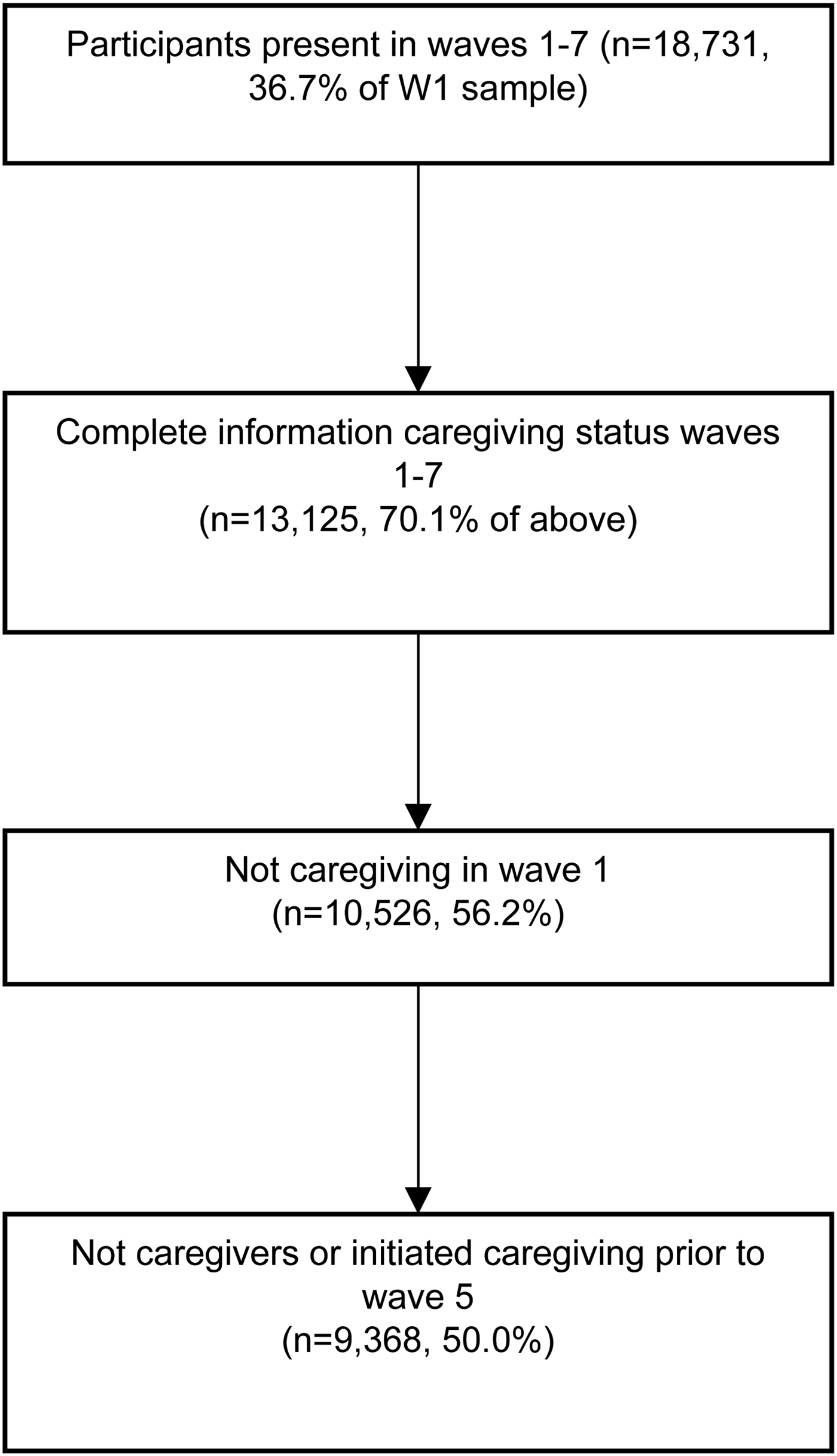
The analytic sample comprised of participants with complete information on all variables in all waves of UKHLS (n = 13 125, see Fig. 1). As described above, to investigate both changes in informal caregiving and psychological distress over time, our analyses were restricted to those who were not informal caregivers at wave 1 (n = 10 526), and subsequently to participants who were never caregivers or who initiated their first caregiving episode prior to wave 6 (n = 9368) to allow for at least three waves of GHQ-12 data from initiation of caregiving onwards.
Sample selection procedure.
Longitudinal linear mixed modelling
To model the association between the longitudinal patterns of informal caregiving and change in GHQ, longitudinal linear mixed models were estimated. The intercept for GHQ-12 in these models was set at the point of first observed caregiving initiation for caregivers and was randomly allocated across waves 2–5 for non-caregivers. This approach was used for non-caregivers in order to be consistent with caregivers, for whom the intercept also varied across waves 2–5 depending upon when their first caregiving episode was initiated. We also didn't want to inadvertently bias our findings for non-caregivers by uniformly placing the intercept at a single wave (e.g. wave 2 for all non-caregivers), as this might be affected by study design factors, such as the position of certain questionnaire items, or potential period effects. All covariates were included from the wave prior to the intercept. A series of longitudinal linear mixed models were run. These included: (i) random intercept and fixed slope models without a slope-squared term; (ii) random intercept and fixed slope models with a slope-squared term; (iii) random intercept and random slope models without a slope-squared term; (iv) random intercept and random slope models with a slope-squared term and (v) random intercept and random slope models including an interaction between caregiving and time. All models were estimated separately for men and women as, based on previous literature, women are more likely to be caregivers and to undertake more onerous caregiving responsibilities (Arber and Ginn, Reference Arber and Ginn2007), women report more symptoms of psychological distress in general population studies and the relationship between the informal caregiving and health is known to be stronger for women compared with men (Pinquart and Sörensen, Reference Pinquart and Sörensen2006). A maximum likelihood algorithm was applied to allow for data from all participants with at least one observed wave of GHQ-12 data to be included in the analyses. 74.9% of our sample had six observed GHQ-12 scores, 15.9% had five, 5.1% had four and 2.6% had three GHQ-12 scores. The high proportion of those with complete GHQ-12 data reflects the fact that, to construct our longitudinal caregiving pattern variable, participants had to have complete information on caregiving, and therefore be present in all waves. Therefore, the figures provided above reflect GHQ-12 item missingness and not wave missingness or attrition. Model fit was assessed by comparing log-likelihood, Akaike Information Criteria and Bayesian Information Criteria values across models, comparing models with the same number of individuals. Only the best fitting nested age-adjusted and covariate-adjusted models are shown. For men, these were age-adjusted and covariate-adjusted random intercept and slope models. For women, these were age-adjusted and covariate-adjusted random intercept and slope models including a slope-squared term. All analyses utilised the survey weights to account for attrition, sampling design and the unequal probability of being sampled. All analyses were conducted using stata version 15 (StataCorp, 2017).
Results
The characteristics of the analytic sample are presented in Table 1. 24.1% of participants were informal caregivers at some point (9.1% were informal caregiving for one short episode, 6.4% were intermittently caregiving and 8.6% were long-term caregivers for ⩾3 consecutive years). All caregiving patterns were more frequently observed in women, with the greatest gender difference in the ‘3+ years caregiver’ category (10.1% women v. 7.0% men). Women reported more symptoms of psychological distress, as indicated by the GHQ-12. Men in the analytic sample were 1.6 years older, on average, than women. There was no gender difference in educational attainment in the analytic sample. Almost a fifth of participants had no educational qualifications but more than a third had higher qualifications. The majority of participants (60.3%) were not living with any of their own dependent children, and this was more common amongst men. Of participants who were living with their own dependent children, most had two or more children (~58% of mothers and fathers). The NS-SEC differed in its prevalence for men and women; men were more likely to be in ‘Management and Professional’ (31.7% men v. 24.9% women) or ‘Routine’ occupations (24.2% men v. 22.6% women), whereas women were more likely to not be working (36.8% women v. 27.4% men). Regarding marital status, men in the analytic sample were more likely to be married and were less likely to be separated, divorced or widowed.
Characteristics of the study sample
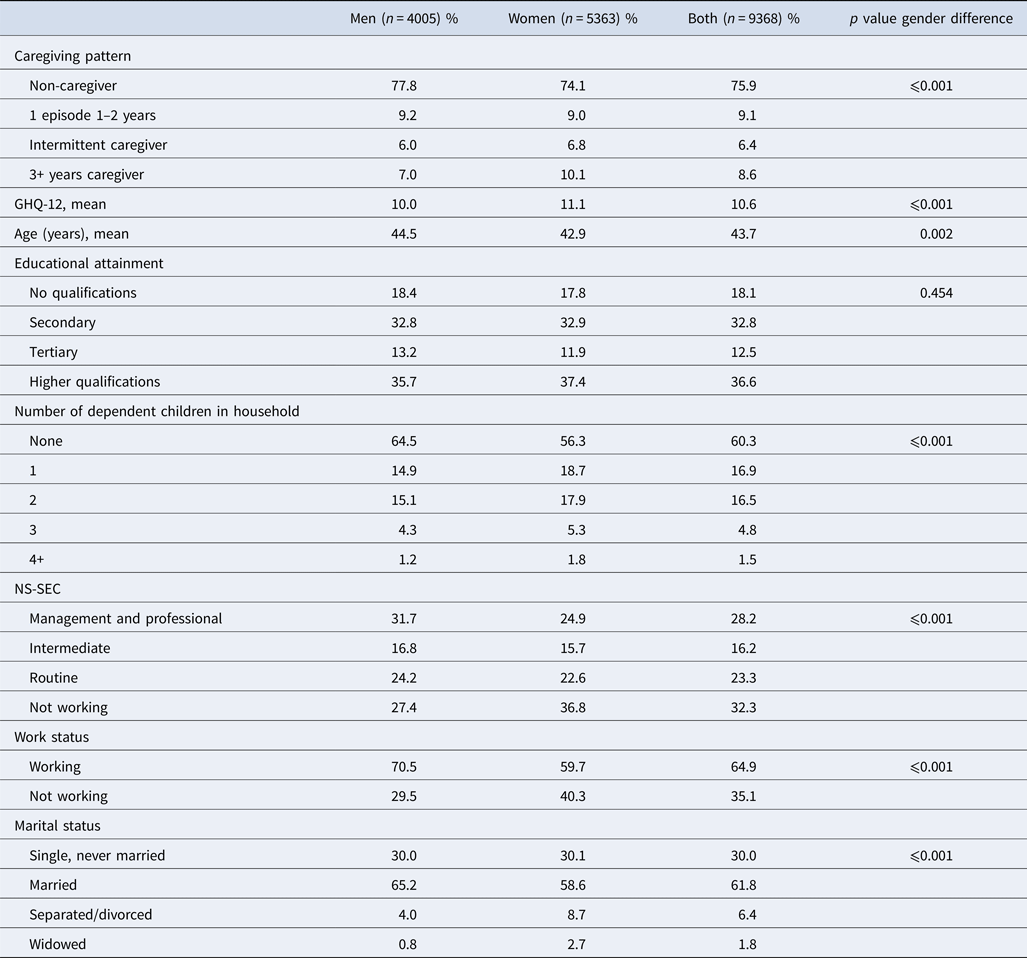
Weighted percentages or means shown.
Further description of the characteristics of participants in each caregiving category is shown in Supplement 1. There was little difference in the mean GHQ-12 scores of men by the caregiving group. However, women in the ‘Intermittent caregiver’ and ‘3+ years caregiver’ groups had higher GHQ-12 scores, on average, than women who were not caregivers or who were engaged in shorter-term caregiving. Men and women who were engaged in caregiving were older than men and women who weren't caregiving. On average, men in the ‘Intermittent caregiver’ group were the oldest, however amongst women those in the ‘3+ years caregiver’ group were the oldest, on average. Men and women who had done caregiving of any duration were less likely to have any educational qualifications. Men in the ‘3+ years caregiver’ group were the least likely to have dependent children in the household. However, women who did a single episode of caregiving were the most likely to have no dependent children living with them. Men and women in the ‘Intermittent caregiver’ group were the most likely to have dependent children in the household. Men who were ‘Intermittent’ or longer-term caregivers were the most likely to not be working and non-caregiving men were the most likely to be in ‘Management or professional’ occupations. A similar pattern was observed for women. Finally, regarding marital status, the ‘Intermittent caregiving’ group contained the largest proportion of married or widowed men, whereas the long-term caregiving women were the most likely to be married.
Association between the caregiving patterns and trajectories of psychological distress
Table 2 shows the results of the random intercept and slope models for UKHLS men. At intercept (point of initiation of first caregiving episode amongst caregivers; randomly assigned amongst non-caregivers), men had a mean GHQ-12 score of 10.75 (95% CI 10.36–11.15), after accounting for age. No differences were observed in the intercept GHQ-12 score by caregiving pattern. Also, there was only a very small observed change in GHQ-12 scores over time in the whole sample (−0.03, 95% CI −0.06 to −0.002) but not by caregiving pattern. There was little change in these findings after additionally adjusting for the number of dependent children, educational attainment, NS-SEC, marital status or work status. Inclusion of a caregiving-time interaction term worsened model fit, indicating that the association between the informal caregiving pattern and GHQ did not change over time.
Association between the caregiving patterns and GHQ over time for UKHLS men (n = 4005)
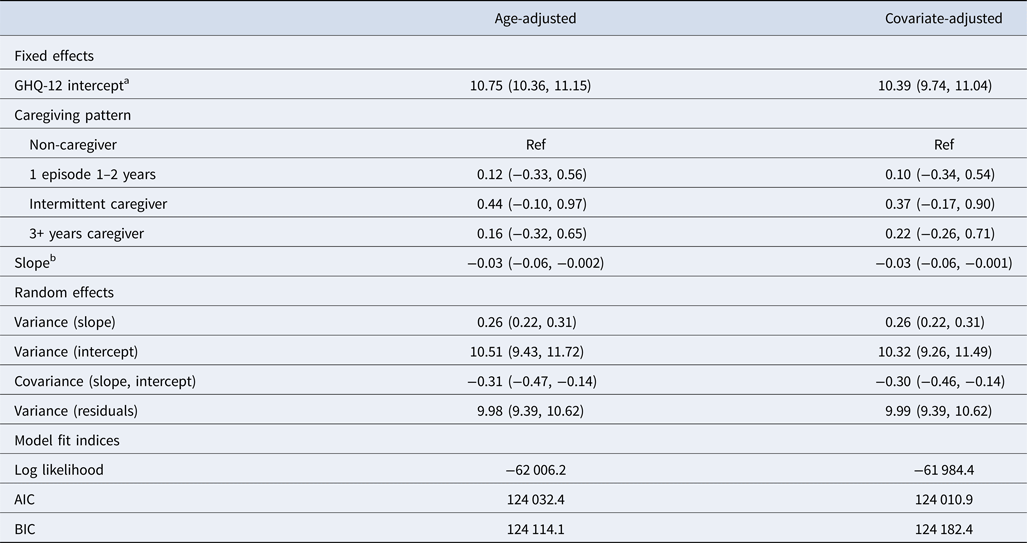
a Intercept set at point of initiation of first caregiving episode or randomly assigned to waves 2–5 for non-caregivers.
b Slope term represents change in GHQ-12 score per wave.
AIC, Akaike Information Criterion; BIC, Bayesian Information Criterion.
For women, the best fitting models were random intercept and slope models including the addition of a time-squared term (Table 3). The GHQ-12 intercept was higher for women (mean GHQ-12 = 12.04, 95% CI 11.64–12.43) than for men. After accounting for age differences, women who were engaged in ‘Intermittent caregiving’ or ‘3+ years caregiving’ had higher GHQ-12 scores upon initiating caregiving (intermittent caregiving: 0.54 higher, 95% CI 0.08–1.00; 3+ years caregiving: 0.46, 95% CI 0.04–0.87). These estimates were largely unchanged following inclusion of other covariates (number of dependent children, educational attainment, NS-SEC, marital and work status), although the intercept coefficient was attenuated (mean GHQ score at intercept: 11.34, 95% CI 10.70–11.98). Also, the slope-squared term representing quadratic change in GHQ-12 was significant for women (−0.01, 95% CI −0.02 to −0.001). Similar to men, the relationship between the informal caregiving pattern and GHQ did not change over time.
Association between the caregiving patterns and GHQ over time for UKHLS women (n = 6113)
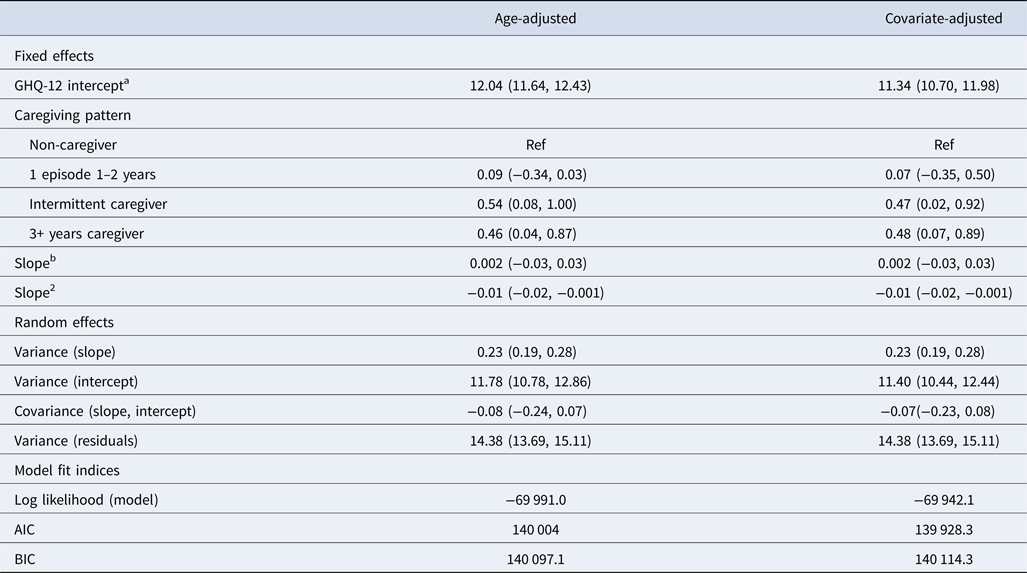
a Intercept set at point of initiation of first caregiving episode or randomly assigned to waves 2–5 for non-caregivers.
b Slope term represents change in GHQ-12 score per wave.
Discussion
Summary of findings
Using a large UK longitudinal study, the UKHLS, we found that around a fifth of participants reported becoming an informal caregiver at some point over the 7-year period studied. Consistent with many previous population studies, GHQ-12 scores were higher for women compared with men. Informal caregiving was more common amongst women and women were also more likely to participate in long-term caregiving than men. We observed no differences in psychological distress for men by different caregiving patterns. However, women who were engaged in long-term caregiving (3+ years) or who were intermittent caregivers reported modestly more symptoms of psychological distress than women non-caregivers at the point at which they first initiated informal caregiving. There was little evidence that after initiating caregiving that trajectories of psychological distress were different from non-caregivers over time, therefore suggesting that levels of psychological distress remained raised for these caregiving women with no evidence of increase or decline over time. The associations observed in this study remained after inclusion of sociodemographic characteristics such as age, educational attainment, the number of dependent children, social class, work and partnership status.
Interpretation of findings
Consistent with much of the literature, women in the UKHLS are more likely than men to be providers of informal care and also to be caregiving over longer periods of time. Previous work has shown that women are more likely to be primary caregivers than men, and also to undertake more onerous caregiving responsibilities, such as caregiving for people with more complex care needs (Pinquart and Sörensen, Reference Pinquart and Sörensen2006; Arber and Ginn, Reference Arber and Ginn2007). As such, women's caregiving responsibilities are likely to require a longer-term commitment and likely to be accompanied by both a greater level of ‘adaptation’ and long-term ‘wear and tear’. Related to this, women caregivers tend to report poorer health than men caregivers (Pinquart and Sörensen, Reference Pinquart and Sörensen2006), and this is consistent with our findings also. In this study, longitudinal patterns of informal caregiving were not associated with psychological distress. This finding was in contrast to Bookwala's (Reference Bookwala2009) study where, on average, informal caregiving men displayed a decrease in depressive symptoms over time. The author purports that there may be gender differences in the psychological response to caregiving; women may be more likely to experience psychological ‘wear and tear’ over time, but men undertaking caregiving responsibilities over a similar length of time are more likely to adapt. However, this is likely to be confounded by the intensity of the caregiving responsibilities and the larger investment in other time-demanding social roles such as parenting. Bookwala's study differs from ours since it is based upon a small US sample of caregivers providing care to parents, whereas our study is based upon a broader nationally representative sample of UK caregivers aged 16 and over.
Women in this study who were long-term or intermittent caregiving reported more symptoms of psychological distress at the wave in which caregiving was first reported. These associations were small in size. In general, longitudinal studies of informal caregiving and health tend to show smaller effect sizes than cross-sectional studies (Vlachantoni et al., Reference Vlachantoni, Evandrou, Falkingham and Robards2013). Our findings for long-term and intermittent caregiving are not consistent with the ‘adaptation hypothesis’ (Helson, Reference Helson1964), as this hypothesis suggests that caregiver's psychological distress returns to pre-caregiving levels in time. In contrast, our findings suggested that psychological distress was higher for long-term and intermittent caregiving women at initiation but then no differences were observed in the slopes suggesting no adaptation in psychological distress over time. Whilst these findings might initially suggest that women in these two informal caregiving groups are more psychologically distressed prior to or at the onset of caregiving, it's also possible that there is a lag between the onset of a caregiving need and self-definition as an informal caregiver. This would particularly be the case for caregivers providing longer-term care needs, for example caring for someone with a degenerative condition. We found no suggestion that trajectories of psychological distress for caregivers changed over time in comparison with non-caregivers for men or women, or were particularly worse for those undertaking the longest periods of caregiving. Our findings in this respect are therefore also not consistent with Townsend's ‘wear and tear’ hypothesis whereby the burden of informal caregiving accumulates over time (Townsend et al., Reference Townsend, Noelker, Deimling and Bass1989). However, our findings are consistent with Lawton et al. (Reference Lawton, Moss, Hoffman and Perkinson2000) who found that caregiving for long periods of time was not associated with a worsening of caregiver well-being. However, our findings are in contrast to a few other studies, including work by Barnett (Reference Barnett2015) in which women in the HRS did not experience a decline in psychological health over time in response to caregiving alone, but the combination of caregiving with other social roles, such as partnerships and paid employment contributed significantly to a decline in psychological health over time. More studies are required which consider the combination of informal caregiving with other social roles, such as paid employment, parenthood and partnerships over time. Further research is also required to investigate potential mediators of the association between the intermittent and long-term caregiving on psychological distress for women, perhaps exploring the role of financial strain and social support (Stansfeld et al., Reference Stansfeld, Smuk, Onwumere, Clark, Pike, McManus, Harris and Bebbington2014).
Strengths and limitations
Whilst we had information on caregiving within and outside the household, this would have been difficult to disentangle over time. Evidence suggests that caregiving for a household member is more stressful and therefore associated with poorer psychological health than caregiving for someone outside of the household (Barrow and Harrison, Reference Barrow and Harrison2005). Secondly, studies of informal caregiving are frequently confounded by the difference between the need for care and care provision. For instance, Amirkhanyan and Wolf (Reference Amirkhanyan and Wolf2006) found that having a parent who required care increased the likelihood of depression, regardless of whether informal care was provided. Similarly Bobinac and colleagues (Reference Bobinac, van Exel, Rutten and Brouwer2010) found that this ‘family effect’ showed an association of a similar magnitude as the ‘caregiving effect’ on well-being. Unfortunately, we were not able to distinguish between the family and caregiving effects using the UKHLS. We were also unable to explore the effects of caregiving intensity in combination with caregiving patterns in this study as this would have required the derivation of an extremely complex typology of longitudinal caregiving patterns, resulting in small cell sizes and consequently low statistical power. A further limitation of our study was the use of complete case analyses. Our analyses included UKHLS participants with complete caregiving data across all seven waves and complete covariate data from the wave at which caregiving was first reported (randomly allocated across waves 2–5 for non-caregivers). As such, our findings are likely to be underestimated as participants who remain in longitudinal studies tend to be healthier and more socially advantaged than those with missing information (Abraham and Russell, Reference Abraham and Russell2004). However, we minimised missing information on GHQ-12 by applying maximum likelihood estimation in the longitudinal linear mixed modelling. This method uses all available information to model change in GHQ-12 over time. Further, the GHQ-12 is not a measure of specific psychiatric diagnoses but a screening tool for non-specific psychiatric morbidity; however our findings are consistent with studies utilising clinically-validated measures. Finally, it is possible that participants had been informal caregivers prior to the initiation of the UKHLS, and this is a potential limitation of any study which uses a general purpose population sample to explore first caregiving transitions. To mitigate this limitation we restricted our analyses to caregivers who were observed as not providing informal care for at least one wave prior to the point we defined as initiation of caregiving.
Despite these limitations, our study also has a number of strengths. These include the use of a large, longitudinal dataset – the UKHLS and therefore the ability to investigate longitudinal patterns in informal caregiving, the first study of this kind. Also, the availability of repeated measures of GHQ-12 enabled the investigation of trajectories in psychological distress over time. Finally, our sample of caregivers were aged 16+ and therefore were not restricted to middle-aged or older caregivers or caregivers to people with specific health conditions, for example Alzheimer's disease, as in many previous studies.
Conclusions
In summary, using a large longitudinal study of UK men and women we found that women engaged in long-term (3+ years) or intermittent caregiving reported slightly higher levels of psychological distress when caregiving was first reported compared with women who were non-caregivers. Psychological distress did not increase over time for informal caregiving men or women. Given the initially increased risk of psychological distress of informal caregivers, particularly women and those undertaking longer-term caregiving responsibilities, the potentially poorer mental health of informal caregivers merits public health promotion efforts.
Supplementary material
The supplementary material for this article can be found at https://doi.org/10.1017/S0033291718002222
Acknowledgements
Understanding Society is an initiative funded by the UKs Economic and Social Research Council and various Government Departments, with scientific leadership by the Institute for Social and Economic Research, University of Essex, and survey delivery by NatCen Social Research and Kantar Public. The research data are distributed by the UK Data Service.
Financial support
This work was supported by the Economic and Social Research Council (grant number ES/N012054/1).
Conflict of interest
None.
Ethical standards
The authors assert that all procedures contributing to this work comply with the ethical standards of the relevant national and institutional committees on human experimentation and with the Helsinki Declaration of 1975, as revised in 2008.


 Open access

