

1992 was the “year of the woman.” Fifty-three women were elected to the United States Congress, twenty-four of them for the first time.Footnote 1 Despite continued progress for women in politics, however, the promise of 1992 remains largely unfulfilled. Today women hold 19 percent of U.S. Congressional seats, 25 percent of statewide executive offices, and 24 percent of state legislative seats.Footnote 2 Under-representation is even more apparent at the highest levels of government. Worldwide, women advanced to key executive offices in a number of countries, including Chile, Germany, Jamaica, Lithuania, and South Korea. In the United States, however, there has never been a female president or vice president, and most scholars agree that there has only been one truly viable female candidate for president: Hillary Clinton.
Women pursuing leadership positions are not simply halted by a glass ceiling, but by a labyrinth of obstacles they must navigate along the way.Footnote 3 These obstacles, both implicit and overt, do not pose concrete barriers, but rather “circuitous routes” toward attaining leadership positions.Footnote 4 Expectations of leadership and institutional arrangements have implications for the types of individuals who run for public office as well as the self-presentational strategies that politically ambitious women use to advance through the labyrinth of leadership. To be successful, they must cultivate an appropriate and effective self-presentation—one that reconciles symbolic attitudes toward gender with masculine prototypes of political leaders. Despite the difference that women make for the political agenda and for the outcome of legislation, women’s minority status in decision-making bodies often results in their conformity to a normative, masculine style of communication, one that restricts the full expression of their ideas.Footnote 5 As the former prime minister of Canada, Kim Campbell, describes it:
I don’t have a traditionally female way of speaking … I’m quite assertive. If I didn’t speak the way I do, I wouldn’t have been seen as a leader. But my way of speaking may have grated on people who were not used to hearing it from a woman. It was the right way for a leader to speak, but it wasn’t the right way for a woman to speak. It goes against type.Footnote 6
Former Press Secretary for the Clinton administration, Dee Dee Myers, captures this conundrum flatly: “If male behavior is the norm, and women are always expected to act like men, we will never be as good at being men as men are.”Footnote 7 The tension confronted by women pursuing power within male-dominated political institutions thus raises several important questions. How do female politicians present themselves as viable leaders given the power imbalances that persist within political institutions? What strategies do they use to navigate through the political labyrinth? Must they talk like men?
1992 also marked Hillary Clinton’s debut onto the national political scene. In the years since, Clinton transitioned from first lady of Arkansas to first lady of the United States to an important politician in her own right, winning election for U.S. Senate in 2000, and again in 2006. She campaigned for president in 2008, served as secretary of state from 2009–2013, and today stands as a frontrunner in the 2016 presidential contest. Clinton is one of the most prominent and well-known politicians alive—nine out of ten Americans recognize her name and have an opinion of her.Footnote 8 Moreover, attitudes toward gender have been projected onto opinions of Clinton throughout much of her public career.Footnote 9 Clinton’s career thus provides a valuable and instructive case for exploring the strategies that women use to achieve power and influence in politics. Her example also raises broader questions about how male-dominated political institutions affect women who aspire to move up the political ladder. Does Clinton talk more “like a man” the more her political power grows?
Language provides a valuable lens for understanding how political life affects the self-presentation of women in politics. By examining Clinton’s linguistic style, this study reveals hidden insight into the strategies Clinton used as she navigated a path toward leadership. Linguistic style does not refer to the content or substance of Clinton’s speech, but rather, to the way she communicates and how she conveys meaningful content. Drawing from research in political psychology, political communication, social psychology, and linguistics, I conceptualize feminine and masculine styles of communication in an original way. I then analyze these gendered linguistic styles in Clinton’s natural language using a quantitative textual analysis of 567 interview and debate transcripts between 1992–2013. In doing so, this study reveals how Clinton’s linguistic style changed over time as she transitioned between roles and climbed up the political ladder. Ultimately I find that Clinton’s linguistic style grew increasingly masculine over time, as her involvement and power in the political world expanded. I argue that changes in her linguistic style reflected the performance of gendered roles, expectations of political leaders, as well as the masculine norms of communication that permeate political institutions.
Gender and Self-Presentation in Politics
The relationship between gender and democracy is well grounded in broader theories of substantive, descriptive, and symbolic representation.Footnote 10 Over the past two decades, a number of studies have examined whether and to what extent women legislators represent women’s substantive concerns. In general, this research suggests that when women are involved in the decision-making process there are substantive differences in the issues discussed on the agenda as well as in the policy outcomes that result.Footnote 11 Despite this, however, women’s substantive interests cannot be advanced simply by increasing the “sheer numbers” of women in public office.Footnote 12 Representation and the advancement of women in society takes place in non-political contexts too—on the boards of multinational companies, in news media, blockbuster films, social movements, and more. The realm of electoral politics is one—albeit crucial—arena where women’s substantive representation occurs, but it is mutually dependent on women’s representation in other areas of civil society. Still, the disproportionate number of women in public office and positions of leadership has implications beyond representation. It has consequences for the salience of gender in politics, the types of individuals who run for public office, as well as the behaviors and decisions that women express in these roles.
Gender Identity and Performance
Drawing from social identity theoryFootnote 13 and self-categorization theory,Footnote 14 much research has been dedicated to understanding how social identities are manifest in a given context and how they influence perceptions of political actors and events. A well-established body of research in political psychology demonstrates that social identities including gender, race, religion, and partisanship fuel group-based attachments, and consequently shape perceptions, attitudes, and judgments of the political world.Footnote 15 However, the availability or salience of a particular social identity largely depends on the context or situation. In the context of an election, for example, partisanship is a highly salient identity that influences the way partisan voters perceive and evaluate candidates. Gender identities are ubiquitous yet they intersect with race, ethnicity, class status, and more in the larger scheme of identity politics. For this reason, important research has begun to address the broader dynamics of intersectionality.Footnote 16 Still, the salience of gender is key to understanding the explicit and implicit assumptions made about who a female politician is and how she should behave. When women are a minority within a group such as in the U.S. Senate and House of Representatives, their identity as women is more salient. Accordingly, as women reach positions of higher power and authority, their gender is increasingly salient. A female chief executive or commander-in-chief defies normal expectations, which heightens the salience of her gender and thereby increases the likelihood that attitudes toward gender will affect how she is perceived and evaluated by others. This is also true for members of other minority groups who have long been marginalized in politics. Attitudes towards race, for example, factor significantly into public evaluations of Barack Obama.Footnote 17 The salience of one’s identity is thus consequential.
Gender is also a performative act and is made more or less salient based on one’s performance. As Judith Butler explains, “we act and walk and speak and talk in ways that consolidate an impression of being a man or being a woman.”Footnote 18 Accordingly, gender is a set of actions learned through cultural socialization, narratives, language, and other performative acts, which conform to or reject societal expectations of gender.Footnote 19 For a female politician, this performance factors into her strategic self-presentation. It is tied to the societal expectations and electoral constraints she perceives as well as the institutional norms of behavior that shape interaction and impact her ability to achieve her goals. In terms of their gendered self-presentation, then, female politicians have two primary audiences—their public constituencies (who they represent) and their (primarily male) colleagues in government with whom they must cooperate to be successful in setting forth their policy agendas and priorities. Therefore, it is important to consider how perceptions of gender and leadership as well as institutional norms of behavior affect the strategic self-presentation of women in politics.
Perceptions of Gender and Political Leadership in Electoral Contexts
Although female candidates raise as much money and are as successful as male candidates, women do not run for public office at nearly the same rate as men.Footnote 20 Certain structural barriers, including professional networks that disproportionately recruit male candidates, reduce the likelihood that women will run for public office.Footnote 21 Perhaps even more importantly, however, are the social and psychological barriers that also limit women’s ambition to run for office. Jennifer Lawless and Richard Fox find that women are less likely than men to express interest in running for public office, to consider themselves “qualified” to run, and to perceive a fair climate in which to run.Footnote 22 The factors that discourage women from pursuing a career in politics also pose obstacles that politically ambitious women must overcome.
Voters have organized cognitive representations, or prototypes, of an ideal political leader and their associated character traits.Footnote 23 These prototypes are often incompatible with ideas about women and their associated traits. Masculine norms of behavior—such as assertiveness—coincide with expectations of leaders, whereas feminine norms of behavior—such as agreeableness—conflict with expectations of leaders.Footnote 24 Kathleen Hall Jamieson describes the Catch-22s that female leaders confront as “double binds.”Footnote 25 Women who enter politics and other leadership positions are faced with the dilemma to prove themselves as both feminine and competent as if the two were mutually exclusive. Women are challenged by competing expectations often played out in the media: if she is not “tough” (like a man), she is not competent enough to lead; if she is “tough” (like a man), she is a “bitch” and disliked for violating expectations of women as warm, sympathetic, and friendly.Footnote 26 Such stereotypes rely on conceptual structures that define normal expectations.Footnote 27 Although “iron lady” was made famous in reference to Margaret Thatcher, the label has been attached to a number of female leaders who do not conform to idealized feminine stereotypes, including German Chancellor Angela Merkel (“iron frau”). This label implies that traits that are valued in leaders— strength, determination, and authority—are uncommon or anomalous in women. Perceptions of leadership are thus highly consequential for female leaders, particularly for those elected into office.
Still, there is no unified consensus on the mechanisms that determine how a candidate’s gender will influence perceptions among the electorate. Female politicians (especially experienced politicians such as Clinton) who aspire toward public office and leadership positions are undoubtedly aware of these competing expectations and recognize the need to navigate double binds. Therefore, they may attempt to present themselves in a way that minimizes the salience of their gender. This idea is supported in prior work on the communication strategies of women running for public office. In debates and candidate ads, female candidates are more likely to identify with stereotypically masculine character traits than their male opponents.Footnote 28 Female candidates who emphasize masculine traits are also more likely to win their races.Footnote 29 However, there is also evidence that female candidates are more successful when they can capitalize on gender stereotypes favorable toward women and women’s issues.Footnote 30 Several studies find voters attribute ideology and partisanship based on a politician’s gender, viewing men as more conservative and women as more liberal.Footnote 31 Other studies find that voters stereotypically associate female candidates with traditional gender traits and abilities and believe they are more competent when dealing with issues related to social welfare, but less competent on issues of crime, defense, and the economy, in which men are assumed to be more competent.Footnote 32 In contrast, in a recent study by Deborah Brooks, survey respondents rated male and female candidates similarly on traits such as competence, empathy, and the ability to handle an international crisis.Footnote 33 In the same study, inexperienced female candidates were rated as stronger, more honest, and more compassionate than inexperienced male candidates.Footnote 34 Although the implications of these studies are mixed, they nevertheless indicate that gender factors significantly into public perceptions of politicians and candidates for office and is thus an important consideration for women’s self-presentation. The work by Brooks, among others, reflects a growing trend toward data-driven approaches to the double bind that, in time, may paint a clearer picture of the obstacles female politicians face. Therefore, in addition to looking toward voters (and self-report measures) to understand how gendered power dynamics manifest in the self-presentation of women in politics, it is also important to consider the institutional, procedural, and implicit pressures that shape interactions within the political arena.
Masculine Norms of Interaction in Institutional Settings
The self-presentation of women in politics is also affected by the institutional procedures, interpersonal interactions, and norms of communication that govern political institutions. In The Silent Sex, Christopher Karpowitz and Tali Mendelberg examine how women’s behavior is impacted by procedural rules as well as the ratio of men to women within deliberative groups.Footnote 35 They find that women have greater influence when collective decisions are bound by unanimous consent, but less influence when decisions are bound by majority rule—the dominant procedure for democratic decision-making.Footnote 36 They also find that when women are minority members, they speak less often, have less influence on the group outcome, and align their speech patterns with the men in the group even when they care about the topic of conversation and have preferences distinct from men (e.g., generosity towards the poor).Footnote 37 The finding that women speak less often, however, is disputed elsewhere.Footnote 38 Together, these findings suggest that norms of interaction and institutional procedures are both consequential for women’s self-presentation. Karpowitz and Mendelberg suggest that elite women, who usually work in highly masculine environments, may be predisposed or socialized in ways that make them more “inclined toward the views and interaction styles that characterize the male central tendency.”Footnote 39 However, they also point to evidence from interviews with female politicians who “believe they cannot get far with the feminine style.”Footnote 40 This latter view is supported by research that suggests when women adhere to feminine styles of conduct and communication, their views are considered subordinate and are often challenged by men in the group.Footnote 41 In a revealing anecdote, Deborah Cameron describes how Margaret Thatcher prepared herself for the United Kingdom’s top post by undergoing a “linguistic makeover,” which required her to lower the pitch of her voice, flatten her accent, and slow her delivery.Footnote 42 To be successful in these institutions, then, women must negotiate their authority among their male colleagues, which tends to result in their conformity to a dominant, masculine style of communication.Footnote 43
Communication in government institutions is often biased toward a masculine style of interaction, which can be seen in assertive, adversarial, hierarchical, and rule-dominated legislative bodies like the U.S. Congress and British Parliament. Regardless of gender, communication styles within these institutions reflect a masculine style.Footnote 44 As minority members, women are perceived (and often perceive themselves) to be “interlopers” and as such, they adjust their behavior according to the norms of the group.Footnote 45 For example, female members of the British Parliament are just as likely as their male colleagues to engage in a competitive and self-assertive style of speaking and even more likely to adhere to the official rules of the chamber.Footnote 46 As interlopers to the political arena, “their linguistic behaviour reflects their understanding that to be judged as ‘good community’ members they must put special effort into displaying their adherence to behavioural norms that carry particular symbolic weight.”Footnote 47 This suggests that institutional norms of behavior and interaction embody and thus reward masculine styles of communication. Instead of defying entrenched norms of behavior, women appear to internalize their social environments, consciously and unconsciously conforming their interaction to align with the established, masculine status quo. Such pressures illustrate the “circuitous routes” women must navigate when pursuing power, influence, and leadership in the political arena.
Do Women Have to Talk Like Men to Be Considered Viable Leaders?
Altogether, research into the self-presentation of female politicians suggests that expectations of leadership as well as institutional arrangements have significant consequences for the communication strategies women adopt. These factors can be summarized briefly. First, gender is a performance and particular notions of how women are “supposed to act” encourage particular types of performances. At the same time, however, particular notions of how leaders are supposed to act encourage different, and sometimes conflicting performances. Simply put, the prototypical political leader looks, acts, and talks like a man and a woman simply does not fit into this prototype. Additionally, norms of behavior and interpersonal interactions within political institutions embody and reward a masculine style of interaction. Women are not only viewed as having less authority, their authority is diminished further when they do not conform to the masculine styles of interaction that permeate political institutions. As interlopers to the political arena, the self-presentation of female politicians thus tends to be more calculated than that of their male colleagues, who, by the virtue of their gender, embody the dominant prototype of a political leader. Rarely do women act “like women” to achieve power and influence in politics. How do these implicit barriers manifest in the gendered self-presentation of politically ambitious women? How do women position themselves for success in male-dominated professions? Do they have to talk like men to be considered viable, competent political leaders? I now consider these questions in the case of Hillary Clinton. Specifically, I explore whether Clinton talked more “like a man” as her involvement and power in the political arena expanded.
Analyzing Gendered Language: A Quantitative Textual Analysis of Hillary Clinton
Inspirational to some and threatening to others, Hillary Clinton espouses strong attitudes regarding the proper place for women in politics. Indeed, attitudes toward gender have long factored into public perceptions of Clinton.Footnote 48 She has operated in overwhelmingly male-dominated environments and has been under considerable public scrutiny throughout. Clinton’s career thus provides a useful case for uncovering how female politicians present themselves as competent and viable political leaders, and how they respond to the dynamic pressures of political life.
Clinton’s debut onto the national political scene brought about much discussion on the role of women in public life not only because she was the wife of the Democratic nominee for president, but also because she was an ambitious and outspoken woman with a successful career of her own. She attended Yale Law School, served as legal counsel to the House Judiciary Committee during the Watergate scandal, became a partner at a prestigious law firm in Arkansas, and served on the board of directors for several high-profile companies, including Wal-Mart. In her own now infamous words she was “not sittin’ here as some little woman standing by my man like Tammy Wynette” nor one who “could have stayed home and baked cookies and had teas.”Footnote 49 Rather, “what I decided to do was to fulfill my profession, which I entered before my husband was in public life.”Footnote 50 Early on, Clinton struggled to negotiate her identity under the national spotlight. Recast as her husband’s surrogate, “the wife of” the Democratic nominee for president, Clinton was asked to justify the life and career choices that she made. Was she an independent career-woman or a supportive wife? Indeed, one of the major media narratives during Bill Clinton’s 1992 campaign was the “Hillary problem” or “Hillary factor.”Footnote 51
When she moved into the White House, Clinton was charged with carrying out the implicit duties of “first lady,” an explicitly gendered role. Although the role is largely symbolic, Robert Watson identifies eleven implicit duties of the first lady, including wife and mother, public figure and celebrity, nation’s social hostess, symbol of the American woman, social advocate and champion of social causes, and political and presidential partner.Footnote 52 Initially, Clinton did not embrace these traditional duties. Instead, she worked to advance policy as chair of the Presidential Health Care Task Force, which heightened perceived violations of her femininity and “appropriate role” as first lady.Footnote 53 Once it was clear that the administration’s health reform policy would not pass Congress, however, Clinton’s policy ambitions took a backseat to the traditional, feminine duties of first lady.
Clinton transitioned from the feminine position of first lady to the masculine role of political candidate. Her role as first lady provided at least one major advantage—name recognition. The downside, however, was that many voters had already developed an impression of Clinton based on her performance as first lady, which complicated her self-presentation as an independent leader capable of representing a powerful state where she had only tenuous residential ties.Footnote 54 Competing against male candidates, she was elected to the Senate in 2000 and re-elected in 2006. The September 11 attacks occurred soon after Clinton took office, and as a senator from New York she faced a state in crisis. In response, Clinton positioned herself as a leader on “masculine” policy areas like national security and military affairs. She served on two committees where she worked on “masculine issues”—Budget and Armed Services—and three committees where she worked on “feminine issues”—Environment and Public Works; Health, Education, Labor, and Pensions; and the Special Committee on Aging. Her work in the Senate increased both her prominence as an experienced and knowledgeable politician and her credibility as a viable presidential candidate in 2008. Although she lost the Democratic nomination, she won the support of nearly 18 million voters, and was subsequently nominated secretary of state by President Obama and confirmed by her Senate colleagues in January 2009. As secretary of state, Clinton was charged with leading the U.S. State Department and executing the President’s—and the nation’s— foreign policy objectives. Again, Clinton entered a male-dominated political arena almost exclusively concerned with “masculine issues” such as foreign affairs, trade, and international and national security. Interestingly, Clinton’s popularity during this time was largely driven by gender egalitarians, indicating that gendered attitudes became more important as Secretary Clinton grew more popular.Footnote 55
Clinton’s increased involvement and power within the male-dominated institutions of the Senate and State Department, suggests that her language became increasingly masculine over time. This expectation is consistent with the broader literature on women in politics, which suggests that female politicians adopt masculine communication styles when it is the dominant style of interaction within the institutions they serve.Footnote 56
In a thorough analysis of Clinton’s 2008 presidential campaign, Regina Lawrence and Melody Rose write that “Clinton more often than not avoided calling attention to her gender and instead focused on demonstrating her policy expertise and toughness (though occasionally with some subtly gendered flourishes).”Footnote 57 Despite the historic nature of her candidacy, Clinton explicitly intended to run as a candidate, not as a woman. During a debate hosted by CNN in July 2007, Clinton was asked how she would respond to critics who say she is not “authentically feminine.” She responded, “Well, I couldn’t run as anything other than a woman … but, obviously, I’m not running because I’m a woman. I’m running because I think I’m the most qualified and experienced person to hit the ground running in January 2009.”Footnote 58 Rather than exposing the question as sexist and irrelevant or acting “ladylike” and expressing herself as authentically feminine, Clinton instead presented herself as an experienced politician with strong leadership abilities. Indeed, she successfully conveyed this image to the public. A survey by Pew in September 2007 found that among Democratic voters 67 percent said Clinton first came to mind when they heard the word “tough,” compared to 14 percent for Obama and 7 percent for Edwards.Footnote 59 Only 22 percent said Clinton came to mind when they heard the word “friendly,” compared to 31 percent for Obama and 28 percent for Edwards.Footnote 60 Clinton’s “likability” among voters was a growing concern among her advisors and from late 2007 into January 2008, Clinton deviated from her dominant, experienced-based and gender neutral strategy and attempted to present herself as a warmer, more feminine candidate.Footnote 61 However, this strategy was short-lived. Once Clinton began to lose key contests to Obama, she returned to an aggressive, masculine strategy.
The literature surrounding Clinton’s 2008 bid overwhelmingly suggests that her self-presentation was highly masculine over the course of her campaign, a strategy that is consistent with the findings from broader research into the self-presentational strategies female candidates use to win.Footnote 62 Consequently, I expect Clinton’s language was particularly masculine during her own campaigns—in 2000, 2006, and 2008.
Feminine and Masculine Linguistic Styles
Language is a key site where gender is routinely performed, and it thus provides a valuable lens for understanding the self-presentational strategies that female politicians use to achieve power and influence in a male-dominated profession. One approach to studying language—content analysis—has been used extensively in political science to identify, for example, the integrative complexity of statements by members of the British House of Commons,Footnote 63 the issues legislators emphasize when communicating with constituents,Footnote 64 the policy positions of political parties over time,Footnote 65 and the differences in communication strategies in mixed-gender political debates.Footnote 66 Despite substantial variation in the conceptualization and measurement of variables, such research typically ignores or altogether removes common style or “function” words (e.g., I, you, the, it, and, from) because—at least on the surface—these words contain little lexical or semantic meaning. However, research in social psychology and linguistics demonstrate that function words do contain value.
Function words—articles, prepositions, pronouns, and auxiliary verbs—shape and connect the content of our thoughts into meaningful forms of communication.Footnote 67 While function words are the most commonly written and spoken words in the English language, they have little semantic meaning by themselves and are often implicit in speech and not always consciously evaluated when speaking.Footnote 68 Linguistic style thus refers to the way an individual communicates and how she conveys meaningful content to others.Footnote 69 Linguistic style can provide insight into a number of psychological and social processes. In prior research, linguistic style has been linked to personality traits, levels of depression, relationship quality, status and social hierarchy, gender, and more.Footnote 70 By analyzing function words, researchers can gain insight into the implicit, micro processes by which individuals weave disparate thoughts into meaningful narratives that organize and shape experience. Therefore, rather than ignoring or removing function words, my analysis focuses heavily on Clinton’s use of function words and investigates her style of speaking.
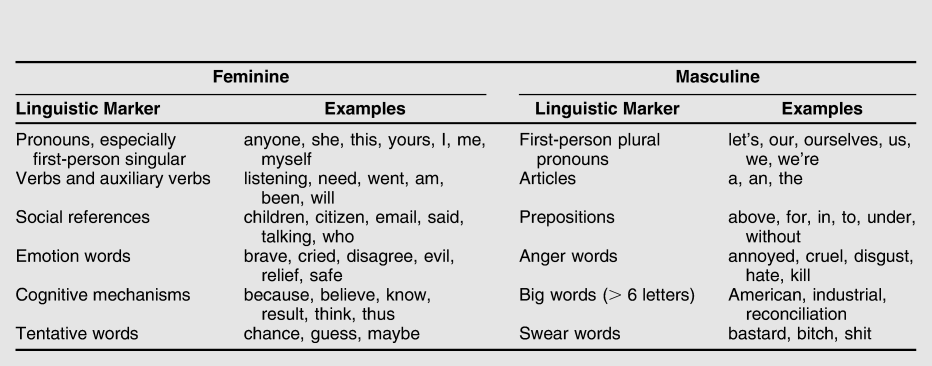
Work by James Pennebaker and colleagues find that language encodes gender in very subtle ways. Reliable and consistent gender differences in linguistic style have been found in studies analyzing tens of thousands of speech samples from both men and women.Footnote 71 In general and on average, women tend to use pronouns (especially first-person singular pronouns), verbs and auxiliary verbs, social, emotional, cognitive, and tentative words more frequently than men.Footnote 72 In general and on average, men tend to use nouns, big words (words greater than six letters), articles, prepositions, anger, and swear words more frequently than women.Footnote 73 Utilizing this insight, I constructed two indices and refer to them as “feminine linguistic style” and “masculine linguistic style,” respectively. Table 1 describes the linguistic markers that comprise these contrasting styles.
Differences in linguistic style between men and women
This appears, at least on the surface, to conceptualize feminine and masculine styles quite differently than previous studies in the politics and gender literature.Footnote 74 In much of this research, the coding schemes for “feminine style” include factors such as using a personal tone, addressing viewers as peers, identifying with the experiences of others, inviting viewer participation, discussing family relationships, inviting the audience to trust their experiences/perceptions in making political judgments, and using personal experiences/anecdotes.Footnote 75 In contrast, coding schemes for “masculine style” often include factors such as using statistics, emphasizing one’s own accomplishments, and referencing expert authorities or sources.Footnote 76
By analyzing function words, which are often discarded or ignored in coding schemes, my approach picks up on less overt, more implicit expressions of gender than is typical of many studies in the politics and gender literature. This study also differs in that codes are well defined. In general, a pronoun is a pronoun regardless of the data source one analyzes. Another notable difference is the inclusion of emotion into feminine and masculine linguistic styles. Emotion has important implications for gendered self-presentation—as recently as 2010, thirty percent of Americans believed that men were better suited emotionally for politics than women.Footnote 77 Consider Clinton’s “emotional response” during a campaign event the day before the New Hampshire primary, when momentarily, her voice waivered and it appeared that she might cry. In an article titled, “Can Hillary Clinton Cry Herself Back to the White House?,” published the day after the primary, Maureen Dowd of the New York Times likens Clinton to “the heroine of a Lifetime movie, a woman in peril who manages to triumph.”Footnote 78 Such depictions serve to reinforce the stereotype that tears and visible emotions are feminine traits and signs of weakness, which can be consequential especially for female leaders. On the other hand, anger is an acceptable emotional expression by men, as it conforms to the expectation that male leaders are aggressive.
My approach also shares some similarity with prior studies. As referenced earlier, common coding schemes in the politics and gender literature suggest that female politicians rely more on personal and social references. Talking about oneself in a personal way and talking to and about other people implies the use of pronouns and social references, both of which are included in the feminine linguistic style. References to external objects like statistics, expert reports, and policy issues tend to rely on the use of articles (object references), prepositions (spatial and temporal hierarchies), and big words, which are similarly included in the masculine linguistic style. Hence, the variables examined in this study (derived from empirical observations by Pennebaker among others) are not as different from prior studies as they may appear.
As a case study, several critical factors are not taken into account, including how partisanship or the interaction between party and genderFootnote 79 might affect Clinton’s linguistic style. Similarly, it is not clear from this study how age, race, ethnicity, education, and socioeconomic background impact the linguistic styles of political leaders. Future research is needed to examine these factors and to explore the linguistic styles of both male and female politicians more systematically. In addition, Clinton has experienced a unique trajectory into politics and, arguably, her career is not a “typical” case. It is, however, an exceptionally important one. Clinton has been a well-known figure in U.S. politics for nearly 25 years, throughout which she has taken on a variety of gendered roles. Very few, if any, women in U.S. politics have come close to reaching the level of prominence that Clinton has achieved and sustained. Her example is a rare and worthy one for studying the strategies female politicians use to navigate a path toward leadership and for building on the limited body of existing research on this topic. Although Clinton’s case cannot be generalized to understand broader trends, my approach offers a promising direction for research into gendered communication styles.
Methods and Data
I investigate Clinton’s linguistic style using an original corpusFootnote 80 of 567 interview and debate transcripts from 1992–2013. All interview transcripts with Hillary Clinton available on the Clinton Presidential Library’s website were included in this analysis and constitute the majority of data analyzed from 1992–1999.Footnote 81 All interview transcripts (including newspaper, magazine, broadcast, and cable TV) and debate transcripts featuring Clinton between 1992–2013 available through archived databases and on the Department of State’s website were also included.Footnote 82 This corpus thus represents a comprehensive collection of interview and debate transcripts featuring Clinton between 1992–2013. I then analyzed the feminine and masculine linguistic markers within these texts using Linguistic Inquiry and Word Count (LIWC), a text analysis program.Footnote 83 LIWC has been used to examine the linguistic patterns of political texts in a number of studies. One, for example, found that candidates running for president and vice president in 2004 used high rates of articles, prepositions, positive emotions, and big words,Footnote 84 markers that are more consistent with a masculine linguistic style. Another study found a low rate of pronouns, social, swear, and emotion words and a high rate of articles and big words in congressional speeches regardless of gender, indicating that a formal, masculine linguistic style is indeed pervasive in the chambers of the U.S. Congress.Footnote 85 Finally, for each transcript I calculated a feminine to masculine ratio by taking the sum of feminine linguistic markers and dividing by the sum of masculine linguistic markers described earlier in table 1.Footnote 86
Linguistic Trends in Context: How Clinton’s Language Reveals a Gendered Self-Presentation
Since 1992, Clinton’s self-presentation has been affected by gendered expectations of her various roles as well as the norms of communication within the institutions she has served. Before turning to a more detailed discussion of Clinton’s language and what it says about her self-presentation within these roles, figure 1 presents a broad overview of Clinton’s feminine/masculine linguistic style and how it changed over time.Footnote 87
Ratio of feminine to masculine styles over time
Note: Figure 1 gives a yearly time series plot of the ratio of feminine to masculine linguistic markers. The dotted lines represent election years in which Clinton actively campaigned for herself (2000, 2006, 2008) or Bill (1992, 1996). The light grey line represents a smoothed generalized linear estimate (with shaded confidence intervals) from the ratio model presented in table 2.
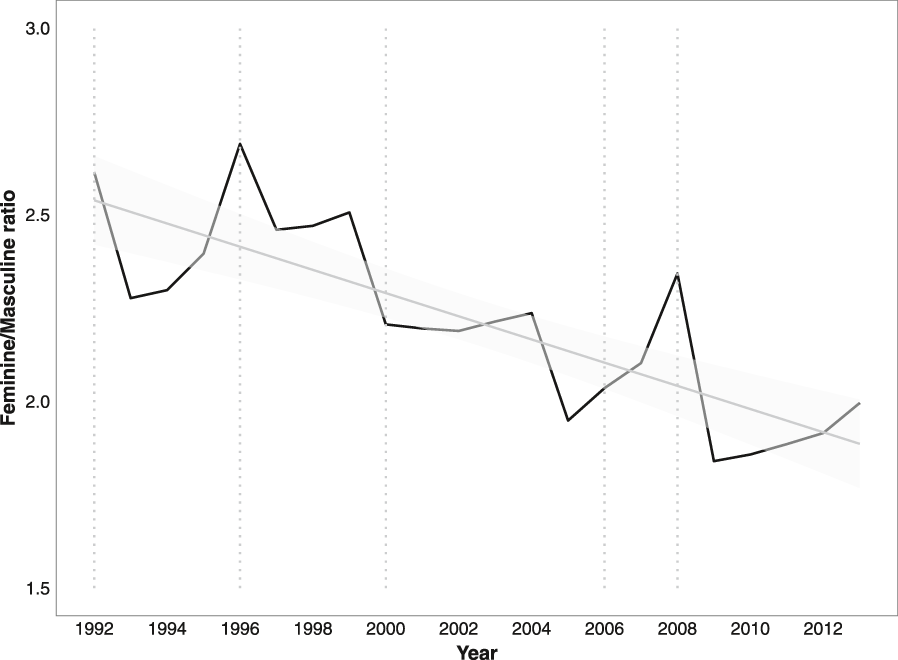
In 1992 and 1996—the years she campaigned for Bill—Clinton used a higher rate of feminine relative to masculine linguistic markers, which is consistent with her expected role as a supportive wife and first lady. The feminine/masculine ratio declined abruptly in 1993–1994, however, indicating that Clinton’s language became more masculine. This coincides with Clinton’s role on the administration’s Health Reform Task Force. As the leading voice for this reform, she was charged with communicating details of the policy and persuading industry and interest group leaders, lawmakers, and the public to support it. The dramatic drop in feminine language during this time (but not in 1995–1999) suggests that Clinton adopted a masculine style of speech in response to the political context, not in response to a sudden change in personality or media strategy. By 1995, when she was no longer charged with pushing the President’s agenda, her language returned to a more feminine style.
Around the launch of her first Senate campaign in 2000, the feminine/masculine ratio sharply declined once again. Clinton maintained this masculine self-presentation throughout her time in the Senate as well as in her 2006 re-election campaign. The findings from her two Senate campaigns, then, are consistent with the expectation that female candidates adopt a masculine self-presentation to look “tough enough” for the job. During her presidential campaign in 2007 and 2008, Clinton’s language was not overwhelmingly masculine, as some scholars have suggested, but it was comparable to the language seen in her 2000 Senate race. To some extent, her linguistic style in 2007–2008 reflects the inconsistent gender strategies promoted by the Clinton campaign, which I will discuss later in more detail. Finally, after she was nominated and confirmed as secretary of state in 2009, Clinton’s linguistic style turned more masculine than at any other point in years prior. Comparing Clinton’s language in 1992–1999 to 2009–2013, I find her language shifted in the expected direction, supporting the expectation that Clinton’s language grew increasingly masculine over time, as her involvement and power in the political world expanded.
The generalized linear models in table 2 provide additional insight into how Clinton’s language changed over time.Footnote 88 The full model shows mixed results for Clinton’s use of feminine linguistic markers over time, measured quarterly each year. Several of the feminine variables—verbs, social, tentative, negative emotion words, and cognitive mechanisms—show a negative relationship with time, but only tentative words are significant at the p < .05 level. Auxiliary verbs and positive emotion words actually increase over time (p < .05). However, looking at the masculine variables, a much clearer relationship emerged over time. Words over six letters (p < .001), first-person plural pronouns (p < .05), articles (p < .1), prepositions (p < .1), and anger words (p < .01) are all positively associated with time. In essence, it is not clear that Clinton’s language was decreasingly feminine, but it is clear that her language was increasingly masculine. One need not come at the expense of the other. Thus in the ratio model, the numerator remains relatively stable, but the denominator becomes larger over time, which explains its negative trend. The feminine/masculine ratio model displays a negative relationship with time and is significant at p < .001.
Generalized linear model results
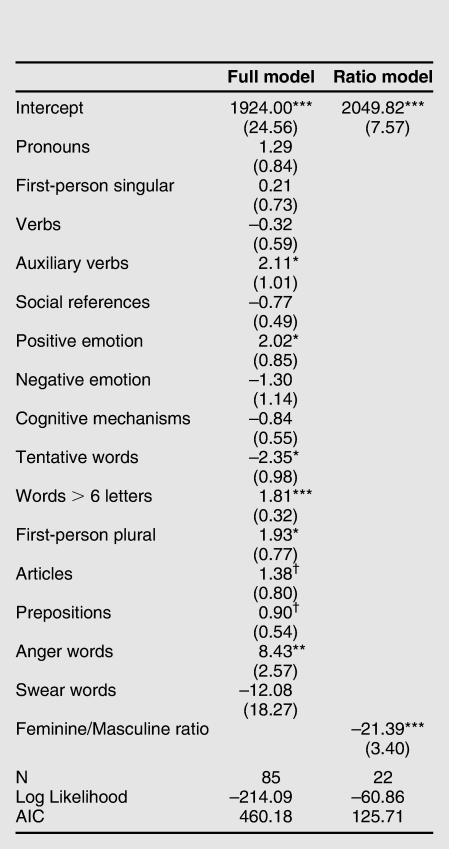
*** p<.001; **p<.01; *p<.05; †p<.1
Standard errors in parentheses. Models are based on time-series data: the full model is a quarterly time series, while the ratio model is a yearly time series.
Table 3 presents the average use of each variable as a percentage of total words (weighted by word count) within five illustrative periods in Clinton’s career—as supportive wife and first lady (1992–1999), candidate for U.S. Senate (2000), senator from New York (2001–2006), Democratic candidate for president (2007–2008), and finally, secretary of state (2009–2013).
Weighted average for all linguistic markers (%)
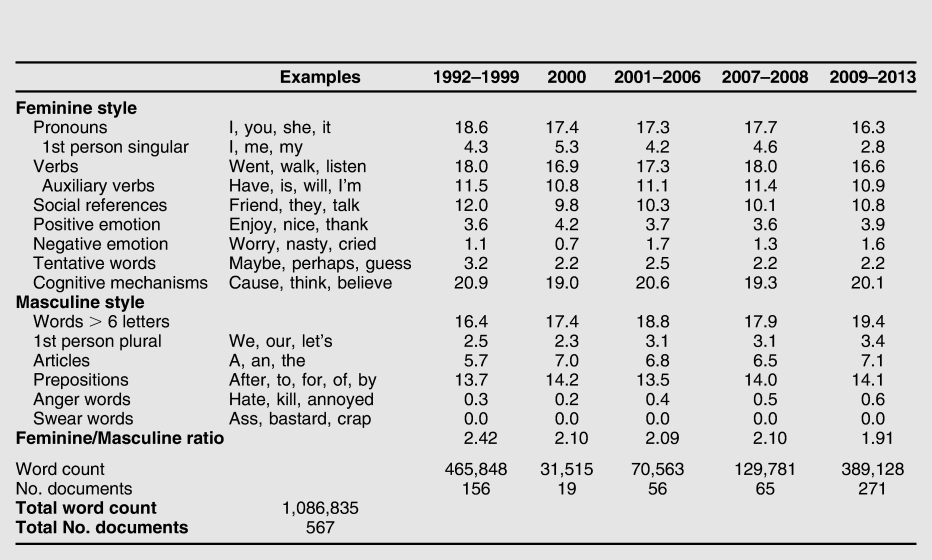
Note: Raw values for each transcript were weighted by word count in calculating yearly averages. Values are expressed as a percentage of total words per year and for multiple years, yearly values were averaged.
Supportive Wife and First Lady (1992–1999)
Clinton’s role on the Health Reform Task Force was increasingly criticized for stepping too far outside the traditional boundaries of the first lady’s “appropriate” sphere of influence on policy matters.Footnote 89 Following the failure of health reform, Clinton tried to “soften” her image to better fulfill her role as first lady and to lessen her perceived liability to the Clinton administration.Footnote 90 Table 3 indicates that on average Clinton’s linguistic style was more feminine during her time as first lady than at any other point in her public career. Her use of tentative words (e.g., almost, probably, kind of, sort of) was particularly high during this time. While this finding suggests that Clinton was relatively uncertain or insecure when discussing topics with journalists, tentative language is also common with individuals who have not fully processed and formed a reliable narrative about an event or topic.Footnote 91 In reviewing transcripts with a high rate of tentative words, I found both factors—uncertainty and lack of a consistent narrative—were at play. She often used tentative words as a buffer against potential criticism or to express cautious certainty when making factual assertions or statements that implicated her husband’s administration.
Clinton for Senate (2000)
The most dramatic and sustained shift in Clinton’s language was in her transition from first lady to Senate candidate. Table 3 reports that the feminine/masculine ratio declines from 2.42 during her time as first lady to 2.10 during her Senate race in 2000 when Clinton campaigned for herself for the first time. Compared to her tenure as first lady, Clinton’s use of feminine linguistic markers declined during her run for Senate. Simultaneously, Clinton’s use of masculine linguistic markers, particularly big words, articles, and prepositions, sharply increased. This explains the sizable drop in the feminine/masculine ratio seen in figure 1 around the year 2000. Table 3 also indicates that Clinton used an unusually high rate of positive emotion words and a correspondingly low rate of negative emotion words during this time. Indeed, this positive self-presentation is apparent when reading these transcripts. Clinton was enthusiastic about the possibility of serving in the Senate and bringing positive changes to New York. This may have been a strategy she used to combat perceptions of her as a carpetbagger and “fire-breathing dragon” among New Yorkers.Footnote 92
During a campaign, it is reasonable to expect a candidate to discuss him or herself more frequently than usual since the purpose of a campaign is to educate voters about their ideology, experience, and policy goals. Indeed, table 3 shows an increase in Clinton’s use of first-person singular pronouns during her 2000 and 2008 campaigns, which indicates that Clinton talked in a personal way about her beliefs, experiences, and plans. Interestingly, pronouns are not only a marker of gender but also of social status. Contrary to a widely held assumption, lower status individuals are more likely to use first-person singular pronouns especially when talking “up” to higher status individuals, who are more likely to talk “down” to “you,” or for the generalized, all-assuming “we,” which politicians are famous for.Footnote 93 After entering the Senate, Clinton spoke for herself and for those she represented, a signal of both masculinity and high status.
Navigating Male-Dominated Institutions as Senator (2001–2006) and Secretary of State (2009–2013)
As senator and secretary of state, Clinton navigated institutions largely dominated by men. Figure 1 illustrates that Clinton’s linguistic style was most masculine during the years she served in the Senate and Department of State. The feminine/masculine ratio declined to 1.91 percent as secretary of state, its lowest point within the timeframe covered in this study. Table 3 shows her use of first-person plural pronouns like “we” increased from 2.3 percent in 2000 to 3.1 percent during her time in the Senate and further increased to 3.4 percent during her time as secretary of state. In these roles, she possessed authority as a representative from New York and later, as leader of the Department of State. Her expanded scope of representation cannot be disentangled from her ascent into increasingly powerful roles, which complicates the analysis of Clinton’s gendered self-presentation. Both factors likely contributed to her marked increase in first-person plural pronouns. However, we can be reassured that her language was increasingly masculine by considering her use of other masculine linguistic markers during this time. Seen in table 3, as senator and secretary of state, Clinton’s use of big words also increased markedly when compared to the years she spent as first lady and as a candidate. Moreover, Clinton used more articles and fewer pronouns during her time in the Senate and State Department. Articles and pronouns tend to be interchangeable in syntactic structure,Footnote 94 which suggests that she increasingly replaced pronouns with articles. She also increasingly expressed anger while in these roles. Together, these findings suggest that Clinton’s linguistic style was more masculine during the years she served in these institutions.
As senator and secretary of state, Clinton’s self-presentation was constrained by the masculine norms of behavior and interaction within these institutions. Her self-presentation was not only directed toward her public constituencies, but also toward her primarily male colleagues. This latter point is particularly important for Clinton because in both roles she presented herself as a leader on traditionally masculine issues such as foreign affairs, international trade, and national security. Given that the Senate and State Department are male-dominated institutions, Clinton may have conformed to the masculine norms of communication within these institutions to establish credibility among her colleagues as well as to negotiate her authority and position herself as a leader. Changes in her linguistic style do not simply reflect changes in the content she was communicating, but in the way she communicated, and in the subtle social signals she expressed. Bear in mind, this study only analyzes transcripts from natural language sources—interviews and debates—not speeches or other formal addresses. Therefore, her language became more masculine even in conversations outside the formal boundaries and constraints of the institutions she served. These findings thus suggest that she internalized the masculine norms of communication she practiced within these roles.
Clinton for President (2007–2008)
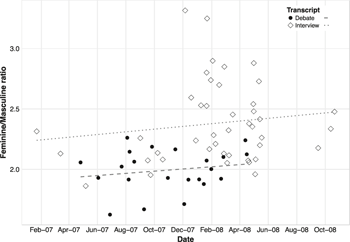
Clinton launched her first presidential campaign in January 2007 and was considered the frontrunner for the Democratic nomination during much of that year. She maintained a relatively “gender neutral” strategy, “though occasionally with some subtly gendered flourishes.”Footnote 95 Still, Clinton’s campaign advisors disagreed on Clinton’s self-presentation particularly when it came to her gender strategy.Footnote 96 As seen in table 3, Clinton used a lower rate of positive emotion and a higher rate of both negative emotion and anger-related words in her presidential campaign than she did during her Senate campaign in 2000. This may reflect her emphasis on proving herself as qualified and competent on issues of national security, a strategy she often used to differentiate herself from Obama. She also used a higher rate of verbs and auxiliary verbs in 2007–2008. A high rate of verbs indicates that Clinton adopted a more dynamic style of speaking, focusing on how topics and events change, while a high rate of auxiliary verbs (e.g., is, do, was) indicates that Clinton used a more passive style of speaking.Footnote 97 It is also important to note that Clinton’s language in 2007–2008 was comparable to that found in her campaign for Senate in 2000. Seen in table 3, the combined feminine/masculine ratio in 2007–2008 was the same for her 2000 Senate campaign—2.10. Yet figure 1 displays an intriguing spike in the ratio at the end of 2007 into the start of 2008, which indicates an abrupt change toward a more feminine linguistic style. To better understand Clinton’s linguistic style over the course of the campaign, figure 2 displays the feminine/masculine ratio for Clinton’s interviews and debates in 2007 and 2008.
Ratio of feminine to masculine styles for all interviews and debates in 2007–2008

Figure 2 reveals that for most of 2007, Clinton’s language in debates and interviews was more masculine than at other points in her campaign. Her debate performances in particular indicate an overwhelmingly masculine strategy. In late 2007, however, Clinton’s language became more feminine in interviews. Interestingly, around the same time Clinton’s advisors expressed concern about Clinton’s favorability with voters. Consequently, from late 2007 into January 2008 Clinton momentarily deviated from her dominant, masculine strategy and presented herself as a warmer, more feminine candidate to voters.Footnote 98 Figure 2 supports this analysis. This momentary shift in strategy marks an interesting point of disruption in her otherwise steady self-presentation up to that point in time.
After Super Tuesday, February 5, Obama had accumulated a sizable advantage over Clinton, and the Clinton campaign responded with an aggressive messaging campaign attacking Obama, what Lawrence and Rose describe as a “testosterone blitzkrieg.”Footnote 99 This masculinized messaging proved successful in Texas and Ohio, which encouraged Clinton to maintain this strategy in subsequent state contests.Footnote 100 Figure 2 does not reflect this strategy, however. Figure 2 shows Clinton’s language became more feminine starting in late 2007, but it does not indicate a noticeable shift toward a more masculine style after January 2008. As figure 2 illustrates, Clinton’s linguistic style was scattered and fluctuated much more dramatically from one interview to the next throughout the 2008 campaign period, which ended once Clinton conceded the race to Obama in June. This volatility in Clinton’s linguistic style may reflect a candidate—and campaign—in crisis without a clear strategy on her self-presentation as a female candidate for president. It is also possible that internal disagreements and confusion over Clinton’s gendered self-presentation seeped into her linguistic behavior.
Conclusion: Power Speaks with a Masculine Voice
The self-presentation of female politicians is affected by the salience of their gender, perceptions and expectations of leaders, and their interpersonal interactions within professional and institutional contexts. These complex dynamics reinforce certain behavioral norms and expectations over time, yet are often hidden from view. This study reveals how these forces manifest in Hillary Clinton’s self-presentation by tracking her subtle linguistic behavior over time. Overall, my findings show that when Clinton occupied a political office or took on a major policy initiative (as in 1993–1994), her language conformed to a masculine style. Indeed, Clinton’s language grew increasingly masculine over time, as her involvement and power in politics expanded. This result supports prior research suggesting that women adopt masculine communication styles when seeking influence in male-dominated settings.Footnote 101
Clinton’s linguistic style changed according to the gendered expectations of the roles she performed as well as the masculine norms of communication within the institutions she served. These findings can be summarized succinctly. In 1992 and 1996, Clinton’s linguistic style was consistent with her expected performance as the wife of a presidential nominee. When she led the administration’s health reform policy in 1993–1994 however, Clinton’s linguistic style changed in response to the political environment, reflecting the masculine norms of communication that dominate the policymaking arena. After 1994, Clinton performed more traditional duties of the first lady and her language followed suit, turning more feminine. As a candidate for Senate, her language shifted toward a masculine style, a performance she sustained throughout her time in Congress. As a candidate for president in 2007–2008, Clinton’s self-presentation was largely driven by the advice of her campaign strategists. She maintained a masculine style until late 2007 and early 2008, when she tried to “soften” her image and improve her likability among voters by presenting herself in a way that was more akin to the expectations of her gender. Throughout the 2008 campaign period, Clinton’s language fluctuated dramatically from one interview to the next, reflecting a candidate—and campaign—in crisis, lacking a clear and consistent self-presentational strategy. As secretary of state, her linguistic style again conformed to the masculine expectations of her position.
Clinton’s career testifies to the labyrinth that women—and members of any marginalized group, long kept out of power—confront when striving toward politically powerful positions. Clinton is not alone in this respect. German Chancellor Angela Merkel, Argentinian President Cristina Fernandez de Kirchner, Brazilian President Dilma Rousseff, South Korean President Park Geun-hye, and many others must also navigate the realities of politics as a male-dominated profession. Like Clinton, they confront widespread gender attitudes that monitor and evaluate their self-presentation to great consequence. They too have faced the dilemma of presenting themselves as both competent and likable, and arguably, have been more successful than Clinton. While other female politicians may encounter similar experiences, Clinton’s trajectory into politics is unique. She is “a very exceptional woman with an idiosyncratic background as a former first lady.”Footnote 102 Only by analyzing language from a wider sample of both male and female political leaders can we can discern whether Clinton’s increasing masculinity is a representative or deviant trend. Future research, particularly in the comparative tradition, could provide valuable insight into how women’s linguistic behavior differs as their minority status, and thus the salience of their gender, lessens.
Language provides a wealth of insight into the ways women compete for power in a male-dominated society. As this research demonstrates, linguistic style reveals insight beyond the content we intend to communicate. It reveals the subtle social signals that we communicate to and receive from others and thus reflects our sense of identity, our self-perception, and our perceptions of others. Consequently, the way we speak links tightly to our gender identity and to the political climates that surround us. Since the prototypical leader looks, acts, and talks like a man, women aspiring toward leadership positions may present themselves in ways that conform to the dominant masculine prototype. Moreover, since women occupy a distinct minority status within most political institutions, as interlopers, they may be particularly perceptive to the behavioral and linguistic cues communicated by others and more likely to adapt to these norms of communication as did Clinton during her time in the Senate and Department of State. Such pressures reflect the “circuitous routes” women must navigate in the labyrinth toward leadership.Footnote 103 These practices may, in turn, reproduce styles of communication that reinforce gendered divisions of power and authority. Still, while language is an important form of communication, body language, facial expressions, tone of voice, and other non-linguistic forms of communication also serve as powerful social signals and more research is needed to understand how they relate to women’s self-presentation.
What does this research suggest for the trajectory of Clinton’s 2016 presidential campaign? At the time of writing the general election remains far in the future, but Clinton already appears to be pursuing a different campaign strategy. Attesting to the relevance of the variables used in this study, Jonathan Martin from the New York Times compared Clinton’s use of “I” in her 2007 campaign announcement and “you” in her 2015 announcement: “when she used a video message to enter the democratic presidential race in early 2007, she sat alone on a couch, used some variation of ‘I’ 11 times and proclaimed an uninspired theme: ‘I’m in it to win it.’ This time, she … emphasized ‘your vote’ and ‘your time.’” Footnote 104
Beginning with Freud, psychologists have taught us that choice of words—even pronouns—constitutes important signals about what people are paying attention to.Footnote 105 Clinton’s frequent use of first-person singular pronouns in her 2007 announcement indicate a woman who was self-focused, self-conscious, and thinking about herself. In her 2015 announcement, however, Clinton was focused not on herself, but on “you,” the voter. In this way, Clinton subtly signaled her self-confidence and authority. This reflects a potentially significant change in her self-presentation—from a self-conscious candidate who emphasized her own desire for power to a confident one who emphasizes concern for others, for “you.”
As this anecdote demonstrates, Clinton’s self-presentation is unequivocally strategic; however, the way I measure her self-presentation picks up on less overt, and more implicit expressions of gender than prior research into this topic. As a result, this study adds a deeper understanding of the strategies women use to successfully navigate a path toward leadership in a profession dominated by men. My findings are based on a computational analysis over a large corpus of text (567 documents with 1,086,835 total words) sampled over a twenty-two-year timeframe, which provides statistical leverage as well as the ability to make relative comparisons. It is a data-driven approach into the double-bind dilemma, which offers a promising direction for future work on gendered communication in political science and in the social sciences broadly. Nevertheless, this study relies on the single case of Hillary Clinton and my findings cannot be generalized to the broader realm of women in politics. Future work that expands this study to more systematically investigate the linguistic styles of both male and female politicians and how they change over time and in response to different political contexts will provide the comparisons and controls necessary to isolate the effect of gender on linguistic style.
For politically ambitious women like Clinton, self-presentation is consequential and thereby strategic. Gender encourages a particular type of self-presentation, yet for female politicians the prototypes of political leaders encourage a different—and sometimes conflicting—self-presentation. I find that these performances play out within even the shortest and most forgettable words we speak. This has important implications for the strategies women use to navigate a path toward leadership and offers valuable insight for future research. To that end, this study contributes an original approach to studying gender in political communication, one that unveils some of the more complex and subtle mechanisms that undermine women’s representation and authority in politics. Such research contributes to the challenging and extraordinarily important task of uncovering the power of identity in politics.
Supplementary Materials
Replication data
R code to generate analysis
Description of procedures for preparing the text
Original transcripts
Transcript metadata
Explanatory File