




In 1961, an article in the daily newspaper in Vancouver, Washington, celebrated the five-year anniversary of the nearby Larch Mountain penal forestry camp. Located at the heart of the Yacolt Burn, a 100,000-acre area devastated by fire in the summer of 1902, Larch Mountain camp had bleak beginnings for the first incarcerated men who were transferred there from the state penitentiary. Arriving in the dead of winter, they found a snow-covered set of buildings providing only the barest necessities. Yet, as the author of the article noted, much of the initial “desolation” had been “conquered by the men themselves.” They had removed brush and snags, planted shrubbery, created roads, and even built a chapel in their “free” time.Footnote 1 By 1961, the camp was still “rustic” but, according to prison administrators, it was fulfilling its essential mission, which was to “rehabilitate forests as well as men.”Footnote 2 That success could be measured in precise figures; in five years, the men at Larch Mountain had reforested 941 acres of land and completed twenty-six miles of fire line road across the forest, among other achievements. In the discourse of administrators and newsmen, the moral rehabilitation of incarcerated men was equated with physically hard work in the forest. In this, Larch Mountain camp was no exception. It was, rather, part of a broader trend in postwar U.S. punishment practices and philosophy.
In the years between the end of World War II and the mid-1970s, prison officials and criminologists overwhelmingly subscribed to the rehabilitative ideal. The idea of reforming incarcerated people in prisons was as old as the invention of the penitentiary itself, but, starting in the late nineteenth century, some prison experts came to use a medical framework to depict the objectives and methods of penal institutions.Footnote 3 By the postwar period, this discourse had, in David Garland’s words, become the “hegemonic, organizing principle” of the penal system for prison officials, justifying the development of programs that purportedly aimed at “curing” incarcerated men and women of their criminality by emphasizing individual treatment in institutional classification, programs, and sentencing.Footnote 4 In recent years, historians have shown how the rehabilitation framework fell apart, giving way to penological policies focused on incapacitation in the era of mass incarceration. They have also shown that the rehabilitation ideal was used to stymie political organizing and to justify oppressive patterns of medical intervention through coerced sterilizations and behavior modification programs, and they have sought to recover the agency of incarcerated people as they navigated these “rehabilitative” institutions.Footnote 5
Since the start of the post-rehabilitation era in the mid-1970s, it has sometimes become difficult to grasp the features that made this ideology effective in the first place. Chief among them was the fact that many of these “rehabilitative” programs emphasized the therapeutic value of work, either through vocational training or employment, within carceral institutions.Footnote 6 This therapeutic vision of work is also related to uses of labor in medical settings. The concept of “rehabilitation” had been widely used in the post-World War I context when discussing the need to return injured soldiers to “productive” civilian life, including through vocational programs.Footnote 7 More generally, “occupational therapy” had long been part of the treatment offered in hospitals, especially for patients suffering from mental illness, and work programs assumed a critical importance in asylums. Work was both pragmatically necessary for the running of asylums and depicted as a therapeutic program by medical professionals.Footnote 8 In the rehabilitation era, this would also be true of work in prisons.Footnote 9 Making incarcerated people work enabled penal institutions to function, by keeping maintenance costs to a minimum, and by reducing what authorities perceived as disciplinary problems. At the same time, it was an essential mechanism through which penologists believed they could make rehabilitation work, a “therapy” in its own right.Footnote 10 Work was simultaneously an agent of health, moralization, and control.
Nowhere was this clearer than in the penal forestry programs that were developed in the postwar years. Inspired by the success of New Deal era experiments by the Civilian Conservation Corps (CCC) in reshaping male bodies and psyches in the forest, those praising penal forestry programs suggested that forestry work created not only healthy bodies but also healthy behavior, making incarcerated people fit to return to free society.Footnote 11 As historian Volker Janssen has shown in the case of California, incarcerated forestry workers were conceptualized as “citizen-soldiers,” whose sacrifice for the public good was associated with redemption and the recovery of “manly citizenship.” Janssen has also excavated the racial and political implications of locating forestry camps in predominantly white rural areas: although the urban crisis may have seemed far away from the forests, forestry camps created a connection between the Sierra mountains and the inner cities from which many incarcerated people originated; they became part of a “transurban ghetto” that fueled urban decline.Footnote 12
This article builds on these insights and adds to the conversation in three ways. By grounding the discussion in national debates about prison labor and rehabilitation, and by choosing different case studies (Washington state and the federal system), this analysis demonstrates that penal forestry was not solely a California project, but one that was rooted in the larger U.S. penal and political context of the mid-twentieth century, thereby transcending local or regional particularities. In addition, this paper focuses not on the networks of inequality and decline that outdoor labor programs have contributed to entrenching, but on the reasons why the state embarked on this course in the first place. Put simply, I attempt to uncover how forestry camps turned incarcerated bodies into a material and ideological resource for the state. Materially, incarcerated people fulfilled manpower needs in the forest (another public resource); ideologically, officials’ association of that labor with the concept of healthfulness served to promote the rehabilitation ideal. Thus, forestry camps in the rehabilitation era stand in contrast to representations of incarcerated people as a “warehoused” population benefiting ailing local economies only insofar as the carceral system creates jobs for free people.Footnote 13
Finally, this article seeks to explore the connection between the work of incarcerated people in the forests, and the ability of free citizens to access healthy outdoor leisure. Although leisure is usually imagined (and sold) as the antithesis of work, work sustains its existence.Footnote 14 In this case, part of the benefits yielded by the labor of incarcerated people consisted in enabling others to take advantage of the forests’ recreational potentialities. Penal forestry provided material amenities to visitors, while also paradoxically intensifying fears of crime and destruction. Incarcerated bodies were perceived as both an essential resource and a potential pollution of natural spaces.
Forestry camps were rooted in intertwined conceptions of nature, health, and morals. Ever since the early nineteenth century, parks and the open air have been associated with health and contrasted with the “miasmas” of crowded urban landscapes.Footnote 15 Landscape designers like Frederick Olmsted had also promoted parks as leisure spaces that would discipline the “lawless classes of the city.”Footnote 16 Yet, it was not enough for prisoners to enjoy the fresh air passively to be rehabilitated. Instead, echoing Theodore Roosevelt’s praise of the “strenuous life” in the open air, and following the example of CCC participants, prisoners had to perform hard physical labor in the forest.Footnote 17 That work would be productive for society at the same time as it theoretically remade them into honest citizens; in forestry camps, incarcerated people were both the patients being cured, and the agents helping to maintain the health of forests and nearby communities. Forestry programs were simultaneously “re-directing twisted lives and re-foresting wasted lands.”Footnote 18
This fusion of these two objectives—the rehabilitation of men and the rehabilitation of forests—was not an accident. Forests and prisons were two places where officials invested state power with a view to ensuring health. Concerns about the health of forests, and their ability to serve human needs through resource extraction or otherwise, represented the key rationales behind the takeover of forests by the state.Footnote 19 Meanwhile, in carceral institutions, health considerations were deeply intertwined with the transformation of incarcerated people into productive citizens, while idleness was seen as morally and physically crippling. In its management of both prisoners and forests, the state sought to avoid the “waste” of resources it had claimed to care for, administer, and improve. Relatedly, forestry programs can be seen as another iteration of what geographer Ruth Wilson Gilmore has described as “partial geographical solutions to political-economic crises.”Footnote 20 Exporting prison labor to the forest was a way of responding both to the problems of penitentiaries and to the chronic failure of the state to adequately finance the management of publicly-owned natural spaces. In the process, forests became both an exploitable site of “healthy” leisure for free citizens and an annex of the U.S. carceral archipelago.
Yet, as I show below, the deceptively natural connection between the rehabilitation of men and that of forests became more complicated on the ground. Though the penological discourse tends to picture rehabilitation as a unidirectional process where well-thought-out programs succeeded in transforming convicted people, the material reality of forestry programs suggests a circulation that defies the boundaries of the penal apparatus. Substituting trees for prison bars meant sending incarcerated people to an environment that prison administrators could not entirely control, and the constraints faced by participants did not only belong to the penal system but also to the natural world. Despite glowing depictions of “healthy work,” the bodies of incarcerated people were sometimes put at risk in these camps, especially, but not exclusively, when fighting fires. Forestry camps were also isolated and isolating, far away from loved ones and communities. The corporeal and material reality of forestry camps nuances the therapeutic rhetoric that was used to justify their existence.
The attempt to recover these lived experiences draws inspiration from the work of historians who have sought to make sense of material and corporeal carceral realities beyond the discourse of prison officials.Footnote 21 Putting the body at the heart of the analysis of forestry programs allows us to grasp the concrete ways in which the “rehabilitative ideal” affected incarcerated people. It also helps us see the material connections that were created by the labor of incarcerated people beyond the penal sphere, thus building on the work of historians who have underlined the need for environmental histories of incarceration.Footnote 22 Whether or not working in the woods rehabilitated incarcerated workers, they rehabilitated the land, and their physical labor created infrastructure that enabled free citizens to experience healthy exercise outdoors. With outdoor labor programs such as forestry, the notion that penal labor happens behind an impenetrable prison wall, in a space that has nothing to do with free citizens, is revealed to be a fiction.
The Fear of Idleness and the Rise of Penal Forestry in the Arsenal of Rehabilitation
The roots of penal forestry camps lay largely in the upheavals of the interwar years. Throughout the 1920s and 1930s, trade unions and businessmen sought federal legislation to strangle the “unfair competition” of prison labor.Footnote 23 In response, prison administrators and their supporters insisted that any restriction on the commerce of prison-made goods would make it harder for them to find employment for incarcerated men. This would mean not only a larger bill for the taxpayer and increased security risks to institutions but also dire effects on the health and well-being of incarcerated people. “Busy hands keep the body healthy and the mind tranquil,” an Indiana prison administrator explained, “so that when the inmate’s time comes to mingle again among men, he will be mentally, morally and physically fit to do so.” Unemployment, on the contrary, brought “discontent, disorder, mental and moral distress, as well as financial loss to the State.”Footnote 24 Some warned that their bodies would simply lose the ability to perform eight hours of intense, quality work after their release.Footnote 25 Others, like Senator Joe Manlove (R-MO), more fundamentally saw “forced idleness” as a harmful denial of the human need to use one’s body and mind.Footnote 26
In spite of these arguments, federal legislation was passed, gradually restricting the market for prison-made goods. As a consequence, prison administrators faced the challenge of adapting prison industries to this new legal reality. This largely meant starting to sell prison-made goods to state-funded agencies, rather than on the open market.Footnote 27 This transition happened in a particularly tense context: on the one hand, the punitive trends of the 1920s had led to a sharp rise in incarceration rates, thus increasing the pressure on jobs behind bars; on the other hand, the Great Depression taxed state capacities to the limit, and made it difficult for many to invest in the revamping of prison industries.Footnote 28
The regulation of prison-made goods at the federal level has sometimes been analyzed as heralding a new era of “punishment without labor.”Footnote 29 Some states, however, along with the federal Bureau of Prisons (BOP), found a partial solution to prison idleness in outdoor penal labor programs. The solution was not entirely new—Southern states had long relied on outdoor labor to occupy their prison populations, and the 1910s had witnessed a Good Roads Movement that had led many states to try using incarcerated men on roadbuilding projects.Footnote 30 The context of the interwar years, however, sparked a new wave of interest in the idea of outdoor prison labor. Sending men out of prison walls to work on roads, farms, or forestry work would require little extra expenditure, and would give healthy occupation to prisoners without risking accusations of unfair competition with free labor. Thus, the open air became a safety valve for prison systems. In West Virginia, for instance, the proportion of incarcerated men employed in public works shot up from 7.9 percent in 1923 to 23.8 percent in 1932, and 26 percent in 1940.Footnote 31 In the federal system, 800 federal prisoners were employed on road-building projects by 1936, and more than 1,200 worked on penal farms or prison construction sites.Footnote 32 The state of Wisconsin opened its first forestry camp in 1931 and soon moved to open two other similar facilities in the two years that followed.Footnote 33
The federal government also promoted the use of outdoor penal work in the states through a New Deal agency called the Prison Industries Reorganization Administration (PIRA), which was tasked with surveying state prisons and offering advice to adapt these systems to new federal regulations without leading to mass prison idleness. The administrators at the helm of the new agency were convinced that outdoor labor was a key solution to problems of unemployment and bad working conditions behind bars. “It tends to keep men in better physical condition and also has a good effect upon morale,” PIRA administrator Gustav Peck noted.Footnote 34 Even in the case of the Southern chain gang, which they found generally objectionable (and which was the object of intense public scrutiny at the time), PIRA administrators considered that prisoners’ work on state highways was “healthful” and “[kept] the convicts in good physical condition.”Footnote 35 The agency’s recommendations to almost every state included the idea of developing outdoor labor programs (particularly farming and reforestation) as a cure for both prison unemployment and prisoners’ criminality.Footnote 36
Among the different options offered by outdoor penal labor, forestry occupied a unique position, in that it resonated with a broader interest in the forest during the New Deal. The CCC created forestry work for thousands of unemployed youths, while the importance of forest conservation was being recognized at the highest levels of government (as well as by organized labor).Footnote 37 The CCC was promoted not just as a solution to unemployment, but also to the physical decay induced by urban decadence and chronic unemployment. Hard forestry work would physically rehabilitate these men, and, in the process, reshape them into wage-earning citizens.Footnote 38
The forests had thus become a precious reservoir of healthy work, and some prison officials could not help but think that it could provide a solution to their own quandary. When it came to the unemployed and the incarcerated, after all, the problem was the same: there was a need for the state to create work that the free market apparently did not require. Thus, as early as the late-1930s, federal and state officials saw opportunities to convert abandoned CCC camps into penal forestry camps.Footnote 39 The interwar years planted the idea of penal forestry, which would truly blossom in the following decades.
The development of forestry camps can be traced to pragmatic, as well as ideological considerations. At the federal level, the use of incarcerated men in the forests initially occurred on an ad-hoc basis. Prisoners would sometimes be asked to help out in a case of wildfire in national parks and state forests, but this use of prison labor was not initially formalized.Footnote 40 The acute labor shortages of the war years and the end of the CCC, however, led federal forest service administrators to increase their reliance on incarcerated men for the suppression of fires in national forests.Footnote 41 Formal agreements between the U.S. Forest Service and the Federal Bureau of Prisons (along with some state prison departments) were gradually established during the war years.Footnote 42 The agreement between the two agencies created an implicit connection between the conservation of natural resources and the exploitation of prisons’ human resources—between the rehabilitation of unproductive men and the rehabilitation of “wasted” land. The first experiments proved successful, and federal forestry camps underwent a modest expansion after the war, earning the praise of some U.S. congressional leaders, who concluded that there was a “vital need” to develop similar programs providing “healthful work on productive projects of public benefit, preferably in a forest or similar outdoor location.”Footnote 43
At the state level, the rise of penal forestry truly started in the postwar years. California, which had spearheaded self-styled progressive experiments with outdoor penal labor in the interwar years, increased its reliance on forestry camps in the 1950s and 1960s.Footnote 44 Some of the camps had originally been operated by the CCC, but all were seen as a type of medical “treatment” for wayward youth—one that had a “beneficial effect on twisted personality,” while turning any delinquent into a “husky, sunburned boy.”Footnote 45 At the same time, officials recognized that agencies in charge of the forests would not have been able to entice free workers to move to the remote locations where penal camps had been built; penal forestry camps fulfilled needs that would have remained unanswered otherwise.Footnote 46 The California forest camps were promptly imitated by the state of New York; Michigan, Minnesota, Wisconsin, Illinois, Ohio, Pennsylvania and Washington had likewise developed penal forestry camps by the late 1950s.Footnote 47 Such programs tended to be uniformly portrayed as progressive and hopeful by the press.Footnote 48
This sudden interest in the idea of penal forestry was fueled by the assumptions of the rehabilitation era. The camps provided a “minimum-security” type of institutions, which would allow penal administrators to carry out their philosophy of individualized treatment by providing an appropriate place for juvenile delinquents and prisoners deemed less dangerous.Footnote 49 Forestry work would also help “cure” incarcerated men of their criminality by attacking two root causes of crime: the lack of “good work habits” and the lack of marketable skills.Footnote 50 Finally, there was a physical and psychological component to the rehabilitation operated by forestry camps. The fact that forestry took place outdoors led to better health and well-being, and both elements were seen as directly connected to rehabilitation.Footnote 51 The “healthy” nature of forestry work helped to dispel any potential association of prison labor programs with exploitation and differentiated it from other outdoor labor programs like road building, which appeared increasingly outdated as the postwar period unfolded.Footnote 52
The appeal of forestry programs was also reinforced by the challenges faced by the criminal justice system at the time. First, the 1950s were marked by widespread concern with juvenile delinquency, which led experts and officials to fish for new penal structures that would be successful at rehabilitating this newly visible prison demographic.Footnote 53 Forestry work resurrected positive memories of the CCC camps and thus appeared as a progressive and innovative solution to a range of social problems. In the U.S. Senate, for instance, Democrat Hubert Humphrey (D-MN) introduced a bill to establish a Youth Conservation Corps in 1959 that was consciously patterned after the CCC. The bill (which eventually failed to pass) was seen as a way to prevent delinquency by giving structure to youth growing up “without an adequate home,” and whose “physical as well as ... moral health [was] jeopardized” by the environment they came from.Footnote 54 Working in the woods would set teenage delinquents on the right path, and cure them of their criminal tendencies before it was too late.
Finally, penitentiaries at the time faced overcrowding and unrest. Forestry camps were cheaper and quicker to build than penitentiaries and thus provided a “partial geographical solution” to the crisis of overcrowding.Footnote 55 In addition, starting in the 1950s, waves of riots and protests erupted in the nation’s prisons, leading many to conclude that the omnipresent goal of rehabilitation (itself a medicalized vision of law-abiding behavior) was not being achieved behind the walls.Footnote 56 The growing challenge to the traditional penitentiary helped showcase the potential of forestry camps as alternatives to traditional incarceration. The state of Washington, for instance, established its first adult forestry camps one year after the 1955 uprising at the Walla Walla state penitentiary.Footnote 57 Throughout the 1960s and 1970s, as the prison crisis intensified in the state and beyond, the camps and their vaunted “open air” remained the flagship of a penal system that was increasingly challenged from without and from within. Even as the rehabilitation ideal was starting to crumble in the face of repeated crises and the resistance of incarcerated people, officials repeatedly pointed to forestry camps as an example of a successful program that should have received more attention from the media.Footnote 58
Incarcerated Bodies in the Woods: The Corporeal Experience of Penal Forestry
Historian David Rothman observes that reform discourses tend to “[become] irrelevant to the daily routine” of carceral institutions, and forestry programs were no exception.Footnote 59 The idealization of forestry work by officials clashed with the experiences of the men and boys who lived it.Footnote 60 Though it was often claimed that forestry work created healthiness via the “therapy of the woods,” the reality was that men were selected for forestry on the basis of their physical fitness for the work.Footnote 61 Administrators were always looking for “fully able-bodied” men to work in the forests, and the contract between the Washington prison system and the state forest services stipulated that those who were “not physically fit for strenuous fire line duty” should not be sent at all.Footnote 62 Men were regularly returned to penitentiaries for failure to keep up with the work routine at the camps. This policy was connected to the need to meet the demands of forest agencies, but it was also an implicit recognition that forestry was hard work indeed. Thus, if forestry camps were supposed to rehabilitate incarcerated people’s bodies and minds, they also came with expectations about which bodies belonged in the woods. Because of long-standing associations between hard physical labor out of doors and masculinity, for instance, it seemed obvious to administrators that penal forestry workers, like CCC participants, would be not only “able-bodied,” but also exclusively male.Footnote 63 In both CCC and penal camps, the ideal of the wage-earning citizen fostered by these programs was indissociable from normative conceptions of masculinity and sexuality.Footnote 64
The woods had also been historically associated with whiteness. In the late nineteenth century, elite white men had conceptualized rugged sojourns in the wilderness as a means of buttressing their masculinity—in ways that differed from both white working-class and African American workers—and recreation in the outdoors was still imagined to be a predominantly white and middle-class practice.Footnote 65 However, the demographic realities of the carceral system, where working-class people and people of color were overrepresented, meant that penal forestry camps did not conform to these expectations. Volker Janssen has shown that, in California, forestry camps effectively became extensions of urban ghettos, to the surprise of the rural residents who came into contact with them.Footnote 66 In Arizona, many of the incarcerated workers who manned the federal Tucson forestry camp were undocumented Mexican men, while white and Black Americans were also present. There, as in Washington state, African American prisoners could be faced with racist behaviors, especially on the part of prison employees.Footnote 67 When it came to Mexican men, some federal prison administrators saw little point in carrying out the full promises of forestry programs; since they were not American citizens, officials felt “little training responsibility” towards them, and also questioned the need to pay them systematically for their labor in the forest.Footnote 68 At the same time, even prior to the 1950s and 1960s national push to desegregate prisons, the reality of forestry work made segregation impossible. In the late 1940s, federal officials at the Tucson camp indifferently assigned duties to white and nonwhite prisoners.Footnote 69 Sleeping arrangements, whether in small barracks or, while on a firefighting mission, on rough terrain under the stars, did not allow much room for consistent racial separation. In fact, firefighting in the forest did not even allow for separation on the basis of criminal conviction: officials frequently found that they could not prevent incarcerated people from coming into contact with free firemen and civilians.Footnote 70 Meanwhile, forestry agencies seemed primarily interested in extracting labor from as many “able-bodied” prisoners as possible, irrespective of race.
If officials attempted to select certain bodies over others in their quest for productive forestry camps, the corporeal realities of labor in the forests also created constraints for both officials and incarcerated people. Precisely because of the physically taxing nature of the work, for instance, prison administrators recognized that without proper incentive, prisoners might not be persuaded to labor with the intensity required by forestry officials, especially during the fire season. The wages were not very high—15 dollars a month in the state of Washington, 10 cents an hour for federal prisoners engaged in forestry work (amounting to 12 dollars a month per prisoner on average) in the early 1960s—but they were set higher than the wages obtainable in the industrial branches of penitentiaries (at least initially).Footnote 71 Beyond money, prison officials believed in the importance of good, varied, and abundant food to reconstitute the strength of the men, and keep camp morale high—an objective they also planned on fulfilling through a surprisingly liberal distribution of cigarettes, this despite the risks involved for the forest (predictably, some cigarette-related fires did occur).Footnote 72 The need for officials to extract intense labor from the bodies of incarcerated people rendered these compensations essential to the success of the program. In effect, this means that while incarcerated men’s bodies were an “object and target of power” for the state, as Michel Foucault has observed, that power was hardly total.Footnote 73 Instead, officials implicitly recognized that they needed to convince the men to fully cooperate.
Work at forestry camps could include cutting, thinning, and planting trees, building or maintaining forest roads, creating firebreaks, and, in the summer, fighting forest fires. Incarcerated workers faced raging blazes, but also did the mop up work that followed, a “dirty, tough job” that ensured the fire was extinguished “to the very last smoke.”Footnote 74 The work was exhausting and sometimes dangerous, especially when it came to firefighting. Some fighters never came back from the forest. Raymond Pike, a Washington state prisoner who had tried to keep a vicious crown fire from leaping a firebreak, died in a long, painful agony after a gust of flame turned him into a “living torch.” Fellow prisoners fashioned improvised stretchers to transport him and donated blood, to no avail.Footnote 75
While Raymond Pike’s death was memorialized in the prison newspaper as a selfless sacrifice for the welfare of the community, other experiences suggest that the long exposure to danger and exhaustion could lead to more complex feelings on the part of incarcerated firefighters. Consider, for instance, the May 1948 Chiracahua Mountains fire. On May 28, 1948, a fire was spotted in the Chiracahua Mountains, about a hundred and thirty miles east of Tucson, Arizona, and a first crew of twenty-six federal prisoners was immediately dispatched there. Late on May 30th, the fire which had seemed to be under control was raging again, but the men were so exhausted that they could not be sent there straight away. After a short and uncomfortable night spent sleeping on the ground at a makeshift camp, in an area so rough that supplies had to be sent by parachute, the men were sent back to the fire line, and managed to control the fire “by almost supernatural efforts.”Footnote 76 From these four days of struggle against the blaze, the men emerged with torn clothes, ruined shoes, and minor injuries. The experience was so harrowing that all of them “swore by everything that was holy they would never find them around a forest fire again.”Footnote 77 That, however, was not their decision to make, and the warden of the camp remained characteristically confident that the same prisoners would be just as effective if a new fire were to start in their general area—a prediction that was verified just a few months later.Footnote 78 The only alternative for the prisoners, after all, was to be sent back inside the high walls of a federal penitentiary, along with a negative report that would diminish their chances in front of a parole board.
Fire was not the only source of danger, however. At the federal camp near Tucson, for instance, the men were exposed to snake and wasp bites, as well as to the draining experience of laboring at an altitude of 10,000 feet, which led at least one man to experience a “mild heart attack.”Footnote 79 In all forestry camps, work-related injuries from axes and chainsaws were also frequent. Indeed, even for free workers, forestry was a notoriously hazardous occupation.Footnote 80 In the course of one month in August 1962, the penal camp of Clallam Bay, in the Northwestern corner of the state of Washington, tallied among a group of about sixty incarcerated workers injuries that included “a severed finger, a fractured toe, two severe power saw lacerations, one axe laceration of a hand, plus the usual minor incidents.”Footnote 81 Because their camps did not possess adequate medical facilities, men frequently had to be returned to the state penitentiary or the Reformatory at Monroe in order to receive treatment for serious injuries incurred in the performance of forestry work.Footnote 82 The wages of the men also suffered when they were transferred for medical reasons, which was no encouragement to seeking aid.Footnote 83 Moreover, fears that prisoners were malingering sometimes led officials to delay access to medical attention. In one particularly gruesome case, a man who had been cut with a chainsaw waited for nine days before he was authorized to go to the hospital, where the surgeon had to cut the tissues open again and perform ten stitches to ensure the wound would heal correctly.Footnote 84 During the 1960s and 1970s, human exposure to chemicals was deemed a potential hazard, this on account of their increased use for thinning the forest prior to commercial development.Footnote 85 The use of chemicals was contested by free workers at the time, but even if it had been recognized as an occupational threat, it would have been a moot point for prisoners, as they were not protected under the Occupational Safety and Health Act of 1970.Footnote 86 A direct consequence of incarcerated people’s relocation on the margins of citizenship was the fact that the protection of their bodies lay almost entirely at the mercy of state authorities.
Though they enjoyed better access to medical care and workplace safety laws, the staff of the camp was not spared either, and suffered from smoke inhalation or serious back injuries; on one occasion, a forestry supervisor was almost killed by a falling tree while working with incarcerated men during a severe storm.Footnote 87 Because of exhaustion, and poor sanitary conditions, forestry camps were also plagued with seasonal epidemics of flu and other respiratory infections that could leave prisoners and staff bedridden for days.Footnote 88
Living conditions were generally spartan. Despite prison officials’ boast that incarcerated men enjoyed the benefits of a television and other recreational opportunities in their spare time, comfort hardly defined the men’s experience. At two Washington state camps in the late 1960s, for instance, though there was a TV, the men had no place to sit except for their bed or a “stiff-backed chair” —a situation that the director of the Department of Institutions himself judged “most unreasonable.”Footnote 89 The men lived in poorly ventilated dormitories with bathrooms that afforded no privacy, and the absence of drapes on the windows meant that they were frequently awakened by the early morning sun after long days of hard labor.Footnote 90 Staffing difficulties resulted in poor supervision at night, and officials suspected that incarcerated men were sometimes assaulted or raped in these dormitories.Footnote 91 Recreational opportunities varied from camp to camp, but in at least some of them they were virtually non-existent until the mid-1970s. The men complained that there was nothing to do around the place once their work was done. Even some of the camp employees opined that they “were better off back at Walla Walla [prison]” in that regard.Footnote 92
In Washington state, bad weather could leave the camps with no power, and no access to the outside world. In March of 1962, for instance, the Clallam Bay camp was buried under three feet of snow. The water system threatened to break down and the electricity went out, disabling the camp’s intercom system. The roads were impassable for five days, which made both forest work and medical evacuations impossible.Footnote 93 In events such as these, the forest camps were akin to islands in the middle of the woods, where isolation from the outside world was at least as deep as it was in penitentiaries.
Whether or not this rugged life led to the rehabilitation of incarcerated men is unclear. Though the camps were often depicted as “treatment” centers, therapy was not generally permitted to interfere with the work program.Footnote 94 Other aspects generally deemed important for rehabilitation—such as education or sustained contact with family members through visits—were rendered much more difficult at the camps. Planting trees and clearing the way for service roads was the sole “treatment” on offer, with the understanding that it would lead incarcerated men to adopt the “work habits” so highly valued in free society, and somehow immunize them from taking part in new criminal activities. In this way, forestry camps reinforced a larger disciplinary regime that was rooted in the physiological training of individuals for ends deemed socially desirable.Footnote 95
The disciplinary dimension of work is especially perceptible in the fact that administrators organized participants’ time around work, expecting even “official” days off to be devoted to the maintenance of the camp, or side projects for the community.Footnote 96 Whether or not the forestry program achieved the goal of rehabilitating incarcerated men, for a large portion of the day, the coerced movements of their working bodies were supposed to act as a surrogate prison wall in the middle of the trees.
The system also pre-selected incarcerated workers in ways that almost insured better results than average.Footnote 97 Men who had committed violent crimes tended not to be selected for forestry camps, thus keeping the risks of potential public relations disasters down to a minimum. Even a history of drinking and an “unsettled marital situation” (not to mention unfavorable psychiatric reports) could disqualify a man from housing at a forestry camp.Footnote 98 Those who were chosen were seen as the most “reclaimable”—juvenile delinquents, and largely nonviolent adult offenders. Additionally, in Washington state, only those who came near the end of their sentence could be considered, thus implying that the rest of the system had already done the bulk of the rehabilitation work.Footnote 99 The camps were credited with the rehabilitation of men, but these men were already considered low security risks. Thus, the favorable statistics of recidivism often brandished by officials cannot be accurately compared with the recidivism rates of nearby penitentiaries.Footnote 100
Similarly, one may wonder whether the expectation that camps would provide a more wholesome atmosphere than penitentiaries actually proved true. Overall, officials were convinced that despite the accidents, illnesses, and dangers related to firefighting, incarcerated men were content with their new life of hard work. In their reports, they perennially claimed that their men’s morale was excellent. There are indications that some incarcerated men did take pride in the work they were accomplishing, especially when it came to firefighting (Figure 1).Footnote 101 However, though direct testimonies from incarcerated people about forestry camps are difficult to obtain, those that exist are hardly universally positive. In Washington state, the men increasingly complained that the promise of the camps was not being fulfilled; such criticisms quickly spread within the penal system to the point where by 1971 officials found it hard to recruit enough prisoners for the camps.Footnote 102 One man probably summed up the opinion of many when he declared that “About all I got from Larch Mountain honor camp was five months’ hard labor with no consideration for it.”Footnote 103 That same year, a group of prisoners elected by their peers wrote a letter of complaint, concluding, “This is an Honor Camp without the Honor.”Footnote 104 Administrators themselves came to recognize the existence of structural problems in the camps. “We have insufficient staff, no program, and we have been pushing men into the camps because of low population,” said one, hinting at the pressure exercised by Department of Natural Resources (DNR) officials to obtain workers from the prisons.Footnote 105 In practice, the rehabilitative purposes of the camps were overshadowed by the manpower needs of forest agencies.
Men from the Clallam Bay Honor Camp fighting a forest fire. Taken by a Seattle Post-Intelligencer photographer, the picture was reprinted in Agenda, a magazine made by people incarcerated at the Washington State Penitentiary in Walla Walla. “Honor Camp Fighting Forest Fire,” Agenda 6, no. 3 (January 1, 1961). American Prison Newspapers, 1800s-present: Voices from the Inside. Reveal Digital, JSTOR, https://jstor.org/stable/community.34644584.

Evidently, the “work habits” inculcated at the camps were not always as morally and mentally fulfilling as officials claimed. Sometimes, the men found ways to enhance their days by illegally concocting or smuggling alcohol; in fact, by 1972, officials realized that a “sort of Ho-Chi Minh trail” had come to connect Larch Mountain camp to a nearby road, servicing the camp with contraband items.Footnote 106 Sometimes prisoners were so outspoken in their criticism of the camps that they were sent back to the nearest brick-and-mortar prison.Footnote 107 And sometimes, despite the risk that their sentence would be increased, they escaped.Footnote 108 Never entirely under the control of either administrators or incarcerated men, the forest was both a factor of isolation and a porous interface with the outside world.
“Can You Mix Convicts and Recreation in Safety?” Penal Forestry and the Wellbeing of the CommunityFootnote 109
One of the stated goals of forestry camps was to preserve forests, as well as the well-being of local inhabitants. For many, the forest was a source of health and comfort—especially in times of extreme heat—and it also made a range of outdoor activities possible. American society had long associated the “great outdoors” with health; even American doctors readily prescribed it as the key to healing and wellbeing. In the nineteenth century, wealthy Americans had turned to resorts in mountains, forests, or islands, as a way to address nervous problems associated with taxing urban living.Footnote 110 The postwar years, however, were marked by a general “return to nature,” especially visible in the massive development of suburbia, and in the massification of nature-based tourism.Footnote 111 Many families increasingly associated cities with overcrowding, pollution, and stress, and turned to nature as necessary to “good mental and physical health.”Footnote 112
The development of outdoor leisure was not inconsequential for local, forest-related economies, especially in the Northwest. In the postwar years, the lumber industry presented recreational opportunities as proof that its new intensive timber management practices led not just to profits, but also to enhanced public well-being.Footnote 113 In the 1970s and 1980s, even as the lumber industry started to falter, “healthy” leisure in parks and forests continued to grow in popularity, ultimately opening the door to an alternative, tourism-based economic model.Footnote 114
The recurring association of personal wellbeing with outdoor leisure eventually became a way for prison administrators to entice new employees to work in forestry camps—institutions that had become very difficult to staff.Footnote 115 By the 1980s, Washington state prison administrators were advertising the Olympic Peninsula as “one of the world’s purest air environments” and as a “pristine wilderness…that creates a solitude far different than in any other part of Washington State.” Beyond the qualities of the landscape for health and contemplation, it was also pictured as a site of enjoyment. “The entire park,” the heavily illustrated brochure noted, “is a recreational wonderland—a paradise for the outdoor person.”Footnote 116 The recreational qualities of the landscape had become a marketing tool to entice prison workers to the area.
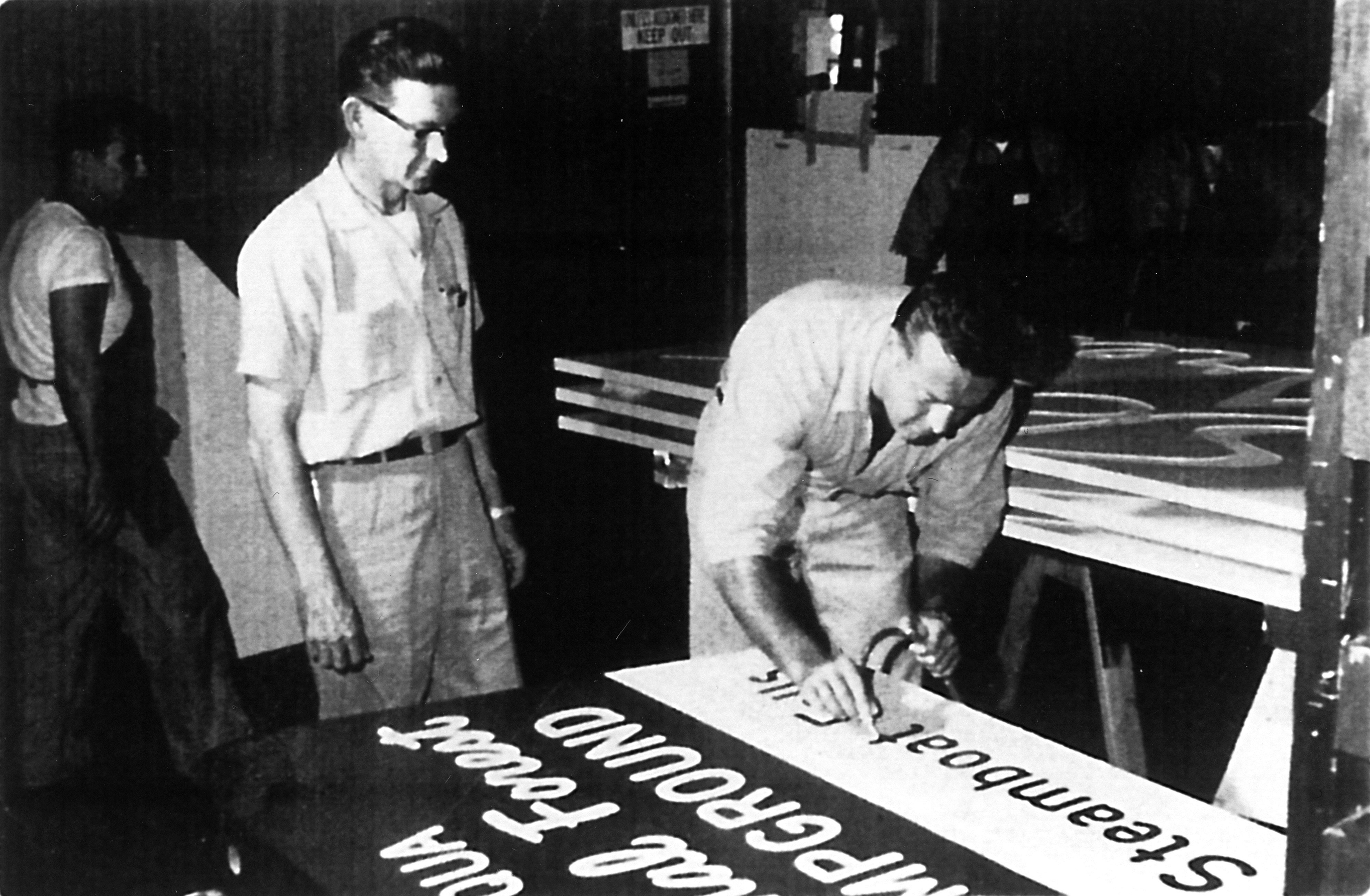
Ironically, as outdoor recreation became increasingly popular among the general public, the workplace of incarcerated men became a place of leisure for free citizens. The hiking trails, the swimmable ponds, the picnic and parking areas with scenic views were all made possible through the use of an incarcerated workforce and, in Washington state, the benches and picnic tables themselves were routinely produced at the Walla Walla penitentiary.Footnote 117 Incarcerated men at the federal penitentiary of McNeil Island also manufactured campground signs (Figure 2). Meanwhile, federal prisoners at the Tucson, Arizona camp were asked to set up signs indicating the names and locations of “scenic rock formations” for the benefit of sightseers.Footnote 118 The road they built into the Catalina National Forest enabled visitors to access the park, and they took care of garbage collection in picnic areas. In many cases, public agencies would not have been able to afford these amenities were it not for prison labor. In fact, when the Bureau of Prisons closed its camps in Arizona, forest officials struggled to keep up with garbage collection and had to close some recreational areas for part of the year.Footnote 119 Similarly, in the state of Washington, the DNR regularly pressed corrections officials to increase the population of forestry camps.Footnote 120 If outdoor recreation had become, in the terminology of historian Phoebe Young, an “implicit right of citizenship,” it was also partially made possible by the work of people who stood on the margins of citizenship: incarcerated people and, increasingly in the late twentieth century, immigrant workers.Footnote 121
An incarcerated worker puts the finishing touches on a sign that reads “National Forest Campground Steamboat Falls.” The work of incarcerated men allowed forests to become recreational forests, even when they stayed inside penitentiaries. “Prisoners making campground signs,” 1945–1965, Department of Corrections, McNeil Island Corrections Center Photograph Collection, 1855–2010, Digital Archives, https://digitalarchives.wa.gov/Record/View/E6367837C8742B57DD51AEBD89D40C73.
From early on, penal forestry programs saw the preservation of forests as an opportunity to allow for its exploitation by the recreating public and commercial interests, not as an effort to protect them from the touch of civilization.Footnote 122 In this, penal forestry programs echoed the longer history of national park management in the United States, and forestry at large.Footnote 123 As commentators and officials frequently noted, the point was not just the rehabilitation of men, but also the rehabilitation of land, whose benefits would otherwise have been lost to the community. In addition to recreational activities, the work of incarcerated workers enabled the economic exploitation of timber, by making available wood that private loggers could then harvest.Footnote 124 In Washington state, timber made available by prisoner labor also resulted in the annual injection of several thousands of dollars into state coffers.Footnote 125 Forestry camps meant, quite literally, that neither incarcerated men nor the land would be “wasted.” This can be read as a variation of what social scientist Judah Schept’s has called the “wastescape” of the Appalachia, where a land wasted by coal extraction has been repurposed as a vast storage space for both landfills and prisoners, that is, the disposable products of capitalism.Footnote 126 Forestry camps, whose creation preceded the phenomenon described by Schept, show the same confluence of what is seen as wasted land and wasted people; though in their case they aimed not just at “storing” them, but at infusing them with productivity.
While prisoners had been brought to the forest for the express purpose of taking care of the land, they were always suspected of bringing damage and chaos to the environment and local inhabitants. The contract signed by the federal Bureau of Prisons and the U.S. Forest Service, for instance, stipulated that the compensation usually paid by the latter agency to the men in case of firefighting would be withheld if a fire broke out in the vicinity of a penal forestry camp—hinting at the possibility that penal forestry workers might deliberately start fires in order to earn extra compensation.Footnote 127 In the state of Washington, a similar contract evoked the possibility that the men would refuse to work, malinger, or otherwise hinder the work needed by the state forest agency.Footnote 128 Tellingly, however, the need for incarcerated manpower was such that these suspicions proved no obstacle to the program.
Officials were not the only ones to perceive prisoners as a hazard. Echoing a more general “not in my backyard” reaction when it came to prison siting, local communities often resisted the establishment of a camp near their homes.Footnote 129 They feared that the green walls of the woods would not be thick enough to keep incarcerated men from leaving a trail of crimes in the wake of their escapes. The tourism industry was especially quick to see incarcerated people as a potential problem for their business, as they were presumed to drive away potential customers.Footnote 130 Authorities managed to pacify most of the criticism by carrying out local projects for the communities with prison labor and letting nearby residents watch incarcerated forestry workers in action. Firefighting was considered particularly helpful in fostering good relations with the community.Footnote 131
Some historians have described forestry camps as essential to state correction departments’ public relations.Footnote 132 It is not clear, however, that the wider public ever fully realized the benefits they drew from the work of incarcerated people. In the first place, the public often failed to appreciate the work of fully operational camps. One sign of this was that citizens regularly suggested that the state of Washington create penal forestry camps—as if at that juncture they were nonexistant. When the public did come to appreciate the operational camps in their midst they frequently responded with perplexity and frustration. When a local paper described one juvenile forestry camp near Olympia (in its twenty-sixth year of operation) as “good for the community,” nearby residents were incredulous. “That takes the cake,” wrote an angry homeowner, who saw his enjoyment of the forest and the presence of incarcerated people as incompatible, and therefore opposed the projected conversion of what had been a juvenile camp into an adult camp.Footnote 133 Another irate resident likewise opposed the plan on the grounds that Capitol Forest, where the camp was located, was “a multi-use recreational area used for camping, hunting, fishing, hiking, horseback riding, R.V. Clubs, Motorcycle Clubs, as well as sightseeing.”Footnote 134 For these and hundreds of other residents who petitioned the governor in opposition to the project, the labor of incarcerated workers was neither necessary to recreational infrastructures in the forest, nor reconcilable with free people’s outdoor leisure. Yet another resident further explained that because the facility “would have immediate access to a multi-use recreational area,” “vacationers there would be particularly vulnerable to loss of vehicles,” suggesting potentially disastrous effects on the local tourism economy.Footnote 135
These reactions certainly fit with a broader context of rising fears of crime, but they also reveal deeply ingrained public expectations concerning natural spaces. Scholars have observed, for instance, that American vacationers have long expected National Parks be “uninhabited.”Footnote 136 Adepts of outdoor leisure have sought these spaces of “pristine wilderness” as antitheses to the tensions and pollutions of the urbanized world in which they live. This expectation of purity effectively divorces natural spaces from the material infrastructure and labor that enable visitors to enjoy them. In the eyes of many visitors, the forest has to remain purely “natural,” untainted by social dilemmas and the fears of daily life, in order to be truly recreational. Outdoor tourism boosters in the post-World War II years certainly encouraged these assumptions by marketing natural spaces as wholesome, safe places of self-improvement and family bonding, even as the effects of tourism effectively remade the landscapes where it took place.Footnote 137 Because the forest had become associated with family enjoyment, it became particularly inhospitable to people perceived as unwanted, problematic, or even “unnatural.”Footnote 138 Thus, if working in the forest was supposed to erase incarcerated men’s criminality, the reverse was also true: the outdoors could be tainted by the presence of men who had been convicted of crimes.
It is safe to assume that most inhabitants remained unaware of the connection between their ability to enjoy the recreational opportunities of the forest, and the work of incarcerated people. This invisibility can be read as another example of historian Lori Flores’ description of forests as “amnesic landscapes,” especially when it comes to the hardships faced by marginalized forestry workers. Footnote 139 In the case of incarcerated forestry workers, that invisibility was partially by design. Forestry camps hidden deep in the woods were even less conspicuous than the remote rural places in which penitentiaries tended to be built; they combined the advantage of being useful while remaining out of sight. As far as the public was concerned, at any rate, the labor of incarcerated men seemingly disappeared under dense canopies.
Conclusion
In 1986, Cash L. Hopkins, a man incarcerated at the Indian Ridge Correction Center in the state of Washington, was fatally hit by a falling tree while fighting a fire at Ace Creek, near the Idaho border. Some reported that he “froze in his tracks” instead of running away, while witnesses countered that he was an experienced forestry worker who had already faced several fires in the course of his incarceration; the crew simply had not had enough rest.Footnote 140 The tragedy prompted Washington prison administrators to conduct an inquiry into the training given to incarcerated forestry workers. Echoing complaints by incarcerated men that their training was insufficient, officials found that it did indeed lack both systematicity and depth.Footnote 141 Men could be herded off to forest work within two days of their arrival at the camps, and the emphasis was then put on “getting the job done,” rather than on preparedness.Footnote 142 This realization contrasted with decades of idealization of forestry work as a uniquely healthy improvement on traditional incarceration. During the rehabilitation era, forestry programs had exemplified reformers’ faith in the reformative virtues of work and the great outdoors. To work outside, in the forest, they felt, was a fitting transition for incarcerated people from the artificiality of penitentiaries to the “real world” that awaited them upon their release. Reformers’ praise of forestry did indeed reify the notion that outdoor work equaled health and rehabilitation. By extension, this imperative placed the bodies of incarcerated people at the heart of the state’s political objective to turn incarcerated people into law-abiding men and women.
The lived experiences of incarcerated forestry workers were often more complex than the reformer’s dream, however. From chainsaw wounds to severe dehydration and deadly conditions: working in the forests meant discomfort, the constant presence of physical danger, and the lingering potential of death. The forest was not a magical cure-all for criminal acts either, and incarcerated people managed to find ways around the disciplinary regime of the forestry camps, developing contraband networks or designing escape plans. These lived experiences rarely registered in the public consciousness, however. Ever-adaptable, the idea of penal forestry programs had an enduring appeal to administrators and citizens alike, even in the tumultuous 1970s, when the prison system came under unprecedented levels of criticism, and in the 1980s, when the rehabilitation era gave way to heightened punitiveness.Footnote 143
Incarcerated workers continued to suffer forestry-related injuries well into the 1970s and early 1980s. This ran counter to the interests of forestry officials who, by their own admission, needed “healthy, alert and confident individuals” to carry out necessary work in the forest.Footnote 144 At the same time, the early stages of mass incarceration affected the labor supply in forestry camps. “We are receiving an increasing amount who cannot physically handle the work assignments given to us,” observed a DNR official in 1978. He blamed the overcrowding of other prisons, which caused officials to authorize transfers in hurried and indiscriminate fashion, with little regard for the reality of forestry work.Footnote 145 One proposal to create special crews for men with physical disabilities was rebuked, as top administrators worried it would create “inferior arrangements.”Footnote 146 The primary concern was for the efficiency of the program, not the extension of the presumably therapeutic virtues of forestry work to categories of prisoners who had been excluded from forestry programs during the rehabilitation era.
By the 1980s, officials had also started to picture healthfulness as incarcerated people’s individual responsibility. So it is that those who failed to follow safe procedures or to use protective devices would face disciplinary sanctions ranging from a verbal reprimand to infraction reports (which could affect their release date).Footnote 147 Whereas forestry camps had originally been conceived as a tool to remake incarcerated men’s bodies in the New Deal era, they were now places where incarcerated men were expected to conserve their own bodily strength (in the same way that one conserves a clean record), or else face punishment.Footnote 148 Echoing Loïc Wacquant’s analysis of the neoliberal era, the celebration of individual responsibility merged with the intensification of the state’s punitive capacities. However, whereas Wacquant primarily sees carceral spaces as ways to “warehouse” society’s most “disruptive” and “superfluous” elements, the persistence of penal forestry camps also shows that under certain circumstances incarcerated people continue to represent a useful resource for the state.Footnote 149
By the 1980s it was still assumed that forestry programs would help bring down recidivism rates. In an era of taxpayer anxiety, however, administrators also stressed another long-standing advantage of these programs: they served the public interest at low cost. Ideologically shaped by the rehabilitation era, forestry programs proved adaptable to the punitive turn thanks to their inherent material benefits to the public. In the words of Arizona administrators, where letting incarcerated people work the outdoors beyond the pentitentary’s walls is concerned, the “savings outweigh the risks.”Footnote 150


 Open access

