





Introduction
The genus Ralstonia comprises strictly aerobic, gram-negative, oxidase-positive, non-fermenting bacilli. The most frequently isolated species in clinical samples is Ralstonia pickettii, previously classified as Pseudomonas pickettii and Burkholderia pickettii. Reference Prior, Gunaratnam and Humphreys1
The biological characteristics of Ralstonia species—ability to grow under oligotrophic conditions, tolerance to wide temperature ranges (15–42°C), passage through 0.2-µm filters, and robust biofilm formation—shows their ability to contaminate and subsequently survive in solutions intended to be sterile, thereby contributing to their involvement in nosocomial outbreaks. Reference Ryan and Adley2 These outbreaks have classically been associated with contamination of intravenous solutions, pharmaceutical-grade water, disinfectants (chlorhexidine, benzalkonium chloride), and medical devices, particularly central venous catheters (CVCs). Reference Ryan, Pembroke and Adley3
The worldwide increase in Ralstonia spp. infections is explained by the combination of highly vulnerable populations (hematologic-oncology patients, critically ill patients, neonates, and those with invasive devices), antimicrobial overuse, and frequent invasive procedures. Reference Prior, Gunaratnam and Humphreys1,Reference Mehra, Khera, Didel and Tak4 The highest risk groups include patients with hematologic malignancies, patients with a CVC, admission into an intensive care unit (ICU), and neonates, in whom catheter-related infections are common. Reference Gulhan, Kanik Yuksek, Suzuk Yildiz, Mumcuoglu, Dinc and Yarali5–Reference Rajachandran, Varghese, Kumar and Mathew7
In Peru, no cases of infection by R. pickettii had been documented. However, the pediatric population treated at the Instituto Nacional de Salud del Niño San Borja (INSN-SB)—predominantly oncology, postsurgical, and carrying invasive devices—presents multiple known risk factors for these pathogens. In this context, the present study describes an outbreak of bloodstream infections caused by R. pickettii that occurred between July and August 2025 in the Cardiovascular, Pediatric, and Burn Intensive Care Units of INSN-SB. The investigation identified intrinsically contaminated batches of dexmedetomidine ampoules during the pharmaceutical manufacturing process as the common source, representing the first worldwide report of a nosocomial bloodstream infection outbreak by Ralstonia pickettii associated with this drug.
Methods
Clinical setting
The study was conducted at the INSN-SB, Peru’s national referral pediatric hospital for high-complexity care, specializing in hemato-oncology, complex surgery, and transplantation. The facility has 312 inpatient beds and 59 critical care beds distributed across five ICUs. The outbreak occurred between July 19 and August 23, 2025, in three ICUs located on two adjacent floors: Cardiovascular ICU, Pediatric ICU, and Burn ICU. Twelve cases of bloodstream infections were identified, 11 caused by Ralstonia pickettii and one by Ralstonia flatus.
Outbreak investigation
The investigation was led by the INSN-SB Technical Epidemiology Coordination Office, supported by the hospital authorities, following the institutional protocol for nosocomial outbreaks. A matched case–control design (1:2) was used, paired by sex and ICUs service. Odds ratios (OR) were calculated, and P < .05 was considered significative.
Activities included systematic visits to affected ICUs, exhaustive traceability of all medications administered to patients (including brand and batch number), prospective and retrospective active case finding, and detailed review of surgical procedures performed in the operating rooms during the epidemic period.
Targeted environmental sampling was performed, encompassing high-touch surfaces, sink drains, soiled utility areas, invasive medical devices (particularly CVCs), medications in use, and mouthwashes. Air sampling was conducted in operating rooms. All samples were processed using the automated BACTEC™ system (BD Biosciences, USA).
Definitions
-
Suspected case: Any patient from the INSN-SB ICUs presenting with fever, hypothermia, or increased acute-phase reactants, with blood cultures showing growth of gram-negative bacilli during July and August 2025.
-
Confirmed case definition: Any patient from INSN-SB ICUs meeting all of the following criteria:
-
– Clinical: Presence of signs consistent with bloodstream infection, such as fever ≥38°C, hypothermia (<36°C), or elevated acute-phase reactants, without another evident cause.
-
– Microbiological: Positive blood culture for Ralstonia pickettii.
-
– Epidemiological: Bloodstream infection due to Ralstonia pickettii occurring between July and August 2025 in the INSN-SB ICUs
-
-
– Controls cases: Any patient from the INSN-SB ICUs who don’t meet the confirmed case definition, paired by sex and ICUs service with the cases.
Bacterial identification and antimicrobial susceptibility testing
Blood cultures were processed using the BACTEC™ automated system (BD Biosciences, USA) according to manufacturer specifications. Species identification was confirmed by matrix-assisted laser desorption/ionization–time of flight mass spectrometry (MALDI-TOF MS; Bruker Daltonics, Germany). Antimicrobial susceptibility testing was performed by broth microdilution using the VITEK 2 system (bioMérieux, France), with interpretation based on 2025 Clinical and Laboratory Standards Institute (CLSI) breakpoints for non-Enterobacterales. 8
Whole-genome sequencing
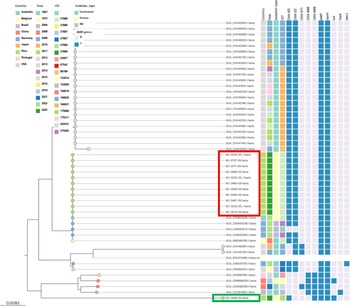
Whole-genome sequencing was performed on isolates from 11 cases (10 patients). Genomic DNA was extracted using the PureLink Genomic DNA Mini Kit (Invitrogen, Malaysia) and quantified by Qubit 3.0 fluorometry (Invitrogen, Malaysia). Sequencing libraries were prepared with the DNAprep kit (Illumina, USA) and sequenced on a MiSeq platform (Illumina, USA). Read quality was assessed with FastQC v0.11.9, Reference Andrews9 and de novo assembly was performed using Unicycler v0.4.8. Reference Wick, Judd, Gorrie and Holt10 Strain typing was conducted using the rMLST v2.11 platform. Reference Kotetishvili, Stine, Kreger, Morris and Sulakvelidze11 Core-genome alignment was performed using ParSNP v1.2 against the reference genome to identify single nucleotide polymorphisms (SNPs). This core genome alignment served as the input for phylogenetic reconstruction using IQ-TREE v2.0.3, based on the identified variations within the alignment. The maximum-likelihood tree of R. pickettii isolates from the outbreak and publicly available NCBI genomes was inferred using the TVM + F + I + R3 model with 1,000 bootstrap replicates. Additionally, to assess fine-scale genomic relatedness, pairwise SNP distances were calculated from the same alignment using snp-dists v0.8.2. Antimicrobial resistance genes were identified using Staramr v0.8.0 Reference Bharat, Petkau and Avery12 against the CARD and ResFinder databases Reference Florensa, Kaas, Clausen, Aytan-Aktug and Aarestrup13 (Figure 1).
Maximum-likelihood phylogenetic tree illustrating the relationships among Ralstonia pickettii outbreak isolates, Ralstonia flatus, and selected reference genomes, with associated antimicrobial resistance genes. Branch lengths represent substitutions per site. Outbreak R. pickettii strains are highlighted within the red box. The R. flatus isolate is indicated in the green box. Resistance genes were identified using the CARD and resFinder databases. Ralstonia pickettii outbreak, Peru 2025.

Ethical considerations
The study protocol was reviewed and approved by the Institutional Ethics Committee of the Instituto Nacional de Salud del Niño San Borja (approval code: PI 985-2025). The manuscript was prepared following the ORION (Outbreak Reports and Intervention Studies Of Nosocomial infection) reporting guidelines.
Results
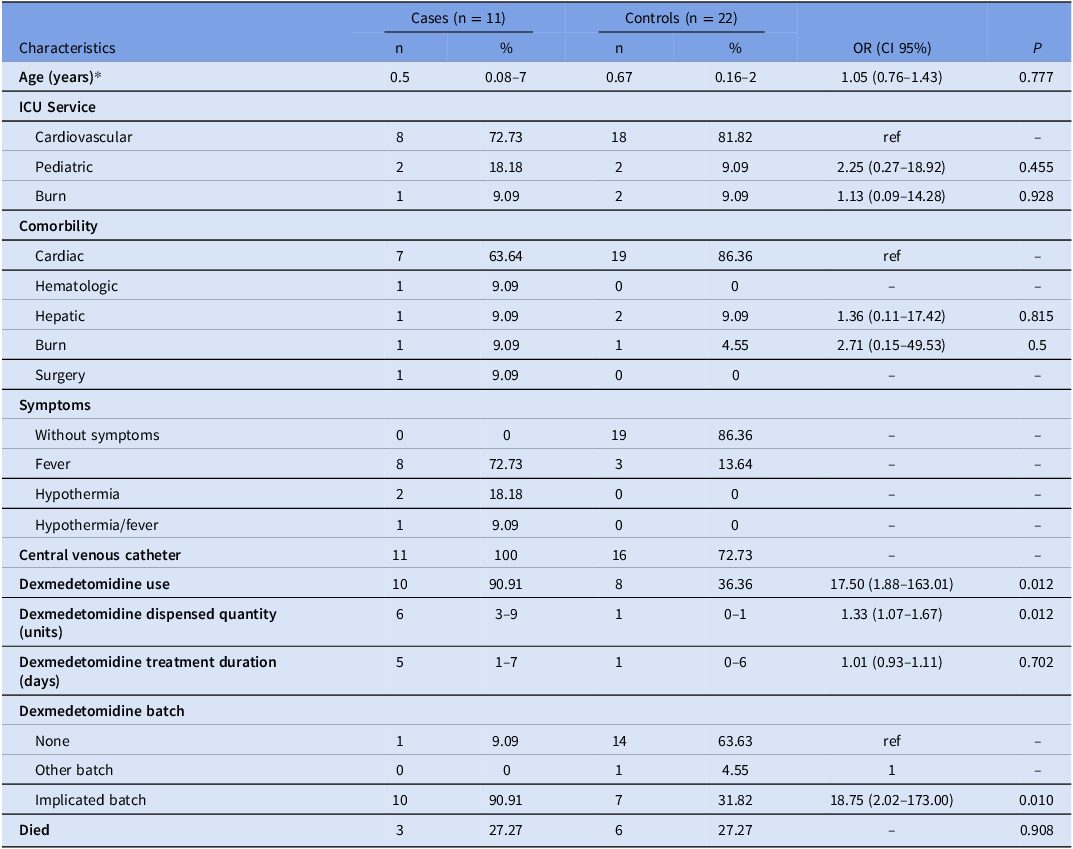
During the outbreak period, 11 bloodstream infections due to Ralstonia pickettii were confirmed, additionally one case of Ralstonia flatus was identify. Seventy-two percent of cases occurred in the Cardiovascular ICU, primarily in patients after surgery for congenital heart disease. Median patient age was 6 months (IQR: 2 mo –7 yr). All cases were diagnosed by positive blood cultures drawn through the CVC. The predominant symptom was fever (Table 1). Median time from catheter insertion to bacteremia diagnosis was 9 days (IQR 7–13 d) and from surgery to bacteremia was 13.5 days (IQR 4.25–16 d). The most frequently used antimicrobials were meropenem and piperacillin/tazobactam.
Clinical and epidemiological characteristic of the cases and controls involved in the Ralstonia pickettii outbreak, Peru 2025

Source: National Reference Laboratory for Clinical Bacteriology, SUDET/CNSP/INS
Note: ICU, intensive care unit; OR, odds ratio; CI, confidence interval.
*Median and IQR (Interquartile Range).
Compared with controls, all cases had a CVC in place (11/11 vs 16/22). No significant association was observed between case status and the median duration of dexmedetomidine infusion (5 d [cases] vs 1 d [controls]; OR 1.01, 95% CI 0.93–1.11, P = .702). Factors significantly associated with Ralstonia pickettii bloodstream infection included the use of dexmedetomidine (OR: 17.5, 95% CI: 1.88–163.01, P = .012), exposure to the implicated dexmedetomidine batch (OR: 18.75, 95% CI: 2.02–173.00, P = .010), and the dispensed quantity of dexmedetomidine (OR: 1.33, 95% CI: 1.07–1.67, P = .012) (Table 1).
Phenotypic susceptibility testing of R. pickettii isolates showed resistance to amikacin and aztreonam, intermediate susceptibility to ceftazidime, and susceptibility to piperacillin/tazobactam, cefepime, ciprofloxacin, imipenem, and meropenem. The R. flatus isolate exhibited resistance to meropenem, intermediate susceptibility to ceftazidime, and susceptibility to amikacin, piperacillin/tazobactam, cefepime, ciprofloxacin, and imipenem.
Whole-genome sequencing of 11 isolates revealed 10 R. pickettii belonging to a single clone (rST-37,889) and one R. flatus (rST-170,880). R. pickettii harbored blaOXA-60 (penicillins), blaOXA-22 (carbapenems), adeF (efflux pump), and vanH (glycopeptides). R. flatus carried blaOXA-60, blaOXA-899, adeF, and vanH. Phylogenetic analysis demonstrated close relatedness between outbreak strains and isolates from previously reported outbreaks in Germany and Australia in 2023 (Figure 1). Pairwise SNP distance analysis, derived from core-genome alignment, confirmed the clonality of the Peruvian outbreak isolates, which differed by fewer than 10 SNPs. Furthermore, these isolates exhibited close genetic relatedness to the reported Australian outbreak strain (GCA_033804535.1), with 17–23 SNPs, consistent with a globally disseminated lineage. In contrast, epidemiologically unrelated isolates displayed significant divergence (>29,000 SNPs), clearly distinguishing the outbreak cluster from background diversity.
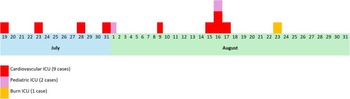
The epidemic curve displayed an intermittent common-source pattern (Figure 2). Notably, only one patient did not receive dexmedetomidine.
Epidemic curve. Ralstonia pickettii outbreak, Peru 2025.

Medication traceability identified sodium chloride 1 L, sodium chloride 100 mL, dextrose 1 L, and dexmedetomidine 200 µg/2 mL as products common to all cases. With respect to dexmedetomidine, two distinct batches were identified across the patient exposures. Both batches underwent microbiological culture; however, only one batch—an unopened vial of dexmedetomidine 200 µg/2 mL (Edetoxin®, imported from India)—yielded Ralstonia pickettii. Whole-genome sequencing of the isolate confirmed its clonal identity with the clinical strains recovered from the patients. All other environmental and product cultures were negative for R. pickettii.
Notably, patients who developed Ralstonia pickettii infections had exclusively received dexmedetomidine from the contaminated batch, whereas those exposed solely to the other (culture-negative) batch remained unaffected. No additional batches of dexmedetomidine were in use or available for testing during the outbreak period beyond these two.
During the outbreak period, a total of 41 patients received dexmedetomidine: 37 from the implicated (contaminated) batch and 4 from the other (culture-negative) batch. This distribution yielded an attack rate of 29.73% (11/37) among recipients of the contaminated batch.
Three patients died of causes not directly attributable to the outbreak (case fatality rate 27.273%; overall mortality 8.11%). No difference was found in the mortality (3/11 vs 6/22, P = .908). The 36-day outbreak was controlled following identification and withdrawal of the contaminated batch.
Discussion
This study documents the first reported outbreak in Peru of bloodstream infections caused by Ralstonia pickettii affecting high-complexity pediatric patients in three ICUs between July and August 2025. Clonality of R. pickettii (rST-37,889), and the absence of identifiable hospital environmental reservoirs pointed to intrinsic contamination of a medical product. This hypothesis was confirmed by the isolation of genetically identical R. pickettii from an imported batch of dexmedetomidine. Only one patient didn’t receive dexmedetomidine, suggesting person-to-person transmission. During this Ralstonia pickettii outbreak, we identified the first reported case of Ralstonia flatus bloodstream infection in a child in Peru, who had received the implicated dexmedetomidine batch, although the organism was not recovered from the batch. To our knowledge, the identification of dexmedetomidine as the sole source represents the first worldwide report of nosocomial bacteremia associated with this drug.
Phylogenetic analysis revealed close genetic relatedness between the Peruvian R. pickettii strains and isolates from 2023 outbreaks in Australia (contaminated saline solutions), Germany (2023–2024, likely liquid products) Reference Marris, Latham and Swift14,Reference Sandfort, von Laer and Kampmeier15 indicating transnational dissemination through global pharmaceutical supply chains. Reference Saunders, Weaver and Stretch16,Reference Chen, Huang and Chen17 This finding highlights the vulnerability of healthcare systems to intrinsic contamination of sterile products during manufacturing in source countries.
Regarding antimicrobial resistance, R. pickettii genomes showed intrinsic resistance to penicillins and elevated carbapenem MICs, respectively. Reference Chen, Huang and Chen18 Despite these determinants, most patients responded favorably to carbapenems or piperacillin-tazobactam, illustrating that intrinsic resistance genes do not invariably predict therapeutic failure.
Study limitations include negative environmental cultures, likely due to low bacterial loads or limited sensitivity of conventional methods. Nevertheless, concordance among traceability data, positive pharmaceutical culture, and genomic clonality strongly supports the conclusions. Key strengths are the integrated use of epidemiological, clinical, and high-resolution genomic data, the first description outbreak of R. pickettii linked to contaminated dexmedetomidine.
In conclusion, this outbreak underscores the critical need for pharmacovigilance of imported sterile products and routine genomic surveillance in investigating emerging environmental pathogens. Prompt identification and withdrawal of the contaminated batch achieved effective control. Future prevention strategies should incorporate systematic supply-chain monitoring to protect vulnerable pediatric populations from similar events.
Author contributions
MLV, MSA, and JLS contributed to the design and implementation of the research, while JO contributed to the analysis of the results. All the authors contributed to the writing and revision of the manuscript. DFL and RGG contributed to performing the genomic sequencing. MLV and JLS supervised the project.
Financial support
None reported.
Competing interests
All authors report no conflicts of interest relevant to this article.

 Open access

