


Introduction
People appreciate wild flora and fauna for many different reasons, and probably the most appreciated taxon worldwide is birds (Collar et al. Reference Collar, Long, Robles Gil and Rojo2007, Tidemann and Gosler Reference Tidemann and Gosler2010). Consequently, birdwatching is one of the most popular outdoor activities in the world (Moss Reference Moss2004, Cocker and Tipling Reference Cocker and Tipling2013). Birdwatching, in turn, drives many conservation efforts (Crosby and Langley Reference Crosby and Langley2008, Jiguet et al. Reference Jiguet, Devictor, Julliard and Couvet2012), with some of the world’s most influential conservation organisations centered around bird conservation, e.g. the Royal Society for the Protection of Birds (RSPB) and the National Audubon Society (NAS). The RSPB has more than one million members, and there were about 48 million birdwatchers in the USA in 2006 (U.S. Fish and Wildlife Service 2009).
In terms of the development of modern societies, some social scientists consider the emergence of environmental concerns and related leisure activities ‘post-materialist phenomena’ in the sense that, once subsistence ceases to be a major concern for most people, non-economic issues take priority, such as environmental concerns (Inglehart Reference Inglehart1997). However, Dunlap and York (Reference Dunlap and York2008) challenged the assumption that only people in post-materialist societies are concerned about the state of the environment and emphasised that other factors may also be important. Consequently, people in both developed and developing countries are concerned about the state of the environment and for various reasons.
In concurrence with the post-materialist explanation, birdwatching first became a mass activity in the developed countries of Europe and North America, but has spread into almost every other part of the world in recent decades. The world’s most populous nation and second largest economy, China, is currently undergoing such a transition from a developing nation where most people were on subsistence wages to a developed nation where a growing middle and upper class has the money and time to spend on leisure activities (Barton et al. Reference Barton, Chen and Jin2013). Consequently, birdwatching “has spread very quickly, with China’s booming economy, improved education level, and people’s rising environmental consciousness” (Lin Reference Lin2006). Birdwatching as a mass participation leisure activity is a recent phenomenon, as the number of Chinese birdwatching societies grew from four in 2000 to at least 36 in 2012 (Cheng et al. Reference Cheng, Wang, He and Ma2013, Ma et al. Reference Ma, Cheng, Wang and Fu2013).
Therefore, birdwatching has the potential to become a point of communion for Chinese people with an appreciation for nature and concern for its conservation and to form groups and networks which may potentially impact upon conservation policies and their implementation. This emergence of birdwatching in China over the past three decades thus provided us with an opportunity to conduct a study of the history, geographic distribution, demographics, activities, motivations, and environmental concerns of Chinese birdwatchers. To our knowledge, this is the first such study which we achieved with two online questionnaires. Given China’s importance within the global economic and environmental context, the emergence of a sizable ecologically interested group of Chinese citizens concerned about conservation is of global interest.
Methods
While based in Beijing, China, in 2012 and in Cambridge, UK, in 2012–2013, the second author conducted two online questionnaires (Appendices S1-S2 in the online supplementary material) and approximately 20 live online interviews (White Reference White2013). The questionnaires were circulated via (1) the social networking application QQ, which was also used to conduct live online interviews, (2) the online forum of [China Birdwatch] (2016), a nationwide website which enables birdwatchers to share advice, records and photographs, and (3) local birdwatching societies. The second author attempted to reach as many local birdwatching societies as possible by searching the internet for contacts, and asking any contacted birdwatchers for further contact details. More than 30 birdwatching societies were thus contacted, and a list of more than 100 birdwatchers was established.
The second author then sent the two questionnaires to this initial group of birdwatchers in May 2012 and January 2013, respectively, and asked each participant to pass it on to other interested birdwatchers. Birdwatchers are here defined as people who regularly or occasionally venture outside to appreciate wild birds acoustically and/or visually, whether it is with the naked eye, binoculars, telescopes, photographic or video equipment, or even acoustic equipment, for no other reason than personal pleasure and satisfaction (thus excluding commercial interests). Therefore, birdwatching is a leisure activity pursued during private times for recreational or social reasons only, and is defined as a non-consumptive use of wildlife (McFarlane and Boxall Reference McFarlane and Boxall1996, Moss Reference Moss2004, Wikipedia 2016a).
The second author received 296 and 280 responses to the first and second questionnaire, respectively, although not every respondent answered every question (Appendices S1-S2). This number represents about 1.5% of the estimated total number of birdwatchers in China (Ma et al. Reference Ma, Cheng, Wang and Fu2013). Moreover, responses were collected from 67% (22 out of 33) of China’s provincial-level administrative areas, ensuring a fairly representative geographic spread, especially given that some of the administrative areas without responses likely have very few or no birdwatchers (see Results). All respondents were birdwatchers which was evident from: (1) they identified themselves as birdwatchers, (2) all went out birdwatching at least occasionally and most regularly, and 90% of them at least once every three months (see Results), and (3) their reasons for birdwatching (to appreciate birds, to understand birds and ecology, etc.) accord with the above definition of birdwatchers (see Results).
We used the non-parametric one sample sign test whenever the null assumption was that the expected frequencies of the two groups should be the same (i.e. split 50%:50%). For any test which involved comparing observed and expected numbers for categorical items (e.g. provinces, age classes, etc.), we used a χ2 test (Siegel and Castellan Reference Siegel and Castellan1988).
To obtain additional background information on Chinese birdwatching, the second author (who is fluent in Chinese) conducted a literature search in the Cambridge University library for two weeks in spring 2013. The first search for English-language references was made with the academic database Jstor (jstor.org), using several keyword combinations (e.g., birdwatch or birding or NGO combined with conservation or ecology or environment combined with China) or searching for authors if their names were repeatedly cited. Each reference which could be obtained was then checked for further cited references of interest. The second search for Chinese-language references was made with the China Knowledge Research Integrated Database (cnki.net) using the same two-step methodology as above. Furthermore, the second author obtained additional references through the personal communications with the birdwatchers that he had previously fostered during the interviews and questionnaires (see above). This original set contained about 150 references.
The first author conducted additional searches in June-December 2014 using Google Scholar and Web of Science by (1) searching for cited references in the original set of references, or references citing these original ones, and (2) using several keyword combinations (see above). About 250 references were thus additionally checked for relevant information.
Information from each relevant reference was then extracted according to the topics which were covered in our Results section, including the Supplementary Materials, and summarised in such a way to convey the main information from each reference. Because of space constraints, much of the detailed information and examples which resulted from our literature search are presented in Appendices S4-S7, and the main text often summarises the information in these Appendices.
Translations from Chinese to English are placed in square brackets, and the original Chinese terms can be found in Appendix S3. Chinese personal names are given as surname before given name. We a priori excluded Hong Kong, Macau, and Taiwan because of their different historical and political situations: see the Hong Kong Bird Watching Society (HKBWS) Bulletin and Keck (Reference Keck2015) for relevant publications about birdwatching. In December 2014 one renminbi (RMB) was equivalent to 0.13 Euros. We use the term “Western” as a short hand for “developed countries” such as European and North American countries.
Results
The emergence of birdwatching and associated conservation activities
While Chinese birds were appreciated for food, medicine, pest control, pastimes, art, religion and symbolism for millennia, the scientific study of birds did not begin until the 19th century with several Western ornithologists, followed by eminent Chinese ornithologists such as Cheng Tso-Hsin in the 20th century (Appendix S4). However, birdwatching as a mass participation activity emerged only over the past three decades (Appendix S5). The concept of birdwatching was first introduced to China in the early 1980s, imported by Western diplomats and businessmen and other foreigners who visited China exclusively to watch birds. From 1982 onwards, travel outfits brought birdwatching groups to China. The HKBWS also began to organize trips and was able to interest locals more easily because of the shared language (Ma et al. Reference Ma, Cheng, Wang and Fu2013).
Also in the 1980s, the Chinese government began supporting environmental awareness campaigns, including ones supporting bird conservation. The first birdwatching non-governmental organization (NGO) was founded in 1985, and further NGOs and informal birdwatching groups run exclusively by Chinese birdwatchers emerged in the 1990s (Appendix S5). Birdwatching as a leisure activity began to gather pace in the late 1990s, helped along by growing incomes which allowed the purchase of optical equipment, as well as an increase in political tolerance, leisure time, and urbanisation (Appendix S6). The landmark publication of the MacKinnon and Phillipps (2000) field guide in the Chinese language meant that, for the first time, Chinese birdwatchers could use a reliable and almost comprehensive identification guide. Another factor in the rapid growth of birdwatching was the consistent support of the HKBWS over the last two decades, e.g. by inviting Chinese birdwatchers to Hong Kong, and the establishment of the HKBWS China Conservation Fund and the China Programme (www.chinabirdnet.org) run jointly with BirdLife International which helped spread birdwatching and conservation.
From the 2000s onwards, regular printed and later online publications and fora as well as a multitude of public activities, such as birdwatching and photography competitions, festivals, education and media campaigns, caused a rapid growth of birdwatching as documented by Cheng et al. (Reference Cheng, Wang, He and Ma2013) and Ma et al. (Reference Ma, Cheng, Wang and Fu2013). With the growth of birdwatching also came a growing awareness of the environmental threats facing birds, and an increasing willingness of Chinese birdwatchers to attempt to advance the conservation of birds and their habitats by interacting with civil society and government.
Such interactive activities mostly focused on: (1) public education campaigns, (2) scientific research, and (3) active conservation efforts, e.g. by helping to enforce existing laws for protecting birds and habitats and preventing wildlife crimes (see Appendix S5 for many further examples). In many instances, especially at the local level, such efforts proved quite successful, especially if they fell in line with existing government policies (Appendix S5). Chinese civil society is generally characterised by informal networks so that key players may be effective within the existing system (e.g. Zheng and Wang Reference Zheng and Wang2014). However, our literature search and questionnaires also elucidated important constraints on such activities, which illustrate the differences between the possibilities available to Western and Chinese birdwatchers to influence conservation efforts.
First, the development of birdwatching in particular, and of environmental conservation in general, have, of course, a much shorter history in China, only beginning in the 1980s for both. The first environmental protection laws date back to 1979, and China has experienced a gradual “greening” since the 1990s with hundreds of new environmental laws, regulations and related documents, billions of dollars of investments, and an extensive network of environmental protection agencies. The government and media have been increasingly supportive of some issues, e.g. the condemnation of pollution or illegal poaching, and this resulted in a large increase of public engagement in environmental issues. Since legal protection of China’s wildlife is part of the central government’s policy, birdwatching societies’ current activities are in line with government policy, seeking as yet only to combat illegal activities such as poaching rather than, e.g. major government-sponsored infrastructure projects.
Second, because of China’s political realities, Chinese NGOs, including birdwatching societies, remain much more restrained and restricted in their activities than NGOs in Western democracies (Chen Reference Chen and Chen2009). Current legislation means that (1) all NGOs must be approved by and registered with the government, with registration itself complicated and expensive (Appendix S5); (2) NGOs can only operate locally and not nationally to avert the emergence of any ‘social movement’ (Brettell Reference Brettell2003, Tong Reference Tong2005, Wells-Dang Reference Wells-Dang2012); and (3) they are not immune to government interference as they can be shut down for any reason (Wells-Dang Reference Wells-Dang2012), e.g. if they protest against government-sponsored infrastructure projects (Appendix S5). Thus, government control of environmental NGOs (ENGOs) remains extensive and is a considerable constraint on their activities (Tong Reference Tong2005, Stalley and Yang Reference Stalley and Yang2006), and has recently been constrained even further (Jacobs Reference Jacobs2015, Haas Reference Haas2017, Wilson Reference Wilson2017). This control exists not to stifle environmentalism per se, but to “manage and control the rise of social organisations” (Hildebrandt Reference Hildebrandt2011) which, if left unchecked, could conceivably challenge government authority (Harris Reference Harris2004). Consequently, birdwatching societies are reluctant to appear politicised, and their attempts to influence policy implementation usually remain strictly within the confines of government-approved behaviour. Accordingly, respondents to our questionnaires expressed the lowest confidence in the statement that birdwatchers had “the ability to influence implementation of the law” (Appendix S2.15), and the second author was advised by several respondents to remove the statement “birdwatchers have the ability to influence policy” from initial drafts of the questionnaires. This pessimism reflects the fact that, except for those conservation activities allowed and even encouraged (see above), birdwatching remains a largely apolitical activity which is mostly powerless to effect legislative change and to influence contemporary China’s snowballing pressures of economic development on the environment (e.g. Stalley and Yang Reference Stalley and Yang2006, Liu and Diamond Reference Liu and Diamond2008, Economy Reference Economy2010, Cook and Murray Reference Cook and Murray2013, Ma et al. Reference Ma, Melville, Liu, Chen, Yang, Ren, Zhang, Piersma and Li2014). Having witnessed the consequences of NGO actions which do not meet the approval of government officials [the arrests of environmental activists such as Hu Jia (Jie Reference Jie2012, Wikipedia 2017) or Tan Kai (Worldwatch Institute 2016) are just two examples of the continuing harassment of environmental campaigners who ‘step over the line’ of what government officials accept as permissible environmental campaigning], birdwatchers are very aware that substantial opposition to government rule will not be tolerated and therefore largely engage in education and implementation of existing legislation.
Geographic distribution
While birdwatching societies have been established from the north-western Xinjiang Uyghur Autonomous Region all across China to the south-eastern island province of Hainan, a considerable eastern bias remains in their distribution and membership. The eastern coastal provinces of Fujian, Jiangsu, and Zhejiang have seven societies, representing over 40% of the total membership across China (Cheng et al. Reference Cheng, Wang, He and Ma2013). By contrast, society membership in Xinjiang is below 100, while Gansu, Qinghai, Tibet, and several other inland provinces have no societies at all (Cheng et al. Reference Cheng, Wang, He and Ma2013). The seven least densely populated provinces (Tibet, Qinghai, Xinjiang, Inner Mongolia, Gansu, Heilongjiang, Ningxia, in that order) are all located inland in western, central or northern China, and all except Heilongjiang are also considerably less urbanised than the national average (Benewick and Donald Reference Benewick and Donald2009). Of these, only Xinjiang has any birdwatching societies.
Accordingly, we only received four responses from these seven provinces despite the fact that our questionnaires had been circulated via nationwide websites and our attempts at contacting every birdwatching society. In contrast, 83.1% of our respondents were located in the provinces along or near the eastern and southern coast, with a further 4.4% from the central province of Sichuan (Appendix S1.3). The number of respondents from the different provinces (Appendix S1.3) was significantly different from the numbers expected based on the total population of these provinces (Wikipedia 2016b) (df = 10, χ2 = 1,972.1, P < 0.0001).
Li et al. (Reference Li, Liang, Gong, Liu and Liang2013) also found that the geographic distribution of birdwatchers contributing to the China Bird Watching Database was uneven with economically developed provinces providing more contributors. The top four provinces were Beijing, Guangdong, Shanghai and Sichuan, followed by Fujian, Hubei, Jiangsu, Xinjiang, Yunnan, and Zhejiang; no contributions were received from Chongqing, Gansu, Inner Mongolia, Ningxia Hui Autonomous Region, Qinghai, Shaanxi, or Tibet. Ma et al. (Reference Ma, Cheng, Wang and Fu2013) found that the median regional gross domestic product was significantly higher in prefectures with birdwatching societies than in prefectures without birdwatching societies, and that the number of birdwatchers was positively correlated with local gross domestic product.
Demographics
The sex ratio was rather consistent: 67.2% and 68.2% males responded to our two questionnaires (one sample sign test: both P < 0.0001; Appendices S1.1, S2.1). In another Chinese survey, only 56% were male (Cheng et al. Reference Cheng, Wang, He and Ma2013).
In the first questionnaire, 50.3% of respondents were ≤ 35 years old, 77.3% were ≤ 45 years old, and only 2.0% were ≥ 65 years old (Appendix S1.2). In the second questionnaire, the mean and median ages were 34.4 and 31.0 years, respectively, ranging from 10 to 71 years (Appendix S2.2). The age distribution of the first questionnaire was significantly different from that of the Chinese population (CIA 2015) because of the higher than expected numbers of 26–35 and 36-45 year-olds among our respondents; in the other four age categories, the actual number of respondents was lower than the expected number (df = 5, χ2 = 63.2, P < 0.0001). Cheng et al. (Reference Cheng, Wang, He and Ma2013) also found that the majority (52%) of Chinese birdwatchers were ≤ 35 years old. Accordingly, many of our respondents stated in the questionnaires and interviews that the pastime is most popular among younger Chinese people, and several even suggested that this new, imported pastime is actually considered fashionable by many young people.
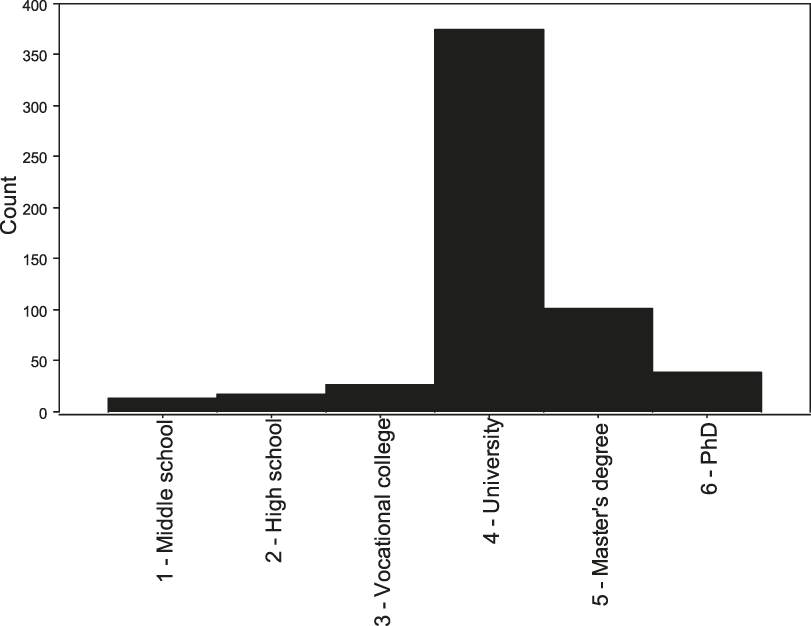
The educational background was also relatively consistent across the two questionnaires: 6.8% and 6.9% had a PhD degree, 16.9% and 18.4% had a Master’s degree, and 64.2% and 66.8% had a university degree (Figure 1; Appendices S1.4, S2.3). Thus, 87.9% and 92.1% were university-educated, which is significantly different to the national average of 8.7% (National Bureau of Statistics of China 2011) (df = 1, χ2 = 832.1, P < 0.0001). Moreover, about 40% of respondents had a professional background in either biology or conservation (Appendix S1.5).
Histogram of 573 answers about the educational background of our respondents.
Finally, 52.5% of our respondents reported an annual household income of ≥ 60 000 RMB (Appendix S2.4), compared to the 2012 national average of 49,600 RMB per year (China Network 2012). Since many birdwatchers are still students, the average incomes of birdwatchers will likely increase.
Birdwatchers’ activities and costs thereof
In the first questionnaire, 35.6%, 64.5% and 29.2% of respondents stated that they had birdwatched for < 2 years, > 2 years, and > 5 years, respectively (Appendix S1.6). In the second questionnaire, 40.6%, 59.5% and 27.6% of respondents stated that they had birdwatched for < 2 years, > 2 years, and > 5 years, respectively (Appendix S2.6). The three main avenues of introduction to birdwatching were friends or colleagues, the internet, or work or study connections (Appendices S1.8, S2.7), but also events held by birdwatching societies or in schools or colleges (Appendix S2.7). Among our respondents, 31.3% stated that they birdwatched at least once per week, and a further 47.3% at least once per month (Appendix S1.7). Therefore, about 80% of our respondents birdwatched at least once a month. Many respondents birdwatched alone, but they also regularly birdwatched with a few friends or family or joined larger birdwatching activities (Appendix S2.9).
Our respondents more often birdwatched near their home than travelled within their province or even abroad (Appendix S2.9). Many birdwatchers also participated in public education and popularization events or joined survey and bird rescue work (Appendix S2.8). Cheng et al. (Reference Cheng, Wang, He and Ma2013) also found that birdwatching excursions represented 33% of all society activities; the next most frequently held activity was bird surveys. Participation figures also revealed that the most attended activities were public education events. Other activities included educational lectures, management of bird records, and rescues of injured or poisoned birds or illegally kept birds which are also sometimes abused in captivity (Fang Reference Fang2017).
About half of our respondents joined a birdwatching society (e.g. Beijing Bird Watching Society, Shanghai Bird Watching Society, etc.), another 10.0% joined a conservation organization (e.g. Friends of Nature, Green River Environmental Protection Association of Sichuan, Society of Entrepreneurs & Ecology, etc.), while another 26.5% had considered joining or had contact with a birdwatching society (Appendix S2.5). Of our respondents, 20.1% spent > 10,000 RMB on birdwatching in 2012, and 58.0% spent ≥ 1,000 RMB (Fig. 2; Appendix S2.11). Such a level of expenditure could conceivably cause the exclusion of poorer people. However, low or non-existent admission fees for birdwatching societies and the low cost of the Chinese-language field guide (MacKinnon et al. Reference MacKinnon, Phillipps and He2000) mean that the cost of becoming a birdwatcher is actually very low, except for the purchase of optical equipment. However, some birdwatching societies even provide binoculars for free use. Our interviews also indicated that expenditure was mostly for non-essentials such as photographic equipment.
Histogram of 274 answers about how much money each respondent spent on birdwatching during 2012 (columns from left to right: < 500 RMB, 500–1,000 RMB, 1,000–5,000 RMB, 5,000–10,000 RMB, > 10,000 RMB).

A further expense for some birdwatchers is donations to conservation charities, reflecting their environmental concerns (see below). Between 4.3% and 5.8% of our respondents donated money at least once a year, and 33.0% and 42.8% had donated money at least once (Appendices S1.10, S2.12). However, more than half of respondents had never donated, and the major reasons were that charities were considered to not have enough influence, to be inefficient, or could not be trusted (Appendix S2.13).
Motivations and environmental concerns
The four major reasons for birdwatching given in both our questionnaires were to appreciate birds, to understand birds and ecology, to relax, and to see as many bird species as possible, although several other reasons (such as to exercise, take photos, contribute to conservation and science, make friends, to appreciate natural scenery, and to introduce children to nature) were also given relatively high scores (Appendices S1.9, S2.10). In the interviews, the significance of escaping the city was repeatedly expressed; e.g., one birdwatcher stated that she “loves the feeling of leaving the city and heading for the countryside.”
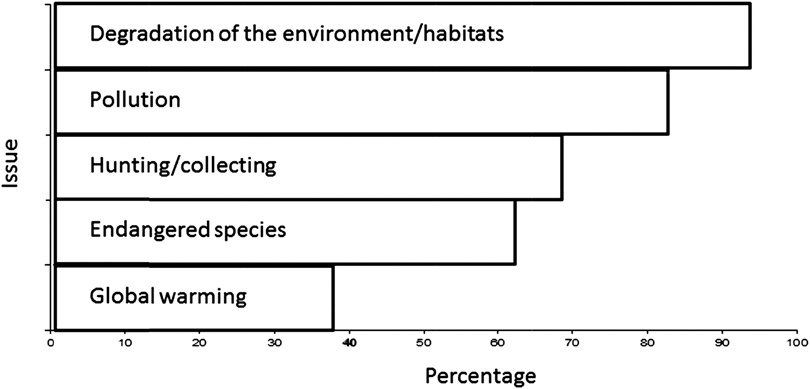
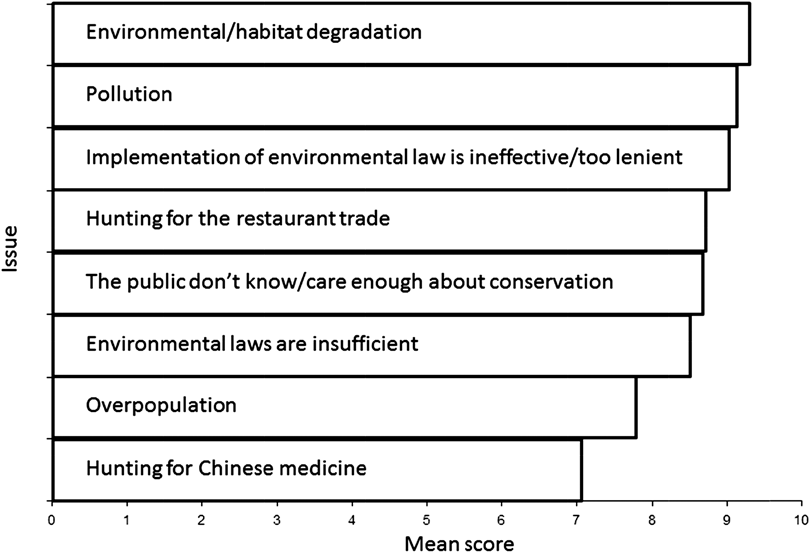
The three topics which our respondents were most worried about were environmental and habitat degradation, pollution, and hunting and collecting, with the “implementation of environmental law is ineffective/too lenient” added to the top of this list in the second questionnaire (Figures 3-4; Appendices S1.12, S2.14). The only global issue, namely global warming, was of least concern in the first questionnaire (cf. Wong Reference Wong2003, Harris Reference Harris2006). These concerns thus largely mirror the concerns of many Chinese citizens, especially educated ones (Appendix S7).
Percentages of 292 respondents who are concerned about five issues which endanger birds and their environment.
Mean scores about how worried our 280 respondents were about eight issues which endanger birds and their environment (1 being ‘not at all worried’ and 10 ‘extremely worried’).
Eighty-one percent of respondents expressed dissatisfaction with the government’s current efforts in environmental protection, especially concerning endangered species (Appendix S1.11). In the interviews, many further complained about the overemphasis of the economy at the expense of the environment and about the general official apathy towards conservation. Many responses contained an emphatic level of anger towards officials and their perceived double standards, with many condemning current environmental protection efforts as ineffectual and superficial.
Discussion
Our respondents were two-thirds males, about half were younger than 35 years of age with a preponderance of 26–45 year-olds, approximately 90% were university-educated, and many also had an above-average income and originated mostly from the more urbanised coastal or near-coastal provinces. Western birdwatchers, in comparison, tend to be older with an average age of ≥ 50 and have a higher percentage of women except among ‘advanced birdwatchers’ which are about 60% male, but also have above-average education and income (McFarlane Reference McFarlane1994, McFarlane and Boxall Reference McFarlane and Boxall1996, Hvenegaard Reference Hvenegaard2002, Lee and Scott Reference Lee and Scott2004, Moss Reference Moss2004, U.S. Fish and Wildlife Service 2009).
Several other studies found a similar geographic distribution, and Cheng et al. (Reference Cheng, Wang, He and Ma2013) found a similar age distribution but did not find the same gender bias. No study that we are aware of reported on the educational background or income distribution of Chinese birdwatchers before. Cheng et al. (Reference Cheng, Wang, He and Ma2013) also reported on the activities of Chinese birdwatchers, which largely mirrored those of our respondents, but this study may be the first to also report on some of their motivations and environmental concerns.
The main drawback of our study is that we had to adopt a non-probability convenience sampling method for our online questionnaires. Therefore, it could be argued that we mainly reached those birdwatchers which are more active online because they are younger, better educated and more urbanised. However, similar studies also used the convenience sampling method to interview specific groups of people interested in nature. For example, Hvenegaard (Reference Hvenegaard2002) interviewed birdwatchers at one of Thailand’s most popular birding sites, Doi Inthanon National Park. While it can be assumed that a fairly typical sample of birdwatchers would visit this site, it is also safe to say that other kinds of birdwatchers would be missed (e.g. ‘local patch’ birdwatchers, www.birdwords.co.uk/speaking/birding-a-local-patch). Ma et al. (Reference Ma, Cheng, Wang and Fu2013) interviewed Chinese birdwatchers but mostly those who belonged to a birdwatching society. Therefore, they may have missed out on those birdwatchers who are not society members. After all, only half of our respondents had actually joined a birdwatching society (Appendix S2.5), and there are, e.g., birdwatching student unions at several Chinese universities which are not officially registered.
In order to interview an almost unbiased sample of birdwatchers, one would have to combine an extensive online questionnaire with travel all across China to visit typical birding sites as well as events held by birdwatching societies. However, we simply did not have the resources available for such a study. Therefore, it should be obvious that our respondents represent that particular segment of Chinese birdwatchers who have access to the internet and are willing to spend time to answer a questionnaire. We openly acknowledge this bias, but find value in our study because our study is the first one to even ask these kinds of questions within China, and may thus be the starting point for more comprehensive future studies.
Our respondents emphasised that the rapid spread of internet and mobile phone use attracted a considerable number of birdwatchers and has become vital tool for sharing information. These two factors are also seen as critically important in the increasing spread and impact of environmental awareness, environmental protests and ENGOs throughout Chinese society (Yang Reference Yang2005, Lin Reference Lin2007, Yang and Calhoun Reference Yang and Calhoun2007, Liu and Diamond Reference Liu and Diamond2008, Xie Reference Xie2011, Hook Reference Hook2013).
Another important factor supporting the development of birdwatching societies, and especially their conservation activities, has been the financial and logistical support from foreign supporters (Appendix S5). Again, the same is true for many Chinese ENGOs which could not function properly without foreign support (Schwartz Reference Schwartz2004, Yang Reference Yang2005, Yang and Calhoun Reference Yang and Calhoun2007, Xie Reference Xie2011, Worldwatch Institute 2016). Foreign support has recently been further reduced because of new and more stringent rules adopted by the government (Jacobs Reference Jacobs2015, Haas Reference Haas2017, Wilson Reference Wilson2017). However, this may have been offset to some extent because Chinese ENGOs, including birdwatching societies, can receive increasing financial support from domestic foundations, which have been booming in China in recent years. Accordingly, the rate of donations of our respondents is relatively high when compared to the usual unwillingness of Chinese citizens to donate money (Huang Reference Huang2014). There are two possible reasons: Many of our respondents have above-average income, and many of them are genuinely concerned about the welfare of China’s birds.
Chinese birdwatching has grown over the last three decades because of the momentum created by a cohort of dedicated birdwatchers who have been remarkably successful in introducing a characteristically Western pastime into Chinese society, and who are growing in expertise and numbers. However, our results suggest that this expansion may not play out evenly within Chinese society. China is already a highly unequal society, belonging to the upper third of the most unequal countries in the world (World Bank 2014). Furthermore, rural-urban economic inequality is among the most marked in the world (Whyte Reference Whyte, Hong and Gottwald2010) with the average per capita urban income over three times higher than the rural income (Sicular et al. Reference Sicular, Yue, Gustafsson, Li and Whyte2010). A rural-urban bias also exists in education: in 2000–2003, urban areas provided only 40% of the total population yet 68% of university students (Hannum et al. Reference Hannum, Wang, Adams and Whyte2010). Since educational background has become an increasingly important determinant of income (Hannum et al. Reference Hannum, Wang, Adams and Whyte2010), China’s rural-urban economic and educational disparities seem set to grow. The trifold influences of education, geography and income have thus come to largely define class in modern China with a growing divide between a university-educated, urban, well-off elite and an uneducated, rural and deprived working class. By all three measures, our respondents are mostly members of the former group.
Our respondents pursued their pastime mainly for reasons which apply to birdwatchers around the world: to relax through the appreciation of wildlife, but also to ‘collect’ large species lists and to learn more about the birds’ ecology and nature in general. Many Chinese birdwatchers thus exhibit a holistic interest in birds, their environment and conservation. They are generally highly knowledgeable and concerned about a range of environmental issues and the perceived lack of an adequate governmental response. Many do not take their concerns any further, so that birdwatching remains solely a leisure activity, while some decide to become involved in citizen science and conservation activities; as a group, they represent a considerable and growing cohort of ardent environmentalists.
For these birdwatchers, their passion for birds and nature thus translates into some kind of conservation action which can take various forms. However, what is unusual about their situation is the juxtaposition of ardent passion with a political powerlessness and the recognition thereof. Such contradictory forces are also evident for other ENGOs which largely focus on apolitical campaigns (e.g., environmental education, recycling) and avoid confrontational approaches (e.g. getting involved in local anti-pollution protests) in order “to survive and make changes gradually” (Fengshi Reference Fengshi2009; Appendix S5). They therefore adopt “approaches that encourage learning, cooperation, participation, and dialogue” (Lin Reference Lin2007), such as petitions, signature campaigns, media debates, public forums, investigative field trips, photography exhibits, and publicity through websites (Schwartz Reference Schwartz2004, Tong Reference Tong2005, Stalley and Yang Reference Stalley and Yang2006).
Birdwatching’s development in the West, and increasingly in other areas of the world, has become intertwined with active political campaigning and an ability to influence some points of government policy and economic activity. Because of China’s different political and socio-economic situation, the conservation activities of Chinese birdwatchers specifically and of ENGOs in general have naturally differed in their development and in their ability to influence government policies. In our literature review, we describe some successes which can be attributed to birdwatchers and birdwatching societies, but also describe the continuing restrictions which constrain their activities. Given the limitations of our study as discussed above, we cannot possibly provide a complete picture of the development and influence of birdwatching in a country of 9.6 million km2 and 1.4 billion people. Rather, our study should be seen as an overview of the main trends in the development of birdwatching in China, and a snapshot of the activities, motivations, and concerns of a particular segment of Chinese birdwatchers.
Since our study was conducted just as President Xi became President at the end of 2012, we cannot assess how far the changes in the way civil society and NGOs operate brought on by this more restrictive government (Jacobs Reference Jacobs2015, Haas Reference Haas2017, Wilson Reference Wilson2017) have impacted the work and influence of birdwatching societies or the activities, motivations, and concerns of Chinese birdwatchers. Future studies should therefore attempt to reach even more birdwatchers than our study did, describe in more detail how birdwatchers influence society and politics, but also take into account the often quickly changing political realities of China.
Supplementary Material
To view supplementary material for this article, please visit https://doi.org/10.1017/S0959270917000557
Acknowledgements
AW thanks all the Chinese birdwatchers who provided information. We thank Andrew Gosler for comments, Yu-Wen Emily Dai for translations, Lizzie Atkinson, E. H. Burtt, Jr., Mike Crosby, Martin Fowlie and Scott Simon for sending references, and several anonymous reviewers for comments. BAW acknowledges financial support from Taipei Medical University.



