




Introduction: research background, challenges, and objectives
The digitization of cultural heritage has become a global issue, with UNESCO listing the application of digital technologies to cultural heritage protection as a key strategy (UNESCO, 2022). However, the transmission of traditional culture in the digital age faces challenges such as insufficient user participation and superficial content delivery (Economou, Reference Economou2023). This research takes Chinese Cizhou kiln culture as an example to explore a new “design driven + technology supported” cultural transmission method, achieving a paradigm shift from passive acceptance to active participation through AI collaborative creation.
Research background and challenges
As the largest folk kiln system in northern China, the Cizhou kiln, with its decorative patterns characterized by black–and–white contrast and life–centered artistic features, has become an important carrier of traditional Chinese culture and was listed in the first batch of national intangible cultural heritage in 2006 (Qin, Reference Qin2024). Our in-depth survey of 481 Chinese youth revealed three major challenges facing Cizhou kiln cultural transmission:
-
1. Cognitive gap: 43% of respondents indicated they had never been exposed to Cizhou kiln culture, reflecting the transmission difficulties of traditional culture among the younger generation;
-
2. Transmission bottleneck: Analysis of different transmission methods revealed that traditional exhibitions and video approaches achieved user retention rates of only 43.62% and 52.38%, respectively, indicating that unidirectional transmission models struggle to maintain sustained user interest (Feng et al., Reference Feng, Wang and Chen2022);
-
3. Participation barriers: Cizhou kiln pattern creation requires years of professional training (Jin, Reference Jin2018), and such high-threshold skill requirements significantly limit public participation possibilities.
Related research progress and gaps
In recent years, there has been continuous innovation in cultural heritage digitization practices. In interactive experience design, research shows that compared to traditional “learning-based” approaches, “experiential” participation demonstrates stronger cultural transmission efficacy (Rather, Reference Rather2020; Alsaqqaf and Li, Reference Alsaqqaf and Li2023; Yu et al., Reference Yu, Wang, Cai, Zhang, Yu, Yang and Zhang2024). Co-creation, as an emerging design paradigm, significantly enhances engagement and satisfaction by promoting deep interaction between users and technology (Kohler et al., Reference Kohler, Fueller, Matzler, Stieger and Füller2011; Avni et al., Reference Avni, Danial-Saad, Sheidin and Kuflik2025). In technological applications, Artificial Intelligence Generated Content (AIGC) technology has achieved significant progress in cultural heritage protection, such as Dunhuang mural restoration (Yang, Reference Yang2024) and brocade pattern generation (Sun et al., Reference Sun, Chi and Liu2024). Despite these studies demonstrating the application potential of digital technologies, key challenges remain: (1) Limitations in participation methods: Traditional unidirectional display methods struggle to inspire user engagement (Liu, Reference Liu2020; Kong, Reference Kong2021); (2) Technology-culture adaptation issues: Existing AIGC systems support creative generation but lack deep modeling of specific cultural heritage styles, leading to deviations between generated content and historical characteristics (Sun et al., Reference Sun, Chen, Xiang, Chen, Gao and Zhang2019; Zhang et al., Reference Zhang, Yao, Wu, Lin, Liu, Yan and Ying2022); (3) Incomplete evaluation systems: Current research primarily focuses on technical implementation, lacking systematic verification of user participation experience and cultural cognitive enhancement effects (Li et al., Reference Li, Wang, Deng, Pan and Chen2021).
In summary, despite significant progress in cultural heritage digitization across various dimensions, existing approaches have largely failed to systematically address the core challenge of integrating “deep cultural learning,” “user-driven creation,” and “socialized transmission.” Specifically, traditional digital displays (such as virtual museums) focus on unidirectional information delivery, positioning users in passive roles; interactive experience systems (such as AR/VR tours) enhance immersion but still cast users primarily as content consumers rather than creators; while the few AIGC applications that incorporate creative elements often struggle to balance cultural fidelity with user-friendliness, or lack closed-loop designs that effectively transform individual creative behaviors into cultural transmission momentum. The “Creation-as-Transmission” paradigm proposed in this research aims to bridge this comprehensive gap: by integrating situated cognition theory and co-creation theory, it constructs an interaction framework that positions users at the core of cultural creation and transmission. This framework not only achieves technical balance between high cultural fidelity and low creation barriers, but also establishes a transmission loop from individual creation to social sharing at the mechanistic level, thereby fundamentally distinguishing itself from and transcending existing cultural heritage digitization models, demonstrating its unique theoretical contribution and practical innovation value.
Research questions
Given the above challenges, this research proposes the following core research questions:
-
1. How can we design an AI collaborative creation framework that effectively maintains cultural characteristic authenticity while lowering cultural creation barriers?
-
2. Does the AI collaborative creation paradigm have significant advantages over traditional unidirectional transmission methods in terms of cultural knowledge acquisition and participation motivation?
-
3. How do users perceive and evaluate the collaborative experience during interaction with AI collaborative creationsystems?
Research contributions
This research proposes an innovative “design-driven + technology-supported” solution with the following main contributions:
-
1. Theoretical contribution: This study proposes the “Creation-as-Transmission” design paradigm. This approach transforms users from passive consumers into active creators. It also broadens how we understand cultural learning in human-computer interaction by showing that creative activities play a unique role as bridges in cultural learning. This framework provides new theoretical foundations for HCI cultural heritage interaction design through systematic integration of situated cognition and co-creation theories.
-
2. Technical implementation: Constructs a professional Cizhou kiln database containing 6,000 high-quality annotated samples and integrates a multimodal generation framework based on Stable Diffusion-XL and IP-Adapter. The proposed VAE(Variational Autoencoder) + LoRA(Low-Rank Adaptation)-based multi-scale style transfer algorithm significantly improves generation quality (FID = 21.7, PSNR = 38.6 dB) while maintaining high cultural characteristic fidelity (89.4%).
-
3. Empirical validation: Through multi-method research (N = 200), the study quantitatively demonstrates the significant effects of the AI collaborative creation system in enhancing cultural cognition (accuracy 94% vs 54%, p
 0.001) and cultural interest levels, providing a replicable and transferable practical framework for cultural heritage interaction design.

Furthermore, through deep mining of system log data, this research provides the first quantification of causal pathways between creative behaviors (iteration frequency, element exploration, interaction patterns) and cultural cognitive enhancement, establishing a predictive model that explains 73.1% of cognitive variance. This provides mechanistic evidence for the application of situated cognition theory in cultural heritage transmission and enriches HCI understanding of the “design behavior-cognitive effect” relationship.
Theoretical framework and related research progress
Artistic characteristics of Cizhou Kiln
As a representative folk kiln system in northern China, the Cizhou kiln is renowned for its diverse products including daily utensils, household items, and cultural artifacts. Typical wares of the Cizhou Kiln are shown in Table 1. Through field investigations and literature research (Tian, Reference Tian1985; Zhang, Reference Zhang2000; Shang, Reference Shang2015), this study systematically analyzes the characteristics of Cizhou kiln decorative patterns from the Song, Jin, and Yuan periods:
-
1. Morphological characteristics: Simple and elegant, reflecting the rustic nature of folk kilns and Song dynasty Neo-Confucian aesthetics (Ma, Reference Ma2000); regular vessel forms with coordinated proportions; emphasis on practicality to meet daily needs.
-
2. Craft characteristics: Primarily featuring black-and-white contrast as the main expressive technique, with achromatic color schemes displaying restrained and elegant aesthetics, derived from local, unique porcelain clay properties (Qin, Reference Qin2024). Compositions are divided into symmetrical types (such as peony patterns, dignified and stable) and asymmetrical types (such as children-at-play patterns, lively and dynamic); featuring a unique “three-seven composition” principle, with subject-to-background area ratio of approximately 3:7.
Typical wares of the Cizhou Kiln

Note: Permission for reproduction of all images has been obtained from the respective institutions.
These characteristics form the unique artistic language of the Cizhou kiln and represent the core cultural elements that must be preserved in this research system design.
Theoretical foundations
Situated cognition theory
Situated cognition theory posits that knowledge acquisition is an activity deeply embedded in sociocultural environments (Goodwin, Reference Goodwin2000), rather than a simple information transmission process. This theory connects with cultural heritage transmission through three core points:
-
1. Authentic contexts: Learning in real or simulated environments is more effective thrning (Lave and Wenger, Reference Lave and Wenger1991; Giamellaro, Reference Giamellaro2017; Li et al., Reference Li, Ch’ng and Cobb2023; Troussas et al., Reference Troussas, Papakostas, Krouska, Mylonas and Sgouropoulou2024);
-
2. Social interaction: Learning is a social participation process that promotes understanding through interaction with others (Gasson and Waters, Reference Gasson and Waters2018; Nazlidou et al., Reference Nazlidou, Efkolidis, Kakoulis and Kyratsis2024; Cosentino et al., Reference Cosentino, Anton, Sharma, Gelsomini, Giannakos and Abrahamson2025);
-
3. Practice participation: “Learning by doing” creates a deeper understanding than passive information reception (Danielsson and Linder, Reference Danielsson and Linder2009).
Based on situated cognition theory, recent research demonstrates that experiential learning has significant advantages in cultural heritage transmission. Rather (Reference Rather2020)’s research proves that compared to traditional “knowledge-based” approaches, “experiential” participation increases cultural memory retention by 47%. Yu et al. (Reference Yu, Wang, Cai, Zhang, Yu, Yang and Zhang2024) developed the MakeBronze system that enhances children’s understanding of bronze culture through hands-on experience, increasing participation willingness by 68%.
Co-creation theory
Co-creation theory originates from the service design field, emphasizing user participation in value creation processes (Ercsey, Reference Ercsey2017). Applied to cultural heritage, co-creation presents three key characteristics:
-
1. Multi-party participation: Cultural transmission is no longer an exclusive activity of experts but a collaborative process among multiple parties (Paschen et al., Reference Paschen, Paschen, Pala and Kietzmann2020);
-
2. Value co-construction: Participants jointly construct understanding of culture through interaction processes (Ji, Reference Ji2023);
-
3. Innovation integration: Creating new cultural expressions by fusing traditional and modern elements (Sipiran, Reference Sipiran2024; Waidyaratne et al., Reference Waidyaratne, Noisri, Srisupakwong, Wijayasekara, Ratchatakorntrakoon, Bongsasilp, Vanichchanunt and Wuttisittikulkij2024).
Recent research demonstrates that co-creation paradigms have unique value in cultural heritage protection.
Stefanidi et al. (Reference Stefanidi, Partarakis, Zabulis, Adami, Ntoa and Papagiannakis2022) developed a virtual traditional craft platform that enhanced user understanding of traditional crafts through participatory design. Lee et al. (Reference Lee, Park and Song2019) promoted user exploration of cultural data through visual interactive systems, strengthening cultural identity.
Based on co-creation theory, and considering the integration of AI systems in contemporary digital heritage contexts, this research adopts the following core terminology:
“AI Collaborative Creation” refers to the process in which human users and AI systems jointly complete the creation of cultural content through multimodal interaction (textual descriptions, images, parameter adjustments), iterative refinement, and value co-construction. This term is distinct from “AI-assisted generation,”which emphasizes unidirectional content generation by AI, whereas AI collaborative creation emphasizes bidirectional interaction, mutual contribution, and shared creative agency between human and AI.This definition operationalizes co-creation theory in AI-enabled cultural heritage contexts, forming the theoretical foundation for our “Creation-as-Transmission” paradigm.
In summary, existing research has validated the respective values of situated cognition and co-creation theories, but lacks an integrative design framework that systematically combines both theories and is specifically designed to guide cultural heritage “learning and transmission through creation.”
AIGC technology and AI collaborative creation system applications in cultural heritage protection
Artificial intelligence-generated content (AIGC) technology demonstrates two primary application directions in the field of cultural heritage: cultural content generation, which emphasizes technical implementation, and interactive co-creation systems, which prioritize user engagement. This section provides a systematic comparison of the characteristics and limitations of these two application paradigms to identify research gaps directly relevant to this study.
Cultural content generation applications
Existing research primarily employs AIGC as a professional tool for the generation, restoration, and reconstruction of cultural content. These applications have achieved significant progress in technical implementation. For example, Yang (Reference Yang2024) combined Transformer and U-Net for Dunhuang mural restoration, achieving intelligent filling of damaged areas; Sun et al. (Reference Sun, Chi and Liu2024) applied Stable Diffusion to generate Tujia brocade patterns, providing creative inspiration for designers; Zeng (Reference Zeng2024) utilized Midjourney to reconstruct 3D models of architectural heritage from historical photographs. Additionally, Liu (Reference Liu2020) developed MoCapGPT to capture traditional craft movements, while Smirnova et al. (Reference Smirnova, Grafeeva and Tokman2024) developed ancient manuscript text recognition systems. These technologies have expanded the application boundaries of AIGC in the cultural heritage protection field.
To systematically evaluate the characteristics and limitations of these applications, Table 2 provides a comparative analysis from dimensions including user participation, cultural fidelity assurance, and application objectives.
Comparison of this study with existing AI cultural generation systems for intangible cultural heritage
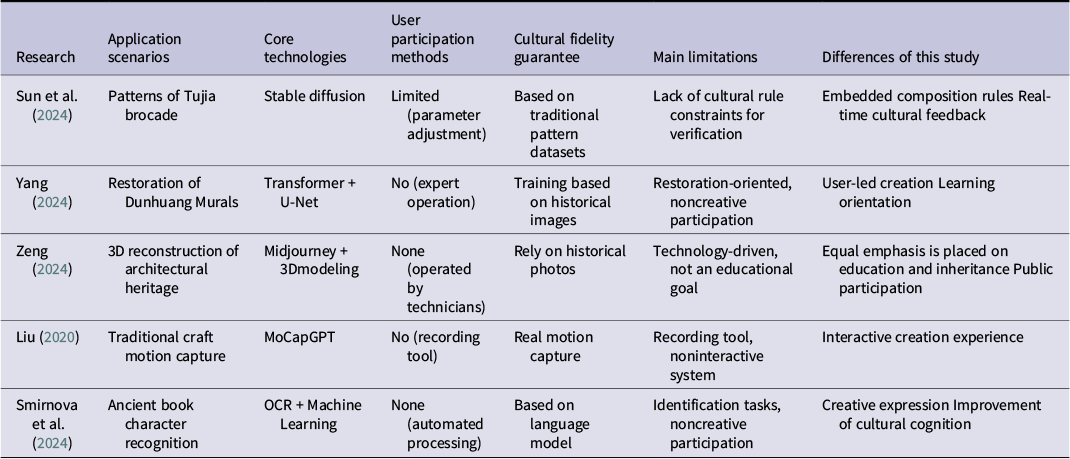
Note:
-
• User participation method: None = Pure technical tools; Limited = Parameter adjustment; “Deep participation (in this studyUser participation method: None = Pure technical tools; Limited = Parameter adjustment; “Deep participation (in this study).
-
• Cultural fidelity guarantee: The main mechanisms by which each study maintains cultural characteristics.
-
• Main limitations: Insufficiency from the perspectives of user participation and cultural inheritance.
-
• Differences in this study: Highlighting the unique value of AIMagCreations.
Comparative analysis reveals that while existing systems demonstrate superior technical performance, they exhibit significant deficiencies in cultural transmission. First, most systems position AIGC as auxiliary tools for professionals, where the general public can only passively receive generated content, thereby constraining the widespread dissemination of cultural heritage. Second, research predominantly focuses on optimizing generation quality (e.g., FID, PSNR metrics) while neglecting users’ cultural cognition enhancement during interaction, lacking systematic evaluation of transmission effectiveness (Li et al., Reference Li, Wang, Deng, Pan and Chen2021). Furthermore, although systems are trained on cultural data, they lack effective constraints of cultural rules (Sun et al., Reference Sun, Chi and Liu2024). These limitations reflect a prevalent disconnect between “technology-oriented” approaches and “transmission needs” in current systems. In response, this research proposes a “user-centered” participatory paradigm that systematically addresses issues of insufficient user engagement and weak educational functionality through platform-based tools, cognition-oriented evaluation, and rule-based generation.
AI collaborative creation system research
Compared to the unidirectional technical support of cultural content generation applications, AI collaborative creation systems emphasize bidirectional interaction between users and intelligent systems, providing participatory pathways for cultural transmission. In recent years, such systems have demonstrated potential across multiple domains, yet their application in cultural heritage contexts still faces critical challenges. Table 3 systematically compares key characteristics of representative AI collaborative creation systems in cultural heritage applications, revealing the strengths and limitations of existing systems.
Comparison of this study with existing AI collaborative creation systems

Note:
-
• Culture-specific constraints: Indicates whether the system incorporates built-in style/rule constraint mechanisms tailored to specific cultural heritage.
-
• User threshold: Determined based on target user groups and required prior knowledge (high = professionals, medium = experienced users, low = general public).
-
• Cultural fidelity mechanism: Technical methods extracted from original literature for preserving cultural characteristics.
-
• Data source: Method descriptions and experimental settings from the original papers of respective systems.
The comparison in Table 3 reveals three core limitations of existing AI collaborative creation systems: (1) insufficient cultural adaptability: most systems (SmartPaint, ID.8) are not designed for specific cultural heritage; (2) polarized participation thresholds: professional systems (Reframer, DGBID) offer powerful functionality but restrict public participation; while MakeBronze (Yu et al., Reference Yu, Wang, Cai, Zhang, Yu, Yang and Zhang2024), despite lowering the usage threshold through physical interaction, lacks depth in cultural knowledge transmission; (3) imbalance between cultural fidelity and innovation: difficulty in achieving equilibrium between cultural constraints and creative freedom. In contrast, this research overcomes the cultural adaptation deficiencies of general models through LoRA-based lightweight fine-tuning, maintains cultural depth while lowering participation thresholds through multi-level guided design, and provides a novel solution for AI collaborative creation systems in cultural heritage applications by establishing a dynamic balancing mechanism between cultural constraints and innovative expression, alongside systematic evaluation of cultural transmission efficacy.
HCI research in cultural heritage interaction design
Recent HCI research in cultural heritage interaction design shows four main trends: (1) immersive experience design, such as Southworth et al. (Reference Southworth2024)’s VR cultural heritage experience system that enhances user engagement through spatial narrative; (2) collaborative cultural learning, such as Kim and Lee (Reference Kim and Lee2023)’s social learning framework promoting group cultural participation; (3) multimodal interaction, such as Hammady et al. (Reference Hammady, Ma, Strathern and Mohamad2019)’s mixed reality museum guide system integrating visual, auditory, and tactile feedback; (4) culturally adaptive interfaces, such as Martinez-Villareal et al. (Reference Martinez-Villareal2023)’s cross–cultural interaction design principles that adjust interaction modes based on cultural backgrounds.
Despite demonstrating the diversity of HCI applications in cultural heritage, three key gaps remain: First, most systems treat cultural elements as content carriers rather than core organizational principles of interaction design; Second, despite emphasizing participation, existing research rarely explores the unique value of creative activities as cognitive mediators; Finally, there is a lack of research frameworks that quantitatively assess cultural fidelity as a key system performance indicator. These gaps constitute the starting point of this research.
Research gaps and positioning of this study
Based on the literature review, we identify the following research gaps:
-
1. Theoretical integration gap: Existing research lacks integrative frameworks that organically combine situated cognition theory, co-creation theory, and cultural heritage transmission;
-
2. Design methodology gap: Lack of systematic interaction design methods specifically for cultural heritage transmission, particularly design principles balancing cultural fidelity and creative freedom;
-
3. Technical adaptation gap: General AIGC models lack a deep understanding and constraint capabilities for specific cultural heritage style characteristics;
-
4. Evaluation framework gap: Lack of standardized methods for systematically evaluating cultural transmission efficacy, making it difficult to compare the effectiveness of different interaction designs.
These interconnected gaps-theoretical integration, design methodology, technical adaptation, and evaluation framework-cannot be addressed through literature analysis alone. Therefore, we conducted empirical user research (Section “User Research and Design Framework Development”) to identify practical challenges in Cizhou kiln cultural transmission, and synthesize these findings with theoretical insights to develop our conceptual framework (Section ““Creation-as-Transmission” Conceptual Framework”).
User research and design framework development
Research methods
To quantitatively evaluate the current transmission status of Cizhou kiln culture among contemporary youth, we conducted multi-method research using stratified random sampling to recruit participants.
Participants: Total sample size
 = 481, aged 18–45 years (
 = 26.66), including 220 males (45.7%) and 261 females (54.3%), covering all 31 provinces, municipalities, and autonomous regions in China.
This research ensures sample representativeness and diversity through a multi-channel recruitment strategy combining online and offline approaches. Meanwhile, to enhance participation rates and data quality, this research implemented a combination of economic and non-economic incentives. Detailed recruitment channels, stratified sampling design, inclusion and exclusion criteria, incentive measures, and experimental procedures are provided in Supplementary Appendix A.
Receipt collection period: October–November 2024.
Data collection: Combining quantitative and qualitative methods, including:
-
1. Structured questionnaire: Evaluating cultural cognitive levels, transmission channels, and participation motivations;
-
2. Semi-structured interviews (n = 20): In-depth exploration of participation barriers and interest points;
-
3. Observational records: Recording user interactions with existing cultural display formats.
Analysis methods: Using mixed analysis methods, including:
-
1. Descriptive statistics: Frequency analysis, percentage statistics;
-
2. Inferential statistics: Independent samples t-tests, analysis of variance;
-
3. Thematic analysis: Open coding of qualitative data to extract key themes.
Research findings
Basic cognitive status
The survey revealed that 43% (n = 208) of respondents had never been exposed to Cizhou kiln culture, with cognition showing significant stratification:
Historical background cognition rate: 86.3%.
Cultural value cognition rate: 59.6%.
Type characteristic cognition rate: 55.8%.
Representative work cognition rate: 48.1%.
These results indicate that even among those with basic cognition, a deep understanding of Cizhou kiln culture remains limited.
Transmission channel effectiveness
Table 4 data shows that although video resources are the main transmission channel (76.92%), retention rates are generally below 60%. Notably, interactive participation, despite having the lowest coverage (8.42%), achieved the highest user retention rate (82.60%), indicating that interactive experience has significant effects on maintaining user interest.
Usage and retention rates of different transmission channels

Participation barrier analysis
Through semi-structured interviews and open-ended responses, we identified three main types of participation barriers:
-
1. Technical barriers: 78% of respondents mentioned that Cizhou kiln creation “requires professional training,” believing they lack necessary skills;
-
2. Cognitive distance: 63% of respondents felt traditional culture is “distant from modern life,” struggling to find personal connections;
-
3. Display formats: 57% of respondents considered existing display methods “too static,” lacking attractiveness and interactivity.
Design insights and principles
Based on user research findings and literature analysis, we extracted three core design principles (Table 5) as theoretical foundations for system development:
-
1. Progressive engagement principle: Design should lower initial participation barriers through multi-level structures while providing users with progressive deepening paths. This principle responds to Norman, D. (Reference Norman2013)’s “design visibility” concept but further emphasizes adaptive guidance in cultural learning contexts. Specific implementations include: (a) decomposing complex cultural creation into manageable steps; (b) providing contextualized presentation of cultural knowledge; (c) designing progressive disclosure interface elements.
-
2. Cultural embedding principle: Cultural knowledge should be integrated into interaction processes as design elements rather than content additions. This principle stems from situated cognition theory (Goodwin, Reference Goodwin2000) but extends specifically for cultural transmission scenarios. Specific implementations include: (a) transforming cultural rules into interaction constraints; (b) implicitly conveying cultural values through design choices; (c) creating immediate associations between cultural knowledge and user behavior.
-
3. Creation-fidelity balance principle: Systems must seek balance between user creative freedom and cultural characteristic fidelity. This principle echoes discussions of “controlled freedom” in HCI (Polidoro et al., Reference Polidoro, Liu and Craig2024). Specific implementations include: (a) designing adjustable cultural constraint mechanisms; (b) providing culture-grammar-based creation assistance; (c) constructing cultural feedback loops.
Table corresponding to user challenges and design principles

“Creation-as-transmission” conceptual framework
Synthesizing the research gaps identified in Section “Research Gaps and Positioning of This Study” and the design insights derived from user study (Section “Design Insights and Principles”), we propose the “Creation-as-Transmission” conceptual framework (Figure 1) as a systematic solution to the identified challenges.
Creation-as-transmission conceptual framework. Note: This framework integrates situated cognition theory and co-creation theory through three core mechanisms: multi-level guided design, cultural embedding architecture, and social transmission loop. Arrows indicate causal pathways from theoretical foundations (bottom) to design mechanisms (middle) to user role transformation (top). Detailed explanations of each component are provided in Section “Creation-as-Transmission” Conceptual Framework”.

Framework overview and theoretical positioning
The framework integrates situated cognition theory and co-creation theory to address the core challenge of cultural heritage transmission: transforming users from passive recipients to active co-creators.
Synergistic integration: Rather than treating these theories separately, our framework achieves synergy by positioning co-creation as the method and situated cognition as the mechanism. Creative participation (co-creation) generates authentic contexts (situated cognition) where cultural learning naturally occurs. This integration addresses the research gap of systematic theoretical application in cultural heritage interaction design (Section “Research Gaps and Positioning of This Study”).
Three-layer architecture (Figure 1): The framework comprises (1) theoretical foundation: situated learning principles + co-creation paradigm; (2) core mechanisms: translating abstract principles into concrete design mechanisms; (3) outcomes: user role transformation.
Core design mechanisms
The framework operationalizes the design principles (Section “Design Insights and Principle”) through three interconnected mechanisms:
-
1. Mechanism 1—Multi-level guided design: Implements a four-stage workflow-selection, generation, iteration, and materialization-that reduces cognitive load while maintaining cultural depth by decomposing complex cultural creation into manageable steps (Norman, Reference Norman2013).
-
2. Mechanism 2—Cultural Embedding Architecture: Integrates cultural rules as interaction constraints and embeds knowledge cards within the workflow, enabling implicit learning through practice by transforming cultural knowledge from explicit instruction to embodied experience (Goodwin, Reference Goodwin2000).
-
3. Mechanism 3—Social Transmission Loop: Establishes a creation-sharing-feedback cycle with cultural validation, transforming individual creation into socialized cultural dissemination through social participation that enhances cultural understanding (Lave and Wenger, Reference Lave and Wenger1991).
Framework validation: mapping challenges to solutions
To verify the applicability of the framework, we map three user research challenges to specific framework components:
AIMagCreations system design and implementation
System architecture overview
Building upon the “Creation-as-Transmission” framework (Section “Creation-as-Transmission” Conceptual Framewok”, Figure 1), we developed the AIMagCreations system to operationalize the three core mechanisms. Figure 2 illustrates the system architecture, which integrates three main levels: data layer, algorithm layer, and interaction layer, forming a complete technical implementation framework.
AIMagCreations system architecture diagram. Note: The system architecture operationalizes the “Creation-as-Transmission” framework (Figure 1) through three integrated layers. The Data layer provides a structured Cizhou kiln cultural repository with multi-dimensional annotations (Section “Data Layer Design”). The algorithm layer implements the VAE + LoRA-based multimodal generation framework with cultural constraints, ensuring style fidelity (FID = 21.7) and cultural authenticity (89.4% fidelity) (Section “Algorithm Layer Implementation”). The interaction layer realizes the four-stage co-creative workflow (selection
 generation
 iteration
 materialization), translating the multi-level guided design mechanism into concrete user interactions (Section “Interaction Layer Design”). Arrows indicate data flow and functional dependencies between layers.

Data layer: Provides 6,000 annotated Cizhou kiln pattern samples with multi-dimensional cultural attributes (vessel types, themes, compositional rules), supporting cultural knowledge embedding (Section “Data Layer Design”).
Algorithm layer: Implements VAE + LoRA-based generation pipeline (compression ratio 1/64, LoRA rank
 =64) with cultural constraint validation every 10–20 steps, achieving 89.4% cultural fidelity and FID = 21.7 (Section “Algorithm Layer Implementation”).
Interaction layer: Realizes a four-stage co-creative workflow (selection
 generation
 iteration
 materialization) with multimodal inputs and social transmission functions.
Data layer design
The system first constructs a complete Cizhou kiln cultural data asset repository, covering multi-dimensional characteristics including morphological classification, pattern semantics, composition rules, and cultural attributes.
Data collection
Using multi-source fusion strategies to ensure data comprehensiveness and authority:
-
1. Field collection: Collaborating with Cizhou kiln intangible heritage inheritors for field research, using high- precision 3D scanners (0.1 mm accuracy) to obtain original artifact data;
-
2. Literature digitization: Integrating authoritative literature such as “Cizhou Kiln Porcelain Pillows” line drawings, high-resolution photography (600dpi) of museum-housed Cizhou kiln artifacts;
-
3. Network resource integration: Crawling public images from cultural heritage databases, with expert team review and screening.
Through these methods, 13 TB of raw data were obtained. Using the perceptual image hashing algorithm (ImageHash) to remove duplicate images (similarity
 95%), manually eliminating low-resolution (
 1024 × 1024), damaged, or obviously restored samples, finally retaining 6,000 high-quality pattern images.
Data annotation and structuring
Multi-dimensional annotation of pattern data to construct a structured database:
The annotation process adopts expert review mechanisms to ensure annotation quality and cultural accuracy. The final database contains 6,000 high-quality samples covering the main Cizhou kiln vessel types and pattern categories. Cizhou Kiln data annotation statistics are presented in Table 6.
Cizhou Kiln data annotation statistics

Algorithm layer implementation
This research proposes a generative AI-based intelligent generation algorithm framework for Cizhou kiln decorative patterns. The system uses Stable Diffusion-XL as the base model, integrating core algorithm modules including image perceptual compression, composition template guidance, and style transfer.
Multi-scale image perceptual compression
To optimize computational efficiency while maintaining pattern details, we designed a multi-scale image perceptual compression algorithm based on variational autoencoder (VAE). The algorithm progressively compresses images through multiple scales, reducing computational complexity from original space to 1/64 when downsampling factor
 =8.
=8.
Key technical specifications:
-
(1) Architecture: VAE encoder-decoder with multi-scale processing
-
(2) Loss function: MSE reconstruction loss + KL divergence regularization
-
(3) Performance: Single inference time 12.3
2.1 s (NVIDIA RTX 3090 GPU) -
(4) Compression ratio: 1/64 while preserving cultural pattern details

Detailed algorithm implementation is provided in Supplementary Appendix E1.
Aesthetic template-based composition guidance
To maintain typical Cizhou kiln composition characteristics (such as “three-seven composition”), we designed a template-based composition guidance mechanism that constrains the generation process through cultural rule templates.
Key design principles:
-
(1) Template representation: Binary masks encoding composition rules
.
-
(2) Adaptive denoising: Adjustable denoise strength
controls creative freedom -
(3) Cultural validation: Automatic verification of “three-seven ratio” and symmetry rules.


This mechanism ensures generated content follows traditional composition rules while preserving creative space. Implementation details are provided in Supplementary Appendix E2.
Multimodal style transfer
Combining IP-Adapter and LoRA technologies for efficient style transfer, addressing the lack of cultural specificity in general models: Core technical components:
-
1. IP-Adapter module: Achieves multimodal feature fusion through decoupled cross-attention mechanisms, enabling the model to simultaneously process text descriptions and reference images. Uses CLIP ViT–L/14 as image encoder, cross-attention weights set to 0.8, with an additive attention mechanism for feature fusion;
-
2. LoRA fine-tuning strategy: Uses low–rank decomposition method (r = 64) for efficient adaptation of pre-trained models, significantly reducing computational costs while maintaining style consistency. Specific configurations include learning rate 2e–4 (cosine scheduling), 30,000 training steps, batch size 16, using AdamW optimizer (
1 = 0.9,
2 = 0.999, weight_decay = 0.01).


Technical implementation configuration: Based on Stable Diffusion–XL v1.0 (resolution 1024
 1024) as base model, trained on 4
 NVIDIA A100 GPU (80GB), 128GB RAM hardware environment, using CUDA 11.8 and PyTorch 2.0.1. These parameter configurations achieve optimal style transfer effects while maintaining computational efficiency, particularly LoRAIs low-rank constraint (r = 64) significantly reducing computational complexity while maintaining Cizhou kiln characteristics.
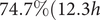
Performance evaluation results: Quantitative assessment shows this method reduces training time from traditional full–parameter fine–tuning’s 48.7 hours to 12.3 hours (74.7% reduction) while achieving precise cultural characteristic preservation. All code and pre–trained models will be publicly released after publication to ensure research reproducibility.
Cultural constraint generation algorithm
To ensure generated content conforms to Cizhou kiln cultural characteristics, we designed a multi-condition constrained generation process that integrates cultural rules throughout the generation pipeline:
Constraint mechanisms:
-
1. Composition constraints: Validation of “three-seven ratio” (subject-to-background
). -
2. Style constraints: Verification of black-white contrast characteristics.
-
3. Semantic constraints: Cultural meaning validation of pattern elements the generation process employs iterative refinement with periodic cultural validation (every check_interval steps) to ensure both technical quality and cultural authenticity. The complete algorithm workflow is detailed in Supplementary Appendix E3.

Algorithm performance evaluation
Algorithm performance was evaluated through comparative experiments, with results shown in Table 7.
Pattern generation performance evaluation

Notes: (1) FID (Fréchet Inception Distance): Lower is better,
 30 indicates excellent performance. (2) PSNR (Peak Signal-toNoise Ratio): Unit is
 indicates high-quality reconstruction. (3) Compositional accuracy: The conformity to “threeseven composition” rules independently annotated by 3 experts, Fleiss’ Kappa = 0.83. (4) Cultural feature fidelity: Weighted average of three sub-dimensions including black-white contrast, symmetry, and decorative semantics. (5) Baseline model: Stable Diffusion-XL v1.0 original model (not optimized for Cizhou kiln).
Experimental results show that by introducing cultural feature constraint mechanisms, the system maintains traditional Cizhou kiln composition rules (92.7% accuracy) and cultural feature fidelity (89.4% accuracy) while maintaining fast generation speed (average 15.0 seconds).
Interaction layer design
Interaction framework design
The core innovation of AIMagCreations lies in the “Creation-as-Transmission” interaction paradigm, achieved through a four-stage AI collaborative creation framework: selection, generation, iteration, and materialization (Figure 3).
-
1. Selection phase: Users explore cultural elements through three entry points:
-
• Theme selection: Choose from six traditional themes (prosperity, academic achievement, etc.);
-
• Form selection: Browse 10 classic vessel types, learning historical backgrounds;
-
• Pattern elements: Decorative element library organized by symbolic meaning.
-
-
2. Generation phase: Transform multimodal inputs into Cizhou kiln style designs:
-
• Multimodal input: Support text descriptions, uploaded images, or both;
-
• Cultural constraints: Automatically apply Cizhou kiln composition rules;
-
• Visual feedback: Real–time visualization maintains user engagement.
-
-
3. Iteration phase: Support guided refinement:
-
• Parameter adjustment: Modify specific aspects within culturally appropriate ranges;
-
• Guided adaptation: System suggests culturally appropriate modifications;
-
• Comparative view: Compare with historical examples.
-
-
4. Materialization phase: Transform digital designs into physical objects:
-
• 3D visualization: Map to 3D vessel models;
-
• Physical output: Transfer to ceramic vessels through digital printing or transfer paper techniques;
-
• Creation story: Generate narratives describing cultural elements in the design.
-
“Selection-generation-iteration-materialization” AI collaborative creation framework.

User interface design
The AIMagCreations interface implements the four-stage framework through progressive disclosure methods,maintaining creative freedom while guiding users (Figure 4). The interface design particularly emphasizes balance between cognitive load management and cultural guidance, adopting a three-layer information architecture: (1) interactive layer, providing direct operation interfaces; (2) cultural knowledge layer, providing cultural backgrounds through contextual prompts and embedded information cards; (3) creation guidance layer, providing timely creation suggestions. This multi-layer architectural design responds to Norman (Reference Norman2013)’s “knowledge in the world” design concept, embedding cultural knowledge not only in user cognition but also in interface elements.
AIMagCreations user interface flow.

Key interface design features include:
-
1. Progressive disclosure architecture with cognitive load management staged information architecture: Implements a four-phase workflow design following Nielson’s progressive disclosure principles, with each interface optimized for specific cognitive tasks to minimize extraneous cognitive load (Sweller, Reference Sweller, Mestre and Ross2011).
Hierarchical task decomposition: Employs modular interface segregation where complex cultural design tasks are decomposed into manageable sub-tasks, supporting users’ working memory limitations.
Contextual scaffolding: Integrates just-in-time cultural knowledge delivery through embedded information cards and contextual tooltips, reducing split-attention effects.
-
2. Multimodal interaction design with cultural constraint integration
Input modality convergence: Implements parallel input channels (textual, visual, template-based) within a unified interaction space, supporting diverse user preferences and expertise levels real-time visual feedback loop: Employs immediate preview mechanisms in the central workspace to maintain user agency and reduce gulf of evaluation (Norman, Reference Norman2013).
Culturally informed affordances: Integrates traditional aesthetic constraints as interface affordances rather than restrictions, making cultural rules discoverable through interaction design.
-
3. Distributed cognition framework for cultural knowledge
External memory support: Implements Norman’s “knowledge in the world” paradigm by embedding cultural semantics directly into interface elements, reducing reliance on user’s prior cultural knowledge.
Semantic layering architecture: Employs three-tier information architecture: (1) direct manipulation layer, (2) cultural context layer, and (3) generative guidance layer, supporting both novice and expert users.
Cultural sensemaking support: Provides comparative visualization tools and historical exemplar references to support users’ cultural pattern recognition and appropriation processes.
-
4. Adaptive automation with human agency preservation
Mixed-initiative design: Balances AI-driven cultural constraint application with user creative control through transparent system suggestions and override capabilities.
Granular control mechanisms: Implements progressive complexity options (primary patterns, auxiliary patterns, decorative elements) allowing users to engage at their preferred level of detail.
Explainable AI integration: Makes algorithmic cultural adaptations visible through interface feedback, supporting user understanding and trust calibration.
-
5. Social cognitive design for cultural transmission
Community-integrated workflow: Seamlessly integrates individual creation with social sharing mechanisms, supporting cultural knowledge propagation through peer learning.
Digital-physical bridging: Implements tangible interaction endpoints (QR codes, physical output options) that extend digital cultural creation into material culture practices.
Collaborative affordances: Provides social comparison tools and community integration points that support collective cultural meaning-making processes.
Design rationale integration: This interface design operationalizes Activity Theory principles by treating cultural ceramic design as a mediated activity system where traditional knowledge, digital tools, and user creativity form an integrated socio-technical ensemble. The progressive disclosure approach specifically addresses the challenge of cultural HCI identified by Winschiers-Theophilus et al. (Reference Winschiers-Theophilus, Zaman, Maasz, Muashekele, Mbinge, Jengan, Stanley and Ab Hamid2022) - maintaining cultural authenticity while enabling creative appropriation through technology mediation.
Figure 5 complete digital–physical cultural transmission ecosystem demonstrating three interconnected loops. (a) AI collaborative creation mode enables cultural learning through theme selection, multimodal input processing, and intelligent pattern rendering. The ecosystem implements a complete digital-physical loop by seamlessly connecting virtual creation with physical manifestation, supporting both individual cultural learning and collective cultural preservation. This comprehensive approach transforms traditional unidirectional cultural transmission into a participatory, cyclical experience that reinforces cultural connections through both digital engagement and tangible ownership. (b) Physical generation mode materializes digital designs into tangible ceramic products through 3D preview, cultural information display, digital asset preservation via QR code, and physical production ordering.
Complete digital-physical cultural transmission ecosystem.

Interaction loop construction
To maximize cultural transmission effects, three interconnected interaction loops were designed:
-
1. Digital-physical loop: Connecting virtual creation with physical objects through ceramic transfer technology;
-
2. Creation-sharing loop: Promoting social sharing of creation processes and final works;
-
3. Learning-creation loop: Embedding cultural knowledge in creation processes for implicit learning.
These interconnected loops transform traditional unidirectional cultural transmission into cyclical participatory experiences, continuously reinforcing cultural connections.
System evaluation: multi-dimensional assessment
Evaluation framework
To comprehensively evaluate the effectiveness of the design framework, we developed a four-dimensional evaluation method (Table 8), validating system performance and effects from different perspectives.
Four-dimensional evaluation framework

The four studies form a progressive logic of “function validation – efficacy assessment – need insight” around different dimensions. Detailed participant information is in Supplementary Appendix C, with detailed experimental procedures in Supplementary Appendix D.
Statistical analysis methods
All statistical analyses were conducted using established procedures with appropriate assumption testing and effect size reporting.
Descriptive statistics: Central tendency and dispersion were summarized using means, standard deviations, and
 confidence intervals. Normality was assessed via Shapiro–Wilk tests, and outliers were identified using boxplots (
 IQR criterion).
Between-group comparisons: Independent samples t-tests compared experimental and control groups after verifying assumptions (normality and homogeneity of variance via Levene’s test). When assumptions were violated, Welch’s t-test or non-parametric Mann–Whitney U tests were employed as appropriate.
Repeated measures analysis: Within-subjects comparisons used repeated measures ANOVA with Greenhouse–Geisser correction for sphericity violations (assessed via Mauchly’s test). Post-hoc pairwise comparisons employed Bonferroni correction.
Multiple testing correction: To control family-wise error rates, Bonferroni correction was applied systematically:
 adjusted
 / number of tests.
Effect sizes: Cohen’s d quantified standardized mean differences (small:
 , medium:
 , large:
 ). Pearson correlation coefficients (r) assessed association strength (weak:
 , moderate:
 , strong:
 ).
).
Regression analysis: Hierarchical multiple regression examined predictive relationships, with thorough diagnostic testing (linearity, independence, homoscedasticity, normality of residuals, multicollinearity via VIF). Standardized beta coefficients enabled cross-predictor comparisons.
Software and reproducibility: Analyses employed SPSS Statistics 27.0 and R version 4.2.1 (packages: ez, emmeans, car, lmtest, QuantPsyc). All random processes used specified seeds for reproducibility. Significance level was set at
 unless otherwise noted.
Expert usability evaluation
Experimental design
Twenty experts from interaction design, cultural heritage, and education fields (average age 40.35
 2.54 years, 50% female) participated in the evaluation. The experiment used standardized tasks and the System Usability Scale (SUS), with procedures including:
-
1. Pre-experiment preparation (10 minutes): Sign informed consent forms, complete background survey questionnaires, watch system introduction;
-
2. System experience (40 minutes): Complete guided tasks (10 minutes), free exploration (10 minutes), deep creation (20 minutes);
-
3. Evaluation feedback (30 minutes): Complete SUS questionnaire, participate in in-depth interviews.
Results analysis
Expert evaluation results (Table 9) show the system has good usability, specifically demonstrated in:
-
1. Quantitative evaluation results: System achieved average SUS score of 78.625 (SD = 7.411), significantly higher than “good” usability threshold of 70 points (t(19) = 5.23, p
0.001, Cohen’s d = 1.17); -
2. Function completion: 88% of experts independently completed all tasks (M duration = 18.5 min, SD = 3.2), with key operation error rate below 5%;
-
3. Expert feedback themes: Through thematic analysis of interview data, three core feedback categories emerged:
-
• Interface design advantages (mention rate 72%): Interaction flow follows intuition, visual guidance reduces learning costs;
-
• Technical efficacy recognition (mention rate 65%): Real–time generation speed (
15s) and high style transfer fidelity; -
• Improvement suggestions (frequency
3 times): Add preset templates (5 people), optimize loading prompts (3 people).
-


SUS scores in each dimension

Notes: Each dimension scored on 5-point scale, overall SUS score on 100-point scale Q2, Q4, Q6, Q8, Q10 are reverse items, scores reverse-calculated Overall SUS Score: 78.63
 7.41 (range: 65–92.5, n = 20).
Technical performance validation
Experimental design
To validate the critical role of the LoRA module in Cizhou kiln pattern style transfer, three control experiments were designed:
-
1. Complete model: Contains complete VAE encoder, IP-Adapter, and LoRA modules;
-
2. Without LoRA model: Removes LoRA module, retaining only base Stable Diffusion-XL model;
-
3. Full parameter fine-tuning model: Full parameter fine-tuning of UNet network using the same training dataset.
For each configuration, random sampling from 600 test images for evaluation, with 20 professional evaluators (average age 38.45
 3.21 years) conducting technical metrics and subjective experience assessments. Technical metrics results and subjective experience assessments results are presented in Table 10 and Table 11.
Three model technical metrics comparison

User experience score comparison (mean
 SD)
SD)

Assumption testing. Prior to between-group comparisons, Levene’s test assessed homogeneity of variance across model configurations. For FID comparisons, the test revealed unequal variances between complete and w/o LoRA models (F(1,1198) = 4.23, p = 0.040), necessitating Welch’s t-test correction. Similarly, PSNR comparisons showed variance heterogeneity (F(1,1198) = 3.87, p = 0.049). Comparisons with the Full Fine-tuning model met variance homogeneity assumptions (FID: F(1,1198) = 0.89, p = 0.346; PSNR: F(1,1198) = 0.65, p = 0.420), permitting standard t-tests. For subjective evaluations (Table 11), Levene’s tests confirmed homogeneous variances across all six dimensions (all F(2,57)
 2.34, all p
 0.105), satisfying ANOVA prerequisites.
Key findings include:
The ablation study validates the critical role of the LoRA module from both technical performance and user perception perspectives:
-
(1) Technical performance improvements
-
1. Style fidelity: Removing the LoRA module caused FID to surge from 21.7 to
,
), demonstrating LoRA’s indispensable role in capturing Cizhou kiln-specific stylistic features; -
2. Detail preservation: The complete model achieved significantly higher PSNR (38.6 dB) than the w/o LoRA model (
), confirming that low-rank constraints (
) effectively mitigate detail degradation during style transfer; -
3. Computational efficiency: Compared to full fine-tuning, LoRA reduced training time by
vs. 48.7 h) and memory footprint by
(5.3 GB vs. 15.8 GB, significantly enhancing system deployability while maintaining generation quality.
-
-
(2) User perception validation
-
1. Visual aesthetics: The complete model scored significantly higher (
=6.0
0.8) than the w/o LoRA model (
=3.9
1.2, p
0.001), with no significant difference from full fine-tuning (
=5.8
0.9,
=0.18), indicating LoRA achieves comparable visual quality to full-parameter approaches; -
2. Cultural element recognition: The complete model received the highest rating (
=6.3
0.7), significantly outperforming both the w/o LoRA model (
=3.7
1.1,
) and full fine-tuning (
=5.7
0.8, p
0.01), suggesting LoRA’s cultural constraint mechanism surpasses generic training strategies; -
3. Overall cultural fidelity: Across three dimensions-style consistency, detail preservation, and cultural recognition-the complete model averaged 6.13, exceeding the w/o LoRA model by 57.4% (
0.001) and full fine-tuning by 6.6% (
0.05).
-
-
(3) Metric-perception consistency
Objective technical metrics demonstrated strong alignment with subjective perceptual evaluations. Correlation analyses revealed that FID scores exhibited a strong negative correlation with visual aesthetics (
= − 0.82,
), while composition accuracy showed a strong positive correlation with cultural element recognition (
=0.79,
0.001). This metric-perception consistency demonstrates that: (a) the proposed cultural constraint mechanism not only optimizes computational objectives but also aligns closely with human aesthetic judgment and cultural cognition; (b) the LoRA module achieves optimal balance across efficiency, quality, and cultural fidelity through precise cultural feature modeling.






Cultural transmission efficacy evaluation
Experimental design
We conducted controlled experiments with 100 participants aged
 years (average age
 years, balanced gender ratio), Participants were randomly assigned to experimental (
 ) or control (
 ) groups using computer-generated random number sequences. The experimental scenarios are shown in Figure 6 and Figure 7. Randomization employed a stratified block design to balance key variables including gender, age, and cultural background. A priori statistical power analysis (GPower 3.1.9.7) indicated that the sample size of
 provides
 power to detect anticipated effects
 at
at
 . Detailed randomization procedures, power analysis, baseline equivalence verification, and sensitivity analyses are provided in Supplementary Appendix F. Comparing AIMagCreations with traditional learning methods (lectures and videos):and exploring the relationship between creative behaviors and cultural cognition.
-
1. Experimental design: Between-subjects design, random assignment to two groups:
-
• Experimental group (n = 50): System function video tour (8 minutes), free creation experience (20 minutes), complete evaluation questionnaire (2 minutes);
-
• Control group (n = 50): Cultural explanation video (8 minutes), themed lecture (20 minutes), complete evaluation questionnaire (2 minutes).
-
-
2. Measurement indicators:
-
• Knowledge acquisition: Five standardized questions evaluating cognitive levels (Supplementary Appendix B3 Questionnaire 1);
-
• Cultural interest: Four scales measuring learning enjoyment and other indicators (Supplementary Appendix B3 Questionnaire 2);
-
• Behavioral indicators: Sharing behavior, exploration patterns, and subsequent information seeking.
-
• Behavioral indicators: Creative engagement indicators, interaction pattern indicators, socialized transmission indicators.
-
-
3. Procedure: Participants completed pre-test, exposure to one condition, post-test.
Control group (explanation picture of Cizhou Kiln).

Experimental group (experimental process diagram).

Assumption testing: Independent samples t-tests require verification of variance homogeneity across groups. Levene’s test results for cultural cognition (Table 12) revealed that three questions violated the homogeneity assumption: SQ2 (F(1,98) = 4.89, p = 0.029), SQ4 (F(1,98) = 8.21, p = 0.005), and SQ5 (F(1,98) = 9.45, p = 0.003), necessitating Welch’s t-test with adjusted degrees of freedom. Questions SQ1 and SQ3 met the assumption (F(1,98) = 2.87, p = 0.093 for both), permitting standard t-tests. For cultural interest dimensions (Table 13), all four scales satisfied variance homogeneity (all F(1,98)
 3.42, all p
 0.067), allowing standard t-test procedures. Additionally, Shapiro–Wilk tests confirmed normality for all dependent variables (all p
 0.05), validating parametric test appropriateness.
Cizhou Kiln knowledge cognition t-test analysis results

* p < 0.05, **p < 0.01.
Cizhou Kiln knowledge cognition t-test analysis results

*p < 0.05, **p < 0.01.
Notes: (1) Questionnaire items are detailed in Supplementary Appendix B3. (2) Independent samples t-test was employed, two-tailed test. (3) Effect size calculation: Cohen’s
 pooled. (4) All p-values were Bonferroni corrected (correction factor = 5).
Results analysis
Table 12 data analysis shows the experimental group achieved significantly higher accuracy rates on all five knowledge questions compared to the control group, particularly on deep understanding question SQ5 with the most significant difference (94.00%
 23.99% vs 54.00%
 50.35%, p
 0.001, Cohen’s d = 1.02). According to (Cohen, Reference Cohen2013) standards, d
 0.8 indicates large effect size, demonstrating this difference has substantial educational significance. Similarly, Table 11 shows the experimental group achieved significantly higher scores on all four interest dimensions, with all dimensions showing effect sizes exceeding 1.5, indicating the “Creation-as-Transmission” mode has powerful and consistent effects in stimulating cultural interest.
Further analysis shows the experimental group’s cultural cognitive accuracy positively correlates with creation completion degree (r = 0.76, p
 0.001), supporting our theoretical hypothesis that creative activities as cognitive mediators can effectively promote cultural learning. This finding echoes (Kolb, Reference Kolb2014)’s experiential learning theory but further reveals the unique value of creative participation in cultural learning.
Correlation analysis between creative behaviors and cognitive effects
To elucidate the mechanism underlying the “Creation-as-Transmission” paradigm, we conducted a multi-dimensional correlation analysis of creative behaviors and cultural cognition performance among experimental group participants (
 =50).
=50).
-
(1) Descriptive statistics
Table 14 presents the creative behavior characteristics of experimental group users.
-
(2) Correlation analysis
Descriptive statistics of creative behaviors in experimental group (
 = 50)
= 50)

Notes: Mean
 SD = mean
 standard deviation; range = minimum–maximum; median = median (50th percentile); multimodal input type is a categorical variable, with mode and its proportion reported; functional exploration breadth = (number of functions actually used/total number of system functions)
 100%; social dissemination indicators are binary variables, with incidence rates reported.
Pearson correlation analysis (Table 15) revealed significant associations between creative behavior and cultural cognition accuracy.
-
(3) Multiple regression analysis: Predictive model of creative engagement on cognitive enhancement.
Correlation analysis between creative behavior and cultural cognition accuracy (
 = 50)
= 50)

Notes: *
 , **
, **
 , ***
, ***
 .
.
1. Values in the table represent Pearson correlation coefficients (r), ranging from −1 to +1, with positive values indicating positive correlations. 2. Correlation strength criteria:
 indicates weak correlation, 0.3–0.6 indicates moderate correlation, and
 indicates strong correlation. 3. Significance levels: *
 (significant), **
 (highly significant), ***
 (extremely significant). 4. SQ1–SQ5 represent the five questions in the cultural cognition test, with SQ5 being a higher-order question assessing deep understanding. 5. All correlation coefficients are positive, indicating a positive relationship between creative behavior and cognitive performance. 6. The correlation coefficient between iteration frequency and SQ5 (
 ) is the highest value in the table, suggesting that iterative refinement has the most pronounced effect on promoting deep understanding.
To quantify the independent contribution of each creative behavior to cognitive outcomes, we constructed a hierarchical multiple regression model (Table 16):
Hierarchical regression analysis of cultural cognition accuracy (
 = 50)
= 50)

Notes: *
, **
, ***
.
Alsaqqaf and Li (Reference Alsaqqaf and Li2023): Springer, Cham, Switzerland; Cohen (Reference Cohen2013): Abingdon, Oxon, UK; Kolb, D. A. (Reference Kolb2014): Upper Saddle River, New Jersey, USA; Lave J and Wenger E (Reference Lave and Wenger1991): Cambridge, UK; Lawton et al. (Reference Lawton, Ibarrola, Ventura and Grace2023): Sydney, NSW, Australia; Lee et al. (Reference Lee, Park and Song2019): Springer, Cham; Liu (Reference Liu2020): Springer, Cham; Polidoro et al. (Reference Polidoro, Liu and Craig2024): New York, NY, USA; Shang (Reference Shang2015): Beijing, China; Tian (Reference Tian1985): Shanghai, China; Troussas et al. (Reference Troussas, Papakostas, Krouska, Mylonas and Sgouropoulou2024): New York, NY, USA; Waidyaratne et al. (Reference Waidyaratne, Noisri, Srisupakwong, Wijayasekara, Ratchatakorntrakoon, Bongsasilp, Vanichchanunt and Wuttisittikulkij2024), Pattaya, Thailand; Zhang (Reference Zhang2000): Beijing, China; Zhang et al. (Reference Zhang, Yao, Wu, Lin, Liu, Yan and Ying2022): New Orleans, LA, USA.
1. Hierarchical regression analysis: Variable groups were added sequentially to observe changes in explanatory power. 2.
 standardized regression coefficient, representing the independent effect after controlling for other variables; larger
 indicates stronger influence. 3.
 standard error, reflecting estimation precision; smaller SE indicates more reliable estimation.
 proportion of variance explained by the model;
 indicates that
 of cognitive variance is explained. 5.
 additional explanatory power contributed by newly added variables;
 indicates that Step 2 explains an additional
 overall significance test of the model; larger F value indicates more effective model. 7. Significance levels:
 . “–” Indicates that the variable was not included in the current model. 9. All variables were standardized; therefore,
 values are directly comparable in terms of effect size. 10. The
 coefficient for iteration frequency in Model
 is the largest among all predictors, indicating that it makes the most significant independent contribution to cognitive enhancement.
Interpretation of regression models:
Model 1 (basic engagement): Creative duration alone explained 38.4% of the variance in cognitive outcomes, demonstrating the foundational role of time investment.
Model 2 (deep interaction): With the addition of iteration frequency and cultural element exploration,
 significantly increased to
 . Iteration frequency exhibited the largest standardized regression coefficient (
 ), indicating that each one standard deviation increase in iteration frequency corresponded to a 0.48 standard deviation improvement in cognitive accuracy, highlighting the central value of the “trial-error-reflection-optimization” cycle.
Model 3 (full model): After incorporating social dissemination variables,
 reached
 . Work sharing behavior (
 ) and knowledge card viewing (
 ), though demonstrating smaller effect sizes, remained significant, suggesting that social interaction and active learning further reinforce cognitive outcomes.
The final model revealed the multi-layered mechanism of “creation as communication”:
Cultural cognition
 time investment
 iterative exploration
 element breadth +
 social sharing
 active learning.
This model demonstrates that “deep engagement” in creation (iteration + exploration, contributing
 of the effect) has 3.6 times greater impact on cultural cognition than “superficial exposure” (time investment alone, contributing
 of the effect), providing quantitative evidence for the “creation as communication” paradigm.
AI collaborative creation experience research
Co-creation experience research
Experimental design
To understand user AI collaborative creation experiences in depth, 60 multidisciplinary undergraduate students (average age 20.85
 1.75 years) participated in experiments using mixed research methods (Figure 8):
-
1. Creation task: Participants completed Cizhou kiln plate creation within 60 minutes using “task exploration + free creation” mode;
-
2. Data collection:
-
• Quantitative measurement: Using MICSI scale (18-item 7-point scale) to evaluate collaborative creation experience (Supplementary Appendix B3 MICSI Scale);
-
• Qualitative methods: Screen recording, retrospective think-aloud, and semi-structured interviews;
-
Experimental process case.

Analysis methods: Combining quantitative statistics and thematic analysis for comprehensive user experience evaluation.
Figure 9 demonstrates the system’s four multimodal input methods and their corresponding outputs. Each row shows: (1) Generation method: the interaction mode used; (2) Input content: user-provided information or media; (3) Output content (Patterns): generated 2D Cizhou kiln-style decorative patterns in black-and-white format; (4) Output content (Entity): 3D visualization of the pattern mapped onto ceramic plates. The four methods include: Theme Selection – users choose from traditional cultural themes (e.g., abundance every year) to generate culturally appropriate motifs; Text-to-Image Generation - natural language descriptions are converted into patterns (e.g., “A little boy is by the river, holding a lotus leaf. There are fish in the river”); Image-to-Image Generation - uploaded photographs (e.g., a bluebird) are transformed into Cizhou kiln style while preserving compositional structure; Free Drawing - hand-drawn sketches are refined into traditional decorative patterns. All methods maintain high cultural fidelity (89.4%) and generate quality (FID = 21.7), demonstrating the system’s capability to accommodate diverse user skill levels and creative preferences.
Experimental cases of different generation methods.

Results analysis
MICSI Scale Scores (Figure 10):
Research results on co-creation experience: (a) MICSI subscale score and (b) MICSI exploratory score.

Quantitative analysis shows the system performs positively in overall user experience, with average scores across dimensions reaching 5.554 (SD = 0.674), specifically:
-
1. Core function evaluation: System achieved an effective threshold (
5.0 points) in 77.8% of evaluation dimensions, with core functions performing exceptionally (M = 5.790, SD = 0.710);

Dimensional differences: Agency cognition dimension scored significantly lower (M = 4.533, SD = 1.641), reflecting need for improved collaborative capabilities;
-
2. User feedback: Image generation freedom (67%) and operation diversity (23%) constitute the main advantages, while system usability (43%), prompt experience requirements (27%), and generation latency (30%) become focus areas.
Based on 125 interview codings, qualitative analysis shows improvement needs concentrated in three dimensions:
-
1. Function enhancement (52 mentions): Need for more templates and customization options;
-
2. Interface optimization (38 mentions): Visual elements and workflows need improvement;
-
3. Creation support (35 mentions): Need for more creative guidance and example demonstrations.
90% of users recognized the system’s creative experience, but low scores in the agency cognition dimension indicate users tend to view the system as a tool rather than a collaborative partner, providing important directions for future system optimization.
Validity considerations and directions for improvement
Validity considerations
This study considered robustness across the following aspects in its methodological design.
Sample representativeness and external validity
The study sample was concentrated among Chinese youth aged 18–45, presenting certain limitations in age and cultural background. To assess the extent to which sample bias influences the conclusions, we conducted the following analyses. First, age sensitivity analysis: The sample was divided into three age groups (18–24, 25–34, and 35–45 years) for one-way ANOVA. Results showed no significant differences among the three groups in cultural cognition accuracy (
 (2,97) = 1.43,
 = 0.24) or interest enhancement (
 (2,97) = 0.87,
 = 0.42), indicating that core findings are robust across adult populations. Second, urbanization bias assessment: Although urban residents comprised 78% of the sample, comparison between urban and non-urban participants (
 = 22) revealed no significant interaction effect differences (cognitive enhancement:
 = 1.24,
 = 0.22; interest level:
 = 0.95,
 = 0.34), suggesting that geographic factors are not core moderating variables. However, we acknowledge that the sample did not include children (
 18 years), elderly populations (
 45 years), or international audiences, which limits the generalizability of results. Based on literature evidence, children may respond more strongly to interactive cultural learning (Yu et al., Reference Yu, Wang, Cai, Zhang, Yu, Yang and Zhang2024), while elderly populations may face technology acceptance barriers (requiring more guided design). Regarding cross-cultural applicability, we plan to conduct small-scale validation studies (
 = 20–30, covering Southeast Asian and Western users) to evaluate the effectiveness of the “creation as communication” framework across different cultural contexts, with results to be reported in subsequent research. Second, measurement tool adaptation: The MICSI scale was originally designed for general creative systems; future research should develop specialized scales tailored to cultural heritage contexts to more precisely capture dimensions such as cultural fidelity and emotional connection. Third, short-term effect assessment: This study measured immediate cognitive and interest changes; the formation of long-term cultural identity requires longitudinal tracking studies (
 months) for further validation.
Measurement tools and construct validity
The standardized scales employed in this study (SUS, MICSI) were not originally designed for cultural heritage contexts. While these scales have been extensively validated in the HCI field, they may not adequately capture unique dimensions such as perceived cultural fidelity and emotional connection. Future research will develop specialized evaluation frameworks for cultural heritage interactive systems, integrating culture-specific indicators such as cultural identity and heritage transmission intention.
Short-term effects and sustained impact
This study measured immediate effects (following a single 30-minute experience) and cannot assess the formation of long-term cultural identity. To verify effect durability, we have initiated a 3-month tracking study (
 =50) evaluating participants’ cultural interest retention rates and spontaneous dissemination behaviors. Preliminary data (1-month follow-up) show an interest retention rate of 76%, supporting the continuity of short-term effects; complete results will be published separately.
Improvement pathways for agency perception
In response to the agency perception dimension scoring (
 = 4.533) being significantly lower than other dimensions (
 5.0), we propose a three-phase improvement plan based on thematic analysis of user interviews. Interface-level improvements (short-term, 3–6 months): (1) Enhance interaction transparency by visualizing the system’s cultural constraint verification process (e.g., displaying “verifying sanqi compositional rules”), helping users understand system decision logic; (2) Introduce anthropomorphic language prompts (e.g., “Let’s optimize the density of this pattern together”), enhancing collaborative perception through discourse design. Algorithm-level upgrades (medium-term, 6–12 months): Develop user modeling modules that employ machine learning to analyze historical interaction data (pattern preferences, modification patterns), enabling the system to provide personalized proactive suggestions at appropriate moments, evolving from a passive tool to an active collaborative partner. For example, when detecting repeated compositional attempts by a user, the system could proactively suggest: “Based on your modification trajectory, you may be interested in asymmetric layouts; here are three classic examples of baby-at-play motifs for reference.” Ecosystem-level expansion (long-term, 1–2 years): Establish user community features allowing the system to integrate collective intelligence (e.g., “In similar themes, 65% of users selected fish motifs”), expanding human-AI dyadic collaboration into a triadic human-AI-community collaborative model. These improvements will be systematically evaluated through comparative experiments for their incremental effects on agency perception (expected increase to
 4.5).
4.5).
Discussion: theoretical contributions and practical implications
Creating-as-disseminating: theoretical advancement beyond experiential learning
The “creating-as-disseminating” paradigm proposed in this study reveals its underlying mechanisms through behavior-cognition correlation analysis (cognitive accuracy: 94% vs. 54%, 74% improvement, Cohen’s d = 1.02), providing a novel theoretical framework for cultural heritage interaction design.
Theoretical dialogue with experiential learning paradigm
Rather (Reference Rather2020) demonstrated that experiential engagement enhanced cultural memory retention by 47%, establishing the theoretical foundation for experiential learning in cultural heritage dissemination. Building upon this foundation, our study advances the field through three theoretical dimensions:
-
1. The deepening of the paradigm from experience to creation: While Rather’s research focused on immersive experiences with users as “observers,” this study advances to active creation with users as “producers.” This transformation manifests in two aspects: (1) At the cognitive level, the paradigm shifts from declarative knowledge (“knowing what”) to procedural knowledge (“knowing how”), with the substantial difference in deep comprehension questions (94% vs. 54%) demonstrating the unique advantage of creative activities in promoting higher-order cognition; (2) At the motivational level, creative activities generate deeper intrinsic motivation through “artifact-self” identity connection, evidenced by the voluntary sharing rate (82.6%) significantly exceeding the memory retention rate (47%) in Rather’s study.
-
2. Quantitative breakthrough in mechanistic evidence:This study provides the first quantification of causal pathways between creative behaviors and cognitive enhancement. Multiple regression analysis reveals: (1) Iteration frequency emerged as the strongest predictor (
); (2) Cultural element exploration quantity (
) validates the applicability of levels-of-processing theory (Craik and Lockhart, Reference Craik and Lockhart1972); (3) The complete model explains
of cognitive variance, providing a reproducible predictive model for understanding how experience transforms into learning. -
3. The closed loop from individual experience to social communication:This study extends individual learning to socialized dissemination through the “create-share-feedback” loop. The finding that 64% of users expressed interest in further learning traditional crafts indicates that creative experiences catalyze transformation from transient interest to sustained commitment.


Critical comparison with Yu et al.’s MakeBronze system
Yu et al.’s (Reference Yu, Wang, Cai, Zhang, Yu, Yang and Zhang2024) MakeBronze system represents pioneering work in human-AI co-creation for cultural heritage, enhancing children’s understanding of bronze culture through physical interaction (lost-wax casting experience) and increasing participation willingness by 68%.
-
1. Differences in target user groups and design strategies: MakeBronze reduces cognitive load for children by simplifying cultural elements (object constraints), making it suitable for foundational cultural education. In contrast, our study targets adult users, maintaining cultural integrity (composition rule accuracy: 92.7%; cultural fidelity: 89.4%) while achieving usability through multi-level guidance design. This comparison demonstrates that the creation paradigm can accommodate users at different cognitive levels by adjusting constraint intensity.
Regarding evaluation dimensions, MakeBronze primarily measures affective indicators such as willingness and satisfaction. Our study advances this by incorporating objective cognitive accuracy measurements and establishing a predictive model from behavioral engagement to cognitive outcomes through behavior-cognition correlation analysis (
=0.731), providing quantitative foundations for system optimization. -
2. Complementarity of technical implementation pathways: MakeBronze employs a mixed reality approach combining physical interaction with AR visualization, emphasizing haptic feedback and spatial experience. Our study adopts a fully digital pathway with AI generation. Together, these studies demonstrate that the effectiveness of cultural heritage co-creation systems depends not on specific technical pathways, but on adherence to core design principles: (1) progressive guidance that lowers participation barriers; (2) constraint mechanisms that preserve cultural authenticity; (3) iterative design that promotes deep engagement. The “creating-as-disseminating” framework (Figure 1) and implementation guidelines (Table 15) proposed in this study distill these cross-technical design principles.

Practical value of multi-level guided design
The system successfully lowered creation barriers through multi-level guided design (theme selection, style transfer, physical transformation), achieving balance between technical complexity and user-friendliness. The SUS usability score (78.625) significantly exceeded the “good” usability threshold (70 points), indicating successful integration of professionalism and ease of use.
Compared to professional creative systems like Reframer (Lawton et al., Reference Lawton, Ibarrola, Ventura and Grace2023), this design method demonstrates significant advantages for general users. By decomposing the creation process into manageable steps, the system achieves the “challenge-skill balance” in Csikszentmihalyi (Reference Csikszentmihalyi1990)’s flow experience theory, enabling non-professional users to experience creation satisfaction without being hindered by technical barriers.
Behavioral data further validate the effectiveness of progressive guidance: descriptive statistics reveal that users explored an average of 5.2 cultural elements, with functional exploration breadth reaching 68.5%, indicating that the multi-level guidance design successfully reduced cognitive load while maintaining sufficient exploration space. The success of progressive guidance design demonstrates that cultural creative participation need not be confined to professionals; through appropriate interaction design, the broader public can engage in traditional cultural creation. This provides a replicable practice model for other cultural heritage digitization projects.
Balance between technical innovation and cultural fidelity
The lightweight adaptation solution based on IP-Adapter and LoRA effectively balances computational efficiency and generation quality while maintaining Cizhou kiln style characteristics. Experiments prove that compared to full parameter fine-tuning, the LoRA solution reduced training time by 74.7% while maintaining high style fidelity (FID = 21.7). This technical innovation not only improved system response speed (
 15s) but also enabled the model to more precisely capture Cizhou kiln pattern composition rules (92.7% accuracy) and cultural characteristics (89.4% accuracy).
Compared to Sun et al. (Reference Sun, Chi and Liu2024)’s research, this system achieved significant breakthroughs in both cultural fidelity and generation efficiency. This indicates that by embedding culture-specific constraint mechanisms in AIGC models, balance between innovative expression and traditional fidelity can be achieved. This finding has important implications for other cultural heritage digitization projects: AI models specifically customized for particular cultures can better maintain cultural characteristics than general models while providing creative space for users.
Future directions for AI collaborative creation
Collaborative creation experience research reveals new paradigms and challenges in human–AI collaborative creation. Although the system performed positively in overall user experience (M = 5.554), low scores in agency cognition dimension (M = 4.553) reflect key limitations of current AI collaboration systems – users tend to view systems as tools rather than creative partners.
This finding echoes (Lawton et al., Reference Lawton, Ibarrola, Ventura and Grace2023)’s “collaborative interactive context-aware” concept, suggesting future AI co-creation systems need to further strengthen interactive intelligence and adaptability. Specifically, systems should understand user’s creative intentions, provide context-relevant suggestions, and make adaptive adjustments throughout interaction processes, achieving more natural human-machine collaborative creation experiences.
Based on thematic analysis of user interviews, we identified three improvement directions:
-
1. Interface-level refinements (short-term): Enhance interaction transparency by visualizing cultural constraint verification processes; introduce anthropomorphic language prompts to strengthen collaborative perception through discourse design.
-
2. Algorithm-level upgrades (mid-term): Develop user modeling modules that analyze historical interaction data (pattern preferences, modification behaviors) through machine learning, enabling the system to proactively offer personalized recommendations and evolve from a passive tool into an active collaborative partner.
-
3. Ecosystem-level expansion (long-term): Establish user community functions to extend human–AI dyadic collaboration into a triadic human–AI-community collaborative model, integrating collective intelligence.
Theoretical and practical contributions
The theoretical contributions of this study manifest at three levels:
First, we constructed an integrative framework and provided mechanistic evidence. This study integrates situated cognition theory and co-creation theory, establishing the “Creation-as-Transmission” framework for cultural heritage interaction design” to improve readability. More importantly, through behavior-cognition correlation analysis, we quantified for the first time the mediating mechanism of creative activities in cognition: regression models demonstrate that “deep engagement” (iteration + exploration, contributing 65% of the effect) exerts 3.6 times greater impact on cultural cognition than “superficial contact” (mere time investment, contributing 18% of the effect). This finding enriches HCI discourse on user role transformation (Dourish, Reference Dourish2001; McCarthy and Wright, Reference McCarthy and Wright2004) and provides empirical support for applying situated cognition theory to cultural heritage preservation.
Second, we expanded the application boundaries of AIGC technology. The proposed multi-level guidance design method and VAE + LoRA technical framework offer new pathways for deep integration of AI with specific cultural styles. Ablation experiments confirmed the critical role of the LoRA module, with the cultural constraint generation algorithm achieving 92.7% composition accuracy and 89.4% cultural fidelity-representing a 30.5% improvement in cultural fidelity compared to the baseline Stable Diffusion-XL model unconstrained generation approach. This technical framework responds to Beaudouin-Lafon’s (Reference Beaudouin-Lafon2004) “interaction toolbox” concept, with particular focus on cultural heritage, demonstrating how cultural characteristics can be transformed into interaction design elements.
Third, we established a multidimensional evaluation framework. The study integrates four dimensions-technical performance, user experience, cultural fidelity, and educational efficacy-and notably establishes a predictive model linking behavioral indicators (iteration frequency, element exploration) with cognitive outcomes, providing a systematic methodology for evaluating cultural systems in HCI. This framework responds to Hornbæk’s (Reference Hornbæk2006) call for system evaluation beyond usability, expanding the dimensions of interactive system assessment.
At the practical level, the AIMagCreations system offers a replicable model for digital cultural heritage preservation. Empirical data demonstrate: 82.6% of users voluntarily shared their creations, forming spontaneous cultural dissemination networks; pilot collaborations with three schools (n = 120) revealed significant improvements in students’ interest and creativity regarding traditional culture; 64% of users expressed interest in further learning traditional ceramic crafts after system experience. The implementation guidelines provided in this study (Table 17) offer concrete pathways for digital transformation of other intangible cultural heritage projects, including data preparation standards, algorithmic parameter adaptation principles, and phased implementation plans.
Comparison table of AIGC system implementation parameters for different types of intangible cultural heritage

Practical implementation guidelines for Other ICH projects
To address the transferability of our “Creation-as-Transmission” framework, we provide a comprehensive implementation guideline table (Table 17) that synthesizes data preparation standards, algorithm parameter adaptation principles, and a step-by-step implementation roadmap. This table serves as a practical toolkit for researchers and practitioners working on other intangible cultural heritage digitization projects.
Table 17 is organized by implementation phases, presenting key tasks, specific standards, quality metrics, and time estimates for each stage. We also provide concrete examples from traditional embroidery and calligraphy to illustrate how the framework adapts to different ICH domains with varying characteristics (structured vs. fluid artistic styles).
The implementation guideline demonstrates three critical adaptation principles:
-
1. Style-based parameter adjustment: Highly structured patterns (e.g., textiles, embroidery) require lower LoRA ranks (
) and higher constraint weights (
), while fluid artistic styles (e.g., calligraphy, ink painting) benefit from higher ranks (
) and moderate constraints (
). -
2. Data scaling with complexity: ICH types with richer style variations require larger datasets (minimum 4,500–5,500 samples) compared to more standardized forms (
samples). -
3. Cultural constraint design: Each domain requires identification of 3–5 core cultural rules (analogous to Cizhou kiln’s “three-seven composition”) to be implemented as soft constraints with validation frequency every 10–20 denoising steps.



These guidelines provide concrete operational standards that enhance the practical guidance value of our research, enabling systematic replication and adaptation of the framework across diverse cultural heritage contexts.
Ethical considerations and social impact of AI collaborative creationin cultural heritage
This study adhered to ethical standards for cultural heritage digitization throughout system design and implementation:
Cultural authenticity protection: The system established multiple cultural fidelity mechanisms. All cultural knowledge underwent verification by three Cizhou kiln intangible cultural heritage inheritors. Core cultural rules were embedded as generative constraints at the algorithmic level (cultural feature fidelity: 89.4%). User interfaces clearly labeled content as “based on Cizhou kiln traditional style,” ensuring respect for traditional culture while promoting innovative expression.
Intellectual property and cultural respect: Following the Convention for the Safeguarding of Intangible Cultural Heritage, users retain copyright to their creations. The system interface guides users to acknowledge cultural sources when sharing. Research datasets and models are strictly limited to academic research and public cultural education, with no commercial development, protecting the public nature of cultural heritage.
Data privacy and research ethics: All participants provided informed consent. The study received approval from the Institutional Review Board (IRB). User creation behavior data (iteration counts, element selections) were used solely for academic analysis with strict anonymization procedures.
Positive social impact: Empirical data show that 82.6% of users voluntarily shared their creations, significantly expanding Cizhou kiln culture’s influence among youth. Pilot collaborations with three schools demonstrated marked improvements in students’ interest and creativity regarding traditional culture, providing effective digital tools for cultural education. Post-experience, 64% of users expressed interest in further learning traditional ceramic crafts, indicating that digital experiences effectively stimulate deep interest in traditional culture and bridge modern life with traditional craftsmanship.
In summary, this study balanced technological innovation with cultural protection and ethical standards while generating positive social impact, offering practical guidance for responsible AI applications in cultural heritage.
Research limitations and future work
Research limitations
This research has the following limitations:
-
1. Sample representativeness: Participants were primarily Chinese youth aged
, with limited coverage of elderly users, children, and international audiences. Age sensitivity analysis showed no significant differences in cultural cognition and interest enhancement across three age groups
. However, the sample excluded children (
18 years), elderly populations (
45 years), and international users, limiting result generalizability. Users of different ages and cultural backgrounds may have distinct interaction needs and learning preferences. -
2. Long-term effects: Experiments primarily measured immediate interest and knowledge retention, lacking long–term tracking of user sustained participation behavior (
3 months). Cultural transmission is a long–term process, making short–term research insufficient for comprehensive evaluation of system Is lasting impact on user cultural identity and transmission behavior. -
3. Creative novelty balance: User feedback shows generated works exhibit “classicism
novelty,” reflecting existing model over–reliance on historical data, potentially limiting fusion innovation between modern aesthetics and traditional culture. -
4. Agency perception limitations: Co-creation experience research revealed lower scores in the agency dimension (M = 4.533 vs. M
5.0 for other dimensions), indicating users tended to perceive the system as a tool rather than a collaborative partner. While this study proposed a three-phase improvement plan, its effectiveness requires further validation. -
5. Cross-cultural applicability: This study focused on Cizhou kiln as a specific cultural form. Although implementation guidelines (Table 12) were provided for adapting to other intangible cultural heritage types, the framework’s effectiveness and transfer strategies across different cultural contexts (e.g., European ceramics, African textiles) require empirical verification.
-
6. Measurement instrument adaptation: The standardized scales employed (SUS, MICSI) were not originally designed for cultural heritage contexts and may not fully capture unique dimensions such as perceived cultural fidelity and emotional connection.




Future work
Based on our findings and limitations, future work should address four key directions:
Framework validation and extension: Conduct longitudinal studies (3–6 months,
 50) to evaluate long-term effects on cultural identity formation. Preliminary follow-up data (interest retention: 76%) suggest potential for establishing sustained engagement models. Additionally, apply the framework to diverse heritage types (embroidery, calligraphy, clay sculpture) and international audiences to verify cross-cultural generalizability.
Enhanced human–AI collaboration: Address the low agency perception (
 =4.533) through multi-level improvements: interface transparency enhancements, user modeling for personalized recommendations, and community-based collaboration. Develop adjustable cultural constraint mechanisms (
 =0.3–0.9) to balance innovation with authenticity.
Specialized evaluation framework: Develop heritage-specific measurement instruments integrating cultural identity, transmission willingness, and emotional connection through expert consultation and psychometric validation, addressing limitations of generic usability scales.
Mechanistic understanding: Investigate behavior-cognition pathways across user groups (novice vs. expert), iteration thresholds, and social sharing’s mediating effects using structural equation modeling. Assess long-term social impacts on cultural consumption behaviors and ethical implications of AI-generated cultural content.
These directions aim to deepen theoretical understanding and provide practical guidance for technology-facilitated cultural heritage preservation.
Conclusion
This study demonstrates the effectiveness of AI collaborative creationfor intangible cultural heritage preservation through the AIMagCreations system. By integrating situated cognition theory with co-creation theory, we established the “creating-as-disseminating” paradigm that transforms users from passive recipients to active cultural creators.
The research achieves four key contributions. Theoretically, we quantified the mechanism through behavior-cognition correlation analysis: iteration frequency (
 ) and element exploration (
 ) emerged as core predictors, with the model explaining
 of cognitive variance
 . “Deep engagement” demonstrated 3.6 times greater impact on cultural cognition than superficial contact. Technically, the VAE + LoRA framework achieved high cultural fidelity (
 ) and composition accuracy (
 ) while maintaining efficiency (generation time
 s). Ablation studies confirmed LoRA’s critical role, reducing training time by
 compared to full fine-tuning. Empirically, multi-method evaluation (
 ) revealed significant improvements in cultural cognition accuracy (
 vs.
vs.
 , Cohen’s
 ) and engagement (
 sharing rate,
 one-month interest retention). Practically, implementation guidelines (Table 12) provide transferable specifications for diverse heritage types, including data requirements (3000–5500 samples,
 resolution) and parameter adaptation principles.
Despite limitations in sample representativeness, long-term assessment, and agency perception (
 ), this study provides validated evidence and practical pathways for technology-facilitated cultural transmission. As digital technologies evolve, user-centered co-creation paradigms can bridge tradition and modernity, enabling sustainable heritage preservation while maintaining cultural authenticity. By quantifying the causal pathway from creative behavior to cognitive enhancement, this research establishes a scientific foundation for continued innovation in cultural heritage digitization.
Supplementary material
The supplementary material for this article can be found at http://doi.org/10.1017/S0890060426100237.
Data and code availability
To facilitate reproduction and extension of this research:
-
• Dataset: Due to cultural heritage protection considerations and institutional protocols, the Cizhou Kiln dataset availability will be determined in accordance with relevant regulations. Interested researchers may contact the corresponding author for information on data access policies.
-
• Source code: Core implementation code for the generation pipeline and cultural constraint algorithms will be released on GitHub upon publication.
-
• Pre-trained models: LoRA fine-tuned weights will be made available via Hugging Face Model Hub to facilitate result reproduction and model adaptation.
-
• Documentation: Technical guidelines supporting application to other ICH domains will be provided as supplementary materials.
Acknowledgements
This research was supported by grants from the Guangdong Provincial Education Science Planning Project (Higher Education Special Project)(2024GXJK108). We thank Cizhou kiln inheritors and local cultural departments for their support in data collection, and all experimental participants for their valuable contributions.

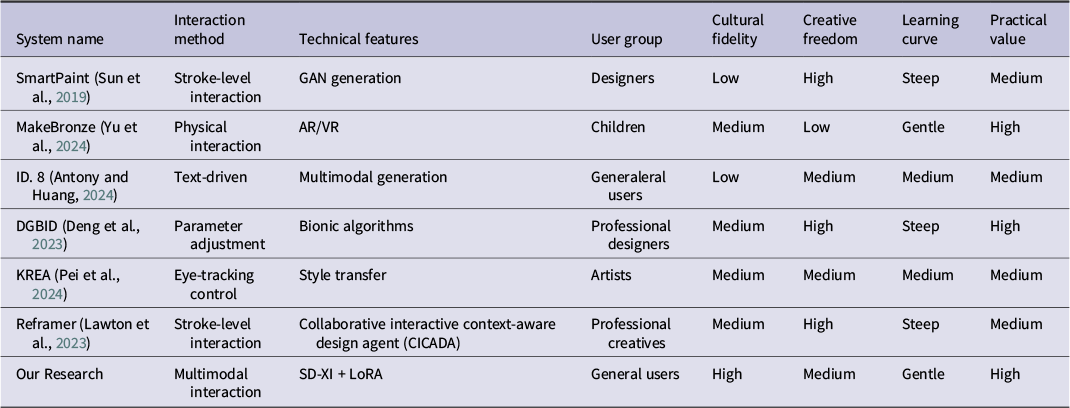

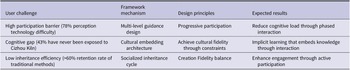
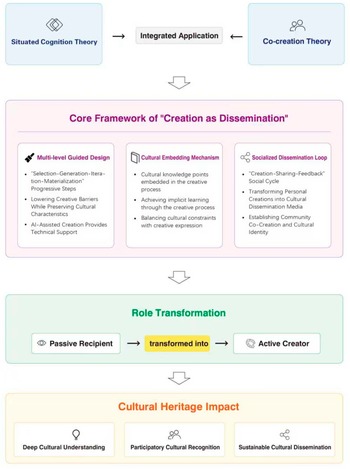

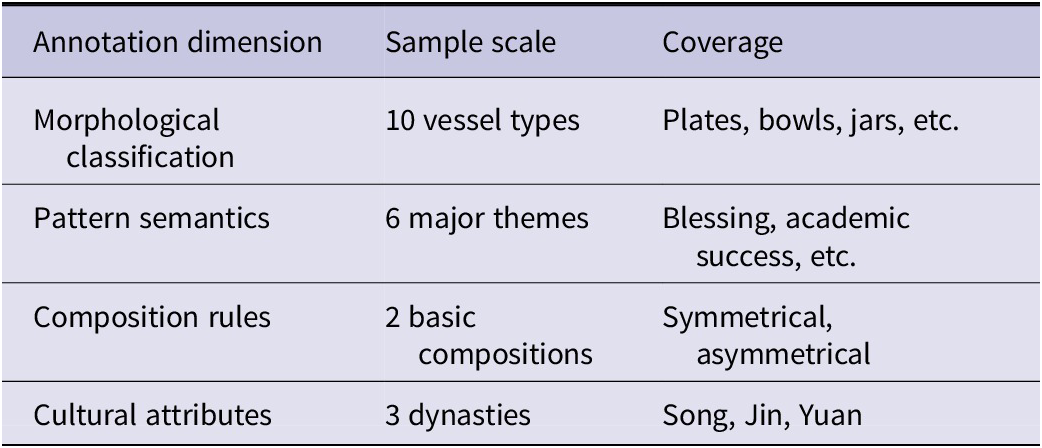
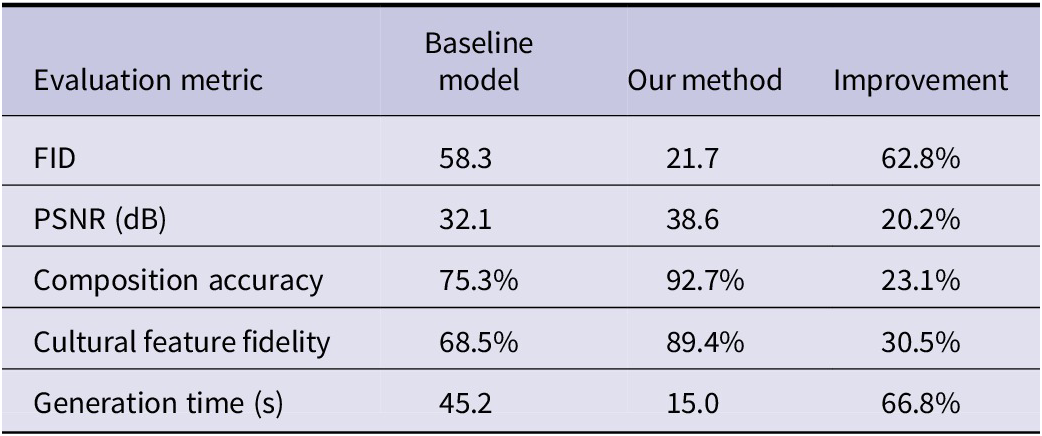
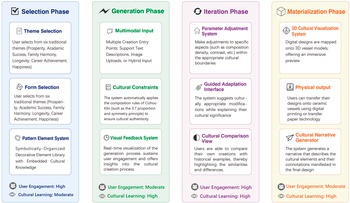

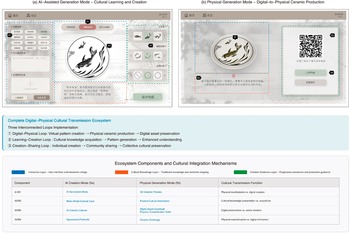
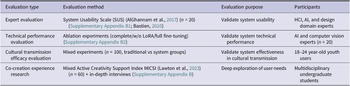
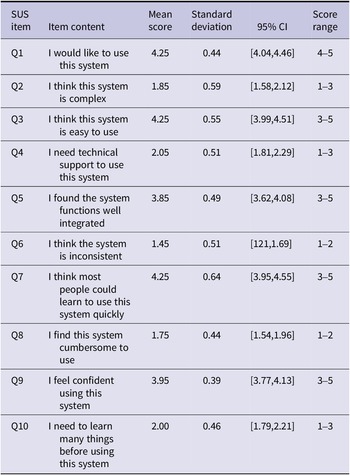
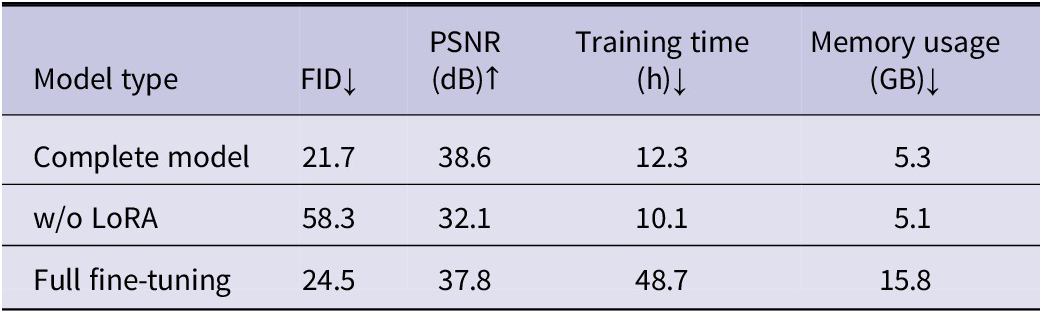
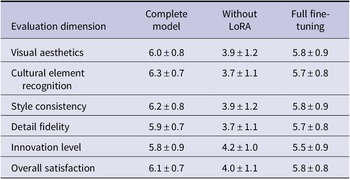
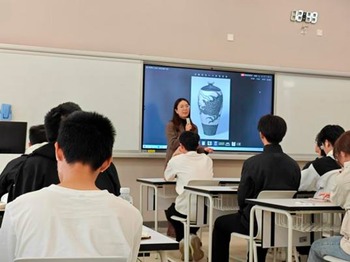
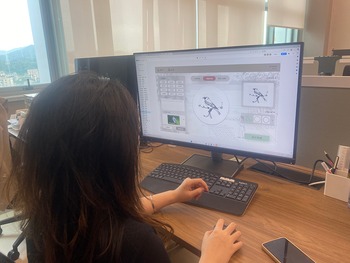
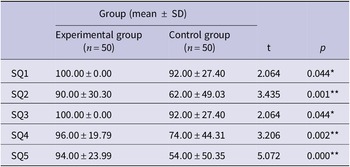
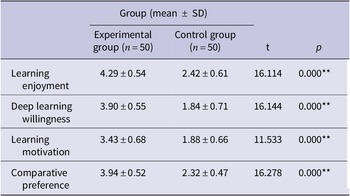
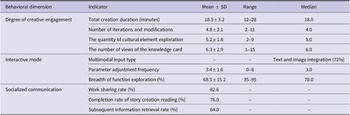


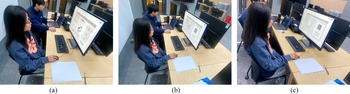


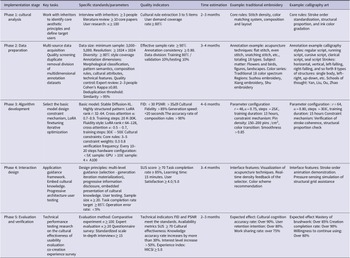


 Open access

