

Introduction
How old is tattooing in Melanesia? Reference KirchKirch (1997:142-3), in a widely accepted argument, proposed that both body tattooing (i.e. cutting or piercing the body with designs, with or without staining) and pottery making were brought to Melanesia by Austronesian speakers and that the method of tattooing was transferred to create dentate-stamped Lapita pottery. Ceramic faces and a figure fragment bearing tattoos demonstrate contemporaneity with Lapita pottery (Reference GreenGreen 1979:16; Reference SummerhayesSummerhayes 1998; Reference TorrenceTorrence & White 2001), but we argue that tattooing has a very long history in Melanesia and is therefore more likely an indigenous invention.
Method
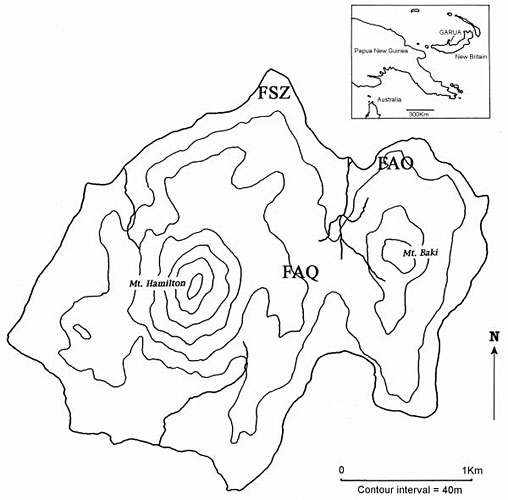
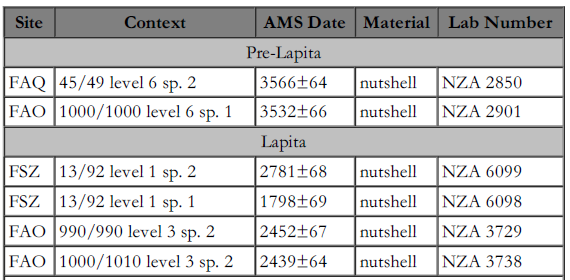
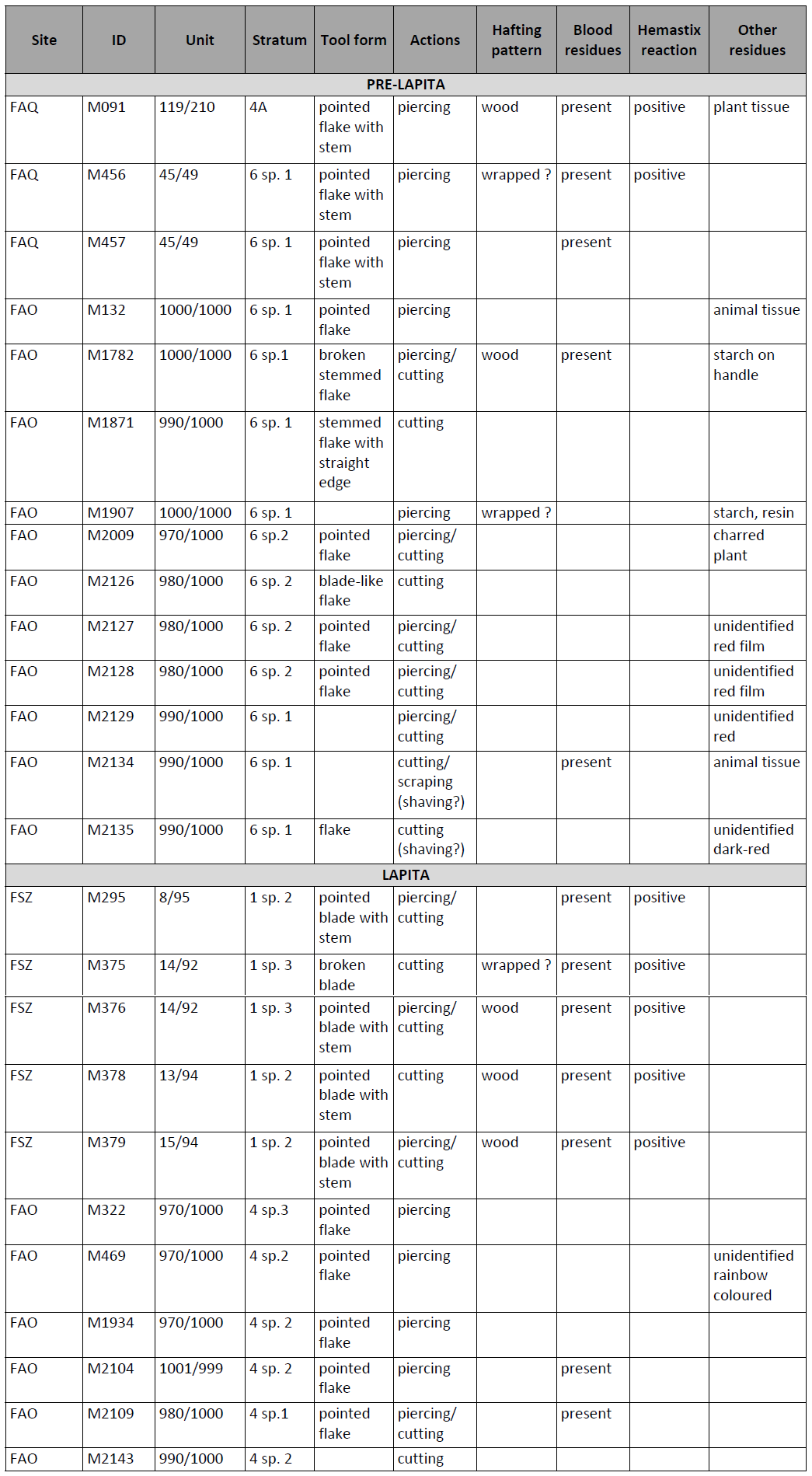
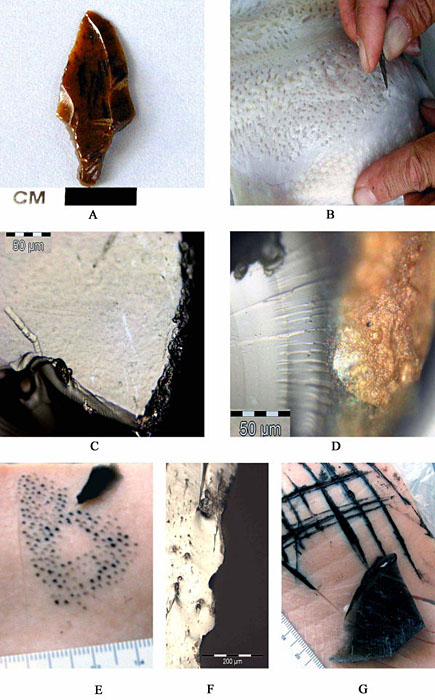
Three sites on Garua Island in Papua New Guinea (Figure 1; Table 1) produced a large sample of obsidian artefacts from pre-Lapita and Lapita contexts (Figure 3; Table 2) which were analysed for use-wear and residues by low and high power microscopy (Reference FullagarFullagar 2006; Reference KononenkoKononenko 2007; 2008 for detailed methods). The reconstruction of skin piercing, cutting and shaving combines the identification of use material and mode of use obtained through comparisons with experiments employing a wide range of materials, including chicken, pig and human skin (shaving) (Figure 2).
Location of sites on Garua Island.


Experimental results. Chicken skin: A tool; B piercing; C use-wear; D residue. Pig skin: E piercing; G cutting; F use-wear.

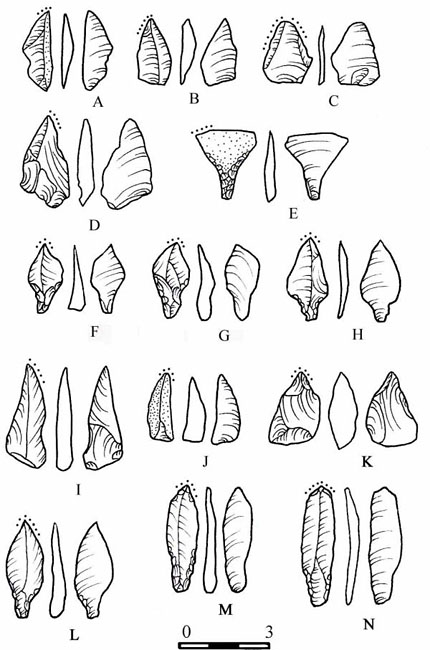
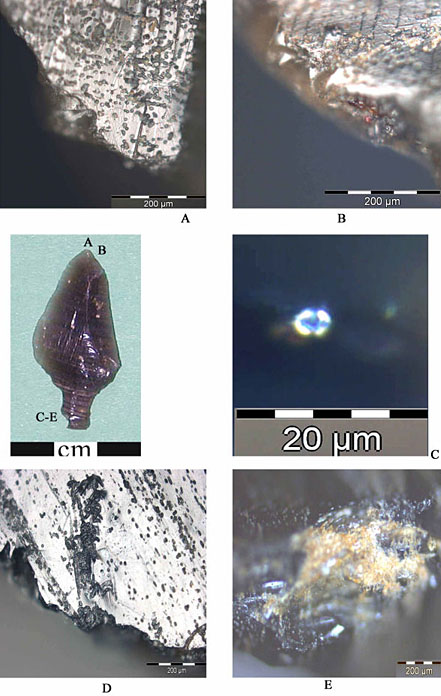
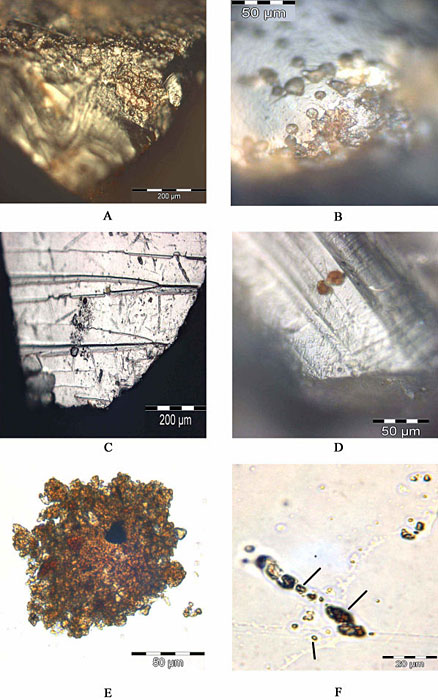
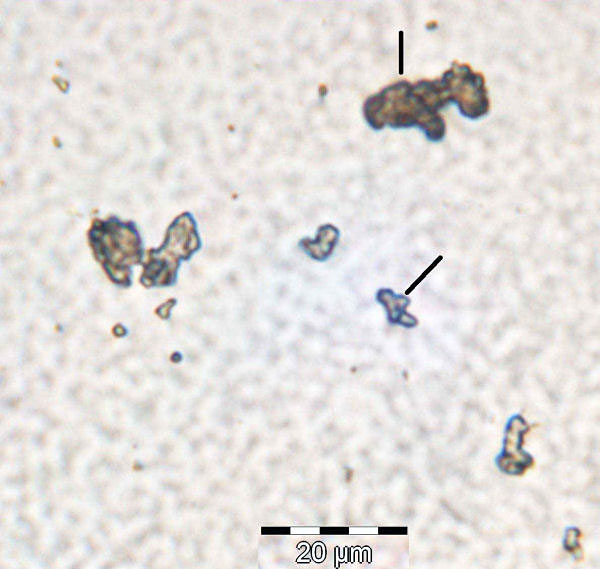
Diagnostic criteria for identifying piercing (tattooing) and cutting soft skin (scarification) on obsidian tools (Figure 3) included small numbers of feathered microscars distributed in a discontinuous distribution along the working edge, combined with a low density of, mainly, thin and shallow striations with a diagonal or perpendicular orientation to the edge, in conjunction with abrasive smoothing and slightly developed or merging polish (Figures 2, 4 & 5). Blood residues, frequently embedded within scars, are thinly smeared, highly reflective films, often with a droplet-like appearance. Colour ranges from black to dark-red and yellow. When observed on glass slides at high magnifications under darkfield incident illumination, distinctive structures identical to mammalian red blood cells are visible as circular biconcave discs with a diameter of 5-10 microns and lacking a nucleus (Figures 5 & 6). The presumptive test, HemastixTM, gave positive reactions for blood where applied (cf. Reference GarlingGarling 1998). Attempts to recover aDNA were not successful.
Tattooing tools. Pre-Lapita (A-H) and Lapita (I-N) (see Table 2).

Stemmed tool FAQ M456. Working edge: A use-wear; B blood. Stem: D use-wear; C starch; E plant residues.

Blood residues on artefacts (A-D) (see Table 2) and glass slides (E-F).

Human blood cells extracted from experimental tools.

Results
Twelve artefacts from contexts pre-dating Lapita pottery and eleven contemporary with it preserve use-wear traces derived from piercing and/or cutting a soft pliable material we interpret as skin, with two additional pre-Lapita tools possibly used for shaving (Table 2; Figures 2-5). There are no significant technological differences in tool manufacture (mainly non-diagnostic flakes) and incidence of retouched stems (Pre-Lapita: 42 per cent; Lapita: 36 per cent), although five prismatic blades from one area of FSZ are unique (Figure 3M & N). All piercing tools have a well defined, but usually unretouched point, whereas cutting was done on both pointed and straight edges. Twelve artefacts preserved traces of blood. The tools are so small that it is doubtful they were hand-held. Definite traces of hafting with wood handles (5 instances) or plant material wrapped around the tool (3 instances) were noted. Charred plant residue that might be pigment used in tattooing was noted on M2009.
Conclusions
The use of obsidian artefacts for body marking in Melanesia has a longer history than predicted by scholars who link it to the introduction of Lapita pottery decoration and special chisels (e.g. Reference KirchKirch 1997; Reference SpriggsSpriggs 1997:101), but is not unexpected for a region where tattooing with obsidian flakes was widely practiced (Reference ParkinsonParkinson 1999; Reference SpechtSpecht 1981). Our results support critiques based on the dentate impressions, nature and spatial distribution of contemporary tattooing, and limited evidence for prehistoric chisels (Reference AmbroseAmbrose in press; Reference BedfordBedford & Sand 2007: 3; Reference SandSand 2007: 267; Reference BestBest 2003). Regardless of the relationship between pottery decoration and tattooing in the origin and practice of Lapita pottery, the use-wear and residue traces on obsidian artefacts from Garua Island indicate a long history of tattooing and scarification that supports an indigenous origin. In addition, there is no significant chronological change in the basic shapes and sizes of the retouched and unretouched tools, with the possible preference for blades in the later period at FSZ, but this may represent a single individual preference or event.
Future research should confirm the blood is human, although the tiny sample sizes and contamination through modern handling are limiting factors. It seems likely that further research will extend the antiquity of tattooing in Melanesia.
Acknowledgements
Support was received from the Australian Research Council, Earthwatch Institute, Australia and Pacific Foundation, Australian Museum, Australian National University and is gratefully acknowledged.