

The alarm bells are deafening, and the evidence is irrefutable: greenhouse gas emissions from fossil fuel burning and deforestation are choking our planet and putting billions of people at immediate risk.
As unprecedented heatwaves, fires and floods wracked North America, Europe and Asia during the northern hemisphere summer of 2021, the United Nations Intergovernmental Panel on Climate Change (IPCC) released its long-awaited Sixth Assessment Report (IPCC, 2021). The frankness of the document stunned the world’s media. Summarising tens of thousands of scientific papers, the report found that our planet is now experiencing warming unseen in 125,000 years and that atmospheric carbon levels are at their highest in 2 million years. It warned that global warming could exceed 1.5 degrees Celsius (°C) above pre-industrial levels in around a decade unless truly rapid, large-scale and immediate reductions in greenhouse gas emissions are made. The bleak truth is that our world is currently on track for between 2.1°C and 3.5°C of warming by the end of the century. In the context of the unprecedented climate impacts experienced at just over 1°C of warming, a rise of 2°C, 3°C or even 4°C presents a genuinely apocalyptic future. As United Nations (UN) Secretary-General António Guterres grimly declared in response to the IPCC’s report, this is nothing less than ‘a code red for humanity’.
Human-induced climate disruption is the most pressing issue facing our species, yet the ineffectiveness of the political response becomes ever more apparent in the face of the escalating crisis. Even as scientific projections re-emphasise the magnitude of the problem, the world’s addiction to economic growth and the fossil energy that fuels it continues to expand – and, as a result, so do carbon emissions.
While governments and corporations make soothing noises about the ‘grand challenge’ of climate change, tangible action in the form of dramatic reductions in carbon emissions has remained illusory. There is much busyness in the halls of power in terms of commitments to future action, appeals to ‘sustainability’ and the building of processes of carbon accounting and certification, yet the crucial metrics of aggregate carbon emissions and atmospheric concentrations of greenhouse gases still worsen.
This book is about unpacking that fundamental conundrum. Why are meaningful actions to avert catastrophe still so few and so limited, despite the clear scientific evidence that human activities now threaten the future viability of much of life on this planet? To paraphrase journalist Elizabeth Kolbert (2006), how is it that a technologically advanced society could choose, in essence, to destroy itself?
This is the question we seek to address. Specifically, we explore how corporate and political leaders have sought to organise climate change – that is, how existing economic and political frameworks have not only produced an all-encompassing environmental crisis but sought to shape the response to it in ways that ensure nothing substantial should change. We seek to lay bare the creation and maintenance of a ruling order of economic and political activity – one that refuses to bend even when confronted by the destruction of our planet’s life-support systems.
In this opening chapter, we outline the broader context of this issue and set out our central argument – that the climate crisis is the product of a specific political economy: global capitalism. This is a model of economic and social development that has become so fundamental to political understanding that it is rarely questioned, let alone challenged. Overall, while it takes various context-dependent forms, capitalism relies on the fervent pursuit of continued economic growth and fossil energy consumption on a compound basis ad infinitum. The key actors in this process are global corporations, state-owned enterprises, allied governments and political parties, along with the supporting institutional apparatus of think tanks, consultancies and media whose power and finances depend on a perpetuation of economic growth at all costs.
Although the catastrophic environmental consequences of this trajectory have long been sidelined and ignored, the debt now falls due: this is the age of consequences. As climate change and associated environmental crises demonstrate, a focus on growth and consumption disproportionally benefits the wealthy within the Global North and advanced economies and has resulted in a fundamental shift in the basic Earth system. The dramatic economic change that has accelerated over the two centuries since the first Industrial Revolution has upended the stable climate of the past 12,000 years of the Holocene. Humanity has now engineered a new and much more unstable geological epoch: the Anthropocene (Reference Steffen, Richardson and RockströmSteffen et al., 2015). This has become a very different planet – one that climate scientists argue will likely challenge the continued existence of organised human society.
We begin this chapter by reflecting on the recent pandemic and how it revealed the underlying vulnerability of a globalised, interconnected economy to the disruptions of the natural world. COVID-19 offered a chance to question the ‘business-as-usual’ trajectory of infinite growth and fossil energy – a ‘fork in the road’, as it were – but it also highlighted how corporate and political leaders defend and reassert this model as the only logical path that can be followed. We then outline the historical context of fossil fuel energy, climate change and political responses to the worsening climate crisis. Finally, we re-emphasise the potential for a fundamental reimagining of the climate crisis and set out the structure of the book to follow.
1.1 2020: A Fork in the Road?
The IPCC’s sombre review of climate science captured headlines around the globe in mid-2021, but it was not long before media attention refocused on the other immediate crisis gripping the world’s nations. The COVID-19 pandemic had toppled many of the comfortable assumptions of the global economy during the preceding two years, with unemployment queues growing in the face of near-shutdown and governments taking extraordinary measures to protect their economies by borrowing money at levels previously unimaginable. Lockdowns and restrictions meant energy demand plummeted. Greenhouse gas emissions declined in tandem (Reference Le Quéré, Jackson and JonesLe Quéré et al., 2020). Crucially, the new willingness for government spending reinvigorated campaigns for a ‘Green New Deal’ or at the very least a green-led recovery (Reference MockMock, 2020).
Such programmes had already been proposed as a means of mitigating climate change while attempting to protect jobs by reorienting economies away from fossil fuels and towards more sustainable industries. This would involve injecting funds into renewable energy infrastructure, investing in energy efficiency and more sustainable forms of transport and, importantly, providing support for communities reliant on fossil fuel industries to develop new industries as the economy transitioned. Calls for such measures came not only from environmentalists: the Organisation for Economic Co-operation and Development (OECD) and the International Energy Agency (IEA) were also among those urging governments to phase out their support for fossil fuels (OECD, 2020).
As a result, as the pace and intensity of the global economy were exposed as unsustainable, there was a glimpse of how things might be different. Newspapers around the world reported on the rewilding of urban spaces. Goats were reportedly on the streets in Wales. Peacocks were wandering around Ronda in Spain. Even a puma was photographed next to parked cars on a road in Chile (Reference Newburger and JefferyNewburger & Jeffery, 2020). This was by no means a reversal of the Sixth Great Extinction, but the possibility of cohabitation and scaling back the old habits of humans as masters of the world was at least teased. Could the speed of business as usual be slowed enough to make time for other priorities? Was this an opportunity to put climate change commitments into action?
Apparently not. By 2021, it was clear that existing business practices would not be challenged. As countries rolled out stimulus packages aimed at kick-starting economic growth, there was little consideration of environmental issues. By August 2021, of the US$1,950 billion spent by OECD countries on recovery, only US$336 billion was assessed as having a positive environmental impact (OECD, 2021). A Vivid Economics analysis (2020) comparing the policies and the financial contributions of governments in the G20 – the twenty largest economies in the world – found sixteen of the twenty stimulus packages would ‘have a net negative environmental impact’; this was particularly the case for the United States (US), Canada, Australia, Saudi Arabia, China, Russia, India, Mexico and other nations with pre-existing carbon-intensive industries.
In establishing a path towards recovery, certain trajectories were depicted as ‘natural’ or self-evident. Others were presented as utopian or risky. Despite rhetorical statements of a ‘green recovery’ during the first year of the pandemic, policies still stressed traditional patterns of investment, consumption and job creation. Unsurprisingly, this response was marked by a rebound in global carbon emissions (Reference Le Quéré, Peters and FriedlingsteinLe Quéré et al., 2021). Rather than taking the fork in the road towards an alternative future, the world merely glimpsed the possibility of a positive rerouting as it continued to accelerate down a highway dangerously potholed by fossil-fuelled consumption and an escalating climate crisis.
1.2 How Did We Get Here?
The polarised political debate that has raged during the past several decades suggests the basic science of human-induced climate change is both complex and controversial. It is not. It is actually relatively simple.
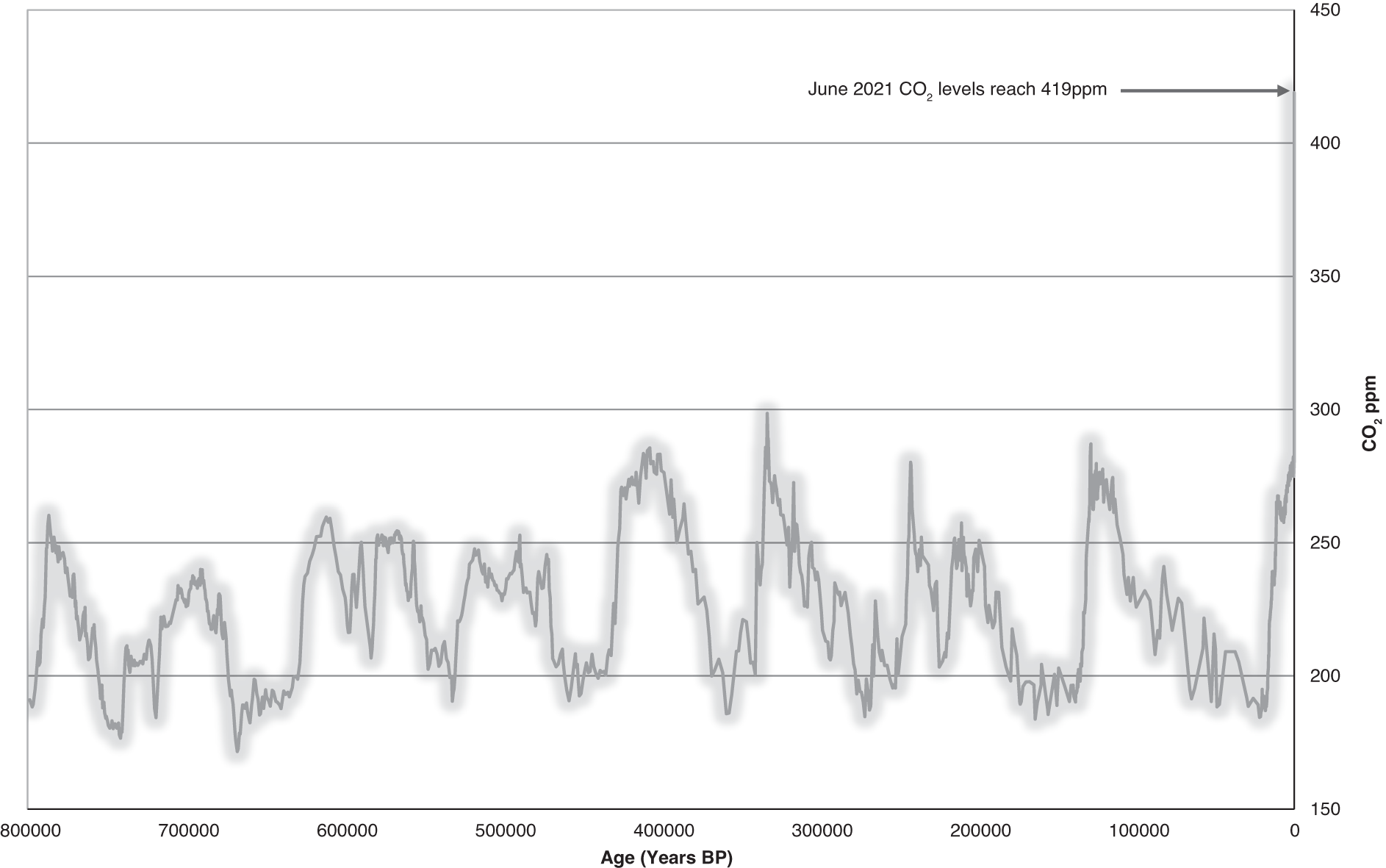
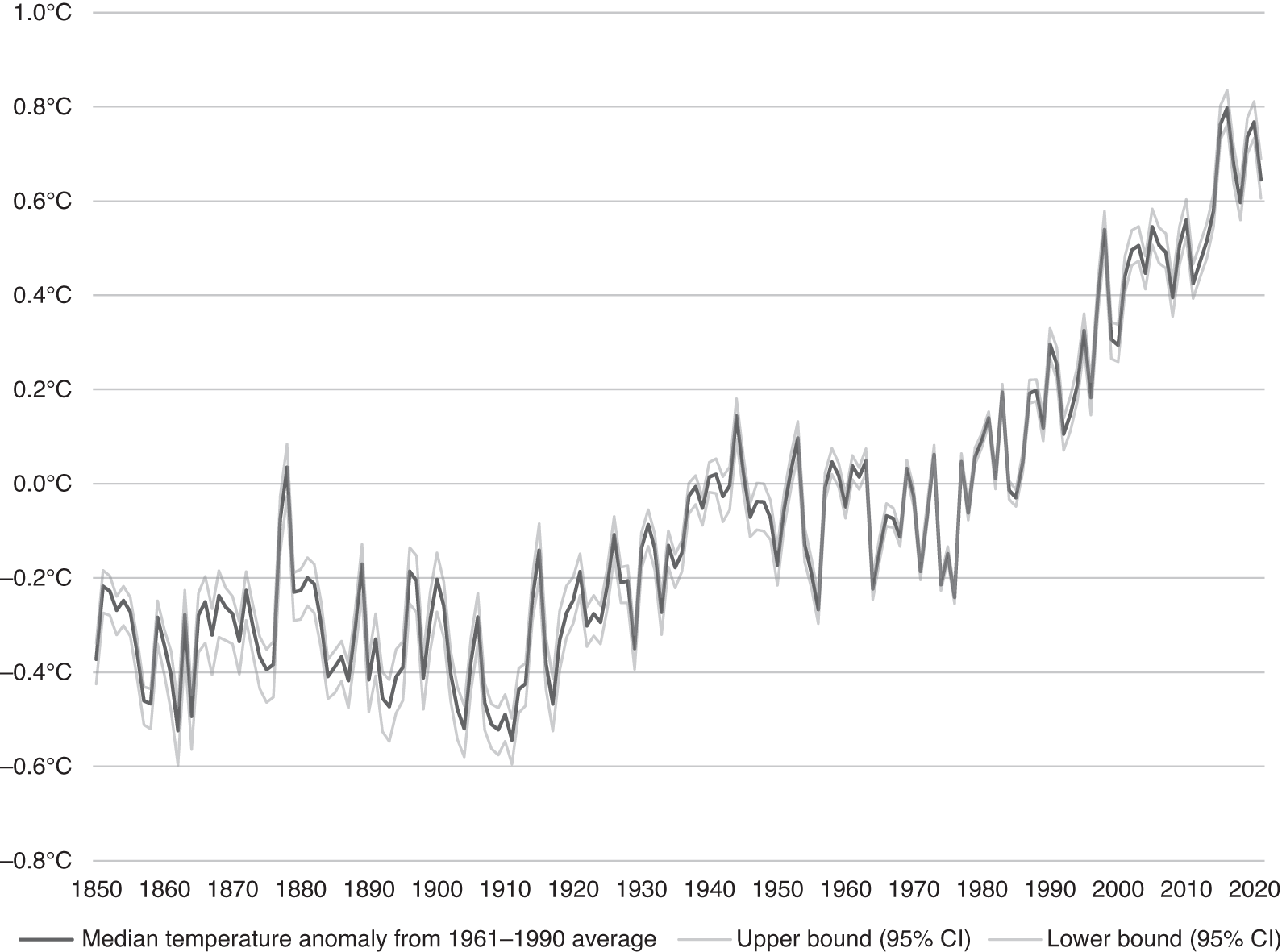
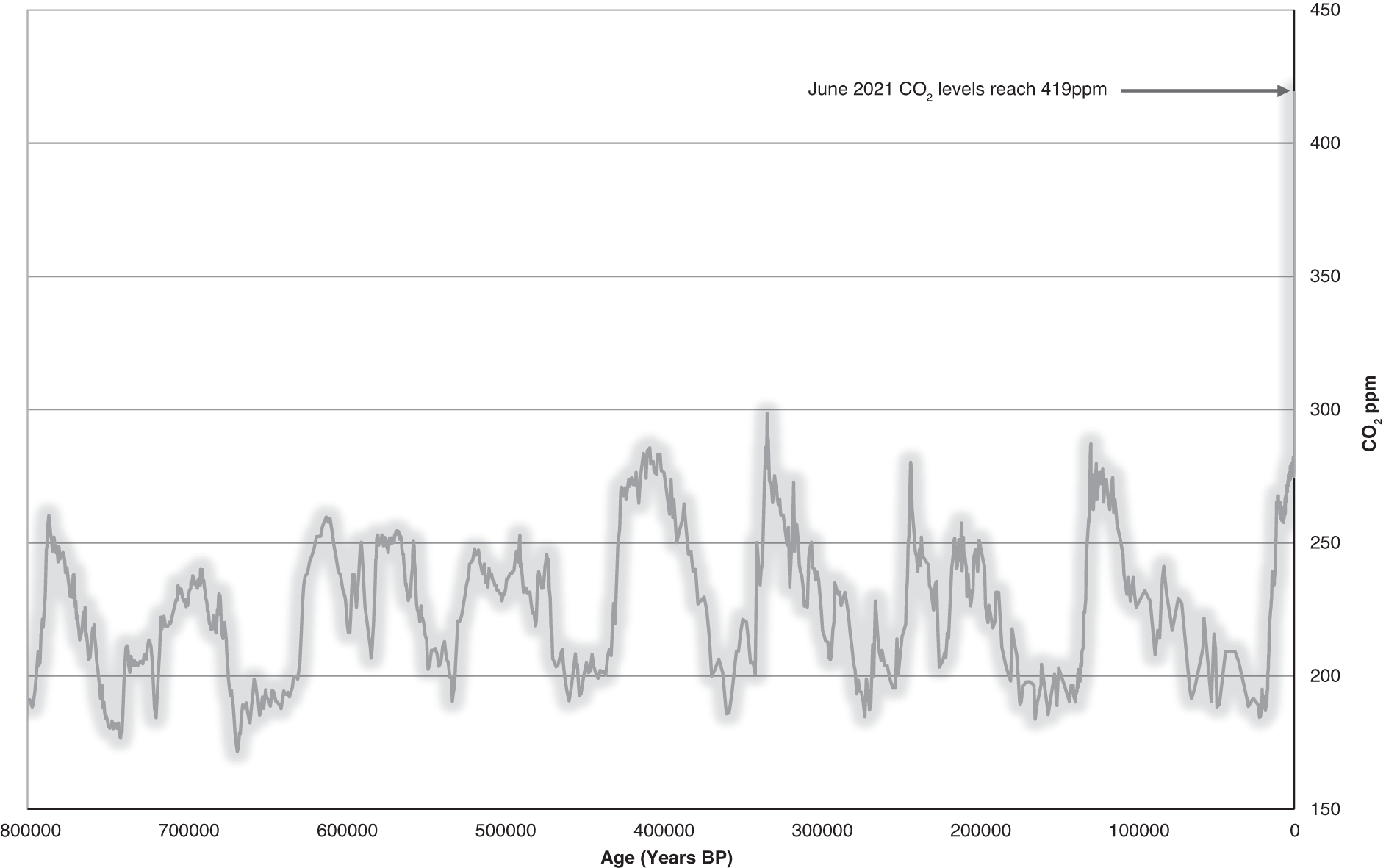
Concentrations of greenhouse gases such as carbon dioxide (CO2), methane (CH4) and nitrous oxide (N2O) absorb and re-emit infrared radiation from the Earth’s surface. They thus play a critical role in ensuring a balance in our planet’s energy budget, resulting in stable climatic conditions for the existence of life. However, industrialisation and economic growth have relied on the ever-increasing use of fossil fuels for energy, manufacturing and transport, as well as the depletion of carbon sinks such as forests, mangroves and peatlands. This human disruption of the carbon cycle has resulted in steadily increasing atmospheric concentrations of greenhouse gases and a warming of the planet above pre-industrial levels (see Figures 1.1 and 1.2).
Atmospheric CO2 concentrations for the past 800,000 years.
Global average land–sea temperature anomaly relative to 1961–1990 average.
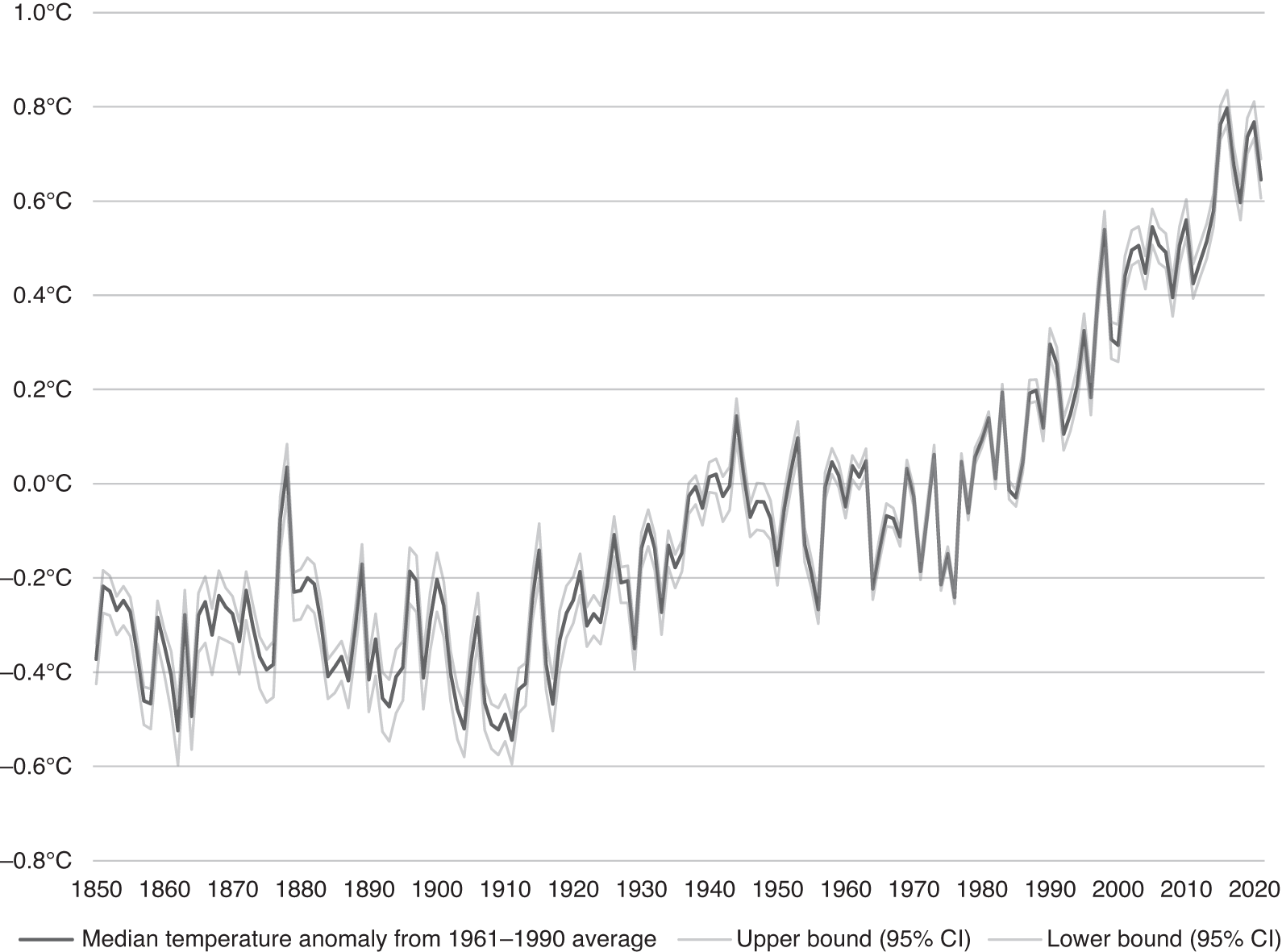
Drawing on the latest peer-reviewed scientific papers, the IPCC’s Sixth Assessment Report found current carbon dioxide levels of 415 parts per million (ppm) to be the highest in around 2 million years. It also found global average warming of 1.09°C to be the highest in more than 125,000 years. Importantly, the speed of this change is unprecedented and heralds climate impacts such as the disintegration of the Greenland and West Antarctic ice sheets and glaciers – a process that is likely irreversible and which will play out over centuries (IPCC, 2021).
Continuing increases in global greenhouse gas emissions are a direct result of more than 200 years of economic development reliant on the use of fossil fuel energy – primarily coal, oil and gas. This trajectory, which has now brought the world to the brink of environmental collapse, can be traced back to the first Industrial Revolution, which unfolded in Britain during the late eighteenth and nineteenth centuries.
It was coal power that provided the basis for rapid industrialisation across manufacturing and expanded global markets through the transformation of transport (e.g., the development of railways and steam shipping). Industrialists were no longer tied to a specific geographic location, and shipping lines and navies were no longer limited by the direction of the wind. Coal-fired steam engines freed up capitalist endeavour, facilitating not only industrialisation but access to new sources of materials, labour and markets under colonial empires (Reference KleinKlein, 2014; Reference MalmMalm, 2016).
By the twentieth century, oil emerged as another key fossil fuel for expansion. The power of the fossil fuel industry grew dramatically during the decades after World War II, driving economic growth and underpinning the emergence of Western consumer lifestyles. Fossil energy was closely protected by national governments keen to build their economic power (Reference MitchellMitchell, 2013), and corporations such as the ‘Seven Sisters’ – British Petroleum, Royal Dutch Shell, Gulf Oil, Standard Oil of California, Standard Oil of New Jersey, Standard Oil of New York and Texaco – became the most wealthy and powerful companies in the world (Reference Stevens, Dannreuther and OstrowskiStevens, 2013).
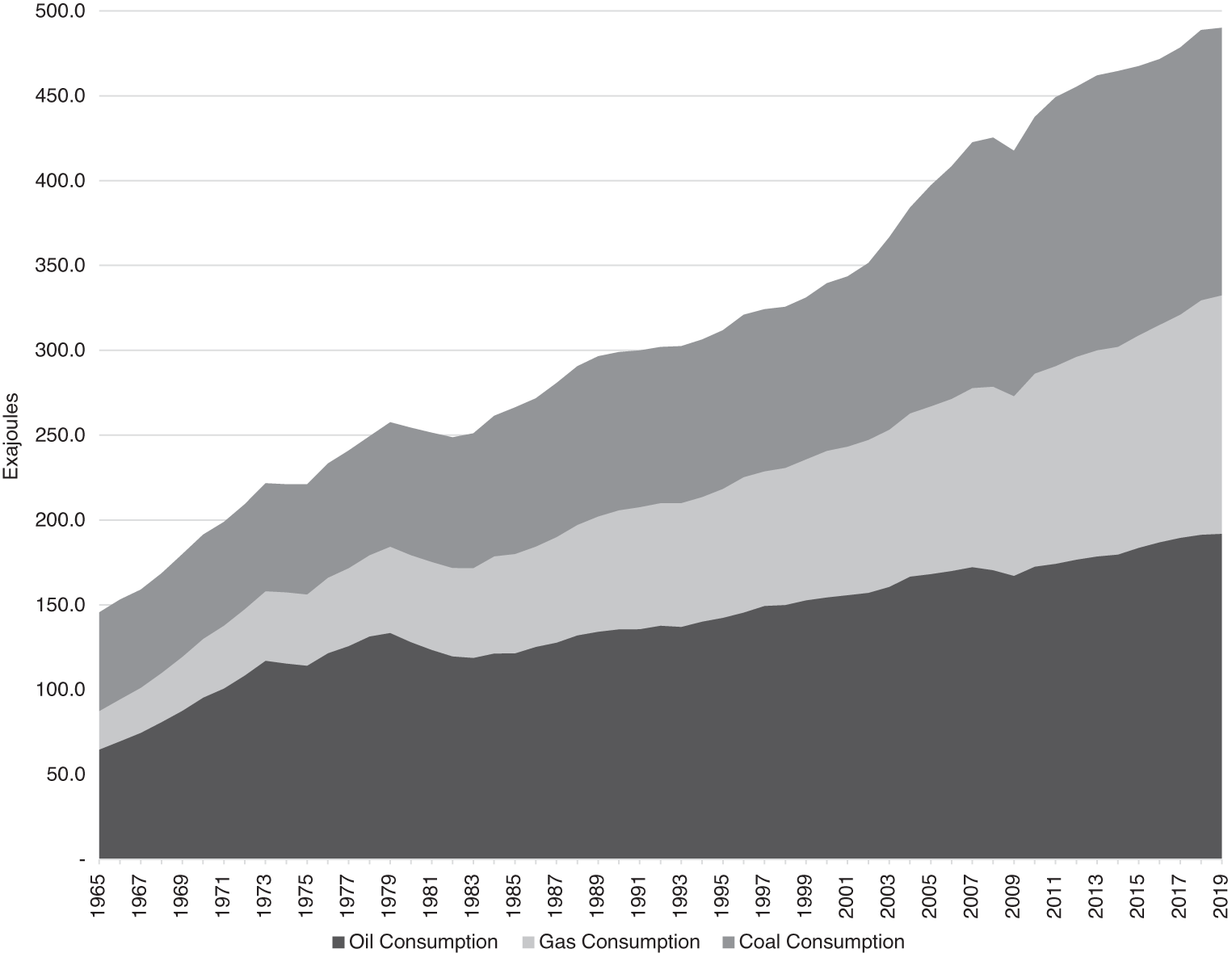
Amid the globalisation and continued growth of economic activity, the ever-increasing consumption of the world’s fossil fuel reserves has accelerated during the past fifty years (see Figure 1.3). The rise of Asian economic powerhouses such as Japan, South Korea and, more recently, China and India has broadened the scale of consumption. Beyond Western majors such as ExxonMobil, BP and Chevron, state-owned fossil fuel enterprises – for example, Saudi Aramco in Saudi Arabia, Gazprom and Rosneft in Russia, Kuwait Petroleum, National Iranian Oil Company, China National Petroleum Company, Pemex in Mexico and Petrobras in Brazil – have joined the ranks of the world’s largest producers of oil and gas (Reference Victor, Hults and ThruberVictor et al., 2012; Reference Luciani, Dannreuther and OstrowskiLuciani, 2013). Integrated global distribution networks of pipelines, tankers, refineries, ports and rail systems have further reinforced fossil fuel investment and path dependency. National governments continue to strongly support the expansion of fossil energy through public financing of infrastructure, subsidies, discounted royalties and favourable tax regimes – a system critics have labelled ‘fossil fuel welfare’ (Reference Lenferna, Wood and BakerLenferna, 2019). Global fossil fuel subsidies alone are conservatively estimated at around US$330 billion per annum (Reference Coady, Parry, Sears and ShangCoady et al., 2017), with the International Monetary Fund (IMF) suggesting the true amount could be closer to US$5 trillion (Reference Skovgaard and van AsseltSkovgaard & van Asselt, 2019).
Global fossil fuel consumption, 1965–2020
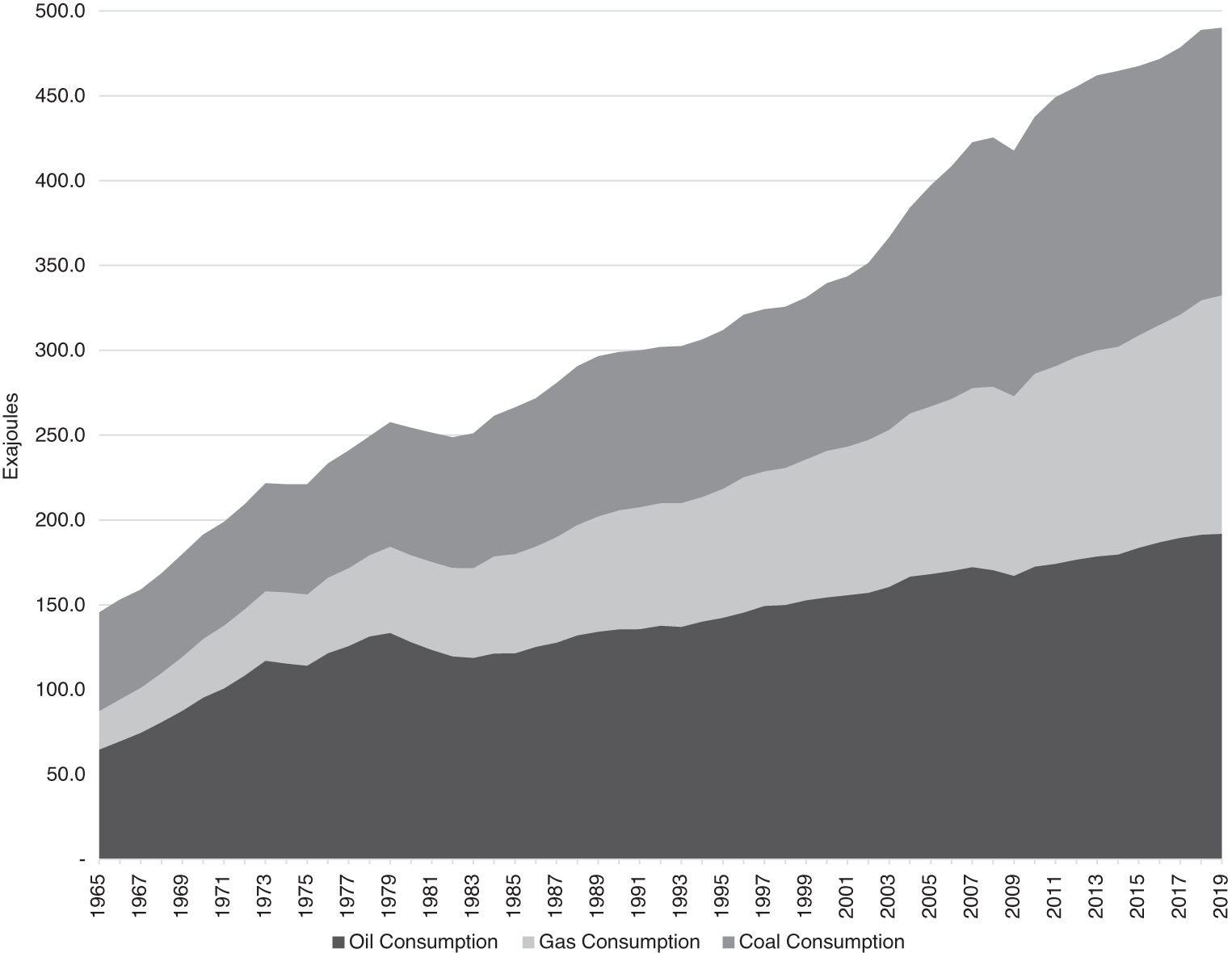
Today fossil fuels provide more than 80 per cent of the world’s total primary energy supply. They underpin the global financial system not only as the most heavily capitalised sector but also as a dominant source of finance and investment for the world’s banks, insurance companies and pension funds (RAN, 2020). Particularly in the Global North, fossil energy buttresses economic and social life through the provision of energy, transportation, trade, consumption and standards of living. Yet this ‘petro-market civilization’ (Reference DiMuzioDiMuzio, 2012) comes at a huge environmental cost: a fundamental disruption of the Earth system, resulting in an existential threat to much of life on our planet.
1.3 Magical Thinking: The Failure of Climate Governance
In 2015, under the Paris Agreement, 195 nations brokered history’s most inclusive commitment to curb greenhouse gas emissions. This not only sought to limit global warming to ‘well below’ 2°C beyond pre-industrial levels but also sought to ‘pursue efforts’ to limit the global temperature increase to 1.5°C. This suggested the world’s political leaders had seen the light and meaningful action to reduce carbon emissions was at last in train. The media reiterated an upbeat message, with the front page of the New York Times declaring: ‘The deal, which was met with an eruption of cheers and ovations from thousands of delegates gathered from around the world, represents a historic breakthrough on an issue that has foiled decades of international efforts to address climate change’ (Reference DavenportDavenport, 2015).
However, despite the Paris Agreement, tangible climate action has remained elusive (Reference SpashSpash, 2016; Reference van Renssenvan Renssen, 2018). By relying on voluntary national commitments for emissions reductions – which were themselves inadequate to achieve the 2°C target – the accord lacked a clear plan of action or an enforceable means of compliance, instead leaving individual nations to determine how emissions reductions might be achieved. To date, no major economy is on track to meet its Paris commitments, let alone the more ambitious 1.5°C goal.
This failure was echoed during the most recent UN Conference of the Parties, COP26, held in Glasgow in November 2021. Billed as humanity’s ‘last chance’ to avoid catastrophe, the event boasted the tagline ‘1.5 to stay alive’, yet the resulting national pledges on emissions cuts, announced after two weeks of political wrangling, fell well short of this target and are instead likely to deliver between 2°C and 2.7°C of warming this century. In addition, commitments to phase out fossil fuels or provide financial support to developing economies for climate ‘loss and damage’ were sidestepped (Climate Action Tracker, 2021; Reference Harvey, Carrington and BrooksHarvey et al., 2021). While the conference’s organisers sought to put a positive spin on the outcome, it was later revealed that the largest contingent of delegates hailed from the fossil fuel sector (Reference McGrathMcGrath, 2021b).
Thus, despite three decades of international negotiations, the global economy remains addicted to continued economic growth and ever-increasing carbon emissions (Reference Weart, Dryzek, Norgaard and SchlosbergWeart, 2011; Reference Stoddard, Anderson and CapstickStoddard et al., 2021). National governments, especially historically large emitters such as the US, have resisted hard regulatory measures limiting or prohibiting the use of fossil fuels. The short-term economic and political advantage for individual countries and industries has invariably trumped the long-term needs of environmental well-being and a habitable climate.
In seeking to paper over this contradiction, governments and corporations have increasingly proclaimed long-term goals to reach carbon neutrality or ‘net zero’. For instance, the European Union (EU) has committed to achieving carbon neutrality by 2050, while the United Kingdom (UK), France and Germany have made their own pledges to realise the same objective. Finland has committed to hitting ‘net zero’ by 2035; Sweden by 2045. Most of the major tech corporations, including Facebook, Google, Amazon and Apple, have ambitious targets, as do several major oil companies (see Chapter 3).
This focus on net zero became something akin to a stampede during 2021, with more nations and companies proclaiming their commitments. Yet what is often lacking in these plans is any detail of how such lofty goals will actually be met. The preferred but blurred route for most fossil fuel companies and countries dependent on fossil energy appears to be carbon offsets and still-unproven technologies for carbon capture and sequestration.
This creates the appearance of action while facilitating a continuation of fossil fuel extraction and use (Reference Black, Cullen and FayBlack et al., 2021). Public statements seem to indicate that the momentum for change is growing, but they can just as easily be viewed as a means of pushing back the urgently required shift. American futurist Reference SteffenAlex Steffen (2016) has termed this process ‘predatory delay’. A key factor has been the way in which businesses and governments have framed climate change as an issue that can be accommodated within existing assumptions of economic growth and market capitalism.
For instance, one of the first economic policy responses to climate change was led by British economist Sir Nicholas Stern, who famously declared that ‘climate change is the greatest market failure the world has ever seen’ (Reference SternStern, 2007: viii). Rather than representing it as an existential threat to the future of human society and the functioning of planetary ecosystems, Stern’s review – along with similar economic analyses (see, e.g., Reference GarnautGarnaut, 2008) – interpreted climate change as a policy challenge that could be dealt with through the use of judicious market mechanisms.
From this perspective, ‘carbon pricing’ – that is, the costing of each tonne of carbon pollution produced – would internalise a market ‘externality’ and drive change and innovation throughout national and global economies. Despite early opposition, the fossil fuel sector has been largely supportive of such mechanisms and has in fact been planning for their implementation for some time: Rio Tinto has had an internal price on carbon in place since 1998, Shell since 2000 (World Bank, 2015a) and BHP Billiton since 2004 (BHP Billiton, 2015). With Joe Biden’s advocacy of climate action key to his US presidential election victory in 2020, even the American Petroleum Institute – a long-time opponent of emissions regulation – has announced its support for carbon pricing (Reference Mann and PukoMann & Puko, 2021).
Yet it is unlikely that such moves are genuinely altruistic. Chief Executive Officers (CEOs) and managers of corporations know that by being involved in the implementation of pricing mechanisms, they can limit their impact – and, by extension, they can limit climate mitigation as well. In the EU, for instance, business groups lobbied for the free allocation of permits during the implementation of carbon pricing, resulting in a dramatic drop in the price per tonne of carbon emissions and thereby diminishing the effectiveness of such measures (Reference HanoteauHanoteau, 2014; Reference PearsePearse, 2016). ExxonMobil, BP and Total have all supported a carbon price of US$40 per ton in the US while at the same time planning to increase oil output – prompting commentators to suggest this is merely a means of avoiding stronger legislation such as a ban on internal combustion engines, which is being proposed in European nations (Reference CollinsCollins, 2019).
Moreover, it is fair to say that governments have been hesitant to implement carbon trading. The introduction of such schemes, along with carbon taxes, has often been thwarted in increasingly polarised national political debates (Reference Carattini, Carvalho and FankhauserCarattini et al., 2018); there are also several cases of governments pushing ahead with schemes and then seeing them repealed when a nation’s leadership changes (Reference CrowleyCrowley, 2017; Reference RaymondRaymond, 2020). In Australia, the issue has been credited with the removal of two prime ministers and an opposition leader. This suggests that while many may claim to be supportive of measures to mitigate climate change, businesses frequently use their political power and incumbency to limit such actions.
Small wonder that despite growing recognition of a worsening climate crisis, the political and economic dominance of fossil energy can be seen in ongoing increases in extraction, consumption and investment. Even though it became comparatively cheaper during the years between 2010 and 2020 and grew as a result, renewable energy is not replacing fossil fuels. Between 2010 and 2019, for instance, primary direct energy consumption in coal, oil and gas collectively grew from 121,691 TWh (terawatt-hours) to 136,761 TWh; renewables went from 761 TWh to 2,806 TWh (BP, 2020b) – a larger proportional increase yet still a very small percentage of total use.
These statistics underline that a hard and fast break from the current fossil energy addiction is needed to truly decarbonise the global economy. Unfortunately, rather than stepping back from the abyss, much of the innovative capacity of corporate and political leaders has focused on deepening the crisis by identifying new sources of fossil energy – the so-called unconventional fossil fuels, such as fracked gas, tar sands, mega-coal mines and deep water and Arctic oil. For now, alarmingly, the world remains locked in a process of ‘creative self-destruction’ (Reference Wright and NybergWright & Nyberg, 2015).
1.4 Geopolitical Antagonism
The need to dramatically reduce carbon emissions has re-emphasised divisions between so-called developed and developing economies. The vast bulk of historical emissions is the result of the rich world’s wealth, while many poorer economies – which are most exposed to future climate change impacts – are yet to enjoy similar gains. The geopolitical splits over decarbonisation are becoming ever more pronounced, with economies such as China and India now among the world’s largest carbon emitters as they push for economic development (Reference Wang and YangWang & Yang, 2020).
As we outline in greater detail in Chapter 5, the key impacts of climate disruption are likely to be both numerous and catastrophic. They are expected to include more intense and frequent extreme weather events such as hurricanes, floods, droughts and wildfires (National Academies of Sciences Engineering and Medicine, 2016); the transformation of ecosystems and widespread species extinction (Reference KolbertKolbert, 2014); crop failures and threats to food supplies (IPCC, 2019); sea-level rises of a metre or more, rendering cities and coastal regions uninhabitable (Reference Hansen, Sato and HeartyHansen et al., 2016); the movement of large volumes of people from climate-threatened regions (Reference Berchin, Valduga, Garcia and de Andrade GuerraBerchin et al., 2017) and climate change as a ‘threat multiplier’, leading to heightened geopolitical conflict and wars (Reference DyerDyer, 2010; CNA Military Advisory Board, 2014).
These devastating consequences will not be borne equally around the globe. It has long been recognised that those nations and citizens with the smallest carbon footprints will be most affected. This brings up the issue of differentiated responsibility both within and between nations. For instance, by 2017, the US, China and the EU had produced more than 50 per cent (25, 12.7 and 22, respectively) of global cumulative emissions (Reference RitchieRitchie, 2019). On an individual level, the super-rich are in the top 10 per cent of emitters: they account for 45 per cent of global emissions and are distributed around the globe, with one-third living in emerging economies (Reference Chancel and PikettyChancel & Piketty, 2015).
As noted by Reference Mann and WainwrightMann and Wainwright (2018: 55), this knowledge necessarily brings ‘an explicitly moral element to our decisions’. Already the impacts of climate change are being felt in poorer nations, with one study showing a ~25 per cent increase in inequality between poorer and wealthier countries as a result of global warming (Reference Diffenbaugh and BurkeDiffenbaugh & Burke, 2019). Sea-level rises and storm surges are already threatening food supplies in the Pacific Islands and will eventually make many areas there uninhabitable; the latter prospect, along with its related ‘climate refugee’ discourse, further embeds the inequalities of climate change by depicting citizens of these states as passive victims (Reference 224PerumalPerumal, 2018).
Such narratives feed into the view that current dominant economic structures will continue to dictate the future. They may also suggest the time frame for acting on climate change has already passed. The impossibility of imagining a future without compounding economic growth further entrenches existing power relations.
It is now more than a decade since Reference ThompsonThompson (2010) outlined three choices for countering the climate crisis: mitigation, adaptation and suffering. However, the present situation might be beyond this triumvirate. Mitigation has been delayed; adaptation is responsive rather than proactive; and suffering is present.
1.5 Book Structure
As activist and journalist Naomi Klein argued more than a decade and a half ago in The Shock Doctrine, governments often use crises brought about by wars, terrorist attacks, market crashes or natural disasters as opportunities to push through neoliberal policies that further enrich elites at the expense of other citizens (Reference KleinKlein, 2007). As populations everywhere witness a procession of ever-worsening storms, droughts and fires on daily newsfeeds, it is pertinent to ask whether an alternative politics can be fashioned on a sufficient scale and in enough time to reduce the harm of a climate catastrophe. In this book, we argue that unless there is a dramatic turnaround in the politics of climate change, the current catastrophe will only worsen.
Having set out some of the basic parameters of the current climate crisis and its economic and political underpinnings in this chapter, in Chapter 2, we develop our ideas theoretically through reference to the concept of hegemony. We use this to explore how corporate and political rulers establish – and re-establish – corporate capitalism as the only permittable solution to the crisis while at the same time incorporating or dismissing alternatives. As we note, despite the existential threat that climate change poses to human civilisation, it appears the only responses that can be entertained require the continuation of the system that caused the problem in the first place.
In Part 2 of the book, we turn our focus to the politics of mitigation. In Chapter 3, we explore how the fossil fuel industry has maintained a hegemonic position in climate policy by emphasising and even exaggerating the links between the industry’s ongoing expansion and the economy. We show how the industry has attempted to assuage concerns about climate change by seeding denial and doubt and exploiting its extensive relationships with the political elite and conservative media. We also explain how, by employing long-term emissions-reducing targets that are unlikely to be met, it has attempted to hold off policy responses that would impact profits in the short term and convinced governments to support its quest for technological solutions that have been promised for decades yet are still to be delivered.
These ploys have not gone unnoticed, and in Chapter 4, we outline the new social and environmental movements that have arisen in the wake of decades of climate inaction. Following on from the Paris Agreement, these grassroots bodies represent a transformation of an environmental lobby traditionally led by non-government organisations (NGOs). They have engaged in a targeted, counter-hegemonic strategy of working with a diverse coalition of social actors in preventing new fossil fuel projects and building divisions between fractions of capital. We show how, although the extent of their influence on climate policy remains unclear, they have been effective in raising public awareness of a worsening crisis and challenging the current trajectory.
In the third part of the book, which examines the politics of adaptation, we ask whether the time frames for creating broader structural change have in many cases run out. In Chapter 5, we consider the various attempts at managing climate impacts and argue that these responses have so far been dominated by the existing framework of corporate capitalism, which suggests the best means of solving problems is through subsidising corporate activity rather than government or community intervention. We show how government approaches to climate adaptation in various localities have favoured the protection of industry and the funding of corporate emergency responses. We also explore the preference among policy elites for technological fixes and still-unproven – not to mention potentially dangerous – attempts at geoengineering, which we see as a perpetuation of corporate activity at the expense of local communities and the climate.
Chapter 6 examines how the broader climate discourse impacts communities at the forefront of climate risk and how this affects what is regarded as possible when attempting to adapt. We argue that the polarisation of the issue has resulted in communities potentially closing off climate change as a concern, with government representatives and community members alike hesitant to acknowledge it as a cause of extreme weather events such as wildfires, flooding, erosion and so on. This form of blinkeredness is often linked to economic priorities and is yet another example of how particular notions of the economy are able to supersede the consequences of climate disruption. We posit that many of the ways in which climate adaptation is framed, in particular around notions of ‘resilience’, feed into the existing corporate hegemony; that the link between climate change and its impacts threatens the status quo and that the issue is therefore politically avoided. This raises an uncomfortable question: if communities are unable to talk about climate change, even when it is already impacting them, what does this mean for those who suffer the impacts the most?
In the fourth part of the book, we focus on the politics of suffering. Here, we argue that climate change threatens to further entrench and exacerbate existing suffering, which will be as unevenly distributed as established inequalities. We show that while the fossil fuel industry has long raised the spectre of ‘energy poverty’ in order to contend it is not possible to shift towards renewable energy, the very countries the industry is claiming to help are among the worst affected.
In Chapter 7, we examine the ways in which the existing discourse of climate change, as propagated by corporations and politicians, in particular, displaces the suffering already being experienced by those in poorer nations. We explain how these impacts are represented as a spectacle while at the same time separated as distant realities for those benefiting from fossil fuel expansion.
In Chapter 8, we consider the political resistance to this narrative and look at how those experiencing the impacts engage in international advocacy to resist the idea that they are passive victims. We unpack the ways in which the ‘distant other’ can be made present in challenging the prevailing hegemony; we investigate how this form of agonistic politics refuses the hegemonic incorporation of critique that attempts to push climate action into the future; and we explain how suffering, by being framed in the present, becomes a counter-hegemonic force.
In the final part of the book, we focus on the politics of climate futures. In Chapter 9, we provide some tentative political solutions for addressing climate change. With renewable energy in many instances cheaper than fossil fuels and with a majority of people around the world supporting meaningful climate action, the solutions we propose are not foremost technological or even educational: rather, they are about politics. We promote ‘the three Ds’: urgent decarbonisation, to render fossil fuels stranded assets; degrowth, to ensure humanity stays within planetary boundaries; and increased democracy, to loosen the grip of fossil fuel industries.
Finally, in Chapter 10, we argue that the climate crisis can be seen as a symptom of the breakdown or suspension of the prevailing capitalist order; an interregnum. Here, we provide three possible future trajectories in response to the social disruptions resulting from climate change that extend from a continuation of the current path to more extreme as well as hopeful possibilities.