


Doubts about the effectiveness of case management for people with severe mental illness were expressed when the care programme approach (CPA) was introduced in the UK (Anonymous, 1995; Reference MarshallMarshall, 1996) and evidenced by systematic review (Reference Marshall, Gray and LockwoodMarshall et al, 2002). The UK700 case management trial assessed whether enhanced outcomes could be achieved under CPA by reducing case-load size. The trial tested the hypothesis that reducing CPA case-loads to 10–15 patients (intensive case management) would result in less hospitalisation. It was argued that the intensive case management team would be able to practise assertive outreach more extensively because of their reduced case-load and that this would contribute to the hypothesised difference in outcome (Reference Burns, Creed and FahyBurns et al, 1999). Brief training in assertive outreach was given to the intensive case management team (Reference Burns, Creed and FahyBurns et al, 1999). However, the findings did not support the hypothesis (Reference Burns, Creed and FahyBurns et al, 1999), and the impact of assertive outreach on outcomes remains unclear (Reference TyrerTyrer, 2000).
METHOD
Overview and aims
We implemented a 2-year qualitative investigation in parallel to the UK700 trial in one centre (St Mary's/St Charles). The aims were to identify the mechanisms by which UK700 trial outcomes were generated and to investigate the nature and impact of forms of assertive casework (with or without outreach) upon the UK700 outcomes.
The UK700 trial
The UK700 trial has been described elsewhere (Reference Burns, Creed and FahyBurns et al, 1999; UK700 Group, 1999). In brief, patients with psychosis aged 16–65 years who had at least two prior in-patient admissions were randomly allocated to either standard case management (case-load 1:30–35) or intensive case management (case-load 1:10–15). The trial tested the hypothesis that intensive case management would achieve shorter duration of hospitalisation (primary outcome) over a 2-year follow-up period (UK700 Group, 1999). Assertive outreach and case-loads of 1:10–15 are characteristic of assertive community treatment – an alternative approach to case management with a more secure evidence base (Reference Marshall and LockwoodMarshall & Lockwood, 2002). However, the trial did not evaluate a full-fidelity assertive community treatment intervention (Reference Stein and SantosStein & Santos, 1998) and did not formally compare assertive and non-assertive case management (Reference Burns, Creed and FahyBurns et al, 1999).
Qualitative investigation
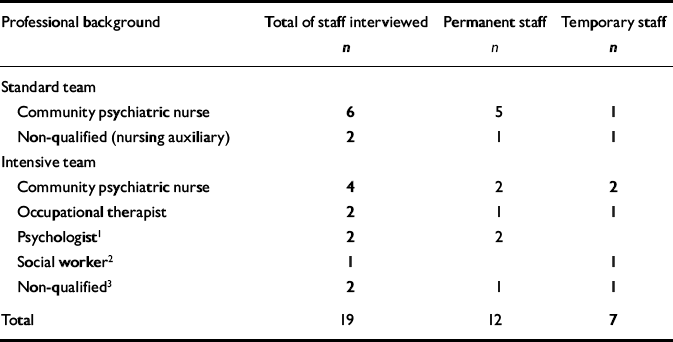
The qualitative work had two components. The first was a thematic interview survey of 19 case managers (8 practising standard and 11 practising intensive case management) in post during the 2-year study period starting in December 1995 (Table 1). The second involved longitudinal, patient-based case studies. We investigated case management practice for a sample of patients receiving either intensive or standard case management. Qualitative research conventionally employs purposive sampling to ensure representation of the range and diversity of the study population. However, in the context of the trial we opted for a stratified, quota sampling design with random case selection (Fig. 1). We sampled 40 cases, but 1 intensive management case was lost to follow-up by the UK700 study and also excluded from the case study population. Findings are therefore based on an analysis of 39 cases (19 intensive, 20 standard case management). Owing to staff turnover the median number of case managers allocated to a patient during the study period was 3 (range 1–9) and a total of 77 case manager interviews were completed (42 standard, 35 intensive case management). Interviews were completed with 30 patients (15 standard, 15 intensive case management) and local authority social workers (known as ‘care managers’) in all 24 cases where they were involved (11 standard, 13 intensive).
Selection of case study sample, case characteristics and extent of available qualitative data. Stage 1: patients were stratified by treatment group to which they were randomised in the UK700 trial. Stage 2: each treatment group was stratified by in-patient/out-patient status at randomisation to produce four cells. Stage 3: 10 cases were selected at random from each cell, controlled by minimum–maximum quotas for African–Caribbean patients and phase of recruitment. We ensured proportionate representation of African–Caribbean patients (whose outcomes were subject to secondary hypotheses) and cases randomised at different phases in the recruitment process (owing to the potential for longitudinal changes in case management practice). Case selection was random, but we rejected a case if it meant defined quotas for the above variables were not met in each cell. (Phase in recruitment: 2–4 cases from each quartile divided according to the chronological rank order of randomisation; African–Caribbean: 2–4 cases.) Random case selection satisfied African–Caribbean quotas but substitution by repeated random selection was required in 2/40 cases to meet phase of recruitment quotas (i.e. substitute a replaced1 case selected at b, 1 case at c substituted for a case at d). Stage 4: Data collection. One intensive case management case (*) was lost to follow-up and excluded from the outcome group in the UK700 trial analysis. Very limited qualitative data about this case were obtained and it was also dropped from the qualitative case study population. Findings are therefore based on an analysis of 39 cases (19 intensive, 20 standard case management). Stage 5: completed interviews. The UK700 main outcome analysis used data from 189/201 cases from the St Mary's/St Charles’ site.

Profile of respondents in the investigation of the models of standard and intensive case management
| Professional background | Total of staff interviewed n | Permanent staff n | Temporary staff n |
|---|---|---|---|
| Standard team | |||
| Community psychiatric nurse | 6 | 5 | 1 |
| Non-qualified (nursing auxiliary) | 2 | 1 | 1 |
| Intensive team | |||
| Community psychiatric nurse | 4 | 2 | 2 |
| Occupational therapist | 2 | 1 | 1 |
| Psychologist1 | 2 | 2 | |
| Social worker2 | 1 | 1 | |
| Non-qualified3 | 2 | 1 | 1 |
| Total | 19 | 12 | 7 |
Qualitative interviews
Interviews were based on topic lists drafted after a literature review and refined progressively during fieldwork. Questioning was structured by the interviewer (T.W.) to cover key themes, but was also responsive to issues emerging from respondents’ accounts. Thematic interviews with case managers covered case management practice and process, inter-agency working, and the relationship between working context, case management process and primary outcome. Case study interviews investigated similar themes, but also obtained chronological, multi-perspective accounts of each patient's management during the study period. We employed a ‘critical incident’ approach (Reference Pryce-Jones, Fitzpatrick and HopkinsPryce-Jones, 1993) to assess factors in each case influencing the level of success in managing both psychiatric emergencies and duration of admission.
Analysis
Interviews were tape-recorded, transcribed and downloaded for online coding and analysis using QSR NUD*IST (Scolari/Sage, 1998). The coding of data operated at three levels. First, each transcript was retained as an individual data source (or case) and coded throughout using trial randomisation variables (case, treatment group, referral source), patient demographics (gender, ethnicity) and service characteristics (number and characteristics of case managers). As with any quantitative database, this coding facilitated analysis within and between the groups – notably between standard and intensive case management cases. Second-level codes were descriptive categories used to label themes identified in sub-sections of a transcript. These codes related to research questions (e.g. management of psychiatric emergencies, admission, assertive casework) or were ‘theoretical’, in that they reflected our conceptual approach, which sought to understand outcome generation through investigation of the case management process; for example, assessment, care planning, monitoring and review were coding categories. Third-level codes were either descriptive sub-categories of level-two codes (e.g. assertive casework strategies) or emergent themes identified through the analysis (e.g. mechanisms acting on the frequency and duration of admission). Both of the above examples are described in the findings.
We used this framework to code transcripts online and employed the cross-reference, search and text retrieval facilities of NUD*IST to interrogate the data. Second- or third-level codes were applied to ‘units’ of text of at least one paragraph. This minimised the loss of ‘context’ when analysing the text yielded by online searches. The analysis of the thematic interviews had the following objectives:
-
(a) to describe how case managers perceived their roles and practised case management;
-
(b) to identify formative influences upon case management practice;
-
(c) to identify differences and similarities between standard and intensive case management.
Analysis of the case studies involved the compilation of case dossiers, comprising multi-perspective accounts of the chronology of each case. These dossiers were analysed to describe casework, and to develop a typology of assertive strategies. We then investigated evidence about the positive or negative impact that key aspects of the context and case management practice (identified through the above analysis) had upon the primary outcome (admission). We compared the effectiveness of standard and intensive case management in preventing or managing psychiatric emergencies and the extent to which admission of patients was avoided or minimised. In all cases evidence of positive or negative impact was only considered where data triangulation provided corroboration from two or more sources (i.e. two or more case managers, care managers and/or the patient; supporting case-note evidence; and/or the reporting of multiple events suggestive of a pattern within the case).
RESULTS
Thematic interview survey
Casework roles and practice
All case managers expressed a consensus that the aims of case management were patient engagement, improved health and social function, and reduced admission. They regarded comprehensive assessment of patient needs and provision of a needs-led service as the key mechanisms for achieving these aims. Case managers recognised the usefulness of assertive outreach, but only as a strategy of last resort when preferred ‘consensual’ management approaches became unsustainable because of significant non-compliance. Case managers felt obliged to address assessed patient need themselves (individual casework). In responding to needs that fell outside their disciplinary training, case managers described two options: to negotiate interventions from other individuals or agencies (brokerage), or to take on clinical casework roles not normally associated with their discipline (genericism). All case managers (both standard and intensive) reported practising individual casework and most adopted both genericism and brokerage at times. However, individual casework coupled with genericism appeared to be the dominant approach.
Formative influences
There was recognition that being a case manager involved a degree of encroachment upon the traditional roles of other professionals. However, the administration and monitoring of medication was not only fundamental to the management of most patients, but also a clinical function that only community psychiatric nurses (CPNs), could legitimately perform. Consequently, CPNs were often called upon to administer medication to patients on the case-loads of non-CPNs and they bore disproportionate responsibility for assertive outreach to patients who were non-compliant with medication. Assertive outreach was seen as difficult and stressful. This undermined teamwork in both standard and intensive case management teams because CPNs perceived limited scope for reciprocal working arrangements.
Comparison of standard and intensive case management practice
The majority of case managers in both standard and intensive case management interpreted casework as an individual rather than a team responsibility and felt obliged to practise generic casework in order to provide needs-led interventions. Team-based management of patients did not emerge in either the intensive or the standard case management teams. However, the teams reported different expectations about the outcomes they could achieve with patients. The intensive case management team felt a greater pressure of expectation to achieve more in terms of rehabilitation. However, they sometimes reported a tendency to overcommit themselves, difficulty in defining appropriate boundaries to their work and problems setting clinical objectives that matched their potential for intensive casework.
Case studies
Models of casework
Individual casework was reported in virtually all case studies, but a generic approach was described in only 16 of 39 cases (8 standard, 8 intensive). There were a number of reasons.
-
(a) In approximately half of the sample the patients were compliant and their major social needs were met. Whether under standard or intensive case management, these cases received comparable low-to-medium intensity, non-generic monitoring and usually recorded positive outcomes.
-
(b) Staff turnover: in some cases, initial management involved a generic approach that was not sustained after reallocation. Sometimes this was because non-recurrent needs were met (e.g. resolving benefit problems). However, case managers who adopted an initial generic approach and addressed the patient's practical and financial needs often enjoyed a dividend in terms of improved engagement. This helped sustain rehabilitative casework and reduced the need for assertive casework. It was difficult for a subsequent case manager to achieve a similar clinical relationship with the patient.
-
(c) The involvement of care managers and commissioned social care services – particularly hostels – limited the role of the case manager.
-
(d) Non-compliance increased the need for assertive outreach. Case managers reported that assertive outreach undermined patient engagement and the sort of therapeutic alliance required to practise generic casework, particularly at an intensive level.
Internal brokerage was rarely reported (1 standard management case), although external brokerage – mostly through care management – was more common (12 of 39 cases).
Assertive casework
In nearly half of the case study population (n=18; standard case management 8, intensive 10) patients were reported to be compliant with medication and appointments and not to need any form of assertive casework. Non-compliance by the remaining 21 patients required varying forms of assertive casework.
Patients exhibiting episodic or serial non-compliance with appointments (n=5; standard case management 3, intensive 2) were generally compliant with medication, or their compliance was maintained through counselling. In these cases assertive monitoring was practised, but typically involved relatively infrequent scheduled appointments. This did not appear to be difficult for either intensive or standard case management workers to implement.
Episodic or serial non-compliance with medication (n=7; standard case management 4, intensive 3) posed more problems, especially when associated with rapid relapse, increased elusiveness or aggression. In these cases periodic assertive and intensive (i.e. frequent) monitoring was required. An important factor influencing the success of ‘episodic assertiveness’ was the closeness of monitoring when patients were stable. This could break down in either team owing to staff turnover, but the standard case management team were generally disadvantaged by virtue of their lower frequency of contact. However, experienced standard case management workers who had the ability to identify early signs of relapse and a greater self-confidence about acting independently to initiate management change did accommodate episodic increases in the frequency of contact with individual patients by effective time management and displacement of routine casework. Three cases (2 standard, 1 intensive) were characterised by persistent non-compliance with medication and elusive non-compliance with appointments. These patients had relatively high levels of social functioning, were disinclined to present themselves at services, and were prone to slow, insidious relapse. Even intensive case management workers reported difficulty finding sufficient time to monitor these patients effectively when the responsibility was not shared with colleagues and no other agency had sufficient contact to provide effective monitoring. In all three cases it proved difficult to sustain a consistent assertive approach. Monitoring broke down, patients relapsed and lengthy admissions were recorded (patient A: one admission, 121 days; patient B: three admissions, 133 days; patient C: four admissions, 231 days).
Some patients exhibited persistent non-compliance with medication with non-elusiveness or frequent chaotic presentation at services. The majority of patients who were persistently non-compliant with medication were also non-compliant with appointment systems, but nevertheless tended to present frequently at services permitting close monitoring without outreach (n=6; standard case management 3, intensive 3). These patients were often described as ‘chaotic’ and required time-intensive, highly assertive casework. Workers using intensive case management were better placed to sustain a high level of contact but they did not perceive this as making a significant impact on primary outcomes. The patients’ chaotic nature often generated a need for crisis management and both intensive and standard case management workers could be drawn into very reactive casework. Interventions related to medical compliance and other relapse risk factors such as substance misuse tended to dominate casework and effectively precluded more rehabilitative casework.
Did assertive casework affect the primary outcome?
For intensive case management to achieve a significant lower mean duration of in-patient stay than standard case management, intensive case managers would need to achieve one, or more, of the following:
-
(a) enhanced out-patient management, resulting in fewer psychiatric emergencies;
-
(b) enhanced management of psychiatric emergencies, so that fewer were resolved by patient admission;
-
(c) enhanced discharge planning, which ensured that in-patients were discharged quickly once their symptoms had been managed.
Is there any evidence that enhanced out-patient management resulted in fewer psychiatric emergencies? Figure 2 shows that there was evidence in 7 standard management cases that potential emergencies were averted at least once in the study period (although emergencies did occur in each case at another time). There was just 1 case where no significant emergency was reported during the study period, but this was not attributed to preventive casework. A different pattern was observed among intensive management cases. There were 5 cases in which no significant emergency (and no admission) was reported in the entire study period. In 4 of these cases this was attributed to preventive casework. In a further 7 cases, evidence suggested that emergencies were prevented at certain times although not for the full duration of the study period.
Comparison in the reported effectiveness of standard case management (a) and intensive case management (b) in preventing hospital admission in a sample of

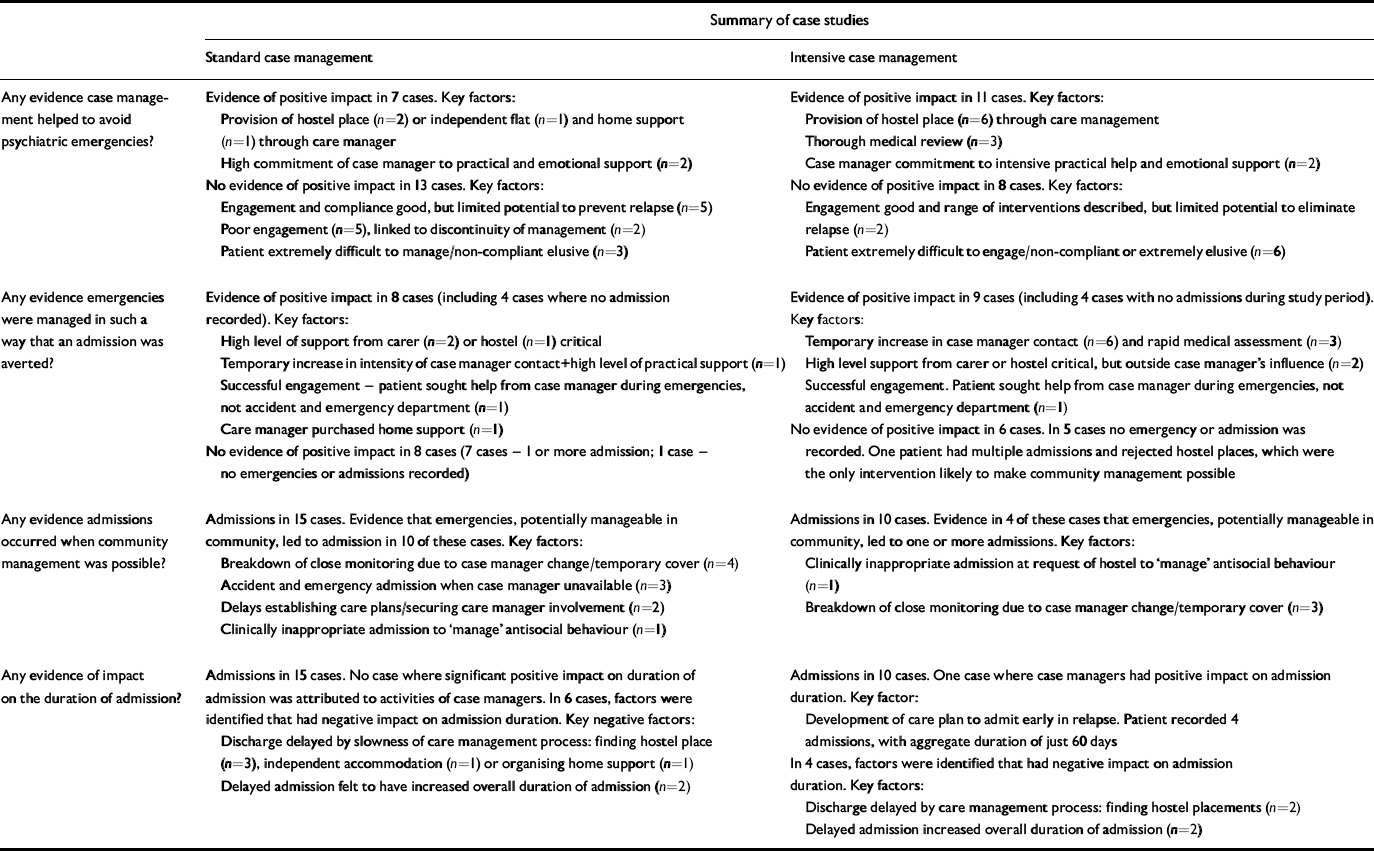
Table 2 shows that proactive casework involving action that was sensitive to individual circumstances and that anticipated crises had particularly positive effects in both samples. This is exemplified by care managers securing or maintaining accommodation (4 standard management cases, 6 intensive). Thorough medical review, involving extended observation of patients, was reported to be critical in 1 standard management case and 3 intensive management cases. The intensive case management team was better able to undertake this work with the thoroughness needed to achieve an enduring preventive effect. The standard case management workers were more likely to be deflected from this casework by other patients who were actively experiencing some form of emergency. The most common explanations for the absence of positive impact were difficult-to-engage, non-compliant and/or elusive patients (3 standard, 6 intensive cases), poor engagement (3 standard cases) and discontinuity of management (2 standard cases). Some difficult-to-engage intensive case management patients reported non-compliance with appointments because they were intolerant of the more frequent contact attempted by intensive management workers.
Comparison of factors associated with effective management of psychiatric emergencies and minimisation of hospital admissions for standard and intensive case management
| Summary of case studies | ||
|---|---|---|
| Standard case management | Intensive case management | |
| Any evidence case management helped to avoid psychiatric emergencies? | Evidence of positive impact in 7 cases. Key factors: Provision of hostel place (n=2) or independent flat (n=1) and home support (n=1) through care manager High commitment of case manager to practical and emotional support (n=2) No evidence of positive impact in 13 cases. Key factors: Engagement and compliance good, but limited potential to prevent relapse (n=5) Poor engagement (n=5), linked to discontinuity of management (n=2) Patient extremely difficult to manage/non-compliant elusive (n=3) | Evidence of positive impact in 11 cases. Key factors: Provision of hostel place (n=6) through care management Thorough medical review (n=3) Case manager commitment to intensive practical help and emotional support (n=2) No evidence of positive impact in 8 cases. Key factors: Engagement good and range of interventions described, but limited potential to eliminate relapse (n=2) Patient extremely difficult to engage/non-compliant or extremely elusive (n=6) |
| Any evidence emergencies were managed in such a way that an admission was averted? | Evidence of positive impact in 8 cases (including 4 cases where no admission recorded). Key factors: High level of support from carer (n=2) or hostel (n=1) critical Temporary increase in intensity of case manager contact+high level of practical support (n=1) Successful engagement — patient sought help from case manager during emergencies, not accident and emergency department (n=1) Care manager purchased home support (n=1) No evidence of positive impact in 8 cases (7 cases — 1 or more admission; 1 case — no emergencies or admissions recorded) | Evidence of positive impact in 9 cases (including 4 cases with no admissions during study period). Key factors: Temporary increase in case manager contact (n=6) and rapid medical assessment (n=3) High level support from carer or hostel critical, but outside case manager's influence (n=2) Successful engagement. Patient sought help from case manager during emergencies, not accident and emergency department (n=1) No evidence of positive impact in 6 cases. In 5 cases no emergency or admission was recorded. One patient had multiple admissions and rejected hostel places, which were the only intervention likely to make community management possible |
| Any evidence admissions occurred when community management was possible? | Admissions in 15 cases. Evidence that emergencies, potentially manageable in community, led to admission in 10 of these cases. Key factors: Breakdown of close monitoring due to case manager change/temporary cover (n=4) Accident and emergency admission when case manager unavailable (n=3) Delays establishing care plans/securing care manager involvement (n=2) Clinically inappropriate admission to ‘manage’ antisocial behaviour (n=1) | Admissions in 10 cases. Evidence in 4 of these cases that emergencies, potentially manageable in community, led to one or more admissions. Key factors: Clinically inappropriate admission at request of hostel to ‘manage’ antisocial behaviour (n=1) Breakdown of close monitoring due to case manager change/temporary cover (n=3) |
| Any evidence of impact on the duration of admission? | Admissions in 15 cases. No case where significant positive impact on duration of admission was attributed to activities of case managers. In 6 cases, factors were identified that had negative impact on admission duration. Key negative factors: Discharge delayed by slowness of care management process: finding hostel place (n=3), independent accommodation (n=1) or organising home support (n=1) Delayed admission felt to have increased overall duration of admission (n=2) | Admissions in 10 cases. One case where case managers had positive impact on admission duration. Key factor: Development of care plan to admit early in relapse. Patient recorded 4 admissions, with aggregate duration of just 60 days In 4 cases, factors were identified that had negative impact on admission duration. Key factors: Discharge delayed by care management process: finding hostel placements (n=2) Delayed admission increased overall duration of admission (n=2) |
Is there any evidence that enhanced management of psychiatric emergencies resulted in fewer being resolved by hospital admission? In 17 cases (8 standard, 9 intensive case management) there was evidence that potential admission had been averted during psychiatric emergencies and in 8 of these (4 standard, 4 intensive) this proved sufficient to maintain patients in the community throughout the study period (Fig. 2). Table 2 shows that positive outcomes were most often associated with assertive casework in response to episodic or serial non-compliance (6 standard, 8 intensive). Examples of successful intervention such as rapid medical assessment emphasised the importance of close monitoring and the reactive role of case managers. Complete avoidance of admission throughout the study period (despite recorded psychiatric emergency) was achieved only where informal carers or hostel staff provided a high level of home support (3 standard, 2 intensive management).
Figure 2 shows that potentially preventable admissions occurred in both groups but were more commonly reported among standard management cases (10/15 v. 4/10 intensive management cases). The main factors explaining the failure to avoid preventable admission were a breakdown of close monitoring caused by change of case manager (6 standard, 3 intensive) and delays in securing social care services through care management (2 standard). Non-compliance in response to intensive casework may have been a contributory factor in 2 intensive management cases.
Is there any evidence that enhanced discharge planning ensured that in-patients were discharged quickly once their symptoms had been managed? Among the 25 cases in which admissions were observed, there was evidence of positive impact on the duration of admission in only 1 intensive management case in which a predefined crisis care plan had been developed (Table 2). There were 10 cases in which failures of case management had a negative impact upon the duration of admission (6 standard, 4 intensive). Two factors were identified: first, inappropriate and unsuccessful efforts to manage relapsing patients in the community without admission (2 standard management, 2 intensive management cases), and second, delayed discharge owing to failure to secure hostel or other accommodation (5 standard management, 2 intensive management). There was a strong consensus that the poor coordination and duplication of National Health Service, local authority and hostel assessments extended the duration of some of the longest admissions recorded.
DISCUSSION
We acknowledge certain limitations of the study. First, despite employing stratified random sampling, as with all qualitative research caution should be exercised in making any inference about the frequency with which the processes and case characteristics we observed were represented within the target population. Although numbers of case studies exhibiting given characteristics have been cited, this is merely to provide illustration of their distribution within the qualitative sample. Second, qualitative data were collected at one of four UK700 sites. We cannot be certain that the processes we observed were present at all sites or that other processes would not have been observed in other sites and non-experimental settings. Not-withstanding these limitations, our findings have major significance for the interpretation of the UK700 findings and service development.
Inter-disciplinary relations
The trial required workers to define appropriate ‘case management’ roles and in so doing challenged traditional specialisms. This had an important informative influence on case management practice. In attempting to resolve the resultant inter-disciplinary tensions a dominant notion about casework emerged, which was that each case manager practised individual, one-to-one casework, working generically if patient need dictated. As a consequence limited brokerage was practised in either team. The case studies suggested the failure to develop team-based management of patients limited the potential of intensive case management to manage psychiatric emergencies without admission.
Assertive treatment and outreach
The UK700 study is commendable for monitoring model fidelity, but although this confirmed that intensive case management achieved an increase in patient contact (Reference Burns, Fiander and KentBurns et al, 2000), it neither explained why this failed to achieve improved outcomes nor assessed the implementation of assertive outreach (Reference TyrerTyrer, 2000).
Given that the promotion of assertive outreach is now UK government policy (Department of Health, 1999), clarity about what actually happened is crucial. Did intensive case management fail because of its lack of adherence to the tenets of assertive outreach? Certainly the training in ‘assertive outreach’ given to intensive case management teams had limited potential to change practice (Reference Gournay and ThornicroftGournay & Thornicroft, 2000) and its impact was further diluted by staff turnover. Nevertheless, the UK700 study team anticipated that intensive case management teams would be better able to implement assertive outreach by virtue of their reduced case-load (Reference Burns, Creed and FahyBurns et al, 1999).
Our findings suggest that assertive casework of any sort appeared unnecessary and inappropriate to a substantial proportion of the study population. Although assertive casework was practised, different strategies were observed and the traditional image of ‘assertive outreach’ with persistently non-compliant and elusive patients was relatively uncommon. Contrary to expectations there was an absence of any marked difference in practice between intensive and standard case management. Both teams managed forms of episodic non-compliance and associated relapse with similar effectiveness, but continuous assertive casework (with outreach) in response to persistent non-compliance appeared unsustainable for both standard and intensive case management because of the absence of teambased management. These factors limited the potential for assertive casework to affect trial outcomes (i.e. to contribute to differences in outcome between standard and intensive case management teams), but we should be cautious about implying that assertive casework was ineffective. Our findings actually suggest that results were mixed.
The usefulness of intensive case management
The case studies suggested that intensive case management was better able than standard case management to reduce admission by enabling proactive casework involving action that was sensitive to individual circumstances and that anticipated crises. This helped prevent some significant psychiatric emergencies arising. This approach, which we termed sensitive anticipatory action, appeared to have the most significant impact on the frequency and duration of in-patient admission. Sensitive anticipatory action comprises intensive casework (often with non-symptomatic patients) aimed at promoting engagement; undertaking patient-centred medication review; assessing and responding to social care needs; and developing crisis care plans. Ironically, this was the sort of casework that the standard case management team displaced as a ‘time management’ strategy to practise assertive outreach with non-compliant patients.
Coordination of health and social care
Our findings support the idea that improved coordination of health and social care is an essential management component and can have significant influence on the frequency and duration of admission. We saw that care plans comprising appropriate accommodation and domiciliary support (arranged through care management) could have preventive potential. However, we also saw how cumbersome arrangements for securing social care through separate care management systems could limit the potential of intensive case management to achieve more rapid discharge of in-patients, resulting in inappropriately lengthy admissions, and that of sensitive anticipatory action to prevent emergencies arising (or to delay their resolution), resulting in a requirement for admission.
Reassessment of the UK700 study findings
These findings have important policy implications and challenge certain conclusions drawn from the UK700 findings. The UK700 team suggested that more attention needs to be given to ensuring that evidence-based treatment interventions are given to patients rather than focusing on delivery systems (Reference Burns, Creed and FahyBurns et al, 1999). Clearly, any greater potential of intensive case management will not be realised unless additional contact time can be utilised to deliver effective interventions, but any reduction in our commitment to getting delivery systems right would do community psychiatry a considerable disservice.
Patients with psychotic disorders require a service that responds to changing circumstances and provides evidence-based interventions within three distinct phases: sensitive anticipatory action to anticipate emergencies; casework (including assertive casework) during psychiatric emergencies and relapse; and effective planning for speedy discharge. With these goals in mind, we strongly support current moves towards full integration of health and social care within sectorised community mental health teams. We agree with Burns & Catty (Reference Burns and Catty2002) that although the development of such complex interventions presents a challenge to evaluation by randomised controlled trials, we should not fragment services just to enable easier evaluation of individual components. We have shown that implementing concurrent qualitative investigations within such trials of complex interventions enables the treatment process and the interaction of multiple service elements to be investigated (Reference Weaver, Renton and TyrerWeaver et al, 1996; Reference Campbell, Fitzpatrick and HainesCampbell et al, 2000; Reference Crawford, Weaver and RutterCrawford et al, 2002).
What, then, of the question of case-load size? Clearly, reducing case-loads is an ineffective intervention when implemented independent of other change. However, this is not evidence that reducing case-loads cannot, or should not, be part of an effective service delivery system. Further analysis of the UK700 study demonstrated as much, for intensive case management did achieve better outcomes in the subpopulation of patients with psychosis and borderline IQ (Reference Tyrer, Hassiotis and UkoumunneTyrer et al, 1999; Reference Hassiotis, Ukoumunne and ByfordHassiotis et al, 2001). This suggests that intensive contact can be useful if applied in appropriate cases. In this respect intensive case management is no different from atypical antipsychotic medication, cognitive–behavioural therapy or even antibiotics. Applied indiscriminately, without consideration for ‘dosage’, intensive case management may be ineffective or even counterproductive.
Assertive outreach was not practised extensively, and not practised to a significantly greater extent by the intensive case management team. Any advantage enjoyed by intensive case management in practising assertive outreach was undermined by factors independent of case-load size (the absence of team-based management). Assertive outreach could have utility but – like the other evidence-based interventions to which Tyrer (Reference Tyrer2000) refers – it is unlikely to be deliverable or sustainable in an effective form unless individual, generic casework is abandoned in favour of team-based management where casework can be shared when patients’ needs so dictate. Assertive casework should be seen as a useful strategy appropriate to an important sub-population of patients, but not as a universal panacea. Tyrer (Reference Tyrer2000) has previously argued that borrowing key elements of assertive community treatment (an approach designed with the deficiencies of US mental health care in mind) is entirely appropriate given the superior standard of basic psychiatric provision in the UK. To restructure services to accommodate assertive outreach or full-fidelity assertive community treatment teams would be an unhelpful developmental cul-de-sac into which to take UK mental health services.
Clinical Implications and Limitations
CLINICAL IMPLICATIONS
-
▪ ▪ The potential of assertive casework to affect UK700 trial outcomes was limited. First, in many cases it might not have been appropriate. Second, forms of assertive casework that intensive case managers were better able to sustain appeared to be appropriate in few cases. Third, in most cases where assertiveness was required, both standard and intensive case managers either practised with comparable effectiveness, or were equally restricted by the absence of team-based management.
-
▪ ▪ Sensitive anticipatory action (SAA) might make intensive case management more effective than an exclusive focus on assertive casework, but enhanced access to social care and team-based management of patients appears to be an important precondition for effective SAA.
-
▪ ▪ Qualitative research methods that assess the process of outcome generation have a significant part to play in the evaluation of complex interventions.
LIMITATIONS
-
▪ ▪ Data were collected at only one of four sites involved in the UK700 trial. We cannot be certain that the processes we observed were present at all sites or that other processes would not have been observed in other centres.
-
▪ ▪ As in all qualitative research, we cannot estimate the frequency with which the processes and case characteristics we observed were represented within the target population within known confidence limits.
-
▪ ▪ The qualitative study showed that aspects of the UK700 study context had an unintended formative influence on casework practice. This needs to be acknowledged in assessing the generalisability of findings.
Acknowledgements
This work was undertaken by the authors, who received funding from the. Directorates of Health and Social Care (DHSC) London Research and Development. programme. The views expressed in the publication are those of the authors and. not necessarily those of the National Health Service or the Department of. Health. Tim Weaver has also been supported by a Medical Research Council. Health Services Research Fellowship. The authors express their gratitude to. these funders for supporting this work.




eLetters
No eLetters have been published for this article.