


1 Introduction
In January 2024, the man who once directed Germany’s federal agency responsible for combating domestic extremism was officially classified as a right-wing extremist. Incredibly, Hans-Georg Maaßen, who headed the Federal Office for the Protection of the Constitution (Verfassungsschutz) from 2012 to 2018, was registered as a danger to democracy by the same institution he once led. While shocking, this development hardly surprised those who had followed Maaßen’s career. Maaßen’s far-right leanings were no secret. They attracted media attention when, as Verfassungsschutz director, he refused to acknowledge that refugees in the east German city of Chemnitz had been attacked by a right-wing extremist mob – even though video recordings had documented these crimes, and anti-refugee assaults had become widespread. He later accused the media, left-wing parties, and “left-wing radical forces in the SPD [Social Democratic Party]” of using this episode to orchestrate his ouster.Footnote 1
To many observers, the Maaßen case is not an isolated event, but an illustration of the deep and long-running biases within state agencies tasked with fighting extremism in Germany and beyond. Over the years, there has been mounting criticism that politicians, bureaucrats, and law enforcement do not take right-wing extremism (RWE) seriously (Görder and Chavannes Reference Görder and Chavannes2020; Kleffner and Meisner Reference Kleffner and Meisner2023; Martini, Ford and Jackson Reference Martini, Ford and Jackson2020; Schultz Reference Schultz2021). By downplaying its importance and instead drawing attention to left-wing extremism (LWE), critics allege, the state may even be complicit in extremism’s spread. For example, during his first term, President Trump directed the FBI and the Justice Department to focus their energies on Antifa and radical left-wing groups rather than white supremacists, even though law enforcement considered white nationalists the leading domestic terrorist threat (Goldman, Benner and Kanno-Youngs Reference Goldman, Benner and Kanno-Youngs2021). In the aftermath of the 2025 assassination of right-wing activist Charlie Kirk, Trump vowed to crack down on radical leftist groups, while his Justice Department removed from its website a study documenting that since 1990, far-right extremists had killed far more Americans than any other domestic terrorist group, including far-left or radical Islamist extremists (Gedeon Reference Gedeon2025). In Europe, increasingly powerful far-right parties are gaining influence over state security forces and intelligence agencies. For instance, when the Austrian Freedom Party took over the interior ministry, it raided the country’s intelligence agency and the homes of staff members, seizing data on far-right extremists and prompting the US and some European allies to suspend intelligence sharing (Bennhold Reference Bennhold2019).
These developments take place amid long-standing concerns that the very state actors in charge of defending democratic stability and public safety discount RWE. This critique has been salient in postwar Germany, where left-wing politicians and activists have long accused intelligence agencies, the police, and the political establishment of deliberately ignoring RWE. The state, they insist, is “blind in the right eye” (auf dem rechten Auge blind) (Kleffner and Meisner Reference Kleffner and Meisner2019, Reference Kleffner and Meisner2023; Schultz Reference Schultz2021). These accusations are often tied to seemingly egregious intelligence and policing missteps, such as the state’s repeated failure to solve a series of xenophobic murders carried out by the terror group National Socialist Underground (NSU) in the 2000s, or the 2019 assassination of Walter Lübcke, a high-ranking pro-immigrant politician, by a known neo-Nazi.
Is such criticism justified? Do intelligence agencies, law enforcement, and politicians consistently minimize the significance of RWE? Or are these accusations made by left-wing parties and activists who want to discredit their opponents and perhaps downplay extremism within their own ranks? In fact, a number of critics in Europe and the US allege that politicians and civil servants are not sufficiently committed to rooting out LWE. They point to extensive property damage, a general sense of lawlessness, and frequent confrontations with the police as recurring challenges facing cities governed by the Left. Discussions usually flare up in response to violent events, such as the riots surrounding the 2017 G-20 summit held in Hamburg. Left-wing extremists set dozens of cars on fire, battled police in the streets, and looted numerous shops, leading to hundreds of injuries and arrests. Reacting to the unrest, prominent center-right politicians blamed the SPD, the Greens, and the Left Party for underestimating and ignoring the dangers posed by left-wing extremists (Niesen and Teevs Reference Niesen and Teevs2017). Just a few years earlier, an SPD-led federal ministry had indeed cut several programs aimed at countering LWE, citing a lack of urgency (Donschen Reference Donschen2017).
Republican lawmakers in the US likewise charge that Democrats turn a blind eye to left-wing violence. For example, vandalism linked to some Black Lives Matter protests in 2020 caused significant property damage, with estimated insurance costs of well over $1 billion (Smith Reference Smith2020). Republicans allege that in characterizing the protests as “mostly peaceful,” or by ignoring the vandalism altogether, Democrats intentionally misread and minimized the threats emanating from far-left anarchists.Footnote 2 Commentators observed a similarly cavalier attitude toward leftist violence in the aftermath of the 2024 killing of a health insurance CEO, gunned down in New York City by an assassin allegedly motivated by anger at corporate America. Commenting on the murder, Senator Elizabeth Warren, Democrat from Massachusetts, seemed to express understanding, stating that “people can only be pushed so far” when confronted with the government’s failure to provide adequate healthcare (Mac Donald Reference Mac Donald2024). Though Warren later clarified that she did not condone violence, her remarks caused widespread outrage.
In short, as political extremism has become a pressing issue, so have concerns that state actors – both on the Left and the Right – are not doing enough to combat it. At the same time, politicians across the ideological spectrum bristle at suggestions that they are not committed to fighting extremist violence. As Germany’s center-right interior minister Horst Seehofer emphatically countered when asked about his agencies’ neglect of far-right extremist threats in the wake of a string of far-right murders: “We are not blind in the right eye.”Footnote 3
This Element puts this claim to the test. Foreshadowing our central findings, we conclude that blind spots in the fight against political extremism exist on both the Right and the Left. Specifically, discussions of extremism in parliaments and election manifestos are deeply shaped by partisanship. Parties on the right have not devoted the attention to right-wing extremist crimes that their prevalence would warrant, while parties on the left frequently downplay or dismiss LWE. Similar divisions are evident within intelligence agencies and the police, even though they operate at a distance from the electoral process. In sum, across the political spectrum and within a range of state institutions, partisanship and ideology consistently and strongly shape how German state actors perceive and respond to threats to public safety and the democratic order.
Before turning to empirical analyses, we provide definitions and place our research question in context by highlighting related cross-national developments.
Definitions and Trends
Definitions of extremism are contested, and the term itself has evolved in public and academic discourse (Backes Reference Backes and Zúquete2023; Jungkunz Reference 72Jungkunz2022; Mudde Reference Mudde2007). Nonetheless, its use has increased considerably over the last two decades, and it is now often used interchangeably with ‘terrorism’ (Martini, Ford and Jackson Reference Martini, Ford and Jackson2020; McNeil-Willson Reference McNeil-Willson, Richard and Triandafyllidou2023). Scholarship has converged on three common features when defining extremism: the construction of society into exclusivist ingroups and outgroups; the propagation of ideologies that are antidemocratic and anti-pluralist; and the promotion of violence, typically by non-state actors. The first two themes involve belief systems and thus highlight the ideological dimension of extremism, while the latter speaks to the methods put in place to advocate for extremist beliefs.Footnote 4
Some of these themes have been challenged. For example, some point out that extremist beliefs are inherently context-dependent: Since the goal of extremism is to fundamentally alter the political and social system, extremism is by definition positioned against the status quo and should be classified as such (Jackson Reference Jackson2019). This conceptualization highlights the malleable and relative nature of extremism as constructed in relation to a power structure or societal view of centrism at a given point in time (Jungkunz Reference 72Jungkunz2022; Mondon and Winter Reference Mondon and Winter2020; Zúquete Reference Zúquete and Zúquete2023). It also aligns with concerns about the politicization of extremism, whereby governments may label groups or ideas as extremist if it appears politically opportune to do so.Footnote 5
Other critiques pertain to the role of violence. Some prefer an explicit distinction between violent and nonviolent extremism and associated countermeasures, particularly if state agencies are tempted to police extremist thoughts that never aspire to turn violent.Footnote 6 In part reflecting these concerns, countries have adopted different legal approaches when it comes to criminalizing hateful speech (Bleich Reference Bleich2011). Yet, scholars interested in understanding the spread of extremism tend to argue for a more holistic approach that does not cleanly separate out violent from nonviolent acts. As McNeil-Willson, Triandafyllidou and Gerrand (Reference McNeil-Willson, Triandafyllidou, Gerrand, Richard and Triandafyllidou2023, 5) state, “violent extremism also includes less overtly violent acts that fray the fabric of communities – conspiracy theories heavily laden with anti-Semitism and Islamophobia, ideas hostile to migrants and human rights, or exclusionist and racist political identities – creating a societal context more conducive to extremist violence and polarisation.” Effective responses to extremism, the authors note, must “account for these less overt but often more insidious articulations of extremism.”Footnote 7
In line with this more holistic view of extremism, this Element is interested in how various state actors approach both violent and nonviolent extremism, with an empirical focus on Germany. However, where analytically appropriate, we also distinguish between these two types of extremism.
Notwithstanding debates around the definition of extremism, our data collection of extremist acts is necessarily in line with the definitions adopted by the German Verfassungsschutz, which distinguishes right-wing and left-wing extremists as follows: right-wing extremists assume that belonging to an ethnic group or nation determines a person’s value, a belief that is incompatible with Germany’s democratic constitutional order. Nationalism and group-based hostility, such as racism and antisemitism, characterize right-wing extremist agitation. Left-wing extremists seek to eliminate the existing state and social order and dismantle democratic freedoms and the market-based economy. Depending on their ideological orientation, left-wing extremists want to institute communism or establish an anarchist society.
These understandings date back to the 1950s, when the West German state conceptualized extremism as expressing a fundamental opposition to the country’s core values and constitutional order, and the federal constitutional court banned the Sozialistische Reichspartei (a successor party to the NSDAP) and the Kommunistische Partei Deutschlands (Bötticher Reference Bötticher2017).
Though historically rooted, official state definitions of RWE and LWE in other countries and international organizations overlap significantly.Footnote 8 Moreover, while Germany’s experience with national socialism and subsequent efforts to stamp out far-right ideologies set it apart from other countries, it is nonetheless witnessing a resurgence of RWE. As in many of its European neighbors, far-right radicalization and violence have been urgent problems, targeting the general public and elected representatives alike (Alizade et al. Reference Alizade, Ellger, Grünewald and Tichelbaecker2025; Mudde Reference Mudde2019) (see also Section 2). These trends are also present in the US, which has witnessed the rise of far-right militias and white nationalist groups (Belew Reference Belew2018), most dramatically visible in the storming of the Capitol on January 6th, 2021.
The Capitol attack highlighted another common feature of contemporary extremism: the influence of social media in triggering and coordinating extremist activities (Mitts Reference Mitts2025). Via messages on encrypted or public online platforms, extremists can swiftly call on thousands of followers to assemble in the streets. This type of mobilization is a frequent occurrence in German cities. It often takes the form of anti-immigrant protests, sparked by reports of crimes allegedly committed by migrants (Miller-Idriss Reference Miller-Idriss2020). Outside of Germany, similar events recently took place in the UK, which experienced violent riots by far-right mobs following false social media claims that an immigrant was responsible for the stabbing of three children. The riots provoked particular outrage due to their scale and violent nature, but are part of a longer tradition of anti-immigrant violence (Dancygier Reference Dancygier2010). In brief, the current nature of the far-right threat in Germany is broadly similar to that observed in other Western democracies.
Postwar Germany also has a history of violent LWE, particularly during the 1970s, that it shares with other countries, with the Red Army Faction (RAF) as its most brutal manifestation (see also Section 2). The RAF’s kidnappings and killings mirrored tactics employed by Italy’s left-wing terror groups, most famously the Red Brigades, whose attacks against those it perceived as symbols of the state and capitalism claimed hundreds of lives, including that of Aldo Moro, the country’s former prime minister. Moro was killed in 1978 after being held captive for weeks. In the US, the Weather Underground similarly believed that armed action would help spark a left-wing revolution, though the scope of its violence remained more limited and less lethal (Della Porta Reference Della Porta1995; Sánchez-Cuenca Reference Sánchez-Cuenca2019).
These movements lost momentum during the 1980s, due to a mix of social and political developments (including the end of the Cold War) and intensified state countermeasures. However, before they faded, there were contentious debates about whether governments properly understood the severity of the left-wing extremist threat and were doing enough to counter it. In Italy, for example, the government disbanded the anti-terrorism unit responsible for fighting the Red Brigades in 1976, operating under the mistaken belief that the group no longer posed a lethal threat.Footnote 9 In Germany, CDU politicians claimed that socialist sympathies prevented the SPD-led coalition government from forcefully addressing LWE, while the extraparliamentary Left thought the government’s counter-terrorism measures exceeded legitimate state power and were an attack on the Left itself (Hanshew Reference 71Hanshew2012).
Similar themes emerge in public debates about state responses to extremism today. To illustrate this point, we analyzed media attention to the issue of downplaying political extremism in three large, established democracies: Germany, the US, and the UK. These countries are commonly discussed when it comes to political extremism. Our media analysis is based on news articles. We examine mentions of downplaying political extremism using NexisUni, a comprehensive research database that contains articles from more than 11,000 media sources from around the world in more than forty languages. In American and British media outlets, we searched for mentions of the words “right-wing extremism” or “left-wing extremism” and those beginning with “downplay” in the same article, while for Germany we searched for the commonly used phrases “auf dem rechten Auge blind” and “auf dem linken Auge blind” (“blind in the right/left eye”).Footnote 10
Figure 1 plots the yearly number of articles containing the search terms and shows increasing attention to the issue of downplaying extremism in all three countries. This is particularly the case for RWE. In Germany, there is a clear jump in 2011 (194 articles mention the phrase “auf dem rechten Auge blind” compared to 18 in the previous year), the year in which the NSU was exposed as the perpetrator of a number of xenophobic murders, along with the German intelligence agencies’ and law enforcement’s long-running failure to solve these crimes. Since then, a series of high-profile and violent right-wing extremist attacks have further fueled discussions about the state’s role in minimizing the threat emanating from the Far Right, as reflected in Figure 1. However, there is also a notable spike in the number of articles on downplaying LWE in 2017, which coincides with the riots surrounding the G-20 summit in Hamburg. Turning to the US, Figure 1 shows a steady increase in attention to the problem of downplaying right-wing extremism beginning in the 2000s and peaking in 2021, when a violent mob of Trump supporters stormed the Capitol on January 6th. Reflecting the polarized nature of American politics, mentions of downplaying LWE reached their highest level in the same year. Finally, the UK joins both Germany and the US in displaying an upward trend in media attention to political extremism, although at a lower level. The attention to the downplaying of extremism further peaks in 2024, when violent anti-immigrant riots swept the country.
Media reporting on the downplaying of extremism
Note: Source: NexisUni database. See text for search terms.

Overall, this illustration of German, US, and UK media highlights a rising interest over time in the question of whether the state downplays extremism across countries, with discussion peaking around major events that sparked national debates about the state’s role in minimizing threats stemming both from the Far Right and the Far Left. In the contemporary period, the far-right threat looms large. However, discussions about state responses resemble earlier historical periods, such as the 1970s, when Western democracies were preoccupied with fighting left-wing terror groups. How the state responds to these threats is the question that animates this Element. In the following subsection, we examine how existing research has approached this issue.
State Responses to Extremism
A core responsibility of the state is to protect its population. Failing to address extremist threats directly undermines this duty. But is there merit to the contention that the state downplays extremism? Why might democratic states overlook the dangers of political extremism? And why would state responses to extremism differ depending on the type of extremism state actors encounter? As we address later, an extensive literature has shown that a number of citizen attitudes and grievances – the demand side – may propel potential extremists into action. Importantly, the posture of the state can, in turn, affect whether and to what extent this potential is realized.Footnote 11 This Element, therefore, turns the spotlight on the supply side: We investigate how a range of state actors – political parties, state security agencies, and the police – approach LWE and RWE. We first review literature about the state’s role in shaping counter-extremism policies and these policies’ impacts on public perceptions and then discuss factors that could lead to varying state responses to extremism.
The Role of the State
The state is tasked with combating extremism, but it also shapes how extremism is understood in the first place. States define what actions and groups count as extremist (Kleffner and Meisner Reference Kleffner and Meisner2023; Martini, Ford and Jackson Reference Martini, Ford and Jackson2020; Stump and Dixit Reference Stump and Dixit2013). These assessments have substantial implications for policy and public perceptions. Groups the state suspects of extremism come under much greater state scrutiny and surveillance, shrinking their room for maneuver. For instance, states can declare certain symbols as extremist propaganda. When individuals use these outlawed symbols publicly – for example, during demonstrations or in acts of vandalism or harassment – their behavior is categorized as extremist and prosecuted as such. When state security agencies decide to designate entire groups as extremist or terrorist, bans follow.
In light of these significant consequences, there can be heated controversies over how the state should categorize and prosecute violent events or nonviolent expressions of extreme ideologies (Bleich Reference Bleich2011; Huff and Kertzer Reference Huff and Joshua D2018). For example, media outlets and politicians often denounce state decisions not to classify large-scale attacks on ethnic or sexual minorities as domestic terrorism or hate crimes.Footnote 12
Decisions to ban certain symbols or limit hateful speech can also generate a backlash. For instance, the Austrian Identitäre Bewegung (Identiarian Movement; an anti-Muslim and anti-immigrant movement) called for mass demonstrations when the Austrian parliament banned its “lambda” symbol in 2021.Footnote 13 In the UK, the government was accused of chilling speech when, in connection with the 2024 anti-immigrant riots, it warned on X: “Think before you post.” Social media posts inciting violence online indeed led to prosecutions, with some jailed for social media activity even without direct involvement in the riots.Footnote 14 Politicians have also faced hate speech prosecutions. Evidence from the Netherlands, where far-right politician Geert Wilders was convicted for hate speech against minorities, suggests that these state actions can trigger unintended consequences, such as increasing public skepticism of democracy and boosting support for the parties of accused politicians (Rekker and Van Spanje Reference Rekker and Van Spanje2022; Van Spanje and De Vreese Reference Van Spanje and De Vreese2015).
State decisions to elevate or downgrade behavior as extremist can also influence how the public perceives different types of harassment and violence. Politicians, security agencies, and law enforcement can guide narratives on the types of individuals and groups that pose a danger to public safety and the democratic order. This applies not only to the clear designation of groups, symbols, and actions but also to more subtle cues. For example, when state actors characterize perpetrators as “lone wolves,” the public may not feel much of a danger. By contrast, when the state portrays perpetrators as belonging to well-organized terrorist networks, fear levels may rise as citizens worry about systematic threats to their safety (D’Orazio and Salehyan Reference D’Orazio and Salehyan2018).
These varying public threat perceptions matter for several reasons. First, citizens are more likely to support counter-extremism measures if they consider a threat to be serious. By implication, if state narratives incorrectly overplay certain types of threats, democratic publics will accept unnecessarily harsh anti-extremism policies, frequently accompanied with some loss to civil liberties (D’Orazio and Salehyan Reference D’Orazio and Salehyan2018; Merolla and Zechmeister Reference Merolla and Zechmeister2009). The systematic downplaying or ignoring of threats may instead cause the public to reject counter-extremism policies when they might in fact be warranted.
Second, the fight against extremism relies on public awareness and engagement. Citizens must be able to recognize everyday forms of extremism, such as verbal attacks or vandalism, that fall short of major violent events. If public authorities do not effectively communicate what extremist behaviors look like, citizens are less likely to recognize and report extremism, allowing it to fester and grow. At the same time, governments must avoid being overly alarmist or imposing restrictions on lawful speech. They need to strike the right balance between alarmism and complacency to bring the public on board (Freedman Reference Freedman2005).
Importantly, similar dynamics operate within state institutions themselves. If state agencies tasked with countering extremism are better equipped to recognize one type of extremism than another, serious security failures can follow. The NSU case is emblematic of this tendency. For too long, intelligence officers seemed unable to discern the murders’ far-right imprint, focusing instead on what they thought was immigrant criminality (Koehler Reference Koehler2017).
One key state institution in the context of countering political extremism is the police, which is often tasked with recording extremist crimes on the ground. Intelligence agencies and political parties, in turn, rely on the crime figures collected by the police to assess extremist threats and to communicate them to the wider public. However, some have shown that law enforcement can be biased in its treatment of extremism, downplaying the threat coming from the Far Right by, for example, not investigating allegations of right-wing extremist motives (Amnesty International 2016; Kleffner and Meisner Reference Kleffner and Meisner2023). Some trace these shortcomings to alleged widespread sympathies for far-right ideologies among the police, citing historical examples, such as the infiltration of the police by the Nazis during the Weimar Republic (Heuer Reference Heuer1995); support for authoritarian values as a driver behind the police’s support for far-right parties (Lubbers and Scheepers Reference Lubbers and Scheepers2002); or current scandals that revealed several chat groups among police officers in Germany and the UK containing racist and antisemitic content (BBC 2024; Bennhold Reference Bennhold2020).
However, other accounts highlight that the political behavior of the police has been more ambivalent. At times, “segments of the police have shown sympathy for left and working-class forces” (Lipset Reference Lipset and Anthony1972, p. 281). A case in point is Germany, where the GdP – Europe’s largest police union by membership – has traditionally been aligned with the Social Democrats (Galic Reference Galic2017). Empirical analysis of European survey data further suggests that police do not differ significantly from the general population in relevant dimensions such as their attitudes toward immigration (Rego and Alizade Reference Rego and Alizade2025). Whether European police forces are systematically biased against taking extremist threats seriously therefore remains an empirical question.
In the US, evidence that partisanship or ideology influences the behavior of law enforcement is also mixed. For example, when local sheriffs harbor right-wing extremist views, they are less likely to enforce laws with which they disagree, such as gun safety measures (Farris and Holman Reference Farris and Holman2024a). And they are more likely to think that Antifa was responsible for the violence at the US Capitol on January 6th, 2021 (Farris and Holman Reference Farris and Holman2024b). Yet, these patterns do not necessarily generalize to partisanship or other behaviors. A recent study finds that Republican and Democratic police officers do not differ much when measured in their overall number of stops, arrests, and use of force (Ba et al. Reference Ba, Ge, Kaplan, Knox, Komisarchik, Lanzalotto, Mariman, Mummolo, Rivera and Torres2025).Footnote 15 Whether partisan leanings matter in how US police approach extremist crimes is less well understood.
Whereas the police, interior ministries, and security agencies are charged with identifying, tracking, and countering extremist threats, political parties also play a crucial role in raising the alarm. They can do so by naming and condemning extremism in election platforms, parliamentary speeches, and press releases. Elected politicians can also set clear bounds on what political behaviors fall outside the norms of acceptability (Beilin, Dancygier and Wu Reference Beilin, Dancygier and Wu2025). For instance, they can use social media, TV appearances, or parliamentary debates to denounce hateful speech or violent demonstrations; they can use parliamentary procedures to ensure that these topics are part of the parliament’s agenda; and they can propose counter-extremism legislation. Political parties and elected officials thus have a number of tools at their disposal to tackle extremism, and this Element examines when and how they take advantage of some of these tools.
Factors Behind Varying State Responses
Given the centrality of state actions in the fight against extremism, what explains why states overemphasize one type of extremism and downplay another? More specifically, why do we hear frequent critiques in recent years that contemporary Western democracies minimize RWE relative to LWE?
One answer relates to extremism’s relationship with the state. Strands of LWE oppose the very idea of state authority and endorse an anarchic political order (Backes Reference Backes and Zúquete2023). This fundamental opposition to the political system itself may call for drastic measures. Similarly, anti-Western and anti-capitalist ideologies strike at the foundations of present political and economic orders and therefore require the state’s attention. Additionally, left-wing militants are frequently in conflict with the police (Lehr Reference Lehr, Taylor, Holbrook and Currie2013). By contrast, extremist groups on the Right often stand for a muscular state and strict maintenance of law and order. Elected politicians, state agencies, and law enforcement may therefore see themselves as the actual targets of LWE and may accordingly devote disproportionate attention to it, irrespective of their proximity to left- or right-wing parties.
It is important to note that the distinction between a conservative, prostate extreme right and a revolutionary, anti-state extreme left can break down in practice.Footnote 16 In the US, a range of right-wing militias stand in direct opposition to the federal government. They have engaged in anti-government activities, ranging from the armed occupation of federal offices to violent street encounters with law enforcement.Footnote 17 In Germany, the heavily armed far-right Reichsbürger (Citizens of the Reich) do not consider postwar Germany a legitimate state and have plotted to overthrow the government (Knight Reference Knight2024). Nonetheless, the association of LWE with activities that weaken the state and RWE with behaviors that seek to strengthen – or at least not challenge – it, appears to persist.Footnote 18
Another potential reason for the state’s differential treatment of LWE versus RWE relates to the racial or ethnic background of perpetrators and victims. Prior studies contend that state actors perceive RWE as less threatening because it upholds racial hierarchies that have long placed whites on top (Meier Reference 74Meier2020; Wright Reference 78Wright2024). Racist attacks can be motivated by a desire to maintain these hierarchies. They send a signal that minorities are not to encroach on the neighborhoods, social scene, or economic resources of the majority (Dancygier and Green Reference Dancygier, Green, Dovidio, Hewstone, Glick and Esses2010; Dancygier et al. Reference Dancygier, Egami, Jamal and Rischke2022; Perry Reference 75Perry2002). When majorities are white and minorities are nonwhite, these attacks serve to entrench racial status orders that characterize society writ large. Some argue that intelligence agencies and other state institutions reflect this ideology and power structure and construct threat assessments accordingly, resulting in the minimization of right-wing white supremacist extremism relative to its left-wing counterpart (Meier Reference 74Meier2020).
Scholarship has drawn attention to similar dynamics when analyzing state and public responses to Islamist and white supremacist violence. While negative stereotypes and media discourses about Arabs and Muslims amplify threat perceptions of Islamist extremism, scholars argue that the absence of such beliefs and media messages about whites in turn reduces threat perceptions of white supremacist extremism (Breen-Smyth Reference Breen-Smyth, Martini, Ford and Jackson2020; D’Orazio and Salehyan Reference D’Orazio and Salehyan2018). One consequence is that states are far less likely to designate the latter as terrorism, regardless of the organizational structures of the groups or the severity of the violence they inflict (Búzás and Meier Reference Búzás and Meier2023). Likewise, when identical acts of violence are perpetrated by Arabs (vs. Whites), western publics are more likely to categorize these as terrorist and to ascribe religious or political motives (Huff and Kertzer Reference Huff and Joshua D2018). Extremism unleashed by far-right white nationalists is more often regarded as resulting from social isolation and mental illness, and therefore more easily dismissed as unorganized and random (D’Orazio and Salehyan Reference D’Orazio and Salehyan2018; Völker and Kanol Reference Völker and Kanol2024). Scholars and practitioners tend to agree that the “lone wolf” understanding of terrorism largely misses the mark, as most violent extremists do not act alone; they find inspiration and material support from extremist cultures and networks. Yet, this label is frequently applied to white far-right terrorists, which can diminish perceptions of the threat posed by this group (Gable and Jackson Reference Gable and Jackson2011).
Historical trajectories also matter for varying state responses to LWE versus RWE. Large-scale extremist events that cause mass casualties can shift the state’s and society’s understanding of extremism. Western public’s readiness to associate Arabs and Muslims with politically motivated violence underscores this point. In the 2000s, a spate of Islamic terror attacks – most notably the 9/11 attacks in the US and the 7/7 bombings in the UK – cemented Islamic fundamentalism as the main terror threat in the eyes of state security agencies, elected politicians, and the public at large. A host of new counter-extremism policies and bureaucracies followed. As the next section elaborates, in Germany and in several other European countries, it was a series of high-profile terrorist acts carried out by left-wing extremists in the 1960s and 1970s that had previously dominated threat perceptions. This focus on the extreme Left, reinforced by the Cold War fight against communism, may have blinded authorities to the growing radicalization of right-wing groups, some of which had become increasingly organized and lethal (Manthe Reference Manthe2018).
Finally, while journalists and academics have accused Western states of minimizing RWE, a different imbalance pertains to contemporary scholarship. In the last several decades, research on RWE has far outpaced research on LWE. In practitioner circles, militant anti-fascism has also been largely overlooked (Copsey and Merril Reference Copsey and Merril2021).Footnote 19
This relative neglect may stem from genuinely lower threat levels in the recent past, the greater success of far-right compared to far-left parties, challenges in defining LWE, and underlying ideological biases among extremism scholars (Jungkunz Reference 72Jungkunz2022; Zúquete Reference Zúquete and Zúquete2023). Such biases may be reinforced by faulty data collection. For example, recent research suggests that scholars may systematically – if unintentionally – miscode violent incidents in ways that underestimate the extremism of leftist, Black separatist, and anti-White extremists in the US (Allison Reference Allison2021). Given this disproportionate attention to RWE among scholars and practitioners, it is imperative to examine whether claims that accuse the state of right-wing bias in the fight against extremism are empirically valid.
Empirical Approach and Preview of Findings
This Element joins other research in focusing on the opportunity structures that help translate latent demand for extremism into action. But whereas existing supply-side accounts tend to examine the actors and institutions that provide parties, voters, or potential perpetrators with the short- to medium-run incentives to turn to extremism, we take a longer view. Analyzing the German state’s approach to political extremism over up to seven decades, we evaluate whether state actors have persistently downplayed RWE or LWE, thus contributing to their long-run entrenchment.
We do so by analyzing both partisan actors – political parties across the ideological spectrum – and presumptively nonpartisan actors – intelligence agencies and the police. Though the latter play a critical role in maintaining public safety and preserving democracy, we do not have systematic knowledge about how these institutions have approached political extremism across Germany’s states (Bundesländer) and over time. To be sure, historians and journalists have offered compelling accounts describing how political forces have shaped the origins of Germany’s postwar intelligence and law enforcement agencies, as well as the investigations of specific instances of extremism. These studies often highlight undue influences of right-wing actors and the associated downplaying of RWE. But they also identify biases favoring LWE (Bergsdorf and van Hüllen Reference Bergsdorf and van Hüllen2011; Kleffner and Meisner Reference Kleffner and Meisner2019, Reference Kleffner and Meisner2023; Röpke and Speit Reference Röpke and Speit2013; Steinke Reference Steinke2023; Wetzel Reference Wetzel2015). We draw inspiration from this work and investigate whether the ideological influences these scholars detect in specific cases generalize and add up to bias, by which we mean the systematically differential treatment of RWE and LWE that cannot be explained by differences in threat levels across extremism types.Footnote 20
We focus less on the incentives strategic politicians face (which may vary from one election cycle to the next) and instead assess whether biases are more enduring. Our goal is twofold: (i) to establish whether the German state has persistently minimized the far-right or far-left extremist threat; and (ii) if so, to determine whether this bias is a constant feature or subject to partisan ideologies. We thus deliberately connect purportedly neutral state institutions that are supposed to operate above the partisan fray to parties and their ideological leanings. In this way, our work speaks to research that demonstrates how the state’s understanding of political extremism and terrorism is contingent and constructed (Jackson Reference Jackson2016; Martini, Ford and Jackson Reference Martini, Ford and Jackson2020).
In our case, the influence of partisan ideologies is unclear ex ante. It is possible that ideological biases that map onto partisanship could influence how extremist threats are perceived and presented to the public, such that center-right governments downplay threats from the Right but not the Left, while center-left governments do the opposite. But such biases may compete with other relevant frameworks and narratives, for example, related to racialized status hierarchies or historical patterns referenced earlier. The analyses we conduct in this Element shed light on these questions.
We also note, however, that our analyses are not designed to examine the biased behaviors of individual lawmakers and bureaucrats. Rather, we take the necessary prior step and first ascertain whether systematic, long-term biases exist. If they do, the next step is to investigate why and how individual behavior aggregates to produce them.
To evaluate long-term institutional biases, we develop a novel empirical framework and set of measures. We analyze a variety of documents produced by different types of state actors from the postwar years until today.Footnote 21 At the level of political parties,Footnote 22 we investigate speeches, election manifestos, and parliamentary inquiries. At the level of presumptively nonpartisan state institutions, we study reports published by intelligence agencies charged with protecting the democratic order (Verfassungsschutz) as well as publications by police unions.
Investigating these data sources over the long run using a dictionary approach, hand coding, and structural topic modeling (among other methods), we arrive at two key findings. First, across the Left and Right, political parties approach extremism in ideological terms. Even though right-wing extremist crimes have far exceeded left-wing extremist crimes for decades, the Center-Right has consistently minimized threats emerging from the Far Right. Though all parties have increased their attention to RWE over the last decades, in most years, the frequency with which the CDU/CSU discusses RWE relative to LWE in speeches and manifestos is lower than what actual crime figures would warrant. By contrast, parties on the Left tend to downplay LWE. The SPD, the Green Party, and the Left Party devote substantial attention to RWE, but often discount the dangers posed by LWE. Left parties tend to neglect LWE altogether. When they do engage with LWE, they frequently minimize its threat potential.
Second, these biases extend to purportedly neutral state actors. Intelligence agencies under the auspices of a center-right interior minister devote relatively less attention to RWE in their public reports compared to intelligence agencies overseen by center-left interior ministers. We uncover similar ideological biases in how police publications address political extremism. These findings hold when controlling for actual extremist crime rates and electoral incentives to cater to far-right voters; they are robust to only focusing on violent extremist crimes; and they operate within and across states and over time.
Overall, we find that discussions about extremism in parliaments and election manifestos are marked by deep partisan divides. These fault lines also emerge among civil servants who are steps removed from the electoral arena. In short, across the political spectrum and within state agencies, partisanship and ideology significantly and enduringly predict how German state actors approach threats that are fundamental to public safety and the democratic order.
Contributions
Taken together, these findings contribute to several bodies of research. First, we advance scholarship connecting state actors to extremism and intergroup violence. This research demonstrates that elected politicians can deliberately stoke hate crime and interethnic riots. Sometimes in collusion with the police, these politicians may trigger such violence for their own divisive agendas. Calling for attacks against minorities can strengthen support among core supporters and create a climate of disorder in which their parties thrive (Dancygier Reference 68Dancygier2023; Karapin Reference Karapin2002; Wilkinson Reference Wilkinson2004). Short of inciting violence, even “mainstream” politicians may help normalize extremism by parroting the language or policy positions of radical parties. This elite-led normalization further erodes liberal democratic norms and practices (Bartels Reference Bartels2023; Beilin, Dancygier and Wu Reference Beilin, Dancygier and Wu2025; Bolet and Foos Reference Bolet and Foos2025; Mudde Reference Mudde2019; Valentim, Dinas and Ziblatt Reference Valentim, Dinas and Ziblatt2025; Valentim Reference 77Valentim2024).
We add to this research by showing that politicians and the bureaucrats they appoint can create permissive environments for violence and bolster extremist narratives without ever appealing to the public to commit extremist acts or even expressing sympathies for far-right or far-left causes. The documents we analyze broadcast to the public whether the state considers certain political developments as extremist and consequently mold societal norms about what political behaviors are legitimate. Failure to align the rhetoric about extremism with the actual threats it poses may reduce the public’s ability and willingness to confront it. Our research thus highlights that seemingly centrist or nonpartisan state actors are in a position to systematically distort how the public perceives the dangers and legitimacy of political extremism.
Second, our focus on a range of state actors contributes to research on states’ complicity in the global rise of RWE (see also Miller-Idriss Reference Miller-Idriss2020). Much of the research explaining instances of RWE has centered less on the state and more on citizen preferences and behaviors. It has emphasized how demand-side factors such as fears over immigration, crime, cultural diversity, or economic and status competition can prompt voters to opt for far-right parties or to engage in anti-minority hate crime.Footnote 23 While societal support for hate crime extends across genders, age groups, and income levels (Dancygier Reference 68Dancygier2023), offenders tend to be young and male, exhibit relatively high levels of authoritarianism and ethnocentrism, and low levels of education and employment (Dierbach Reference Dierbach, Virchow, Langebach and Häusler2016; Heitmeyer Reference Heitmeyer1992; Willems Reference Willems1995).
Without discounting the importance of individual-level characteristics and grievances, our study turns the spotlight on the methods established state actors operating within normal democratic processes employ to amplify or downplay the dangers of extremist behaviors. We thus join supply-side accounts that link the success of far-right parties and ideas to centrist party strategies,Footnote 24 but we expand the time horizon and set of state actors, institutions, and elite behaviors that scholars of RWE typically study. This approach allows us to reveal deeply entrenched biases that withstand the vicissitudes of short-run electoral incentives or the motives of individual politicians.
Third, by illuminating the partisan nature of the state’s approach to extremism, we contribute to scholarship that critically assesses how the state defines terrorist threats and how it communicates these threats to the public (e.g., Martini, Ford and Jackson Reference Martini, Ford and Jackson2020; Stump and Dixit Reference Stump and Dixit2013). Our findings are consistent with the argument, outlined earlier, that state actors perceive RWE as less dangerous because it maintains long-established group-based status hierarchies (Meier Reference 74Meier2020). But our evidence also suggests that this is not the whole story; we observe significant variation in the treatment of RWE and LWE across parties. If these status hierarchies and associated ideologies affect parties’ approach to extremism, they do so unevenly. Moreover, though the incidence of RWE has far outpaced LWE, it is also concerning that left parties have frequently paid insufficient attention to left-wing extremism, especially given increases in LWE in recent years.Footnote 25
Finally, to the best of our knowledge, this Element is the first to develop a framework to document persistent, systematic bias in the treatment of political extremism across parties, intelligence agencies, and the police, and to do so over the long run and across states. As concerns over the state-based sanctioning of extremism rise, it is essential to systematically measure this phenomenon. In addition, we also offer a framework for documenting the state’s approach to political extremism which researchers can adapt and apply to other countries.
2 Extremism in Germany
This section offers a brief historical overview of LWE and RWE in Germany from the 1950s to the present, along with background information on the state actors involved in addressing and combating extremism.
Institutions and Extremism
We locate our study in Germany, an especially important and interesting case given its experience with national socialism. Though this history differentiates Germany from other democratic countries confronting political extremism,Footnote 26 it has not prevented the reemergence of violent far-right forces, many of which have transnational connections across the globe. Thus, as outlined in Section 1, Germany faces threats of extremism similar to those of other democracies, which also struggle with political violence and extremism originating from the Left and the Right, among the mass public, and political elites (Berntzen, Kelsall and Harteveld Reference Berntzen, Kelsall and Harteveld2024; Kalmoe and Mason Reference Kalmoe and Mason2022; Krook Reference Krook2020; Miller-Idriss Reference Miller-Idriss2020; Mitts Reference Mitts2025; Shady, Hooghe and Marks Reference Shady, Liesbet and Gary2024; Westwood et al. Reference Westwood, Grimmer, Tyler and Nall2022). Although empirically centered on the German case, our general framework can therefore travel to other countries. To the extent that Germany’s Nazi past prompts state actors to take RWE more seriously, we expect our findings to be relatively more muted compared to those in other national democratic contexts.
Intelligence Agencies
The overarching goal of the Verfassungsschutz – Germany’s domestic intelligence agency – is to safeguard the country’s democratic order and constitution. Activities fall into several areas, including the prevention of various forms of political extremism (left-wing, right-wing, Islamist, foreign). The Verfassungsschutz consists of one federal office and sixteen state offices. These offices operate independently and are not subsidiaries of the federal office, leading to a quite fragmented security apparatus. Moreover, procedures and priorities vary significantly across offices, especially since federal and state interior ministers, who themselves are political appointees, appoint and dismiss office directors.Footnote 27
Consequently, an inherent tension arises: Intelligence agencies are supposed to gather and interpret information objectively based on facts to prevent both trivialization and demonization of potential threats, but their leadership is fairly close to parliamentary politics.Footnote 28 The conduct of intelligence agencies can therefore become politicized (Jaschinski and Steinbach Reference Jaschinski and Steinbach2024). One goal of our analyses is to establish whether the partisanship of interior ministers or the strength of far-right parties helps predict how Verfassungsschutz offices do their work.
Though most of their activities are classified, Germany’s intelligence agencies shape public perceptions of extremism. Importantly, they have the authority to designate individuals, groups, and parties as “extremist” and a threat to the constitutional order. Verfassungsschutz decisions to declare political parties – for instance, branches of the Alternative für Deutschland (AfD) – as extremist are widely discussed. They can prompt voters to reassess their views and lead to calls for outright party bans.
Intelligence agencies also engage the public by publishing annual reports (Verfassungsschutzberichte) that provide information about extremist individuals and organizations and their potential for violence. Categorizing groups or parties as extreme in an annual report is meant to serve as a “public warning… [that] suggests people should not follow or vote for these organizations” (Grumke and Van Hüllen Reference Grumke and Van Hüllen2019, 34). In this way, intelligence agencies are meant to function as an early warning system (Frühwarnsystem). By contrast, when the Verfassungsschutz underestimates extremist threats or does not properly communicate its concerns about potential threats to the public and other state actors, extremism can more easily spread and escalate.
Making public statements about threat assessments is thus a vital task of German intelligence agencies. Accordingly, as one of the few publicly visible activities of the Verfassungsschutz, the annual reports safeguard the institution’s legitimacy. Maintaining objectivity and distance from party politics is thus of particular significance (Gusy Reference Gusy1986). We investigate both of these aspects in the sections that follow.
Police
Despite attempts to denazify the German police after 1945 (Weinhauer Reference Weinhauer, Gassert and Alan2007), claims that law enforcement downplays RWE while disproportionately focusing on LWE are common. These accusations typically gain publicity when specific instances of biased or extremist behavior surface, such as online chats among police officers sharing far-right content; racial profiling during traffic stops; or the use of Nazi symbols by officers. A central question in public debate is whether these incidents are isolated cases or represent a broader climate in German law enforcement that minimizes the threat of far-right forces.
This question is critical because the police play a crucial role in countering extremism. While the Verfassungsschutz is tasked with safeguarding Germany’s democratic order and constitution, the police are responsible for recording extremist crimes on the ground. This division of labor reflects a deliberate separation of competencies across these two agencies, instituted in part to prevent either from becoming too powerful or politically captured. Intelligence agencies rely on crime figures collected by the police to assess extremist threats, and politicians and bureaucrats communicate them to the wider public. It is therefore particularly concerning that NGO research finds that police do not respond effectively to right-wing hate crimes by not obtaining evidence, listening to witnesses’ statements, or investigating allegations of far-right motives (Amnesty International 2016; Kleffner and Meisner Reference Kleffner and Meisner2023).
We map potential systematic biases within the police by examining the publications of the two major police unions – the GdP and the DPolG – which together represent around 80 percent of the German police force and are in fierce competition for members (Hoell Reference Hoell2011).Footnote 29 Importantly, the two unions differ in their ideological leanings: While the GdP (175,000 members) – affiliated with the German Trade Union Confederation – has traditionally been leaning toward centrist positions on domestic security, the DPolG (94,000 members) – which is part of the German Civil Service Federation and has its strongholds in southern Germany and Hamburg (Reuter Reference Reuter2021) – tends to represent more right-wing stances. Particularly under Rainer Wendt, who led the union from 2007 until 2026 and is a member of the center-right CDU/CSU, the DPolG has become more radicalized and has been accused of normalizing right-wing populist discourse on crime and immigration (Pichl Reference Pichl2018). For example, in March 2024, a tweet by the vice chair of the DPolG (also a CDU member) stated “I love Germany, my country, our fatherland. That’s why there must no longer be a Left or any ideological politics… [otherwise] our beautiful country will be quickly and fundamentally destroyed.” The tweet sparked controversy and gathered almost two million impressions on X.Footnote 30 While the bias in this tweet is clear, it remains uncertain whether it points to a wider, systemic pattern. Beyond examining the claim of systematic police bias in its focus on extremism, our empirical approach also allows us to investigate if these ideological differences within the police shape the relative salience of RWE and LWE in union publications.
Political Parties
Political parties play a distinctly different role in relation to political extremism and crime. At first glance, they may seem less influential in combating extremism compared to intelligence agencies or the police. However, they possess a range of tools that position them as significant actors in the fight against extremism. Political parties can shape the salience of political extremism as an issue of public debate via parliamentary speeches, election manifestos, and parliamentary inquiries (Parlamentarische Anfragen). By devoting more or less time and effort to the discussion of extremism, parties can affect whether the public and other state actors perceive extremism to be a major national problem. This interplay of issue salience and public perceptions can, in turn, help or hinder the passage of legislation designed to target these issues (see, for example, Bleich (Reference Bleich2011) on hate crime laws).
A distinction in comparison to intelligence agencies and law enforcement is that parties are – by their very definition – partisan and ideological in nature. As such, we might expect parties of different ideological leanings to treat LWE and RWE differently. Supporters of a party on one end of the ideological spectrum may be more likely to perceive extremism from the other side as threatening. Moreover, actions that are viewed as mainstream by supporters of one party may be perceived as extreme by supporters of another. In contrast to intelligence agencies and the police, we may therefore expect parties to treat political extremism in ways that align with their ideological perspectives. Another possibility is that centrist parties seek to distance themselves from extremist parties that are ideologically proximate. Eager to prevent vote losses to more radical alternatives, center-right and center-left parties may be more focused on combating extremism within their own ideological camp.
Alternatively, it is also possible that ideology and partisanship do not matter much in how parties approach extremism. Because, at its core, political extremism endangers democracy, basic civil rights, and public safety, it falls into a very different category than policy issues on which parties regularly diverge as part of the normal democratic process. Large differences in how parties evaluate extremism and portray it to the public would be quite disconcerting from the perspective of democratic stability. For example, the declaration by the Republican Party National Committee that the January 6th insurrection constituted “legitimate political discourse” sparked great concern that a major party considers violent attempts to undermine the electoral process acceptable behavior, a concern that deepened with President Trump’s pardon of the January 6th rioters (Mercieca and Shaffer Reference Mercieca and Shaffer2022).
As this episode illustrates, the Center-Right’s positioning toward RWE plays a pivotal role in the rise of the Far Right and democratic erosion, making it a particularly important object of study. Historically, European conservative party strategies were crucial in shaping paths toward liberal democracy or right-wing authoritarianism. In Germany, the weakness and lack of organization of center-right parties were key to the conservatives’ embrace of Hitler in 1932–1933 (Ziblatt Reference Ziblatt2017). In the current era, the Center-Right’s adoption of far-right parties’ positions can legitimize and mainstream those stances (Mondon and Winter Reference Mondon and Winter2020; Wodak Reference Wodak2020). For these reasons, we pay particular attention to the CDU/CSU. Given the CDU/CSU’s dominance – it led the federal government for more than fifty years since 1949 and is sometimes called the “state’s party” (Die Staatspartei) (Scheer Reference Scheer and Narr1977) – the degree to which it downplays RWE can powerfully shape how state actors and voters perceive its threat. In short, despite expected ideological differences, establishing an empirical baseline of parties’ approach to political extremism is essential.
Development of Political Extremism in Germany
To contextualize state actors’ approach toward extremism, Figure 2 displays the incidence of right-wing and left-wing extremist crime in Germany from 1969 to 2024. The Federal Criminal Police Office (BKA) defines extremist crimes as violent and nonviolent acts that “aim to overthrow or abolish elements of the liberal democratic order in Germany” (Bundeskriminalamt 2021). They range from “propaganda offenses” like the public display of Nazi symbols to terrorist acts such as murders committed by the far-left RAF or the far-right NSU.Footnote 31 During the 1970s and 1980s, RWE and LWE incidents were roughly similar in frequency, but over the last thirty-five years RWE has spiked. The initial rise occurred in the 1990s, coinciding with refugee inflows and German reunification, which unleashed nationalist sentiments. By 2024, the police recorded six times more RWE than LWE crimes.Footnote 32
Trends in extremist crimes in Germany (1969–2024)
Note: Numbers are drawn from the annual reports of the Verfassungsschutz, which publishes extremist crime statistics as recorded by the police. The Verfassungsschutz did not publish left-wing extremist crime statistics from 1977 to 1980.

Critics assert that in spite of this clear imbalance, the state has minimized and even trivialized the threat of the Far Right (Salzborn and Quent Reference Salzborn and Quent2019; Staas Reference Staas2020). Some link the state’s laissez-faire approach to RWE to the origins of the postwar German state and the failure to remove former Nazis (even high-ranking members of the Gestapo and SS) from bureaucracy and government posts, including from intelligence and law enforcement agencies. The persistence of former Nazis within state institutions alienated a younger generation of leftists from the state, intensifying tensions between advocates of left-wing causes and the Verfassungsschutz. Moreover, the Cold War fight against communism, coupled with a series of high-profile terror attacks, including bombings, kidnappings, and assassinations by left-wing militant organizations in the 1970s, further reinforced tendencies to vigorously pursue LWE (Goschler and Wala Reference Goschler and Wala2015; Schultz Reference Schultz2021). Against this backdrop of left-wing militancy, governments at the federal and state levels passed the 1972 Radikalenerlass (“Radicals Decree”). Its stated goal was to ban extremists (“enemies of the constitution”) from civil service employment. In practice, its targets were often left-wing teachers and academics suspected of disloyalty to the state.Footnote 33
While left-wing militancy captured the public’s and the state’s attention in the 1970s, threats from the Far Right grew. According to historian Barbara Manthe, the year 1980 marked the peak of a decade of escalating far-right violence in West Germany that began in the early 1970s. That year saw the highest number of fatalities from right-wing terrorism in the history of the Federal Republic, with twenty deaths. The deadliest incident was the Oktoberfest bombing in Munich, which claimed thirteen lives. However, public discourse and state actions did not reflect this reality, raising doubts about the state’s commitment to addressing far-right militancy with the same determination shown in combating left-wing militancy (Manthe Reference Manthe2018).
Concerns about the willingness of the state to comprehensively tackle RWE are thus long-standing, but they received renewed attention in the wake of recent intelligence failures. A particular stain on the Verfassungsschutz was its inability to track down the murderous NSU terror cell which killed nine immigrant-origin victims and a police officer over a seven-year period in the 2000s. Although authorities had known about the three NSU members, they wrongly suspected that the murders were committed by rival immigrant gangs, fueling accusations of the state’s right-wing, anti-migrant bias, and resulting spread of RWE (Wetzel Reference Wetzel2015). Such accusations gained further momentum thanks to the controversies involving the director of the federal Verfassungsschutz, Hans-Georg Maaßen, mentioned in Section 1. Moreover, a series of events – the assassination of Walter Lübcke (2019), an attack on a synagogue in Halle (2019), the murder of nine people in shisha bars in Hanau (2020), the foiled Reichsbürger plot to overthrow the government (2022), and repeated discoveries of far-right extremists operating within the military and police – have kept a spotlight on the state’s approach to RWE and have led the federal government to launch a commission investigating right-wing and antisemitic crime (Miller-Idriss and Koehler Reference Miller-Idriss and Koehler2021).
In sum, historical developments and recent events lead us to question whether and how ideological biases impact how state actors approach political extremism. The next two sections investigate these potential biases empirically.
3 Parties and Parliaments
In the following two sections, we turn to the presentation of our empirical framework and findings. Using various data sources capturing party and state behavior across multiple decades and states and analyzing them using a dictionary-based approach, hand coding, and structural topic modeling (among other methods), we first establish a partisan difference in the relative attention devoted to RWE versus LWE: Discussion of political extremism by political parties exhibits clear ideological biases. We then examine whether these biases also extend to purportedly neutral actors: intelligence agencies and law enforcement. Analyzing intelligence reports and police publications, we demonstrate that they do. It is not the case that these institutions – because, as has been suggested, they want to uphold racial hierarchies or see themselves as targets of left-wing extremists – treat LWE more aggressively as a general matter. Rather, when under the auspices of a center-right interior minister, intelligence agencies raise the salience of LWE and decrease attention to RWE. The opposite is true in the case of center-left interior ministers. Police union publications feature similar biases. Finally, we demonstrate that state or time effects, variation in RWE/LWE crime, or public support for far-right parties are unlikely to explain partisan biases. This section examines speeches, manifestos, and parliamentary inquiries by political parties. The next section analyzes publications by intelligence agencies and the police.
Speeches and Manifestos
Speeches are important tools that parties use strategically to communicate their views on specific issues and overall ideological positions (Bäck and Debus Reference Bäck and Debus2018; Martin and Vanberg Reference Martin and Vanberg2008; Proksch and Slapin Reference Proksch and Slapin2012). Similarly, election manifestos are relevant for our purposes because they convey the policy priorities to which parties commit collectively (Volkens et al. Reference Volkens, Bara, Budge, McDonald and Klingemann2013).
We focus on six main parties: the Christian Democrats (CDU/CSU), the Social Democrats (SPD), the Left Party, the Greens, the Liberal Democrats (FDP), and the Alternative für Deutschland (AfD). Full-text transcripts of all parliamentary speeches by legislators of these parties in the German Bundestag from 1949 to 2022 come from the OpenDiscourse project (Richter et al. Reference Richter, Koch, Franke, Kraus, Kuruc, Thiem, Högerl, Heine and Schöps2020). Across these seventy-four years, we analyze 372,206 speeches made by 3,954 different MPs. Machine-readable manifesto data at the federal and state levels from 1975 to 2024 is provided by Benoit, Bräuninger and Debus (Reference Benoit, Bräuninger and Debus2009) and Pappi and Seher (Reference Pappi and Michaela Seher2009). Across all sixteen German states and including the federal level, we examine a total of 851 manifestos.
We devised a list of keywords to measure the discussion of political extremism and counted how often they appeared in speeches and manifestos. Keywords include generic terms (e.g., right-/left-wing extrem* or right-/left-wing terror*) and specific terms referring to parties, movements, events, or ideas. Online Appendix A displays the keyword list. Our results are largely robust to excluding time-sensitive terms (see Online Appendix A for the restricted list of generic terms that clearly signal RWE and LWE and Online Appendix B, D, and E for the results). For speeches, we aggregated counts up to the party-year level, producing a measure of how many left-wing and right-wing keywords each party’s MPs used in a given year. For manifestos, we aggregated the counts at the party-state-year level, indicating how many keywords each party’s manifestos used in a given state and year.Footnote 34
Based on these counts, we create two outcomes of interest. We start by following Lowe et al. (Reference Lowe, Benoit, Mikhaylov and Laver2011) and calculate the logarithm of the odds ratio of right-wing and left-wing keywords:  . Using this approach has a number of advantages. First, the ratio (vs. a simple difference) focuses on the relative balance of keywords instead of their absolute quantity. Second, taking the log ensures that the final outcome variable is a symmetric scale with 0 as a midpoint of neutrality (in the Online Appendix, we show that all results are robust to using a non-logged approach of simple differences). We call this outcome a party’s Position on the issue of RWE versus LWE; it captures how prominently a party addresses the two in its speeches and manifestos. Positive values indicate that a party uses more right-wing words, negative values indicate a stronger emphasis on left-wing keywords.
To summarize, in the analyses that follow, we examine how frequently parties engage with topics related to left-wing and right-wing extremism. This approach assumes not only that such engagement is meaningful but also that its absence is significant. That is, remaining silent about (either type of) extremism is a deliberate choice. Politicians may opt for silence if their intention is to downplay or normalize extremism (Beilin, Dancygier and Wu Reference Beilin, Dancygier and Wu2025). That said, mere mention of extremism may not necessarily be a good indicator of concern. Beyond the binary distinction of speech versus silence, intensity matters. That is, when a speaker devotes more language to discussing one type of extremism over another, we assume they view that type as a greater cause for concern.
To examine the validity of these assumptions, we take a closer look at our data. First, with respect to face validity, we observe that politicians known to have relatively extreme ideological positions tend to employ the most extremism-related keywords. For example, Franz-Josef Strauß, one of the most conservative CSU politicians, uses the most LWE keywords. A former chairman of the CSU, Strauß was well-known for his staunch opposition to leftist causes and his embrace of traditional conservatism. On the left, Ulla Jelpke stands out as the MP employing the most RWE keywords. She was a speaker of the Anticapitalist Left group within the Left Party and has publicly bemoaned the demonization of the former East German dictatorship and the Stasi, the regime’s repressive security service.Footnote 35
Second, in a validation exercise, we find that the Position measure correlates strongly with a hand-coding of a sample of speeches (see Figure B.4 and Table B.16 in the Online Appendix). Speeches that employ a high incidence of RWE (LWE) keywords are more likely to identify RWE (LWE) as a significant problem. In a third validity check, we further examine whether merely mentioning RWE or LWE (irrespective of the overall frequency of keywords) is a valid indicator that a given speech or manifesto describes RWE or LWE, respectively, as a problem. Here, results are more mixed: When parties reference RWE, they almost always portray it as a problem, and this holds across the political spectrum (the AfD being the exception). But the same is not true for LWE: Whereas parties on the right (CDU/CSU, FDP, and AfD) discuss LWE with concern, parties on the left (SPD, the Greens, the Left Party) tend to dismiss it or to accuse right-leaning parties of exaggerating its occurrence (see Table B.17 and Table B.18 in the Online Appendix, and Online Appendix B for a more detailed discussion of different validity checks). We return to this point below, when we discuss key findings.
In addition to parties’ Position, we are interested in whether speeches and manifestos address extremism in ways that reflect realities on the ground or whether the discussion tracks ideological leanings. Our second outcome therefore also considers the number of RWE and LWE crimes. We refer to this measure as a party’s Bias and calculate it as follows:  . If we assume that parties’ attention to RWE and LWE should be in line with the actual occurrence of such crimes, then a positive value now indicates that a party emphasizes RWE more than its occurrence would warrant (i.e., the party is biased toward playing up RWE). A negative value suggests that parties overemphasize LWE compared to the actual reported crimes. Online Appendix Tables B.1 and B.2 display descriptive statistics of these measures.
One limitation inherent in crime statistics is that their accuracy relies on police reporting. Given potential biases in police behavior, it is reasonable to assume inaccuracies. However, the crime data we use are nonetheless appropriate; they are the same official statistics to which political parties and the Verfassungsschutz have access (the Verfassungsschutz does not record crime incidents). If these institutions want to bring their approach to extremism into accord with crime statistics, these are the data they would rely on. Moreover, if statistics systematically undercount RWE, results that show state agencies downplaying RWE would be an underestimate of the actual effect.
Still, our results are also largely robust to using a Bias measure that only considers violent extremist crimes (i.e., killings, attempted killings, and physical assaults), which, due to their severity, are recorded more accurately (see Online Appendix B, D, and E). Using this measure serves two purposes: It reduces measurement error, and it takes into account the possibility that state actors react more strongly to one type of extremism versus another because its manifestation is more severe in a given time period. Finally, to further corroborate these data, we correlated the number of RWE killings in official statistics since 1990 with figures published by a German NGO (Amadeu Antonio Stiftung 2022). Despite differences in classification approach, the correlation on the year level is very high (r = .88).
Before proceeding with the analysis, we present a few text segments from parliamentary speeches that focus on extremism. These examples are not intended to be representative of the speakers’ parties or the time period, but rather to provide a sense of the types of relevant Bundestag debates.
For instance, in 1979, a CSU MP warned that the SPD-FDP coalition government was not committed to rooting out communists in the civil service:
The Schmidt government is determined to allow enemies of the constitution to serve as public officials. It has capitulated in the face of the communist-led campaign against professional bans… It has caved to left-wing extremists both within and outside its ranks. In doing so, it strengthens the political and social position of communists and other enemies of the constitution.
An SPD MP warned in 2000 that anti-migrant rhetoric and policies of some CDU politicians were contributing to the spread of far-right violence and called on his colleagues to unite in the fight against RWE:
We want to ensure that right-wing extremism, xenophobia, and antisemitism are firmly opposed through greater courage among the population to stand up for their beliefs [Zivilcourage], the creation of conditions that prevent the rise of right-wing extremist violence, and resolute action by law enforcement authorities.
In 2010, an MP of the Green Party criticized an anti-extremism program proposed by the center-right federal government for not doing enough to combat out-group prejudice while at the same time employing an overly broad definition of LWE:
At what point does a person act in an extremist manner? [According to the] federal government… key areas of action for left-wing extremists include anti-repression, anti-militarism, and anti-fascism… We [instead] call on the federal government to establish a dedicated funding program… with resources aimed at combating racism, antisemitism, and group-based hostility – without extending it to the so-called other forms of extremism.
A Left Party MP accused politicians in 2016 of instrumentalizing sexual assaults committed by migrants to promote xenophobia:
It is quite astonishing who suddenly becomes an instant feminist in the face of Muslim refugees. Many who now supposedly speak out in the name of protecting women from sexualized violence and descend into “foreigners out” rhetoric were, until recently, in favor of cutting funding for women’s shelters… We are witnessing an increase in racism and racist violence; through the interplay of hooligans, neo-Nazis in pin-striped suits, and right-wing populists in the streets, racist violence in this country is on the rise… those who… create the impression that [sexual violence] is a specific problem of a particular culture or religion, ultimately become accomplices of the AfD and Pegida. When this government turns one Pegida demand after another into law, it is effectively aiding the rise of the AfD and Pegida.
Finally, in 2020, a CDU MP rejected the AfD’s proposal to ban Antifa:
[All] extremists – whether from the left or the right – are enemies of constitutional democracy. Therefore, a resilient democracy – this is the painful lesson we have learned from the Weimar Republic – must not be blind in either the right or the left eye. However, the AfD’s proposal demonstrates an almost unparalleled one-sidedness. Both motions focus solely on left-wing extremism while almost completely ignoring right-wing extremism… Hate crimes, as well as xenophobia and the number of antisemitic offenses, have increased in a shocking manner. To avoid falling into the usual left-right dichotomy that is often invoked in this chamber, let me state clearly: We in the Union, as well as the overwhelming majority in this country – and I assume also in this house – reject all forms of political extremism.
There is similar variation in how parties discuss RWE and LWE in their election manifestos at the state and federal levels. For example, in their platform for the 2022 elections in Schleswig-Holstein, the Greens clearly emphasize the dangers posed by RWE and the important role in combating these dangers played by the intelligence agencies:
Right-wing extremists are proven to pose the greatest threat to our democracy. The Verfassungsschutz must improve its analytical capabilities in the area of right-wing extremism to better inform citizens about the dangers posed by right-wing extremists. We continue to oppose the use of paid informants within right-wing extremist structures in order to prevent the promotion of the scene.
In the same year, the SPD’s manifesto for the elections in North Rhine-Westphalia takes a similar approach and even explicitly highlights the danger of downplaying RWE by “bothsidesism” and false equivalences:
Group-based hostilities, such as racism, antisemitism, anti-Roma sentiment, and right-wing violence, are an increasing threat to the harmonious coexistence of people in North Rhine-Westphalia. Right-wing radicals are increasingly attempting to disguise hatred as a democratically legitimate political position. We oppose all forms of right-wing radicalism! We rule out any cooperation with right-wing extremist forces, and we will always clearly state when other parties collaborate with them. We reject the downplaying of right-wing extremism through references and comparisons to other forms of extremism.
The CDU takes a markedly different approach in its platform for the 2023 Berlin elections by specifically drawing parallels between RWE and LWE and arguing that the latter should be treated more similarly to the former:
We resolutely oppose all forms of extremism, whether it is right-wing or left-wing extremism, or violent Islamism… We will continue the exit and deradicalization programs for right-wing extremism and Islamism based on demand and expand this offer to include exit programs for left-wing extremists. Additionally, we will develop a prevention program specifically against left-wing violence… We will record left-wing violent offenders who have been involved in multiple or serious attacks against police officers, firefighters, other emergency responders, or bystanders in a separate Berlin threat database – similar to the existing right-wing extremism database. The left-wing extremists listed in it must be treated as threats and, for example, subjected to a verbal warning by the police [Gefährderansprache] and other preventive measures under the ASOG [General Security and Public Order Act], including detention to prevent harm.
Finally, the AfD takes the clearest stance against LWE. For example, in its manifesto for the 2020 elections in Hamburg, the party calls out politics for failing to to address LWE:
Leaving the fight against Islamism, left-wing and right-wing extremism, and antisemitism solely to the police and the Office for the Protection of the Constitution is not enough. Young people must be made aware of the dangers of Islamism, antisemitism, and left-wing extremism, and activated to oppose them, just as has been done in recent decades against right-wing extremism. The established politics in Hamburg particularly fail to recognize the dangers posed to an open society by left-wing extremism. Hamburg is the stronghold of left-wing extremism in Germany. Police stations have previously been openly attacked by left-wing extremists, “autonomists,” and so-called “anti-fascists.”
As these examples show, parliamentary speech and party manifestos on RWE and LWE touch on a variety of themes, and MPs and their parties voice their opinions clearly. These differences also become visible when we distill these speeches into our summary measures. Figure 3 illustrates variation in our outcome measures across the different parties and over time.Footnote 36 We omit the AfD from these plots because its speeches only span a small number of years.Footnote 37 In the early decades after World War II, speeches by SPD, CDU/CSU, and FDP MPs all tended to use more left-wing than right-wing keywords (first row), a pattern that is most visible in speeches by the CDU/CSU. However, an uptick in right-wing keywords begins in the 1980s and becomes pronounced in the 1990s and 2000s. The Greens and the Left Party emerge later and always discuss RWE more frequently than LWE.
Keyword ratio in speeches and manifestos
Note: Plots depict parties’ Positions (first and third row) on left-wing versus right-wing extremism in speeches and manifestos according to the logged ratio scaling as well as Bias (second and fourth row) in relation to reported crimes. Plots aggregated up to center-left versus center-right parties can be found in Online Appendix Figure B.1.

We observe similar patterns in election manifestos. Center-right parties are less likely to discuss RWE more frequently than LWE compared to center-left parties, but their attention to RWE increases over time. In recent years, manifestos from all parties have paid greater attention to RWE. Nonetheless, there are significant partisan divides, with the SPD, the Greens, and the Left Party emphasizing RWE to a much greater extent than the CDU/CSU and the FDP.
How do differences in party positioning map onto differences in actual extremist crime? The second and fourth row provide answers, presenting the Bias measure across parties. Though there is substantial fluctuation, on the whole we observe that the CDU/CSU and FDP tend to display negative scores, particularly in the manifestos, indicating a minimization of RWE relative to its occurrence.
However, it is notable that leftist parties also frequently exhibit negative values, over-emphasizing LWE relative to actual crime figures. That even the Left Party displays negative Bias scores is surprising, given that it has often been accused of downplaying or even sympathizing with LWE. To better understand this pattern, it is helpful to return to the results of the validation exercise mentioned earlier (see Table B.17 and Table B.18 in the Online Appendix for details). From our reading of speeches and manifestos, we identified clear evidence of major asymmetries. In brief, left parties rarely mention LWE, but when they do, they often discount it or, in the case of the Greens and the Left Party, even defend groups or actions that others may label as left-wing extremist. Another common theme among all three left-wing parties is concern that forces on the Right manufacture left-wing threats that do not exist. While we cannot adjudicate the veracity of these claims, it is significant that we do not find evidence of a similar dynamic on the Right. When right-leaning parties discuss RWE, they almost always characterize it as a grave problem (though this does not apply to the far-right AfD).
In short, the approach to extremism in parliamentary speeches and manifestos is highly partisan. Across all four measures we observe that the Center-Right consistently emphasizes more left-wing keywords than its left-wing rivals. Moreover, despite the pronounced predominance of RWE taking hold by the 1990s (see Figure 2), the CDU/CSU and FDP frequently devote nearly equal or sometimes even less attention to RWE compared to LWE, a pattern that is also reflected in these parties’ negative Bias scores. On the flip side, left parties overemphasize RWE relative to LWE.
A series of regressions (see Figures 4 and 5, Tables B.3 and B.4) assesses these differences more systematically. Across all models, we regressed the Position and Bias outcomes on party indicators while also including fixed effects to account for differences across time and space. While still descriptive in nature, these analyses assess statistical significance and further estimate the partisanship differences within time periods and, for manifestos, also within states. The CDU/CSU is excluded as the reference category which means that the reported coefficient estimates indicate the differences between each party in comparison to the CDU/CSU.
Regression of keywords in speeches on parties
Note: OLS regression coefficients with 95% confidence intervals. CDU/CSU is excluded as the reference category. Position is the logged odds ratio of right-wing and left-wing keywords:  . Bias takes into account the number of RWE and LWE crimes:
  . The coefficients shown in this figure correspond to Models 1, 3, 4, and 6 in Table B.3, respectively.

Regression of keywords in manifestos on parties
Note: OLS regression coefficients with 95% confidence intervals. CDU/CSU is excluded as the reference category. Position is the logged odds ratio of right-wing and left-wing keywords:  . Bias takes into account the number of RWE and LWE crimes:
  . The coefficients shown in this figure correspond to Models 1, 4, 5, and 8 in Table B.4, respectively.

Across all fourteen specifications we find that the Greens, the Left Party, and the SPD (i) use more right-wing keywords than the CDU/CSU, (ii) have less of an anti-left-wing bias than the CDU/CSU, and (iii) that all these differences are statistically significant. In substantive terms, a coefficient estimate of 0.82 for the SPD in Table B.3, Model 3 (Figure 4, Position outcome) means that in an average year, SPD speeches contain  times as many RWE keywords as CDU/CSU speeches when we keep the number of LWE keywords constant, while Green party speeches contain on average
  times as many. AfD speeches use only
  times as many RWE keywords as do CDU/CSU speeches. To interpret the results for the Bias measure, we can look at the model specification without fixed effects (Model 4 in Table B.3). Here the constant term indicates the bias of the CDU/CSU. A value of -0.56 suggests that their MPs overemphasize LWE in comparison to the actual crime numbers. By contrast, the SPD coefficient of 0.97 suggests that the SPD’s overall bias is +0.41 (i.e., the difference between the constant term and the SPD’s coefficient) – the emphasis SPD speeches place on RWE and LWE is a more accurate reflection of crime numbers, but tends to overemphasize RWE. These patterns are robust to the inclusion of decade and year fixed effects, but note the varying interpretation of the constant term.Footnote 38
Our analyses of manifestos in Figure 5 and Table B.4 (where we additionally control for state fixed effects) largely mirror these results, with the exception that differences between the FDP and the CDU/CSU become unreliable. The far-right AfD is once again the only party which puts a consistently stronger relative emphasis on LWE and also shows more anti-LWE bias than the CDU/CSU. Manifestos by the SPD, the Greens and the Left Party, by contrast, pay more relative attention to RWE, and their overall bias scores (Model 5) are lower in absolute magnitude than that of the CDU/CSU.Footnote 39
Summing up, partisanship significantly predicts how Bundestag MPs discuss political extremism in their speeches and how federal and state parties approach this issue when crafting manifestos, even when accounting for the incidence of right-wing and left-wing extremist crime.Footnote 40
Parliamentary Inquiries
As a final measure of party behavior, we employ a dataset of 10,036 parliamentary inquiries on political extremism from the federal parliament and the sixteen state parliaments, going back to the 1950s. Parliamentary inquiries are commonly used by opposition parties to extract information from the government, fulfilling their accountability functions (Wiberg Reference Wiberg and Döring1995).Footnote 41 Relevant for our purposes, parties use inquiries strategically to generate attention to a topic (Martin Reference Martin2011), since media outlets routinely report on them and the information the government provides in its replies.
Another advantage of examining inquiries is that state governments have significant authority and responsibility in matters of domestic security and public safety. As a consequence, they possess information on extremist activities and groups that legislators interested in drawing attention to specific issues can tap into via inquiries. In short, examining parliamentary inquiries regarding political extremism from the Bundestag and all state parliaments across multiple decades allows us to gain a comprehensive picture of party attention toward different types of political extremism.
To illustrate a typical parliamentary inquiry on political extremism, we refer to an inquiry from 2013 by an MP of the SPD in the East German state of Mecklenburg-Vorpommern.Footnote 42 The MP asks how many (state and local) legislators of the extreme right National Democratic Party (NPD) have been convicted of crimes, and how many of those crimes were politically motivated.Footnote 43 In its response, the interior ministry of Mecklenburg-Vorpommern states that it does not have any information about potential convictions of NPD legislators. The inquiry further requests information about the number of concerts organized by right-wing extremist organizations and parties in Mecklenburg-Vorpommern in 2012 and whether any crimes were committed during those concerts. The ministry’s response provides a detailed list of concerts, including the date, location, and the number of attendees. Further, it notes that at one concert, a right-wing extremist slogan was used, which led to police investigations.
Parliamentary inquires also address LWE. For example, an inquiry submitted by a CDU MP in the Brandenburg state parliament (document number 6/7173) asks the state’s interior ministry about the participation of left-wing extremists from Brandenburg at the protests against the G-20 summit in Hamburg in 2017, which partially turned violent.Footnote 44 Among other things, the inquiry asks how many potentially violent left-wing extremists reside in Brandenburg and how many of them participated in the Hamburg riots. Additionally, the CDU MP wants to know how many buildings in the state have been squatted by left-wing extremists. The ministry’s response provides not only the number of left wing extremists in Brandenburg, but also points out that the Hamburg police is still investigating the G-20 riots. Moreover, it lists two buildings that are currently being squatted and mentions that both are being tolerated by the buildings’ owners.
Relying on multiple sources, we collected virtually all parliamentary inquiries issued between the early 2000s and May 2019.Footnote 45 However, for prior years, our coverage is not universal (our results are very similar when we restrict the sample to the post-2000 period).Footnote 46 To identify inquiries about political extremism, we conducted a keyword search of titles and contents (using a list very similar to the full list in Online Appendix A). Research assistants then read each of the pre-filtered documents and coded their content into one of five categories: (1) RWE; (2) LWE; (3) both RWE and LWE; (4) type of extremism unclear; (5) neither RWE nor LWE. In addition, the RAs coded the date of the publication of the inquiry and the party affiliation of the legislator issuing it.
Distribution of type of extremism referenced in parliamentary inquiries, by party (1952–2019)

Figure 6 shows the distribution of categories by party, excluding inquiries coded as being neither on RWE nor on LWE. Parties on the Left overwhelmingly focus their attention on RWE. This is true not only for the Greens and the Left Party but also for the more centrist SPD. In comparison, the center-right CDU/CSU issues more inquiries on LWE (32%) than RWE (27%). Given the actual prevalence of RWE, these results lend support to the criticism that the Center-Right downplays far-right extremism by disproportionately focusing on far-left extremism. At the same time, that left parties inquire about RWE thirteen times as much as they do about LWE highlights that they discount LWE, at least when compared to RWE. Finally, the FDP is positioned between the left-leaning parties and the CDU/CSU, while the primary focus of the radical right AfD is on LWE.
Also notable is the AfD’s relatively high number of inquiries (679), given that it entered parliamentary politics only recently. The Left Party also stands out, with 5,742 inquiries. Parliamentary inquiries thus appear to produce a particularly polarized discussion about extremism.
However, we also observe that inquiries by center-right parties do not have a polarized profile. Specifically, the most common category for the CDU/CSU is “both” (34%), meaning that it frequently asks about RWE and LWE in the same inquiry. This may reflect the party’s adherence to the controversial “horseshoe” theory, according to which the Far Right and Far Left share a number of similarities, such as a supposed tendency toward authoritarianism and totalitarianism, and should therefore be treated identically. In light of the much lower incidence of left-wing extremist crimes in recent decades, this symmetry may distort reality rather than contribute to depolarization. In fact, critics on the Left strongly oppose this symmetric understanding of extremism. In addition to pointing to higher threat levels coming from the Far Right, they raise concerns about its implications for democratic governance. The CDU’s stated refusal to enter into coalitions with both the AfD and the Left Party, critics argue, places these parties on an equal footing despite the AfD’s more dubious commitment to constitutional principles (Bangel Reference 66Bangel2020; Butterwegge Reference Butterwegge2020; Haase Reference Haase2020).
These questions have caused internal divisions within the Center-Right. Figure 7, which shows the distribution of categories over time, reflects these divisions by highlighting the shifting emphasis on LWE and RWE in CDU/CSU and FDP inquiries. The Center-Right’s effort to give equal weight to both types of extremism is a development of the past decade only. In the 1970s and 1980s, center-right parliamentary inquiries predominantly focused on far-left extremism. The 1990s, a time when far-right forces gained strength, and the number of right-wing extremist crimes surged, saw a brief reversal of these trends. However, as RWE continued to intensify in the 2000s, the CDU/CSU reverted to its disproportionate focus on LWE while the FDP increased the number of inquiries asking about both extremism types.
Distribution of types of extremism referenced in parliamentary inquiries by party and decade
Note: The category “unclear” is excluded to increase readability. Inquiries from before the 1970s were excluded due to the low number of observations in those decades. The AfD is excluded because it did not exist until 2013.

Inquiries by parties on the left exhibit less change over time. Throughout the decades, these parties have paid far more attention to RWE. The Greens have markedly reduced their focus on LWE, dropping from 19% in the 1980s to only 5% in the 2010s. While inquiries by the Left Party and the SPD show slight increases in attention to LWE, the disparity with RWE remains substantial. Importantly, these discrepancies do reflect actual differences in extremist crimes shown in Section 2 (Figure 2). Yet the magnitude of these gaps is greater than what we would expect if inquiries were driven solely by crime statistics. On its own, our analysis of parliamentary inquiries therefore does not provide conclusive evidence that left parties are “blind in the left eye,” as some critics on the right charge.Footnote 47 It is clear, however, that left parties tend to show minimal interest in investigating LWE via parliamentary inquiries. In conjunction with the lopsided approach to extremism evident in speeches and manifestos, our evidence points to an unambiguous ideological skew in left parties’ engagement with political extremism.
Regression of extremism type referenced in parliamentary inquiry on parties
Note: OLS regression coefficients with 95% confidence intervals. CDU/CSU is excluded as the reference category. Controls: state and year fixed effects; RWE/LWE crime ratio. The dependent variable is coded as follows: 0 = LWE; 1 = LWE & RWE; 2 = RWE. The coefficients shown in this figure correspond to Models 1 and 5 in Table C.1, respectively.

Our discussion thus far has relied on comparing summary statistics across parties and over time. To formally demonstrate that the partisan differences in attention toward different types of extremism in the parliamentary inquiries are statistically significant, we also ran a series of regression models (see also Online Appendix C). The dependent variable in these models captures a given inquiry’s main focus and ranges from zero (=LWE) to two (=RWE), with a value of one indicating that an inquiry addresses both RWE and LWE.Footnote 48 Figure 8 shows large and statistically significant differences between the CDU/CSU (which serves as the reference category in the regressions) and the left-wing parties in their relative emphasis on RWE. Only the far-right AfD pays significantly more attention to LWE than the CDU/CSU. In other words, the analysis of parliamentary inquiries closely mirrors the patterns we found in the speeches and manifestos. Moreover, these partisan gaps remain virtually unchanged when controlling for state and year fixed effects as well as the ratio of right-wing and left-wing extremist crimes in a given state and year. Table C.2 in Online Appendix C further shows that the findings are robust to using ordered logistic regression models for ordinal dependent variables.
Taken together, MP speeches, election manifestos, and parliamentary inquiries covering many decades and all sixteen states point in the same direction. Parties at the state and federal levels approach political extremism in a highly partisan, ideological manner. To the extent that parties are “blind in the right eye,” this bias is largely partisan. Despite the dramatic rise of RWE, the CDU/CSU does not prioritize these threats and instead frequently gives them equal or lesser weight than those coming from the Far Left. Left-leaning parties display similar biases, but oriented in the opposite direction. These partisan biases are distressing, for they pertain not to quotidian policy disagreements, but to extremism that aims to undermine liberal democracy and public safety.
Alternative Mechanism: Electoral Incentives
Across our analyses so far, we find systematic partisan differences in the way German parties discuss extremism. In our framework, this divergence emerges from enduring, long-run ideological biases that withstand on-the-ground developments. We have shown that changing relative levels of extremist crime do not change these structural biases. In an additional test, we also examine whether incentives arising from electoral competition instead drive some of our results. Specifically, previous research analyzing how established parties react to the success of far-right parties shows that centrist – and especially center-right – parties tend to adopt positions of far-right parties to win back issue ownership and decrease the electoral appeal of these parties (Abou-Chadi and Krause Reference Abou-Chadi and Krause2020; Meguid Reference Meguid2008; Meyer and Rosenberger Reference Meyer and Rosenberger2015; Spoon and Klüver Reference Spoon and Klüver2020). This type of accommodation may also shape how parties approach political extremism.
To test whether this is the case, we collected public opinion data from monthly Politbarometer surveys (Forschungsgruppe Wahlen Reference Forschungsgruppe Wahlen2025) and created a Far-Right Polling variable, which captures the average vote intention for all far-right parties in a given state (or at the federal level) and year, from 1977 to 2022. We then repeated our main analyses while interacting this new variable with the different party variables, allowing the effect of far-right party popularity to vary by party. The results are presented in Figure 3.7 and in Online Appendix Tables B.7, B.8, and C.3.
Effect of far-right polling on speeches, manifestos, and inquiries
Note: OLS regression coefficients with 95% confidence intervals for the marginal effect of far-right polling on parties’ Position and Bias in speeches and manifestos as well as extremism type referenced in parliamentary inquiries. All models account for time, manifesto and inquiry models also include state fixed effects, and the inquiry model additionally controls for the RWE/LWE crime ratio. Full results can be found in Online Appendix Tables B.7 (Models 3 and 6), B.8 (Models 4 and 8), and C.3 (Model 4).

More specifically, Figure 9 shows the marginal effect of Far-Right Polling on our different outcome variables. In other words, it allows us to see whether parties shift their behavior in terms of speeches, manifestos, and inquiries as the Far-Right is doing better in the polls. Across the different outcomes, no consistent patterns emerge. For many parties and outcome variables, the coefficient estimate for the marginal effect of Far-Right Polling is statisticallyin the state of Bremen insignificant. Moreover, while some estimates reach conventional levels of significance, the effects are substantively small, the coefficient signs often change, and the findings depend on the outcome variable, exact model specification, and choice of fixed effects.Footnote 49
Looking at the analysis of Bundestag speeches, most parties’ use of RWE and LWE keywords does seem to change as far-right parties do better in public opinion polls. Except for the FDP, all other parties tend to use relatively more right-wing keywords, also once we account for the occurrence of real-world extremist crime.Footnote 50 However, this changes when we move to the manifesto analysis. Not only are all estimates insignificant, they also tend to be smaller than in the speeches analysis and differ in sign (negative for the center-right parties, positive for the left-wing parties). These patterns change again in the analysis of parliamentary inquiries. As far-right parties do better in the polls, CDU/CSU, FDP, and the Greens tend to inquire more often about RWE, the SPD more often about LWE, and we observe no significant change for the AfD and the Left Party.
In short, we do not find evidence suggesting that the electoral appeal of the Far Right dynamically predicts how parties engage with political extremism in a consistent fashion. We especially do not find evidence for an accommodation strategy under which centrist parties would adopt positions of far-right parties (i.e., focus more on LWE). The persistent ideological biases we document are largely resistant to short-run electoral incentives.
4 Intelligence Agencies and the Police
In 1980, CDU politician Benno Erhard gave a speech in the Bundestag in which he accused the interior minister of “whitewashing” and “sugarcoating” LWE.Footnote 51 He took particular aim at the annual reports of the Verfassungsschutz, declaring that these reports had consistently neglected to discuss a number of left-wing extremist groups and publications and deliberately trivialized threats posed by the DKP (German Communist Party, successor of the banned KPD). “You have tightly shut your left eye,” Erhard somberly concluded. While the speech followed years of violent left-wing activities, right-wing extremist groups also gained strength during the 1970s and claimed a record number of deaths the year Erhard gave his speech (see Manthe (Reference Manthe2018) and Section 2).
In the following decades, the opposite allegation would become much more frequent: that the Verfassungsschutz has downplayed RWE. The prominence of these claims has grown to the point where the Verfassungsschutz in the state of Bremen found it necessary to include the question, “How do you respond to the accusation that the Verfassungsschutz is blind in the right eye?” in the frequently-asked-question section on its webpage. Unsurprisingly, the Bremen office denies the allegation.Footnote 52 However, whether federal and state Verfassungsschutz offices approach RWE and LWE in systematically biased ways remains an open question. Similarly, we lack systematic long-run evidence on whether the German police minimize RWE. We turn to both questions in this section.
Intelligence Reports
The previous section dealt with political parties and documented significant partisan biases in their handling of RWE and LWE. We next assess whether these entrenched biases extend to what are meant to be neutral state institutions. Though the biases in party behavior we just documented are troubling in and of themselves, it would be particularly alarming if they seeped into state institutions that require neutrality to function effectively and with legitimacy. We first examine annual Verfassungsschutz reports, published by the federal office of the Verfassungsschutz and its state-level counterparts, which operate independently from the federal office. The annual reports assess threats to Germany’s democratic order, including extremism, terrorism, espionage, and other activities hostile to the constitution. Their primary purpose is to inform the public and policymakers about security threats. By providing a detailed analysis of extremist organizations, their activities, and their potential for violence, the reports help raise awareness and support preventive measures against movements that seek to undermine the democratic order. They usually contain separate chapters for each type of extremism deemed relevant by the domestic intelligence agency, most commonly RWE, LWE, Islamist extremism, and so-called foreign extremism (e.g., Turkish ultranationalist organizations operating in Germany).
In total, we collected 582 reports from 1964 to 2023, representing 90 percent of all published reports during this period.Footnote 53 We sourced the majority of them from vsberichte.de, an independent project that digitizes and archives intelligence reports published by the federal and state Verfassungsschutz offices. For reports unavailable on vsberichte.de, we contacted the Verfassungsschutz offices directly.
Our independent variable is the party affiliation of the interior minister at the time a report was published. Interior ministers arguably have the most influence of any politician over the report contents since they oversee the domestic intelligence agency and appoint the head of the Verfassungsschutz. They also commonly write the foreword for the annual reports and present it to the public in a press conference, reflecting their role as the political representative of the Verfassungsschutz. We create a binary variable called Center-Right Interior Minister that equals one for the CDU/CSU (N = 303) as well as the FDP (N = 35) and zero for the SPD (N = 244).Footnote 54
Before proceeding with the quantitative analysis, we illustrate how interior ministers have, at times, taken markedly different approaches to discussing extremism in the forewords of the annual Verfassungsschutz reports. While we do not systematically analyze forewords in the quantitative analysis further, they may still offer hints as to whether ministers of different partisan leanings vary in their prioritization of RWE and LWE. Following the xenophobic riots in Rostock-Lichtenhagen and the racist arson attack in Mölln in 1992, which claimed the lives of three people of Turkish origin, the interior ministers of Baden-Württemberg and North Rhine-Westphalia, both from the SPD, prominently addressed these events in their forewords. Frieder Birzele, the Social Democratic interior minister of Baden-Württemberg at the time, wrote in his foreword to the 1992 annual report that “the xenophobic acts of violence in Germany, mostly motivated by right-wing extremism, reached a level in 1992 unprecedented in the country’s post-war history.” Birzele further highlighted the reaction of German civil society to these attacks: “The human chains of lights from Rügen to Lake Constance, in which millions of people participated in solidarity with foreigners living in Germany, are a sign of hope. They demonstrate that xenophobia – such as the brutal and inhumane outbreaks in Rostock or Mölln – does not have majority support in Germany.” He also singled out RWE to justify the work of his agency: “Given the alarming development of right-wing extremism, the Office for the Protection of the Constitution has important informational responsibilities today, both toward political decision-makers and the public.”
Herbert Schnoor, the SPD interior minister of North Rhine-Westphalia from 1980 to 1995, similarly focused on RWE in the foreword to the 1992 annual report of his state’s Verfassungsschutz-office:
In the present 1992 report on the protection of the constitution for the state of North Rhine-Westphalia, right-wing extremism occupies a significant portion. The public face of right-wing extremism was marked by a wave of violence against foreigners. The days-long xenophobic riots in Rostock in August and the arson attack in Mölln in November 1992 stand as distressing and shocking events that symbolize this development across the entire Federal Republic of Germany.
Contrast this rhetoric with the foreword to the federal Verfassungsschutz report in the same year, authored by the federal interior minister Manfred Kanther from the CDU – a conservative hardliner (Reuter Reference Reuter2000). Not only did Kanther fail to address the xenophobic attacks in Mölln and Rostock-Lichtenhagen; the only time he mentioned RWE he did so after referring to LWE in the same sentence: “The federal government sees it as an important duty, based on the constitutional mandate, to defend democracy against its enemies and is prepared to actively confront political extremism from both the left and the right.” This pattern is repeated throughout the report: Despite the fact that in 1992 right-wing extremist crimes outnumbered left-wing extremist crimes by a factor of six, the report’s cover mentions LWE before RWE; and its first chapter is devoted to LWE.Footnote 55
While these forewords serve as anecdotal examples, they illustrate how differently center-left and the center-right interior ministers have at times reacted to the same developments, such as the steep rise in right-wing extremist violence in the early 1990s. In the following quantitative analysis of Verfassungsschutz-reports since the 1960s, we examine if we also find a systematic, long-run partisan difference in how federal and state domestic intelligence agencies appointed by center-right versus center-left interior ministers have approached political extremism.
We use multiple measures to capture the salience of RWE and LWE. First, we make use of the structure of the reports, which consist of separate chapters on the different types of extremism, and measure the logged ratio of the length of chapters (in pages) dedicated to RWE and LWE. This variable serves as a proxy for the relative importance of RWE to those overseeing the creation of the report. Figure 10 shows the logged ratio over time broken down by the partisanship of the interior minister. As in the analyses of speeches and manifestos, intelligence reports initially clearly focused on LWE, despite the roughly equal prevalence of RWE and LWE. Starting in the late 1980s, and consistent with trends in extremist crime rates (see Figure 2), the relative salience of RWE has risen, accelerating after reunification in 1990. At the same time, we observe a systematic difference between reports published under center-left and center-right interior ministers in the past four decades: During the 1980s, reports issued under a center-right interior minister strengthen the overall bias toward far-left extremism. After the 1990s and until the late 2010s, center-right affiliation tends to attenuate the increased focus on far-right extremism.
Relative attention to right-wing and left-wing extremism in intelligence reports (1964–2023)
Note: This figure shows the logged ratio of RWE and LWE chapter lengths in pages (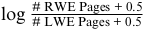 ) by the party of the interior minister, aggregated by year. For a corresponding figure showing the Bias, see Figure D.2.

Interestingly, starting in 2019, the pattern flips, and agencies led by the Center-Right are relatively more attentive to RWE than are their center-left counterparts, potentially reflecting a shift in threat perception. We return to this point in the conclusion.
Notwithstanding the recent partisan reversal in attention to far-right extremism, the larger takeaway from Figure 10 is twofold: First, irrespective of the partisanship of interior ministers, the annual reports of the Verfassungsschutz paid relatively less attention to RWE until the explosive growth of right-wing extremist crimes in the 1990s made this topic impossible to ignore. Second, intelligence agencies under center-right leadership have devoted relatively more attention to LWE compared to those led by the Center-Left. Figure 11 shows that this partisan difference in relative attention to RWE versus LWE is statistically significant and robust to accounting for fixed effects of space and time. The robustness to state-fixed effects is particularly noteworthy since it suggests that within a state, a change from a center-left to a center-right interior minister correlates with a significant reduction in the relative attention toward RWE.
Regression of chapter length in intelligence reports on interior minister partisanship
Note: OLS regression coefficients with 95% confidence intervals. Position is calculated as 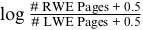 . Bias is calculated as
  . We imputed missing crime values using the value at the federal level, where possible. The SPD is coded as center-left, the CDU/CSU, and FDP as center-right. Fixed effects: state and year. The coefficients shown in this figure correspond to Models 1, 4, 5, and 8 in Table D.1, respectively.

We also apply our Bias measure – introduced in the previous section – to the chapter lengths in the intelligence reports. The results, also displayed in Figure 11, support the notion of a partisan difference. The models underlying the figure can be found in Table D.1 (specifically columns 1, 4, 5, and 8). It is noteworthy that the constant term in column 5, which is equivalent to the average bias among center-left-led agencies, shows that even in reports published under SPD ministers, there has been a disproportionate focus on LWE on average. We therefore find no evidence that intelligence reports by left-leaning ministers downplay LWE. Finally, Table D.3 in the Online Appendix demonstrates that these effects are not significantly different in the former East Germany, where right-wing extremist forces are particularly strong.
As a second way of measuring the salience of different types of extremism in the intelligence reports, we construct binary variables indicating whether the chapter on RWE or LWE appears first in a report. This outcome appears to be a meaningful measure of salience since the order of chapters – as well as their length – has been brought up in political discussion about alleged bias of the Verfassungsschutz. For example, in a 1989 Bundestag speech, SPD politician Günter Graf (a former police officer) remarked:
The 1986 report by the Office for the Protection of the Constitution devoted 148 pages to left-wing extremist activities. Right-wing extremism, by contrast, was briefly summarized in 50 pages. One of the first measures taken by Federal Interior Minister Zimmermann [CSU] was, among other things, to change the order in the report: first left, then right. Previously, it had been the other way around.
The quote also highlights the agency of interior ministers in shaping the content of the reports. Figure 12 shows estimates of the average marginal effect of center-right party affiliation on dependent variables indicating the type of extremism covered in the first chapter (based on logistic regressions in Table D.4). Consistent with the results so far, our estimates suggest that under a center-right (as opposed to a center-left) interior minister, it is 25 pp. less likely that the first chapter focuses on RWE, and 14 pp. more likely that it focuses on LWE.
Regression of first chapter content on interior minister partisanship
Note: Average marginal effects with 95% confidence intervals based on logistic regressions of the first chapter content on the party of the interior minister. Controls include state and year fixed effects, and RWE/LWE crime numbers. Missing values for crime numbers were imputed using multiple imputation. The corresponding regression models are in Table D.4 (columns 1, 5, 6, and 10).

To confirm that our results are robust to different measures of the content of reports, we conducted a keyword-based analysis, using the same procedure and a slightly different list of terms as in the analyses of speeches and manifestos (see Online Appendix A for details), and we estimated a structural topic model.Footnote 56 For both approaches, results are in line with the findings presented earlier (see Online Appendix D).
To summarize, using different measures of salience, we find clear partisan biases: When intelligence heads are overseen by the Center-Right, they pay relatively less attention to RWE. In the next analysis, we examine if partisanship matters for how RWE and LWE are discussed. A prominent claim holds that a consequential feature of the state’s downplaying of RWE relates to its continued underestimation even of known threats. Especially in the 1970s and 1980s, intelligence agencies ascribed RWE terrorist crimes to “lone wolves” and failed to recognize the perpetrators’ connections with broader right-wing extremist structures. This disregard for the organizational strength of the extremist Far Right occurred despite previous notable attacks by right-wing terrorist groups such as the Wehrsportgruppe Hoffmann and the Hepp-Kexel-Gruppe, and it extends to broader public debates about RWE (Völker Reference Völker2024; Völker and Kanol Reference Völker and Kanol2024). It also stands in stark contrast to LWE, where high-profile terrorist acts by the RAF shaped perceptions of left-wing violence (Geck Reference 70Geck2019).
This history has shaped the Verfassungsschutz’s approach to political extremism. Nonetheless, partisan ideology could further distort its lens. In Figure 13 we therefore assess whether this type of downplaying of RWE is shaped by the party controlling the interior ministry. To create the dependent variable, we calculate the logged ratio of the sum of occurrences of the terms “organized” and “organization” in the chapters on RWE and LWE. We find that a center-right interior minister is associated with a decrease in the relative incidence of the organization-keywords in the chapters dealing with RWE.Footnote 57 The Center-Right’s downplaying of RWE is thus not limited to its salience. It extends to how RWE is discussed and understood relative to LWE, contributing to the perception that RWE presents a less fearsome threat. As observers of the NSU and other far-right murder plots have attested, this underestimation has had fatal consequences (Schultz Reference Schultz2021).
Regression of “organization” keywords in intelligence reports on interior minister partisanship
Note: OLS coefficients with 95% confidence intervals. The dependent variable is constructed as  . Keywords used: “organization”; “organized.” Control variables: state and year fixed effects; ratio # words RWE/LWE chapters; RWE/LWE crime ratio. Missing values in the crime ratio were imputed using multiple imputation. The SPD is coded as center-left and the CDU/CSU and the FDP as center-right. The corresponding regression models are in Table D.8 (columns 1 and 6).

Finally, as we did for political parties, we examine if electoral incentives shape how domestic intelligence agencies approach political extremism. We once again draw on the Politbarometer survey data to construct a Far-Right Polling variable – the mean vote share of all far-right parties in a given state (or on the federal level) and year – and interact it with the interior minister’s partisan affiliation. Figure 14 plots the marginal effect of the far-right polling variable by interior minister partisanship on the Position and Bias outcome variables based on our measure of relative chapter lengths. Once we account for fixed effects of state and year, there is no relationship between the popularity of far-right parties and how intelligence agencies emphasize RWE in their annual reports. This is the case for both center-right and center-left-led agencies and for both the Position as well as the Bias outcome. Table D.9 in the Online Appendix further shows that none of the interaction coefficients between the polling variable and the partisanship indicator reach statistical significance. We come to the same conclusion when we perform the same analysis for the outcome variable that focuses on the organization-keywords (see Table D.10), and when we proxy electoral incentives through a variable indicating an election year in a given state (or on the federal level) and year (see Tables D.11 and D.12).
Marginal effect of far-right polling on chapter length by interior minister partisanship
Note: Marginal effects with 95% confidence intervals based on OLS regressions in which Far-Right Polling was interacted with Interior Minister Partisanship. The first outcome variable Position is calculated as 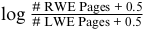 . The second outcome variable Bias is calculated as
  . Fixed effects: state and year. The corresponding regression models are in Table D.9 (columns 1, 4, 5 and 8).

Overall, we again fail to find evidence for the electoral incentives mechanism: The popularity of far-right parties does not robustly predict whether intelligence reports published by the Verfassungsschutz focus more or less on far-right extremism relative to LWE. Just as in our analysis of party behavior in elections and parliament, the systematic disparity between the Center-Right and Center-Left in their approach to political extremism – observed even in supposedly neutral intelligence agencies – is more likely rooted in long-term ideological biases and commitments.
In sum, across multiple measures of attention toward and characterization of far-right and far-left extremism in intelligence reports of the Verfassungsschutz, we find a persistent and robust difference between reports published under center-right versus center-left interior ministers. This difference cannot be explained by variation in crime levels or the electoral strength of the Far Right. The biases in party behavior we uncovered earlier permeate state institutions whose effectiveness in upholding democracy and safety – and legitimacy to do so – rests on their presumptive neutrality.
Police Union Journals
Finally, we turn to the police. Similar to domestic intelligence agencies, law enforcement in Germany has long been accused of downplaying RWE. Given the crucial role of the police in recording and responding to extremist crimes, it is essential to assess whether there are indeed systematic biases in how law enforcement approaches political extremism. Police unions, as key actors in shaping officers’ perspectives and influencing public discourse (DiSalvo Reference 69DiSalvo2022; Gaudette Reference Gaudette2025; Zoorob Reference Zoorob2019), provide a useful lens through which to analyze these potential biases. Given the ideological differences between the two major police unions – the left-leaning GdP and the right-wing DPolG – we also examine whether these unions address right- and left-wing extremist threats differently.
To measure the relative attention of law enforcement toward RWE and LWE, we rely on a novel data source: journals published by the two major police unions, the GdP’s “Deutsche Polizei” and the DPolG’s “Polizeispiegel.” Union publications fit well with our empirical approach – examining official publications and statements by parties and representatives of the state – thus ensuring consistency and comparability of our analyses across the different actors and institutions. Moreover, the journals are distributed to almost 270,000 police officers and employees represented by the two unions (roughly 80 percent of the German police force). These publications thus have the potential to shape how substantial parts of the German police perceive – and potentially act upon – extremism. These perceptions matter given that the police play a crucial role in accurately recording and effectively investigating extremist crimes.
“Deutsche Polizei” is published monthly, while “Polizeispiegel” appears ten times a year. Both journals have a main issue distributed to all members and shorter section-specific issues.Footnote 58 The journals frequently discuss union-specific topics such as wage bargaining and working conditions, but they also routinely address broader social and political topics. We downloaded available journals from the union websites and contacted the unions and journal publishers to obtain issues that were unavailable online. In sum, we collected 4,092 (main and section-specific) issues published between 2000 and 2021.Footnote 59
A closer look at the journals already hints at different approaches toward political extremism between the two unions. To illustrate, the October 2020 issue of “Deutsche Polizei,” the more left-leaning GdP’s journal, focused on RWE (Deutsche Polizei, Ausgabe 10/2020 2020). The issue’s cover shows a bullet hole, accompanied by the text “Right-wing extremism: Words are followed by actions” (see panel (a) in Figure E.3). The issue itself contains two multipage articles on RWE. One of them describes in detail the growing threat of RWE in Germany, with a special focus on the so-called “New Right,” in which the author includes the Identitarian Movement as well as the AfD’s youth faction.Footnote 60 The New Right, it is argued, aims to shift public discourse by using sophisticated online strategies, propaganda, and nationalist ideologies such as the idea of ethnopluralism and the narrative of a supposed “Islamization of Europe.” In the final step of his argument, the author – a professor at the Federal University of Applied Administrative Sciences – draws a connection between the New Right’s discursive strategies and recent right-wing terrorist events such as the shooting of Walter Lübcke and the attacks in Halle and Hanau:
The New Right is making what was previously unspeakable socially acceptable on the internet and thereby paving the way for real-world violence.
The right-leaning DPolG adopts a very different tone when discussing extremism in its journal. In the October 2018 issue of “Polizeispiegel,” the union focused on the events in Chemnitz, where in August of that year, a thirty-five-year-old man was fatally stabbed, leading to the arrest of two asylum seekers (Polizeispiegel, Ausgabe 10/2018 2018). In response, far-right groups organized protests, which escalated into violent clashes with the police and counter-protestors as well as xenophobic attacks. Despite this context, the cover for the issue does not single out RWE. Consistent with how other center-right actors we study have approached extremism, the DPolG rather highlights both RWE and LWE on the cover (see panel (b) in Figure E.3). In fact, it shows a word cloud where “left-wing extremism” appears in larger font than “right-wing extremism.”
The contents of the issue reflect the cover’s message. One article complains that a rock concert that took a stand against racism and far-right extremism, organized by Kraftklub (a popular band from Chemnitz), included the left-wing punk band Feine Sahne Fischfilet, known for its anti-state lyrics.Footnote 61 The author – honorary chairman of the DPolG – warns against fighting RWE with LWE, and criticizes politicians, including German President Frank-Walter Steinmeier, for endorsing the concert without questioning the radical elements involved.
In another article, the vice-chairman of the DPolG defends Hans-Georg Maaßen, who downplayed reports of xenophobic violence during the protests in Chemnitz, which eventually led to his dismissal as head of the federal Verfassungsschutz-office. The author agrees with Maaßen’s view that the underlying video footage did not provide enough evidence to conclude that there were far-right attacks on migrants in Chemnitz and suggests that Maaßen was the victim of biased political and media elites:
But because his statements did not fit into the frameworks of facts and evaluation [Fakten- und Bewertungswelten] of the press and some politicians, who presumably form their opinions exclusively through media reports, he was met with a wave of outrage.
These examples suggest that the GdP acknowledges the far-right threat and actively addresses it, whereas the DPolG adopts a horseshoe-theory perspective, emphasizing LWE and RWE while simultaneously downplaying potential far-right violence. Does the quantitative analysis of the union journals support these observations? To measure relative police attention toward RWE and LWE in police publications, we follow our previous analyses and count the occurrence of RWE and LWE keywords (using the same keyword list as in the analysis of the intelligence reports). Once more, we find that ideology predicts how state actors discuss extremism. Figure 15 suggests that the conservative DPolG has indeed been relatively less focused on RWE in the last two decades than the more moderate GdP, and has put more relative emphasis on LWE than its larger counterpart. The figure further indicates that the difference between the keyword and crime ratios, that is, our formal measure of bias, is greater for the DPolG than the GdP. Table E.1, which shows the models underlying Figure 15 in table form, suggests that in terms of Position, the GdP has talked more about RWE than LWE in its journal, while the opposite is true for the DPolG (see constant term and the DPolG-coefficient in Model 1). However, Model 4 shows that the GdP has also been biased against emphasizing RWE (i.e., has emphasized LWE more than real-world crime numbers would suggest), but this Bias is even larger for the DPolG.Footnote 62
Regression of keywords in police union journals on keywords
Note: DPolG is the right-leaning union; GdP is excluded as the reference category. OLS regression coefficients with 95% confidence intervals. Position is calculated as  . Bias is calculated as
  . Missing values in the crime ratio were imputed using the value on the federal level. The coefficients shown in this figure correspond to Models 1, 3, 4, and 6 in Table E.1, respectively.

In sum, these findings echo behaviors of parties and intelligence agencies: Police publications feature ideological biases in the portrayal of extremism, resulting in the relative minimization of the far-right threat by the right-leaning police union.
5 Conclusion
In August 2020, nearly 40,000 people assembled in Berlin to voice their opposition to Germany’s COVID-19 lockdown measures. The crowd was diverse. It included, among others, conspiracy theorists, Holocaust deniers, and Reichsbürger. As the demonstration unfolded, participants affiliated with the Reichsbürger instigiated the crowd to march toward the Reichstag, the seat of Germany’s parliament, riling them up with rumors that Donald Trump was in Berlin to support them. As they waved the infamous Reichsflagge, a group of protesters tried to force their way into the building. They pushed past security and ascended the grand staircase toward the main entrance, where they were eventually stopped by police officers (Lenze Reference Lenze2023; Miller-Idriss and Koehler Reference Miller-Idriss and Koehler2021).
Several months later, similar events would take place at the US Capitol, leading to far more severe consequences. Thousands had come to Washington D.C. on January 6th, 2021, to attend the “Save America” rally, during which Trump repeated lies about a stolen 2020 presidential election and told the crowd “if you don’t fight like hell, you’re not going to have a country anymore.” Moments later, a group split off and stormed the Capitol in an attempt to stop the certification of the election results. The rioters breached security, destroyed property, fought law enforcement, and caused injuries and deaths (Naylor Reference Naylor2021; Joscelyn, Eisen and Wertheimer Reference Joscelyn, Eisen and Wertheimer2024).
These two events represent dramatic attacks on democracy by right-wing extremists and fellow travelers. Both brought into sharp relief the catastrophic consequences that can arise when governments fail to root out political extremism, either because they minimize its severity or because they openly ally with extremists.
In the German case, the evidence presented in this Element suggests that this failure is in part due to the long-run downplaying of RWE. This bias, as we show throughout, is not inherent in state institutions. Rather, it varies by the partisan leanings of political parties, appointed bureaucrats, and police officers. Employing a wealth of novel data sources and a variety of text analysis methods, we find that partisanship and ideology decisively structure how state actors approach what should be a common enemy. Despite the clear prevalence of RWE in the past decades, center-right parties have paid disproportionate attention to LWE. Though their attention to RWE – as measured in parliamentary speeches, inquiries, and election manifestos – has increased in absolute terms, it is also clear that the Center-Right has mostly not prioritized RWE and instead tends to give equal or even more weight to LWE.
This partisan logic may strike some as unremarkable. After all, most political parties are guided by distinct ideologies, and extremist groups stake out positions on the edges of the ideological spectrum. Yet, to the extent that it exists, this ideological affinity should be irrelevant if political extremism threatens public safety and the democratic order.
Perhaps even more disconcerting, our analyses demonstrate that partisan biases extend to purportedly neutral state institutions, hampering their battle against extremism along the way. The politicization of the Verfassungsschutz and the police challenges these institutions’ legitimacy, undermining their ability to credibly warn the public about the dangers of extremism and prevent its spread.
These findings advance our understanding of how the German state approaches political extremism. They provide rigorous evidence to support – but also to qualify – the often-heard claim that the state is “blind in they right eye.” However, important questions remain. As democracies struggle to contain the rise of antidemocratic and violent challengers, observers are taking a closer look at the role of the state in fighting or fostering extremism. In their comparative assessment of German and American responses to RWE in the wake of the Reichstag and the Capitol attacks, extremism experts Cynthia Miller-Idriss and Daniel Koehler give Germany much higher marks than the US – even before Donald Trump’s pardons of those convicted of participating in the January 6th riot (Miller-Idriss and Koehler Reference Miller-Idriss and Koehler2021). According to the authors, US authorities focused on pursuing criminal charges and reassessing security measures, intelligence protocols, and law enforcement procedures. But they have done much less to tackle root causes, such as supporting education and research on extremism or investing in deradicalization and prevention programs. Miller-Idriss and Koehler contrast this response with more comprehensive actions in Germany. In 2021, the CDU/CSU-led grand coalition government passed a number of measures designed to combat RWE, including investments in extremism prevention and education, increased funding for civil society organizations, and stricter gun laws. The interior minister at the time – Horst Seehofer (CSU) – even called RWE the “biggest threat to security in our country” (BMI 2021).
While our evidence clearly demonstrates weaknesses in the state’s approach to extremism, this contrast with the US underscores that future research should place Germany in comparative perspective, and it can do so using the framework we develop in this Element.
Moreover, the wide-ranging measures initiated under the leadership of Germany’s Center-Right suggest that the state can adjust its counter-extremism posture to evolving threats. Although the biases we document in the previous sections have endured for many years, our analyses also reveal signs of potential change on the horizon. Over the past decade, CDU/CSU parliamentary speeches and election manifestos exhibit decreased anti-left-wing bias and increased focus on the far-right threat (see Figure 3 in Section 3). Further, since 2019, Verfassungsschutz offices headed by the Center-Right for the first time devote relatively more attention to RWE than those directed by the center-left (see Figure 10 in Section 4).
What explains this reversal? One possibility is that center-right parties respond more forcefully to far-right extremist threats when the state itself is the target. Attacks on the state are often associated with LWE. But in the recent past, the German state and its representatives have also frequently been in the cross-hairs of right-wing extremists. The Reichsbürger, for example, killed a police officer in 2016. Several years later, members of the Patriotic Union, a group affiliated with the Reichsbürger, were arrested for planning a violent takeover of the government. In 2019, a right-wing extremist assassinated CDU-politician Walter Lübcke over the latter’s pro-immigration stances. These events may have made it increasingly clear to center-right politicians that far-right extremism poses a direct threat not just to minorities – which the attack on the synagogue in Halle and the Hanau shootings brutally reinforced – but also to mainstream elites, the state, and its representatives.
It is too soon to tell whether the Center-Right’s heightened focus on RWE is a temporary adjustment or signals a lasting transformation. A more conservative leadership that does not shy away from accommodating positions embraced by the AfD may return to established patterns. These shifts, however, remind us that the state’s response to extremism must be understood in relation to the evolving nature of extremism, its changing targets, and the ideological repositioning of political parties over time.
This perspective also holds for LWE. Left-wing extremist crimes have steadily increased in number and in violence (see Figure 2 and Figure D.1). In some inner-city neighborhoods, left-wing radicals have transformed buildings and even entire streets into so-called “liberated zones” (Freiräume) whose occupants reject the constitutional order and the state’s use of force. When the state challenges these liberated zones, violence frequently ensues. In Germany, neighborhoods in Berlin, Hamburg, and Leipzig fit this pattern. Outside of Germany, cities such as Seattle, Portland, or Copenhagen feature similar areas.Footnote 63
Despite the clear and visible uptick in LWE in Germany, we do not observe that left parties are systematically voicing increased concern about LWE. The analyses in this Element demonstrate that the parliamentary speeches, inquiries, and election manifestos of left-wing parties do not consistently reflect the rise in left-wing extremist crime. Instead, the SPD, the Greens, and the Left Party tend to downplay or neglect discussion of LWE and very rarely inquire about it in parliament. Journalists and right-leaning politicians have called out these biases, which become most noticeable following left-wing violence. For instance, a prominent case is the network around left-wing extremist “Lina E.,” members of which were convicted in 2023 of carrying out a series of violent attacks targeting right-wing extremists. Critics accused left-wing politicians of romanticizing the group’s brutal attacks as acts of legitimate anti-Nazi resistance and of promoting #FreeLina campaigns instead of condemning and combating LWE (Eppelsheim Reference Eppelsheim2023).
Taking the longer view, the results do not support the claim that left-wing parties entirely ignore or minimize LWE as a general matter. Their approach is variable, as is that of the Center-Right vis-à-vis RWE. Future work should shed light on what drives these fluctuations, especially if LWE continues to expand in scope and severity.
One clue could relate to how LWE and RWE influence one another. In Germany, the Lina E. case illustrates that left-wing extremist violence often involves assaults on the Far Right. This violence can also have roots in battles over turf and local dominance: A key moment for further left-wing radicalization may have been a 2016 attack on Leipzig’s Connewitz district – a stronghold of the radical Left – by hundreds of right-wing hooligans. Dubbed the “Storming of Connewitz” by extremists, the assault led to 200 arrests of right-wing hooligans. However, the sluggish legal response that followed likely reinforced the belief that the state was failing to effectively counter RWE, which may have caused Lina E. and others to take action themselves (Jokinen Reference Jokinen2024).
While more research is needed to explain when antifascism morphs into violent extremism (cf., Copsey and Merril Reference Copsey and Merril2021), these dynamics suggest that the posture of the state is a crucial ingredient. Throughout this Element, we have made a similar case for understanding the nature and extent of RWE.
Given that the rise of political extremism is a global problem, researchers can apply our framework to other countries while being mindful of institutional differences. These differences may relate to relationships between intelligence and law enforcement agencies on the one hand and political parties on the other. It would be critical to know, for instance, whether intelligence offices whose leadership is less tied to parliamentary politics approach extremism in less biased ways or how authoritarian legacies influence the public’s and the state’s stance toward different types of extremist ideologies (cf., Dinas and Northmore-Ball Reference Dinas and Northmore-Ball2020; Neundorf and Pop-Eleches Reference Neundorf and Pop-Eleches2020). Answers to such questions would in turn help us understand how the systematic, long-run biases we document can be broken.
Acknowledgments
For very helpful research assistance, we thank Laetitia Derrough, Vincent Heddesheimer, Jeremy Roth, and Gayatri Shejwal. We also thank Daniel Bischof, Lenka Bustikova, Andy Eggers, Fabio Ellger, Arun Frey, Guy Grossman, Tristan Klingelhöfer, Ron Rogowski, Luke Shuttleworth, Zeynep Somer-Topcu, Arthur Stein, Thomas Tichelbaecker, Michelle Torres, Daniel Treisman, Teresa Völker, Andreas Wiedemann, Christopher Wlezien, and seminar participants at Humboldt University Berlin, the University of Texas at Austin, the WZB Berlin Social Science Center, the University of Chicago, Georgetown University, the University of Oxford, the German Political Science Association’s Conference, and the MPSA’s Annual Conference for helpful comments; Marc Debus for kindly sharing the most recent state-level manifesto data; and Arjan Schackel for kindly sharing his regional election data. Finally, we would like to thank the anonymous reviewers and our editors Catherine De Vries and Gary Marks. Funding from the WZB Berlin Social Science Center, Princeton University, and the University of California, Los Angeles, made it possible for this Element to be published open access, making the digital version freely available for anyone to read and reuse under a Creative Commons licence.
A replication archive containing all data and code to replicate the figures and results in this Element and the accompanying Online Appendix is available in the Harvard Dataverse at https://doi.org/10.7910/DVN/C9HIYY.
Catherine De Vries
Bocconi University
Catherine De Vries is a Dean of International Affairs and Professor of Political Science at Bocconi University. Her research revolves around some of the key challenges facing the European continent today, such as Euroscepticism, political fragmentation, migration and corruption. She has published widely in leading political science journals, including the American Political Science Review and the Annual Review of Political Science. She has published several books, including Euroscepticism and the Future of European integration (Oxford University Press), received the European Union Studies Association Best Book in EU Studies Award, and was listed in the Financial Times top-5 books to read about Europe’s future.
Gary Marks
University of North Carolina at Chapel Hill and European University Institute
Gary Marks is Burton Craige Professor at the University of North Carolina Chapel Hill, and Professor at the European University Institute, Florence. He has received the Humboldt Forschungspreis and the Daniel Elazar Distinguished Federalism Scholar Award. Marks has been awarded an Advanced European Research Council grant (2010–2015) and is currently senior researcher on a second Advanced European Research Council grant. He has published widely in leading political science journals, including the American Political Science Review and the American Journal of Political Science. Marks has published a dozen books, including A Theory of International Organization and Community, Scale and Regional Governance
Advisory Board
Sara Hobolt, London School of Economics
Sven-Oliver Proksch, University of Cologne
Jan Rovny, Sciences Po, Paris
Stefanie Walter, University of Zurich
Rahsaan Maxwell, University of North Carolina, Chapel Hill
Kathleen R. McNamara, Georgetown University
R. Daniel Kelemen, Rutgers University
Carlo Altomonte, Bocconi University
About the Series
The Cambridge Elements Series in European Politics will provide a platform for cutting-edge comparative research on Europe at a time of rapid change for the disciplines of political science and international relations. The series is broadly defined, both in terms of subject and academic discipline. The thrust of the series will be thematic rather than ideographic. It will focus on studies that engage key elements of politics — e.g. how institutions work, how parties compete, how citizens participate in politics, how laws get made.


 Open access