

INTRODUCTION
Between 1990 and 2010, America’s foreign-born population doubled from twenty to forty million people. Most reside in just four gateways states—California, Texas, New York, and Florida—but in the past few decades, immigrants have increasingly settled in new destinations. From 1990 to 2010, nineteen states experienced over 200% growth in their foreign-born population, with North Carolina, Georgia, and Arkansas witnessing a growth rate of over 400% (Migration Policy Institute 2012). Comprising nearly 13% of the total population, the majority of the foreign-born population is an ethnoracial minority, with over 70% identifying as Asian or Latina/o (Patten Reference Patten2012). These populations are also growing due to natural increase (more births than deaths) (Johnson and Lichter, Reference Johnson and Lichter2008), so much that minorities now comprise the majority of children under the age of one (Bernstein Reference Bernstein2012). America’s demographic landscape is changing, especially in new immigrant destinations that lack recent immigration histories and exposure to residents who are non-Black and non-White.
Many have investigated the potential effects of these recent demographic trends on state and local immigration legislation (Coleman Reference Coleman2007; Graefe et al., 2008; Monogan Reference Monogan2009; O’Neil 2010; Ramakrishnan and Lewis, Reference Ramakrishnan and Lewis2005; Varsanyi Reference Varsanyi2008; Vicino Reference Vicino2012; Walker and Leitner, Reference Walker and Leitner2011; Winders Reference Winders2007). This research is important considering that the devolution of federal immigration lawmaking to state- and local-levels has accompanied the changing demographic landscape (Reich and Barth, Reference Reich and Barth2012).
While extant studies provide valuable insights about the rising prominence of state and local legislation, they are limited in two ways. First, they focus on the approval stage of the policy process or the enforcement of laws, overlooking earlier stages of policymaking that have symbolic, but meaningful consequences for immigrants and the institutions, organizations, and people with which they interact. Second, they do not examine the potential influences of a wide range of political factors in addition to racial demographic conditions on immigration legislation, a potentially significant oversight since many scholars suggest that racial and immigration politics are inseparable (Browne and Odem, Reference Browne and Odem2012; Jones-Correa Reference Jones-Correa, Espino, Leal and Meier2007; Lee Reference Lee2007). These limitations point to two questions: Under what conditions do racial politics influence immigration politics? And in what ways does this influence vary when the stakes are higher?
In this study, we address these questions by examining the effects of racially conservative organizations on immigration legislation. We offer two main contributions. First, we build upon group threat (Blalock Reference Blalock1967; Blumer Reference Blumer1958; Bonacich Reference Bonacich1972; Olzak Reference Olzak1992) and political opportunity (Kriesi Reference Kriesi, Snow, Soule and Kriesi2004; McAdam Reference McAdam1982; Meyer and Minkoff, Reference Meyer and Minkoff2004) theories to understand how racially conservative organizations Footnote 2—advocacy organizations representing collective, institutional voices that advocate “colorblind” principles and policies such as eliminating affirmative action plans, passing English-only provisions, abolishing busing programs, limiting immigrant rights, and criminalizing immigration—shape immigration lawmaking. We argue that racially conservative organizations promote a colorblind racial ideology in reaction to threats to dominant group interests, which legitimates the agenda of politicians sympathetic to anti-immigrant sentiments, thereby enabling exclusionary lawmaking. We consider variations of these theories that contend that organizations not only directly affect legislation as a political opportunity, but that the effects of organizations will be heightened by demographic and political factors (Amenta et al., 1992; Amenta et al., Reference Amenta, Dunleavy and Bernstein1994; Cress and Snow, Reference Cress and Snow2000; McVeigh et al., 2003, Reference McVeigh, Neblett and Shafiq2006). Applied to our study, then, we argue that the effects of racially conservative organizations on exclusionary immigration lawmaking will be heightened in contexts with growing immigrant populations construed as threatening and in states with a strong conservative contingent.
Second, we move beyond the approval stage of immigrant lawmaking and investigate the precipitants of bills and laws. While the outcomes of laws tend to have more concrete repercussions, bills—even those that do not make it beyond the proposal stage—are meaningful and consequential. The determinants of bill introduction, however, may differ from the determinants of approval (King et al., Reference King, Cornwall and Dahlin2005). We argue that presence of advocacy organizations foster bill introductions, as legislators attempt to appease an active audience. At the approval stage, however, racially conservative organizations will need a particular racial-political context to affect the passage of laws.
We investigate the relationship between racial and immigration politics with comprehensive datasets of advocacy organizations and state immigrant legislation, using negative binomial regression to estimate the count of anti-immigrant bills and laws in the fifty states from 1991 to 2010. We control for multiple state-level contextual factors to ascertain if the presence of racially conservative organizations, coupled with foreign-born change or a conservative political opportunity structure, shapes immigrant lawmaking at the proposal and approval stages of the legislative process. We find that the positive effects of racially conservative organizations on exclusionary bills depend on a Republican-dominated state government. Once introduced, however, racially conservative organizations foster the passage of anti-immigrant laws, and this effect is heightened in contexts with rapid changes in the foreign-born population or where a majority of voters report anti-immigrant opinions or identify as conservative.
The implications are threefold. First, by moving beyond the approval stage of lawmaking, the results presented here demonstrate that advocacy organizations are influential at both stages of lawmaking, but that the effect of advocacy organizations on lawmaking depends on different factors when there is more at stake. This challenges past research which suggests that advocacy organizations are influential at the proposal stage but not at the approval stage of lawmaking (Cornwall et al., 2007; King et al., Reference King, Bentele and Soule2007; King et al., Reference King, Cornwall and Dahlin2005; Soule and King, Reference Soule and King2006; Soule and Van Dyke, Reference Soule and Dyke1999). Second, we further elucidate the link between racial and immigration politics through the finding that the institutionalization of colorblind racial ideology, in the form of racially conservative organizations, legitimates the agenda of politicians sympathetic to anti-immigrant efforts. Third, the results illustrate how racially conservative organizations help lawmakers shape boundaries between immigrants and nonimmigrants through exclusionary legislation. Because the majority of immigrants are members of an ethnoracial minority group, this has implications for the maintenance of racial and ethnic inequality.
ADVOCACY ORGANIZATIONS AND INSTITUTIONAL COLORBLINDNESS
Advocacy organizations consist of organized groups that “make public interest claims either promoting or resisting social change that, if implemented, would conflict with the social, cultural, political, or economic interests or values of other constituencies and groups” (Andrews and Edwards, Reference Andrews and Edwards2004, p. 481). Evidence shows that the activities of advocacy organizations, and social movements more generally,Footnote 3 can directly and indirectly affect the policy process (Amenta et al., Reference Amenta, Caren, Chiarello and Su2010; Andrews Reference Andrews2001, Reference Andrews2002; Cress and Snow, Reference Cress and Snow1996, Reference Cress and Snow2000; King et al., Reference King, Bentele and Soule2007; Soule and Olzak, Reference Soule and Olzak2004). Illustrating the indirect effect on lawmaking, Jon Agnone (Reference Agnone2007) showed how social movement activity amplifies the effect of public opinion on the passage of state-level legislation by making issues more salient. Sarah Soule and Brayden King (2006) found that some advocacy organizations, at least at the proposal stage, have a direct effect on the legislative process. In their advocacy efforts on behalf of a particular group (e.g., women) and toward a specific political goal (e.g., suffrage) (Amenta et al., Reference Amenta, Caren, Chiarello and Su2010), these organizations attempt to influence the legislative process in several ways, including setting agendas, affecting the decision-making arenas, achieving favorable policies, monitoring and shaping implementation, and shifting the long-term priorities and resources of political institutions (Andrews and Edwards, Reference Andrews and Edwards2004).
Here, we examine the effects of racially conservative organizations on state immigration bills and laws. Racially conservative organizations represent collective, institutional voices that advocate “colorblind” principles and policies. The ideology of colorblindness—a dominant racial ideologyFootnote 4—is part of a general position of racial conservatism, which avoids hateful speech, violence, and overt expressions of racism. It rests primarily on the belief that race is no longer noticed by most individuals, and as such, patterns of inequality that fall along racial lines are outcomes of cultural- or individual-level differences (Forman Reference Forman, Krysan and Lewis2004).Footnote 5
Because the immigration debate has become intertwined with the race debate, we focus on a broader group of racial-political organizations as opposed to groups with a narrower focus (i.e., organizations that exclusively focus on immigration). While they may not oppose immigrant rights exclusively, the overall goals and activities of racially conservative organizations delegitimize claims based on a shared minority (race/ethnicity, language, and citizenship) status because in a colorblind society, as the argument goes, race/ethnicity no longer affects material and social outcomes. In recent years, the interest in immigration issues among racially conservative organizations has increased, as is evident in new organizational formations and changes in existing organizations. In the 1960s, for example, the stated primary purpose of most racially conservative organizations centered on the preservation of Southern heritage, but currently, anti-immigration and individual rights organizations dominate the organizational category. In fact, the majority (eighteen of the thirty-three) of the racially conservative organizations that formed between 1990 and 2010 focus on immigration, including groups advocating for English-only, assimilation, population control, and border control. For example, ProjectUSA formed in 1999 to advocate for “ending illegal immigration and reducing legal immigration to traditional, sustainable levels” (Gale Research Co. 2006, p. 1987). The shift to immigration issues is important because it continues to provide racially conservative organizations the ability to maintain White privilege using a colorblind framework, even in the midst of changing ethnoracial demographics. These organizations frame their opposition to various facets of immigration in terms of breaking the law, destroying American values, or damaging the English-language school curricula. By framing their opposition to immigration in this way, racially conservative organizations can promote an exclusionary agenda while simultaneously avoiding overt racism.
Like other advocacy groups, racially conservative organizations attempt to influence the legislative process, especially with regards to setting the agenda and altering the decisions of policymakers (Stolz Reference Stolz2005). Take for example the efforts of Linda Chavez, chairperson of the Center for Equal Opportunity (CEO), which formed in 1995 “to promote the assimilation of immigrants” (Gale Research Co. 2006, p. 1169). Chavez served as Staff Director of the U.S. Commission on Civil Rights for part of the Reagan administration, where she argued for the termination of bilingual education and voting ballots. Similarly, the Federation for American Immigration Reform (FAIR), which began in the 1970s as a border “watch-dog” (Gale Research Co. 2000, p. 1797) is a racially conservative organization that also attempts to influence the political process. On numerous occasions, representatives of FAIR have testified on immigration bills before Congress (FAIR n.d.).
In short, many racially conservative organizations have the ability to exert considerable influence in the policy realm precisely because many identify with outwardly uncontroversial ideals and causes (e.g., promoting individual liberty, achieving a colorblind society, and advocating for American values). What’s more, compared to individual actors, advocacy organizations tend to have more resources and greater access to political elites. But it remains to be seen whether or not they are successful in affecting state immigration legislation. To address this, we examine if and under what conditions racially conservative organizations—the institutional representation of colorblindness—influence state anti-immigrant lawmaking, and if their influence varies between the proposal and approval stages.
THEORETICAL FRAMEWORK AND HYPOTHESES
We discuss two main theories to understand the conditions under which racially conservative organizations alter immigration politics: group threat and political opportunity theories. We then consider variations of these theories to understand how this influence might change when the legislative stakes are higher (i.e., the approval stage).
Group Threat
Perceived threats to dominant group interests, such as a large percent share of and/or growth in minority populations, dire economic conditions, and minority group political activity, might prompt exclusionary attitudes and activities, as the dominant group struggles to defend power and privilege. Past studies have, for the most part, explained this process through the use of group threat and related theories, such as group position and split labor market theories (Blalock Reference Blalock1967; Blumer Reference Blumer1958; Bonacich Reference Bonacich1972; Okamoto Reference Okamoto2003; Quillian Reference Quillian1995). For example, ethnic competition theory posits that an underlying struggle over resources causes intergroup conflict, which can be intensified by decreasing the amount of available resources or increasing intergroup contact (Olzak Reference Olzak1992). This theory suggests that exclusionary efforts will result from demographic and economic changes that challenge dominant group interests (Banton Reference Banton1983; McVeigh Reference McVeigh2004; Myers Reference Myers1997; Olzak and Shanahan, Reference Olzak and Shanahan2003; Van Dyke and Soule, 2002).
In a democratic society where political actors ostensibly represent the voices of ordinary citizens, a large share of minorities could represent a political threat to members of the majority group. The perceived threat lies in the potential for minority group involvement in collective action and formal politics; that is, the larger the relative share of minorities, the more likely they will be elected to positions of power and engage in collective action to challenge dominant group interests, inciting backlash (Blalock Reference Blalock1967). Multiple studies have found empirical support for the link between a large share of the minority population and anti-minority attitudes (Bobo and Hutchings, Reference Bobo and Hutchings1996; Dixon Reference Dixon2006; Fox Reference Fox2004; Savelkoul et al., Reference Savelkoul, Scheepers, Tolsma and Hagendoorn2010; Schneider Reference Schneider2008), but the link to group behavior is more tenuous (for an exception, see Andrews Reference Andrews2002). In fact, Hana Brown (Reference Brown2010) showed that increased perceptions of threat due to growing political activity among minority populations, more so than a large percent share of minority populations, better explains reactive mobilization among the dominant group.
Others argue that an increase in perceived threat might have more to do with growth rates rather than the percent share or the degree of political activity of the subordinate population (Esbenshade Reference Esbenshade2007; Walker and Leitner, Reference Walker and Leitner2011). For example, Benjamin Newman and colleagues (2012) showed that immigrant growth rates coincided with state-level adoption of restrictive E-Verify legislation. Daniel Hopkins (Reference Hopkins2010), however, found that a rapid increase in the immigrant population does not solely increase the likelihood of local anti-immigrant ordinances; it must be coupled with national media coverage of immigration to amplify perceived threat, thereby increasing the likelihood of local anti-immigrant ordinances.
Additionally, when faced with relative declining economic conditions, dominant groups might perceive subordinate groups as threatening regardless of the level of intergroup contact or political participation, resulting in exclusionary efforts on the part of the dominant group (Bobo and Hutchings, Reference Bobo and Hutchings1996; Olzak et al., Reference Olzak, Shanahan and West1994). For example, E. Beck (Reference Beck2000) found that White supremacist activity was more common in Southern counties where the aggregate household income of Asians and Latina/os increased relative to other groups.
In sum, group threat theories contend that when groups compete with one another over scarce resources, dominant groups may perceive out-groups as threatening and respond with exclusionary attitudes and actions. Based on these theoretical explanations, we offer the following hypothesis:
1. Group Threat: States with larger shares of or increasing foreign-born populations, higher unemployment rates, or greater shares of Latina/o elected officials will have greater numbers of anti-immigrant bills and laws.
Political Opportunity
Political opportunities, including institutional and informal political conditions that facilitate the goals of political actors, can aid in the legitimation and implementation of these actors’ agendas (Amenta et al., 1992; Andrews Reference Andrews2001; Cress and Snow, Reference Cress and Snow2000; McAdam Reference McAdam1982; Meyer and Minkoff, Reference Meyer and Minkoff2004). A certain configuration of allies, including political elites, organizations, and voters, could convey to lawmakers that their ideas will receive support among their peers and the public, facilitating the promotion of these ideas in the form of policy (Kriesi Reference Kriesi, Snow, Soule and Kriesi2004). Such a configuration might facilitate the goals of political actors by creating a setting in which legislators are encouraged to or rewarded for introducing and passing compatible policy.
Political opportunity in the form of elite allies could ease the implementation of the agenda of legislators. For example, David Meyer and Debra Minkoff (2004) found that the presence of elite allies in the form of a Democratic President resulted in increases in federal civil rights appropriations. Elite allies can provide legislators with structural support in the form of increased access to governing coalitions or symbolic support in terms of signaling to political actors that that their efforts would be more successful.
Political opportunity in the form of supportive public opinion or ideology can also foster the implementation of the agenda of lawmakers by offering them “factual” ammunition. In other words, legislators could justify their voting record to a broader audience utilizing results from voter and/or public opinion polls. For instance, Deborah Graefe and colleagues (2008) demonstrated that a liberal voter ideology prompted less stringent state-level TANF-eligibility policies for documented immigrants (see also Monagan Reference Monogan2009), while Jorge Chavez and Doris Provine (2009) found that conservative citizen ideology was positively associated with the passage of anti-immigrant state legislation. The relationship between conservative voters and exclusionary policy outcomes persists at the city-level (Ramakrishnan and Lewis, Reference Ramakrishnan and Lewis2005; Ramakrishnan and Wong, Reference Ramakrishnan and Wong2007).
Political opportunity theory suggests that the political context “sets the grievances around which activists mobilize, advantaging some claims and disadvantaging others” (Meyer Reference Meyer2004, pp. 127–128), and organizations could be key in advantaging certain claims to sympathetic lawmakers. Advocacy organizations could provide ways for legislators to frame their agenda in a manner that appeals to a broader audience, including other legislators (King et al., Reference King, Bentele and Soule2007). Legislators could more easily implement their agenda with a strong and supportive organizational infrastructure in place to provide much-needed political tools (Almeida Reference Almeida2003).
Based on this theory, our second hypothesis is:
2. Political Opportunity: States with a strong Republican Party, larger shares of conservative voters that report anti-immigrant opinions, and greater numbers of racially conservative organizations will result in greater numbers of anti-immigrant bills and laws.
Political Mediation and Resonating Ideology
Group threat and political opportunity theories are important, yet incomplete, when investigating the relationship between racial politics and immigration lawmaking. It is not solely group threat nor solely political opportunity that matter, but rather, the interaction of these forces that enable lawmaking. Racially conservative organizations not only directly affect legislation as a political opportunity, but also rely on demographic and political factors to facilitate exclusionary lawmaking.
We posit that the colorblind ideology used by racially conservative organizations becomes salient or more plausible in certain contexts, paving the way for legislators to translate those ideas into action (Olzak and Shanahan, Reference Olzak and Shanahan2003). Specifically, the ideology of racially conservative organizations should thrive in contexts with higher levels of perceived threat. This is important because lawmaking consists of actions, not attitudes, and elected officials need ideas that resonate with their voters to support the activation of the ideologies that guide them.
Previous research has advanced similar theoretical models. Political mediation theory and the amplification model posit that the influence of advocacy organizations on policy change is amplified by or depends on additional elements of the political opportunity structure, such as political allies or compatible public opinion (Agnone Reference Agnone2007; Amenta et al., 1992; Amenta et al., Reference Amenta, Dunleavy and Bernstein1994; Amenta et al., Reference Amenta, Caren and Olasky2005; Andrews Reference Andrews2001; Burstein Reference Burstein2003; King et al., Reference King, Cornwall and Dahlin2005; Soule and King, Reference Soule and King2006). For instance, Daniel Cress and David Snow (2000) found that homeless rights organizations were more successful in attaining their advocacy goals when they had political allies on the city council. Additionally, Soule and Susan Olzak (2004) demonstrated that the proportion of Democrats in the state legislature amplified the effect of pro-Equal Rights Amendment (ERA) organizations, while the proportion of Republicans in the state legislatures amplified the effect of anti-ERA organizations on policy change. In sum, advocacy organizations shape the actions of state legislators, but their influence or degree of influence depends on the political context.
Furthermore, McVeigh and colleagues (2003, 2006) have demonstrated the importance of demographic contexts in their investigations of the impact of advocacy organizations on group behavior. The authors asserted that civil rights organizations were more successful at accomplishing their goals in certain demographic contexts, particularly those that legitimated their goals. Specifically, in analyses estimating the number of hate crime reports, construed as a successful social movement outcome for civil rights organizations, the authors found that the effect of organizational resources on reports depended on higher levels of racial heterogeneity.
These studies suggest that racially conservative organizations would be instrumental in publicizing developments such as increases in immigrant populations and garnering restrictive attitudes and activities by framing their opposition to various facets of immigration in terms of breaking the law, destroying American values, or damaging the English-language school curriculum—frames that resonate with the dominant group. In this way, the institutionalization of the dominant ideology of colorblindness (in the form of racially conservative organizations) would resonate in contexts experiencing rapid changes in the foreign-born population, leading to greater numbers of exclusionary bills and laws. Likewise, the ideas of racially conservative organizations would resonate with elite allies (like Republican Party representatives) and conservative voters to affect anti-immigrant lawmaking, irrespective of foreign-born change.
We offer the following hypotheses to assess these potential interaction effects:
3. Resonating Ideology: The effects of racially conservative organizations on anti-immigrant bills and laws will be stronger in states that are experiencing a growing foreign-born population.
4. Political Mediation: The effects of racially conservative organizations on anti-immigrant bills and laws will be heightened in states with a strong conservative political opportunity structure.
Legislative Logic
Because previous research suggests that the factors that shape the policy agenda may or may not affect legislative change (Cornwall et al., 2007; King et al., Reference King, Cornwall and Dahlin2005; King et al., Reference King, Bentele and Soule2007; Soule and King, Reference Soule and King2006; Soule and Van Dyke, 1999), we expect that the determinants of bill introduction will differ from the determinants of passage. The theory of legislative logic suggests that each succeeding stage of the legislative process becomes more consequential and has more exacting rules (King et al., Reference King, Cornwall and Dahlin2005). Thus, while legislators may introduce bills to appease advocacy organizations, legislators might be less inclined to respond in later stages of the legislative process when the stakes are higher. In the case of state-level women’s suffrage legislation, for instance, King and colleagues (2005) found that social movement characteristics, including bureaucratized organization, political lobbying, and candidate campaigning, were all significant predictors of the introduction of the legislation, but not passage. During this later stage, measures of the political structure and other contextual variables were more meaningful. Soule and King (Reference Soule and King2006) confirmed this pattern, showing that anti-ERA organizations had a significant and negative effect on the introduction of ERA-related bills, but that at later stages, public opinion and electoral competition were the only measures that had a significant impact.
These studies suggest that measures that have a significant effect on bills might not have such an effect on laws due to the greater consequences at the approval stage of the legislative process. Applied to the current study, then, we argue that the presence of advocacy organizations foster bill introductions, as legislators attempt to appease an active audience. At the approval stage, however, racially conservative organizations will need a particular racial-political context to affect the passage of laws.
We offer the following hypothesis to test the theory of legislative logic:
5. Legislative Logic: Advocacy organizations will influence the introduction of anti-immigrant bills, but will not play a role in the passage of anti-immigrant laws.
DATA AND METHODS
Research Design
To test these hypotheses, we rely on original datasets of racially conservative organizations and immigration legislation in the fifty states from 1991 to 2010. Because many states have biennial legislative sessions, we use the state-session, instead of the state-year, as the unit of analysis. Oftentimes, states with biennial sessions introduce legislation during the first year of their assembly, reserving the second year for debate and approval. Using the state-session as our unit of analysis ensures that all units would be eligible for bill introduction.
Our research design is unique in three primary ways, which allows us to provide a comprehensive investigation of the effects of state-level contextual factors, including the presence of racially conservative organizations, on immigration legislation at the proposal and approval stages. First, we investigate a broad spectrum of legislative topics rather than focusing on one area (such as employment or education) to provide a holistic picture of exclusionary legislation. Second, our data spans two decades of lawmaking, which offers a more complete representation of how contextual factors influence legislation over time, which is important during this era of increasing rates of immigration and changing settlement patterns of immigrants.
Third, we move beyond the approval stage of immigrant lawmaking and investigate the precipitants of bills and laws. Although laws tend to have more concrete repercussions (King et al., Reference King, Cornwall and Dahlin2005), both stages are meaningful and can have real consequences. For example, the 2005 House of Representatives Bill 4437, which proposed to raise penalties for unauthorized immigrants, was not enacted, but it ignited protests in cities across the nation (Benjamin-Alvarado et al., Reference Benjamin-Alvarado, DeSipio and Montoya2009). By introducing exclusionary bills, politicians send a message to a specific audience (Edelman Reference Edelman1971; Stolz Reference Stolz2002). In other words, restrictive proposals serve as “expressions of nativism” (Calavita Reference Calavita1996, p. 297) that are meant to create an unwelcoming environment for the state’s immigrant population and prospective immigrants. By enacting restrictive laws, legislators can have a big impact on the daily lives of immigrants by restricting movement, limiting job opportunities, and reducing access to social services (Marrow Reference Marrow2011).
Data Collection
State Immigration Legislation. We collected data on state immigration legislation from LexisNexis Total Research System using a key word search provided by the Migration Policy Institute (MPI). MPI also provided a guide that we used to code these data (Laglagaron et al., 2008). We revised and refined the codebook during frequent meetings over a period of one year.Footnote 6 We coded the bills on a number of dimensions, including date of introduction and last action, sponsor, and topic. We also differentiated between bills that were exclusionary/anti-immigrant (limiting the rights of and services to immigrant groups) and bills that were inclusionary/pro-immigrant (expanding the rights of and services to immigrant groups), of which we provide examples in Table 1. Some bills were neither inclusionary nor exclusionary. For instance, many states proposed or approved legislation concerning human trafficking. While human trafficking affects immigrants, it neither expands nor restricts rights and services accorded to them. We consider such bills ineligible for the present study and do not include them in the analysis.
Examples of State Immigration Legislation

Note: aCA AB 2033 was signed into law by the Governor of California. In this study, of the proposed bills, approximately 15% became law. In most states, a member of a state’s Senate or House (or Assembly) introduces a bill to the legislature before it can be considered for approval. After introduction, bills are sent to committee for deliberation, and in most cases, this is where they die. If bills make it out of committee, and if one house votes in favor of the bill, it moves onto the other house. If both houses vote in favor of the bill, only then does the Governor consider passage. At this point the Governor can veto or sign the bill into law.
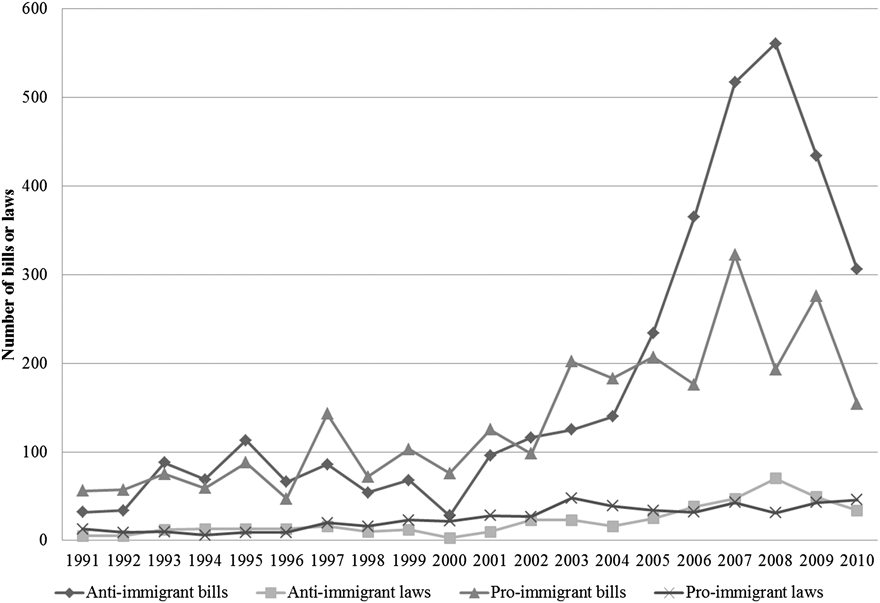
Several interesting trends arise from these data. First, the introduction of exclusionary bills remained relatively steady in the 1990s, followed by a sharp increase in the aftermath of September 11th (see Figure 1). Second, legislators passed welcoming bills at a higher rate than exclusionary bills. In total, states proposed 3562 exclusionary bills from 1991 to 2010, with a passage rate of 12% (441 passed), while states proposed 2712 pro-immigrant bills with a passage rate of 19% (508 passed). The large gap between proposed and enacted legislation suggests that different mechanisms might affect legislators at the introduction and ratification stages of lawmaking. Third, states proposed and approved varying quantities of legislation. For instance, from 1991 to 2010, New York introduced the most exclusionary and inclusionary bills (390 and 285, respectively), while Vermont introduced five anti-immigrant and eleven pro-immigrant bills. Substantial variation also existed within one state. From 1991 to 2010, Alabama legislators proposed twenty-two welcoming bills, but introduced 142 anti-immigrant bills. Tennessee legislators introduced 126 anti-immigrant bills during its 2007–2008 legislative session, which was far greater than any other state-session during the entire data collection period (California followed with fifty-six anti-immigrant bills during its 1993–1994 legislative session).Footnote 7 In terms of the approval stage of lawmaking, California passed the most pro-immigrant bills (seventy-seven) from 1991 to 2010, while Virginia passed the most anti-immigrant bills (forty-one).
Number of Anti- and Pro-Immigrant Bills and Laws by Year and Purpose

Racially Conservative Organizations. As part of a larger project, we created a database of national racial and ethnic advocacy organizations active in the second half of the twentieth century using the Encyclopedia of Associations (EA) (Gale Research Co. 1990–2010). Published since 1956, the EA provides descriptions of professional societies, trade associations, labor unions, cultural and religious organizations, fan clubs, and other non-profit organizations, and has been used by a number of social scientists interested in organizations (Baumgartner and Jones, Reference Baumgartner and Jones1993; Dobbin et al., 1993; Minkoff Reference Minkoff1995; Okamoto Reference Okamoto2006). Every year, the EA undergoes an intensive and extensive effort to add and verify entries in the encyclopedia, an effort which includes contacting the organizations directly via phone, fax, or email, and relying on information from the group’s website, public documents, or other reliable secondary sources. For this project, we utilize data collected from the EA at four time points: 1990, 2000, 2006, and 2010.Footnote 8
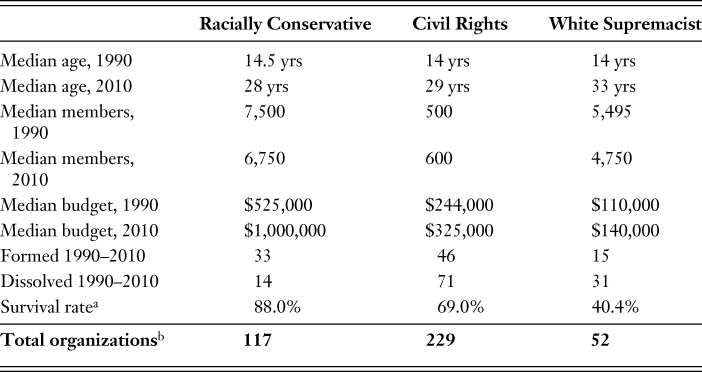
When creating the database, we coded the organizations by year of founding and dissolution, location, constituency (Asian American, Latina/o, African American, White, multicultural, or pan-ethnic), activities (advocacy, cultural, service, religious, or educational), size of membership, and budget.Footnote 9 Three major categories of racial-political organizations emerged from the organizational descriptions in EA: racially conservative, civil rights,Footnote 10 and White supremacist. Our analyses of the groups demonstrated that during the latter part of the twentieth century, racially conservative organizations were better able to promote their agenda as compared to White supremacist and civil rights organizations due to multiple factors. Most notably, racially conservative organizations had more money, supporters, and stability at their disposal (see Table 2). In addition, racially conservative organizations rely on legitimate and mainstream tools to affect policy in a way that preserves a favorable status quo for White Americans. This is in sharp contrast to White supremacist groups who engage in overt racism to promote their agenda.
Characteristics of National Racial-Political Organizations, 1990 and 2010
Note: aWe calculated a simple survival rate for the organizational categories, dividing the number of organizations that did not disband between 1990 and 2010 by the total number of organizations that were active at some point between 1990 and 2010.
bNot all organizations reported characteristics, such as founding year, membership, and budget. Percent reporting is available upon request.
Explanatory Variables
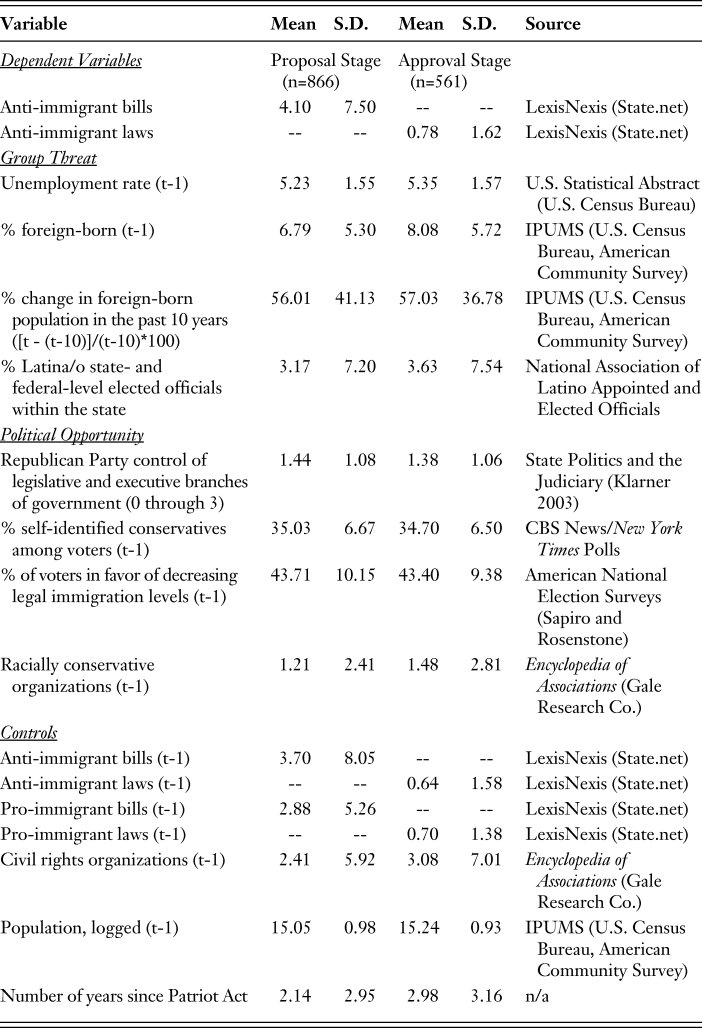
We constructed a series of independent variables, in addition to the number of racially conservative organizations, to estimate the number of anti-immigrant bills and laws. All variables are measured at the state-level (except the number of years since the passage of the 2001 Patriot Act) and are time varying. When yearly data were not available, we used linear interpolation to fill in the between years. Most variables are lagged one session to measure conditions prior to the session of bill introduction and approval. State government characteristics (including percent Latina/o elected officials and Republican Party strength) are not lagged because they should have an immediate, rather than postponed, effect on lawmaking. Table 3 presents the descriptive statistics of the variables and their respective data sources.
Variables and Sources
Note: All variables are measured at the state-level (except time since Patriot Act) and are time-varying.
Group Threat. We approximate four measures of group threat by capturing factors that could increase perceptions of threat among the dominant group and challenge their group position, thereby resulting in the protection of group interests through the introduction and passage of exclusionary legislation.
First, we include the unemployment rate. If there is a sizable unemployment rate, native-born individuals might perceive immigrants as economic competitors, responsible for “taking their jobs,” which might foster anti-immigrant attitudes and behavior.
Second, we include the percent foreign-born to measure group size. A large percentage of immigrants in states could increase perceptions of threat among native-born Americans. Third, we include a variable for change in-group size, measured here as the percent change in the foreign-born population in the previous ten years. Rapid increases in the foreign-born population may amplify perceived competition, particularly in new immigrant destinations where residents have had few encounters with non-White and non-Black populations (Durand et al., 2005). The established populations within states experiencing an increasing immigrant population, particularly a rapid one, may react negatively at the outset, as they may be less receptive to the introduction of a new and “different” population.
Fourth, we use the percent Latina/o state elected officials because a near majority of the foreign-born population during this time period identified as Latina/o. We calculated this measure by dividing the total number of Latina/o state- and federal-level elected officials within a state from the total number of state- and federal-level elected officials within a state. These data were available in 1989, 1994, and 1996 through 2010. Greater shares of Latina/o elected officials may signify to non-Latina/o White politicians that they are losing political power, increasing their desire to introduce and/or pass exclusionary legislation. Similarly, greater shares of Latina/o politicians could generate concerns in the non-Latina/o White community about the “changing nature” of America, which might lead them to encourage their legislators to pass exclusionary immigration legislation.
Political Opportunity. When thinking about exclusionary legislation, we characterize political opportunity as an overall conservative political environment in the state. Such a political environment may facilitate exclusionary legislation by creating a setting in which legislators are encouraged to or rewarded for anti-immigrant policymaking. We include four measures to capture this theoretical model.
First, because Republican-controlled governments tend to pass more punitive legislation (Jacobs and Carmichael, Reference Jacobs and Carmichael2002; Miller and Schofield, Reference Miller and Schofield2008) we constructed a variable measuring the strength of the Republican Party in the state. This is an ordinal-level variable ranging from 0 to 3 capturing if Republicans represent a majority in both chambers of the state legislatureFootnote 11 and have control over the executive branch. A score of 0 indicates that Republicans lack a majority in both houses and are not in the Governor’s office, while a score of 3 indicates that Republicans have majority control over the state’s House of Representatives, Senate, and Governor’s office.
Second, we constructed a variable of conservative ideology among voters, which has been found to be associated with anti-immigrant legislation (Chavez and Provine, Reference Chavez and Provine2009; Ramakrishnan and Lewis, Reference Ramakrishnan and Lewis2005). Specifically, we include a variable measuring the percent of the voters in each state identifying as conservative.
Third, we constructed a measure of voter attitudes toward immigrants, gathered from the percent of voters in each state in favor of decreasing the level of authorized immigration (for precise wording, see Sapiro and Rosenstone, Reference Sapiro and Rosenstone2011). This question was asked in 1990, 1992, 1994, 1996, 1998, 2000, 2004, and 2008, and we interpolated between years and replaced values in 2009 with values from 2008.Footnote 12
Finally, we include a count of racially conservative organizations headquartered in each state as an indicator of political opportunity for anti-immigrant lawmaking. Racially conservative organizations represent a collective voice of those working to maintain America’s current ethnoracial hierarchy, and thus lend credence to politicians who engage in exclusionary lawmaking. Although these are national-level organizations, they are headquartered in states where they play a larger role in politics than in other states, contributing to an inhospitable climate for a state’s ethnoracial minority population. Because a large majority of the current foreign-born population is non-White, this climate affects the immigrant population more keenly. For example, the U.S. Justice Foundation is headquartered in California. This organization frames its work as preserving the “civil, property, and human rights of U.S. citizens” through drafting “legislation and/or policies for state and local government entities” (Gale Research Co. 2000, p. 613). But it makes clear that it specifically monitors California ballot initiatives. In 2000, it declared that it was “active in the litigation to uphold Proposition 187, the [1994] ban on free public education, welfare, and non-emergency medical services for illegal aliens”Footnote 13 (Gale Research Co. 2000, p. 613).
Interaction Effects: Resonating Ideology and Political Mediation. In addition to direct effects of the variables described above, some interactions might also influence the introduction and passage of legislation. In particular, we argue that the effects of advocacy organizations on group behavior will be stronger in contexts that are receptive to their ideas due to demographic changes construed as threatening or due to a political opportunity structure supportive of their advocacy efforts. To capture these effects, we created interaction terms of the count of racially conservative organizations with the following measures: foreign-born change, anti-immigrant public opinion among voters, conservative voter ideology, and Republican Party strength.Footnote 14
Control Variables. We include the following controls: the number of anti-immigrant bills (or laws), pro-immigrant bills (or laws), and civil rights organizations; the population; a time variable; and a squared version of the time variable. Because research shows that the existence of previous events builds momentum and increases the chances of subsequent events (Barron Reference Barron1992), we account for autocorrelation by including lagged versions of our dependent variable in all models. We also include the number of pro-immigrant bills in the previous state-session in models estimating anti-immigrant bills, and pro-immigrant laws in the previous state-session in models estimating anti-immigrant laws. We account for the number of national civil rights organizations headquartered in states to assess if the effect of racially conservative organizations remains even when controlling for the presence of competing organizations. Furthermore, we realize that national political events will affect state-level legislation. To capture this, we account for the number of years since the passage of the USA Patriot Act. We also include a quadratic term of this variable because there was evidence of a curvilinear relationship between time since the Patriot Act and anti-immigrant lawmaking.Footnote 15
RESULTS
Estimation Technique
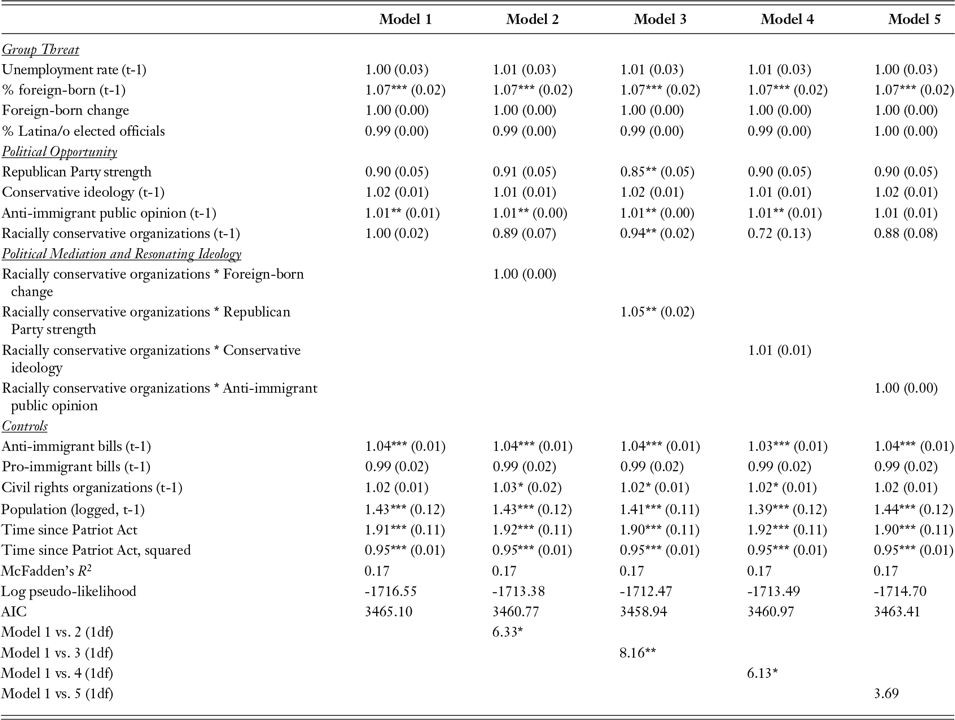
Table 4 and 5 present the regression results.Footnote 16 We estimate two dependent variables: the number of anti-immigrant bills (see Table 4), and the number of anti-immigrant laws (see Table 5). We used negative binomial modeling to estimate them because they are nonnegative count variables that show evidence of overdispersion (that is, the variance is greater than the mean) and are zero-inflated (i.e., legislators failed to propose or pass legislation during many state-sessions). We also chose negative binomial regression rather than zero-inflated negative binomial regression because the zero counts in the data are “true” zeros rather than “excess” zeros. In other words, all state-sessions are at risk for bill introduction (and passage, in the models estimating laws), therefore those state-sessions with zero bills/laws are true zeros.
Negative Binomial Regression Estimating Anti-Immigrant Bills in Fifty States, 1991–2010 (Proposal Stage)
Note: N=866 state-sessions; exponentiated coefficients; standard errors in parentheses. * p < 0.05, ** p < 0.01, *** p < 0.001 (two-tailed tests). All variables are measured at the state-level (except “Time since Patriot Act”) and are time-varying.
Negative Binomial Regression Estimating Anti-Immigrant Laws in Fifty States, 1991–2010 (Approval Stage)
Note: N=561 state-sessions; exponentiated coefficients; standard errors in parentheses. * p < 0.05, ** p < 0.01, *** p < 0.001 (two-tailed tests). All variables are measured at the state-level (except “Time since Patriot Act”) and are time-varying.
While all state-sessions from 1991 to 2010 were included in the models estimating the number of exclusionary bills (N=866), only the state-sessions that had legislation eligible for approval were included in the models estimating laws (N=561). In other words, a state-session had to propose an anti-immigrant bill to be included in these analyses. Because state-sessions included in the approval stage of analyses are not randomly selected (Berk Reference Berk1983), we used the Heckman two-stage estimation method to account for this bias (Cameron and Trivedi, Reference Cameron and Trivedi2009). At the approval stage, we include the inverse Mills ratio derived from previous analysis estimating the difference between state-sessions where zero anti-immigrant bills were introduced to those that had bill introductions.
To adjust for the non-independence of observations due to repeated observations of states over time, we used the cluster option in Stata, which produced robust standard errors (Wooldridge Reference Wooldridge2002). We computed collinearity diagnostics for the predictors included in the models, and all measures were below the recommended diagnostic threshold.Footnote 17
Proposal Stage
Model 1 of Table 4 presents the analyses testing hypothesis 1, which speculates that increases in perceived threats to dominant group interests will result in the introduction of anti-immigrant bills. At the proposal stage, only one measure of group threat was statistically significant. States with a greater share of the foreign-born population were associated with a higher predicted count of exclusionary bills. Specifically, for a standard deviation (in other words, a 5.30%) increase in a state’s foreign-born population, the predicted count of anti-immigrant proposals increased by 1.44 bills, controlling for other variables in the model. However, the remaining variables measuring group threat were not significant predictors of the number of anti-immigrant bills. Thus, for the introductory phase of legislation, hypothesis 1 is partially supported.
Model 1 also presents the analyses testing hypothesis 2, that a conservative political opportunity structure will increase the count of exclusionary bills. Here, we see that only one coefficient was statistically significant. As the percentage of voters that reported anti-immigrant opinions in the prior session increased, so too did the count of anti-immigrant bills. Given that the remaining variables in the model are held constant, for a standard deviation (meaning a 10.15%) increase in the percentage of voters reporting anti-immigrant opinions, the predicted count of exclusionary proposals increases by 1.15 bills. The remaining measures of political opportunity, however, were not statistically significant.
Hypotheses 3 and 4 speculate that racially conservative organizations will be particularly important in contexts with demographic changes perceived as threatening or a conservative political opportunity structure. While the results do not support hypothesis 3 (see Model 2), they partially support hypothesis 4. In Model 3, we see that the interaction between racially conservative organizations and Republican Party strength is statistically significant and positive.
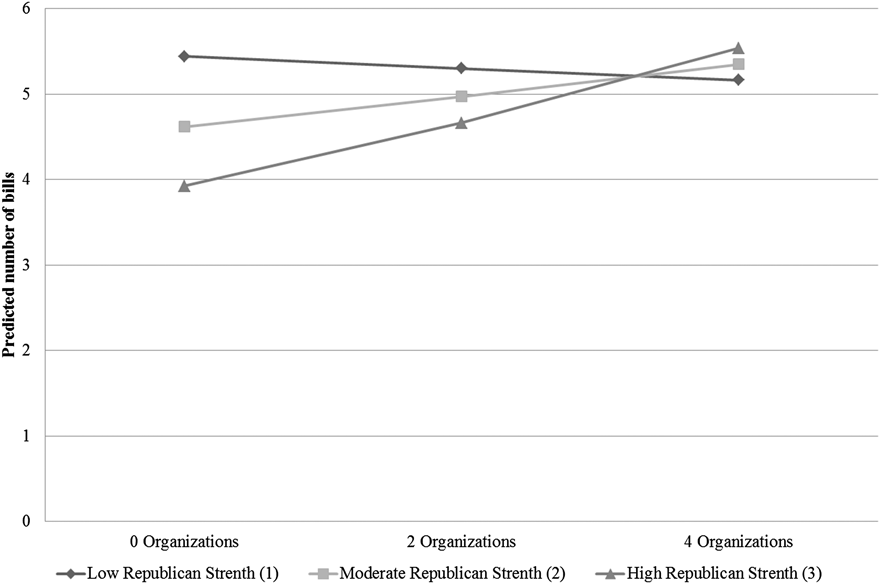
To explore further the substantive implications of these results, we calculated the predicted counts of anti-immigrant bills for multiple scenarios using the margins command in Stata, varying both the level of Republican Party strength and the number of racially conservative organizations, while keeping the remaining variables at their means (see Figure 2). The results reveal that, even though the effect of the interaction term is statistically significant, and the addition of the interaction term improves the fit of the model (p<0.01), the difference in the predicted count of anti-immigrant bills between state-sessions with zero and four racially conservative organizations does not change substantively at different levels of Republican Party strength. For scenarios with low Republican Party strength (where Republicans represent a majority in one chamber of the state legislature or have control over the executive branch), we expect just slightly higher counts of anti-immigrant bills in state-sessions with zero racially conservative organizations than in state-sessions with four racially conservative organizations (5.45 versus 5.17 predicted anti-immigrant bills). And for scenarios with high Republican Party strength, we see the pattern reversed, but just slightly. These follow-up analyses suggest that Republican Party strength and the presence racially conservative organizations do not add much to the other in terms of their influence on exclusionary bills.
Predicted Number of Anti-Immigrant Laws by Racially Conservative Organizations at varying Levels of Republican Party Strength (from Table 4, Model 3)
Turning to the effects of the control variables in Model 1 of Table 4, our results indicate that more populous states and states with greater numbers of exclusionary bills in the previous session increased the count of anti-immigrant bills. Our results also reveal that with each year following the passage of the Patriot Act in late 2001, the predicted count of exclusionary bills increased as well, controlling for the remaining variables. However, the statistically significant and negative effect of the squared time variable reveals that the strong effect of years since the Patriot Act dissipates over time.
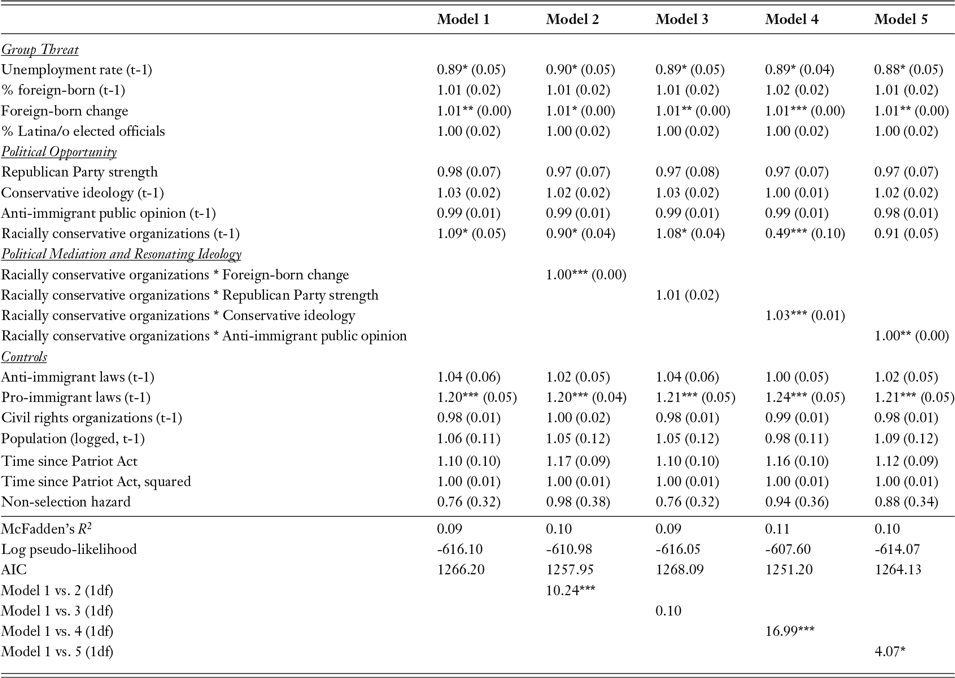
Approval Stage
Table 5 presents the estimation of anti-immigrant laws. The results partially support hypothesis 1. We find that state-sessions with higher unemployment rates also had lower counts of exclusionary laws, which runs contrary to the hypothesis. It might be that rather than increasing anti-immigrant legislation, higher unemployment rates direct lawmakers’ attention away from immigration and towards policies that have an immediate impact on the economy. At the same time, the results reveal that change in-group size, measured here as the percent change in the foreign-born population in the previous ten years, increased the count of exclusionary laws. This variable had the strongest impact on exclusionary laws compared to the other variables in Model 1; a standard deviation (or a 36.78%) increase in the percent change in the foreign-born population corresponded to a 1.36 increase in the number of laws.
Hypothesis 2 is also partially supported. The strength of the Republican Party, conservative voter ideology, and anti-immigrant voter opinion were not statistically significant predictors of exclusionary laws, but the presence of more racially conservative organizations in the prior state-session resulted in a greater number of anti-immigrant laws.
The results at the approval stage generally lend support for hypotheses 3 and 4. In Model 2, we see that the effect of racially conservative organizations is heightened when coupled with foreign-born change. To explore further the substantive implications of these results, we used the full model with the interaction term to calculate predicted counts for multiple scenarios, varying both the percent change in the foreign-born population and number of active racially conservative organizations, while keeping the remaining variables at their means.
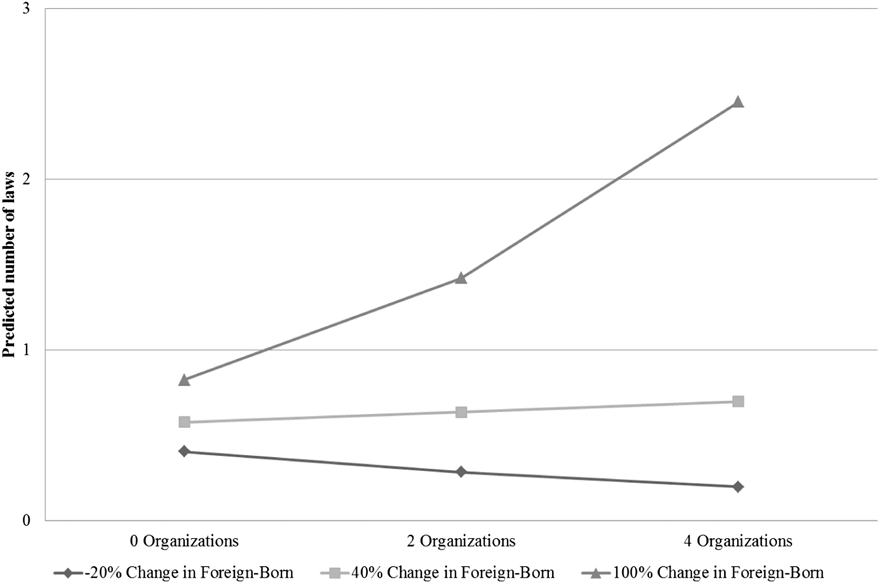
Figure 3 illustrates the predicted counts of anti-immigrant laws for state-sessions with varying levels of racially conservative organizations and foreign-born change, which reveals that the predicted difference between state-sessions with greater numbers of racially conservative organizations and those with zero racially conservative organizations widens considerably when foreign-born change is positive and high. For the scenarios where the foreign-born population had decreased in the previous ten years, state-sessions with four racially conservative organizations should expect fewer anti-immigrant laws than state-sessions with zero organizations. Furthermore, in the scenarios with rapid growth in the foreign-born population, state-sessions with four active racially conservative organizations should expect between one and two additional exclusionary laws than state-sessions with zero organizations.
Predicted Number of Anti-Immigrant Laws by Racially Conservative Organizations at varying Levels of Foreign-Born Change (from Table 5, Model 1)
In terms of hypothesis 4, we found that the positive effect of racially conservative organizations on exclusionary laws is stronger when coupled with greater levels of conservative ideology (see Model 4) and anti-immigrant public opinion (see Model 5). The results of the follow-up analyses reveal that, even though the effect of the interaction between anti-immigrant attitudes and racially conservative organizations is statistically significant, the difference in the predicted count of anti-immigrant laws between state-sessions with zero and four racially conservative organizations does not change substantively at different levels of attitudes towards immigrants.Footnote 18
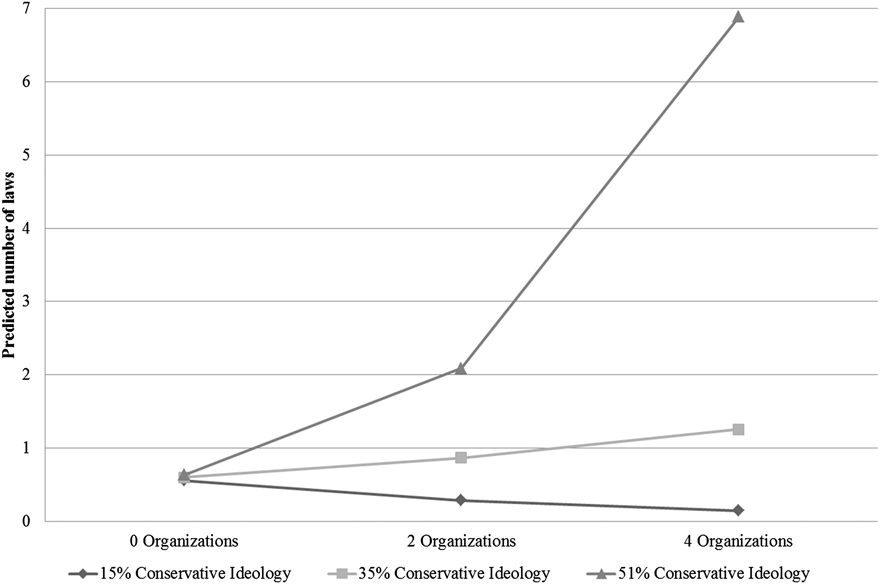
On the other hand, in Figure 4 we see that the predicted difference between state-sessions with zero and four racially conservative organizations widens considerably when conservative ideology is high. In the scenarios where a majority of voters identified as conservative, state-sessions with four racially conservative organizations should expect approximately six more exclusionary laws than state-sessions with zero racially conservative organizations. These results reveal that while racially conservative organizations generally foster exclusionary laws, context also matters; a stronger presence of racially conservative organizations facilitates the passage of anti-immigrant laws in states where a majority of voters identified as conservative, while states with a stronger presence of racially conservative organizations does little or even deters the passage of anti-immigrant laws in states where a minority of voters identified as conservative.
Predicted Number of Anti-Immigrant Laws by Racially Conservative Organizations at varying Levels of Conservative Ideology (from Table 5, Model 4)
In terms of the control variables in Table 5, we find that states with greater numbers of welcoming laws in the previous session resulted in more anti-immigrant laws, which could imply that legislators passed more anti-immigrant legislation to appease constituency “backlash” as a result of a perceived threat due to greater numbers of pro-immigrant laws. The remaining control variables were not statistically significant.
Hypothesis 5, based on the theory of legislative logic, posited that advocacy organizations would matter more at the introductory than the law stage. The results do not support this hypothesis; instead, we find that advocacy organizations matter at both stages of the legislative process, but in different ways. At the proposal stage, the success of advocacy organizations in affecting restrictive immigrant legislation depends on the strength of the Republican Party. At the passage stage, the success of racially conservative organizations is heightened in states with an increasing foreign-born population, and in states with greater shares of voters who reported restrictive sentiments or identified as conservative. But the effect of racially conservative organizations on the passage of anti-immigrant laws is also statistically significant on its own, indicating that organizations are key in advancing certain claims to sympathetic lawmakers once anti-immigrant legislation is introduced. In other words, legislators seem to more easily implement their agenda with a strong and supportive organizational infrastructure in place to provide much-needed political tools.
DISCUSSION AND CONCLUSION
In recent decades, the United States has experienced escalating rates of immigration, changing settlement patterns of these immigrants, and increasing diversity as a result of immigration from Asian and Latin American countries. Amid these demographic changes, which have affected new destination states more keenly, state legislators have increasingly introduced and approved immigration legislation, much of which was exclusionary. These restrictive policies have received frequent media coverage in recent years, with some arguing that we have entered a “Juan Crow” era (Lovato 2008), where government officials are seemingly promoting a “self-deportation” agenda, attempting to make conditions in an area so unbearable for immigrants that they would move elsewhere (Serwer Reference Serwer2012). This study attempted to explain state variation in the introduction and passage of anti-immigrant legislation. Considering that many scholars suggest that racial politics are inseparable from immigration politics (Browne and Odem, Reference Browne and Odem2012; Jones-Correa, Reference Jones-Correa, Espino, Leal and Meier2007; Lee Reference Lee2007), we argued that it is important to examine the influence of organizations whose activities help to maintain White privilege.
The results demonstrate that racially conservative organizations enable exclusionary legislation at the proposal stage, but only when coupled with a Republican-dominated government. States with larger shares of the foreign-born population and voters who report anti-immigrant opinions brought about greater numbers of anti-immigrant bills, but other measures of threat and political opportunity had no significant effect. At the approval stage, increasing group threat in the form of a growing foreign-born population resulted in more anti-immigrant laws. However, state-sessions with higher unemployment rates led to fewer anti-immigrant laws. We also found that racially conservative organizations fostered exclusionary laws, and their positive effect was heightened in states experiencing growing foreign-born populations and those with greater shares of voters who reported restrictive sentiments or identified as conservative. In sum, the results reveal that the effects of advocacy organizations on group behavior were stronger in places receptive to colorblind racial ideology.
This study offers three important implications. First, by moving beyond the approval stage of lawmaking, the results presented here demonstrate that advocacy organizations are influential at both stages of lawmaking. However, the effect of organizations depends on different factors when there is more at stake. This challenges past research which suggests that advocacy organizations are influential at the proposal stage but not at the approval stage of lawmaking (Cornwall et al., 2007; King et al., Reference King, Bentele and Soule2007; King et al., Reference King, Cornwall and Dahlin2005; Soule and King, Reference Soule and King2006; Soule and Van Dyke, Reference Soule and Dyke1999). On their own, advocacy organizations have no statistically significant effects on bills, but they do enable laws. At the approval stage, the effect of advocacy organizations is stronger when coupled with foreign-born change, anti-immigrant opinions, and conservative ideology. Past research has found that elected officials monitor public opinion data, and make decisions based on these data (Erikson et al., Reference Erikson, Wright and McIver1993; Graefe et al., 2008; Jacobs and Shapiro, Reference Jacobs and Shapiro1994; Stimson et al., Reference Stimson, MacKuen and Erikson1995; Wright et al., Reference Wright, Erikson and McIver1985). Here, we see that racially conservative organizations might call lawmakers’ attention to public opinion and foreign-born growth in states; lawmakers then utilize such information to pass laws that limit the rights of and services accorded to immigrant groups. This challenges past research which finds that advocacy organizations are influential at the proposal stages but not at the approval stages of lawmaking, pointing to the continuing need for future research to clarify when, how, and what kinds of advocacy organizations matter in the legislative process.
Second, the institutionalization of colorblind racial ideology, in the form of racially conservative organizations, legitimates the agenda of politicians sympathetic to anti-immigrant efforts. At the proposal and approval stages of lawmaking, politicians must act on existing ideas about immigration in America, and elected officials rely on legitimating forces to support the activation of the ideologies that guide them. Organizations that represent colorblind racial ideology facilitate this action.
Finally, the results illustrate how organizations help legislators maintain boundaries between immigrants and nonimmigrants. Due to the dominant racial ideology of colorblindness, the government is no longer as explicit in defending the boundaries of whiteness, but it continues to play a central role in defining the boundaries between immigrants and nonimmigrants, which has implications for the maintenance of racial and ethnic inequality. Boundaries between immigrants and nonimmigrants are also delineated actively by racially conservative organizations, who advocate for English-only, population control, and border control. The upsurge in restrictive bills targeting immigrants in combination with the presence of racially conservative organizations, contribute to “brighter” boundaries between immigrants and nonimmigrants (Alba Reference Alba2005; Okamoto and Ebert, Reference Okamoto and Ebert2010), meaning that the conceptual distinctions between these two groups have grown stronger (Lamont and Molnár, Reference Lamont and Molnár2002). These boundaries have profound effects on the lives of immigrants, and on Latina/o and Asian American communities, regardless of immigration status. For example, in 2010, the FBI reported a total of 1038 hate crimes motivated by ethnicity or national origin basis, of which, 65.5% were committed against Latina/os (Federal Bureau of Investigations 2010). Boundaries between the native- and foreign-born, particularly those that are unauthorized, have also become more salient due to the 287 (g) and Secure Communities programs. Both programs have resulted in the deportation of many immigrants for minor infractions such as traffic violations, leading to instability among families and communities (Immigration Policy Center 2011; Nguyen and Gill, 2010).
While our study yields important insights, there are many inquiries concerning immigration lawmaking that are outside the scope of this study. For example, the news media has the ability to diffuse the message of a social movement in a way that could sway public opinion and elected officials, or conversely, turn the public and officials against the movement (Andrews and Caren, Reference Andrews and Caren2010). Additionally, the news media itself—apart from coverage of social movements—can influence local opposition to immigrant communities, especially in terms of increasing awareness of demographic changes (Hopkins Reference Hopkins2010). As our analyses indicate, demographic changes may increase the resonance of ideologies supported by racially conservative organizations, but news media coverage of these changes over time could serve to further heighten ideological resonance. Indeed, our data can lend itself to a longitudinal analysis of the effects of news media coverage and advocacy organizations on immigration lawmaking. In the current study, we have captured a crucial “big event” in the news media by controlling for the number of years since the passage of the Patriot Act. But it is important to investigate how the news media covers multiple events, such as the North American Free Trade Agreement (NAFTA) and the 2006 immigration protests, and if the type and quality of coverage impacts immigration lawmaking over time.
The type of industry found in an area could also influence immigration legislation, independent of advocacy organizations. Some employers might encourage the passage of exclusionary legislation, because it makes their immigrant workforce more compliant. That is, the passage and enforcement of restrictive laws could make unauthorized immigrants more vulnerable and therefore more likely to accept undesirable working hours, lower wages, and fewer benefits (Harrison and Lloyd, Reference Harrison and Lloyd2012). Other employers might discourage exclusionary legislation. Certain industries—especially agriculture—have a vested interest in maintaining an abundant migrant labor pool, generating an incentive to oppose policies that are restrictive towards migrant labor (Baxter Reference Baxter2012).
Another explanation for the rise of state anti-immigration legislation could be that politicians redefine problems in their communities to garner support for their policies. For example, Thomas Vicino (Reference Vicino2012) showed how the politicians in three communities (Carpentersville, IL, Farmers Branch, TX, and Hazelton, PA) experiencing neighborhood decline and deterioration blame the decline on the new immigrant population. He argues that this deflection is key in explaining the successful passage of various “Illegal Immigration Relief Ordinances (IIROs),” particularly when the local politicians frame immigrants as criminals and lawbreakers, and even more damning, when politicians focus on a few horrendous and violent acts which happened to be committed by immigrants. Vicino explains that “[a] story that redefines the problem—and its public nature—can result in policy adoption” (p. 166).
As well as investigating additional factors that could play a role in immigration legislation, future research could examine how the conditions investigated in this study influence legislative arenas and forms of group behavior beyond immigration lawmaking. This could include the development of “self-defense” rights like stand your ground laws (including Florida’s statute 776 Justifiable Use of Force from 2011), anti-affirmative action ballot initiatives (e.g., Michigan’s Civil Rights Initiative from 2006), participation in the Tea Party (whose celebrity rose at the tail end of the era of ethnoracial change as the current study), and participation in “pro-marriage” organizations (which have resulted in voter-led ballot initiatives and propositions in states across the country). These are examples of group actions that maintain boundaries between dominant and subordinate groups that contribute to continued inequality, making them important arenas of inquiry for years to come.