

Introduction
National protected areas (NPAs) have become a preeminent means by which to preserve natural habitats and biodiversity (Andam et al. Reference Andam, Ferraro, Pfaff, Sanchez-Azofeifa and Robalino2008). The inhabitation of NPAs by human populations is in many cases considered by governments and conservationists as opposed to environmental protection. This has been a source of a plethora of natural resource-related conflicts between local residents and conservation authorities (hereafter referred to as ‘NPA–people conflicts’). NPA–people conflicts have surged around the world in recent years (e.g., Adams et al. Reference Adams, Aveling, Brockington, Dickson, Elliott and Hutton2004, West et al. Reference West, Igoe and Brockington2006; further information on NPA–people conflict is provided in the Supplementary Materials, available online).
One of the most fundamental NPA–people conflicts is associated with restricted access to and use of natural resources in NPAs (hereafter referred to as ‘access conflicts’). Access restrictions have deprived local groups of opportunities crucial for their survival, led to sociocultural disruptions and often fostered other types of conflicts (West et al. Reference West, Igoe and Brockington2006, Lele et al. Reference Lele, Wilshusen, Brockington, Seidler and Bawa2010).
The literature on local attitudes towards NPA conservation (i.e., perceptions of NPA regulations and management conditions) and on NPA–people conflicts is extensive. Among the most important socioeconomic and geographical determinants of attitudes to NPAs identified are personal income, age, participation in protected area management, resource-use patterns, educational level, gender and ethnicity, as well as spatial variables such as the specific protected area where a person resides and distance from protected area boundaries (Baral & Heinen Reference Baral and Heinen2007, Bragagnolo et al. Reference Bragagnolo, Malhado, Jepson and Ladle2016, Larson et al. Reference Larson, Conway, Hernandez and Carroll2016). However, the role of such determinants in shaping NPA–people conflicts has received considerably less attention (e.g., De Pourcq et al. Reference De Pourcq, Thomas, Arts, Vranckx, Léon-Sicard and Van Damme2015, Reference De Pourcq, Thomas, Arts, Vranckx, Léon-Sicard and Van Damme2017, Bragagnolo et al. Reference Bragagnolo, Malhado, Jepson and Ladle2016).
Based on extensive interview data with local people from 15 NPAs in Colombia, this paper aims to identify and better understand the socioeconomic and demographic variables, such as gender and ethnicity, that influence local people’s experiences of access conflicts. Our findings are aimed at preventing these types of conflicts.
Communities are rarely coherent and homogeneous units (Leach et al. Reference Leach, Mearns and Scoones1999, De Pourcq et al. Reference De Pourcq, Thomas, Arts, Vranckx, Léon-Sicard and Van Damme2015). Multiple aspects of social differentiation, such as gender, wealth, age and ethnic status, divide and crosscut so-called ‘community’ boundaries (Leach et al. Reference Leach, Mearns and Scoones1999). Gender, for example, is one of the most critical factors structuring rural and forest-dwelling communities. Women and men collect and use different forest products, gather the same products in different spaces or use the same product in different ways (Howard Reference Howard2003). Diverse and sometimes conflicting interests rather than shared priorities require constant negotiation and bargaining among different interest groups living within the same household and/or community (Schroeder Reference Schroeder2002). We hypothesize that social differences at the community scale not only affect the ways local people experience and perceive NPA regulations and management conditions, but also make a difference to local people’s experiences of conflicts.
Research Area and Background
Colombia is characterized by an exceptionally high level of biodiversity, much of which is located in NPAs. As of 2017, there were 59 NPAs in Colombia, covering 11.27% of its continental territory and 1.48% of the marine area, with a total area of 14 268 224 ha (UAESPNN 2017). A substantial number of people inhabit Colombia’s NPAs, comprising >35 000 indigenous people, >8000 Afro-Colombians and >47000 subsistence farmers of mixed ethnicity, often referred to as settlers or colonists (UAESPNN 2012, NPA staff, personal communication 2014). Many more live along NPA borders, but exact figures are unavailable. Many of these people’s activities, such as agriculture, resource extraction and construction, infringe on NPA conservation goals (see also Nolte Reference Nolte2016; Supplementary Material).
Today, NPA management has resulted in a range of NPA–people conflicts in a context of variable degrees of co-management. In previous publications (De Pourcq et al. Reference De Pourcq, Thomas, Arts, Vranckx, Léon-Sicard and Van Damme2015, Reference De Pourcq, Thomas, Arts, Vranckx, Léon-Sicard and Van Damme2017), we have discussed the main NPA–people conflict categories experienced by the people involved in the present study (Table 1). In the present study, we aim to identify the set of personal attributes that best explain the probability that residents from Colombian NPAs will experience park–people conflicts related to access to and use of natural resources from NPAs. We focus on access conflicts for two reasons. First, access conflicts have been reported as one of the most prevalent types of NPA–people conflict in Colombia (UAESPNN 2007, Duran Reference Duran2009, Ojeda Reference Ojeda2012; Table 1) and other countries in the tropics (West et al. Reference West, Igoe and Brockington2006, Lele et al. Reference Lele, Wilshusen, Brockington, Seidler and Bawa2010). Second, access restrictions in protected areas are known to affect attitudes towards NPA conservation among different socioeconomic groups, including women (Baral & Heinen Reference Baral and Heinen2007, Bragagnolo et al. Reference Bragagnolo, Malhado, Jepson and Ladle2016, Larson et al. Reference Larson, Conway, Hernandez and Carroll2016).
Park–people conflict categories and impairments in Colombia based on De Pourcq et al. (Reference De Pourcq, Thomas, Arts, Vranckx, Léon-Sicard and Van Damme2015, Reference De Pourcq, Thomas, Arts, Vranckx, Léon-Sicard and Van Damme2017). Percentages refer to the proportion of people (n=601) reporting experiencing each of the conflict categories. NPA=national protected area

Methodology
Data Collection
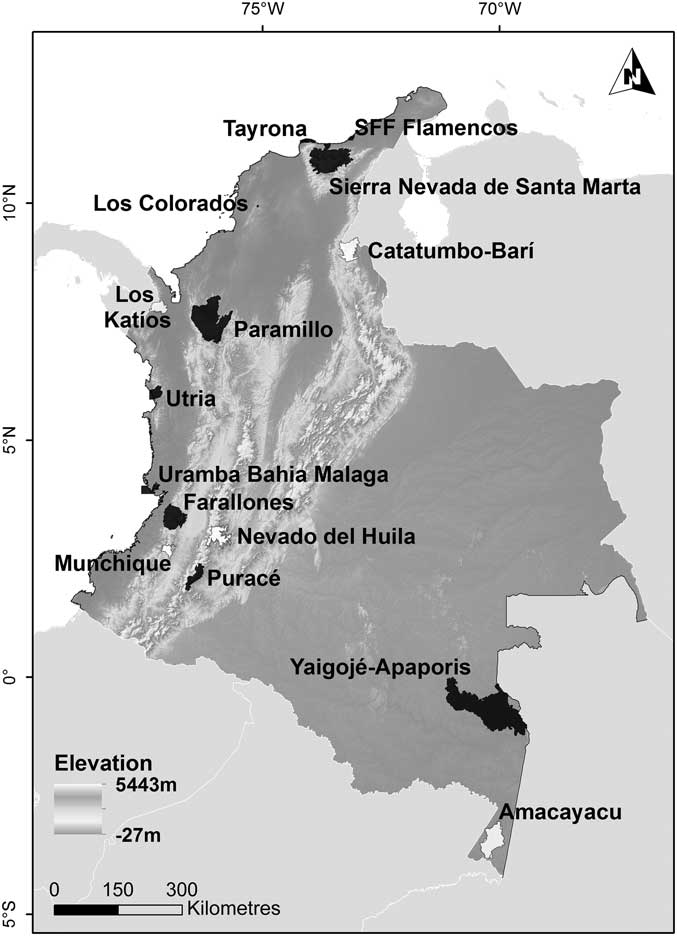
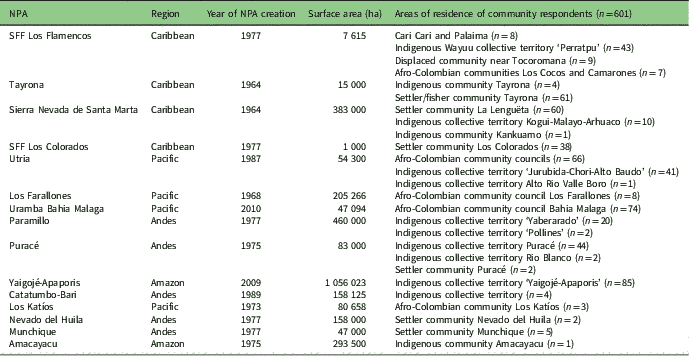
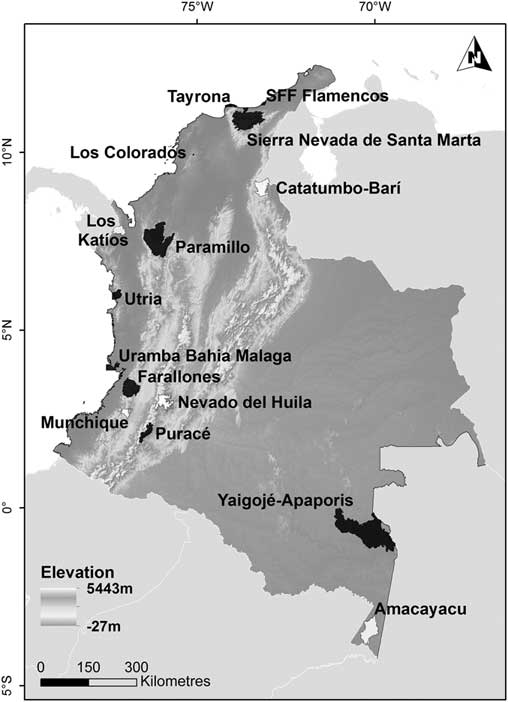
We carried out fieldwork between October 2011 and September 2014. At the community level, we interviewed 601 persons (i.e., 473 community members and 128 community leaders) living in or along the borders of 15 NPAs. Most of these interviews were carried out during field visits in 10 of the 15 NPAs (total number n = 586; black areas in Fig. 1) at locations where the respondents had their residence (e.g., in their houses or in a public place). These NPAs’ areas range from 1000 to 1 000 000 ha and represent a wide range of ecological, socioeconomical and management conditions (Table 2). Some were created decades ago, while others were delineated more recently. Due to the sizes and complexities of the NPAs, we only visited specific subareas (Table 2). In total, 14 subareas were selected from the 10 visited NPAs, with between 8 and 85 respondents in each. Study sites were selected according to: (i) representativeness of different bio-geographical regions, including the Amazon, Andes and Pacific and Caribbean coast; (ii) representation of cultural diversity, including indigenous groups, Afro-Colombians and settlers; and (iii) access and safety aspects. Field visits were complemented with interviews with 15 leader-representatives of 5 additional NPAs (grey areas in Fig. 1) in nearby towns or major Colombian cities.
Location of the national protected areas (NPAs) under study (black=NPAs that were personally visited; grey=NPAs that were not visited). SFF=Santuario de Fauna y Flora Los Flamencos.
Characteristics of the national protected areas (NPAs) under study. SFF=Santuario de Fauna y Flora Los Flamencos
We also interviewed 76 institutional-level stakeholders, including staff from the NPA administration and other governmental institutions, to validate conflict categories reported by the NPA respondents. As all interviews were carried out by the first author, potential interviewer bias should be constant across all cases (further details on these interviews are available in the Supplementary Materials).
We collected data on the personal attributes of study participants from NPAs, all of which have been highlighted previously to be main determinants of attitudes to protected areas (Baral & Heinen Reference Baral and Heinen2007, Bragagnolo et al. Reference Bragagnolo, Malhado, Jepson and Ladle2016, Larson et al. Reference Larson, Conway, Hernandez and Carroll2016): place of residence (within or outside the NPA), length of residency in NPA, gender, ethnicity, position within the community (community leadership or not), occupation, household size, age, income and education level and resource-use activities. Interview questions centred around economic and productive activities within NPAs, land tenure within NPAs, employment by the NPA administration as an indicator of participation in NPA management and experiences of conflict(s) (if any) with their NPA administration (details on the explanatory variables used are available in Supplementary Table S1).
Our understanding of conflict builds on the impairment approach (Glasl Reference Glasl1999, Marfo & Schanz Reference Marfo and Schanz2009), whereby conflict is a state of affairs in which an actor feels ‘impairment’ from the behaviour of another due to their own perceptions, emotions and interests (further information on the approach used is available in the Supplementary Material). Accordingly, to identify conflict categories, we explicitly asked community members and leaders to free-list all of the actions of NPA administrations (and staff) they perceived as an impairment or conflict at the time of research. We grouped all of these experiences into different conflict categories and subcategories and presented these to NPA officials and other institutional stakeholders (Table 1). Administrative officials mostly confirmed that those reported impairments and the ways in which we grouped them were representative of the actual conflicts experienced by local communities residing in or near Colombian NPAs. For the purpose of this paper, we only considered access conflicts. We did not evaluate potential conflicts with wildlife, guerrilla groups or any other outsiders.
Data Analysis
We considered ‘access conflicts’ as conflicts resulting from actions intended to prevent local people’s access to a particular resource or area, while often ensuring the imposer’s own access. Such actions included: (i) restrictions on extraction and/or use of natural resources (e.g., on timber extraction, fishing and hunting, cattle breeding, agricultural practices, mining, fuel wood collection and so on); (ii) restrictions on access to land and/or entrance to territory (such as staying overnight within the NPA, imposing entrance fees or prohibiting children’s entrance into the NPA); and (iii) obstruction of the legalization or formalization of land ownership within the NPA (Table 1).
We scored conflict experience as 0 when no conflict was experienced or 1 when at least one access conflict was reported. Given the binary nature of the response variable, we developed logistic generalized linear models with binomial distributions for identifying variables that significantly explain the perception of access conflicts among respondents. The sets of socioeconomical and geographical parameters mentioned above were used as explanatory variables.
We employed an information-theoretic approach in order to identify and select the best models for explaining people’s perceptions of access conflicts. To this end, we constructed models with all possible combinations of the variables described above using the MuMIn package for R program (Barton Reference Barton2018). All continuous explanatory variables were standardized by subtracting the mean value and dividing by twice the standard deviation. Models were ranked according to the Akaike information criterion (AIC), which is commonly used for model selection and to account for potential biases due to small sample sizes. We calculated the difference in AIC value between each model and the best model (delta AIC: Δi). The best models were selected as those with Δi values <2, and we carried out model averaging across these models to determine model coefficients (Barton Reference Barton2018). We compared model residuals across different NPAs and subareas, but did not find any evidence of spatial autocorrelation (Kruskal–Wallis tests p>0.1).
Results
Research participants pursued a range of productive and extractive activities in NPAs for household consumption or sale. The dominant occupations of participants were farming, hunting for subsistence purposes and fishing. Few local men engaged in mining activities, while some households raised cattle for milk or meat production, both for subsistence and for local sale. Many respondents undertook other income-generating activities, such as daily labour in construction work, running a restaurant or driving a moto-taxi. People were often involved in several economic activities at once.
Nearly half of all respondents (48%) reported access conflicts with the NPA administration. Respondents perceived more access conflicts specifically related to resource use and extraction from NPAs (43%) compared to access conflicts related to entrance and tenure (8% and 13%, respectively, χ2=17.31, p<0.0001).
Our information-theoretic modelling approach identified 16 models with Δi <2 (Supplementary Table S2). Ten different explanatory variables were present in these models, but the most important were the NPA where a person resided (relative importance: 1), pursuit of productive activities within the NPA (1), previous employment in the NPA administration (1), gender (0.73) and ethnic background (0.40) (Supplementary Table S3).
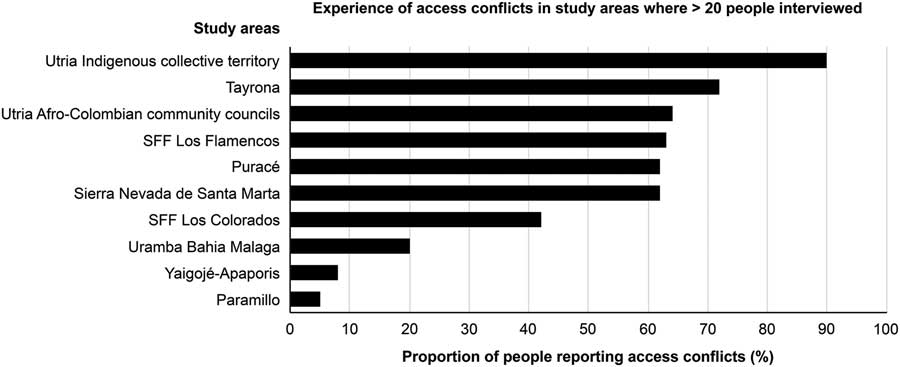
The highest proportions of people reporting access conflicts were found in the Utria and Tayrona NPAs and the lowest proportions were found in Paramillo, Yaigojé-Apaporis and Bahia Malaga (Fig. 2).
Proportion of respondents (%) in NPAs (n >20) reporting access conflicts. SFF=Santuario de Fauna y Flora Los Flamencos.
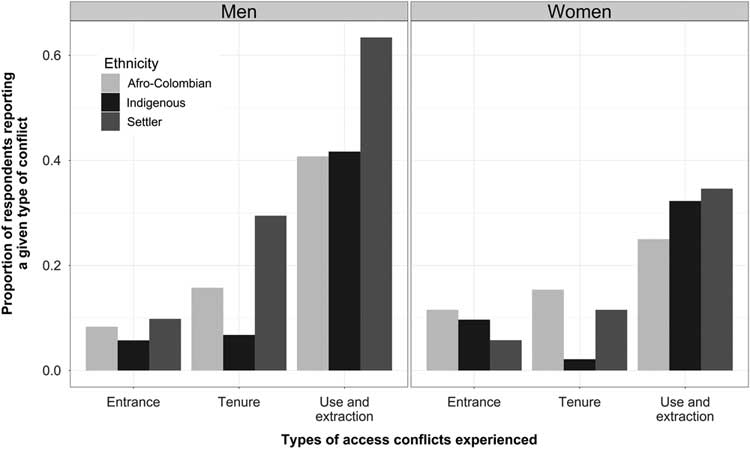
There was variation in experience of access conflicts by women and men of different ethnic affiliations (Fig. 3). Overall, men perceived significantly more access conflicts than women (55% versus 35% of respondents, respectively, χ2=17.31, p<0.0001). Men also experienced more conflicts than women specifically related to resource use and extraction (48% versus 32% of respondents, respectively, χ2=13.08, p<0.001) and land tenure (14% of men versus 8% of women, χ2=5.16, p=0.02), whereas women experienced more conflicts than men related to entrance into NPAs (10% versus 8% of respondents, respectively, χ2=11.74, p=0.003).
Proportion of respondents (%), organized by ethnic group, who experienced conflict related to access (referred to here as entrance), tenure or resource use and extraction.
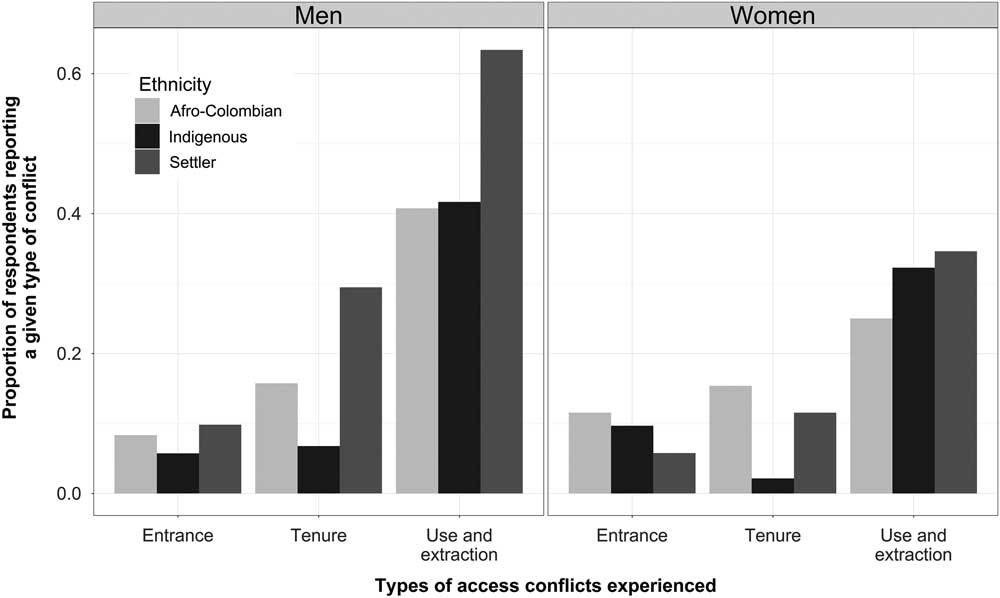
Settlers experienced more access conflicts (60%) than Afro-Colombians (44%), who in turn experienced more access conflicts than indigenous persons (40%, χ2=19.065, p<0.0001). Settlers experienced more access conflicts compared to the other groups basically because of their higher experience of conflicts related to use, extraction and tenure (Fig. 3).
Discussion
The most important variables explaining the experience of access conflicts were the NPA where a person resided, pursuit of productive activities within the NPA, previous employment in the NPA administration, gender and ethnic background.
Area Where Person Resided
Area of residence was one of the most important determinants of whether anyone would experience access conflicts (Supplementary Tables S2 & S3). The fewest access conflicts were experienced in the Paramillo, Yaigojé-Apaporis and Uramba Bahia Malaga NPAs (Fig. 2). Both the Yaigojé-Apaporis and Uramba Bahia Malaga NPAs are unique in that their resolutions guarantee that traditional resource-use and extraction activities will be tolerated and that the NPAs will be co-managed between NPA authorities and local communities (MAVDT 2009, 2010). In the Paramillo case, there is an agreement stipulating the joint management, use and access to natural resources in the overlapping areas of the Paramillo NPA and the collective indigenous territory. Both the NPA administration and local community leadership operated from the same building and both entities confirmed community involvement in NPA management. There was also a shared understanding between both parties about which resource management problems should be solved. For example, they agreed on the need to remove illegal farmers who grew coca in the overlapping territories.
The highest proportion of access conflicts were experienced in NPAs where residents were not involved at all in decision-making and where they were prohibited from making any use of the NPA’s natural resources. For example, in the Utria NPA, both indigenous as well as Afro-Colombian people are forbidden from a range of traditional subsistence activities, such as agriculture, hunting and fishing.
Hence, whether a NPA program is participatory or not seemed to indicate whether a person experienced access conflicts, rather than the area where a person resided per se. Participatory conservation measures reduce access conflicts between a specific NPA administration and local residents (Bragagnolo et al. Reference Bragagnolo, Malhado, Jepson and Ladle2016). By contrast, exclusionary conservation measures engender access conflicts.
Gender
A gendered experience of conflict was shown to be shared by all ethnic communities (Fig. 3). In fact, certain gender-specific activities and resource-use patterns were shared across ethnic groups (see also Bitanyi et al. Reference Bitanyi, Nesje, Kusiluka, Chenyambuga and Kaltenborn2012). Although women also entered NPAs, they were less involved in productive and/or extractive activities than men. When women were asked to list their main livelihood activities, raising children and carrying out domestic activities were the predominant answers. Nonetheless, based on empirical observations during fieldwork, it is clear that household work is complemented with activities that women carry out in the NPAs, such as collection of fuel wood, fodder and other non-timber forest products. Women also work with men on their households’ agricultural lands inside or near the NPAs, where they are often responsible for planting, weeding and harvesting.
The observation that women generally experience fewer conflicts than men might be, in part, because NPA administrators consent to how they use NPA resources; for example, in the collection of non-timber forest products. This contrasts with men’s activities, which are often more visibly destructive (e.g., field clearance and burning). Women perceived significantly more conflicts than men related to entering NPAs, however, across all ethnic groups. This may be due to women’s reliance on their children’s help to accomplish their tasks. Children are often denied access to NPAs, which leads to women being particularly affected by this type of restriction.
More men than women perceived access conflicts related to tenure and rights to land. According to Colombian environmental legislation, NPAs are incompatible with all types of land tenure except in the case of legally established indigenous territories. No individual can obtain any formal land rights in a NPA after its creation (MAVDT 1977). If an individual or group of people had obtained legal property rights before the creation of a particular NPA, the Colombian government (through INCODER – Colombian Institute for Rural Development) can acquire these rights in exchange for financial compensation (either by negotiation or direct appropriation) (De Pourcq et al. Reference De Pourcq, Thomas, Arts, Vranckx, Léon-Sicard and Van Damme2017). The divergence in experience of conflicts related to tenure and land rights between genders may be due to the fact that men continue to have primary rights over land (Deere & Leon Reference Deere and Leon2003). This is true despite Colombia holding one of the most progressive land tenure regulations and land reform laws in Latin America, in terms of extending women’s rights to land and resources (Deere & Leon Reference Deere and Leon2003).
Our data indicate that 18% of men (n=410) and only 6% of women (n=191) respondents were well informed about NPA management activities. Women knew very little about the basic objectives of the NPAs, often did not know if they actually lived in an NPA or not and could not name their NPA. In this respect, men were generally more knowledgeable. This difference in knowledge may also explain why women from all of the local groups we worked with reported fewer access conflicts than men. Women were often less informed than men about the existence and management systems of NPAs. This is because information about natural resource management tends to be disseminated through male-dominated channels. For example, women participate less in public meetings (see also Allendorf & Allendorf Reference Allendorf and Allendorf2012). Women may also be less aware of the implications of certain NPA regulations, and thus continue their daily activities without knowing that NPA authorities will sanction their actions (see also Bragagnolo et al. Reference Bragagnolo, Malhado, Jepson and Ladle2016). Additionally, women may be less inclined than men to recognize or voice the existence of NPA-related conflicts due to differences in how gender groups are socialized (Arjunan et al. Reference Arjunan, Holmes, Puyravaud and Davidar2006, Allendorf & Allendorf Reference Allendorf and Allendorf2012). Socially constructed gender differences have been linked, in both the Global North and South, with differential access to education and information, a lower sense of confidence among women and the cultural inappropriateness of women presenting negative opinions (Arjunan et al. Reference Arjunan, Holmes, Puyravaud and Davidar2006, Bragagnolo et al. Reference Bragagnolo, Malhado, Jepson and Ladle2016). Educational programmes, awareness-raising activities and the like should therefore look for the most effective ways to reach both boys and girls from NPAs and beyond in an equitable fashion.
Ethnicity
A third determinant of experiencing conflict was ethnicity (Supplementary Tables S2 & S3), with settlers perceiving more access conflicts than indigenous or Afro-Colombian persons (Fig. 3). Elsewhere, indigenous versus migrant/latecomer status can be a powerful predictor of attitudes towards conservation (Baral & Heinen Reference Baral and Heinen2007, Bragagnolo et al. Reference Bragagnolo, Malhado, Jepson and Ladle2016). This is unsurprising because formal or customary tenure regimes based on lineage or ethnicity generally confer different rights to the access and control of natural resources (Pélissier Reference Pélissier1980, Bragagnolo et al. Reference Bragagnolo, Malhado, Jepson and Ladle2016).
In the present study, this ethnic difference can, at least partly, be ascribed to the legal framework, which prescribes that particular ethnic communities have the right to continue traditional and economic use of renewable natural resources and to undertake traditional production activities. These communities include all indigenous groups owning territories that coexist with NPAs and all Afro-Colombian communities that were located within NPAs prior to their creation. The situation is more complex for settlers who, as more recent arrivals to the areas, do not have the same rights to use and extract NPA resources as indigenous or Afro-Colombian people. This can explain why settlers experience more use and extraction conflicts than the other groups (Fig. 3). Nonetheless, indigenous as well as Afro-Colombian people do experience access conflicts. These may relate to the NPA administration’s right to restrict their activities if these are considered incompatible with the objectives of the NPA administration (UAESPNN 2007).
The fact that Afro-Colombian participants experienced more access conflicts than indigenous participants illustrates that there also exists differentiation among these groups (Fig. 3). According to Colombian environmental legislation (MAVDT 1977), NPAs are only compatible with indigenous communities that have legally established collective territories. In contrast, NPAs are not compatible with land owned by Afro-Colombians (and settlers). Thus, their land claims within NPAs are, by definition, denied by the government. This explains why Afro-Colombian and settler interviewees (both men and women) reported more conflicts related to land tenure than indigenous people (Fig. 3). However, some indigenous respondents also reported this type of access conflict based on the belief that NPA administration impedes the entitlement or the expansion of their territories. This was the case in the Los Flamencos NPA, for example.
We argue that the role of ethnicity in experiencing access conflicts can be understood within the institutionalization of rights based on identity-based categories (i.e., settler vs. indigenous). In Colombia, the so-called fortress conservation model or ‘wilderness’ conservation ideology (Brockington Reference Brockington2002) helps to justify the morality, rationality and ideology of some of Colombia’s conservation policies. For instance, the full restriction of the use of natural resources within NPAs is used as justification for the displacement of settlers, but less so for indigenous or Afro-Colombian people. In Colombia, ethnic groups are often seen as ‘natural conservationists’ or ‘green individuals’, as opposed to ‘non-ethnic settlers’ who are seen as ‘not-green-enough’ or destructive to the environment. This ‘racist rhetoric’ links indigenous groups to ecological conservation and assigns roles to what is ethnic and what is not (Bocarejo Reference Bocarejo2011).
The redefinition of groups and their roles also influences how different local groups experience access conflicts. We argue that the experience of conflict is not inherently dependent on being ‘indigenous’, ‘Afro-Colombian’ or ‘settler’, but rather is related to environmental policies based on the social construction of identities (West et al. Reference West, Igoe and Brockington2006). These regimes of differentiation are based on a hierarchical classification of these groups’ ‘environmental ethics’ and result in the granting of additional or fewer rights to certain groups.
These processes are manifest in Colombia, where indigenous peoples enjoy more rights in NPAs than Afro-Colombians, who in turn have more rights than settlers. As our data show, this has repercussions for each of these groups’ perceptions of conflict.
Pursuit of Productive Activities within the NPA
Our model also shows that the experience of access conflicts increased when people pursued productive activities in NPAs (Supplementary Tables S2 & S3), corroborating prior work on the topic (e.g., West et al. Reference West, Igoe and Brockington2006, Lele et al. Reference Lele, Wilshusen, Brockington, Seidler and Bawa2010, De Pourcq et al. Reference De Pourcq, Thomas, Arts, Vranckx, Léon-Sicard and Van Damme2015, Reference De Pourcq, Thomas, Arts, Vranckx, Léon-Sicard and Van Damme2017). It seems a logical consequence of the fact that numerous productive activities undertaken by local communities, including wood extraction, fishing, agriculture and cattle ranching, are forbidden within NPAs (MAVDT 1977).
Employment by the NPA Administration
Local people who have been employed by the NPA administration, as local experts or as a communication bridge between the respective NPA administration and local communities, experience fewer access conflicts than those who were never employed (Supplementary Tables S2 & S3). This suggests that local participation in management is important for improving local attitudes towards NPAs and for preventing conflicts (cf. Pomeroy et al. Reference Pomeroy, Katon and Harkes2001, De Pourcq et al. Reference De Pourcq, Thomas, Arts, Vranckx, Léon-Sicard and Van Damme2015, Reference De Pourcq, Thomas, Arts, Vranckx, Léon-Sicard and Van Damme2017). This is also in agreement with our finding that fewer conflicts are experienced in NPAs that adopt socially inclusive conservation measures.
Conclusion
Social reforms and the resolution of NPA–people conflicts are big issues in Colombia. In 2017, after nearly 50 years of conflict, the Colombian government signed a peace agreement with the country’s largest guerrilla group, the Revolutionary Armed Forces of Colombia (FARC). The agreement officially ended Latin America’s longest-lasting armed conflict and undoubtedly represents a positive step towards a more stable political situation in Colombia. While it may generate a range of opportunities for better NPA configuration and management, it remains unclear how effective the agreement will be in halting or reducing ongoing rights violations of Colombia’s marginalized populations. The agreement itself might not be sufficient to achieve the much-wanted social reforms, terminate land-use conflicts, increase local decision-making power in nature conservation management and resolve NPA–people conflicts. The new post-conflict scenario may actually bring about more deforestation and land-use conflicts (Suarez et al. Reference Suarez, Árias-Arévalo and Martinez-Mera2018).
Within Colombia’s post-conflict agenda, the rights of indigenous and other local communities to land and resources in NPAs should be revised, solidified and made more equitable across ethnic groups. Any new policies crafted to grant rights to land and resources should not be based solely on ethnic categories and hierarchies. Rather, decisions about the feasibility of continued habitation or resource use in NPAs should also take into account factors such as local people’s historical relationships with the NPAs in question and their commitment to conservation.
Failing to implement more socially inclusive legal conservation programmes in NPAs for all involved parties (i.e., both women and men from different local groups) not only ignores the differentiated needs and interests of distinct segments of society, but can also exacerbate conflicts. Conservation efforts that are more participatory and equitable also tend to be more effective, as they are more likely to be accepted by a greater share of the population. This may help not only to reduce conflicts, but also to enhance the conservation status of protected areas (Vergara-Asenjo & Potvin Reference Vergara-Asenjo and Potvin2014).
Although there is huge variability among NPAs, the problems and historical trajectories in NPAs detailed by other authors are in many cases very similar to this Colombian example. Other research also found that across many tropical countries, including Colombia, NPA establishment and management is generally affected by complex realities and historical conditions, including displacement (e.g., West et al. Reference West, Igoe and Brockington2006), social exclusion (Lele et al. Reference Lele, Wilshusen, Brockington, Seidler and Bawa2010) and impoverishment (Adams et al. Reference Adams, Aveling, Brockington, Dickson, Elliott and Hutton2004).
The present research led to a better understanding of access conflicts and defined appropriate ways to constructively address them. While we conducted fieldwork all across the Colombian territory, encompassing a broad array of social and cultural conditions, to some extent it remains unclear how the findings are applicable beyond these cases or Colombian borders. More work is necessary in order to determine, for example, whether our findings (e.g., ethnicity affects the experience of access conflicts) can be generalized to other NPA contexts in the Global South.
Supplementary Material
For supplementary material accompanying this paper, visit www.cambridge.org/core/journals/environmental-conservation
Acknowledgements
We are indebted to all institutions and people who have contributed to the realization of this research. The cooperation with the staff of the Colombian NPA administration is particularly appreciated. Thanks are due to all inhabitants and respondents of the participating NPAs.
Financial Support
The research was financed by a grant of the Flemish Inter-University Council (VLIR-UOS) to Kobe De Pourcq. Supplementary funding was provided by the CGIAR Research Program on Forests, Trees and Agroforesty, the CGIAR Fund Donors and Conservation International, Colombian headquarters.
Conflict of Interest
None.
Ethical Standards
None.





 Open access

