


A growing body of research suggests that personality pathology constitutes a major form of psychopathology in adolescents, as it does in adults (Reference Ludolph, Westen and MisleLudolph et al, 1990; Reference Johnson, Cohen and BrownJohnson et al, 1999; Reference Levy, Becker and GriloLevy et al, 1999; Reference Westen and ChangWesten & Chang, 2000). At present there are no widely accepted assessment procedures or diagnoses designed specifically for adolescent personality pathology. Whereas previous research on personality disorder features in adolescents, including our own earlier study (Reference Westen, Shedler and DurrettWesten et al, 2003), has focused on types (Axis II categories) or prototypes (personality constellations assessed dimensionally, such as the extent to which the patient matches a prototype of histrionic personality disorder), this study focuses on traits: more specific, less molar constructs such as negative affect or emotional dysregulation. Whether personality pathology in adolescents (or adults) is best considered in terms of traits, types or prototypes, or some combination thereof, is an important question. Our aim is to identify the structure of pathological personality traits in a sample of adolescents described by their treating clinicians using a personality pathology instrument designed for adolescents, and to provide initial data on the validity of these constructs and their measurement.
METHOD
Sample and procedure
The study method has been described in detail elsewhere (Reference Westen, Shedler and DurrettWesten et al, 2003). Participants were randomly selected PhD and MD clinicians, who provided quantified data on a randomly selected adolescent patient (operationalised as ‘the last patient you saw last week before completing this form who meets study criteria’) currently in treatment for ‘enduring maladaptive patterns of thought, feeling, motivation, or behaviour - that is, personality’. We used this relatively generic definition of personality pathology to avoid limiting our study to patients meeting diagnostic criteria for personality disorder. We ascertained a sample stratified by gender and age (14-18 years) and asked clinicians to complete a packet of questionnaires for a modest honorarium (US$25).
Measures
SWAP-200-A
The 200-item Shedler-Westen Assessment Procedure for Adolescents (SWAP-200-A) is a Q-sort instrument for assessing adolescent personality pathology designed for use by skilled clinical observers based on either longitudinal knowledge of the patient over the course of treatment or a systematic clinical interview of the patient and parents. A Q-sort is a set of statements that provides a ‘standard vocabulary’ for clinicians to use to describe their clinical observations. To describe a patient, the clinician sorts statements into categories based on their applicability to the patient, from those that are irrelevant or not descriptive to those that are highly descriptive. In this study clinicians used a semi-constrained rating scale version of the instrument (see Reference Westen, Shedler and DurrettWesten et al, 2003).
The SWAP-200-A was adapted from the SWAP-200 for adults; both measures have shown initial evidence of reliability and validity (Westen & Shedler, Reference Westen and Shedler1999a , Reference Westen and Shedler b , Reference Westen and Shedler2000; Reference Westen and MuderrisogluWesten & Muderrisoglu, 2003). Preliminary research has shown high correlations between SWAP-200 descriptions made by treating clinicians and independent interviewers and between independent observers reviewing recorded interviews (Reference Westen and MuderrisogluWesten & Muderrisoglu, 2003). The SWAP-200-A correlates with a range of variables such as attachment status, and history of suicide attempts, psychiatric hospitalisations, arrests, and family and developmental history variables (Reference Nakash-Eisikovits, Dutra and WestenNakash-Eisikovits et al, 2003; Reference Westen, Shedler and DurrettWesten et al, 2003).
The items reflect constructs from a mixture of sources: Axis II criteria for DSM-III through DSM-IV; selected Axis I criteria associated with personality disturbance (e.g. depression and anxiety); clinical literature and research on personality disorders, normal personality traits and psychological health; a model of functional diagnosis (Reference Westen and BarronWesten, 1998); research on child and adolescent personality and psychopathology; videotaped clinical interviews; and feedback from over a thousand experienced clinicians. To develop the adolescent version of the instrument, we deleted, revised and added items as appropriate based on the adolescent literature, the authors' prior research and experience with adolescent personality pathology, and consultation with senior clinicians in adolescent psychiatry who used the instrument to describe patients and then provided feedback on items that were ambiguous, necessary for describing their patient but missing from the item set, and so on.
Two features of the SWAP-200-A are of particular relevance to assessment of adolescent personality pathology. First, the instrument is intended for use by clinically experienced observers, based on either all available data over the course of their work with a patient or a systematic clinical interview with the patient and parents, the Clinical Diagnostic Interview for Adolescents (CDI-A; further details available from the author upon request). The SWAP-200-A does not presume that patients, particularly adolescents, can self-report their maladaptive personality traits. Rather, it presumes that a skilled clinical interviewer can listen to patients' narratives, observe their interactions with their parents and the interviewer, and integrate information across informants to make judgements about adolescents' characteristic ways of thinking, feeling, regulating affect and so forth. Second, the instrument can be used to assess Axis II diagnoses in adolescents, by correlating patients' 200-item profiles with diagnostic prototypes of each personality disorder derived from a normative adult sample (Reference Westen and ShedlerWesten & Shedler, 1999a ). Alternatively, it can be used in taxonomic work, as in this study, to develop non-redundant (i.e. relatively non-comorbid) diagnostic categories or dimensions.
Clinical Data Form
Following basic demographic and diagnostic questions, the Clinical Data Form (CDF) (see Reference Westen and ShedlerWesten & Shedler, 1999a ) asks clinicians to rate the patient's adaptive functioning, including school functioning (1 severe conduct problems/suspensions, 7 working to potential); peer functioning (1 very poor, 7 very good); history of suicide attempts, arrests and hospitalisations; and social support (number of people in whom the patient feels comfortable confiding). Research has demonstrated that clinician ratings of adaptive functioning variables, including the variables assessed by the CDF, show strong correlations with the same variables obtained by interview (see Reference Westen and WeinbergerWesten & Weinberger, 2004). The CDF also measures family and developmental history variables; however, because we do not analyse those data here, we shall not describe them further.
Axis II pathology
To maximise reliability of measurement, we assessed Axis II pathology as defined by DSM-IV (American Psychiatric Association, 1994) in more than one way. First, we listed the Axis II disorders and asked clinicians to rate the extent to which the patient met criteria for each disorder on a sevenpoint rating scale. Second, we provided clinicians with a checklist of all Axis II criteria, randomly ordered, and asked them to rate each criterion as present or absent, as in DSM-IV, and then to rate the extent to which each item applied using a seven-point scale. These checklist data generated two additional dimensional measures of Axis II pathology (number of diagnostic criteria met for each personality disorder and the mean of the ratings 1-7 for each criterion for each diagnosis), as well as categorical diagnoses derived by summing the number of criteria present and applying DSM-IV thresholds. To maximise reliability, we created a composite measure of personality pathology by transforming the three sets of dimensional scores (global ratings, number of Axis II criteria met and summed seven-point ratings across criteria for each disorder) into Z scores, which we then averaged to form composite personality disorder ratings.
Five Factor Model adjective checklist
The Five Factor Model (FFM; Reference McCrae and CostaMcCrae & Costa, 1997) is a model of personality derived by factor analysis. It isolates five general personality traits: neuroticism, extroversion, openness to experience, agreeableness and conscientiousness. According to the most widespread version of the model, embodied in the NEO Personality Inventory Revised (NEO-PI-R; Reference McCrae and CostaMcCrae & Costa, 1997), each factor includes six sub-factors or ‘facets’. For this study we developed a brief clinician-report FFM adjective checklist, consisting of 35 items rated on a seven-point scale, one for each of the NEO-PI-R factors and one for each of the six facets. Coefficient alphas for the five NEO-PI-R factors were largely acceptable, ranging from 0.64 to 0.92, with both mean and median greater than 0.80.
Child Behavior Checklist
The Child Behavior Checklist (CBCL; Reference AchenbachAchenbach, 1991) is a widely used questionnaire designed to assess the behavioural problems and social competencies of children aged 4-18 years; it includes 11 problem scales. The CBCL also yields two broadband, higher-order psychopathology scales, ‘internalising’ and ‘externalising’. We asked clinicians to complete the parent-report version of the CBCL, which they were able to do without difficulty. Clinician-reported data on the CBCL show similar psychometric properties to parent-reported data, including high internal consistency for the problem scale scores (median coefficient α> 0.80), virtually identical factor structure and predictable correlates suggesting convergent and discriminant validity (Reference Dutra, Campbell and WestenDutra et al, 2004).
Statistical analyses
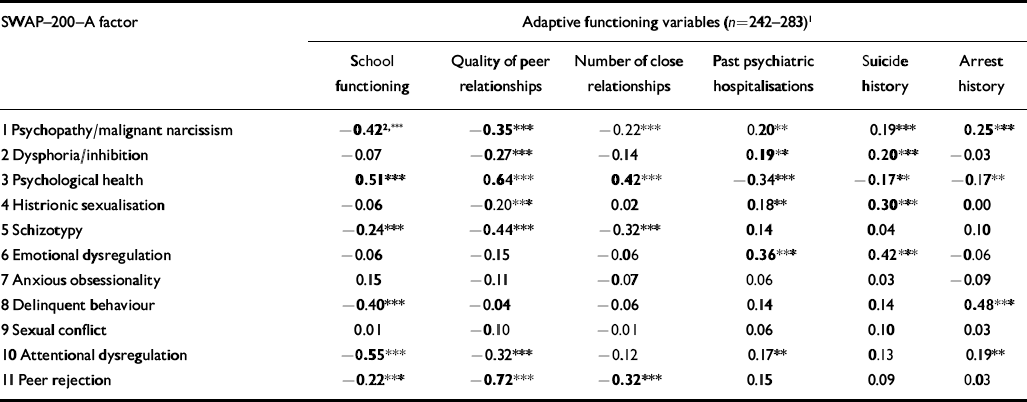
We analysed the data as follows. First, we subjected the SWAP-200-A items to exploratory factor analysis (because of the absence of prior research on the factor structure of the instrument). As a preliminary test of the validity of the factors, we then performed a series of analyses. (For simplicity of presentation, in the tables that follow, we indicate criterion variables predicted a priori to be most strongly associated with each factor in bold. To minimise overinterpretation of findings, we focus only on findings that are relevant to our hypotheses, form a coherent pattern, or were not predicted but were significant at P<0.01.) In a first set of analyses, we correlated patients' factor-based scores with dimensional measures of personality pathology, to locate them within a nomological net (Reference Cronbach and MeehlCronbach & Meehl, 1955) provided by the more familiar DSM-IV Axis II diagnoses. We then examined their relation to personality as measured by the FFM adjective checklist and the problem scales of the CBCL. Finally, we assessed the relation between SWAP-200-A factors and adaptive functioning variables selected a priori as likely to be associated with different forms of personality pathology, including ratings of school performance and quality of peer relationships; number of close friends or confidantes; and history of psychiatric hospitalisations, suicide attempts and arrests.
RESULTS
Sample characteristics
The sample consisted of 294 patients. Clinician respondents (61.4% psychiatrists, 50.2% male) were on average highly experienced (mean years of experience post training 13.4, s.d.=9.4). Clinicians varied in theoretical orientations, and most worked in more than one setting. Clinicians tended to know the patients well: the median length of treatment prior to completing the questionnaire was 20 sessions. Patients were evenly distributed by gender (52.9% female) and age. The majority (84.9%) were White, with most of the remaining patients Black or Hispanic. Clinicians rated the patients as 7.5% poor, 20.9% working class, 50.7% middle class and 20.9% upper class. The most prevalent Axis I diagnoses included major depressive disorder (25.3%), dysthymic disorder (24.3%), attention-deficit hyperactivity disorder (16.1%), oppositional defiant disorder (9.0%) and conduct disorder (6.1%).
Factor structure of the SWAP-200-A
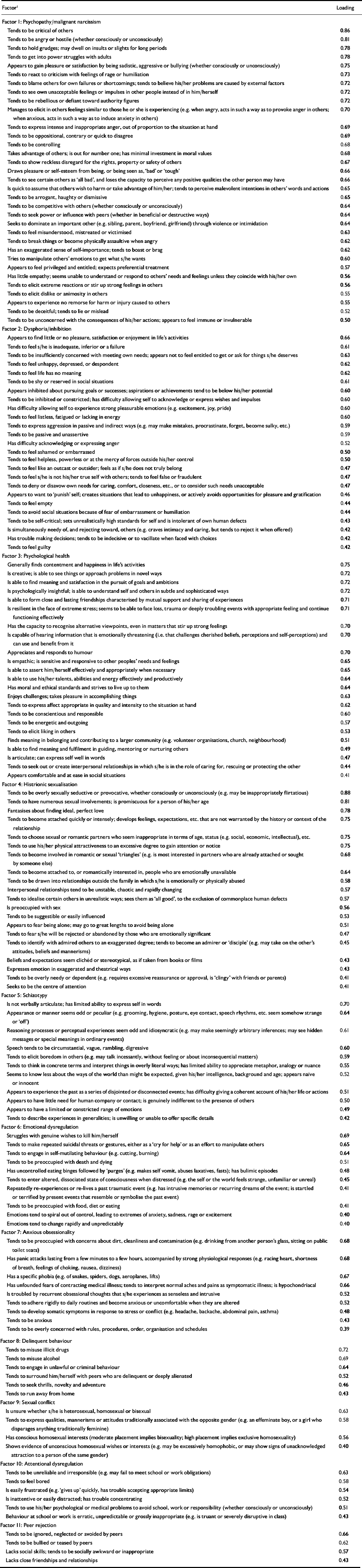
As a first step, we subjected the SWAP-200-A items to a principal components analysis, examining the resulting eigenvalues, percentage of variance accounted for by each factor, and scree plot. The scree plot showed a gradual break between 12 and 15 factors. We obtained similar factor structures using 12-15 factors with both varimax (orthogonal) and promax (oblique) solutions and multiple extraction methods. We retained and report here the first 11 of the 12-factor promax (oblique) solution using principal axis factoring. These factors were readily interpretable, reproducible across several estimation procedures and algorithms, and well marked by multiple items. Communalities were all greater than 0.70, with most between 0.80 and 0.90, suggesting that the items did in fact include substantial common components. The 11 factors cumulatively accounted for 52% of the variance. Reliability (coefficient α) was above 0.80 for all factors except factor 10 (α=0.72), with a median of 0.86. Table 1 lists the items that loaded most highly on each of the 11 factors.
Factor structure of the Shedler–Westen Assessment Procedure for Adolescents
| Factor1 | Loading |
|---|---|
| Factor 1: Psychopathy/malignant narcissism | |
| Tends to be critical of others | 0.86 |
| Tends to be angry or hostile (whether consciously or unconsciously) | 0.81 |
| Tends to hold grudges; may dwell on insults or slights for long periods | 0.78 |
| Tends to get into power struggles with adults | 0.78 |
| Appears to gain pleasure or satisfaction by being sadistic, aggressive or bullying (whether consciously or unconsciously) | 0.75 |
| Tends to react to criticism with feelings of rage or humiliation | 0.73 |
| Tends to blame others for own failures or shortcomings; tends to believe his/her problems are caused by external factors | 0.72 |
| Tends to see own unacceptable feelings or impulses in other people instead of in him/herself | 0.72 |
| Tends to be rebellious or defiant toward authority figures | 0.72 |
| Manages to elicit in others feelings similar to those he or she is experiencing (e.g. when angry, acts in such a way as to provoke anger in others; when anxious, acts in such a way as to induce anxiety in others) | 0.70 |
| Tends to express intense and inappropriate anger, out of proportion to the situation at hand | 0.69 |
| Tends to be oppositional, contrary or quick to disagree | 0.69 |
| Tends to be controlling | 0.68 |
| Takes advantage of others; is out for number one; has minimal investment in moral values | 0.68 |
| Tends to show reckless disregard for the rights, property or safety of others | 0.67 |
| Draws pleasure or self-esteem from being, or being seen as, ‘bad’ or ‘tough’ | 0.66 |
| Tends to see certain others as ‘all bad’, and loses the capacity to perceive any positive qualities the other person may have | 0.66 |
| Is quick to assume that others wish to harm or take advantage of him/her; tends to perceive malevolent intentions in others' words and actions | 0.65 |
| Tends to be arrogant, haughty or dismissive | 0.65 |
| Tends to be competitive with others (whether consciously or unconsciously) | 0.64 |
| Tends to seek power or influence with peers (whether in beneficial or destructive ways) | 0.64 |
| Seeks to dominate an important other (e.g. sibling, parent, boyfriend, girlfriend) through violence or intimidation | 0.64 |
| Tends to feel misunderstood, mistreated or victimised | 0.63 |
| Tends to break things or become physically assaultive when angry | 0.62 |
| Has an exaggerated sense of self-importance; tends to boast or brag | 0.62 |
| Tries to manipulate others' emotions to get what s/he wants | 0.60 |
| Appears to feel privileged and entitled; expects preferential treatment | 0.57 |
| Has little empathy; seems unable to understand or respond to others' needs and feelings unless they coincide with his/her own | 0.56 |
| Tends to elicit extreme reactions or stir up strong feelings in others | 0.56 |
| Tends to elicit dislike or animosity in others | 0.55 |
| Appears to experience no remorse for harm or injury caused to others | 0.55 |
| Tends to be deceitful; tends to lie or mislead | 0.52 |
| Tends to be unconcerned with the consequences of his/her actions; appears to feel immune or invulnerable | 0.50 |
| Factor 2: Dysphoria/inhibition | |
| Appears to find little or no pleasure, satisfaction or enjoyment in life's activities | 0.66 |
| Tends to feel s/he is inadequate, inferior or a failure | 0.61 |
| Tends to be insufficiently concerned with meeting own needs; appears not to feel entitled to get or ask for things s/he deserves | 0.63 |
| Tends to feel unhappy, depressed, or despondent | 0.62 |
| Tends to feel life has no meaning | 0.62 |
| Tends to be shy or reserved in social situations | 0.61 |
| Appears inhibited about pursuing goals or successes; aspirations or achievements tend to be below his/her potential | 0.60 |
| Tends to be inhibited or constricted; has difficulty allowing self to acknowledge or express wishes and impulses | 0.60 |
| Has difficulty allowing self to experience strong pleasurable emotions (e.g. excitement, joy, pride) | 0.60 |
| Tends to feel listless, fatigued or lacking in energy | 0.60 |
| Tends to express aggression in passive and indirect ways (e.g. may make mistakes, procrastinate, forget, become sulky, etc.) | 0.59 |
| Tends to be passive and unassertive | 0.59 |
| Has difficulty acknowledging or expressing anger | 0.52 |
| Tends to feel ashamed or embarrassed | 0.50 |
| Tends to feel helpless, powerless or at the mercy of forces outside his/her control | 0.50 |
| Tends to feel like an outcast or outsider; feels as if s/he does not truly belong | 0.47 |
| Tends to feel s/he is not his/her true self with others; tends to feel false or fraudulent | 0.47 |
| Tends to deny or disavow own needs for caring, comfort, closeness, etc., or to consider such needs unacceptable | 0.47 |
| Appears to want to ‘punish’ self; creates situations that lead to unhappiness, or actively avoids opportunities for pleasure and gratification | 0.46 |
| Tends to feel empty | 0.44 |
| Tends to avoid social situations because of fear of embarrassment or humiliation | 0.44 |
| Tends to be self-critical; sets unrealistically high standards for self and is intolerant of own human defects | 0.43 |
| Is simultaneously needy of, and rejecting toward, others (e.g. craves intimacy and caring, but tends to reject it when offered) | 0.42 |
| Has trouble making decisions; tends to be indecisive or to vacillate when faced with choices | 0.42 |
| Tends to feel guilty | 0.42 |
| Factor 3: Psychological health | |
| Generally finds contentment and happiness in life's activities | 0.75 |
| Is creative; is able to see things or approach problems in novel ways | 0.72 |
| Is able to find meaning and satisfaction in the pursuit of goals and ambitions | 0.72 |
| Is psychologically insightful; is able to understand self and others in subtle and sophisticated ways | 0.72 |
| Is able to form close and lasting friendships characterised by mutual support and sharing of experiences | 0.71 |
| Is resilient in the face of extreme stress; seems to be able to face loss, trauma or deeply troubling events with appropriate feeling and continue functioning effectively | 0.71 |
| Has the capacity to recognise alternative viewpoints, even in matters that stir up strong feelings | 0.70 |
| Is capable of hearing information that is emotionally threatening (i.e. that challenges cherished beliefs, perceptions and self-perceptions) and can use and benefit from it | 0.70 |
| Appreciates and responds to humour | 0.70 |
| Is empathic; is sensitive and responsive to other peoples' needs and feelings | 0.65 |
| Is able to assert him/herself effectively and appropriately when necessary | 0.65 |
| Is able to use his/her talents, abilities and energy effectively and productively | 0.64 |
| Has moral and ethical standards and strives to live up to them | 0.64 |
| Enjoys challenges; takes pleasure in accomplishing things | 0.63 |
| Tends to express affect appropriate in quality and intensity to the situation at hand | 0.62 |
| Tends to be conscientious and responsible | 0.60 |
| Tends to be energetic and outgoing | 0.57 |
| Tends to elicit liking in others | 0.53 |
| Finds meaning in belonging and contributing to a larger community (e.g. volunteer organisations, church, neighbourhood) | 0.51 |
| Is able to find meaning and fulfilment in guiding, mentoring or nurturing others | 0.49 |
| Is articulate; can express self well in words | 0.47 |
| Tends to seek out or create interpersonal relationships in which s/he is in the role of caring for, rescuing or protecting the other | 0.44 |
| Appears comfortable and at ease in social situations | 0.41 |
| Factor 4: Histrionic sexualisation | |
| Tends to be overly sexually seductive or provocative, whether consciously or unconsciously (e.g. may be inappropriately flirtatious) | 0.88 |
| Tends to have numerous sexual involvements; is promiscuous for a person of his/her age | 0.81 |
| Fantasises about finding ideal, perfect love | 0.78 |
| Tends to become attached quickly or intensely; develops feelings, expectations, etc. that are not warranted by the history or context of the relationship | 0.75 |
| Tends to choose sexual or romantic partners who seem inappropriate in terms of age, status (e.g. social, economic, intellectual), etc. | 0.75 |
| Tends to use his/her physical attractiveness to an excessive degree to gain attention or notice | 0.75 |
| Tends to become involved in romantic or sexual ‘triangles’ (e.g. is most interested in partners who are already attached or sought by someone else) | 0.68 |
| Tends to become attached to, or romantically interested in, people who are emotionally unavailable | 0.64 |
| Tends to be drawn into relationships outside the family in which s/he is emotionally or physically abused | 0.58 |
| Interpersonal relationships tend to be unstable, chaotic and rapidly changing | 0.57 |
| Tends to idealise certain others in unrealistic ways; sees them as ‘all good’, to the exclusion of commonplace human defects | 0.57 |
| Is preoccupied with sex | 0.56 |
| Tends to be suggestible or easily influenced | 0.53 |
| Appears to fear being alone; may go to great lengths to avoid being alone | 0.51 |
| Tends to fear s/he will be rejected or abandoned by those who are emotionally significant | 0.47 |
| Tends to identify with admired others to an exaggerated degree; tends to become an admirer or ‘disciple’ (e.g. may take on the other's attitudes, beliefs and mannerisms) | 0.45 |
| Beliefs and expectations seem clichéd or stereotypical, as if taken from books or films | 0.43 |
| Expresses emotion in exaggerated and theatrical ways | 0.43 |
| Tends to be overly needy or dependent (e.g. requires excessive reassurance or approval, is ‘clingy’ with friends or parents) | 0.41 |
| Seeks to be the centre of attention | 0.41 |
| Factor 5: Schizotypy | |
| Is not verbally articulate; has limited ability to express self in words | 0.70 |
| Appearance or manner seems odd or peculiar (e.g. grooming, hygiene, posture, eye contact, speech rhythms, etc. seem somehow strange or ‘off’) | 0.64 |
| Reasoning processes or perceptual experiences seem odd and idiosyncratic (e.g. may make seemingly arbitrary inferences; may see hidden messages or special meanings in ordinary events) | 0.61 |
| Speech tends to be circumstantial, vague, rambling, digressive | 0.60 |
| Tends to elicit boredom in others (e.g. may talk incessantly, without feeling or about inconsequential matters) | 0.59 |
| Tends to think in concrete terms and interpret things in overly literal ways; has limited ability to appreciate metaphor, analogy or nuance | 0.55 |
| Seems to know less about the ways of the world than might be expected, given his/her intelligence, background and age; appears naïve or innocent | 0.52 |
| Appears to experience the past as a series of disjointed or disconnected events; has difficulty giving a coherent account of his/her life or actions | 0.51 |
| Appears to have little need for human company or contact; is genuinely indifferent to the presence of others | 0.50 |
| Appears to have a limited or constricted range of emotions | 0.49 |
| Tends to describe experiences in generalities; is unwilling or unable to offer specific details | 0.42 |
| Factor 6: Emotional dysregulation | |
| Struggles with genuine wishes to kill him/herself | 0.69 |
| Tends to make repeated suicidal threats or gestures, either as a ‘cry for help’ or as an effort to manipulate others | 0.65 |
| Tends to engage in self-mutilating behaviour (e.g. cutting, burning) | 0.64 |
| Tends to be preoccupied with death and dying | 0.51 |
| Has uncontrolled eating binges followed by ‘purges’ (e.g. makes self vomit, abuses laxatives, fasts); has bulimic episodes | 0.48 |
| Tends to enter altered, dissociated state of consciousness when distressed (e.g. the self or the world feels strange, unfamiliar or unreal) | 0.45 |
| Repeatedly re-experiences or re-lives a past traumatic event (e.g. has intrusive memories or recurring dreams of the event; is startled or terrified by present events that resemble or symbolise the past event) | 0.41 |
| Tends to be preoccupied with food, diet or eating | 0.41 |
| Emotions tend to spiral out of control, leading to extremes of anxiety, sadness, rage or excitement | 0.40 |
| Emotions tend to change rapidly and unpredictably | 0.40 |
| Factor 7: Anxious obsessionality | |
| Tends to be preoccupied with concerns about dirt, cleanliness and contamination (e.g. drinking from another person's glass, sitting on public toilet seats) | 0.68 |
| Has panic attacks lasting from a few minutes to a few hours, accompanied by strong physiological responses (e.g. racing heart, shortness of breath, feelings of choking, nausea, dizziness) | 0.68 |
| Has a specific phobia (e.g. of snakes, spiders, dogs, aeroplanes, lifts) | 0.67 |
| Has unfounded fears of contracting medical illness; tends to interpret normal aches and pains as symptomatic illness; is hypochondriacal | 0.66 |
| Is troubled by recurrent obsessional thoughts that s/he experiences as senseless and intrusive | 0.52 |
| Tends to adhere rigidly to daily routines and become anxious or uncomfortable when they are altered | 0.52 |
| Tends to develop somatic symptoms in response to stress or conflict (e.g. headache, backache, abdominal pain, asthma) | 0.48 |
| Tends to be anxious | 0.43 |
| Tends to be overly concerned with rules, procedures, order, organisation and schedules | 0.39 |
| Factor 8: Delinquent behaviour | |
| Tends to misuse illicit drugs | 0.72 |
| Tends to misuse alcohol | 0.69 |
| Tends to engage in unlawful or criminal behaviour | 0.64 |
| Tends to surround him/herself with peers who are delinquent or deeply alienated | 0.52 |
| Tends to seek thrills, novelty and adventure | 0.46 |
| Tends to run away from home | 0.43 |
| Factor 9: Sexual conflict | |
| Is unsure whether s/he is heterosexual, homosexual or bisexual | 0.63 |
| Tends to express qualities, mannerisms or attitudes traditionally associated with the opposite gender (e.g. an effeminate boy, or a girl who disparages anything traditionally feminine) | 0.58 |
| Has conscious homosexual interests (moderate placement implies bisexuality; high placement implies exclusive homosexuality) | 0.56 |
| Shows evidence of unconscious homosexual wishes or interests (e.g. may be excessively homophobic, or may show signs of unacknowledged attraction to a person of the same gender) | 0.40 |
| Factor 10: Attentional dysregulation | |
| Tends to be unreliable and irresponsible (e.g. may fail to meet school or work obligations) | 0.63 |
| Tends to feel bored | 0.58 |
| Is easily frustrated (e.g. ‘gives up’ quickly, has trouble accepting appropriate limits) | 0.54 |
| Is inattentive or easily distracted; has trouble concentrating | 0.52 |
| Tends to use his/her psychological or medical problems to avoid school, work or responsibility (whether consciously or unconsciously) | 0.51 |
| Behaviour at school or work is erratic, unpredictable or grossly inappropriate (e.g. is truant or severely disruptive in class) | 0.43 |
| Factor 11: Peer rejection | |
| Tends to be ignored, neglected or avoided by peers | 0.66 |
| Tends to be bullied or teased by peers | 0.62 |
| Lacks social skills; tends to be socially awkward or inappropriate | 0.57 |
| Lacks close friendships and relationships | 0.43 |
The first factor, psychopathy/malignant narcissism, includes items associated with narcissism, disruptive behaviour disorders, hostility, antisocial personality disorder and psychopathy. The second factor, dysphoria/inhibition, includes depression, anhedonia, shame, guilt and a number of related cognitive and emotional processes. It also includes a tendency to be inhibited in a number of domains, including social, motivational and affective inhibition. The third factor, psychological health, reflects the presence of psychological strengths and inner resources, including the capacity to love, find meaning in life experiences and gain insight into the self. Factor 4, histrionic sexualisation, reflects sexuality typically seen in histrionic personality disorder. Patients scoring high in this dimension tend to be sexually provocative and promiscuous; they also have a tendency to fantasise about ideal love but become involved in emotionally charged, unhealthy romantic relationships. The fifth factor, schizotypy, describes patients with sub-clinical positive and negative symptoms. Patients scoring high on this dimension tend to have barren representations of themselves and others, impoverished thought more generally and emotional flatness or constriction. They also tend to have odd appearances, mannerisms, reasoning processes and/or perceptual experiences. Factor 6, emotional dysregulation, includes a deficiency in the capacity to modulate and regulate affect, so that in such individuals affect tends to spiral out of control, change rapidly, be expressed in intense and unmodified form, and overwhelm reasoning. This emotional dysregulation may lead to self-destructive attempts to regulate affects, such as suicidality and parasuicidality, self-injury and/or bingeing and purging. The construct of emotional dysregulation is central to contemporary clinical thought, especially with respect to borderline personality disorder (see Reference WestenWesten, 1991; Reference LinehanLinehan, 1993; Reference Westen, Muderrisoglu and ShedlerWesten et al, 1997). Of note is its statistical independence from our two negative affect factors tapping dysphoria and anxiety. Factor 7, anxious obsessionality, reflects highly anxious individuals who may experience obsessions, compulsions, phobias and/or panic attacks; these patients tend to develop somatic problems in response to stress. Factor 8, delinquent behaviour, reflects a tendency to engage in criminal behaviour, misuse drugs and alcohol, run away from home, seek out thrills and adventure and surround oneself with delinquent peers. Factor 9, sexual conflict, is descriptive of patients who are confused about their sexual orientation and appear to be struggling with counter-normative sexual desires and mannerisms. Factor 10, attentional dysregulation, describes a constellation of personality processes associated with attentional deficits, including low tolerance of frustration and irresponsibility. Factor 11, peer rejection, describes adolescents who have poor social skills and tend to be neglected, avoided or bullied by their peers. Adolescents with high scores on this factor tend to lack close friendships and relationships.
Assessing validity
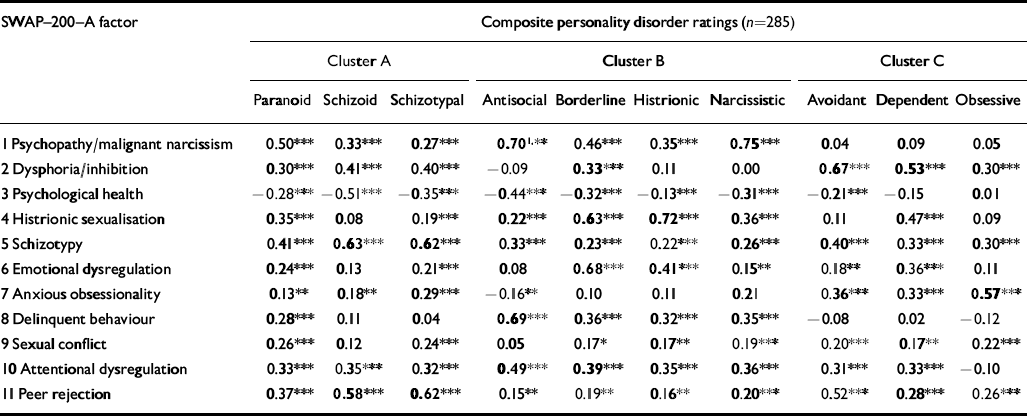
The factors that emerged are clinically and theoretically coherent, and most resemble factors that emerged from factor analysis of the SWAP-200 Q-sort for adults (Reference Shedler and WestenShedler & Westen, 2004). To assess the validity of these factors (their association with external criteria), we first examined their relation to dimensional personality disorder diagnoses. As can be seen from Table 2, the SWAP-200-A factors tended to be associated with theoretically relevant variables in predictable ways (predicted correlations are in bold). For example, schizotypy and peer rejection were both strongly associated with personality disorders involving social isolation and peculiarity. The emotionally dysregulated and histrionic sexualisation factors were both associated with borderline, histrionic and dependent personality disorders - three disorders that tend to demonstrate significant diagnostic overlap in adult samples. Also of note is that the psychological health factor was negatively associated with most of the personality disorders.
Correlations between factor scores and composite personality disorder ratings
| SWAP–200–A factor | Composite personality disorder ratings (n=285) | |||||||||
|---|---|---|---|---|---|---|---|---|---|---|
| Cluster A | Cluster B | Cluster C | ||||||||
| Paranoid | Schizoid | Schizotypal | Antisocial | Borderline | Histrionic | Narcissistic | Avoidant | Dependent | Obsessive | |
| 1 Psychopathy/malignant narcissism | 0.50*** | 0.33*** | 0.27*** | 0.70 1,** | 0.46*** | 0.35*** | 0.75 *** | 0.04 | 0.09 | 0.05 |
| 2 Dysphoria/inhibition | 0.30*** | 0.41*** | 0.40*** | -0.09 | 0.33 *** | 0.11 | 0.00 | 0.67 *** | 0.53 *** | 0.30*** |
| 3 Psychological health | -0.28*** | -0.51*** | -0.35*** | -0.44*** | -0.32*** | -0.13*** | -0.31*** | -0.21*** | -0.15 | 0.01 |
| 4 Histrionic sexualisation | 0.35*** | 0.08 | 0.19*** | 0.22*** | 0.63 *** | 0.72 *** | 0.36*** | 0.11 | 0.47*** | 0.09 |
| 5 Schizotypy | 0.41*** | 0.63 *** | 0.62 *** | 0.33*** | 0.23*** | 0.22*** | 0.26*** | 0.40*** | 0.33*** | 0.30*** |
| 6 Emotional dysregulation | 0.24*** | 0.13 | 0.21*** | 0.08 | 0.68 *** | 0.41 *** | 0.15** | 0.18** | 0.36*** | 0.11 |
| 7 Anxious obsessionality | 0.13** | 0.18** | 0.29*** | -0.16** | 0.10 | 0.11 | 0.21 | 0.36*** | 0.33*** | 0.57 *** |
| 8 Delinquent behaviour | 0.28*** | 0.11 | 0.04 | 0.69 *** | 0.36*** | 0.32*** | 0.35*** | -0.08 | 0.02 | -0.12 |
| 9 Sexual conflict | 0.26*** | 0.12 | 0.24*** | 0.05 | 0.17* | 0.17** | 0.19*** | 0.20*** | 0.17** | 0.22*** |
| 10 Attentional dysregulation | 0.33*** | 0.35*** | 0.32*** | 0.49 *** | 0.39 *** | 0.35*** | 0.36*** | 0.31*** | 0.33*** | -0.10 |
| 11 Peer rejection | 0.37*** | 0.58 *** | 0.62 *** | 0.15** | 0.19** | 0.16** | 0.20*** | 0.52*** | 0.28*** | 0.26*** |
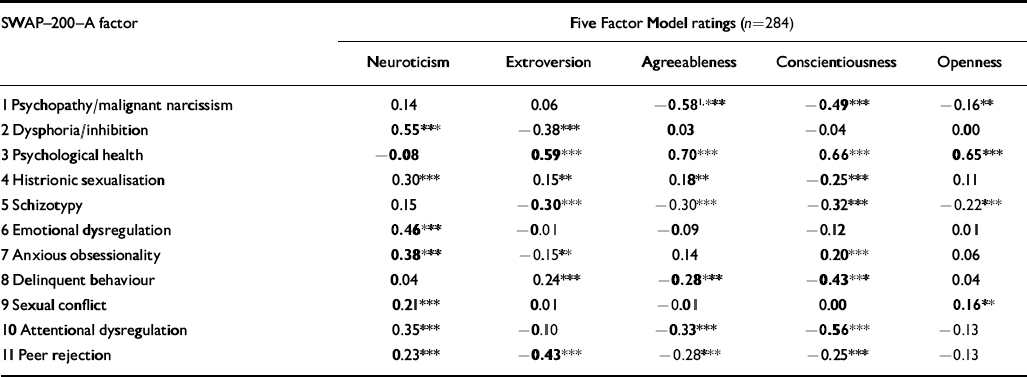
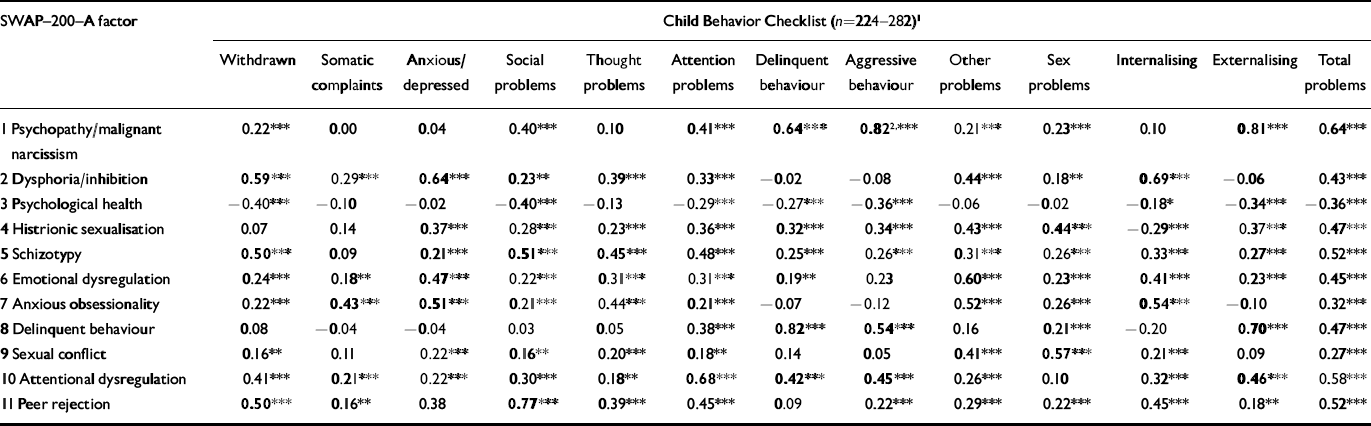
Our next set of analyses examined the association between the SWAP-200-A factors and the FFM checklist (Table 3) and the CBCL (Table 4). As predicted, SWAP-200-A factors involving negative emotions (notably dysphoria/inhibition, anxious obsessionality and emotional dysregulation) were strongly associated with neuroticism, whereas factors involving externalising pathology (particularly malignant narcissism) tended to correlate negatively with agreeableness and conscientiousness. Of note was the negative correlation between schizotypy and openness to experience, which makes theoretical sense in light of the concreteness and affective detachment of patients rated high on this factor, but does not accord with predictions of FFM researchers who have tried to account for schizotypal thinking as extreme openness to experience (e.g. Reference Widiger, Costa, McCrae, Costa and WidigerWidiger et al, 2002). With respect to CBCL variables, SWAP-200-A factors with item content suggesting negative emotionality were most highly associated with the internalising score and related sub-scales, whereas factors suggesting externalising pathology correlated most highly with the externalising scale and its component scales.
Correlations between factor scores and Five Factor Model Checklist ratings*
| SWAP–200–A factor | Five Factor Model ratings (n=284) | ||||
|---|---|---|---|---|---|
| Neuroticism | Extroversion | Agreeableness | Conscientiousness | Openness | |
| 1 Psychopathy/malignant narcissism | 0.14 | 0.06 | -0.58 1,*** | -0.49 *** | -0.16** |
| 2 Dysphoria/inhibition | 0.55 *** | -0.38*** | 0.03 | -0.04 | 0.00 |
| 3 Psychological health | -0.08 | 0.59 *** | 0.70 *** | 0.66 *** | 0.65 *** |
| 4 Histrionic sexualisation | 0.30*** | 0.15** | 0.18** | -0.25*** | 0.11 |
| 5 Schizotypy | 0.15 | -0.30 *** | -0.30*** | -0.32*** | -0.22*** |
| 6 Emotional dysregulation | 0.46 *** | -0.01 | -0.09 | -0.12 | 0.01 |
| 7 Anxious obsessionality | 0.38 *** | -0.15** | 0.14 | 0.20*** | 0.06 |
| 8 Delinquent behaviour | 0.04 | 0.24*** | -0.28 *** | -0.43 *** | 0.04 |
| 9 Sexual conflict | 0.21*** | 0.01 | -0.01 | 0.00 | 0.16 ** |
| 10 Attentional dysregulation | 0.35*** | -0.10 | -0.33*** | -0.56 *** | -0.13 |
| 11 Peer rejection | 0.23*** | -0.43 *** | -0.28*** | -0.25*** | -0.13 |
Correlations between factor scores and Child Behavior Checklist variables
| SWAP–200–A factor | Child Behavior Checklist (n=224–282)1 | ||||||||||||
|---|---|---|---|---|---|---|---|---|---|---|---|---|---|
| Withdrawn | Somatic complaints | Anxious/depressed | Social problems | Thought problems | Attention problems | Delinquent behaviour | Aggressive behaviour | Other problems | Sex problems | Internalising | Externalising | Total problems | |
| 1 Psychopathy/malignant narcissism | 0.22*** | 0.00 | 0.04 | 0.40*** | 0.10 | 0.41*** | 0.64 *** | 0.82 2,*** | 0.21*** | 0.23*** | 0.10 | 0.81 *** | 0.64*** |
| 2 Dysphoria/inhibition | 0.59 *** | 0.29*** | 0.64 *** | 0.23** | 0.39*** | 0.33*** | -0.02 | -0.08 | 0.44*** | 0.18** | 0.69 *** | -0.06 | 0.43*** |
| 3 Psychological health | -0.40*** | -0.10 | -0.02 | -0.40*** | -0.13 | -0.29*** | -0.27*** | -0.36*** | -0.06 | -0.02 | -0.18* | -0.34*** | -0.36*** |
| 4 Histrionic sexualisation | 0.07 | 0.14 | 0.37*** | 0.28*** | 0.23*** | 0.36*** | 0.32*** | 0.34*** | 0.43*** | 0.44 *** | -0.29*** | 0.37*** | 0.47*** |
| 5 Schizotypy | 0.50 *** | 0.09 | 0.21*** | 0.51 *** | 0.45 *** | 0.48*** | 0.25*** | 0.26*** | 0.31*** | 0.26*** | 0.33*** | 0.27*** | 0.52*** |
| 6 Emotional dysregulation | 0.24*** | 0.18** | 0.47 *** | 0.22*** | 0.31*** | 0.31*** | 0.19** | 0.23 | 0.60*** | 0.23*** | 0.41 *** | 0.23*** | 0.45*** |
| 7 Anxious obsessionality | 0.22*** | 0.43 *** | 0.51 *** | 0.21*** | 0.44*** | 0.21*** | -0.07 | -0.12 | 0.52*** | 0.26*** | 0.54 *** | -0.10 | 0.32*** |
| 8 Delinquent behaviour | 0.08 | -0.04 | -0.04 | 0.03 | 0.05 | 0.38*** | 0.82 *** | 0.54 *** | 0.16 | 0.21*** | -0.20 | 0.70 *** | 0.47*** |
| 9 Sexual conflict | 0.16** | 0.11 | 0.22*** | 0.16** | 0.20*** | 0.18** | 0.14 | 0.05 | 0.41*** | 0.57 *** | 0.21*** | 0.09 | 0.27*** |
| 10 Attentional dysregulation | 0.41*** | 0.21*** | 0.22*** | 0.30*** | 0.18** | 0.68 *** | 0.42 *** | 0.45 *** | 0.26*** | 0.10 | 0.32*** | 0.46 *** | 0.58*** |
| 11 Peer rejection | 0.50 *** | 0.16** | 0.38 | 0.77 *** | 0.39*** | 0.45*** | 0.09 | 0.22*** | 0.29*** | 0.22*** | 0.45*** | 0.18** | 0.52*** |
Finally, we examined the relationship between the SWAP-200-A factors and adaptive functioning variables (Table 5). The data provided additional preliminary support for validity. For example, psychopathy/malignant narcissism correlated with all six variables in the expected directions and also predicted history of trouble with the law. Although most of the SWAP-200-A factors predicted poor peer relationships, the correlations were particularly large for schizotypy and peer rejection. The psychological health factor also performed as expected. Of particular interest is the strong pattern of associations between SWAP-200-A factors and variables such as history of suicide attempts, arrests and psychiatric hospitalisation, which are relatively objective and require minimal clinical inference (and hence are not readily attributable to clinician biases).
Correlations between factor scores and adaptive functioning variables*
| SWAP–200–A factor | Adaptive functioning variables (n=242–283)1 | |||||
|---|---|---|---|---|---|---|
| School functioning | Quality of peer relationships | Number of close relationships | Past psychiatric hospitalisations | Suicide history | Arrest history | |
| 1 Psychopathy/malignant narcissism | -0.42 2,*** | -0.35 *** | -0.22*** | 0.20** | 0.19*** | 0.25 *** |
| 2 Dysphoria/inhibition | -0.07 | -0.27*** | -0.14 | 0.19 ** | 0.20 *** | -0.03 |
| 3 Psychological health | 0.51 *** | 0.64 *** | 0.42 *** | -0.34*** | -0.17 ** | -0.17** |
| 4 Histrionic sexualisation | -0.06 | -0.20*** | 0.02 | 0.18** | 0.30 *** | 0.00 |
| 5 Schizotypy | -0.24*** | -0.44 *** | -0.32*** | 0.14 | 0.04 | 0.10 |
| 6 Emotional dysregulation | -0.06 | -0.15 | -0.06 | 0.36 *** | 0.42 *** | -0.06 |
| 7 Anxious obsessionality | 0.15 | -0.11 | -0.07 | 0.06 | 0.03 | -0.09 |
| 8 Delinquent behaviour | -0.40*** | -0.04 | -0.06 | 0.14 | 0.14 | 0.48 *** |
| 9 Sexual conflict | 0.01 | -0.10 | -0.01 | 0.06 | 0.10 | 0.03 |
| 10 Attentional dysregulation | -0.55 *** | -0.32*** | -0.12 | 0.17** | 0.13 | 0.19** |
| 11 Peer rejection | -0.22*** | -0.72 *** | -0.32 *** | 0.15 | 0.09 | 0.03 |
DISCUSSION
The SWAP-200-A shows promise as an instrument for assessing personality pathology in adolescents. Its factors are theoretically and clinically coherent, internally consistent, and show convergent and discriminant validity in predicting a range of variables including Axis II diagnosis, FFM scores, CBCL scores and measures of adaptive functioning.
Several aspects of the factor solution are interesting from a conceptual and clinical point of view. The factor structure of the adolescent instrument strongly resembles the factor structure obtained using the adult version of the instrument (Reference Shedler and WestenShedler & Westen, 2004), with a few important exceptions. Whereas the adult instrument yields separate factors for narcissism, psychopathy and hostility, the SWAP-200-A yields a large first factor that blends these constructs, and includes a separate factor that assesses delinquent behaviour. These differences may reflect developmental differences in the expression of the underlying traits, or they may reflect instability of the factor solution reflecting sample size. A distinction between a core psychopathy factor and a delinquent behaviour factor, however, mirrors results of factor analysis of the Psychopathy Checklist - Revised, which similarly distinguishes a callous, hostile, externalising personality style from a tendency to become involved in criminal activity (Reference Hare, Millon and SimonsenHare, 1998). Other differences between the adult and adolescent factor structures seem to reflect developmental differences. For example, where the adult instrument yields a schizoid factor and a thought disorder (schizotypy) factor, the adolescent version yields a single schizotypy factor and a separate peer rejection factor. Further, although both versions of the instrument produced a sexual conflict factor, in adolescents the items focus primarily on conflicts regarding sexual orientation, probably reflecting the salience of this issue in adolescents struggling with homosexual feelings, and the lack of knowledge both teenagers and their clinicians are likely to have about other kinds of sexual conflict that might not become expressed until adulthood.
Also notable is the distinction between dysphoria/inhibition (the factor most closely related to negative affectivity or neuroticism), anxious obsessionality and emotional dysregulation, three variables that were only moderately intercorrelated. The distinction between negative affectivity on the one hand and emotional dysregulation on the other has emerged recently in other samples using both factor and Q-factor analysis with a variety of instruments (e.g. Reference Livesley, Jang and VernonLivesley et al, 1998; Reference Westen and ShedlerWesten & Shedler, 1999b ; Reference Westen, Shedler and DurrettWesten et al, 2003). Whereas most factor-analytically derived models of personality and mood distinguish positive and negative affectivity - or (in the FFM) their close cousins, extroversion and neuroticism - the emergence of an independent emotional dysregulation factor in clinical samples with instruments intended for clinical use may be significant, drawing attention to the distinction between stably anxious or dysphoric personality traits and a distinct form of affectivity in which emotions spiral out of control. Emotional dysregulation appears to be associated with history of traumatic experiences such as sexual abuse and early parental separations (e.g. Reference Nakash-Eisikovits, Dutra and WestenNakash-Eisikovits et al, 2003) and may be related to dysregulation of corticotrophin releasing factor, which has been linked both to childhood trauma and to later vulnerability to syndromes such as major depression and panic disorder (Reference Heim and NemeroffHeim & Nemeroff, 2001).
Differences between the factor solution obtained here and the personality prototypes obtained from the same sample using Q-factor analysis are also instructive. It is noteworthy that the first six factors resemble six of the seven obtained Q factors, which means that two very different ways of analysing the data - one identifying types (prototypes) and the other traits - yielded similar dimensions. However, the remaining scales identify traits or psychological functions that represent important aspects of personality pathology in adolescents but do not define a broader personality style: anxious obsessionality, delinquent behaviour, sexual conflict, attentional dysregulation and peer rejection.
Potential objections and limitations
This study has three primary limitations. The first is its exclusive reliance on a single informant (the treating clinician), which creates the possibility (like most studies of psychopathology, which rely exclusively on patient reports) of observer bias. Future research should attempt to replicate these findings using interview, informant and laboratory data as external criteria. Nevertheless, several factors limit this concern. First, SWAP-200 personality descriptions and ratings of adaptive functioning show high interrater reliability and validity and strongly predict relevant criterion variables as assessed by independent informants (Reference Westen and MuderrisogluWesten & Muderrisoglu, 2003; Reference Westen and WeinbergerWesten & Weinberger, 2004). Second, clinicians varied in their training (psychiatrists and psychologists) and theoretical orientations, and were unfamiliar with the factor structure of the instrument, minimising the likelihood of systematic sources of error stemming from rater biases. Finally, whereas factor analysis of the DSM-IV Axis II checklist in this sample produced a factor structure that strongly resembled the DSM-IV classification (Reference Durrett and WestenDurrett & Westen, 2005), factor analysis of the items of the SWAP-200-A, which include items assessing all of the Axis II criteria, did not. Thus, it is difficult to see how clinician biases could both lead to convergence with and divergence from the DSM-IV description of personality pathology in an adolescent sample.
A second potential objection is sample size. Clearly, the next step in this research requires a substantially larger sample, and such a study is now nearing completion (projected n=1000). Nevertheless, recent thinking about factor analysis, based on data from Monte Carlo simulations and other studies, suggests that factor solutions stabilise with far fewer cases than previously believed (often by 100 cases) as long as the factors are well marked by a sufficient number of items with loadings above 0.40 or 0.50, as they were here (see Reference Fabregar, Wegener and MacCallumFabregar et al, 1999; Reference RussellRussell, 2002).
A final potential objection regards the question of the durability of personality pathology in adolescents and the appropriateness of diagnosing personality pathology at all in teenagers, an issue we have addressed elsewhere in detail (Reference Westen and ChangWesten & Chang, 2000). The data presented here are cross-sectional, and future research should employ longitudinal designs. Nevertheless, recent research using different designs and measures suggests not only that personality can be assessed reliably in adolescents but that recognisable forms of personality pathology can be measured in adolescents and predict substantial variance in a range of outcomes, including outcomes measured longitudinally, above and beyond Axis I diagnosis (Reference Ludolph, Westen and MisleLudolph et al, 1990; Reference Johnson, Cohen and BrownJohnson et al, 1999; Reference Westen, Shedler and DurrettWesten et al, 2003).
Implications
We note here two implications. First, research on adolescent psychopathology has often ignored personality variables because of the lack of appropriate constructs and measures. Availability of reliable and valid measures of adolescent personality pathology may prove useful in distinguishing clinical phenomena that may be quite distinct, such as different types of adolescents who share an Axis I mood disorder diagnosis.
Second, the data raise questions about whether we do better to characterise adolescent personality pathology in terms of the kinds of broad constellations connoted by the term ‘personality disorder’ or whether we might do better to focus on more specific traits that combine in various ways to form some of those constellations. Although we are far from a definitive answer to foundational questions such as these (with respect to either child and adolescent or adult psychopathology), one potential solution might be to combine both forms of classification. For example, an adolescent personality axis could include both a set of personality prototypes describing personality constellations as well as a small set of non-redundant traits such as attentional dysregulation or sexual conflict. From a clinical standpoint, aside from these descriptive (typological and trait approaches), another approach to diagnosis - explicit in the construction of the SWAP-200-A item set (which describes not only behaviours but also internal processes) - is functional assessment. A functional assessment focuses on understanding what is going right, what is going wrong and under what conditions certain pathological processes manifest for a given patient (i.e. the conditions under which certain functions go awry or break down). One way to reduce the gulf between clinicians and researchers is to decrease the gap between descriptive nosological constructs, which tend to be the focus of research, and functional constructs, which are essential to everyday clinical practice.
Clinical Implications and Limitations
CLINICAL IMPLICATIONS
-
▪ Personality pathology can be assessed in adolescents using the Shedler-Westen Assessment Procedure for Adolescents, which shows promise as a clinically and empirically useful instrument for assessing and taxonomising adolescent personality pathology.
-
▪ Negative affectivity (e.g. anxiety and depression) appears to be distinct from emotional dysregulation (the tendency for emotions to spiral out of control and motivate desperate measures to regulate it) as a personality trait, and the two constructs are likely to have different aetiologies and implications for treatment.
-
▪ A clinically useful, comprehensive personality axis for adolescents may need to incorporate both a set of personality prototypes or constellations similar to those described in DSM-IV, as well as a small set of traits such as delinquent behaviour, attentional dysregulation and sexual conflict, which do not describe personality styles but do represent enduring problems of adolescence.
LIMITATIONS
-
▪ Reliance on data from a single informant requires replication using criterion data from other sources.
-
▪ Factor analysis with a large item set requires replication with a larger sample.
-
▪ Identification of personality constellations or traits in adolescents requires longitudinal research to study their course, change and development.
Acknowledgements
Preparation of this paper was supported in part by National Institute of. Mental Health grants MH59685 and MH60892. The authors gratefully acknowledge. the assistance of more than 300 clinicians who helped us refine the SWAP-200-A. assessment instrument, including the 294 who participated in this study.




eLetters
No eLetters have been published for this article.