


The National Institute of Mental Health (NIMH) launched the Research Domain Criteria (RDoC) to advance new approaches to psychopathology in which primary, core dimensions linking mental health disorders come to serve as the basis for categorizing individuals for research purposes. This effort is in response to the disappointing findings of research studies using psychiatric phenotypes (e.g., schizophrenia and major depression) to elucidate etiological mechanisms. In its current conception, the RDoC matrix encompasses a number of domains, including the negative valence systems (NVS), which focuses on biological and psychological systems involved in the response to loss or aversive, threatening, or harmful stimuli. Within each domain, potential constructs are studied across multiple levels of analysis (e.g., neural circuits, behavior, and genes; Insel et al., Reference Insel, Cuthbert, Garvey, Heinssen, Pine, Quinn and Wang2010). The NVS currently includes the following constructs: acute threat (fear), potential threat (anxiety), sustained threat, loss, and frustrative non-reward (NIMH, 2017). The present study was sponsored through the RDoC initiative and primarily seeks to provide an estimate of genetic and environmental contributions to NVS constructs spanning multiple units of analysis and to determine shared genetic and environmental influences among NVS constructs and between them and internalizing disorders/symptoms. Evidence of shared genetic and environmental contributions to NVS constructs and psychiatric syndromes may implicate these constructs in the etiology of internalizing disorders.
The notion of examining intermediate processes derives from other areas of science where intermediate phenotypes, called endophenotypes, may clarify the etiology of otherwise complex syndromes (Gottesman & Gould, Reference Gottesman and Gould2003). Gottesman and Gould (Reference Gottesman and Gould2003) outlined four criteria to identify an endophenotype, such that endophenotypes must: (1) be correlated with a medical or psychological condition in the population, (2) be heritable, (3) be state-independent (i.e., independent of active psychiatric episode), and (4) co-segregate with the condition within a family. Cannon and Keller (Reference Cannon and Keller2006) proposed additional qualifying criteria, such that: (1) endophenotypes must be related to causes instead of effects of disorders, (2) several endophenotypes should influence one complex disorder, (3) endophenotypes should be measured as continuous variables and at different levels of analysis, and (4) endophenotypes should be found in genetically related disorders. In summary, understanding which endophenotypes are associated with which psychiatric syndromes may provide a more useful model for the etiology of extant clinical diagnoses and help identify better prevention and intervention targets.
For the purposes of biometrical twin modeling, an unselected sample was recruited to represent an epidemiological distribution, which is needed to examine NVS constructs that are theorized to manifest in typically developing individuals. A general population sample (as opposed to a selected sample) is necessary for genetic and environmental estimates to be unbiased and maximally informative for the etiology of NVS phenotypes. Given the high prevalence rate of internalizing symptoms and conditions by late adolescence and young adulthood (Kessler et al., Reference Kessler, Berglund, Demler, Jin, Merikangas and Walters2005; Kessler et al., Reference Kessler, Avenevoli, McLaughlin, Green, Lakoma, Petukhova and Merikangas2012; Merikangas et al., Reference Merikangas, He, Burstein, Swanson, Avenevoli, Cui and Swendsen2010), a representative adolescent and young adult sample was expected to produce adequate numbers of individuals expressing internalizing disorder symptomatology and those at risk for developing internalizing disorders.
The behavioral genetic methods of this study allowed for an examination of genetic and environmental influences on each potential endophenotype, as well as the association of NVS-related constructs with existing clinical disorders/symptoms and risk factors. Similarly, the current study was positioned to examine the underlying structure of NVS constructs based on the correlation of observed phenotypes and the correlation between genetic and environmental influences. Thus, the current study can demonstrate heritability, examine the co-segregation of potential endophenotypes with psychiatric syndromes in families, and clarify the source of familial co-segregation. Additionally, the longitudinal design of this study will permit the examination of change in endophenotype manifestation and clinical diagnoses over a portion of adolescence and young adulthood (Khoo et al., Reference Khoo, West, Wu, Kwok, Eid and Diener2006), which may shed light on an endophenotype's ability to predict risk for and expression of internalizing disorders and internalizing symptoms.
The specific aims of this study included: (1) to examine the factorial architecture and underlying latent structure (at the phenotypic level) of the suite of NVS probes and dimensional measures collected at an initial assessment (i.e., time 1; T1), (2) to determine the contributions of genetic and environmental factors to the covariance among endophenotypic measures at T1 and between endophenotypic measures and current internalizing disorder symptom expression at T1, (3) to determine the contribution of genetic and environmental factors to the covariance between endophenotypic measures at T1 and internalizing disorder symptom expression at a follow-up assessment (i.e., time 2; T2), and (4) to determine the stability of NVS endophenotypes from T1 to T2.
Material and Methods
Participants
Participants for the current study were pairs of Caucasian (including Hispanic) and African-American twins (monozygotic, dizygotic same-sex, and dizygotic opposite-sex) between the ages of 15 and 20 (M = 17.25 years, SD = 1.3) residing in the mid-Atlantic region of the United States (see Table 1). The majority of the current sample (97.7%) were recruited from the Mid-Atlantic Twin Registry (MATR), a database of twins and families who have previously expressed interest in participating in research studies (Lilley & Silberg, Reference Lilley and Silberg2013). MATR staff informed twins of the appropriate age of the current study and provided contact information of those who expressed interest and met inclusion criteria. The study coordinator then contacted participants to describe the study in more detail and schedule an appointment. A subset of the current sample (2.3%) was recruited directly by study staff through advertisements (e.g., radio and newspaper) in the Richmond, Virginia area. Twins or parents of twins who were interested in the advertisements contacted the study coordinator directly. The study coordinator screened twins and scheduled an appointment if twins were eligible.
Sample Characteristics (430 Families; 860 Twin Adolescents/Young Adults)

The sample size of T1 (N = 430 twin pairs) achieved over 80% power to detect statistical significance of additive genetic effects that explain at least 40% of the variance for the proposed quantitative (endo)phenotypes (Verhulst, Reference Verhulst2016).
Inclusion criteria included: (a) being an identical or fraternal twin, (b) being between the ages of 15 and 20, and (c) living primarily at home. Exclusion criteria were: (a) current use of psychotropic medications (e.g., antidepressants) or medications with psychotropic effects (e.g., beta-adrenergic blockers), (b) diagnosis of an autism spectrum disorder, (c) diagnosis of an intellectual disability, (d) diagnosis of a spatial learning disorder, or prior testing indicating an IQ below 70, (e) seizure without a clear and resolved etiology, (f) current or past episodes of psychosis, (g) serious, not stabilized illness (e.g., liver, kidney, gastrointestinal, respiratory, cardiovascular, endocrinologic, neurologic, immunologic, or blood disease), (h) inadequate production of human growth hormone, (i) sensory integration disorder, (j) congenital adrenal hyperplasia, (k) adrenal inefficiency, (l) deaf with bicochlear implants, (m) cancer (current or past diagnosis), and (n) pregnancy (current or lifetime). A family was excluded if either twin met any exclusionary criteria. Exclusionary criteria were established to reduce interference with physiological data (e.g., psychotropic medications) or participants’ ability to complete laboratory tasks.
Measures
Zygosity
Zygosity status (i.e., monozygotic or dizygotic) for each twin pair was assessed based on parent reports about physical similarities between twins. When twin participants were over 18 and attended without a parent or legal guardian, twin participants completed the zygosity assessment. Prior research has demonstrated high validity for this zygosity assessment as compared to blood (Kasriel & Eaves, Reference Kasriel and Eaves1976) and DNA evaluations of zygosity (Jackson et al., Reference Jackson, Snieder, Davis and Treiber2001). In the present study, zygosity estimated from parent- and twin-reported physical similarity showed high concordance with zygosity estimated from assay of single nucleotide polymorphisms (SNPs) on a subset of the sample (N = 82 twin pairs, κ = 0.95, 95% CI [0.88, 1.0]).
DNA samples
Genetic material (i.e., blood) was collected at T1 and will be collected at T2 to leverage genetic candidates identified by large-sample gene discovery efforts (e.g., Otowa et al., Reference Otowa, Hek, Lee, Byrne, Mirza, Nivard and Hettema2016; Power et al., Reference Power, Tansey, Buttenschøn, Cohen-Woods, Bigdeli, Hall and Lewis2017). Specifically, future research will follow a deep phenotyping approach (e.g., Stepniak et al., Reference Stepniak, Papiol, Hammer, Ramin, Everts, Hennig and Ehrenreich2014) to examine whether putative genetic correlates of internalizing psychopathology are associated with psychobiological processes assessed here (e.g., Carney et al., Reference Carney, Moroney, Machlin, Hahn, Savage, Lee and Roberson-Nay2016, Goodbourn et al., Reference Goodbourn, Bosten, Bargary, Hogg, Lawrance‐Owen and Mollon2014).
Saliva samples
Markers of neuroendocrine function were assayed from saliva collected both at a resting baseline and before and after the Trier Social Stress Test and the 7.5% carbon dioxide (CO2) challenge (see ‘Laboratory tasks’ section below). Salivary cortisol (CORT) indexed neuroendocrine function of the hypothalamic-pituitary-adrenal axis (HPA-axis), while salivary alpha amylase (sAA) indexed function of the sympathetic-adrenal-medullary system (SAM).
Laboratory tasks
Several laboratory tasks, described below, were used to probe NVS-related constructs of interest. See Tables 2–4 for more detail.
NVS Threat Constructs, Phenotypes, Units of Analysis, and Self-Report Measures
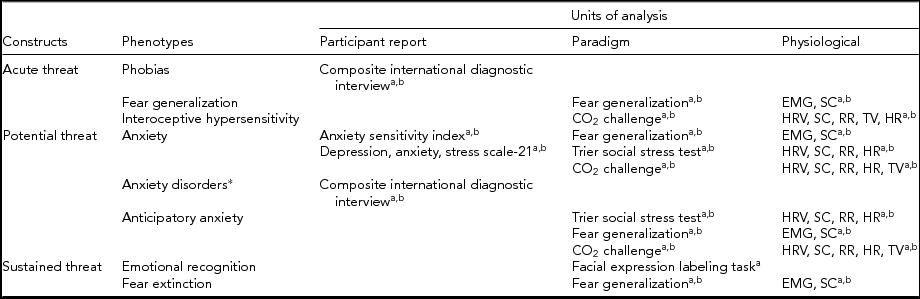
Note: aIncluded in wave 1; bIncluded in wave 2. HRV = heart rate variability; SC = skin conductance; RR = respiration rate; EMG = eye-blink electromyographic response; TV = tidal respiratory volume; HR = heart rate.
*Not formally included in RDoC matrix.
NVS Loss/Frustrative Constructs, Phenotypes, Units of Analysis, and Measures
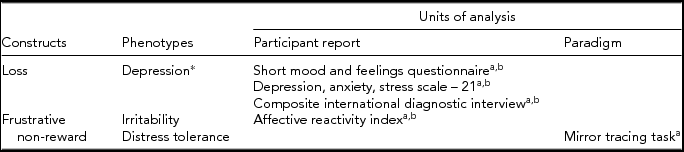
Note: aIncluded in wave 1; bIncluded in wave 2.
*Not formally included in RDoC matrix.
NVS Environmental Risk Factors, Personality Constructs, Alcohol and Substance Use, Phenotypes, Units of Analysis, and Measures
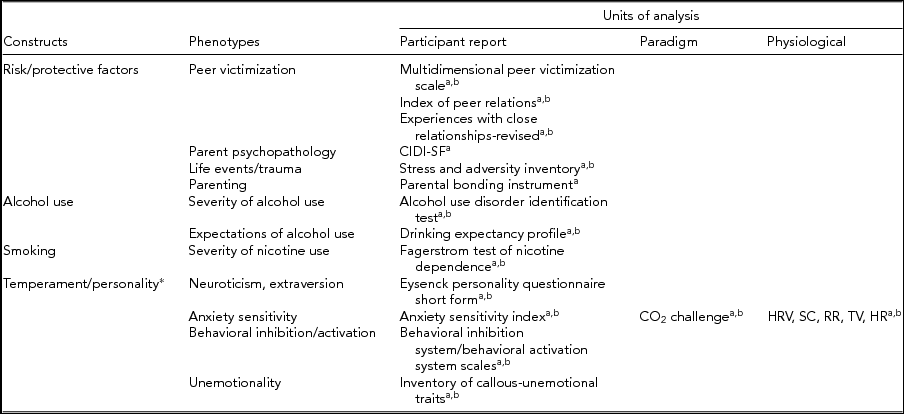
Note: aIncluded in wave 1; bIncluded in wave 2. HRV = heart rate variability; SC = skin conductance; RR = respiration rate; TV = tidal respiratory volume; CIDI-SF= composite international diagnostic interview-short form.
*Not formally included in RDoC matrix.
Trier Social Stress Test (TSST). The TSST is a widely used task used to study stress responsivity following a laboratory-induced stressor (Kirschbaum et al., Reference Kirschbaum, Pirke and Hellhammer1993). Participants were told that they would give a short speech and perform mental arithmetic in front of an audience of three people while being video-taped for a psychologist to later assess. The TSST involves four phases: a 5-min anticipatory stress phase, a 5-min speech phase, a 5-min serial subtraction phase, and a 5-min recovery phase. After 5 min of solitary preparation by the participant, three confederates unknown to the participant entered the room. The confederates maintained a neutral expression throughout the task and provided no feedback (verbal or non-verbal). After the 5-min speech portion, participants were instructed to subtract 13 successively from 1,022. When participants made an error, they were asked to restart at 1,022. After the arithmetic portion ended, the confederates exited the room. The participant remained in the room for 5 min of recovery. Participant stress response during and following the task was assessed by neuroendocrine response (i.e., SAM and HPA axis activity), participant-reported subjective distress (measured by the Subjective Units of Distress Scale [SUDS]; Wolpe, Reference Wolpe1969), and psychophysiological response (i.e., respiratory rate [RR], heart rate [HR], heart rate variability [HRV], and skin conductance [SC]). To our knowledge, there has not been any published evidence of test–retest reliability for the TSST.
Fear generalization (FG). Previous studies have demonstrated that fear conditioning and generalization of conditioned fear play a role in the formation and maintenance of anxiety disorders (Lissek et al., Reference Lissek, Powers, McClure, Phelps, Woldehawariat, Grillon and Pine2005; Reference Lissek, Biggs, Rabin, Cornwell, Alvarez, Pine and Grillon2008; Mineka & Zinbarg, Reference Mineka and Zinbarg2006). Hence, the present study used a fear generalization (FG) paradigm, a classical conditioning task with a generalization phase instead of an extinction phase, to examine fear responding. The FG paradigm consisted of three phases – habituation, acquisition, and generalization, occurring in the same order for all participants. The aversive/unconditioned stimulus (US; i.e., a stimulus that elicits an automatic, unlearned response) in this task was a 100-ms electric shock, administered to the left wrist. It was paired with neutral stimuli (i.e., stimuli that do not naturally elicit a target response) until it becomes the conditioned stimulus (CS) and can elicit the target response without the presence of the US. A computer monitor presented the visual conditioned stimuli with the CS+/– randomized to be either a large or small circle. During habituation, participants wore a headset and repeatedly heard a sudden white noise (i.e., startle probe). For acquisition, the CS+ was paired with a shock and the CS– was not. During the acquisition phase, 75% of the CS+ were paired with the shock. The objective of acquisition was for the participant to learn to associate either the little circle or big circle with the shock. For generalization, eight circles (generalization stimuli; GS) of intermediate size rings representing a ‘continuum-of-size’ between the CS+ and CS– were added. During the generalization phase, participants were randomly presented with the CS+/– and six trials from each of the eight GS sizes; 50% of the CS+ presentations were paired with a shock to prevent extinction (Lissek et al., Reference Lissek, Biggs, Rabin, Cornwell, Alvarez, Pine and Grillon2008). Startle probes accompanied 50% of acquisition and generalization trials (even), and in the other 50% of trials (odd), participants rated perceived likelihood of shock (i.e., level of risk). The primary psychophysiological outcome measure was fear-potentiated startle magnitude (FPS; relative increase in the amplitude of the acoustic startle response measured by electromyography [EMG]). Additional responses to the task were assessed via subjective distress (Wolpe, Reference Wolpe1969) and SC. To our knowledge, there has not been any published evidence of test–retest reliability for the FG task.
7.5% carbon dioxide (CO2) challenge. Variations of the CO2 challenge have been used to assess risk factors for panic disorder (e.g., Papp et al., Reference Papp, Klein, Martinez, Schneier, Cole, Liebowitz and Gorman1993; Pine et al., Reference Pine, Klein, Roberson-Nay, Mannuzza, Moulton, Woldehawariat and Guardino2005). Breathing air with elevated levels of CO2 is known to produce distress as assessed physiologically (Papp et al., Reference Papp, Klein, Martinez, Schneier, Cole, Liebowitz and Gorman1993) and psychologically (Roberson-Nay et al., Reference Roberson-Nay, Klein, Klein, Mannuzza, Moulton, Guardino and Pine2010) among adults (Roberson-Nay et al., Reference Roberson‐Nay, Moruzzi, Ogliari, Pezzica, Tambs, Kendler and Battaglia2013) and children (Pine et al., Reference Pine, Klein, Roberson-Nay, Mannuzza, Moulton, Woldehawariat and Guardino2005). Participants wore a face mask for the 20-min duration of this task and were informed that they would breathe both ambient room air as well as air with an elevated level of CO2. The facemask was connected to a stopcock valve that allowed the experimenter to manually switch from ambient room air to the CO2 air mixture. Participants breathed ambient room air for 5 min (pre-CO2), followed by 8 min of air enriched to 7.5% CO2, and then a 5-min recovery period (ambient room air). Participants were not told when the CO2 air mixture was turned on or off, thus remaining unaware of the onset and discontinuation of the CO2 air mixture. Anxious arousal during the task was assessed as neuroendocrine response (i.e., SAM and HPA activity), psychophysiological response (i.e., RR, tidal respiratory volume [TV], HR, HRV, and SC), and behavioral response (i.e., whether and when participants prematurely ended the task). Psychological response was assessed as subjective distress (Wolpe, Reference Wolpe1969) and panic symptom severity, as measured by the Diagnostic Symptoms Questionnaire (Sanderson et al., Reference Sanderson, Rapee and Barlow1989). Test–retest reliability of this CO2 challenge task has been previously documented in a young adult sample (Roberson-Nay et al., Reference Roberson-Nay, Gorlin, Beadel, Cash, Vrana and Teachman2017).
Mirror tracing task. Distress tolerance has been frequently associated with internalizing psychopathology risk (Leyro et al., Reference Leyro, Zvolensky and Bernstein2010). In the present study, distress tolerance was assessed using the mirror tracing task (Strong et al., Reference Strong, Lejuez, Daughters, Marinello, Kahler and Brown2003). Participants were told to trace the outline of three shapes on the computer screen. They were also told that they could earn more money if they completed the task. To create psychological distress, the actions of the computer mouse and cursor were reversed. When the participant moved the mouse too slowly or moved off the line, a buzz sounded to signal them to restart at the beginning of the shape. Participants first practiced the mechanics of the task on two simple lines. During the trial stage, participants traced the outline of a star. The software was programmed so that the buzzer would sound randomly to prevent participants from completing the star shape. Distress tolerance was assessed behaviorally as the amount of time that a participant persisted on the trial stage. Additionally, subjective distress was assessed by participant self-report to ensure that persistence on the task was not conflated with distress due to the task. To our knowledge, there has not been any published evidence of test–retest reliability for the mirror tracing task.
Facial expression labeling task (FELT). Deficits in facial emotion recognition have been associated with a variety of internalizing psychiatric syndromes (e.g., Trentacosta & Fine, Reference Trentacosta and Fine2010). During the FELT, participants were asked to choose the emotion of various faces shown on the screen. All faces were Caucasian adults who expressed one of Ekman's six basic emotions (i.e., happiness, sadness, surprise, fear, disgust, or anger; Ekman & Friesen, Reference Ekman and Friesen1976). Images were presented to participants at varying degrees of emotional expressivity from 10% to 100% expressivity of the target emotion, such that participants saw a total of 360 images (6 trials × 6 emotions × 10 expressivity levels). Images were created by morphing a picture of the actor making a neutral face with one of the actor expressing the target emotion at 100% intensity. After each face was displayed, participants were asked to choose the emotion displayed from a list of six emotions. Trials were presented in a single randomized order (Blair et al., Reference Blair, Colledge, Murray and Mitchell2001; Marsh et al., Reference Marsh, Yu, Pine and Blair2010) and have shown test–retest reliability among adult (Adams et al., Reference Adams, Pounder, Preston, Hanson, Gallagher, Harmer and McAllister-Williams2016) and child samples (Cecilione et al., Reference Cecilione, Rappaport, Verhulst, Carney, Blair, Brotman and Hettema2017).
Dimensional participant-report measures
Participant-report measures were chosen for inclusion in the current study to assess dimensional severity of internalizing psychopathology, related psychological constructs and behaviors (e.g., irritability, alcohol use), and environmental influences (see Tables 2–4). All questionnaires were administered via Research Electronic Data Capture (REDCap; Harris et al., Reference Harris, Taylor, Thielke, Payne, Gonzalez and Conde2009), except for the Stress and Adversity Inventory (STRAIN; Slavich & Epel, Reference Slavich and Epel2010), which was administered via its own internet-based interface.
Severity of internalizing and related syndromes was assessed based on participant-reported symptoms of depression (Short Mood and Feelings Questionnaire [SMFQ]; Angold et al., Reference Angold, Costello, Messer and Pickles1995; and Depression, Anxiety, Stress Scale–21 [DASS-21]; Lovibond & Lovibond, Reference Lovibond and Lovibond1995), anxiety, and stress (DASS-21; Lovibond & Lovibond, Reference Lovibond and Lovibond1995). Test–retest reliability and validity have been previously documented for the SMFQ (Cheng et al., Reference Cheng, Cao and Su2009; Turner et al., Reference Turner, Joinson, Peters, Wiles and Lewis2014) and the DASS-21 (Mahmoud et al., Reference Mahmoud, Hall and Staten2010; Silva et al., Reference Silva, Passos, Oliveira, Palmeira, Pitangui and Araújo2016) in adolescent or young adult samples. Additionally, participants completed an expanded version of the Composite International Diagnostic Interview-Short Form (CIDI-SF; Kessler et al., Reference Kessler, Andrews, Mroczek, Ustun and Wittchen1998; Wittchen, Reference Wittchen1994; see Appendix A in Rappaport et al., Reference Rappaport, Sheerin, Savage, Hettema and Roberson-Nay2017). Validity and test–retest reliability of the CIDI have been established in adults (Wittchen, Reference Wittchen1994); to our knowledge, there has not been any published evidence of test–retest reliability for the CIDI-SF in an adolescent and young adult sample. However, there is evidence of a strong relationship between diagnoses garnered from the CIDI-SF and the full-scale CIDI (Kessler et al., Reference Kessler, Andrews, Mroczek, Ustun and Wittchen1998). The present study also assessed related psychological correlates of internalizing psychopathology, including anxiety sensitivity (Anxiety Sensitivity Index [ASI]; Reiss et al., Reference Reiss, Peterson, Gursky and McNally1986), irritability (Affective Reactivity Index [ARI]; Stringaris et al., Reference Stringaris, Goodman, Ferdinando, Razdan, Muhrer, Leibenluft and Brotman2012), extraversion and neuroticism (modified version of the Eysenck Personality Questionnaire - Short Form [EPQ-SF]; Eysenck et al., Reference Eysenck, Eysenck and Barrett1985; Khan et al., Reference Khan, Jacobson, Gardner, Prescott and Kendler2005), psychopathy (Inventory of Callous-Unemotional Traits [ICU]; Kimonis et al., Reference Kimonis, Frick, Skeem, Marsee, Cruise, Munoz and Morris2008), and behavioral inhibition (BIS) and behavioral activation systems (BAS) (BIS/BAS scales; Muris et al., Reference Muris, Meesters, de Kanter and Timmerman2005). Test–retest reliability and validity have been previously documented for the ASI (Peterson & Heilbronner, Reference Peterson and Heilbronner1987; Reiss et al., Reference Reiss, Peterson, Gursky and McNally1986; Vujanovic et al., Reference Vujanovic, Arrindell, Bernstein, Norton and Zvolensky2007), ARI (Mulraney et al., Reference Mulraney, Melvin and Tonge2014; Stringaris et al., Reference Stringaris, Goodman, Ferdinando, Razdan, Muhrer, Leibenluft and Brotman2012), EPQ-SF (Hosokawa & Ohyama, Reference Hosokawa and Ohyama1993; Sato, Reference Sato2005), ICU (Feilhauer et al., Reference Feilhauer, Cima and Arntz2012; Kimonis et al., Reference Kimonis, Frick, Skeem, Marsee, Cruise, Munoz and Morris2008; Kimonis et al., Reference Kimonis, Branch, Hagman, Graham and Miller2013), and the BIS/BAS scales (Carver & White, Reference Carver and White1994) in adolescent or young adult samples.
Among potentially important environmental influences, social relationships play a critical role in the development and maintenance of internalizing disorders (Rubin et al., Reference Rubin, Coplan and Bowker2009; Semrud-Clikeman, Reference Semrud-Clikeman2007), particularly major depression (Hammen, Reference Hammen2005; Kendler & Gardner, Reference Kendler and Gardner2001; Weissman et al., Reference Weissman, Paykel, Siegel and Klerman1971). Social relationships were assessed as participant attachment to romantic partners among those who reported a prior or current romantic relationship (Experiences with Close Relationships-Revised [ECR-R]; Fraley et al., Reference Fraley, Heffernan, Vicary and Brumbaugh2011), peer relationships (Index of Peer Relations [IPR]; Hudson, Reference Hudson1982), peer victimization (Multidimensional Peer Victimization Scale [MPVS]; Mynard & Joseph, Reference Mynard and Joseph2000), and parental relationships (Parental Bonding Instrument [PBI]; Parker et al., Reference Parker, Tupling and Brown1979). Test–retest reliability and validity have been previously demonstrated for the ECR-R (Fairchild & Finney, Reference Fairchild and Finney2006; Sibley et al., Reference Sibley, Fischer and Liu2005), MPVS (Eastman et al., Reference Eastman, Moore, Cecilione, Hettema and Roberson-Nay2017), and PBI (Parker et al., Reference Parker, Tupling and Brown1979; Parker, Reference Parker1989) within adolescent or young adult samples. Validity, but not test–retest reliability, has been established for the IPR in an adolescent sample (Forte & Green, Reference Forte and Green1994). Prior research also demonstrates the importance of stressful and/or traumatic life events to internalizing disorder risk (Kendler et al., Reference Kendler, Karkowski and Prescott1999; Miller et al., Reference Miller, Greif and Smith2003; Nugent et al., Reference Nugent, Tyrka, Carpenter and Price2011). Stressful life experiences were assessed by participant report on the STRAIN (Slavich & Epel, Reference Slavich and Epel2010); test–retest reliability and validity of the STRAIN have been previously demonstrated among adults but not in an adolescent sample (Slavich & Shields, Reference Slavich and Shields2017).
Substance use has also been correlated with internalizing disorders and their development, specifically during adolescence and young adulthood (Clark & Neighbors, Reference Clark and Neighbors1996; Kendler et al., Reference Kendler, Prescott, Myers and Neale2003). Participants who reported prior consumption of alcohol completed the Alcohol Use Disorders Identification Test (AUDIT; Saunders et al., Reference Saunders, Aasland, Babor, De la Fuente and Grant1993) and the Drinking Expectancy Profile (DEP; Young & Oei, Reference Young and Oei1996) to assess frequency, severity, and expectations regarding alcohol consumption respectively. Similarly, severity of nicotine dependence was assessed for current smokers via the Fagerstrom Test of Nicotine Dependence (FTND; Fagerstrom & Schneider, Reference Fagerstrom and Schneider1989). Test–retest reliability and validity of the AUDIT (de Meneses-Gaya et al., Reference de Meneses-Gaya, Zuardi, Loureiro and Crippa2009; Selin, Reference Selin2003) and the FTND (Haddock et al., Reference Haddock, Lando, Klesges, Talcott and Renaud1999; Pomerleau et al., Reference Pomerleau, Carton, Lutzke, Flessland and Pomerleau1994) has been previously documented among adults but not yet in an adolescent sample. To our knowledge, there is evidence of validity (Lee et al., Reference Lee, Oei, Greeley and Baglioni2003), but presently no data on test–retest reliability for the DEP.
Since parental psychopathology and parenting styles have been shown to have an impact on children's development (e.g., Berg-Nielsen et al., Reference Berg-Nielsen, Vikan and Dahl2002; Walker et al., Reference Walker, Downey and Bergman1989), parents reported on their lifetime experiences with psychopathology (expanded CIDI-SF), neuroticism and extraversion (modified EPQ-SF), post-traumatic stress disorder symptom severity (Post-Traumatic Stress Disorder Checklist for the DSM-5 [PCL-5]; Weathers et al., Reference Weathers, Litz, Keane, Palmieri, Marx and Schnurr2013), alcohol use severity (AUDIT), expectations regarding alcohol use (DEP), and severity of nicotine dependence (FTND). Test–retest reliability and validity of the PCL-5 have been previously demonstrated in young adult (Blevins et al., Reference Blevins, Weathers, Davis, Witte and Domino2015) and veteran (Bovin et al., Reference Bovin, Marx, Weathers, Gallagher, Rodriguez, Schnurr and Keane2016) samples; to our knowledge, there has not been any published evidence of test–retest reliability of the PCL-5 in an adult community sample. These parent-report measures were collected to assess the role of parental psychopathology and/or substance use in the development of internalizing disorders in adolescents and young adults. Parents also reported on externalizing traits of their twin children (ICU; Kimonis et al., Reference Kimonis, Frick, Skeem, Marsee, Cruise, Munoz and Morris2008).
Procedure
The study staff explained the study in detail to the participants and their parent(s)/legal guardian(s) and answered all questions prior to consent and assent forms being signed. Participants age 18 and above provided written consent. Participants under age 18 provided written assent after their parent or legal guardian provided written consent. Separate consent and assent were obtained for participation in the blood draw, which was treated as a separate, optional component of the study. The current study was reviewed and approved by the VCU Institutional Review Board.
The current study is longitudinal in design; T1 and T2 are separated by a period of approximately two years. At T1, all twin participants participated in person in a laboratory at VCU. Twin participants were separated from each other at the beginning of the appointment to complete all laboratory tasks (see ‘Laboratory tasks’ section). Before the twins started the laboratory tasks, their blood was drawn by a study staff member trained in phlebotomy. To reduce the time burden on twins, each completed the tasks in one of two orders. Self-report assessments (see ‘Dimensional participant-report measures’ section) were administered in between the laboratory tasks. Meanwhile, the accompanying parent(s) or legal guardian(s) completed questionnaires about themselves and their twin children in a separate room. Visits at T1 visits took approximately four and half to five hours to complete.
All twin participants will be invited to participate in some aspect of the T2 follow-up assessment to examine change in NVS-related constructs and internalizing disorder symptomology from T1. All participants will be asked to complete participant-report assessments at T2, and a subset of 150 twin pairs will be invited back into the laboratory for T2 to complete select experimental paradigms from T1 in addition to completing questionnaire measures (see Tables 2–4). The same consent and blood procedures used in T1 will also be applied to T2 laboratory visits. Like T1, twin participants will be separated from each other to complete laboratory tasks in one of two orders. Visits at T2 will take approximately four hours to complete. Twin participants not selected to return to the laboratory for T2 will complete participant-report measures from their home using electronic data capture methods. T2 study measures will be highly consistent with the T1 assessment measures (see Tables 2–4).
Results
The full sample for T1 included 430 twin pairs (N = 860 individuals) and 422 parents or legal guardians. Table 1 lists the demographic information for this study's sample. Psychometric and descriptive data for dimensional participant-report assessments are provided in Tables 5–7.
Statistics for Sum Scores of Twin-Report Measures and Survey Subscales

Note: DASS = depression, anxiety, stress scale – 21 Items, EPQ-SF = eysenck personality questionnaire - short form, ECR-R = experiences with close relationships - revised, ICU = inventory of callous-unemotional traits, BIS = behavioral inhibition system, BAS = behavioral activation system.
Statistics for Twin-Report Substance Use Measures

Note: DEP = drinking expectancy profile, AUDIT = alcohol use disorders identification test.
Statistics for Sum Scores of Parent-Report Measures and Survey Subscales
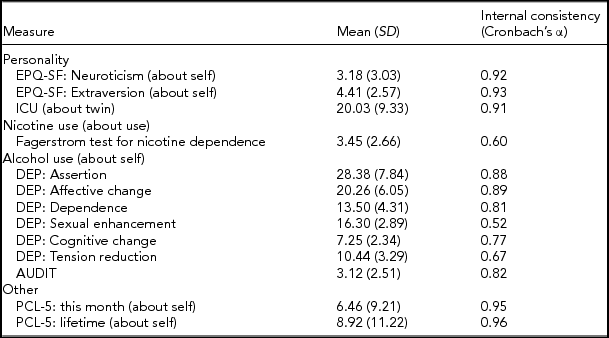
Note: DASS = depression, anxiety, stress scale - 21 Items, AUDIT = alcohol use disorders identification test, DEP = drinking expectancy profile EPQ-SF = eysenck personality questionnaire- short form, ECR-R = experiences with close relationships – revised, PCL-5 = post-traumatic stress disorder checklist for DSM-5, ICU = inventory of callous-unemotional traits.
Discussion
The current study aimed to identify endophenotypes that may be both risk factors for internalizing psychopathology development and intermediate mechanisms in understanding the developmental pathway from genetic loci to psychiatric syndromes. The study focused on endophenotypes within the NVS; the dimensions of the NVS describe behavioral, emotional, neurological, genetic, and cognitive patterns that traverse internalizing disorders (Insel et al., Reference Insel, Cuthbert, Garvey, Heinssen, Pine, Quinn and Wang2010). Therefore, the constructs of the NVS can be used to understand the development of multiple internalizing disorders and the comorbidity among them. It is theorized that NVS processes may explain genetic pleiotropy and common etiology of multiple internalizing disorders.
In keeping with the strengths of multitrait, multimethod research (Maas et al., Reference Maas, Lensvelt-Mulders and Hox2009), the present study employed a range of methods from participant-report to the assessment of psychophysiological and hormonal responses. Additionally, the current study's sample and longitudinal design allowed for some examination of internalizing disorder risk and development over a critical developmental period during which many internalizing disorders manifest (Kessler et al., Reference Kessler, Berglund, Demler, Jin, Merikangas and Walters2005; Merikangas et al., Reference Merikangas, He, Burstein, Swanson, Avenevoli, Cui and Swendsen2010). Of specific relevance to the psychiatric representativeness of the current twin sample, the estimated prevalence rates for panic attacks, panic disorders, generalized anxiety disorder, and major depressive disorder were similar to population estimates, while prevalence rates of specific phobias and social phobia were slightly higher (see Table 1) (Hayward et al., Reference Hayward, Killen and Taylor1989; Merikangas et al., Reference Merikangas, He, Burstein, Swanson, Avenevoli, Cui and Swendsen2010).
As outlined by the RDoC initiative, elucidating the genetic and environmental influences in the development of NVS phenotypes may help clarify the development of internalizing disorders (Insel et al., Reference Insel, Cuthbert, Garvey, Heinssen, Pine, Quinn and Wang2010). Ultimately, it is hoped that this approach will provide additional targets for biological and psychological interventions, which may address processes that occur prior to psychiatric illness onset. These targets may be particularly important in the identification of individuals at risk for later psychopathology, which would guide preventive intervention.
There were several limitations associated with the current study. One limitation is the small sample sizes of African-American and Hispanic twins, which precludes the examination of race/ethnic-specific differences in NVS phenotypes and internalizing disorder risk. A future study with larger samples of other races is necessary to examine race-related differences in endophenotype heritability or internalizing disorder development. Additionally, twin participants each completed laboratory tasks in one of two orders. To account for potential task order effects, task order will be entered into relevant analyses as a covariate. Also, visits were conducted at different times of day. It is possible that participants who participated earlier in the day experienced a different level of fatigue as compared to those who participated in evening visits. The variation in time of day may also complicate analyses of neuroendocrine outcomes (i.e., cortisol). Finally, twins on antidepressants or anti-anxiety medications were excluded from study participation at T1. It may be possible that some variance of internalizing disorder symptom expression may have been lost because of this exclusionary criterion.
The goals of the current study were to (1) examine the relationship between NVS probes (i.e., laboratory tasks) and the participant-report measures collected at T1, (2) clarify the genetic and environmental contributions to endophenotypes and their relationship to internalizing disorders at T1, (3) study the development of internalizing disorders from T1 to T2 by considering the genetic and environmental factors that contribute to change in endophenotypes and internalizing disorder expression over time, and (4) to establish the temporal stability of NVS endophenotypes from T1 to T2. The host of multidimensional measures in conjunction with many units of analysis (e.g., genetic samples, psychophysiological measures, participant-reports, and laboratory paradigms), and the study's longitudinal design will allow for the thorough examination of each of the study's primary aims.
Acknowledgments
The authors sincerely appreciate the contributions of all the twin participants and their families. This study is also grateful to the wonderful researchers and research staff that helped make this project possible: Ethan Wiley, Caroline Hazlett, Sravya Uppalapiti, Angela Michalak, Zahra Ehtesham, Paul Todela, Jeremy Cornelissen, Nicole Miano, Divya Patel, Jacqueline Roth, Ari Kagan, Alexis Anderson, Bijal Rajput, Ayisha Qadir-Khana, Jamie Mustian, Conner Muth, Anthony Alvarez, Heera Ha, and Jessica Ashworth. The authors are also grateful for all the tremendous effort put forth by the Mid-Atlantic Twin Registry, particularly the work of Anne Taylor-Morris and Emily Lilley.
Financial Support
This study was supported by the National Institute of Mental Health (R01MH101518 to RRN and T32MH020030) and by UL1TR000058 from the NCRR.
Conflicts of Interest
None.
Ethical Standards
The authors ensure that all procedures contributing to this work comply with the ethical standards of the relevant national and institutional committees on human experimentation and with the Helsinki Declaration of 1975, as revised in 2008.



