




Introduction
The preservation of patient dignity is an important challenge facing the health-care system (Peičius et al. Reference Peičius, Urbonas and Harrison2022). As pointed out by Julião et al. (Reference Julião, Courelas and Costa2018), modern medicine can be perceived as impersonal and routinized, with insufficient attention paid to patient personhood or individual needs. Personhood is defined as “a standing or status that is bestowed upon one human being, by others, in the context of relationship and social being” (Pan et al. Reference Pan, Chochinov and Thompson2016). Focusing on personhood means considering patients as whole persons rather than focusing primarily on their cancer related symptoms and clinical condition toward the end of life. Patients may feel that their beliefs and values are not being taken into consideration and safeguarded, affecting their autonomy, role in shared decision-making, and the subjective sense of being respected. Patients at end of life may experience profound existential suffering related to multiple existential concerns associated with their disease (Bovero et al. Reference Bovero, Sedghi and Opezzo2018; Kissane Reference Kissane2012). Patients with terminal illness may experience numerous limitations such as loss of physical independence, loss of autonomy, and increased dependency on others (Bovero et al. Reference Bovero, Botto and Mellano2023a; Chochinov et al. Reference Chochinov, Hassard and McClement2008). Consequently, the physical aspects of cancer should not be separated from the psychological and psychosocial aspects of the disease, as highlighted illustrated by the model of dignity in the terminally ill (Chochinov Reference Chochinov2002a; Thompson and Chochinov Reference Thompson and Chochinov2008; Uchida Miwa et al. Reference Uchida Miwa, Paiva and Ferreira2023). In this context, the conservation of dignity is recognized as fundamental in providing ethically appropriate care. It consists of patient–carer shared decision-making, respect for the values of the patient and their family, and the reinforcement of patient autonomy (Andorno Reference Andorno2019). To support patients in the final stage of their life and to avoid provoking a sense of humiliation, degradation, and dehumanization (Stoecker Reference Stoecker, Kaufmann, Kuch and Neuhaeuser2011), it is fundamental that attention be directed toward respecting a patient’s personhood and not only addressing their physical symptoms. Houska and Loučka (Reference Houska and Loučka2019) recently reported that in order to improve end-of-life care, decisions must be consistent with the patient’s personal preferences, identified by means of an individualized process. The tools developed by Chochinov et al. (Reference Chochinov, McClement and Hack2015) and Pan et al. (Reference Pan, Chochinov and Thompson2016) have demonstrated efficacy at enhancing person-centered care and evaluating patients’ needs in relation to personhood (Hadler et al. Reference Hadler, Goldshore and Rosa2022). The This is ME (TIME) Questionnaire constitutes a set of 10 open-ended questions aimed at eliciting various aspects of patients’ personhood. The questionnaire opens with the Patient Dignity Question (PDQ), which asks “What do I need to know about you as a person to give you the best care possible?”. Łabuś-Centek et al. (Reference Łabuś-Centek, Krajnik and Krajnik2020) demonstrated that administering the PDQ to patients receiving palliative care at home helped ensure that their well-being was being upheld and their dignity remained intact. In particular, the PDQ helped clinicians to understand their patients better, and to take into account personhood-related aspects of the patient and clinician.
The PDQ/TIME Questionnaire were originally developed and validated in the English and then translated and validated in European Portuguese. The translation of these personhood instruments into more languages would undoubtedly enhance patient care and further help develop our understanding of personhood (Julião et al. Reference Julião, Courelas and Costa2018; Pan et al. Reference Pan, Chochinov and Thompson2016). The primary aim of this study was to translate and validate TIME, which is an instrument that elicits aspects of personhood commencing with the PDQ, into Italian. The second goal was to assess patients’ perception and satisfaction of the PDQ/TIME tool and to analyze the main themes emerging from their responses.
Methods
Instruments and translation procedure
The validity of the PDQ/TIME Questionnaire was assessed using a 3-stage research design: (1) translation and back-translation, involving input from a panel of experts; (2) data collection from patients with terminal cancer at end of life; and (3) a final consultation with the panel of experts (the panel included 3 experts in addition to the initial panel). Then, content analysis was performed to evaluate the essential themes and their prevalence in the patient sample.
The forward translation and subsequent back translation procedure aimed to obtain semantic and linguistic equivalence between the Italian and original version. Permission for translation was obtained from the original authors in advance. The initial independent forward translation of the English versions of the PDQ/TIME Questionnaire into Italian was performed by a bilingual native Italian researcher. This was then returned to 2 bilingual researchers, who developed the consensus version. These preliminary forward-translated versions were subsequently assigned to an external, blind bilingual translator for their back translation into English. These back-translated versions were compared with the original version, and any discrepancies resolved. The back-translated versions were sent to the original author of TIME (HM Chochinov), who confirmed their accuracy.
Final consensus was obtained at 80% agreement among expert opinions. Further feedback was requested from 3 clinicians with expertise in oncology and palliative care to strengthen the face validity process. In accordance with Julião et al. (Reference Julião, Courelas and Costa2018), initial and second expert panels were given the opportunity to add text comments to the final Italian version of the TIME Questionnaire on how it could assist their daily clinical practice and help them capture patients’ personhood to support them at end of life.
Data collection
Between October 2021 and June 2022, data were collected from “Città della Salute e della Scienza” Hospital and “Vittorio Valletta” Hospice in Turin. The study was approved by the Hospital and Hospice’s Ethics Committee protocol number 0034403, procedure number CS2/1178. The sample consisted of patients with end-stage cancer. Inclusion criteria were as follows: being 18 years or older; a diagnosis of cancer; capable of providing informed consent; meeting the criteria for receiving palliative care (National Law on Palliative Care and Pain Treatment, No. 38/2010); being in the terminal phase of cancer, with no feasible or appropriate curative treatments; an estimated life expectancy of less than 4 months; and a Karnofsky Performance Status (KPS) of 50 or lower. Some of the participants in the study were admitted from different wards of “Città della Salute e della Scienza” Hospital, such as oncology, radiotherapy, internal medicine and a palliative care unit. Other patients were admitted from the “Vittorio Valletta” Hospice, which offers palliative care for patients who are terminally ill. After introducing the patients to the study during an initial consultation and obtaining their informed consent, a psychologist administered the PDQ/TIME Questionnaire to each patient, audio recorded the answers, and then created a verbatim transcript. Each participant also completed a satisfaction questionnaire, based on the version published by Pan et al. (Reference Pan, Chochinov and Thompson2016) and Julião et al. (Reference Julião, Courelas and Costa2018).The satisfaction questionnaire included items relating to the preliminary instructions received, their understanding of the questions, their evaluation of the questionnaire in relation to its utility for themselves and for others, and whether or not they would consent to their responses being shared with specific individuals. Answers were ranked according to a 7-point Likert scale, where 1 = “strongly disagree” and 7 = “strongly agree.” Within 24 hours of completing the questionnaire, the researchers provided the patient with a final summary of their responses and asked them to confirm for accuracy.
Statistical analysis
Data analysis was performed using the Statistical Package for Social Sciences (SPSS®) software 25.0 for Windows®. Descriptive statistics were used to analyze the sociodemographic characteristics of the sample and the responses to the satisfaction questionnaire. Content analysis on the final summary documents was performed by 3 independent experts to identify the central themes and sub-themes of the patients and to calculate the response frequencies.
Results
Sociodemographic and clinical characteristics of the sample
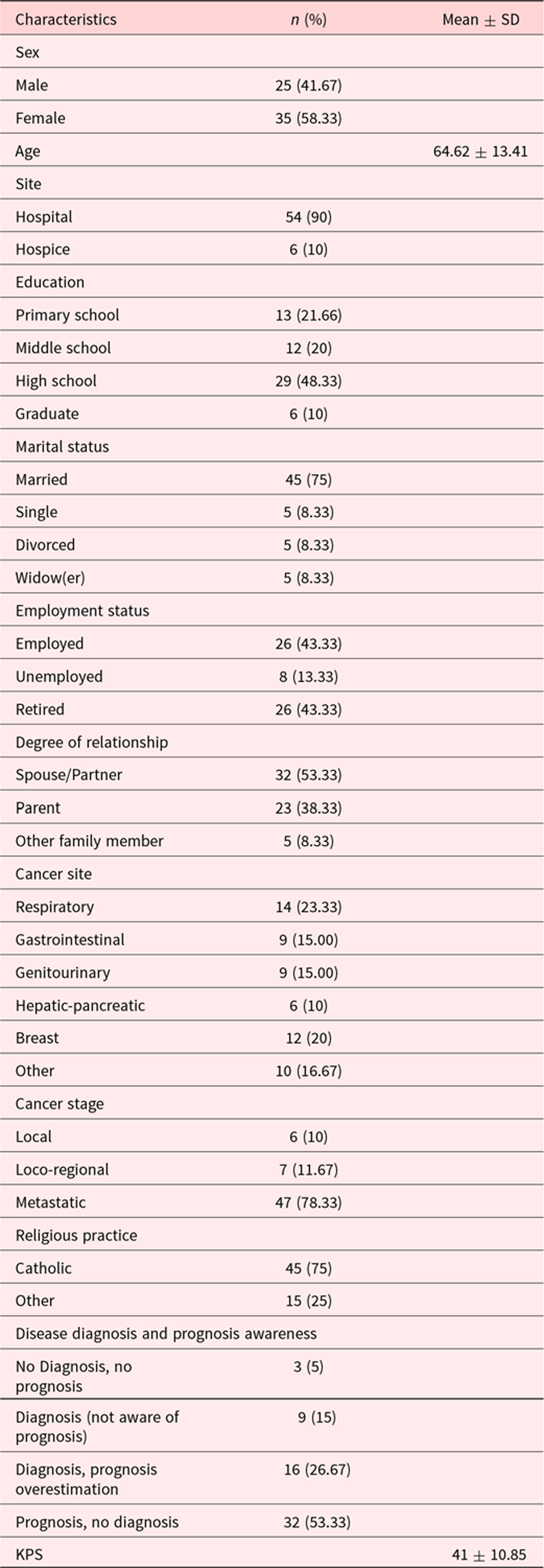
A total of 100 eligible patients were invited to take part in the study. Twenty patients did not wish to participate for personal reasons, 15 declined after reading the questionnaire, 4 died before the start of the study, and 1 lacked Italian language fluency. The final sample consisted of 60 patients with end-stage cancer. The sociodemographic and clinical characteristics of the sample are present in Table 1.
Sociodemographic and clinical data of the patients (N = 60)

n = absolute frequencies, % = percent frequencies, SD = standard deviation, KPS = Karnofsky Performance Status.
The Italian version of the PDQ/TIME Questionnaire
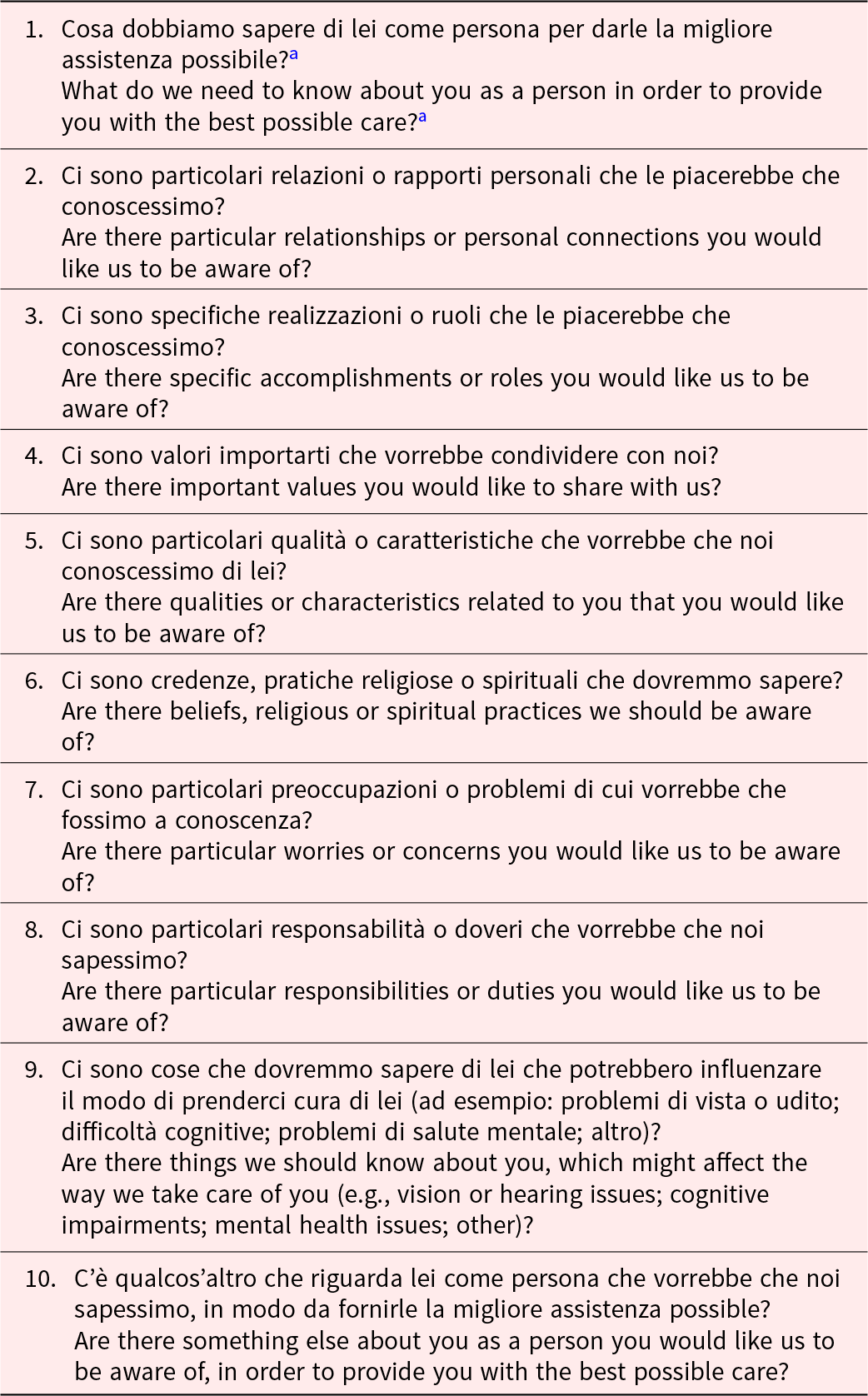
The authors of the Italian version of PDQ and TIME Questionnaire decided to maintain the same name of the original version. The Italian version of questionnaire is presented in Table 2.
Italian version of the PDQ/TIME Questionnaire

The English version of the PDQ/TIME Questionnaire is presented below each Italian sentence.
a PDQ.
Participants’ satisfaction of the PDQ/TIME Questionnaire
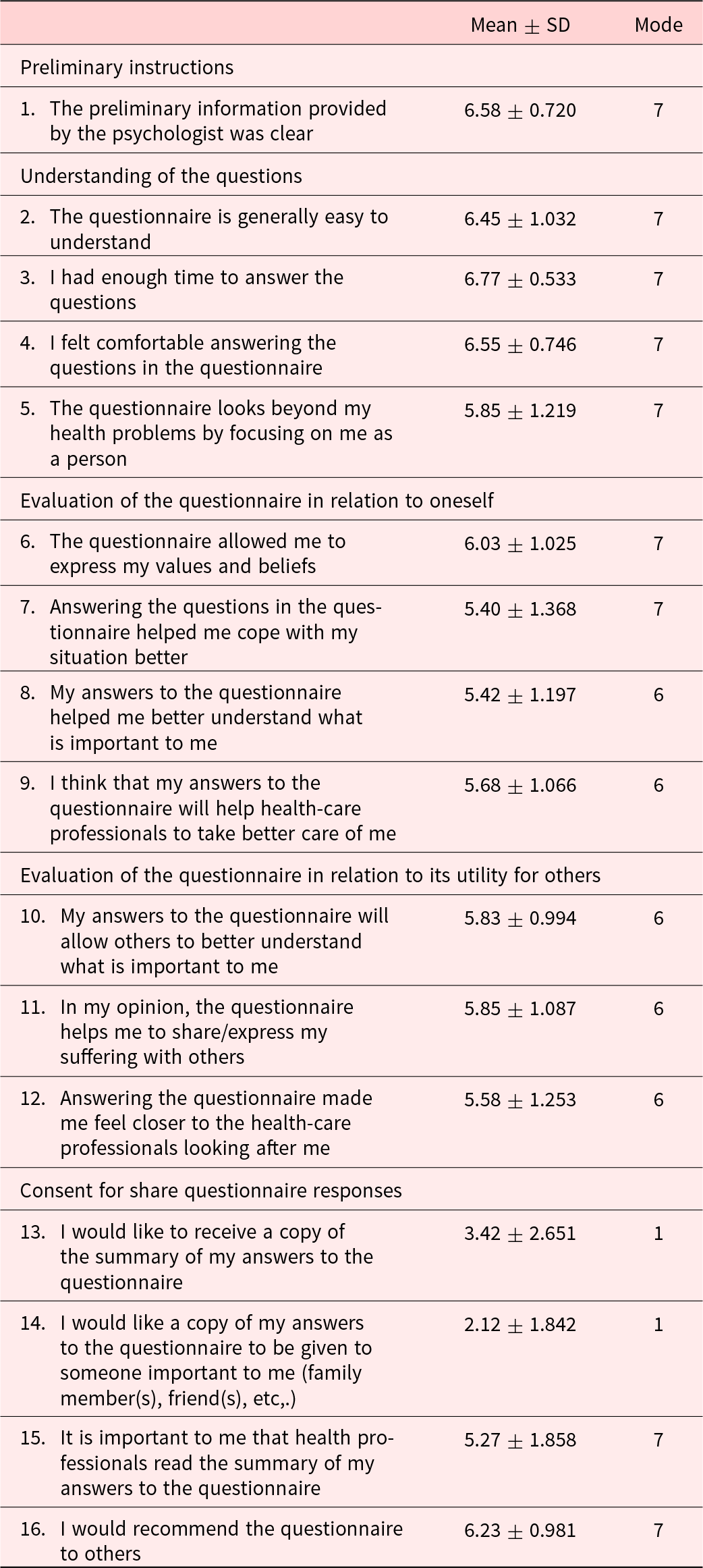
According to experts’ evaluations, patients were satisfied with their experience of the PDQ/TIME Questionnaire. Seventy percent of the participants indicated the preliminary information to be clear and generally easy to understand. And 81.7% replied to have had enough time to answer the questions and 68.3% felt comfortable during the response process.
Regarding the possibility of sharing the data collected from the PDQ/TIME Questionnaire, 61.7% of the patients felt it was important that their answers be shared with the health-care professionals (HCP) looking after them (5.27 ± 1.858), whereas most did not feel inclined to give a copy of their answers to family member(s) or friend(s) (2.12 ± 1.842).
Overall, the Italian versions of the PDQ/TIME Questionnaire were considered clear, easy to understand, and able to capture the essence of patients in relation to oneself and others. Data regarding the participants’ satisfaction with the PDQ/TIME Questionnaire are present in Table 3.
Participants’ satisfaction with the PDQ and TIME Questionnaire (N = 60)

SD = standard deviation.
Responses were rated on a 7-point Likert scale, where 1 = “strongly disagree” and 7 = “strongly agree.”
Content analysis
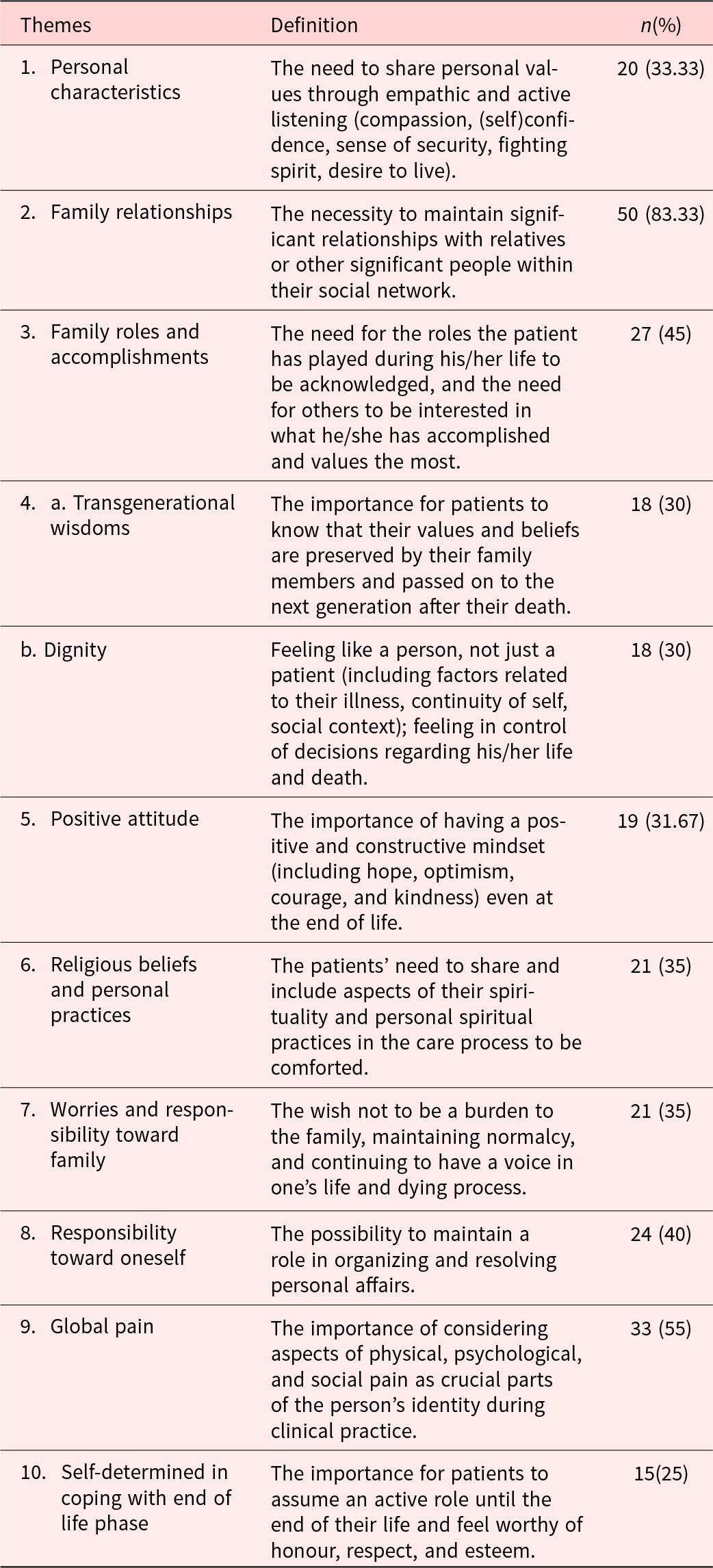
Content analysis was performed on the verbatim transcripts (by A.L.C., A.P., and S.P.) to identify each patient’s emerging themes. The first step involved 3 researchers independently identifying and labelling clusters of frequently repeated keywords used in the patients’ responses. These researchers then compared their labels and selected a definitive code for each emerged theme. The analysis began by detecting the frequencies of keywords related to the different themes among all patients’ answers. A definition of the significant emerging themes and their frequency of occurrence are reported in Table 4.
Main themes that emerged, definitions, and frequency of responses

n = absolute frequencies, % = percent frequencies.
Discussion
Based on previous studies (Chochinov et al. Reference Chochinov, McClement and Hack2015; Julião et al. Reference Julião, Courelas and Costa2018; Pan et al. Reference Pan, Chochinov and Thompson2016), we focused on the development of the Italian version of the PDQ/TIME Questionnaire. Previous investigations indicate that patients place great value on the summary of their responses to the TIME Questionnaire, as it encompasses their fundamental identity, well beyond the confines of their health condition. Recognizing fundamental elements of a patient’s identity has been shown to enhance their sense of dignity (Julião et al. Reference Julião, Courelas and Costa2018). Our own findings also highlight that nearly 90% of the participants acknowledged that the questionnaire transcends their health problems and places emphasis on personhood. This underscores the importance of integrating personhood into clinical practice during the final stages of life in patients with cancer. It is crucial for HCP to possess these insights in order to provide optimal support during end-of-life care (Bovero et al. Reference Bovero, Tosi and Botto2022b). The results of the Satisfaction Questionnaire underscore that being able to share their suffering and feeling close to their HCP are important issues for patients as they near the end of their life, and can, therefore, help HCP take better care of them. Pan et al. (Reference Pan, Chochinov and Thompson2016) showed that, among residents living in a nursing home, the TIME Questionnaire was perceived as a means of influencing how their HCP might come to know and appreciate who they are as a person. In particular, residents reported a significant boost in their sense of dignity through engagement with TIME. They recognized the importance of the information the questionnaire provided enabling HCP to take better care of them. Furthermore, residents believed that the summary provided by TIME could influence how HCP looked after and better understand what matters to them. Julião found that the Portuguese version of TIME captured the true essence of non-institutionalized, active elderly individuals, and enhanced their sense of dignity. These patients expressed the importance of HCP having access to TIME summaries, given this information could affect the way HCP perceive and care for them (Julião et al. Reference Julião, Courelas and Costa2018). In line with the previous studies regarding elderly patients (Julião et al. Reference Julião, Courelas and Costa2018; Pan et al. Reference Pan, Chochinov and Thompson2016), our results show that terminally ill patients with cancer would like to share the summary of their TIME responses with HCPs, considering it important to share their essence and to feel close to them at the end of life. On the other hand, our findings revealed that these patients seemed less inclined to receive a copy of their PDQ/TIME summary than elderly patients included in the studies of Pan and Julião. In those, almost all patients wanted to receive a copy of their responses to give it to someone important to them (Julião et al. Reference Julião, Courelas and Costa2018; Pan et al. Reference Pan, Chochinov and Thompson2016). (Julião et al. Reference Julião, Courelas and Costa2018; Pan et al. Reference Pan, Chochinov and Thompson2016). This could be related to differences in the key worries and concerns expressed by participants in both Pan and Julião studies. Indeed, our patients with terminal cancer are likely to feel more death anxiety than institutionalized elderly, which might be associated with greater distress as they approach their end of life (Bovero et al. Reference Bovero, Digiovanni and Botto2022a). Furthermore, these differences could also stem from societal practices and cultural beliefs, including the desire to manage their illness concerns on their own. Although patients consider their caregivers important in their care journey, it could be that patients preferred not to share their PDQ/TIME summary with family caregivers so as not to burden them. In addition, there might be other cultural dimensions such as the degree of diagnostic/prognostic awareness (most patients reported a partial awareness) and patients’ specific perceptions that family caregivers may find it difficult to engage with their suffering. Consequently, they might feel reluctive to express and discuss their most personal needs and emotions, also fearing potential judgment for being ill or for their own reactions to the clinical condition. At the same time, our study participants felt the PDQ/TIME Questionnaire could help care providers (both family caregivers and HCP) comprehend aspects of personhood, values, and special needs relavent at this time of life. According to Chochinov (Reference Chochinov2007), patients look to care providers for a positive reflection of themselves, as they would a mirror, affirming their continued sense of self-worth. In turn, HCP need to be aware that their attitudes and assumptions can shape those all-important reflections. A more recent study (Chochinov et al. Reference Chochinov, McClement and Hack2015) showed that reading patients’ PDQs allowed HCP to learn something new about them, eliciting feelings of connectedness, and respect toward their patients, which in turn influenced their sense of empathy and the quality of their care.
Previous studies of the TIME Questionnaire established that TIME significantly enhanced the relationship between HCP and patients (Julião et al. Reference Julião, Courelas and Costa2018; Pan et al. Reference Pan, Chochinov and Thompson2016). This approach facilitated a renewed perspective on how professionals perceive and approach the concept of personhood within the clinical environment. Our study found that patients’ relationships with their families and caregivers plays a key role in preserving a sense of dignity during end-of life experiences. Specifically, 83% of the participants expressed the importance of maintaining meaningful connections with their relatives or other significant individuals within their social network. This recurring theme aligns with one of the central categories of the dignity model: the social dignity inventory. This category encompasses social considerations and relationship dynamics that either enhance or diminish a patient’s sense of dignity (Chochinov Reference Chochinov2002a; Chochinov et al. Reference Chochinov, Hack and McClement2002b). Even during the final stages of life, patients expressed a deep desire to nurture profound and compassionate connections within their social circles, as these connections reinforced their sense of empowerment and feeling of being supported (Choo et al. Reference Choo, Tan-Ho and Dutta2020). The presence of loving support from others throughout the dying process can facilitate meaningful moments toward end of life. By maintaining relationships with others, patients can discover and construct personal meaning and significance that resonates with the entirety of their life narrative. Patients living with advanced cancer need to receive help from others to avoid feeling hopeless or becoming socially isolated, as well as to avoid other forms of suffering such as psychosocial distress and demoralization (Bovero et al. Reference Bovero, Opezzo and Tesio2023b). Indeed, connection with and social support from family members is essential throughout the course of a patient’s illness, as being with family members can enhance the patient’s sense of dignity, continuing to affirm their active roles within their family system.
Philipp et al. (Reference Philipp, Mehnert and Lehmann2016) provided evidence of this in a prospective study among patients with cancer. They found that loss of interactions between patients and people close to them represented a significant predictor of loss of dignity, which often related to patients’ perception of their autonomy and feelings of dependency/lack of autonomy (Philipp et al. Reference Philipp, Mehnert and Lehmann2016). Other recent studies also recognized autonomy and independence as important themes related to death with dignity (Bovero et al. Reference Bovero, Botto and Mellano2023a; Martí‐García et al. Reference Martí‐García, Fernández‐Férez and Fernández‐Sola2023; Xiao et al. Reference Xiao, Ng and Yan2021). Further studies should be carried out to identify other variables related to dignity-related distress in patients with end-stage cancer, such as attachment and social support (Philipp et al. Reference Philipp, Mehnert and Lehmann2016; Rodin et al. Reference Rodin, Walsh and Zimmermann2007; Scheffold et al. Reference Scheffold, Philipp and Koranyi2018).
Another crucial theme that emerged in the present study was “family roles and accomplishments,” which refers to the need to be acknowledged and receive interest from others regarding their accomplishments and the roles they played that they most value. Patients might feel that their roles are valued and preserved until the end of their life, enabling them to make their own choices until the end and leave a spiritual legacy for their loved ones. A recent study found autonomy to be important for patients receiving palliative care, especially in relation to physical and existential distress, continuity in one’s own personal identity, and being able to make choices until the end of life (Bovero et al. Reference Bovero, Botto and Mellano2023a).
The present study also found “responsibility toward oneself,” which involves maintaining a role in the organization and resolution of personal affairs, to be an important theme in 40% of the sample. Specifically, in the context of serious illnesses like cancer, physical and emotional experiences can significantly impact the capacity to make decisions autonomously (Gómez-Vírseda et al. Reference Gómez-Vírseda, de Maeseneer Y and Gastmans2019). Patients often wish to maintain an active role in their clinical and everyday concerns, as well as having their values and responsibilities recognized (Bovero et al. Reference Bovero, Botto and Mellano2023a). These factors are closely tied to decision-making throughout the course of their illness, right up until the end of life. As a result, this process can enhance their sense of purpose and allow them to feel that they are still fulfilling their roles, thereby enhancing sense of dignity, while garnering respect from loved ones and HCP.
In nearly 55% of the participants, “global pain” emerged as a crucial theme in patients’ responses to the PDQ/TIME Questionnaire. Dame Cicely Saunders described total pain to include suffering comprised of that includes physical symptoms, mental distress, social problems and emotional problems, managing cancer-related pain requires an integrative approach that fully considers the complexity and individuality of a patient facing the end of life (Ehrlich and Vallerand Reference Ehrlich and Vallerand2023). In fact, these issues also contribute to a patient’s perception of self as assessed during clinical practice (Bovero et al. Reference Bovero, Digiovanni and Botto2022a).
However, since being a patient with end-stage cancer was a prerequisite in our study, the results can only be applied to this population. Further investigations and research are needed relate our findings across the broader spectrum of malignant illness. Future studies could be carried out to evaluate how the PDQ/TIME Questionnaire impacts Italian HCP and determine how they might apply it in the service of better patient care. It would also be important to determine if this tool might influence the attitudes, care, respect, empathy, and compassion of Italian HCP for their patients; and how this might influence their job satisfaction. Administrating TIME could offer a novel way to improve patient–HCP relationships through a better understanding of patients’ personhood and needs that extend beyond their illness. This could heighten patients’ sense of dignity and self-compassion, emerging from dignity conserving, person-centered care.
Conclusion
The Italian version of the TIME Questionnaire, which includes the PDQ, is clear, precise, and understandable. The questions are designed to focus on facets of personhood among patients living with cancer. This tool has the potential to improve patients’ perception of care at the end of life and the attitudes of HCP toward them, by way of enhanced presence, compassion, and respect. The results of this study provide evidence that the Italian version of the PDQ/TIME Questionnaire is equivalent to the original Canadian English version and that its use could protect and enhance dignity in patients facing advanced, end-stage cancer.
Acknowledgments
The authors would like to thank for the time given the individuals who participated in the study. The authors are also grateful to Stephanie Parsley for the proofreading of the manuscript.
Funding
This research received no specific grant from any funding agency, commercial, or not-for-profit sector.
Competing interests
The authors have no conflict of interest to declare.

 Open access

