


Introduction
Many scholars today harbor rising concerns about the effect of misinformation and disinformation on public trust in science. Characterizations of the post-2016 period as “post-truth” correspond to the ease with which misinformation can be disseminated on social media platforms and to the heightened disinformation surrounding the Trump presidential and Brexit campaigns and the COVID-19 pandemic (Pérez-Escolar et al. Reference Pérez-Escolar, Lilleker and Tapia-Frade2023: 77). The spread of misinformation and conspiracy theories, such as birtherism, as well as politically motivated interference, has damaged public trust in government data collection, including censuses and vital records (Anderson, Reference Anderson2019: 236–37; Donaldson and Lefevre Reference Donaldson and LeFevre2022: 1589; Sullivan Reference Sullivan2020: 12). Historians bring important perspectives to bear on these developments. Notably, they point out that misinformation has been an intrinsic part of information exchange for centuries, posing longstanding challenges to health and security; in the United States, concerns about census privacy were raised each time an enumeration was conducted since 1790 (Claussen and Zenobi Reference Claussen and Zenobi2022: 2; Jin et al. Reference Jin, Kolis, Parker, Proctor, Prybylski, Wardle, Abad, Brookmeyer, Voegeli and Chiou2024: e638; Magnuson and Ruggles Reference Magnuson and Ruggles2026: 1). Accordingly, historians are trained to pay close attention to information sources: their provenance, their original intended audience, and the process by which they were created and preserved.
The 2024 annual meeting of the Social Science History Association (SSHA) confronted these questions directly via the theme “Trust and Distrust of Historical Sources in the Digital Age.” This presidential address discusses the developing body of research on the quality and idiosyncrasies of historical data, focusing in particular on historical census microdata. I argue that greater attention to source criticism as a genuine subfield of social science history is essential for four reasons: to fully benefit from the expansion of big historical data, to imagine new ways to analyze historical data beyond the intentions of creators, to share insights with a wider range of scholars, and to contribute nuanced perspectives on historical data to public debates surrounding the use of these sources. I contend that historians outside social science history are vastly underestimating the creativity that is happening in our field. I also argue that social science historians are underestimating how important our work is to informing public discourse.
History under construction: historical censuses
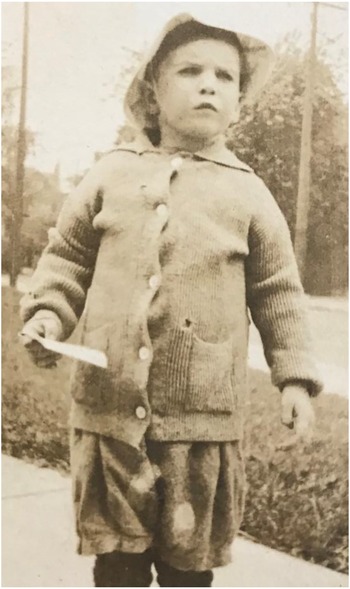
The Toronto setting of the 2024 SSHA conference provided a personal entry point for this discussion of trust and distrust of historical sources: the enumeration of my half-orphaned grandfather in the Canadian census of 1921. This photograph depicts my grandfather, George Crompton, at age 4 in 1918, when he was living in the Toronto City Boys’ Home, an orphanage located at 339 George Street (Figure 1). George and his brother Dave, as well as two sisters, were placed in the orphanage because their mother died from a miscarriage, and my great-grandfather was unable to care for these children on his own.
George Crompton, age 4 in 1918, Toronto City Boys’ Home, 339 George Street.
Source: Crompton family photo (Toronto, 1918) provided by Carol Crompton Dillon.

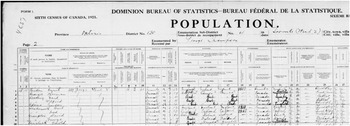
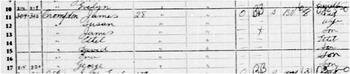
The 1921 census of Toronto both misrepresented and told the truth about my grandfather. In fact, George appears in this census twice: once in the Toronto City Boys’ Home (Figure 2) and once with his father at home (Figure 3). The enumeration of the Boys’ Home correctly described George as a 7-year-old resident born in Ontario, listed adjacent to his brother Dave, yet mistakenly indicated he was a Methodist of Irish ethnicity, with parents born in Ireland (Government of Canada 1921, Toronto Ward 2, 2). It is not clear why the enumerator misidentified George’s parents’ birthplace, his ethnicity, or his religion. It was not a case of simply copying the same information down the page, as the other boys on the same page were listed with a variety of ethnicities and religions. Meanwhile, both George and Dave were enumerated a second time in their father’s home at 28 Branstone Road, about five miles northwest of the orphanage (Government of Canada 1921, York Township, 30). In the Branstone Road household, the father, James, declared or was attributed an age 3 years younger than his actual age. The enumerator listed all five children, including George and David, as co-residents; James’ wife, Susan, who had died six years earlier (June 26, 1915), was included in the enumeration, and daughter Eva was described as a son.
Sixth Census of Canada, 1921, District 130, Sub-district 4, page 2. Library and Archives Canada.
Source: Government of Canada. Sixth Census of Canada (1921) District 130, Sub-district 4, Toronto Ward 2, page 2 [manuscript image], Library and Archives Canada.

Sixth Census of Canada, 1921, District 144, Sub-district 25, page 30. Library and Archives Canada.
Source: Government of Canada. Sixth Census of Canada (1921) District 144, Sub-district 25, York Township, page 30 [manuscript image], Library and Archives Canada.

This particular illustration of historical census enumeration practice might be discouraging at first glance: a de jure census had recorded two and possibly four children twice, and a deceased wife was included in the household record. We might suppose these errors were the responsibility of the enumerator in the first instance, as 1921 census responses were to be recorded by the enumerator himself (Government of Canada 1921, Instructions, 9). Perhaps Joseph Fawn, the enumerator who visited 28 Branstone Road, found no one at home and somehow copied facts from old records or spoke with a neighbor or both. Most of the information provided about George Crompton and his family members is correct, and one might suppose that an accurate picture of his social characteristics would emerge by comparing across multiple censuses. Indeed, the 1931 census reflects the facts of George’s life perfectly, capturing him as an ethnic-English, Ontario-born boarder and Telegraph Company messenger still living with his brother Dave (Government of Canada 1931, Toronto East Centre, 3). What is more interesting is that the manner of the boys’ enumeration makes some sense in the context of family lore and the enumerator’s instructions. James always insisted that he paid for the children’s keep in the orphanage and brought them home as soon as he could once he remarried. Perhaps in his view, that of his neighbor, and that of the enumerator, James’ young sons were merely “temporarily absent” in the same way the enumerator instructions defined “a student at college, a sailor or fisherman at sea” and in the way that “… inmates of hospitals … whose period of absence is more or less known, should be entered with the family” (Government of Canada 1921: 14–16). Orphanages are not mentioned among the examples of group quarters given, and enumerator and respondent alike faced a gray zone of interpretation. For James, who visited his sons on the weekend to push candies through the fence and whose wife lay buried in Toronto’s Prospect Cemetery in a grave marked only by a number, an enumeration which kept the family together possibly made sense (Toronto Trust Cemeteries 2024: 32).
We may consider the implications of George and Dave Crompton’s double enumeration for historical research on family and household structure. Systematic double-counting of particular communities or population subgroups creates a risk of bias in historical analysis, resulting in overestimates of particular living arrangements, such as children’s residence in single-parent households (Toulemon and Pennec Reference Toulemon and Pennec2010: 32). Double-counting in the historic Canadian censuses does not appear to have been widespread (Darroch Reference Darroch2003: 9; Olson Reference Olson2017: 1405–1406). However, the detection of specific cases of double-count also serves as a research prompt to develop useful diagnostics concerning shared custody arrangements or multiple residences (Lapierre-Adamcyk et al. Reference Lapierre-Adamcyk, Le Bourdais and Martin2009: 12; Toulemon and Pennec Reference Toulemon and Pennec2010: 32). Olson identified 75 female domestic servants in the 1881 census of Montreal who were enumerated twice and used this small sample to determine that their households of origin were disproportionately large and headed by a laborer, widow or an elderly couple (Olson Reference Olson2017: 1405–1406). We might similarly ask to what extent institutionalized persons were enumerated twice and whether double-counted individuals were more often children, with one foot still in the family household? More broadly, could the phenomenon of double-counting help us understand the living conditions of persons in transitional states, such as youthful servants, or of vulnerable persons, such as half-orphaned children, indigenous children living in residential schools, or persons with disabilities? The point is that what may appear to be a problem in a historical source can instead constitute a research opportunity: social science historians have developed tools of source criticism to study such anomalies creatively and, in doing so, have arrived at more nuanced perspectives on historical sources and the populations they describe.
Historical population sources and the Pretendian debate
To what extent is source criticism, so embedded in the practice of social science history, appreciated and employed by other scholars and commentators to research important social questions? In Canada, passionate debates that invoke the use of historical population sources to understand ethnic identity and community membership have emerged within and around the Indigenous and Métis communities. There is much at stake in these debates. Today, First Nations peoples living in Canada are seeking recognition and justice for the severe and multi-generational impact of colonization on their health, cultural, and socioeconomic welfare. The most fundamental attack on Indigenous culture and identity was the forced assimilation of children via the residential school system implemented by churches and the Canadian state. Forcibly separated from their parents, Indigenous children suffered long-term effects from the physical and psychological abuse they experienced within these schools (TRC 2015a: 4–8, 16). The report of the Truth and Reconciliation Commission of Canada called for dialogue and reconciliation, which specifically involves respect for diverse First Nations cultures, peaceful co-existence, and respect for the natural world (Burrage et al. Reference Burrage, Momper and Gone2021: 37; TRC 2015b: 8, 12, 18, 226, 277; TRC 2015c: 122–3). Various entitlements and honors that are now accorded to Indigenous communities – such as territorial, hunting, and fishing rights and scholarships and honorary appointments – depend upon recognition of Indigenous identity (Leroux Reference Leroux2024: 4–5; McLeod et al. Reference McLeod, Viswanathan, Whitelaw, Macbeth and King2015: 4–5).
In Canada, the assertion of Indigenous identity has become a topic of intense public debate, as several prominent individuals – including author Joseph Boyden, singer Buffy Sainte-Marie, and judge Mary Ellen Turpel-Lafond – have had their Indigenous identity publicly challenged and have been described in public discourse as “Pretendians” (Leo et al. Reference Leo, Woloshyn and Linda2023; see also Gilio-Whitaker Reference Gilio-Whitaker2025). The term “Pretendian” has been used to describe persons who have self-identified as Indigenous or Métis, but whose ancestral lineage is questioned or shown to be non-Indigenous on the basis of birth certificates and other historic sources (Kolopenuk Reference Kolopenuk2023: 471; Leroux Reference Leroux2019: 1–4; Leroux Reference Leroux2024: 2). The Pretendian debate is complicated and multidimensional, reflecting the profound complexity of the question “who is Indigenous” (Andersen Reference Andersen2024; Snipp Reference Snipp, Kukutai and Taylor2016). Definitions of Indigenous identity based solely on DNA tests and remote ancestry are opposed by Indigenous community members who assert the simultaneous importance of cultural kinship and affinity and community involvement, as well as Indigenous adoptive practices (Leroux Reference Leroux2024: 2). Pretendian debates have centered on self-identified Métis communities, as well as on particular famous individuals and university-based scholars who have found or positioned themselves on both sides of this debate (see Bouchard et al. Reference Bouchard, Malette and Muise Lawless2023).
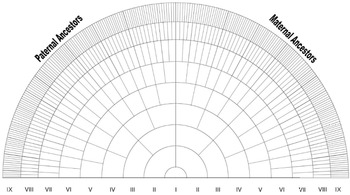
In 2022, I joined in this debate in a small way by being interviewed for the documentary The Pretendians, part of the CBC Passionate Eye series, directed by Paul Kemp and hosted by Anishinaabe author and playwright Drew Hayden Taylor (CBC 2024). As Hayden Taylor (Reference Taylor2022) explains, “the documentary is focusing on the practice itself, the issues around it and its consequences, not on outing individual people” (Taylor Reference Taylor2022). One topic addressed in the documentary concerned eastern Métis claims to Indigenous identity based on remote Indigenous ancestors in the territory, which is now Quebec. My role in the documentary was to talk about the historic genealogical sources of Quebec, specifically our family reconstitution database, the Registre de la Population du Québec ancien (Dillon et al. Reference Dillon, Amorevieta-Gentil, Caron, Lewis, Guay-Giroux, Desjardins and Gagnon2018). Indigenous baptisms, marriages, and burials are relatively rare in the seventeenth- and eighteenth-century Catholic registers (Dillon et al. Reference Dillon, Amorevieta-Gentil, Gagnon and Desjardins2023: 105). While most present-day Quebecois might count one or two Indigenous ancestors in their family tree, such ancestors comprise about 1 percent of their total genetic pool (Vézina et al. Reference Vézina, Jomphe, Lavoie, Moreau and Labuda2012: 88, 93, 99). The documentary filmmakers wanted me to convey this basic point, explaining the comprehensive coverage of our genealogical database up to the mid-nineteenth century. What particularly caught the interviewer’s and producer’s eye was a large genealogy chart belonging to one of our project volunteers: a circular, visual representation of his approximately 2,000 ancestors, stretching from the present day back to their founding immigrants from France. To make a basic historical demographer’s point about the relationship between the numerator and the denominator, I indicated how one or two Indigenous ancestors should be understood relative to the entire pool of ancestors for each present-day claimant (see example in Figure 4).
Example of a genealogy chart with nine generations, www.FamilyTreeTemplates.net.
Source: Family Tree Templates 2026.

I was able to convey this important basic point in a small clip while staying within my lane as a historical demographer. Nevertheless, participation in this documentary left me with much to reflect upon. I was asked to describe and explain the high degree of accuracy of our seventeenth- to nineteenth-century parish register data, which indeed constitute a comprehensive record of the French Catholic population residing in the St. Lawrence Valley (Dillon et al. Reference Dillon, Amorevieta-Gentil, Caron, Lewis, Guay-Giroux, Desjardins and Gagnon2018: 3–4). Yet most social science historians tend to speak about their data in more qualified terms, explicitly acknowledging the limitations of historic data coverage resulting from outmigration, linkage failure, or missing information. We know our data are imperfect and incomplete in many ways, but we have ways of investigating those limits, understanding their scope and implications for research, and, in many cases, accommodating those limits.
It was challenging to communicate these qualifications, and the more nuanced points I wished to convey required more time than a short interview could afford. I thought it important to clarify that the small percentage of Indigenous spouses identified in seventeenth- and eighteenth-century Quebec Catholic marriages was the result of three interacting forces: outmigration of mixed ethnic couples from our observed Catholic parishes, racism that eventually strengthened to discourage mixed ethnic unions, and an expanding marriage pool of white Catholic women, which eventually grew after the sex ratio of the colony stabilized (Charbonneau et al. Reference Charbonneau, Desjardins, Légaré, Denis, Haines and Steckel2000: 109–16; Dillon et al. Reference Dillon, Amorevieta-Gentil, Gagnon and Desjardins2023: 118–20, 169–70; Moogk Reference Moogk2000: 45–46). I tried to clarify that the descendant family trees of Quebec French Canadians reflect the intersection of marriage, fertility, mortality, and migration behaviors within families over generations and that these demographic dynamics should be considered alongside sociocultural norms such as marital endogamy, but this demographic principle was somehow lost in translation (Desportes Reference Desportes2018; Labuda et al. Reference Labuda, Harding, Milot and Vézina2022).
Contestation of the historical sources used to inform or decide Indigenous and Métis identities continues. For the most part, social science historians do not appear particularly invested in these debates. Scholars engaging with the Pretendian debate have tended to come from Indigenous studies, Indigenous history, anthropology, and political science, rather than from historical demography or population history. Two notable exceptions in Canada are sociologist and native studies professor Chris Andersen, who has studied at length census categories and race shifting/Pretendianism (Andersen Reference Andersen2008, Reference Andersen2015, Reference Andersen2024), and political studies professor Darryl Leroux, who has analyzed the use of Quebec vital event data to justify self-indigenization based on lineal or aspirational descent (Leroux Reference Leroux2019). Social science historians, demographers, and sociologists have focused on the parallel issues of changing definitions of race in the census and the increased tendency of North Americans to identify Indigenous or Métis ancestral origins on census returns (Arias et al. Reference Arias, Liebler, Garcia and Saenz2025; Liebler and Ortyl Reference Liebler and Ortyl2014; O’Donnell and LaPointe Reference O’Donnell and LaPointe2019; Thompson Reference Thompson2020). Response mobility, the tendency of individuals to provide different responses to census race questions over time, is quantifiable at the population level and is thus more anonymized and less personal than the Pretendian debate.
I am struck by the variety of ways different genealogical sources are represented in these debates: as clear and reliable proof of whiteness in the case of some famous Pretendians; as socially constructed and suspect sources, a reflection of enumerator preconceptions (Bouchard et al. Reference Bouchard, Malette and Muise Lawless2023); or as colonial tools which encourage Indigenous identity via self-identification rather than “relational forms of belonging” (Andersen Reference Andersen2024). University of Alberta professor Andersen (Reference Andersen2024: 14) summarizes the ambiguous relationship of Indigenous communities with genealogical data in this way: “the proliferation of self-Indigenization claims facilitated by these databases have likewise resulted in a paradoxical situation in which Indigenous nations have been forced into a position in which they have necessarily become increasingly invested in genealogical technologies … to verify Indigenous citizenship while also feeling the need to draw harder boundaries around their collective identity …” Reference AndersenI wonder how social science historians can better contribute to public dialogue on identity, kinship, and community belonging that relies upon or disputes the veracity of vital records and censuses? Can we more effectively demonstrate the use of source criticism to yield a considered appraisal of genealogical sources, which hopefully encourages informed and nuanced perspectives on such complex issues?
Trust and distrust in historical sources as established practice
Historical source criticism is a core element of historical training and the research process; in fact, source criticism of historical population data is as old as the production of such data. Pioneering family reconstitution work by Louis Henry in France and by the Cambridge Group for the History of Population and Social Structure in England was premised on an understanding of the limits of vital records. Henry’s (Reference Henry1970: 3–26) guide to historical demographic analysis includes a set of tests to identify common gaps in the data, such as overly-long birth intervals, which suggest missing infant deaths, and how to overcome those gaps when preparing vital ratesReference Henry. Faced with poorer quality registers, the Cambridge Group selected, shaped, and back-projected vital event counts to produce a reconstruction of the English population (Gutmann Reference Gutmann1984; Wrigley and Schofield Reference Wrigley and Schofield1981; for a more recent example which proposes parametrized demographic models for English mortality, nuptiality, and marital fertility in 1300, see La Poutré and Paping Reference La Poutré and Paping2025).
With the advent of the “new” social history of the 1960s and 1970s, more and more historians confronted the advantages and shortcomings of censuses, population registers, and vital records.Footnote 1 The journal Historical Methods was founded as a newsletter in 1967, serving as a “cross-disciplinary channel of communication” (“Genesis” 1967: 1). Source criticism itself was not an obvious theme from the outset, with the stated purpose of the newsletter focusing more on news, programming, methods, and research in progress. Beyond descriptions of new data sources, data management, and record linkage techniques, early evaluations of historical population data concerned restrictions on census availability and “the vexed matter of under-enumeration” (“Availability…” 1968: 2; Knights Reference Knights1969: 5–8). During the 1970s and 1980s, critical assessments of population sources concerned the manufacturing censuses, literacy reporting, age reporting, and the completeness of birth and death records. There was a sense, however, that source criticism for historical demography and quantitative history was still in its infancy. In his review of Clubb and Scheuch’s volume Historical Social Research: The Use of Historical and Process-Produced Data (Reference Clubb and Scheuch1980), George Alter (Reference Alter1981: 146) noted that historians had been slow to grapple with source criticism: “If a new contextual criticism of quantitative sources is developing, … it has not yet assumed a clear shape.”Reference Alter
The Social Science History journal, which published its first volume 50 years ago, was initially less invested in population data source criticism than in supporting interdisciplinary quantitative history. By the 1980s, following the 1965–1976 “boom” years of the “Newer New” quantitative history, Social Science History published several broader articles which addressed the prospects of this field (Ruggles Reference Ruggles2021: 7, 14). Willigan and Lynch’s 1982 textbook Sources and Methods of Historical Demography devoted significant portions of Section II “Fundamental Source Materials” to assessing the quality of parish registers, censuses, genealogies, and population registers and proposing ways to deal with incomplete data (Willigan and Lynch Reference Willigan and Lynch1982). Nevertheless, in 1984, Floud (Reference Floud1984: 160) lamented the disinclination of “a substantial body (if not the majority) of historians” to engage with quantitative history and particularly criticized the “… failure to engage in a dialectic with the defective data…. those who criticize the data do not seem willing to guess what those limits are, to indulge in what an econometrician calls sensitivity analysis, and to assess in quantitative terms the possible extent of bias in the data.” Reference FloudOne year later, Canadian historians Gaffield and Baskerville (Reference Gaffield and Baskerville1985: 177, 180) wrote that historians, “… in the recent rush to find quantifiable data, have been too ready to accept certain evidence at face value…,” noting the absence of “… systematic efforts to pool knowledge about particular sources and how they are being used.” Reference Gaffield and BaskervilleLooking back from his vantage point in 2001, historical sociologist Bruce Curtis (Reference Curtis2001: 28) asserted that Canadian social historians who investigated census practices “… have usually done so in a workaday spirit and with the intention of achieving a better grasp of particular enumeration problems.” Reference Curtis
And yet … just as the presence of quantitative history in mainstream historical journals began to wane at the beginning of the 1990s, critical attention to the sources of population history began to accelerate. Anderson (Reference Anderson1988) published The American Census: A Social History in 1988, with a detailed analysis of census schedules and questions alongside institutional history, census administration, and political discourseReference Anderson. Just five years later, George Emery (Reference Emery1993) published Facts of Life: The Social Construction of Vital Statistics, Ontario 1869–1952, which addressed the quality of Ontario birth and death registrationsReference Emery. During the 1990s, Historical Methods and Social Science History published 13 articles addressing census institutional history and the development of questions over time, coverage of data, registration deficiencies, occupation coding, and underenumeration of regions or population subgroups. Substantive research into the provenance, quality, and idiosyncrasies of routinely generated historical sources gradually gathered steam during the 1980s and 1990s, setting the stage for the new millennium.
2000 and beyond: the Canadian families project and the twenty-first century historical data expansion
The year 2000 marked a turning point in this story, at least for Canadian scholars. In Canada, a group of researchers, including Eric W. Sager, Chad Gaffield, Peter Baskerville, Gordon Darroch, and Danielle Gauvreau, formed the Canadian Families Project (CFP) to create a 5 percent sample of the 1901 Census of Canada.Footnote 2 The CFP scholars coalesced around a research agenda to use the 1901 census to produce new perspectives on the Canadian family. This agenda was fostered by the interdisciplinary nature of this group of social, feminist, and economic historians, geographers, and demographers. In a 2000 special issue of Historical Methods, co-PI Sager (Reference Sager2000) emphasized the importance of historical source criticism: “It is no longer possible, if it ever was so, to treat routinely generated information in historical sources as a transparent window into the social reality of the past. The census itself must be problematized, its provenance displayed, and its internal logic – its consistencies and inconsistencies – unraveled.” Members of the CFP came together in project workshops and later in publications to analyze the idiosyncrasies of the 1901 census. They did so not only to assess the quality of the 1901 census but also to understand the complexity of respondent identities, hidden aspects of family history, and the mentalities of knowledge production. Examples include households with two heads, the incidence of fragmentary families, the invisibility of single parents, the reliability of female employee enumeration, and patterns of atheist, agnostic, or freethinker responses to the religion question (Sager Reference Sager2000; Sager and Baskerville Reference Sager and Baskerville2007). Darroch (Reference Darroch2000: 210) examined the discursive framing offered by enumerator instructions to understand the ways the census reinforced “normative notions of middle-class domestic arrangements.” On the other hand, Gaffield (Reference Gaffield2000: 256, 259–60) examined non-normative string responses to the language questions to reveal the complexities of Canadian linguistic identitiesReference Gaffield. On the whole, CFP members emphasized the ways recasting and manipulation of census microdata allowed them to identify marginalized persons and behaviors. The approach exemplified by the CFP marked a shift in focus in historical census database construction, placing critiques of the primary source at the center of their investigative approach and research agenda.
In the quarter century since the CFP launched the 1901 census sample database, social science historians have benefited from an unprecedented expansion in the availability of large-scale historical data. This expansion owes much to collaboration with genealogical enterprises, which have created large-scale, complete-count population sources (Ruggles Reference Ruggles2023). Technological innovations of data capture, including the advent of artificial intelligence, an expanding vision of the kinds of routinely generated sources that are suitable for transformation into data, and the participation of a wider variety of data construction partners, have all played a role in this expansion. We now have access to both cross-sectional and historical data from across the globe; many countries now offer multiple complete-count census microdata for the nineteenth and twentieth centuries, as well as longitudinal linked data. For example, the LIFE-M dataset, first released in 2022, includes vital event and census data on over 15 million persons born in Ohio and North Carolina from 1841 to 1968 and who form part of more than 4 million families (Bailey et al. Reference Bailey, Lin, Shariq Mohammed, Mohnen, Murray, Zhang and Prettyman2023: 140, 144, 155). The number of databases focused on the history of slavery has also multiplied, including the Database of the Combined Slave Trade Voyages and the Surinamese Slave Register Database (Evans Reference Evans2025; van Galen Reference van Galen2019: 79). Methodological advancements, building on the strengths of multiple disciplines, have allowed researchers to maximize the longitudinal, spatial, and socially networked dimensions of historical data. Many of these datasets feature a large number of variables, each supplying thousands of unique responses that reflect the work of enumerators and perspectives of respondents. For example, the decennial censuses of Great Britain from 1851 to 1911 include 183,470,969 person records, which produced 7,304,708 distinct occupation strings and 6,703,779 unique birthplace strings (Schurer et al. Reference Schurer, Penkova and Shi2015: 195). Various data portals have been developed to offer access to these data, with diverse modes of access.
New sources of complete-count historical data are proliferating globally, and the size and research potential of these databases are unprecedented. Yet to what extent have researchers followed up on the recommendations of the CFP and other critics of the late 1990s, to view critical investigations of routinely generated population sources as an opportunity to better understand not only their provenance but also the society which they represent?
Source criticism of historical data in the twenty-first century
To develop a broad sense of how source criticism has evolved in the field of social science history and historical demography, my research assistant and I conducted a literature review of articles published in 21 journals in the fields of quantitative history, general history, historical demography, demography, and sociology. Most of these journals are in English (four are published in French), and the journals are mainly US and Canada-based but publish internationally. We counted articles that addressed this topic using keywords such as “historical source criticism,” “deconstruction,” “constructivist,” and “misreporting,” as well as “census,” “register,” and “historical data”; we also tried to collect reflective articles published in digital history. We conducted searches restricting domains to particular journals and also more broadly using Google Scholar, America History and Life (EBSCO), Historical Abstracts (EBSCO), and ProQuest. Using a selection of keywords, we counted articles for which the principal subject concerned a quality assessment or a substantive critique of a historical population primary source and its transformation into historical microdata. As such, we set aside articles that present a new historical database (of which there are many), discussions of record linkage, sampling, coding (unless it involved a substantive critique), new research methodologies, and research prospects. We included institutional histories of population sources if they delved into source criticism (which they usually do). In recent years, researchers have presented summaries of the development of new historical databases across the globe, but to our knowledge, there has not yet been a proper historiography of historical population data source criticism.
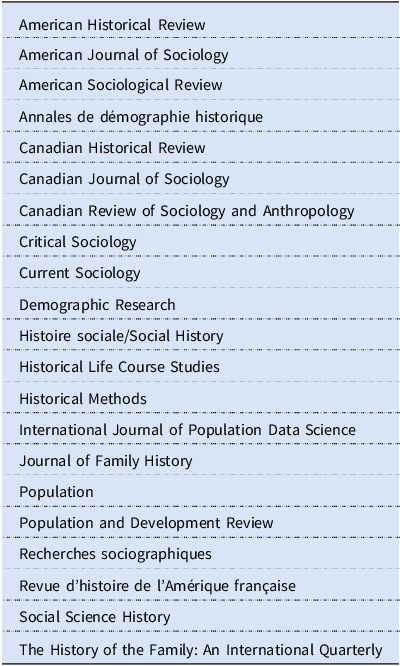
Our systematic review across 21 journals identified 115 articles focused principally on a critical assessment of some aspect of a historical population source; the majority of these articles focused on historical censuses (see the list of journals in Table 1).
List of journals reviewed, 2000–2024

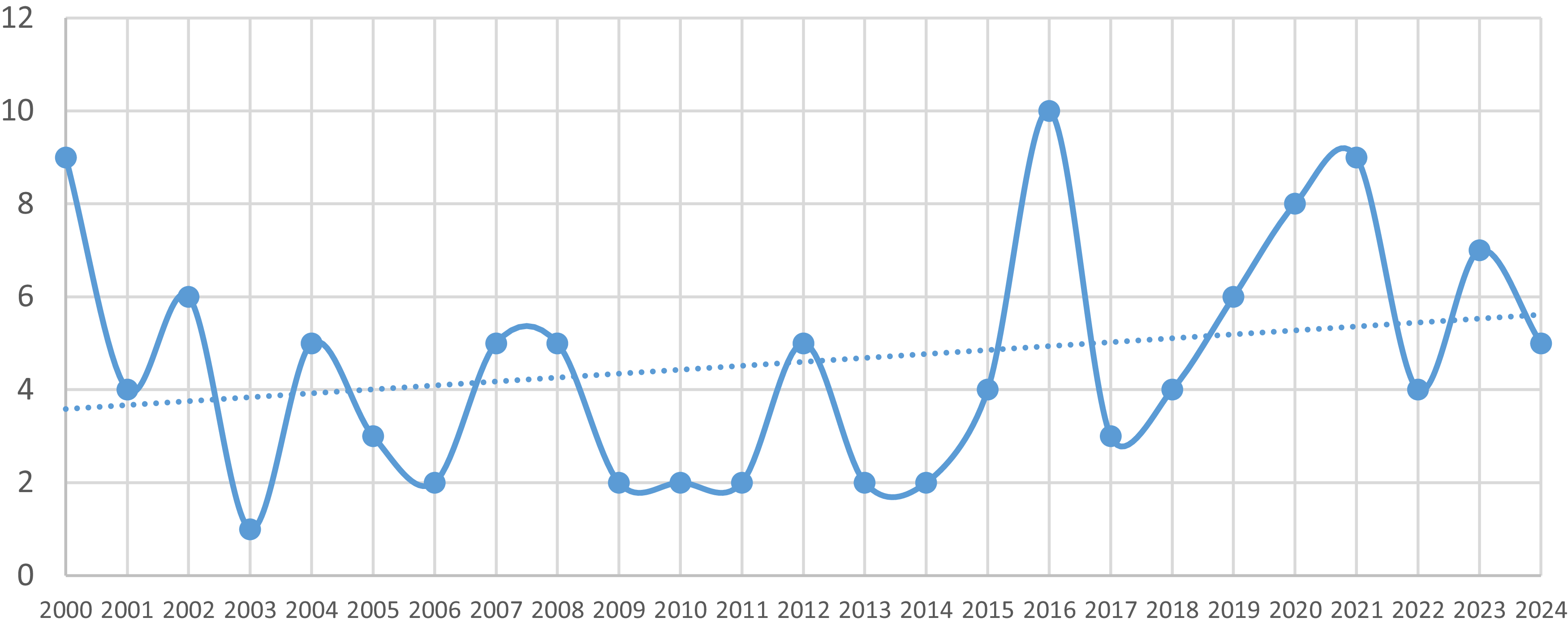
Our survey suggests that this is a niche field, easily surpassed by articles that present new databases and new methods. From a peak observed in 2000 (the year the CFP special issue came out), the number of articles hovered between two and four between 2000 and 2015, but then we observe an upward trend in the number of critical articles, which is consonant with the post-2010 rise in quantitative history identified by Ruggles, Baskerville, and Gaffield in two recent articles (Figure 5). The recent upswing resulted from special issues presented in Social Science History and Historical Life Course Studies. The journal Historical Methods accounts for about 30 percent of these articles, and Social Science History and The History of the Family for 13 percent each. Three other reviews (Historical Life Course Studies, Annales de démographie historique, and American Historical Review) together account for about a fifth of these articles. One quarter of the articles identified are then scattered across the remaining 18 journals in our collection. Undoubtedly, we have missed many articles and excluded certain journals that ought to have been included in this collection, but this review allows us to establish some patterns.
Source criticism of historical population data: Distribution of articles by year of publication, 2000–2024.
Source: Topic analysis of source criticism of historical population data conducted on journals listed in Table 1. Lisa Dillon and Christine Durant, Université de Montréal, 2024.

Examining the distribution of articles by journal type shows that these articles were predominantly published in quantitative history journals and less often in general history, historical demography, and sociology journals. Part of this gap is explained by the choice of some scholars in history and sociology to consolidate their research in books. Indeed, since 2000 several key monographs that detail the history of censuses and other historic population sources have been published, including The Politics of Population: State Formation, Statistics, and the Census of Canada, 1840–1875 by Curtis (Reference Curtis2001), Compter et classer: Histoire des recensements américains by Schor (Reference Schor2009), Antecedents of censuses from medieval to nation states: How societies and states count by Emigh et al. (Reference Emigh, Riley and Ahmed2016), Censuses and Census Takers: A Global History by Thorvaldsen (Reference Thorvaldsen2018), and Quantitative Methods in the Humanities (Reference Lemercier and Zalc2019) by Claire Lemercier and Claire Zalc. A complementary area of research addresses the expression and treatment of ethnic and racial identities in historic population sources, merging constructivist understandings of ethnic and racial identity past and present and often presenting international comparisons (see, e.g., Axelsson and Sköld Reference Axelsson and Sköld2011; Bilge Reference Bilge2004; Emigh et al. Reference Emigh, Riley and Ahmed2015; Emigh et al. Reference Emigh, Riley and Ahmed2016; Kertzer and Arel Reference Kertzer and Arel2001a; Ruppert Reference Ruppert2009; Stevens et al. Reference Stevens, Ishizawa and Grbic2015). A systematic review of this particular field is beyond the scope of this address. Nevertheless, research on the construction of ethnic and racial identities in population sources and broader traditions of source criticism both emphasize the importance of top-down and bottom-up perspectives in analyses of the census, albeit with varying degrees of emphasis (Emigh et al. Reference Emigh, Riley and Ahmed2015: 487; Emigh et al. Reference Emigh, Riley and Ahmed2016: 11; Kertzer and Arel Reference Kertzer, Arel, Kertzer and Arel2001b: 2–4, 27). Authors of articles included in our review generally agree that the primary sources used to create historic population data are the product of multiple intersecting influences. These influences extend from the initial structural and procedural decisions by governmental or church administrators all the way to data preparation decisions made by data creators. The results represent “lengthy chains of observations of observations” (Curtis Reference Curtis2001: 29). As research in this field has proliferated, the topics addressed encompass every stage in the creation of these sources and data.
Scholars chronicle changes in the conceptions that underpin population sources, including inconsistencies or impediments in the structure of enumeration forms. For instance, Curtis (Reference Curtis2001) critiqued the simultaneous enumeration of persons present and absent in the 1852 and 1861 censuses of Canada, while Cherkesly et al. (Reference Cherkesly, Dillon and Gagnon2019) discussed overlapping age categories for female youth and divergent French and English enumerator instructions in the 1831 Quebec censusReference Curtis Reference Cherkesly, Dillon and Gagnon. Other researchers address how the scope of certain questions changed or was broadened over time, resulting in a rise or fall in the prevalence of that category. Wisselgren and Vikström note, for example, that the addition of physical impairments to the categorization of disability data in the twentieth-century Swedish census resulted in an increase in the prevalence of disability (Wisselgren and Vikström Reference Wisselgren and Vikstrom2023: 67, 73). Underenumeration of particular population subgroups is commonly addressed and often judged a more serious problem than enumeration mistakes. In his study of the US Manufacturing Census 1860–1880, Healey (Reference Healey2016: 29–30) found that the under-enumeration of certain manufacturing sectors “can easily exceed 50 percent coupled with a clear tendency toward the omission of the larger companies across multiple sectors.” Faced with census undercounts, Bailey et al. (Reference Bailey, Lin, Shariq Mohammed, Mohnen, Murray, Zhang and Prettyman2023: 140) emphasize the strength of vital records, which, they argue, were collected with greater accuracy than censuses due to the need to identify specific identities, dates, and family membersReference Bailey, Lin, Shariq Mohammed, Mohnen, Murray, Zhang and Prettyman.
Some researchers express reservations about the quality of enumeration based on variability of enumerator practice, low pay, and assumptions made by the enumerator. For example, Healey (Reference Healey2016: 12) noted that “… even within a single census, enumeration was conducted at a large number of geographical locations approximately simultaneously, by different groups of census employees, of varying enthusiasm, knowledge, and experience.” They note common enumerator errors in name and age fields and double-check large numbers, interpret the use of ditto marks, identify variations in units of measurement across enumerators, and locate data gaps due to missing manuscript pages (see, e.g., Cherkesly et al. Reference Cherkesly, Dillon and Gagnon2019: 116). For Helgertz et al. (Reference Helgertz, Price, Wellington, Thompson, Ruggles and Fitch2022: 12), the variability of respondent reporting and enumeration practice means that “… it is difficult for manual linkers to maintain consistent criteria for determining matches. It is difficult to fully document the decision process, making replication impossible.” Other researchers express more sanguine assessments of enumerators’ work, reckoning with the diverse circumstances and conditions enumerators encountered. In their prosopographical study of census-takers in the 1891 Ontario census, Kennedy and Inwood concurred with Dunae’s earlier conclusions for their British Columbian counterparts that “census-takers seem to have been conscientious, methodical, and reasonably efficient,” while Duzett et al. concluded that “widespread fraud in a historical census is likely to be very limited” (Dunae Reference Dunae1998: 237; Duzett et al. Reference Duzett, Hepps, Otterstrom and Price2025: 16; Kennedy and Inwood Reference Kennedy and Inwood2012).
Critical assessments of population sources extend to the work of clerks in post-enumeration processing. In his examination of the Censuses of Manufactures from 1929 to 1935, Ziebarth (Reference Ziebarth2015: 188) interpreted certain markings by clerks on original schedules as edits “to fix obvious mathematical problems in, say, calculating total costs … Other edits are more inscrutable … Maybe more important than the level of editing per se … is to what extent this editing differed over the years.”Reference Ziebarth
Scholars writing these critiques have begun to address how the data are shaped by the data processing staff via truncation of lengthy strings or decisions to drop responses to certain questions such as the right to vote or children ever born if the respondent was outside the prescribed universe for that question. For example, in their analysis of the British manufacturing census data, Bennett and Hannah (Reference Bennett and Hannah2022: 75) discuss the truncation of long strings during data entry, determining that “the effects mainly derive from transcribers ignoring additional details toward the end of complex employer responses.” Reference Bennett and HannahWhile the large size of new data sources is welcomed as a research advantage, the sheer scale of these sources and language-related errors has raised concerns about the transcription process.
Notwithstanding expansive scholarship on the imperfections of routinely generated historical sources, social science historians remain committed champions of their use. In the spirit of the “New Social History,” these sources continue to represent our most important source of socioeconomic and cultural information about large numbers of people in the eighteenth, nineteenth, and twentieth centuries. Furthermore, researchers are able to perform diagnostics that vary extensively in their approach and variety. Some detailed revision work is possible with smaller nineteenth-century censuses or by comparing census returns for particular communities to alternative primary sources. Some researchers have done so by examining what Crowston and Lemercier (Reference Crowston and Lemercier2019: 5) call “weird cases” or “edge cases” (or, as I heard on at the 2024 conference, “penguins”), cases which seem “difficult to categorize” but whose existence “often helps to refine questions.” Crowston and Lemercier themselves did this in their study of training contracts for eighteenth-century Paris, identifying working teenagers via terms such as “workers,” “boys,” and “girls” alongside apprentices. By re-analyzing manuscript responses to marital status in the 1901 Canadian census, Annalee Lepp (Reference Lepp, Sager and Baskerville2007: 464) similarly uncovered evidence of “self-divorce or customary divorce, especially among marginalized groups such as the working classes and Aboriginal peoples, and of the extent to which these customs survived intensified state regulation and colonial repression at the turn of the twentieth century.”Reference Lepp, Sager and Baskerville
At the other end of the spectrum, scholars perform extensive diagnostics by analyzing the distribution of responses to questions that translate to continuous measures, such as age, income, or capital data. For example, Healey (Reference Healey2016: 14) evaluated the way capital data on the US Manufacturing Census 1860–1880 was reported, examining how dollar values were rounded, the use of $500 increments, and the concentration and distribution of valuesReference Healey. Historians, economists, geographers, and historical demographers study – and debate – age heaping as a measure of census procedural development, as an impediment to record linkage, as evidence of numeracy and human capital, or as a reflection of underlying demographic change (Antonie et al. Reference Antonie, Inwood, Minns and Summerfield2020, 560; A’Hearn et al. Reference A’Hearn, Baten and Crayen2009, Reference A’Hearn, Delfino and Nuvolari2022; Colvin et al. Reference Colvin, Henderson and McLaughlin2024; Dillon Reference Dillon2008; Ó Gráda et al. Reference Ó Gráda, Anbinder, Connor and Wegge2023, 241; Szołtysek et al. Reference Szołtysek, Poniat and Gruber2018).
Finally, scholars have developed many ways of overcoming the limitations of these sources by developing workarounds or by restraining their use of data in some instances. Some of these workarounds involve the use of complementary data. For example, Healey’s (Reference Healey2016: 19) recommendation is to combine the use of the manufacturing census with non-census sources including city directories, newspapers, and state government reportsReference Healey. Some researchers try to adjust in analysis for enumeration problems, for example, by designing independent variables that capture the quality of enumeration or age heaping or by conditioning analysis on survival to the beginning of observation. When evaluating factors associated with unbalanced child sex ratios in Europe, 1700–1926, Szołtysek et al. (Reference Szołtysek, Ogórek, Gruber and Beltrán Tapia2022: 107) incorporated into analysis a set of proxy variables designed to represent quality of census management, the percentage of the population recorded at age 0–1 (to capture general under-registration of infants), the ruggedness of the terrain, and a female-to-male ratio in age heaping. Costa et al. (Reference Costa, DeSomer, Hanss, Roudiez, Wilson and Yetter2017: 89) acknowledge the survival bias which affects Union Army data in the Early Indicators, Intergenerational Processes, and Aging Project and proposes adjustments to compensate, “conditioning on survival to a point in time where most veterans would have entered the pension system.” Reference Costa, DeSomer, Hanss, Roudiez, Wilson and YetterThe Integrated Public Use Microdata Series (IPUMS) project uses inference and the allocation of missing data for particular variables (Nelson et al. Reference Nelson, Magnuson, Hacker, Sobek, Huynh, Roberts and Ruggles2025: 208). Other scholars apply judicious restraints, studying more recent census years or focusing on population subgroups for which information, such as occupation, is more complete. They identify ways in which enumeration error or researcher decisions might affect research results; for example, in their discussion of own-child fertility analysis, Scalone and Dribe (Reference Scalone and Dribe2017: 21) state, “Misallocation of children to older maternal ages produces an overestimation of fertility at older ages and an underestimation at younger ages.”
Creative work with historical sources has, in turn, led to the development of new measures of kinship and neighborhoods based on an intimate understanding of census manuscripts and their structure. Researchers are creating and using a wealth of new measures based on kin propinquity, long-term proximity to the common neighbors to confirm record linkage, spatial clustering of Métis households, and bottom-up sequence analysis of household relationships (Oris and Sadeghi Reference Oris and Sadeghi2023; Bignami-Van Assche et al. Reference Bignami-Van Assche, Boulet and Simard2023; Rivard Reference Rivard2021). For example, Matt Nelson has developed family propinquity measures based on same-surname families enumerated in adjacent dwellings to understand the influence of family networks beyond the household, while Jonas Helgertz and colleagues have used common neighbors to confirm census matches across decades (Helgertz et al. Reference Helgertz, Price, Wellington, Thompson, Ruggles and Fitch2022: 18; Nelson Reference Nelson2020, Reference Nelson2025).
While researchers have developed a rich and diversified niche field in historic population source criticism, they remain principally concerned with how idiosyncrasies of primary sources will impact the quality of historic population data. To what extent are these critical understandings being communicated outside the field of social science history?
Moving forward: History under construction
Despite advances of the last 20 years, the knowledge social science historians have developed about historical population sources, their access to data, their techniques for diagnosing the type and extent of errors or idiosyncratic content, and their methods for adapting to those problems remains a kind of “insider knowledge,” particularly in the context of large-scale databases. This is unfortunate because the vigorous and often personalized debates centering on ethnic identity and community membership, which are occurring in public spaces, are premised on competing interpretations of historical genealogical sources but seemingly without firsthand experience in grappling with the strengths and limits of these sources.
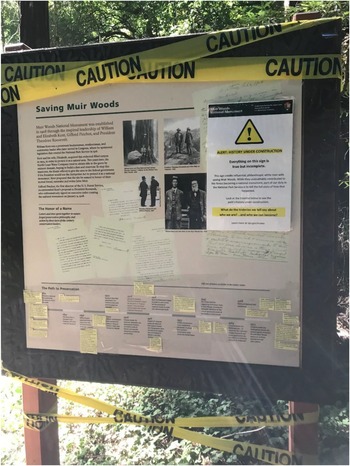
This communication gap brings me to the notion of History Under Construction, a phrase I learned while visiting Muir Woods National Monument near San Francisco in 2021. Muir Woods is an old-growth redwood forest located in the Golden Gate National Recreation Area near San Francisco. In 2021, park interpreters had revised a sign describing the role of elite male conservationists in the creation of the park (National Park Service n.d.) (Figure 6). They wrapped a park sign in yellow construction tape and added a Caution symbol and additional timeline markers to acknowledge the efforts of Indigenous peoples and women to save this natural preserve. In a blog post lauding this effort, historian Watenpaugh (Reference Watenpaugh2025) explained, “The rangers at Muir Woods had been able to put these elements of history together in a way that pushed visitors to hold possibly contradictory ideas in mind and consequently get more from their experience in the park than just a passing glimpse of the sublime.”Reference Watenpaugh Footnote 3 I was struck by how this sign represented the process of history-making laid bare, and it reminded me of the original CFP approach to transform critique of the census into a veritable research activity.
History Under Construction: Saving Muir Woods, Muir Woods National Monument, 1921 (personal photo of author).

What we need to do now is provide a broader community of researchers with the tools they need to encourage and facilitate their own diagnostic work with these data. This outreach is particularly crucial to facilitate research on marginalized groups who are not easily observed but who were lynchpins in the processes of social reproduction. This History Under Construction agenda would analyze characteristics of historical sources, notably idiosyncratic patterns, as a window onto sociocultural dynamics of historic populations; it would find ways to repurpose the data or identify alternative points of entry that allow us to transcend limitations of the source, and it would represent microdata based on this source as a work in progress. This approach resonates with Janine Solberg’s (Reference Solberg2012: 54) call for “more explicit, discipline-specific conversations that consider the role and influence of digital technologies in our research” or, as Jesse Hoffnung-Garskof (Reference Hoffnung-Garskof2021: 112) puts it, “to be transparent about the relationship of our research methods to our scholarly assertions.”Reference Hoffnung-Garskof Reference Solberg
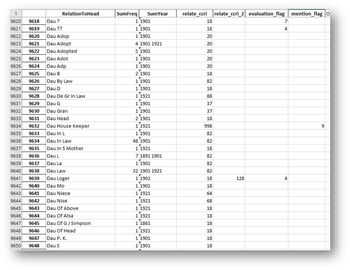
Historical database creators already produce a wealth of tools and documents in the course of preparing data. For example, historical database projects such as The Canadian Peoples commonly use comprehensive data dictionaries to code variables; these dictionaries record coding decisions and can be copied, revised, or used to graft an alternative coding scheme onto the data (see Figure 7). The coding of supplementary variables that indicate multiple responses or anomalous content can help researchers explore patterns of unexpected or non-normative information. While critics outside social science history might presume that the use of common classification schemes diminishes nuances in the source, the choice of coding scheme and its implementation, in fact, remains open as long as users have access to dictionaries used in the first instance (Lemercier and Zalc Reference Lemercier and Zalc2019: 64). Flag variables that indicate data quality or anomalous responses are a common feature of historical population datasets and can also be used to read data against the grain. Most importantly, re-analyzing original string responses available alongside coded information allows researchers to manipulate and reframe the data in accordance with their own research objectives.
Excerpt, Relationship to household head data dictionary, The Canadian Peoples Project and Programme de recherche en démographie historique (Université de Montréal), 2025.

Yet data dictionaries tend to remain black-boxed as internal reference files, and supplementary variables, flag variables, and string data are not always available outside projects. The flexibility these tools provide in using the data is obscure except to seasoned users. Prominent historical database providers have found various ways to promote and facilitate access to their data at the tail end of the project, via extract systems, online tabulators, or historical mapping portals. For example, IPUMS provides an online abacus to tabulate variables from any census year, while the Copper County Historical Spatial Data Infrastructure/Keweenaw Time Traveler has developed a “spyglass” allowing users to “peek through time” on their historical maps by comparing two different map years together or by comparing a present-day satellite image with a historical map (IPUMS 2025; Lafreniere et al. Reference Lafreniere, Weidner, Trepal, Scarlett, Arnold, Pastel and Williams2019: 142).Footnote 4 What if database creators developed a similar accessibility to the internal workings of the database creation project, essentially incorporating elements of a makerspace into their data portals?
Access to these tools would help a broader community of users engage more fully with historic population data as data under construction, developing their own diagnostics, sensitivity tests, and, ideally, alternative measures of sociocultural and economic characteristics. Social science historians could draw upon these approaches as a point of entry to engage in public discourse on families and identity. This is where I circle back to the problematic nature of genealogical data for researching Indigenous identity and even to the implicit challenge of my grandfather’s double enumeration inside and outside the family home. The greatest power of historic population data, I believe, is how it allows us to explore the dynamics of family and kin from multiple vantage points. Whether we do so via kin propinquity measures or by analyzing neighbors and neighborhoods, via sequence analysis of household relationships, Gephy graphs of kinship nodes and ties, or spatial clustering of households that share ethnicity, or by exploring both biological and non-biological forms of kinship such as foster children or by addressing patterns of interaction such as mixed marriages, or by searching for children in institutional care, deeper engagement with these rich historic population microdata offers diverse opportunities to explore the relational aspects of identity that are now viewed as central to the history of historically marginalized peoples.
At the end of the day, historical database creators must recognize that we are in a position of power: we negotiate the license agreements with our genealogical partners, agreements which dictate the terms of data dissemination; we choose the extent to which our data creation practices are black-boxed or not; we decide what data access features are and are not included in our website portals. But, in the words of Spiderman’s narrator, “with great power comes great responsibility” (Lee and Ditko Reference Lee and Ditko1962: 11), and we owe it to a broader community of researchers to provide a better bridge and a clearer invitation into our makerspace.
I finish with a hopeful phrase written by past SSHA president Gutmann (Reference Gutmann1984: 5) in a Historical Methods article: “Historical demography is rather like alchemy. Its practitioners work with documents never designed to produce its ends and yet managed to derive remarkable results.” I would say that the creation of historical population data is also a kind of alchemy. The creative reworking of historical population data is an exciting opportunity, and we can take our cues from scholars who have already shown the way.
Acknowledgments
I would like to thank research assistant Christine Durant for her work reviewing 21 journals and compiling articles for the section “Source criticism of historical data in the twenty-first century.” I also express my appreciation to Simone Wegge and Martin Dribe, who offered valuable suggestions for the revision of this address. I dedicate this address to the memory of Gordon Darroch (Professor Emeritus, Department of Sociology, York University).

 Open access

