


Introduction
Volunteerism is essential for meeting gaps in service provision by the state and its institutions (Monforte, Reference Monforte2020; Verhoeven & Van Bochove, Reference Verhoeven and Van Bochove2018). Further, with its collateral benefits to public health outcomes and social integration, volunteering has been promoted as a social norm (Boje, Reference Boje2015; Jenkinson et al., Reference Jenkinson, Dickens, Jones, Thompson-Coon, Taylor, Rogers and Richards2013).
Aligned with this recognition of volunteerism, research has identified various antecedents of volunteerism (Snyder & Omoto, Reference Snyder and Omoto2008). Volunteer motivations form a major antecedent group that predicts and sustains volunteering (Chacón et al., Reference Chacón, Gutiérrez, Sauto, Vecina and Pérez2017). Conceptualisation of these motivations is largely guided by functional motivation theory. Volunteerism scholars have largely focused on clarifying and expanding the essential functions for volunteers (Butt et al., Reference Butt, Hou, Soomro and Acquadro Maran2017; Chacón et al., Reference Chacón, Gutiérrez, Sauto, Vecina and Pérez2017), particularly through examination of the Volunteer Functions Inventory (VFI; Clary et al., Reference Clary, Snyder, Ridge, Copeland, Stukas, Haugen and Miene1998).
Concurrently, there is a trend towards other socio-political forms of civic participation (CP) beyond volunteering in formal social service organisations (SSOs) (Ekman & Amnå, Reference Ekman and Amnå2012; Monforte, Reference Monforte2020; Williams et al., Reference Williams, Cloke, May and Goodwin2016). This trend challenges the traditional notion of a volunteer as an apolitical provider of unpaid services (International Labour Organization, 2011). It can be attributed to mistrust in political systems and critical attitudes towards neoliberal welfare (Sealey & Handy, Reference Sealey and Handy2023; Williams et al., Reference Williams, Cloke, May and Goodwin2016).
The recent COVID-19 pandemic underscored this participation trend, as it created socioeconomic needs that overwhelmed the state’s capacity. Both volunteering as service provision and socio-political action advocating for structural change have surfaced in response (Cai et al., Reference Cai, Okada, Jeong and Kim2021; Harris, Reference Harris2021; Lorch & Sombatpoonsiri, Reference Lorch and Sombatpoonsiri2022), resulting in greater recognition of the fundamental role of CP in promoting societal welfare (Meade, Reference Meade2020).
However, scant literature examines whether the functional motivations apply to volunteers engaging in socio-political forms of CP. The limited studies on these forms of CP adapting the VFI involve environmental conservation volunteers, which includes some advocacy for the environment or their affiliated programmes (Agnello et al., Reference Agnello, Vercammen and Knight2022; Pagès et al., Reference Pagès, Fischer and van der Wal2018; Wright et al., Reference Wright, Underhill, Keene and Knight2015). There is no research examining the nuances of these functions in such CP. This is an important research gap as function fulfilment is relevant for both the initiation of volunteering and volunteer satisfaction (Chacón et al., Reference Chacón, Vecina and Dávila2007; Clary et al., Reference Clary, Snyder, Ridge, Copeland, Stukas, Haugen and Miene1998; Finkelstein, Reference Finkelstein2008). Effective matching of volunteer recruitment messages to the potential volunteers’ dominant motivation also increased the response rate to recruitment calls (Snyder & Omoto, Reference Snyder, Omoto, Liu, Holosko and Lo2009). Research needs to give due attention to volunteers engaging in socio-political forms of CP, for the promotion of societal development. COVID-19 has also highlighted the importance of CP in disaster response. Public health researchers and practitioners have sounded calls to strengthen societal preparedness for the next pandemic threat (Mipatrini et al., Reference Mipatrini, Montaldo, Bartolini, Rezza, Iavicoli, Ippolito and Petersen2022), meriting an examination of how functional motivation theory can be applied to understand emergent CP in such situations.
The current paper examines the transferability of functional motivations as a CP antecedent and links this antecedent in a mechanism to address the conceptual gap between intention and actual participation in the literature. The mechanism also sheds light on COVID-19’s impact on participation.
Theoretical Background and Research Questions
Conceptualising Civic Participation
CP is conceptualised in this paper as voluntary activities by concerned citizens towards bettering the circumstances of others and improving the conditions within the community (Adler & Goggin, Reference Adler and Goggin2005; Ekman & Amnå, Reference Ekman and Amnå2012). There is consensus that volunteerism and civic action are related behaviours classified under the broad concept of CP that aim benefit some segment of society (Teorell et al., Reference Teorell, Torcal, Montero, Van Deth, Ramón Montero and Westholm2007). The theoretical relations between volunteerism and civic action can be traced to their different but complementary processes in the civil sphere—civil maintenance and civil repair respectively (Janoski, Reference Janoski2010). Civil maintenance reinforces the societal status quo while civil repair results in positive societal transformation. However, the boundaries separating these two forms of CP are often unclear and mutable (Henriksen & Svedberg, Reference Henriksen and Svedberg2010), as there are various conceptualisations of what counts as political behaviour contributing to civil repair.
Evers and von Essen (Reference Evers and von Essen2019) argued that what constitutes political versus non-political forms of CP differ contextually, and hence proposed a relational interpretation of participation that accounts for the institutional context and the important role of dominant discourse in influencing the institutional context.
Volunteering VS Socio-Political Forms of Civic Participation in Singapore
Evers and von Essen’s (Reference Evers and von Essen2019) analytical tool will be used to differentiate socio-political forms of CP from apolitical volunteerism in the Singapore context. Both socio-political CP and volunteerism are carried out in the social public spheres of associating, like grassroots organisations or SSOs, as opposed to political CP which occur in the political sphere. However, while volunteerism is consensual to the dominant discourse, sociopolitical CP engage in issues that are contested or contrary to the dominant discourse.
In Singapore, the ‘Many Helping Hands’ approach taken by the state towards welfare provision and nation-building sees the state acting as the overseer and major sponsor for welfare services, while the community—SSOs, volunteers and donors—step in (Ang, Reference Ang, Soon and Koh2017). It emphasises the significant role of volunteers as a ‘helping hand’ to support the SSOs in their services to benefit the community in partnership with the state. Other activities that challenge the state’s narrative outside of these tend to be seen as socio-political or political.
Emergent Civic Participation in Disasters
Emergent CP refers to unplanned, self-organised assistance or other CP activities initiated by unpaid citizens in response to disasters or crises (Aguirre et al., Reference Aguirre, Macias-Medrano, Batista-Silva, Chikoto, Jett, Jones-Lungo, Smith, Stebbins and Grotz2016; Simsa et al., Reference Simsa, Rameder, Aghamanoukjan and Totter2019). Given its unpredictable nature, formal emergency or disaster responses have largely yet to include emergent CP in their protocols (Aguirre et al., Reference Aguirre, Macias-Medrano, Batista-Silva, Chikoto, Jett, Jones-Lungo, Smith, Stebbins and Grotz2016; Hartley & Jarvis, Reference Hartley and Jarvis2020). This is a pertinent issue, as the extent of disasters may warrant a response beyond the capacity of formal organisations, which emergent CP can step in to fill (Aguirre et al., Reference Aguirre, Macias-Medrano, Batista-Silva, Chikoto, Jett, Jones-Lungo, Smith, Stebbins and Grotz2016; Andion, Reference Andion2020; Glass, Reference Glass2001). The COVID-19 pandemic also served as a bleak reminder of the essential role of civil society regardless of the nature of the state’s response or state-civil society relations (Cai et al., Reference Cai, Okada, Jeong and Kim2021; Hu & Sidel, Reference Hu and Sidel2020; Lorch & Sombatpoonsiri, Reference Lorch and Sombatpoonsiri2022).
At the same time, emergent CP is sometimes viewed as a ‘second disaster’ because it can impede response efforts in the affected areas (Harris et al., Reference Harris, Shaw, Scully, Smith and Hieke2017; Lodree & Davis, Reference Lodree and Davis2016). Yet, in contrast with natural disasters like earthquakes, where disaster response is targeted at that specific locality and often requires professional skills (e.g. search and rescue), the pandemic required a range of responses to meet the non-clinical needs and reinforced the salience of locality-based responses in the face of physical distancing measures to curb the virus spread. It thus appeared that the role of emergent CP was more positive than detrimental in the pandemic response.
Emergent social identity is the antecedent that has the most research so far for emergent CP like mutual aid and coordinated efforts with agencies (Drury, Reference Drury, Jetten, Haslam and Haslam2011; Maki et al., Reference Maki, Dwyer, Blazek, Snyder, González and Lay2019; Ntontis et al., Reference Ntontis, Drury, Amlôt, Rubin and Williams2018). Researchers point to a ‘common fate’ where people similarly affected by the disaster feel a sense of belonging and togetherness (Elcheroth & Drury, Reference Elcheroth and Drury2020; Ntontis et al., Reference Ntontis, Drury, Amlôt, Rubin and Williams2020). The social identity model of collective resilience explains that ‘common fate’ is an antecedent to a shared identity as a collective, which then leads to psychological transformations that result in ‘empowered collective action’ (Drury, Reference Drury, Jetten, Haslam and Haslam2011, p. 201). The social identity approach thus points to how ‘common fate’ can facilitate building social networks between strangers towards cooperative action in CP (Drury et al., Reference Drury, Brown, González and Miranda2016; Ntontis et al., Reference Ntontis, Drury, Amlot, Rubin, Williams and Saavedra2021).
Functional Motivation Theory
The VFI is the major conceptual framework under this theoretical approach and consists of six distinct functions that volunteering can fulfil for a person. The six functions are: to express important values (Values Expression), gain an understanding of the world and skills (Understanding), personal enhancement (Enhancement), acquire career-related exposure (Career), stay connected in social networks (Social) and avoid negative feelings and personal problems (Protective) (Clary & Snyder, Reference Clary and Snyder1999). A meta-analysis found that these functions significantly predicted three volunteer outcome variables (Zhou & Kodama Muscente, Reference Zhou and Kodama Muscente2022). This underscores the reliability of the VFI in understanding how volunteers’ motivational patterns across diverse contexts link to the important volunteer outcomes of satisfaction, intention to continue, and volunteering frequency. When there are situational reasons that CP engagement can meet the volunteer’s motivations, the likelihood of volunteer initiation significantly increases (Snyder & Omoto, Reference Snyder and Omoto2008).
Other conceptually distinct functions like religious beliefs and interest in the activity are shown to be important motivations (Agnello et al., Reference Agnello, Vercammen and Knight2022; Butt et al., Reference Butt, Hou, Soomro and Acquadro Maran2017). Further, the limited research comparing the motivations cited by the same volunteers through the VFI instrument and open-ended questioning revealed stark differences in results (Allison et al., Reference Allison, Okun and Dutridge2002; Vecina & Daniela, Reference Vecina and Daniela2019). This casts doubt that the VFI accurately reflects the functions that volunteering fulfils for the person. Still, longitudinal and experimental studies by Kiviniemi and colleagues (Reference Kiviniemi, Snyder and Omoto2002) revealed that the relative difference in the six functions could distinguish between individuals with either single or multiple motivations. Respondents with conceptually different VFI functions were also linked with poorer volunteer outcomes like lower fulfilment of important motivations and increased volunteering-associated stress. This highlights that despite the drawbacks, the VFI is a good tool for understanding volunteering antecedents.
However, there is thus far limited application beyond planned volunteering within the formal organisational context. Scholars also seldom use VFI to study emergent CP during disasters. Two recent studies on emergent informal helping during the onset of the COVID-19 pandemic (early-2020) used functional analysis to understand volunteers (Trautwein et al., Reference Trautwein, Liberatore, Lindenmeier and von Schnurbein2020; Yang, Reference Yang2021). Common volunteering antecedents were linked to Values Expression, Enhancement and Protective functions, underscoring VFI’s utility in understanding emergent CP during disasters.
Research Questions
In this paper, the research questions addressed are:
1. To what extent do the volunteer functions identified in literature overlap with the intrapersonal antecedents of CP?
2. How did COVID-19 impact CP?
Study Design
A critical realist grounded theory methodology (CRGT; Danermark et al., Reference Danermark, Ekström and Karlsson2019; Hoddy, Reference Hoddy2019) was used to identify mechanisms leading to CP. CRGT was adopted to systematically investigate the most plausible hypothesis from both existing theories and the research data (Kennedy & Thornberg, Reference Kennedy, Thornberg and Flick2018). The literature review above hence served as a tool for theoretical sensitisation to guide the research design while being treated as provisional in the data collection and analysis (Timmermans & Tavory, Reference Timmermans and Tavory2012).
Ethical clearance for the study was received from the College Human Subjects Ethics Sub-committee of the researcher’s affiliated university prior to the data collection.
Sample
The sample consisted of experts in CP based on their paid work that involved citizens participating in CP, or personal CP participation. For the latter, interviewees had to participate at least twice monthly over a period of 6 months in Singapore, to meet the study criteria of CP expertise. Verbal informed consent was sought from the interviewees, and 39 were interviewed from October 2021 to August 2022.

Characteristic |
N |
|---|---|
Gender |
|
Female |
18 |
Male |
18 |
Non-binary |
2 |
Declined to disclose |
1 |
Race |
|
Chinese |
26 |
Indian |
3 |
Malay |
7 |
Others |
1 |
Declined to disclose |
1 |
Forms of CP |
|
Volunteering |
30 |
Socio-political |
15 |
Main participation platform |
|
Ground-up initiative |
17 |
Formal SSO |
13 |
Personal collaboration |
3 |
Cross-sector involvement |
3 |
Grassroots organisation |
1 |
Not currently involved |
2 |
As Singapore is a multi-racial society with Chinese as the majority race group, the researcher oversampled for participants who were classified as Malay or Indian according to the official population census (Singapore Department of Statistics, 2010). This was to capture any possible cultural differences that might influence CP.
Over one-third of the interviewees were involved in some socio-political CP. This was in conjunction with volunteering, with 11 of the interviewees involved in both volunteering and socio-political CP. The main participation platform was also noted. Over one-third (n = 17) participated in or were co-founders of ground-up initiatives. These refer to informally organised groups that are usually set up to address a specific or localised area of concern, which can be counted as volunteering or socio-political CP. For example, low-income communities are often a target for the ground-up initiatives represented in this sample. Volunteering to benefit these communities involved food distribution and providing academic support. Socio-political CP included mutual aid and writing to the national newspaper to highlight community knowledge on related issues. One interviewee worked as a volunteer manager in a formal SSO, while the rest were volunteers. Three were involved in personal collaborations, meaning they found opportunities for CP through their networks. Cross-sector CP involvement included diverse stakeholders like political parties, private companies, and civil society groups in the social sphere to advocate for shifts in public discourse to influence public policy. Lastly, one volunteered in a grassroots organisation, which in Singapore is a state-linked entity that subtly supports the ruling political party. Two participants were interviewed who were at that time not involved in any CP, a decision made through theoretical sampling which will be discussed next.
Data Collection
A purposive sample was first created to generate quality data for future theoretical sampling (Cutcliffe, Reference Cutcliffe2000). Participant recruitment subsequently turned to contextual and demographic variation. Sampling also ensured demographic representation in characteristics like income. Lastly, after the emergence of major theoretical categories, attention in theoretical sampling was turned to deepening the concepts through asking specific questions to diverse interviewees.
Theoretical sampling memos were used to direct data collection. The researcher made notes on future interview questions to ask and the recruitment of interviewees with specific characteristics. This was done during data analysis, which occurred synchronously with data collection.
Data Analysis
Interview data was repeatedly read and extracts with similar content were assigned the same codes. This was conducted based on the specification of the GTM techniques by Strauss and Corbin (Reference Strauss and Corbin1998) and the constant comparison technique (Boeije, Reference Boeije2002; Scott & Howell, Reference Scott and Howell2008).
In line with CRGT, both codes with a theoretical basis and emergent codes were used to develop open codes into theoretical categories (Titan et al., Reference Titan, Harvey, Wicking, Nurjannah and Francis2020). Subsequently, axial coding and abductive interfacing of data with theory were used to develop main categories (Hoddy, Reference Hoddy2019; Strauss & Corbin, Reference Strauss and Corbin1998).
Findings
Summary
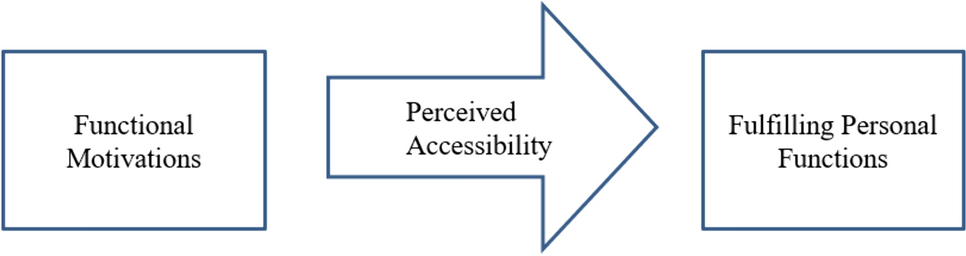
Abductive reasoning (Burks, Reference Burks1946) found that functional motivations were an antecedent in the mechanism Fulfilling Personal Functions (Fig. 1) leading to participation. More attention will be focused on explaining the motivations that are experienced uniquely by those who engage in socio-political CP, given that there are some overlaps with literature.
Fulfilling personal functions

Perceived accessibility of CP was a necessary condition for the effectuation of functional motivations. While functional motivations form the intention to engage in participatory behaviours, this antecedent is latent without the presence of perceived accessibility. Fulfilling Personal Functions is a state of CP engagement that reinforces identity integration with CP when the functional motivations are effectuated.
Functional Motivations
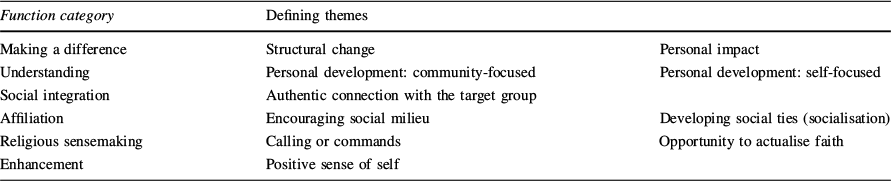
Table 1 shows the function categories with the defining themes indicating the different ways that these categories can be experienced.
Function categories and defining themes

Function category |
Defining themes |
|
|---|---|---|
Making a difference |
Structural change |
Personal impact |
Understanding |
Personal development: community-focused |
Personal development: self-focused |
Social integration |
Authentic connection with the target group |
|
Affiliation |
Encouraging social milieu |
Developing social ties (socialisation) |
Religious sensemaking |
Calling or commands |
Opportunity to actualise faith |
Enhancement |
Positive sense of self |
The six function categories reflect the interviewees’ desire to engage in a CP activity that is personally important or meaningful. Details regarding each part of the mechanism are presented below.
Firstly, making a difference is the sense of personal gratification derived from making a positive impact of perceived consequence, as seen from this representative extract: ‘I know I [can’t] help them much, you know, but I think there’s always a small little thing that you can help them’(P14, F, 38 years old, Formal SSO). Even if one sees that the efforts are insufficient to address all the needs, if the efforts had been of direct observable consequence, it can be a motivation forming the intention to participate. The two defining themes differentiate those who engage in socio-political CP from those who volunteer. While interviewees from both groups experience the two defining themes, the former are motivated by the prospect of structural change through their participation. An example quote from P23 who participated in mutual aid (A, 22 years old, COVID-19 Ground-up initiative) reflects the theme of structural change: ‘… I obviously have a purpose, the purpose is to reduce gaps in society’. This contrasts with being motivated by the personal impact on the target group: ‘As long as everyone can get something, I [am] happy. Because COVID-19 come, everybody also stress… So at least we help [by distributing food], at least they [are less stressed] [sic]’ (P15, M, 55 years, Formal SSO).
Secondly, the Understanding category overlaps with that in the VFI, which covers the theme personal development: self-focused. Like the previous category, interviewees across the various forms of CP experienced this theme as in this representative quote: ‘So my initial engagement was learning of biodiversity. [Because] while I was interested in wildlife when I was young, I didn’t have a chance to study biology in school’ (P37, M, 48 years, Cross-sector involvement). On the other hand, community-focused personal growth involves growth in skills and knowledge related to benefiting the community. Interviewees who experience this theme engage in community issues and influence organisational decisions. While not explicitly seeking to influence policy decisions, they exhibit socio-political motivations for systemic change. For example, one interviewee who engaged in media advocacy on social issues shared that a ‘growth element’ was present in that he ‘learned about the [social] issue, about this particular system… about how [people] are affected by policy’ (P36, M, 25 years, Pre-COVID-19 Ground-up initiative). Another interviewee similarly valued personal development in how to build an ecosystem for change: ‘I want to up my ante by contributing in the advocacy space, for example, and building more networks of people, more spaces for action, where action can be taken to shift the policy narratives’ (P31, M, 29 years, Pre-COVID-19 Ground-up initiative).
The third category is social integration, experienced as having an authentic connection with the target group. It is illustrated by this representative excerpt: ‘I find it very… meaningful because I don’t know where else I would make such a personal connection with a migrant worker, at such a regular basis’ (P19, F, 23 years, Pre-COVID-19 Ground-up initiative). It entails connections with target groups that are at the periphery of the dominant socioeconomic structure of Singapore, like migrant workers. Through their participation, the interviewees are incorporating these groups into the socioeconomic structure. P11 shared that his volunteers appreciated the raw authenticity of connections with the low-income families they served, as opposed to other volunteering opportunities where they felt like they ‘are not doing anything there… [and it] seems really curated, really really safe’(P11, M, 29 years old, COVID-19 Ground-up initiative).
The fourth category, Affiliation, incorporates the Social function in the VFI (encouraging social milieu; Clary et al., Reference Clary, Snyder, Ridge, Copeland, Stukas, Haugen and Miene1998) and socialisation function in ABCE model (Butt et al., Reference Butt, Hou, Soomro and Acquadro Maran2017). The first defining theme, encouraging social milieu (cf. Pancer, Reference Pancer2015), encompasses the desire to fulfil social expectations of CP as a desirable behaviour but also includes the motivation of positive experiences with like-minded people. It can even overcome personal discomfort: ‘I… don’t really feel comfortable talking to new people…But because it was a church initiative, so I just went for it’ (P20, F, 35 years old, Not currently involved). Other interviewees highlighted the significance found in the interpersonal relationships forged through the CP: ‘I think after a while [the volunteers] all have become like family so a lot of us just stay on, even though we somehow get exhausted we still stay on because you know we are kind of close now’ (P39, F, 43 years old, Grassroots organisation).
The fifth category, religious sensemaking, is the meaning-making process that integrates individual religious beliefs to interpret CP-related decisions. CP was often seen as an obligation to society and part of one’s normal life, through the religious belief that one is abiding by the tenets of the faith. One interviewee expressed her perception of CP as to express ‘love’ to the migrant workers because they are a group that ‘[her] God loves’ (P19, F, 23 years, Pre-COVID-19 Ground-up initiative). Other interviewees quoted religious teachings or a religious worldview to highlight how CP was a way to actualise their faith, for instance: ‘…you know it’s mentioned [in the hadith that neighbours include those] 40 houses down left and right, so with that in mind I think that that also spurs [the Muslim volunteers] on to be socially proactive’ (P12, M, 26 years, COVID-19 Ground-up initiative).
Interviewees immersed in CP for the benefits of developing a positive sense of self as well, reflecting the enhancement function in the VFI (Clary et al., Reference Clary, Snyder, Ridge, Copeland, Stukas, Haugen and Miene1998). One interviewee’s initial foray into environmentalism was through seeking a positive sense of self, where ‘it served in a way to give [him] that purpose, that reason for living’, during a time where he ‘struggled a lot with self-esteem and [his] purpose in this world’ (P35, 37 years, Pre-COVID-19 Ground-up Initiative). Self-esteem and purpose in life were aspects of the positive sense of self sought by these interviewees.
Civic Participation as Fulfilling Personal Functions
The functional motivations in Table 1 form the intention to participate, which in the presence of perceived accessibility results in participation. Perceived accessibility is hence a crucial element for CP as Fulfilling Personal Functions. The process of Fulfilling Personal Functions is the satisfaction of personal goals and wants implicated in these motivations through participation in a matching CP activity. When this happens, there is individual identity integration with CP, which serves to maintain the person’s commitment to the CP despite personal costs. P22 exemplifies the identity integration that sustains his participation. He candidly shared that he had ‘thought of quitting’ but was reminded that [his] job is not done yet’ through a church sermon, concluding that ‘God still want[s] to use [him] for this purpose’ (P22, M, 61 years old, Formal SSO) . The desire to quit was recast into a continued sense of purpose to continue the work through ongoing religious sensemaking.
Perceived Accessibility
Perceived accessibility is a subjective mental state about one’s potential to participate in CP opportunities, influenced by individual attitudes and experiences. This mental state can be altered by situational factors, including COVID-19 (next section).
While there is insufficient data in this exploratory study to identity the main situational factors that affect perceived accessibility, the perception of discretionary time was implicated in most of these factors. The following quote illustrates this point: ‘I thought it'd be so cool if I could participate, be part of [the carnival organised by the grassroots organisation]… And so that’s how I started thinking about [volunteering there]. [But this was only a thought for years as] I had really young children’ (P39, F, 43 years, Grassroots organisation).
Underscoring the subjectivity of one’s appraisal about one’s potential to participate, an interviewee shared that he made time to volunteer during COVID-19: ‘I’ve always known that I want to help people. But then I’m [not used to spending free time on] volunteering… I guess once you make a small change in your life, other changes (volunteering) seem more realistic’ (P29, M, 25 years, Formal SSO). An unexpected finding was that COVID-19 contributed to CP via increased perceived accessibility, as with P29. This will be discussed in the next section.
COVID-19 Effects on Civic Participation
One key effect of the disaster was disruption of normal life due to the shelter-in-place (termed ‘Circuit Breaker’ in Singapore) and other social distancing measures. It had impact on the perceived accessibility of citizens who were not participating prior to COVID-19, resulting in emergent CP. These citizens (n = 7) had prior intentions to participate but felt that it was untenable for them. In essence, prior to COVID-19, functional motivations were present but not effectuated to CP as Fulfilling Personal Functions due to lack of perceived accessibility.
While the disruption was unpleasant and exerted some mental toll, the interviewees also saw this positively as having increased ‘spare time’, which then increased the perceived accessibility of CP during the pandemic. P21 encapsulated this sentiment when she reflected on why COVID-19 was a significant factor for her initiation to CP: ‘I think if I have this full extent of my social life, and like this travelling life and my work life, I don’t think I’ll have extra time to [volunteer]’ (P21, F, 24 years old, Pre-COVID-19 Ground-up initiative). Again, highlighting the subjectivity of perceived accessibility, P21 expressed desire to sustain her volunteering beyond the pandemic: ‘I do see myself doing this pretty long term. COVID just opened up this avenue of my life that I’m going to dedicate to’.
Other aspects from the disruption of normal life that contributed to the perception of increased discretionary time were work-from-home arrangements and inability to engage in other leisure activities. P30 for example shared that that partially contributed to her volunteering: ‘It was a combination of like, I had nothing else to do apart from sit at home and write papers. And especially there were a lot of calls from [the SSO] itself’ (P30, F, 32 years, Formal SSO). This emphasises the importance of perceived accessibility for participation and explains the emergent CP during the pandemic.
Another group of interviewees (n = 19) were those who were participating prior to COVID-19 (planned CP). For these interviewees, the pandemic resulted in two major impediments to ‘business-as-usual’ in planned CP: social distancing policies and risk of COVID-19 infection. These altered the nature of social interactions between people. In-person social interactions were legally prohibited at the start of the pandemic, and later, restricted to small groups. The risk of COVID-19 infection further contributed to the norm of avoiding or minimising in-person social interactions. Social interactions constitute a huge aspect of the CP activities that the citizens interviewed engaged in. The key consequence of this to existing citizens whose identities were integrated with CP was to lower the perceived accessibility for CP.
Adaptations by these interviewees to continue with planned CP can be seen as maintaining the perceived accessibility for CP such that intentions to participate can be effectuated. This involved adapting pre-pandemic planned CP, for example through continuing the same programme via digital means: ‘…we are not allowed to visit the family. So, it’s a bit difficult for us to be able to minister to the family but we still managed to help them… That means we will do all the things via the digital means for them’ (P22: M, 61 years, Formal SSO).
Another kind of adaptation was to seek other CP opportunities. These activities are categorised as such as the intention to engage was planned prior to the pandemic, and these activities are not pandemic-related. Intentionality to maintain perceived accessibility was demonstrated, as with P7 (M, 29 years old, Formal SSO) who expressed that he ‘went to find out [virtual volunteering] opportunities to try to continue volunteering amidst COVID-19'.
While the above quotes show how interviewees sustained their CP during the pandemic through adaptations to the activities or frequency, there were two negative cases where COVID-19's effect on perceived accessibility resulted in non-participation. Both interviewees cited the disruptions from COVID-19 as a significant factor in reducing the perceived accessibility, despite having the intentionality to participate. The pandemic resulted in many changes in the responsibilities of one interviewee, resulting in burn-out and ‘volunteering was the thing that got squeezed out’ (P20: F, 35 years, Not currently involved).
Discussion and Conclusion
This paper expands on previous work focusing on planned volunteering. It identifies functions in volunteer literature that overlaps with socio-political forms of CP, highlighting the socio-political nuances in the fulfilment of the Understanding and making a difference functions. The mechanism Fulfilling Personal Functions highlights that perceived accessibility for CP was required to effectuate the latent antecedent of functional motivations. The COVID-19 pandemic had differing impact on existing citizens (planned CP) and spontaneous citizens (emergent CP).
This can be understood in terms of its effect on perceived accessibility. Perceived accessibility for planned CP was reduced by the pandemic, resulting in adaptations by existing citizens to maintain it such that they can continue participation. On the other hand, the disruption of normal life increased the perceived accessibility for spontaneous citizens who had the functional motivations which were not effectuated prior to COVID-19, resulting in emergent CP.
The functional motivation theory (Clary et al., Reference Clary, Snyder, Ridge, Copeland, Stukas, Haugen and Miene1998) was shown to have crossover utility for socio-political forms of CP. However, a significant difference is the absence of Values Expression which is the top function in literature (Chacón et al., Reference Chacón, Gutiérrez, Sauto, Vecina and Pérez2017; Wong & Foo, Reference Wong and Foo2011). A possible explanation is that values expression identifies volunteers who are often characterised by their ‘altruistic and humanitarian concerns for others’ (Clary et al., Reference Clary, Snyder, Ridge, Copeland, Stukas, Haugen and Miene1998, p. 1517). The emergent function Making a difference similarly reflects a concern for others but can be distinguished from this function. Rather than a pure altruistic concern for others, making a difference is the personal gratification from observing a personal impact on the affected social group and being able to effect structural change.
The Fulfilling Personal Functions mechanism opens a promising alternative explanation for people who do not participate. This group might either have different levels or types of motivations than those who participate or have the intention to participate but not the perceived accessibility for CP. Perceived accessibility underscores the importance of the social milieu and life stage in influencing one’s participation. Thus, while intention for the behaviour is one of the strongest predictors for the behaviour itself (Chacón et al., Reference Chacón, Vecina and Dávila2007), perceived accessibility is a necessary condition for translating intention to action. The pandemic presented an opportunity for this latter explanation to emerge through the CRGT methodology.
Pandemic effects on emergent CP in this study contrasted with the major antecedent identified in literature, namely emergent social identity (Drury et al., Reference Drury, Brown, González and Miranda2016; Ntontis et al., Reference Ntontis, Drury, Amlot, Rubin, Williams and Saavedra2021). The lack of emergent social identity might stem from the unique characteristics of COVID-19 as a disaster. While people largely suffer similarly in disasters like earthquakes, the pandemic exacerbated socioeconomic inequalities (Chabbott & Sinclair, Reference Chabbott and Sinclair2020; Shadmi et al., Reference Shadmi, Chen, Dourado, Faran-Perach, Furler, Hangoma, Hanvoravongchai, Obando, Petrosyan, Rao, Ruano, Shi, de Souza, Spitzer-Shohat, Sturgiss, Suphanchaimat, Uribe and Willems2020). The privileged were much more shielded from the adverse impacts as most could work from home without income loss (Gould & Kassa, Reference Gould and Kassa2021; International Labour Organization, 2020) and could even derive some positive aspects from the pandemic (Irawanto et al., Reference Irawanto, Novianti and Roz2021; Partington et al., Reference Partington, Mashash and Hastings2022). This stratification of disaster impact can explain the absence of a ‘common fate’ (Elcheroth & Drury, Reference Elcheroth and Drury2020). Fulfilling Personal Functions appears to be a better explanation for emergent CP in this disaster context, through the effect of increased perceived accessibility for the socioeconomically advantaged. It appears that the intention to engage in CP was present pre-pandemic but not effectuated.
Implications
In the face of increasing societal polarisation threatening the fabric of modern societies (Kubin & von Sikorski, Reference Kubin and von Sikorski2021; McCoy & Somer, Reference McCoy and Somer2019), CP is even more important to mitigate the pernicious effects of exacerbated social inequality in the next pandemic threat (Mipatrini et al., Reference Mipatrini, Montaldo, Bartolini, Rezza, Iavicoli, Ippolito and Petersen2022). Intentional efforts to encourage CP can target the socioeconomically advantaged segments of the population who are likely to experience increased perceived accessibility from the social distancing measures for infection control. This can be beneficial for both the volunteer and society. The higher-income group with greater digital access were more likely to experience a greater impact on their well-being due to greater distress from perceived COVID-19-related information overload (Chen et al., Reference Chen, Lin and Cheng2022). The study findings concur with research on SV (Kulik et al., Reference Kulik, Arnon and Dolev2016; Yang, Reference Yang2021) that CP engagement can help mitigate these negative emotions.
The concept of perceived accessibility introduces a pertinent research agenda in comparing volunteers and non-volunteers. While there are motivational differences between the two groups (Clary et al., Reference Clary, Snyder and Stukas1996; Niebuur et al., Reference Niebuur, Liefbroer, Steverink and Smidt2019; Smith et al., Reference Smith, Holmes, Haski-Leventhal, Cnaan, Handy and Brudney2010), the lack of perceived accessibility for CP is likely to be a significant factor too. More research can be done on the theoretical development of perceived accessibility, particularly specific attitudinal, circumstantial, and socio-cultural factors contributing to increased perceived accessibility in normal situations, apart from the pandemic context. From the current evidence base, these factors likely have complex interrelations.
Non-volunteers often cite the lack of discretionary time as a reason for not volunteering (Sundeen et al., Reference Sundeen, Raskoff and Garcia2007). This is due to social characteristics that can be traced back to the life circumstances of the individual which affect the amount of discretionary time that can and will be spent on CP (Brady et al., Reference Brady, Verba and Schlozman1995). For example, retirees who have more free time are not more likely than those working to volunteer, because the loss in social roles and networks gained in employment may cancel out the gain in time (Einolf & Chambré, Reference Einolf and Chambré2011). On the other hand, a study found that youth civic engagement was contrary to the positive link between income and participation (Gaby, Reference Gaby2017). Youths with lower SES were more willing to help others in the community (Godfrey & Cherng, Reference Godfrey and Cherng2016). A suggested explanation was that income inequality may not contribute as much to social distance compared to adults, and simultaneously can stimulate CP through inclining them to develop sociopolitical thinking.
Limitations
Interviews were conducted in English, which may have excluded non-English speaking persons and those engaging in less visible or common forms of participation. For example, volunteers in backend roles that do not involve social interactions. The CP represented by the sample is still largely human-centric, which may mean that the emergent theory overlooks important nuances for people involved in ecocentric participation.
Conclusion
This paper demonstrated the overlapping functional motivations from planned volunteering to other forms of CP but also presented two important theoretical developments. Perceived accessibility was introduced as a factor that mediates the effectuation of functional motivations in participation. This concept allows a nuanced understanding of the intentions to volunteer and explains the pandemic’s contribution to CP. A second theoretical development is the expanded functional motivation categories and significant nuances in functional motivations for those engaged in socio-political CP. It is an important step for understanding the varied forms of CP within the socio-political context. Given the value of CP for societal security, particularly in disasters, these theoretical developments contribute to a better understanding, and thus, promotion of CP.
Acknowledgements
The author would like to acknowledge Professor Lo Tit Wing and Assistant Professor Kwan Chi Kin for their supervision and comments for the manuscript.
Funding
Open access publishing enabled by City University of Hong Kong Library's agreement with Springer Nature.
Declarations
Conflict of interest
The study has been approved by the City University of Hong Kong’s College Human Subjects Ethics Sub-committee. There are no conflicts of interest to declare.

 Open access

