


National Health Service (NHS) and social services expenditure on adults with learning disability is approximately £3000 million per annum (Department of Health, 2003) from which the costs of meeting the needs of those who are aggressive are estimated at £50–140 million (Reference Netten, Rees and HarrisonNetten et al, 2001). Changes in legislation and service provision have led to the resettlement of people with learning disability into the community, but challenging behaviour and particularly a forensic history can be an obstacle to resettlement for some. A significant proportion of people with learning disability and challenging behaviour are excluded from ordinary services (Reference Vaughan, Pullen and KellyVaughan et al, 2000), are treated out of area (Reference VaughanVaughan, 1999; Reference KearnsKearns, 2001) and face delayed discharge due to lack of specialist placements (Reference Watts, Richold and BerneyWatts et al, 2000). An offender ‘tag' may further segregate care pathways for this group, with those who offend entering statutory care earlier than those who do not (Reference AlborzAlborz, 2003) and facing exceptionally long periods of in-patient admissions (Reference Holland, Clare and MukhopadhyayHolland et al, 2002). This implies that community services are especially reluctant to accommodate people with learning disabilities who offend. However, this situation is unlikely to meet need; it contravenes human rights, government policy and recommendations; and increases the burden on the NHS (Home Office, 1990, 1995; Department of Health & Home Office, 1992; Department of Health, 1993, 2001). Thus people with learning disability who a have forensic history are subject to inequalities in access to health care and service provision. The reason for the exclusion of this group of people from services is unclear, but may be based on the assumption that they are likely to be more violent and/or less responsive to treatment than others. However, there is no evidence to substantiate whether people with learning disabilities who are suspected or convicted of offending differ from their counterparts who do not come into contact with the criminal justice system. Previous studies have evaluated an in-patient service for people with learning disability and challenging behaviour (Reference Murphy and ClareMurphy & Clare, 1991; Reference Murphy, Holland and FowlerMurphy et al, 1991; Reference Clare and MurphyClare & Murphy, 1993; Reference Gaskell, Dockrell and RehmanGaskell et al, 1995) and reported positive short-term outcomes (Reference Xenitidis, Henry and RussellXenitidis et al, 1999). However, it is unknown if offenders with learning disability within non-forensic in-patient services have a different presentation in terms of types of aggression or treatment outcome. We therefore compared patients with learning disability admitted to our assessment and treatment unit because of behaviour labelled as either ‘challenging' or ‘forensic' to determine whether there are between-group differences in presentation of aggressive behaviour during admission and in discharge placement.
METHOD
The study took place in a low secure in-patient unit with a national remit for people with mild to moderate learning disability and severely challenging behaviour. A significant proportion of these people have a forensic history.
The sample
The target population consisted of all patients with learning disability and challenging behaviour admitted to the unit since its opening and prior to 31 January 2001 (n=121). In the unit's 14-year period of service there has been no significant difference in the proportions of offenders and non-offenders admitted. We excluded from the study people whose admission did not proceed beyond an 8-week assessment phase or who were not discharged at the time of data collection. Eighty-six people with learning disability and challenging behaviour were included in the final sample and assigned to two study groups. The offenders' group (n=45) consisted of those receiving treatment under terms of a forensic order (defined as sections 35, 37, 37/41 or 38 of the Mental Health Act 1983, or probation order) during their admission. The ‘non-offenders' group (n=41) excluded people who were currently the subject of a forensic order, or who had a known history of custodial sentencing, a forensic order under the Mental Health Act or a past admission to a special hospital.
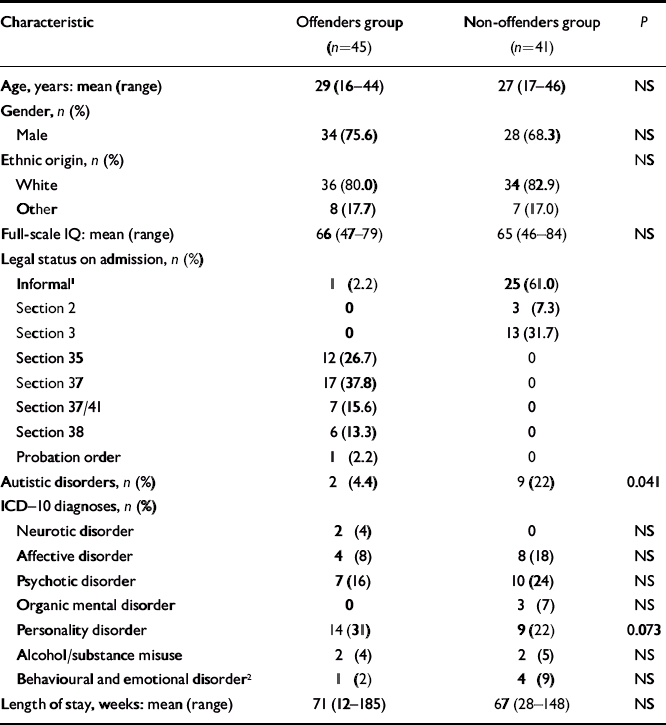
The people we included (Table 1) were predominantly young (mean age 28 years, s.d.=8), White and male, with a mean full-scale IQ of 66 (s.d.=8.07). Approximately 20% of the sample had an IQ above the accepted upper limit of 70 for the category of mild learning disability. This is because the service receives a number of referrals from general adult psychiatry and operates wider eligibility criteria for learning disability. Length of admission ranged from 12 weeks to 185 weeks (mean 69, s.d.=37.68). Those excluded were not significantly different from the final sample in demographic or clinical variables. In the offenders group aggressive behaviours were implicated in the majority of index offences (physical assault in 36% of cases and criminal damage in 20%); the remaining offences were arson (27%), sexual offences (16) and theft (13%). Custodial sentences had been served by 16%, and 27% had previously been admitted to a special hospital.
Characteristics of the sample study (n=86)
| Characteristic | Offenders group (n=45) | Non-offenders group (n=41) | P |
|---|---|---|---|
| Age, years: mean (range) | 29 (16–44) | 27 (17–46) | NS |
| Gender, n (%) | |||
| Male | 34 (75.6) | 28 (68.3) | NS |
| Ethnic origin, n (%) | NS | ||
| White | 36 (80.0) | 34 (82.9) | |
| Other | 8 (17.7) | 7 (17.0) | |
| Full-scale IQ: mean (range) | 66 (47–79) | 65 (46–84) | NS |
| Legal status on admission, n (%) | |||
| Informal1 | 1 (2.2) | 25 (61.0) | |
| Section 2 | 0 | 3 (7.3) | |
| Section 3 | 0 | 13 (31.7) | |
| Section 35 | 12 (26.7) | 0 | |
| Section 37 | 17 (37.8) | 0 | |
| Section 37/41 | 7 (15.6) | 0 | |
| Section 38 | 6 (13.3) | 0 | |
| Probation order | 1 (2.2) | 0 | |
| Autistic disorders, n (%) | 2 (4.4) | 9 (22) | 0.041 |
| ICD–10 diagnoses, n (%) | |||
| Neurotic disorder | 2 (4) | 0 | NS |
| Affective disorder | 4 (8) | 8 (18) | NS |
| Psychotic disorder | 7 (16) | 10 (24) | NS |
| Organic mental disorder | 0 | 3 (7) | NS |
| Personality disorder | 14 (31) | 9 (22) | 0.073 |
| Alcohol/substance misuse | 2 (4) | 2 (5) | NS |
| Behavioural and emotional disorder2 | 1 (2) | 4 (9) | NS |
| Length of stay, weeks: mean (range) | 71 (12–185) | 67 (28–148) | NS |
Procedure
A retrospective survey was conducted. We examined case notes for:
-
(a) patient characteristics: age, gender, ethnicity and IQ;
-
(b) admission and discharge data: legal status, accommodation of origin and discharge placement, length of stay;
-
(c) clinical data: psychiatric diagnosis made using ICD–10 criteria (World Health Organization, 1992) and type, frequency and severity of challenging behaviour.
Outcome measures
Challenging behaviour was quantified using hospital untoward incident records, completed according to standard hospital policy. Three outcome measures were selected to compare challenging behaviour treatment outcome between the two groups.
Frequency of challenging behaviour
Total number of incidents of each challenging behaviour type recorded during the admission were used as indicators of behavioural disturbance, and frequency rates (incidents per month) were calculated to control for length of admission. Reduction in frequency of challenging behaviour during admission was defined as change in rate of the behaviour, per person per week, from baseline (the 4-week period during weeks 6–10 after admission, to allow for a ‘honeymoon' period) to end of stay (last 4 weeks of admission).
Severity of challenging behaviour
Type of staff intervention (e.g. restraint, relocation or seclusion) was used as a proxy measure for severity of challenging behaviour. Monthly rates were calculated to control for length of admission and a ‘change in severity' effect was defined as change in rates of seclusion from baseline to end of stay.
Placement outcome
A binary outcome variable (good or poor outcome) was generated by comparing accommodation status on admission and discharge. Good outcome was defined as discharge to a less restrictive placement than the place of origin (e.g. from prison to hospital, or from hospital to community home). Poor outcome was defined as no change in restriction level or discharge to a more restricted setting (e.g. from community home to hospital).
Analysis
Data were analysed using the Statistical Package for the Social Sciences (SPSS), version 8 (SPSS, 1999). Normality of distribution was determined using F-tests, and level of statistical significance was defined as P<0.05 (two-tailed). Between-group difference in length of stay was tested using an independent t-test and we applied χ2-tests for independence to test categorical variables relating to patient characteristics. Group differences in type, frequency and severity of challenging behaviour were tested using Mann–Whitney U-tests. Data pertaining to change in challenging behaviour were analysed using the STATA package (StataCorp, 2001), and reductions in frequency and severity of this behaviour were compared using Poisson regression analysis of covariance, adjusted for the difference in rates at baseline. Finally, the significance of between-group differences in placement outcome was examined using χ2-tests. In all tests, participants with missing values were excluded from the analysis of that variable.
RESULTS
Patient characteristics and psychiatric disorders
There was no significant difference between the two study groups in age, gender, ethnicity, IQ, length of admission or type of comorbid psychiatric disorder (Table 1). However, autistic disorder was diagnosed significantly more frequently in the non-offenders group (χ2(1,63)=4.16, P=0.04). In contrast, the offenders group was more frequently diagnosed with personality disorder, but the difference did not reach statistical significance (χ2(1,63)=3.21, P=0.07).
Frequency of challenging behaviour
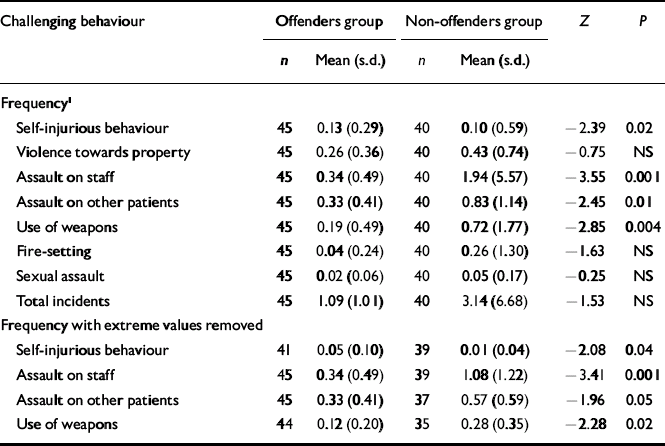
Behavioural data were available for 85 people (99%) of the total sample (Table 2). There was no significant between-group difference in the in-patient rates of total incidents of challenging behaviour, violence towards property, sexual assault and fire-setting. However, the non-offenders group was significantly more assaultive to staff (P<0.01) and to other patients (P=0.01), and used weapons significantly more frequently (P<0.01). In contrast, the offenders group had a significantly higher rate of self-injurious behaviour (P=0.02). Because inspection of the data revealed potential effects from outliers, analysis of rate data was repeated with extreme values (scores indicated by SPSS to extend more than 3 box lengths from the edge of the box-plot distribution) removed; the significant differences remained.
Between-group differences in behavioural disturbance
| Challenging behaviour | Offenders group | Non-offenders group | Z | P | ||
|---|---|---|---|---|---|---|
| n | Mean (s.d.) | n | Mean (s.d.) | |||
| Frequency1 | ||||||
| Self-injurious behaviour | 45 | 0.13 (0.29) | 40 | 0.10 (0.59) | – 2.39 | 0.02 |
| Violence towards property | 45 | 0.26 (0.36) | 40 | 0.43 (0.74) | – 0.75 | NS |
| Assault on staff | 45 | 0.34 (0.49) | 40 | 1.94 (5.57) | – 3.55 | 0.001 |
| Assault on other patients | 45 | 0.33 (0.41) | 40 | 0.83 (1.14) | – 2.45 | 0.01 |
| Use of weapons | 45 | 0.19 (0.49) | 40 | 0.72 (1.77) | – 2.85 | 0.004 |
| Fire-setting | 45 | 0.04 (0.24) | 40 | 0.26 (1.30) | – 1.63 | NS |
| Sexual assault | 45 | 0.02 (0.06) | 40 | 0.05 (0.17) | – 0.25 | NS |
| Total incidents | 45 | 1.09 (1.01) | 40 | 3.14 (6.68) | – 1.53 | NS |
| Frequency with extreme values removed | ||||||
| Self-injurious behaviour | 41 | 0.05 (0.10) | 39 | 0.01 (0.04) | – 2.08 | 0.04 |
| Assault on staff | 45 | 0.34 (0.49) | 39 | 1.08 (1.22) | – 3.41 | 0.001 |
| Assault on other patients | 45 | 0.33 (0.41) | 37 | 0.57 (0.59) | – 1.96 | 0.05 |
| Use of weapons | 44 | 0.12 (0.20) | 35 | 0.28 (0.35) | – 2.28 | 0.02 |
Analysis of between-group differences in treatment effect on frequency of challenging behaviour revealed a baseline to end of stay decrease from 0.79 to 0.36 incidents per person per week in the offenders group, compared with a decrease from 0.23 to 0.11 incidents per person per week in the non-offenders group. Thus there was a trend (P=0.08, 95% CI 0.16–1.10) for reduction in challenging behaviour to be greater among offenders than non-offenders, but the difference was not statistically significant.
Severity of challenging behaviour
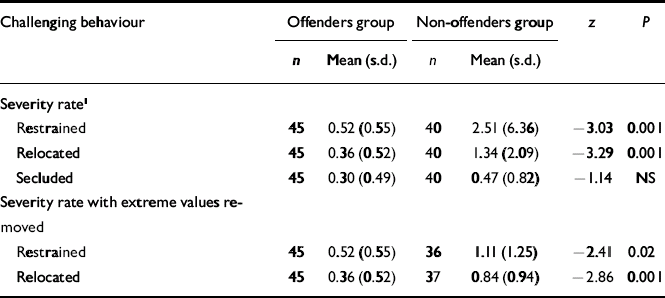
The non-offenders group required restraint and relocation significantly more frequently than the offenders group (Table 3). Again, this finding remained significant after removal of potential outliers. There was no significant between-group difference in rate of seclusion or change in rate of seclusion during admission.
Between-group differences in severity of challenging behaviour
| Challenging behaviour | Offenders group | Non-offenders group | z | P | ||
|---|---|---|---|---|---|---|
| n | Mean (s.d.) | n | Mean (s.d.) | |||
| Severity rate1 | ||||||
| Restrained | 45 | 0.52 (0.55) | 40 | 2.51 (6.36) | – 3.03 | 0.001 |
| Relocated | 45 | 0.36 (0.52) | 40 | 1.34 (2.09) | – 3.29 | 0.001 |
| Secluded | 45 | 0.30 (0.49) | 40 | 0.47 (0.82) | – 1.14 | NS |
| Severity rate with extreme values removed | ||||||
| Restrained | 45 | 0.52 (0.55) | 36 | 1.11 (1.25) | – 2.41 | 0.02 |
| Relocated | 45 | 0.36 (0.52) | 37 | 0.84 (0.94) | – 2.86 | 0.001 |
Placement outcome
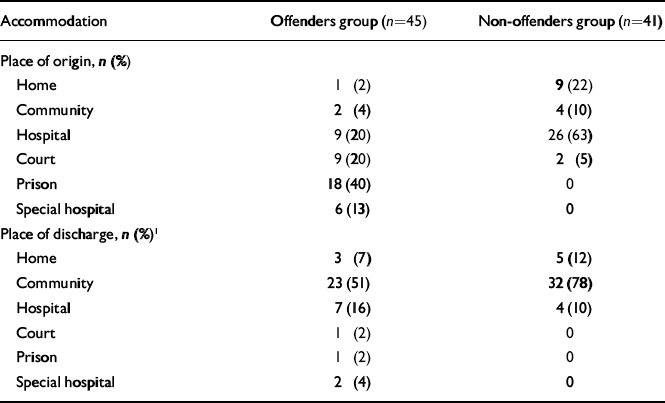
There was an expected difference between the groups in place of origin, with a greater frequency of people in the offenders group being admitted from non-community settings (e.g. hospital, special hospital or prison) and people in the non-offenders group being admitted from community settings (χ2(1,86)=8.88; P<0.01). Data on discharge placement were available for 78 people (91% of the total sample; Table 4). As expected, there was a significant association between forensic status and discharge setting, with a greater proportion of the offenders group being discharged to non-community settings (χ2(1,78)=5.00; P=0.03). When place of discharge was compared with place of origin, the offenders group tended towards a better outcome, with 71% achieving discharge to a placement less restrictive than the placement of origin, compared with 59% of the non-offenders group. However, the difference was not statistically significant.
Group differences between accommodation of origin, discharge setting and placement outcome
| Accommodation | Offenders group (n=45) | Non-offenders group (n=41) |
|---|---|---|
| Place of origin, n (%) | ||
| Home | 1 (2) | 9 (22) |
| Community | 2 (4) | 4 (10) |
| Hospital | 9 (20) | 26 (63) |
| Court | 9 (20) | 2 (5) |
| Prison | 18 (40) | 0 |
| Special hospital | 6 (13) | 0 |
| Place of discharge, n (%)1 | ||
| Home | 3 (7) | 5 (12) |
| Community | 23 (51) | 32 (78) |
| Hospital | 7 (16) | 4 (10) |
| Court | 1 (2) | 0 |
| Prison | 1 (2) | 0 |
| Special hospital | 2 (4) | 0 |
DISCUSSION
We compared clinical and behavioural factors recorded in the case notes of people admitted to a low secure unit and found differences between people with learning disability categorised as offenders and those with learning disability and challenging behaviour not categorised as offenders. The latter group were significantly more likely to have a diagnosis of pervasive developmental disorder, assault others, require restraint and relocation, and use weapons during admission. In contrast, the offenders group were significantly more likely to harm themselves and to have a diagnosis of personality disorder, and tended to have a more favourable treatment outcome in terms of a reduction in challenging behaviour.
Study design limitations
We assigned people to the offender group by using Mental Health Act status as an indicator of offending. However, this may not be a reliable marker in people with learning disability and challenging behaviour, because in learning disability services tolerance of offences – even those as serious as rape – is high (Reference Lyall, Holland and CollinsLyall et al, 1995; Reference Hakeem and FitzgeraldHakeem & Fitzgerald, 2002). This reluctance to proceed with criminal action may arise from beliefs that prosecution is oppressive or will fail, or because such behaviour is seen as challenging but not legally culpable (Reference KearnsKearns, 2001). Thus there are a number of extraneous factors that may determine whether offending behaviour is labelled as challenging in one person with learning disability yet treated as forensic in another. However, comparing people on the basis of this definition allows us to question whether difference in legal status (and thus ‘reputation') can be explained by difference in behaviour or treatment outcome.
As the study sample was exclusively in-patient no conclusion can be drawn about patients in non-hospital settings. We are also limited by reliance on retrospectively collected data, and so although our database was compiled from standardised incident forms these might be inaccurate. Underreporting of violence is high in retrospective research and incident records may underestimate the occurrence of certain types of incidents (Reference Silver and YudofskySilver & Yudofsky, 1987; Reference AquilinaAquilina, 1991). However, this bias should have affected each group equally. Also, there were relatively low frequencies of challenging behaviour other than aggression, and so we combined all types of challenging behaviour to calculate the behaviour change score; we therefore cannot comment on group differences in change of each behaviour type. Further, we used type of intervention as a proxy measure of behaviour severity, and although incident severity is one factor that may produce a specific staff intervention, other factors include staffing levels, ward characteristics and environmental variables (Reference Rangecroft, Tyrer and BerneyRangecroft et al, 1997).
Our analysis of placement outcome aimed to test between-group differences in change of level of restriction in the placement discharged to (compared with place admitted from) and showed a trend for greater improvement in the offenders group, but because of the small numbers within that group admitted from less restrictive settings, this result is likely to be a ceiling effect and must be treated with caution. Finally, we did not address whether there is a difference in the success of community placements after discharge, and consequently the stability of outcome over time is unknown. Future evaluation of treatment effectiveness should follow people through services and into the community in order to map out the pathways followed in cases of both successes and failures of current practice (Reference Badger, Nursten and WilliamsBadger et al, 1999). Recidivism rates would be an informative long-term outcome measure.
Clinical and behavioural differences
Despite these limitations, our findings suggest that there are clinical differences in people with learning disability and challenging behaviour between those who are labelled as offenders and those who do not offend. A smaller proportion of people in the offenders group were diagnosed as having pervasive developmental disorder (autistic-spectrum disorder). This is surprising, since the triad of impairments associated with autistic-spectrum disorders might be expected to generate more socially unacceptable behaviours and hence offence statistics. Also, others have reported a relatively high prevalence of people with autistic-spectrum disorders in prison (Department of Health & Home Office, 1992). It may be that carer tolerance of offending is increased by the visibility of impaired functioning in people with autism and learning disability and so they are less likely to be entered into the court system. However, once in the court system people with autistic-spectrum disorders may not easily be clinically recognised, and so they may be less likely to be diverted into the health and social services. The trend for a greater prevalence of personality disorder in the offenders group is consistent with epidemiological surveys of people with learning disabilities that have reported an association between personality disorder and aggressive or offending behaviours (Reference LinakerLinaker, 1994; Reference Vaughan, Pullen and KellyVaughan et al, 2000).
A significant difference in type of behavioural disturbance indicated that where learning disability and a forensic order coexisted in our service there was an increased risk of self-injurious behaviour. The reason for this is unknown. However, a high prevalence of self-injury has previously been noted in people with learning disability, people with personality disorder and in forensic populations (Reference Winchel and StanleyWinchel & Stanley, 1991; Reference Hillbrand, Young and KrsytalHillbrand et al, 1996; Reference Haw, Hawton and HoustonHaw et al, 2001). Hence a combination of these individual factors may have a cumulative effect on risk of self-injury in the offenders group. Alternatively, as the majority of the people in this group were admitted from institutional care settings, it might be that their prior environment exacerbated their self-injurious behaviour, or that those who are already the subject of forensic proceedings have more motivation to avoid further trouble and therefore direct aggression towards themselves rather than towards others.
The non-offenders group had a significantly higher frequency than the offenders group of assault on others and use of weapons. Similar differences between civil and forensic patients have been observed in a generic psychiatric in-patient sample (Reference Agarwal and RobertsAgarwal & Roberts, 1996). Again, this could imply that people without forensic restrictions have less to lose than offenders by directing their aggression towards others. We also found a significant difference in severity of incidents, with the probability of physical restraint or relocation to another room being higher for those in the non-offenders group. Gudjonsson et al (Reference Gudjonsson, Rabe-Hesketh and Wilson2000) reported a similar disparity between psychiatric in-patients detained on civil and forensic sections in a medium secure unit. This suggests that, contrary to popular image, people with learning disabilities who offend may be less dangerous than those who exhibit challenging behaviour but have no recognised forensic history. Nevertheless, this hypothesis should be treated with caution, because it might be staff management strategies rather than severity of behaviours that differ between the groups. Staff may be especially vigilant with patients with a known forensic history, and this might result in less opportunity for their challenging behaviour to escalate because of better risk management. Whatever the cause of violent behaviour in people with learning disabilities, our data suggest that in mainstream NHS services, staff care plans for aggression need to take account of forensic status.
Treatment outcome
Lelliot et al (Reference Lelliot, Wing and Clifford1994) reported that 43% of long-stay psychiatric in-patients had a history of serious violence, dangerous behaviour or admission to special hospital. Prolonged detention has negative implications and is inversely correlated with discharge into the community (Reference Watts, Richold and BerneyWatts et al, 2000). This is of particular concern in the population with learning disabilities, for whom community living has long been hindered by segregated care systems and institutionalisation. Our study does not support the theory that forensic status is associated with protracted admission, or that people with learning disability who have committed offences are less likely to ‘move on'. Despite having lower levels of aggression towards others than the non-offenders group, a significantly greater proportion of the offenders group were discharged to non-community settings. Nevertheless, our findings demonstrate positive treatment outcomes among offenders and a trend for greater reduction in challenging behaviour compared with their non-offending counterparts. Although the latter trend did not reach statistical significance, it confirms that offenders and non-offenders may benefit equally from treatment in a specialist service.
Implications of the study
We found significant clinical and behavioural differences between people with learning disability and challenging behaviour as defined by their legal status. People with learning disability detained on a forensic order for treatment in hospital present less risk to others but are more likely to harm themselves, compared with in-patients with learning disability who have challenging behaviours not recognised as forensic; and they are more likely to have a diagnosis of personality disorder. Those who are referred to specialist in-patient services for challenging behaviours and/or mental health needs and are diagnosed with an autistic-spectrum disorder are significantly less likely to have been admitted to hospital as a consequence of criminal proceedings.
We demonstrated clinical improvement in both groups of people with learning disability. Also, those offenders in the group had a trend for greater reduction in challenging behaviour, and forensic section was not associated with prolonged admission. The findings demonstrate that people with learning disability who offend can reduce the frequency of their challenging behaviour and achieve community resettlement. There is no room for therapeutic nihilism in this neglected group of people. Further research is needed to investigate the long-term outcomes of this service for people with these complex needs, and a follow-up study of this cohort is currently under way.
Clinical Implications and Limitations
CLINICAL IMPLICATIONS
-
▪ People with learning disability who are detained in hospital on forensic grounds present less risk to others but are more likely to harm themselves than similar in-patients with no history of offending.
-
▪ People with learning disability who are referred to specialist in-patient services because of challenging behaviour and/or mental health needs and are diagnosed with an autistic-spectrum disorder are less likely to have been admitted to hospital through criminal proceedings.
-
▪ People with learning disability who offend can reduce the frequency of their challenging behaviour and achieve community resettlement. There is no room for therapeutic nihilism in this group of people provided that an appropriate treatment setting is available.
LIMITATIONS
-
▪ The study investigated an in-patient service and its results therefore cannot be applied to people in other settings.
-
▪ Analysis of the frequency and severity of behaviour as separate features does not provide a measure of overall behaviour disturbance, and type of intervention is a relatively crude proxy measure for severity of behaviour.
-
▪ The long-term success of community placement after discharge was not studied.
Acknowledgements
We thank the assistant psychologists and especially Sarah Addison, Isobel. Blackman, Lucy Laing and Sheena Webb who assisted in maintaining the clinical database. We are grateful to the Mental Impairment Evaluation and Treatment. Service team for their record-keeping. Thanks are also due to Vasileios Nikolaou for his statistical advice.




eLetters
No eLetters have been published for this article.