

In addition to a distinct architectural style, the Río Bec region also demonstrates a unique settlement pattern which suggests a form of sociopolitical organization distinct from that typically attributed to Maya sites in the central lowlands (Nondédéo et al. Reference Nondédéo, Patrois, Lacadena, Arnauld, Taladoire and Michelet2010, Reference Nondédéo, Arnauld and Michelet2013). Recent research at Río Bec has brought to light two important findings: (1) apparent political autonomy from the powers that dominated the central lowlands in the Late Classic, and (2) the notable absence of a center structured around public space at the site, which seems to imply that local political powers were not centralized (Arnauld and Michelet Reference Arnauld, Michelet, Monod-Becquelin, Breton and Ruz2010; Nondédéo et al. Reference Nondédéo, Patrois, Lacadena, Arnauld, Taladoire and Michelet2010).
Two central questions have driven the Río Bec Archaeological Project's study of mortuary practices since its early stages: first, do the funerary practices at Río Bec represent an original system (as do the architecture and settlement pattern) or do they simply reproduce the norms observed at other lowland Maya cities? Second, do the burials offer clues to better understand the specifics of sociopolitical organization at the site?
A primary goal of the project was to assemble a sufficient body of data to construct a general overview of funerary practices. When the Río Bec project began in 2002, our understanding of local funerary practices was limited. At Río Bec itself, only one burial had been discovered in previous excavations (see Peña Castillo Reference Peña Castillo1998; Thomas and Campbell Reference Thomas and Campbell2008:143), and research carried out at other settlements that share the Río Bec style had revealed little more (see Ball Reference Ball1977:149–150; Thomas Reference Thomas1981:23). Only a handful of burials were recorded, and all of these were uncovered accidentally in the course of clearing building floors. These human remains were found in simple pits, poorly preserved, and with only modest assemblages of funerary accompaniments. The rareness of these discoveries contrasts a priori with the panorama of well-known aristocratic tombs in the central lowlands that rival one another in richness and elaboration. Moreover, the elements which are regularly associated with elite funerary practices in the Peten tradition (vaulted tombs, pyramids, stela-altars) were notably absent. Our perplexity increased with the discovery in several buildings of vaulted subterranean chambers that were not used for funerary practices at Río Bec (Peña Castillo Reference Peña Castillo1998)—a phenomenon also seen at the sites of Hormiguero (Ruppert and Denison Reference Ruppert and Denison1943:41, Figure 53) and Becan (Potter Reference Potter1977:51). Although some of the chambers at Becan have presented human remains associated with artifacts, recent work (Tiesler Blos and Campaña Valenzuela Reference Tiesler Blos and Campaña Valenzuela2004) leads us to doubt that these are the result of funerary activities.
After eight field seasons, and despite an ambitious research strategy focused on extensive excavations of residential structures and a large number of test pits (see Taladoire et al. Reference Taladoire, Dzul, Nondédéo and Forné2013:Figures 1 and 2), only 17 burials have been detected. As the methods and excavation strategies employed at Río Bec compare well to those traditionally used by archaeologists in residential groups at other lowland sites, it is unlikely that the small sample of funerary contexts is simply an artifact of the research design. Instead, the more likely explanation is that at Río Bec funerary norms only allowed a small number of individuals to have access to residential spaces for their burials. In this article, I argue that these few individuals demonstrate a codified funerary treatment that permits us to distinguish two distinct subsets, which can be viewed as representing specific sets of oppositions.
I propose an interpretation of funerary remains based on a contextual approach that seeks to identify the systems of burial procedures used at Río Bec (understanding a sequence of acts that result in the burial context), rather than to assume a priori that the status of the deceased can be determined by a trait list of burial attributes (for example, typology of grave morphology, grave goods, etc.). Finally, the conclusions indicate that the funerary remains studied cannot be used to address the questions formulated by the Río Bec project. The practices observed do not reflect the vertical social distinctions and competition that are clearly expressed in the residential architecture. Nevertheless, this apparent paradox may have held deep sociopolitical significance for Maya society at Río Bec.
THEORETICAL AND METHODOLOGICAL REMARKS
Archaeology has often employed funerary data in order to understand the social and political organization of Maya societies (Haviland and Moholy-Nagy Reference Haviland, Moholy-Nagy, Chase and Chase1992; Rathje Reference Rathje1970; Welsh Reference Welsh1988:153–166; Wright Reference Wright2006:37–77), or to reveal the emergence of social hierarchy (Hammond Reference Hammond, Grove and Joyce1999; McAnany et al. Reference McAnany, Storey and Lockard1999). This tendency seems all the more justified for the lowlands during the Classic period, where dramatic disparities are observed in burial elaboration, body treatment, and grave goods, and where, in some cases, it is possible to associate tombs with specific persons (most of whom were rulers) through epigraphic analysis (Gillespie Reference Gillespie2001; Martin and Grube Reference Martin and Grube2000).
The sociopolitical approach to interpreting Maya funerary practices is, however, confronted by a number of difficulties. While, in theory, a group of characteristics can be used to identify the graves of rulers or their families (location in a monumental public space, use of vaulted burial chambers for multiple individuals, high status grave goods, killing of victims carried out during funeral ceremonies, etc.) (Baudez Reference Baudez and Cobos2004; Coe Reference Coe, Benson and Griffin1988; Haviland and Moholy-Nagy Reference Haviland, Moholy-Nagy, Chase and Chase1992; Weiss-Krejci Reference Weiss-Krejci2004; Welsh Reference Welsh1988:153–166), funerary practices in other segments of the society (intermediary elites, commoners, slaves, etc.) seem less strictly correlated to the status of the deceased (Pendergast Reference Pendergast, Chase and Chase1992:67–68; Wright Reference Wright2006:76).
Furthermore, it seems that the value of funerary markers of social status is not homogenous throughout the lowlands. For example, data from Caracol indicate that vaulted tombs were not restricted to the ruling elite, but were also used by a larger segment of the population, whom Chase (Reference Chase, Chase and Chase1992:37–41) refers to as “middle men.” At Río Bec, the absence of typical funerary markers of Maya ruling/intermediate elites raises questions regarding the interpretation of the mortuary data. Does this pattern indicate that the deceased held low social status, or does it instead reflect the existence of a different mortuary ideology?
This question is part of a larger debate regarding the meaning of funerary practices and their value as an indicator of the social status of the deceased. If we assume that funerary practices are influenced by a society's organization (Binford Reference Binford and Brown1971), the interaction between these two domains is neither direct nor simple. Burials cannot be seen as a passive reflection of the society that created them (Hodder Reference Hodder, Miller and Tilley1984; Morris Reference Morris1992; Vernant Reference Vernant, Gnoli and Vernant1982), and mortuary practices may be influenced by many other factors (Hertz Reference Hertz and Hertz1907; Carr Reference Carr1995; Parker PearsonReference Parker Pearson1999:21–44; Thomas Reference Thomas1975, Reference Thomas1985). While ties may exist between the two realms, they may be expressed in “a somewhat encrypted form” (McAnany et al. Reference McAnany, Storey and Lockard1999:129), in particular, through a funerary ideology that Vernant (Reference Vernant, Gnoli and Vernant1982:7) defines as “the work that is undertaken by the social imaginary to develop an acculturation of the dead, to assimilate it in order to civilize it, to institutionalize its ‘management,’ following a strategy adapted to the demands of the collective life.” Funerary practices must then be viewed as a form of discourse that expresses, in part, the relationship of the living to the dead, and also represents a mise en scène of the world of the living (Masset and Sellier Reference Masset and Sellier1990), which often demonstrates a truncated, distorted, and/or idealized view of the society (Leclerc Reference Leclerc, Baray, Brun and Testart2007). Therefore, funerary ideology is situated at the interface of the living and the dead, and it is necessary to first understand the syntax of this funerary discourse before attempting any interpretation in social terms.
These considerations have important methodological implications because if one is to identify the logic of this discourse and the conceptual categories used in funerary ritual, it is necessary to consider the totality of the remains present in the assemblage, not only those that the researcher considers relevant a priori (traditional markers of status and wealth). Maya funerary archaeology offers a rich perspective on this domain due to the number of studies that have been carried out over the last 20 years, most of which have moved away from trying to distinguish social classes and instead have sought more diversified approaches that draw on pre-Columbian and modern Maya worldviews. Research carried out on the conceptions of ancestors (McAnany Reference McAnany1995; McAnany et al. Reference McAnany, Storey and Lockard1999) or the place accorded to the deceased in the symbolic geography of the house (Gillespie Reference Gillespie, Joyce and Gillespie2000) or social landscape (Ashmore and Geller Reference Ashmore, Geller, Rakita, Buikstra, Beck and Williams2005; Fitzsimmons Reference Fitzsimmons2009) offer important conceptual frameworks for understanding mortuary practices.
In this study, I adopt a holistic approach to burial practices that is based on fine-scale contextual observations collected through excavation. The goal is to identify the sequence of burial procedures by taking into account the distributional patterns of funerary acts, as well as their co-occurrence and/or mutual exclusion in order to recognize mortuary norms (Bocquentin et al. Reference Bocquentin, Chambon, Goff, Leclerc, Pariat, Pereira, Thevenet and Valentin2010). To do so, we must also take into account the taphonomic processes that affect the initial deposit (Duday Reference Duday and Joussaume1995; Duday et al. Reference Duday, Courtaud, Crubézy, Sellier and Tillier1990). These burial procedures should allow us to identify what López Luján (Reference López Luján and Mock1998:177–178) refers to as the “internal” and “external” syntax of the deposits. By “internal syntax,” he refers to the predetermined schemas that guide the internal organization of the deposit (the horizontal and/or vertical organization of its elements), while “external syntax” refers to the rules that govern the spatial and stratigraphic distribution of each deposit with regard to the structure or space within which it is located. Although originally conceived of to characterize the specific context of offerings at the Templo Mayor, I would argue that these concepts are also applicable to burials, provided that one takes into consideration the specifics of a funerary ritual that places the deceased at the center of that system.
This approach allows two types of funerary practices to be distinguished at Río Bec that are not detected through more traditional analyses based on funerary assemblage typologies. I first discuss the characteristics of these two funerary patterns, followed by definition of the fundamental principles of the funerary discourse practiced by the inhabitants of Río Bec and linking these to certain aspects of ancient Maya worldview. Finally, I discuss the social and political implications of the funerary analysis.
DEFINING RÍO BEC DOMESTIC BURIAL PRACTICES
Who was Buried in Río Bec Households?
The present study is based on 18 burials: 17 of these were discovered in the course of fieldwork on the Río Bec project between 2004 and 2008 (Table 1). I also include the burial in Structure 6N1 (Group B), the only other burial discovered at the site prior to the Río Bec project (Thomas and Campbell Reference Thomas and Campbell2008). The majority of these inhumations (16 of 18) are associated with three groups of buildings which have been fully excavated: Groups A, B, and D. The two remaining burials were discovered in El Ocelote and Group IV during a program of stratigraphic testing carried out by Philippe Nondédéo. One of these (Burial 12, Structure 1, El Ocelote) was fully excavated and included in the study. The Group IV burial, however, was excluded because it was only partially excavated. All of the burials are associated with residential structures, which almost represent the full range of architectural complexity known at Río Bec. These include monumental, multiroom residences with vaulted ceilings, both with towers (Structures 6N1, 5N2) and without (El Ocelote), as well as more modest residences composed of one to three vaulted rooms (Structures 6N3, 5N4, 7N1, 6N6, 7N2, 7N4, 6N4). One burial was found within a lower status residence that consisted of a single non-vaulted room (6N4-east). Chronologically, they correspond to the four phases that subdivide Classic period occupation at Río Bec (Taladoire et al. Reference Taladoire, Dzul, Nondédéo and Forné2013): one burial dates to the Iximche phase (a.d. 425–550), three to the Kanlol phase (a.d. 550–700), four to the Makan phase (a.d. 700–850), and nine to the Makan 2 (a.d. 790–850) and Xpuhuk phases (a.d. 850–950/1000). This unequal distribution reflects the overrepresentation of the final two phases in the excavation program.
Characteristics of Río Bec burials. Sex and age of Burial B1 from 6N1 is based on Tiesler Blos (Reference Tiesler Blos1999); *sex determination based on pelvis morphology following the Bruzek (Reference Bruzek2002) method; **sex determination based on the use of discriminant function analysis proposed by Wrobel et al. (Reference Wrobel, Danforth and Armstrong2002); burial characteristics and grave furniture of B1 based on Thomas and Campbell (Reference Thomas and Campbell2008); ceramic type assignation from Burials 2 to 16 by Sara Tzul; shell identification by Elodie Mas

Therefore, despite the relatively large samples excavated (22 residential structures by the Río Bec Project, as well as Structure 6N1 by Thomas and Peña Castillo), plus the additional test pits in the interior and external floors (more than 30 for Structure 5N2 alone, see Michelet et al. [2013]), the sample obtained remains small and is clearly not representative of the site's population as a whole. Nevertheless, the available data indicate that this assemblage does indeed reflect funerary practices for a very specific segment of the population.
The divisions by age and sex show a clear selection. The exclusive presence of adults indicates that this group does not constitute a random sample of a natural population. Moreover, the number of individuals by residential unit is too low for all the adults in the household to be present in the burial. In fact, it is rare to find more than one individual per house, per construction phase. These findings indicate that there is no correlation between the dimensions of the house (the surface area, number of rooms, estimated number of inhabitants) and the number of individuals buried. Although, unfortunately, the poor preservation of the bones does not permit sex identification for most of the burials, the results that are available seem to indicate an overrepresentation of males. Of the seven individuals where the sex was identified (out of 18), six are male and only one is female (see Table 1). It is important to note that this overrepresentation of males is commonly reported at other sites in the Maya lowlands (Geller Reference Geller, Gowland and Knüsel2006:286; McAnany et al. Reference McAnany, Storey and Lockard1999:132; Saul and Saul Reference Saul, Saul and Hammond1991:136; Wright Reference Wright2006:30–32). Some authors (McAnany et al. Reference McAnany, Storey and Lockard1999:132; Wright Reference Wright2006:30) explain this bias as the result of taphonomic processes that result in poor preservation of female skeletons, particularly for elderly individuals (Masset Reference Masset1973; Walker Reference Walker, Saunders and Herring1995). Walker (Reference Walker, Saunders and Herring1995:41) argues that this effect is accentuated when the overall preservation conditions for human bone are poor, and the researcher is forced to utilize secondary sexual indicators, which are less reliable. Given the generally poor preservation of bone at Río Bec, it is possible that some taphonomic bias influenced our results. We must also not forget that funerary treatments may tend to favor the preservation of male remains (Haviland Reference Haviland1997; Wright Reference Wright2006:33), and thus contribute to a sex ratio disequilibrium.
In any case, it is clear that only a few adults, possibly more often males, were laid to rest in these residential spaces while juveniles and most of the adult population received a different form of burial treatment.
Regularities observed in the funerary practices support the idea that these individuals formed a coherent group. The general tendencies are similar regardless of the burial's placement in space or time. In almost every case, the burial consists of a primary inhumation of one individual in a simple pit, accompanied by a modest assemblage of grave goods. The bodies are systematically oriented along an east-west axis. Their position varies somewhat but, in general, the limbs are flexed. A few cases, however, deviate from these rules: Burial 7 in 7N2 contains two individuals; Burial 8 in Structure 7N1 is a cyst constructed with stone slabs; the individual in Burial 12 of El Ocelote was buried in an extended position. It is important to note that this last example was a grave encountered along the exterior of a building, at the foot of the principal façade.
A closer examination of the 16 burials discovered beneath the interior floors of habitations (the majority of the total sample) reveals two patterns of deposits, both of which are subject to an intrinsic syntax, but also seem to be highly correlated with an extrinsic syntax. It is possible to distinguish between “transition burials” and “occupation burials.” The former are represented in only five cases (Burials 4, 8, 11, 13, and 15), all buried at the moment of a major transformation of the structure. As will be discussed below, these burials simultaneously indicate the end of an older occupation and mark the beginning of a new stage. Their low occurrence is likely explained by the fact that relatively few structures were rebuilt, but no doubt also reflects the specific status of the buried individuals. These graves are distinct from the 11 others (Burials 1, 2, 3, 5, 6, 7, 9, 10, 14, 16, and 6N1), where there is no visible modification of the structure to correspond with the creation of the grave. Instead, these burials seem related to the continuation of the building's occupation.
These two groups are further distinguished by specific burial “rules.” Respectively, in the first group, the position of the body, the characteristics of the pit, and the methods used for filling the burial tend to stress verticality, the link to the natural substrate, and transformations of the structure. In the second group, these same aspects tend to express horizontality, the link to the hearth of the household and the permanence of the domestic space.
Verticality vs. Horizontality
The position of the body is a primary element for discriminating between the two patterns. In the “transition burials,” each case where this variable could be determined (all except Burial 13, due to limited, partial excavation; see below), it is clear that the deceased was placed in a seated position, facing west. In three cases (Burials 4, 11, and 15), the corpse was deposited in a tightly flexed (or fetal) position, with the legs bent and the knees drawn up vertically in front of the body's trunk. Burial 8 (7N1) shows an interesting variant, with the legs having been deliberately arranged despite the restricted size of the burial space: the individual was seated in a cross-legged position, with the left foot placed under the right knee, and the right foot resting laterally in front of the left hip (Figure 1).
Río Bec, Structure 7N1, Burial 8 and associated vessels. Burial drawing by Grégory Pereira; vessel drawings by Nicolas Latsanopoulos.

In contrast, in all of the “occupation burials” the body was placed horizontally, lying across the bottom of the pit (Figure 2c). The legs are always flexed and the trunk is systematically aligned along the east-west axis, the head to the east in the majority of cases (nine of 11). There is no obvious rule that governs on which side, left or right, the body should rest.
Río Bec, Structure 5N2, Burial 16: (a) plan and (b) profile of the pit; (c) plan of the deposit. Drawings by Grégory Pereira.

Although less frequent than the extended position, the flexed position is still fairly common in the Classic Maya world (Welsh Reference Welsh1988:51). At several sites (San José, Uaxactun, Altar de Sacrificios, Copan), it may even represent the principal trend (Welsh Reference Welsh1988:42; Wright Reference Wright2006:47). This observation that the seated position at Río Bec appears to be reserved for “transition burials” merits further commentary. It is notable that in the Classic Maya lowlands this position is extremely rare. In the inventory compiled by Welsh (Reference Welsh1988:43–50), seated burials represent less than 3% of a corpus of 829 individuals for which position could be determined. In fact, the seated position is so unusual that it appears only anecdotally, and thus was not generally discussed by Welsh. Nevertheless, occasional discoveries of individuals buried in a seated position have resulted in commentary and a variety of interpretations. In some contexts, it appears this treatment is reserved for individuals who have been executed and placed as an “offering” to a higher status individual. This interpretation has been suggested for Burial 94-1 at Copan, located near the entrance to the Margarita tomb (Bell et al. Reference Bell, Sharer, Traxler, Sedat, Carrelli, Grant, Bell, Canuto and Sharer2004:145–146). In contrast, other authors have proposed that the positioning of the deceased was more closely related to their ethnic origin (Weiss-Krejci Reference Weiss-Krejci and Sachse2006). The Motmot Tomb at Copan, which contained the remains of a foreign woman who displayed ties with Teotihuacan, is an example of this latter hypothesis (Fash Reference Fash and Houston1998:229; Fash et al. Reference Fash, Fash, Davis-Salazar, Bell, Canuto and Sharer2004: 68–69, 149).
Neither of these hypotheses, however, applies to the “transition burials” at Río Bec. There is no indicator that these burials are sacrificial in nature, nor is there evidence of a violent death. On the contrary, these individuals seem to have been very respectfully treated, and we currently have no evidence of an exogenous origin for the seated individuals (although this should be confirmed by isotopic analysis).
A third, alternative interpretation seems to better fit the contexts studied at Río Bec. The following model is based on the fact that, in many Mesoamerican societies, the seated position is frequently associated with authority and majesty. While Postclassic ethnohistory and iconography furnishes numerous supporting examples (Stresser-Péan Reference Stresser-Péan1995:37–40), the origin of this social convention is apparently much older. Preclassic period figurines and burials from Oaxaca (Marcus and Flannery Reference Marcus and Flannery1996) constitute one of the first well-documented expressions. Starting in the San José phase (1150–850 b.c.) in the Valley of Oaxaca, one principal expression of social rank was found in the position of the deceased. The deposit of figurines found in House 16 of San José Mogote, for example, shows a figure seated cross-legged atop three other individuals, who are lying on their back with their hands crossed across their chests. According to Marcus and Flannery (Reference Marcus and Flannery1996:99–100), this position expressed the allegiance of the prone individuals to the seated one, and represents one of the first indicators of social hierarchy. The funerary data indicate that this convention was also applied to the world of the dead, such as in the case of burials at San José Mogote where the individuals who received a more favorable burial treatment were interred in a seated position. In certain cases, Flannery and Marcus (Reference Marcus and Flannery1996:99) even conjecture that some of these individuals may have been seated on stools made from perishable materials. They also compare these individuals with Tomb 26 at the site of Cocle, Panama, excavated by Lothrop (Reference Lothrop1937), where the principal individual is seated on a “couch” formed by approximately 21 individuals lying face-down. Closer in time and space, however, Preclassic and Classic period Maya iconography unambiguously express the close connection that existed between the cross-legged seated position and the exercise of authority. As elsewhere in Mesoamerica, the seat, whether it be a simple mat, a more elaborate bench/throne, or even kneeling captives (as in the slave panel at Palenque), represents a symbol of the seated position that accentuates or expresses the hierarchical rank of the individuals represented. In the funerary domain, the relationship between the seated position and the exercise of authority has been proposed for various cases. At K'axob (Mc Anany et al. Reference McAnany, Storey and Lockard1999:133, 142), the seated position is attested to during the Late Preclassic period, where it is regarded as a marker of social differentiation. Apparently associated with males alone, this treatment is interpreted as an expression of political authority. During the Early Classic period, evidence suggests that the placement of the body on a wooden or stone bench in the seated position echoes the codes of conduct of the living (Pereira and Michelet Reference Pereira, Michelet and Cobos2004). This is particularly the case for the cross-legged seated position that has been well-documented in numerous aristocratic tombs in the highlands of Guatemala (see Ichon and Arnauld Reference Ichon and Arnauld1985; Kidder et al. Reference Kidder, Jennings and Shook1946) and Chiapas (Agrinier Reference Agrinier1970, Reference Agrinier1975). The discoveries in the Pyramid of the Moon at Teotihuacan show that the three dignitaries found in Burial 5 (probably Maya in origin, based on bone isotope data and ornaments) were buried in this same position (Spence and Pereira Reference Spence and Pereira2007; Sugiyama and López Luján Reference Sugiyama and López Luján2007).
Although more unusual in the Maya lowlands than the highlands, the seated flexed and/or cross-legged position does occur in Classic period burials. Tomb C1 at Uaxactun provides a good example (Smith Reference Smith1950). In this Early Classic context, the deceased wears what appears to be a mosaic mask and is seated cross-legged in a small funerary chamber. The body was placed on a kind of throne, formed from a short, backed bench built directly into the tomb (see discussion in Pereira and Michelet [2004:356–257]). Burial 6 from Mound 1 at Barton Ramie (Willey et al. Reference Willey, Bullard, Glass and Gifford1965:80–84) contains an adult of undetermined sex buried in this position, dating to the Late Classic period. Considering the richness of the grave goods associated with this individual (the most elaborate burial excavated at the site), it is plausible that the deceased occupied an important position locally. Other examples of high status burials in seated position are also found at major Maya cities: at Copan, the seated position has been recognized from both Early (for example, Motmot Tomb [Fash Reference Fash and Houston1998:229; Fash et al. Reference Fash, Fash, Davis-Salazar, Bell, Canuto and Sharer2004:68–69, 149]) and Late Classic contexts (Tomb from Group 11 K-6; see PAPAC [2007]); at Tikal, the individual in the Late Preclassic Burial 85 (interpreted as the founder of the local dynasty) seems to have been placed in that position as well, probably wrapped in a bundle (Coe Reference Coe1990:218); at Dzibanche, the Templo del Buho's tomb provides yet another example of a high status person placed in the seated position (Campaña Valenzuela Reference Campaña Valenzuela1995:30).
The point of this discussion is not to present a complete inventory of seated burials in the lowlands, nor to suggest that all of these examples represent practices with identical meanings but, rather, to point out the strong association between the vertical position, authority, and the founding aspect of transition burials at Río Bec. It alludes to the importance of the seat as a marker of power in the architecture of the Classic Maya lowlands (Arnauld and Lacadena Reference Arnauld and Lacadena2004).
Rock and Dirt versus Ash
Another significant difference between transition and occupation burials is tied to the nature of the grave and its fill. It seems that those enacting the funerary rite placed particular importance on both the materials they removed during preparation of the grave and those employed to refill it.
The “transition graves” are found in fairly narrow circular pits (50–70 cm in diameter). They are often relatively deep, as in the case of Burial 8 (Structure 7N1), a pit reaching 130 cm in depth. The depth of the grave seems to be related to the depth of natural substrates that the grave's excavators were systematically attempting to reach. In the case of Burials 11 (7N4), 13 (7N2sub), and 15 (5N4), the bottom of each grave cuts into a sterile black paleosol overlying the limestone. In Burials 4 (6N4) and 8 (7N1), the pits pass through the paleosol and continue into the rock substrate for 20–40 cm (Figure 3a). Regardless, in all cases the body was laid in direct contact with the natural strata as if to symbolize a special link between the earth and the deceased. In my opinion, this pattern should be interpreted in relation to the iconography at Río Bec where the earth monster is omnipresent in the decoration on the most elaborate buildings (Patrois Reference Patrois2013). In the transition burials, we can see a double meaning in this allusion to the earth: that of the Maya death/fertility/rebirth complex, and also that of the earth as a source of power and authority (Baudez Reference Baudez1999; Nondédéo and Patrois Reference Nondédéo, Patrois, Vargas and Benavides2007).
Río Bec, Structure 7N1: (a) stratigraphic north-south profile; (b) plan of Structure 7N1 noting the location of Burial 8; (c) a broken Zacatal Cream Polychrome jar in the fill over the burial. Drawings by Nicolas Latsanopoulos.
Once the body was positioned in the grave, stones of various size and composition were arranged around and on top of it (Figure 4). The stones, no doubt, functioned to stabilize the body in the vertical position while, in the process, also creating a small cavity that protected the body from the heavy dirt of the upper fill. This is evident in Burial 8 (7N1) where large slabs were placed to form a cyst that effectively prevented the infiltration of sediment (Figure 3a). In fact, in the course of its excavation, we found that the interior of the grave was already largely empty. In the three other graves of the same type that were fully excavated (Burials 4, 11, and 15), the placement of stones was less careful so that they generally had fallen onto the skeleton itself. Taphonomic clues suggest, however, that the decomposition of the body took place in an environment initially free of sediment, but which subsequently was infiltrated after the “covering layer” of rocks collapsed. One can thus conclude a shared concept for the configuration of these four graves—a seated individual in a cavity excavated into a natural substrate and delimited by stones—even if the quality varied from instance to instance. It is tempting to interpret this configuration as a symbolic equivalent to caves, which the Maya (Brady and Ashmore Reference Brady, Ashmore, Ashmore and Knapp1999) and other groups in Mesoamerica (Heyden Reference Heyden1975) associated with the underworld and saw as an origin place from which their rulers drew their legitimacy. This cave-tomb equivalence has been pointed out by Brady and Ashmore (Reference Brady, Ashmore, Ashmore and Knapp1999:134–136).
Río Bec, Structure 5N4, Burial 15: stones arranged around and over the skeleton. Note the square facing stone probably removed from the old bench and placed over the head of the deceased. Photograph by Grégory Pereira.
Once the placement of the body and its stone shelter was complete, the upper portion of the grave was sealed with sediment and loose stones that reached up to the level of the floor of the older structure. Above this level, a new horizontal level of fill of variable nature was placed to complete the grave. This level might consist of a layer of mortar (Burial 8), compacted clay (Burial 11), a level of large stones oriented horizontally (Burial 4), or a simple layer of organic material probably derived from the local forest litter (Burial 15). This last example has been observed in two additional contexts (Burials 6 and 14). The plant remains in these deposits are surprisingly well preserved (leaves, twigs). In the three contexts considered, they are clearly not the product of intrusive activity by animals.
The upper portion of Burial 8 (Structure 7N1) was filled with particular care. After the two covering slabs had been placed horizontally atop the cyst and sealed with clay mortar, the upper portion of the cavity was filled with alternating thin layers of white marl (sascab), small stones, and black soil (Figure 3a). It is plausible that these materials were extracted during the original excavation of the grave pit. Interestingly, these materials were not mixed but, rather, had been sorted and reintroduced to the grave, so as to apparently reproduce the natural stratigraphy. Finally, the opening to the grave was sealed with a layer of gray, compact mortar that is unpolished, unlike typical floors that have been opened and repaired.
In the case of the “occupation burials,” the configuration of the grave and its fill is very different. They generally consist of a fairly long (80–212 cm in length) oval or trapezoidal pit excavated into the fill underlying the habitation floors (Figure 2a). Their depth varies from 60–100 cm. They are generally bell-shaped in profile (the base being larger than the opening) and they never reach the natural strata or those that correspond to the earliest occupations. Once the pit was excavated, the sequence of the burial deposit is organized in the following way:
• The body is placed directly on the bottom of the pit. In a few instances, taphonomic evidence suggests that the deceased was likely placed in some sort of soft “envelope.” Organic remains recovered in two of the burials confirm this hypothesis. The most remarkable example comes from the burial excavated in 1976 by Thomas and his team, in which were recovered the remains of a mat that covered the body (Freer Reference Freer2005:Photo 8; Thomas and Campbell Reference Thomas and Campbell2008:142). In Burial 16, excavated in 2008 in Room G of Structure 5N2 (Michelet et al. Reference Michelet, Nondédéo, Patrois, Gillot and González G2013), a thin layer of brown organic material was discovered below the bones. This may correspond to the remains of a mortuary shroud.
• Once the body and any grave goods had been installed, the deposit was directly covered with a layer of gray ash (Figure 2b) of variable thickness (anywhere from 2–20 cm). This ash also contained numerous fragments of charred plant remains (charcoal, seeds), as well as plainware ceramic sherds. These appear to represent the remains of hearths that were intentionally used to cover the body. Paleobotanical analysis of the samples collected are in process and will be useful to clarify the nature of the original context. This treatment seemed anecdotal initially, but now appears highly significant with 10 of the 11 burials conforming to this procedure. The one exception is Burial 6, in which the lower fill, in place of ash, contained a high quantity of black earth identical in composition to the black forest soils of the region. I will discuss below how the intentional inclusion of natural soil can be related to other particular aspects of this grave.
In two cases (Burial 6 and 14), it was also noted that the interface between the lower and upper segments of the fill was marked by a horizontal layer of brown organic material that contained numerous well-preserved plant remains (leaves, twigs) that resemble those found in the modern forest litter. It is difficult to determine whether such deposits occurred in only these two contexts, or if they were present in others as well, but did not preserve sufficiently to be recovered. In all cases, the upper part of the fill is very homogenous. The layer that formed the original fill for the structure was simply replaced and then sealed by a patch of carefully polished stucco.
Change versus Continuity
As in the majority of Maya sites, the burials at Río Bec are strongly linked to the history of the structures that contain them (Chase and Chase Reference Chase, Chase and Cobos2004; Gillespie Reference Gillespie, Joyce and Gillespie2000, Reference Gillespie2002; Haviland Reference Haviland1985, Reference Haviland, Wilk and Ashmore1988; Kunen et al. Reference Kunen, Galindo and Chase2002). As noted earlier, the two forms of funerary practice observed at Río Bec appear directly conditioned by whether the burial coincided with a phase of architectural transformation or, instead, was carried out during the building's occupation.
One of the most noteworthy characteristics of transition burials is that they occur at a pivotal point in the occupation of a domestic group. They signal the closure of the initial period of occupation, and at the same time, inaugurate a new phase of development for the dwelling unit. In the four graves of this type that have been thoroughly excavated (Burials 4, 8, 11, and 15), it is clear that the grave was excavated into the interior floor of a pre-existing structure in which the walls had been partially or completely demolished before the construction of the next phase (Figures 3b and 9).
In the case of Burial 15 (Structure 5N4), it appears that the stones distributed around and over the deceased came directly from the earlier structure. The excavations carried out by Gillot (Reference Gillot2008; see also Michelet et al. Reference Michelet, Nondédéo, Patrois, Gillot and González G2013) show that Structure 5N4 was initially constructed as a tandem, two-room vaulted dwelling, but was significantly remodeled in the Makan 1 phase (a.d. 700–790). The walls of the rear room were partially dismantled and the facing pulled off the bench. The door that communicated between the two rooms was walled up and a new bench was constructed in the western portion of the front room. Burial 15 was deposited just prior to the construction of the bench. A circular pit was excavated into the floor of the first occupation, cutting through the fill below the structure and reaching the natural paleosol beneath. Burial 15 contained an adult female in a seated position, facing west and accompanied by a simple bowl. Three of the stones placed around and over the body are facing stones (Figure 4) that were apparently pulled from the walls and from the bench of the rear room. Burial 15 thus relates to an important reconfiguration of the habitation space. It marks first the end of an occupation: it possibly contains one of the principal inhabitants (perhaps the person who occupied the bench of the rear room and who exercised authority over the residential group) as well as some remains of the house in its initial stage (the grave goods and the sherds date to the Kanlol 2 phase [a.d. 625–700], during which the house was founded). But the burial also marks the beginning of a different configuration for the house, as it was placed under the new bench that would represent the seat of the future head of the family group, who found their living space significantly reduced. The phenomenon of “decrease” of domestic Unit 5N4 is related to the history of its larger neighbor Unit 5N2 (see Michelet et al. Reference Michelet, Nondédéo, Patrois, Gillot and González G2013).
Structure 5N4 is an exceptional case because in the other domestic groups, transition burials are associated with a clear improvement of the group from its previous configuration. In Structure 6N4, Burial 4 (an adult male) occurs at the end of the first, very modest occupation—a dwelling without a platform, but with a floor consisting of a simple layer of mortar. It also inaugurated the Iximche phase (a.d. 425–550) construction of a habitation with a carefully stuccoed floor and set onto a low platform. In Structure 7N4 (Figure 9), the pit for Burial 11 (and adult of indeterminate sex) was excavated into the floor of a modest habitation (7N4sub, a low platform, a single-level stucco floor without a bench) dating to the Kanlol phase (a.d. 550–700). The burial was carried out at the end of the Makan 1 phase (a.d. 700–790) and was followed by the construction of Structures 7N4 and 7N2. These two separate single-vaulted room dwellings with raised floors were set side by side and built on the same platform. In Structure 7N1, the changes that occurred after Burial 8 are even more significant. The interment of an adult male was carried out in a habitation (7N1sub) contemporary with 7N4sub. The characteristics of this building are poorly understood, but they appear to be similar to those of 7N4sub. The newer construction (7N1) is much more ambitious, even though the project was apparently never completed (Arnauld et al. Reference Arnauld, Michelet and Nondédéo2013). During its construction, several whole objects were placed intact or broken in the fill that covered the burial. These include two chert bifaces, a large domestic jar, and a Zacatel Cream Polychrome jar (Figure 3c). While the characteristics of this assemblage suggest a ritual act, it is difficult to determine if it is related to a dedication or a termination ritual. According to the criteria put forward by Lucero (Reference Lucero2003:531–532), the stratigraphic context of the objects (for example, construction fill) suggests their association with the former type of ritual, but the fact that they are broken and dispersed would relate them to the latter. I would argue that, in fact, as in the transition burials, these two dimensions are simultaneously present.
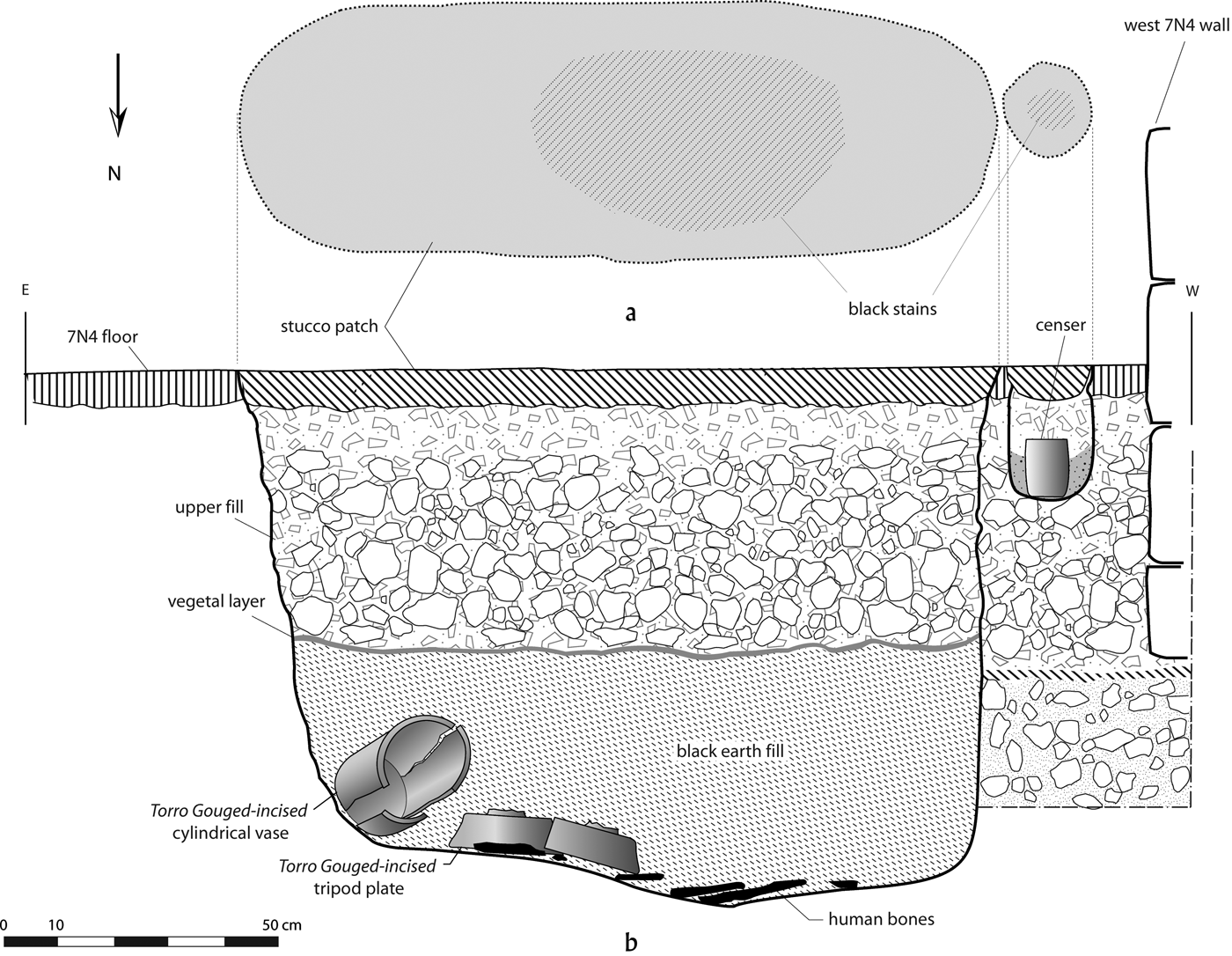
With regard to the 11 other burials found in habitation interiors, they were not followed by architectural modifications, as previously mentioned. On the contrary, the available evidence shows that occupation continued after the burial, which is why I refer to them as “occupation burials.” For this reason, the surface of the grave in the house floor was carefully repaired and so well polished that, in some cases, the outlines of the grave are difficult to detect. Nevertheless, the placement of the burial was never forgotten. In the majority of cases, the surface of the patch is marked by black stains of varied sizes and intensities (Figure 5). These indicate that commemorative rites were carried out, involving fire (burning of incense?), no doubt on multiple occasions, after the closing of the grave. In the case of Burial 14 in Structure 5N4, these practices were repeated until the structure's abandonment, as indicated by the large slabs deposited horizontally over the patch at this moment.
Black stain on the patch of Burial 6, Structure 7N4. Photograph by Laure Déodat.
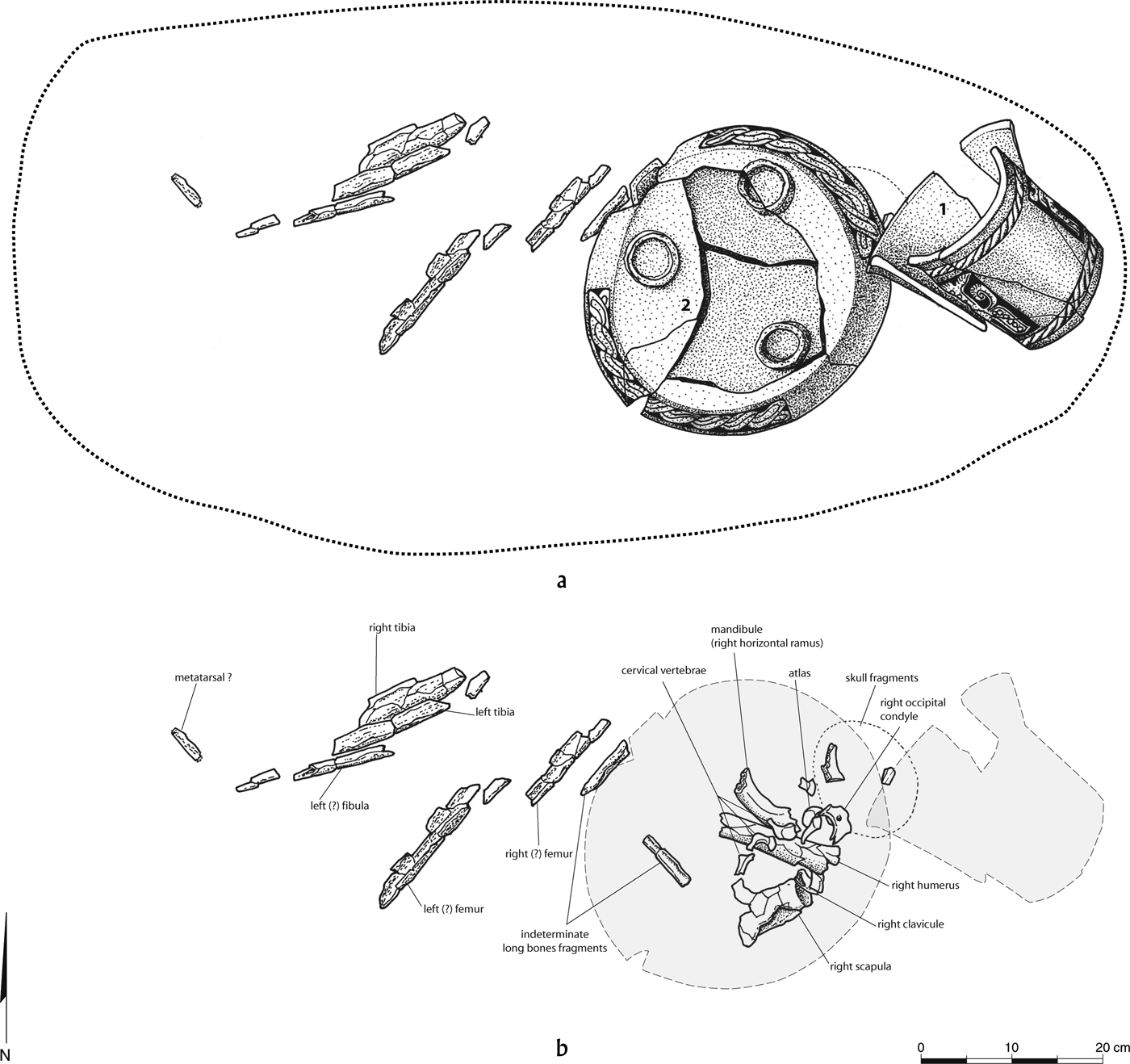
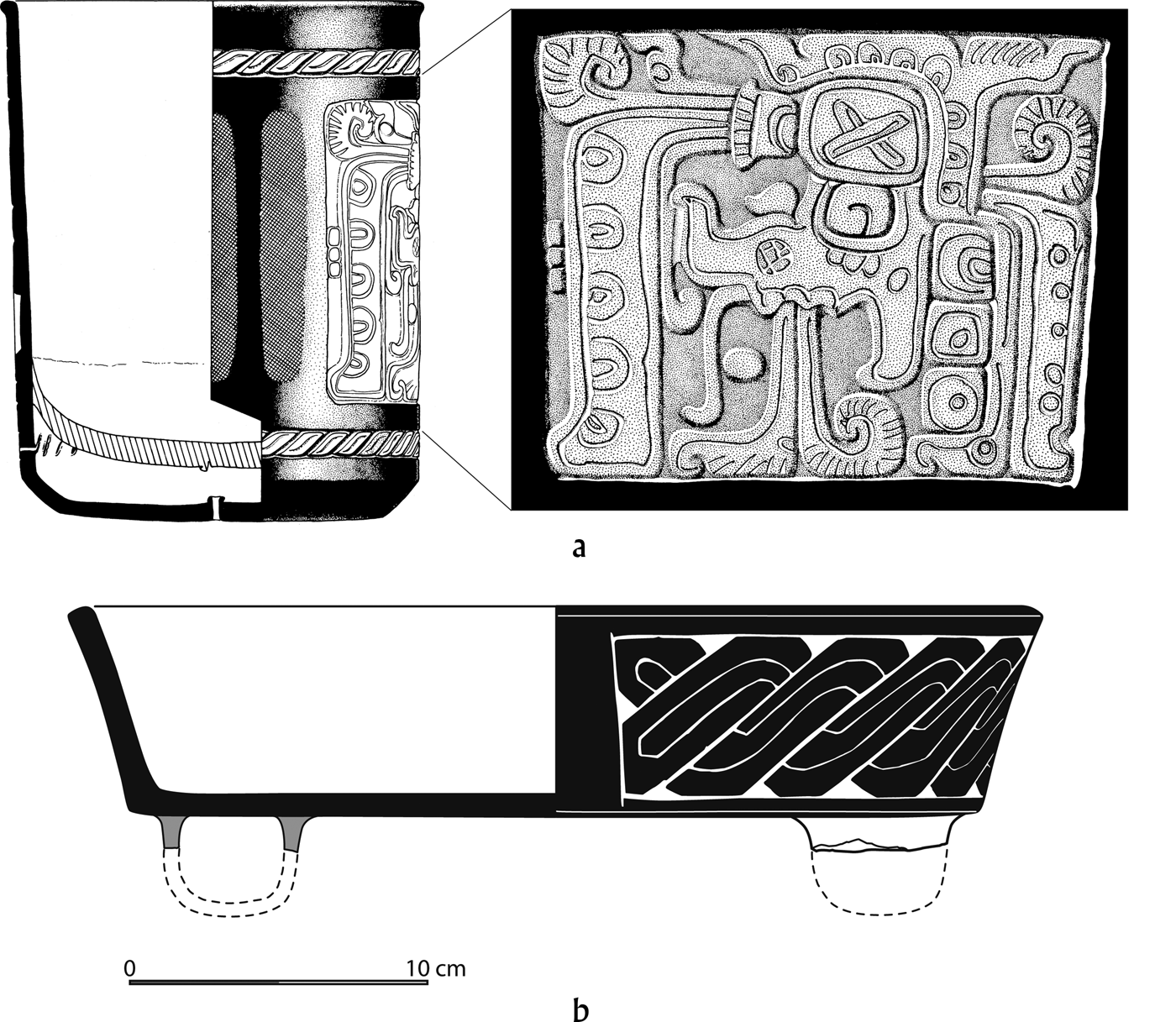
Burial 6 in Structure 7N4 presents, perhaps, a partial exception. This deposit shares some commonalities with the other occupation burials (Figures 6 and 7): the oval pit is excavated into the platform fill; the deceased (an adult of indeterminate sex) was laid flexed on its right side with the head pointing east; the “patch” shows black stains linked to commemorative rites. But it also shows some characteristics that suggest a symbolic link to “transition burials.” It is linked to terrestrial aspects since, as I remarked earlier, the body was covered with black earth in place of ash. A layer of vegetal material was also placed at the top of the earth fill as if the funerary actors wished to simulate the humus that naturally covers the ground surface. Terrestrial aspects and themes of authority are also expressed in the iconography of the two high-quality vessels (Torro Gouged-Incised type) placed with the body: a double-based cylinder vessel decorated with two panels featuring the Cauac monster (Figure 8a) and a tripod dish that was placed upside-down over the head of the deceased that featured a Pop motif (Figure 8b). Burial 6 is finally distinguished by the presence of a small cylindrical censer deposited in a small cavity excavated into the western side of the pit (Figure 6b). The numerous discoveries of this type of censer demonstrate that they were objects normally deposited during foundation rites for buildings (Michelet et al. Reference Michelet, Nondédéo, Pereira, Patrois, Arnauld, Lacadena, Ruiz, de León and Cuerva2010). A possible explanation for these unique characteristics of Burial 6 is that it may be linked to a change that occurred in the system of access to Structure 7N4. The door to this structure was initially located in the center of the east wall, but was replaced at later point by a door that opened to the west. If one assumes contemporaneity between the burial and this modification (although, unfortunately, there is currently no hard evidence to support this assumption), it is possible that the funerary ritual was adapted to these unusual circumstances and introduced some symbolic elements ordinarily associated with foundation rites.
(a) Plan and (b) east-west profile of the Burial 6 pit. Drawings by Grégory Pereira.
Río Bec, Structure 7N4, Burial 6: (a) general plan, and (b) distribution of the human remains. Drawings by Grégory Pereira.
Torro Gouged-Incised vessels from Burial 6 (Structure 7N4): (a) double-based cylinder vessel, decorated with earth monster images, and (b) tripod dish with a Pop motif. Drawings by Nicolas Latsanopoulos.
Axiality versus Laterality
As the above examples indicate, the burials at Río Bec are physically tied to the buildings with which they are associated, but the position they occupy in these structures shows significant variability that appears to correlate with the two funerary treatments described above (Figure 9). “Occupation burials” occur systematically at the sides of rooms (laterality), where the central axis is indicated by the position of the door. In contrast, “transition burials” occupy a central (axial) position with regard to the later structure. In fact, the placement of these burials determines the central axis of the new structure (or the new bench, as in the unique case of Structure 5N4). This axial position, long observed in numerous Maya sites, accords a special status to these burials. Interpretations of this placement in the residential space must take into account Maya worldview, in which it is well-documented that the house represents a microcosm of the universe (Gillespie Reference Gillespie, Joyce and Gillespie2000; Vogt Reference Vogt and Mock1998). Therefore, the horizontal organization of the building and the arrangement of the architectural elements from the foundation to the roof mirror the horizontal and vertical dimensions of the universe, as it is conceived of by the Maya, and more broadly, pan-Mesoamerican traditions (López Austín Reference López Austin, Manzanilla and López Luján1995). According to this symbolic geography, the center occupied a crucial place because it corresponds not only to the center of the universe, but it also represents the passageway along the vertical axis that links the different levels of the universe. The center is also perceived of as a place associated with stability and power (Breton Reference Breton, Durand-Forest and Baudot1995:152–154; Gillespie Reference Gillespie, Joyce and Gillespie2000:149–156), and therefore it is not surprising to note that in the archaeological record axial burials are often considered to represent prominent individuals within a residential unit, or for the site as a whole. The position of these graves along a major axis of the building has led several authors to consider the symbolic proximity between these burials, caches, and other types of foundation deposits (Becker Reference Becker, Elin and Sharer1992; Kunen et al. Reference Kunen, Galindo and Chase2002). At Río Bec, this axis crosses the main entryway of the building to reach the central point of the bench, or of the highest raised floor in the residence. This placement, where one assumes that the head of the household stood/sat while receiving guests or during semi-public rituals (Arnauld et al. Reference Arnauld, Michelet and Nondédéo2013), must also be viewed as a focal point for authority.
Río Bec, Group D: location of "transition" and "occupation" burials in relation to buildings. Early substructures in light grey; late structures in dark gray. Drawing by Grégory Pereira.
MEANINGS OF DOMESTIC FUNERARY RITUALS AT RíO BEC
The preceding pages have been principally concerned with presenting various lines of evidence which, through their association or their reciprocal exclusion, have allowed for the designation of discrete boundaries between two distinct funerary treatments. I have proposed that certain treatments, such as the seated position and an axial location, indicate that individuals in “transition” burials are linked to authority. This first level of interpretation naturally leads us to consider the possible meanings of the practices observed. To this end, I compare the empirical data with two interpretations frequently employed to understand the nature of Maya funerary practices. The first privileges the socioeconomic dimension, while the second emphasizes the notion of ancestry. Here I evaluate to what degree Río Bec funerary practices conform or do not conform to these proposed models and, in the latter case, to what degree they represent a unique funerary discourse.
“Distinguishing the High and Mighty from the Hoi Polloi..?”
Haviland and Moholy-Nagy (Reference Haviland, Moholy-Nagy, Chase and Chase1992) have examined the different lines of evidence at Tikal that allow the elite to be differentiated from the rest of the population. Following the example of habitations, burials express the inequalities among the city's inhabitants in a striking way. The main criteria relate principally to architecture and grave goods. The burials of nobles (and particularly elite leaders) are characterized by funerary chambers that are larger and more elaborate than those of commoner burials. These structures are larger than what is necessary to simply contain the body and protect it from the surrounding sediment. The deceased is also accompanied by a profusion of objects and other precious goods. In contrast, commoners are buried in cramped spaces (simple pits or basic cysts) that appear to have been filled in immediately after the body was deposited and grave goods are limited to a few vessels and everyday objects (Haviland and Moholy-Nagy Reference Haviland, Moholy-Nagy, Chase and Chase1992:52–56).
This strong differentiation of the funerary domain is, of course, not unique to the inhabitants of Tikal. It seems widely adopted throughout the Classic Maya lowlands, both at large capitals, as well as at more minor sites (Chase Reference Chase, Chase and Chase1992; Coe Reference Coe, Benson and Griffin1988; Welsh Reference Welsh1988). More so than elsewhere in Mesoamerica, it is in this part of the Maya world that archaeological data allow for the clearest identification of elite rulers. It is therefore logical that several authors have studied funerary remains for clues regarding Classic period sociopolitical organization. According to Rathje (Reference Rathje1970), the richness of aristocratic tombs is a direct testimony to the economic status of the deceased. While the conclusions of his preliminary study have more recently been rejected based on new evidence that has emerged since the early 1970s (Welsh Reference Welsh1988:153–158), the idea that the richness of the funerary accompaniments expresses the position of the individual in the social hierarchy remains widely accepted, even though these two factors are often less clearly correlated outside of the ruling elite (see Wright Reference Wright2006:76).
An interesting finding from the data recovered at Río Bec is that funerary contexts do not conform well to these schemas. From the strict perspective of grave morphology, the Río Bec region represents an anomaly. As indicated in the introduction, subterranean vaulted rooms in several buildings at Río Bec, Hormiguero, and Becan resemble burial chambers known elsewhere. However, the data available until now do not support the hypothesis of a funerary function that was suggested by Adams and Adams (Reference Adams and Adams2003:142). The excavations carried out at Río Bec by Peña Castillo (Reference Peña Castillo1998) and the Río Bec Project have demonstrated that the subterranean chamber in Structure 6N1 (within the north tower) contained only faunal bone remains. In a similar structure at Hormiguero, no bones or grave goods were discovered at all (Ruppert and Denison Reference Ruppert and Denison1943:41). Finally, at Becan, the human remains recovered in the entryway of the subterranean rooms of Structure X present marks that led Tiesler Blos and Campaña Valenzuela (Reference Tiesler Blos and Campaña Valenzuela2004) to consider them the results of sacrificial practices. Collectively, these data suggest that in the Río Bec region, while subterranean rooms were undoubtedly used for ritual purposes, they were likely never used as tombs.
With regard to the burials discovered at Río Bec, the architecture and grave good markers typically used to identify elite graves are rare or absent. If we compare the types of graves present at Río Bec with the typologies proposed for other sites (for example, Becquelin and Baudez Reference Becquelin and Baudez1979:133; Ruz Lhuillier Reference Ruz Lhuillier1968; Smith Reference Smith1950:88; Welsh Reference Welsh1988:7–18), it becomes clear that the graves excavated correspond to the least elaborate categories. The majority of the burials recovered were in simple pits that required a minimal expenditure of energy. Burial 8 of Structure 7N1 shows a slightly greater level of elaboration but, nonetheless, consists only of a cyst of modest size and construction. Overall, grave goods are rare. The combined inventory for the 17 burials analyzed totals only 31 objects. Only two burials contained more than four objects each and, among the remaining graves, close to a third contain no preserved artifacts at all.
If we adopt strictly the grave morphology criteria and funerary goods typically used to evaluate the social standing of the deceased and/or the complexity of the society, we must conclude either that the individuals buried at Río Bec belong to the lower social ranks (servants, slaves, members of lower ranking residential groups), or that Río Bec society was very weakly differentiated overall. The available data suggest these two lines of evidence are not the most appropriate to inform us about the status of the deceased.
With regard to grave goods, two essential points emerge. First, the apparent austerity of the funerary accompaniments must be qualified because the two tiers of goods placed in the Río Bec grave consist of exotic goods (shell, obsidian, green stone, red pigment) and/or are finely executed local products (fine monochrome, incised-engraved, polychrome, or stuccoed ceramics; bone objects), conferring on them a special value. Second, it is important to recall that the distribution of these objects does not seem to correlate with either the funerary treatments described above (“transition” or “occupation” burials), or the elaborateness of the residence that houses the burial. For example, one could assume that transition burials (seen to reference authority) would be more elaborate than other burials. This, however, is not the case. With the exception of Burial 8 (7N1), which contains three fine ceramic containers, the assemblages in other graves of this type are extremely modest. In reality, the majority of the imported materials (shell, green stone, pigments) and fine ceramics are found in the “occupation” burials. This category of burials also includes the richest graves (Burial 5 of 7N2; the burial excavated by Thomas in 6N1; Burial 6 of 7N4, with earth iconography and its associated power). Contrary to further expectations, there is no correlation between the richness of the funerary assemblage and the degree of elaboration of the structure that houses the burials (see Table 1). The single burial found in the major residential complex, Structure 5N2 (M9 residence type, the highest in the typology devised by Nondédéo et al. [2013]) only contained an incomplete, simple monochrome bowl. The burial in Structure 6N1, a monumental residence of equivalent rank, contains a comparatively more elaborate funerary assemblage, but it is worth noting that this burial is very similar to Burial 6 that we discovered in the clearly more modest Structure 7N4 (M6 type). Finally, Burial 5 located in Structure 7N2, a vaulted, one-room house similar to 7N4, is the burial that contains the greatest amount of grave goods.
These inconsistencies suggest that the elaboration of the grave and the richness of its accompaniments do not mirror the socioeconomic status of the deceased at Río Bec. While the motives that explain why some objects were deposited in certain graves but not others may escape us, their apparently random distribution demonstrates that they are not directly related to the deceased's status. In my opinion, the relative austerity of the burials at Río Bec is related to the fact that the agents involved in the mortuary ritual did not use the burial to express the position of the deceased at the broader social scale but, rather, the place that he or she occupied within the local family group.
…Or, Rather, Distinguishing only the Ancestors?
Several clues lead me to think that the funerary treatment of the persons buried in the residences expressed, above all, their status as ancestors. Based on ethnographic studies in Asia and Africa, as well as Yucatec ethnohistoric sources, McAnany (Reference McAnany1995:11) defines ancestors as a category of deceased whose memory is actively preserved through a series of burial and commemorative practices. In other words, through these practices, the individuals’ memory or the name of these persons transcends the generations and persists, resisting the common tendency to fade into the anonymous community of the dead. These individuals are generally distinguished by the prominent position they occupy within their lineage.
From an archaeological standpoint, the identification of ancestor veneration is based on three essential criteria (McAnany Reference McAnany1995): (1) the existence of a bias in the distribution of age and sex among the individuals considered, with a trend toward higher representation of adult males in patrilineal societies (such as the Maya); (2) the distinction of these individuals from common mortals by their placement and/or specific practices; (3) sacralization of places where their remains are kept.
In the Classic Maya lowlands, such indices are frequently observed (Fitzsimmons Reference Fitzsimmons1998, Reference Fitzsimmons2009; McAnany Reference McAnany1995; Welsh Reference Welsh1988:186–201). The contribution of epigraphic and iconographic sources confirms the importance of the devout veneration of ancestors. From a strictly archaeological viewpoint, one notes the frequent over-representation of adult males in the burials that are attributed to the heads of lineages (Haviland Reference Haviland1997; Lucero Reference Lucero2003:542; McAnanyReference McAnany1995:60–61). These persons are also sometimes the object of specific funerary treatments that involve the manipulation of their remains (removing the skull or the facial portion post-mortem) and their transfer to secondary burials (Weiss-Krejci Reference Weiss-Krejci2004, Reference Weiss-Krejci, Ruiz, Ruz and de León2005; McAnany Reference McAnany1995:60–63; Welsh Reference Welsh1988:192). Finally, it is clearly established that individuals whose memory persisted over several generations were placed inside monumental structures (the burial often preceded the building's construction) where a cult was established to honor them. At sites such as Copan, Palenque, and Tikal, these could take the form of dynastic temples located in the heart of the city's public space, but they are also identified in simpler forms present in domestic groups of varied socioeconomic standing. At Tikal, where these issues have been most intensively studied, assumed ancestor tombs were established in domestic shrines constructed for this purpose among residences of intermediary rank (Becker Reference Becker1971; Haviland Reference Haviland and Ashmore1981), or concentrated in the interior of a residential group's founding house among the most modest compounds (Haviland Reference Haviland, Wilk and Ashmore1988).
In the case of Río Bec, these three criteria seem well met, albeit sometimes in different forms. As mentioned previously, the individuals buried in the houses clearly represent a limited segment of the population. In this respect, Río Bec is not an isolated case. Several authors have pointed out that our knowledge of Maya funerary practices is based on a very small portion of the deceased population (Chase and Chase Reference Chase, Chase and Cobos2004:204; Pendergast Reference Pendergast, Chase and Chase1992:68). We can assume that the number of individuals recovered in the excavation of Classic Maya residential groups correspond, at best, to 10% of people who lived there (Chase and Chase Reference Chase, Chase and Cobos2004:204). This pattern is even more pronounced at Río Bec, where the number of individuals recorded in burials is much lower than those found at Tikal, Caracol, or Altun Ha. Even though it is difficult to determine exactly how the burial treatment of these persons differs from that applied to the rest of the population, it is evident that their placement in the interior space of the house represents a fundamental difference. Given the close association between ancestors and the house among the Maya (Gillespie Reference Gillespie, Joyce and Gillespie2000, Reference Gillespie2001), it is likely that these individuals buried in houses belonged to this category of the dead.
In contrast, secondary burials of human bone, described by some authors as a form of treatment linked to ancestor veneration (McAnany Reference McAnany1995:61; Weiss-Krejci Reference Weiss-Krejci2004), are not the norm at Río Bec. As elsewhere in the Maya lowlands, the vast majority of burials are primary deposits that were not subject to later modification. Two potential exceptions to this rule are found in Structures 6N3 (re-opening of the stucco patch and the possible removal of the grave's contents) and 7N4 sub (Burial 13 may correspond to a secondary deposit). The available data, however, are not sufficient to confirm these interpretations.
Regarding the location of burials at Río Bec, we have not identified buildings that appear specifically dedicated to the cult of the dead. The room in which burials were interred, however, was always the most important in the house, based on its centrality, size, and architectural properties (floor height, presence of a niche, decoration of the bench and/or façade). This room could be considered the space in which the head of the household demonstrated and/or exercised his or her authority (see Arnauld et al. [2013] for the characterization of these spaces). In the most monumental groups, these may represent reception halls that occupied an intermediary position between the public and private spheres within the household.
These rooms also frequently present evidence of ritual activities carried out before their construction or during their occupation. A key example is the presence of Paaktzatz modeled censers placed under the floors during the house's construction (Michelet et al. Reference Michelet, Nondédéo, Pereira, Patrois, Arnauld, Lacadena, Ruiz, de León and Cuerva2010). In other cases, evidence recovered on the floors of these rooms show that other rituals were practiced either during the occupation or at its end (perhaps after the death of the house's founder?). Suggestive of this are the circular or oval black stains (the results of burning incense?) that form concentrations in certain portions of the floors. Room D of Building 6N1 is the most impressive example of this pattern, with several dozen of these stains observed on the raised floor surface (Thomas and Campbell Reference Thomas and Campbell2008). These stains have also been observed around the bench/altar of Room G of Structure 5N2 (Michelet et al. Reference Michelet, Nondédéo, Pereira, Patrois, Arnauld, Lacadena, Ruiz, de León and Cuerva2010:172–174). This evidence indicates an important sacralization of these spaces and designates them as the focal point for household rituals.
All of the burials in internal spaces were found in a room displaying one or more of the characteristics described above. In the tripartite residences, such as Structures 6N1 and 6N6, burials are found in central room and, as in the case of 6N1, in the rear chamber of the central tandem. In Structure 7N1 they are located in the tandem that was clearly intended to become the central section of a tripartite building (Arnauld et al. Reference Arnauld, Michelet and Nondédéo2013) (Figure 9). Regarding Structure 5N2, Room G (where Burial 16 was found) no longer occupied a central position in the last phase of the monument. Nevertheless, it remained important because of its antiquity (it corresponds to the first phase of the building) and the existence of a bench/altar bearing traces of ritual activity (Michelet et al. Reference Michelet, Nondédéo, Patrois, Gillot and González G2013). It is interesting to note that activity related to funerary practices and consecration rituals were highly present in the most modest vaulted habitations, such as Structures 5N4 (type M7), 7N2, 7N4, 6N3, and 6N4 (all type M6). In all of these examples, the location of the burial is marked by an elevated floor or a bench that bears traces of ritual activity. Finally, a number of archaeological indices already mentioned (evidence of combustion on the patches, axial position of transition burials) indicate the desire to perpetuate the memory of the deceased among his or her descendents when selecting the location of the burial.
Here I have discussed the criteria that show that the burials at Río Bec do not appear to express the socioeconomic status of the deceased (or only to a very minor degree). Instead, they appear to mark their belonging to a restricted group of ancestors. I turn now to examine why we observe two contrasting funerary patterns: (1) transition burials that are characterized by “axiality,” verticality, contact with natural strata, and (2) occupation burials that are linked to “laterality,” horizontality, and ash.
I have already discussed how the richness of funerary accompaniments was slightly more important in the occupation burials, but that the transition burials could be more clearly associated with symbols of authority (centrality, seated position, contact with the earth as a place of origin and legitimation of power). Examining the spatial and stratigraphic relationships among the burials found in Group D (Figure 9), I propose that these variations are intended, above all, to emphasize the rank of the individual within the generational lineage sequence. In this group, Structures 7N4sub:7N4/7N2 and 7N1sub:7N1 form two construction and burial sequences that developed in parallel. In this context, the extension of the excavations permitted us to localize fairly precisely the burials in relation to one another. The foundation burials that determined the central axis of 7N1 (Burial 8) and 7N4 (Burial 11) originally occupied a lateral position with regard to the structures from the preceding period (7N1sub and 7N4sub). In the case of 7N4sub, at least, the center is marked by Burial 13, interred just prior to construction. Structure 7N1sub may constitute a similar example, but it could not be sufficiently excavated to verify this hypothesis. In sum, one can argue that the axial position of a given individual is relatively (and perhaps paradoxically) mobile. In contrast, the position of the grave in any given structure is always determined by the presence of a pre-existing central axis linked to the physical residence. When this axis has been established by an ancestral founder, laterality may express the customary deference of new lineage heads to their ascendants. It is plausible also that this type of relationship, common in modern Maya family rituals (Le Guen Reference Le Guen2009:92–94; Vogt Reference Vogt and Mock1998:22–23), may explain some of the observed differences between transition and occupation burials (opposition of centrality/laterality and verticality/horizontality; for an analogous interpretation of the tripartite layout of large residences see Arnauld et al. [2013]).
Other divergences between the two patterns remain more obscure, such as the ash employed to cover the body in occupation burials or the use of forest litter in transition burials. While the latter case refers to earth in its aspect of decomposition and fertility, of death and renewal, ash deposits are more ambiguous. It is necessary first to determine whether these are the remains of domestic hearths or if they can be attributed to a ritual activity carried out at the same time as the funerary rites. If the former scenario is correct, it would suggest that the ash refers to a symbolic death of the residential group as a whole, given that the kitchen hearth is shared by all of the group's inhabitants (Déodat and Arnauld Reference Déodat, Arnauld, Nondédéo and Breton2012). In any case, the association with ash symbolically links the death of the buried individual with that of the hearth fire. It must fit within the perspective of the cycle of death (ash) and renewal (the fire lit on the grave once it is closed), such that it could be carried out during a “new fire” ceremony. We should consider the links that these practices related to fire may share with the ochk'ak’ ritual (“fire-entering”) documented by Stuart (Reference Stuart and Houston1998) in Maya inscriptions. This ceremony involved the lighting of a “new” fire that represented an important dedication and renewal ritual related to the construction of buildings, and whose goals was to “animate” the house. According to Fitzsimmons (Reference Fitzsimmons2009:101–102, 135–137), the traces of fire observed at the closure levels of several royal tombs may be related to a similar ritual. In the case of Río Bec, we can speculate that the fire ritual practiced on the tomb served several functions: to honor the deceased, to signify the symbolic renovation of the house after the death of one of its inhabitants, and the reintegration of the residents after the mourning period had completed. Geochemical studies will be necessary to better understand this post-burial activity.
CONCLUSION
This study evaluates the characteristic aspects of funerary practices observed at Río Bec. It is important to point out that, in many ways, these practices do not deviate radically from those observed elsewhere in the lowlands. They may represent a common Maya worldview and set of practices that place ancestors at the center of the funerary system (McAnany Reference McAnany1995). As has been remarked elsewhere (Becker Reference Becker, Elin and Sharer1992; Kunen et al. Reference Kunen, Galindo and Chase2002), certain burials at Río Bec (“transition burials”) play a fundamental role in structuring the built space and establishing special connections among the earth, founding ancestors, and the buildings that cover them (Gillespie Reference Gillespie, Joyce and Gillespie2000:140–141). Others (“occupation burials”) do not coincide with architectural modifications, but the fire ceremonies realized before and after the interment may stress the continuity and stability of the house. Yet, although common references are present, Río Bec burials seem distinct from those found elsewhere in the region due to their austere execution and minimalist character. If the pattern observed is correct, it suggests that mortuary variability emphasizes horizontal differences related to kinship status, and thus seem to reflect patterns observed in modern Maya rituals (Le Guen Reference Le Guen2009:93–95; Vogt Reference Vogt and Mock1998:22). Contrary to what is observed at many other lowland sites, where vertical differentiation is more clearly expressed and where the dead of the most important lineages monopolize and organize public space, at Río Bec the ancestor cult remains a private affair, internal to the group, and sanctifying its internal space. From this perspective, funerary practices clearly echo the settlement patterns and architectural data (Arnauld and Michelet Reference Arnauld, Michelet, Monod-Becquelin, Breton and Ruz2010) that are characterized by the absence of public spaces normally devoted to ancestor cults (plaza/temple-pyramid/stela-altar complexes).
In our current state of understanding, the burials do not correspond to the hierarchical relationships indicated by architecture. They do not seem to play a role in social competition, which partially explains the absence of the important energy expenditure that characterizes elite tombs at other lowland sites. But this observation also complicates their interpretation in sociopolitical terms. How can one explain this minimal investment in the funerary domain and the absence of major inequalities among the deceased in a society where the hierarchy is clearly manifest in the architecture? Why did the groups who occupied the summit of the hierarchy not express their rank in the same way as other Maya elites? Why did they not elevate their own ancestors above those of other groups by their veneration in a public space beyond the residential group?
To answer these questions, we must certainly consider the regional context within which the Río Bec phenomenon developed (Nondédéo et al. Reference Nondédéo, Patrois, Lacadena, Arnauld, Taladoire and Michelet2010, Reference Nondédéo, Arnauld and Michelet2013). This seems to correspond to a rupture that occurred at the transition between the end of the Early Classic and the beginning of the Late Classic, which witnessed the decline or abandonment of Peten-style groups (Groups II and Kajtun at Río Bec), as well as the development of the dispersed settlement pattern typically associated with Río Bec-style architecture. We can thus speculate that the abandonment of the Peten model may have also been accompanied by a rejection of part of its associated ritual and funerary systems. The subtle nature of the local ancestor cult that restricts itself to the private sphere might reveal important aspects of the ideology and social organization at Río Bec. One wonders whether the inhabitants of Río Bec did not perhaps seek a guarantee of autonomy for the lineages that made up the residential groups, and to maintain a sense of equilibrium among the social groups. If we agree, as Lucero (Reference Lucero2003:524) argues, that the emergence of Classic Maya royalty was based on the transfer of rituals from the private into the public sphere (see also Arnauld et al. Reference Arnauld and Ponciano2004:119; Bazy Reference Bazy2010), we can speculate that restriction of the ancestor cult to the domain of the residence would have served as an effective mechanism for resisting the centralization of power and its concentration in the hands of a single lineage with royal ambitions.
RESUMEN
Las excavaciones llevadas a cabo recientemente en el sitio de Río Bec (Campeche, México) permiten definir las costumbres funerarias de este emblemático sitio. Este tipo de ritual era muy mal conocido en la región estilística Río Bec debido a la escasez de vestigios mortuorios y a la aparente ausencia de tumbas con cámara funeraria. Si bien la muestra obtenida en el sitio sigue siendo limitada (17 sepulturas), la presente investigación ofrece pistas para explicar la baja frecuencia de inhumaciones y definir el patrón funerario distintivo de Río Bec. Las características demográficas de la muestra, su distribución espacial y los tratamientos funerarios observados, indican que los individuos enterrados en las residencias de Río Bec formaban un segmento reducido de la población cuyo denominador común era probablemente la pertenencia a la categoría de los ancestros. El análisis detallado de los contextos estudiados permite distinguir dos patrones funerarios distintivos. La sepulturas de “transición” corresponden a los entierros cuya realización coincide con una etapa de importante remodelación de la estructura donde se encuentran, mientras que las sepulturas de “ocupación” se caracterizan, al contrario, por el hecho de no presentar cambios notables. Ambos patrones se distinguen también por comportamientos funerarios muy diferentes, expresados tanto por la localización del entierro en la estructura, la posición del cuerpo y las características del continente como por la naturaleza de su relleno. En las sepulturas de “transición,” se notan referencias a la centralidad, la verticalidad y a la tierra, mientras que en las sepulturas de “ocupación” resalta la idea de “lateralidad,” de horizontalidad y de vínculo con el fuego (¿doméstico?). La distribución de los entierros en el sitio indica que las diferencias observadas no expresan oposiciones entre individuos pertenecientes a dos grupos sociales. Parecen marcar, más bien, expresiones de deferencias de los jefes sucesivos de un mismo linaje respecto a sus antecesores. A diferencia de muchos sitios de las tierras bajas mayas donde la competencia social estuvo a menudo claramente plasmada en los entierros, en Río Bec, esta dimensión no parece haber sido un elemento importante de la ideología funeraria. Las diferencias de riqueza entre entierros son poco marcadas lo que contrasta con la arquitectura residencial, la cual atestigua, por el contrario, fuertes disparidades socio-económicas entre los habitantes. Dicha contradicción puede explicarse por el hecho de que, en Río Bec, el ritual funerario dedicado a los ancestros familiares de la élite, como de los demás niveles sociales, estaba restringido a la esfera privada y era, por lo tanto, excluido de la competencia social.
ACKNOWLEDGMENTS
Since 2002, the Río Bec project has received continuous support from the Instituto Nacional de Antropología e Historia and several other Mexican and French institutions. I would also like to thank the entire crew of the Río Bec project for their support over the course of this research. I am particularly grateful to Amparo Robles, Joel Olvera, Damian Alvarez, and Isaac Barrientos for their indispensable assistance with the fieldwork. I would like to thank Dominique Michelet, Charlotte Arnauld, Philippe Nondédéo, Damien Bazy, Travis Stanton, Gabriel D. Wrobel, Sonja A. Schwake, and an anonymous reviewer for their helpful comments on the manuscript. I thank Michelle Elliott for the translation of this article from French to English, Nicolas Latsanopoulos for his wonderful drawings of the funerary ceramics, as well as Sara Dzul for the ceramic type identifications, and Elodie Mas for the shell identifications.