

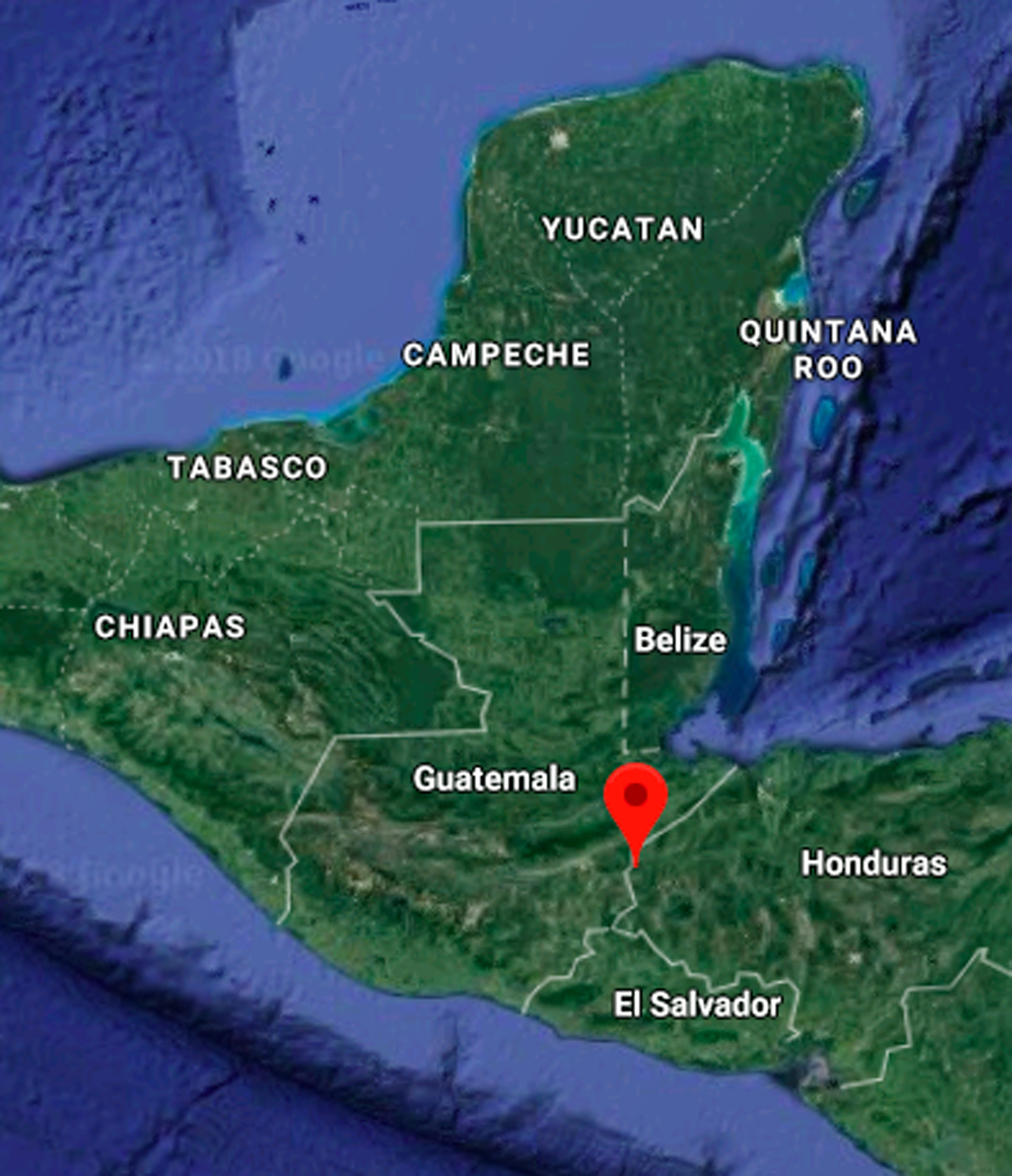
Copán marks the southeastern edge of the Maya region at the transition of the southern highlands to the southern lowlands (Figure 1). Copán is well known because of its sculptural program, including the hieroglyphic stairway, and its role as a complex city-state that controlled a rich source of jade and an expansive territory. The residential groups surrounding the regal ritual center have been the focus of long-term archaeological investigation since 1890 (Andrews and Fash Reference Andrews and Fash2005; Fash Reference Fash1983; Fash and Agurcia Fasquelle Reference Fash, Fasquelle, Andrews and Fash2005; Freter Reference Freter2004; Gonlin Reference Gonlin1993; Hendon Reference Hendon1988; Longyear Reference Longyear1952; Morley Reference Morley1920; Sanders Reference Sanders and Webster1989, Reference Sanders1990; Webster Reference Webster and Webster1989; Webster et al. Reference Webster, Freter and Gonlin2000). Within the patios and structures of each architectural group, the Maya interred their dead beneath house floors, plazas, and construction fill; in domestic middens; as offerings; and for a select few, in large tombs. As archaeologists investigated the architecture and the growth and development of the site, burials were regularly encountered in routine excavations because the ancient Maya interred their dead in these contexts.
Map of Maya Region of Mesoamerica. Modified from GoogleMaps.
Inventory and Conservation History
The Copán skeletal collection is impressive in size (n = 1,200) and has served as a research sample for topics including ancient DNA (Merriwether et al. Reference Merriwether, Reed, Ferrell, Whittington and Reed1997), diet (Gerry Reference Gerry1997; Lentz Reference Lentz1991; Reed Reference Reed and Sobolik1994, Reference Reed1998; Reed and Zeleznik Reference Reed and Zeleznik2002), body modification (Guilbert Reference Guilbert1943; Tiesler Blos Reference Tiesler Blos1999), activity (Ballinger Reference Ballinger1999), and general health and disease (Whittington Reference Whittington1989, Reference Whittington1991, Reference Whittington1992; Whittington and Reed Reference Whittington and Reed1997). Storey's work has been important for our understanding of paleodemography (Reference Storey1985, Reference Storey1992, Reference Storey, Whittington and Reed2007), the health of women, children, and elites (Reference Storey1992, Reference Storey, Whittington and Reed1997, Reference Storey and White1998, Reference Storey, Grauer and Stuart-Macadam1999, Reference Storey, Andrews and Fash2005), and nutrition (Reference Storey, Grauer and Stuart-Macadam1999). Storey's work facilitated the initial organization and inventory of the ever-growing Copán skeletal collection during the 1980s and 1990s. The development and maintenance of the Copán skeletal collection remains a massive undertaking that spans 40 years of collaborative research. Miller (Reference Miller2015) provides details of the excavation, cleaning, and inventory, as well as a selected research history of the burials, highlighting Storey's dedication in building the Copán collection. However, the collection was used for projects with different methodologies, and a number of skeletal remains were treated with consolidants at the behest of individual projects or were reconstructed by researchers if their work required semicomplete crania to assess modification patterns or postcranial remains for morphological studies. An additional complication is that methods and materials used on the collection were not documented, making it difficult to correct damage when the cause, consolidant, or type of study is unknown.
Given the quantity of burials excavated by two multiple-university collaborative archaeological projects, PAC I and PAC II, project bioarchaeologist Storey was prescient when in 1983 she started the Copán Project (CP) numbering system for burials there. Each burial was assigned a unique “CP” number that would permanently link it to the archaeological provenience information, and it was inscribed on the individual's bone fragments. When multiple individuals were recovered from the same burial context, each was assigned a unique CP number but maintained a burial number of 16-2A (CP 25) and Burial 16-2B (CP 26). By the early 2000s, Storey and her students documented, inventoried, and enumerated each bone fragment for 582 burials. The resulting inventory forms are curated in the Copán laboratory library for on-site use.
To expand on Storey's physical inventory of the CP burials, this author began a large-scale digital inventory project in 2004 in cooperation with A. Maca and J. Buikstra. The digital inventory was created in Access , follows the format utilized by the University of New Mexico's Maxwell Museum skeletal database, and features a page for each region of the skeleton (i.e., cranium or arm) and an entry for each bone with a drop-down selection for side, level of preservation of that element (<25%, 25%–75%, >75%), fragment count, and weight. The data records can be accessed in either Spanish or English. Other database features include a flexible provenience entry field (to accommodate the variety in data recording procedures from various projects) and a notes field for each bone and burial (in case additional pertinent information is available).
To date, 783 burials have been included in the digital Copán burial database: 514 (of 585) burials with CP numbers, 142 burials without CP numbers, and 127 burials curated at Harvard's Peabody Museum of Archaeology and Ethnology. An additional 190 burials have been identified for inclusion in the inventory. Isolated human remains from 361 nonburial contexts and 260 isolated faunal remains were catalogued. An estimated 200 burials from projects directed by S. Nakamura (Op. 64, PROARCO) were not available for inclusion in the inventory or conservation project. In all, the Copán skeletal collection includes approximately 1,200 individuals and 361 isolated human remains.
THE REHOUSING PROJECT: CHALLENGES ENCOUNTERED AND MITIGATION PROCEDURES
Storage of Collection
An initial challenge for any conservation project is determining the current state of the collection. When this project began in 2004, the remains were housed in a warehouse that was open to the elements at the roofline. Other more durable materials, such as sculptures, were also curated within the storage area but could better withstand exposure and pests. In a back corner of the facility, a series of 5 m tall shelves held large, folding, plastic crates that contained shoeboxes filled with human remains. Each crate held 5–25 individuals and weighed 11–35 kg. Further complications were the mixing of remains from different individuals within a storage container when shoeboxes deteriorated and the separation of associated boxes (e.g., Box 1 of 3, 2 of 3, and 3 of 3) that contained components of a skeleton, thus divorcing the storage location of that individual's thorax and cranium, for example.
Mitigation
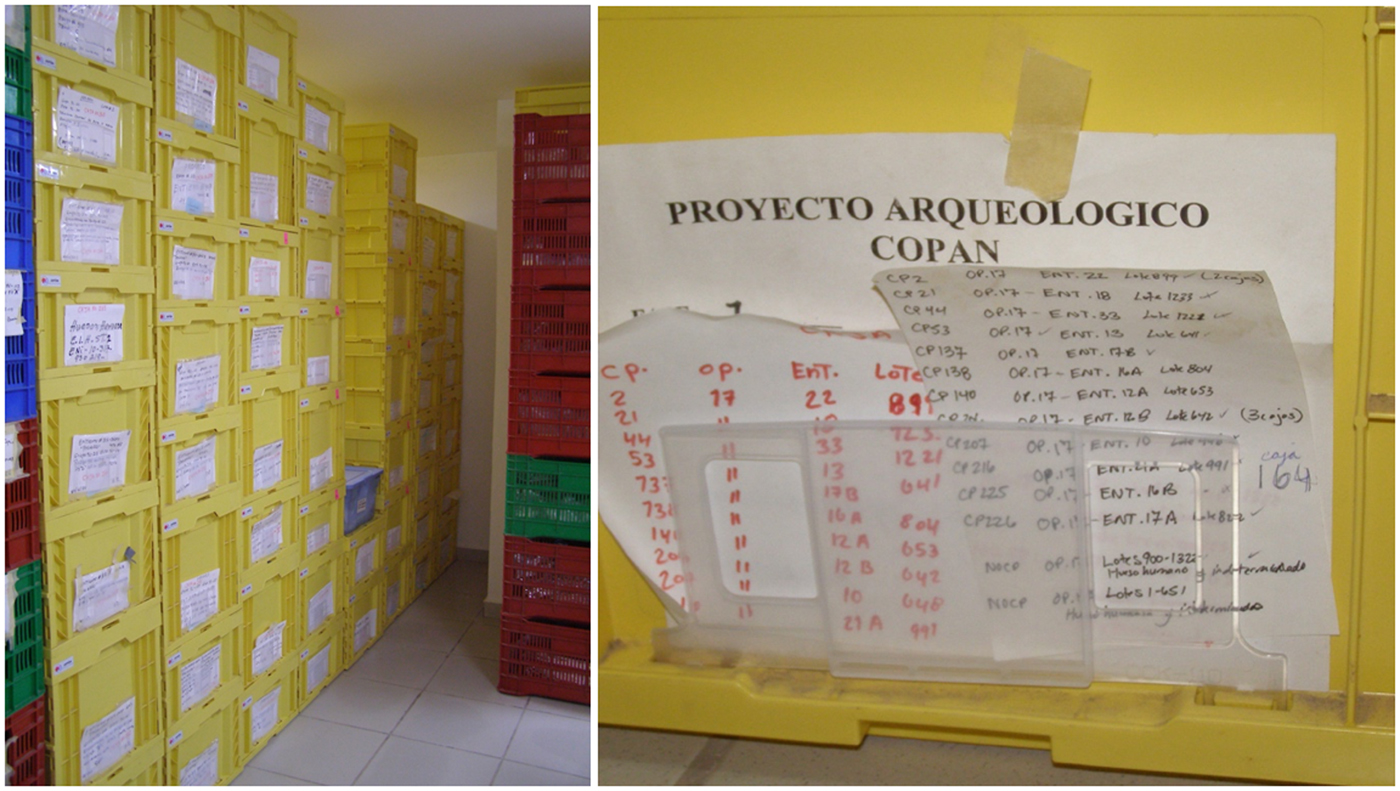
In 2006, with the support of UNESCO and the World Bank, the Honduran Institute of Anthropology and History began renovating the physical structure of the Regional Center for Archaeological Investigations (CRIA), and the author collaborated on the design of the permanent repository for the Copán skeletal collection with a space for cleaning and studying burials and a separate space devoted to long-term storage. Once materials were moved to the new facility, the first action was to note the contents of each crate, assign a box number, and create a list to locate and catalogue the basic details of the collection. This was an essential step, as each crate could have included remains from various operations, only portions of a skeleton, or materials other than skeletal remains (Figure 2). The master box list was then cross-referenced to the digital inventory.
The Copán Skeletal Collection in the new facility in original crates (left) and an example of crate contents (right). Photograph by Katherine Miller Wolf.
Variation in Provenience Information
Given that more than 75 excavation projects had been conducted at Copán over 130 years, there was much variation in recording standards, if they existed at all. In a few hundred cases, provenience information was condensed to shorthand on burial provenience tags (for example, “4-2a-111-345-8-9-78”) with no other information. Original field notebooks were usually curated in the CRIA library, and after some months of review, one notebook, authored by a person writing tags for a project as a seasonal job in the late 1970s and early 1980s, was recovered that contained the key to the shorthand notes. Many belonged to a project that ran for several seasons with various suboperations, and the shorthand sequence of provenience information was inconsistent on burial tags. In these cases, it was difficult to discern feature from lot, burial, or date. Other projects favored structure numbers over lots or features or suboperations, and some kept the operation number but recycled burial numbers annually by tacking a date to the burial. This structure can lead to later confusion or transcription errors, such as between Op. 84 Burial 1–95 and Op. 84 Burial 1–96.
Mitigation
Months were spent in the CRIA library searching for original field documentation: photos, notebooks, lot forms, sketches, maps, and final reports. The digital inventory and box list were then cross-referenced again with recovered provenience information. If only shorthand information was available, it was documented and earmarked for further research in unpublished reports or by contacting PIs to review their personal notes.
Missing or Incomplete Information on Burial Forms
As with the search for key information in original field notes, burial forms were consulted for mortuary data, and the author learned key information was missing. Several projects depended on students or volunteers to complete extensive excavations, and important information for mortuary analysis, such as position or heading, was recorded by novices in vague or imprecise terms. For example, an eager student in the 1980s indicated the “burial heading” as “up” instead of north, south, east or west in all the more than 80 burials he recorded. Another recorded burials only in profile view at a 1:20 scale, rendering mortuary analysis impossible. In select cases, original burial forms were stored with the skeleton and became nesting material for rodents.
Mitigation
There are few corrections for documentation errors, missing data, or destroyed forms, as archaeological excavation can occur only once. Cross-referencing any known information, researching gray literature reports, and conversations with project directors and staff can aid in recovering key information. Even so, a subset of the collection has incomplete mortuary or provenience information or both.
Degradation of Collection over Time
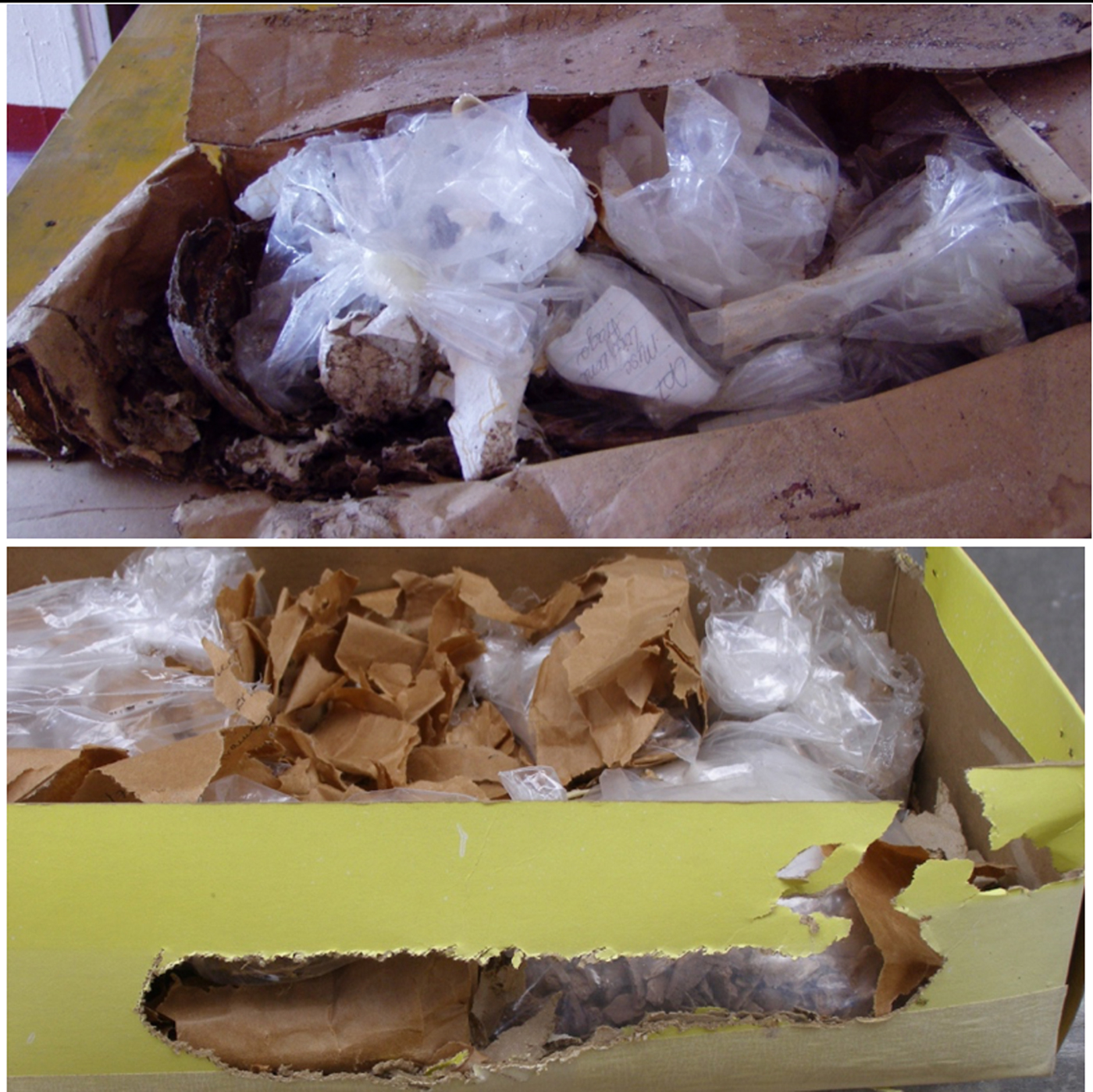
The first three challenges are logistical hurdles that can be overcome with time and patience. However, the Copán skeletal collection faced a conservation crisis like many others across the globe (Bawaya Reference Bawaya2007; MacFarland and Vokes Reference MacFarland and Vokes2016; Marquardt et al. Reference Marquardt, Montet-White and Scholtz1982; Voss Reference Voss2012) where the climate, poor storage, and absence of care caused permanent deleterious effects. The shoeboxes were consumed by termites; rats made nests in the boxes and calvaria from provenience tags, Tyvek, and cotton intended to support delicate bone (Figure 3); insects colonies thrived; and bat guano coated box lids, posing a health risk to project personnel. Bags disintegrated, skeletal elements of one or more individuals became mixed within crates, and uncleaned remains bore the marks of post-excavation fragmentation.
Two burials affected by rodents with damage to the provenience tags, inventory forms, and bones. Photograph by Katherine Miller Wolf.
Other burials were excavated en bloc with the best of intentions of having an expert remove the skeleton from its matrix in the laboratory. However, for these burials, an expert did not arrive until decades later (in 2015), when the National Institute of Anthropology and History (IHAH) requested that the author excavate, clean, and curate the 15 most urgent cases that had been en bloc for an unknown amount of time with no concrete excavation plans by the associated project personnel.
One case stands out. It was a large wooden box measuring 1.5 m2 with the semiflexed burial of an adult male with cranial modification and jade dental inlays. While IHAH conjectured that the burial was in this state for at least 20 years, conversations with the oldest members of the Copán Ruinas community revealed that this burial was excavated en bloc in 1953 with the intention that an expert would excavate it in the future. The only provenience information available was from the memory of the local excavation assistant, now in his nineties. The damage to the burial was significant as the clay had dried, hardened, and cracked and heavy objects had inadvertently been stored on top of the burial.
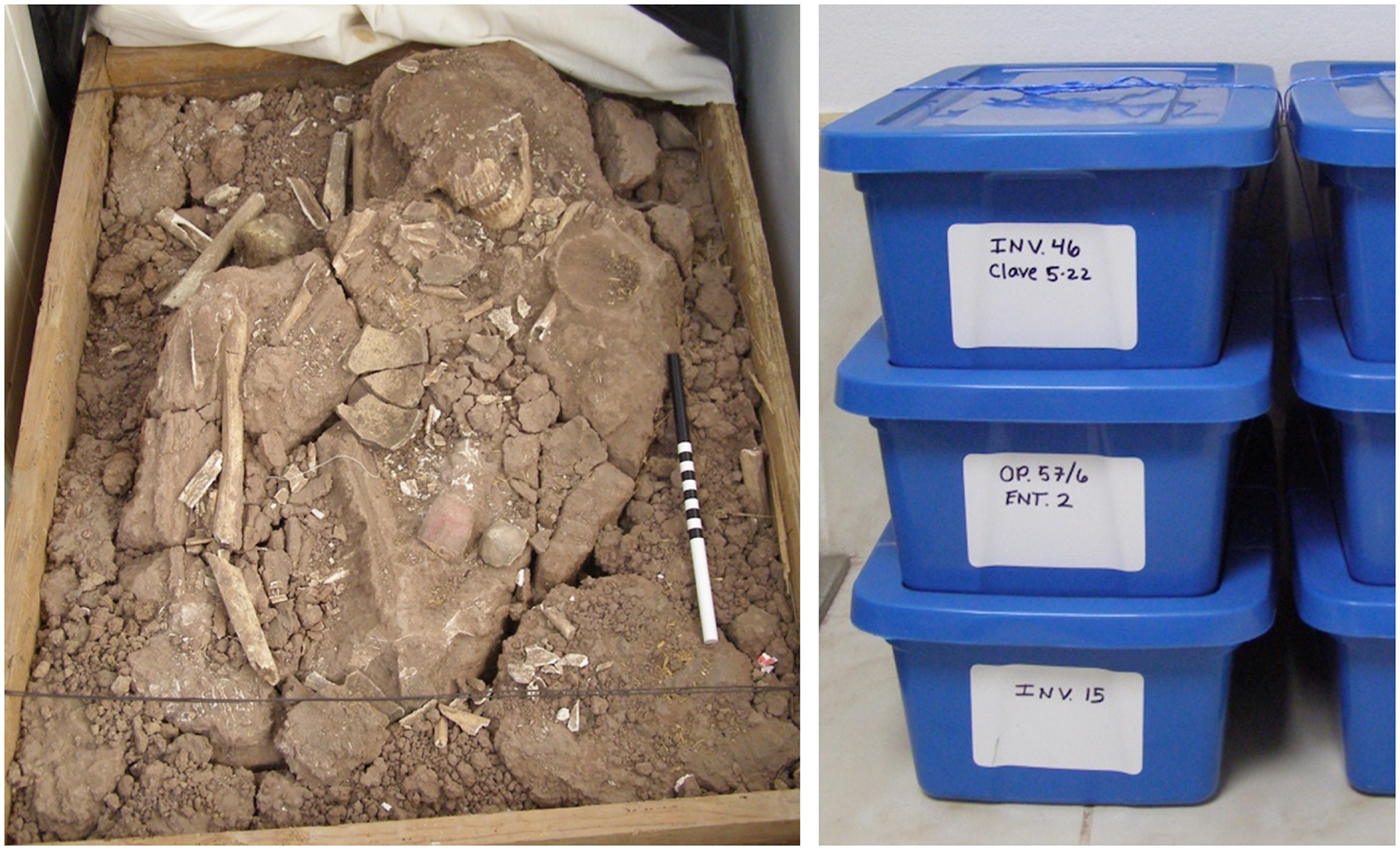
The burial was slowly excavated using a spray bottle of distilled water to directly and carefully loosen the clay matrix around the bone, and metal instruments that could remove the hard clay (dental picks or other small metal trowels) were used to pedestal the remains as would be done in the field. Additional water was applied below the bones after pedestalling, and the remains could then be lifted with wooden instruments or by hand. Once excavated and cleaned, the remains fit into a single small plastic box and were integrated to the collection. In the end, the en bloc removal of this burial was more damaging than excavation by a nonexpert in the field would have been (Figure 4).
The en bloc burial from 1953 before and after excavation in Box “Inv. 46, Clave5-22.” Photograph by Katherine Miller Wolf.
Mitigation
The past mistakes can never be fully corrected, but the damage can be mitigated. Cleaning, resorting, and rehousing the Copán skeletons constituted the lion's share of effort and time in this project, as each bone of each burial was addressed.
The rehousing project occurred from 2004 to 2013 with funding from the PAPAC Project (directed by A. Maca from 2004 to 2006), Arizona State University (2008 to 2010), and the National Science Foundation (2012 to 2014, BCS-1207533) with the laboratory assistance of three dedicated members of the Copán Ruinas community (Don Marco Obtulio Cantillano, Don Luis Alonso Cuellar, and Señorita Carolina E. Rodriguez Lopez) and the laboratory director, Licenciado Norman Martinez.
At the outset of the inventory, a protocol for the remains was established to replace bags, record provenience information, clean remains as necessary, and sort the myriad remains and boxes of the collection. Bags were replaced for each skeletal element and then grouped accordingly (i.e., right hand, right arm, etc.) and each burial was cataloged in the digital inventory with provenience information from identifying tags, boxes, or other materials. Each element received a new tag with all provenience information, a count and weight of the fragments that make up the bone (to keep track of degradation or loss), the date of accession into the inventory, and the initials of the individuals working to rebag and study those remains. In 2012 to 2013, with the funding from the National Science Foundation, each element of each burial was rebagged in high-quality 2 or 4 mm ziplock bags; placed in a new, color-coded, hard plastic polyethylene box; and organized according to operation and burial number. Finally, an air conditioner and a five-gallon Frigidaire dehumidifier were installed in the Copán osteology laboratory to maintain the collection at 25o C and 55% RH (per conservator recommendations) to reduce the effects of mold, humidity, and fluctuations in temperature that were compromising the collection. The materials used, their respective costs, and the estimated time needed are found in Table 1.
Estimated Material and Personnel Costs of the Copán Skeletal Collection Rehousing Project.*
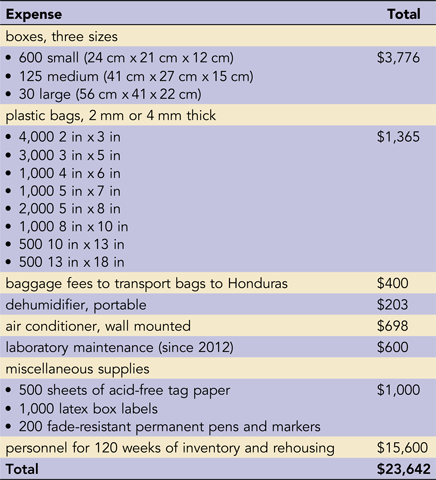
*Does not include the PI's travel, room, or board in Copán, estimated to exceed $15,000 (encumbered by the PI or through grants, depending on the year).
A final note on this challenge: it is not the author's view that excavators and principal investigators were willfully negligent with the human skeletal remains; rather, circumstances, lack of on-site experts, or lack of conservation knowledge contributed to the state of the Copán collection. The situation has largely improved because physical anthropologists now serve as project members or consultants, project staff are being trained in proper methodology for human skeletal remains, and projects are taking a longitudinal approach by considering long-term conservation at the outset of excavations.
Projects have begun to earmark funds for long-term conservation so that subsets of their excavated materials do not become abandoned. The Copán skeletal collection was derived from the work of hundreds of projects over a century and has provided an impressive and unique window into life in the past. The skeletal collection was treated as a special class of material on which few experts could advise and was sequestered because of its perceived importance. Paradoxically, it was this intended protection that led to its degradation over time. Today, the collection is curated in such a way as to protect these delicate materials for future study and as part of the important cultural patrimony of Honduras and the Maya descendant population.
Complications Encountered in Developing Countries
Beyond the state of the remains themselves, there were additional complications that magnified the profound challenge of addressing decades of damage in the collection. The CRIA is run by a handful of full-time staff, and it is a difficult job for which no academic training is available. Expertise is derived from experiential learning, and the staff effectively manages the challenges of rolling blackouts, political instability, and lacking resources that are ever present in the country's sociopolitical climate. Political machinations affect fieldwork through permit compliance, collection access, and grant monies allocations. Governments may topple, as was the case in the Honduran coup of 2009, and research may have to wait for stability to return. Academic politics may interfere, and access can be revoked or limited, to the detriment of objects of material culture, including human remains.
Mitigation
One must respect, engage, and cooperate with the staff and interested parties at any site or laboratory. Time should be invested in teaching osteological and conservation techniques to create local experts if none exist. It is incumbent upon researchers to offer their expertise and teach what to do and explain how to do it instead of just undertaking analysis with no thought toward teaching community members to become experts. Work with local projects, schools, and universities to train students in field and laboratory methods. Be certain that there can or will be local experts to empower local communities with their cultural patrimony and to prevent collections from being left to deteriorate if a foreign expert is not available.
RECOMMENDATIONS FOR THE FIELD AND LABORATORY
As a discipline, archaeology is moving toward the ethical practice of investigation that includes careful planning related to the long-term storage of the remains we excavate and study. After nearly two decades of bioarchaeological field and laboratory work, the author has observed the long-term effects of excavation, research, and conservation decisions and has been part of implementing long-term conservation plans for various archaeological projects in the Maya region. The recommendations for projects regarding materials, procedures, and recording standards are offered here and are apropos to tropical and subtropical environments with 80% to 90% humidity, and they build on standard sources for bioarchaeological research (Bass Reference Bass1995; Buikstra and Ubelaker Reference Buikstra and Ubelaker1994; Ubelaker Reference Ubelaker1978) and more recent work on conservation (Cassman et al. Reference Cassman, Odegaard and Powell2007).
A project must have standards and plans in place to ensure clarity in language and forms, effectiveness of materials, and accuracy through redundancy. Forms, reports, and notes should be recorded in the language of the country in which research occurs. Having original forms in the local language prevents data loss from translation or transcription errors of key details. As Freiwald (Reference Freiwald2019) notes in this issue, burial forms should include the full name of the excavator, as initials can be forgotten or lost over time; metric data collected on the skeleton in situ; documentation of the degree of preservation; a skeletal inventory either as a list or by coloring the figure of a complete skeleton; age and sex estimations by the excavator (guidelines of sex estimation metrics and morphological variants can be included on the forms if specialists will not be on site); and checkboxes confirming the existence of photographs, field drawings, and lists of associated artifacts. Burial forms should list materials that should be used for burial excavation and transport. Provenience information should be recorded as often as possible, such as on photo boards, on tags within bags, on each bag in the field and the laboratory, and in field notes. A shortcut in the field can result in a terrible headache in the lab. In this case, redundancy is our ally. Finally, the best solution when excavating burial contexts is for a bioarchaeologist or physical anthropologist to be a member of the field team or at least a consultant who can be regularly contacted.
Unfortunately, there is no single answer to the question of the specific materials that should or should not be used for excavation, cleaning, and conservation, as it depends entirely on the site (as reflected in this issue). However, the number of resources has increased in recent decades (Bowron Reference Bowron2003; Childs and Corocan Reference Childs and Corcoran2000; Cassman et al. Reference Cassman, Odegaard and Powell2007; MacFarland and Vokes Reference MacFarland and Vokes2016; Roberts and Mays Reference Roberts and Mays2011; Ubelaker Reference Ubelaker1978), and checklists are available to guide the process (Childs and Benden Reference Childs and Benden2017; Sullivan and Childs Reference Sullivan and Childs2003). This project permitted the author to observe the long-term effects of various methods and types of materials employed, resulting in the following recommendations.
Excavation and Transport
Dirt should be brushed from bones in the field. Remove soil from the surface and from the medullary cavities, screen it with a < 1/4 in screen, and collect any soil with small fragments of bone for subsequent flotation. If bones are fragile, aluminum foil sheets or trays are a fine choice for the temporary transport of remains but should never be a permanent storage material. At Copán, there are numerous examples of bones stored in foil for 2 to 30 years that became mixed as the foil disintegrated, that lost provenience information because it was written on the foil alone, or that were affected by the oxidation of the foil. Plans might include removing the foil shortly after transport, but often that does not occur, foil oxidizes, and as Beaubien (Reference Beaubien2019) suggests, that could alter the chemical composition of bone. Provenience information should not be recorded only on the foil because it may degrade or tear.
Paper bags are a suitable alternative to aluminum foil for relatively well-preserved bones. They are often easily accessible even in remote locations, and they effectively and gently wick moisture away from dirty and damp bone. Bones transported to a lab in paper bags can be left for a week to a month (depending on the humidity in the region) to stabilize before attempting more thorough cleaning, washing, or analysis. As with foil, paper is not a long-term storage material, especially in facilities where rodents and termites may nest in boxes of human remains.
Avoid removing remains en bloc unless plans are in place for the subsequent excavation within 12 months. If that is not possible, evaluate whether the burial should be excavated or left in place. Burials left en bloc for years or decades, despite the best intentions of excavators, will suffer irreparable damage as the soil expands and contracts, creating postexcavation fractures to the bone. If left too long, excavation becomes impossible.
Consolidants
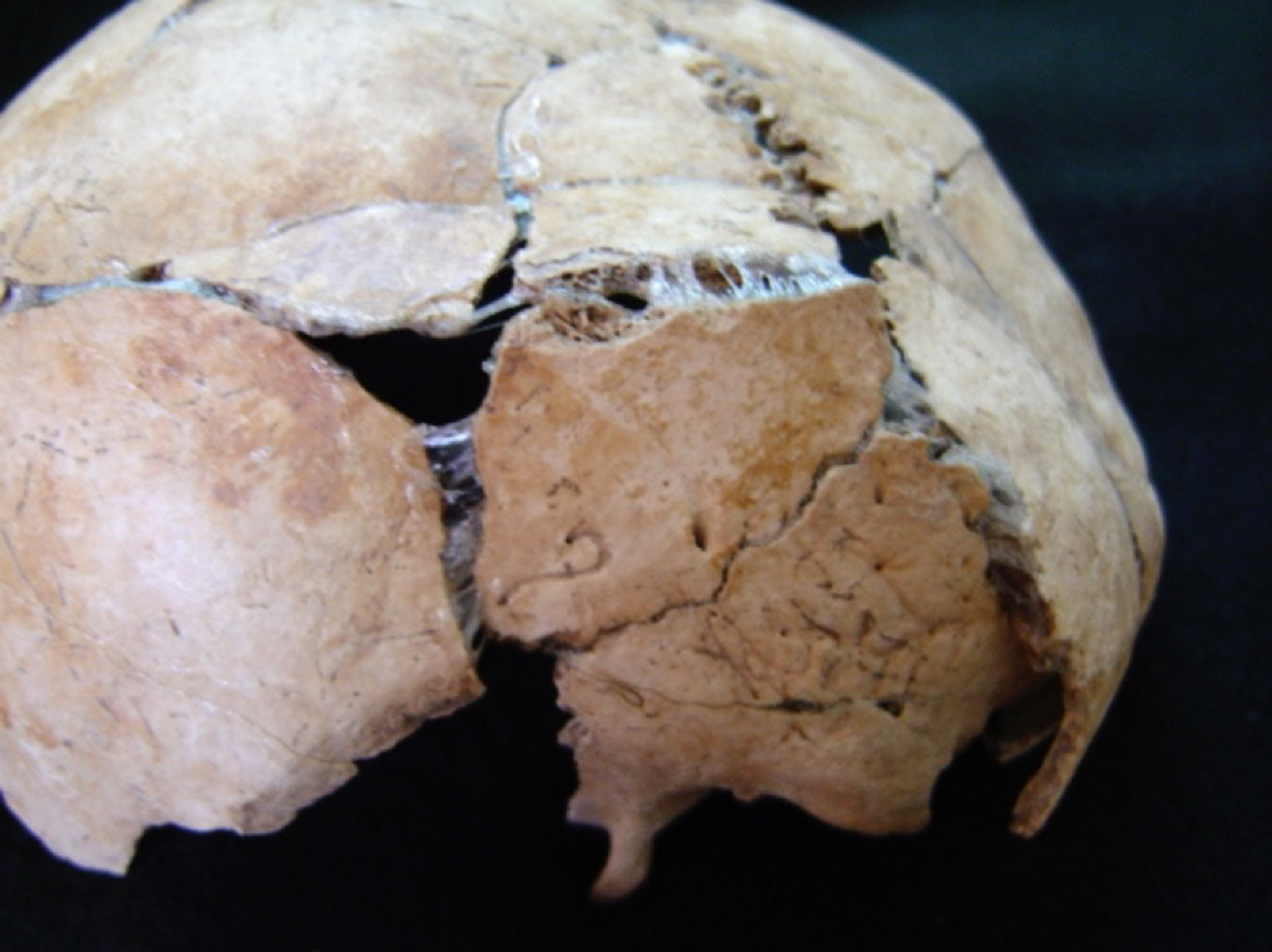
Skilled conservators use consolidants with success because they are trained in the techniques and materials to use for each case. However, nonconservators should not use consolidants because they can have long-term effects that permanently damage bone. In a subtropical humid environment, the consolidant may survive well but will result in further bone breakage, thus preventing future conservation, reconstruction, and scientific analyses. It was observed that water-soluble consolidants failed after only 20 years; Elmer's glue yellowed and peeled layers of bone; shellac so degraded underlying bone that isotopic analyses (Sr, C, etc.) were futile; and consolidants of unknown origin could not be dissolved with water, acetone, or ethanol (Figure 5). If consolidants must be used, consult or hire a conservator to apply them, and document exactly what was used on burial forms, in reports, in notes, and perhaps even on a simple tag in the burial box.
An example of a reconstructed skull with consolidant that has failed. Photograph by Katherine Miller Wolf.
Storage Bags
During the Copán collection inventory, it became apparent that projects that washed, dried, and housed their burials in 2–4 mm thick ziplock plastic bags with a small hole punched in one corner were in the best condition. Burials curated in plastic bags purchased in the local market, however, were in very poor condition, as those bags are designed to deteriorate within a decade. Plastic may seem counterintuitive in a humid environment, but it is the most durable material and was the least affected by rodents or insects. Conservator Harriet “Rae” Beaubien observed and then advised the author that this material choice appeared to be best for this site. It can be difficult to locate quality plastic bags in remote locations, requiring the project team to carry them in luggage or have them delivered by a shipping agency, which generally involves associated importation fees, taxes, and delivery costs. Approximately 13,000 bags were required for this rehousing project. They were purchased from a manufacturer in Indianapolis, Indiana (L & M Bag and Supply Co.) and transported as luggage over many trips. The sizes of the bags needed constitute another consideration (see Table 1 for general quantities). It is important to choose an appropriate bag size for the element (Cassman and Odegaard Reference Cassman, Odegaard, Cassman, Odegaard and Powell2007:113). Overall, the effort and costs associated with quality bags is balanced by the benefit of security for a collection. The effectiveness of the rehousing and use of plastic bags was evaluated in May 2018, and the bags reduced incidences of mold and rodent or insect infestations and provided stability for the remains.
Tags, Labels, and Pens
Care must be taken in choosing tags. Humidity, rodents, insects, and costs should be considered. Tyvek is a popular material, but the combination of Tyvek or notebook paper tags with human remains attracted rodents to the Copán collection. Because of this, the inventory and rehousing project made new tags cut from sheets of conservation grade acid- and lignin-free, 24 lb cotton paper and curated original tags or other labels with the burial in their own bags in the event of rodent contamination or friability. Provenience labels on the burial boxes were made of water- and fade-resistant latex to ensure consistent and permanent labeling of burial boxes. Provenience information was recorded on the new tags using Sakura micron pens, Sharpie acid-free pens, or fade-resistant, ultra-fine-point Sharpie markers. The selection of the labeling materials must be done with care, considering cost, availability, and any chemicals that such materials could introduce.
Boxes
Boxes should be selected for durability while keeping in mind the chemical makeup of the material. At Copán, polypropylene (#5) plastic boxes were selected, as this type of plastic is fatigue resistant, mechanically rugged, heat resistant, and commercially available.
One must consider the limitations of space, the funding available for the project, and the function of the boxes (Cassman and Odegaard Reference Cassman, Odegaard, Cassman, Odegaard and Powell2007:110). At Copán, only one room with limited shelving was available for storing the remains. To maximize the storage capability, the rehousing team calculated the space each burial would require based on the degree of preservation and completeness of the skeleton. Every effort was made to give each burial its own box and to ensure that all elements of a single individual were curated in the same box following indigenous value orientations (see Sadongei and Cash Cash Reference Sadongei, Cash, Cassman, Odegaard and Powell2007).
Availability of materials should be a consideration. In Honduras, it was impossible to find 1,000 boxes of the same type in the nearby small town or in major cities. The author worked with a local shop owner to order the required quantity from a contact in a nearby country. Boxes took a three-month journey overland from central to coastal Mexico, to a barge bound for Honduras, and then overland to Copán. It is essential to plan for the logistical constraints of securing materials within the country where conservation occurs.
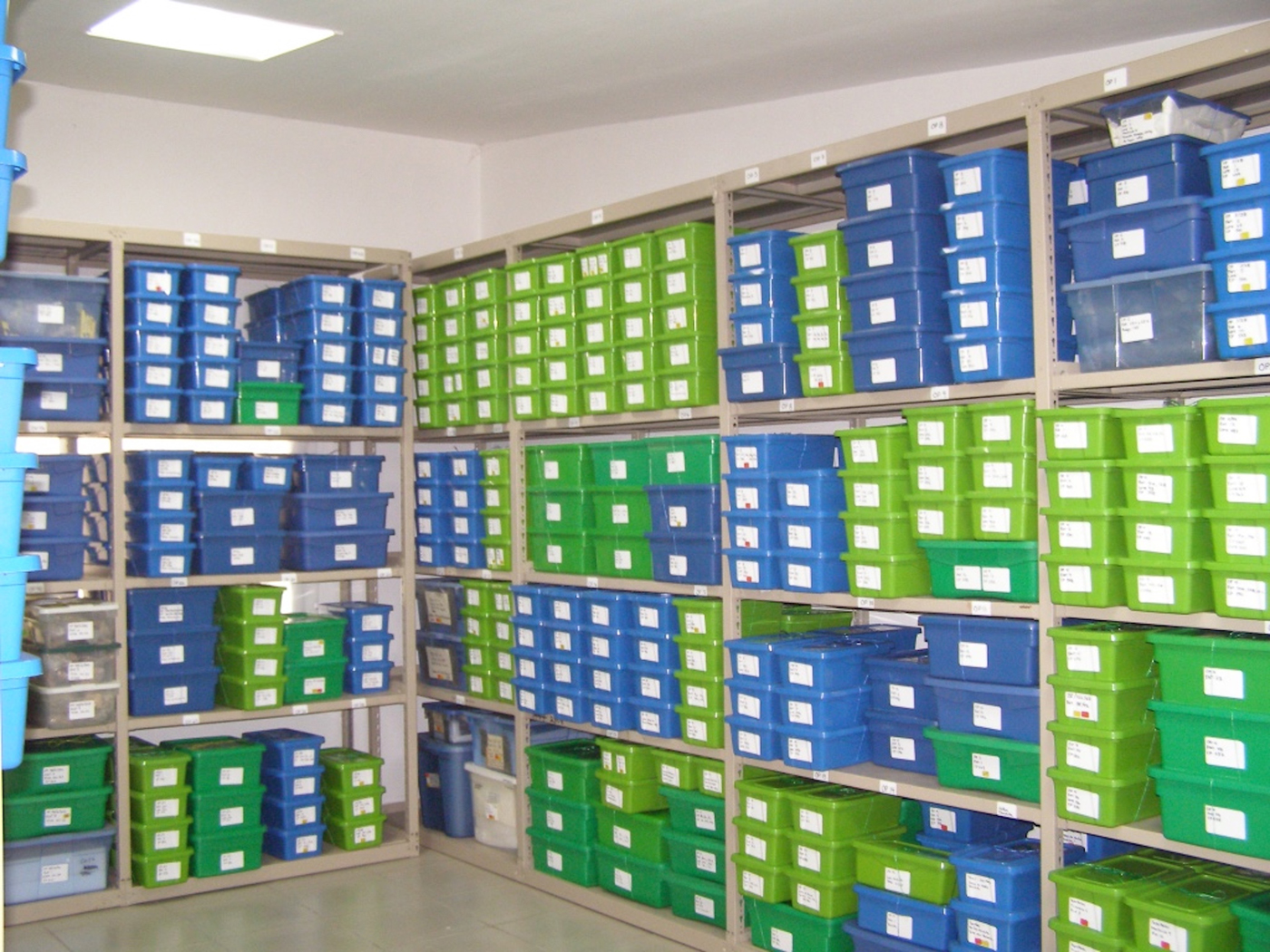
In the United States and Europe, boxes designed specifically for human skeletal remains are available, along with the recommendations on how to best utilize them (see Cassman and Odegaard Reference Cassman, Odegaard, Cassman, Odegaard and Powell2007). However, such boxes would be oversized for the extremely fragmentary remains present in ancient Maya collections, difficult to transport to Central America, and cost prohibitive for at-risk collections of more than 1,000 remains requiring urgent rehousing with modest funds. If funding, time, and space allow, excellent choices of high-quality boxes are plentiful, but if logistical realities prevent their use, work with local contacts to secure the best boxes available. The Copán collection is now curated in boxes that alternate between two colors to effectively separate remains excavated by different archaeological projects with distinct operation numbers (Figure 6).
The Copán Collection today. Each burial is in its own box, skeletal elements of the same individual are housed together, and each operation is represented by a different color. Photograph by Katherine Miller Wolf.
Cleaning Remains
Once materials are transported from the field to the lab and are stable after temporary storage in paper bags to regulate the humidity levels within the bone, they should be cleaned of any adhering matrix from the field and allowed to air-dry completely before long-term storage. The decision whether to wash remains depends on the condition of the remains, national or cultural protocols, facilities, personnel, plans for analysis, and whether the environment will allow the materials to dry in time for storage. Generally, preference is to clean remains, as it allows for the most detailed analysis so that correct assessments of age, sex, disease, health, and morphological features can be achieved. The best procedure is to have a physical anthropologist or bioarchaeologist on staff or as a consultant who can advise on the correct method for each burial.
In the Maya region, the best way to clean a bone from an excavation is to place it over a fine screen (<6.35 mm) or tray and use a wet, soft toothbrush to clean the surface slowly. If the matrix on the bone is difficult (and only when absolutely necessary), bone can be momentarily submerged, but this should be avoided whenever possible. If soil remains in the medullary cavity, bamboo skewers can be used to extract the soil. Fragile bones or those with a powdery disintegrating cortex can be sufficiently cleaned using dry brushes.
To dry washed bones, place them on a screen with space between elements or bone fragments, tagging them with provenience information and bone identifications. If space allows, keep the original tags with the bone at this stage; if it does not, place temporary tags with the key provenience and bone identification information with each fragment/bone as it dries while curating original tags or bags nearby to reintegrate with the burial. Bones are dry when they no longer feel damp or cool to the touch, and this can take days or weeks, depending on the local climate. A fan on the lowest setting can be used to speed drying, but be sure not to blow away tags or small bones, especially in the case of subadult remains. Remains should never be left in the sun to dry, as it can cause bones to warp and crack.
If remains are contaminated by rodent or bat feces or urine, a simple mix of 90% to 100% pure ethanol and water at a ratio of 1:4 can be used as a mild disinfectant. Peroxide and bleach should never be used, as they will cause permanent damage to the micro- and macroscopic structure of bone tissue. If mold is discovered, first try to clean the bone using the aforementioned methods, but if this does not help, it can be treated with a concentrated ethanol mix of 1:2 applied with a cotton swab. When dealing with any chemical, safety information on the label should be followed, proper protective gear should be worn, and work should occur in fresh air or under a vent hood.
Long-term Monitoring
One should think ahead and focus on conservation efforts that aim to protect a collection for at least 100 years. Certainly, technology and techniques will improve, and future researchers, in collaboration with IHAH, may build on the strategies outlined here to further stabilize and protect this collection.
Conservation is an ongoing process and requires consistent attention. The author has worked for more than a decade to improve the condition of the Copán skeletal collection, but it remains a collaborative effort between IHAH, various universities, colleagues, descendant communities, and students. Equipment such as the air conditioner and dehumidifier should be checked annually and maintained, and bags and boxes should be revised and replaced as necessary. The maintenance costs associated with the Copán collection can vary but requires at least $100 per year to keep equipment, tables, boxes, and the storage room in order.
The final key feature to long-term maintenance of the collection is the continued on-the-ground daily dedication of the staff at the CRIA, who routinely check on the skeletal collection, alert the author of any issues with equipment, and religiously empty the water from the dehumidifier. The decade of work, collegiality, and friendship between the author and CRIA staff has ensured that the collection is well protected, and similar methods are being applied to other at-risk materials within the CRIA and region. Finally, one must also consider how new technology such as photogrammetry (see Novotny Reference Novotny2019 and Wrobel et al. Reference Wrobel, Biggs and Hair2019, in this issue), photo documentation of box contents (Cassman and Odegaard Reference Cassman, Odegaard, Cassman, Odegaard and Powell2007), and digital inventories (e.g., McManamon and Kintigh Reference McManamon and Kintigh2010) can protect previous data and reduce the need to handle delicate materials in extant collections.
CONCLUSION
Respect for the dead, descendant communities, and the cultural patrimony of Honduras is paramount even in the absence of legislation similar to the Native American Graves Protection and Repatriation Act (NAGPRA). While this article has detailed how to undertake a conservation project, the goal was not to serve solely as a guide. The purpose is to make certain that if the dead must be disturbed in archaeological excavations, care and respect must be part of the plan at each stage (Alfonso and Powell Reference Alfonso, Powell, Cassman, Odegaard and Powell2007; Sease Reference Sease1998). The author's dissertation research plans did not anticipate an expensive and time-consuming conservation project, but since bioarchaeologists study the dead, we must also provide safety and support of those we seek to understand.
Acknowledgments
The author wishes to acknowledge the Honduran Institute of Archaeology and History (IHAH) for allowing access to the Copán skeletal collection. Permits were issued to the author for each field season in compliance with the cultural patrimony regulations of Honduras. The author is thankful to her colleagues at Copán and in Honduras who supported this endeavor: Allan Maca and Jane Buikstra for the invitation to begin the project, the principal investigators of the various archaeological projects, Eva Martinez and the other directors and subdirectors of IHAH, and Norman Martinez and other CRIA personnel. The author is indebted to the conservation team from Copán, including Marco Obtulio Cantillano, Luis Alonso Cuellar, and Carolina Rodriguez Lopez. This work was supported with funding from the National Science Foundation (BCS-1207533); the School of Human Evolution and Social Change and the Professional Student Association at Arizona State University; Colgate University; and the School of Humanities and Social Sciences at Indiana University East. Finally, the author wishes to thank the anonymous reviewers whose thoughtful comments substantially improved this work.
Data Availability Statement
The article describes conservation techniques employed by the author, including published references, based on the author's work at the site of Copán, Honduras. Laboratory and field reports are on file with the Honduran Institute of Archaeology and History from the various project principle investigators cited in this paper and the author's analyses. No original data is presented in this paper.



