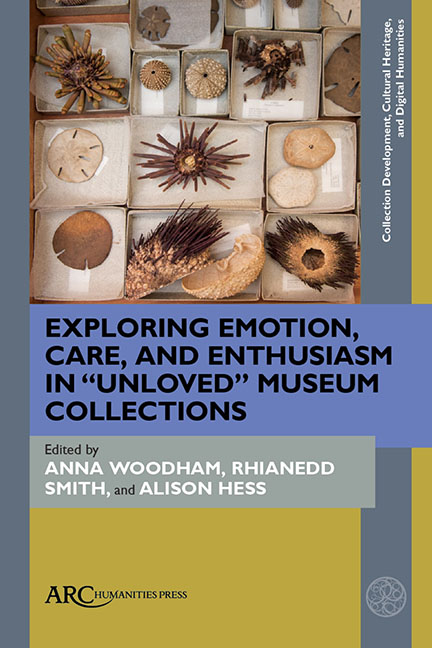

Millions of items are held in museum collections around the world but many museums have very few visitors to their stored collections. These stored objects are certainly not neglected by their professional custodians, and they are loved with a great intensity by some curators and enthusiasts. However, for all but a tiny proportion of the population they have little or no personal meaning. This book goes beyond strategic discussions of access to stores, information enhancement, or collections rationalization and focuses on the emotional potential of these objects. The authors explore how 'care' for objects has varied over time and consider who cares for objects that are generally considered to be unsuitable for display and why they care. They also consider how inter-generational and inter-disciplinary dialogue can enhance or engender engagement with 'unloved' collections and offer strategies and reflection on interpreting stored collections. This book will be essential reading for scholars, students, and professionals in museums, especially those concerned with curation and collections.
Loading metrics...
* Views captured on Cambridge Core between #date#. This data will be updated every 24 hours.
Usage data cannot currently be displayed.
This section outlines the accessibility features of this content - including support for screen readers, full keyboard navigation and high-contrast display options. This may not be relevant for you.
Accessibility compliance for the PDF of this book is currently unknown and may be updated in the future.
