1 Introduction
In the history of humankind, war has never been far away in time or geographical distance, but the world has witnessed a steep increase in armed conflicts. In 2023, an estimated 16% of people in the world were within five kilometers of armed conflict, with Ukraine forced to rank highest worldwide on the dimension of deadliness (Armed Conflict Location & Event Data, https://acleddata.com/conflict-index/index-july-2023/#reports). Conflict event rates grew by more than 25% in 2024 and 2025, with a 63% increase in the average monthly battles in Ukraine compared to 2023 (https://acleddata.com/global-analysis/conflict-watchlist). War exposes human beings to traumatic experiences and extreme stress, with negative consequences for their physical and mental health and adjustment. It is essential to realize that many individuals involved in or affected by war experiences are parents with caregiving responsibilities. Children suffer from war through direct stressors (e.g., loss of homes and family members, educational deprivation, frightening attacks during day and night) and indirect stressors through the debilitating effects of war experiences on their caregivers’ parenting.
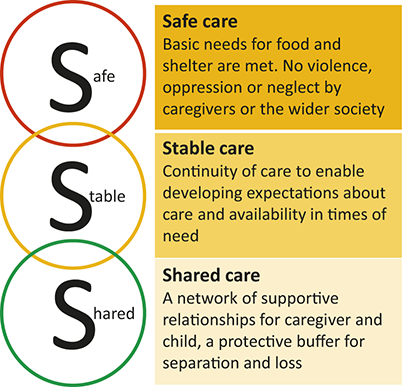
On the basis of more than half a century of research on child development from an attachment perspective, we argue that children need safe care that is free from maltreatment or neglect, stable care with a minimum of fragmentations of established child–caregiver relationships, and shared care arrangements to prevent parent burnout and provide the child with more attentive and caring attachment figures (Triple S care). Families under siege and confronted with war violence need evidence-based social, therapeutic, and parenting support to create such safe, stable, and shared care for their children. At the level of society, long-term cash transfers or social security measures may alleviate parental worries about livelihood and might support their ability to serve the basic survival needs of their offspring. At the dyadic level, parent training may help parents to be sensitive and responsive even when they are stressed or burned out. Special emphasis on limit setting might be important because stress can make parents harsher or more neglecting than they would be normally. At the individual level, traumatized parents and children may need specialized therapeutic treatment to cope with their war experiences. In this Element, we describe the consequences of war for children, parents, and family life, and we elaborate on ways families suffering from war violence and armed conflicts can be supported.
This Element has four distinctive features. First, we ground our hypotheses, statements, and conclusions in meta-analyses or, if not available, in large epidemiological or (quasi)experimental studies. We prioritize sound evidence bases and avoid conclusions suggested or supported by single, underpowered studies, policy documents, (social) media, or other “grey” sources. Second, brief intermezzi present case studies of children and families in wartime to illustrate scientific findings and their implications and elucidate the complicated reality of families trying to cope with war violence. Third, this Element is the result of a collaboration between two developmental scientists with a research background in attachment and intergenerational transmission of war experiences of Holocaust child survivors and a child psychiatrist conducting research and clinical work with children and parents “in situ” during the war in Ukraine. These backgrounds inspired our work on this Element. Fourth, we use the protracted war of Russia against Ukraine starting in 2014 to illustrate the prevalence and risk factors of mental-health problems in children and parents during distinct phases of armed conflicts in general, the shifting levels of social cohesion, the progressive exhaustion of the population, and the ongoing depletion of human and institutional resources.
The emphasis on the development of children, family, attachment, trauma, and recovery during and after wartime is the main thread and unique perspective in the Element. We believe that this Element should be attractive to a wider audience outside the community of researchers specialized in humanitarian disasters of wartime and armed conflicts around the world. We expect therapists, clinicians, medical and social workers, and other professionals to profit from this concise but comprehensive treatise on children and families weathering war and how they could be supported.
2 The War Roots of Attachment Theory and Research
Infants form attachment relationships with protective caregivers, and attachments continue to play a role “from cradle to grave.” Attachment relationships may provide comfort and protection for children in distress and are especially important in times of life-threatening stressors such as war. Child psychiatrist John Bowlby was clearly inspired by children’s experiences of anxiety, separation, and loss during and after the World War I in laying the groundwork for attachment theory.
2.1 The Evolutionary Roots of Attachment Behavior
Babies need others to survive and develop. For a substantial period after birth, they are completely dependent on their caregivers to feed them and to keep them warm and safe. They use their voice (crying, smiling, babbling) and their developing locomotor abilities (crawling) to signal their needs to caregivers and increase the opportunities for proximity and contact with them. These caregivers are usually the biological parents, who feel compelled to care for their offspring, protect them from dehydration, cold, and other dangers, and are motivated by their child’s smiles and babbles to interact with the child. As a result of the interaction, an attachment relationship develops in the course of the first year. Attachment is the affective bond between children and a protective caregiver. This bond is most clearly expressed in times of fear and tension, such as during illness, separation, or wartime danger. For the regulation of negative emotions that arise under stress, the young child depends on a “wiser” or “stronger” conspecific. This protective conspecific, the attachment figure, ensures that the negative emotions of sadness and fear do not overwhelm the child and block any (exploratory or coping) behavior. The caregiver forms a scaffold within which the child may feel supported and is afforded the opportunity to grow and develop.
Attachment occurs in some form in all known human cultures and in many other species in the animal kingdom. The evolutionary value of both the child’s inborn tendency to signal their needs to some trusted older and wiser conspecific (promoting survival) and the parent’s tendency to secure the survival of their offspring (transferring their genes to the next generation/s) is clear. Indeed, attachment theory is primarily an evolutionary theory, but attachment relationships are not limited to biologically related infant–parent dyads. Children can also develop attachment relationships with other caregivers who regularly interact with them and provide safety in times of need. Attachment networks make evolutionary sense, as in human history, parental death during or shortly after parturition was all too common and would be fatal for a child left without an alternative caregiver. However, there may be a maximum to the number of caregivers with whom a child can form attachment relationships. A child has to form expectations and predictions about what caregivers will do, and how caregivers will interact and respond to develop attachment. Stability of caregivers to enable contingency (realizing the effects of one’s actions on the environment) and to establish relationships is essential. Thus, it is not the more caregivers the merrier for developing children. We will revisit this issue in Section 6.
2.2 The War Roots of Attachment Theory
John Bowlby (1907–1990), the British child psychiatrist and founder of attachment theory, was heavily influenced by his observations and experiences before and during wartime (Newcombe & Lerner, Reference Newcombe and Lerner1982). Bereavement was very common in the United Kingdom in the 1920s. Roughly 750,000 British men died in the World War I (1914–1918), out of a total population of 38 million, with deaths concentrated in the age cohort of young men. About one-third of the fallen soldiers were married, leaving behind about 250,000 widows and 381,000 children (Dearle, Reference Dearle1940). Pathological mourning and grief-related mental problems were common. Living in the aftermath of the World War I, with widespread separation and death, it is easy to understand why Bowlby (Reference Bowlby1942) arrived at a role for early separation and loss in the development of psychopathology. His study of forty-four juvenile thieves at the London Child Guidance Clinic in 1936 and 1937, published some years later, demonstrated early separations as a defining theme in their childhoods. Especially those who suffered from bereavement or prolonged separation from their mother or mother-substitute during the first five years seemed to have an increased risk of being “affectionless” (Bowlby, Reference Bowlby1944;Jones-Mason, Behrens, & Gribneau Bahm, Reference Jones-Mason, Behrens and Gribneau Bahm2021).
Having seen evidence for the negative consequences for children of prolonged separation (six months or more) from their primary caregiver before the age of five, Bowlby warned against the long-term damage caused by separating very young children from their parents in a letter to the editor of the British Medical Journal written together with Donald Winnicott and Emanuel Miller. They wrote in 1939, when plans for the evacuation of children from London in case of bombings were developed: “Schemes for evacuation are being thought out, and before they are completed we wish to draw attention to these problems. … evacuation of small children without their mothers can lead to very serious and widespread psychological disorder. For instance, it can lead to a big increase in juvenile delinquency in the next decade” (Bowlby et al., Reference Bowlby, Winnicott and Miller1939, pp. 1202–1203). Despite this warning, evacuations of children from London to keep them safe from air raids took place. Moreover, the development of group nurseries to allow mothers of young children to contribute to the war effort led to more separations of young children from their parents, and after the war Bowlby continued studying the consequences of these war-induced experiences. In addition to his work with children, Bowlby worked as an army psychiatrist in World War II with veterans on their return from the front. He observed amnesias, misdirected and undirected behaviors, signs of confusion, out-of-context anger or anxiety, and various other indicators of tension. Bowlby interpreted these symptoms as reflecting veterans’ experiences of psychological conflict between feelings of duty and lingering fear from their time at the front (Duschinsky, Reference Duschinsky2020).
In 1949, Bowlby was commissioned to write the World Health Organization’s report on the mental health of homeless children in postwar Europe, published in 1951, titled Maternal Care and Mental Health. The report was highly influential. It initiated changes in the practices of institutional care for young children and in rules regulating parents’ visiting their children during hospital treatment. His writings focused on mothers and maternal care. This observation is attributable to the local historical context, where mothers usually played by far the largest role when it came to the care of young children. Never did Bowlby suggest that fathers would not be attachment figures or adequate caregivers.
Bowlby (Reference Bowlby1973, Reference Bowlby1988) regarded attachment as a lifelong characteristic of the human person and relationships. Attachment continues to play an important role throughout life, especially in frightening or stressful situations. At no point in the life course can we escape the need to seek proximity to a protective and loving partner, caring friend, or committed professional in times of fear and stress. Separations and losses remain painful in adulthood and remind us how much we rely on a small number of attachment figures to cope with the challenges and tensions of life, especially during and after armed conflicts.
2.3 Variation in the Quality of Child–Caregiver Attachment Relationships
Between children and their caregivers, some kind of attachment relationships always develop. However, depending on the experiences the children have with their caregiver in situations of fear or tension, children differ in their attachment behaviors, that is, the way they seek safety and security with their caregivers (Ainsworth et al., Reference Ainsworth, Blehar, Waters and Wall1978). Variations in attachment relationships are usually not indicated by quantifiers such as more or less attached, but by qualifiers such as secure and insecure attachment. In a secure attachment relationship, the child perceives the caregiver as available and sensitive in times of need. However, not all caregivers can easily respond to their child’s negative emotions. They may feel hurt in their sense of competence as a caregiver by a crying or angry child and try to deny or hastily suppress the child’s negative emotions. As a result, their children experience little room for the expression of fear and tension. Insecure-avoidant children “deactivate” or minimize the expression of negative emotions. Other children “hyperactivate” or maximize displays of negative emotions and keep their attention focused on the caregiver. The hypothesis is that their experiences with the caregiver were inconsistent in nature: sometimes sensitive and prompt in response to the child’s needs, but other times withdrawn and unavailable. Children then grow accustomed to expressing strong attachment signals to get the caregiver’s attention. Their attachment relationship is labeled insecure-ambivalent. Note that while children can be described as securely or insecurely attached, the qualifier refers to a relationship, and not to a personal child characteristic. Children can, for instance, be securely attached to their father and insecurely attached to their mother.
The three aforementioned types of attachment (secure, insecure-avoidant, insecure-ambivalent) are all considered organized types of attachment relationships. They are considered organized in the sense that the child has learned from experiences with their caregiver how to behave to have their caregiver respond to their needs at crucial moments. A fourth type of attachment lacks such behavioral organization and is labeled insecure-disorganized. Insecure-disorganized children display conflicted, confused, or fearful behavior toward their caregiver. Disorganized attachment is negatively associated with maternal sensitivity (r = −0.22 across 23 studies including 3,799 children; Madigan et al., Reference Madigan, Deneault and Robbie Duschinsky2024), but the hypothesis is that a different type of caregiver behavior specifically elicits disorganized attachment, namely caregiving behavior that is frightening for the child. In such cases, the child does not know whether or not to seek proximity when stressed, with conflicted or confused behavior as a result. This dynamic may stem from various factors and has been documented for abuse, neglect, or parenting behaviors resulting from high caregiver stress (Cyr et al., Reference Cyr, Euser, Bakermans–Kranenburg and Van IJzendoorn2010; Madigan et al., Reference Madigan, Bakermans-Kranenburg and Van IJzendoorn2006; Main & Hesse, 1999).
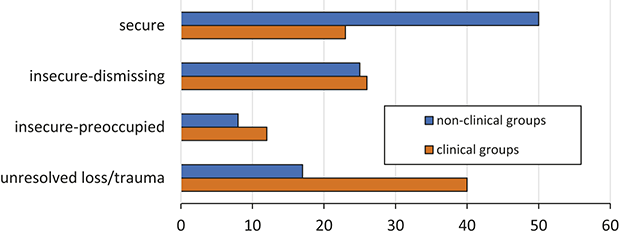
Worldwide, the majority of the children (52%) are securely attached (Madigan et al., Reference Madigan, Fearon and van IJzendoorn2023). The prevalence of insecure-avoidant attachment is about 15%, and about 10% of the children have insecure-ambivalent attachments. Insecure-disorganized attachment is observed in 15–20% of the children in nonclinical groups, but in clinical groups, insecure-disorganized attachments are more common, with a prevalence of more than 30%. Insecure attachment is not a form of psychopathology, but rather a transdiagnostic risk factor that increases children’s vulnerability to developing symptoms of psychopathology later in life.
2.4 Adult Attachment Representations and Unresolved Loss or Trauma
Children develop a mental representation of their caregiver based on their experiences in interactions with the caregiver, which Bowlby (Reference Bowlby1973) also referred to as an “internal working model” of attachment. Main and her colleagues (Reference Main, Kaplan, Cassidy, Bretherton and Waters1985, p. 66) defined the mental representation of attachment as a “ … set of conscious and/or unconscious rules for the organization of information … and for obtaining or limiting access to that information … .” In young children, attachment behavior can be relatively simply observed, but measuring attachment in older individuals is more challenging. Adults can be masters at hiding their emotions, and various studies have shown that self-reports, such as completing a questionnaire, do not provide valid information about attachment representations (Van IJzendoorn & Bakermans-Kranenburg, Reference Van IJzendoorn and Bakermans-Kranenburg2024). Main and her colleagues (Main & Goldwyn, Reference Main and Goldwyn1994; Main et al., Reference Main, Kaplan, Cassidy, Bretherton and Waters1985) developed an interview and coding system for the measurement of adult attachment representations, the Adult Attachment Interview (AAI).
The AAI lasts about an hour and consists of questions about the family of origin, separations from their caregivers, and times the respondent was sick or may have felt hurt or rejected. It also includes questions about any losses of loved ones and other potential traumatic events, such as abuse and neglect or war-related experiences (Holocaust: Sagi et al., Reference Sagi, Van IJzendoorn and Grossmann2003; veterans: Harari et al., Reference Harari, Bakermans-Kranenburg and De Kloet2009). Key in interpreting responses is that the content of reported experiences is less important than the coherence of the narrative. The goal is not to reconstruct exactly what happened in the past, but to evaluate whether the respondent presents a coherent narrative. If that is the case, the AAI is considered secure, even when it mainly reports negative experiences. In contrast, contradictions in the interview signal lower coherence and indicate an insecure attachment representation. Insecure-dismissing AAIs are incoherent because of idealization of the past: Positive descriptions cannot be substantiated with concrete evidence, or negative events are described as having only positive outcomes (e.g., “It made me stronger”). Another type of incoherence is found in insecure-preoccupied interviews. Such interviews are often very lengthy, as the respondent seems to lose sight of the interview context. The narrative is marked by irritation, direct quotations of parents, or addressing the parent rather than the interviewer.
Unresolved loss or other unresolved trauma is also extracted exclusively from the way of talking about loss experiences and other potentially traumatic experiences. Unresolved loss is coded when the interviewee is incoherent while speaking about a deceased person (e.g., speaking about them in the present tense even long after the loss or unjustly blaming themselves for the death). Unresolved abuse is evident from alternating between reporting and denying the experience or expressing a sense of having provoked it. A general characteristic of unresolved discourse about loss or trauma is reliving the loss or trauma in full intensity during the conversation (Main & Goldwyn, Reference Main and Goldwyn1994; Hesse & Main, Reference Hesse and Main1999). In veterans, it is related to posttraumatic stress symptoms (Harari et al., Reference Harari, Bakermans-Kranenburg and De Kloet2009). The classification of unresolved loss or trauma is made in addition to the secure or insecure classification based on the other parts of the interview.
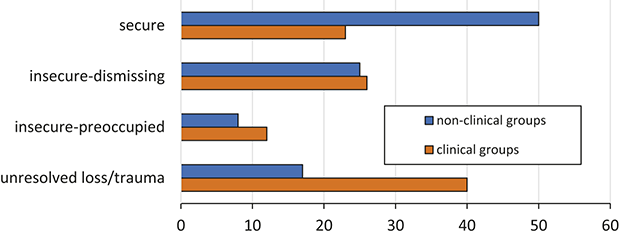
We documented the distributions of AAI classifications based on a systematic search including over 26,000 interviews in clinical and nonclinical groups across the world (Bakermans-Kranenburg et al., Reference Bakermans-Kranenburg, Dagan, Cárcamo and Van IJzendoorn2025); see Figure 1. Clinical populations have an overrepresentation of unresolved loss or trauma, often combined with another insecure attachment representation. The types of combinations differ: In anxiety and psychotic disorders, unresolved trauma or loss is often combined with insecure-dismissing attachment representations; in cases of addiction or borderline personality disorder and posttraumatic stress disorder (PTSD), unresolved loss or trauma is often combined with insecure-preoccupied representations of attachment. The association between war-related PTSD and adult attachment representation is further discussed in Section 5.
Distributions of adult attachment representations in nonclinical and clinical groups (%)
2.5 Summary
Human beings are born with the innate tendency to form attachment relationships, and attachments continue to play a role throughout life. Attachment relationships provide comfort and protection and are thus of utmost importance in times of life-threatening stressors such as war. No wonder that the founding father of attachment, John Bowlby, was inspired by experiences of anxiety, separation, and loss during and after the World War I and World War II. The quality of attachment relationships is affected by the experiences of met or unmet attachment needs and is – especially in infancy and early childhood – specific to the dyad (see Bakermans-Kranenburg & Van IJzendoorn, Reference Bakermans-Kranenburg and Van IJzendoorn2024, Reference Bakermans-Kranenburg, Van IJzendoorn, Bornstein and Shah2025). Over the years, mental representations of attachment develop, integrating attachment experiences. Important questions about the role of attachment in war-affected contexts arise: Can parents adopt the role of protective attachment figures when they are under threat and anxious themselves? How do children cope with long-term separations from their parents? Does secure attachment help deal with the perhaps overwhelming emotions experienced during war, and what interventions may support military, civilians, and refugees to alleviate traumatic war experiences and be a secure base for their children? These and other questions are addressed in the following sections.
3 Child Development in Wartime
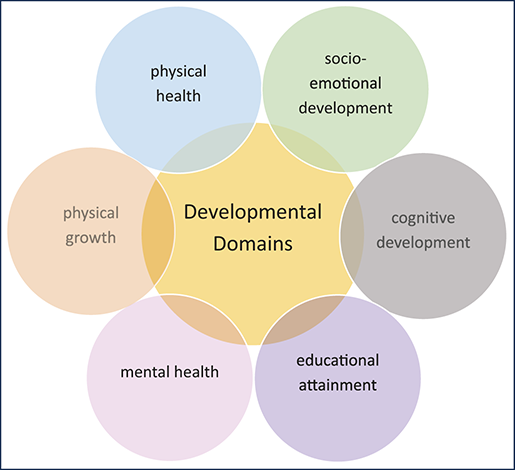
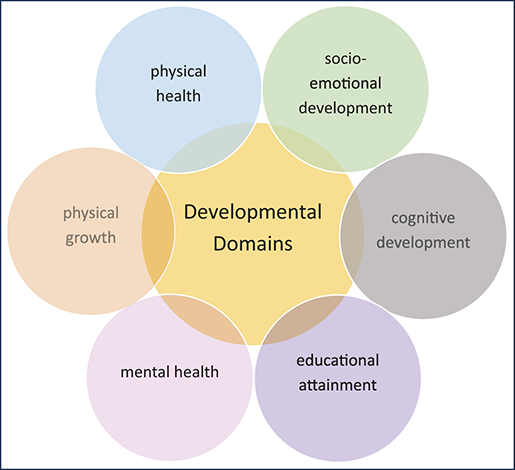
Armed conflict affects not only children’s immediate safety, but also the biological foundations of their long-term health and development. From gestation through adolescence, child development is shaped by the interplay of nutritional, environmental, and psychosocial conditions, which are profoundly disrupted during wartime. The disruption of stable food systems, healthcare infrastructure, and caregiving environments contributes to a wide spectrum of physical and mental health challenges, including elevated risks of adverse birth outcomes, malnutrition, injury, infectious disease, disrupted pubertal development, and psychological impairment. This section examines the consequences of war exposure for children’s physical and mental health (see Figure 2), along with associated risk factors, drawing on large-scale epidemiological data, life-course models of risk, and culturally specific findings from conflict-affected populations.
Developmental domains affected by war and armed conflict
3.1 Delivery Complications, Physical Growth, and Physical Health
3.1.1 Delivery Complications
Children born during periods of armed conflict face elevated risks of adverse birth outcomes. A meta-analysis involving over 600,000 mother–child dyads from populations exposed to war and terrorism found a higher prevalence of preterm births and low birthweight infants (under 2,500 grams; Riquelme-Gallego et al., Reference Riquelme-Gallego, Ramos-Soberbio, Leno-Duran, Martínez-Vázquez and Caparros-Gonzalez2025). These outcomes were primarily attributed to maternal malnutrition, psychosocial stress, and limited access to prenatal care in conflict-affected settings. Another systematic review of perinatal and neonatal outcomes found that refugee women from war-affected countries had worse pregnancy outcomes compared to local women in host countries. Specifically, refugee mothers had higher odds of delivering babies with low birthweight (OR = 1.8), experiencing stillbirth (OR = 1.9), and perinatal mortality (OR = 2.0). These associations correspond to substantial effect sizes, with Cohen’s d estimates ranging from 0.32 to 0.38 (Behboudi-Gandevani et al., Reference Behboudi-Gandevani, Bidhendi-Yarandi and Panahi2022).
3.1.2 Physical Growth and Development
In addition to gestation and delivery complications, malnutrition is a concern for children in both the short- and long-term aftermath of war. In armed conflicts, adequate nutrition, including sustained breastfeeding, is considered to be important for a child’s cognitive, physical, and socioemotional development (Punamäki et al., Reference Punamäki, Diab, Vänskä, AlBarqouni and Quota2025; Purkiewicz et al., Reference Purkiewicz, Regin, Mumtaz and Pietrzak-Fiećko2025). A systematic review found that proximity to armed conflict is associated with a higher risk of breastfeeding interruption, with exclusive breastfeeding rates in conflict zones falling as low as 5.5% (Rabbani et al., Reference Rabbani, Padhani, Siddiqui, Das and Bhutta2020). Displacement, maternal stress, malnourishment, partner loss, and reduced availability of mental health care were all identified as significant contributors. These disruptions were also fueled by cultural misconceptions, including the preexisting beliefs, reinforced by both communities and health workers, that maternal stress and malnutrition render breastmilk “dirty” or nutritionally inadequate (Rabbani et al., Reference Rabbani, Padhani, Siddiqui, Das and Bhutta2020).
Older children are also at risk for malnutrition. On average, 24% of war-affected children in Africa were malnourished, and 34% exhibited stunting, indicating chronic undernutrition and impaired growth trajectories (Azanaw et al., Reference Azanaw, Anley, Anteneh, Arage and Muche2023). The most significant predictors of undernutrition were low maternal education and residence in areas of active armed conflict. In contrast, average rates of wasting in sub-Saharan Africa ranged from 4% to 10%, and underweight prevalence ranged from 11% to 20% in areas that were not war-affected. The risk for food insecurity during war is further demonstrated by reports from the Gaza Strip and Ukraine. According to the Integrated Food Security Phase Classification (IPC), as of June 2025, the Gaza Strip had exceeded famine thresholds, placing more than 320,000 children at risk of starvation (IPC, 2025). Similarly, in Ukraine, over 1.5 million people living in frontline regions are struggling to access adequate food supplies and are in urgent need of humanitarian assistance (World Food Programme, 2024).
Several studies have documented the long-term health consequences of early-life exposure to starvation in child populations. Exposure to the Dutch Hunger Winter of 1944–1945 during gestation has been associated with increased risks of glucose intolerance, obesity, coronary heart disease, and hypertension in adulthood, and increased risk of breast cancer later in life (Kyle & Pichard, Reference Kyle and Pichard2006). A follow-up study of Dutch Hunger Winter survivors found that famine exposure during the first three months after conception was linked to lower DNA methylation of the IGF2 gene, which controls insulin-like growth factor – a hormone essential for human growth and development (Heijmans et al., Reference Heijmans, Tobi and Stein2008). Similar findings have emerged from an ecological study of survivors of the Holodomor, the artificial famine of 1932–1933 in what was then the Soviet Ukraine. In utero exposure to famine conditions was associated with nearly double the risk of developing type 2 diabetes mellitus in adulthood (Lumey et al., Reference Lumey, Li, Khalangot, Levchuk and Wolowyna2024). Moreover, in utero exposure to famine was associated with steeper cognitive decline in old age (Wiegersma et al., Reference Wiegersma, Boots, Roseboom and de Rooij2023).
War-related stressors and displacements disrupt pubertal development. In a systematic review, Glass and colleagues (Reference Glass, Reiches and Clarkin2024) reported that nearly two-thirds of exposed girls, with some exceptions, showed delays in the onset of menarche, ranging from several months to several years. These disruptions are likely influenced by both nutritional deficiencies and chronic psychosocial stress during sensitive developmental windows. This pattern appears to diverge from some life history theory predictions, which suggest that adverse early environments, particularly those characterized by unpredictability and resource scarcity, may result in accelerated development, leading to earlier menarche and a fast life trajectory characterized by earlier reproduction, higher fertility, and shorter lifespan (Belsky, Reference Belsky2008; Belsky et al., Reference Belsky, Steinberg and Draper1991; Chang & Lu, Reference Chang, Lu and Bornstein2025). One explanation is that extreme energy deficits, common in war-related famine and displacement, override the adaptive signaling associated with psychosocial risk (Clarkin, Reference Clarkin2019; Ellis et al., Reference Ellis, Reid and Kramer2025), which highlights the complex interaction between biological energy availability and environmental harshness in shaping reproductive timing.
3.1.3 Physical Health and Disease
Armed conflicts pose a significant threat to children’s physical safety, resulting in a wide range of injuries, including penetrating wounds, blunt force trauma, crush injuries, burns, and amputations. A UNICEF report (2022a) documented that between 2005 and 2020, at least 104,100 children were killed or seriously injured in armed conflicts, and more than 13,900 attacks were recorded against schools and hospitals. Reported trauma-related case fatality rates among children under eighteen years of age with conflict-related injuries have reached as high as 18% in some hospital- and registry-based studies, particularly following explosive and landmine injuries. In these settings, penetrating head injuries were the most common form of traumatic brain injury (see Section 5), markedly different from nonconflict settings, where blunt trauma, caused by impact with a non-sharp object, such as a fall or collision, predominates. Furthermore, the mortality rate among pediatric neurosurgical patients in these settings was reported to be as high as 24% (Kadir et al., Reference Kadir, Shenoda and Goldhagen2019).
War-related damage to hospitals, supply chains, and healthcare access also creates unsanitary living conditions and leads to major vaccine shortages. A systematic review involving data from over 590,000 children from war-affected countries between 1998 and 2018 found a decline in vaccination rates in conflict zones (Goli et al., Reference Goli, Mavisakalyan and Rammohan2022). Similarly, a review of studies of refugee children arriving in Western countries, mostly from Africa and Asia, reported elevated rates of anemia and infectious diseases, including HIV, hepatitis, and tuberculosis (Baauw et al., Reference Baauw, Kist-van Holthe and Slattery2019).
3.2 Attachment Issues
Attachment insecurity is increasingly recognized as both a consequence of war-related traumatic exposure and a risk factor for adverse psychological outcomes. For example, in a war-affected sample of Palestinian children, both family attachment patterns and children’s trauma-related cognitive and emotional processes significantly predicted the course of posttraumatic stress symptoms (PTSS) over time (Punamäki et al., Reference Punamäki, Palosaari, Diab, Peltonen and Qouta2015). Secure attachment as measured by a 10-item Security Scale emerged as a particularly strong protective factor, associated with resiliency (i.e., consistently low PTSS). Conversely, insecure-avoidant attachment measured by a Coping Strategies Questionnaire (CSQ; Finnegan et al., Reference Finnegan, Hodges and Perry1996), negative trauma-related cognitions as assessed with the Children׳s Post-Traumatic Cognitions Inventory (cPTCI; Meiser-Stedman et al., Reference Meiser-Stedman, Dalgleish, Glucksman, Yule and Smith2009), and poor emotion regulation measured with the Emotion Regulation Questionnaire for Children (ERQC; Rydell et al., Reference Rydell, Berlin and Bohlin2003) predicted persistent or worsening trajectories.
In a meta-analysis of studies involving various trauma types, including war-related trauma, Cushing et al. (Reference Cushing, Robertson and Mannes2024) found a small to moderate negative pooled effect size (r = –0.16) between PTSS severity and attachment in children assessed with a mix of attachment measures. Greater trauma symptoms were associated with less attachment security. As an example, Van Ee and colleagues (Reference Van Ee, Kleber, Jongmans, Mooren and Out2016a), investigating the relation between parental PTSD and child attachment in refugee families in the Netherlands, found a markedly high prevalence of disorganized and insecure attachment. Parental PTSD was associated with both insecure and disorganized child attachment, independent of other contextual factors.
Attachment difficulties may also arise indirectly through disruptions in caregiving relationships associated with wartime displacement or related parental mental health issues, military deployment, captivity, or the loss of family members. According to UNICEF data (2022b), children account for more than half of the world’s refugees and internally displaced persons, placing them at elevated risk for attachment insecurity and associated consequences. Children in military families or families called to armed service are also at risk for attachment disruptions, particularly in the context of repeated parental deployments. Barker and Berry (Reference Barker and Berry2009), comparing children in families with and without recent deployment, found more insecure attachment-related behaviors following reunion in the deployment-exposed group. Notably, the risk of attachment difficulties increased with both the number of parental deployments (r = 0.42) and the duration of the most recent deployment (r = 0.40), underscoring the cumulative impact of prolonged separations on early attachment development. Tupper et al. (Reference Tupper, Bureau, Deneault, Dixon-Luinenburg and St-Laurent2020) found that military deployment predicted higher levels of children’s internalizing and conduct problems, even when controlling for the attachment relationship with the non-deployed parent. These results indicate that the psychological consequences of war are not solely determined by direct trauma exposure, but also mediated through relational and emotional regulatory systems, such as the quality of attachment relationships.
3.3 Cognitive Development, Schooltime, and Executive Functioning
Armed conflicts affect all spheres of children’s lives, including cognitive development, schooling, and executive functioning. Exposure to war can impair these domains both directly, through the neurobiological consequences of trauma, educational disruption, and reduced access to stimulating environments, and indirectly, via changes in caregiving quality, family structure, and parental mental health. This section reviews empirical evidence on how war impacts children’s cognitive functioning, learning performance, and school-related outcomes across both individual and family-level pathways.
3.3.1 Direct War-Related Effects
War-related trauma impairs key aspects of cognitive development in children. A systematic review found that up to three-quarters of refugee children demonstrated lower cognitive abilities on performance tests compared with local children or estimated norms. Learning performance, executive functioning, and early math abilities were particularly lower compared to controls (Bernhardt et al., Reference Bernhardt, Le Beherec and Uppendahl2024). Hahnefeld et al. (Reference Hahnefeld, Sukale and Weigand2022) found that in Germany, a sample of three- to six-year-old refugee children from different countries scored on average more than one standard deviation below the German norm on a nonverbal IQ measure (Mean IQ = 81.5), with nearly one in four scoring below the threshold for intellectual disability. Notably, cognitive scores were not associated with PTSD symptoms, parental mental health, or duration of displacement. Instead, longer time spent in Germany predicted better learning outcomes, suggesting that the observed deficits were more reflective of disrupted early learning opportunities, cultural and language barriers, and socioeconomic deprivation. Distance learning technologies may offer a partial solution, but their efficacy in armed conflict zones is constrained by limited resources, unreliable internet access, and the absence of structured learning environments.
Evidence from studies on COVID-19-related school closures demonstrates that disruptions to formal education are associated with substantial declines in academic performance, with the magnitude of these effects varying by age group and subject domain (Storey & Zhang, Reference Storey and Zhang2024). Similarly, a study examining the academic performance of Ukrainian school students documented a significant decline in PISA (Programme for International Student Assessment) scores relative to peer countries, following the full-scale invasion. The decline seemed primarily driven by lack of sleep and stress because of air raid alerts on the night of the exam. Notably, the study did not find a significant association between war-related school closures and the observed academic decline (Mykhailyshyna, Reference Mykhailyshyna2025). However, this result should be interpreted with caution, as the sampling strategy included only schools that had resumed in-person instruction at the time of assessment, potentially limiting generalizability and underestimating the effects of prolonged or unresolved educational disruptions. These apparent contradictions highlight the complex and multifactorial nature of academic performance declines in situations of large-scale disruption, underscoring the limited understanding of the mechanisms driving educational loss in conflict-affected settings.
3.3.2 Family-Related and Intergenerational Effects
In addition to the observed associations between war-related trauma and cognitive development, armed conflict has been linked to family disruptions and declines in overall family functioning. One of the most commonly reported disruptions is the absence of fathers, due to military deployment, death, captivity, or forced displacement. These circumstances may limit children’s access to consistent emotional support, and father absence is frequently associated with reduced caregiving quality, both of which have been identified as important correlates of developmental outcomes. From a broader perspective, the effects of family disintegration might be explained by findings relating parental sensitivity to child cognitive development. A meta-analysis by Rodrigues et al. (Reference Rodrigues, Sokolovic and Madigan2021) found that parental sensitivity to a child’s needs is positively associated with broad cognitive development, with a substantial pooled effect size (r = 0.19). Father’s sensitivity was linked to better achievements across multiple cognitive domains, including language development, general cognitive ability, and executive functioning, with effect sizes ranging from r = 0.12 to 0.21.
Similar findings were obtained in a meta-analysis by Deneault et al. (Reference Deneault, Duschinsky and Van IJzendoorn2023), which reported a positive association between maternal sensitivity and child development, including cognition (r = 0.17) and language (r = 0.16). Notably, the association was stronger when sensitivity was measured during early childhood, highlighting the importance of responsive caregiving during periods of heightened neurodevelopmental plasticity. In war-affected contexts, where caregivers may be overwhelmed by trauma and loss, the capacity to maintain sensitivity is often compromised (see Section 4), potentially amplifying the developmental risks faced by children. A study of Palestinian mothers exposed to war-related trauma during the first trimester of pregnancy found that maternal mental health difficulties were a mediating factor linking prenatal trauma exposure to poorer mother–child interactions in early childhood, which in turn were associated with delayed cognitive development in children (Qouta et al., Reference Qouta, Vänskä, Diab and Punamäki2021). These findings highlight an intergenerational pathway through which maternal trauma and psychological distress can disrupt early caregiving quality, thereby impairing the developmental conditions necessary for children’s optimal cognitive outcomes.
Another population-based study suggests that parents’ exposure to war-related trauma negatively affects children’s educational outcomes. A Danish national register study involving 854,467 children found that those with at least one parent who had been exposed to war trauma or torture scored lower on school performance tests than matched controls, with ds ranging from –0.06 to –0.38 (Bager et al., Reference Bager, Munk Laursen, Skipper and Agerbo2021). In addition to lower performance, children in trauma-exposed families were also nearly five times more likely to miss the standardized tests entirely, indicating broader functional impairments and potential school disengagement. These findings underscore the cascading developmental effects of war trauma across generations, with implications for both cognitive and academic development even in high-income, host-country contexts.
3.4 Mental Health and Behavioral Problems
Children are among the most vulnerable populations during war due to ongoing brain maturation, hormonal changes, and heightened sensitivity to environmental stressors (WHO, 2019). Among the various mental health consequences of war, PTSD has emerged as the most frequently reported and extensively studied outcome in children, followed by depression and anxiety.
3.4.1 Mental Health Problems
A large systematic review of studies by Kien et al. (Reference Kien, Sommer and Faustmann2019) on internally displaced and refugee children resettled in Europe found that, on average, 35% of children met diagnostic criteria for PTSD. The high prevalence and broad range of PTSD among children exposed to armed conflict confirmed the results of a systematic review by Attanayake et al. (Reference Attanayake, McKay and Joffres2009), with estimates ranging from 5% to 89%. The average rates for depression and anxiety disorders in a systematic review of war-exposed children resettled to Europe were 21% and 15%, respectively. Unaccompanied minors consistently show higher mental disorders prevalence rates, underscoring the protective role of parental care and family presence during trauma and displacement (Kien et al., Reference Kien, Sommer and Faustmann2019). This pattern was echoed in a recent person-centered study by Olinover & Hamama (Reference Olinover and Hamama2025) of Israeli adolescents exposed to wartime stress, which identified a multi-risk profile characterized by high trauma exposure and severe PTSD and depression symptoms. Adolescents in this profile frequently reported disrupted schooling, displacement, and reduced family support.
Since the escalation of armed conflicts, particularly in Europe, concerns have increasingly been raised about the role of direct war trauma and related experiences as significant risk factors for suicide and self-harm (Amone-P’Olak, Reference Amone-P’Olak2024). Despite the intuitive expectation of higher rates of these outcomes in war-affected child populations, the existing evidence remains limited. A study by Chemtob et al. (Reference Chemtob, Pat-Horenczyk and Madan2011) found that among Israeli adolescents aged 12–18 years, 12% reported suicidal thoughts in the two weeks preceding the assessment. Terrorism-related exposures showed varying strengths of association with mental health outcomes. Adolescents who had been injured during an attack were almost four times more likely to report suicidal thoughts (OR = 3.96), reflecting a large effect size (d ≈ 0.76). Those present but not wounded during an attack had 1.5 times higher odds (OR = 1.45), corresponding to an effect size of d ≈ 0.21, with almost similar odds for adolescents near the attack site (OR = 1.42; d ≈ 0.19), and two times higher odds if they had a closely related person injured by the attack (OR = 2.03; d ≈ 0.39). Studies in postwar Croatia support the finding of elevated suicide risks (Franić et al., Reference Franić, Kardum, Marin Prižmić, Pavletić and Marčinko2012; Fajkic et al., Reference Fajkic, Lepara and Voracek2010).
Together, these findings suggest that children (and adolescents) affected by wars and displacement are at heightened risk for mental health difficulties. At the same time, the evidence demonstrates substantial heterogeneity in reported prevalence rates. We emphasize the need for caution when interpreting prevalence estimates based solely on a single, often self-reported assessment method and the absence of causal evidence in evaluating trauma-related outcomes among war-affected children (see also Section 10).
3.5 Ukraine
3.5.1 Physical Growth and Health
The war in Ukraine began in 2014 with the annexation of Crimea, but evidence on its long-term consequences for children has remained limited. Available findings on growth, development, and physical and mental health largely align with research from other war-affected countries. In addition to human losses, the conflict has resulted in the destruction of daily life, supply chains, access to medical care, medications, and essential goods, challenges that became especially severe following the onset of the full-scale invasion in 2022 (Martsenkovskyi et al., Reference Martsenkovskyi, Martsenkovsky, Martsenkovska and Lorberg2022; de Alencar Rodrigues et al., Reference De Alencar Rodrigues, Lima, Neto and Uchida2022). According to the World Food Programme (2025), at least one-third of the Ukrainian population, mostly living in frontline regions, requires food and cash assistance to survive. Despite food insecurity and supply disruptions, Ukraine, compared to other conflict-affected countries, has not reported significant changes in breastfeeding. Breastfeeding practices have remained stable since 2015, with 65% of mothers initiating breastfeeding, 51% reporting exclusive breastfeeding, and 79% of children under 2 years old receiving a minimum acceptable diet (Majer et al., Reference Majer, Mbuto, Nesterova, King and Bilukha2025). These data highlight the potentially more prominent role of maternal education in sustaining positive feeding practices during crises, rather than military actions themselves. One potential explanation involves the intergenerational transmission of knowledge related to infant feeding and food preservation, rooted in the collective trauma of the Holodomor, the Stalinist-induced artificial famine, that profoundly shaped national attitudes toward food. This historical experience fostered a cultural reverence for food, often expressed through behaviors such as overeating and stockpiling (Bezo & Maggi, Reference Bezo and Maggi2015).
In contrast, vaccination coverage has been more vulnerable. Since the escalation of war, measles vaccination dropped from 88% in 2021 to 74% in 2022, raising fears of another outbreak similar to 2017–2019, when vaccine hesitancy drove an epidemic (Orsini & Martini, Reference Orsini and Martini2023). Declines in coverage were also observed for COVID-19 and other childhood immunizations, despite public health campaigns and governmental efforts to increase coverage (Habib et al., Reference Habib, Ennab and Matiashova2022). The decreasing vaccination rates were closely linked to the rise of Russian propaganda and misinformation in Ukraine following the onset of the war in 2014, which aimed to polarize society and destabilize public trust in institutions, including the healthcare system (Patel et al., Reference Patel, Moncayo, Conroy, Jordan and Erickson2020). Finally, children have also faced direct physical harm due to the active use of missiles and drones against civilian and critical infrastructure. A study in Kharkiv frontline regions further documented a significant rise in pediatric blast and shelling injuries (see Section 9), which correlated with the increase in war activities in the region (Sennersten et al., Reference Sennersten, Frogh and Falk2025).
3.5.2 Mental Health Outcomes after the Invasion in Eastern Parts of Ukraine
Alongside physical harm, the war resulted in significant mental health decline in children all over Ukraine. The earliest study by Osokina and colleagues (Reference Osokina, Silwal and Bohdanova2023) compared rates of PTSD in the war-affected Donetsk region and non-affected Kirovograd region. The study reported a PTSD prevalence of 5% among children living in the conflict-affected Donetsk region, four times higher than that observed in the neighboring, non-affected Kirovograd region (1.2%), underscoring the pronounced psychological toll of direct exposure to armed conflict. These rates may appear modest, but methodological limitations, such as limited diagnostic tools or contextual underreporting, may have contributed to underestimation (Danese & Martsenkovskyi, Reference Danese and Martsenkovskyi2023). Notably, in 2014, the Donetsk region was home to approximately 700,000 children, thus even a relatively small 5% prevalence would correspond to tens of thousands of affected children at the population level (State Statistics Service of Ukraine, 2014).
Analyses of the same sample by Sourander et al. (Reference Sourander, Silwal and Osokina2024) reported prevalences for suicidal and self-harming behavior in the war-affected region compared to the non-affected region was 43% vs 24% in girls, and 19% vs 14% in boys. These percentages suggest that living in the war-affected Donetsk region was associated with higher odds of suicidality or self-harming (OR = 2.3), reflecting a substantial effect size in girls (d = 0.46), while in boys this effect was less pronounced (d = 0.19). Notably, in girls, a higher risk of suicidality and self-harm in war-affected regions was related to PTSD (d = 0.14) and depression (d = 0.51). In boys, the associations were smaller (d = 0.29 for the association of suicidality or self-harming with PTSD, and d = 0.36 for the association with depression).
3.5.3 Mental Health Outcomes after the Full-Scale Invasion
A nationwide study using a convenience sample of 1,238 parents of children residing in Ukraine, conducted by Martsenkovskyi et al. (Reference Martsenkovskyi, Karatzias and Hyland2024a) approximately 6 months after the full-scale invasion, reported a PTSD prevalence of 18% among preschoolers. Notably, the risk of PTSD was significantly predicted by reported delays in early developmental milestones (e.g., language and motor delays; d = 0.48), parental affiliation with emergency services or the military (d = 0.42), parental PTSD (d = 0.35), and increased parental anxiety (d = 0.38). Based on the same study, McElroy et al. (Reference 78McElroy, Hyland and Shevlin2023) reported increased rates of internalizing, externalizing, and inattention symptoms in children. Using adapted versions of the Pediatric Symptom Checklist (PSC-17; Gardner et al., Reference Gardner, Murphy and Childs1999), the study found that parents most frequently observed increased worry (36%), sadness (28%), distractibility (26%), difficulties concentrating (26%), and diminished enjoyment or pleasure (25%). Higher internalizing symptoms were associated with older child age, war-related trauma exposure, and parental depression or anxiety, but were less common among children whose parents had higher educational attainment.
Externalizing symptoms were more likely in children with prior emotional or behavioral difficulties, those living in single-parent households, and those with trauma-exposed parents or parental depression. Similarly, attention problems were associated with prior child difficulties, parental war trauma, and parental depression or anxiety. A nationwide study of parents of children residing in Ukraine, conducted a year after the invasion, found that 22% of preschoolers and 18% of school-aged children had probable PTSD (Naeem et al., Reference Naeem, Sikder and Wang2025). Similar to previous findings, child PTSD was predicted by parental PTSD (d = 0.65), parental depression (d = 0.99), and parental anxiety (d = 0.69). Another internet-based survey of over 8,000 adolescents aged 15 and older conducted by Goto et al. (Reference Goto, Pinchuk and Kolodezhny2024) approximately 15 months after the full-scale invasion, found that 35% of those staying in Ukraine versus 44% of those who were displaced abroad screened positive for PTSD, 25% versus 31% had moderate to severe depression, and 18% versus 25% had moderate to severe anxiety. Hence, the effect size of displacement on mental health outcomes was small for all mental issues (Cohen’s d ranging from 0.12 to 0.19).
3.6 Summary
Across diverse conflict-affected settings, evidence consistently shows that children face significant risks for both physical and mental health. Wars disrupt food security, health care, education, and caregiving, which negatively impacts child growth and development. Developmental psychopathology emphasizes how early exposure to chronic or severe stress, including war, displacement, and family separation, can disrupt normative developmental trajectories in emotion regulation, cognitive functioning, and socioemotional adaptation, thereby increasing vulnerability to posttraumatic stress and related disorders (Evans & Kim, Reference Evans and Kim2013; Masten & Narayan, Reference Masten and Narayan2012).
In parallel, the allostatic load model posits that prolonged activation of the body’s stress response systems leads to cumulative physiological “wear and tear,” particularly affecting the hypothalamic–pituitary–adrenal axis, immune function, and neurocognitive circuits (Lucente et al., Reference Lucente and Guidi2023; Clemens et al., Reference Clemens, Bürgin and Eckert2020). Finally, heterogeneity observed across studies suggests that diversity of outcomes results not only from variation in war exposure or violence, but also from historical and contextual factors such as experiences with famine and war, socioeconomic and cultural differences, gender, and access to education and health services. Notably, methodological differences also contribute to variability in prevalence estimates, underscoring the importance of rigorous, multi-informant and multi-method, transparent, and context-sensitive measurements (see also Section 11).
4 Intermezzo: Exposure to War in Toddlerhood
War dramatically alters daily life. It ruins routines, strips away any sense of control, and renders the future deeply uncertain. Things that once felt meaningful suddenly become irrelevant or absurd. Beyond visible destruction, war also reshapes the way people respond to everyday experiences – war changes emotional thresholds, distorts perceptions of threat, and diminishes the capacity for patience. Even the most devoted parents can find themselves overwhelmed, reacting harshly or inconsistently in ways they never would have imagined before. The Intermezzi in this Element are idiographic case descriptions to reveal some of the complexities of the invisible toll of war that might escape the generalizations of large group-focused studies (Lerner & Bornstein, Reference Lerner and Bornstein2021). The stories are narrative composites, based on personal histories and clinical themes observed across multiple cases, with identifying details anonymized or modified to protect privacy.
The following case is about a two-year-old girl, Halyna, who was evacuated with her mother to find temporary shelter in the countryside, her father remaining in the city as a volunteer in military service. Halyna became overactive and developed behavior problems with eating and sleeping issues.
Olga lived in Kharkiv, Ukraine, with her husband and their 2-year-old girl Halyna. Halyna had just started attending kindergarten, and Olga had recently returned to part-time work – a balance that allowed her to spend ample time with him. She genuinely enjoyed parenting. She spent time playing with her daughter, reading books to Halyna, and responding patiently to her needs. Their home was calm and warm; conflicts were rare, and there were no harsh words. Halyna was growing up as a happy, well-adjusted child who had never caused significant concern for her parents.
The family was focused on everyday routines – work, childcare, and household tasks. Like many other Ukrainians at the time, they paid little attention to the warnings of an impending war. That’s why the shock was so profound when, early one morning, the family was jolted awake by the sound of explosions, followed by the wailing of an air raid siren. It was a sound they had only ever heard in disaster movies – one they never imagined would echo through her own life.
After the first days of missile attacks, sleepless nights, and a chaotic evacuation aboard an overcrowded train heading west, Halyna and Olga found temporary shelter in a small countryside house shared with several other displaced families. Halyna’s father had volunteered for military service and remained behind to defend their city. The days that followed were shapeless and tense – no routine, no privacy, only an endless scroll of news about newly occupied cities and residential buildings destroyed to dust. Halyna became restless and confused, and began acting out – crying for toys left behind, refusing meals, and waking in the night with screams that pierced the stillness of their temporary house.
At first, Olga responded with warmth. She tried to calm and comfort her by telling stories, inventing games, and holding him close. But her exhaustion was growing. She was sleep-deprived, grieving the life they had lost, and silently terrified for her husband’s safety. Halyna was too young to understand her mother’s feelings and concerns, while friends and relatives were left in Kharkiv and were going through their challenges.Olga felt lost and alone. When one morning Halyna refused food again, throwing the cup across the room, she snapped: “What’s wrong with you? Do you think this is hard just for you?” Halyna was confused and silent, as her mum had never behaved this way before. Over the next few weeks, the pattern repeated. When she cried, Olga yelled; when she clung, Olga pulled away. “She needs to behave appropriately,” she insisted to others in the house. But her emotional withdrawal wasn’t deliberate – it was the result of sleep-deprived nights, loss of control, separation from her loved ones, and constant worries about her husband. She was suppressing her fear, numbing her pain, and retreating from the emotional weight of caregiving under siege.
Without intending, Olga found herself parenting differently. The playfulness, patience, and emotional availability that had once come so naturally began to fade under the weight of exhaustion and fear. Her responses grew sharper, her tolerance lower. She sometimes said things that she immediately regretted, which only increased her self-blame and anger.
Olga’s experience echoes what many parents describe in times of conflict. But these changes do not make her a bad mother. They reflect the unbearable conditions in which she tries to rear and protect her child. Her love for Halyna has not diminished, only her capacity to show it in the way she once could. Like many parents displaced by war, Olga is surviving day by day, adapting moment by moment, doing her best in a world that no longer feels safe. What Olga may not see – but what her daughter feels – is how this shift transformed not just her parenting, but the world in which she lives. For Halyna, the war is not only about sirens, explosions, and displacement. It is also about the emotional atmosphere that surrounds her each day. Alongside the terror of air raids and the absence of loved ones, she witnesses her caregiver, once warm and patient, becoming irritable, withdrawn, and harsh. These shifts in parenting are not acts of indifference or cruelty, but signs of emotional exhaustion and survival. In many ways, the child’s world narrows to this dual exposure: the violence outside the home and the invisible toll it brings inside it.
Stories like Olga’s exemplify the specificity principle (Bornstein, Reference Bornstein2017, Reference Bornstein, Parke and Elder2019; Bornstein & Suwalsky, Reference Bornstein and Suwalsky2021; Lerner & Bornstein, Reference Lerner and Bornstein2021) and remind us that parental behavior in war cannot be judged by ordinary standards. Understanding these shifts is essential, not to pathologize parents, but to support them. Only by recognizing the pressures they face can we begin to offer care that restores, rather than critiques, parents’ capacities to parent, supporting their children’s development.
5 War Trauma in (Future) Parents
Many civilians, military personnel, or veterans in wartime are parents or become parents after the war. Evidence of the impact of war or armed conflict experiences is therefore relevant for understanding the survivors’ (current or future) roles as parent, caregiver, or grandparent. In this section, we review evidence (published between mid-2022 and mid-2025) of the effects of war on the physical and mental health of civilians and military personnel during and after wartime. Civilians and soldiers living through the threats, fears, and violence of war or armed conflict might be hampered by the psychological consequences of their experiences in interactions with their partners and children when returned home. Survivors of war might find it difficult to re-integrate into normal social and family life. Understanding the sources of the elevated risk of maladaptation may be critical for (preventive) interventions to support the re-integration in their roles as partners and parents.
5.1 Impact of War on Body and Brain
War impacts the bodies and brains of developing children in a direct way because of physical injuries or damage, and through their parents and other caregivers suffering from war experiences as civilians or soldiers. It is difficult to overestimate the short- and long-term consequences for children whose bodies and brains are developing fast with open windows to positive as well as detrimental environmental influences.
5.1.1 Casualties among Ukrainian Civilians, Soldiers, and Children
How destructive modern warfare can be is illustrated by harrowing casualty numbers in the four years of the Russian invasion of Ukraine. On August 28, 2025, the UN Human Rights Monitoring Mission in Ukraine (HRMMU) documented the deaths of at least 13,883 civilians, including 726 children, and 35,548 injuries, including 2,234 children, since the Russian Federation launched its full-scale invasion of Ukraine on February 24, 2022. Autumn and winter 2025 saw an increase in casualties due to intensifying drone and long-range missile attacks on civilians in large Ukrainian cities across the country. Furthermore, the Russia-Ukraine War Report Card of the Harvard Kennedy School Belfer Center estimated 43,000 killed and 370,000 injured Ukrainian soldiers, and 35,000 soldiers missing, based on Ukrainian government data of December 2024. The war report card also mentions 3.7 million internally displaced Ukrainian citizens and 6.9 million international refugees. The Russian army lost more than a staggering 1 million soldiers (consulted on November 29, 2025: https://www.russiamatters.org/news-archive/russia-ukraine-war-report-card).
5.1.2 From Shell Shock to Blast-Related Traumatic Brain Injury
Modern weapons kill and inflict brain damage on their victims. They create blast waves with a force that may damage the brains of military targets and of the military that fire those weapons without sufficient head and ear protection. One tends to forget that in “modern” warfare, not only military but also civilians – children and parents – become victims of brain damage related to concussions by forceful blasts of explosives. The symptoms of such often hidden concussions might impact children’s mental health but might be attributed to the wrong etiology. Blast-related Traumatic Brain Injury (bTBI) occurs without further visible physical injuries but with potentially far-reaching neurological and psychological damage. During the World War I, “shell shock” was the term used to describe a wide variety of symptoms reported by British soldiers, including insomnia, nightmares, hallucinations, irritability, and difficulty carrying out duties, as well as psychological blindness, deafness, mutism, and paralysis. The symptoms were attributed to the soldiers’ exposure to explosions (hence the name “shell shock”). According to Zhang and colleagues (Reference Zhang, Botterbush and Bagdady2022), the term shell shock was first coined by medical officer and psychologist Charles Myers in 1915 to dispute the idea that soldiers were just cowardly simulating symptoms in order to be released from service at the frontline.
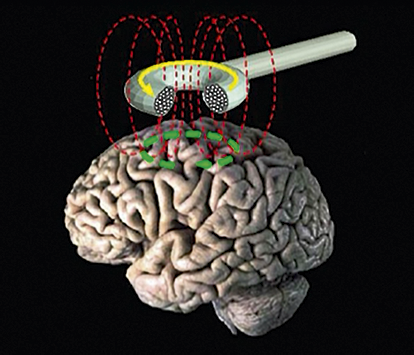
Shell shocks might indeed literally have played a larger role than even pioneering military psychologists and psychiatrists, such as Rivers (Reference Rivers1918) suspected when they emphasized that shell shock symptoms could also result from soldiers’ terrible traumatic experience of a gruesome death of a comrade in arms. From the perspective of adult attachment theory and research, unresolved loss or trauma may indeed be related to posttraumatic stress symptoms and disorder, and the empirical evidence points to such associations (see Sections 2 and 3). But this perspective may provide only a partial explanation for symptoms of trauma and may require additional explanation concerning the impact of shell shocks or, in modern terminology, blast waves or thermobaric blasts that literally “shock” the brain into disarray. Subsequent brain disturbances would create heightened vulnerability to new stressors and re-experiencing old ones, thus constituting a PTSD phenotype. One promising treatment possibility of bTBI-related PTSD is Transcranial Magnetic Stimulation (TMS; L. Sak, pers. Comm., November 4, 2025) in conjunction with behavioral or psychological therapy (see Section 9).
In a systematic review of 106 studies covering a total of 37,515 active military personnel and veterans with mild bTBI, PTSD had the highest prevalence (see also Faraji et al., Reference Faraji, Ghane and Javadzadeh2023), but sensory impairments, depression, cognitive deficits, and sleep disturbances were also often mentioned as co-morbid issues (Phipps et al., Reference Phipps, Mondello and Wilson2020). Visual impairments and headaches were very common (40% to 68%). The authors concluded that modern weaponry uses frequent blasts, and health care workers should be aware of the prevalence of bTBI and its psychological sequalae for the targeted civilians and soldiers, as well as for the operating combatants. Military personnel and civilians alike are increasingly exposed to bTBI by so-called “nonlethal,” acoustic weapons, and health care should recognize that victims may require specific treatments (see Section 9).
5.2 Impact of War on Mental Health of Children, Parents and Combatants
5.2.1 Posttraumatic Stress Disorder
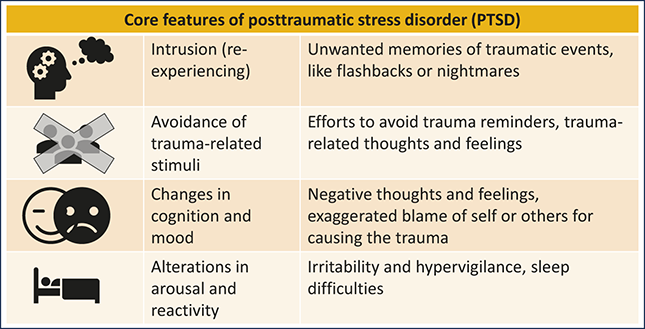
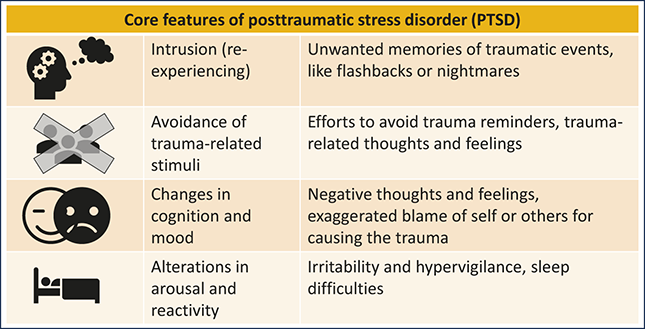
War leaves deep psychological scars. It is no surprise that experiences of armed conflict are among the most gruesome or traumatic events humans can face. Traumatic events have been defined as severe challenges to the ability to adapt, requiring changes to thoughts or behavior; such challenges may pertain to threatened death, serious injury, or sexual violence (Brewin et al., Reference Brewin, Atwoli and Bisson2025). Reactions to this type of event range from chronic anxiety and depression to the more specified condition of PTSD. Posttraumatic stress disorder has been defined and measured in different ways, but four aspects that impair daily functioning have remained at its core (see Figure 3): Re-experiencing the traumatic event(s), avoidance of reminders, negative alterations in cognition or mood (e.g., numbing), and alterations in arousal or reactivity (e.g., sleep issues or startle responses). Lifetime prevalences of PTSD vary widely across studies because of differences in measures, cultural contexts, and time windows, but in the general population outside war zones, a crude estimate would be around 5% (Brewin et al., Reference Brewin, Atwoli and Bisson2025).
Core features of PTSD
In a meta-analysis of forty-eight studies involving 40,004 civilians living in war zones, Ahmed et al. (Reference Ahmed, Zakai and Zahid2024) reported a pooled PTSD prevalence of 24%, which is a strikingly high rate compared to 5% in populations outside of conflict regions. Findings for adolescents mirror the figure of 24% for adult civilians. Zasiekina et al. (Reference Zasiekina, Griffin, Blakemore, Hlova and Bignardi2025), drawing from twenty-one studies with 12,898 young people exposed to war-related trauma, estimated a PTSD prevalence of 29%. Lim et al. (Reference Lim, Tam and Chudzicka-Czupała2022) expanded the lens, comparing civilians and military populations exposed to war. Their meta-analysis of forty-five studies, encompassing 67,153 participants across twenty-three armed conflicts, found a similar PTSD prevalence of 24%. Notably, rates did not significantly differ between civilians and military personnel.
In some cases, PTSD rates are even higher. Tinsae et al. (Reference Tinsae, Shumet and Tadesse2024), for example, reported a prevalence of 48% among civilians in conflict-ridden regions of Ethiopia. Adverse childhood experiences (ACEs) can also amplify PTSD symptoms. As Crede et al. (2023) showed, ACEs increase vulnerability to PTSD and are linked to insecure-disorganized attachment in children and unresolved trauma in adults (see Section 2). Lim et al. (Reference Lim, Tam and Chudzicka-Czupała2022) further identified risk factors such as female gender, witnessing the murder of a loved one, losing a close family member, facing life-threatening danger, and lacking social support (see also Grover et al., Reference Grover, Schofield and Burdett2024). Many of these risk factors align closely with attachment-related issues. Carmona et al. (Reference 68Carmona, Camilo, Carvalho and Chambel2024) found similar predictors in peacekeepers, including UN Blue Helmets: Being female, longer periods post-deployment, and low social support contributed to higher PTSD rates – reaching 53% of the peacekeeper population.
5.2.2 Depression and Anxiety
Depression and anxiety surge during and after war – and they, in turn, raise the risk of PTSD. Ahmed et al. (Reference Ahmed, Zakai and Zahid2024) found that 26% of participants in war-torn areas reported elevated levels of depressive symptoms, with notably higher depression rates in civilians (35%) compared to military (21%). Anxiety was more than twice as high among civilians (39% vs. 16%). Grover et al. (Reference Grover, Schofield and Burdett2024) showed that low social support played a key role in the prediction of both depression and anxiety levels. Finally, Angelakis et al. (Reference Angelakis, Molina and Winter2025) examined sixty-two studies with over a million participants and found a two-fold increase (ORs 1.91–2.57) in suicidal ideation and suicide attempts among military personnel and veterans who experienced sexual trauma during service. Women were especially affected. Combat exposure itself was another predictor of suicidal thoughts and behaviors (ORs 1.06 and 1.27, respectively) although less strong than the effects of sexual trauma during military service.
5.2.3 War Experiences Related to Insecure Attachment
In a study of Israeli veterans from the 1973 Yom Kippur war, some of whom had been held captive during the war, while others fought on the same fronts but were never held captive, attachment style was measured using an attachment style questionnaire 18, 30, and 35 years after the war (Mikulincer et al., Reference Mikulincer, Ein-Dor, Solomon and Shaver2011, Reference Mikulincer, Solomon, Shaver and Ein-Dor2014). Captivity during war can involve torture, solitary confinement, and deprivation of basic physical and psychological needs, more than once deliberately aimed at breaking a prisoner’s spirit (e.g., Hunter, Reference Hunter, Wilson and Raphael1993). Eighteen years after the war, veterans who had not been held captive were more secure than those who had been, and the veterans without captivity experiences increased in security over time. Veterans who had been held captive scored higher on self-reported anxious and avoidant attachment at the initial assessment, and at the subsequent waves, their anxiety and avoidance further increased. These results show the long-term pathogenic effect of war captivity on social relationship functioning and may be related to the finding that those who were held captive had more marital problems and lower marital satisfaction than control veterans (Ein-Dor et al., Reference Ein-Dor, Doron, Solomon, Mikulincer and Shaver2010). Moreover, PTSD was associated with higher attachment insecurity scores at 18, 30, and 35 years after the war, apart from effects of war captivity. This finding suggests that attachment style covaries with broader issues than just social functioning, including the management of stressful thoughts and events. However, direction of effects cannot be derived from this study.
5.3 Ukraine
The war in Ukraine has become a critical case for understanding the dynamics of contemporary warfare, offering insights into how large-scale and protracted conflict reshapes the civilian life of children, parents and other caregivers, impacts their health, and challenges the resilience of social institutions. The conflict began with Russia’s annexation of Crimea in 2014 and localized hostilities in two eastern regions, which later escalated into the full-scale invasion of 2022. Across this trajectory, studies examining the prevalence and risk factors of mental-health problems in Ukraine have used diverse methodologies, sampling strategies, and assessment time points. These differences reflect the distinct phases of conflict, shifting levels of social cohesion, progressive population exhaustion, and the ongoing depletion of human and institutional resources.
5.3.1 Posttraumatic Stress Disorder in Ukraine
The earliest available evidence on psychological consequences comes from a 2016 study, which found that approximately 32% of internally displaced adults met criteria for probable PTSD (Roberts et al., Reference Roberts, Makhashvili and Javakhishvili2019). Following the full-scale invasion in February 2022, violence against civilians escalated dramatically, resulting in widespread destruction of infrastructure and significant civilian casualties, including children (Haque et al., Reference Haque, Naeem and Wang2022). A rapid epidemiological study conducted within the first few weeks of the war found that 53% of respondents reported significant psychological distress (Xu et al., Reference Xu, Pavlova and Chen2023). These findings were supported by a subsequent study by Ben-Ezra et al. (Reference Ben-Ezra, Goodwin, Leshem and Hamama-Raz2023), conducted several months post-invasion, which reported that 31% of individuals met criteria for provisional PTSD. Moreover, the study found that both nationally and internationally displaced individuals exhibited higher levels of PTSD symptom severity than those who remained in place. The role of displacement was further supported by other studies, including Lushchak et al. (Reference Lushchak, Velykodna and Bolman2023), which surveyed 3,173 respondents and found that the prevalence of provisional PTSD was associated with displacement status: 51% among non-displaced individuals, 55% among internally displaced persons, and 62% among refugees who left Ukraine.
Determining whether displacement itself was a primary traumatic factor or whether displaced individuals were more severely affected due to cumulative exposure remains difficult, but evidence consistently shows that the number of traumatic events was strongly associated with increased PTSD risk. Karatzias et al. (Reference Karatzias, Shevlin, Ben-Ezra, McElroy, Redican, Vang, Cloitre, Ho, Lorberg, Martsenkovskyi and Hyland2023) conducted a study six months after the full-scale invasion and found that parents experienced a mean of 9.07 war-related stressors (range: 1–26). Among them, 41% met diagnostic criteria for PTSD. The study demonstrated that higher exposure to war-related stressors predicted more PTSD, suggesting a dose-response effect. Similar findings were reported in a study conducted fourteen to fifteen months post-invasion (Wang et al., Reference Wang, Barrett and Hicks2024a), supporting the link between cumulative trauma exposure and stress-related disorders. The duration of exposure to war-related stressors may further compound psychological risk, as indicated by data from mobile mental health clinics operating in de-occupied territories of Ukraine, where up to 51% of individuals screened positive for PTSD (Ressler et al., Reference Ressler, Hinchey and Mast2024).
Some data retrieved from the civil studies can be attributed to the military population. The exact number of Ukrainians who have served in combat roles remains unknown, but official estimates suggest that the size of the Ukrainian Armed Forces reached approximately 880,000 personnel by 2024. One of the few studies to examine mental health outcomes in this population is the Ukrainian National Initiative of Trauma Study (UNITY Study), an ongoing project assessing psychological outcomes among soldiers. An analysis involving 590 clinician-administered interviews with service members recruited from general hospitals, psychiatric institutions, and rehabilitation centers found that 68% were diagnosed with (complex) PTSD (Hyland et al., Reference Hyland, Shevlin, Karatzias, Bondjers, Scherbakova, Sulaieva, Bibikova, Dudin, Savchenko, Voznitsyna, Dosenko and Martsenkovskyi2025). Notably, officers more often had complex PTSD, suggesting that the nature and context of trauma exposure may contribute to symptom presentation.
5.3.2 Depression, Anxiety, and Grief
Depression and anxiety also constitute a substantial component of war-related psychological burden. A study conducted approximately six months after the full-scale invasion employed adapted versions of the 9-item Patient Health Questionnaire for depression (PHQ-9; Kroenke et al. Reference Kroenke, Spitzer and Williams2001) and 7-item Generalized Anxiety Disorder questionnaire (GAD-7; Spitzer et al., Reference Spitzer, Kroenke, Williams and Löwe2006) to assess changes in adult mental health symptoms. The findings indicated that 72% of respondents reported an increase in anxiety symptoms, and 62% reported elevated depressive symptoms. Notably, the severity of symptom increases was associated with the number of war-related stressors experienced, suggesting a dose-response relation between conflict exposure and internalizing psychopathology (Hyland et al., Reference Hyland, Vallières, Shevlin, Karatzias, Ben-Ezra, McElroy, Vang, Lorberg and Martsenkovskyi2023). These troubling results were largely consistent with those of similar cross-sectional epidemiological studies (e.g., Brackstone et al., Reference Brackstone, Head and Perelli-Harris2024; Lushchak et al., Reference Lushchak, Velykodna and Bolman2023; Wang et al., Reference Wang, Barrett and Hicks2024a) with higher symptom levels for displaced versus non-displaced individuals.
In a study conducted 18 months after the full-scale invasion, Martsenkovskyi et al. (Reference Martsenkovskyi, Shevlin and Ben-Ezra2024b) found that 36% of respondents met criteria for at least one mental health disorder, and 16% met diagnostic thresholds for two or more disorders. Generalized Anxiety Disorder (GAD) emerged as the most prevalent condition, reported by 21% of women and 10% of men. Depression was present in 11% of women and 6% of men. Risk for both conditions was significantly associated with female gender, financial hardship, and cumulative exposure to war-related stressors, and GAD was more prevalent among younger respondents. Notably, anxiety and depression were strongly correlated and associated with complex PTSD and prolonged grief disorder, underscoring the interconnected nature of these conditions in war contexts. Similarly, high rates of depression and its comorbidity with stress-related disorders were also reported in the UNITY Study (Hyland et al., Reference Hyland, Shevlin, Karatzias, Bondjers, Scherbakova, Sulaieva, Bibikova, Dudin, Savchenko, Voznitsyna, Dosenko and Martsenkovskyi2025), in which 34% of Ukrainian soldiers met diagnostic criteria for depression, including comorbidity rates of 45% among those with PTSD and 51% among those with complex PTSD. Similarly, Martsenkovskyi et al. (Reference Martsenkovskyi, Shevlin and Ben-Ezra2024b) found that 10% of males and 13% of females met diagnostic criteria for prolonged grief disorder, whose symptoms were strongly correlated with GAD, depression, and complex PTSD. Risk of prolonged grief disorder was associated with the loss of a loved one in the past six to twelve months, the death of a loved one due to war, and the absence of recent contact with the deceased prior to their death (Redican et al., Reference Redican, Hyland and Shevlin2024).
5.3.3 Insomnia and Short-Sleep Duration
The earliest available post-invasion data in Ukraine, collected in March 2022, from a civilian adult sample residing predominantly in areas without active ground fighting, and in which 56% of participants had children under 18 years of age, indicated that 12% of respondents reported insomnia symptoms, with female gender and residence in urban areas identified as risk factors (Xu et al., Reference Xu, Pavlova and Chen2023). A subsequent web-based survey of Ukrainian university students conducted 6–7 months after the full-scale invasion found that 49% experienced insomnia symptoms and 86% reported war-related nightmares (Pavlova & Rogowska, Reference Pavlova and Rogowska2023). An epidemiological study by Wang et al. (Reference Wang, Hicks and Barrett2024b), conducted approximately 15 months post-invasion, reported that 39% of adults experienced short sleep duration, 7% reported long sleep duration, and 38% met criteria for insomnia. Predictors of short sleep and insomnia included female gender, previous exposure to the 2014 Russian invasion, comorbid depression, and higher cumulative exposure to war-related stressors.
5.4 Summary
Returning home civilian and military survivors of war or armed conflicts bring their scarred bodies, brains, minds, and behaviors back into their families and parenting practices (to be discussed in detail in Section 7). Core symptoms of PTSD, such as re-experiencing trauma, avoidance of reminders of atrocities, sudden alterations of mood, arousal or reactivity (Brewin et al., Reference Brewin, Atwoli and Bisson2025), may frighten their partner and elevate the risk of intimate partner violence. For their children, disharmonious interactions between their parents are threatening, hampering parents’ indispensable role of attachment figures, as a safe base to explore the social and physical world and as a safe haven to return to when stressors increase to a level beyond their capacity of self-regulation (see Section 2). Despite numerous empirical studies and several meta-analyses on the impact of wartime experiences of (future) parents, very little evidence for causal linkages between traumatic experiences during the war and parental (mal-)functioning after the war is available. Correlational studies conducted with self-reported exposures and outcomes dominate the field and insight into causal mechanisms remains crude and largely speculative (Belsky, Reference Belsky2008).
6 Intermezzo: Exposure to War in Preschoolers
Kindergartner Mark had been a lively, active, and socially engaged child before the war happily attending school. After evacuating to a safer environment in the Western part of Ukraine, he felt displaced, ill at ease and without his former friends. Mark stopped his bright laughter and social engagements so characteristic of his prior peaceful life.
Four-year-old Mark spent every morning playing hide and seek in the yard of his kindergarten in Kherson, a bright, cheerful building painted in orange and yellow, with cartoon heroes decorating the classroom walls. His days were filled with songs, games, and building blocks. He especially loved circle time, where he sat cross-legged between his two best friends, Marta and Yehor, laughing at silly rhymes and clapping to the rhythm of children’s songs. Weekends were for family joy, chasing pigeons in the park with his parents or going fishing with his granddad by the river. He was living the full, active life of a typical preschooler in a peaceful city.
Then came February 24. Early that morning, Mark was abruptly awakened. “We’re going on a trip,” his father told him, trying to mask his urgency with a smile. Mark didn’t want to go. He cried, protesting that he had promised to show his new fire truck to his friends at kindergarten. His father knelt beside him and said he could bring it along – that he’d still be able to show it, just later. It was the only toy Mark took with him. That was the last time he saw his home, his kindergarten, and his friends.
Now Mark and his parents live in a cramped one-room shelter in Lviv, in the west of Ukraine. The walls are cold and grey. There is no yard. Instead of birdsong, the air hums with the relentless buzz of traffic from the busy road outside. His parents try their best to keep things normal. His mother sings lullabies to him, just like she did back in Kherson. His father reads aloud from picture books each evening. But something has changed. Mark no longer laughs the way he used to. His gaze drifts, and his smile fades too quickly. He doesn’t go to kindergarten anymore. The local preschool is full, and the private ones are unaffordable. “Maybe next month,” his mother says whenever he asks. But the next month never comes.
Mark’s days are now filled with waiting. Waiting for his father to return from temporary construction jobs, waiting for his mother to finish her online meetings. Waiting for something to happen – anything that might return a sense of routine or joy. His only regular human interaction is with his mother. The television, when the power is on, flickers with cartoons he used to love. Now he watches them quietly, barely reacting, as if he never enjoyed them really. He talks less. He asks the same questions over and over: “Where is Marta?”, “When can I go to kindergarten?”, “When will we go home?”.
Mark’s story is an example of experiences faced by of thousands of Ukrainian preschoolers displaced by war. The disruption of daily routines, peer relationships, early learning, and play has far-reaching consequences, not only for cognitive and social development, but also for emotional regulation and attachment. Preschool years are critical for learning how to trust, how to relate, how to play, and how to cope. Children like Mark are not only displaced geographically, they are also suspended emotionally, their development placed on hold while the adults around them focus on surviving. As humanitarian and educational responses continue to expand, these stories remind us that safe shelter and food, while vital, are not enough. The restoration of childhood itself must be prioritized to realize any long-term return to normality.
7 Parenting and Parental Burnout during Wartime
Feelings of exhaustion, depletion of energy, detachment from the family and wider social world, and incompetence and passivity due to war experiences are common both in military and civilians in war-afflicted regions. In this section, we discuss the burnout of parents who are exhausted and lack the energy to engage with their children. Parenting burnout is related to posttraumatic stress but not identical. We show that burnout might predict harsh parenting, maltreatment and neglect even when not reaching the level of a clinical disorder. Parental burnout may contribute to understanding mechanisms that mediate the impact of war on family life and child development (Martsenkovskyi et al., Reference Martsenkovskyi, Karatzias and Hyland2024a). See Figure 4.
War experiences affect child development (partly) via parental trauma and burnout. Prevention and intervention are needed to mitigate the consequences of war and armed conflict on parenting and child development.
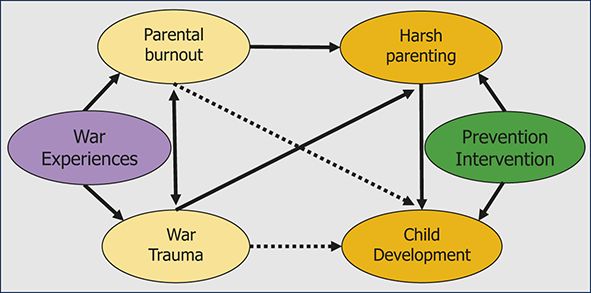
7.1 Parental Burnout
Originally, the scientific concept of burnout was introduced in organizational psychology to indicate exhaustion because of stress in workers in mental hospitals, prisons, and emergency settings. Here, we focus on burnout in families coping with war or armed conflict, with an emphasis on burnout in Ukrainian families. We highlight factors that moderate burnout and its consequences for parenting. Roskam and colleagues (Reference Roskam, Brianda and Mikolajczak2018) defined parental burnout, in line with the Maslach et al. (Reference Maslach, Schaufeli and Leiter2001) definition, as exhaustion related to one’s parental role, emotional distancing from one’s children, and sense of parental ineffectiveness (Mikolajczak et al., Reference Mikolajczak, Gross and Roskam2019, Reference Mikolajczak, Aunola, Sorkkila and Roskam2023). The most widely used parental burnout questionnaire is the Parental Burnout Assessment (PBA; Roskam et al., Reference Roskam, Brianda and Mikolajczak2018; for critical comments, see Bornstein, Reference Bornstein2020). Prevalence of burnout in typical circumstances has been estimated to be around 5% (Roskam et al., Reference Roskam, Brianda and Mikolajczak2018).
In a systematic meta-analytic review of fifteen years of parental burnout research including forty-nine studies (total N = 35,170; Mikolajczak et al., Reference Mikolajczak, Aunola, Sorkkila and Roskam2023) parental burnout was strongly associated with parents’ self-reported feelings of anxiety, stress, depression, sleep problems, and even suicidal ideation (combined effect size of r = 0.50). Furthermore, relations with family disorganization, parental neglect, and violence were also substantial. The four core burnout self-reported symptoms – exhaustion, emotional distancing from the children, fed-up with parenting, and contrast with former parental identity – seem all rather logically and even intrinsically related to anxiety, depression, stress and chaotic, harsh or neglectful parenting. Associations with objective factors that might trigger burnout such as more hours spent with children, a larger number of children to care for, and single parenthood, were much weaker (combined r < 0.10).
In a cross-cultural study including forty-two countries (N = 17,409 parents), Roskam et al. (Reference Roskam, Aguiar and Akgun2021) found substantial country differences in burnout levels, in particular related to cultural differences in the level of individualism (based on the Hofstede & Minkov, Reference Hofstede and Minkov2010, dimensions). Higher individualism predicted more parental burnout. More stress and less social support associated with individualism were more powerful predictors of parental burnout prevalence than economic inequality, number of children, hours of care, or children’s age and other individual and family characteristics (Roskam et al., Reference Roskam, Aguiar and Akgun2021).
7.2 Parental Burnout in Ukraine
Ukraine was not included in the cross-cultural burnout study by Roskam and colleagues (2021). However, in 2022, Zbrodska, Roskam, Dolynska, and Mikolajczak published their validation of the Ukrainian version of the Parental Burnout Assessment with data collection on 1896 parents (92% mothers) from November 2021 to the end of January 2022, just before the start of the full-scale Russian invasion into Ukraine. Reliability and construct and predictive validity were satisfactory, and non-significant associations with sociodemographic variables were replicated.
7.2.1 Burnout in Ukrainian Parents before the Full-Scale Russian Invasion
In this pre-full-scale invasion study in Ukraine, fathers scored lower on burnout than mothers. Perfectionism, stress, and resilience (reversed) were modestly related to burnout. Strong associations (around r = 0.50) between burnout and parental neglect and violence were found. When the usual cut-off for the 23-item PBA was used, burnout prevalence was 11% for mothers and 3% for fathers. The cut-off level implies that parents experience every symptom at least once a week (Zbrodska et al., Reference Zbrodska, Roskam, Dolynska and Mikolajczak2022). The burnout prevalence of 11% in mothers is high compared to the set of forty-two countries studied by Roskam et al. (Reference Roskam, Aguiar and Akgun2021). Of course, the invasion of Russia in the Ukrainian territory of Crimea in 2014 started a war that had already lasted for eight years at the time of the study. The authors stated that this high prevalence is “a serious challenge for researchers and clinicians in Ukraine” (p. 10).
7.2.2 Strongly Elevated Parental Burnout after the Full-Scale Russian Invasion
With a team of colleagues from Lviv National Medical University, we conducted a study in Ukraine about two years after the full-scale invasion (Chemerys et al., Reference Chemerys, Tsyhanyk, Bakermans-Kranenburg, van IJzendoorn and Nehrych2025). Of course, conditions for data collection were less than optimal to say the least, and we were assisted by the Ukrainian Gradus Research Company to create a brief online version of the PBA, the Brief Parental Burnout scale (BPBs; Aunola et al., Reference Aunola, Sorkkila and Roskam2021) with five items on parenting-related feelings of exhaustion, distancing from the children, and sense of parental ineffectiveness. This is the brief version of the 23-item PBA with demonstrated adequate psychometric properties (Aunola et al., Reference Aunola, Sorkkila and Roskam2021). Added to the online questionnaire were some items on harsh and neglecting parenting and on the use of mood-regulating medicine (e.g., antidepressants).
Gradus recruited four groups with about 100 participants each to complete the online survey in March 2024. The four groups had the following family compositions: (1) Families with husbands serving from the start of the full-scale invasion in February 2022 and still in the army at the time of data collection (n = 100); (2) families with a veteran husband who retired from the army in 2023 (n = 107); (3) families of which the (civilian) husband never served in the army (n = 105); (4) families headed by grandmothers taking care of their grandchildren because the parents were deceased or otherwise unavailable due to the war (n = 103). At least one child in each family was younger than twelve years of age. For details of design, measures, and statistical analyses, see Chemerys et al. (Reference Chemerys, Tsyhanyk, Bakermans-Kranenburg, van IJzendoorn and Nehrych2025).
We found overall very high levels of parental burnout, amounting to 58%. This prevalence rate is much higher than any prevalence found in other countries, within or outside Europe (Roskam et a., Reference Roskam, Aguiar and Akgun2021). The percentage is almost 6 times higher than the one found just before the Russian full-scale invasion two years earlier (Zbrodska et al., Reference Zbrodska, Roskam, Dolynska and Mikolajczak2022). Of course, sampling and measures were different, but regardless of confounders the increase in burnout levels is remarkable and disturbing. During ten years of war since the Russian invasion of Crimea in 2014, Ukraine has been subjected to constant Russian threats, attacks, and killings, inducing chronic stress that elevates the levels of exhaustion and emotional distancing and diminishes the sense of efficacy in families. Not only parents with a partner in active service are at risk for burnout, but also dual-parent families with returned veterans who may suffer from traumatic brain injuries or mental health conditions. Higher levels of burnout symptoms were strongly related to self-reported harsh and neglectful parenting (r = 0.63).
7.2.3 High Levels of Grandparental Burnout
We found that grandmothers replacing parents who were unavailable due to the war reported the highest level of burnout symptoms. The large majority (70%) of grandmothers caring for their grandchildren in the absence of the parents suffered from burnout according to conventional criteria (Chemerys et al., Reference Chemerys, Tsyhanyk, Bakermans-Kranenburg, van IJzendoorn and Nehrych2025). In previous meta-analytic and empirical work, we found that grandmothers may play an important supportive and buffering role for parents in dire circumstances as long as their relationships with the parents are warm, cooperative, and harmonious (Liang et al., Reference Liang, Lin, Van IJzendoorn and Wang2021; Riem et al., Reference Riem, Bakermans-Kranenburg, Cima and Van IJzendoorn2023; Riem et al., Reference Riem, Perrykkad and Watson2024). But if grandmothers must fill the gap of absent parents, they might easily become overburdened and reach the limits of their coping capacity, a finding supported by Chan and her colleagues (Reference Chan and Piehler2024) in a narrative review covering sixty-five studies from twenty-nine countries.
Ukrainian grandmothers may struggle with anxieties, traumatic experiences, or the (unresolved) loss of the parents of their grandchildren. In wartime, two more specific but speculative explanations for the high burnout among grandmothers are the “aging health hypothesis” and the “intergenerational trauma hypothesis” (Chemerys et al., Reference Chemerys, Tsyhanyk, Bakermans-Kranenburg, van IJzendoorn and Nehrych2025). The first hypothesis refers to grandmothers’ anxiety about the considerable risk of chronic age-related diseases before their grandchildren reach the age of independent functioning. The second explanation suggests that during the ongoing war grandparents may revisit or relive past traumatic experiences with the horrors of famine (Holodomor), genocide (Holocaust), and political oppression (Stalinism) that this older generation and their parents might have undergone in Ukraine as a contested “bloodland” (Snyder, Reference Snyder2022).
7.3 Parenting in Times of War
7.3.1 Parental Sensitive Responsiveness in Wartime
In general, children in war-affected families who are more exposed to war seem to have to interact with parents who are less sensitive. In a systematic narrative review of eleven studies with observed parenting, Chasson et al. (Reference Chasson, Ben-Shlomo and Lyons-Ruth2025) reported the impact of parental war trauma on subsequent parenting of young children (0–3 years). War-related parental traumatic experiences predicted less sensitive responsiveness. For example, in one of the studies, higher levels of maternal PTSD symptoms in refugee mothers in the Netherlands were associated with more insensitive, unstructured, and hostile parent-child interactions (Van Ee et al., Reference Van Ee, Kleber, Jongmans, Mooren and Out2016a, Reference Van Ee, Jongmans, Van der Aa and Kleber2016b). In a similar vein, Punamaki et al. (2020) observed that maternal vocal emotion expressions of Palestinian mothers toward their children were less positive after having experienced severe traumatic war events. Dozio et al. (Reference Dozio, Feldman and Bizouerne2020) found that during a trauma narration session, mothers touched and looked at their infant less and were more absent and smiled less at their infant. In studies by Shachar-Dadon et al. (Reference Shachar-Dadon, Gueron-Sela, Weintraub, Maayan-Metzger and Leshem2017) and Cohen and Shulman (Reference Cohen and Shulman2017) mothers with traumatic war-related experiences were less emotionally available in interactions with their children.
7.3.2 War Increases Risks of Harsh Parenting
In another meta-analysis, Eltanamly et al. (Reference Eltanamly, Leijten, Jak and Overbeek2021) presented worldwide data on the association between war experiences of parents and their parenting style. The meta-analysis includes 38 studies with 54,372 families (parents and their children, average age 12 years) exposed to war, political violence, or armed conflict. War exposure was measured in terms of frequency counts of war-related incidents or severity of the experiences. Parenting style was reported by parents or their (mostly adolescent) children completing questionnaires. Studies of nonwar-related trauma and brief one-time violence instead of prolonged exposure, were excluded. Families came from the Middle East, Africa, Asia, and Eastern Europe, but Ukraine was not included. Pooling the correlations showed that war exposure weakly predicted less parental warmth (combined r = −0.02) and less parental behavioral control (combined r = −0.01), but war experiences were most importantly and substantially related to more parental harshness with a combined effect size of r = 0.12 (Eltanamly et al., Reference Eltanamly, Leijten, Jak and Overbeek2021). Study quality or design (cross-sectional or longitudinal) did not affect the results.
7.3.3 Posttraumatic Stress Associated with Lower Parenting Quality
As Chasson et al. (Reference Chasson, Ben-Shlomo and Lyons-Ruth2025) hypothesized, posttraumatic stress symptoms were a better predictor of parenting problems than actual combat experiences. In ten studies (4,304 parents), Kritikos and her colleagues (Reference Kritikos, Comer and He2019) found a combined effect size between combat-related parental PTSD and parenting problems (combined r = 0.26), and a lower combined effect size (r = 0.10) in seven studies on the association between actual combat exposure and parenting problems (5,232 parents). The authors concluded that PTSD might be a more powerful deployment-related predictor of “family stress, disequilibrium, and disorganization” (p. 143) than combat experiences per se. They suggested that alleviating these stressors and family issues might be especially effective for supporting veteran families to re-integrate into their communities.
7.4 War Experiences Related to Maltreatment
7.4.1 More Maltreatment in Refugee Families
War-related atrocities experienced by refugees might leave their mark on the next generation because of elevated levels of family violence and other types of child maltreatment. In our Netherlands Prevalence Study of Maltreatment (NPM; Euser et al., Reference Euser, Van IJzendoorn, Prinzie and Bakermans-Kranenburg2011), we addressed the question of whether children in Dutch-immigrant families would be at increased risk of child maltreatment. We differentiated traditional immigrant families who immigrated because of economic reasons from refugees who came from unsafe countries in war, political, or ethnic conflicts. We used three sources of information about child maltreatment: 1,127 professionals working with children in various occupational branches reporting about cases of maltreatment in the last 3 months (‘sentinels’), 1,759 high school students reporting on their own experiences of maltreatment in the past year, and all data from all Dutch Child Protective Services in one year. We found that in both types of immigrant families – economic or refugee migrants – the prevalence of maltreatment was elevated compared to Dutch families without an immigration background. But controlling for sociodemographic factors, the difference in maltreatment risk remained elevated in the sentinel and CPS reports only in the refugee families. We speculated that traumatic stress and the continuing stress of their insecure asylum status in the host country would increase the risks of family violence and neglect (Euser et al., Reference Euser, Van IJzendoorn, Prinzie and Bakermans-Kranenburg2011).
7.4.2 From War-Related Violence to Intimate Partner Violence to Child Maltreatment
A meta-analysis of studies of intimate partner violence in active-duty military personnel and in veterans by Cowlishaw and colleagues (Reference Cowlishaw, Freijah and Kartal2022) shed some systematic light on the prevalence and correlates of intimate partner violence. The study included thirty-one studies involving 172,790 participants. Only two studies were conducted outside Northern America, one in the United Kingdom and one in Turkey; thus, prevalence estimates from Eastern European, Asian, South American, and African countries are missing. The authors estimated a prevalence of 13% for military personnel and veterans reporting any recent intimate partner violence perpetration (11 studies, with 131,140 participants), and a prevalence of being a victim of intimate partner violence of 21% (14 studies, with 121,649 participants). Prevalences did not differ by gender, period of service, or country of origin. Veterans showed a larger perpetration percentage (34%) than active-duty military personnel (5%), pointing to a “sleeper” effect of the consequences of war experiences emerging in postwar years. In the USA civilian populations, the prevalence of past year perpetration of intimate partner violence is estimated to be 6%, and victimization 5%, considerably lower than those found in military personnel.
For civilians, associations between experiences of political or war-related violence and heightened levels of intimate partner violence have been documented (e.g., Saile et al., Reference Saile, Ertl, Neuner and Catani2014). In their study of 1,185 Ukrainian adults from the Donbas region, Botchkovar et al. (Reference Botchkovar, Antonaccio and Timmer2025) reported that daily hassles, negative affect, and excessive alcohol abuse predicted involvement in intimate partner violence for both males and females. War exposure itself did not seem to have a direct impact on intimate partner violence. This unexpected result might be partly due to the absence of a matched comparison group of participants neither directly nor indirectly exposed to war, thus reducing variation in war experiences. As a result, war experiences may be substantively relevant but lacking sufficient variation to achieve significance.
Importantly, in a quantitative umbrella synthesis of meta-analyses of child maltreatment antecedents, we found intimate partner violence among the risk factors for elevated levels of child abuse and neglect (Van IJzendoorn et al., Reference Van IJzendoorn, Bakermans-Kranenburg and Duschinsky2020). The umbrella synthesis covered about 1.5 million participants. Intimate partner violence as an antecedent of emotional abuse had an effect size of d = 0.47 (six studies including 5,500 families), and for physical abuse, the combined effect size was d = 0.35 (fifteen studies including 8,500 families). In combination, these findings indicate how war violence may trigger intimate partner violence that, in turn, is related to child maltreatment.
7.4.3 Unresolved Loss or Trauma and Insecure Attachment in Veterans and Refugees
Most studies of attachment insecurity and elevated risk of child maltreatment have used self-reports of attachment style that have limited validity compared to the Adult Attachment Interview and other interview or observational assessments (Van IJzendoorn & Bakermans-Kranenburg, Reference Van IJzendoorn and Bakermans-Kranenburg2024). However, in a study on Dutch veterans with deployment-related trauma, we documented a strong association between unresolved attachment as assessed with the AAI and level of PTSD symptoms measured with the Clinician Administered PTSD Scale (CAPS; Harari et al., Reference Harari, Bakermans-Kranenburg and De Kloet2009). Meta-analytically, we found unresolved loss or trauma in combination with insecure-preoccupied representations of attachment overrepresented in samples with PTSD (see Section 2), as well as in samples struggling with addiction (Bakermans-Kranenburg et al., Reference Bakermans-Kranenburg, Dagan, Cárcamo and Van IJzendoorn2025). These findings point to the potential role of unresolved attachment representations in veterans who bring their war-related traumatic experiences home and into their families. Ukrainian veterans might be expected to return home not only depleted, exhausted, and burned out as soldiers and parents, but they also might have to cope with unresolved losses and other war-related traumatic experiences. In a narrative systematic review of refugee samples, Egger et al. (Reference Egger, Buchheim and Gander2025) reported that insecure and unresolved attachment were consistently linked to higher psychological distress, particularly PTSD, in adults. In refugee children, insecure attachment was associated with parental mental health problems and dysfunctional parenting, whereas secure attachment might buffer the effects of parental PTSD.
7.5 Conclusion
For children, war is a frightening experience. But it turns out to be difficult for parents to show more warmth to compensate for the dire war conditions these parents have to cope with. During stressful wartime high percentages of civilians and soldiers develop PTSD such as reliving disturbing experiences, difficulty to focus, and sleeplessness. Feelings of depression and anxiety tempered by excessive use of alcohol and drugs may follow. Parents have to cope with depletion of energy and feelings of exhaustion, with emotional detachment from their children and their social network, and with feelings of incompetence and heightened irritability. Does war violence beget family violence? Experiences of indescribable horrors of war and armed conflicts may lead to aggressive or detached feelings toward intimate partners and children who may easily provoke outbursts of anger and frustration in their overwhelmed parents.
Nevertheless, a minority of parents might show exceptional resilience to the adversities entailed in war and display elevated levels of sensitive responsiveness and limit-setting to their children. Such resilient parents might not yet have been detected or highlighted in large-scale studies with rather blunt measures for exposures and outcomes. At least three types of buffers or moderators might mitigate the potential spiraling into ever more problematic interactions in the family and the wider social context. Differential susceptibility shaped at conception and perinatally may render some individuals less vulnerable to their (negative) environment (Van IJzendoorn et al., Reference Van IJzendoorn, Bakermans-Kranenburg and Duschinsky2020). Prewar attachment security and general mental health might prepare individuals better for dire war conditions as seemed the case in Holocaust child survivors (Barel et al., Reference Barel, Van IJzendoorn, Sagi-Schwartz and Bakermans-Kranenburg2010). Last, postwar social support in a broad sense, from extended family support to professional coaching or therapy, from neighborhood to state-level health and social security systems (see Section 10), might facilitate postwar adaptation to “normal” living conditions.
8 Intermezzo: When Grandparents Become Parents in a War Zone
Nick is eight years old. He used to live with his parents in Kramatorsk, and was a lively, bright boy with a head full of ideas and a body that never stayed still. His mother used to say he was “a rocket in pants,” always on the move, never silent, constantly climbing, building, talking, and asking questions. What she didn’t tell anyone, not even the extended family, was that Nick had been diagnosed with attention-deficit/hyperactivity disorder (ADHD). His parents didn’t want the label to follow him at school, in the neighborhood, or on the playground.
In April 2022, when shelling intensified in Kramatorsk, Nick’s family made the difficult decision to leave. They packed essentials and went to the train station, hoping to board one of the evacuation trains heading west. The station was crowded, and the train was delayed. Nick’s parents went outside to get some food and drinks, leaving him inside with their bags. He sat clutching his backpack, tapping his feet to a rhythm in his head, flipping through a comic book. Then came the explosion. The missile struck before the air raid siren. Dust and screams filled the station. The ceiling shook. Nick was found later by rescue workers, still holding his comic book, sitting on the cracked tile floor, whispering, “They said they’d be right back.” He was taken to a hospital with minor physical injuries but a deep cut on his hand from shattered glass. There, a specialist who reviewed his file mentioned his ADHD diagnosis. That’s how his grandmother, Olena, found out.
Olena, a widow in her late sixties, became Nick’s legal guardian and only family overnight. She was grieving the death of her daughter while learning how to raise a neurodivergent, traumatized child. She denied the ADHD diagnosis at first, insisting to the doctor, “He’s just energetic.” Her focus was on returning home, on holding things together, on coping with her own loss.
Now they live in a small town in the Poltava region, in a small apartment. Olena tries her best. But she is tired and overwhelmed. Nick doesn’t sit still. He interrupts constantly, asks the same questions over and over. Loud noises make him freeze. Nights are difficult, filled with nightmares or restless pacing. His emotions swing quickly – from silence to shouting, from laughter to tears. Once, after a misunderstanding, she found him in the bathroom cutting his arm with a kitchen knife. It was the first of several incidents. That night, she sat beside him until morning and promised herself, “I will not give up on this child”.
There is no psychologist in their neighborhood. The school psychologist admitted she had never worked with a child like Nick and gently suggested they seek a specialist elsewhere. Olena tries to follow the pediatrician’s advice, like keeping routines, reading stories at bedtime, and taking walks when the air raid alerts are quiet. But Nick remains on edge. He still asks about his parents: “Where are they now?” “Do they miss me?”, “If I hadn’t asked for a drink, would they still be alive?”.
Nick isn’t the same boy he was before. He doesn’t laugh and dream anymore. The comic book he once carried everywhere now lies untouched in a drawer. School is irregular. He joins online classes occasionally, but struggles to focus. His teachers report impulsivity, inattention, and verbal aggression. The school administration suggests online education and psychological support. Olena feels desperate, wondering how she will manage. Her modest pension barely covers rent and groceries. Most days, she simply prays for strength. And for peace.
During his follow-up visit to the hospital, Nick is fortunate to be evaluated by a mental health specialist, who prescribes appropriate medication for ADHD and connects him with a volunteer-based organization providing trauma-focused cognitive-behavioral therapy after discharge.
Nick is one of many Ukrainian children who lost their parents during the war and are now being reared by grandparents or other elderly relatives, who are often unprepared for the emotional, logistical, and financial demands of full-time parenting (see Section 7). In Nick’s case, his grandmother demonstrates remarkable adaptability, where, despite her initial disbelief about his diagnosis, she gradually accepts the reality of his condition and mobilizes every resource she can to seek help. However, Nick’s story is the exception rather than the rule. Many children in similar circumstances do not receive timely assessments, therapeutic support, or specialized care. Their caregivers may lack knowledge, access to services, or the emotional capacity to navigate the complex needs of traumatized, neurodivergent, or grieving children. This circumstance highlights the urgent need to strengthen systems of psychosocial and developmental support for displaced children and their caregivers, particularly the elderly and those who became caregivers after the death of a child’s biological parents.
9 Questionable Support for Families and Children during and after War
What can the developmental sciences offer to prevent, alleviate or even cure children’s mental health problems arising from exposure to wartime violence? In this section, we discuss one type of intervention that, according to an overwhelming amount of evidence, has been demonstrated to go against the best interests of the children and should belong to the past, namely placing children without available parents in institutions. Furthermore, we document the promising but still premature evidence base of neurological and pharmacological treatments of children and/or their parents to strengthen their coping with traumatic war experiences.
9.1 Institutions – Large or Small – Are Not the Solution
In pandemics and war, congregate care can look (cost-)effective for children without available parents, yet evidence shows the opposite. During pandemics, institutionalized children face higher morbidity and mortality (Goldman et al., Reference Goldman, Bakermans- Kranenburg and Bradford2020). Israel’s kibbutz history likewise showed that communal sleeping became untenable when bombardments heightened the need for parent–child proximity, especially at night (Aviezer et al., Reference Aviezer, Van IJzendoorn, Sagi and Schuengel1994; Sagi et al., Reference Sagi, Van IJzendoorn, Aviezer, Donnell and Mayseless1994). Ukraine had about 100,000 children in institutions pre-2022 (Dobrova-Krol & Van IJzendoorn, Reference Dobrova-Krol, van IJzendoorn, Rus, Parris and Stativa2017). After Russia’s full-scale invasion, many in group care were at risk of deportation for “re-education”; about 20,000 children were deported, with few returned. The Coordination Centre for the Development of Family Care and Child Care, established in May 2023, financed by the European Community, aims to de-institutionalize Ukrainian care within ten years.
9.1.1 Developmental Damage in Residential Care
Residential care harms child development in peace and war (Dozier et al., Reference Dozier, Smetana and Allen2025). Our meta-analysis of more than 300 studies and >100,000 children across more than sixty countries found that group care delays or damages physical/brain growth, health, cognition, attention, and socio-emotional development (Van IJzendoorn et al., Reference Van IJzendoorn, Bakermans-Kranenburg and Duschinsky2020). Effects were large for young children (under 3.5 years) in terms of physical growth, health, head circumference, and cognitive development. Attention and socio-emotional development also lagged behind but to a lesser extent. Adolescents (10–16 years) still showed sizeable delays, about half a SD on average across the various physical and mental domains. Although the effects were slightly smaller than in early childhood, perhaps because adolescents exert more active influence on their environment due to gene–environment correlation, confidence intervals mostly overlapped with those of younger children, suggesting no conclusive mitigation with age.
9.1.2 Small-Group Care: SOS Children Villages
Small homes are not a remedy. We reviewed reputedly high-quality small-group models such as SOS Children’s Villages (global NGO; 2018 budget a staggering ≈ USD 1.37 billion; also active in Ukraine; Van IJzendoorn & Bakermans-Kranenburg, Reference Van IJzendoorn and Bakermans-Kranenburg2022). Despite the motto of the founder of SOS Children Villages some seventy years ago, Hermann Gmeiner: “Tear down your institutions,” SOS institutions have been sprawling across the globe. Only eight evaluative studies on the effects of SOS institutions met meta-analytic criteria. Meta-analysis showed that SOS children did better than those in large institutions on mental health but worse on physical growth, and inferior compared to family-reared peers on both. Small-group homes are therefore not a viable substitute for family-based care. De-institutionalization, also of SOS Children Villages, is urgently needed. We acknowledge that economic hardship and disruption of local social infrastructure during and after armed conflicts can limit the capacity of (extended) families or foster families to take on the care of additional children without available parents. Increasing the number of alternative family-based care settings might be hampered by problems of recruiting and supporting enough family caregivers, particularly with large-scale displacements such as in Ukraine. The serious war-related barriers to rapid implementation of family-based alternatives, however, should not siphon resources away from responsible de-institutionalization to (re-)establishing institutions. Elsewhere, we discussed potential transitional solutions with intermediate steps toward the goal of family-based care for all children (Goldman et al., Reference Goldman, Bakermans- Kranenburg and Bradford2020).
A halt to SOS Children Villages is the more urgent as independent inquiries report serious sexual, physical, and emotional abuse in multiple SOS villages across Africa, Asia, and Central America (Independent Special Commission; Van Wijk et al., 2023). Substantiated allegations also implicate founder Hermann Gmeiner in abuse within Austrian homes (SOSCV statement of apologies on October 23, 2025). These findings echo systemic maltreatment uncovered in institutional care for indigenous children in Canada, the USA, Greenland, and elsewhere. Harm extends to staff: residential work is “a challenging job” with frequent experiences of threats and violence (Alink et al., Reference Alink, Euser, Bakermans-Kranenburg and Van IJzendoorn2014). Elevated maltreatment may stem from mixed-age/mixed-gender groupings (Euser et al., Reference Euser, Alink, Tharner, Van IJzendoorn and Bakermans-Kranenburg2014), deviant-peer contagion (Dishion & Tipsord, Reference Dishion and Tipsord2011), and, especially, unstable caregiving without long-term attachment relationships, consistent but sensitive limit-setting, and empathic monitoring. Low training, low status and low salaries lead to high staff turnover. While maltreatment also occurs in the general youth population and in alternative family-based care, risks are consistently higher in residential settings.
9.2 Pharmaceutical Treatments of War-Related Mental Problems in Children
Over the last few decades, psychotropic medication has become an important component of child mental health care. Although the evidence supporting pharmacological interventions for a range of pediatric psychiatric conditions has expanded, standards of care and prescribing practices continue to vary substantially across regions. Such variability can contribute to inappropriate prescribing patterns, including polypharmacy, particularly in contexts with limited specialist training or access to medication (Lorberg et al., Reference Lorberg, Davico, Martsenkovskyi and Vitiello2019). But the same resource constraint settings might benefit from psychopharmacotherapy, particularly in situations with a rapid increase of demands in mental health care and destruction of local medical infrastructure, commonly observed in crisis settings, including armed conflicts and natural disasters (Martsenkovskyi et al., Reference Martsenkovskyi, Martsenkovsky, Martsenkovska and Lorberg2022).
Despite a growing demand and the marked increase in psychotropic prescribing among children over recent decades (Hartz et al., Reference Hartz, Skurtveit and Steffenak2016; Kronström et al., Reference Kronström, Kuosmanen, Ellilä, Kaljonen and Sourander2018), evidence for the efficacy of many pharmacological agents in pediatric populations remains scarce, resulting in widespread off-label prescribing (Rosland et al., Reference Rosland, Wergeland and Holst2025). The European Medicines Agency (EMA) has approved only a limited number of medications for child mental disorders: stimulants and non-stimulant agents for ADHD (methylphenidate, extended-release guanfacine, and atomoxetine for children aged ≥ 6 years); antipsychotics for schizophrenia (lurasidone, aripiprazole, and paliperidone for ≥ 15 years); risperidone for conduct disorder (≥ 5 years); sertraline for obsessive-compulsive disorder (≥ 6 years); and fluoxetine for moderate-to-severe, psychotherapy-resistant depression. The US Food and Drug Administration (FDA) provides additional approvals, including amphetamines and clonidine for ADHD; quetiapine and olanzapine for schizophrenia; lithium and valproate for bipolar disorder; clomipramine and fluvoxamine for OCD; and escitalopram for depression in adolescents. Notably, neither agency has approved any medication for the treatment of PTSD in children or adolescents.
9.2.1 PTSD Medication
As was highlighted above (see Section 3), PTSD is among the most frequently reported mental health outcomes in trauma-affected children. Yet, the existing evidence for medication use in pediatric PTSD is limited. Most available data are derived from case reports, open-label studies, or a small number of controlled trials with modest sample sizes, which restricts the ability to draw firm conclusions about efficacy and safety (Bandelow et al., Reference Bandelow, Allgulander and Baldwin2022).
Several studies have highlighted the role of increased noradrenergic activity in the pathophysiology of PTSD, which has drawn attention to agents such as clonidine and guanfacine. These alpha-2 agonists act through presynaptic receptor stimulation, reducing central noradrenergic tone and thereby attenuating hypervigilance, irritability, and autonomic hyperarousal. Alpha-1 antagonists reduce central noradrenergic activity by blocking postsynaptic alpha-1 receptors, particularly in locus coeruleus, improving hyperarousal, nightmares, and sleep disturbances (Belkin & Schwartz, Reference Belkin and Schwartz2015; Slavova et al., Reference Slavova, Ortiz and Blaise2024). Some evidence, though limited, suggests that these agents may be useful for managing hyperarousal and sleep disturbances in children with trauma-related disorders.
A small 8-week open-label study of extended-release guanfacine downregulating noradrenergic tone in traumatized children (n = 17) demonstrated significant posttreatment improvement on the parent-reported UCLA PTSD Reaction Index (with a suspiciously large effect size d = 1.28; Connor et al., Reference Connor, Grasso, Slivinsky, Pearson and Banga2013). Notably, nearly 90% of participants also met diagnostic criteria for ADHD, which warrants caution in interpretation due to potential bias arising from overlapping symptom domains of ADHD and PTSD in children (Daud et al., Reference Daud and Rydelius2009). This overlap could be amplified when assessments rely primarily on parental rather than clinician-rated measures. The evidence base remains insufficient to support routine use, as most reports lack control conditions, standardized outcome measures, and long-term follow-up.
9.2.2 Antidepressant Medication
Several studies have explored the use of antidepressants in pediatric burn victims, either with the aim of preventing the onset of PTSD or reducing symptoms of acute stress disorder. While these early trials suggested potential benefit, their interpretation requires caution in light of the current conceptualization of acute stress disorder as a short-lasting, largely self-limiting reaction to trauma with low predictive value for later PTSD (Maercker & Eberle, Reference Maercker and Eberle2022). For example, a 24-week randomized placebo-controlled trial in children with PTSD symptoms (n = 26) reported a (too) large parent-reported improvement compared with placebo (d = 1.27), while no differences were observed on child-reported measures (Stoddard et al., Reference Stoddard, Luthra and Sorrentino2011). Likewise, a 3-week RCT comparing fluoxetine, imipramine, and placebo in a small sample of pediatric burn victims (n = 60) failed to demonstrate any clinical advantage of antidepressants over placebo (Robert et al., Reference Robert, Tcheung and Rosenberg2008). Notably, in addition to the studied medications, children were not limited in receiving morphine, hydroxyzine, diazepam, etc. Thus, despite the existing evidence on the efficacy of antidepressants, particularly SSRIs, in adults with PTSD, the existing evidence in children is limited to some RCTs, which do not support the prescription of these agents for routine use.
9.2.3 Antipsychotic Medication
Although primarily developed for the treatment of psychotic disorders, antipsychotics are increasingly prescribed in pediatric populations, with a steady rise observed across multiple countries in recent years (Klau et al., Reference Klau, Bernardo, Gonzalez-Chica, Raven and Jureidini2022; Radojčić et al., Reference Radojčić, Pierce and Hope2023; Waszak et al., Reference Waszak, Zagożdżon, Pierucka and Kubanek2018; Zhaojian et al., Reference Zhaojian, Meizhu and Jun2024). These medications are also used off-label to manage anxiety, mood, and behavioral disorders in children, as well as in high-income countries. The trend is particularly pronounced among vulnerable populations, such as foster children, and in remote or underserved areas where access to specialist mental health care is limited (Klau et al., Reference Klau, Bernardo, Gonzalez-Chica, Raven and Jureidini2022; Keefe et al., Reference Keefe, Cummings, Smith, Greeley and Van Horne2023). But evidence for the use of antipsychotics in pediatric PTSD is limited to case reports and small case series, which mainly describe reductions in trauma-related aggression, disruptive behavior, self-harm, and insomnia (Meighen et al., Reference Meighen, Hines and Lagges2007; Stathis et al., Reference Stathis, Martin and McKenna2005).
Overall, while some preliminary observations indicate potential benefits of antipsychotics for severe externalizing symptoms in pediatric PTSD, these agents should be reserved for treatment-resistant cases as a last resort. The absence of randomized controlled trials and the risk of adverse effects should drastically limit routine use in clinical practice.
9.3 Neurological Treatments of War-Related Mental Problems in Children
Over the past decades, several neurological and neuromodulation-based interventions have been explored as potential treatments for PTSD. These approaches aim to directly modulate brain activity and restore regulatory balance within fronto-limbic and autonomic circuits implicated in trauma-related dysregulation.
9.3.1 Neurofeedback
Adult studies have demonstrated the efficacy of neurofeedback, particularly as an adjunct to trauma-focused psychotherapy (Voigt et al., Reference Voigt, Mosier and Tendler2024) in reducing core PTSD symptoms. However, evidence in pediatric populations remains limited. A 12-week randomized controlled trial (24 sessions; n = 32) of neurofeedback training (NFT) versus a wait-list control (treatment as usual) in children, conducted by Rogel and colleagues (2020), found that at the treatment endpoint only four of sixteen participants in the NFT group, compared to ten of sixteen in the wait-list group, continued to meet diagnostic criteria for PTSD on the K-SADS-PL. However, group differences were no longer statistically significant at the 1-month follow-up. At the same time, children who received NFT demonstrated larger between-group improvements on the Child Behavior Checklist (CBCL), with effect sizes ranging from d = 0.48 to d = 1.15 for internalizing and externalizing behavior problems at follow-up.
Another 6-week randomized controlled trial (two sessions per week; n = 77) compared a game-based meditation application using a brain-sensing neurofeedback headband (Muse) with treatment as usual (TAU) in traumatized children residing in institutional care (Schuurmans et al., Reference Schuurmans, Nijhof, Scholte, Popma and Otten2021). At posttreatment, participants in the TAU group exhibited a longer basal pre-ejection period and greater skin-conductance response to acute stress, indicating lower resting sympathetic activation and more adaptive physiological reactivity to stress stimuli. Although these differences reached statistical significance, the corresponding effect sizes were small, suggesting uncertain clinical relevance. The headband might, however be an effective placebo (see Section 11).
Existing trials are few, underpowered, and methodologically heterogeneous, underscoring the need for further investigation before neurofeedback can be recommended as a standard or adjunctive treatment for childhood PTSD.
9.3.2 Repetitive Transcranial Magnetic Stimulation (rTMS)
Repetitive Transcranial Magnetic Stimulation (rTMS) is a noninvasive technique that uses rapidly changing magnetic fields to stimulate specific regions of the cerebral cortex through the skull (Sak et al., in prep.), see Figure 5. By modulating neural activity in targeted networks, rTMS is hypothesized to alter cognitive, emotional, or motor processes and is increasingly used in neuroscience research and experimental clinical treatments of adults suffering from concussion syndrome, depression, or PTSD. A meta-analysis by Belsher et al. (Reference Belsher, Beech and Reddy2021), including 549 participants across available randomized trials, found that rTMS was superior to sham stimulation in reducing PTSD symptoms (an incredibly large effect size of d = −1.13). However, most of the included studies were underpowered, with small sample sizes and considerable heterogeneity in stimulation protocols and treatment parameters, limiting the robustness of this conclusion. A more recent Cochrane Review by Brown et al. (2024) reported little to no difference in core PTSD symptoms immediately following rTMS treatment or at short-term follow-up.
Mechanism of transcranial magnetic stimulation
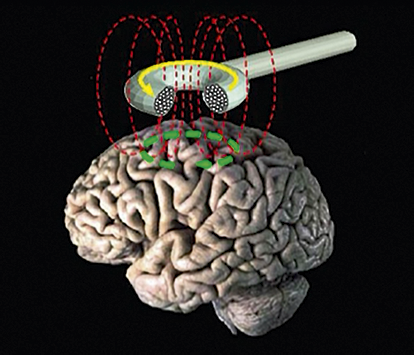
In pediatric populations, existing data indicate that rTMS is largely safe and well-tolerated, with some evidence of benefit for certain psychiatric conditions. Nevertheless, the research base remains preliminary, with most pediatric studies focusing on neurodevelopmental disorders and depression, in the absence of randomized trials of rTMS in pediatric PTSD (Gallop et al., Reference Gallop, Westwood and Hemmings2025). Taken together, the current evidence base remains insufficient to recommend rTMS for routine clinical practice, and emphasizes the need for larger, methodologically rigorous studies.
9.4 Summary
Institutional care, large or small, for children is not in their best interest, in fact, does them harm and triggers child maltreatment and violence against staff. It might be seductive to continue and even extend institutional care during or after wartime, but de-institutionalization should be prioritized. Neurological and pharmacological treatments of children or their parents might help families cope with traumatic war experiences in combination with psychotherapy or parenting programs but a firm evidence base is still outstanding.
10 Evidence-Based Family Support during and after the War
In times of war or armed conflicts, as well as in the aftermath of conflicts, families are under much pressure. Parents may be absent, traumatized, or ill, while children are more than ever in need of protective and emotionally available caregivers. Intervention programs to support parents’ being a secure base and safe haven for their children are very much needed. Many parenting intervention programs are available, but only a few have a sound evidence base in replicated randomized controlled trials. To evaluate the evidence base of parenting programs that have been trialed in humanitarian contexts, more specifically in the context of war or armed conflict and their aftermath, we conducted an umbrella meta-analysis.
10.1 Interventions for Families Weathering War
An umbrella meta-analysis is a quantitative review and synthesis of meta-analyses, in our case, of meta-analyses of randomised controlled trials published in the past ten years. We conducted a systematic search for meta-analyses on man-made humanitarian crises due to war or armed conflicts (see for details Tsyhanyk et al., Reference Tsyhanyk, Sher-Censor and Martsenkovskyi2026). We found eleven meta-analyses and screened them for pertinent RCTs on war-related parenting interventions (e.g., Backhaus et al., Reference Backhaus, Blackwell and Gardner2025). The meta-analyses covered a broad range of interventions in natural disasters, mixed with studies on parenting programs in armed conflict areas. Most meta-analyses focused on specific outcomes, such as PTSS or depression. Using the umbrella approach to search for RCTs in war-afflicted regions or refugee samples, we selected the pertinent RCTs (k = 29 studies) and coded effects on all parenting, parent, and child-related outcomes, performing a regular meta-analysis of the twenty-nine RCTs. We coded moderators (e.g., age of participants, number and type of sessions, measures, timing of posttest, geographical area, type of intervention program) and risk of bias, and extracted all effect sizes from scratch, establishing interrater reliabilities for these steps. Multilevel meta-analyses were applied to account for outcomes embedded in studies.
Nine types of intervention programs were differentiated: ADAPT (k = 4), COMPASS (k = 2), CSI War Child (k = 2), Psychoeducation (k = 5), Strong Families (k = 2), Teaching Recovery Techniques (k = 2), Attachment Based (k = 4), Social Learning (k = 4), and Cognitive Behavior Therapy (CBT, k = 4) programs. Only three program types appeared to be effective: programs based on CBT, Social Learning, and Attachment, with pooled effect sizes of Cohen’s d = 1.09, d = 0.51, and d = 0.44, respectively. Although the pooled effect size of programs with a CBT with a trauma component seemed much larger (perhaps too large to be true) than those of the Attachment Based or Social Learning programs, the difference was explained by the older age (adolescents) participating in the CBT programs and the exclusive use of self-report outcome questionnaires in trials using CBT programs (Tsyhanyk et al., Reference Tsyhanyk, Sher-Censor and Martsenkovskyi2026). It should be noted that about half of the RCTs showed an overall high risk of bias ((Tsyhanyk et al., Reference Tsyhanyk, Sher-Censor and Martsenkovskyi2026).
10.2 Promising Examples of CBT, Social Learning, and Attachment-Based Programs
In Table 1, an overview of basic characteristics of specific examples (CBT-TR; STEP; and CONNECT) of the three program types is presented, with their underlying theory, core components, delivery, and target populations.
| Program | Theory (change mechanisms) | Core components | Delivery in crises (how it runs) | Target population | Risk of bias (overall) | Notes for humanitarian use |
|---|---|---|---|---|---|---|
| CONNECT (Osman et al., Reference Osman, Flacking, Schön and Klingberg-Allvin2017a; Moretti et al., Reference Moretti, Obsuth and Craig2015) | Attachment, mentalization; SLT for skill uptake (modeling, rehearsal). | Caregiver sensitivity & reflective functioning; emotion coaching; connection-focused limit-setting; rupture-repair; brief homework tasks. | 8−10 group sessions with 8−12 caregivers; vignettes/role-plays; led by paraprofessionals; adaptable manuals. | Caregivers of adolescents affected by conflict/displacement. | High concern | Feasible in contexts with coercive cycles and trauma; culturally adaptable; short format suitable to unstable settings. |
| STEP – Systematic Training for Effective Parenting (Sangawi et al., Reference Sangawi, Adams and Reissland2018) | Adlerian/democratic parenting; SLT (modeling, contingent reinforcement). | Brief didactics; encouragement & specific praise; natural/logical consequences; parent emotion regulation; problem-solving routines; role-play and homework. | Group-based parent training (8−10 sessions); suitable for crisis centers/schools; trained paraprofessionals with supervision. | Caregivers of young children to school-age children in displacement or acute crisis. | Some concerns | Clear behavioral tools; low cost; attention to cultural norms for “logical consequences” and safeguarding in high-risk contexts. |
| CBT-TR (O’Callaghan et al., Reference O’Callaghan, Branham and Shannon2014) | Trauma-focused CBT; SLT principles for behavior change and generalization. | Psychoeducation; emotion regulation; coping/restructuring; trauma narrative /exposure; safety planning; parallel caregiver skills (praise, routines, limits). | Separate child and caregiver sessions; group formats in NGOs/clinics and camps; trained clinicians and supervision; 8−12+ sessions. | Children and adolescents exposed to war-related trauma; refugee families. | Some concerns | Strongest trauma-symptom focus; higher training and supervision needs; integrates caregiver behavior change to sustain gains at home. |
SLT = Social Learning Theory, CBT = Cognitive Behavior Therapy
10.2.1 CBT-TR
Parenting programs with a CBT component in humanitarian contexts often combine various traditions and methods in an eclectic way (Betancourt, Reference Betancourt2025). In the culturally adapted CBT-TR approach of O’Callaghan (Reference O’Callaghan, McMullen, Shannon, Rafferty and Black2013), for example, cognitive coping with trauma is central, with identifying and changing unhelpful cognitions and awareness of relations among thoughts, feelings, and behaviors. But psychoeducation components and relaxation techniques also are part of these programs. An adaptation to female adolescents in the Democratic Republic of Congo who had suffered from sexual abuse by militia contained modules with psychoeducation on rape and trauma; stress management by controlled breathing and progressive muscle relaxation; and cognitive behavior therapy components consisting of cognitive coping and addressing trauma narratives (O’Callaghan et al., Reference O’Callaghan, McMullen, Shannon, Rafferty and Black2013). Most modules were delivered in group sessions, combined with three individual sessions on re-orienting cognitions of trauma narratives. Much work was invested in cultural adaptations of the program with practical guidance on protection against sexual violence (e.g., fetching firewood in the evening with a friend instead of alone) and the use of local games and songs. To counter the prejudice of the social environment, social workers tried to facilitate the repair of relationships with family and friends. In three caregiver sessions, the girls’ parents were introduced to the program, made aware of the impact of trauma on their child, and other psychoeducation components. In the small trial (N = 52), the effects of this eclectic approach on the reduction of trauma symptoms, conduct problems, and depression were very large (ds ≥ 1.50, dependent on the outcome). The authors mention high initial distress levels, which might have allowed for substantial improvements. In addition, the participants’ belief in the intervention’s potential to help them (placebo, see General Discussion) may have contributed to the large (self-reported) effects.
10.2.2 Social Learning: STEP
Systematic Training for Effective Parenting (STEP; Dinkmeyer & McKay, Reference Dinkmeyer and McKay1997) is based on Adlerian ideas about family dynamics and democratic parenting, but the methods are clearly based on social learning ideas about modeling and reinforcement of positive behavior with contingent praise and avoiding coercive cycles in which parents and children might become entangled (see also VIPP-SD; Juffer et al., Reference Juffer, Bakermans-Kranenburg and Van IJzendoorn2017). STEP is usually delivered in 7–9 weeks in group workshops of about 2 hours each, with an optimal group size of 6–14 parents. The approach is didactic and includes video-recorded information about parental behavior and parenting style, exploring alternatives and expressing different ideas and feelings in role plays, understanding the reasons for children’s misbehavior, and promoting children’s responsibilities and confidence. The program also includes videos that demonstrate examples of effective and ineffective family interactions. The STEP parent handbook (Dinkmeyer & McKay, Reference Dinkmeyer and McKay1997) discusses the following ambitious goals for the parents: understanding themselves and their child; understanding children’s misbehavior and choosing an effective response; promoting positive child behavior; knowing how to listen and talk to the child; stimulating child cooperation; and using sensible limit setting. The small pilot RCT of Sangawi et al. (Reference Sangawi, Adams and Reissland2018) with 17 Kurdish mothers and their children, living in the Kurdistan region of Iraq, was a proof of principle that STEP trials could be implemented in a contested and violent environment.
10.2.3 Attachment-Based: CONNECT
Because attachment research originally was focused on the development of attachment relationships in infancy and early childhood, parenting support programs for preteens still are scarce. The CONNECT Program, starting from age eight years, fills that gap (Moretti et al., Reference Moretti, Pasalich, O’Donnell, Bartolo, Brown, Goulter and Obsuth2024). It is a ten-week manualized group program for parents and their children with behavior problems designed to enhance parental reflective function, empathy, mindfulness, and sensitivity to the attachment needs (Moretti et al., Reference Moretti, Obsuth and Craig2015; Moretti et al., Reference Moretti, Pasalich, O’Donnell, Bartolo, Brown, Goulter and Obsuth2024). In a randomized controlled trial with 120 Somalian refugee families in Sweden, Osman and colleagues (Reference Osman, Salari, Klingberg-Allvin, Schön and Flacking2017b) developed and tested a culturally tailored variant of the CONNECT program. The adapted parenting support program consisted of twelve 1–2-hour sessions with groups of 12–17 parents and two coaches. The first two sessions provided parenting education related to family life in a foreign country, whereas the remaining ten sessions used CONNECT methods such as role playing to stimulate parents’ reflection on their behavior in interactions with their children, to promote sensitive parenting behaviors and to refrain from coercive discipline practices. CONNECT is a promising attachment-based parenting support program for families with preteens and adolescents and deserves more observational outcome assessments in future RCTs with refugee families coping with war-related mental health problems.
10.3 Triple S Family-Based Care Policies after the War: Safe, Stable, Shared Care
Attachment research of child development conducted across more than half a century (since Bowlby, Reference Bowlby1951) has led to the conclusion that children need attachment relationships embedded in family-based care arrangements to develop their potential (Forslund et al., Reference Forslund, Granqvist and Van IJzendoorn2022). Three minimum conditions for “good-enough” care emerge from the evidence collected during all those years that seem crucial: Care should be Safe, Stable, and Shared (Triple S, see Figure 6, and see Van IJzendoorn & Bakermans-Kranenburg, Reference Van IJzendoorn and Bakermans-Kranenburg2024).
Triple S care as minimum condition for “good-enough” care
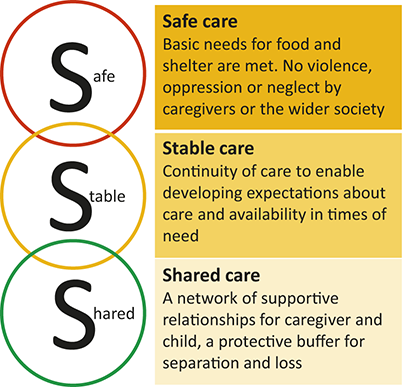
10.3.1 Safe Care
First, a safe caregiving environment is required, free from caregiver violence and child maltreatment. Children have the right to grow up in an environment that serves their basic needs for sufficient food, shelter, and freedom from violence, oppression, or neglect by their parents or the wider society. The United Nations Security Council (2025) listed six grave violations against children in times of war: Killing and maiming of children; recruitment or use of children in armed forces and armed groups; attacks on schools or hospitals; rape or other grave sexual violence; abduction of children; and denial of humanitarian access for children (UNICEF, 2022). Between 2005 and 2023, more than 347,000 grave violations were verified against children, committed by conflicting parties in more than thirty regions across Africa, Asia, the Eastern Mediterranean, and Latin America. It is evident that in the Russian war against Ukraine, the Russians committed several such violations on a large scale (about 2,500 killed or maimed until mid-2025, about 20,000 subjected to forced abduction).
Safety should not be confused with security in the sense used in attachment theory and research. Insecure attachment might be good enough for adaptive development of children into adulthood as long as the basic needs of safety and protection, stability of care arrangement, and shared care in an attachment network are met (see Section 2).
10.3.2 Stable Care
Second, stability of care arrangements is crucial for children lest they are exposed to fragmented care and breaking of bonds. Instability of care elevates the risk of overwhelming stress in response to threatening events, enhances extreme vigilance for dangers, and distracts from exploring the wider social and physical environment that promotes developmentally important experiences (Palacios et al., Reference Palacios, Adroher and Brodzinsky2019). Stability of care arrangement does not imply the constant presence of a primary caregiver, as is suggested by the so-called “attachment parenting” movement (Sears & Sears, Reference Sears and Sears2001), which is a pseudo-scientific ideology. Stability of care is needed for both children and parents or caregivers to develop expectations about each other’s whereabouts and availability in times of need. Institutionalized care often falls at the extreme end of the dimension of fragmented care, with high staff turnover because of 24/7 care in shifts and the high burden of the profession of caregiver in congregate care (Van IJzendoorn et al., Reference Van IJzendoorn, Bakermans-Kranenburg and Duschinsky2020).
But alternative family-based care is not always substantially more stable because of the high risk of breakdown of the child–foster carer relationship (Eltink et al., Reference Eltink, Waaijenberg, Broers, van Anrooij, van Rooij, Stams and Assink2025) and maybe to a lesser extent breakdown of the relationship of the adopted child to the adopting parents (Bornstein & Suwalsky, Reference Bornstein and Suwalsky2021; Palacios et al., Reference Palacios, Adroher and Brodzinsky2019). During and after times of war or armed conflicts, children might become separated from their parents and other caregivers due to loss through death or to seeking refuge from war or armed conflict with part of the family. Displaced families may be at greater risk of falling apart due to stress and burnout and long-term living apart triggering alienation and divorce between parents with very different war-related experiences. Families living through war or armed conflict, as well as alternative care families in case no other viable options are available, need parenting support that is focused on increasing the stability of the care arrangement. Some of the parenting intervention programs discussed in this section might through their focus on effective interaction or reflective functioning, also elevate the chance that parents stick together even under dire wartime conditions or in the aftermath of war.
Importantly, policy and jurisdiction should only, in exceptional cases, decide to separate children from their parents or other caregivers such as grandparents, foster or adoptive parents. We argued elsewhere that family courts should refrain as much as possible from disrupting existing child–caregiver relationships, even when they may not be in the “best interest” of the child but provide good-enough care. In case of unavoidable divorce, family courts might prioritize verdicts that stimulate access to both parents for the child even though the time investment and shared activities with one of the parents seem to point at much less value of that relationship to the child. As long as safety can be guaranteed and the parents or caregivers are open to parenting support, existing attachment relationships should get a chance to be continued and to show improvement (Forslund et al., Reference Forslund, Granqvist and Van IJzendoorn2022; Van IJzendoorn et al., Reference Van IJzendoorn, Bakermans-Kranenburg and Duschinsky2020). In our study of Ukrainian families compared to institutional settings, we found evidence for better developmental prospects for children in families even when parents were addicted and their children were born with HIV infection, despite better medical care in institutional settings (Dobrova-Krol et al., Reference Dobrova-Krol, Bakermans-Kranenburg, Van IJzendoorn and Juffer2010a, Reference Dobrova-Krol, Van IJzendoorn, Bakermans-Kranenburg and Juffer2010b).
10.3.3 Shared Care
Third, shared care for developing offspring seems evolutionarily ingrained and historically and culturally predominant in humans (Bakermans-Kranenburg, Reference Bakermans-Kranenburg2021). The idea of “monotropy” is wrong if it is understood to imply that the care of children would be preferably provided by one exclusive caregiver, mostly assumed to be the biological mother (see Section 2). This misconception has long been standing in the way of the study of attachment networks that are found to exist in the large majority of 186 nonindustrial societies (Weisner & Gallimore, Reference Weisner and Gallimore1977). “Allomothers” are badly needed to support the mother in providing the estimated 13 million calories to bring a newborn to nutritional independence (Kaplan, Reference Kaplan1994), therefore “cooperative breeding” has been the rule instead of the exception since ancient times according to Hrdy (Reference Hrdy2009). Allomothers were indispensable when the risks of death during childbirth were high, which, for a long time in human evolution, was a dreadful collateral damage of reproduction. Alloparents also create opportunities for inexperienced parents-to-be such as older siblings, to practice parenting skills (Mooya et al., Reference Mooya, Sichimba and Bakermans-Kranenburg2016).
Grandparents can be an important part of the shared care arrangement. The Survey of Health, Ageing and Retirement in Europe (SHARE; Zanasi et al., Reference Zanasi, Arpino, Bordone and Hank2023) documented substantial grandparental care in 26 European countries, amounting to weekly care provision in 25% of the families on average. In China, a 2014 survey (Song et al., Reference Song, Wang and Qin2018) found that 60% of the elderly were taking care of their grandchildren, and half of them were providing care more than 9 hours a day. Grandmothers who were often quietly watching mothers’ parenting of their infants stimulated secure infant-mother attachment relationships, and fewer externalizing behavior problems later in development, presumably because they promoted feelings of parenting efficacy in the mothers (Liang et al., Reference Liang, Lin, Van IJzendoorn and Wang2021). When tensions emerge in the relationship between grandparent and parent, however, the grandparental influence might become negative, for the parent as well as the children (Liang et al., Reference Liang, Lin, Van IJzendoorn and Wang2021; Riem et al., Reference Riem, Bakermans-Kranenburg, Cima and Van IJzendoorn2023).
Grandparents might function as attachment figures and a major safe haven for their children – now parents – to cope with the heavy burden of child-rearing in an unsafe and unpredictable context. We found that support from grandparents was related to better maternal mental health and more adequate caregiving practices during the COVID-19 lockdown in China (Guo et al., Reference Guo, De Carli, Lodder, Bakermans-Kranenburg and Riem2021; Riem et al., Reference Riem, Lodder and Guo2021). In our meta-analysis of eleven studies (N = 3,381 participants), we found that involved grandparents fulfilled a protective role against postpartum mental health problems of the mothers (Riem et al., Reference Riem, Bakermans-Kranenburg, Cima and Van IJzendoorn2023). In times of war or armed conflict, grandparents might play an even more important role than in “normal” times, in the network of attachment relationships around their grandchildren, as substitute parents and attachment figures when the parents themselves are unavailable because of death, active service, or physical or mental health problems including substance misuse and depression. Moreover, an active role of grandmothers in co-rearing their grandchildren seems to decrease the grandparents’ depressive symptoms (Yang et al., Reference Yang, Evandrou and Vlachantoni2022). However, complete responsibility for grandchildren might lead to exhaustion and burnout (Chemerys et al., Reference Chemerys, Tsyhanyk, Bakermans-Kranenburg, van IJzendoorn and Nehrych2025, see Section 7). Because of their pivotal role as safe haven or as substitutes for parents, public policy measures and (preventive) interventions might prioritize support of grandparent-headed households during and after war or armed conflicts.
10.4 Challenges for Practitioners and Policymakers
Elsewhere, we argued that responsible translation of developmental science findings to policy and practice should fulfil three requirements (Van IJzendoorn & Bakermans-Kranenburg, Reference Van IJzendoorn and Bakermans-Kranenburg2024). First, firm evidence-based preferably reinforced by replicated, meta-analytic studies is needed. We prioritize meta-analytic evidence for rejecting or accepting diagnostic measures, treatment modalities, and supportive interventions to be applied in families with war experiences (see Figure 7). Second, ethical grounding of aims and means of proposed policy measures or interventions, taking into account the “first do no harm” principle of avoiding detrimental (side-)effects. We touch on these complicated ethical issues by referring to the United Nations Convention on the Rights of the Child (UNCRC) and the United Nations Security Council’s list of grave violations against children in times of war to support our safety guidelines. Elsewhere (Van IJzendoorn & Bakermans-Kranenburg, Reference Van IJzendoorn and Bakermans-Kranenburg2024) we also discussed empirical arguments for the universal desirability of parental sensitivity and child attachment security as aims of attachment-based parenting interventions such as ABC (Dozier & Bernard, Reference Dozier and Bernard2019), CONNECT (Moretti et al., Reference Moretti, Obsuth and Craig2015), and VIPP-SD (Juffer et al., Reference Juffer, Bakermans-Kranenburg and Van IJzendoorn2017) programs. The third requirement for translation refers to a favorable balance of costs and effectiveness of the proposed measures and interventions in societal contexts where resources are scarce. Some empirical and scalability arguments for the cost-effectiveness of VIPP-SD have been made (O’Farrelly et al., Reference O’Farrelly, Barker, Watt, Babalis, Bakermans-Kranenburg, Byford, Ganguli, Grimas, Iles, Mattock, McGinley, Phillips, Ryan, Scott, Smith, Stein, Stevens, Van IJzendoorn, Warwick and Ramchandani2021; Ramchandani et al., Reference Ramchandani, Elkes and Cornelius2025; Segal et al., Reference Segal, Green and Twizeyemariya2023; Van IJzendoorn & Bakermans-Kranenburg, Reference Van IJzendoorn and Bakermans-Kranenburg2024), but more work must be done to ensure that the arguments hold in a war-stricken context.
Cooperative practitioners-researchers model for translation of scientific input and practical expertise into effective treatment
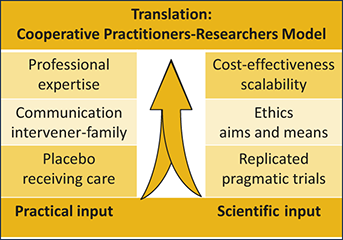
10.4.1 Incomplete Evidence-Base for Professionals working with Children during or after War
There is a growing need for child and family support and treatment, but pharmacological interventions, neurological treatments, and several popular psychosocial and behavioral interventions are still lacking a robust body of randomized controlled trial evidence supporting their efficacy for war-related symptoms in children and their parents. Despite this lack of evidence, medications are frequently prescribed off-label, often in complex polypharmaceutical regimens, and neurofeedback is increasingly promoted as a “cutting-edge” intervention. The same goes for psychosocial and behavioral interventions for which a suite of trainings and certifications has been implemented (e.g., ADAPT; Gewirtz, Reference Gewirtz2018). This pattern of practice risks normalizing the use of interventions with questionable cost–benefit profiles, especially in vulnerable or poorly studied groups such as those with war-related exposures. In the absence of strong RCT evidence, routine prescription and implementation should be approached with caution, prioritizing transparent communication with families, rigorous monitoring of adverse effects, and, where possible, participation in carefully designed clinical trials rather than widespread, uncritical use in routine care.
10.4.2 Pressures on Professionals Working with Children and Their Families
Based on attachment research, we suggest that diagnostics, interventions, and therapies should create a safe haven and secure base for the participants’ exploration of mental or physical suffering (Van IJzendoorn et al., Reference Van IJzendoorn, Bakermans-Kranenburg, Sak and Chaban2025). This is not a call for regression to an earlier stage of development but is based on the well-researched assumption that attachment is lifelong. Attachment continues to play an important role “from cradle to grave,” especially in frightening or stressful situations involving (mental) health issues, and not only with one’s own parents or partners but also with social workers, psychologists, or medical professionals in treatment trajectories (Bowlby, Reference Bowlby1988; Byng-Hall, Reference Byng-Hall1995).
It is impossible for health professionals to avoid forming a supportive relationship with clients, precisely because, according to Bowlby (Reference Bowlby1988) in distress humans tend to cling to any straw of possible reassurance and trust. Attachment is probably a generic dimension in any intervention or treatment process. A bond develops between the therapist or intervener and children, parents or clients, whether they want it or not. The bond may happen even in rather short-term interventions and therapies (Dozier & Bernard, Reference Dozier and Bernard2019; Juffer et al., Reference Juffer, Bakermans-Kranenburg and Van IJzendoorn2017). Therefore, it is better to acknowledge this relational dimension and consciously apply it in communication with the children, parents or patients, in the service of the child (see Figure 7). Insight into the emergence and development of attachment can be helpful here, including reflection on the professionals’ own biography. At least, that seems to be the implicit message of British brain surgeon Henry Marsh (Reference Marsh2022) in And Finally, his fascinating autobiography reflecting his more than thirty years volunteering in Ukraine.
10.5 Summary
The placebo effect has been defined as “the positive health changes that occur specifically due to mechanisms activated by individual and contextual factors, e.g., treatment expectations, whenever a patient enters a caring context and is either administered an inert treatment or engages with an active treatment” (Bagnis et al., Reference Bagnis, Meeuwis and Haas2025, p. 410; see also Evers et al., Reference Evers, Colloca and Blease2018). We speculate that even interventions and treatments that are not (yet) proven to be evidence-based, for example, because they consist of an eclectic combination of components derived from attachment programs, social learning approaches, and cognitive behavior therapy (see Section 10.2), might have a positive placebo effect (see Figure 7). Some evidence indicates that expecting active treatment, even when receiving an inert one, produces amazingly strong effects (Bagnis et al., Reference Bagnis, Meeuwis and Haas2025). If the intervener or therapist is enthusiastic about an eclectic, not (yet) evidence-based but active approach, this enthusiasm may strengthen the therapeutic alliance and create expectations about the workings of the intervention that turn into a self-fulfilling prophecy. This might be the “secret sauce” that is served by the practitioner in the meal of tomorrow, although always in combination with necessary, nourishing, evidence-based ingredients.
11 Concluding Remarks
The effects of war and armed conflict on children and parents are large (Betancourt, Reference Betancourt2025). One of the questions of this Element was: What can developmental and health sciences contribute to prevent, alleviate, or even cure parents’ and children’s mental health problems arising from exposure to wartime violence? We showed that large- or small-scale institutional care is against the developmental interests of children, do them harm, and seem to trigger child maltreatment more than family-based caregiving arrangements. Neurological and pharmacological treatments of children and/or their parents show some promise to help families cope with traumatic war experiences and may in the future become effective (adjunctive) treatment modalities. But what can be done now or soon? In the following concluding remarks we present some challenges for researchers (Section 11.1) and some enrichment opportunities for practitioners and policymakers (Section 11.2).
11.1 Toward Better Research: One More Mile to Go (Muddy Waters)
In several sections of this Element, we mentioned caveats in the interpretation of intervention studies as well as epidemiological research on developmental and mental health issues in humanitarian crises. The most important caveat is the overreliance on self-report questionnaires of participants (including in our own research, e.g., reported in Section 7). Longitudinal research on childhood maltreatment demonstrates that objective, prospective records and retrospective self-reports identify overlapping but distinct groups of maltreated children, with underreporting common in interviews and official records, and recall bias influencing self-reports (Champagne et al., Reference Champagne, Courtney, Bellatin, Miller and Widom2025). Additionally, psychometric studies reveal that self-report data are also shaped by personality traits and partly genetic response styles, such as acquiescence bias, the tendency to agree with items regardless of their content, which can systematically inflate or attenuate associations (Runze & Van IJzendoorn, Reference Runze and Van IJzendoorn2024). Hyland and Shevlin (Reference Hyland and Shevlin2024) challenged the assumption that there are “gold standards” for assessing psychological distress. They contended that for example clinician-administered interviews may introduce an additional layer of measurement error. We propose that in epidemiological studies the use of multiple informants enables some statistical control of confounding response biases. Furthermore, independent, reliable coders using validated rating systems for standardised interviews, tests, and observations in pre- and posttests of randomised trials have been shown to decrease the risks of bias and enhance validity (Van IJzendoorn & Bakermans-Kranenburg, Reference Van IJzendoorn and Bakermans-Kranenburg2024).
Measurement challenges may be even more pronounced when assessing trauma and stress responses among children with war-related posttraumatic symptoms or neurodevelopmental disorders. In these populations, symptom assessment relies on caregiver reports or clinician observations. Caregiver reports, however, are highly sensitive to caregivers’ own psychological states, which are often severely strained in conflict settings, leading to potential inflation of child distress ratings due to shared method variance and caregiver burden. Military veteran parents with the diagnosis of PTSD might be inclined to be more aware of parenting problems and other family issues than veterans without such a diagnosis, and a PTSD diagnosis may distort veteran parents’ perception of family problems. Clinician-administered interviews may also introduce error because many standard PTSD and anxiety interviews are insufficiently validated for children with disorders, heightening the risk of diagnostic overshadowing, where trauma-related symptoms are misattributed to developmental features. Moreover, atypical or nonverbal manifestations of distress (e.g., behavioral regression, irritability, sensory overload, or increased self-injury) are not adequately captured by conventional diagnostic frameworks, resulting in under-detection when strict trauma presence and symptom criteria are applied. For children struggling with war-related trauma, discrepancies between measurement methods may therefore be even greater than in typically developing populations, with prevalence estimates reflecting informant biases, contextual stressors, and developmental presentation differences at least as much as underlying psychopathology.
These measurement challenges are further compounded by the distinction between posttraumatic responses to discrete past events and stress reactions occurring under conditions of continuous threat. In protracted war contexts, children are not responding to an already ended traumatic episode but are adapting to an ongoing environment of unpredictability and danger. Symptoms such as hypervigilance, sleep disruption, irritability, or heightened startle responses may therefore represent contextually adaptive responses rather than indicators of posttraumatic pathology per se. Failure to differentiate between trauma aftermath and stress under persistent threat risks over-pathologizing normative survival responses or, conversely, under-recognizing maladaptive stress trajectories. This distinction has important implications for symptom interpretation, prevalence estimation, and the selection of developmentally sensitive measurement tools in conflict-affected populations. Therefore, another mile to go in refining the research and diagnostic measurement tools in research on children with experiences of armed conflicts.
11.2 Toward Better Practice: Evidence is Necessary but Not Yet Sufficient
Practitioners working in humanitarian and armed conflict areas understandably feel an urgent need to help civilian, refugee or veteran families and children in war-afflicted regions as much as is practically possible (Betancourt, Reference Betancourt2025). What is “best” in dire circumstances cannot and should not be decided by scientists only. Practitioners cannot and should not wait until (necessarily slow) science realizes its promise of responsible, actionable results leading to effective support and interventions. They have to “prepare the meal for tomorrow” and cannot wait until the final pragmatic replication in a humanitarian care-as-usual context gives the scientific go-ahead. Seasoned practitioners have a wagonload of expertise because of multiple experiences with diagnoses and treatment efforts of children and their families, and this considerable reserve of mostly tacit knowledge and capabilities (Polanyi, Reference Polanyi1958) should be part of tomorrow’s meal, supplementing available kernels of evidence-based findings (see Figure 7).
We presented the results of a meta-analysis on parenting interventions in humanitarian contexts and discussed the three types of programs that show the most promising effects on parents and children struggling with the effects of armed conflicts and war. Attachment-based interventions, Social Learning programs, and Cognitive Behavior Therapy with a Trauma focus seem to be the most effective approaches in elevating the level of sensitive parenting and child socioemotional development. For each of those types of programs, detailed protocols are available as well as workshops to learn how to implement the interventions with fidelity. However, parenting interventions based on cognitive behavior therapy, attachment theory, and social learning theory have not been trialed sufficiently in families with children and parents struggling with war experiences. We might be only a few steps away from evidence-based application in warzones, refugee children, or in the aftermath of war but we are not yet there and professional expertise remains indispensable.
Finally, we highlighted three general evidence-based guidelines for policy and (judicial or clinical) practice: striving for Safe, Stable, and Shared (Triple S) care. The Triple S guidelines provide a generic framework for decision-making with regard to family support policies, family court and child protection procedures, and universal family social work and preventive mental health provision. Striving for Safe, Stable, and Shared (Triple S) care may guide policy and (judicial or clinical) practice as a necessary framework for decision making in child and family policies, family court and child protection procedures, and universal social work child and family support. But a Triple S framework needs complementary refinement for addressing specific war-related issues of child development and family life. Policymakers and practitioners must fill the gap between the general evidence-based guidelines of Triple S and the adaptation to the unique settings and experiences of families under siege and children weathering war. Tacit knowledge and expertise of professionals must fill the gap between scientific evidence and practical needs.
Acknowledgment
The authors gratefully acknowledge the elaborate feedback by Marc Bornstein and two anonymous reviewers.
Funder
Funding by Beagle Advice, Research & Development is acknowledged.
AI Tools
The authors have used AI tools (ChatGPT and Claude Opus 4.7) in the writing process (polishing text and references according to the Author Guidelines) for this manuscript and have transparently declared this use in line with the policy and in accordance with the journal’s requirements
Marc H. Bornstein
National Institute of Child Health and Human Development, Bethesda
Institute for Fiscal Studies, London
UNICEF, New York City
Marc H. Bornstein is an Affiliate of the Eunice Kennedy Shriver National Institute of Child Health and Human Development, an International Research Fellow at the Institute for Fiscal Studies (London), and UNICEF Senior Advisor for Research for ECD Parenting Programmes. Bornstein is President Emeritus of the Society for Research in Child Development, Editor Emeritus of Child Development, and founding Editor of Parenting: Science and Practice.
About the Series
Child development is a lively and engaging, yet serious and real-world subject of scientific study that encompasses myriad theories, methods, substantive areas, and applied concerns. Cambridge Elements in Child Development addresses many contemporary topics in child development with unique, comprehensive, and state-of-the-art treatments of principal issues, primary currents of thinking, original perspectives, and empirical contributions to understanding early human development.