








Introduction
State of the art
In algebraic geometry, Donaldson-Thomas invariants are invariants named after Thomas and his advisor Donaldson. In the thesis [Reference ThomasTho00], Thomas introduces numbers called Donaldson-Thomas invariants associated with moduli spaces of coherent sheaves on compact Calabi-Yau threefolds. These numbers can be defined as integrals of the cohomological class $1$
over the virtual fundamental class. In [Reference BehrendBeh09], Behrend realized that Donaldson-Thomas invariants can be computed as integrals of some constructible functions, called Behrend functions. By [Reference Joyce and SongJS12], one knows that the moduli space of coherent sheaves can be locally represented as the critical locus of the Chern-Simons functional and in such a case the value of the Behrend function is (up to a sign) the Euler characteristic of the Milnor fiber of the corresponding Chern-Simons functional. In [Reference Kontsevich and SoibelmanKS08], by replacing Milnor fibers with motivic Milnor fibers (living in Grothendieck rings of varieties) in the sense of Denef-Loeser [Reference Denef and LoeserDL98], generalized to formal schemes, Kontsevich and Soibelman study the motivic Donaldson-Thomas invariants for compact Calabi-Yau threefolds, which are motivic refinements of numerical Donaldson-Thomas invariants. In [Reference Kontsevich and SoibelmanKS08], the authors know that motivic Donaldson-Thomas invariants are special values of an important homomorphism from the motivic Hall algebra to the motivic quantum torus ring. By using the motivic Thom-Sebastiani theorem [Reference Denef and LoeserDL99][Reference LooijengaLoo02], generalized to formal schemes, the multiplicative property of such homomorphism is equivalent to the motivic integral identity, formulated as follows
$1$
over the virtual fundamental class. In [Reference BehrendBeh09], Behrend realized that Donaldson-Thomas invariants can be computed as integrals of some constructible functions, called Behrend functions. By [Reference Joyce and SongJS12], one knows that the moduli space of coherent sheaves can be locally represented as the critical locus of the Chern-Simons functional and in such a case the value of the Behrend function is (up to a sign) the Euler characteristic of the Milnor fiber of the corresponding Chern-Simons functional. In [Reference Kontsevich and SoibelmanKS08], by replacing Milnor fibers with motivic Milnor fibers (living in Grothendieck rings of varieties) in the sense of Denef-Loeser [Reference Denef and LoeserDL98], generalized to formal schemes, Kontsevich and Soibelman study the motivic Donaldson-Thomas invariants for compact Calabi-Yau threefolds, which are motivic refinements of numerical Donaldson-Thomas invariants. In [Reference Kontsevich and SoibelmanKS08], the authors know that motivic Donaldson-Thomas invariants are special values of an important homomorphism from the motivic Hall algebra to the motivic quantum torus ring. By using the motivic Thom-Sebastiani theorem [Reference Denef and LoeserDL99][Reference LooijengaLoo02], generalized to formal schemes, the multiplicative property of such homomorphism is equivalent to the motivic integral identity, formulated as follows
Conjecture (Kontsevich-Soibelman’s integral identity for regular functions).
Let k be a field of characteristic zero. Let X be a k-variety. Let $d_1,d_2$
be nonnegative integers, let
$d_1,d_2$
be nonnegative integers, let $\mathbb {G}_{m,k}$
act on
$\mathbb {G}_{m,k}$
act on $\mathbb {A}_k^{d_1} \times _k \mathbb {A}_k^{d_2} \times _k X$
with positive weights on the first factor, negative weights on the second factor and trivially on X. Let
$\mathbb {A}_k^{d_1} \times _k \mathbb {A}_k^{d_2} \times _k X$
with positive weights on the first factor, negative weights on the second factor and trivially on X. Let $f \colon \mathbb {A}_k^{d_1} \times _k \mathbb {A}_k^{d_2} \times _k X \longrightarrow \mathbb {A}_k^1$
be a
$f \colon \mathbb {A}_k^{d_1} \times _k \mathbb {A}_k^{d_2} \times _k X \longrightarrow \mathbb {A}_k^1$
be a $\mathbb {G}_{m,k}$
-equivariant morphism, where
$\mathbb {G}_{m,k}$
-equivariant morphism, where $\mathbb {A}_k^1$
is endowed with the trivial
$\mathbb {A}_k^1$
is endowed with the trivial $\mathbb {G}_{m,k}$
-action. Let X be embedded in
$\mathbb {G}_{m,k}$
-action. Let X be embedded in $\mathbb {A}_k^{d_1} \times _k \mathbb {A}_k^{d_2} \times _k X$
by zero sections and let
$\mathbb {A}_k^{d_1} \times _k \mathbb {A}_k^{d_2} \times _k X$
by zero sections and let $f_{\mid X}$
be the restriction of f on X. The equality
$f_{\mid X}$
be the restriction of f on X. The equality
 $$ \begin{align*} \int_{\mathbb{A}^{d_1}_k}(\psi_f)_{\mid \mathbb{A}^{d_1}_k \times_S Y} = \mathbf{L}^{d_1}(\psi_{f\mid Y}) \end{align*} $$
holds in $\mathscr {M}^{\hat {\mu }}_X$
.
$\mathscr {M}^{\hat {\mu }}_X$
.
The original conjecture stated in [Reference Kontsevich and SoibelmanKS08] is the case of the formal completion $X = \mathbb {A}_k^{d_3}$
and f acts by weights
$X = \mathbb {A}_k^{d_3}$
and f acts by weights $(1,-1,0)$
. Let us review some processes of solving this conjecture in literature. In [Reference Kontsevich and SoibelmanKS08] and [Reference Quy ThuongThu19], the
$(1,-1,0)$
. Let us review some processes of solving this conjecture in literature. In [Reference Kontsevich and SoibelmanKS08] and [Reference Quy ThuongThu19], the $\ell $
-adic version with
$\ell $
-adic version with $X = \mathbb {A}_k^{d_3}$
and weights
$X = \mathbb {A}_k^{d_3}$
and weights $(1,-1,0)$
is solved by Kontsevich, Soibelman and Lê. In [Reference Quy ThuongThu15], using Hrushovski-Kazhdan motivic integration, Lê proved that the integral identity conjecture for algebraically closed fields of characteristic zero holds in some localization of
$(1,-1,0)$
is solved by Kontsevich, Soibelman and Lê. In [Reference Quy ThuongThu15], using Hrushovski-Kazhdan motivic integration, Lê proved that the integral identity conjecture for algebraically closed fields of characteristic zero holds in some localization of $\mathscr {M}_k^{\hat {\mu }}$
(see also [Reference Quy ThuongThu12]). In [Reference Nicaise and PayneNP19], using motivic Fubini theorem for the tropicalization map, Nicaise and Payne remove this localization and improve the result to general X and arbitrary weights over fields of characteristic zero containing all roots of unity. In [Reference Thuong Lê and Duc NguyenLN20], after developing the equivariant motivic integration, the authors also prove the conjecture for regular functions without additional hypothesis. Currently, Bu in [Reference BuBu24] shows that the conjecture is true for
$\mathscr {M}_k^{\hat {\mu }}$
(see also [Reference Quy ThuongThu12]). In [Reference Nicaise and PayneNP19], using motivic Fubini theorem for the tropicalization map, Nicaise and Payne remove this localization and improve the result to general X and arbitrary weights over fields of characteristic zero containing all roots of unity. In [Reference Thuong Lê and Duc NguyenLN20], after developing the equivariant motivic integration, the authors also prove the conjecture for regular functions without additional hypothesis. Currently, Bu in [Reference BuBu24] shows that the conjecture is true for $(-1)$
-shifted symplectic stacks (over k). These approaches have some common points: they are formulated in the virtual setting, namely, Grothendieck rings and more or less use motivic integration (over a field of characteristic zero) along with the tools it provides. Our purpose of this work is to obtain the functorial analogue of this conjecture in categories of motives (in contrast to virtual motives), after the recent work of Ivorra [Reference IvorraIvo24].
$(-1)$
-shifted symplectic stacks (over k). These approaches have some common points: they are formulated in the virtual setting, namely, Grothendieck rings and more or less use motivic integration (over a field of characteristic zero) along with the tools it provides. Our purpose of this work is to obtain the functorial analogue of this conjecture in categories of motives (in contrast to virtual motives), after the recent work of Ivorra [Reference IvorraIvo24].
The theory of nearby cycles also exists in motivic homotopy theory thanks to the work [Reference AyoubAyo07b]. It is therefore reasonable to expect that the integral identity holds in the motivic world. Recently, in [Reference IvorraIvo24], Ivorra tackles the conjecture in this setting for vector bundles over X with X a variety over a field k of characteristic zero. The method used in Ivorra’s work relies on the theory of spaces with $\mathbb {G}_m$
-actions. In comparison to those methods above, Ivorra’s approach is functorial and holds more generally for any stable homotopical
$\mathbb {G}_m$
-actions. In comparison to those methods above, Ivorra’s approach is functorial and holds more generally for any stable homotopical $2$
-functor in the sense of [Reference AyoubAyo07a]. Under Euler characteristics with compact support (see [Reference Ivorra and SebagIS13] or [Reference Ayoub, Ivorra and SebagAIS17]), Ivorra’s result recovers the results above in the corresponding Grothendieck rings of varieties. Under good hypothesis, one can also eliminate the independence on characteristic and work with general base scheme; which, to our best knowledge, is not available in the virtual setting.
$2$
-functor in the sense of [Reference AyoubAyo07a]. Under Euler characteristics with compact support (see [Reference Ivorra and SebagIS13] or [Reference Ayoub, Ivorra and SebagAIS17]), Ivorra’s result recovers the results above in the corresponding Grothendieck rings of varieties. Under good hypothesis, one can also eliminate the independence on characteristic and work with general base scheme; which, to our best knowledge, is not available in the virtual setting.
Let us say few words about the theory of spaces X with $\mathbb {G}_m$
-actions. These are central objects in the study [Reference Birula AByB73]. Any such space ‘decomposes’ into three parts: the space of fixed points
$\mathbb {G}_m$
-actions. These are central objects in the study [Reference Birula AByB73]. Any such space ‘decomposes’ into three parts: the space of fixed points $X^0$
, the points
$X^0$
, the points $X^+$
floating to
$X^+$
floating to $X^0$
, and the points
$X^0$
, and the points $X^-$
floating away from
$X^-$
floating away from $X^0$
. In [Reference BradenBra03], Braden proved a theorem on localizing
$X^0$
. In [Reference BradenBra03], Braden proved a theorem on localizing $\mathbb {G}_m$
-equivariant objects on X to the subspace
$\mathbb {G}_m$
-equivariant objects on X to the subspace $X^0$
. This theorem, called the Braden hyperbolic localization theorem, is then quickly used in a number of places, especially in geometric representation theory and geometric Langlands. Subsequent studies after Braden’s work can be found in [Reference Drinfeld and GaitsgoryDG14][Reference DrinfeldDri15] and [Reference RicharzRic18]. In this work, we follow [Reference RicharzRic18] mostly. Together with the formalism of operations of diagrams of algebraic spaces, we prove a functorial version of the integral identity for a variety of specialization system (not just nearby functors), of which nearby cycles functors are a special case.
$X^0$
. This theorem, called the Braden hyperbolic localization theorem, is then quickly used in a number of places, especially in geometric representation theory and geometric Langlands. Subsequent studies after Braden’s work can be found in [Reference Drinfeld and GaitsgoryDG14][Reference DrinfeldDri15] and [Reference RicharzRic18]. In this work, we follow [Reference RicharzRic18] mostly. Together with the formalism of operations of diagrams of algebraic spaces, we prove a functorial version of the integral identity for a variety of specialization system (not just nearby functors), of which nearby cycles functors are a special case.
Main results
Let us state the following main result (see Theorem 3.1) of this work, which can be viewed as a functorial generalization of the virtual integral identity and a motivic analogue of [Reference RicharzRic18, Theorem 3.3] (in fact, by taking étale realizations, one obtains [Reference RicharzRic18, Theorem 3.3])
Theorem. Let S be a noetherian scheme of finite dimension and $\mathbf {SH}_{\mathfrak {M}}^{\tau }$
the stable motivic homotopy category. Let
$\mathbf {SH}_{\mathfrak {M}}^{\tau }$
the stable motivic homotopy category. Let $\Psi $
denote the nearby functors of Ayoub in [Reference AyoubAyo07b]. Let X be an algebraic S-space endowed with an
$\Psi $
denote the nearby functors of Ayoub in [Reference AyoubAyo07b]. Let X be an algebraic S-space endowed with an $\tau $
-locally linearizable
$\tau $
-locally linearizable $\mathbb {G}_{m,S}$
-action and,
$\mathbb {G}_{m,S}$
-action and, $X^0$
be its space of fixed points. Given a
$X^0$
be its space of fixed points. Given a $\mathbb {G}_{m,S}$
-equivariant morphism
$\mathbb {G}_{m,S}$
-equivariant morphism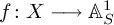 $f \colon X \longrightarrow \mathbb {A}^1_S$
where the target is endowed with the trivial
$f \colon X \longrightarrow \mathbb {A}^1_S$
where the target is endowed with the trivial $\mathbb {G}_{m,S}$
-action, then there exists a commutative diagram
$\mathbb {G}_{m,S}$
-action, then there exists a commutative diagram

natural in $A \in \mathbf {SH}_{\mathfrak {M}}^{\tau }(X_{\eta })$
with
$A \in \mathbf {SH}_{\mathfrak {M}}^{\tau }(X_{\eta })$
with $f^0$
the restriction of f to
$f^0$
the restriction of f to $X^0$
. Moreover, all arrows are isomorphisms provided that A is equivariant.
$X^0$
. Moreover, all arrows are isomorphisms provided that A is equivariant.
We stress the fact that the existence of the arrows in the theorem above is non-trivial and in general cannot be deduced from the given base change morphisms of nearby functors (see [Reference AyoubAyo07b, Definition 3.1.1]) unless in some special cases like vector bundles considered in [Reference IvorraIvo24]. Their existences are consequences of the geometry of fixed points, attractors and repellers together with the content of the appendix together. We also note that in [Reference Cass, van den Hove and ScholbachCvdHS24], the authors obtained a similar result for unipotent nearby functors, though they use different tools from ours. The theorem above implies the following (for details, see theorem 4.3, corollary 4.7 and corollary 4.11)
Theorem. Let S be a noetherian scheme of finite dimension. Let Y be an algebraic S-space endowed with the trivial $\mathbb {G}_{m,S}$
-action. Let
$\mathbb {G}_{m,S}$
-action. Let $d_1,d_2$
be nonnegative integers, let
$d_1,d_2$
be nonnegative integers, let $\mathbb {G}_{m,S}$
act on
$\mathbb {G}_{m,S}$
act on $X = \mathbb {A}_S^{d_1} \times _S \mathbb {A}_S^{d_2} \times _S Y$
with positive weights on the first factor, negative weights on the second factor and trivially on Y. Let
$X = \mathbb {A}_S^{d_1} \times _S \mathbb {A}_S^{d_2} \times _S Y$
with positive weights on the first factor, negative weights on the second factor and trivially on Y. Let $f \colon \mathbb {A}_S^{d_1} \times _S \mathbb {A}_S^{d_2} \times _S Y \longrightarrow \mathbb {A}_S^1$
be a
$f \colon \mathbb {A}_S^{d_1} \times _S \mathbb {A}_S^{d_2} \times _S Y \longrightarrow \mathbb {A}_S^1$
be a $\mathbb {G}_{m,S}$
-equivariant morphism, where
$\mathbb {G}_{m,S}$
-equivariant morphism, where $\mathbb {A}_S^1$
is endowed with the trivial
$\mathbb {A}_S^1$
is endowed with the trivial $\mathbb {G}_{m,S}$
-action. Then there is an isomorphism
$\mathbb {G}_{m,S}$
-action. Then there is an isomorphism
 $$ \begin{align*} \int_{\mathbb{A}_S^{d_1}} \big(\Psi_f(\mathbb{1}_{X_{\eta}}) \big)_{\mid \mathbb{A}^{d_1}_S \times_S Y} \simeq \mathbb{1}_{Y_{\sigma}}(-d_1)[-2d_1] \otimes \Psi_{f_{\mid Y}}(\mathbb{1}_{Y_{\eta}}), \end{align*} $$
in $\mathbf {SH}_{\mathfrak {M}}^{\tau }(Y_{\sigma })$
. In particular, if
$\mathbf {SH}_{\mathfrak {M}}^{\tau }(Y_{\sigma })$
. In particular, if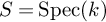 $S = \operatorname {Spec}(k)$
with k a field of characteristic zero, then after [Reference Ayoub, Ivorra and SebagAIS17][Reference Ivorra and SebagIS13], there is an identity
$S = \operatorname {Spec}(k)$
with k a field of characteristic zero, then after [Reference Ayoub, Ivorra and SebagAIS17][Reference Ivorra and SebagIS13], there is an identity
 $$ \begin{align*} \int_{\mathbb{A}^{d_1}_k}(\psi_f)_{\mid \mathbb{A}^{d_1}_k \times_k Y} = \mathbf{L}^{d_1}(\psi_{f\mid Y}) \end{align*} $$
in the ring $K_0(\mathbf {SH}_{\mathfrak {M}}^{\tau }(Y))$
.
$K_0(\mathbf {SH}_{\mathfrak {M}}^{\tau }(Y))$
.
This theorem is an extension of [Reference IvorraIvo24, Corollary 3.2] to the case where Y is an algebraic space and not only a scheme. We note that in a recent work [Reference BuBu24], Bu proves that the integral identity is true for stacks with affine stabilizers (in particular, algebraic spaces) using methods that are closely related to the ones used in this work. In other words, our work can be seen as a functorial version of what is done in [Reference BuBu24] but we emphasize on the fact that our isomorphism holds not only in characteristic zero (as done in [Reference IvorraIvo24] and [Reference BuBu24]) but also in positive characteristic, where virtual nearby cycles do not make sense.
Another result
Let us mention another result which is of independent interest. In the étale setting, the authors [Reference Haines and RicharzHR21] show that there exists a functorial analogue of the compatibility of the Bernstein isomorphism with the constant term map in [Reference HainesHai14]. Here we prove a motivic version of such a result that realizes to the one in [Reference Haines and RicharzHR21, Theorem A] via the $\ell $
-adic realization.
$\ell $
-adic realization.
Theorem. Let F be a non-archimedean local field with ring of integers R. Let G be a connected reductive F-group with a choice of Levi M. Let $\mathcal {G}$
be a parahoric R-group scheme with generic fiber G. Given a cocharacter
$\mathcal {G}$
be a parahoric R-group scheme with generic fiber G. Given a cocharacter $\lambda \colon \mathbb {G}_{m,R} \longrightarrow \mathcal {G}$
whose centralizer
$\lambda \colon \mathbb {G}_{m,R} \longrightarrow \mathcal {G}$
whose centralizer $\mathcal {M}$
is a parahoric R-group with generic fiber M, then there exists a natural transformation
$\mathcal {M}$
is a parahoric R-group with generic fiber M, then there exists a natural transformation
 $$ \begin{align*} \operatorname{CT}_{\mathcal{M}} \circ \Psi^{\mathrm{tot}}_{\mathcal{G}} \longrightarrow \Psi^{\mathrm{tot}}_{\mathcal{M}} \circ \operatorname{CT}_M \end{align*} $$
of functors $\mathbf {DA}^{\mathrm {\acute{e}t}}(\operatorname {Gr}_G,\mathbb {Q}) \longrightarrow \mathbf {DA}^{\mathrm {\acute{e}t}}(\mathcal {F}\ell _{\mathcal {M},\overline {\sigma }},\mathbb {Q})$
, where
$\mathbf {DA}^{\mathrm {\acute{e}t}}(\operatorname {Gr}_G,\mathbb {Q}) \longrightarrow \mathbf {DA}^{\mathrm {\acute{e}t}}(\mathcal {F}\ell _{\mathcal {M},\overline {\sigma }},\mathbb {Q})$
, where $\operatorname {CT}_?$
denotes constant term functors and
$\operatorname {CT}_?$
denotes constant term functors and $\Psi ^{\mathrm {tot}}_?$
denotes total nearby functors,
$\Psi ^{\mathrm {tot}}_?$
denotes total nearby functors, $\operatorname {Gr}_?$
and
$\operatorname {Gr}_?$
and $\mathcal {F}\ell _?$
are affine Grassmannians and flag varieties, respectively. The transformation is an isomorphism on
$\mathcal {F}\ell _?$
are affine Grassmannians and flag varieties, respectively. The transformation is an isomorphism on $\mathbb {G}_{m,F}$
-equivariant objects, where the conjugation action is induced by
$\mathbb {G}_{m,F}$
-equivariant objects, where the conjugation action is induced by $\lambda $
.
$\lambda $
.
Structure of the manuscript
In section §1, we remind the reader on various specialization systems that are of our interest in this paper. In section §2, we study diagrams of algebraic spaces with $\mathbb {G}_m$
-actions and the commutation of three operations
$\mathbb {G}_m$
-actions and the commutation of three operations $((f,\alpha )_{\#},(f,\alpha )^*,(f,\alpha )_*)$
with Braden transformations at the level of diagrams of algebraic spaces (in fact, we can do this with
$((f,\alpha )_{\#},(f,\alpha )^*,(f,\alpha )_*)$
with Braden transformations at the level of diagrams of algebraic spaces (in fact, we can do this with $(f_!,f^!)$
but we do not need this so we omit it). We then state the Braden hyperbolic localization theorem for diagrams of algebraic spaces and prove it by making various reductions to the case of schemes. In the same section, by taking étale realization, we recover results in étale setting. In section §3, we would like to show the commutation of Braden transformations with specialization systems. In order to do this, we use the commutation of five operations with Braden transformations in the previous section. The commutation is applied to deduce the desired functorial motivic integral identity in section §4; in the same section, we define quasi-unipotent motives of algebraic spaces and demonstrate that our non-virtual results realize to the virtual ones as in [Reference IvorraIvo24][Reference BuBu24]. In section §5, we extend specialization systems to ind-schemes and deduce the commutation of nearby functors on affine Grassmannians and flag varieties with constant term functors.
$(f_!,f^!)$
but we do not need this so we omit it). We then state the Braden hyperbolic localization theorem for diagrams of algebraic spaces and prove it by making various reductions to the case of schemes. In the same section, by taking étale realization, we recover results in étale setting. In section §3, we would like to show the commutation of Braden transformations with specialization systems. In order to do this, we use the commutation of five operations with Braden transformations in the previous section. The commutation is applied to deduce the desired functorial motivic integral identity in section §4; in the same section, we define quasi-unipotent motives of algebraic spaces and demonstrate that our non-virtual results realize to the virtual ones as in [Reference IvorraIvo24][Reference BuBu24]. In section §5, we extend specialization systems to ind-schemes and deduce the commutation of nearby functors on affine Grassmannians and flag varieties with constant term functors.
Along with the main theorems, we develop a four-functor formalism for algebraic spaces in the appendix §6 with a view towards algebraic derivators and specialization systems. This formalism is implicitly used throughout the work. More concretely, we generalize results in [Reference ChowdhuryCho24][Reference Chowdhury and D’AngeloCD24] and [Reference Khan and RaviKR24] for $\mathbf {SH}$
to general
$\mathbf {SH}$
to general $\mathbf {SH}_{\mathfrak {M}}^{\tau }$
(including
$\mathbf {SH}_{\mathfrak {M}}^{\tau }$
(including $\mathbf {DA}^{\mathrm {\acute{e}t}}$
, the category of étale motives). We study operations at the level of algebraic derivators (in the sense of [Reference AyoubAyo07b]) in order to have the language to develop the theory of specialization systems for algebraic spaces in section §1 as well as the commutation of Braden transformations with operations. In order to make the formalism quickly accessible and compatible with [Reference AyoubAyo07b], we use the traditional approach of stable model categories instead of the approach using stable
$\mathbf {DA}^{\mathrm {\acute{e}t}}$
, the category of étale motives). We study operations at the level of algebraic derivators (in the sense of [Reference AyoubAyo07b]) in order to have the language to develop the theory of specialization systems for algebraic spaces in section §1 as well as the commutation of Braden transformations with operations. In order to make the formalism quickly accessible and compatible with [Reference AyoubAyo07b], we use the traditional approach of stable model categories instead of the approach using stable $\infty $
-categories. However, given the equivalence between presentable
$\infty $
-categories. However, given the equivalence between presentable $\infty $
-categories and combinatorial, simplicial model categories, two approaches are formally the same.
$\infty $
-categories and combinatorial, simplicial model categories, two approaches are formally the same.
Conventions
Spaces
For a scheme S, we denote by $\mathcal {O}_S$
its structural sheaf. An S-variety is a separated S-scheme of finite type, a morphism of S-varieties is a morphism of S-schemes. By an algebraic S-space X, we mean a sheaf
$\mathcal {O}_S$
its structural sheaf. An S-variety is a separated S-scheme of finite type, a morphism of S-varieties is a morphism of S-schemes. By an algebraic S-space X, we mean a sheaf
 $$ \begin{align*} X \colon (\operatorname{Sch}_S)^{\mathrm{op}}_{\text{fppf}} \longrightarrow \mathbf{Sets} \end{align*} $$
on the fppf-site with representable diagonal and admitting a surjective étale morphism $U \longrightarrow X$
with U being a scheme. In this article, we assume all algebraic spaces are noetherian and separated over S. In particular, quasi-separatedness shows that there exists a Nisnevich atlas
$U \longrightarrow X$
with U being a scheme. In this article, we assume all algebraic spaces are noetherian and separated over S. In particular, quasi-separatedness shows that there exists a Nisnevich atlas $V \longrightarrow X$
with V an (affine) scheme (see [Reference KnutsonKnu71, Theorem 6.4]).
$V \longrightarrow X$
with V an (affine) scheme (see [Reference KnutsonKnu71, Theorem 6.4]).
Ind-schemes
Let $\operatorname {AffSch}$
denote the category of affine schemes. A (strict) ind-scheme is a presheaf
$\operatorname {AffSch}$
denote the category of affine schemes. A (strict) ind-scheme is a presheaf $X \colon \operatorname {AffSch}^{\mathrm {op}} \longrightarrow \mathbf {Sets}$
which admits a presentation
$X \colon \operatorname {AffSch}^{\mathrm {op}} \longrightarrow \mathbf {Sets}$
which admits a presentation $X \simeq \operatorname {colim}_{i \in I}X_i$
as filtered colimits of schemes
$X \simeq \operatorname {colim}_{i \in I}X_i$
as filtered colimits of schemes $X_i$
with closed transitions
$X_i$
with closed transitions $\iota _{i \to j} \colon X_i \longrightarrow X_j$
.
$\iota _{i \to j} \colon X_i \longrightarrow X_j$
.
If P is a property of schemes, then an ind-scheme $X \simeq \operatorname {colim}_{i \in I}X_i$
is said to be ind-P if each
$X \simeq \operatorname {colim}_{i \in I}X_i$
is said to be ind-P if each $X_i$
is P. Similarly, if P is a property of morphisms of schemes, then a morphism
$X_i$
is P. Similarly, if P is a property of morphisms of schemes, then a morphism $X \longrightarrow Y$
of ind-schemes is said to be ind-P if it is a colimit of
$X \longrightarrow Y$
of ind-schemes is said to be ind-P if it is a colimit of $X_i \longrightarrow Y_i$
, each one is P. We say that a schematic morphism
$X_i \longrightarrow Y_i$
, each one is P. We say that a schematic morphism $f \colon X \longrightarrow Y$
is cartesian if there exists a presentation
$f \colon X \longrightarrow Y$
is cartesian if there exists a presentation $X \simeq \operatorname {colim}_{i \in I}X_i$
so that
$X \simeq \operatorname {colim}_{i \in I}X_i$
so that $Y \simeq \operatorname {colim}_{i \in I} (X_i \times _X Y)$
is a presentation of Y.
$Y \simeq \operatorname {colim}_{i \in I} (X_i \times _X Y)$
is a presentation of Y.
Categories and base change
We assume that the reader is familiar with base change notations in [Reference AyoubAyo07a], such as $\operatorname {Ex}_*^*,\operatorname {Ex}_!^*,$
,... which have obvious meanings that the reader can guess easily.
$\operatorname {Ex}_*^*,\operatorname {Ex}_!^*,$
,... which have obvious meanings that the reader can guess easily.
Throughout the article, we denote by $\mathbf {SH}_{\mathfrak {M}}^{\tau }$
the motivic stable homotopy categories of Morel-Voevodsky-Ayoub. In [Reference AyoubAyo07a][Reference AyoubAyo07b],
$\mathbf {SH}_{\mathfrak {M}}^{\tau }$
the motivic stable homotopy categories of Morel-Voevodsky-Ayoub. In [Reference AyoubAyo07a][Reference AyoubAyo07b], $\mathbf {SH}_{\mathfrak {M}}^{\tau }$
is also extended to diagrams of schemes. In order to distinguish two cases, we write
$\mathbf {SH}_{\mathfrak {M}}^{\tau }$
is also extended to diagrams of schemes. In order to distinguish two cases, we write $\mathbf {SH}_{\mathfrak {M}}^{\tau }(X)$
for the case of schemes and
$\mathbf {SH}_{\mathfrak {M}}^{\tau }(X)$
for the case of schemes and $\mathbb {SH}_{\mathfrak {M}}^{\tau }(\mathscr {F},I)$
for the case of diagrams of schemes. We refer to the appendix for more details and generalizations.
$\mathbb {SH}_{\mathfrak {M}}^{\tau }(\mathscr {F},I)$
for the case of diagrams of schemes. We refer to the appendix for more details and generalizations.
1 Specialization systems
The theory of specialization systems is developed in [Reference AyoubAyo07b] as a generalization of the well-known nearby cycles functors. The definitions given in [Reference AyoubAyo07b] extend directly to algebraic spaces with slight modifications. This section provides a short introduction to specialization systems as well as some typical examples, including motivic nearby functors. Given a diagram of algebraic S-spaces

and for a morphism $f \colon X \longrightarrow B$
of algebraic S-spaces, we form the following diagram by base change
$f \colon X \longrightarrow B$
of algebraic S-spaces, we form the following diagram by base change

We make the following definition.
Definition 1.1. A specialization system over $(B,\eta ,\sigma )$
(or over
$(B,\eta ,\sigma )$
(or over $(B,j,i)$
if there is no confusion) is a collection of triangulated functors
$(B,j,i)$
if there is no confusion) is a collection of triangulated functors
 $$ \begin{align*} \operatorname{sp}_f \colon \mathbf{SH}_{\mathfrak{M}}^{\tau}(X_{\eta}) \longrightarrow \mathbf{SH}_{\mathfrak{M}}^{\tau}(X_{\sigma}) \end{align*} $$
associated with morphisms $f \colon X \longrightarrow B$
so that for another morphism
$f \colon X \longrightarrow B$
so that for another morphism $g \colon Y \longrightarrow X$
, there is a natural transformation
$g \colon Y \longrightarrow X$
, there is a natural transformation $\alpha _g$
and its adjoint
$\alpha _g$
and its adjoint $\beta _g$

We require $\alpha _g,\beta _g$
to be isomorphisms when g is smooth and proper, respectively. The triplet
$\alpha _g,\beta _g$
to be isomorphisms when g is smooth and proper, respectively. The triplet $(B,\eta ,\sigma )$
is called a base when we work with specialization systems.
$(B,\eta ,\sigma )$
is called a base when we work with specialization systems.
In [Reference Bang PhamPha24] (and [Reference AyoubAyo07b] under the assumption on quasi-projectiveness of schemes), there are base change morphisms

defined by means of the Nagata compactification theorem. The effort in [Reference Bang PhamPha24] is devoted to prove that $\mu _g$
is well-defined (independent of the choice of the compactification). The formal proof shown in [Reference Bang PhamPha24] extends directly to the case of algebraic spaces so we may freely use them like when we work with schemes. Here are some examples that are of our interest. For any diagram
$\mu _g$
is well-defined (independent of the choice of the compactification). The formal proof shown in [Reference Bang PhamPha24] extends directly to the case of algebraic spaces so we may freely use them like when we work with schemes. Here are some examples that are of our interest. For any diagram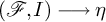 $(\mathscr {F},I) \longrightarrow \eta $
of
$(\mathscr {F},I) \longrightarrow \eta $
of $\eta $
-schemes and a specialization system
$\eta $
-schemes and a specialization system $\operatorname {sp}$
over
$\operatorname {sp}$
over $(B,j,i)$
, we form the diagram consisting of cartesian squares
$(B,j,i)$
, we form the diagram consisting of cartesian squares

and define a specialization system $(\mathscr {F} \bullet \chi )$
by the formula
$(\mathscr {F} \bullet \chi )$
by the formula
 $$ \begin{align*} (\mathscr{F} \bullet \chi)_f {:=}q (p_I)_{\#}\operatorname{sp}_f(\pi_f^{\mathscr{F}})_*(\pi_f^{\mathscr{F}})^*(p_I)^* \end{align*} $$
(it is a specialization system by [Reference AyoubAyo07b, Lemme 3.2.7, 3.2.8] and [Reference Bang PhamPha24]). Let us mention some concrete examples. The case $(B,\eta ,\sigma ) = (\mathbb {A}_S^1,\mathbb {G}_{m,S},S)$
with i the zero section and j the canonical inclusion. Let
$(B,\eta ,\sigma ) = (\mathbb {A}_S^1,\mathbb {G}_{m,S},S)$
with i the zero section and j the canonical inclusion. Let $\Delta $
be the category of finite ordinals
$\Delta $
be the category of finite ordinals $\mathbf {n} = \left \{0 < 1 < \cdots < n \right \}$
and
$\mathbf {n} = \left \{0 < 1 < \cdots < n \right \}$
and $\mathbb {N}^{\times }$
be the set of non-zero natural numbers viewed as a category whose objects are non-zero natural numbers and morphisms are defined via the opposite of the division relation. In [Reference AyoubAyo07b, Definition 3.5.1], Ayoub defines a diagram of
$\mathbb {N}^{\times }$
be the set of non-zero natural numbers viewed as a category whose objects are non-zero natural numbers and morphisms are defined via the opposite of the division relation. In [Reference AyoubAyo07b, Definition 3.5.1], Ayoub defines a diagram of $\mathbb {G}_{m,S}$
-schemes
$\mathbb {G}_{m,S}$
-schemes $\theta _{\operatorname {id}} \colon (\mathscr {R},\Delta \times \mathbb {N}^{\times }) \longrightarrow (\mathbb {G}_{m,S},\Delta \times \mathbb {N}^{\times })$
such that
$\theta _{\operatorname {id}} \colon (\mathscr {R},\Delta \times \mathbb {N}^{\times }) \longrightarrow (\mathbb {G}_{m,S},\Delta \times \mathbb {N}^{\times })$
such that $\mathscr {R}(\mathbf {n},r) = \mathbb {G}_{m,S} \times _S (\mathbb {G}_{m,S})^n$
. The structural morphism is given by the composition
$\mathscr {R}(\mathbf {n},r) = \mathbb {G}_{m,S} \times _S (\mathbb {G}_{m,S})^n$
. The structural morphism is given by the composition
 $$ \begin{align*} \mathbb{G}_{m,S} \times_S (\mathbb{G}_{m,S})^n \overset{\operatorname{pr}_1}{\longrightarrow} \mathbb{G}_{m,S} \overset{e_r}{\longrightarrow} \mathbb{G}_{m,S}, \end{align*} $$
in which $\operatorname {pr}_1$
is the projection on the first factor and the second one is the r-power morphism. Let
$\operatorname {pr}_1$
is the projection on the first factor and the second one is the r-power morphism. Let $I \subset \Delta \times \mathbb {N}^{\times }$
be a subcategory, we consider the cartesian diagram
$I \subset \Delta \times \mathbb {N}^{\times }$
be a subcategory, we consider the cartesian diagram

By making suitble choices of I, we obtain corresponding specialization systems over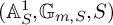 $(\mathbb {A}_S^1,\mathbb {G}_{m,S},S)$
that we are interested in.
$(\mathbb {A}_S^1,\mathbb {G}_{m,S},S)$
that we are interested in.
Example 1.2. There is an obvious choice with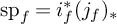 $\operatorname {sp}_f = i_f^*(j_f)_*$
and
$\operatorname {sp}_f = i_f^*(j_f)_*$
and $(\mathscr {F},I) = \eta $
is the identity and the resulting specialization system is called the standard specialization system, denoted by
$(\mathscr {F},I) = \eta $
is the identity and the resulting specialization system is called the standard specialization system, denoted by $\chi _f$
in [Reference AyoubAyo07b].
$\chi _f$
in [Reference AyoubAyo07b].
In the examples below, we always take $\operatorname {sp}_f$
to be
$\operatorname {sp}_f$
to be $\chi _f$
.
$\chi _f$
.
Example 1.3. Let $I = \Delta \times \left \{1 \right \} \simeq \Delta $
, the resulting specialization system is the unipotent nearby functors
$I = \Delta \times \left \{1 \right \} \simeq \Delta $
, the resulting specialization system is the unipotent nearby functors $\Upsilon _f$
. Under appropriate hypotheses, the unipotent nearby functors are isomorphic to the log specialization system
$\Upsilon _f$
. Under appropriate hypotheses, the unipotent nearby functors are isomorphic to the log specialization system $\operatorname {log}$
. For details, one can consult [Reference AyoubAyo07b][Reference AyoubAyo14].
$\operatorname {log}$
. For details, one can consult [Reference AyoubAyo07b][Reference AyoubAyo14].
Example 1.4. Let $I = \Delta \times \mathbb {N}^{'\times }$
, with
$I = \Delta \times \mathbb {N}^{'\times }$
, with $\mathbb {N}^{'\times }$
the full subcategory of
$\mathbb {N}^{'\times }$
the full subcategory of $\mathbb {N}^{\times }$
consisting of numbers invertible on S, the resulting specialization system is the tame nearby functors
$\mathbb {N}^{\times }$
consisting of numbers invertible on S, the resulting specialization system is the tame nearby functors $\Psi ^{\mathrm {tame}}_f$
(in [Reference AyoubAyo14], it is called moderate nearby cycles functors). We note that if S is a scheme over
$\Psi ^{\mathrm {tame}}_f$
(in [Reference AyoubAyo14], it is called moderate nearby cycles functors). We note that if S is a scheme over $\mathbb {Q}$
, then
$\mathbb {Q}$
, then $\mathbb {N}^{'\times } = \mathbb {N}$
and in this case
$\mathbb {N}^{'\times } = \mathbb {N}$
and in this case $\Psi ^{\mathrm {tame}}_f$
is called motivic nearby functors in [Reference AyoubAyo07b].
$\Psi ^{\mathrm {tame}}_f$
is called motivic nearby functors in [Reference AyoubAyo07b].
Example 1.5. The case $(B,\eta ,\sigma ) = (S,\eta ,\sigma )$
with S the spectrum of an excellent strictly henselian discrete valuation ring,
$(B,\eta ,\sigma ) = (S,\eta ,\sigma )$
with S the spectrum of an excellent strictly henselian discrete valuation ring, $\eta $
its generic point and
$\eta $
its generic point and $\sigma $
its closed point. Let
$\sigma $
its closed point. Let $\pi $
be a fixed uniformizer. The uniformizer
$\pi $
be a fixed uniformizer. The uniformizer $\pi $
induces a morphism
$\pi $
induces a morphism $S \longrightarrow \mathbb {A}_S^1$
. For morphisms
$S \longrightarrow \mathbb {A}_S^1$
. For morphisms $f \colon X \longrightarrow S$
, the specialization systems
$f \colon X \longrightarrow S$
, the specialization systems $\Psi ^{\mathrm {adic}}_f {:=}q \Psi ^{\mathrm {tame}}_{\pi \circ f}$
is called the
$\Psi ^{\mathrm {adic}}_f {:=}q \Psi ^{\mathrm {tame}}_{\pi \circ f}$
is called the $\pi $
-adic nearby functors (if
$\pi $
-adic nearby functors (if $\pi $
is clear, we may just speak of adic nearby functors). Two notable cases are
$\pi $
is clear, we may just speak of adic nearby functors). Two notable cases are $S = \operatorname {Spec}(\mathbb {Z}_p)$
and
$S = \operatorname {Spec}(\mathbb {Z}_p)$
and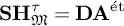 $\mathbf {SH}_{\mathfrak {M}}^{\tau } = \mathbf {DA}^{\mathrm {\acute{e}t}}$
or
$\mathbf {SH}_{\mathfrak {M}}^{\tau } = \mathbf {DA}^{\mathrm {\acute{e}t}}$
or $S = \operatorname {Spec}(k[\![t]\!])$
(with k algebraically closed of characteristic zero) and
$S = \operatorname {Spec}(k[\![t]\!])$
(with k algebraically closed of characteristic zero) and $\mathbf {SH}_{\mathfrak {M}}^{\tau }$
can be either
$\mathbf {SH}_{\mathfrak {M}}^{\tau }$
can be either $\mathbf {SH}$
or
$\mathbf {SH}$
or $\mathbf {DA}^{\mathrm {\acute{e}t}}$
. For details, one can consult [Reference AyoubAyo15][Reference Ayoub, Ivorra and SebagAIS17].
$\mathbf {DA}^{\mathrm {\acute{e}t}}$
. For details, one can consult [Reference AyoubAyo15][Reference Ayoub, Ivorra and SebagAIS17].
Example 1.6. Let K be a non-archimedean local field with ring of integers R and finite residue field k of characteristic p and cardinality q, i.e., either $K/\mathbb {Q}_p$
is a finite extension or
$K/\mathbb {Q}_p$
is a finite extension or $K \simeq \mathbb {F}_q(\!(t)\!)$
is a local function field. We fix a uniformizer
$K \simeq \mathbb {F}_q(\!(t)\!)$
is a local function field. We fix a uniformizer $\pi $
of the maximal ideal of R. For any morphism
$\pi $
of the maximal ideal of R. For any morphism $f \colon X \longrightarrow S$
(with
$f \colon X \longrightarrow S$
(with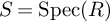 $S=\operatorname {Spec}(R)$
). Fix a separable closure
$S=\operatorname {Spec}(R)$
). Fix a separable closure $K^{\mathrm {sep}}/K$
and let
$K^{\mathrm {sep}}/K$
and let $K^{\mathrm {ur}}$
the maximal unramified extension of K in
$K^{\mathrm {ur}}$
the maximal unramified extension of K in $K^{\mathrm {sep}}$
. Let
$K^{\mathrm {sep}}$
. Let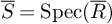 $\overline {S} = \operatorname {Spec}(\overline {R})$
where
$\overline {S} = \operatorname {Spec}(\overline {R})$
where $\overline {R}$
is the integral closure of
$\overline {R}$
is the integral closure of $\mathcal {O}$
in
$\mathcal {O}$
in $K^{\mathrm {sep}}$
. Let
$K^{\mathrm {sep}}$
. Let $\overline {\sigma } = \operatorname {Spec}(\overline {k})$
where
$\overline {\sigma } = \operatorname {Spec}(\overline {k})$
where $\overline {k}$
is the residue field of
$\overline {k}$
is the residue field of $\overline {R}$
, the integral closure of R. We let
$\overline {R}$
, the integral closure of R. We let $K^{\mathrm {tr},p}$
be the union of finite extensions of
$K^{\mathrm {tr},p}$
be the union of finite extensions of $K^{\mathrm {ur}}$
of degree a power of p. With these data, we define the total nearby functor (following [Reference AyoubAyo14, Definition 10.14]) to be
$K^{\mathrm {ur}}$
of degree a power of p. With these data, we define the total nearby functor (following [Reference AyoubAyo14, Definition 10.14]) to be
 $$ \begin{align*} \Psi_X^{\mathrm{tot}} \colon \mathbf{DA}^{\mathrm{\acute{e}t}}(X_{\eta},\Lambda) & \longrightarrow \mathbf{DA}^{\mathrm{\acute{e}t}}(X_{\overline{\sigma}},\Lambda) \\ A & \longmapsto \operatorname{HoColim} (\Psi_{X \times_S T}^{\mathrm{tame}}(A_{\mid X_{\eta} \otimes_K L}))_{\mid X_{\overline{\sigma}}} \end{align*} $$
where $\iota \colon \operatorname {Spec}(\overline {k}) \longrightarrow \operatorname {Spec}(k)$
is induced by the canonical inclusion. This is a specialization system over the base
$\iota \colon \operatorname {Spec}(\overline {k}) \longrightarrow \operatorname {Spec}(k)$
is induced by the canonical inclusion. This is a specialization system over the base $(S,\eta ,\overline {\sigma })$
. For the reader would prefer a formula of
$(S,\eta ,\overline {\sigma })$
. For the reader would prefer a formula of $\Psi ^{\mathrm {tot}}_X$
in terms of algebraic derivators, he can consult [Reference PreisPre23].
$\Psi ^{\mathrm {tot}}_X$
in terms of algebraic derivators, he can consult [Reference PreisPre23].
2 The Braden hyperbolic localization theorem
In this section, we extend the scope of the Braden hyperbolic localization theorem to diagrams of algebraic spaces. The applications we have in mind are those diagrams appearing in the definitions of specialization systems reminded in the preceding section.
2.1 Generalities on equivariance
We begin with extending the notion of $\mathbb {G}_m$
-equivariant objects (see for instance [Reference RicharzRic18]) to the level of derivators and study their behaviour under several operations.
$\mathbb {G}_m$
-equivariant objects (see for instance [Reference RicharzRic18]) to the level of derivators and study their behaviour under several operations.
Definition 2.1. Let I be a small category and $(\mathscr {F},I)$
be a diagram of S-varieties. A
$(\mathscr {F},I)$
be a diagram of S-varieties. A $\mathbb {G}_{m,S}$
-action of
$\mathbb {G}_{m,S}$
-action of $(\mathscr {F},I)$
is a cartesian morphism
$(\mathscr {F},I)$
is a cartesian morphism
 $$ \begin{align*} a \colon \mathbb{G}_{m,S} \times_S (\mathscr{F},I) \longrightarrow (\mathscr{F},I). \end{align*} $$
Let $I,J$
be two small categories, let
$I,J$
be two small categories, let $(\mathscr {F},I)$
and
$(\mathscr {F},I)$
and $(\mathscr {G},I)$
be two diagrams equipped with
$(\mathscr {G},I)$
be two diagrams equipped with $\mathbb {G}_{m,S}$
-action. A morphism
$\mathbb {G}_{m,S}$
-action. A morphism $(f,\alpha ) \colon (\mathscr {G},J) \longrightarrow (\mathscr {F},I)$
is said to be
$(f,\alpha ) \colon (\mathscr {G},J) \longrightarrow (\mathscr {F},I)$
is said to be $\mathbb {G}_{m,S}$
-equivariant if the diagram
$\mathbb {G}_{m,S}$
-equivariant if the diagram

is cartesian. Since we only consider $\mathbb {G}_{m,S}$
-actions in this article, it is safe to just say equivariant morphisms instead of
$\mathbb {G}_{m,S}$
-actions in this article, it is safe to just say equivariant morphisms instead of $\mathbb {G}_{m,S}$
-equivariant morphisms.
$\mathbb {G}_{m,S}$
-equivariant morphisms.
Definition 2.2. Let $(\mathscr {F},I)$
be a diagram of S-varieties equipped with a
$(\mathscr {F},I)$
be a diagram of S-varieties equipped with a $\mathbb {G}_{m,S}$
-action, we denote by
$\mathbb {G}_{m,S}$
-action, we denote by
 $$ \begin{align*} a \colon \mathbb{G}_{m,S} \times_S (\mathscr{F},I) & \longrightarrow (\mathscr{F},I) \\ p \colon \mathbb{G}_{m,S} \times_S (\mathscr{F},I) & \longrightarrow (\mathscr{F},I) \end{align*} $$
the action and the projection, respectively. An object $A \in \mathbb {SH}_{\mathfrak {M}}^{\tau }(\mathscr {F},I)$
is called equivariant if
$A \in \mathbb {SH}_{\mathfrak {M}}^{\tau }(\mathscr {F},I)$
is called equivariant if $p^*(A)$
is isomorphic to
$p^*(A)$
is isomorphic to $a^*(A)$
in
$a^*(A)$
in $\mathbb {SH}_{\mathfrak {M}}^{\tau }(\mathbb {G}_{m,S} \times _S (\mathscr {F},I))$
.
$\mathbb {SH}_{\mathfrak {M}}^{\tau }(\mathbb {G}_{m,S} \times _S (\mathscr {F},I))$
.
Lemma 2.3. Let $I,J$
be small categories and
$I,J$
be small categories and $(\mathscr {G},J),(\mathscr {F},I)$
be diagrams of S-varieties endowed with
$(\mathscr {G},J),(\mathscr {F},I)$
be diagrams of S-varieties endowed with $\mathbb {G}_{m,S}$
-actions. Let
$\mathbb {G}_{m,S}$
-actions. Let $(f,\alpha ) \colon (\mathscr {G},J) \longrightarrow (\mathscr {F},I)$
be an equivariant morphism between diagrams of S-varieties endowed with
$(f,\alpha ) \colon (\mathscr {G},J) \longrightarrow (\mathscr {F},I)$
be an equivariant morphism between diagrams of S-varieties endowed with $\mathbb {G}_{m,S}$
-actions.
$\mathbb {G}_{m,S}$
-actions.
-
(1) The operations $((f,\alpha )^*,(f,\alpha )_*)$
preserve equivariant objects. In particular, the operations
$(i^*,i_*)$
preserve equivariant objects for any
$i \in I$
.
$((f,\alpha )^*,(f,\alpha )_*)$
preserve equivariant objects. In particular, the operations
$(i^*,i_*)$
preserve equivariant objects for any
$i \in I$
. -
(2) If
$(f,\alpha )$
is smooth objectwise, then
$(f,\alpha )_{\#}$
preserves equivariant objects. -
(3) If
$\alpha = \operatorname {id}$
and f is compactifiable, then
$f_!$
preserves equivariant objects. -
(4) If
$I = J = \mathbf {e}$
, i.e., f is a morphism of schemes, then
$f^!$
preserves equivariant objects.



Proof. The proof is formally identical to [Reference RicharzRic18, Lemma 2.5] with slight modifications because we are working with diagrams. The case $(f,\alpha )^*$
follows from functoriality. The case
$(f,\alpha )^*$
follows from functoriality. The case $(f,\alpha )_*$
follows from [Reference AyoubAyo07a, Corollaire 2.4.21] (note that
$(f,\alpha )_*$
follows from [Reference AyoubAyo07a, Corollaire 2.4.21] (note that $a,p$
are cartesian). The case
$a,p$
are cartesian). The case $(f,\alpha )_{\#}$
(with
$(f,\alpha )_{\#}$
(with $(f,\alpha )$
smooth objectwise) follows from [Reference AyoubAyo07b, Corollaire 2.4.24]Footnote
1
. Finally, the case
$(f,\alpha )$
smooth objectwise) follows from [Reference AyoubAyo07b, Corollaire 2.4.24]Footnote
1
. Finally, the case $f_!$
(
$f_!$
( $\alpha = \operatorname {id}$
and f compactifiable) follows from proposition 6.10.
$\alpha = \operatorname {id}$
and f compactifiable) follows from proposition 6.10.
We deduce two corollaries on specialization systems. Let $(B,\eta ,\sigma )$
be a base consisting of algebraic S-spaces endowed with the trivial
$(B,\eta ,\sigma )$
be a base consisting of algebraic S-spaces endowed with the trivial $\mathbb {G}_{m,S}$
-action.
$\mathbb {G}_{m,S}$
-action.
Corollary 2.4. Let X be an algebraic S-space endowed with a $\mathbb {G}_{m,S}$
-action. Let
$\mathbb {G}_{m,S}$
-action. Let ${f \colon X \longrightarrow B}$
be an equivariant morphism. Given a diagram of algebraic
${f \colon X \longrightarrow B}$
be an equivariant morphism. Given a diagram of algebraic $(\mathscr {F},I) \longrightarrow \eta $
or an object
$(\mathscr {F},I) \longrightarrow \eta $
or an object $A \in \mathbf {SH}_{\mathfrak {M}}^{\tau }(\eta )$
, then specialization systems
$A \in \mathbf {SH}_{\mathfrak {M}}^{\tau }(\eta )$
, then specialization systems
 $$ \begin{align*} (\mathscr{F} \bullet \chi)_f\colon \mathbf{SH}_{\mathfrak{M}}^{\tau}(X_{\eta}) \longrightarrow \mathbf{SH}_{\mathfrak{M}}^{\tau}(X_{\sigma}) \end{align*} $$
send equivariant objects to equivariant objects.
Proof. We endow $(\mathscr {F},I)$
with the trivial action, making the structural morphism
$(\mathscr {F},I)$
with the trivial action, making the structural morphism $(\mathscr {F},I) \longrightarrow \eta $
equivariant. The equivariances become obvious since these specialization systems can be expressed in terms of functors preserving equivariant objects.
$(\mathscr {F},I) \longrightarrow \eta $
equivariant. The equivariances become obvious since these specialization systems can be expressed in terms of functors preserving equivariant objects.
2.2 The Braden transformation and the Braden hyperbolic localization theorem
In this section, we define the so-called Braden transformation and study its interaction to four operations at the level of diagrams of varieties. Most of the results here are direct adaptations of section 3.1 in [Reference RicharzRic18]. We make a convention first.
Convention 2.5. The notations $\mathbb {A}_S^1,(\mathbb {A}_S^1)^+,(\mathbb {A}_S^1)^-$
denote the same underlying scheme
$\mathbb {A}_S^1,(\mathbb {A}_S^1)^+,(\mathbb {A}_S^1)^-$
denote the same underlying scheme $\mathbb {A}_S^1$
but with different
$\mathbb {A}_S^1$
but with different $\mathbb {G}_{m,S}$
-actions; respectively, they are the trivial action, the multiplication
$\mathbb {G}_{m,S}$
-actions; respectively, they are the trivial action, the multiplication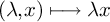 $(\lambda ,x) \longmapsto \lambda x$
and its inverse
$(\lambda ,x) \longmapsto \lambda x$
and its inverse $(\lambda ,x) \longmapsto \lambda ^{-1}x$
. The schemes
$(\lambda ,x) \longmapsto \lambda ^{-1}x$
. The schemes $\mathbb {G}_{m,S},S$
are always assumed to be endowed with the trivial actions.
$\mathbb {G}_{m,S},S$
are always assumed to be endowed with the trivial actions.
Definition 2.6. Let X be an algebraic S-space with a $\mathbb {G}_{m,S}$
-action. Follow [Reference Drinfeld and GaitsgoryDG14][Reference RicharzRic18], we can define three new spaces. If T is an S-scheme, then we define the space of fixed points as, the attractor, the repeller, respectively
$\mathbb {G}_{m,S}$
-action. Follow [Reference Drinfeld and GaitsgoryDG14][Reference RicharzRic18], we can define three new spaces. If T is an S-scheme, then we define the space of fixed points as, the attractor, the repeller, respectively
 $$ \begin{align*} X^0(T) & = \left \{\text{equivariant morphisms} \ T \longrightarrow X_T \right \} \\ X^+(T) & = \left \{\text{equivariant morphisms} \ (\mathbb{A}^1_T)^+ \longrightarrow X_T\right \} \\ X^-(T) & = \left \{\text{equivariant morphisms} \ (\mathbb{A}^1_T)^- \longrightarrow X_T\right \}. \end{align*} $$
The structural morphisms $(\mathbb {A}^1_S)^{\pm } \longrightarrow S$
define morphisms
$(\mathbb {A}^1_S)^{\pm } \longrightarrow S$
define morphisms $s^{\pm } \colon X^0 \longrightarrow X^{\pm }$
. The zero sections
$s^{\pm } \colon X^0 \longrightarrow X^{\pm }$
. The zero sections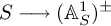 $S \longrightarrow (\mathbb {A}_S^1)^{\pm }$
define morphisms
$S \longrightarrow (\mathbb {A}_S^1)^{\pm }$
define morphisms $\pi ^{\pm } \colon X^{\pm } \longrightarrow X^0$
such that
$\pi ^{\pm } \colon X^{\pm } \longrightarrow X^0$
such that $\pi ^{\pm } \circ s^{\pm } = \operatorname {id}$
. Analogously, the inclusions
$\pi ^{\pm } \circ s^{\pm } = \operatorname {id}$
. Analogously, the inclusions $\mathbb {G}_{m,S} {\hookrightarrow} (\mathbb {A}_S^1)^{\pm }$
define morphisms
$\mathbb {G}_{m,S} {\hookrightarrow} (\mathbb {A}_S^1)^{\pm }$
define morphisms $e^{\pm } \colon X^{\pm } \longrightarrow X$
such that
$e^{\pm } \colon X^{\pm } \longrightarrow X$
such that $e^+ \circ s^+ = e^- \circ s^-$
is the inclusion functor
$e^+ \circ s^+ = e^- \circ s^-$
is the inclusion functor $X^0 {\hookrightarrow} X$
. The commutative diagram
$X^0 {\hookrightarrow} X$
. The commutative diagram

is called the hyperbolic localization diagram, denoted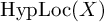 $\mathrm {HypLoc}(X)$
. By [Reference RicharzRic18, Proposition 1.17],
$\mathrm {HypLoc}(X)$
. By [Reference RicharzRic18, Proposition 1.17], $s^+,s^-$
are closed immersions and
$s^+,s^-$
are closed immersions and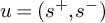 $u=(s^+,s^-)$
is an open and closed immersion.
$u=(s^+,s^-)$
is an open and closed immersion.
Definition 2.7. For a diagram $(\mathscr {F},I)$
endowed with a
$(\mathscr {F},I)$
endowed with a $\mathbb {G}_{m,S}$
-action, we can define the space of fixed points
$\mathbb {G}_{m,S}$
-action, we can define the space of fixed points $(\mathscr {F}^0,I)$
, the attractor
$(\mathscr {F}^0,I)$
, the attractor $(\mathscr {F}^+,I)$
, the repeller
$(\mathscr {F}^+,I)$
, the repeller $(\mathscr {F}^-,I)$
of
$(\mathscr {F}^-,I)$
of $(\mathscr {F},I)$
objectwise, i.e., for i in I
$(\mathscr {F},I)$
objectwise, i.e., for i in I
 $$ \begin{align*} \mathscr{F}^0(i) {:=}q (\mathscr{F}(i))^0 \ \ \ \ \mathscr{F}^+(i) {:=}q (\mathscr{F}(i))^+ \ \ \ \ \mathscr{F}^-(i) {:=}q (\mathscr{F}(i))^-. \end{align*} $$
We say that the hyperbolic localization diagram of $(\mathscr {F},I)$
exists if there is a commutative diagram
$(\mathscr {F},I)$
exists if there is a commutative diagram $\mathrm {HypLoc}(\mathscr {F},I)$
of the form
$\mathrm {HypLoc}(\mathscr {F},I)$
of the form

where $\mathrm {HypLoc}(\mathscr {F},I)(i) {:=}q \mathrm {HypLoc}(\mathscr {F}(i))$
and all of the involved morphisms are strongly compactifiable.
$\mathrm {HypLoc}(\mathscr {F},I)(i) {:=}q \mathrm {HypLoc}(\mathscr {F}(i))$
and all of the involved morphisms are strongly compactifiable.
Definition 2.8. With the notation above, the transformation
 $$ \begin{align*} L^-_{(\mathscr{F},I)} = (\pi^-)_*(e^-)^! & \longrightarrow (\pi^-)_*(s^-)_*(s^-)^*(e^-)^! \overset{\sim}{\longrightarrow} u^*(t^-)^*(e^-)^! \\ & \overset{\operatorname{Ex}^{!*}}{\longrightarrow} u^*(t^+)^!(e^+)^* \overset{\sim}{\longrightarrow} u^!(t^+)^!(e^+)^* \\ & \overset{\sim}{\longrightarrow} (s^+)^!(e^+)^* \overset{\sim}{\longrightarrow} (\pi^+)_!(s^+)_!(s^+)^!(e^+)^* \longrightarrow L^+_{(\mathscr{F},I)} = (\pi^+)_!(e^+)^* \end{align*} $$
is called a Braden transformation and we denote by $\phi _{(\mathscr {F},I)} \colon (\pi ^-)_*(e^-)^! \longrightarrow (\pi ^+)_!(e^+)^*$
this transformation.
$\phi _{(\mathscr {F},I)} \colon (\pi ^-)_*(e^-)^! \longrightarrow (\pi ^+)_!(e^+)^*$
this transformation.
The Braden theorem (see for instance [Reference BradenBra03][Reference RicharzRic18] or [Reference IvorraIvo24]) states that Braden transformations are isomorphisms on equivariant objects for nice spaces.
Definition 2.9. Let X be an algebraic S-space. A $\mathbb {G}_{m,S}$
-action on X is said to be
$\mathbb {G}_{m,S}$
-action on X is said to be $\tau $
-locally linearizable if there exists a
$\tau $
-locally linearizable if there exists a $\mathbb {G}_{m,S}$
-equivariant
$\mathbb {G}_{m,S}$
-equivariant $\tau $
-covering
$\left \{U_i \longrightarrow X \right \}_{i \in I}$
$\tau $
-covering
$\left \{U_i \longrightarrow X \right \}_{i \in I}$
 , where $U_i$
are S-affine schemes with
$U_i$
are S-affine schemes with $\mathbb {G}_{m,S}$
-actions.
$\mathbb {G}_{m,S}$
-actions.
Example 2.10. Let us denote by Zar and ét to indicate the Zariski and the étale topology, respectively.
-
(1) Any affine S-variety is Zar-locally linearizable.
-
(2) Let k be an algebraically closed field and U be a normal k-variety endowed with a
$\mathbb {G}_{m,k}$
, then Sumihiro theorem (see [Reference SumihiroSum74][Reference SumihiroSum75]) asserts that U is Zar-locally linearizable. -
(3) As noted in [Reference RicharzRic18], in the work [Reference Alper, Hall and RydhAHR23, Theorem 10.1 and Corollary 10.2] (see also [Reference Alper, Hall and RydhAHR21, Theorem 2.4] for the case of S being the spectrum of an algebraically closed field), it is shown that if the structural morphism
$X \longrightarrow S$
is locally of finite presentation and X is quasi-separated then X is ét-locally linearizable.


We state the generalized version of Braden’s hyperbolic localization theorem.
Theorem 2.11. Let S be a quasi compact and quasi-separated scheme. Let $(\mathscr {F},I)$
be a diagram of algebraic S-spaces equipped with a
$(\mathscr {F},I)$
be a diagram of algebraic S-spaces equipped with a $\mathbb {G}_{m,S}$
-action so that
$\mathbb {G}_{m,S}$
-action so that $\mathrm {HypLoc}(\mathscr {F},I)$
exists. Suppose that
$\mathrm {HypLoc}(\mathscr {F},I)$
exists. Suppose that $\mathbb {SH}_{\mathfrak {M}}^{\tau }$
is
$\mathbb {SH}_{\mathfrak {M}}^{\tau }$
is $\tau $
-conservative. Then for any equivariant object A in
$\tau $
-conservative. Then for any equivariant object A in $\mathbb {SH}_{\mathfrak {M}}^{\tau }(\mathscr {F},I)$
, the Braden transformation
$\mathbb {SH}_{\mathfrak {M}}^{\tau }(\mathscr {F},I)$
, the Braden transformation
 $$ \begin{align*} (\pi^-)_*(e^-)^!(A) \longrightarrow (\pi^+)_!(e^+)^*(A) \end{align*} $$
is an isomorphism in the following cases:
-
• (
$\tau $
-Sch)
$(\mathscr {F},I) = X$
is an algebraic S-space endowed with a
$\tau $
-locally linearizable
$\mathbb {G}_{m,S}$
-action. -
• (AffDia)
$(\mathscr {F},I)$
consists of affine S-varieties and in this case, we can drop the
$\tau $
-conservativity.


We skip the proof to upcoming sections.
2.3 The interaction of Braden transformations with operations
The following theorem is a (necessary for the later purposes) generalization of [Reference RicharzRic18, Proposition 3.1] to the level of diagrams of algebraic spaces. The proof is almost identical with some modifications. We propose here a proof using the purity exchange structure $\operatorname {Ex}^{!*}$
and moreover, since we are working with diagrams of spaces, there are details needed to be stressed in the proof.
$\operatorname {Ex}^{!*}$
and moreover, since we are working with diagrams of spaces, there are details needed to be stressed in the proof.
Theorem 2.12. Let $I,J$
be small categories and
$I,J$
be small categories and $(f,\alpha ) \colon (\mathscr {G},J) \longrightarrow (\mathscr {F},I)$
be a morphism of diagrams of S-varieties equipped with
$(f,\alpha ) \colon (\mathscr {G},J) \longrightarrow (\mathscr {F},I)$
be a morphism of diagrams of S-varieties equipped with $\mathbb {G}_{m,S}$
-actions. Suppose that hyperbolic localization diagrams of
$\mathbb {G}_{m,S}$
-actions. Suppose that hyperbolic localization diagrams of $(\mathscr {F},I)$
and
$(\mathscr {F},I)$
and $(\mathscr {G},J)$
exist and
$(\mathscr {G},J)$
exist and
 $$ \begin{align*} \mathrm{HypLoc}(\mathscr{G},J) = \mathrm{HypLoc}(\mathscr{F},I) \times_{(\mathscr{F},I)} (\mathscr{G},J). \end{align*} $$
Let $(f^0,\alpha ) \colon (\mathscr {G}^0,J) \longrightarrow (\mathscr {F}^0,I)$
be the induced morphism on the diagrams of spaces of fixed points.
$(f^0,\alpha ) \colon (\mathscr {G}^0,J) \longrightarrow (\mathscr {F}^0,I)$
be the induced morphism on the diagrams of spaces of fixed points.
-
(1) There is a natural
$2$
-morphism as a
$2$
-morphism of functors
$\mathbb {SH}_{\mathfrak {M}}^{\tau }(\mathscr {G},J) \longrightarrow \mathbb {SH}_{\mathfrak {M}}^{\tau }(\mathscr {F}^0,I)$
. Moreover, if
$\alpha = \operatorname {id}$
and
$F = (f,\alpha )$
is proper objectwise, then
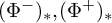
$(\Phi ^-)_*,(\Phi ^+)_*$
are isomorphisms.
-
(2) There is a natural
$2$
-morphism as a
$2$
-morphism of functors
$\mathbb {SH}_{\mathfrak {M}}^{\tau }(\mathscr {F},I) \longrightarrow \mathbb {SH}_{\mathfrak {M}}^{\tau }(\mathscr {G}^0,J)$
. Moreover, if
$(f,\alpha )$
is smooth objectwise and
$e^{\pm }$
are cartesian, then
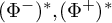
$(\Phi ^-)^*,(\Phi ^+)^*$
are isomorphisms.
-
(3) Let X be an algebraic S-space endowed with a
$\mathbb {G}_{m,S}$
-action and
$p_I \colon (X,I) \longrightarrow X$
be the projection, then there is a natural
$2$
-morphism as a
$2$
-morphism of functors
$\mathbb {SH}_{\mathfrak {M}}^{\tau }(X,I) \longrightarrow \mathbf {SH}_{\mathfrak {M}}^{\tau }(X^0)$
.Footnote
2










Remark 2.13. We can define furthermore the base change morphisms with respect to $f_!,f^!$
(here we require
$f_!,f^!$
(here we require $\alpha =\operatorname {id}$
and f compactifiable). As we do not need the morphisms
$\alpha =\operatorname {id}$
and f compactifiable). As we do not need the morphisms $\Phi _!$
and
$\Phi _!$
and $\Phi ^!$
so we refer [Reference RicharzRic18] to those readers who are interested in these morphisms.
$\Phi ^!$
so we refer [Reference RicharzRic18] to those readers who are interested in these morphisms.
Proof. In this proof, by ‘by adjunction’, we mean an application of [Reference AyoubAyo07a, Corollaire 1.1.14]. The hypothesis implies that there are cartesian squares

The morphisms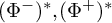 $(\Phi ^-)^*,(\Phi ^+)^*$
are defined by
$(\Phi ^-)^*,(\Phi ^+)^*$
are defined by

If $(f,\alpha )$
is smooth objectwise and
$(f,\alpha )$
is smooth objectwise and $e^-$
is cartesian, then from the explicit description above, we see that both
$e^-$
is cartesian, then from the explicit description above, we see that both $(\Phi ^-)^*$
and
$(\Phi ^-)^*$
and $(\Phi ^+)^*$
are isomorphisms by [Reference AyoubAyo07a, Lemme 2.4.26]. In such the case, by adjunction, we can consider the transformation
$(\Phi ^+)^*$
are isomorphisms by [Reference AyoubAyo07a, Lemme 2.4.26]. In such the case, by adjunction, we can consider the transformation $\Phi _{\#}=((\Phi ^-)_{\#},(\Phi ^+)_{\#})$
given by
$\Phi _{\#}=((\Phi ^-)_{\#},(\Phi ^+)_{\#})$
given by
 $$ \begin{align*} (f^0,\alpha)_{\#}\phi_{(\mathscr{G},J)} \longrightarrow (f^0,\alpha)_{\#}\phi_{(\mathscr{G},J)}(f,\alpha)^*(f,\alpha)_{\#} \overset{(\Phi^*)^{-1}}{\longrightarrow} (f^0,\alpha)_{\#}(f^0,\alpha)^*\phi_{(\mathscr{F},I)}(f,\alpha)_{\#} \longrightarrow \phi_{(\mathscr{F},I)}(f,\alpha)_{\#}. \end{align*} $$
or in full diagram,

and the case $p_I \colon (X,I) \longrightarrow X$
is of course a special case. In general, one cannot hope that
$p_I \colon (X,I) \longrightarrow X$
is of course a special case. In general, one cannot hope that $e^-$
is cartesian (see [Reference RicharzRic18, Example 1.13]); however we still claim that it makes sense to write
$e^-$
is cartesian (see [Reference RicharzRic18, Example 1.13]); however we still claim that it makes sense to write $\operatorname {Ex}_{\#}^!$
in the case
$\operatorname {Ex}_{\#}^!$
in the case $p_I \colon (X,I) \longrightarrow X$
. Indeed, one can define
$p_I \colon (X,I) \longrightarrow X$
. Indeed, one can define
 $$ \begin{align*} (p_I)_{\#}(e^-)^! \longrightarrow (e^-)^!(e^-)_!(p_I)_{\#}(e^-)^! \overset{(\operatorname{Ex}_{\#!})^{-1}}{\longrightarrow} (e^-)^!(p_I)_{\#}(e^-)_!(e^-)^! \longrightarrow (e^-)^!(p_I)_{\#} \end{align*} $$
thanks to proposition 6.18. By adjunction again, two morphisms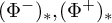 $(\Phi ^-)_*,(\Phi ^+)_*$
are given by
$(\Phi ^-)_*,(\Phi ^+)_*$
are given by
 $$ \begin{align*} \phi_{(\mathscr{F},I)}(f,\alpha)_* \longrightarrow (f^0,\alpha)_*(f^0,\alpha)^* \phi_{(\mathscr{F},I)}(f,\alpha)* \overset{\Phi^*}{\longrightarrow} (f^0,\alpha)\phi_{(\mathscr{G},J)}(f,\alpha)^*(f,\alpha)_* \longrightarrow (f^0,\alpha)\phi_{(\mathscr{G},J)}. \end{align*} $$
More precisely,

The rest of the proof is formally the same as [Reference RicharzRic18, Proposition 3.1].
We give a criterion to produce a lot of pairs of diagrams satisfying the hypothesis in the theorem above. We need a lemma first.
Lemma 2.14. Let $X,Y$
be algebraic S-spaces endowed with
$X,Y$
be algebraic S-spaces endowed with $\mathbb {G}_{m,S}$
-actions. Let
$\mathbb {G}_{m,S}$
-actions. Let $f \colon X \longrightarrow Y$
be an equivariant étale morphism. Assume that there exists a cartesian square
$f \colon X \longrightarrow Y$
be an equivariant étale morphism. Assume that there exists a cartesian square

with $U,V$
being affine S-varieties and
$U,V$
being affine S-varieties and $U \longrightarrow X, V \longrightarrow Y$
being
$U \longrightarrow X, V \longrightarrow Y$
being $\tau $
-coverings, then
$\tau $
-coverings, then
 $$ \begin{align*} X^0 & = X \times_Y Y^0 \\ X^{\pm} & = X^0 \times_{Y^0} Y^{\pm} \end{align*} $$
as functors.
Proof. We prove the case functors of fixed points, the attractors and repellers are proved similarly. By [Reference RicharzRic18, Theorem 1.8], $U^0 \longrightarrow X^0$
and
$U^0 \longrightarrow X^0$
and $V^0 \longrightarrow Y^0$
are étale coverings. By étale descent,
$V^0 \longrightarrow Y^0$
are étale coverings. By étale descent, $X^0 = X \times _Y Y^0$
if and only if
$X^0 = X \times _Y Y^0$
if and only if $X^0 \times _{X \times _Y Y^0} X \times _Y V^0 = X \times _Y V^0$
. Thanks to [Reference RicharzRic18, Lemma 1.10], one has
$X^0 \times _{X \times _Y Y^0} X \times _Y V^0 = X \times _Y V^0$
. Thanks to [Reference RicharzRic18, Lemma 1.10], one has $V^0 = V \times _Y Y^0$
and hence
$V^0 = V \times _Y Y^0$
and hence
 $$ \begin{align*} X^0 \times_{X \times_Y Y^0}( X \times_Y V^0) = X^0 \times_{X \times_Y Y^0} (X \times_Y V \times_Y Y^0) = X^0 \times_Y V. \end{align*} $$
Again, by applying [Reference RicharzRic18, Lemma 1.10] repeatedly, one obtains cartesian squares (where cartesian of the upper left square follows from the fact that $U^0 \longrightarrow U$
is a closed immersion)
$U^0 \longrightarrow U$
is a closed immersion)

which shows that $X^0 \times _Y V = X \times _Y V^0 = U^0$
as desired.
$X^0 \times _Y V = X \times _Y V^0 = U^0$
as desired.
Proposition 2.15. Let S be a quasi-compact quasi-separated scheme. Let $I \subset \Delta \times \mathbb {N}^{'\times }$
be a subcategory with
$I \subset \Delta \times \mathbb {N}^{'\times }$
be a subcategory with $\mathbb {N}^{'\times }$
the set of invertible natural numbers on S. Let
$\mathbb {N}^{'\times }$
the set of invertible natural numbers on S. Let $\mathscr {R}^{\mathrm {tame},I}$
be the diagram obtained by base change
$\mathscr {R}^{\mathrm {tame},I}$
be the diagram obtained by base change

Let X be an algebraic S-space endowed with a $\tau $
-locally linearizable
$\tau $
-locally linearizable $\mathbb {G}_{m,S}$
-action. Let
$\mathbb {G}_{m,S}$
-action. Let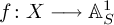 $f \colon X \longrightarrow \mathbb {A}^1_S$
be a
$f \colon X \longrightarrow \mathbb {A}^1_S$
be a $\mathbb {G}_{m,S}$
-equivariant morphism. The hyperbolic localiztion diagram of
$\mathbb {G}_{m,S}$
-equivariant morphism. The hyperbolic localiztion diagram of $(\mathscr {R}_X^{\mathrm {tame},I},I)$
exists and
$(\mathscr {R}_X^{\mathrm {tame},I},I)$
exists and
 $$ \begin{align*} \mathrm{HypLoc}(\mathscr{R}_X^{\mathrm{tame},I},I) = \mathrm{HypLoc}(X_{\eta},I) \times_{(X_{\eta},I)} (\mathscr{R}^{\mathrm{tame},I},I). \end{align*} $$
Proof. For any $r \in \mathbb {N}^{'\times }$
, there is a cartesian square
$r \in \mathbb {N}^{'\times }$
, there is a cartesian square

Since r is invertible on S, the morphism $e_r \colon \mathbb {G}_{m,S} \longrightarrow \mathbb {G}_{m,S}$
is étale. Endow
$e_r \colon \mathbb {G}_{m,S} \longrightarrow \mathbb {G}_{m,S}$
is étale. Endow $\mathbb {G}_{m,S}$
with the trivial action and
$\mathbb {G}_{m,S}$
with the trivial action and $X^r_{\eta }$
with the diagonal action, the morphism
$X^r_{\eta }$
with the diagonal action, the morphism $e_r\colon X^r_{\eta } \longrightarrow X_{\eta }$
is
$e_r\colon X^r_{\eta } \longrightarrow X_{\eta }$
is $\mathbb {G}_{m,S}$
-equivariant and étale. By lemma 2.14, we have natural identifications
$\mathbb {G}_{m,S}$
-equivariant and étale. By lemma 2.14, we have natural identifications
 $$ \begin{align*} (X^r_{\eta})^0 & = (X_{\eta})^0 \times_{X_{\eta}} X^r_{\eta} \\ (X^r_{\eta})^{\pm} & = (X_{\eta})^{\pm} \times_{X_{\eta}} X^r_{\eta}. \end{align*} $$
At the level of objects $(\mathbf {n},r)$
in
$(\mathbf {n},r)$
in $I \subset \Delta \times \mathbb {N}^{'\times }$
, we claim that
$I \subset \Delta \times \mathbb {N}^{'\times }$
, we claim that
 $$ \begin{align*} \mathrm{HypLoc}(\mathscr{R}_X(\mathbf{n},r)) = \mathrm{HypLoc}(X_{\eta}) \times_{X_{\eta}} \mathscr{R}_X(\mathbf{n},r). \end{align*} $$
Indeed, we have
 $$ \begin{align*} (\mathscr{R}_X(\mathbf{n},r))^0 = (X_{\eta}^r)^0 \times_S ((\mathbb{G}_{m,S})^n)^0 = (X_{\eta})^0 \times_{X_{\eta}} X^r_{\eta} \times_S (\mathbb{G}_{m,S})^n = (X_{\eta})^0 \times_{X_{\eta}} \mathscr{R}_X(\mathbf{n},r), \end{align*} $$
since $\mathbb {G}_{m,S}$
acts trivially on
$\mathbb {G}_{m,S}$
acts trivially on $(\mathbb {G}_{m,S})^n$
. The cases of attractors and repellers are proved similarly
$(\mathbb {G}_{m,S})^n$
. The cases of attractors and repellers are proved similarly
 $$ \begin{align*} (\mathscr{R}_X(\mathbf{n},r))^{\pm} = (X_{\eta}^r)^{\pm} \times_S ((\mathbb{G}_{m,S})^n)^{\pm} = (X_{\eta})^{\pm} \times_{X_{\eta}} X^r_{\eta} \times_S (\mathbb{G}_{m,S})^n = (X_{\eta})^{\pm} \times_S \mathscr{R}_X(\mathbf{n},r), \end{align*} $$
which follows from the fact that morphisms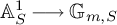 $\mathbb {A}_S^1 \longrightarrow \mathbb {G}_{m,S}$
are constant. To show that
$\mathbb {A}_S^1 \longrightarrow \mathbb {G}_{m,S}$
are constant. To show that $\mathrm {HypLoc}(\mathscr {R}_X)$
exists at the level of morphisms, we note that any morphism in
$\mathrm {HypLoc}(\mathscr {R}_X)$
exists at the level of morphisms, we note that any morphism in $\Delta \times \mathbb {N}^{'\times }$
just affects the second factor in
$\Delta \times \mathbb {N}^{'\times }$
just affects the second factor in $\mathrm {HypLoc}(X_{\eta }) \times _S (\mathbb {G}_{m,S})^n$
. Finally, to show that
$\mathrm {HypLoc}(X_{\eta }) \times _S (\mathbb {G}_{m,S})^n$
. Finally, to show that
 $$ \begin{align*} \mathrm{HypLoc}(\mathscr{R}_X^{\mathrm{tame},J},J) = \mathrm{HypLoc}(X_{\eta},J) \times_{(X_{\eta},J)} (\mathscr{R}^{\mathrm{tame},J},J), \end{align*} $$
it is sufficient to prove that each square in the diagram

is cartesian. This is easy since objectwise, vertical arrows are compositions of projections with power morphisms.
2.4 The proof of the Braden hyperbolic localization theorem for diagrams of algebraic spaces
In this subsection, we prove theorem 2.11. We divide the proof into a series of lemmas, which eventually ends up with the case of schemes.
Lemma 2.16. In theorem 2.11, (AffDia) holds true if and only if it holds true for affine S-varieties.
Proof. By theorem 2.12, for any $i \in I$
, there exists a commutative diagram
$i \in I$
, there exists a commutative diagram

where the morphism $(\Phi ^-)^*$
is given by
$(\Phi ^-)^*$
is given by
 $$ \begin{align*} i^*(\pi^-)_*(e^-)^! \overset{\operatorname{Ex}^*_*}{\longrightarrow} (\pi^-(i))_*i^*(e^-)^! \overset{\operatorname{Ex}^{*!}}{\longrightarrow} (\pi^-(i))_*(e^-(i))^!i^*A, \end{align*} $$
hence an isomorphism by proposition 6.6 and [Reference AyoubAyo07a, Lemme 2.4.26], and the morphism $(\Phi ^+)$
is given
$(\Phi ^+)$
is given
 $$ \begin{align*} i^*(\pi^+)_!(e^+)^* \overset{\operatorname{Ex}^*_!}{\longrightarrow} (\pi^+(i))_!i^*(e^+)^* = (\pi^+(i))_!(e^+(i))^*i^* \end{align*} $$
hence an isomorphism by proposition 6.6. The lemma then follows.
Proposition 2.17. In theorem 2.11, (AffDia) holds true for vector bundles of finite rank.
Proof. See [Reference RicharzRic18] or [Reference IvorraIvo24].
Lemma 2.18. Let $Z,X$
be affine S-varieties endowed with
$Z,X$
be affine S-varieties endowed with $\mathbb {G}_{m,S}$
-actions. Let
$\mathbb {G}_{m,S}$
-actions. Let $z \colon Z {\hookrightarrow} X$
be an equivariant closed immersion. There is a commutative diagram
$z \colon Z {\hookrightarrow} X$
be an equivariant closed immersion. There is a commutative diagram

and the two vertical arrows are isomorphisms.
Proof. The proof is identical to the proof of [Reference RicharzRic18, Lemma 2.22].
Lemma 2.19. Let $U,X$
be S-varieties endowed with
$U,X$
be S-varieties endowed with $\mathbb {G}_{m,S}$
-actions with U being S-affine. Let
$\mathbb {G}_{m,S}$
-actions with U being S-affine. Let $u \colon U \longrightarrow X$
be an equivariant étale morphism. There is a commutative diagram
$u \colon U \longrightarrow X$
be an equivariant étale morphism. There is a commutative diagram

and the two vertical arrows are isomorphisms.
Proof. The proof is identical to the proof of [Reference RicharzRic18, Lemma 2.24].
Lemma 2.20. Theorem 2.11 holds true for affine S-varieties with $\mathbb {G}_{m,S}$
-action.
$\mathbb {G}_{m,S}$
-action.
Proof. Suppose that X is affine over S. By [Reference RicharzRic18, Lemma 2.21], there exists Zariski locally on S a $\mathbb {G}_{m,S}$
-equivariant closed immersion
$\mathbb {G}_{m,S}$
-equivariant closed immersion $X {\hookrightarrow} \mathbb {A}^n_S$
. Let
$X {\hookrightarrow} \mathbb {A}^n_S$
. Let $\left \{S_i \longrightarrow S \right \}$
be a Zariski covering such that each
$\left \{S_i \longrightarrow S \right \}$
be a Zariski covering such that each $X \times _S S_i \longrightarrow S_i$
factors as
$X \times _S S_i \longrightarrow S_i$
factors as $X \times _S S_i {\hookrightarrow} \mathbb {A}_{S_i}^n \longrightarrow S_i$
(all are equivariant morphisms). Denote by
$X \times _S S_i {\hookrightarrow} \mathbb {A}_{S_i}^n \longrightarrow S_i$
(all are equivariant morphisms). Denote by $\left \{u_i \colon X \times _S S_i \longrightarrow X \right \}$
the corresponding base change, then lemma 2.19 shows that there exist commutative squares
$\left \{u_i \colon X \times _S S_i \longrightarrow X \right \}$
the corresponding base change, then lemma 2.19 shows that there exist commutative squares

Since a Zariski covering is also a Nisnevich covering and any $\mathbf {SH}_{\mathfrak {M}}^{\tau }$
is Nis-conservative (see [Reference AyoubAyo07a, Proposition 1.4.3]), we can reduce to the case of a
$\mathbf {SH}_{\mathfrak {M}}^{\tau }$
is Nis-conservative (see [Reference AyoubAyo07a, Proposition 1.4.3]), we can reduce to the case of a $\mathbb {G}_{m,S}$
-equivariant closed immersion
$\mathbb {G}_{m,S}$
-equivariant closed immersion $v \colon X {\hookrightarrow} \mathbb {A}_S^n$
(with X being S-affine). Since
$v \colon X {\hookrightarrow} \mathbb {A}_S^n$
(with X being S-affine). Since $(i^0)_*$
is fully faithful, we can reduce to proving that that
$(i^0)_*$
is fully faithful, we can reduce to proving that that $(v^0)_*(\pi ^-)_*(e^-)^! \longrightarrow (v^0)_*(\pi ^+)_!(e^+)^*$
is an isomorphism. By lemma 2.18, there is a transformation
$(v^0)_*(\pi ^-)_*(e^-)^! \longrightarrow (v^0)_*(\pi ^+)_!(e^+)^*$
is an isomorphism. By lemma 2.18, there is a transformation

with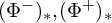 $(\Phi ^-)_*,(\Phi ^+)_*$
being isomorphisms. The morphism
$(\Phi ^-)_*,(\Phi ^+)_*$
being isomorphisms. The morphism $\phi _{\mathbb {A}^n_S}$
is an isomorphism by Florian’s theorem above and this forces
$\phi _{\mathbb {A}^n_S}$
is an isomorphism by Florian’s theorem above and this forces $\phi _X$
to be an isomorphism.
$\phi _X$
to be an isomorphism.
Proposition 2.21. Theorem 2.11 holds true for an algebraic S-space X endowed with a $\tau $
-locally linearizable
$\tau $
-locally linearizable $\mathbb {G}_{m,S}$
-action.
$\mathbb {G}_{m,S}$
-action.
Proof. By the property of being $\tau $
-locally linearizable, there exists a
$\tau $
-locally linearizable, there exists a $\tau $
-covering
$\tau $
-covering $\left \{u_i \colon U_i \longrightarrow X \right \}$
consisting of equivariant morphisms, where each
$\left \{u_i \colon U_i \longrightarrow X \right \}$
consisting of equivariant morphisms, where each $U_i$
are affine S-schemes with
$U_i$
are affine S-schemes with $\mathbb {G}_{m,S}$
-actions. By
$\mathbb {G}_{m,S}$
-actions. By $\tau $
-conservativity in proposition 6.3, the transformation
$\tau $
-conservativity in proposition 6.3, the transformation
 $$ \begin{align*} (\pi^-)_*(e^-)^! \longrightarrow (\pi^+)_!(e^+)^* \end{align*} $$
is an isomorphism if and only if
 $$ \begin{align*} (u_i^0)^*(\pi^-)_*(e^-)^! \longrightarrow (u_i^0)^*(\pi^+)_!(e^+)^* \end{align*} $$
are isomorphisms. By theorem 2.12, there are transformations

We remark that since $u_i$
are étale, so are
$u_i$
are étale, so are $u^0_i,u_i^{\pm }$
by [Reference RicharzRic18, Theorem 1.8]. As a consequence,
$u^0_i,u_i^{\pm }$
by [Reference RicharzRic18, Theorem 1.8]. As a consequence,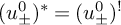 $(u^0_{\pm })^* = (u^0_{\pm })^!$
and we still have that
$(u^0_{\pm })^* = (u^0_{\pm })^!$
and we still have that $\Phi ^*$
is an isomorphism. This helps us to reduce to the case of X being an affine S-scheme, which is known to be true thanks to the previous lemma.
$\Phi ^*$
is an isomorphism. This helps us to reduce to the case of X being an affine S-scheme, which is known to be true thanks to the previous lemma.
We need the following two lemmas in the next section.
Lemma 2.22 (Braden contraction lemma).
Let X be an algebraic S-space on which $\mathbb {G}_{m,S}$
acts. Assume that the action is
$\mathbb {G}_{m,S}$
acts. Assume that the action is $\tau $
-locally linearizable, then the transformations
$\tau $
-locally linearizable, then the transformations
 $$ \begin{align*} (\pi^-_X)_* &\longrightarrow (\pi^-_X)_*(s^-_X)_*(s^-_X)^* = (s_X^-)^* \\ (s_X^+)^! & = (\pi_X^+)_!(s^+_X)_!(s_X^+)^! \longrightarrow (\pi_X^+)_! \end{align*} $$
are isomorphisms on equivariant objects in $\mathbf {SH}_{\mathfrak {M}}^{\tau }(X^0)$
. Likewise, the unit
$\mathbf {SH}_{\mathfrak {M}}^{\tau }(X^0)$
. Likewise, the unit $\operatorname {id} \longrightarrow (\pi ^-)_*(\pi ^-)^*$
is an isomorphism on equivariant objects.
$\operatorname {id} \longrightarrow (\pi ^-)_*(\pi ^-)^*$
is an isomorphism on equivariant objects.
Proof. The two transformations are dual so let us prove the first one only. Let
$\left \{u_i \colon U_i \longrightarrow X \right \}_{i \in I}$
 be a
be a $\tau $
-covering consisting of equivariant morphisms with
$\tau $
-covering consisting of equivariant morphisms with $U_i$
being S-affine. For any
$U_i$
being S-affine. For any $i \in I$
, there exists a natural commutative diagram
$i \in I$
, there exists a natural commutative diagram

by [Reference RicharzRic18, Lemma 2.25]. This reduces the problem to the case of schemes. A similar argument reduces the problem to the case X is a vector bundle, which is known to be true by [Reference RicharzRic18, Lemma 2.19]. Reasoning in the same way, we only have to show that $\operatorname {id} \longrightarrow (\pi ^-)_*(\pi ^-)^*$
is an isomorphism if X is a vector bundle, but this is the
$\operatorname {id} \longrightarrow (\pi ^-)_*(\pi ^-)^*$
is an isomorphism if X is a vector bundle, but this is the $\mathbb {A}^1$
-homotopy property.
$\mathbb {A}^1$
-homotopy property.
Lemma 2.23 (Braden purity theorem).
Let X be an algebraic S-space on which $\mathbb {G}_{m,S}$
acts. Assume that the action is
$\mathbb {G}_{m,S}$
acts. Assume that the action is $\tau $
-locally linearizable, then the transformation
$\tau $
-locally linearizable, then the transformation
 $$ \begin{align*} (s^-)^*(e^-)^!(A) \longrightarrow (s^+)^!(e^+)^*(A) \end{align*} $$
is an isomorphism on equivariant objects A in $\mathbf {SH}_{\mathfrak {M}}^{\tau }(X)$
.
$\mathbf {SH}_{\mathfrak {M}}^{\tau }(X)$
.
Proof. This is a consequence of the Braden contraction lemma and the Braden hyperbolic localization theorem.
2.5 Realization functors
In [Reference AyoubAyo14], Ayoub constructs an equivalence between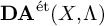 $\mathbf {DA}^{\mathrm {\acute{e}t}}(X,\Lambda )$
and the derived category of étale sheaves of
$\mathbf {DA}^{\mathrm {\acute{e}t}}(X,\Lambda )$
and the derived category of étale sheaves of $\Lambda $
-modules
$\Lambda $
-modules $\mathbf {D}^{\mathrm {\acute{e}t}}(X,\Lambda )$
under the assumption that X is an S-variety with S either a field or a Dedekind domain. The result extends naturally to algebraic spaces.
$\mathbf {D}^{\mathrm {\acute{e}t}}(X,\Lambda )$
under the assumption that X is an S-variety with S either a field or a Dedekind domain. The result extends naturally to algebraic spaces.
Lemma 2.24. Let S be a scheme and $\Lambda $
be a
$\Lambda $
be a $\mathbb {Z}/N\mathbb {Z}$
-algebra for some integer N invertible on S. Assume that the statement of [Reference AyoubAyo14, Théorème 4.1] is satisfied. Let X be an algebraic S-space, then the functor
$\mathbb {Z}/N\mathbb {Z}$
-algebra for some integer N invertible on S. Assume that the statement of [Reference AyoubAyo14, Théorème 4.1] is satisfied. Let X be an algebraic S-space, then the functor $\hat {\iota }^*_X \colon \mathbf {D}^{\mathrm {\acute{e}t}}(X,\Lambda ) \longrightarrow \mathbf {DA}^{\mathrm {\acute{e}t}}(X,\Lambda )$
is an equivalence of categories.
$\hat {\iota }^*_X \colon \mathbf {D}^{\mathrm {\acute{e}t}}(X,\Lambda ) \longrightarrow \mathbf {DA}^{\mathrm {\acute{e}t}}(X,\Lambda )$
is an equivalence of categories.
Proof. Let $u \colon U \longrightarrow X$
be an étale atlas of X. For any
$u \colon U \longrightarrow X$
be an étale atlas of X. For any $A \in \mathbf {DA}^{\mathrm {\acute{e}t}}(X,\Lambda )$
and
$A \in \mathbf {DA}^{\mathrm {\acute{e}t}}(X,\Lambda )$
and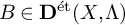 $B \in \mathbf {D}^{\mathrm {\acute{e}t}}(X,\Lambda )$
, we have to show that
$B \in \mathbf {D}^{\mathrm {\acute{e}t}}(X,\Lambda )$
, we have to show that
 $$ \begin{align*} (\hat{\iota}_X)^*(\hat{\iota}_X)_*(A) \longrightarrow A \ \ \ \ \text{and} \ \ \ \ B \longrightarrow (\hat{\iota}_X)_*(\hat{\iota}_X)^*(B) \end{align*} $$
are isomorphisms. For instance, apply $u^*$
, we have to show that
$u^*$
, we have to show that $u^*(B)\longrightarrow u^*(\hat {\iota }_X)_*(\hat {\iota }_X)^*(B)$
is an isomorphism. Thanks to (more precisely, an analogue of) [Reference AyoubAyo14, Lemme 4.12], there exists a natural isomorphism
$u^*(B)\longrightarrow u^*(\hat {\iota }_X)_*(\hat {\iota }_X)^*(B)$
is an isomorphism. Thanks to (more precisely, an analogue of) [Reference AyoubAyo14, Lemme 4.12], there exists a natural isomorphism $u^*(\hat {\iota }_X)_* \simeq (\hat {\iota }_U)_*u^*$
(because u is étale), but this reduces to the case of schemes.
$u^*(\hat {\iota }_X)_* \simeq (\hat {\iota }_U)_*u^*$
(because u is étale), but this reduces to the case of schemes.
Under the equivalence $\hat {\iota }^*$
, six operations in the étale setting are translated to six operations in the motivic setting. In particular, one has
$\hat {\iota }^*$
, six operations in the étale setting are translated to six operations in the motivic setting. In particular, one has
Theorem 2.25. Let S be a scheme and $\Lambda $
be a
$\Lambda $
be a $\mathbb {Z}/N\mathbb {Z}$
-algebra for some integer N invertible on S. Assume that the statement of [Reference AyoubAyo14, Théorème 4.1] is satisfied, then the Braden theorem is satisfied with respect to
$\mathbb {Z}/N\mathbb {Z}$
-algebra for some integer N invertible on S. Assume that the statement of [Reference AyoubAyo14, Théorème 4.1] is satisfied, then the Braden theorem is satisfied with respect to $\mathbf {D}^{\mathrm {\acute{e}t}}(-,\Lambda )$
.
$\mathbf {D}^{\mathrm {\acute{e}t}}(-,\Lambda )$
.
3 Commutation of Braden transformations with various specialization systems
Let X be an algebraic S-space endowed with a $\mathbb {G}_{m,S}$
action and
$\mathbb {G}_{m,S}$
action and $f \colon \mathbb {A}_S^1$
be a
$f \colon \mathbb {A}_S^1$
be a $\mathbb {G}_{m,S}$
-equivariant morphism. We let
$\mathbb {G}_{m,S}$
-equivariant morphism. We let $I \subset \Delta \times \mathbb {N}^{'\times }$
be a subcategory and consider the diagram
$I \subset \Delta \times \mathbb {N}^{'\times }$
be a subcategory and consider the diagram $\mathscr {R}^{\mathrm {tame},I}$
considered in proposition 2.15. We denote by
$\mathscr {R}^{\mathrm {tame},I}$
considered in proposition 2.15. We denote by $f^0 \colon X^0 \longrightarrow \mathbb {A}_S^1$
the restriction of f to the space of fixed points. By an abuse of notation, we still denote by
$f^0 \colon X^0 \longrightarrow \mathbb {A}_S^1$
the restriction of f to the space of fixed points. By an abuse of notation, we still denote by $\theta _{\operatorname {id}} \colon (\mathscr {R}^{\mathrm {tame},I},I) {\hookrightarrow} (\mathbb {G}_{m,S},I)$
the structural morphism.
$\theta _{\operatorname {id}} \colon (\mathscr {R}^{\mathrm {tame},I},I) {\hookrightarrow} (\mathbb {G}_{m,S},I)$
the structural morphism.
Proposition 3.1. Let X be an algebraic S-space endowed with a $\tau $
-locally linearizable
$\tau $
-locally linearizable $\mathbb {G}_{m,S}$
-action. Given an equivariant morphism
$\mathbb {G}_{m,S}$
-action. Given an equivariant morphism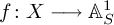 $f \colon X \longrightarrow \mathbb {A}_S^1$
, then we have a commutative square
$f \colon X \longrightarrow \mathbb {A}_S^1$
, then we have a commutative square

Moreover, if X is S-affine then all arrows are isomorphisms when we evaluate at equivariant objects.
Proof. In what follows, we color arrows in blue if it is an isomorphism as a consequence of the Braden hyperbolic localization theorem, Braden contraction lemma or Braden purity theorem. Note that we have
 $$ \begin{align*} \mathrm{HypLoc}(X^0_{\eta},I) = \mathrm{HypLoc}(X_{\eta},I) \times_{(X_{\eta},I)} (X_{\eta}^0,I) \end{align*} $$
for trivial reasons and $\mathrm {HypLoc}(\mathscr {R}_{X^0}^{\mathrm {tame},I},I) = \mathrm {HypLoc}(X^0_{\eta },I) \times _{(X^0_{\eta },I)}(\mathscr {R}_{X^0}^{\mathrm {tame},I},I)$
by proposition 2.15, we deduce that
$\mathrm {HypLoc}(\mathscr {R}_{X^0}^{\mathrm {tame},I},I) = \mathrm {HypLoc}(X^0_{\eta },I) \times _{(X^0_{\eta },I)}(\mathscr {R}_{X^0}^{\mathrm {tame},I},I)$
by proposition 2.15, we deduce that
 $$ \begin{align*} \mathrm{HypLoc}(\mathscr{R}_{X^0}^{\mathrm{tame},I},I) = \mathrm{HypLoc}(X_{\eta},I) \times_{(X_{\eta},I)} (\mathscr{R}_X^{\mathrm{tame},I},I). \end{align*} $$
Therefore, by theorem 2.12, we have a commutative square

Apply $(i_{f^0})^*$
and use theorem 2.12 again, we have commutative squares
$(i_{f^0})^*$
and use theorem 2.12 again, we have commutative squares

and hence a commutative square

Apply $(p_I)_{\#}$
to the diagram above and then we can use the third part of theorem 2.12 to obtain commutative squares
$(p_I)_{\#}$
to the diagram above and then we can use the third part of theorem 2.12 to obtain commutative squares

and hence a commutative square

We apply $(\theta _f)^*(p_I)^*$
(which is smooth objectwise) and use the second part of theorem 2.12 and proposition 6.17 to get commutative squares
$(\theta _f)^*(p_I)^*$
(which is smooth objectwise) and use the second part of theorem 2.12 and proposition 6.17 to get commutative squares

and hence a desired commutative square

If moreover, X is S-affine and we evaluate this diagram at equivariant objects, then all vertical arrows in those diagrams above become isomorphisms thanks to lemma 2.3, and theorem 2.11, therefore it suffices to prove that for each square appearing above, one of two horizontal arrows is an isomorphism, but this is what we have remarked at each diagram.
To deal with general X in case $(\mathscr {R}^{\mathrm {tame},I} \bullet \chi )$
, we need the following proposition, which can be regarded as a descent result for specialization systems of this form.
$(\mathscr {R}^{\mathrm {tame},I} \bullet \chi )$
, we need the following proposition, which can be regarded as a descent result for specialization systems of this form.
Proposition 3.2. Let $X,Y$
be algebraic S-spaces endowed with
$X,Y$
be algebraic S-spaces endowed with $\mathbb {G}_{m,S}$
-actions. Let
$\mathbb {G}_{m,S}$
-actions. Let $I \subset \Delta \times \mathbb {N}^{'\times }$
be a subcategory. Given equivariant morphisms
$I \subset \Delta \times \mathbb {N}^{'\times }$
be a subcategory. Given equivariant morphisms $g \colon Y \longrightarrow X, f \colon X \longrightarrow \mathbb {A}_S^1$
, then there is a commutative diagram
$g \colon Y \longrightarrow X, f \colon X \longrightarrow \mathbb {A}_S^1$
, then there is a commutative diagram

In view of [Reference AyoubAyo07a, Corollaire 1.1.14], the cube

is commutative.
Proof. We prove only the commutativity of the first diagram, the second one is treated by a similar argument. Note that the base change morphism $\alpha _g$
can be given explicitly as
$\alpha _g$
can be given explicitly as

To simplify notation, we erase the subscript indices of operations $i_?,j_?,\theta _?$
and write
$i_?,j_?,\theta _?$
and write $L^+$
for operations of the form
$L^+$
for operations of the form $(\pi ^+)_!(e^+)^*$
. We can split the cube into four cubes
$(\pi ^+)_!(e^+)^*$
. We can split the cube into four cubes


The commutativities of the second and the fourth cubes are clear because these cubes involve only one type of base change, namely, $\operatorname {Ex}_!^*$
. Let us show the commutativity of the third cube. The commutativity of the first cube is proved similarly. By [Reference AyoubAyo07a, Corollaire 1.1.14], we can show the commutativity of the cube
$\operatorname {Ex}_!^*$
. Let us show the commutativity of the third cube. The commutativity of the first cube is proved similarly. By [Reference AyoubAyo07a, Corollaire 1.1.14], we can show the commutativity of the cube

which is obvious.
4 The motivic integral identity
In this section, we deduce the categorical integral identity in $\mathbf {SH}_{\mathfrak {M}}^{\tau }$
, which has a similar form of the original conjecture of Kontsevich and Soibelman. We stress the fact that our result holds in both zero and positive characteristics. This property is clearly different from the virtual motives in Grothendieck rings of varieties as (to our best knowledge) one can only define nearby cycles in characteristic zero. We also follow [Reference IvorraIvo24] to upgrade the identity to a monodromic version, and hence a study of quasi-unipotent motives of algebraic spaces is necessary. Finally, under realization, we recover the integral identity in [Reference BuBu24] in the ring
$\mathbf {SH}_{\mathfrak {M}}^{\tau }$
, which has a similar form of the original conjecture of Kontsevich and Soibelman. We stress the fact that our result holds in both zero and positive characteristics. This property is clearly different from the virtual motives in Grothendieck rings of varieties as (to our best knowledge) one can only define nearby cycles in characteristic zero. We also follow [Reference IvorraIvo24] to upgrade the identity to a monodromic version, and hence a study of quasi-unipotent motives of algebraic spaces is necessary. Finally, under realization, we recover the integral identity in [Reference BuBu24] in the ring $K_0(\mathbf {QUSH}_{\mathfrak {M},\mathrm {ct}}^{\tau }(X^0_{\sigma }))$
.
$K_0(\mathbf {QUSH}_{\mathfrak {M},\mathrm {ct}}^{\tau }(X^0_{\sigma }))$
.
4.1 The categorical motivic integral identity
Given a smooth morphism $f \colon V \longrightarrow X$
with a section
$f \colon V \longrightarrow X$
with a section $s \colon X \longrightarrow V$
, we denote by
$s \colon X \longrightarrow V$
, we denote by $\operatorname {Th}(f,s) = f_{\#}s_*$
the Thom operation together with
$\operatorname {Th}(f,s) = f_{\#}s_*$
the Thom operation together with $\operatorname {Th}^{-1}(f,s) = s^!f^*$
its inverse. We have a lemma.
$\operatorname {Th}^{-1}(f,s) = s^!f^*$
its inverse. We have a lemma.
Lemma 4.1. Let $f \colon V \longrightarrow X$
be a smooth morphism of algebraic S-spaces and
$f \colon V \longrightarrow X$
be a smooth morphism of algebraic S-spaces and $s \colon X \longrightarrow V$
a section. Let
$s \colon X \longrightarrow V$
a section. Let $f \colon X \longrightarrow B$
be a morphism of algebraic S-spaces and
$f \colon X \longrightarrow B$
be a morphism of algebraic S-spaces and $\operatorname {sp}$
be a specialization system over
$\operatorname {sp}$
be a specialization system over $(B,\eta ,\sigma )$
, then there exists a natural isomorphism
$(B,\eta ,\sigma )$
, then there exists a natural isomorphism
 $$ \begin{align*} \operatorname{Th}(f_{\sigma},s_{\sigma})\operatorname{sp}_f \overset{\sim}{\longrightarrow} \operatorname{sp}_f \operatorname{Th}(f_{\eta},s_{\eta}). \end{align*} $$
Equivalently, there exists a natural isomorphism
 $$ \begin{align*} \operatorname{sp}_f\operatorname{Th}^{-1}(f_{\sigma},s_{\sigma}) \overset{\sim}{\longrightarrow} \operatorname{Th}^{-1}(f_{\eta},s_{\eta})\operatorname{sp}_f. \end{align*} $$
Proof. Let $u \colon U \longrightarrow X$
be a
$u \colon U \longrightarrow X$
be a $\mathrm {Nis}$
-covering. As in [Reference AyoubAyo07b, Proposition 3.1.7], we reduce the question to the case when X is a scheme, which is true by [Reference AyoubAyo07b, Proposition 3.1.7] and [Reference Bang PhamPha24, Theorem 5.9].
$\mathrm {Nis}$
-covering. As in [Reference AyoubAyo07b, Proposition 3.1.7], we reduce the question to the case when X is a scheme, which is true by [Reference AyoubAyo07b, Proposition 3.1.7] and [Reference Bang PhamPha24, Theorem 5.9].
Proposition 4.2. Let X be an algebraic S-space endowed with a $\mathbb {G}_{m,S}$
-action. Let
$\mathbb {G}_{m,S}$
-action. Let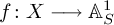 $f \colon X \longrightarrow \mathbb {A}_S^1$
be an equivariant morphism. If the action on X is
$f \colon X \longrightarrow \mathbb {A}_S^1$
be an equivariant morphism. If the action on X is $\tau $
-locally linearizable, then the canonical morphisms
$\tau $
-locally linearizable, then the canonical morphisms
 $$ \begin{align*} (\pi_{\sigma}^+)_!(e^+_{\sigma})^*(\mathscr{R}^{\mathrm{tame},I} \bullet \chi)_f(A) & \longrightarrow (\mathscr{R}^{\mathrm{tame},I} \bullet \chi)_{f^0} (\pi_{\eta}^+)_!(e^+_{\eta})^*(A) \end{align*} $$
are isomorphisms if A is an equivariant object in $\mathbf {SH}_{\mathfrak {M}}^{\tau }(X_{\eta })$
. In particular, if
$\mathbf {SH}_{\mathfrak {M}}^{\tau }(X_{\eta })$
. In particular, if $\tau $
is the étale topology, then the motivic integral identity is always true.
$\tau $
is the étale topology, then the motivic integral identity is always true.
Proof. Let $\left \{u_i \colon U_i \longrightarrow X \right \}$
be a
$\left \{u_i \colon U_i \longrightarrow X \right \}$
be a $\mathbb {G}_{m,S}$
-equivariant
$\mathbb {G}_{m,S}$
-equivariant $\tau $
-covering of X with
$\tau $
-covering of X with $U_i$
being S-affine. By
$U_i$
being S-affine. By $\tau $
-conservativity (see proposition 6.3), it suffices to prove that
$\tau $
-conservativity (see proposition 6.3), it suffices to prove that
 $$ \begin{align*} ((u_i^0)_{\sigma})^*(\mathscr{R}^{\mathrm{tame},I} \bullet \chi)_{f^0} (\pi_{\eta}^+)_!(e^+_{\eta})^*(A) \longrightarrow ((u_i^0)_{\sigma})^* (\pi_{\sigma}^+)_!(e^+_{\sigma})^*(\mathscr{R}^{\mathrm{tame},I} \bullet \chi)_f(A) \end{align*} $$
is an isomorphism for any $u_i$
. By proposition 3.2, there is a commutative diagram
$u_i$
. By proposition 3.2, there is a commutative diagram

In these diagrams, morphisms $\alpha _?$
are isomorphisms because
$\alpha _?$
are isomorphisms because $u_i$
are smooth, two other vertical arrows are isomorphisms thanks to theorem 2.12, the lower horizontal arrow is an isomorphism by proposition 3.1.
$u_i$
are smooth, two other vertical arrows are isomorphisms thanks to theorem 2.12, the lower horizontal arrow is an isomorphism by proposition 3.1.
We obtain the categorical version of the motivic integral identity.
Theorem 4.3. Let $X = \mathbb {A}_S^{d_1} \times _S \mathbb {A}_S^{d_2} \times _S Y$
be a S-variety with Y a S-variety. Suppose that
$X = \mathbb {A}_S^{d_1} \times _S \mathbb {A}_S^{d_2} \times _S Y$
be a S-variety with Y a S-variety. Suppose that $\mathbb {G}_{m,S}$
acts by positive weights on
$\mathbb {G}_{m,S}$
acts by positive weights on $\mathbb {A}^{d_1}_S$
, by negative weights on
$\mathbb {A}^{d_1}_S$
, by negative weights on $\mathbb {A}^{d_2}_S$
and trivially on Y, then the motivic integral identities
$\mathbb {A}^{d_2}_S$
and trivially on Y, then the motivic integral identities
 $$ \begin{align*} (\pi_{\sigma}^+)_!(e^+_{\sigma})^*(\mathscr{R}^{\mathrm{tame},I} \bullet \chi)_f(\mathbb{1}_{X_{\eta}}) \overset{\sim}{\longrightarrow} \mathbb{1}_{Y_{\sigma}}(-d_1)[-2d_1] \otimes (\mathscr{R}^{\mathrm{tame},I} \bullet \chi)_{f^0}(\mathbb{1}_{X_{\eta}^0}) \end{align*} $$
holds in $\mathbf {SH}_{\mathfrak {M}}^{\tau }(X^0_{\sigma })$
.
$\mathbf {SH}_{\mathfrak {M}}^{\tau }(X^0_{\sigma })$
.
Proof. In this case, we can take any affine Nisnevich atlas of Y (see [Reference KnutsonKnu71, Theorem 6.4]) and use proposition 6.3 to see that the topology does not matter here. We denote $\operatorname {sp}$
to indicate
$\operatorname {sp}$
to indicate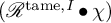 $(\mathscr {R}^{\mathrm {tame},I} \bullet \chi )$
. We see that
$(\mathscr {R}^{\mathrm {tame},I} \bullet \chi )$
. We see that
 $$ \begin{align*} (\pi_{\sigma}^+)_!(e^+_{\sigma})^*\operatorname{sp}_f(\mathbb{1}_{X_{\eta}}) & \simeq \operatorname{sp}_{f^0} (\pi_{\eta}^+)_!(e^+_{\eta})^*(\mathbb{1}_{X_{\eta}}) & \text{by proposition}\ 4.2 \\ & \simeq \operatorname{sp}_{f^0}(s^+_{\eta})^!(\mathbb{1}_{X^+_{\eta}}) & \text{by lemma}\ 2.22 \\ & \simeq \operatorname{sp}_{f^0}(s^+_{\eta})^!(\pi^+_{\eta})^*(\mathbb{1}_{X^0_{\eta}}) \\ & \simeq (s^+_{\sigma})^!(\pi^+_{\sigma})^*\operatorname{sp}_{f^0}(\mathbb{1}_{X^0_{\eta}}) & \text{by lemma}\ 4.1 \\ & \simeq \operatorname{Th}^{-1}(\pi^+_{\sigma},s^+_{\sigma})(\mathbb{1}) \otimes \operatorname{sp}_{f^0}(\mathbb{1}_{X^0_{\eta}}) & [\text{CD}19,\ \text{Section 2.4.13]} \\ & \simeq \operatorname{Th}^{-1}(\pi^+_{\sigma},s^+_{\sigma})(\mathbb{1}) \otimes \operatorname{sp}_{f_{\mid Y}}(\mathbb{1}_{Y_{\eta}}) \end{align*} $$
and we conclude by observing that $X^0 = Y$
(embedded in X via zero sections) and
$X^0 = Y$
(embedded in X via zero sections) and $\operatorname {Th}^{-1}(\pi ^+_{\sigma },s^+_{\sigma })(\mathbb {1}) = \mathbb {1}_{Y_{\sigma }}(-d_1)[-2d_1]$
since in this case
$\operatorname {Th}^{-1}(\pi ^+_{\sigma },s^+_{\sigma })(\mathbb {1}) = \mathbb {1}_{Y_{\sigma }}(-d_1)[-2d_1]$
since in this case $\pi ^+ \colon \mathbb {A}^{d_1}_Y \longrightarrow Y$
is the projection and
$\pi ^+ \colon \mathbb {A}^{d_1}_Y \longrightarrow Y$
is the projection and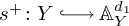 $s^+ \colon Y {\hookrightarrow} \mathbb {A}^{d_1}_Y$
is the zero section.
$s^+ \colon Y {\hookrightarrow} \mathbb {A}^{d_1}_Y$
is the zero section.
4.2 Quasi-unipotent motives of algebraic spaces and monodromic categorical integral identity
Now we would like to obtain the monodromic version of the theorem above. We extend the definition of quasi-unipotent motives (see [Reference AyoubAyo15][Reference Ivorra and SebagIS21]) to the case of algebraic spaces. Let X be an algebraic S-space. The category $\mathbf {QUSH}_{\mathfrak {M}}^{\tau }(X)$
of quasi-unipotent motives is a smallest triangulated subcategory of
$\mathbf {QUSH}_{\mathfrak {M}}^{\tau }(X)$
of quasi-unipotent motives is a smallest triangulated subcategory of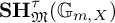 $\mathbf {SH}_{\mathfrak {M}}^{\tau }(\mathbb {G}_{m,X})$
stable under all small direct sums and contains motives of the form
$\mathbf {SH}_{\mathfrak {M}}^{\tau }(\mathbb {G}_{m,X})$
stable under all small direct sums and contains motives of the form $\mathrm {M}^{\vee }_n(Z,\bullet ) = \pi _{\#}\mathbb {1}_{Q^{\mathrm {gm}}_n(Z,\bullet )}(r)$
, where
$\mathrm {M}^{\vee }_n(Z,\bullet ) = \pi _{\#}\mathbb {1}_{Q^{\mathrm {gm}}_n(Z,\bullet )}(r)$
, where
 $$ \begin{align*} \pi \colon Q^{\mathrm{gm}}_n(Z,\bullet) {:=}q \operatorname{Spec}\left(\frac{\mathcal{O}_Z[T,T^{-1},V]}{(V^n - \bullet T)} \right) \longrightarrow \operatorname{Spec}(\mathcal{O}_X[T,T^{-1}]) = \mathbb{G}_{m,X}. \end{align*} $$
with Z a scheme and $Z \longrightarrow X$
smooth,
$Z \longrightarrow X$
smooth,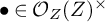 $\bullet \in \mathcal {O}_Z(Z)^{\times }$
,
$\bullet \in \mathcal {O}_Z(Z)^{\times }$
, $n \in \mathbb {N}^{\times }$
. The category of constructible quasi-unipotent motives is defined as
$n \in \mathbb {N}^{\times }$
. The category of constructible quasi-unipotent motives is defined as
 $$ \begin{align*} \mathbf{QUSH}_{\mathfrak{M},\mathrm{ct}}^{\tau}(X) = \mathbf{SH}_{\mathfrak{M},\mathrm{ct}}^{\tau}(\mathbb{G}_{m,X}) \cap \mathbf{QUSH}_{\mathfrak{M}}^{\tau}(X). \end{align*} $$
Let $f \colon X \longrightarrow Y$
be a morphism of algebraic S-spaces. If
$f \colon X \longrightarrow Y$
be a morphism of algebraic S-spaces. If $X,Y$
are schemes, then by [Reference Bang PhamPha24, Proposition 4.8] and [Reference Ivorra and SebagIS21, Lemma 3.2.1], the morphisms
$X,Y$
are schemes, then by [Reference Bang PhamPha24, Proposition 4.8] and [Reference Ivorra and SebagIS21, Lemma 3.2.1], the morphisms $(\breve {f})^*,(\breve {f})_!$
preserve quasi-unipotent motives and if f is smooth, then
$(\breve {f})^*,(\breve {f})_!$
preserve quasi-unipotent motives and if f is smooth, then $(\breve {f})_{\#}$
also preserves quasi-unipotent motives. If
$(\breve {f})_{\#}$
also preserves quasi-unipotent motives. If $X,Y$
are algebraic spaces, the same results hold for
$X,Y$
are algebraic spaces, the same results hold for $(\breve {f})^*$
or
$(\breve {f})^*$
or $(\breve {f})_{\#}$
. Let us prove that
$(\breve {f})_{\#}$
. Let us prove that $(\breve {f})_!$
preserves quasi-unipotent motives, which is used in the subsequence. First we have the following corollary of proposition 6.3
$(\breve {f})_!$
preserves quasi-unipotent motives, which is used in the subsequence. First we have the following corollary of proposition 6.3
Lemma 4.4. Let $u \colon U \longrightarrow X$
be a
$u \colon U \longrightarrow X$
be a $\tau $
-atlas. Assume that
$\tau $
-atlas. Assume that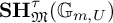 $\mathbf {SH}_{\mathfrak {M}}^{\tau }(\mathbb {G}_{m,U})$
is compactly generated by a set
$\mathbf {SH}_{\mathfrak {M}}^{\tau }(\mathbb {G}_{m,U})$
is compactly generated by a set $\mathcal {S}$
of compact objects, then
$\mathcal {S}$
of compact objects, then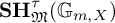 $\mathbf {SH}_{\mathfrak {M}}^{\tau }(\mathbb {G}_{m,X})$
is compactly generated by the set
$\mathbf {SH}_{\mathfrak {M}}^{\tau }(\mathbb {G}_{m,X})$
is compactly generated by the set $(\breve {u})_{\#}(\mathcal {S})$
. Moreover,
$(\breve {u})_{\#}(\mathcal {S})$
. Moreover, $\mathbf {QUSH}_{\mathfrak {M}}^{\tau }(X)$
is compactly generated by the set
$\mathbf {QUSH}_{\mathfrak {M}}^{\tau }(X)$
is compactly generated by the set $\mathcal {S}(U,X)$
consisting of Tate twists of motives of the form
$\mathcal {S}(U,X)$
consisting of Tate twists of motives of the form $(\breve {u})_{\#}\big (\mathrm {M}^{\vee }_n(T,\bullet )\big )$
with
$(\breve {u})_{\#}\big (\mathrm {M}^{\vee }_n(T,\bullet )\big )$
with $T \longrightarrow U$
a smooth morphism,
$T \longrightarrow U$
a smooth morphism,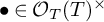 $\bullet \in \mathcal {O}_T(T)^{\times }$
,
$\bullet \in \mathcal {O}_T(T)^{\times }$
, $n \in \mathbb {N}^{\times }$
.
$n \in \mathbb {N}^{\times }$
.
Proof. The first assertion is proposition 6.4. The proof of proposition 6.4 also shows that motives of the form $(\breve {u})_{\#}\big (\mathrm {M}^{\vee }_n(T,\bullet )\big )$
are compact. It suffices to check that shifts of these motives detect zero object. Again, this is the same as the proof of proposition 6.4 because
$(\breve {u})_{\#}\big (\mathrm {M}^{\vee }_n(T,\bullet )\big )$
are compact. It suffices to check that shifts of these motives detect zero object. Again, this is the same as the proof of proposition 6.4 because $(\breve {u})^*$
is conservative by propositon 6.3 and
$(\breve {u})^*$
is conservative by propositon 6.3 and $\mathbf {QUSH}_{\mathfrak {M}}^{\tau }(U)$
is compactly generated by those twists of
$\mathbf {QUSH}_{\mathfrak {M}}^{\tau }(U)$
is compactly generated by those twists of $\mathrm {M}_n^{\vee }(T,\bullet )$
.
$\mathrm {M}_n^{\vee }(T,\bullet )$
.
Proposition 4.5. Let $f \colon X \longrightarrow Y$
be a proper morphism of algebraic S-spaces. If A is in
$f \colon X \longrightarrow Y$
be a proper morphism of algebraic S-spaces. If A is in $\mathbf {QUSH}_{\mathfrak {M}}^{\tau }(X)$
, then
$\mathbf {QUSH}_{\mathfrak {M}}^{\tau }(X)$
, then $(\breve {f})_*(A)$
is in
$(\breve {f})_*(A)$
is in $\mathbf {QUSH}_{\mathfrak {M}}^{\tau }(Y)$
. Consequently, for any
$\mathbf {QUSH}_{\mathfrak {M}}^{\tau }(Y)$
. Consequently, for any $f \colon X \longrightarrow Y$
,
$f \colon X \longrightarrow Y$
, $(\breve {f})_!$
preserves quasi-unipotent motives.
$(\breve {f})_!$
preserves quasi-unipotent motives.
Proof. The proof is very similar to the proof of [Reference Bang PhamPha24, Proposition 4.8] by using the Chow lemma, cdh descent and Noetherian induction. The only case that we need to check is when f is a closed immersion. Let us choose a cartesian square

with $U,V$
being
$U,V$
being $\tau $
-covering of
$\tau $
-covering of $X,Y$
, respectively. By [Reference Ivorra and SebagIS21, Lemma 3.2.2], the category
$X,Y$
, respectively. By [Reference Ivorra and SebagIS21, Lemma 3.2.2], the category $\mathbf {QUSH}_{\mathfrak {M}}^{\tau }(Y)$
is compactly generated by the set
$\mathbf {QUSH}_{\mathfrak {M}}^{\tau }(Y)$
is compactly generated by the set $(\breve {v})_{\#}(\mathcal {S}'(V,Y))$
with
$(\breve {v})_{\#}(\mathcal {S}'(V,Y))$
with $\mathcal {S}'(V,Y)$
the set of Tate twists of motives of the form
$\mathcal {S}'(V,Y)$
the set of Tate twists of motives of the form $(\breve {\iota })_*\big (\mathrm {M}^{\vee }_n(T,\bullet ) \big )$
with
$(\breve {\iota })_*\big (\mathrm {M}^{\vee }_n(T,\bullet ) \big )$
with $T \overset {h}{\longrightarrow } T' \overset {\iota }{{\hookrightarrow} } V$
,
$T \overset {h}{\longrightarrow } T' \overset {\iota }{{\hookrightarrow} } V$
, $T,T'$
a scheme,
$T,T'$
a scheme, $\iota $
closed immersion, h smooth. We note that
$\iota $
closed immersion, h smooth. We note that
 $$ \begin{align*} (\breve{f})_*(\breve{u})_{\#}(\mathcal{S}(U,X)) \subset (\breve{v})_{\#}(\mathcal{S}'(V,Y)). \end{align*} $$
Indeed, this follows from the isomorphism $(\breve {f})_*(\breve {u})_{\#} \simeq (\breve {v})_{\#}(\breve {g})_*$
.
$(\breve {f})_*(\breve {u})_{\#} \simeq (\breve {v})_{\#}(\breve {g})_*$
.
Let X be an algebraic S-space and $f \colon X \longrightarrow \mathbb {A}_S^1$
be a S-morphism. We form the diagram
$f \colon X \longrightarrow \mathbb {A}_S^1$
be a S-morphism. We form the diagram

where we define $f^{\mathbb {G}_m}\colon \operatorname {Spec}(\mathcal {O}_X[T,T^{-1}]) \longrightarrow \mathbb {A}^1_S = \operatorname {Spec}(\mathcal {O}_S[t])$
to be the morphism given by
$f^{\mathbb {G}_m}\colon \operatorname {Spec}(\mathcal {O}_X[T,T^{-1}]) \longrightarrow \mathbb {A}^1_S = \operatorname {Spec}(\mathcal {O}_S[t])$
to be the morphism given by $t \longmapsto fT$
once we identify f with the image of t under the canonical morphism
$t \longmapsto fT$
once we identify f with the image of t under the canonical morphism $\mathcal {O}_S[t] \longrightarrow \mathcal {O}_X(X)$
. With all these data, the monodromic nearby functor is defined as
$\mathcal {O}_S[t] \longrightarrow \mathcal {O}_X(X)$
. With all these data, the monodromic nearby functor is defined as
 $$ \begin{align*} \Psi_f^{\mathrm{mon}} {:=}q \Psi_{f^{\mathbb{G}_m}}^{\mathrm{tame}} p^*\colon \mathbf{SH}_{\mathfrak{M}}^{\tau}(X_{\eta}) \longmapsto \mathbf{SH}_{\mathfrak{M}}^{\tau}(\mathbb{G}_{m,X_{\sigma}}) \end{align*} $$
in which $p\colon \mathbb {G}_{m,X_{\eta }} \longrightarrow X_{\eta }$
is the canonical projection. One can also define the monodromic unipotent nearby functor
$p\colon \mathbb {G}_{m,X_{\eta }} \longrightarrow X_{\eta }$
is the canonical projection. One can also define the monodromic unipotent nearby functor $\Upsilon _f^{\mathrm {mon}}$
by a similar formula after replacing
$\Upsilon _f^{\mathrm {mon}}$
by a similar formula after replacing $\Psi ^{\mathrm {tame}}_{f^{\mathbb {G}_m}}$
with
$\Psi ^{\mathrm {tame}}_{f^{\mathbb {G}_m}}$
with $\Upsilon _{f^{\mathbb {G}_m}}$
in example 1.3. Let
$\Upsilon _{f^{\mathbb {G}_m}}$
in example 1.3. Let $g \colon Y \longrightarrow X$
be a S-morphism, then there are base change morphisms
$g \colon Y \longrightarrow X$
be a S-morphism, then there are base change morphisms

which are isomorphisms if g is smooth, proper, respectively. We can recover $\Psi _f$
from
$\Psi _f$
from $\Psi ^{\mathrm {mon}}_f$
thanks to [Reference Ivorra and SebagIS21, Theorem 4.1.1] and [Reference Bang PhamPha24]. It was proved in [Reference Ivorra and SebagIS21] that
$\Psi ^{\mathrm {mon}}_f$
thanks to [Reference Ivorra and SebagIS21, Theorem 4.1.1] and [Reference Bang PhamPha24]. It was proved in [Reference Ivorra and SebagIS21] that $\Psi ^{\mathrm {mon}}_f$
takes values in
$\Psi ^{\mathrm {mon}}_f$
takes values in $\mathbf {QUSH}_{\mathfrak {M}}^{\tau }(X_{\sigma })$
if X is a scheme (see [Reference Ivorra and SebagIS21, Theorem 4.2.1]). A similar result holds for algebraic k-spaces with k a field of characteristic zero.
$\mathbf {QUSH}_{\mathfrak {M}}^{\tau }(X_{\sigma })$
if X is a scheme (see [Reference Ivorra and SebagIS21, Theorem 4.2.1]). A similar result holds for algebraic k-spaces with k a field of characteristic zero.
Proposition 4.6. Let $S = \operatorname {Spec}(k)$
be the spectrum of a field of characteristic zero. Let X be an algebraic S-space. Let
$S = \operatorname {Spec}(k)$
be the spectrum of a field of characteristic zero. Let X be an algebraic S-space. Let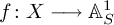 $f \colon X \longrightarrow \mathbb {A}_S^1$
be a S-morphism and A be an object in
$f \colon X \longrightarrow \mathbb {A}_S^1$
be a S-morphism and A be an object in $\mathbf {SH}_{\mathfrak {M}}^{\tau }(X_{\eta })$
, then
$\mathbf {SH}_{\mathfrak {M}}^{\tau }(X_{\eta })$
, then $\Upsilon ^{\mathrm {mon}}_f(A),\Psi ^{\mathrm {mon}}_f(A)$
are in
$\Upsilon ^{\mathrm {mon}}_f(A),\Psi ^{\mathrm {mon}}_f(A)$
are in $\mathbf {QUSH}_{\mathfrak {M}}^{\tau }(X_{\sigma })$
.
$\mathbf {QUSH}_{\mathfrak {M}}^{\tau }(X_{\sigma })$
.
Proof. The result holds for schemes thanks to [Reference Ivorra and SebagIS21, Theorem 4.2.1] (note that for schemes, the proof for $\Upsilon ^{\mathrm {mon}}_f$
is similar to the case of
$\Upsilon ^{\mathrm {mon}}_f$
is similar to the case of $\Psi ^{\mathrm {mon}}_f$
done in [Reference Ivorra and SebagIS21] so here we can just focus on
$\Psi ^{\mathrm {mon}}_f$
done in [Reference Ivorra and SebagIS21] so here we can just focus on $\Psi ^{\mathrm {mon}}_f$
). Let
$\Psi ^{\mathrm {mon}}_f$
). Let $u \colon U \longrightarrow X$
be a
$u \colon U \longrightarrow X$
be a $\mathrm {Nis}$
-atlas of X. The category
$\mathrm {Nis}$
-atlas of X. The category $\mathbf {SH}_{\mathfrak {M}}^{\tau }(U_{\eta })$
is compactly generated by Tate twists of motives of the form
$\mathbf {SH}_{\mathfrak {M}}^{\tau }(U_{\eta })$
is compactly generated by Tate twists of motives of the form $(g_{\eta })_{\#}(\mathbb {1}_{Y_{\eta }})$
with
$(g_{\eta })_{\#}(\mathbb {1}_{Y_{\eta }})$
with $g \colon Y \longrightarrow U$
a smooth morphism (see [Reference AyoubAyo07b, Théorème 4.5.67]). Hence, by corollary 6.4 and enlarging if necessary, the category
$g \colon Y \longrightarrow U$
a smooth morphism (see [Reference AyoubAyo07b, Théorème 4.5.67]). Hence, by corollary 6.4 and enlarging if necessary, the category $\mathbf {SH}_{\mathfrak {M}}^{\tau }(X_{\eta })$
is compactly generated by twists of motives of the form
$\mathbf {SH}_{\mathfrak {M}}^{\tau }(X_{\eta })$
is compactly generated by twists of motives of the form $(g_{\eta })_{\#}(\mathbb {1}_{Y_{\eta }})$
with
$(g_{\eta })_{\#}(\mathbb {1}_{Y_{\eta }})$
with $g \colon Y \longrightarrow X$
a smooth morphism and Y a scheme. Locally for g smooth,
$g \colon Y \longrightarrow X$
a smooth morphism and Y a scheme. Locally for g smooth, $g_{\#}$
differs from
$g_{\#}$
differs from $g_!$
some twists so
$g_!$
some twists so $\mathbf {SH}_{\mathfrak {M}}^{\tau }(X_{\eta })$
is compactly generated by twists of motives of the form
$\mathbf {SH}_{\mathfrak {M}}^{\tau }(X_{\eta })$
is compactly generated by twists of motives of the form $(g_{\eta })_!(\mathbb {1}_{Y_{\eta }})$
with
$(g_{\eta })_!(\mathbb {1}_{Y_{\eta }})$
with $g \colon Y \longrightarrow X$
smooth and Y a scheme. By the Nagata compactification theorem and localization property, we see that
$g \colon Y \longrightarrow X$
smooth and Y a scheme. By the Nagata compactification theorem and localization property, we see that $\mathbf {SH}_{\mathfrak {M}}^{\tau }(X_{\eta })$
is compactly generated by twists of motives of the form
$\mathbf {SH}_{\mathfrak {M}}^{\tau }(X_{\eta })$
is compactly generated by twists of motives of the form $(g_{\eta })_*(\mathbb {1}_{Y_{\eta }})$
with
$(g_{\eta })_*(\mathbb {1}_{Y_{\eta }})$
with $g \colon Y \longrightarrow X$
proper and Y a scheme (using the Chow lemma, one can even reduce to g projective). Therefore, it is enough to show that
$g \colon Y \longrightarrow X$
proper and Y a scheme (using the Chow lemma, one can even reduce to g projective). Therefore, it is enough to show that
 $$ \begin{align*} \Psi^{\mathrm{mon}}_f(g_{\eta})_*(\mathbb{1}_{Y_{\eta}}) \simeq (\breve{g}_{\sigma})_*\Psi^{\mathrm{mon}}_{f \circ g}(\mathbb{1}_{Y_{\eta}}) \end{align*} $$
is in $\mathbf {QUSH}_{\mathfrak {M}}^{\tau }(X_{\sigma })$
. This follows from the assumption on the case of schemes and proposition 4.5.
$\mathbf {QUSH}_{\mathfrak {M}}^{\tau }(X_{\sigma })$
. This follows from the assumption on the case of schemes and proposition 4.5.
Corollary 4.7. Let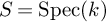 $S = \operatorname {Spec}(k)$
be the spectrum of a field of characteristic zero. Let Y be an algebraic S-space and
$S = \operatorname {Spec}(k)$
be the spectrum of a field of characteristic zero. Let Y be an algebraic S-space and $X = \mathbb {A}_S^{d_1} \times _S \mathbb {A}_S^{d_2} \times _S Y$
. Suppose that
$X = \mathbb {A}_S^{d_1} \times _S \mathbb {A}_S^{d_2} \times _S Y$
. Suppose that $\mathbb {G}_{m,S}$
acts by positive weights on
$\mathbb {G}_{m,S}$
acts by positive weights on $\mathbb {A}^{d_1}_S$
, by negative weights on
$\mathbb {A}^{d_1}_S$
, by negative weights on $\mathbb {A}^{d_2}_S$
and trivially on Y. Let
$\mathbb {A}^{d_2}_S$
and trivially on Y. Let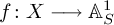 $f \colon X \longrightarrow \mathbb {A}_S^1$
be a
$f \colon X \longrightarrow \mathbb {A}_S^1$
be a $\mathbb {G}_{m,S}$
-equivariant, where the target is equipped with the trivial action, then the monodromic motivic integral identities
$\mathbb {G}_{m,S}$
-equivariant, where the target is equipped with the trivial action, then the monodromic motivic integral identities
 $$ \begin{align*} (\breve{\pi}_{\sigma}^+)_!(\breve{e}^+_{\sigma})^*\Psi_f^{\mathrm{mon}}(\mathbb{1}_{X_{\eta}}) & \simeq \mathbb{1}_{\mathbb{G}_{m,Y_{\sigma}}}(-d_1)[-2d_1] \otimes \Psi_{f_{\mid Y}}^{\mathrm{mon}}(\mathbb{1}_{Y_{\eta}}) \\ (\breve{\pi}_{\sigma}^+)_!(\breve{e}^+_{\sigma})^*\Upsilon_f^{\mathrm{mon}}(\mathbb{1}_{X_{\eta}}) & \simeq \mathbb{1}_{\mathbb{G}_{m,Y_{\sigma}}}(-d_1)[-2d_1] \otimes \Upsilon_{f_{\mid Y}}^{\mathrm{mon}}(\mathbb{1}_{Y_{\eta}}) \end{align*} $$
hold in $\mathbf {QUSH}_{\mathfrak {M}}^{\tau }(X^0_{\sigma })$
.
$\mathbf {QUSH}_{\mathfrak {M}}^{\tau }(X^0_{\sigma })$
.
Proof. This is an application of Theorem 4.3 to the morphism $f^{\mathbb {G}_m}$
where we endow
$f^{\mathbb {G}_m}$
where we endow $\mathbb {G}_{m,X} = \mathbb {G}_{m,S} \times _S X$
with the diagonal action that is the trivial action on the first factor and the given action of X on the second factor.
$\mathbb {G}_{m,X} = \mathbb {G}_{m,S} \times _S X$
with the diagonal action that is the trivial action on the first factor and the given action of X on the second factor.
4.3 The piecewise integral identity
In the rest of this subsection, we assume that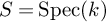 $S = \operatorname {Spec}(k)$
is a field of characteristic zero. Let us recall the definition of
$S = \operatorname {Spec}(k)$
is a field of characteristic zero. Let us recall the definition of $K_0(\operatorname {Var}_X)$
with X an algebraic k-space (see [Reference JoyceJoy07] or [Reference BuBu24]). The group
$K_0(\operatorname {Var}_X)$
with X an algebraic k-space (see [Reference JoyceJoy07] or [Reference BuBu24]). The group $K_0(\operatorname {Var}_X)$
is generated by isomorphisms classes of morphisms of algebraic k-spaces
$K_0(\operatorname {Var}_X)$
is generated by isomorphisms classes of morphisms of algebraic k-spaces $U \longrightarrow X$
with U a scheme of finite type over k modulo the usual cut-paste relation. We denote by
$U \longrightarrow X$
with U a scheme of finite type over k modulo the usual cut-paste relation. We denote by $\mathscr {M}_X$
the localization
$\mathscr {M}_X$
the localization $K_0(\operatorname {Var}_X)[\mathbf {L}^{-1}]$
with
$K_0(\operatorname {Var}_X)[\mathbf {L}^{-1}]$
with $\mathbf {L}=[\mathbb {A}_X^1]$
the class of the affine line. For any morphism of algebraic k-spaces
$\mathbf {L}=[\mathbb {A}_X^1]$
the class of the affine line. For any morphism of algebraic k-spaces $Y \longrightarrow X$
, there exists a class
$Y \longrightarrow X$
, there exists a class $[Y]$
in
$[Y]$
in $\mathscr {M}_X$
, agreeing with
$\mathscr {M}_X$
, agreeing with $[Y]$
when Y is a scheme. Given a triangulated category
$[Y]$
when Y is a scheme. Given a triangulated category $\mathcal {T}$
, we write
$\mathcal {T}$
, we write $K_0(\mathcal {T})$
for its Grothendieck group with the set of generators being isomorphisms classes
$K_0(\mathcal {T})$
for its Grothendieck group with the set of generators being isomorphisms classes $[A]$
(
$[A]$
( $A \in \mathcal {T}$
) of objects modulo the relation
$A \in \mathcal {T}$
) of objects modulo the relation
 $$ \begin{align*} [B] = [A] + [C] \end{align*} $$
if there exists a distinguished triangle
 $$ \begin{align*} A \longrightarrow B \longrightarrow C \longrightarrow +1. \end{align*} $$
The following lemma is an obvious analogue of [Reference Ivorra and SebagIS13, Lemma 3.1].
Lemma 4.8. Let X be an algebraic k-space, there exists a unique ring homomorphism
 $$ \begin{align*} \chi_{X,c} \colon \mathscr{M}_X \longrightarrow K_0(\mathbf{SH}_{\mathfrak{M},\mathrm{ct}}^{\tau}(X)) \end{align*} $$
such that
 $$ \begin{align*} \chi_{X,c}([U]) = [f_!(\mathbb{1}_U)] \end{align*} $$
for any morphism of algebraic k-spaces $f \colon U \longrightarrow X$
with U a scheme.
$f \colon U \longrightarrow X$
with U a scheme.
Analogous to the case of non-virtual motives, we can define the monodromic version of $\mathscr {M}_X$
. Let X be a k-variety. Follow [Reference BittnerBit05][Reference Guibert, Loeser and MerleGLM06][Reference BuBu24], we write
$\mathscr {M}_X$
. Let X be a k-variety. Follow [Reference BittnerBit05][Reference Guibert, Loeser and MerleGLM06][Reference BuBu24], we write $\mathscr {M}^{\hat {\mu }}_X$
the Grothendieck ring of X-varieties endowed with a
$\mathscr {M}^{\hat {\mu }}_X$
the Grothendieck ring of X-varieties endowed with a $\hat {\mu }$
-action with
$\hat {\mu }$
-action with $\hat {\mu } = \varprojlim \mu _n$
the projective limit of roots of unity. One obtains an obvious analogue of [Reference Ivorra and SebagIS21, Proposition 5.2.1]
$\hat {\mu } = \varprojlim \mu _n$
the projective limit of roots of unity. One obtains an obvious analogue of [Reference Ivorra and SebagIS21, Proposition 5.2.1]
Lemma 4.9. Let X be an algebraic k-space, there exists a unique ring homomorphism
 $$ \begin{align*} \chi_{X,c}^{\hat{\mu}} \colon \mathscr{M}_X^{\hat{\mu}} \longrightarrow K_0(\mathbf{QUSH}_{\mathfrak{M},\mathrm{ct}}^{\tau}(X)) \end{align*} $$
such that
 $$ \begin{align*} \chi_{X,c}([U]) = [f_!(\mathbb{1}_U)] \end{align*} $$
for any morphism of algebraic k-spaces $f \colon U \longrightarrow X$
with U a scheme.
$f \colon U \longrightarrow X$
with U a scheme.
By [Reference BuBu24] (for schemes, see for instance [Reference BittnerBit05]), there is a nearby morphism
 $$ \begin{align*} \psi_f \colon \mathscr{M}_X \longrightarrow \mathscr{M}_{X_{\sigma}}^{\hat{\mu}} \end{align*} $$
satisfying smooth and proper base change theorems.
Lemma 4.10. Let X be an algebraic k-space and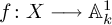 $f \colon X \longrightarrow \mathbb {A}_k^1$
be a morphism of algebraic k-spaces, then the diagram
$f \colon X \longrightarrow \mathbb {A}_k^1$
be a morphism of algebraic k-spaces, then the diagram

is commutative.
Proof. By a piecewise version of proposition 6.3, we see that
 $$ \begin{align*} (u_{\sigma})^* \colon K_0(\mathbf{QUSH}_{\mathfrak{M},\mathrm{ct}}^{\tau}(U_{\sigma})) \longrightarrow K_0(\mathbf{QUSH}_{\mathfrak{M},\mathrm{ct}}^{\tau}(X_{\sigma})) \end{align*} $$
is injective if $u \colon U \longrightarrow X$
is a Nisnevich atlas of X. The result then follow from [Reference Bang PhamPha24, Proposition 5.6].
$u \colon U \longrightarrow X$
is a Nisnevich atlas of X. The result then follow from [Reference Bang PhamPha24, Proposition 5.6].
Corollary 4.11. Let $X = \mathbb {A}_k^{d_1} \times _k \mathbb {A}_k^{d_2} \times _k Y$
with Y an algebraic k-space. Suppose that
$X = \mathbb {A}_k^{d_1} \times _k \mathbb {A}_k^{d_2} \times _k Y$
with Y an algebraic k-space. Suppose that $\mathbb {G}_{m,k}$
acts by positive weights on
$\mathbb {G}_{m,k}$
acts by positive weights on $\mathbb {A}^{d_1}_k$
, by negative weights on
$\mathbb {A}^{d_1}_k$
, by negative weights on $\mathbb {A}^{d_2}_k$
and trivially on Y, then the virtual integral identity
$\mathbb {A}^{d_2}_k$
and trivially on Y, then the virtual integral identity
 $$ \begin{align*} \int_{\mathbb{A}^{d_1}_k}(\psi_f)_{\mid \mathbb{A}^{d_1}_k \times_k Y} = \mathbf{L}^{d_1}(\psi_{f\mid Y}) \end{align*} $$
holds in $K_0(\mathbf {QUSH}_{\mathfrak {M},\mathrm {ct}}^{\tau }(X^0_{\sigma }))$
.
$K_0(\mathbf {QUSH}_{\mathfrak {M},\mathrm {ct}}^{\tau }(X^0_{\sigma }))$
.
Proof. One can copy the proof in [Reference IvorraIvo24].
5 Motivic constant term functors
The aim of this section is to extend the framework of motivic nearby cycles functors and Braden transformations to ind-schemes. As a consequence, we obtain a motivic enhancement of the compatibility of geometric constant term functors and Bernstein isomorphisms.
5.1 Extending specialization systems to ind-schemes
In order to have the language to establish the next section, which involves ind-schemes like affine Grassmannians, here we study specialization systems on ind-schemes. Let ${X = \operatorname {colim}_{i \in I} X_i}$
be an ind-S-scheme. The transition morphisms induce adjunctions
${X = \operatorname {colim}_{i \in I} X_i}$
be an ind-S-scheme. The transition morphisms induce adjunctions
 $$ \begin{align*} \big((\iota_{i \to j})_* = (\iota_{i \to j})_! \dashv (\iota_{i \to j})^! \big) \colon \mathbf{SH}_{\mathfrak{M}}^{\tau}(X_i) \longrightarrow \mathbf{SH}_{\mathfrak{M}}^{\tau}(X_j). \end{align*} $$
We define a category $\mathbf {SH}_{\mathfrak {M}}^{\tau }(X)$
by the formula
$\mathbf {SH}_{\mathfrak {M}}^{\tau }(X)$
by the formula
 $$ \begin{align*} \mathbf{SH}_{\mathfrak{M}}^{\tau}(X) {:=}q \operatorname{colim}_{(\iota_{i \to j})_!} \mathbf{SH}_{\mathfrak{M}}^{\tau}(X_i) \end{align*} $$
where in the colimit, the transition morphisms are $(\iota _{i \to j})_!$
. The category
$(\iota _{i \to j})_!$
. The category $\mathbf {SH}_{\mathfrak {M}}^{\tau }(X)$
is canonically a triangulated category and independent of the choice of the presentation
$\mathbf {SH}_{\mathfrak {M}}^{\tau }(X)$
is canonically a triangulated category and independent of the choice of the presentation $X = \operatorname {colim}_{i \in I}X_i$
by the same reason as in [Reference GaitsgoryGai01, Lemma 8].
$X = \operatorname {colim}_{i \in I}X_i$
by the same reason as in [Reference GaitsgoryGai01, Lemma 8].
Lemma 5.1. For any morphism f of ind-S-schemes, the operations $(f_*,f_!,f^!)$
are well-defined. If moreover, f is cartesian, then
$(f_*,f_!,f^!)$
are well-defined. If moreover, f is cartesian, then $f^*$
is well-defined. They satisfies the usual base change properties whenever they are defined.
$f^*$
is well-defined. They satisfies the usual base change properties whenever they are defined.
Proof. Let us show that for instance, that we can define $f_!$
. The other operations are treated similarly. An object
$f_!$
. The other operations are treated similarly. An object $A \in \mathbf {SH}_{\mathfrak {M}}^{\tau }(X)$
coming from
$A \in \mathbf {SH}_{\mathfrak {M}}^{\tau }(X)$
coming from $\mathbf {SH}_{\mathfrak {M}}^{\tau }(X_i)$
is sent to
$\mathbf {SH}_{\mathfrak {M}}^{\tau }(X_i)$
is sent to $(f_i)_!(A)$
in
$(f_i)_!(A)$
in $\mathbf {SH}_{\mathfrak {M}}^{\tau }(Y_i)$
. We need to show that for
$\mathbf {SH}_{\mathfrak {M}}^{\tau }(Y_i)$
. We need to show that for $i \to j$
in I, there is an isomorphism
$i \to j$
in I, there is an isomorphism
 $$ \begin{align*} (\iota_{i \to j}^Y)_*(f_i)_!(A) \simeq (f_j)_!(\iota_{i \to j}^X)_*(A), \end{align*} $$
but this is just the functoriality of the exceptional direct image.
Proposition 5.2. Let $f \colon X = \operatorname {colim}_{i \to I}X_i\longrightarrow B$
be a morphism of ind-S-schemes. Let
$f \colon X = \operatorname {colim}_{i \to I}X_i\longrightarrow B$
be a morphism of ind-S-schemes. Let $f_i {:=}q X_i \longrightarrow B$
be induced morphisms of S-schemes. Let
$f_i {:=}q X_i \longrightarrow B$
be induced morphisms of S-schemes. Let $\operatorname {sp}$
be a specialization system over
$\operatorname {sp}$
be a specialization system over $(B,i,j)$
, then the functor
$(B,i,j)$
, then the functor $\operatorname {sp}_f {:=}q \operatorname {colim}_{i \in I} \operatorname {sp}_{f_i} \colon \mathbf {SH}_{\mathfrak {M}}^{\tau }(X_{\eta }) \longrightarrow \mathbf {SH}_{\mathfrak {M}}^{\tau }(X_{\sigma })$
is well-defined. Moreover, for each morphism
$\operatorname {sp}_f {:=}q \operatorname {colim}_{i \in I} \operatorname {sp}_{f_i} \colon \mathbf {SH}_{\mathfrak {M}}^{\tau }(X_{\eta }) \longrightarrow \mathbf {SH}_{\mathfrak {M}}^{\tau }(X_{\sigma })$
is well-defined. Moreover, for each morphism $g \colon Y \longrightarrow X$
of ind-S-schemes, the base change morphisms
$g \colon Y \longrightarrow X$
of ind-S-schemes, the base change morphisms
 $$ \begin{align*} \beta_g \colon \operatorname{sp}_f (g_{\eta})_* & \longrightarrow (g_{\sigma})_*\operatorname{sp}_{f \circ g} \\ \nu_g \colon (g_{\sigma})_!\operatorname{sp}_{f \circ g} & \longrightarrow \operatorname{sp}_f (g_{\eta})_! \\ \nu_g \colon \operatorname{sp}_{f \circ g}(g_{\eta})^!& \longrightarrow (g_{\sigma})^!\operatorname{sp}_f. \end{align*} $$
are well-defined. If g is cartesian, then the morphism
 $$ \begin{align*} \alpha_g \colon (g_{\sigma})^*\operatorname{sp}_f & \longrightarrow \operatorname{sp}_{f \circ g}(g_{\eta})^* \end{align*} $$
is well-defined.
Proof. We define $\operatorname {sp}_f(A)$
to be
$\operatorname {sp}_f(A)$
to be $\operatorname {sp}_{f_i}(A)$
if A comes from
$\operatorname {sp}_{f_i}(A)$
if A comes from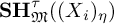 $\mathbf {SH}_{\mathfrak {M}}^{\tau }((X_i)_{\eta })$
. To prove that
$\mathbf {SH}_{\mathfrak {M}}^{\tau }((X_i)_{\eta })$
. To prove that $\operatorname {sp}_f$
is well-defined, we have to show that if
$\operatorname {sp}_f$
is well-defined, we have to show that if $i \to j$
, then
$i \to j$
, then $(\iota _{i \to j,\sigma })_*(\operatorname {sp}_{f_i}(A)) \simeq \operatorname {sp}_{f_j}(\iota _{i \to j,\eta })_*(A)$
, but this follows from the definition. Let us explain how to define base change morphisms
$(\iota _{i \to j,\sigma })_*(\operatorname {sp}_{f_i}(A)) \simeq \operatorname {sp}_{f_j}(\iota _{i \to j,\eta })_*(A)$
, but this follows from the definition. Let us explain how to define base change morphisms $\beta _g$
, the others are done using the analogous arguments. We assume that
$\beta _g$
, the others are done using the analogous arguments. We assume that $g = \operatorname {colim}_{i \in I} g_i \colon Y = \operatorname {colim}_{i \in I}Y_i \longrightarrow X = \operatorname {colim}_{i \in I}X_i$
is colimit of
$g = \operatorname {colim}_{i \in I} g_i \colon Y = \operatorname {colim}_{i \in I}Y_i \longrightarrow X = \operatorname {colim}_{i \in I}X_i$
is colimit of $g_i \colon Y_i \longrightarrow X_i$
. If
$g_i \colon Y_i \longrightarrow X_i$
. If $A \in \mathbf {SH}_{\mathfrak {M}}^{\tau }((Y_{i,\eta })$
, we define
$A \in \mathbf {SH}_{\mathfrak {M}}^{\tau }((Y_{i,\eta })$
, we define $\beta _g(A)$
to be
$\beta _g(A)$
to be $\operatorname {sp}_{f_i}(g_{i,\eta })_*(A) \longrightarrow (g_{i,\sigma })_*\operatorname {sp}_{f_i \circ g_i}(A)$
. This is well-defined as for
$\operatorname {sp}_{f_i}(g_{i,\eta })_*(A) \longrightarrow (g_{i,\sigma })_*\operatorname {sp}_{f_i \circ g_i}(A)$
. This is well-defined as for $i \to j$
in I, there is a commutative diagram
$i \to j$
in I, there is a commutative diagram

with indicated isomorphisms. Let $A \longrightarrow B$
be a morphism in
$A \longrightarrow B$
be a morphism in $\mathbf {SH}_{\mathfrak {M}}^{\tau }(Y_{\eta })$
. Suppose that
$\mathbf {SH}_{\mathfrak {M}}^{\tau }(Y_{\eta })$
. Suppose that ${A \in \mathbf {SH}_{\mathfrak {M}}^{\tau }(Y_{i,\eta })}$
and
${A \in \mathbf {SH}_{\mathfrak {M}}^{\tau }(Y_{i,\eta })}$
and $B \in \mathbf {SH}_{\mathfrak {M}}^{\tau }(Y_{j,\eta })$
and without loss of generality, we can assume that
$B \in \mathbf {SH}_{\mathfrak {M}}^{\tau }(Y_{j,\eta })$
and without loss of generality, we can assume that $i \longrightarrow j$
, hence a morphism
$i \longrightarrow j$
, hence a morphism $A \longrightarrow B$
is simply a morphism
$A \longrightarrow B$
is simply a morphism $(\iota _{i \to j,\eta })_*(A) \longrightarrow B$
in
$(\iota _{i \to j,\eta })_*(A) \longrightarrow B$
in $\mathbf {SH}_{\mathfrak {M}}^{\tau }(Y_{j,\eta })$
. The rest now follows from the naturality of
$\mathbf {SH}_{\mathfrak {M}}^{\tau }(Y_{j,\eta })$
. The rest now follows from the naturality of $\operatorname {sp}$
.
$\operatorname {sp}$
.
5.2 Extending Braden transformations to ind-schemes
In geometric Langlands, it is natural to work with ind-schemes and we want to have analogous results of the preceding section for such objects. The reader feels free to extend results in this section to ind-algebraic spaces. Let R be a ring and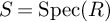 $S = \operatorname {Spec}(R)$
its spectrum. Let
$S = \operatorname {Spec}(R)$
its spectrum. Let $X = \operatorname {colim}_{i \in I}X_i$
be an ind-S-variety endowed with a
$X = \operatorname {colim}_{i \in I}X_i$
be an ind-S-variety endowed with a $\tau $
-locally linearizable
$\tau $
-locally linearizable $\mathbb {G}_{m,S}$
-action (where
$\mathbb {G}_{m,S}$
-action (where $\tau $
is at least the étale topology), this means there exists a presentation
$\tau $
is at least the étale topology), this means there exists a presentation $X = \operatorname {colim}_{i \in I} X_i$
where the
$X = \operatorname {colim}_{i \in I} X_i$
where the $\mathbb {G}_{m,S}$
-action on each
$\mathbb {G}_{m,S}$
-action on each $X_i$
is
$X_i$
is $\tau $
-locally linearizable in the sense of of schemes, see for instance [Reference RicharzRic18, Definition 1.6]. Then [Reference Haines and RicharzHR21, Theorem 2.1] proves that the morphism
$\tau $
-locally linearizable in the sense of of schemes, see for instance [Reference RicharzRic18, Definition 1.6]. Then [Reference Haines and RicharzHR21, Theorem 2.1] proves that the morphism $X^+ \longrightarrow X$
is cartesian and hence by lemma 5.1, the operation
$X^+ \longrightarrow X$
is cartesian and hence by lemma 5.1, the operation $(e^+)^*$
is well-defined.
$(e^+)^*$
is well-defined.
Proposition 5.3. Let X be an ind-S-variety endowed with a $\tau $
-locally linearizable
$\tau $
-locally linearizable $\mathbb {G}_{m,S}$
-action, then the Braden transformation
$\mathbb {G}_{m,S}$
-action, then the Braden transformation
 $$ \begin{align*} (\pi^-)_*(e^-)^! \longrightarrow (\pi^+)_!(e^+)^* \end{align*} $$
is well-defined and is an isomorphism on equivariant objects.
Proof. It suffices to prove a generalization of lemma 2.18: let $Z,X$
be S-varieties endowed with
$Z,X$
be S-varieties endowed with $\tau $
-locally linearizable
$\tau $
-locally linearizable $\mathbb {G}_{m,S}$
-actions and
$\mathbb {G}_{m,S}$
-actions and $z \colon Z {\hookrightarrow} X$
be an equivariant closed immersion. Then there is a commutative diagram
$z \colon Z {\hookrightarrow} X$
be an equivariant closed immersion. Then there is a commutative diagram

and the two vertical arrows are isomorphisms. Indeed, by the proof of [Reference Haines and RicharzHR21, Theorem 2.1], we know that $Z^0 \longrightarrow X^0$
and
$Z^0 \longrightarrow X^0$
and $Z^{\pm } \longrightarrow X^{\pm }$
are closed immersions. To repeat the proof of [Reference RicharzRic18, Lemma 2.23], it suffices to show that
$Z^{\pm } \longrightarrow X^{\pm }$
are closed immersions. To repeat the proof of [Reference RicharzRic18, Lemma 2.23], it suffices to show that $Z^0 = Z^{\pm } \times _{X^{\pm }} X^0$
. We choose an affine, equivariant
$Z^0 = Z^{\pm } \times _{X^{\pm }} X^0$
. We choose an affine, equivariant $\tau $
-covering
$\tau $
-covering $U \longrightarrow X$
, then
$U \longrightarrow X$
, then $U \times _X Z \longrightarrow X$
is an affine, equivariant
$U \times _X Z \longrightarrow X$
is an affine, equivariant $\tau $
-covering as well. Since being an isomorphism is fpqc local on target, we see that
$\tau $
-covering as well. Since being an isomorphism is fpqc local on target, we see that $Z^0 = Z^{\pm } \times _{X^{\pm }} X^0$
is true since it is true after base changing to U.
$Z^0 = Z^{\pm } \times _{X^{\pm }} X^0$
is true since it is true after base changing to U.
Example 5.4. Let G be an algebraic group over a field k, assumed to be algebraically closed for simplicity. The affine Grassmannian $\operatorname {Gr}_G$
is defined to be the fpqc sheaf associated with the functor
$\operatorname {Gr}_G$
is defined to be the fpqc sheaf associated with the functor
 $$ \begin{align*} A \longmapsto G\big(A(\!(t)\!) \big)/G\big(A[\![t]\!]\big) \end{align*} $$
with A varying over k-algebras. It is well-known to be an ind-scheme and ind-projective if G is reductive (see for instance [Reference Mirković and VilonenMV18][Reference Beilinson and DrinfeldBD96] and see also [Reference RicharzRic19][Reference ZhuZhu16][Reference Achar and RicheAR]). Let us assume that G is connected reductive over k. Let $T \subset B\subset G$
be a Borel subgroup B and a maximal torus T. Let
$T \subset B\subset G$
be a Borel subgroup B and a maximal torus T. Let $B \subset P \subset G$
be a parabolic subgroup containing B and let
$B \subset P \subset G$
be a parabolic subgroup containing B and let $T \subset M \subset P$
be a Levi subgroup containing T. These data induce
$T \subset M \subset P$
be a Levi subgroup containing T. These data induce
 $$ \begin{align*} \mathrm{Gr}_M \overset{\pi^+}{\longleftarrow} \mathrm{Gr}_P \overset{e^+}{\longrightarrow} \mathrm{Gr}_G. \end{align*} $$
The connected components $\pi _0(\mathrm {Gr}_M)$
are canonically identified with
$\pi _0(\mathrm {Gr}_M)$
are canonically identified with $X_*(T)/\mathbb {Z}R^{\vee }(M,T)$
. Let
$X_*(T)/\mathbb {Z}R^{\vee }(M,T)$
. Let $\rho _G$
be half-sum of positive roots of G determined by B. Simiarly, let
$\rho _G$
be half-sum of positive roots of G determined by B. Simiarly, let $\rho _M$
be half-sum of positive roots of M determined by
$\rho _M$
be half-sum of positive roots of M determined by $B \cap M$
. As
$B \cap M$
. As $\left <2\rho _G - 2\rho _M,\lambda \right>=0$
for any
$\left <2\rho _G - 2\rho _M,\lambda \right>=0$
for any $\lambda \in R^{\vee }(M,T)$
, we can define a locally constant function
$\lambda \in R^{\vee }(M,T)$
, we can define a locally constant function
 $$ \begin{align*} \deg_M \colon \mathrm{Gr}_M \longrightarrow \pi_0(\mathrm{Gr}_M) \overset{\left <2\rho_G - 2\rho_M,- \right>}{\longrightarrow} \mathbb{Z}. \end{align*} $$
We then define the constant term functor as
 $$ \begin{align*} \operatorname{CT}_M^G {:=}q (\pi^+)_!(e^+)^*[\deg_M] \colon \mathbf{SH}_{\mathfrak{M}}^{\tau}(\mathrm{Gr}_G) \longrightarrow \mathbf{SH}_{\mathfrak{M}}^{\tau}(\mathrm{Gr}_M) \end{align*} $$
where one puts $\deg _M$
here for perversity reason (see the example below). Constant term functors are well-known in geometric Langlands, see for instance [Reference Beilinson and DrinfeldBD96][Reference Braverman and GaitsgoryBG02][Reference Mirković and VilonenMV18][Reference Cass and PépinCP24]. Particular cases of constant term functors are those induced by cocharacters. Let
$\deg _M$
here for perversity reason (see the example below). Constant term functors are well-known in geometric Langlands, see for instance [Reference Beilinson and DrinfeldBD96][Reference Braverman and GaitsgoryBG02][Reference Mirković and VilonenMV18][Reference Cass and PépinCP24]. Particular cases of constant term functors are those induced by cocharacters. Let $\lambda \colon \mathbb {G}_{m,k} \longrightarrow G$
be a cocharacter. The cocharacter
$\lambda \colon \mathbb {G}_{m,k} \longrightarrow G$
be a cocharacter. The cocharacter $\lambda $
induces via conjugation a
$\lambda $
induces via conjugation a $\mathbb {G}_{m,k}$
-action on G as follows
$\mathbb {G}_{m,k}$
-action on G as follows
 $$ \begin{align*} \mathbb{G}_{m,k} \times G \longrightarrow G, \ \ (t,g) \longmapsto \lambda(t)g\lambda(t)^{-1}. \end{align*} $$
With this action, $P^{\pm } {:=}q G^{\pm }$
are opposite parabolic subgroups defined by dynamic method in [Reference ConradCon14] and
$P^{\pm } {:=}q G^{\pm }$
are opposite parabolic subgroups defined by dynamic method in [Reference ConradCon14] and $M = P^+ \cap P^- = G^0$
is a common Levi. This gives rise to a Braden transformation
$M = P^+ \cap P^- = G^0$
is a common Levi. This gives rise to a Braden transformation
 $$ \begin{align*} (\pi^-)_*(e^-)^![\deg_M] \longrightarrow (\pi^+)_!(e^+)^*[\deg_M] \end{align*} $$
between functors $\mathbf {SH}_{\mathfrak {M}}^{\tau }(\mathrm {Gr}_G) \longrightarrow \mathbf {SH}_{\mathfrak {M}}^{\tau }(\mathrm {Gr}_M)$
. The action is even Zar-locally linearizable by [Reference Haines and RicharzHR21, Lemma 3.3] so the Braden transformation above is an isomorphism on equivariant objects.
$\mathbf {SH}_{\mathfrak {M}}^{\tau }(\mathrm {Gr}_G) \longrightarrow \mathbf {SH}_{\mathfrak {M}}^{\tau }(\mathrm {Gr}_M)$
. The action is even Zar-locally linearizable by [Reference Haines and RicharzHR21, Lemma 3.3] so the Braden transformation above is an isomorphism on equivariant objects.
Example 5.5. In [Reference Ivorra and MorelIM19] (and subsequent works such as [Reference TerenziTer24][Reference TubachTub25]), Ivorra and Morel develops the theory of perverse Nori motives (also called perverse motivic sheaves)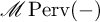 $\mathscr {M}\operatorname {Perv}(-)$
and show that they acquire a four-functor formalism
$\mathscr {M}\operatorname {Perv}(-)$
and show that they acquire a four-functor formalism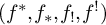 $(f^*,f_*,f_!,f^!)$
(the two other functors
$(f^*,f_*,f_!,f^!)$
(the two other functors $(\otimes ,\underline {\operatorname {Hom}})$
are constructed in [Reference TerenziTer24]) on the bounded derived categories
$(\otimes ,\underline {\operatorname {Hom}})$
are constructed in [Reference TerenziTer24]) on the bounded derived categories $\mathbf {DN}^b(-) = \mathbf {D}^b(\mathscr {M}\operatorname {Perv}(-))$
. The Braden transformation can be defined analogously as above between constant term functors on Nori motives, namely, there are constant term functors
$\mathbf {DN}^b(-) = \mathbf {D}^b(\mathscr {M}\operatorname {Perv}(-))$
. The Braden transformation can be defined analogously as above between constant term functors on Nori motives, namely, there are constant term functors $\mathbf {DN}^b(\mathrm {Gr}_G) \longrightarrow \mathbf {DN}^b(\mathrm {Gr}_M)$
. It is natural to expect certain perversity of this functor. For instance, in [Reference Bang PhamPha26], the author builds the equivariant Nori motives
$\mathbf {DN}^b(\mathrm {Gr}_G) \longrightarrow \mathbf {DN}^b(\mathrm {Gr}_M)$
. It is natural to expect certain perversity of this functor. For instance, in [Reference Bang PhamPha26], the author builds the equivariant Nori motives $\mathscr {M}\operatorname {Perv}_{\mathrm {L}^+G}(\mathrm {Gr}_G), \mathbf {DN}^b_{\mathrm {L}^+G}(\mathrm {Gr}_G)$
(where
$\mathscr {M}\operatorname {Perv}_{\mathrm {L}^+G}(\mathrm {Gr}_G), \mathbf {DN}^b_{\mathrm {L}^+G}(\mathrm {Gr}_G)$
(where $\mathrm {L}^+G(A) = G\big (A[\![t]\!]\big )$
is the positive loop group) so that we expect that the constant term functors produce a functor
$\mathrm {L}^+G(A) = G\big (A[\![t]\!]\big )$
is the positive loop group) so that we expect that the constant term functors produce a functor $\mathscr {M}\operatorname {Perv}_{\mathrm {L}^+G}(\mathrm {Gr}_G) \longrightarrow \mathbf {DN}^b_{\mathrm {L}^+M}(\mathrm {Gr}_M)$
(where both sides should be understood as stratified perverse Nori motives as in [Reference Bang PhamPha26]) that is monoidal with respect to the convolution product on both sides (see [Reference Bang PhamPha26] for the definition of convolution products on perverse Nori motives of affine Grassmannians) and moreover, the image is an equivariant perverse Nori motives as in the classical setting (see [Reference Baumann and RicheBR18, Lemma 15.1] for instance).
$\mathscr {M}\operatorname {Perv}_{\mathrm {L}^+G}(\mathrm {Gr}_G) \longrightarrow \mathbf {DN}^b_{\mathrm {L}^+M}(\mathrm {Gr}_M)$
(where both sides should be understood as stratified perverse Nori motives as in [Reference Bang PhamPha26]) that is monoidal with respect to the convolution product on both sides (see [Reference Bang PhamPha26] for the definition of convolution products on perverse Nori motives of affine Grassmannians) and moreover, the image is an equivariant perverse Nori motives as in the classical setting (see [Reference Baumann and RicheBR18, Lemma 15.1] for instance).
5.3 Compatibility of geometric constant term functors and Bernstein isomorphisms
Let us assume from now on that R is the ring of integers of a local field F.
Proposition 5.6. Let X be an ind-S-variety endowed with a $\tau $
-locally linearizable
$\tau $
-locally linearizable $\mathbb {G}_{m,S}$
-action. Let
$\mathbb {G}_{m,S}$
-action. Let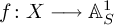 $f \colon X \longrightarrow \mathbb {A}^1_S$
be an equivariant morphism, then there exists a commutative diagram
$f \colon X \longrightarrow \mathbb {A}^1_S$
be an equivariant morphism, then there exists a commutative diagram

natural in $A \in \mathbf {SH}_{\mathfrak {M}}^{\tau }(X_{\eta })$
. Moreover, all arrows are isomorphisms provided that A is equivariant.
$A \in \mathbf {SH}_{\mathfrak {M}}^{\tau }(X_{\eta })$
. Moreover, all arrows are isomorphisms provided that A is equivariant.
Proof. The proof is similar to the proof of [Reference Haines and RicharzHR21, Theorem 6.1]. We remind the proof for the convenience of the reader. At first we note that $\Psi _f$
and Braden transformations are well-defined thanks to propositions 5.2 and 5.3. The morphisms
$\Psi _f$
and Braden transformations are well-defined thanks to propositions 5.2 and 5.3. The morphisms $(e^-_?)^!$
also make sense because they are cartesian thanks to [Reference Haines and RicharzHR21, Theorem 2.1]. All arrows are constructed by taking limits of those coming from schemes. Let
$(e^-_?)^!$
also make sense because they are cartesian thanks to [Reference Haines and RicharzHR21, Theorem 2.1]. All arrows are constructed by taking limits of those coming from schemes. Let $A \in \mathbf {SH}_{\mathfrak {M}}^{\tau }(X_{\eta })$
, then it suffices to assume that
$A \in \mathbf {SH}_{\mathfrak {M}}^{\tau }(X_{\eta })$
, then it suffices to assume that $A \in \mathbf {SH}_{\mathfrak {M}}^{\tau }(X_{i,\eta })$
for some i. The result follows from proposition 3.1.
$A \in \mathbf {SH}_{\mathfrak {M}}^{\tau }(X_{i,\eta })$
for some i. The result follows from proposition 3.1.
By taking homotopy colimits, we obtain an analogue of [Reference Haines and RicharzHR21, Theorem 6.1].
Corollary 5.7. Regarding the hypothesis in 1.6, let X be a separated ind-R-scheme of ind-finite type endowed with a $\mathrm {\acute{e}t}$
-locally linearizable
$\mathrm {\acute{e}t}$
-locally linearizable $\mathbb {G}_{m,R}$
-action. Let A be an equivariant object in
$\mathbb {G}_{m,R}$
-action. Let A be an equivariant object in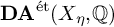 $\mathbf {DA}^{\mathrm {\acute{e}t}}(X_{\eta },\mathbb {Q})$
. There exists a commutative diagram
$\mathbf {DA}^{\mathrm {\acute{e}t}}(X_{\eta },\mathbb {Q})$
. There exists a commutative diagram

all arrows are isomorphisms when computed at equivariant objects.
Remark 5.8. The corollary above shows that [Reference Haines and RicharzHR21, Theorem 6.1] (see also [Reference RicharzRic18, Theorem 3.3]) is motivic in the following sense: in [Reference AyoubAyo14], Ayoub constructs an étale realization functor
 $$ \begin{align*} \mathfrak{R}^{\mathrm{\acute{e}t}} \colon \mathbf{DA}^{\mathrm{\acute{e}t}}_{\mathrm{ct}}(-,\mathbb{Q}) \longrightarrow \mathbf{D}^b_{\mathrm{ct}}(-,\overline{\mathbb{Q}}_{\ell}) \end{align*} $$
commuting with four operations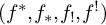 $(f^*,f_*,f_!,f^!)$
of schemes. Moreover, if [Reference AyoubAyo14, Hypothèse 7.3] is satisfied (which is automatic in the situation of example 1.6), then
$(f^*,f_*,f_!,f^!)$
of schemes. Moreover, if [Reference AyoubAyo14, Hypothèse 7.3] is satisfied (which is automatic in the situation of example 1.6), then $\mathfrak {R}^{\mathrm {\acute{e}t}}$
commutes with nearby cycles functors (see [Reference AyoubAyo14, Théorème 10.16]) in étale cohomology. For a separated R-ind-scheme of ind–finite type endowed with a
$\mathfrak {R}^{\mathrm {\acute{e}t}}$
commutes with nearby cycles functors (see [Reference AyoubAyo14, Théorème 10.16]) in étale cohomology. For a separated R-ind-scheme of ind–finite type endowed with a $\mathbb {G}_{m,R}$
-action
$\mathbb {G}_{m,R}$
-action $X = \operatorname {colim}_{i \in I}X_i$
, we define
$X = \operatorname {colim}_{i \in I}X_i$
, we define
 $$ \begin{align*} \mathbf{D}^b_{\mathrm{ct}}(X,\overline{\mathbb{Q}}_{\ell}) = \operatorname{colim}_{i \in I}\mathbf{D}^b_{\mathrm{ct}}(X_i,\overline{\mathbb{Q}}_{\ell}) \end{align*} $$
then under $\mathfrak {R}^{\mathrm {\acute{e}t}}$
, the diagram in 5.7 becomes the diagram in [Reference Haines and RicharzHR21, Theorem 6.1].
$\mathfrak {R}^{\mathrm {\acute{e}t}}$
, the diagram in 5.7 becomes the diagram in [Reference Haines and RicharzHR21, Theorem 6.1].
We would like to establish a motivic version of [Reference Haines and RicharzHR21, Theorem A], which is an analogue of the compatibility of Bernstein isomorphism with constant term map (see [Reference HainesHai14]). We fix a triplet $(G,\mathcal {G},\lambda )$
where G is a connected reductive F-group,
$(G,\mathcal {G},\lambda )$
where G is a connected reductive F-group, $\mathcal {G}$
is a parahoric R-group with generic fiber G and
$\mathcal {G}$
is a parahoric R-group with generic fiber G and $\lambda \colon \mathbb {G}_{m,R} \longrightarrow \mathcal {G}$
be a cocharacter over R. The cocharacter
$\lambda \colon \mathbb {G}_{m,R} \longrightarrow \mathcal {G}$
be a cocharacter over R. The cocharacter $\lambda $
acts on
$\lambda $
acts on $\mathcal {G}$
via conjugation. Let
$\mathcal {G}$
via conjugation. Let $\mathcal {M} = \mathcal {G}^0$
and
$\mathcal {M} = \mathcal {G}^0$
and $\mathcal {P}^{\pm } = \mathcal {G}^{\pm }$
be the fixed points and repeller, attractor. The generic fiber
$\mathcal {P}^{\pm } = \mathcal {G}^{\pm }$
be the fixed points and repeller, attractor. The generic fiber $M = \mathcal {M}_F$
is a F-Levi subgroup of G and
$M = \mathcal {M}_F$
is a F-Levi subgroup of G and $P^{\pm } = \mathcal {P}^{\pm }_F$
are parabolic subgroups with
$P^{\pm } = \mathcal {P}^{\pm }_F$
are parabolic subgroups with $P^+ \cap P^- = M$
. The natural morphisms
$P^+ \cap P^- = M$
. The natural morphisms
 $$ \begin{align*} \mathcal{M} \overset{\pi^{\pm}}{\longleftarrow} \mathcal{P}^{\pm} \overset{e^{\pm}}{\longrightarrow} \mathcal{G} \end{align*} $$
give rise to morphisms of Beilinson-Drinfeld Grassmannians (see for instance [Reference ZhuZhu14][Reference RicharzRic16][Reference Haines and RicharzHR21] and see also [Reference Achar and RicheAR])
 $$ \begin{align*} \mathrm{Gr}_{\mathcal{M}}^{\mathrm{BD}} \overset{\pi^{\pm}}{\longleftarrow} \mathrm{Gr}_{\mathcal{P}^{\pm}}^{\mathrm{BD}} \overset{e^{\pm}}{\longrightarrow} \mathrm{Gr}_{\mathcal{G}}^{\mathrm{BD}} \end{align*} $$
whose generic fiber and special fiber are
 $$ \begin{align*} \mathrm{Gr}_M \overset{\pi^{\pm}_{\eta}}{\longleftarrow} \mathrm{Gr}_{P^{\pm}} \overset{e^{\pm}_{\eta}}{\longrightarrow} \mathrm{Gr}_G\\ \mathcal{F}\ell_{\mathcal{M}} \overset{\pi^{\pm}_{\sigma}}{\longleftarrow} \mathcal{F}\ell_{\mathcal{P}^{\pm}} \overset{e^{\pm}_{\sigma}}{\longrightarrow} \mathcal{F}\ell_{\mathcal{G}} \end{align*} $$
affine Grassmannians and affine flag varieties, respectively. Hence, there are two total nearby functors (see example 1.6)
 $$ \begin{align*} \Psi_{\mathcal{M}}^{\mathrm{tot}} \colon \mathbf{DA}^{\mathrm{\acute{e}t}}(\mathrm{Gr}_M,\mathbb{Q}) & \longrightarrow \mathbf{DA}^{\mathrm{\acute{e}t}}(\mathcal{F}\ell_{\mathcal{M},\overline{\sigma}},\mathbb{Q}) \\ \Psi_{\mathcal{G}}^{\mathrm{tot}} \colon \mathbf{DA}^{\mathrm{\acute{e}t}}(\mathrm{Gr}_G,\mathbb{Q}) & \longrightarrow \mathbf{DA}^{\mathrm{\acute{e}t}}(\mathcal{F}\ell_{\mathcal{G},\overline{\sigma}},\mathbb{Q}) \end{align*} $$
and geometric constant term functors (see example 5.4)
 $$ \begin{align*} \mathrm{CT}_M {:=}q (\pi_{\eta}^+)_!(e^+_{\eta})^* \colon \mathbf{DA}^{\mathrm{\acute{e}t}}(\mathrm{Gr}_G,\mathbb{Q}) & \longrightarrow \mathbf{DA}^{\mathrm{\acute{e}t}}(\mathrm{Gr}_M,\mathbb{Q}) \\ \mathrm{CT}_{\mathcal{M}} {:=}q (\pi_{\overline{\sigma}}^+)_!(e_{\overline{\sigma}}^+)^* \colon \mathbf{DA}^{\mathrm{\acute{e}t}}(\mathcal{F}\ell_{\mathcal{G},\overline{\sigma}},\mathbb{Q}) & \longrightarrow \mathbf{DA}^{\mathrm{\acute{e}t}}(\mathcal{F}\ell_{\mathcal{M},\overline{\sigma}},\mathbb{Q}) \end{align*} $$
Here is main theorem of this section that we have for free thanks to what we have built in previous sections
Theorem 5.9. There is a natural transformation
 $$ \begin{align*} \mathrm{CT}_{\mathcal{M}} \circ \Psi^{\mathrm{tot}}_{\mathcal{G}} \longrightarrow \Psi^{\mathrm{tot}}_{\mathcal{M}} \circ \mathrm{CT}_M \end{align*} $$
which is an isomorphism on $\mathbb {G}_{m,K}$
-equivariant objects.
$\mathbb {G}_{m,K}$
-equivariant objects.
We end this section by an example
Example 5.10. Given the previous section, we can carry some computations motivated by the local model of the group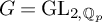 $G = \operatorname {GL}_{2,\mathbb {Q}_p}$
in [Reference Haines and RicharzHR21]. Let
$G = \operatorname {GL}_{2,\mathbb {Q}_p}$
in [Reference Haines and RicharzHR21]. Let $S = \operatorname {Spec}(\mathbb {Z}_p)$
and let
$S = \operatorname {Spec}(\mathbb {Z}_p)$
and let ${f \colon X \longrightarrow S}$
be the projective S-scheme obtained by blowing up
${f \colon X \longrightarrow S}$
be the projective S-scheme obtained by blowing up $\mathbb {P}_{\mathbb {Z}_p}^1$
at the point
$\left \{0 \right \}_{\mathbb {F}_p}$
$\mathbb {P}_{\mathbb {Z}_p}^1$
at the point
$\left \{0 \right \}_{\mathbb {F}_p}$
 of the special fiber. Hence, the generic fiber of X is $\mathbb {P}^1_{\mathbb {Q}_p}$
while the special fiber is the intersection of two copies of
$\mathbb {P}^1_{\mathbb {Q}_p}$
while the special fiber is the intersection of two copies of $\mathbb {P}^1_{\mathbb {F}_p}$
meeting transversally at a point denoted by
$\mathbb {P}^1_{\mathbb {F}_p}$
meeting transversally at a point denoted by $e_{\sigma }$
. The
$e_{\sigma }$
. The $\mathbb {G}_{m,\mathbb {Z}_p}$
-action
$\mathbb {G}_{m,\mathbb {Z}_p}$
-action $\lambda \cdot [x : y] = [\lambda x : y]$
on
$\lambda \cdot [x : y] = [\lambda x : y]$
on $\mathbb {P}_{\mathbb {Z}_p}^1$
lifts to a unique action on X. The
$\mathbb {P}_{\mathbb {Z}_p}^1$
lifts to a unique action on X. The $\mathbb {Q}_p$
-points
$\mathbb {Q}_p$
-points $0_{\eta }$
and
$0_{\eta }$
and $\infty _{\eta }$
lift uniquely to
$\infty _{\eta }$
lift uniquely to $\mathbb {Z}_p$
-points
$\mathbb {Z}_p$
-points $0_S$
and
$0_S$
and $\infty _S$
by the valuative criterion for properness applied to the diagram
$\infty _S$
by the valuative criterion for properness applied to the diagram

We see that
 $$ \begin{align*} X^0 = 0_S \sqcup \infty_S \sqcup e_{\sigma} \ \ \ \ \text{and} \ \ \ \ X^{\pm} = (\mathbb{A}^1_S)^{\pm} \sqcup \infty_S \sqcup (\mathbb{A}^1_{\sigma})^{\pm}. \end{align*} $$
The morphisms $\pi ^+,\pi ^-$
are given by contracting to fixed point. One can write
$\pi ^+,\pi ^-$
are given by contracting to fixed point. One can write $X^+ = \mathbb {A}_{0_S \sqcup e_{\sigma }}^1 \sqcup \infty _S$
with two inclusions
$X^+ = \mathbb {A}_{0_S \sqcup e_{\sigma }}^1 \sqcup \infty _S$
with two inclusions $i_1 \colon \mathbb {A}^1_{0_S \sqcup e_{\sigma }} {\hookrightarrow} X^+$
and
$i_1 \colon \mathbb {A}^1_{0_S \sqcup e_{\sigma }} {\hookrightarrow} X^+$
and $i_2 \colon \infty _S {\hookrightarrow} X^+$
. We also denote
$i_2 \colon \infty _S {\hookrightarrow} X^+$
. We also denote $i_3 \colon U = 0_S \sqcup e_{\sigma } {\hookrightarrow} X^0$
and
$i_3 \colon U = 0_S \sqcup e_{\sigma } {\hookrightarrow} X^0$
and $i_4 \colon V= \infty _S {\hookrightarrow} X^0$
canonical inclusions. We denote by
$i_4 \colon V= \infty _S {\hookrightarrow} X^0$
canonical inclusions. We denote by $p \colon \mathbb {A}^1_{0_S \sqcup e_{\sigma }} \longrightarrow 0_S \sqcup e_{\sigma }$
the canonical projection. The motive
$p \colon \mathbb {A}^1_{0_S \sqcup e_{\sigma }} \longrightarrow 0_S \sqcup e_{\sigma }$
the canonical projection. The motive $A = \mathbb {1}_{X_{\eta }}$
is equivariant and we can compute
$A = \mathbb {1}_{X_{\eta }}$
is equivariant and we can compute
 $$ \begin{align*} L^{\pm}_{X_{\eta}}(A) & \simeq (\pi_{\eta}^+)_!(e^+_{\eta})^*(\mathbb{1}_{X_{\eta}}) \simeq (\pi_{\eta}^+)_!(\mathbb{1}_{X^+_{\eta}}) \\ & \simeq (\pi_{\eta}^+)_!(i_{1,\eta})_!(\mathbb{1}_{\mathbb{A}^1_{0_\eta}}) \oplus (\pi_{\eta}^+)_!(i_{2,\eta})_!(\mathbb{1}_{\infty_{\eta}}) \\ & \simeq (i_{3,\eta})_!(p_{\eta})_!(\mathbb{1}_{\mathbb{A}^1_{0_\eta}}) \oplus (i_{4,\eta})_!(\mathbb{1}_{\infty_{\eta}}) \\ & \simeq (i_{3,\eta})_!(\mathbb{1}_{0_{\eta}})(-1)[-2] \oplus (i_{4,\eta})_!(\mathbb{1}_{\infty_{\eta}}). \end{align*} $$
Since $\Psi _S^{\mathrm {tot}} \colon \mathbf {DA}^{\mathrm {\acute{e}t}}(\eta ,\mathbb {Q}) \longrightarrow \mathbf {DA}^{\mathrm {\acute{e}t}}(\overline {\sigma },\mathbb {Q})$
is unitary monoidal by [Reference AyoubAyo14, Théorème 10.19], we see that
$\Psi _S^{\mathrm {tot}} \colon \mathbf {DA}^{\mathrm {\acute{e}t}}(\eta ,\mathbb {Q}) \longrightarrow \mathbf {DA}^{\mathrm {\acute{e}t}}(\overline {\sigma },\mathbb {Q})$
is unitary monoidal by [Reference AyoubAyo14, Théorème 10.19], we see that
 $$ \begin{align*} (\pi_{\overline{\sigma}}^+)_!(e^+_{\overline{\sigma}})^*\Psi_X^{\mathrm{tot}}(A) \simeq \Psi_{X^0}^{\mathrm{tot}}(L^+_{X_{\eta}}(A)) & \simeq \Psi_{X^0}^{\mathrm{tot}}(i_{3,\eta})_!(\mathbb{1}_{0_{\eta}})(-1)[-2] \oplus \Psi_{X^0}^{\mathrm{tot}}(i_{4,\eta})_!(\mathbb{1}_{\infty_{\eta}}) \\ & \simeq (i_{3,\overline{\sigma}})_!\Psi_U^{\mathrm{tot}}(\mathbb{1}_{0_{\eta}})(-1)[-2] \oplus (i_{4,\overline{\sigma}})_!\Psi_V^{\mathrm{tot}}(\mathbb{1}_{\infty_{\eta}}) \\ & \simeq (i_{3,\overline{\sigma}})_!(\mathbb{1}_{0_{\overline{\sigma}}})(-1)[-2] \oplus (i_{4,\overline{\sigma}})_!(\mathbb{1}_{\infty_{\overline{\sigma}}}). \end{align*} $$
Under the $\ell $
-adic realization and at the level of
$\ell $
-adic realization and at the level of $\ell $
-adic cohomology, the identity above reads
$\ell $
-adic cohomology, the identity above reads
 $$ \begin{align*} \mathbb{H}^*_c(X_{\overline{\sigma}}^+,\Psi^{\mathrm{tot}}_X(A)) \simeq \overline{\mathbb{Q}}_{\ell}(-1)[-2] \oplus \overline{\mathbb{Q}}_{\ell} \end{align*} $$
which is compatible with [Reference RicharzRic18, Example 3.5][Reference Haines and RicharzHR21, Section 1.3.2].
Remark 5.11. One can perform the same computation with $S = \operatorname {Spec}(k[\![t ]\!])$
, k a field of characteristic zero and
$S = \operatorname {Spec}(k[\![t ]\!])$
, k a field of characteristic zero and $\Psi ^{\mathrm {tot}}$
is rep t-adic nearby functor considered in example 1.5. The importance is that
$\Psi ^{\mathrm {tot}}$
is rep t-adic nearby functor considered in example 1.5. The importance is that $\Psi ^{\mathrm {adic}}_{\operatorname {id}}$
is unitary monoidal.
$\Psi ^{\mathrm {adic}}_{\operatorname {id}}$
is unitary monoidal.
6 Appendix: Four-functor formalism of algebraic spaces
In [Reference ChowdhuryCho24][Reference Chowdhury and D’AngeloCD24][Reference Khan and RaviKR24], the four-functor formalism for nice algebraic stacks is constructed for the case of $\mathbf {SH}$
, the motivic stable homotopy category of schemes (which is
$\mathbf {SH}$
, the motivic stable homotopy category of schemes (which is $\mathbf {SH}_{\mathfrak {M}}^{\tau }$
below with
$\mathbf {SH}_{\mathfrak {M}}^{\tau }$
below with $\tau $
the Nisnevich topology and
$\tau $
the Nisnevich topology and $\mathfrak {M} = \mathbf {Spect}^{\Sigma }_{S^1}(\mathbf {Sets}^{\Delta ^{op}})$
the category of
$\mathfrak {M} = \mathbf {Spect}^{\Sigma }_{S^1}(\mathbf {Sets}^{\Delta ^{op}})$
the category of $S^1$
-symmetric spectra) of Morel-Voevodsky (see [Reference Morel and VoevodskyMV99] for the unstable version). Here we generalize to the general case
$S^1$
-symmetric spectra) of Morel-Voevodsky (see [Reference Morel and VoevodskyMV99] for the unstable version). Here we generalize to the general case $\mathbf {SH}_{\mathfrak {M}}^{\tau }$
defined by Ayoub in [Reference AyoubAyo07b] with a view towards the version for diagrams and applications to specialization systems. Moreover, we study operations at the level of diagram of algebraic spaces which helps us generalize the notion of motivic nearby functors of algebraic spaces.
$\mathbf {SH}_{\mathfrak {M}}^{\tau }$
defined by Ayoub in [Reference AyoubAyo07b] with a view towards the version for diagrams and applications to specialization systems. Moreover, we study operations at the level of diagram of algebraic spaces which helps us generalize the notion of motivic nearby functors of algebraic spaces.
6.1 Motives
We define $\mathbf {SH}_{\mathfrak {M}}^{\tau }$
for algebraic spaces and investigate some first basic properties.
$\mathbf {SH}_{\mathfrak {M}}^{\tau }$
for algebraic spaces and investigate some first basic properties.
Definition 6.1. A Nisnevich atlas (or a Nisnevich covering) of an algebraic space X is a surjective étale morphism $f \colon U \longrightarrow X$
morphism and there exists a stratification of X such that f admits a section over each stratum. Equivalently, it is enough to require that field-valued points of X can be lifted to U.
$f \colon U \longrightarrow X$
morphism and there exists a stratification of X such that f admits a section over each stratum. Equivalently, it is enough to require that field-valued points of X can be lifted to U.
We define three sites $(\operatorname {Sm}/X)_{\mathrm {sch}}, (\operatorname {Sm}/X)_{\mathrm {rep}},(\operatorname {Sm}/X)$
whose objects are smooth schemes over X, smooth, representable algebraic spaces over X, smooth algebraic spaces over X and morphisms are morphisms over X. Let
$(\operatorname {Sm}/X)_{\mathrm {sch}}, (\operatorname {Sm}/X)_{\mathrm {rep}},(\operatorname {Sm}/X)$
whose objects are smooth schemes over X, smooth, representable algebraic spaces over X, smooth algebraic spaces over X and morphisms are morphisms over X. Let $\mathfrak {M}$
be either
$\mathfrak {M}$
be either $\mathbf {Spect}^{\Sigma }_{S^1}(\mathbf {Sets}^{\Delta ^{op}})$
the category of symmetric
$\mathbf {Spect}^{\Sigma }_{S^1}(\mathbf {Sets}^{\Delta ^{op}})$
the category of symmetric $S^1$
-spectra or
$S^1$
-spectra or $\mathrm {Comp}(\Lambda )$
the category of complexes over a
$\mathrm {Comp}(\Lambda )$
the category of complexes over a $\Lambda $
(commutative with unity). Both of these categories have a suitable theory of homotopy groups; in the former case, it is stable homotopy groups and in the latter case it is homology groups. Let X be an algebraic space and let
$\Lambda $
(commutative with unity). Both of these categories have a suitable theory of homotopy groups; in the former case, it is stable homotopy groups and in the latter case it is homology groups. Let X be an algebraic space and let $\mathbf {PreSh}_?(\operatorname {Sm}/X,\mathfrak {M})$
be the category of presheaves on
$\mathbf {PreSh}_?(\operatorname {Sm}/X,\mathfrak {M})$
be the category of presheaves on $(\operatorname {Sm}/X)_?$
with values in
$(\operatorname {Sm}/X)_?$
with values in $\mathfrak {M}$
. The category
$\mathfrak {M}$
. The category $\mathbf {PreSh}_?(\operatorname {Sm}/X,\mathfrak {M})$
can be endowed with the projective model structure whose weak equivalences and fibrations are objectwise. The
$\mathbf {PreSh}_?(\operatorname {Sm}/X,\mathfrak {M})$
can be endowed with the projective model structure whose weak equivalences and fibrations are objectwise. The $\tau $
-local equivalences are those morphisms of presheaves in
$\tau $
-local equivalences are those morphisms of presheaves in $\mathbf {PreSh}_?(\operatorname {Sm}/X,\mathfrak {M})$
inducing isomorphisms on associated sheaves of presheaves of homotopy groups and this gives us the category
$\mathbf {PreSh}_?(\operatorname {Sm}/X,\mathfrak {M})$
inducing isomorphisms on associated sheaves of presheaves of homotopy groups and this gives us the category $\mathbf {PreSh}_{\tau ,?}(\operatorname {Sm}/X,\mathfrak {M})$
.
$\mathbf {PreSh}_{\tau ,?}(\operatorname {Sm}/X,\mathfrak {M})$
.
Proposition 6.2. Let X be an algebraic space and $\tau $
be either the étale topology
$\tau $
be either the étale topology $\mathrm {\acute{e}t}$
or the Nisnevich topology
$\mathrm {\acute{e}t}$
or the Nisnevich topology $\mathrm {Nis}$
, then the canonical inclusions
$\mathrm {Nis}$
, then the canonical inclusions
 $$ \begin{align*} (\operatorname{Sm}/X)_{\tau,\mathrm{sch}} \longrightarrow (\operatorname{Sm}/X)_{\tau,\mathrm{rep}} \longrightarrow (\operatorname{Sm}/X)_{\tau} \end{align*} $$
induce Quillen equivalences
 $$ \begin{align*} \mathbf{PreSh}_{\tau,\mathrm{sch}}(\operatorname{Sm}/X,\mathfrak{M}) \simeq \mathbf{PreSh}_{\tau,\mathrm{rep}}(\operatorname{Sm}/X,\mathfrak{M}) \simeq \mathbf{PreSh}_{\tau}(\operatorname{Sm}/X,\mathfrak{M}). \end{align*} $$
Proof. First we claim that the inclusions
 $$ \begin{align*} (\operatorname{Sm}/X)_{\tau,\mathrm{sch}} \longrightarrow (\operatorname{Sm}/X)_{\tau,\mathrm{rep}} \longrightarrow (\operatorname{Sm}/X)_{\tau} \end{align*} $$
induce equivalence of topoi
 $$ \begin{align*} \mathbf{Sh}_{\tau,\mathrm{sch}}(\operatorname{Sm}/X) \simeq \mathbf{Sh}_{\tau,\mathrm{rep}}(\operatorname{Sm}/X) \simeq \mathbf{Sh}_{\tau}(\operatorname{Sm}/X). \end{align*} $$
Indeed, the proof is very similar to the proof of [Sta23, Lemma 66.18.3] with slight modifications. We use [Sta23, Lemma 7.29.1]. The morphism sending $U/X$
to
$U/X$
to $U/X$
is clearly continuous. For cocontinuity, let
$U/X$
is clearly continuous. For cocontinuity, let $U \in (\operatorname {Sm}/X)_{\mathrm {Nis},\mathrm {sch}}$
and
$\left \{v_i \colon V_i \longrightarrow U \right \}_{i \in I}$
$U \in (\operatorname {Sm}/X)_{\mathrm {Nis},\mathrm {sch}}$
and
$\left \{v_i \colon V_i \longrightarrow U \right \}_{i \in I}$
 be a Nisnevich covering of U considered as an object in $(\operatorname {Sm}/X)_{\tau }$
. For each
$(\operatorname {Sm}/X)_{\tau }$
. For each $i \in I$
, we choose a Nisnevich covering
$i \in I$
, we choose a Nisnevich covering $u_i \colon U_i \longrightarrow V_i$
(this is possible thanks to [Reference KnutsonKnu71, Theorem 6.4]) with
$u_i \colon U_i \longrightarrow V_i$
(this is possible thanks to [Reference KnutsonKnu71, Theorem 6.4]) with $U_i$
a scheme, the family
$\left \{v_i \circ u_i \colon U_i \longrightarrow X \right \}_{i \in I}$
$U_i$
a scheme, the family
$\left \{v_i \circ u_i \colon U_i \longrightarrow X \right \}_{i \in I}$
 refines the given family because a composition of Nisnevich covering is a Nisnevich covering. The given functor is fully faithful, so conditions $(3)$
and
$(3)$
and $(4)$
in [Sta23, Lemma 7.29.1] are automatically satisfied. The same reason as for cocontinuity shows that condition
$(4)$
in [Sta23, Lemma 7.29.1] are automatically satisfied. The same reason as for cocontinuity shows that condition $(5)$
holds true and we are done. Now we assert that the existence of Quillen equivalences
$(5)$
holds true and we are done. Now we assert that the existence of Quillen equivalences
 $$ \begin{align*} \mathbf{PreSh}_{\tau,\mathrm{sch}}(\operatorname{Sm}/X,\mathfrak{M}) \simeq \mathbf{PreSh}_{\tau,\mathrm{rep}}(\operatorname{Sm}/X,\mathfrak{M}) \simeq \mathbf{PreSh}_{\tau}(\operatorname{Sm}/X,\mathfrak{M}). \end{align*} $$
is a special case of [Reference AyoubAyo07b, Proposition 4.4.56] with respect to the following choice: $\mathcal {S} = (\operatorname {Sm}/X)_{\mathrm {sch}}$
, the Yoneda embedding
$\mathcal {S} = (\operatorname {Sm}/X)_{\mathrm {sch}}$
, the Yoneda embedding $(\operatorname {Sm}/X)_{\mathrm {sch}} {\hookrightarrow} \mathbf {Sh}_{\tau ,\mathrm {sch}}(\operatorname {Sm}/X) \simeq \mathbf {Sh}_{\tau }(\operatorname {Sm}/X)$
has image contained in
$(\operatorname {Sm}/X)_{\mathrm {sch}} {\hookrightarrow} \mathbf {Sh}_{\tau ,\mathrm {sch}}(\operatorname {Sm}/X) \simeq \mathbf {Sh}_{\tau }(\operatorname {Sm}/X)$
has image contained in $\mathcal {T} = (\operatorname {Sm}/X)$
. The topology
$\mathcal {T} = (\operatorname {Sm}/X)$
. The topology $\tau $
on
$\tau $
on $\mathcal {T}$
is clearly the finest topology on which
$\mathcal {T}$
is clearly the finest topology on which $F \colon (\operatorname {Sm}/X) \longrightarrow \mathbf {Sets}$
are sheaves for
$F \colon (\operatorname {Sm}/X) \longrightarrow \mathbf {Sets}$
are sheaves for $F \in \mathbf {Sh}_{\tau }(\operatorname {Sm}/X)$
. The same argument applies to
$F \in \mathbf {Sh}_{\tau }(\operatorname {Sm}/X)$
. The same argument applies to $(\operatorname {Sm}/X)_{\mathrm {sch}}$
and
$(\operatorname {Sm}/X)_{\mathrm {sch}}$
and $(\operatorname {Sm}/X)_{\mathrm {rep}}$
and this completes the proof.
$(\operatorname {Sm}/X)_{\mathrm {rep}}$
and this completes the proof.
From the point of homotopy theory, proposition 6.2 shows that when working with model structures of sheaves, we do not distinguished between using $(\operatorname {Sm}/X)_{\tau ,\mathrm {sch}}, (\operatorname {Sm}/X)_{\tau ,\mathrm {rep}}, (\operatorname {Sm}/X)_{\tau }$
and thus we can just use the largest one, namely
$(\operatorname {Sm}/X)_{\tau ,\mathrm {sch}}, (\operatorname {Sm}/X)_{\tau ,\mathrm {rep}}, (\operatorname {Sm}/X)_{\tau }$
and thus we can just use the largest one, namely $(\operatorname {Sm}/X)_{\tau }$
. We perform Bousfield localization
$(\operatorname {Sm}/X)_{\tau }$
. We perform Bousfield localization $\mathbf {PreSh}_{\tau }(\operatorname {Sm}/X,\mathfrak {M})$
at the class consisting of morphisms
$\mathbf {PreSh}_{\tau }(\operatorname {Sm}/X,\mathfrak {M})$
at the class consisting of morphisms $\mathbb {A}_U^1 \otimes A \longrightarrow U \otimes A$
with
$\mathbb {A}_U^1 \otimes A \longrightarrow U \otimes A$
with $U \in \operatorname {Sm}/X, A \in \mathfrak {M}$
. The resulting category is the
$U \in \operatorname {Sm}/X, A \in \mathfrak {M}$
. The resulting category is the $(\mathbb {A}^1,\tau )$
-local model structure
$(\mathbb {A}^1,\tau )$
-local model structure $\mathbf {PreSh}_{(\mathbb {A}^1,\tau )}(\operatorname {Sm}/X,\mathfrak {M})$
. Let
$\mathbf {PreSh}_{(\mathbb {A}^1,\tau )}(\operatorname {Sm}/X,\mathfrak {M})$
. Let $T_X$
denote the presheaf
$T_X$
denote the presheaf
 $$ \begin{align*} T_X = \frac{\mathbb{G}_{m,X} \otimes \mathbb{1}}{X \otimes \mathbb{1}} \end{align*} $$
We consider the category $\mathbf {Spect}^{\Sigma }_{T_X}(\mathbf {PreSh}_{(\mathbb {A}^1,\tau )}(\operatorname {Sm}/X,\mathfrak {M}))$
of symmetric
$\mathbf {Spect}^{\Sigma }_{T_X}(\mathbf {PreSh}_{(\mathbb {A}^1,\tau )}(\operatorname {Sm}/X,\mathfrak {M}))$
of symmetric $T_X$
-spectra. We endow this category with the
$T_X$
-spectra. We endow this category with the $(\mathbb {A}^1,\tau )$
-local stable projective model structure and set
$(\mathbb {A}^1,\tau )$
-local stable projective model structure and set
 $$ \begin{align*} \mathbf{SH}_{\mathfrak{M}}^{\tau}(X) {:=}q \mathbf{Ho}_{(\mathbb{A}^1,\tau)-st}\big( \mathbf{Spect}^{\Sigma}_{T_X}(\mathbf{PreSh}_{(\mathbb{A}^1,\tau)}(\operatorname{Sm}/X,\mathfrak{M})) \big). \end{align*} $$
If $f \colon X \longrightarrow Y$
is a morphism of algebraic S-spaces. By taking derived functors, we get suitable adjunctions of exact functors
$f \colon X \longrightarrow Y$
is a morphism of algebraic S-spaces. By taking derived functors, we get suitable adjunctions of exact functors $(f^* \dashv f_*) \colon \mathbf {SH}_{\mathfrak {M}}^{\tau }(Y) \longrightarrow \mathbf {SH}_{\mathfrak {M}}^{\tau }(X)$
and
$(f^* \dashv f_*) \colon \mathbf {SH}_{\mathfrak {M}}^{\tau }(Y) \longrightarrow \mathbf {SH}_{\mathfrak {M}}^{\tau }(X)$
and $(f_{\#} \dashv f^*) \colon \mathbf {SH}_{\mathfrak {M}}^{\tau }(X) \longrightarrow \mathbf {SH}_{\mathfrak {M}}^{\tau }(Y)$
provided that f is smooth.
$(f_{\#} \dashv f^*) \colon \mathbf {SH}_{\mathfrak {M}}^{\tau }(X) \longrightarrow \mathbf {SH}_{\mathfrak {M}}^{\tau }(Y)$
provided that f is smooth.
Proposition 6.3. Given a $\tau $
-covering
$\left \{u_i \colon U_i \longrightarrow X \right \}_{i \in I}$
$\tau $
-covering
$\left \{u_i \colon U_i \longrightarrow X \right \}_{i \in I}$
 of algebraic spaces, the functor
 $$ \begin{align*} \prod_{i\in I} (u_i)^* \colon \mathbf{SH}_{\mathfrak{M}}^{\tau}(X) \longrightarrow \prod_{i \in I}\mathbf{SH}_{\mathfrak{M}}^{\tau}(U_i) \end{align*} $$
is conservative in the following cases:
-
(1)
$\tau _1 = \mathrm {Nis}$
and any
$\mathfrak {M},\tau $
. -
(2)
$\tau _1 = \tau $
and any
$\mathfrak {M}$
.


Proof. The first case follows from the localization property (see for instance, [Reference AyoubAyo07a, Corollaire 1.4.4]) and the second case is similar to [Reference AyoubAyo14, Lemme 3.4].
Corollary 6.4. Let $u \colon U \longrightarrow X$
be a
$u \colon U \longrightarrow X$
be a $\tau $
-atlas. Assume that
$\tau $
-atlas. Assume that $\mathbf {SH}_{\mathfrak {M}}^{\tau }(U)$
is compactly generated by a set
$\mathbf {SH}_{\mathfrak {M}}^{\tau }(U)$
is compactly generated by a set $\mathcal {S}$
of compact objects, then
$\mathcal {S}$
of compact objects, then $\mathbf {SH}_{\mathfrak {M}}^{\tau }(X)$
is compactly generated by the set
$\mathbf {SH}_{\mathfrak {M}}^{\tau }(X)$
is compactly generated by the set $u_{\#}(\mathcal {S})$
.
$u_{\#}(\mathcal {S})$
.
Proof. Let A be a compact object in $\mathbf {SH}_{\mathfrak {M}}^{\tau }(U)$
. Let us show first that
$\mathbf {SH}_{\mathfrak {M}}^{\tau }(U)$
. Let us show first that $u_{\#}(A)$
is a compact object in
$u_{\#}(A)$
is a compact object in $\mathbf {SH}_{\mathfrak {M}}^{\tau }(X)$
. By definition, we have to show that
$\mathbf {SH}_{\mathfrak {M}}^{\tau }(X)$
. By definition, we have to show that
 $$ \begin{align*} \operatorname{Hom} \big(u_{\#}(A),\bigoplus_{i \in I}B_i \big) \longrightarrow \bigoplus_{i \in I}\operatorname{Hom} \big(u_{\#}(A),B_i \big) \end{align*} $$
is bijective for any family of objects $(B_i)_{i \in I}$
in
$(B_i)_{i \in I}$
in $\mathbf {SH}_{\mathfrak {M}}^{\tau }(X)$
. By adjunction, the morphism above corresponds to
$\mathbf {SH}_{\mathfrak {M}}^{\tau }(X)$
. By adjunction, the morphism above corresponds to
 $$ \begin{align*} \operatorname{Hom} \bigg(A,u^*\big(\bigoplus_{i \in I}B_i\big) \bigg) \longrightarrow \bigoplus_{i \in I}\operatorname{Hom} \big(A,u^*(B_i) \big). \end{align*} $$
Now this follows from the fact that A is compact and $u^*$
, being a left adjoint, commutes with colimits. To finish, we have to show that the set
$u^*$
, being a left adjoint, commutes with colimits. To finish, we have to show that the set $u_{\#}(S)$
detects zero object, but this follows from the fact that
$u_{\#}(S)$
detects zero object, but this follows from the fact that $u^*$
is conservative (proposition 6.3) and S is a generating set of
$u^*$
is conservative (proposition 6.3) and S is a generating set of $\mathbf {SH}_{\mathfrak {M}}^{\tau }(U)$
.
$\mathbf {SH}_{\mathfrak {M}}^{\tau }(U)$
.
6.2 Four operations for algebraic spaces
The proposition above allows us to reduce many results to known results for schemes.
Proposition 6.5. The following properties of $\mathbf {SH}_{\mathfrak {M}}^{\tau }(X)$
hold:
$\mathbf {SH}_{\mathfrak {M}}^{\tau }(X)$
hold:
-
(1)
$\mathbf {SH}_{\mathfrak {M}}^{\tau }(\varnothing ) = 0$
. -
(2) If i is an immersion, then
$i^*i_* \longrightarrow \operatorname {id}$
is an isomorphism . -
(3) Given a cartesian square
with g smooth, then the natural base change morphismis an isomorphism.
$$ \begin{align*} \operatorname{Ex}_{\#}^* \colon (f')_{\#}(g')^* \longrightarrow g^*f_{\#} \end{align*} $$
-
(4) Let j be an open immersion and i be its closed complement, then
$(j^*,i^*)$
is conservative. Consequently, there are distinguished triangles
$$ \begin{align*} j_{\#}j^* \longrightarrow \operatorname{id} \longrightarrow i_*i^* \longrightarrow +1 \\ i_*i^! \longrightarrow \operatorname{id} \longrightarrow j_*j^* \longrightarrow +1. \end{align*} $$
-
(5) Let
$p \colon \mathbb {A}^1_X \longrightarrow X$
be the projection, then
$\operatorname {id} \overset {\sim }{\longrightarrow } p_*p^*$
is an isomorphism. -
(6) Let
$f \colon V \longrightarrow X$
be a smooth morphism (not necessarily representable) and
$s \colon X \longrightarrow V$
be a section, then
$\operatorname {Th}(f,s) {:=}q f_{\#}s_* \colon \mathbf {SH}_{\mathfrak {M}}^{\tau }(X) \longrightarrow \mathbf {SH}_{\mathfrak {M}}^{\tau }(X)$
is an equivalence with a quasi-inverse given by
$\operatorname {Th}^{-1}(f,s) = s^!f^*$
.



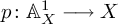





Proof. Let us check only the locality axiom. Let $u \colon W \longrightarrow X$
be a Nisnevich atlas of X. We obtain cartesian squares by base change
$u \colon W \longrightarrow X$
be a Nisnevich atlas of X. We obtain cartesian squares by base change

then it is easy to see that $(j^*,i^*)$
is conservative if
$(j^*,i^*)$
is conservative if $((j_W)^*,(i_W)^*)$
is conservative but the latter is true since W is a scheme.
$((j_W)^*,(i_W)^*)$
is conservative but the latter is true since W is a scheme.
With the result above, we can construct a formalism of four operations for morphisms of algebraic spaces.
Proposition 6.6. Given a cartesian square of morphisms of algebraic spaces

then the natural transformation
 $$ \begin{align*} \operatorname{Ex}^*_* = \operatorname{Ex}^*_*(f,g) \colon g^*f_* \longrightarrow (f')_*(g')^* \end{align*} $$
is an isomorphism if either g is smooth or f is proper (not necessarily representable).
Proof. When g is smooth, the isomorphism is obtained by simply taking the adjoint of the isomorphism $f^*g_{\#} \simeq (g')_{\#}(f')^*$
. Let us verify second case when f is proper, representable. As remarked at conventions, there exists a
$f^*g_{\#} \simeq (g')_{\#}(f')^*$
. Let us verify second case when f is proper, representable. As remarked at conventions, there exists a $\tau $
-covering
$\tau $
-covering $v \colon V \longrightarrow Y$
with V being a scheme (in particular, v is smooth since it is at least étale). By base change, we obtain a cube
$v \colon V \longrightarrow Y$
with V being a scheme (in particular, v is smooth since it is at least étale). By base change, we obtain a cube

in which every face is cartesian. By proposition 6.3, we only need to check that $(v')^*g^*f_* \longrightarrow (v')^*(f')_*(g')^*$
is an isomorphism. We note that
$(v')^*g^*f_* \longrightarrow (v')^*(f')_*(g')^*$
is an isomorphism. We note that $(v')^*(f')_* \simeq (h')_*(u')^*$
by the smooth base change theorem, hence by transitivity of the base change structure, we reduce to checking
$(v')^*(f')_* \simeq (h')_*(u')^*$
by the smooth base change theorem, hence by transitivity of the base change structure, we reduce to checking $k^*h_* \simeq (h')_*(k')^*$
, which is true by the case of schemes. To verify the general case, we use the Chow lemma (see [Reference KnutsonKnu71, Chapter Four, Theorem 3.1]) together with noetherian induction (see [Reference KnutsonKnu71, Chapter Two, Proposition 5.18]). Suppose that
$k^*h_* \simeq (h')_*(k')^*$
, which is true by the case of schemes. To verify the general case, we use the Chow lemma (see [Reference KnutsonKnu71, Chapter Four, Theorem 3.1]) together with noetherian induction (see [Reference KnutsonKnu71, Chapter Two, Proposition 5.18]). Suppose that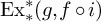 $\operatorname {Ex}^*_*(g,f \circ i)$
is an isomorphism for any closed immersion
$\operatorname {Ex}^*_*(g,f \circ i)$
is an isomorphism for any closed immersion $i \colon Z {\hookrightarrow} X$
with
$i \colon Z {\hookrightarrow} X$
with $Z_{\mathrm {red}} \neq X_{\mathrm {red}}$
. By the Chow lemma, there exists a projective, birational morphism
$Z_{\mathrm {red}} \neq X_{\mathrm {red}}$
. By the Chow lemma, there exists a projective, birational morphism $p \colon Z \longrightarrow X$
such that
$p \colon Z \longrightarrow X$
such that $f \circ p$
is projective. We form a cartesian square
$f \circ p$
is projective. We form a cartesian square

where $j \colon U {\hookrightarrow} X$
is a dense open immersion over which p is an isomorphism, i.e., q is an isomorphism. We let
$j \colon U {\hookrightarrow} X$
is a dense open immersion over which p is an isomorphism, i.e., q is an isomorphism. We let $i \colon Z {\hookrightarrow} X$
denote the closed complement of j endowed with the reduced structure. The morphism
$i \colon Z {\hookrightarrow} X$
denote the closed complement of j endowed with the reduced structure. The morphism $g^*f_* \longrightarrow (f')_*(g')^*$
is an isomorphism if and only if both
$g^*f_* \longrightarrow (f')_*(g')^*$
is an isomorphism if and only if both
 $$ \begin{align*} \operatorname{Ex}_*^*(g,f \circ i) \colon g^*f_*i_* & \longrightarrow (f')_*(g')^*i_* \\ \operatorname{Ex}_*^*(g,f \circ j) \colon g^*f_*j_* & \longrightarrow (f')_*(g')^*j_* \end{align*} $$
are isomorphisms. By the induction hypothesis, the first morphism is an isomorphism. For the second morphism, we note that $j_* = p_*t_*q^*$
(since q is an isomorphism) and hence the result follows from the projective case (
$j_* = p_*t_*q^*$
(since q is an isomorphism) and hence the result follows from the projective case ( $f \circ p$
projective).
$f \circ p$
projective).
Since a morphism $f \colon X \longrightarrow Y$
of algebraic S-spaces is compactifiable (see [Reference Conrad, Lieblich and OlssonCLO12]), we can follow the classical formulation of
$f \colon X \longrightarrow Y$
of algebraic S-spaces is compactifiable (see [Reference Conrad, Lieblich and OlssonCLO12]), we can follow the classical formulation of
Corollary 6.7. Let $f \colon X \longrightarrow Y$
be a morphism of algebraic S-spaces, then
$f \colon X \longrightarrow Y$
be a morphism of algebraic S-spaces, then $f_!$
admits a right adjoint
$f_!$
admits a right adjoint $f^!$
.
$f^!$
.
Proof. By the Nagata compactification theorem, we can treat two separated cases: f is an open immersion and f is proper. In the former case, $f_! = f_{\#}$
has
$f_! = f_{\#}$
has $f^*$
as its right adjoint. Let us prove the latter case. Thanks to the Brown representability theorem and proposition 6.4, we only have to show that
$f^*$
as its right adjoint. Let us prove the latter case. Thanks to the Brown representability theorem and proposition 6.4, we only have to show that $f_*$
preserves direct sums if f is proper. As in the proof of the proper base change theorem above, we can reduce to the case when f is projective. In fact, we can prove the result for any representable morphism. We can choose
$f_*$
preserves direct sums if f is proper. As in the proof of the proper base change theorem above, we can reduce to the case when f is projective. In fact, we can prove the result for any representable morphism. We can choose $\tau $
-atlases
$\tau $
-atlases $V \longrightarrow Y$
and
$V \longrightarrow Y$
and $U \longrightarrow X$
fitting into a cartesian square
$U \longrightarrow X$
fitting into a cartesian square

Since $u^*$
is conservative and it commutes with
$u^*$
is conservative and it commutes with $f_*$
and direct sums, we only have to check that
$f_*$
and direct sums, we only have to check that $(f')_*$
commutes with direct sums. This is true for schemes, see for instance [Reference Cisinski and DégliseCD19, Corollary 2.3.13].
$(f')_*$
commutes with direct sums. This is true for schemes, see for instance [Reference Cisinski and DégliseCD19, Corollary 2.3.13].
Since we only use base change properties rather than all properties, we leave it as an exercise to the reader to check that a full-fledged version of four-functor formalism for $\mathbf {SH}_{\mathfrak {M}}^{\tau }$
(like the case of
$\mathbf {SH}_{\mathfrak {M}}^{\tau }$
(like the case of $\mathbf {SH}$
as established in [Reference ChowdhuryCho24, Theorem 5.5.1]) is available.
$\mathbf {SH}$
as established in [Reference ChowdhuryCho24, Theorem 5.5.1]) is available.
6.3 Four operations for diagrams of algebraic spaces
Before constructing operations at the level of diagrams of algebraic S-spaces, we need some definitions and auxiliary results. We begin with some basic definitions.
Definition 6.8.
-
(1) A diagram of S-algebraic spaces
$(\mathscr {F},I)$
consists of a small category I and a functor
$\mathscr {F} \colon I \longrightarrow \operatorname {AlgSpc}_S$
. -
(2) A morphism
$(f,\alpha ) \colon (\mathscr {G},J) \longrightarrow (\mathscr {F},I)$
consists of a functor
$\alpha \colon J \longrightarrow I$
and a natural transformation
$\mathscr {G} \longrightarrow \mathscr {F} \circ \alpha $
. -
(3) Let
$\mathbf {P}$
be a property of morphisms of algebraic spaces, then a morphism
$(f,\alpha ) \colon (\mathscr {G},J) \longrightarrow (\mathscr {F},I)$
is said to have
$\mathbf {P}$
if for each
$j \in J$
, the morphism
$f(j) \colon \mathscr {G}(j) \longrightarrow \mathscr {F}(\alpha (j))$
has
$\mathbf {P}$
. -
(4) Let
$(\mathscr {F},I)$
be a diagram of S-algebraic spaces, the category
$\operatorname {Sm}/(\mathscr {F},I)$
has objects as
$(U,i)$
with
$i \in I$
an object and
$U \longrightarrow \mathscr {F}(i)$
an object in
$(\operatorname {Sm}/\mathscr {F}(i))$
. -
(5) Let
$\tau $
denote either the étale topology
$\mathrm {\acute{e}t}$
or the Nisnevich topology
$\mathrm {Nis}$
. The category
$\operatorname {Sm}/(\mathscr {F},I)$
is endowed with the
$\tau $
-topology whose covering of
$(U,i)$
is simply a
$\tau $
-covering of U.










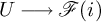


Let $\mathbf {PreSh}(\operatorname {Sm}/(\mathscr {F},I),\mathfrak {M})$
be the category of presheaves on
$\mathbf {PreSh}(\operatorname {Sm}/(\mathscr {F},I),\mathfrak {M})$
be the category of presheaves on $\operatorname {Sm}/(\mathscr {F},I)$
with values in
$\operatorname {Sm}/(\mathscr {F},I)$
with values in $\mathfrak {M}$
. The category
$\mathfrak {M}$
. The category $\mathbf {PreSh}(\operatorname {Sm}/(\mathscr {F},I),\mathfrak {M})$
admits a semi-projective model structure whose weak equivalences are objectwise weak equivalences and cofibrations are those becoming surjections in all
$\mathbf {PreSh}(\operatorname {Sm}/(\mathscr {F},I),\mathfrak {M})$
admits a semi-projective model structure whose weak equivalences are objectwise weak equivalences and cofibrations are those becoming surjections in all $\mathbf {PreSh}(\operatorname {Sm}/\mathscr {F}(i),\mathfrak {M})$
with
$\mathbf {PreSh}(\operatorname {Sm}/\mathscr {F}(i),\mathfrak {M})$
with $i \in I$
. The
$i \in I$
. The $\tau $
-local equivalences are those morphisms of presheaves in
$\tau $
-local equivalences are those morphisms of presheaves in $\mathbf {PreSh}(\operatorname {Sm}/(\mathscr {F},I),\mathfrak {M})$
inducing isomorphisms on associated sheaves of presheaves of homotopy groups. We can define the category
$\mathbf {PreSh}(\operatorname {Sm}/(\mathscr {F},I),\mathfrak {M})$
inducing isomorphisms on associated sheaves of presheaves of homotopy groups. We can define the category $\mathbb {SH}_{\mathfrak {M}}^{\tau }(\mathscr {F},I)$
by running through usual steps like the case of
$\mathbb {SH}_{\mathfrak {M}}^{\tau }(\mathscr {F},I)$
by running through usual steps like the case of $\mathbf {SH}_{\mathfrak {M}}^{\tau }(X)$
and there are adjunctions
$\mathbf {SH}_{\mathfrak {M}}^{\tau }(X)$
and there are adjunctions $((f,\alpha )^* \dashv (f,\alpha )_*) \colon \mathbb {SH}_{\mathfrak {M}}^{\tau }(\mathscr {F},I) \longrightarrow \mathbb {SH}_{\mathfrak {M}}^{\tau }(\mathscr {G},J) $
and
$((f,\alpha )^* \dashv (f,\alpha )_*) \colon \mathbb {SH}_{\mathfrak {M}}^{\tau }(\mathscr {F},I) \longrightarrow \mathbb {SH}_{\mathfrak {M}}^{\tau }(\mathscr {G},J) $
and $((f,\alpha )_{\#} \dashv (f,\alpha )^*) \colon \mathbb {SH}_{\mathfrak {M}}^{\tau }(\mathscr {G},J) \longrightarrow \mathbb {SH}_{\mathfrak {M}}^{\tau }(\mathscr {F},I) $
(provided that
$((f,\alpha )_{\#} \dashv (f,\alpha )^*) \colon \mathbb {SH}_{\mathfrak {M}}^{\tau }(\mathscr {G},J) \longrightarrow \mathbb {SH}_{\mathfrak {M}}^{\tau }(\mathscr {F},I) $
(provided that $(f,\alpha )$
is smooth objectwise in the latter case). They satisfy axioms AlgDer 0 to AlgDer 5 of an algebraic derivator in the sense of [Reference AyoubAyo07a, Definition 2.4.12] with proofs same as the case of schemes (see the fourth chapter of the same reference).
$(f,\alpha )$
is smooth objectwise in the latter case). They satisfy axioms AlgDer 0 to AlgDer 5 of an algebraic derivator in the sense of [Reference AyoubAyo07a, Definition 2.4.12] with proofs same as the case of schemes (see the fourth chapter of the same reference).
Lemma 6.9. Let $(\mathscr {F},I)$
be a diagram of algebraic S-spaces, the family of functors
$(\mathscr {F},I)$
be a diagram of algebraic S-spaces, the family of functors $i^* \colon \mathbb {SH}_{\mathfrak {M}}^{\tau }(\mathscr {F},I) \longrightarrow \mathbf {SH}_{\mathfrak {M}}^{\tau }(\mathscr {F}(i))$
is conservative.
$i^* \colon \mathbb {SH}_{\mathfrak {M}}^{\tau }(\mathscr {F},I) \longrightarrow \mathbf {SH}_{\mathfrak {M}}^{\tau }(\mathscr {F}(i))$
is conservative.
Proof. The proof is identical to the proof of [Reference AyoubAyo07b, Lemme 4.5.25].
The following proposition, which is an analogue of [Reference Bang PhamPha24], based on proposition 6.6.
Proposition 6.10. Given a cartesian square of S-varieties

such that one of the following conditions is satisfied:
-
• f is proper objectwise;
-
•
$(g,\beta )$
is smooth objectwise,

then the canonical base change morphism
 $$ \begin{align*} \operatorname{Ex}^*_* \colon (g,\beta)^*f_* \longrightarrow (f')_*(g',\beta)^* \end{align*} $$
is an isomorphism.
Definition 6.11. Let $f \colon (\mathscr {G},I) \longrightarrow (\mathscr {F},I)$
be a morphism of diagrams of algebraic S-spaces. We say that f is compactifiable if there exists a factorization, called a compactification
$f \colon (\mathscr {G},I) \longrightarrow (\mathscr {F},I)$
be a morphism of diagrams of algebraic S-spaces. We say that f is compactifiable if there exists a factorization, called a compactification

with p proper objectwise and j cartesian, open objectwise, we define a functor
 $$ \begin{align*} f_! {:=}q p_*j_{\#} \colon \mathbb{SH}_{\mathfrak{M}}^{\tau}(\mathscr{G},I) \longrightarrow \mathbb{SH}_{\mathfrak{M}}^{\tau}(\mathscr{F},I) \end{align*} $$
called a exceptional direct image of f, which depends on a choice of the compactification. There is an obvious natural transformation $f_! \longrightarrow f_*$
. If
$f_! \longrightarrow f_*$
. If $p,j$
can be chosen to be cartesian, we say that f is strongly compactifiable and such a factorization is said to be a strong compactification.
$p,j$
can be chosen to be cartesian, we say that f is strongly compactifiable and such a factorization is said to be a strong compactification.
Example 6.12. Any morphism $f \colon (\mathscr {G},I) \longrightarrow (\mathscr {F},I)$
obtained by base change of a morphism of algebraic S-spaces has a strong compactification thanks to the Nagata compactification theorem [Reference Conrad, Lieblich and OlssonCLO12]. We call such a morphism scheme-like representation and such a compactification a scheme-like compactification.
$f \colon (\mathscr {G},I) \longrightarrow (\mathscr {F},I)$
obtained by base change of a morphism of algebraic S-spaces has a strong compactification thanks to the Nagata compactification theorem [Reference Conrad, Lieblich and OlssonCLO12]. We call such a morphism scheme-like representation and such a compactification a scheme-like compactification.
Proposition 6.13. Given a commutative (not necessarily cartesian) square

of diagrams of algebraic S-spaces where $u,u'$
are open objectwise and
$u,u'$
are open objectwise and $p,p'$
are proper objectwise. If
$p,p'$
are proper objectwise. If $u,u'$
are cartesian, then the canonical base change morphism
$u,u'$
are cartesian, then the canonical base change morphism
 $$ \begin{align*} \operatorname{Ex}_{\#*} \colon u_{\#}(p')_* \longrightarrow p_*(u')_{\#} \end{align*} $$
is an isomorphism.
Proof. First, we see that if $I = \mathbf {e}$
, then this proposition can be deduce from the proper base change theorem 6.6 (for schemes, this is called the support property in [Reference Cisinski and DégliseCD19]). Now we assume that
$I = \mathbf {e}$
, then this proposition can be deduce from the proper base change theorem 6.6 (for schemes, this is called the support property in [Reference Cisinski and DégliseCD19]). Now we assume that $\mathrm {(C)}$
is cartesian then
$\mathrm {(C)}$
is cartesian then $u'$
is also cartesian. By lemma 6.9, it is sufficient to check that for each
$u'$
is also cartesian. By lemma 6.9, it is sufficient to check that for each $i \in I$
, the morphism
$i \in I$
, the morphism
 $$ \begin{align*} i^*u_{\#}(p')_* \longrightarrow i^*p_*(u')_{\#} \end{align*} $$
is an isomorphism. Indeed, we see that
 $$ \begin{align*} i^*u_{\#}(p')_* & \simeq u(i)_{\#}i^*(p')_* & \textbf{AlgDer 3d} \\ & \simeq u(i)_{\#}(p'(i))_*i^* & \textbf{AlgDer 3d} \\ & \simeq p(i)_*(u'(i))_{\#}i^* & \text{by the support property} \\ & \simeq p(i)_*i^*(u')_{\#} \simeq i^*p_*(u')_{\#}. \end{align*} $$
In general, we form the following commutative diagram

in which $\mathrm {(C')}$
is cartesian. In this diagram,
$\mathrm {(C')}$
is cartesian. In this diagram, $\Phi $
is cartesian (because both
$\Phi $
is cartesian (because both $v,u'$
are cartesian), closed and open objectwise. We claim that
$v,u'$
are cartesian), closed and open objectwise. We claim that $\Phi _{\#} \longrightarrow \Phi _*$
is an isomorphism. By lemma 6.9 again, it is sufficient to check that
$\Phi _{\#} \longrightarrow \Phi _*$
is an isomorphism. By lemma 6.9 again, it is sufficient to check that $i^*\Phi _{\#} \longrightarrow i^*\Phi _*$
is an isomorphism for every
$i^*\Phi _{\#} \longrightarrow i^*\Phi _*$
is an isomorphism for every $i^* \colon \mathbb {SH}_{\mathfrak {M}}^{\tau }(\mathscr {G},I) \longrightarrow \mathbf {SH}_{\mathfrak {M}}^{\tau }(\mathscr {G}(i))$
, but this is a consequence of AlgDer3d. The morphism
$i^* \colon \mathbb {SH}_{\mathfrak {M}}^{\tau }(\mathscr {G},I) \longrightarrow \mathbf {SH}_{\mathfrak {M}}^{\tau }(\mathscr {G}(i))$
, but this is a consequence of AlgDer3d. The morphism
 $$ \begin{align*} u_{\#}(p')_* = u_{\#}q_*\Phi_* \overset{\sim}{\longrightarrow} p_*v_{\#}\Phi_* \overset{\sim}{\longrightarrow} p_*v_{\#}\Phi_{\#}= p_*(u')_{\#} \end{align*} $$
is an isomorphism as desired.
Once we fix a choice of a scheme-like compactification, the operation $f_!$
does not depend on the choice of scheme-like compactifications and the connection
$f_!$
does not depend on the choice of scheme-like compactifications and the connection $f_!g_! \simeq (f \circ g)_!$
can be performed in cases that
$f_!g_! \simeq (f \circ g)_!$
can be performed in cases that $f,g$
are base change of two morphisms of algebraic spaces. We leave this detail to the reader since it is similar to schemes. We come to the right adjoint
$f,g$
are base change of two morphisms of algebraic spaces. We leave this detail to the reader since it is similar to schemes. We come to the right adjoint $f^!$
of
$f^!$
of $f_!$
.
$f_!$
.
Proposition 6.14. Let $(\mathscr {F},I)$
be a diagram of algebraic S-spaces. For each compact object A of
$(\mathscr {F},I)$
be a diagram of algebraic S-spaces. For each compact object A of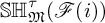 $\mathbb {SH}_{\mathfrak {M}}^{\tau }(\mathscr {F}(i))$
, the object
$\mathbb {SH}_{\mathfrak {M}}^{\tau }(\mathscr {F}(i))$
, the object $i_{\#}(A)$
is compact in
$i_{\#}(A)$
is compact in $\mathbb {SH}_{\mathfrak {M}}^{\tau }(\mathscr {F},I)$
. Moreover, we know that
$\mathbb {SH}_{\mathfrak {M}}^{\tau }(\mathscr {F},I)$
. Moreover, we know that
 $$ \begin{align*} \mathbb{SH}_{\mathfrak{M}}^{\tau}(\mathscr{F},I) = \left <\left< i_{\#}A \mid i \colon (\mathscr{F}(i),\mathbf{e}) \longrightarrow (\mathscr{F},I), A \in \mathbb{SH}_{\mathfrak{M},\mathrm{ct}}^{\tau}(\mathscr{F}(i)) \right> \right >. \end{align*} $$
In particular, $\mathbb {SH}_{\mathfrak {M}}^{\tau }(\mathscr {F},I)$
is compactly generated.
$\mathbb {SH}_{\mathfrak {M}}^{\tau }(\mathscr {F},I)$
is compactly generated.
Proof. Let us prove that each $i_{\#}A$
is a compact object. By definition, we have to show that
$i_{\#}A$
is a compact object. By definition, we have to show that
 $$ \begin{align*} \bigoplus_{j \in J}\operatorname{Hom}(i_{\#}A,B_j) \longrightarrow \operatorname{Hom} \left(i_{\#}A,\bigoplus_{j \in J}B_j \right) \end{align*} $$
is bijective for every family $(B_j)_{j\in J}$
of objects in
$(B_j)_{j\in J}$
of objects in $\mathbb {SH}_{\mathfrak {M}}^{\tau }(\mathscr {F},I)$
. By adjunction, it is equivalent to prove that
$\mathbb {SH}_{\mathfrak {M}}^{\tau }(\mathscr {F},I)$
. By adjunction, it is equivalent to prove that
 $$ \begin{align*} \bigoplus_{j \in J}\operatorname{Hom}(A,i^*B_j) \longrightarrow \operatorname{Hom} \bigg(A,i^*\bigg(\bigoplus_{j \in J}B_j \bigg) \bigg) \end{align*} $$
is bijective. This is true since $i^*$
commutes with colimits and A is a compact object. By [Reference AyoubAyo07a, Proposition 2.1.27], it remains to prove that the family
$i^*$
commutes with colimits and A is a compact object. By [Reference AyoubAyo07a, Proposition 2.1.27], it remains to prove that the family $\operatorname {Hom}(i_{\#}A[n],-)$
with
$\operatorname {Hom}(i_{\#}A[n],-)$
with ${i \in I}$
,
${i \in I}$
, $A \in \mathbb {SH}_{\mathfrak {M},\mathrm {ct}}^{\tau }(\mathscr {F}(i))$
,
$A \in \mathbb {SH}_{\mathfrak {M},\mathrm {ct}}^{\tau }(\mathscr {F}(i))$
, $n\in \mathbb {Z}$
is conservative. This is a consequence of the fact that for each i, the family
$n\in \mathbb {Z}$
is conservative. This is a consequence of the fact that for each i, the family $\operatorname {Hom}(A[n],-)$
is conservative and the family
$\operatorname {Hom}(A[n],-)$
is conservative and the family $i^*\colon \mathbb {SH}_{\mathfrak {M}}^{\tau }(\mathscr {F},I) \longrightarrow \mathbb {SH}_{\mathfrak {M}}^{\tau }(\mathscr {F}(i))$
itself is conservative.
$i^*\colon \mathbb {SH}_{\mathfrak {M}}^{\tau }(\mathscr {F},I) \longrightarrow \mathbb {SH}_{\mathfrak {M}}^{\tau }(\mathscr {F}(i))$
itself is conservative.
Proposition 6.15. Let I be a small category and $p \colon (\mathscr {G},I) \longrightarrow (\mathscr {F},I)$
be a morphism proper objectwise between diagrams of algebraic S-spaces, then
$p \colon (\mathscr {G},I) \longrightarrow (\mathscr {F},I)$
be a morphism proper objectwise between diagrams of algebraic S-spaces, then $p_*$
preserves direct sums. Consequently,
$p_*$
preserves direct sums. Consequently, $p_*$
admits a right adjoint
$p_*$
admits a right adjoint $p^!$
.
$p^!$
.
Proof. Let $(B_j)_{j \in J}$
be a set of objects in
$(B_j)_{j \in J}$
be a set of objects in $\mathbb {SH}_{\mathfrak {M}}^{\tau }(\mathscr {G},I)$
, we have to prove that the canonical morphism
$\mathbb {SH}_{\mathfrak {M}}^{\tau }(\mathscr {G},I)$
, we have to prove that the canonical morphism
 $$ \begin{align*} \bigoplus_{j \in J}p_*B_j \longrightarrow p_*\left(\bigoplus_{j \in J}B_j \right) \end{align*} $$
is an isomorphism. Since the family $i^* \colon \mathbb {SH}_{\mathfrak {M}}^{\tau }(\mathscr {F},I) \longrightarrow \mathbb {SH}_{\mathfrak {M}}^{\tau }(\mathscr {F}(i))$
with
$i^* \colon \mathbb {SH}_{\mathfrak {M}}^{\tau }(\mathscr {F},I) \longrightarrow \mathbb {SH}_{\mathfrak {M}}^{\tau }(\mathscr {F}(i))$
with $i \in I$
is conservative, we have to check that
$i \in I$
is conservative, we have to check that
 $$ \begin{align*} i^*\left(\bigoplus_{j \in J}p_*B_j \right) \longrightarrow i^*p_*\left(\bigoplus_{j \in J}B_j \right) \end{align*} $$
is an isomorphism for every $i \in I$
. This follows from the fact that
$i \in I$
. This follows from the fact that $i^*$
commutes with colimits, the isomorphism
$i^*$
commutes with colimits, the isomorphism $i^*p_* \simeq p(i)_*i^*$
and the case of schemes. By using a consequence of the Brown representability theorem (see for instance [Reference AyoubAyo07a, Corollaire 2.1.22]) and the preceding proposition, we see that
$i^*p_* \simeq p(i)_*i^*$
and the case of schemes. By using a consequence of the Brown representability theorem (see for instance [Reference AyoubAyo07a, Corollaire 2.1.22]) and the preceding proposition, we see that $p_*$
admits a right adjoint.
$p_*$
admits a right adjoint.
Corollary 6.16. Let $f\colon (\mathscr {G},I) \longrightarrow (\mathscr {F},I)$
be a strongly compactifiable morphism, then
$f\colon (\mathscr {G},I) \longrightarrow (\mathscr {F},I)$
be a strongly compactifiable morphism, then $f_!$
admits a right adjoint
$f_!$
admits a right adjoint $f^!$
.
$f^!$
.
Proof. Since f is compactifiable, we may treat two separated cases when f is proper and open. If f is proper, then $f_! = f_*$
admits an adjoint by proposition 6.15. If f is open, then
$f_! = f_*$
admits an adjoint by proposition 6.15. If f is open, then $f_! = f_{\#}$
has
$f_! = f_{\#}$
has $f^*$
as its right adjoint.
$f^*$
as its right adjoint.
Proposition 6.17. Given a cartesian square of diagrams of S-varieties

with f compactifiable, then the canonical base change morphisms
 $$ \begin{align*} \operatorname{Ex}^*_! \colon (g,\beta)^*f_! \longrightarrow (f')_!(g',\beta)^* \\ \operatorname{Ex}^!_* \colon f^!(g,\beta)_* \longrightarrow (g',\beta)_*(f')^! \end{align*} $$
are isomorphisms. By adjunction, one obtains
 $$ \begin{align*} \operatorname{Ex}^{!*}\colon (g',\beta)^*f^! \longrightarrow (f')^!(g,\beta)^* \\ \operatorname{Ex}^!_* \colon (g',\beta)_*(f')^! \longrightarrow f^!(g,\beta)_* \end{align*} $$
We end this appendix by a useful lemma
Lemma 6.18. Let $f \colon X \longrightarrow Y$
be a morphism of algebraic S-spaces and I be a small category, from the cartesian square
$f \colon X \longrightarrow Y$
be a morphism of algebraic S-spaces and I be a small category, from the cartesian square

we deduce an isomorphism
 $$ \begin{align*} (p_I)_{\#}f_! \longrightarrow f_!(p_I)_{\#}. \end{align*} $$
Proof. If $X,Y$
are schemes, this is [Reference Bang PhamPha24, Proposition 1.2]. In general, one can choose
$X,Y$
are schemes, this is [Reference Bang PhamPha24, Proposition 1.2]. In general, one can choose $\tau $
-atlases and use [Reference AyoubAyo07a, Corollaire 2.4.24] and proposition 6.17 to reduce to the case of schemes. We leave the details to the readers.
$\tau $
-atlases and use [Reference AyoubAyo07a, Corollaire 2.4.24] and proposition 6.17 to reduce to the case of schemes. We leave the details to the readers.
Acknowledgement.
This paper is a part of the PhD project of the author when he was a PhD student at University of Rennes under the supervision of Florian Ivorra and Julien Sebag. The author would like to express the deepest gratitude to his supervisors for their vision, support and patience throughout his years as a PhD student. The author also thanks Joseph Ayoub for answering his questions on algebraic derivators during the preparation of this work. Furthermore, the author thanks the anonymous referee for his careful reading and valuable comments. Finally, this paper was revised while the author was a postdoc in the group of Quoc Ho at the Hong Kong University of Science and Technology, supported by the Hong Kong RGC GRF grants 16304923 and 16301324.
Competing interests
The author declares no competing interests.
Data Availability Statement
No data were generated or analyzed in this study.



 Open access

