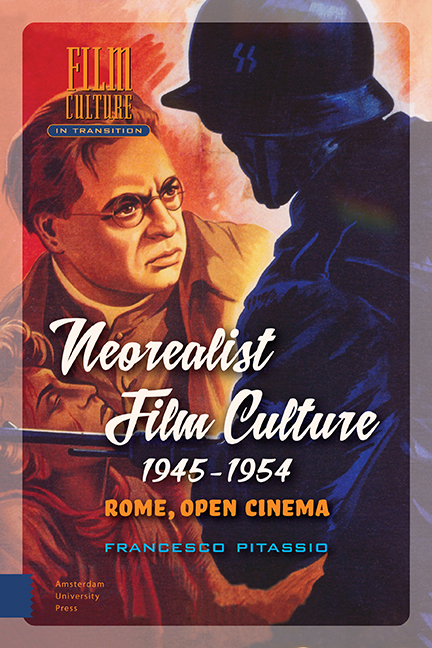

Unique, truthful, brutal … Neorealism is often associated with adjectives stressing its peculiarities in representing the real, its lack of antecedents, and its legacy in terms of film style. While this is useful when confronting auteurs such as De Sica, Rossellini or Visconti, it becomes problematic when examining a widespread cultural practice that realistic modes deeply affected. This cultural production included filmmaking, literature, visual culture and photography, as well as media discourses. It was internally contradictory but fruitful inasmuch as its legacy influenced national culture for many decades to come. The volume spotlights post-war Italian film culture by locating a series of crossroads, i.e. topics barely examined when discussing neorealism: nation, memory and trauma, visual culture, stardom, and performance. The aim is to deconstruct neorealism as a monument and to open up its cultural history.
Loading metrics...
* Views captured on Cambridge Core between #date#. This data will be updated every 24 hours.
Usage data cannot currently be displayed.
This section outlines the accessibility features of this content - including support for screen readers, full keyboard navigation and high-contrast display options. This may not be relevant for you.
Accessibility compliance for the PDF of this book is currently unknown and may be updated in the future.
