


1. Introduction
With the help of technology companies, such as Facebook, Google, Microsoft, Nvidia, Roblox, Epic Games, Tencent, Alibaba, Bytedance, and Baidu, “Metaverse” has become the top buzzword in the world’s public opinion in 2021. Musk cannot help sneering at this word on his personal social media: “Metaverse is now more of a marketing buzzword than a reality.” However, China is mobilizing the whole country to achieve breakthroughs in cutting-edge technologies, trying to turn the Metaverse into a scientific, industrial, and economic reality.
China Mobile Communications Association Metaverse Consensus Circle (CMCA-MCC), established in November 2021, conveys a message that the Metaverse has been developed into a national strategy. A guideline on intensifying the research and development of underlying technologies of the Metaverse is drawn up in the 14th Five-year Plan for the Development of Electronic Information Industry of Shanghai Municipality released at the end of December 2021. On 8 January 2022, Shanghai Municipal Commission of Economy and Information Technology further publicly announced the layout of the new track of the Metaverse, the development of application scenarios and the fostering of relevant key enterprises, and encouraged the development of an important platform for the interaction between the virtual world and the real world. Then, at China’s Two Sessions—the National People’s Congress (NPC) and the Chinese People’s Political Consultative Conference (CPPCC) held in early March 2022—the deputies to NPC and CPPCC committee members have also recommended to develop digital economy of the Metaverse. Under the premise of eliminating the impact of the epidemic, the first Global Metaverse Conference was held at Shanghai International Convention Center on 20 April, where the Manifesto and Metaverse Industrial Plan V.1.0 were released, showing the trend for the virtual economy to catch up with and overtake the real economy.
The rapid advancement of generative artificial intelligence (AI), exemplified by the language big model ChatGPT (2022), the AI video generation model Sora (2024) and DeepSeek as AI Assistant (2025), is significantly propelling the development of the Metaverse. These AI platforms, through their ability to autonomously generate diverse digital content like immersive virtual environments, personalized avatars, and interactive objects, are crucial for creating dynamic and adaptive experiences within the Metaverse (see Tabassum et al., Reference Tabassum, Elmahjub, Padela, Zwitter and Qadir2025, pp. 348–59). Moreover, these advancements are also fostering the growth of virtual economies by enabling the creation and management of unique digital assets and facilitating new economic systems through AI-driven marketplaces. As the Metaverse continues to evolve, the integration of generative AI is not just beneficial but essential, driving innovation and shaping the future of this immersive digital realm.
However, in addition to the above-mentioned capital proliferation, the establishment of commercial platforms, the government’s layout of “augmenting reality with virtuality” for industrial digitization and digital industrialization, and the technological development of Generative AI and its impact, the Metaverse also involves the existence of human nature, evolution of the society, and paradigm innovation of legal order. Therefore, we cannot afford not to take it seriously.
The predecessor of the Metaverse is “Cyberspace,” a concept proposed in 1982 by William Gibson in his short story, Burning Chrome, and popularized in the best-selling novel Neuromancer two years later.Footnote 1 The expression “Metaverse” itself, as well as the character definition of the digital doppelganger “Avatar,” was first used by Neal Stephenson in his science fiction masterpiece Snow Crash (1992). From a technological and legal perspective, the first landmarks were the filing of a priority specification by New York University with the US Patent Office in 1994 for scripting interactive animated actors, the formal filing of a patent application in 1997 that clearly defined the “Metaverse,” and the publication of US 6285380 in 2001. It is worth mentioning that by 2007, South Korea also submitted the first international standardization proposal of the Metaverse to the MPEG Working Group (see Duan, Reference Duan2022; Tsinghua University, 2022; Gong, Reference Gong2022).Footnote 2 Shortly thereafter, Ready Player One (a novel in 2011 and a film in 2018) by Ernest Cline demonstrated a more concrete and comprehensive impression of immersive experience in the virtual world and its props.
It should be noted that all of these works describe the Metaverse phenomenon in a Dystopia way, reflecting a sense of apprehension about technological risks. However, an unexpected outbreak of COVID-19 sweeping all over the world at the beginning of 2020 made online shopping, mobile payment, video conferencing, online office, temperature measurement in groups, and face recognition the norm, and as a result, has quickly contributed to the full digital coverage of the living world. This means that humankind has to make a tragic migration to virtual time and space, thus also drastically changing the original perception of the Metaverse. In the context of epidemic prevention, the Metaverse cannot be understood only as a social game to escape from reality and pursue freedom, but also as a digital way of existence with inwardness and self-transcendence.Footnote 3 The resulting interactions and networked order also foretell the trend of human social change, which is worthy of in-depth study in the sociology of law.
This paper mainly examines the concept and characteristics of the Metaverse in theory, and explores the relational order principle of the Metaverse in the cycle of mutual feedback, mutual blockade, mutual construction, and mutual evolution between the virtual world and the real world, especially the mechanism of achieving equilibrium and integration through repeated games, and then examines some basic legal issues arising from it, including the regulatory system, rights protection, transparency and liability, internal rules of autonomy in the virtual-real symbiosis, as well as the opposite but complementary effect between diverse sanctions in cyberspace and state coercion in legal space, etc. In the end, the Metaverse is an interaction between the virtual world and the real one, in which the relational order is subject to code programs and smart contracts.
2. What is the nature of the thought in the Metaverse?
According to the interpretation based on its literal meaning, the Metaverse is nothing more than a virtual space beyond (meta) the real world (universe). On the grounds of a relatively precise definition of the concept determined by the “Metaverse Roadmap Project” of the Acceleration Studies Foundation (ASF) in 2007, the Metaverse is not only a virtually augmented physical reality, but also a virtual world with space-time continuity and user co-construction, and people can experience the fusion of the two at the same time. This domain has two basic dimensions (“simulation-augmentation” and “extrinsicness-intimacy”), which can form four quadrants of coordinates, namely, augmented reality, lifelog, mirror world, and virtual world (see Jin, Reference Jin and Liu2022, p. 4).Footnote 4 This is the most concise and operational framework for typological analysis.
In the updated NYSE IPO prospectus released on 11 February 2021, Roblox further detailed the following eight elements of the Metaverse: identity, friends, immersion, ready access, low friction, content diversity, economic systems, and the safety and security of civility, the composition of which, when scrutinized, reveals a preliminary vision of a relational order and rules of complexity (see Institute of China Securities Co., Ltd., 2021).Footnote 5 In a nutshell, on the basis of Web 3.0 with credibility and three-dimensional holography, the Metaverse is a huge domain of simulation with the help of the electronic game engine, big data, AI, 5G/6G, blockchain, 3D visual interaction, twin digital, and other technologies. It embodies an ultimate fusion among network, media, and communication in terms of its structure, and establishes the self-sovereign identity (SSI) of online users or “the sovereign individual.”Footnote 6 In sum, the principle of Metaverse order is based on consumer sovereignty and its network of relationships.
To discuss the essence of the Metaverse from the perspective of philosophy and social science theory, I believe that the three dimensions of phenomenological epistemology, many-worlds interpretation and reflection on modernity can be enlightening and focus on inter-subjectivity of network thinking, which will be briefly explained below one by one.
2.1. Phenomenology laying philosophical foundation for the Metaverse
From the perspective of sociology of science, cyber-physical system (CPS) is a mechanism of chain reaction that analyses the data collected from the real world by means of AI in virtual space and feeds back to the real world in different ways. Therefore, the essence of the Metaverse formed in the process of mutual construction and fusion is not only the mirror reflection of the real world, but also the concrete projection of human spirit. As a result, it will bring about a certain state of co-existence of the virtuality and the reality and “unity of man and nature” to varying degrees, as Lu Jiuyuan, an ideologist in the Southern Song Dynasty, described that “the universe is my mind and my mind is the universe,” which means subjectivity and objectivity are integrated into a whole.
In other words, there is no objective reality in the era of the Metaverse. The landscape that emerges in people’s minds becomes the real world according to a certain “Metaverse Ratio (from Tencent’s multi-dimensional rating system)”—at least a considerable part of the real world is imagined and created by observers. More importantly, there exist different observers in different states, who will form their own images for interpretation and deduction, resulting in countless small universes or local orders, and even everyone has his or her own paradise. The pluralistic reality and distributed governance of human society mean that communication and understanding between subjects must be enhanced in the context of their respective interpretations of the small universes in which the subjects are located, fostering interactive relationships between people. I believe that phenomenology actually lays the foundation for the idea of a Metaverse to a considerable extent.
It is well known that modern epistemology, beginning with Descartes, presupposes an unquestionably objective world and is characterized by a subject-object dualism. However, Edmund G. A. Husserl, an Austrian philosopher and founder of phenomenology, pointed out 120 years ago that what we see is not the objective object in itself, but the impression obtained through human vision, which is constituted and endowed with meaning (see Boer, Reference Boer and Li1995, pp. 132–6). As to the consistency between object and impression, it is necessary to make further inquiry and reflection. Therefore, he reverses the established order, namely objective world first, then perception, emphasizing that the consciousness or impression of the subject comes first, and then all phenomena relative to the subject become reality. Such object and the object as the essence co-exist and even merge, which is called the method of “phenomenological reduction.” In other words, by detaching the certainty of the objective world and leaving only the subjective consciousness of the subject, the phenomenon becomes the essence of consciousness (see Boer, Reference Boer and Li1995, pp. 171–4). It is not the dichotomy between subject and object, but the unification of the two, which exactly includes what we, who are in the digital age, see in the Metaverse through brain–computer interface. In fact, as Elon Musk tried to apply brain–machine interface devices to human beings for “mind management,” “brain communication,” and “memory transplantation,” the proposition that phenomena are the essence of consciousness was further verified.
The most distinctive feature of phenomenology is the naturalistic attitude to examine how the world picture is presented, established, described, and interpreted in the consciousness of the transcendental subject. It is on the extension of this line of thought that Husserl further proposed several new concepts and propositions in the later period, such as living world, inter-subjectivity, time dimension, etc., and contributed to the brilliant genealogy of different doctrines, including the phenomenology of Heidegger’s hermeneutics (see Ni, Reference Ni1994; Wei, Reference Wei2005). In particular, French philosopher Merleau-Ponty’s somatic phenomenology makes a fascinating analysis of mirror phase and progressive engagement with virtual reality (VR), which inadvertently goes to the core issue of communication between the self and the others that we are concerned about at present (see Crossley, Reference Crossley and Nishihara2010, pp. 116–20; Merleau-Ponty, Reference Merleau-Ponty and Yang2021). In a sense, it can also be said that the mixed reality in the Metaverse, where the virtuality and the reality reflect each other and the self interacts with the others, just confirms the important value of Husserl, Heidegger, and Ponty’s ideas about the dynamic construction of the world by sensory impression, and also raises the question of the separation of mind from body brought about by immersion (see Heim, Reference Heim, Jin and Liu2000).
2.2. Medium of communication among many worlds of the Metaverse
Since different people can observe different worlds that will lead to countless small universes, everyone is bound to live in a different space of his or her choice. Therefore, it is not surprising that we learn about the concept of “many universes,” first proposed by the American psychologist William James in 1895. More than half a century later, Scottish astronomer Andy Nimmo coined the term “multiverse” (see Gribbin, Reference Gribbin, Chang and He2017, pp. 9–12). Double-slit experiment in quantum physics also inspired Hugh Everett III to propose many-worlds interpretation (MWI) and raised the issue of incommunicability between parallel universes (see Gribbin, Reference Gribbin, Chang and He2017, pp. 25–31). It is the various universes or many worlds that leave room for human choice and free will, and determine that the essence of quantum reality lies in the fact that everything can be both true and false (see Gribbin, Reference Gribbin, Chang and He2017, pp. 90–1). As a result, if the element of time is omitted, the “Metaverse” is actually a broad understanding of multiverse (see Gribbin, Reference Gribbin, Chang and He2017, p. 109).
Given the structure of opportunity in many worlds and the new concept of “anthropic principle,” it is possible for humanity to move out of reality and into the Metaverse for a digital migration. Meanwhile, everyone has a different identity correspondingly, and repeatedly switches and recognizes the identities in different cyberspaces. In such context, the Socratic “ethical absoluteness” and Platonic “metaphysical absoluteness” are out of the question. Human beings can know the way to the order of the universe without relying on external remedies and grounds, thus the degree of freedom is bound to expand. Of course, self-discipline is also required by means of internal transcendence.
In order to activate the power of internal transcendence, it is necessary to keep human’s mental structure in tension, so that the individual should not be understood as an average man (an atomized individual) who has abandoned specificity and particularity, but should always maintain his or her inner complexity. In traditional Chinese society, Confucian “Homo Sociologicus (moral man),” Legalist “Homo Oeconomicus (utilitarian man),” and Taoist “Homo Ludens (game man)” are all reflected in the consciousness of identity, forming MWI and pluralistic order with cultural characteristics. Today, cybernauts also have similar characteristics, namely the digital world can be divided into different dimensions, i.e., interface used in Internet of Things (IoT), converged network platform, distributed blockchain, where natural people and avatars or virtual robots can walk through and interact across blockchain. This is the concept of a multi-layered and diverse Metaverse, as well as the concept of a cybernaut.
Therefore, in the digital era, although humans are all on the same planet, we also live in different Metaverses of our own choice. This choice is certainly not restricted, but humans must be correspondingly responsible for any consequence arising therefrom, because responsibility is always closely linked to choice and there is responsibility for choice. Accordingly, I believe that freedom of choice and self-responsibility are the fundamental value anchors for the governance of the Metaverse and for dealing with risks and uncertainty. This system of responsibility is compatible with the relational structure of distributed autonomy in virtual space, but it is prone to pluralist ignorance and the formation of false perceptions and beliefs that lead to the persistence of situations or behaviours that even few people actually recognize. Therefore, in order to strengthen the burden of responsibility, it is also important to promote a spirit of freedom that is other-oriented, embedded in inter-subjectivity and publicness, and focused on interactive relationships and overlapping consensus. Under the conditions of many worlds, how to promote cross-border communication and how to establish a “corridor system” have become very important jurisprudential issues.
2.3. Reflection on modernity and digital utopia
In a sense, it can indeed be said that the rise of the Metaverse stems from the crisis of modernity. Over-exploitation in order to conquer the world and satisfy the ever-expanding desires is the norm of modern society, leading to the destruction of the ecological environment, the disruption of a proper balance between population and resources and jobs, and the spread of value nihilism, which creates pervasive risks. The game “Second Life” launched in 2003 is regarded as a phenomenal digital construct that is the closest to the concept of the Metaverse, and becomes a typical metaphor for “waiting for the earth to open,” demonstrating that the principle of the early Metaverse was to provide people who felt lost with an opportunity to start from scratch. It is a romantic vision of chaos endowed by the computer. There exist similar attempts, such as Minecraft and Ultima Online. Such multiplayer online games undermine entertainment and competition emphasized in the past but reflect more on real life. They also give users high autonomy in choice in order to achieve selective liberation. Different players can reallocate resources and promote cooperation and division of labour, thereby forming a more complex and reasonable economic system, and creating social norms and institutions in the virtual world (see Chen, Reference Chen2021).
Such a Metaverse is actually an “infotopia” that replaces the overloaded reality and is a digital “new continent” for human beings to explore in contemporary society.Footnote 7 Essentially different from expansionary economic growth strategies, VR technology makes people more introverted and autistic. In this sense, it can also be said that the goal of the meta-universe could have been a zero-growth model, focusing more on internal development and inner transcendence of civilization in response to the real dilemma of over-investment, over-capacity, and loss of driving force in developed economies that have emerged since 2008. Of course, the Metaverse may also set as a more aggressive goal to “augment the reality with the virtuality,” facilitating digital industrialization and digitization in industry, and installing a new engine for economic growth. At the same time, the Metaverse can also solve problems of unemployment and lack of resources caused by AI through the concept of “game as labor”Footnote 8 and in-depth exploration of the digital world, make up for the broken “web of meaning,” reconstruct the effective links between individuals and various communities and even the whole society, and carry out virtual trial for a great transformation of society.Footnote 9
By technically simulating the logic of human order evolution through the Artificial Intelligent Internet of Things (AIoT), especially on the basis of the formation of decentralized and disintermediated network trust with the help of blockchain, it is indeed possible for the Metaverse to establish and improve the mechanism of interconnection, division of labour, joint contribution, and shared benefits, thus establishing a new paradigm of social order. However, paradigm shifts sometimes manifest themselves as creative disruptions of the established order, and they need to be taken seriously. For example, the recent Russia–Ukraine War was waged online and offline at the same time, highly integrated with each other. Family and country affairs are also gamified from time to time, and even the iron-blooded killing seems to have lost the sense of pain it once had in history and shows a tint of absurd performance art. Different players and their agents redefine wars, diplomacy and domestic affairs through distributed participation and intelligent technology, which is in fact a metaphorical and subversive reconstruction of the Metaverse order. In this scene where the virtuality and the reality are interwined, it seems that language games can also change the real world, and the power of values, information, and symbolic symbols is exponentially magnified as never before (see Shi, Reference Shi2022).
3. The principle of social order inside and outside of the Metaverse
3.1. Rational design in digital earth from scratch
Because the real world is entangled with existing comparison and contrast of power, social theorists have to resort to conceptual devices, such as the “social contract” that ends the natural state of man-versus-man, and the “veil of ignorance” that precedes the launch of the game to perform thought experiments.Footnote 10 However, virtual worlds provide people with an opportunity to jump out of the causal chain of facts and make rational design from scratch, or a domain that satisfies creation impulse. Therefore, the Metaverse also represents an important opportunity for the revolution in social order, and enables various explorations and simulations for the digital way of human existence in the future and the rules of human behaviour.
For example, Art Series - The Cullen (Hotel) in Melbourne, Australia, planned an augmented reality Metaverse event called “Steal the Banksy” in 2011 in order to boost off-season orders, which was widely publicized through social media and carried out in a crowded environment. The biggest stunt was to make a rather fantastic rule that if a customer can successfully steal the high-priced masterpiece “No Ball Games” by the famous British graffiti artist Banksy, which is hung alternately on the walls of three series hotels, under the omnipresent camera surveillance and tight security system, he can legally own the work for free. Of course, if one wants to steal the painting, he or she must first check in at the hotels to find out in which hotel and at which position of the hotel the painting is hung, and thus virtual scenarios are intertwined with real business. The sensational scheme shows that the Metaverse can get rid of the constraints of real-world rules and set up an institutional arrangement that is radically different from the real world without directly jeopardizing the established order of life (see Jin, Reference Jin and Liu2022, pp. 36–39).
On the other hand, this also means that the current legal system can indeed consider the Metaverse as a experimental platform and operation device to make a so-called “landscape transformation,” create the best digital space of “doing what you want without breaking the rules,” and fulfil Bentham’s vision of “felicific calculus” (see Bentham, Reference Bentham and Shi2006, pp. 87ff) and Putnam’s vision of the immortality of “brain in a vat” (see Putnam, Reference Putnam, Tong and Li2005, pp. 1ff). The Metaverse can have a further influence on actions and decisions in the real world through technological frameworks of digital twin. For example, the health code system and its derivatives, like travel history code, open location code, and nucleic acid test code popularized in China during the outbreak of COVID-19, collect data about inspection and whereabouts through mobile devices such as mobile phones as edge nodes of the IoT and conduct intelligent analysis in virtual space, and then monitor actions and system operation in the real world, presenting the characteristics of interwining the virtuality and the reality and augmenting reality with virtuality. Digital infrastructure for subject-certification achieves administrative service automation to a certain extent (see Zha, Reference Zha2020, pp. 28–35; Hu, Reference Hu2021, pp. 102–10; Yi, Reference Yi2021, p. 78). Digital twin can generate the mirror image of the real world and construct a delicate and vivid simulation scene. It can even achieve full digital coverage of the society, and replace the social contract with the mathematical one, the underlying logic of the Metaverse. In this context, NFTs have been carriers of different values based on unique identity, enabling the granular components of tokenized social behaviour to be traded arbitrarily in the Ethereum (ETH) market respectively. Sovereign wealth is the greatest common divisor that determines the conclusion of a treaty.
Web 3.0, the foundation of the Metaverse, is actually a decentralized autonomous organization (DAO), or an organization without any form of organization. In this open domain built with blockchain, there is no need for intermediaries and power centres to exist, which truly makes peer-to-peer parity come true, and enables users to enjoy complete autonomy over personal data and algorithms. In this context, developers are free to create games and various application scenarios, and make ownership rules and transaction patterns as long as basic network consensus is not violated. What happens in the Metaverse originally does not affect the real world, and vice versa. However, digital twin technology enables virtual phenomena in the Metaverse to be associated with the twin objects in the real world, and can analyse, predict, and even influence the real world, leading to co-evolution (see Yao, Reference Yao2022, pp. 14–7; Duan, Reference Duan2022). In this sense, we can indeed interpret the Metaverse as an interface revolution between the virtual world and the real world.
3.2. Market model of resource allocation and “Wonder Trade” in the Metaverse
When it comes to the construction of a system of basic social contracts in the interactive relationship between the Metaverse and the real world, one cannot help but think of Ronald Dworkin, a famous legal theorist in the late 20th century, who proposed the idea of exchange of social justice and legal order. In 1981, he published an important paper entitled The Equality of Resources, which was later included in his work Sovereign Virtue: The Theory and Practice of Equality. To explain the equality of resources, he suggested a model of a simultaneous auction market:
“Suppose the survivors of a shipwreck are washed up on a desert island, rich in resources and uninhabited, and any rescue can only happen years later. These immigrants accept a principle: for any resources here no one has priority, but only an equal distribution among them” (see Dworkin, Reference Dworkin and Feng2008, p. 63).
Obviously, such a resource auction market does not have an independent value judgment standard other than the results of bidding, but is actually a process of people exchanging different values freely and a process of achieving balance through competition, which reflects a kind of complete procedural justice. However, Dworkin actually established a judgment standard of value for the results of bidding. Instead of pursuing formal and objective equality of results, Dworkin used an envy test with subjectivity as the evaluation criterion: “At the end of this slow (auction) process, if everyone says that he is satisfied and that the resources are in their own hands, then the jealousy test is passed. No one will be jealous of what someone else buys because, according to the hypothesis, he can use his shells to buy other resources without buying these ones of his own (see Dworkin, Reference Dworkin and Feng2008, p. 65).” If any resident prefers someone else’s share of resources to his own after the distribution is completed, then the distribution of resources is still unequal; if someone believes that he has received less than others, then it means that resource equality has not been fully achieved and needs to be further adjusted. In other words, auction procedures are not allowed to be recast, but to be repeatedly adjusted until a competitive equilibrium, i.e., pareto optimality, is finally achieved. Of course, this iterative adjustment always has a cost and requires someone to bear the associated costs. Dworkin’s thought experiment makes no mention of it, and actually assumes the condition that the transaction cost is zero.Footnote 11 It goes without saying that this auction market pattern can be applied to land and other resources for division and auction of rights, forming an equal mechanism of allocation. In this context, the essence of Dworkin’s theory is to establish a pure exchange model of resource allocation.
Dworkin theoretically advocates the inclusion of non-transferable resources such as talents and physical and mental abilities in the vision of “resource equality.” However, he argues that in practice the auction method can be applied to all resources on the desert island, but not to labour and talent, which are the resources naturally endowed to each individual, or else it would give rise to the sarcasm of “mutual slavery,” or at least cause such misunderstanding. Johan E. Roemer takes special note of Dworkin’s theoretical proposition, but argues that as long as a rule is added that “physically indivisible resources can be divided in the form of rights,” then the resources innate to human beings, such as talent and labour, can also be divided. To this end, he assumes the following model in its purest form: there are two persons in society, person 1 with lower talent s1 and person 2 with higher talent s2, and si(i = 1,2) refers to the payoff in present goods measured in terms of corn production for every 1 unit of person i’s labour (that is, converting spare time into labour). The wealth considered here is limited to corn, the spare time of person 1, and the spare time of person 2. If initially there is no corn and each has only 1 unit of spare time, the two people have the same L measured in time and can only consume their own spare time, and so have symmetric choice of preferences u(C, L). Accordingly, the value of the total spare time initially given to society is measured in terms of corn as (s1 × 1) + (s2 × 1), i.e., half of the rights per person. Under this situation, what conditions (including budget constraints) are satisfied to reach a competitive equilibrium? Romer makes specific mathematical logic reasoning and further converts these analyses into a pure exchange model of resources (as shown in Figure 1) (see Roemer, Reference Roemer1985, pp. 157–68),Footnote 12 which need not be repeated in detail here. Furthermore, it should be noted that the result that the pure exchange model shows is exactly consistent with the Chinese saying “the abler one is, the busier one is,” demonstrating that able people enjoy lower welfare, especially at a disadvantage in the insurance mechanism. Measures of the equalization of ability will only improve the welfare of the less talented.
The relationship between talent and utility in equal division of resources innate to human beings.
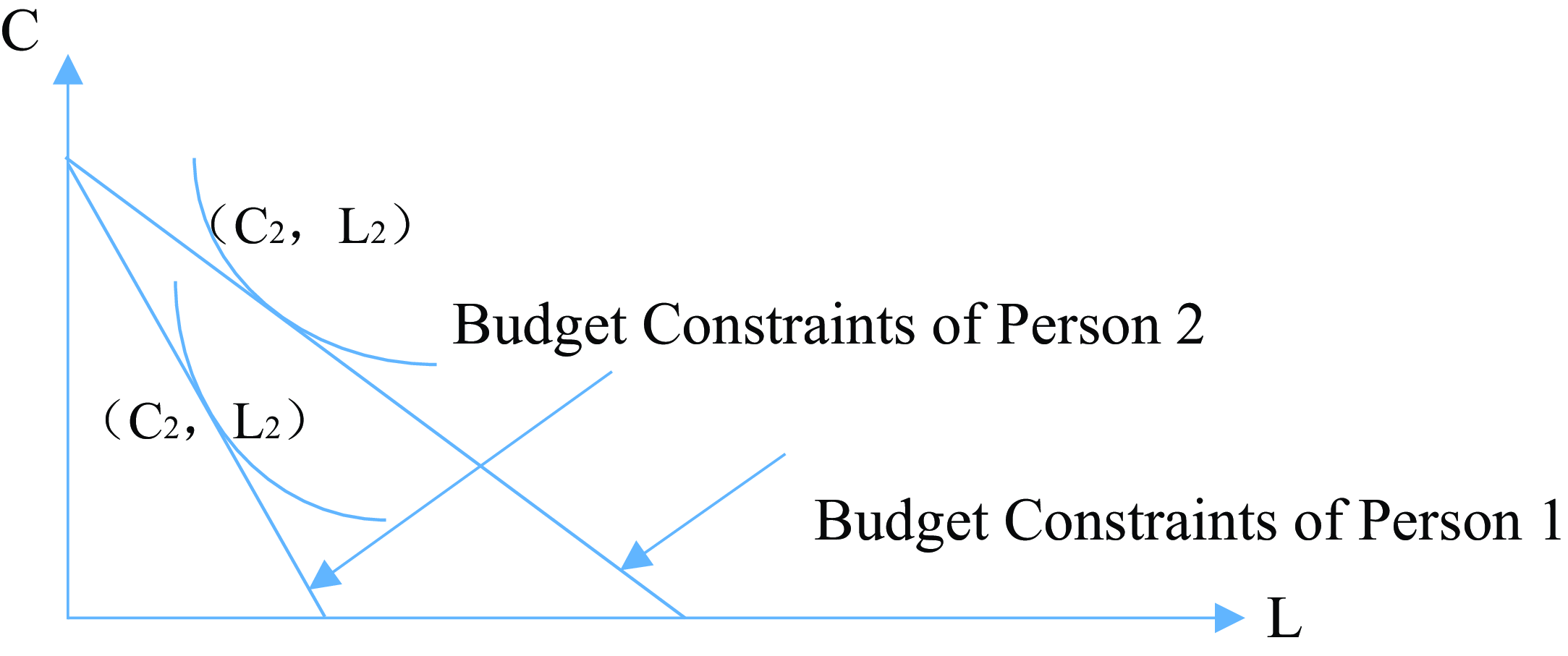
The above thought experiment aiming to solve the problem of unfair distribution of resources in the real world is hard to test in practice, nor can it be a guideline for legislation. In the Metaverse, however, we should have the opportunity to reconstruct the principles of social justice and legal system according to auction market models and pure exchange models of rights, using NFTs as a medium, and to bring even talent and other resources innate to human beings (e.g., artistic creativity) into the realm of equitable distribution by means of tokenization (e.g., David Bowie Bond for individual music rights).Footnote 13 We can even go beyond reciprocity of mutual benefits and design some certain exchange mechanism based on reciprocating social altruism in the form of “wonder trade” in the Metaverse of Pokemon.Footnote 14 In addition, in the real world, resources are limited, and distribution of justice is more likely to be a zero-sum game; while in the virtual world, digital technology can allow scarce resources to be reproduced indefinitely at minimal cost, thus making it more conducive to the establishment and institutionalization of the principles of sharing and universal benefits. Therefore, the Metaverse has the potential to achieve a genuine interchange of ideas about legal order, with new institutions based on thorough communication and overlapping consensus.
3.3. Digital relationship networks interfacing the virtuality and the reality and the rules of social games
It is obvious that the network trust and distributed governance of the Metaverse can significantly reduce sensitivity to the so-called Power Distance Index (PDI),Footnote 15 and promote flat communication between people and social exchange, thus having the opportunity to considerably shorten the distance of the relationship between strangers. In this context, there seems to be a certain degree of inverse proportion between the distance of power and that of relationship. Hence, the Metaverse is not a way to avoid social intercourse or to escape from reality, but a field where it is easier to form interactions with people. Distant and inefficient relationships between people in the real world can be enriched and developed in the Metaverse with a lower power index. More importantly, individual’s experience of controlling interpersonal relationships is very different. Social media endows people with stronger controllable effects, such as “enjoying myself on my zone.” Here, we can find that the order of the Metaverse has always been under the guidance of a relationship-based principle.
Of course, the real society is also a system essentially formed by the interaction between people. Among them, a long-lasting relationship will inevitably generate habitus in the repeated process of behaviour patterns, and a relationship of mutual trust will inevitably require individual self-discipline in the process of solidarity and coordination, and then invoke norms as the basis for legitimacy in the process of interaction. Therefore, the relational native order can be described by many iterations of gameplay. In the meta-universe, individuals are not so much homo sociologicus as homo ludens, so the way the meta-universe operates and the mechanism of interaction takes a more pure game paradigm, and the rules of the game of these interactions are the underlying logic that leads to the innovation of the legal order. From this perspective, what deserves special attention is the concept of “social game (Gesellschaftsspiel)” proposed by Georg Simmel. It is generally believed that this concept had varying degrees of influence on John von Neumann’s groundbreaking paper “Theory of Social Games” published in 1928 and on Oscar Morgenstern’s thoughts on economic behaviour and decision making, contributing to the birth of game theory.
In Fundamental Questions of Sociology: The Individual and Society, Simmel described what “social game” means:
“The expression of social games is of profound significance. Once all forms of interpersonal interaction and forms of socialization, such as the expectation of victory, exchange, the formation of parties, the capture of the will, an occasional encounter and the opportunity to depart, the alternation of antagonism and cooperation, traps and revenge, each of which is full of purpose in a tense reality, are regarded as games, these functions themselves only bring into play on the basis of charm because money is not at the heart of the game even in a game for bonus. From a real player’s point of view, money can be obtained via a variety of other ways, and the charm of games is the vitality [dynamics] and fluke [chance] of the sociologically important forms of activity themselves” (see Simmel, Reference Simmel and Shimizu1979, p. 81).
In striking contrast to the grand theory of Eugen Ehrlich and Max Weber on social structure and types, Simmel is mainly devoted to the micro study of the interaction between individuals and groups in the social process. The latter does not emphasize the normality and rationality of order, but pays more attention to internal contradiction, paradox, and dialectics of order. Simmel does not establish a systematic theory of sociology of law, but his thoughts are wise and enlightening for solving various complex problems today. For example, it is very insightful of the proposition that the nature of society is understood as the form and structure of a large number of interactive relationships between individuals. He pointed out that:
“A collection of individuals cannot be a society because each of them has an objectively determined or subjectively driven life-content. Society exists only when the vitality of these contents takes a form of mutual influence, an individual has a direct or indirect influence on others, and the individual transforms from a mere collection of a space or a temporary transition into society. Therefore, there should be a science whose main theme is society rather than anything else, and it must be devoted to the study of the types and forms of human interaction and socialization” (see Simmel, Reference Simmel1971, pp. 24–5, cited in Freeman, Reference Freeman, Zhang, Liu and Wang2008, p. 14).
Isn’t this kind of science that Simmel has been expecting the social network analysis that has entered the mainstream of social science today? As Lynton Freeman has discovered through his in-depth intellectual archaeology, Simmel articulates the core beliefs that form the basis of modern social network analysis in the early 20th century. He also points out that Leopold von Wiese, a student of Simmel, even has an in-depth discussion of “relational systems” and “networks of relationships between people” in contemporary terms. Now, Simmel is generally considered to have played an important role in laying the foundation for social network analysis (see Freeman, Reference Freeman, Zhang, Liu and Wang2008, pp. 14–5, 27). It goes without saying that multiplayer games and social relationships are the dual-track of Metaverse operation. Game theory and social network analysis are indispensable tools of analysis for understanding the ordering mechanism of the Metaverse.
It is well known that the modern legal system is based on an independent persona. The concept stems from Latin and its original meaning is “masks used in performances,” i.e., public persona. The psychologist Carl Jung believes that persona is a compromise between the individual and the society. Thus, it can also be said that there is no atomized individual in a real sense, and all people are relational beings, that is, social animals. Those in long-term relationships tend to consciously or unconsciously achieve an equilibrium through win-win approaches when considering game strategies, so it is not difficult to understand that long-term relationships are always conducive to cooperation. The effectiveness of such cooperation depends entirely on the mutual restraint of the parties, but it is sometimes more powerful than government intervention or legal regulation. However, it should be noted that if a party breaks off the relations due to an opportunity, informal sanctions will no longer work; thus, the relational order is not a mandatory norm that does not require state intervention. On the contrary, the relational order is both opposite and complementary to legal order—either the law complements the relational order, or the relationship complements legal order. In addition, laws can also play a role when the parties make trade-offs among different Nash equilibriums. Conversely, laws can be followed without coercion, and to a large extent it is because the habitus of the relational order encourages patterns of self-enforcing normative action. This is a mirror image of the relational order in the Metaverse and the legal order in the real world.
3.4. The Metaverse as a game process and its Rhizomatic structure of narrative
From the perspective of relation-based social ethics, reciprocity habitus and corresponding principles and rules are undoubtedly very important. Reciprocity is characterized by mutual benefits, so altruistic motives and egoistic motives are always intertwined and constantly recombined into different patterns. In this sense, reciprocity is actually a consensual relationship between the two, a concrete contract chain and a cooperative game. However, reciprocity is also full of uncertainty, and always faces the risk of making the relationship between profit and loss unequal and unbalanced, thus constituting a paradox. Therefore, how to combine reciprocity with the principle of justice that can be generalized is a key issue for the development of relational order, as well as a core issue that the blockchain society must face in its governance. John Rawls’ theory of justice on fairness provides an important clue to solve the problem.
As is known to all, the gist of Rawls’ theory is to discuss two basic principles of justice, namely, the freedom principle of equality and the exception principle of dealing with inequality of outcome. The latter is further subdivided into two types: the equitable principle of fair opportunity and the “difference principle,” which is mainly reflected in the maximum–minimum rule for making decisions in the face of uncertainty (although this special welfare function is always controversial). Here, the difference principle comes last. However, a close scrutiny of the evolution trend of Rawls’ theory shows that the difference principle is at the core. In particular, the key point of Rawls’ elaboration and demonstration of the difference principle is the concept of reciprocity. Generally speaking, reciprocity is based on feedback and reward, which is generally equivalent to the favourable situation of both sides, so people tend to confuse reciprocity with mutual benefits. But in many cases, reciprocity with ethical significance can actually be understood as the intermediate form of mutual benefits (egoism-oriented) and mutual contribution (altruism-oriented), which is exactly Rawls’ definition of the concept. Reciprocity also involves the social psychology and moral psychology of interdependence. Therefore, in the book Justice as Fairness—A Restatement of the Theory of Justice, Rawls understands “reciprocity” as the mutual respect of free and equal citizens for each other’s personality and way of life, in order to collaborate and live together, with the strong helping the weak and enabling the weak to participate in society while maintaining their self-esteem. In his view, it is to achieve such a goal that it is necessary to build a system of justice theory and distribution rules with the difference principle as the core (see Rawls, Reference Rawls and Yao2002, pp. 123, 134, 200–3; Ji, Reference Ji2018a, pp. 1–5; Ji, Reference Ji2021b, pp. 31–48). Here, the “definition of goodness” of relationalism based on the individual is in harmony with the “definition of righteousness” of structuralism based on the society.
It should be emphasized that the difference principle envisaged by Rawls is premised on “background procedural justice,” and the principle of equal opportunity constitutes a typical case of pure background procedural justice. It goes without saying that the experience of procedural fairness will ease the hostility between the opposing sides, encourage people to accept the judgments and decisions against them on the basis of trust, and improve social satisfaction with the authoritative and neutral public power (cf. Lind and Tyler, Reference Lind and Tyler1988). In addition, reciprocity is also conducive to the cultivation of public reason. Leaving the relationship between public and private, and leaving public reason, we actually have no way to define reciprocity in the concept of justice at all. That is to say, to a great extent, Rawls regards “background procedural justice” and “public reason” as the fulcrum to get rid of the paradox of reciprocity. From the perspective of game theory, the incorporation of public reason and altruistic contribution into the field of vision, which means giving a discount on the calculation of profit, is conducive to achieving a fair balance of various interests through reflection and mechanism adjustment. In this sense, the Metaverse can also be considered as a process of reaching a game equilibrium in the dynamics of continuous construction and deconstruction, or multi-layered and diverse communication procedures online and offline. Here, countless autogenic micro-narratives intertwine, cluster and spread, and evolve with each other, forming Gilles Deleuze’s Rhizomatic structure.Footnote 16
The reciprocity principle emphasized by relational order is essentially characterized by flat interaction between different subjects. Therefore, the opportunity for the rise of “relational egalitarianism” in network structure can be identified. It is through a series of critiques of relational egalitarianism against distributive justice theories (cf. Anderson, Reference Anderson1999, pp. 287–337; Anderson, Reference Anderson2010, pp. 1–23) that the asymmetrical relations in modern institutional design have become visualized, and thus the embedding of inter-subjective interactions in law and the realization of interpersonal equality through simulated democratic activities in cyberspace has become a burgeoning political and juridical movement. In this context, the Metaverse has been a battleground for Hillary Clintons since the 2016 US presidential election. On 1 September 2020, the Joe Biden–Kamala Harris campaign launched a virtual office on the Nintendo Switch video game “Animal Crossing: New Horizons,” featuring voting booths, ice cream stands, trains, flying machines, and campaign merchandise. Digital collaborative campaigns in the context of Metaverse like these show that the way politicians communicate with voters has changed profoundly, and politics has entered game space and evolved into a narrative landscape of VR made up of countless vignettes.
4. Legal issues facing the Metaverse
4.1. Internal and external monitoring of the Metaverse
In Code: Version 2.0: The Law of Cyberspace, a masterpiece of the examination of digital society, Lawrence Lessig points out that the concept of cyberspace “originally means control rather than freedom,” as the etymology can be traced back to “Cybernetics,” the study of remotely controlled, fully managed, and efficiently supervised architectures (see Lessig, Reference Lessig, Li and Shen2009, pp. 3–4). Here, the directives of regulation are a series of codes that transcend law and even community norms, and a set of technical rules that determine how hardware and software work in the Metaverse. It is the code that determines what kind of person can get access to what kind of network, and determines the form and content of the choice. This also means that it is the computing program that encodes interactive behaviours such as games, thereby determining the existence of interpersonal relationships.Footnote 17 For example, smart contracts can automatically detect the behaviours after the conclusion of the contract through information technology, which makes computer protocols traceable and irreversible while enhancing transaction credibility. In general, code architecture constructs a “panoramic surveillance tower” in the Metaverse as what is described by Bentham–Foucault through authentication, small packets, network worms and so on, and possibly even carries out mind checking and mental manipulation through a “brain in a vat” linked to intelligent machines. Obviously, too much code will likely weaken the community function of the Metaverse, leading to excessive regulation. Therefore, the best code design for multiplayer games should be to embed self-organization in it, leaving certain issues to the players themselves, in order to reduce the indirect cost of control (see Lessig, Reference Lessig, Li and Shen2009, pp. 300–1).
In the Metaverse, the application scenarios of blockchain technology include financial systems, point cashback, financing, asset management, storage, authentication, sharing, business circulation management, online property, communication, future prediction, financial budget visualization, voting, collective funds, medical information, IoT, and so on. The essence of blockchain protocols is actually a network consensus of privacy in black box. Specific rights and obligations are clarified through smart contracts, and the work of the system centre is automated, namely decentralization, through experience sharing and credibility assurance of distributed transaction. On 17 June 2016, hackers hijacked the digital verification tokens of the DAO, a crowdfunding project initiated by a German blockchain company Slock.it, indicating that there are also major risks in blockchain. At that time, in order to cut losses and properly resolve the disputes arising therefrom, community members had to be allowed to use hard forks by resorting to illegal technicalities.
Afterwards, in an effort to close the loopholes in the regulation of homogeneous tokens such as Bitcoin and ETH, the Securities and Exchange Commission (SEC) of the United States issued a Report of Investigation on 25 July 2017, concluding that the digital currency “tokens” sold by DAO (an unincorporated decentralized autonomous organization, formed by the co-founders of Slock.it UG, a German corporation) from April to May 2016 are securities for purposes of federal US securities laws, and offers and trading of such securities must register with the SEC unless a valid exemption applies. Therefore, the application of blockchain technology for automated financing may not hinder the application of securities laws and the Howey Standard for the judgment of investment contracts. On 4 September 2017, the People’s Bank of China and other Chinese financial authorities published an announcement imposing a ban on the practice of raising funds from the public through the issuance of new cryptocurrencies (“Initial Coin Offerings” or “ICOs”). By 3 March 2022, the US SEC began to expand the scope of its scrutiny to the trading market of NFTs, the medium for representing digital assets in blockchain games, in order to clamp down on potential securities violations. On 22 April 2022, the Hangzhou Internet Court of China ruled on the first case of infringement of NFT works, and strengthened regulations through the platform’s duty of care and technical methods of broken links and Eater Address. These moves typically reflect external legal oversight by state agencies over the Metaverse’s autogenic order.
4.2. Guarantee of rights in augmented reality and virtual reality
As you can imagine, the architecture of the Metaverse is very complex, and the cost of construction and operation is very expensive. In addition to the company’s investment, the residents of virtual worlds also need to share the cost, which may be the original idea of the game design of buying islands, buildings, and so on in cyberspace.Footnote 18 However, this kind of activities of the development of virtual real estate as a temporary measure later evolved into a large-scale Metaverse economy, which has also created a boom in the real world.
Digital land deals for profit reportedly started in 2018 and by the end of 2021, land sales in the Metaverse had reached 27.36 million Yuan. For example, Republic Realm, a US developer of virtual real estate, confirmed on its official Twitter account that it bought virtual land for a sandbox project for a record US$4.3 million, and the Honnverse game in China also attracted some players to invest in its real estate. Although criticized as speculative, some people do profit and are happy to do so (see Liu, Reference Liu2021). The outbreak of such enclosure movement and real estate speculation in cyberspace indeed expose such illegal acts as illegal fundraising and financial fraud, but it also means that the digital asset market is necessary and feasible and the corresponding order of property rights protection has yet to be formed. In augmented reality, for example, settings such as Netflix hit spots or stadiums marked in the map of the Ingress game operated by the Niantic company are not approved by real-world rights holders, so the ownership claims of online and offline overlap and conflict with each other. The frequent visits of people who want to experience the real life of the Metaverse landmarks have disturbed the normal life of the residents in the real space, leading to protests and disputes against the operating company of the Metaverse (see Jin, Reference Jin and Liu2022, pp. 33–4).
For another example, in a mirror reality, Upland, a blockchain game, is a Metaverse parallel to the earth in which players can take on different identities, purchase and utilize virtual property mapped to real-world addresses, and simulate real life under different conditions. In this case, UPX, the digital currency used, as well as information such as property ownership obtained through smart contracts, are secured by blockchain technology, which ensures the security of the ownership of specific goods or services through NFT, an unchangeable and irreplaceable unit of information (see Goossens and Breen, Reference Goossens, Breen and Li2021). But it remains to be observed whether such safeguard will become standard practice in the Metaverse, how the law of the real world will apply, and how avatars will hold accountable for their behaviour.Footnote 19 It is because, with some exceptions, the data generated by the Metaverse does not belong to the users themselves, nor to the developers and operators or even the digital beings as online representation. Moreover, information itself cannot be protected by exclusive ownership. The items in the game are copyrighted by the online gaming company. Stealing someone else’s account to transfer someone else’s game items only constitutes fraud, but not the larceny. In short, digitization is gradually dissolving the concept of ownership in modern jurisprudence (cf. Perzanowskl and Schultz, Reference Perzanowskl, Schultz and Zhao2022). Even if we cannot say that ownership has died out in cyberspace, in any case, ownership in the Metaverse is not for real physical objects, but is a form of permission, a right of use, and an opportunity to have access to specific services. Therefore, the object of all kinds of transactions is service in essence, which should be diversified to prevent monopolies.
Another interesting example is that the world’s largest hotel, Airbed & Breakfast (Airbnb), which was inadvertently created in a mirror reality by the intermediary service agent offering housing accommodation through the Metaverse, reached a peak of accepting about two million orders per day before the outbreak of COVID-19. The Metaverse hotel concludes and performs contracts through the connection and scoring system with the real world, protects privacy and prevents risks through the DApp program that separates identity authentication from transaction, and obtains operating profits and the momentum of sustainable development by charging a certain percentage of fees to the hosts and tenants in different locations (see Jin, Reference Jin and Liu2022, pp. 108–10; cf. Tapscott and Tapscott, Reference Tapscott and Tapscott2016, Chap. 5). A similar business model can be seen in ride-hailing. Taking service as the main object of market transaction is bound to change people’s view of rights and even civil law system. It is worth mentioning that, starting from 3 March 2022, Airbnb also promoted a pro bono campaign of “reservation but not check-in” and “the intermediate agent taking no commission” in response to humanitarian disaster caused by the war between Russia and Ukraine, calling on people to search for a homestay within the territory of Ukraine and make donations by means of reservation but not check-in in the platform’s booking system. As of 17 March, users from 165 countries have booked more than 430,000 virtual stays and donated US$17 million (see Guo, Reference Guo2022). The idea of charitable transactions and free services fully demonstrates the empowering function of the Metaverse and the diversity of autonomous orders.
However, on the other hand, the adoption of XR technologies such as augmented reality and VR in the Metaverse will also lead to the issues of basic rights, such as personal information security and privacy protection. VR headsets, AR glasses, and other digital wearables that are standard in the Metaverse mean more intrusive collection of personal data, omnipresent surveillance, and even the ability to infer users’ deepest desires and preferences. Given the huge risks to personal information security and privacy, it is necessary to import human rights and ethical standards from the real world into the Metaverse (see Rodriguez et al., Reference Rodriguez, Opsahl, Mir and Leufer2021). And in the sense that everything seen in multiplayer online interactive games is supposed to be adapted to users’ location, authenticated identity, the content of work, and the time of activities, the experience of the Metaverse can be tailored in different ways. In order to achieve desired goals or realize behavioural targeting, the online gaming companies are bound to collect a lot of data about individuals, which can be used as a basis for personal profiling or behavioural prediction (see Oostveen, Reference Oostveen and Cao2020, pp. 37–8). As a result, the individual’s ability to make autonomous choices and live freely is subject to varying degrees of external impacts and restrictions, and the right to information self-determination lacks the necessary and sufficient guarantees. On the other hand, in the Metaverse of lifelogging, the ability or feeling of being in control of one’s own decisions on social media becomes even stronger (see Jin, Reference Jin and Liu2022, pp. 80–1), suggesting that there is a paradox of self-determination in the Metaverse with respect to the protection of data rights.
4.3. Black boxing and legal liability of algorithmic leviathan
In the Metaverse, AI plays an important role as non-player characters (NPCs) in virtual space, or as analysts and problem solvers for massive amounts of data, or as bots for certain users. In most games, bots are forbidden to be used. But in those occasions where it is allowed, some people install bots on many computers for the purpose of showing off or making profits, and through their management and manipulation, they can achieve the goal of dominating and monopolizing the resources of the Metaverse. In this sense, the application of AI has actually become the privilege of a small number of players and a tool to kidnap and control other users, forming a pattern of confrontation and resistance between human beings and AI (see Jin, Reference Jin and Liu2022, pp. 163–6).Footnote 20 Here, it can be found that the a similar phenomenon of “theater state” described by Clifford Geertz through deep play, such as cockfighting in Bali (see Geertz, Reference Geertz and Han1999a; Reference Geertz and Zhao1999b), might as well call it “algorithmic leviathan,” which activates the symbolic significance of glory in the game of virtual worlds to make all resources subject to shiny rituals and game rules.
In practice, NPC also means that algorithm becomes a strong power that makes the Metaverse operate in accordance with the logic of information-based computation, so that a series of directives from the AI are effectively executed. Ultimately, the creation story of the Metaverse is that computer languages, or the process of communication as an interaction mechanism, or the programs that control games construct the entire world. Thus, algorithm is also a new ecological system created by human language, which continuously produces various intelligent species, provides huge amounts of data and unlimited options in the Metaverse, and forms the long tail effect in the network structure by machine learning. The vast majority of choices are made by algorithms, but the final choice and the best options remain in the hands of people. Based on such technical conditions, the US presidential election has actually been applying machine learning on big data for simulation and prediction since 2012, and deciding the election strategy accordingly. It can therefore be argued that the workings of democratic politics have been transferred to a considerable extent from the real world to the Metaverse, and that more sophisticated learning algorithms might just be able to determine who is elected president.
Given the importance of algorithms, it is necessary for governance regime of AI to require algorithms to be transparent and fulfil the obligation of explanation. However, while general algorithms can be explained, algorithms of machine learning are hard to explain, especially those in Generative AIs, because they require analogies, trade-offs, reconfiguration, and probabilistic thinking—probability judgment implies a level of trust based on subjectivity. Machine learning algorithms make automation itself automated, which can create a black-box effect (see Domingos, Reference Domingos and Huang2017, Chap. 1; Yeung and Lodge, Reference Yeung, Lodge, Lin and Tang2020; Liu, Reference Liu2022, pp. 78–91; Shen, Reference Shen2019, pp. 20–39). The black-box operation of such algorithms can easily lead to algorithm discrimination, but it is difficult to achieve algorithm justice through corrective measures. The more serious problem is that the black-box algorithms make the causality extremely ambiguous, making it impossible to provide reasoned arguments for intelligent decisions, and making it possible for an intelligent court to make an “unjustified” judgment, thus eventually undermining the accountability mechanism and depriving the legal order of its most crucial cornerstone. In this situation, the governance of the Metaverse must turn the “Bayesian handle”: revising what was believed in the past and gaining what will be believed in the future by means of new evidence; performing analogical reasoning, probabilistic calculations, and searching for more plausible explanations in inter-subjectivity in Bayesian networks, and combining logic and probability (see Ji, Reference Ji2021a, pp. 1–18; Qin, Ge and Lin, Reference Qin, Ge and Lin2016, pp. 97–100). AI systems should also be allowed to explain their behaviour and self-monitor, thus strengthening the limits of technical due process in the design and operation of algorithms and forming the interaction between technology and democracy through the flow of data recording public opinion. For the code as law, it is most important to encode the linkages of the network and find a better or even optimal model of the pairing in different combinations of ways.
4.4. Decentralized autonomous islands and the corridor system
From the perspective of law and social change, the Metaverse forms DAO through blockchain, or an ideal “island” of smart contracts and code programs based on co-creation, sharing, consensus, and co-governance, which is leading to a paradigm revolution in national governance (see Fridman, Reference Fridman2021).
Estonia in Eastern Europe, for example, offers a variety of public services through a multifunctional digital ID card system (permanent digital personality) and allows citizens to vote in elections or invest in registered companies from different places of residence around the world. The operation of the political and administrative mechanism of virtual space depends on the keyless signature infrastructure (KSI) to visualize the recording and retrieval of information and ensure the correctness and compliance of government records. The e-government Metaverse of Estonia also utilizes blockchain to build a so-called “X-road,” a data sharing system which links various database and smart city projects together seamlessly and makes administrative service and civil service connected and compatible with each other, greatly improving the efficiency of public activities and facilitating the daily life and movements of residents. Various public certificates, including birth certificate, household registration, passports, driving licence, voting qualifications, etc., are represented by a cryptographic hash value (associative columns) for decentralized management and use. Here, reliable data security technology ensures the correctness and privacy of information. Data access and updated personal details can be confirmed, and citizens can be informed in a timely manner about who has access to their personal information. A large amount of work is self-fulfilling, so administrative costs can be significantly reduced while maintaining the legitimacy of public certificates. At the outbreak of the COVID-19 epidemic, cities such as Shanghai, Beijing, Guangzhou, and Shenzhen in China also launched a decentralized community governance platform based on blockchain protocols in early 2020 to promote autonomy within the 15-minute living circle in an attempt to achieve full trace and monitoring of administrative activities, nucleic acid testing, and screening through multi-party collaboration and distribution of epidemic prevention items and life necessities using smart IoT on the basis of digital authenticity and trust (see Ji, Reference Ji2020, pp. 16–9).Footnote 21
The key to the governance of a decentralized autonomous “island” is to program self-created rules as well as relevant laws in the real world into the blockchain and ensure the flexibility for islanders to establish, revise, or repeal them as they see fit. The complex system of this regulation could not be constructed via Bitcoin software, but was later implemented through a blockchain program called “Ethereum” and smart contracts.Footnote 22 Based on this principle, DAO, the world’s first virtual company, was born in 2016 and in the same year, Malta drew up a strategic plan—“blockchain island” to restructure the country (see Magnuson, Reference Magnuson, Gao, Chen and Zhang2021, pp. 89, 259). Although these organizational and institutional reform initiatives are accompanied by risks and problems of one kind or another, the general direction of decentralization and autonomy is highly regarded by all parties, and many believe that DAOs represent the future of institutional evolution. In a decentralized situation, the power to make rules and judgments belongs to individual communities, and these internal rules form the basis of the governance of the Metaverse.
In this context, can DAO participants engage in off-chain activities in accordance with the laws in the real world? Can their liability be transformed from the current unlimited liability of token holders into a limited liability that encourages more financial activities? In addition, how should the taxable income earned by token holders be calculated to prevent tax evasion? To address these important and pressing issues, some foundations are introducing or designing certain trust framework associated with DAOs. The Guernsey Purpose Trust, for example, is a more favourable and flexible institutional arrangement created under jurisdictional law to transfer assets from a DAO-controlled smart contract to a trust agreement. When the purpose trust replaces the function of the DAO board, the token holder’s responsibility is significantly reduced and the DAO can operate in the real world off the chain through the trustee and minimize the tax risk for both the token holder and the trustee.Footnote 23 It is obvious that there is a structural coupling between the legal order in the real world and the relational order on the blockchain, and the purpose trust constitutes a “corridor system,” the technical-legal interfaces bridging on-chain/off-chain governance.
In 2024, a research team from the Chinese Academy of Sciences published a paper titled “Understanding the Dilemma of Explainable AI: A Proposal for the Ritual Dialogue Framework” in Humanities and Social Sciences Communications, a journal under the Nature Portfolio. The study approaches the issue of “social trust” in AI from the perspective of human–computer interaction, revealing the role of procedurally compliant communication and discourse in developing trustworthy AI. This idea is similar to a certain extent with the article on AI caucus mediation mechanism based on the experiment of Habermas Machine (HM) (see Tessler et al., Reference Tessler, Bakker, Jarrett, Sheahan, Chadwick, Koster, Evans and Campbell-Gilligham2024). Relatedly, at the end of 2024, Anthropic released the “Model Context Protocol (MCP)”—a tool and open industry standard designed to bridge different AI systems and enable interoperability. Through this contractual consensus, which functions as a universal adapter, AI agents can establish interactive relationships, enhance network effects, and achieve procedural coupling. From this perspective, Agent Network Protocol (ANP) is noteworthy as well. In reality, data derives value from relationality, algorithms influence environments through relationality, and AI transforms society into a distributed collection of relationships characterized by connectivity and circularity. These can also be understood as a “corridor system.”
4.5. The effectiveness of incremental sanctions of the Metaverse
The main punishment of the Metaverse is the exclusion of violators from digital social circles, and in particular, permanent blocking constitutes an extremely severe negative sanction for players of the game. In the real world of the United States, the White House once launched the “Clean Network Program” and issued executive orders to ban TikTok and WeChat. The social networking company Facebook later imposed a ban on then-President Trump, closing his account on the platform. In China, the time-limited blocking and permanent blocking of personal WeChat, the hardwares for tracking the reconstruction of the online identity by changing the sockpuppet, blocking tainted celebrities in the entire network, and creating “social death” phenomena, including disqualification, employment boycott, and non-buying campaigns are in fact largely the extension and reflection of the logic of law enforcement in the Metaverse to make the joint punishment mechanism a combination of online and offline complementary features. Although there are heated controversies about whether the measures of blocking in reality are reasonable and legal, whether they infringe upon the basic rights of individuals, and whether they violate the principle of procedural justice,Footnote 24 such rational voices are often easily drowned out in emotional public opinion. It follows that permanent blocking echoes each other internally and externally in the Metaverse, potentially creating a more effective sanction mechanism than state coercion.
However, as the Metaverse is a digital form of relational order, the design of most law-abiding mechanisms is not based on the decremental logic such as pain-producing punishment, but around the incremental logic such as rewards and inducements, such as the upgrade of the qualification to participate in the game, bonus points, and the acquisition of digital currency. For example, China’s authorities have been working with companies such as Sesame Credit to build a joint credit punishment system, under which people with lower credit scores tend to encounter more inconvenience in their daily lives as punishment for their deviant behaviour. But in the Metaverse, human-to-human communication and human-to-system communication are designed based on timeliness of response and uncertainty of rewards. Even for aggressive behaviour reinforced by anonymity, it aims to evoke empathy and constraints of public opinion, and offer more options based on consent rather than harm (see Jin, Reference Jin and Liu2022, pp. 76–8). Obviously, the general basis of incremental logic is social exchange. In both the virtual and the real world, social exchange is bound to bring about various benefits of obligations of expected return, which are not specified and negotiable, and the quality and quantity of fulfilling return obligations will be determined by the obligor in the future. Thus, social exchange can be understood essentially as a way to achieve equalization through power differentiation and imbalance, and this dialectical relationship of repeated adjustment constitutes a characteristic long-term dynamics.
Social norms and laws can determine the fair ratio of such exchanges and reduce the high degree of uncertainty caused by the ongoing dynamics, but at the same time transform direct exchanges into indirect ones, leading to the formation and reinforcement of ritualized tendencies, bureaucratic organizations, just procedures, and coercive powers in autonomous communities. Nevertheless, the sanctions against non-performance of obligations in social exchange are still multi-layered and various (see Blau, Reference Blau and Li2018, esp. Chap. 4).Footnote 25 In view of the interplay between the real world and the virtual world, when considering the maintenance and development of legal order, should we change the decremental punishment in reality into the incremental form of the Metaverse, or make the sanction mechanism of the Metaverse closer to the decremental mode of the real world, or at least embed more decremental logic? These questions are worthy of study.
In addition, the establishment of smart courts in China, driven by big data and computer science (see Ji, Reference Ji2018b, pp. 125–33; Ma, Reference Ma2020, pp. 23–40; Zheng, Reference Zheng2021, pp. 80–92; Wang, Reference Wang2021, pp. 104–14; Wei, Reference Wei2021, pp. 3–23; Lin, Reference Lin2021, pp. 27–36), has actually built a set of rules-embedded communication systems through technical codes that enable automated procedural control over the behaviour of various actors. Under the operation of machine bureaucracy, legal rules finally begin to become rigid and binding, and break the original balance between subjectivity in the real world. The goal of “treating like cases alike,” which is difficult to achieve under the law embedded with complex interaction and situational thinking, has surprisingly been achieved under the cooperation of scientific myth and algorithmic dictatorship. Inadvertently, a ubiquitous digital network has intersected and overlapped with the existing interpersonal network to cover all aspects of society, and will also reconstruct a new social order and rules of the game in the Metaverse through digital twin technology and virtual simulation technology. It is also worthwhile to seriously explore the prospects that this new legal order embedded in digital relationships will present.
5. Conclusion
This paper conducts a preliminary theoretical examination and analysis of the Metaverse phenomenon from three aspects: the nature of thought, the principle of the relational order inside the virtual space, and the issues concerning the legal system between the virtual space and the real world. This leads to the following basic propositions:
-
(a) Phenomenology lays the foundation of epistemology and ontology for the unity of subjectivity and objectivity and separation of mind from body in the Metaverse, from which we can see that the essence of the Metaverse lies in the relationship network generated by subject interaction. The basic criterion of understanding digital cyberspace is the relationship distance and power distance among each node (subject).
-
(b) Communication is the most important word in the era of the Metaverse, as it is inevitable that there exist many small universes that are interpreted individually, requiring MWI, and the necessity of facing the ignorance and misunderstanding arising from plurality. In order to enhance communication, mutual understanding, and connection with legal order of the real world, various “corridor systems” should be constructed, such as the purpose trust system that encapsulates the token value of DAO. The construction of “corridor systems” may also be called the “legal interface revolution.”
-
(c) The Metaverse reflects on the excessive development and risk society in the process of industrialization and modernization through an information utopia with introversion and immanent transcendence, which constitutes a virtual pilot of the great transformation of the world structure, and a domain of continuous combination and reconstruction of various relationships.
-
(d) The Metaverse can be freed from the load of ready-made facts and legal rules of the real world, providing humans with the opportunity structure to redesign rationally from scratch. In the Metaverse, people can conclude new social contracts in the form of mathematical contracts, and reconstruct the effective links between individuals and society. At the same time, people can also project the principles of order inside the Metaverse into the real world through the twin technology of “augmenting the reality with the virtuality.”
-
(e) The internal order of the Metaverse is based on the premise of digital beings with multiple identities and their interactive relationship, which is reflected in the equilibrium state reached by repeated games. Due to the virtual nature, it is possible to adopt a full procedural approach and a purely market-based model for the equal distribution of resources, or to modify the principle of mutualism to altruism by means of “wonder trade.”
-
(f) The digital cyberspace of the Metaverse determines that the internal order is based on the relationship of inter-subjectivity, which can be described by the game theory and calculated with the help of social network analysis. Compared with the traditional Chinese interpersonal network, it is similar in shape and different in nature, and has a certain degree of comparability in terms of governance.
-
(g) The characteristics of MWI and relational standard make the narrative of the Metaverse inevitably complicated, which will present an intricate Rhizomatic structure, and there may be the tendency to pluralize the correct solutions in the interpretation of rules, which will lead to more options and discretion of law.
-
(h) The origin of the Metaverse is a computer framework for remote control, so it is possible to create an omnipresent and overpowering internal monitoring mechanism that needs to be tempered by appropriately embedding self-organization. In addition, external monitoring based on real-world morality, principles of justice, and generally applicable laws is needed to prevent unfairness in the internal rules of individual micro-universes. Otherwise, there is a risk of creating a situation of technological oligarchic domination.
-
(i) In the Metaverse, where the new norm of the tokenization of everything, the end of ownership, and the more intrusive collection of personal data have emerged, it is necessary to import the human rights, property rights, and codes of conduct of the real world into the Metaverse in order to more effectively protect the rights of individuals while also clarifying the legal liabilities held by avatars for their behaviours.
-
(j) To a certain extent, the Metaverse can be understood as “algorithmic leviathan,” whose power operation is based on the logic of information computation. Therefore, it is indispensable for the governance norms of AI to require the transparency of algorithms and performance of explanatory obligations. However, machine learning algorithms are hard to interpret, and will form a black-box effect. As a result, causality becomes so ambiguous that intelligent decisions cannot be justified and the accountability mechanism will be ultimately undermined, depriving legal order of its most critical cornerstone. In this case, the governance of the Metaverse must turn the “Bayes handle” to combine logic with probability.
-
(k) The Metaverse forms DAO through blockchain, or an ideal “island” of smart contracts and code programs based on co-creation, sharing, consensus, and co-governance. This kind of decentralized order construction is causing the paradigm revolution of state governance. In the field of DAO, the right to make and judge rules belongs to each community, and internal rules form the basis of governance. The key to institutional design of universalism is how to structurally couple the legal order in the real world with the relational order on the blockchain.
-
(l) The relational order of the Metaverse is generally maintained through incremental logic such as points, rewards, and inducements, with the most severe sanction being permanent blocking that breaks off the interactive relationship. The idea of social exchange runs through the depths of incremental logic. In the real world, however, the legal order often depends on coercive force exercised by decremental logic. Given the interplay between the real and the virtual world, the combination of increments and decrements in sanctions mechanism may need to be reconsidered (see Ji, Reference Ji2023).
In conclusion, we can find that the ordering mechanism of the Metaverse is based on the interactive relationship between subjects, reaches equilibrium through repeated games, and forms a network structure, which belongs to a type of relationship-based order. Under the condition that the reality and the virtuality are born together and the reality is augmented by the virtuality, how the digital relational order and the analogue legal order interact with each other is an important research topic in jurisprudence, especially in the sociology of law and the emerging computational jurisprudence. As pointed out above, the relational order and rules of complexity in the Metaverse are governed by code programs and smart contracts. In practice, programs and contracts also operate as the dual-track of legal order in the real world, which can constitute the main bridge of cross-border communication between parallel universes. It is only necessary to emphasize in particular that in the Metaverse the concept of sovereignty has changed extremely profoundly—not only are there conflicts between plural sovereigns in cyberspace, but individuals are also considered sovereign; in a market system where services replace goods as the universal object of exchange, this is often reflected in “consumer sovereignty” or “user sovereignty.” It will be interesting to see what kind of chain reaction this subversive shift from state sovereignty to individual sovereignty will cause in the legal system of the digital age.
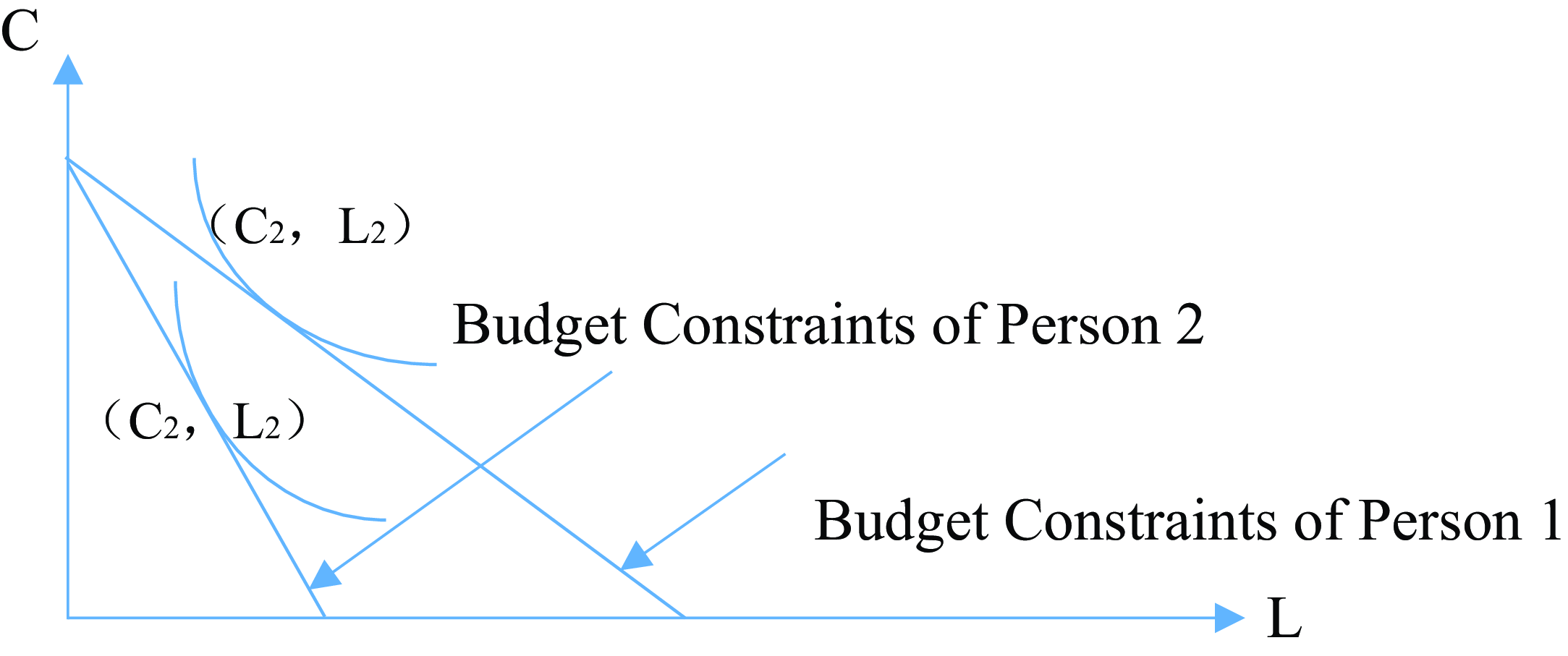

 Open access

