


Although dissociation has been variously defined, dissociative symptoms and processes have been seen as important in explaining the development of post-traumatic stress disorder (PTSD; Reference HorowitzHorowitz, 1976; Reference Spiegel, Cardena, Wolf and MosnaimSpeigel & Cardena, 1990; Reference Van der Kolk and Fislervan der Kolk & Fisler, 1995; Reference Foa, Hearst-lkeda, Michelson and RayFoa & Hearst-Ikeda, 1996). Dissociative symptoms, such as reduced awareness of one's surroundings, de-realisation, de-personalisation or emotional numbing have been shown to predict the later development of PTSD in a number of populations (e.g. Reference Koopman, Classen and SpeigelKoopman et al, 1994; Reference Shalev, Peri and CanettiShalev et al, 1996; Reference Ehlers, Mayou and BryantEhlers et al, 1998). The American Psychiatric Association (1994) has emphasised the role of dissociation in the new diagnosis of acute stress disorder (ASD).
However, the validity and utility of requiring dissociative symptoms as a core feature of ASD is controversial (Reference Marshall, Spitzer and LiebowitzMarshall et al, 1999). It remains unclear how the predictive power of dissociation compares with that of other early symptoms of PTSD in the aftermath of trauma, such as re-experiencing (Reference Classen, Koopman and HalesClassen et al, 1998; Reference Brewin, Andrews and RoseBrewin et al, 1999), and with that of other established psychological predictors of PTSD, for example post-event rumination (Reference Ehlers, Mayou and BryantEhlers et al, 1998). Furthermore, dissociative symptoms are often transient (Reference Spiegel, Cardena, Wolf and MosnaimSpiegel & Cardena, 1990; World Health Organization, 1992). This raises the question of whether thepersistence of dissociative symptoms beyond the traumatic event may be a stronger predictor of PTSD than initial reactions.
METHOD
Subjects
In-patient sample
Subjects were 27 (21 men and 6 women) patients who were admitted for in-patient treatment at the John Radcliffe Hospital, Oxford, UK, following a road traffic accident. Patients were visited by J. M. within 24 h of being admitted and invited to participate in the study. Patients who had a head injury that led to unconsciousness were excluded. After complete description of the study to the subjects, written informed consent was obtained. No patients who were approached declined to be interviewed. Patients' mean age was 33.9 years (range 18-59, s.d.=12.3). The majority of patients had fractures (81%). Most of them were drivers of vehicles (53%) or motorcyclists (32%). The remaining patients were passengers or pedestrians.
Out-patient sample
A consecutive series of 439 out-patients who attended the Accident & Emergency Department of the John Radcliffe Hospital, Oxford, UK, following a road traffic accident were invited to participate in the study and sent a questionnaire package. A total of 176 patients (40%) opted into the study and returned questionnaires. There were 79 female patients and 94 male patients (on three questionnaires, gender was unidentifiable). The mean age of respondents was 33.8 years (range 17-76, s.d.=13.3). Respondents were similar to the total sample population sent questionnaires in terms of age and gender distribution (58% male, mean age 32.2 years).
Measures
Symptoms of PTSD
Participants completed the Posttraumatic Diagnostic Scale (PDS; Reference Foa, Cashman and JaycoxFoa et al, 1997) at initial and follow-up assessments. The PDS asks participants to rate how much they were bothered by each of the PTSD symptoms specified in DSM-IV (American Psychiatric Association, 1994), ranging from 0 (‘never’) to 3 (‘5 times per week or more/very severe/nearly always’). The PDS yields a sum score measuring the overall severity of PTSD symptoms. In addition, the presence/absence of PTSD is determined by assessing whether a patient endorsed the minimum number of symptoms required by DSM-IV for each of the symptom clusters. We used the standard cut-off recommended by Foa et al (Reference Foa, Cashman and Jaycox1997) for determining the presence of a symptom (at least ‘1’=‘once a week/once in a while’).
Dissociation during the accident and persistent dissociation at 4 weeks
Dissociation during the accident and continued dissociation at 4 weeks were assessed with the State Dissociation Questionnaire (SDQ). This is a seven-item scale developed by the authors (further information available upon request), measuring dissociative experiences such as de-realisation, de-personalisation, detachment, altered time sense and reduction of awareness in surroundings. The scale was developed in a series of studies with trauma survivors and student volunteers and shows good reliability and validity (Reference MurrayMurray, 1997; Reference Halligan, Clark and EhlersHalligan et al, 2002). The internal consistencies for the SDQ in the present samples were Cronbach's α factors of 0.75 (n=27) and 0.79 (n=173).
Pre-accident dissociative tendencies (trait dissociation)
Whether or not individuals dissociate during a traumatic event may depend on individual personality differences in a general tendency to dissociate. The Trait Dissociation Questionnaire (TDQ) developed by the authors (further information available upon request) assessed the participants' pre-accident disposition for dissociative experiences. The questionnaire contains 38 items and was developed from a pool of 101 items taken from:
-
(a) existing dissociation measures, in particular the widely used Dissociative Experiences Scale (Reference Bernstein and PutnamBernstein & Putnam, 1986), the Peritraumatic Dissociation Scale (Reference Marmar, Weiss and SchlengerMarmar et al, 1994), the Stanford Acute Stress Reaction Questionnaire (Reference Koopman, Classen and SpeigelKoopman et al, 1994) and the Perceptual Alteration Scale (Reference SandersSanders, 1986); and
-
(b) new items that represented aspects of dissociation considered to be of importance for the development of PTSD that were not sufficiently represented in the existing scales, in particular items measuring emotional numbing (Reference Foa, Hearst-lkeda, Michelson and RayFoa & Hearst-Ikeda, 1996).
Murray (Reference Murray1997) described data supporting the reliability and validity of the questionnaire. Factor analyses indicated that the questionnaire measures seven different aspects of dissociation, namely detachment from others and the world, sense of split self, lability of mood and impulsivity, in-attention and memory lapses, emotional numbing, confusion and altered sense of time and amnesia for important life events. The internal consistency of the total score was Cronbach's α=0.93 (n=211) and the retest reliability over a 2-month period r=0.86 (n=83). Students with high scores on the TDQ were more likely to experience intrusive memories of an unpleasant videotape than those with low scores. The in-patient sample completed the full TDQ and the out-patient sample completed a short 10-item version (TDQ-s). The TDQ-s correlates highly with the TDQ (r=0.94,n 1=69 students, n 2=27 in-patients). In the present studies, the internal consistency for the TDQ in the in-patient sample was Cronbach's α=0.92 (n=27) and the retest reliability over a 6-month period r=0.82 (n=16). The internal consistency for the TDQ-s in the out-patient sample was Cronbach's α =0.86 (n=176), and the retest reliability over a 6-month period r=56 (n=129).
Memory fragmentation
Patients rated the degree to which their memory of the accident was fragmented (‘Are your memories of the accident in any way unclear or jumbled?’) on a four-point scale from ‘not at all’ to ‘a lot/very much’. The in-patient sample also were asked to provide a narrative of the accident. The interviewer (J. M.) rated these narratives for the degree of fragmentation on a four-point scale (0=‘very coherent’, =‘quite coherent’, 2=‘not very coherent’, 4=‘very incoherent’) without knowledge of the patients' questionnaire scores.
Data-driven processing
Building on results from experimental cognitive psychology, Ehlers & Clark (Reference Ehlers and Clark2000) suggested that individuals who mainly engage in data-driven processing during trauma will be more likely to show deficits in intentional recall of the trauma memory and to suffer from subsequent re-experiencing symptoms than those who mainly engage in conceptual processing. Patients in the out-patient study indicated the extent to which they had engaged in data-driven processing (‘Were you over-whelmed by different sensations and impressions?’) and in conceptual processing (‘Did you realise that you were in a dangerous situation?’) on a four-point scale from ‘not at all’ to ‘a lot/very much’. The data-driven processing score was the difference between these two items.
Rumination
Rumination following the accident was assessed with the Rumination Questionnaire (RQ). This is a six-item scale developed by the authors in a series of studies (Reference MurrayMurray, 1997; Reference Clohessy and EhlersClohessy & Ehlers, 1999; Reference Steil and EhlersSteil & Ehlers, 2000; Reference Halligan, Clark and EhlersHalligan et al, 2002) assessing ruminative thoughts such as ‘Do you go over what happened again and again?’ and ‘Do you dwell on what happened, without really solving or deciding anything?’. The internal consistencies for the RQ in the present samples were Cronbach's α=0.62 (n=27) and 0.77 (n=173).
Assessment of ASD
Patients were diagnosed as having ASD if they endorsed the minimum number of symptoms specified in DSM-IV (American Psychiatric Association, 1994) as assessed with the PDS and SDQ, respectively, and if they met the disability criterion as measured by the PDS. In addition to assessing whether or not patients met diagnostic criteria for ASD in the 4 weeks after the accident, we assessed whether they met the symptom criteria (but not the duration and disability criteria) for the disorder at initial assessment.
Injury severity
For the in-patients and the first 86 participants of the out-patient study, Abbreviated Injury Scores (AIS) were calculated from admission notes (American Association for Automotive Medicine, 1985). Out-patients also were asked to rate the degree of their injuries on a four-point scale from ‘not at all’ to ‘a lot/very much’.
Procedure
In-patient sample
Patients were interviewed and they filled in the initial questionnaires in hospital within 24 h of being admitted. Follow-up questionnaires were sent by mail at 1, 2 and 4 weeks and 3 and 6 months after the accident. Owing to incomplete return rates, a few of the 4-week data were estimated from the 2-week data (for participants with a PDS score of 0 at 2 weeks), yielding 21 participants for this assessment (78%). At the 6-month assessment, 21 patients returned the questionnaires.
Out-patient sample
Questionnaires were sent out to patients within 48 h of the accident. The vast majority of participants (82%) returned the questionnaires within the first week of the accident. Follow-up questionnaires were sent at 4 weeks and 6 months after the accident. Return rates were 83% (n=146) at 4 weeks and 80% (n=140) at 6 months.
Data analysis
Spearman correlation coefficients were calculated because the PDS scores tended to be skewed to the left. For partial correlations and multiple regression analyses, log-transformed PDS scores were used that normalised distributions.
RESULTS
Clinical outcome
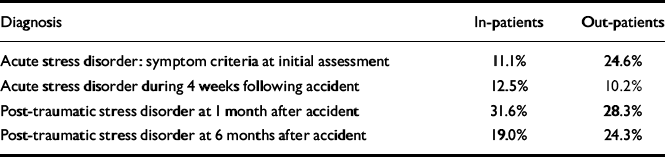
Table 1 shows the percentage of patients who met symptom criteria for ASD at initial assessment, full criteria for ASD during the first 4 weeks following the accident and criteria for PTSD at the 4-week and 6-month assessments. In the out-patient sample, 32% of those patients who met ASD symptom criteria at initial assessment and 77% of those who met ASD criteria during the 4 weeks following the accident met the PTSD criteria at 6 months.
Clinical outcome
| Diagnosis | In-patients | Out-patients |
|---|---|---|
| Acute stress disorder: symptom criteria at initial assessment | 11.1% | 24.6% |
| Acute stress disorder during 4 weeks following accident | 12.5% | 10.2% |
| Post-traumatic stress disorder at 1 month after accident | 31.6% | 28.3% |
| Post-traumatic stress disorder at 6 months after accident | 19.0% | 24.3% |
Relationship of dissociation and other predictors with subsequent PTSD symptoms
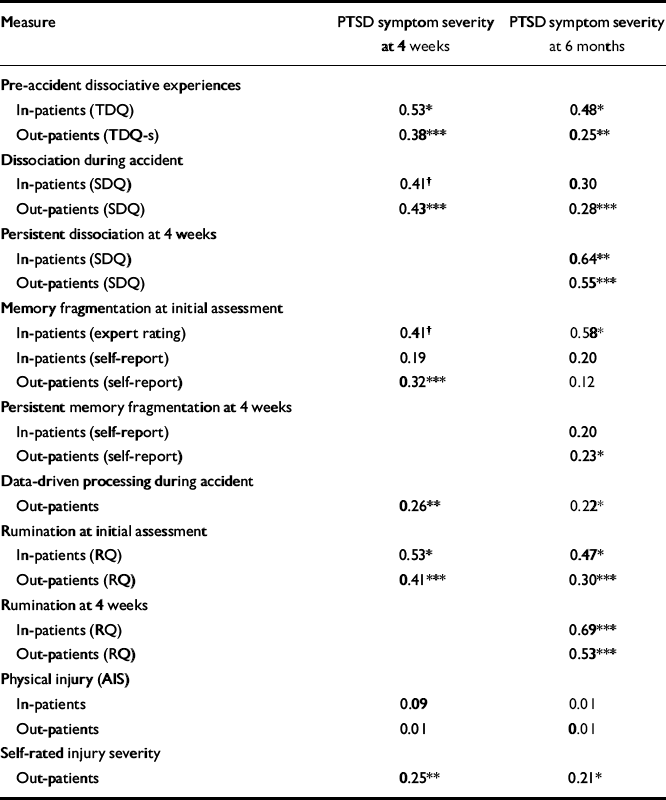
Table 2 shows the relationships between the dissociation measures, the other cognitive variables, injury severity and PTSD severity scores at 4 weeks and 6 months after the accident.
Spearman correlations between predictor variables and subsequent post-traumatic stress disorder (PTSD) symptom severity
| Measure | PTSD symptom severity at 4 weeks | PTSD symptom severity at 6 months |
|---|---|---|
| Pre-accident dissociative experiences | ||
| In-patients (TDQ) | 0.53* | 0.48* |
| Out-patients (TDQ-s) | 0.38*** | 0.25** |
| Dissociation during accident | ||
| In-patients (SDQ) | 0.41† | 0.30 |
| Out-patients (SDQ) | 0.43*** | 0.28*** |
| Persistent dissociation at 4 weeks | ||
| In-patients (SDQ) | 0.64** | |
| Out-patients (SDQ) | 0.55*** | |
| Memory fragmentation at initial assessment | ||
| In-patients (expert rating) | 0.41† | 0.58* |
| In-patients (self-report) | 0.19 | 0.20 |
| Out-patients (self-report) | 0.32*** | 0.12 |
| Persistent memory fragmentation at 4 weeks | ||
| In-patients (self-report) | 0.20 | |
| Out-patients (self-report) | 0.23* | |
| Data-driven processing during accident | ||
| Out-patients | 0.26** | 0.22* |
| Rumination at initial assessment | ||
| In-patients (RQ) | 0.53* | 0.47* |
| Out-patients (RQ) | 0.41*** | 0.30*** |
| Rumination at 4 weeks | ||
| In-patients (RQ) | 0.69*** | |
| Out-patients (RQ) | 0.53*** | |
| Physical injury (AIS) | ||
| In-patients | 0.09 | 0.01 |
| Out-patients | 0.01 | 0.01 |
| Self-rated injury severity | ||
| Out-patients | 0.25** | 0.21* |
Dissociation measures
A pre-accident tendency to dissociate as well as dissociation during the accident predicted the PTSD symptom severity. In the long term, however, the dissociation variable that predicted chronic PTSD symptoms best was persistent dissociation 4 weeks after the accident. Dissociation at 4 weeks predicted the PTSD severity at 6 months over and above the initial dissociation (partial correlations: r p=0.63 and P<0.01 for in-patients; r p=0.47 and P<0.001 for out-patients).
Further analyses tested whether the patients' reported pre-accident tendency to dissociate predicted dissociative responses during and after the accident. Dissociation during the accident showed moderate correlations with the patients' pre-accident tendency to dissociate (r s=0.53 and P<0.01 for in-patients; r s=0.33 andP<0.001 for out-patients). Partial correlations showed that, in the out-patient sample (but not in the smaller in-patient sample), dissociation during the accident continued to correlate with PTSD symptom severity at 4 weeks (r p=0.31, P<0.01) and 6 months (r p=0.19, P<0.05) when pre-accident tendency to dissociate was controlled. Partial correlations between persistent dissociation at 4 weeks and PTSD severity at 6 months, controlling for pre-accident tendency to dissociate, were significant in both samples (r p=0.51 and P<0.05 for in-patients;r p=0.47 and P<0.001 for out-patients).
We tested further whether the dissociation symptom cluster added to the prediction of PTSD symptom severity at 6 months over and above what could be predicted on the basis of the re-experiencing, avoidance and hyperarousal symptom clusters in the first 4 weeks after trauma, similar to an analysis of Brewin et al (Reference Brewin, Andrews and Rose1999). In a hierarchical regression analysis, we entered the presence/absence of the reliving, avoidance and hyperarousal cluster symptoms in the first step. These variables predicted 34% of the variance of PTSD severity at 6 months (R=0.58, R 2=0.34, adjustedR 2=0.32, F=20.98, d.f.=3, 124,P<0.0005). The dissociation symptom cluster significantly improved the prediction (R 2 change=0.08, F change (1, 123)=16.97, P<0.0005) and the combination of all ASD symptom clusters, including dissociation, predicted 42% of the variance of PTSD symptom severity (R=0.65, R 2=0.42, adjustedR 2=0.40, F (4, 123)=22.00, P<0.0005). Similar results were obtained when PTSD severity at 4 weeks was predicted from symptom clusters at initial assessment, or when logistic regression analyses predicting the presence/absence of PTSD were used. The pattern of results did not change when a stricter cut-off of ‘2’ was used for scoring symptoms on the PDS, as in the analysis of Brewin et al (Reference Brewin, Andrews and Rose1999).
Other cognitive predictors
Memory fragmentation tended to show a positive relationship with PTSD severity. The expert rating appeared to be a better predictor than self-reports of fragmentation. Memory fragmentation (self-reports) correlated with both initial dissociation (r s=0.37,P<0.001 for out-patients) and data-driven processing (r s=0.27, P<0.001 for out-patients).
Data-driven processing during the accident correlated with PTSD symptoms. Partial correlations between data-driven processing and PTSD symptoms at both time points remained significant when dissociation during the accident was controlled for (4 weeks: r p=0.23, P<0.01; 6 months: r p=0.17, P<0.05).
Rumination about the accident was among the strongest predictors of PTSD. In the long term, the rumination variable that predicted chronic PTSD symptoms best was persistent rumination 4 weeks after the accident. It predicted PTSD symptoms at 6 months even when dissociative symptoms at 4 weeks were controlled for (in-patients: r p=0.56, P<0.05; out-patients: r p=0.42, P<0.001).
Multiple regression
How much of the variance of PTSD symptom severity 6 months after the accident can be explained by dissociation and the other cognitive predictors? In a hierarchical multiple regression analysis of the out-patient sample, the variables taken at initial assessment were entered in the first step (pre-accident dissociative tendencies, dissociation and data-driven processing during the accident, initial memory fragmentation and rumination). These variables explained 13% of the variance (R=0.36,R 2=0.13, adjusted R 2=0.10, F (5, 116)=3.54, P=0.005). In the second step, the variables taken 4 weeks after the accident were entered, that is, persistent dissociation, memory fragmentation and rumination. These variables significantly increased the accuracy of the prediction (R 2 change=0.27, F change (3, 113)=17.43, P<0.0005). Overall, dissociation and the other cognitive predictors explained 41% of the variance of PTSD symptom severity at 6 months (R=0.64, R 2=0.41, adjustedR 2=0.37, F (8, 111)=9.69,P<0.0005).
Injury severity
Injury severity as measured by the AIS was not a good predictor of PTSD severity. However, the patients' own ratings of the severity of their injuries correlated significantly with PTSD severity at 4 weeks and 6 months.
DISCUSSION
The studies reported here used a prospective design and assessed peritraumatic dissociation and other indicators of cognitive processing shortly after the traumatic event. This represents an advantage over many previous studies that estimated processing during trauma from reports given several weeks or even months later.
ASD and PTSD
The prevalence rates of ASD and PTSD in the present samples have to be interpreted with caution because they relied on a self-report questionnaire rather than diagnostic interviews, and the appropriate cut-off for scoring symptoms from such questionnaires is still under discussion (Reference Brewin, Andrews and RoseBrewin et al, 1999). However, our studies replicate earlier findings on the prevalence of ASD and PTSD after road traffic accidents (Reference Blanchard, Hickling and BartonBlanchard et al, 1996; Reference Ehlers, Mayou and BryantEhlers et al, 1998; Reference Harvey and BryantHarvey & Bryant, 1998), supporting the validity of the data. Previous studies have shown that around 80% of patients who have ASD during the 4 weeks following trauma will develop PTSD (Reference Bryant and HarveyBryant & Harvey, 1998; Reference Harvey and BryantHarvey & Bryant, 1998; Reference Brewin, Andrews and RoseBrewin et al, 1999). The results of our out-patient study are comparable but timing of assessment may be crucial. The ASD status may fluctuate during the first 4 weeks following trauma and more persistent ASD may be more predictive than initial ASD in predicting PTSD.
Dissociation as a predictor of PTSD
The present studies indicated that persistent dissociation is a stronger predictor of chronic PTSD than dissociation during the accident. Persistent dissociation at 4 weeks remained a significant predictor of PTSD severity at 6 months when pre-accident tendency to dissociate or initial dissociation was partialled out. This pattern of results suggests that although initial dissociation may put people at risk for PTSD, many are able to compensate by post-event processing, or only those who continue to dissociate may be at high risk of persistent problems.
The patients' reports of their pre-accident tendency to dissociate correlated with initial dissociation and subsequent PTSD symptoms. However, in line with the results of the retrospective study by Tichenor et al (Reference Tichenor, Marmar and Weiss1996), the prospective out-patient study found that dissociation during the accident predicted PTSD symptoms over and above a pre-accident tendency to dissociate. Thus, the contribution of a dissociative response to trauma on subsequent PTSD appears to be, in part, independent of pre-existing dissociative traits.
Overall, the studies supported the importance of dissociation in predicting PTSD. In contrast to the results of Brewin et al (Reference Brewin, Andrews and Rose1999) dissociative symptoms predicted later PTSD symptoms over and above what could be predicted from other PTSD symptoms, such as re-experiencing, avoidance and hyperarousal, even when the stricter cut-off for scoring the presence of PTSD symptoms used by Brewin et al (Reference Brewin, Andrews and Rose1999) was used. Further studies will have to clarify whether differences in the population studied or methodological differences may have contributed to the different results.
Other cognitive predictors
How does dissociation lead to later symptoms of PTSD? One possibility is that dissociative symptoms are a sign of the individual's inability to process fully the traumatic event and its implications (Reference Spiegel, Cardena, Wolf and MosnaimSpiegel & Cardena, 1990; Reference Van der Kolk and Fislervan der Kolk & Fisler, 1995; Reference Brewin, Andrews and RoseBrewin et al, 1996; Reference Foa, Hearst-lkeda, Michelson and RayFoa & Hearst-Ikeda, 1996; Reference Ehlers and ClarkEhlers & Clark, 2000). Incomplete processing may lead to deficits in the memory of the traumatic event, ranging from uncertainty about the sequence of events and memory fragmentation to complete dissociative amnesia for the event. Such deficits in trauma memory may be responsible for the easy triggering of re-experiencing and hyperarousal symptoms characterising PTSD (Reference Brewin, Dalgleish and JosephBrewin et al, 1996; Reference Foa, Hearst-lkeda, Michelson and RayFoa & Hearst-Ikeda, 1996; Reference Ehlers and ClarkEhlers & Clark, 2000). To date, only preliminary evidence for this hypothesis is available. Amir et al (Reference Amir, Stafford and Freshman1998) have reported that fragmented trauma memories are indeed correlated with severity of PTSD, and that the memories become more coherent with successful exposure treatment (see Reference Foa, Molnar and CashmanFoa et al, 1995). Another study reported that survivors of road traffic accidents with ASD gave more disorganised trauma narratives than those without ASD (Harvey & Bryant, 1999).
The present studies are the first to provide prospective evidence for the role of memory fragmentation in PTSD. Patients' self-reports of memory fragmentation may be less reliable indicators of actual fragmentation than expert ratings, which tended to show a stronger relationship with subsequent PTSD. The present studies used global ratings, and more sophisticated measures may prove more of the trauma memory dysfunction. Halligan (Reference Halligan1999) replicated the role of disorganised trauma memories in the development of PTSD following assault using a self-report questionnaire and several expert ratings. The authors also found a high interrater reliability of global experimenter ratings of memory fragmentation, such as the one used in the present study, supporting the validity of the present data.
The results of the out-patient study are in line with Ehlers & Clark's (Reference Ehlers and Clark2000) hypothesis on the role of data-driven processing during trauma. The significant correlations with memory fragmentation support the hypothesised link between this processing style and deficits in intentional recall of the trauma memory. As predicted, data-driven processing also predicted subsequent PTSD symptoms. The present study was the first to explore the role of this variable in a prospective study of PTSD, and a preliminary short measure of data-driven processing was used. It is therefore encouraging that Halligan (Reference Halligan1999) could replicate the relationships between data-driven processing, memory fragmentation and subsequent PTSD symptoms in a prospective study of assault survivors.
The results on rumination extend earlier findings (Reference Ehlers, Mayou and BryantEhlers et al, 1998; Reference Clohessy and EhlersClohessy & Ehlers, 1999; Reference Steil and EhlersSteil & Ehlers, 2000). Both initial and persistent rumination at 4 weeks were strong predictors of chronic PTSD. Rumination seems to be a maladaptive cognitive processing style that is quite independent of dissociation. Patients who ruminated excessively about questions such as why the trauma happened to them, how they could have prevented the trauma or its outcome or how they could get revenge for what happened to them were more likely to have chronic PTSD symptoms. At this stage, it is unclear what exactly the mechanisms are by which rumination maintains PTSD and in what ways it differs from helpful exposure to trauma memories. It may prevent patients from accepting that the trauma is an event from the past and may interfere with the formation of more complete trauma memories by focusing on ‘what if’ questions rather than the experience of the trauma as it actually happened. It may also directly increase feelings of nervous tension, dysphoria or hopelessness, and cue intrusive memories of the event.
Clinical Implications and Limitations
CLINICAL IMPLICATIONS
-
• Continuing dissociation and rumination 4 weeks after trauma predict chronic post-traumatic stress disorder (PTSD) better than initial reactions.
-
• Patients with persisting dissociation and rumination are in most need of treatment.
-
• Dissociative symptoms help to predict chronic PTSD over and above what can be predicted from the other PTSD symptom clusters.
LIMITATIONS
-
• Sample size in the in-patient study was small and the response rate in the out-patient sample was moderate. However, the results cross-validated well.
-
• The study largely relied on self-report instruments.
-
• Although initial measures were taken very soon after the trauma, some remain retrospective.
Acknowledgements
The work was conducted at the Department of Psychiatry, University of Oxford, UK. The studies were supported by grants from the Medical Research Council and the Wellcome Trust. The authors would like to thank Gail Stockford for her help with patient recruitment and Christopher Bulstrode and the staff of the Accident and Emergency Services at the John Radcliffe Hospital, Oxford, for their support.




eLetters
No eLetters have been published for this article.