


Stress and coping are among the most highly researched areas in psychology (Frydenberg, Reference Frydenberg2014; Hobfoll, Reference Hobfoll1989; Somerfield & McCrae, Reference Somerfield and McCrae2000). How people cope with stress can either reduce or increase the impact of stressful circumstances on their short-term wellbeing and functioning and also longer-term physical and mental health (Skinner, Edge, Altman, & Sherwood, Reference Skinner, Edge, Altman and Sherwood2003). Understanding how coping skills develop in children furthers our knowledge of the processes that underlie adaption to stress (Compas, Connor-Smith, Saltzman, Thomsen, & Wadsworth, Reference Compas, Connor-Smith, Saltzman, Thomsen and Wadsworth2001).
In general, there is consistency in the research on coping and mental health: how a person copes with stress predicts their mental health and psychological adjustment (Compas et al., Reference Compas, Connor-Smith, Saltzman, Thomsen and Wadsworth2001; Frydenberg & Lewis, Reference Frydenberg and Lewis2009; Holen, Lervåg, Waaktaar, & Ystgaard, Reference Holen, Lervåg, Waaktaar and Ystgaard2012; Wright, Banerjee, Hoek, Rieffe, & Novin, Reference Wright, Banerjee, Hoek, Rieffe and Novin2010). There is, however, a paucity of research pertaining to non-clinical populations and the early years. It is important to understand patterns of coping in young children that are associated with different mental health profiles to be able to best inform prevention and intervention approaches.
Coping in Children
The adoption of typical ways of coping in childhood may place individuals on developmental trajectories that either put them at risk or protect them during adolescence and adulthood (Compas et al., Reference Compas, Connor-Smith, Saltzman, Thomsen and Wadsworth2001). Understanding how children cope can help educators, parents, and other professionals better support the healthy development of children and set them on developmental trajectories to thrive rather than just survive the ups and downs of life. Research suggesting that coping in children is malleable, while coping in adults is more trait-like and stable (Wadsworth, Raviv, Compas, & Connor-Smith, Reference Wadsworth, Raviv, Compas and Connor-Smith2005), further highlights the importance of children's coping research and intervention.
Coping in children needs to be studied within the context of development, where children's coping is clearly constrained by their social, emotional, and cognitive development (Compas, Reference Compas1998; Skinner & Zimmer-Gembeck, Reference Skinner, Zimmer-Gembeck, Skinner and Zimmer-Gembeck2009). For example, Skinner and Zimmer-Gembeck (Reference Skinner and Zimmer-Gembeck2007, Reference Skinner, Zimmer-Gembeck, Skinner and Zimmer-Gembeck2009) identified ‘developmental shifts’ in young children's coping, ranging from reflexive and reactive coping in the early years to cognitive responses in middle childhood. Coping continues to change in quality throughout childhood and into adolescence as children develop physically and neurologically, and the social worlds and stressors they are exposed to also change (Skinner & Zimmer-Gembeck, Reference Skinner, Zimmer-Gembeck, Skinner and Zimmer-Gembeck2009).
Growing research suggests that typical adult dichotomies may not be appropriate for children's coping. For example, Ayers, Sandier, West, and Roosa (Reference Ayers, Sandier, West and Roosa1996) assessed coping in children in Grades 4–6 and found that the models of problem- versus emotion-focused coping and active versus passive coping were not a good fit for the data, as analysed by confirmatory factor analysis (CFA). The best fit was a four-factor model of active, distraction, avoidance, and support-seeking coping. Other studies also do not result in categories consistent with adult research; for example, Walker, Smith, Garber, and Van Slyke (Reference Walker, Smith, Garber and Van Slyke1997) identified three factors of coping in a measure of paediatric pain (the children were aged 9 to 12): active, passive, and accommodative (emotion-focused) coping.
Additionally, similar to adult coping, research on the taxonomies of coping in children remains inconclusive. For example, Compas and colleagues’ (Reference Compas, Connor-Smith, Saltzman, Thomsen and Wadsworth2001) meta-review of over 60 published studies on stress and coping in children concluded that there was no clear consensus on coping dimensions within their reviewed studies. Variations within studies of children's coping may be due to developmental differences in the children studied, with different outcomes possibly reflecting the changes in quality and quantity of coping strategies employed by children of different ages. With this in mind, it is important to study coping within the context of the different age groups in childhood and adolescence, including the currently under-studied early years.
Children as young as 4 years old are able to identify and use coping strategies to regulate their behaviour and emotions. For example, it was found that 4- to 5-year-olds were able to spontaneously describe up to 36 different coping responses (Deans, Frydenberg, & Tsurutani, Reference Deans, Frydenberg and Tsurutani2010). Notably, the children reported using more active coping strategies (e.g., try and fix it) and fewer passive coping strategies (e.g., cry or scream) than those identified by the children's parents; parents and children reported similar use of relational coping strategies (e.g., get help from a grown-up; Deans et al., Reference Deans, Frydenberg and Tsurutani2010). Further to this, Chalmers, Frydenberg, and Deans (Reference Chalmers, Frydenberg and Deans2011) interviewed 4-year-olds around their coping strategies when dealing with seven age-appropriate challenging situations. The children identified a range of coping strategies that were clustered into productive (e.g., play/do something else) and non-productive (e.g., do nothing/don't know) coping (Chalmers et al., Reference Chalmers, Frydenberg and Deans2011). Findings from Chalmers and colleagues suggests that by 4 years of age children have not only developed a repertoire of coping skills, but some of these are already non-productive, making interventions to increase productive coping and unlearn non-productive coping important for this age group. Additionally, the research on coping in preschoolers suggests that who you ask, and how you ask, makes a difference to the strategies identified.
Yeo et al. (Reference Yeo, Frydenberg, Northam and Deans2014) explored the 29-item, parent-rated Children's Coping Scale — Revised (CCS-R) General Coping form with a sample of 94 preschoolers, and three distinct coping dimensions emerged: Positive Coping, Negative Coping — Emotional Expression, and Negative Coping — Emotional Inhibition. Further to this, Pang, Frydenberg, and Deans (Reference Pang, Frydenberg, Deans, Buchenwald and Moore2015) conducted a PCA on the CCS-R General Coping form, which was completed by parents of 119 preschoolers and obtained the same three coping dimensions as Yeo and colleagues. As coping research is currently hindered, in part, by the use of various measurement tools across various different age groups and stressors, with little replication, it was deemed useful to replicate the component structure of the CCS-R and/or conduct a CFA to confirm its factor structure (with an appropriately large sample size for a CFA).
Coping and Mental Health
The research on coping and mental health is unequivocal: how a person copes with stress predicts their mental health and psychological adjustment (Compas et al., Reference Compas, Connor-Smith, Saltzman, Thomsen and Wadsworth2001; Holen et al., Reference Holen, Lervåg, Waaktaar and Ystgaard2012; Wright et al., Reference Wright, Banerjee, Hoek, Rieffe and Novin2010). Research on children's coping and mental health has generally focused on either general wellbeing or specific diagnoses, such as depression or anxiety (Thompson et al., Reference Thompson, Mata, Jaeggi, Buschkuehl, Jonides and Gotlib2010; Wright et al., Reference Wright, Banerjee, Hoek, Rieffe and Novin2010); few have focused on more general mental health. Additionally, most studies have explored the relationship between coping and mental health in clinical samples or children with a disability or serious illness (Babb, Levine, & Arseneault, Reference Babb, Levine and Arseneault2010; Dahlbeck & Lightsey, Reference Dahlbeck and Lightsey2008; Hema et al., Reference Hema, Roper, Nehring, Call, Mandleco and Dyches2009; Miller et al., Reference Miller, Vannatta, Compas, Vasey, McGoron, Salley and Gerhardt2009). With research suggesting that developmental outcomes may be more related to daily stressors than major life events (Compas, Reference Compas1987; Valiente, Lemery-Chalfant, & Swanson, Reference Valiente, Lemery-Chalfant and Swanson2009), an understanding of the relationship between coping and mental health in non-clinical populations may be important for elucidating effective coping patterns.
While individual studies vary, Compas et al.’s (Reference Compas, Connor-Smith, Saltzman, Thomsen and Wadsworth2001) meta-review provides an overview of the general findings regarding coping and mental health in children and adolescents. Compas and colleagues found that engagement coping and problem-focused coping were associated with more positive adjustment. The coping subtypes most often associated with positive adjustment were problem solving, cognitive restructuring, and positive reappraisal of the stressors; these strategies reflect the ability to carefully analyse and problem solve a situation, the ability to focus on the positives during times of stress, and also the ability to generate alternative, more helpful thoughts about a situation (Compas et al., Reference Compas, Connor-Smith, Saltzman, Thomsen and Wadsworth2001).
Compas and colleagues reported that disengagement coping and emotion-focused coping were related to poorer adjustment. Specific coping strategies associated with poorer adjustment include avoidance (cognitive and behavioural), social withdrawal, resigned acceptance, emotional venting, wishful thinking, and self-blame/self-criticism (Compas et al., Reference Compas, Connor-Smith, Saltzman, Thomsen and Wadsworth2001).
The limited research on coping and mental health in preschoolers suggests that the relationship may be similar to that observed in older children (Compas et al., Reference Compas, Connor-Smith, Saltzman, Thomsen and Wadsworth2001; Compas, Malcarne, & Fondacaro, Reference Compas, Malcarne and Fondacaro1988; Sandler, Tein, & West, Reference Sandler, Tein and West1994). It is important not to overlook these early years, considering research suggests that the prevalence of child psychiatric disorders and associated comorbidities is similar to that seen in later childhood (Egger & Angold, Reference Egger and Angold2006).
When it comes to anxiety, Yeo, Frydenberg, Northam, and Deans (Reference Yeo, Frydenberg, Northam and Deans2014) and Pang et al. (Reference Pang, Frydenberg, Deans, Buchenwald and Moore2015) found that those preschoolers who were rated higher on anxiety were more likely to engage in negative coping, particularly negative emotional expression, while preschoolers who rated lower on anxiety used more positive forms of coping. Regarding problem behaviour, as measured by the Child Behaviour Checklist (CBCL; Achenbach, Reference Achenbach1991, Reference Achenbach1992), Halpern (Reference Halpern2004) found that preschoolers who used more problem approach coping had greater psychological adjustment, while children with more negative coping responses had higher internalising and externalising scores; other forms of coping, such as avoidance, passive acceptance and emotional venting, were not significantly related to problem behaviour.
The study reported here set out to replicate the three-component structure of coping in preschoolers (Positive Coping, Negative Coping — Emotional Expression, and Negative Coping — Emotional Inhibition) as measured by the CCS-R for General Coping, but also for two Situation Specific Coping forms (Saying Goodbye, such as to a parent, and Dislike, such as having to eat something not liked). Additionally, the article explores the relationships between different coping patterns and mental health in preschoolers, with mental health measured by the Strengths and Difficulties Questionnaire (SDQ).
Method
Participants
Participants were 132 parents of preschoolers enrolled at a university-affiliated Early Learning Centre (ELC) in Melbourne, Australia. Seventy-three (55.3%) of the respondents were mothers of a preschooler and 59 (44.7%) were fathers. For 56 (73.7%) of the children, both parents responded.
The mean age of the preschoolers was 55 months (SD = 4 months) and comprised of 31 (40.8%) females and 45 (59.2%) males; 68 (89.5%) of the children had one or more siblings. Approximately 70% of the preschoolers were from an Anglo Australian background.
Measures
Child coping
Parents completed the CCS-R (Yeo et al., Reference Yeo, Frydenberg, Northam and Deans2014). The CCS-R consists of 29 child-specific coping strategies (e.g., ‘Get a teacher or grown-up to help’) that parents rate on a 3-point Likert scale (never, sometimes, a lot). Parents rated the 29 coping strategies across three different situations: (1) general coping, (2) when their child has to say goodbye to their parent/s, and (3) when their child has to do something he/she does not like. According to Pang et al.’s (Reference Pang, Frydenberg, Deans, Buchenwald and Moore2015) research, the convergence of empirically derived factors with previous studies, along with the moderate-to-high reliabilities (.64 to .86) obtained, suggest the CCS-R has both construct validity and internal consistency.
Child mental health
Parents also completed the SDQ for 4- to 10-year-olds (Goodman, Reference Goodman2001) for their preschooler. The SDQ is a brief screening instrument for child and adolescent mental health and is used widely in both clinical and community-based research (Goodman, Ford, Simmons, Gatward, & Meltzer, Reference Goodman, Ford, Simmons, Gatward and Meltzer2003; Vostanis, Reference Vostanis2006; Woerner et al., Reference Woerner, Fleitlich-Bilyk, Martinussen, Fletcher, Cucchiaro, Dalgalarrondo, Mariko and Tannock2004). The SDQ is comprised of 25 questions that parents rate on a 3-point Likert scale (not true, somewhat true, certainly true) and the results typically derive five dimensions of children's mental health: emotional symptoms, conduct problems, hyperactivity/inattention, peer problems, and prosocial behaviour. Australian research with 4- to 9-year-olds obtained moderate-to-strong internal reliability across the five dimensions, along with good test–retest reliability and satisfactory external validity as measured against clinical diagnoses (Hawes & Dadds, Reference Hawes and Dadds2004).
Procedure
Parents of all preschoolers enrolled in 4- to 5-year-old kindergarten at the ELC were invited to participate in a larger study involving the evaluation of a newly developed classroom program targeted at improving social and emotional skills in preschoolers. Ethics approval was obtained from The University of Melbourne Human Research Ethics Committee (HREC:1135950) and consent for the project was obtained from the director of the ELC.
A series of principal component analyses (PCAs) was conducted on the three forms of the CCS-R: (1) to attempt to replicate the three-component structure of the General Coping form, and (2) to extend previous research by exploring whether this component structure could also be obtained for the two Situation Specific Coping forms (Saying Goodbye and Dislike).
Pearson product-moment correlations were then conducted to explore the relationships between types of coping (e.g., Positive Coping, Negative Coping — Emotional Expression, and Negative Coping — Emotional Inhibition, if supported by the PCAs) and mental health; with mental health measured by the subscales of the SDQ (e.g., Emotional Symptoms, Conduct Problems, Hyperactivity/Inattention, Peer Problems and Prosocial Behaviour).
Results
Coping in Preschoolers
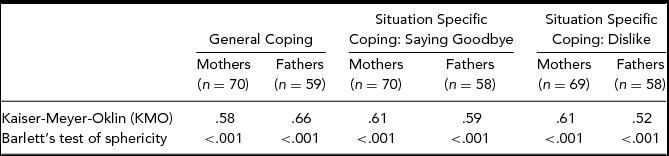
The sample size for each PCA varied from 69 to 70 for mothers and 58 to 59 for fathers. Prior to performing the PCAs, the data were assessed for factorability using Kaiser-Meyer-Oklin's (KMO; Kaiser, Reference Kaiser1970) measure of sampling adequacy and Bartlett's test of sphericity (Barlett, Reference Barlett1954); overall measures of intercorrelation indicated that the data was factorable (see Table 1).
Overall Measures of Intercorrelation for the Three CCS-R Forms
Extracting Components
To determine the number of components to retain for each form of the CCS-R, the scree plot (Cattell, Reference Cattell1966), Kaiser's criterion (i.e., factors with an eigenvalue greater than 1; Kaiser, Reference Kaiser1970), and the results of parallel analysis (Horn, Reference Horn1965) were all examined. Parallel analysis is argued to be one of the most accurate methods for determining the number of components in PCA (Dinno, Reference Dinno2009; Stellefson & Hanik, Reference Stellefson and Hanik2008). In the present research, the parallel analysis conducted yielded the most consistent and parsimonious number of components, indicating a three-component solution for the CCS-R.
Comparing two-, three- and four-component solutions
A series of PCAs with varimax rotation were performed for two-, three- and four-component solutions on all forms of the CCS-R to enable comparison with previous research (Hair, Black, Babin, & Anderson, Reference Hair, Black, Babin and Anderson2010). To ensure independence of the data, mother and father respondents were analysed separately. The PCAs found that a three-component structure of coping in preschoolers best fit the data for all forms of the CCS-R for mothers and fathers. A summary of the final three-component rotated solutions is displayed in Table 2.
Summary of the Final Three Component Solutions for the CCS-R
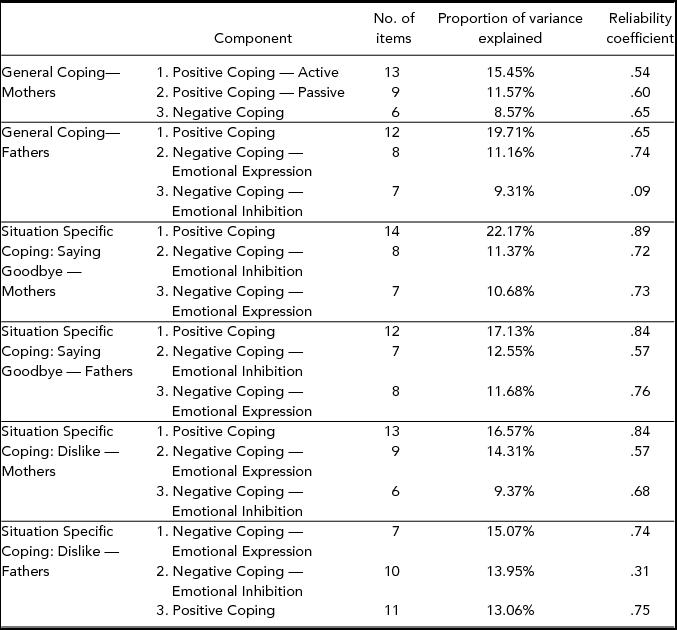
Five of the six forms resulted in the hypothesised three components structure of: (1) Positive Coping, (2) Negative Coping — Emotional Inhibition, and (3) Negative Coping — Emotional Expression. The General Coping form for mothers was the exception, where the three components retained did not conform to the same component structure and the components produced poor to questionable reliability statistics. The reliability statistics for the two Situation Specific coping forms resulted in the most reliable components; particularly the Saying Goodbye form, and more so for mothers than fathers.
The items that loaded on the three components for all forms of the CCS-R were compared with previous findings to explore the degree to which the current PCAs aligned with previous research. Specifically, the items that loaded on the same components as Pang et al.’s (Reference Pang, Frydenberg, Deans, Buchenwald and Moore2015) findings were determined. These results are displayed in Tables 3 and 4. The Situation Specific Coping forms were the most consistent with previous research (Pang et al., Reference Pang, Frydenberg, Deans, Buchenwald and Moore2015).
Component Loadings for the CCSR and Comparison With Previous Research: Mothers
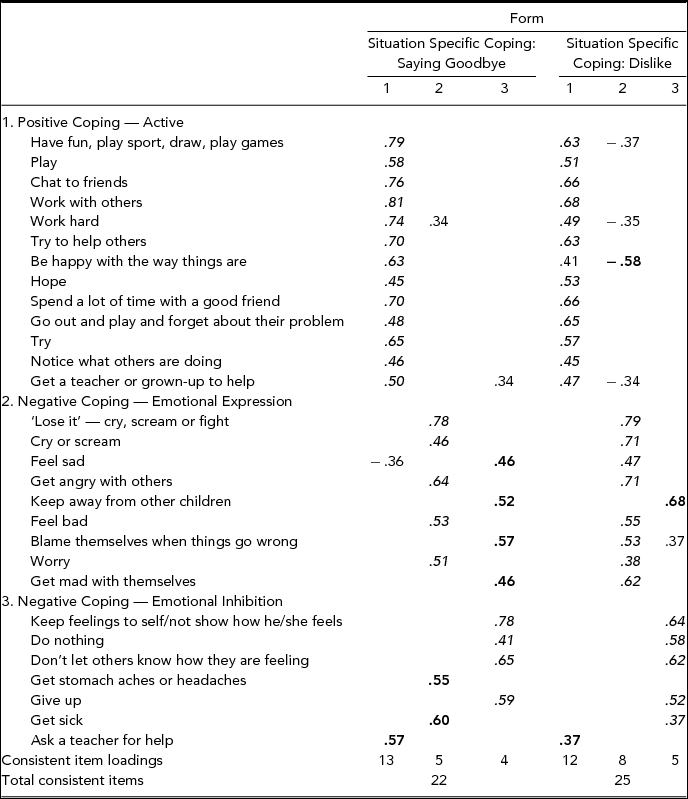
Note: Only loadings >.32 are shown. The loadings of the components retained in the final solutions are in bold type. Primary loadings that were consistent with previous research (Pang et al., Reference Pang, Frydenberg, Deans, Buchenwald and Moore2015) are in bold type and italics.
Component Loadings for the CCSR and Comparison with Previous Research: Fathers
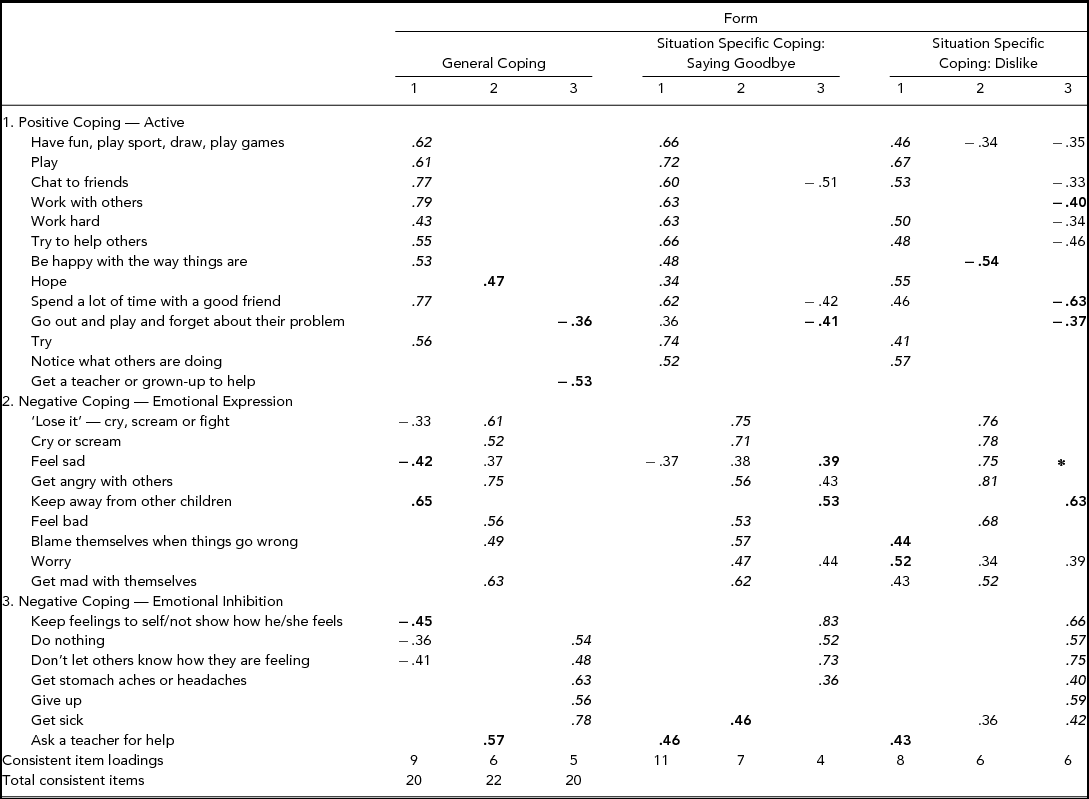
Note: Only loadings >.32 are shown. The loadings of the components retained in the final solutions are in bold type. Primary loadings that were consistent with previous research (Pang et al., Reference Pang, Frydenberg, Deans, Buchenwald and Moore2015) are in bold type and italics.
Coping and Mental Health
Data screening and cleaning
As the prior PCAs indicated that the Situation Specific Coping: Saying Goodbye form of the CCS-R had the most reliable components, three types of coping from this form and the five subscale scores for the SDQ (Goodman, Reference Goodman2001) were used for the correlation analyses. Only mothers’ responses were analysed, as independent samples t tests revealed no significant differences between mothers and fathers in their responses on the CCS-R or SDQ forms.
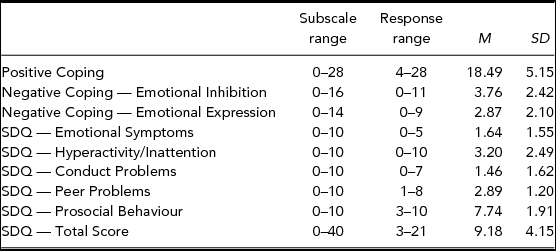
The descriptive statistics for the 70 responses on the CCS-R (Saying Goodbye form) and SDQ subscales are displayed in Table 5.
Descriptive Statistics for the CCS-R (Situation Specific Coping: Saying Goodbye Form) and SDQ Subscales
Pearson product-moment correlations
A series of bivariate Pearson product-moment correlations (r) was conducted on the three types of coping and the five subscales of the SDQ to investigate the relationships between coping and mental health in preschoolers (Table 6).
Pearson Correlations for the Relationships Between Coping and Mental Health (n = 70)
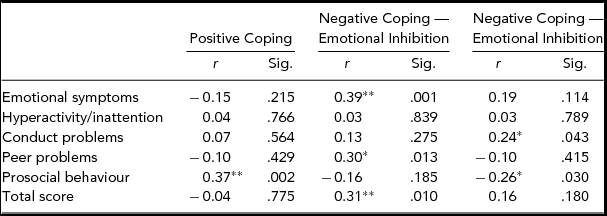
Note: *Indicates a significant correlation at p < .05; **Indicates a significant correlation at p < .01.
Positive Coping
A moderate positive correlation was obtained between Positive Coping and the Prosocial Behaviour subscale of the SDQ (p < .01); this relationship explained 14% of the total variance.
Negative Coping — Emotional Inhibition
Three moderate positive correlations were obtained between Negative Coping — Emotional Inhibition (CCS-R) and the following subscales of the SDQ: Emotional Symptoms (p < .01, which explained 15% of the total variance), Peer Problems (p < .05, which explained 9% of the total variance), and Total Score (p = .01, which explained 10% of the total variance).
Negative Coping — Emotional Expression
A weak positive correlation was obtained between Negative Coping — Emotional Expression (CCS-R) and the Conduct Problems subscale of the SDQ (p < .05); this relationship explained 6% of the total variance. A weak negative correlation was obtained between Negative Coping — Emotional Expression (CCS-R) and the Prosocial Behaviour subscale of the SDQ (p < .05), which explained 7% of the total variance.
Discussion
How people cope with stress matters, for both physical and psychological wellbeing (Skinner et al., Reference Skinner, Edge, Altman and Sherwood2003). The present study adds to an understanding of how preschoolers cope by first replicating a three-component structure of coping in preschoolers, as measured by the CCS-R General Coping form; second, by extending on previous research by exploring the component structure of the CCS-R Situation Specific Coping forms (Saying Goodbye and Dislike) by analysing the responses from mothers and fathers separately with PCAs; and third, by examining the relationship between different coping patterns and mental health in preschoolers as measured by the SDQ.
Coping in Preschoolers
Components
The three components obtained for five of the six forms (all three for fathers and the two Situation Specific Coping forms for mothers) are consistent with previous research on the CCS-R General Coping form (Pang et al., Reference Pang, Frydenberg, Deans, Buchenwald and Moore2015; Yeo et al., Reference Yeo, Frydenberg, Northam and Deans2014). The items that loaded on the three components of the Situation Specific Coping forms are largely consistent both between the Situation Specific Coping forms and with previous component analyses of the General Coping form (Pang et al., Reference Pang, Frydenberg, Deans, Buchenwald and Moore2015; Yeo et al., Reference Yeo, Frydenberg, Northam and Deans2014).
While larger sample sizes are preferred for factor and/or component analysis, the findings do suggest that the Situation Specific Coping forms are more robust at producing consistent and reliable components, particularly the Situation Specific Coping: Saying Goodbye form. One conclusion to draw from these findings is that measuring situation-specific coping, as opposed to general coping, is more accurate for a preschool population. The Situation Specific Coping: Saying Goodbye form is also arguably more specific than the Situation Specific Coping: Dislike form; the finding that the Saying Goodbye form was the more consistent and reliable of the two further supports the case for assessing coping in preschoolers in the most situation-specific manner possible. A second conclusion to draw is that the Situation Specific Coping: Saying Goodbye form resulted in the most robust component structure because saying goodbye is a more salient concern for preschoolers than the more general scenario of disliking something. This is supported by research on preschool populations that suggests that saying goodbye or separation from a parent is a very common concern for preschoolers (Chalmers et al., Reference Chalmers, Frydenberg and Deans2011, Halpern, Reference Halpern2004).
With both of these conclusions in mind, if only one measure of coping is feasible for a preschooler, an assessment of situation-specific coping based on the particular child's most salient issue would be the most appropriate and accurate measure of coping for that preschooler. A worthy consideration for future research would be to explore the component structure of the CCS-R using a situation-specific scenario that a child and/or parent had identified as a relevant concern for their child; for example, a parent could identify and complete the form with a scenario of their own choosing in mind, or a parent could select from a list of possible common situation-specific concerns for their preschooler. The present research suggests that a modification like this to the CCS-R may possibly lend itself to an even more robust component structure.
While the reliability of the components was higher for mothers than fathers on both of the Situation Specific Coping forms (Saying Goodbye and Dislike), considering the sample size was larger for mothers and arguably small for both types of respondents, it would be premature to suggest that the components were more reliable for mother than father respondents. However, even with the smaller sample size for fathers, the findings were reasonably consistent between mothers and fathers for both of the Situation Specific Coping forms, which is trending in a direction that suggests that mothers and fathers respond similarly when it comes to their preschooler's coping, at least when considering situation-specific coping.
Comparison with other studies
The components obtained in the present research for five of the PCAs are not consistent with adult dichotomies of coping; for example, problem- versus emotion-focused coping or primary- versus secondary-control strategies. Rather, Positive Coping, for example, was comprised of problem-focused coping (e.g, ‘Work hard’), emotion-focused coping (e.g., ‘Be happy with the way things are’) and even secondary control strategies (e.g., ‘Spend a lot of time with a good friend’). The lack of consistency between adult and child coping strategies is in line with previous research (Ayers et al., Reference Ayers, Sandier, West and Roosa1996; Walker et al., Reference Walker, Smith, Garber and Van Slyke1997). The lack of consistency with adult and adolescent research provides support for Compas et al.’s (Reference Compas, Connor-Smith, Saltzman, Thomsen and Wadsworth2001) assertion that coping in children needs to be studied within the context of their age and/or developmental stage.
The components obtained in the present research do resemble those proposed by previous work on coping in preschoolers, namely, constructive coping, emotional venting, and passive coping (Blair, Denham, Kochanoff, & Whipple, Reference Blair, Denham, Kochanoff and Whipple2004; Eisenberg et al., Reference Eisenberg, Fabes, Bernzweig, Karbon, Poulin and Hanish1993). These coping strategies for preschoolers have not been subject to factor analysis; however, they do parallel the dimensions obtained in both the present study and previous component analyses of the CCS-R (Pang et al., Reference Pang, Frydenberg, Deans, Buchenwald and Moore2015; Yeo et al., Reference Yeo, Frydenberg, Northam and Deans2014).
Coping and Mental Health
Positive coping
Consistent with the hypothesis, the Positive Coping component of the CCS-R (Saying Goodbye form) was positively associated with the one positive subscale of the SDQ, Prosocial Behaviour (example items include ‘Considerate of other people's feelings’ and ‘Shares readily’). This result provides evidence of convergent construct validity for the Positive Coping component of the CCS-R as a dimension that reflects behaviours that are viewed as positive or socially acceptable by parents or caregivers. Of note, both positive coping and prosocial behaviour were arguably high in this population and may not necessarily be representative of a general population of preschoolers.
Negative coping
The Negative Coping — Emotional Inhibition component of the CCS-R (Saying Goodbye form) was positively associated with the Emotional Symptoms subscale of the SDQ (example items include ‘Often complains of headaches . . .’ and ‘Nervous and clingy’). This association, and the absence of an association with the more expressive subscale Conduct Problems, provides evidence of convergent construct validity that this component of the CCS-R reflects internalised or inhibited emotional symptoms rather than externalised or expressed emotional symptoms. Additionally, this component of the CCS-R was the only component that was significantly associated with both Peer Problems and Total Score for the SDQ. This suggests that emotional inhibition is the coping style most associated with both peer issues and greater issues overall (i.e., Total Score) in this population.
The Negative Coping — Emotional Expression component of the CCS-R was positively associated with the Conduct Problems subscale of the SDQ (example items include ‘Often has temper tantrums . . .’ and ‘Often fights with other children’), and this result provides evidence of convergent construct validity that this component of the CCS-R reflects externalised or expressed emotional symptoms. The negative correlation with this component of the CCS-R and the Prosocial Behaviours subscale of the SDQ indicates possible polar opposition between emotional expression and prosocial behaviour.
The findings for the two Negative Coping components of the CCS-R (Emotional Expression and Emotional Inhibition) suggest that both of these coping patterns are associated with negative emotions and/or behaviours in preschoolers. And while an association does not suggest causation, interventions designed to increase positive coping behaviours and/or decrease negative coping behaviours may be well targeted at reducing both emotional inhibition and expression; however, perhaps more so for emotional inhibition, due to its significant relationship with more issues overall (i.e., Total Score).
Other findings
A tentative explanation for the absence of a significant correlation between any of the CCS-R components and the Hyperactivity/Inattention subscale of the SDQ (example items include ‘Restless, overactive . . .’ and ‘Constantly fidgeting . . .’) is that these types of behaviours are not adequately covered by the CCS-R or any of the three components. Alternatively, hyperactivity/inattention may not be related to coping, positive or negative, in this particular, and arguably high functioning, group of preschoolers.
Comparison with other studies
The present findings on the relationship between coping and mental health (as measured by the SDQ) are consistent with the vast body of research that has found that positive coping is associated with more positive mental health and vice versa for negative coping (Compas et al., Reference Compas, Connor-Smith, Saltzman, Thomsen and Wadsworth2001; Frydenberg & Lewis, Reference Frydenberg and Lewis2009; Holen et al., Reference Holen, Lervåg, Waaktaar and Ystgaard2012; Wright et al., Reference Wright, Banerjee, Hoek, Rieffe and Novin2010). The findings are also in line with research on preschoolers that has found positive coping to be associated with lower anxiety (Pang et al., Reference Pang, Frydenberg, Deans, Buchenwald and Moore2015; Yeo et al., Reference Yeo, Frydenberg, Northam and Deans2014) and reduced behavioural problems (Halpern, Reference Halpern2004), and negative coping to be associated with higher anxiety (Pang et al., Reference Pang, Frydenberg, Deans, Buchenwald and Moore2015; Yeo et al., Reference Yeo, Frydenberg, Northam and Deans2014). Halpern (Reference Halpern2004), however, did not find a relationship between negative coping and increased behavioural problems, which is in contrast to the present findings.
Further to this, Compas and colleagues’ (Reference Compas, Connor-Smith, Saltzman, Thomsen and Wadsworth2001) meta-review on coping in children and adolescents found that engagement coping and problem-focused coping (akin to the Positive Coping component in the present research) were associated with more positive adjustment. However, in a few studies, engagement and problem-focused coping were associated with poorer adjustment when the stressor was subjectively or objectively uncontrollable (Compas et al., Reference Compas, Connor-Smith, Saltzman, Thomsen and Wadsworth2001). Saying goodbye to a parent is notably an uncontrollable situation, yet the present research found a positive relationship between positive coping and positive mental health (i.e., prosocial behaviour), which is in contrast to some of the studies analysed by Compas et al. (Reference Compas, Connor-Smith, Saltzman, Thomsen and Wadsworth2001). A possible explanation for this finding is discussed below.
Compas and colleagues (Reference Compas, Connor-Smith, Saltzman, Thomsen and Wadsworth2001) also found evidence for an association between negative coping (disengagement coping and emotion-focused coping) and poorer adjustment. Of note, Compas et al. (Reference Compas, Connor-Smith, Saltzman, Thomsen and Wadsworth2001) found that disengaging from a stressor or one's emotions (similar to the Negative Coping — Emotional Inhibition component) and unregulated venting of emotions (similar to the Negative Coping — Emotional Expression component) were the most problematic coping strategies (Compas et al., Reference Compas, Connor-Smith, Saltzman, Thomsen and Wadsworth2001). The present research is in line with Compas et al.’s findings and the problematic nature of negative coping via emotional inhibition or emotional expression. Despite a few studies in Compas et al.’s meta-review finding disengagement and emotion-focused coping to be associated with better adjustment when a stressor was uncontrollable, this was not the case in the present research.
As the participants were from a single site, where many of the parent population were associated with the university affiliated with the centre, the responses may not be representative of a general population of 4- to 5-year-old preschoolers. In addition, all previous research on the CCS-R has utilised a very similar sample, which may be influencing the relatively consistent component structure for this scale. A further limitation of the present study was the sample size; ideally, a sample size of >100 cases is preferred for a factor/component analysis (Hair et al., Reference Hair, Black, Babin and Anderson2010). A final limitation of note was that the CCS-R uses a 3-point Likert scale, which constrains the variability of responses that a larger Likert scale would permit.
Conclusions
The present research contributes to an understanding of coping in preschoolers. A three-component structure of coping in preschoolers was obtained consistently for all but one of the CCS-R forms (the General Coping form for mothers was the exception). These results provide confidence that coping strategies in preschoolers conform to the dimensions of (1) Positive Coping, (2) Negative Coping — Emotional Inhibition, and (3) Negative Coping — Emotional Expression, at least when utilising the CCS-R. The PCAs conducted also underscore the Situation Specific Coping forms as the most consistent and reliable for measuring coping in preschoolers, suggesting that coping in preschoolers is most accurately measured in a situation specific manner. The lack of consistency with the current components of the CCS-R and adult and adolescent coping research also highlights the need to study coping in children within the context of development. Further research on coping in preschoolers in still required, however, ideally with larger and more diverse samples. Additionally, confirmation of the component structure of the CCS-R by confirmatory factor analysis with an even larger sample size is recommended.
The relationships between coping and mental health (as measured by the SDQ) provide evidence of construct validity for the CCS-R components and support the vast and growing research that demonstrates that positive coping is associated with positive mental health and vice versa for negative coping. Additionally, for this sample of preschoolers, emotional inhibition coping was associated with greater mental health issues and may be a particularly appropriate area to target for coping interventions for this age group.
Together, the present research identifies that by age 4, children have a repertoire of both positive and negative coping strategies and that these strategies are associated with greater or poorer adjustment respectively. With this in mind, the focus of interventions for this age group may be best targeted at teaching children a larger range of positive coping strategies and helping children to unlearn negative (e.g., emotional expression and emotional inhibition) coping strategies (Pang et al., Reference Pang, Frydenberg, Deans, Buchenwald and Moore2015). Such an approach may be particularly promising for this age group, considering coping is understood to be more malleable in children than adults (Wadsworth et al., Reference Wadsworth, Raviv, Compas and Connor-Smith2005). Explicit classroom instruction and/or parental education on how to identify existing coping strategies and, where appropriate, provide more positive strategies, are two intervention opportunities for this age group. And the CCS-R is one tool, with growing empirical validation, for helping to identify the positive (productive) coping strategies to be encouraged and developed in preschoolers, and also for recognising evidence of the negative (unhelpful) coping strategies to be unlearned where possible.
Financial Support
This research received no specific grant from any funding agency, commercial, or not-for-profit sectors.
Conflicts of Interest
None.
Ethical Standards
The authors assert that all procedures contributing to this work comply with the ethical standards of the relevant national and institutional committees on human experimentation and with the Helsinki Declaration of 1975, as revised in 2008.



