


INTRODUCTION
Maize (Zea mays L.) is the main staple crop for most households (Kibaara and Kavoi, Reference Kibaara and Kavoi2012) while legumes, especially beans (Phaseolus vulgaris L.) form a cheap source of dietary protein (Ramaekers et al., Reference Ramaekers, Micheni, Mbogo, Vanderleyden and Maertens2013) in Kenya. Despite the economic importance of maize and beans, their productivity has remained low (Kitonyo et al., Reference Kitonyo, Chemining’wa and Muthomi2013). A number of socioeconomic and biophysical factors have been identified as key constraints limiting productivity. Soil fertility depletion and drought are often cited as the main biophysical limiting factors for increasing food production for most smallholder farmers in sub-Saharan Africa (SSA) including Kenya (Recha et al., Reference Recha, Makokha, Traore, Shisanya, Lodoun and Sako2012; Rockström et al., Reference Rockström, Kaumbutho, Mwalley, Nzabi, Temesgen, Mawenya, Barron, Mutua and Damgaard-Larsen2009). Farmers in the upper and lower midlands of eastern Kenya apply 20 kg N ha−1 and 10 kg P ha−1 against the recommended nutrient supply levels of 60 kg for both N and P ha−1 (Mugendi et al., Reference Mugendi, Mucheru-Muna, Mugwe and Bationo2003). Most farmers, especially in the drier agro-ecological zones, do not apply organic soil amendments; instead they sell farm yard manure to farmers in the high potential zones. Besides minimal use of organic manures, nutrient recycling is poor and often crop residues are removed from the fields to stall-feed livestock. Rainfall variability from season to season has also been shown to reduce crop yields in semi-arid eastern Kenya (Recha et al., Reference Recha, Makokha, Traore, Shisanya, Lodoun and Sako2012) with recent studies showing that crop failures are experienced at least once in every four seasons (Kioko, Reference Kioko2013). Moreover, the current farming systems demand more labour, particularly women's labour (Kassie et al., Reference Kassie, Teklewold, Jaleta, Marenya and Erenstein2014) which has implication on production costs as well as on women and children health.
To meet the increasing food demand, there is a need for sustainable crop intensification while increasing resource-use efficiency and enterprise profitability. Conservation agriculture is a component of sustainable intensification practice that can achieve this objective. Conservation agriculture involves three agronomic principles: minimum or reduced soil disturbance, retention of crop residues and crop rotations and associations (FAO, 2011), particularly using legumes. The interplay of the three principles is directed towards soil and water conservation, soil fertility and crop yield improvement. Minimum soil disturbance or reduced tillage increases soil organic carbon (Nyamadzawo et al., Reference Nyamadzawo, Nyamugafata, Chikowo and Giller2008), promotes availability and nutrient use efficiencies (Tittonell et al., Reference Tittonell, Scopel, Andrieu, Posthumus, Mapfumo, Corbeels, Halsema, Lahmar, Lugandu, Rakotoarisoa, Mtambanengwe, Pound, Chikowo, Naudin, Triomphe and Mkomwa2012), moderates soil surface conditions (Gicheru et al., Reference Gicheru, Gachene, Mbuvi and Mare2004) and increases crop yields (Ngigi et al., Reference Ngigi, Rockström and Savenije2006). On the other hand, permanent soil cover modifies soil temperatures (Hadrian et al., Reference Hadrian, Valdes and Lee2006), smothers weeds, enhances soil microbial activity (Chilimba, Reference Chilimba2002), and reduces soil erosion and runoff, resulting in greater rainfall infiltration (Rockström et al., 2009; Thierfelder and Wall, Reference Thierfelder and Wall2009) as well as reducing water loss through evaporation (Dahiya et al., Reference Dahiya, Ingwersen and Streck2007). The water conservation aspects of CA are critical in nutrient deficient and biomass poor agro-ecosystems which basically constitute the dry lands (Fowler and Rockström, Reference Fowler and Rockström2001). Studies in the semi-arid regions of Africa show that CA technologies should first and foremost constitute an in situ water harvesting strategy, rather than solely aim at minimum tillage with mulch cover, as is the case in sub-humid to humid regions (Rockström et al., Reference Rockström, Kaumbutho, Mwalley, Nzabi, Temesgen, Mawenya, Barron, Mutua and Damgaard-Larsen2009).
While most CA practices and recommendations in SSA involve a water harvesting strategy, what remains unclear is whether or not this extra moisture is positively correlated with increased yield. This has not always been the case as numerous studies have shown that common water harvesting strategies such as furrows, basins and tied ridges do not always show significant crop yield improvements compared to conventional tillage practices. The current and future drivers of CA technology promotion and subsequent adoption depends on its role on improving and conserving natural resources and economic benefits (Gathala et al., Reference Gathala, Kumar, Sharma, Yashpal, Jat, Singh, Kumar, Jat, Humphreys, Sharma, Sharma and Ladha2013; Ito et al., Reference Ito, Matsumoto and Quinones2007; Ngwira et al., Reference Ngwira, Aune and Mkwinda2012).
The objective of this study was to evaluate the potential benefits of two CA tillage practices and conventional tillage practices on WUE and economic benefits as measured by yield and gross margins using four cropping seasons data.
MATERIALS AND METHODS
Experimental sites
On-farm trials were conducted at four sites in eastern Kenya. The study sites are located in the lower midlands (LM4) and upper midlands (UM3) agro-ecological zones, with elevation of between 900 (LM4) and 1200 (UM3) meters above sea level. The area has bimodal rainfall ranging between 800–1400 mm annually with daily mean temperatures of 20°C. The soils in the study area are moderately weathered, deep with moderate to high inherent fertility and are characterized as humic nitisols (Jaetzold et al., Reference Jaetzold, Schmidt, Hornetz and Shisanya2006). However, due to intensive unsustainable farming systems and inadequate replenishment of soil nutrients for a long time, soil fertility has declined leading to low crop productivity in the region. Two experimental sites were set up in agro-ecological zone UM3 (Kyeni and Mweru), while the other two experimental sites were in agro-ecological zone LM4 (Mariani and Mworoga) (Table 1). The selected sites are in three administrative districts (Embu, Meru and Meru South) in the upper eastern region of Kenya (Figure 1). The study was initiated by diagnosing farming constraints and opportunities by farmers, researchers, extension staff and other partners, such as, input suppliers, market players, credit, crop insurance and credit providers. Farmers in these areas grow multiple crops, with maize and legumes being the most important for food and farm income generation.
Site name, agro-ecological zones, cropping systems and number of trial farms.

AEZ: agro-ecological zone; LM: lower midlands; UM: upper midlands.
Map of Kenya showing administrative districts and trial sites.

Seasonal rainfall
The total seasonal rainfall varied within the seasons, with high amounts received in the long rains and the least amount in the short rains. Cumulatively, high amounts of rainfall were received within the first 60 days after planting (DAP). The rainfall declined during flowering of maize (60–70 DAP) and was the lowest at grain filling (90–120 DAP) (Figure 2). Poor seasonal distribution adversely affected grain yields, especially during the short rains. The total rainfall received during the first experiment season (2010 short rains) was below average in both agro-ecological zones (277 mm in UM3 and 213 mm in LM4), as well as in the LM4 during the 2011 long rains (312 mm).
Cumulative rainfall (mm) during four cropping seasons in (a) upper midlands sites and (b) lower midlands sites.

Treatments and experimental design
Four treatments were tested under a maize–bean intercrop system in agro-ecological zone UM3 and under a maize–pigeon pea intercrop system in agro-ecological zone LM4. Same treatments were used for all years (2010–2012). The treatments were: (1) farmers’ practice with all residues removed; (2) conventional tillage with residue removed; (3) zero tillage and (4) furrow–ridge with residue retention. Detailed treatment and management protocol are given in Table 2. The treatments were laid out in an experimental area of approximately 0.25 ha each on every experimental farm. The experiment was set up as a randomized complete block design. Each trial farm was considered as a replicate with a complete set of the four treatments. A total of 22 farms were used in this study. The trials were researcher-designed and researcher–farmer managed, thus enabling community members led by the selected farmers to evaluate the impact of the CA technologies.
Treatments and treatment management protocol.

Test crops and management
In both agro-ecological zones, a medium maturity maize hybrid (DK 8031) which is commonly grown by farmers was used. In UM3 sites, maize was intercropped with a bean variety (Embean-14), an improved newly released variety in 2012. This determinate bush bean takes about 90 days to physiological maturity and has a grain yield of about 2.2 t ha−1. In LM4, maize was intercropped with a medium maturity pigeon pea variety (ICEAP 00554). The varieties used for experimental crops were the same for all years (2010–2012). All crops were planted simultaneously at the onset of rains. Maize was planted at inter- and intra-row spacing of 75 cm by 50 cm, two plants per hill giving a population density of 53 333 plants ha−1. Fertilizer was applied at a rate of 60 kg N and P2O5 ha−1 at planting and 60 kg N ha−1 for top-dressing at six-leaf stage. In the farmers’ practice, conventional and zero tillage plots, a row of beans was planted between two rows of maize at intra-row spacing of 10 cm (133 333 plants ha−1) while two rows of beans were planted with intra-row spacing of 20 cm between two rows of maize in the furrow–ridge plots (133 333 plants ha−1). A row of pigeon pea was planted after every two rows of maize at intra-row spacing of 25 cm at two plants per station giving a density of 53 333 plants ha−1.
Data collection
Crop data and rainfall
At harvest, five samples from five-meter rows of maize in a maize plot were randomly selected to estimate grain yield (kg dry matter (DM) ha−1). The harvested net plot area was equivalent to 22.5 m2. For beans, all bean plants within the area sampled for maize grain yield estimate were harvested and the yield was calculated. The total in-crop rainfall for UM3 locations was obtained from Embu Research Station while rainfall data for LM4 sites was obtained from Mariani Agricultural Office. We computed WUE as shown below: the total grain yield produced from each mm of rainfall.
 \begin{equation*}
{\rm WUE} = ({\rm total}\;{\rm crop}\;{\rm grain}\;{\rm yield}\;({\rm kg}\;{\rm DM}\;{\rm ha}^{ - 1} )/{\rm total}\;{\rm in} - {\rm crop}\;{\rm rainfall}\;({\rm mm}))\end{equation*}
\begin{equation*}
{\rm WUE} = ({\rm total}\;{\rm crop}\;{\rm grain}\;{\rm yield}\;({\rm kg}\;{\rm DM}\;{\rm ha}^{ - 1} )/{\rm total}\;{\rm in} - {\rm crop}\;{\rm rainfall}\;({\rm mm}))\end{equation*}
Economic data
Parameters for economic analysis (production costs (labour and other inputs)), yield, grain prices were obtained from trial farmers, nearby input suppliers and commodity traders.
Data analysis
Analysis of variance
Crop yield and partial budgets’ data were subjected to an analysis of variance using SAS PROC GLM (SAS Institute, 2008). Each site was considered an experimental block and the farms comprised the replicates. Data were analysed following a randomized complete block design experiment (Gomez and Gomez, Reference Gomez and Gomez1984). Treatment means were compared using a least significant difference test (Steel and Torrie, Reference Steel and Torrie1980).
Partial budgeting and Stochastic dominance analysis
The economic benefits of alternative intervention were carried using a partial budgeting and stochastic dominance analysis technique. It is common to use partial budgeting procedures to measure the cost-economic benefits of a given new technology against the status quo. Net income and the marginal rate of return (MRR) are used as yard stick to compare economic benefits of the practices. Net income for maize–bean and maize–pigeon pea intercrop systems were obtained as the monetary difference between gross margin (yield times grain price) and total variable costs (seeds, fertilizer, labour, herbicides costs,) per hectare. Stover was included as a cost in the conservation agriculture practices, but as an additional output in the case of farmers’ and conventional tillage practices. Because market for stover is not well developed, we used its opportunity cost using stover for mulching. The opportunity cost is computed based on the nutrient content of maize stover dry matter which is 0.9% nitrogen (N), 0.2% phosphorous (P) and 1.4% potassium (K) (Nijhof, Reference Nijhof1987) and the average price of NPK in the study areas. Labour productivity was calculated using the cost of land preparation and weeding. However, partial budget depends on a mean value of costs and revenue/yield where the mean is sensitive to outliers (extreme large or small values). A higher mean yield/income of a given practice does not necessarily imply that the practice has entire income/yield dominance over the alternative practice. Thus, it is important to compare alternative practices by examining the entire distribution of outcome variable (in our case net income). In this paper, the entire income distribution is examined using first order stochastic dominance analysis. Stochastic dominance analysis is used to compare and rank distributions of alternative risky outcomes according to their level and dispersion of returns (Mas-colell et al., Reference Mas-Colell, Whinston and Green1995). The comparison and ranking is based on cumulative density functions.
RESULTS
Farm history
Based on information initially gathered from farmers, maize and legume are the main food crops in the region with grain yields average of 1.11 and 0.48 t ha−1, respectively (Table 3). The low-yield was attributed to low plant nutrient levels, unsustainable farming systems and climate variability (Micheni et al., 2011). The same study showed that over 70% of farmers in UM3 used some organic and inorganic fertilizers in maize, and none in legume production. However, the annual amount applied was significantly lower (less than 20 kg N ha−1) than necessary to meet the recommended crop nutrient requirements of 60 kg N ha−1. The amount of N applied was the least in the LM4 sites, ranging between 5–10 kg N ha−1. Over 82% of the manure produced in LM4 was sold out to UM3 farmers for application to coffee, bananas and other cash crops. All contacted farmers (n = 60) tilled the land to grow maize and legumes every season. No farmer practiced CA directly nor incorporated crop residues to restore soil fertility.
Farmers’ reported main crop yields (t ha−1) in eastern Kenya region.
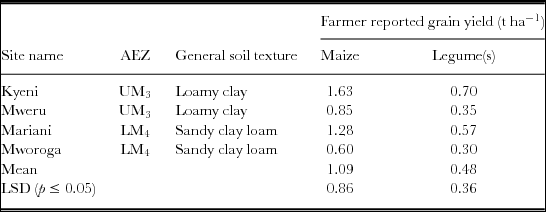
AEZ: Agro-ecological zone; UM3: upper midlands; LM4: lower midlands; the subscript numbers indicate relative water supply (that is, 1 = wet and 6 = very dry); LSD: least significant difference.
The soils in the area had mean pH-water of 5.44 which was attributed mainly to continuous cultivation with inadequate application of soil organic matter and persistent use of acid forming fertilizers. The overall mean of soil extractable phosphorous was 13.94 mg kg−1. Total N averages 0.14% and organic carbon ranges 0.84–1.39%. Soil bulk density in the region averages 1.10–1.34 kg cm–3.
Crop yields
Maize grain yields
In both UM3 and LM4 agro-ecological zones, there were no significant differences in maize grain yield in the first two seasons of experimentation (2010 short rains and 2011 long rains) for the four tillage methods (Figures 3a and 3b). In the first season of experimentation in UM3 sites, the highest yields were obtained under conventional tillage (2188 kg DM ha−1) compared to 1828 and 1835 kg DM ha−1 under zero tillage and furrow–ridge, respectively (Figure 3a). Similar to the UM3 results in the first season, the highest grain yields (850 kg DM ha−1) were obtained with conventional tillage compared to the zero tillage and furrow–ridge practices which had an average of 774 kg DM ha−1 (Figure 3b). However, in the third season (2011 short rains) and fourth season (2012 long rains), grain yield was greater with the CA practices than in the other treatments (Figures 3a and 3b). In the third and fourth seasons, furrow–ridge and zero tillage had an average yield of 2894 and 3118 kg DM ha−1, respectively, but these were not significantly different from those obtained under conventional tillage practice (2633 and 2862 kg DM ha−1 in the third and fourth seasons, respectively). Significant yield differences (p ≤ 0.05) between the CA practices and conventional practice started manifesting in the third (2011 short rains) and fourth seasons (2012 long rains). During the 2011 short rains, grain yields were significantly greater with furrow–ridge (3361 kg DM ha−1) than with conventional tillage (2376 kg DM ha−1) but there were no significant yield differences between conventional and zero tillage practices (3027 kg DM ha−1). Similarly, in the 2012 long rains, the CA treatments yielded a higher grain yield (average 1880 kg DM ha−1) than the conventional tillage practice (1506 kg DM ha−1).
(a) Grain yield (kg DM ha−1) of maize grown in intercrop system with beans under conventional and conservation agriculture tillage methods at the upper midlands of eastern Kenya. SR: short rains; LR: long rains. (b) Grain yield (kg DM ha−1) of maize grown in intercrop system with beans under conventional and conservation agriculture tillage methods at the lower midlands of eastern Kenya. SR: short rains; LR: long rains.

Legume grain yields
Significant grain yield differences (p ≤ 0.05) were observed among the tillage practices across the cropping seasons in the UM3 and LM4 agro-ecological zones (Figures 4a and 4b). A higher grain yield was obtained from the furrow–ridge practice compared to conventional and zero tillage in the 2010 short rains and the 2011 long rains for UM3 (Figure 4a). Moreover, the CA practice of furrow–ridge gave significantly higher yields (613 kg DM ha−1) than conventional tillage (445 kg DM ha−1) during the 2011 long rains. During the 2011 short rains, there were no significant yield differences (p ≤ 0.05) between the CA practices and conventional tillage, while in the 2012 long rains significantly greater yields were obtained with furrow–ridge while no significant yield differences were obtained between zero and conventional tillage practices.
(a) Grain yield (kg DM ha−1) of beans grown in intercrop system with maize under conventional and conservation agriculture tillage methods at the upper midlands of eastern Kenya. SR: short rains; LR: long rains. (b) Grain yield (kg DM ha−1) of beans grown in intercrop system with maize under conventional and conservation agriculture tillage methods at the lower midlands of eastern Kenya. SR: short rains; LR: long rains.

Pigeon pea yields did not differ significantly between the CA and conventional tillage practices in the 2011 long rains. In the ensuing seasons (2011 short rains and 2012 long rains), beans (variety Embean-14) were introduced into the system and significant bean yield differences between CA and conventional tillage practices were noted.
Water use efficiency
WUE ranged from 4 to 13 kg DM mm−1 of rainfall in the upper midlands (UM3) and between 2 and 7 kg DM mm−1 of rainfall in the lower midlands (LM4). In the UM3 sites, no significant differences (p ≤ 0.05) in WUE were observed between the CA and conventional tillage systems across the four seasons in both sites, but significantly lower efficiencies were noted under farmers’ practices (Figures 5a and 5b). In UM3 sites, WUE increased with decreasing seasonal rainfall, while in the LM4 locations higher efficiencies were observed with increased rainfall. During the first season (2010 short rains), higher efficiencies were obtained under conventional tillage (12.7 kg DM mm−1) compared to CA practices (average 11.4 kg DM mm−1) in UM3. In the following seasons (2011 long rains, 2011 short rains and 2012 long rains) higher efficiencies were attained under the CA practices. Similarly, in the LM4 sites, greater WUE was realized under conventional tillage in the first trial season but WUE increased under CA in the ensuing seasons. In the fourth season (2012 long rains), WUE of 6.8 kg DM mm−1 was recorded for furrow–ridge and 5.8 kg DM mm−1 for zero tillage was recorded compared to 5.5 kg DM mm−1 for conventional tillage practice.
(a) Water use efficiency (kg DM mm−1) of combined yields of maize and beans under conventional and conservation agriculture tillage methods in the upper midlands of eastern Kenya. SR: short rains; LR: long rains. (b) Water use efficiency (kg DM mm−1) of combined yields of maize and beans under conventional and conservation agriculture tillage methods in the upper midlands of eastern Kenya. SR: short rains; LR: long rains.

Labour productivity
Farmers spent 20–15 man-days ha−1 digging and breaking soil clods (equivalent to harrowing), respectively, in each season in the conventional tillage plots. Manual weeding under this practice attracted similar labour requirements as that for land preparation (Figure 6a). Labour requirements remained significantly high for conventional tillage practices compared to the CA practices (zero tillage and furrow–ridge) whose labour requirements for land preparation and weeding declined considerably from season to season. Preparation of furrows and ridges in the CA practice attracted more man-days ha−1 at the start of field trials, but the labour requirements declined in subsequent seasons with minimal repairs and maintenance of the furrows. The cost for land preparation declined from USD 50 ha−1 in the 2010 short rains (the initial season) to USD 25 and USD 13 ha−1 in the 2011 long rains and 2011 short rains, respectively. Land preparation under zero tillage did not attract any cost since the land was not disturbed or ploughed. Weeding costs remained the same for conventional and farmers’ practices (USD 88 ha−1) compared to the declining costs for herbicide weed control in the furrow–ridge and zero tillage practices of USD 47 ha−1 and USD 24 ha−1 in the first and fourth season, respectively (Figure 6b).
(a) Land preparation costs (USD ha−1) in the upper and lower midland sites. (b) Weed control costs (USD ha−1) in the upper and lower midland sites.

Economic analysis
Total production costs per hectare under conventional tillage was almost double that of CA practices in both sites (Figures 7a and 7d). There were significant differences (p ≤ 0.05) in total costs per ha among the tillage practices across the four seasons. Costs did not significantly differ between zero tillage and furrow–ridge tillage. In the fourth season (2012 long rains), estimated production costs were USD 381 ha−1 for conventional tillage compared to USD 229 for zero tillage and USD 273 ha−1 for furrow–ridge in the upper midlands. In the lower midlands estimated production costs were USD 335 ha−1 under conventional tillage compared to significantly low costs of USD 190 and USD 233 ha−1 for zero tillage and furrow–ridge, respectively in the fourth season. Across the seasons, significantly higher net incomeFootnote 1 ha−1 (p ≤ 0.05) was obtained from the CA tillage practices in both zones. In the UM3, average net income obtained from conventional tillage practices across the four seasons were USD 1651 ha−1 compared to USD 1767 and USD 1956 ha−1 obtained from zero tillage and furrow–ridge tillage practices, respectively (Figure 7b). Similarly in the LM4, USD 858 ha−1 were obtained from conventional tillage practice compared to USD 1074 and USD 1166 ha−1 obtained from zero tillage and furrow-ridge practices, respectively (Figure 7e).
Total production costs, net income and marginal rate of return (USD ha−1) in the upper midland sites (a, b and c) and the lower midland sites (d, e and f).

There were significant differences (p ≤ 0.05) in the MRR among the tested tillage practices across the seasons in both agro-ecological zones. Across the four seasons in the upper midlands, the average MRR for CA practices was double that of conventional practices; 11.6 and 10.1 return on each unit invested would be obtained from zero tillage and furrow–ridge, respectively, compared to investment returns of 5.5 from conventional tillage (Figure 7c). In the lower midlands, average MRR across the four seasons was 3.82 for conventional tillage, compared to returns of 7.89 and 7.55 for zero and furrow–ridge tillage practices, respectively (Figure 7f).
Stochastic dominance analysis
Cumulative density functions for crop net income obtained for each tillage practice are presented in Figure 8. The cumulative net income distribution with furrow–ridge and zero tillage is entirely to the right of that of farmers’ practices and conventional tillage in both agro-ecological zones. This indicates that the net income with furrow–ridge and zero tillage unambiguously first-order stochastically dominates the net income distribution with farmers’ and conventional practices. That is, for the same probability distribution farmer can get higher net income if they adopt CA practices than their own practices. The net income distribution with conventional practices dominated net income distribution of farmers’ practices.
Stochastic domaiance analysis of impacts of tillage practices on crop net income (a) upper midland sites; (b) lower midland sites.

Farmers’ perceptions of tillage systems
Farmers were involved from the initial stage of project implementation in the identification of farming challenges and opportunities and in the selection of farmers to host the trials. After establishment of the trials, farmers and members of the local innovation platforms were instrumental in conducting seasonal monitoring and evaluation with the aim of quantifying the effects of CA practices on crop performance, soil fertility improvement and weed management. Farmers arranged and hosted field days for wider scaling out of the project's accrued benefits as well as training fellow farmers on CA. After a long demonstration and interaction with the farmers, farmers perceived CA to: (1) improve the soil due to the availability of residues on the surface that protect the soil from direct sunlight, drying and the impact of rain drops and the availability of enhanced soil organic matter upon the decomposition of residues; (2) assist in weed control due to the presence of soil residues that smother weeds; (3) enable economical land preparation and weed control operations due to the use of herbicides that require less labour to apply and (4) improve overall yield.
DISCUSSION
Tillage practices and crop performance
Tillage practices significantly affected crop performance in all experimental seasons and sites, except in the upper midlands during the 2010 short rains and 2011 long rains. Conventionally tilled plots, the benchmark for CA treatment (zero tillage and furrow–ridge) comparison, gave significantly higher yields in the first experimental seasons, probably due to water harvesting effects associated with improved agronomy. Enhanced WUE and subsequently higher grain yield under CA treatments, with subsequent seasons, may be due to water harvesting and the moisture conservation effect of these practices. Under CA practices, there is a tendency to improved water productivity in drier environments which can be explained by the water harvesting and conservation effects of these practices (Rockström et al., Reference Rockström, Kaumbutho, Mwalley, Nzabi, Temesgen, Mawenya, Barron, Mutua and Damgaard-Larsen2009). Although rainfall was not well distributed within the cropping seasons and with more rains being received within the first 60 DAP, yield improvements in CA can be attributed to enhanced water harvesting and availability. Crops, especially maize grown under CA practices, are able to withstand drought which is more devastating if it occurs at the flowering stage (Thierfelder and Wall, Reference Thierfelder and Wall2009). Nonetheless, this may differ with the results of long-term yield stability analysis of several CA studies which showed that no tillage practice can offset the effects of drought (Rusinamhodzi et al., Reference Rusinamhodzi, Corbeels, Wijk, Rufino, Nyamangara and Giller2011). Digging up the soil, as is the practice under conventional tillage practices enhanced in situ water harvesting, thereby improving rain water productivity as exhibited by improved crop WUE under the furrow–ridge tillage CA practices (Figures 5a and 5b). Furrow-ridge increased maize and legume grain yield due to enhanced in situ water harvesting and conservation. This is corroborated by studies into the use of furrows for in situ soil and water conservation which concluded that the use of permanent raised beds coupled with crop residue retention is an important component for the development of sustainable CA practices in northern Ethiopia (Gebreegziabher et al., Reference Gebreegziabher, Nyssen, Govaerts, Getnet, Behailu, Haile and Deckers2009) which has a similar agro-ecosystem to the drier LM4 sites of this study.
Most soils in the semi-arid areas of Kenya suffer from surface crusting due to the distinct dry seasons of 3–4 months between the long rains and the short rains (Gitau et al., Reference Gitau, Gumbe and Biamah2006). Mulches left on the soil surface protected the soil from direct heat, thereby preserving the moisture throughout the dry months. It can be inferred that, zero tillage did not give significantly higher yields compared to conventional tillage, especially in the first two seasons. This may have been attributed to the effect of having no crop residues on the soil surface during the first season of experimentation. In order for such residues to benefit the soil and crops during first season, it should have come from the previous cropping season. This was not in the study implementation schedule, and therefore not planted. Yield advantages observed in the second, third and fourth cropping seasons probably resulted from the benefits of the residues soil cover that enhanced moisture retention for crop use.
Economic analysis
Partial budgets of maize–bean intercrop systems showed that all tested land tillage practices were profitable to the farmer. However, significantly higher net income were obtained under zero and furrow–ridge tillage. MRRs of conventional tillage were significantly low due to high production costs, particularly for land preparation and weeding. Furrow–ridge had high initial investment costs for land preparation, but these costs remarkably decreased in the subsequent seasons as less labour was required for maintenance. The net income and MRRs in this study are comparable to those previously obtained by Guto et al. (Reference Guto, Pypers, Vanlauwe, Ridder and Giller2011) in the region. CA presents both economic and ecological benefits, but the latter may be considered secondary by the farmer. Fewer labour requirements under CA means that, more labour will be released for off-farm income-generating activities. This result is supported by the stochastic dominance analysis results where the net income distribution with CA tillage system unambiguously first-order stochastically dominates the net income distribution with farmers practices, indicating the likelihood for improved desirability and adoption of the technology.
Prospects for CA adoption
The CA treatments exhibited high yields, reduced labour requirements and reduced production costs. Therefore, shifting from conventional tillage to CA would be a major step for farmers, both financially and in terms of perceptions (Rockström et al., Reference Rockström, Kaumbutho, Mwalley, Nzabi, Temesgen, Mawenya, Barron, Mutua and Damgaard-Larsen2009). Farmers are likely to adopt labour-saving technologies, especially if they increase their profit. Several on-farm demonstrations and appraisals have shown that the prime driver for CA adoption is neither water harvesting nor conservation of natural resources but monetary gain (Erenstein et al., Reference Erenstein, Farooq, Malik and Sharif2008). Similar drivers were highlighted in the dry areas of Morocco where it was concluded that CA must be economically attractive to farmers and must demonstrate that it can provide a net economic benefit in terms of lower production costs, higher crop yields, higher net returns, lower business risks or their combination (Magnan et al., Reference Magnan, Lybbert, Mrabet and Fadlaoui2011) for its adoption. Studies to understand household and institutional factors that influence CA adoption found that there was a steady increase in the number of farmers adopting the technology due to its high profitability per unit area compared to conventional practices (Kizito and Twomlow, Reference Kizito and Twomlow2009). However, it is worth noting that, regardless of a technology's output per unit area, its adoption is highly influenced by associated production costs. Therefore, incurring additional production and/or capital costs can be a disincentive for adoption of CA for many smallholder farmers (Ngwira et al., Reference Ngwira, Aune and Mkwinda2012, Reference Ngwira, Thierfelder, Eash and Lambert2013).
CONCLUSION
Conservation agriculture practices (zero tillage and furrow–ridge) performed better over time than conventional tillage practices; therefore, the application of the first two principles of CA (reduced tillage and retention of crop residues) may have been vital for these benefits. In the drier environments (the lower midlands, LM4), the maize crop yield response to CA was immediate from the first season of experimentation, while in the wetter zones (the upper midlands, UM3), significant yield advantages appeared in the third season. WUE increased with the decreased precipitation in UM3 while in LM4 sites, WUE increased with the increased precipitation. Though initial CA costs, especially for weeding, were high in the first two seasons, they declined significantly in the fourth season to USD 24 ha−1 compared to the constant weeding costs of USD 88 ha−1. Farmers adopting CA will significantly reduce their production costs per land unit as well as have greater chances of a good crop even in seasons with below average rainfall compared to soil disturbing tillage methods; hence CA will help in risk diversification. The risk associated with the adoption of CA will be lower compared to conventional tillage. Additionally, CA adopters will have more man-days for off-farm income generating activities leading to an improvement in household welfare.
Acknowledgements
The excellent technical assistance and supervision of the activities by the Kenya Agricultural and Livestock Research Organization and Ministry of Agriculture extension staff in the study area is gratefully acknowledged. We sincerely thank local farmers for their willingness to participate in this study. This research was supported under the Australian Centre for International Agricultural Research-funded Program, Sustainable Intensification of Maize–Legume Farming Systems for Food Security in East and Southern Africa (SIMLESA) executed by the International Maize and Wheat Improvement Center (CIMMYT) and five partner countries.



