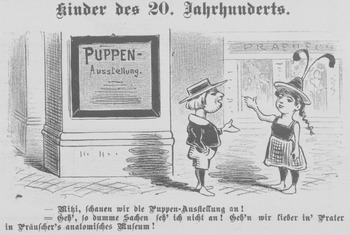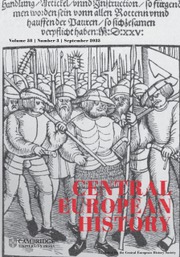


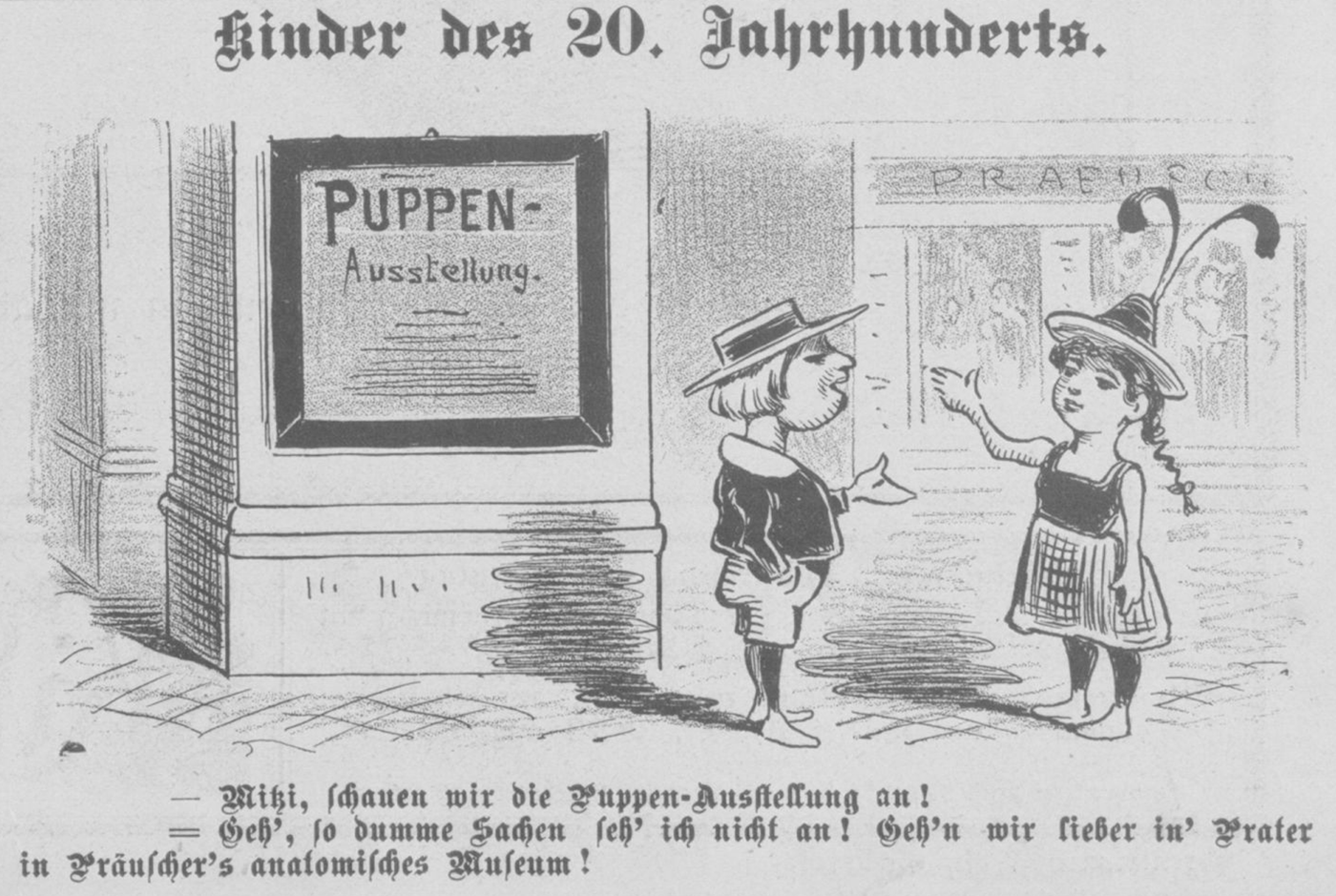
On September 23, 1900, the satirical magazine Kikeriki introduced the “Children of the Twentieth Century” to its Viennese readership (Fig. 1). In the cartoon, which depicts two squabbling youngsters, an unnamed boy tries to convince his friend Mitzi to accompany him to a doll exhibition. Her dismissive retort—“I don't go for dumb things like that!”—is followed by a more compelling countersuggestion: an outing to the life-sized medical models on display at Hermann Präuscher's popular anatomical museum in Vienna's Wurstelprater amusement park. Barely nine months into a new century, its characteristic sons and daughters had revealed themselves as a different breed from that of their parents, and Kikeriki was asking, so to speak, if the kids were alright. What was to come in the 1900s, if, as the caricature suggested, boys were interested in dolls and girls in science? The underlying anxiety revolved not just around gender, but ultimately around representations of the human body.
“Kinder des 20. Jahrhunderts” (Children of the Twentieth Century), Kikeriki, September 23, 1900. Source: ANNO/Österreichische Nationalbibliothek.
Mitzi was characteristic of a Viennese generation that came of age on the cusp of a revolution in anatomical knowledge and its application. Born at the close of a century that had witnessed the city's ascendancy as a global mecca for the study of anatomy and pathology under the Second Vienna Medical School, these children grew into adulthood in a new century that gave rise to a cradle-to-grave biopolitical model of municipal public health and welfare under interwar Viennese social democracy.Footnote 1 But, in order for health and welfare to gain widespread traction as fundamental human rights in “Red Vienna,” citizens first needed to understand their own bodies. At the fin de siècle, the Kikeriki caricature implied, modern youth sought knowledge about the human body and already knew where to access it—thanks in large part to purveyors who had long been skillfully packaging it for popular consumption.
This article is a site-specific inquiry into the circulation of anatomical knowledge in the late nineteenth-century Viennese public sphere. It asks not only how such information was disseminated to the nascent “children of the twentieth century” and their parents, but also where and to what ends the study of human anatomy became the purview of people from all walks of life. Key to answering these questions is a long Viennese tradition of “public anatomies,” the term medical historian Tatjana Buklijas coined to describe medico-scientific knowledge presented to both lay audiences and specialists in urban spaces open to all social classes.Footnote 2 One such site in Vienna was the Prater, the city's leading recreational destination, with its swath of green space encompassing the popular Wurstelprater amusement zone. In one of the cases considered here, the leading Viennese anatomist of his generation, Josef Hyrtl (1810–1894), displayed his anatomical preparations and models at the 1873 World's Fair in the Prater. In the other, a showman from the carnival tradition, Hermann Präuscher (1839–1896), opened a Museum of Anatomy, Pathology, and Ethnology—the collection to which Mitzi refers—in the Wurstelprater in 1871. The Menschenmuseum (museum of humans), as it was known, contained a wide array of anatomical objects similar to Hyrtl's and was wildly popular until being consumed by a wartime fire in 1945. Both enterprises promised intellectual edification to a diverse Viennese public, yet, to do so, they capitalized on the late-imperial thirst for spectacular entertainment. Following David Livingstone, these two case studies center, then, on the reciprocal relationship between location and locution.Footnote 3 They consider, in other words, how a specific urban site and social space shaped the public discourse on anatomy in fin-de-siècle Vienna and, conversely, how that discourse was tailored to the audiences it targeted. In the Prater, in the heady years of Austria's late Gründerzeit (1867–1873), the human body became a “consumable wonder” on the fairground—thus laying the groundwork for the future centrality of anatomical knowledge to interwar Viennese biopolitics.Footnote 4
Situating Anatomical Knowledge: The Case of the Prater
Edutainment—the commingling of the scientific and the spectacular—had already arrived on the fairground in Vienna by the early decades of the nineteenth century. One example was the “Hydro-Oxygen-Microscope,” a scientific instrument on display in the Wurstelprater in 1836.Footnote 5 Simultaneously enlarging and projecting, the microscope revealed images of infinitesimal universes housed in droplets of Danube water. As Lorraine Daston and Peter Galison have argued, the visual presentation of medico-scientific knowledge “distributed and preserved the working objects of science across space and time, enlarging the scope of collective empiricism.”Footnote 6 The microscope and the worlds it made discernible captured spectators’ imaginations, while also educating them about previously imperceptible dimensions of their natural environments.
In the second half of the nineteenth century, another realm normally hidden from view—a “body world”—was rendered visible to diverse audiences, as wax museums, panoramas, and, later, cinemas became regular features of urban entertainment landscapes around the globe. To be sure, the body as consumable wonder in Vienna's early mass culture shared much with the appeal of, for example, fin-de-siècle Parisian “spectacular realities,” as Vanessa Schwartz has called them.Footnote 7 But what distinguished Viennese public anatomies from those of other cities was their rootedness in a wider Austrian-baroque fascination with death, which, William Johnston argues, was both venerated and aestheticized.Footnote 8 That preoccupation, admixed with the Enlightenment impulse to render the whole of the living world visible and comprehensible, yielded the uniquely Austrian modern culture analyzed by Carl Schorske.Footnote 9 The combination of the two distinct value systems already informed the public presentation of the human body in Vienna at the turn of the previous century. In a travel report from 1805, an anatomy professor visiting from Germany expressed amazement: it was clear, at the Josephinum medico-surgical institute's famous collection of anatomical wax models, “how great the enlightenment in Vienna is”—yet not, as one would expect, from the models themselves. Rather, he observed, it was on account of the “many women who come here to study anatomy and stand before all the preparations without blushing. I, at least, am provincial enough to be unable to grasp how a man could have the heart to bring a woman here, and how she could linger here even for a moment.”Footnote 10
On the fairground, however, the display of the anatomized human body served not only didactic but also sensational ends.Footnote 11 There, the lines between spectacle and science were blurred: whereas the anatomist Hyrtl employed display aesthetics and targeted marketing strategies, the showman Präuscher drew freely on scientific rhetoric to garner legitimacy.
In addition to considering how medico-scientific knowledge is presented, one must also consider where such encounters occurred—for location often determines whom information reaches. Following museum studies, scholarship in the history of science has begun highlighting the “geographies of scientific knowledge” as necessary for understanding both the production of knowledge and its consumption.Footnote 12 Laboratories, clinics, dissecting rooms, and anatomical theaters are the sites where knowledge about human anatomy is generated. In Vienna, these institutions and facilities were largely clustered in the so-called Mediziner-Viertel (physicians’ quarter), built up in the late nineteenth century into an increasingly dense network adjacent to the university and the Ringstraße.Footnote 13 National and university museums, libraries, conferences, and lecture halls helped transmit the knowledge produced in the Mediziner-Viertel, but largely to an educated elite.Footnote 14 Fairgrounds, on the other hand, were open to all.Footnote 15
The Prater was a unique site for the dissemination of medico-scientific knowledge because of its role in the spatial and social geography of the city. Prior to Empress Maria Theresia's reign, only nobility had had access to the Prater as a hunting ground. But her son and co-regent, Emperor Joseph II, heralded a new era in urban public land use when he opened the park to all Viennese citizens in 1766. Situated on Vienna's periphery, the Prater is something of a circumscribed world where the suspension of social norms has long been the order of the day.Footnote 16 For this reason, it has frequently figured as a backdrop for scenes of social transgression in literary texts by Viennese authors such as Peter Altenberg, Arthur Schnitzler, Stefan Zweig, and Felix Salten. A guidebook to the city written by a traveling journeyman in 1892 offers an “unvarnished” glimpse into the Prater's distinctive social economy:
The Prater! This one word sums up the Viennese lust for entertainment in a nutshell, and what would a Sunday without the Prater be for the Viennese? Nothing! A lost day! On the main avenue and in the so-called Wurstelprater, a mass of people swells back and forth, all that Vienna is flows and weaves through the Prater's meadows. Here one can see officers of all ranks, noncommissioned officers, soldiers, bourgeois, craftsmen, and workers with their whole families, streaming hither and thither with no class differentiation. Here officers sit openly among civilians; here people encounter people, and nowhere is the democratic leaning of the Viennese more clearly visible.Footnote 17
Because of its “democratic” and inclusive social blend, the Prater can be viewed as a kind of local “contact zone,” the term Mary Louise Pratt coined to refer to places that enable the lives of people, whom geography and history had previously segregated, to intersect.Footnote 18 In the case of the Prater, the intermingling applies not only to contact between disparate social classes, but also to the copresence of science and spectacle in sites such as world's fairs, amusement parks, museums, and arcades. Home to all these and more, the Prater is a prime example of what Tony Bennett, referring to such sites, has called the “exhibitionary complex.”Footnote 19 People of all demographics went to the Prater to see and be seen. There, moreover, multiple scopic regimes converged, influencing not merely how people saw, but also how they interpreted what they saw.
As an exhibitionary complex, which is also a contact zone, the Prater was the ideal locus for Josef Hyrtl's and Hermann Präuscher's mix of artistic, educational, and commercial interests. Diverse audiences went to the Prater looking to satiate their lust for entertainment, a desire satisfied by the more spectacular aspects of the two displays considered here. Yet, the scientific objects themselves were products of anatomical knowledge that emanated from specialized institutional contexts, such as Vienna's Mediziner-Viertel. The World's Fair and the Menschenmuseum, housed in the Prater as part of the exhibitionary complex, enabled knowledge about the human body to depart from the private sphere, enter into circulation, and be consumed by a wide populace in Vienna around 1900. Scientists and showmen alike understood their representations of anatomized human bodies as subject to intertwined display cultures, marketing strategies, and medico-scientific discourses.Footnote 20 By strategically positioning anatomical models as edutainment, as both spectacle and science, in an exhibitionary complex, they sought to maximize their profits while also enlightening their audiences. In doing so on the fairground, a contact zone, they also helped to generate a new form of late nineteenth-century subjectivity, one in which the human body was at once the object and the subject of knowledge.Footnote 21 Hyrtl and Präuscher, each in his own way, marketed anatomy as a consumable wonder accessible to all in the Gründerzeit and beyond. They laid the foundations for how the “children of the twentieth century”—in all their social diversity—understood the human body.
Science or Art? Anatomical Preparations at the 1873 World's Fair
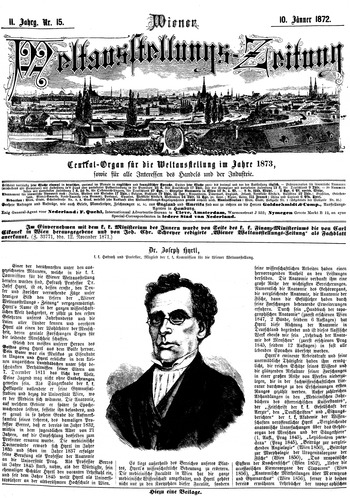
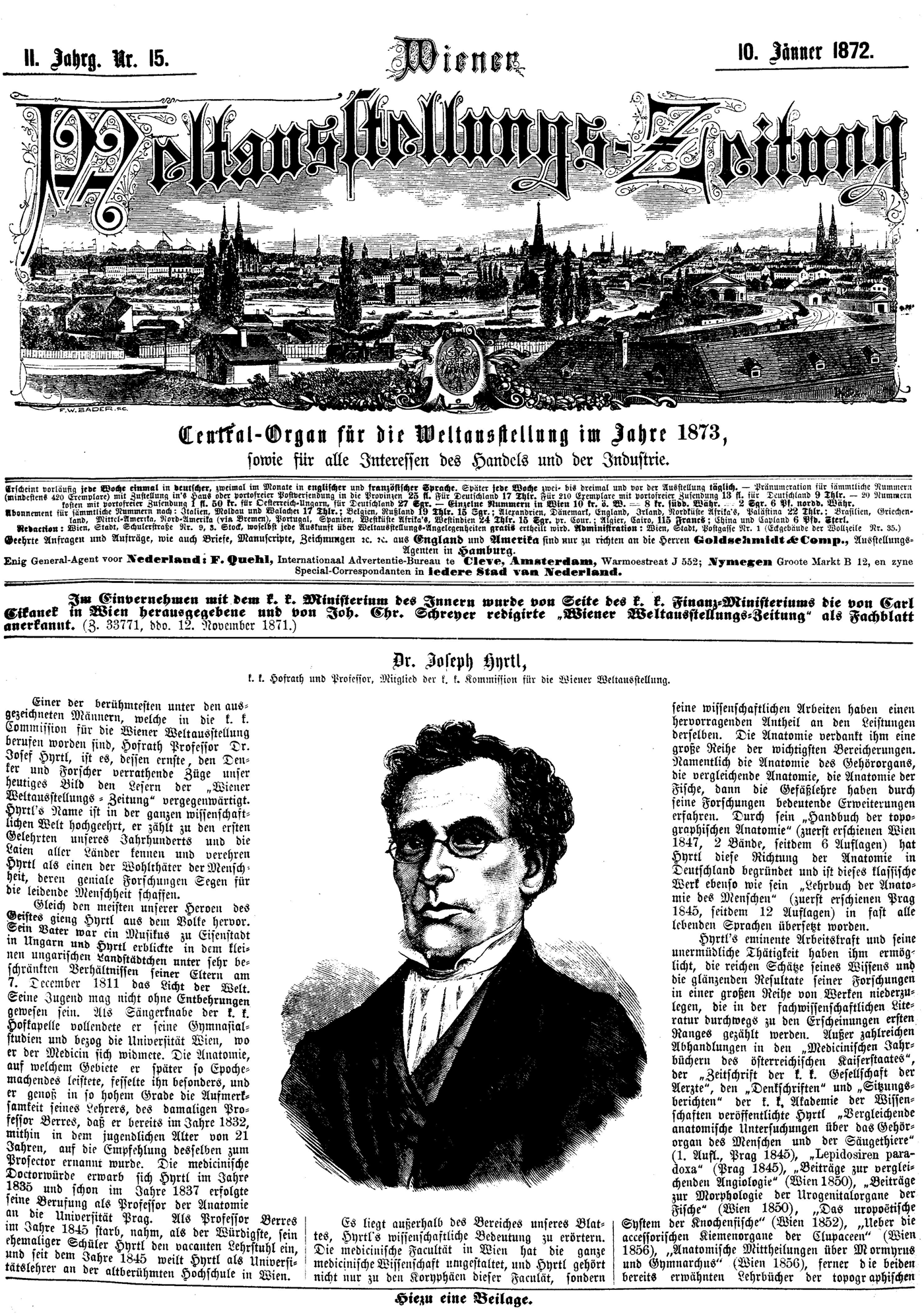
Can anatomy, that “gruesome science of death …, ever dare to capture the interest of laypersons?” Josef Hyrtl, the leading Viennese anatomist of his day, concluded that the answer to his rhetorical question must be “improbable,” even “impossible.”Footnote 22 His pronouncement notwithstanding, visitors to the 1873 World's Fair in Vienna would have found it hard to walk past Hyrtl's visually captivating anatomical models without stopping. Hyrtl, a member of the Imperial Committee of the Vienna World's Fair, was so well-known that he even graced the front page of the Wiener Weltausstellungs-Zeitung, just below the masthead depicting the city's unmistakable skyline (Fig. 2). In fact, Hyrtl was deeply invested in bringing knowledge about human anatomy to a lay audience, and he included the education of “everyday people” and “the broad masses” among the “special practical applications of anatomy.”Footnote 23 This objective was most fully realized in Hyrtl's prize-winning displays of anatomical preparations at three world's fairs: London in 1862, Paris in 1867, and Vienna in 1873.Footnote 24 The impressiveness of Hyrtl's display mirrored that of the Vienna World's Fair itself: with over two million square meters of exhibition space in the Prater, the Vienna exposition, held from May 1 to October 31, 1873, was exponentially more impactful than earlier world's fairs.Footnote 25
Portrait of Dr. Joseph Hyrtl, featured on the front page of the Wiener Weltausstellungs-Zeitung, January 10, 1872. Source: ANNO/Österreichische Nationalbibliothek.
In addition to being a respected anatomist and university professor, Hyrtl was an enterprising scientific entrepreneur, who freely coupled “serious” science with spectacle, narrative, and aesthetic appeal when it suited his aims. An analysis of Hyrtl's displays at the Vienna World's Fair, considered alongside a triad of publications he released in the same year as the exhibition, reveals how he crafted a calculated marketing mix to reach the increasingly diverse audience for scientific knowledge that characterized the late nineteenth-century public sphere. In contemporary terms, Hyrtl identified three discrete target markets: a non-specialist lay audience; a specialized audience of physicians, scientists, and educators; and potential private buyers and institutional collectors. All three markets comprised the audience at the World's Fair and, more broadly, reflected the diversity of the Prater's public, which cut across social classes and educational lines. The World's Fair was, in short, a contact zone within a contact zone. Purveyors of scientific knowledge, such as Hyrtl, knew to capitalize on this felicitous confluence.
Hyrtl's rise to the top of his profession was meteoric. After completing his medical studies and serving as a prosector in Vienna, he was appointed to a professorship in 1837 at Prague's Charles University at age twenty-six. In 1845 Hyrtl returned to Vienna as chair of descriptive anatomy, lured back by the chance to reconceive the university's anatomy curriculum.Footnote 26 Part and parcel of that vision was the establishment of the Museum of Human Anatomy at the University of Vienna's medical faculty in 1849. Under Hyrtl's aegis, and by the time of the 1873 World's Fair, that museum—along with a second university museum, the Museum of Comparative Anatomy—housed thousands of anatomical specimens, preparations, and models, many of them made by Hyrtl himself.Footnote 27 Although Hyrtl was a beloved professor, he called museum stewardship the highest ambition of his career.Footnote 28 Whether in the classroom or in the exhibition room, the transmission of knowledge about the human body through the creation and display of anatomical preparations was his life's mission.
Hyrtl achieved global renown as a master of the technique known as corrosion casting, a form of dry anatomical preparation. The term casting is used to describe the process of injecting hollow anatomical structures with a liquid or viscous material, typically wax or resin, which subsequently solidifies. Corrosion corresponds to the method of removing the surrounding parenchymal tissue from the hardened cast. What remains after corrosion is a solid waxen or resinous cast of the internal anatomical structures. Though the injection technique may have originated as early as the thirteenth or fourteenth century, the Dutch anatomists Jan Swammerdamm (1637–1680) and Frederik Ruysch (1638–1731) pioneered the injection of vascular structures with a more durable wax substance in the late seventeenth century.Footnote 29
Hyrtl recognized the need to tailor both his anatomical preparations and the display of these scientific objects to different target audiences. To that end, he drew a clear distinction between institutional and public displays of anatomical preparations. Hyrtl maintained that use value, accuracy, and fidelity to reality must take precedence when creating and displaying institutional museum specimens (such as those housed in university collections), given their status as scientific tools for medical students, practitioners, and clinicians.Footnote 30 By contrast, he argued that eye-appeal and beauty were valid considerations when designing displays for a wider public. Hyrtl thus combined the wax-mastic injection resin with pigments such as cinnabar to achieve the deep red of arteries; ultramarine for venous blue; and chrome yellow, emerald green, and lead white for ducts, tissues, and accent coloring. The subtle nuances in color allowed for the visual differentiation of various structures, a strategy useful when using the casts to teach lay audiences or grab their attention. In such cases, Hyrtl strove for chromatic variations that gave a “pleasing [visual] impression,” which would minimize “the hidden disgust” that often arises for nonspecialists when confronted with medical specimens. The aversion factor should dissolve completely, Hyrtl argued, into admiration of the preparations’ aesthetic appeal, their “anatomical artistry.”Footnote 31
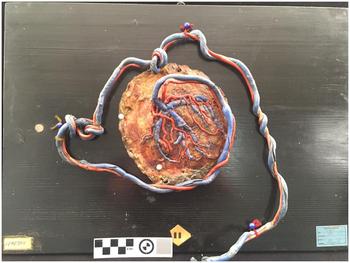
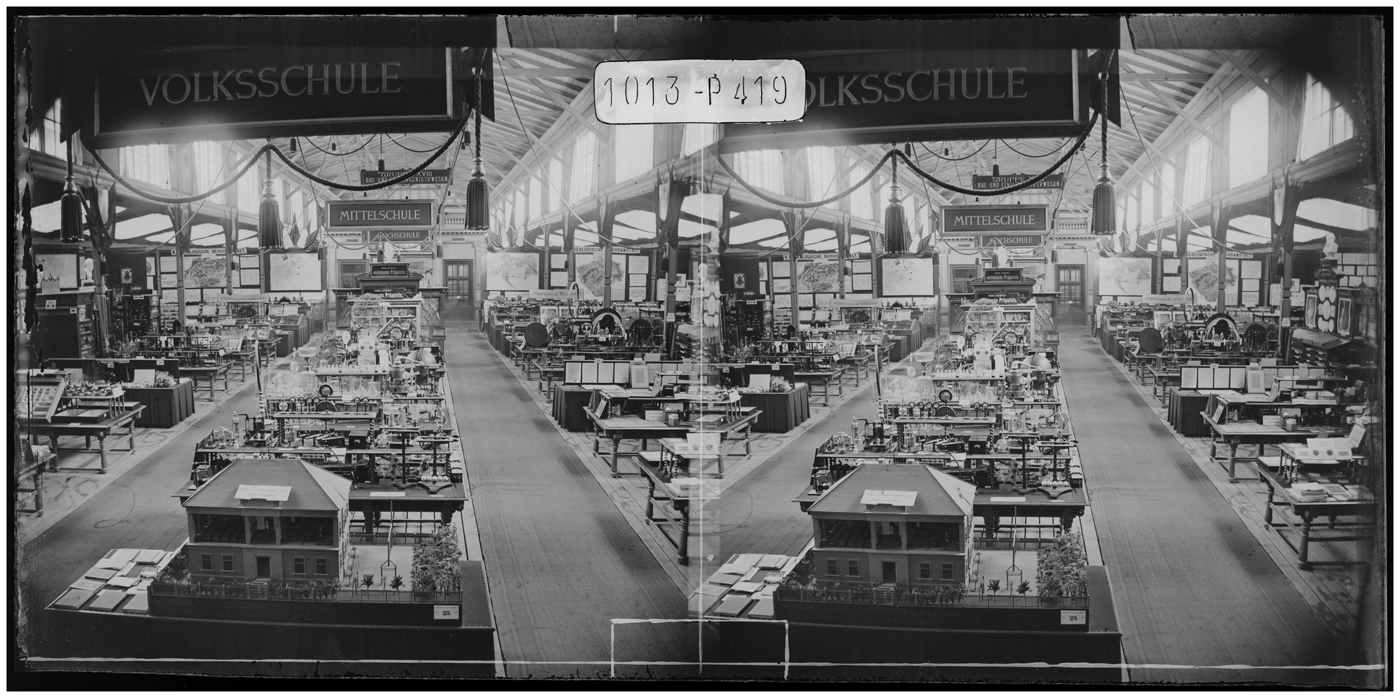
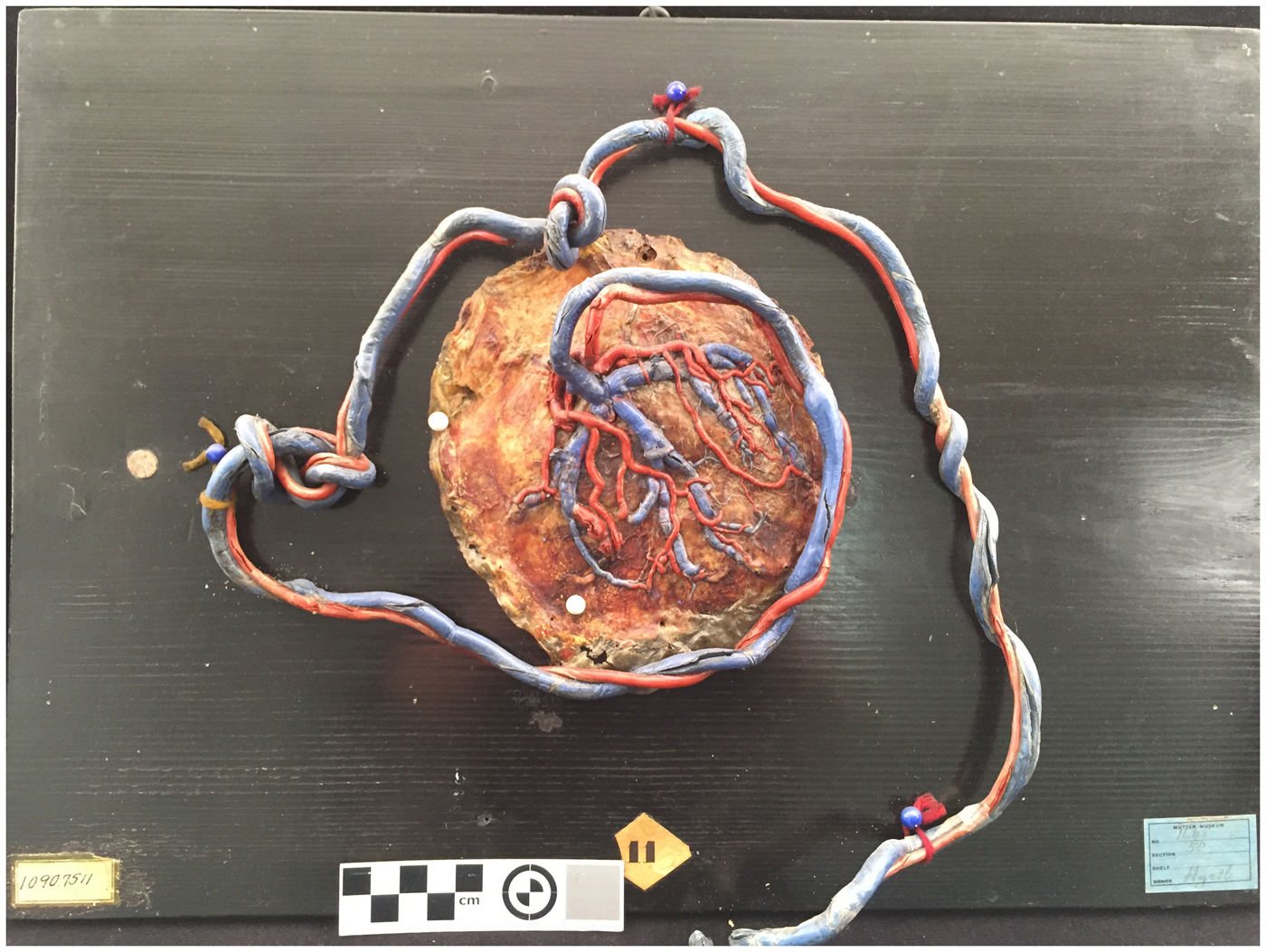
Hyrtl's anatomical preparations were the literal centerpiece of the Imperial and Royal Ministry of Education and the Arts’ “Collective Exhibition of School and Instructional Objects,” a section of the 1873 Vienna World's Fair (Fig. 3). The organizers spotlighted the preeminence of Hyrtl's visually arresting preparations by situating them centrally, proximal to the entry of the exhibition space.Footnote 32 On crossing the threshold into the hall, visitors first encountered the tall, wooden vitrines that showcased Hyrtl's work. Typical of his display strategies, the anatomical preparations were presented with elegance and refinement, some on polished mahogany stands and covered with bell jars, others in uniformly crafted etuis and display cases of varying shapes and sizes. Hyrtl's Vienna display, a significant expansion of the one in Paris, consisted of six sections: 24 preparations of normal and pathological placentas (Fig. 4); 57 corrosion preparations of varying size and complexity; 2 tableaux of preparations of inner aural structures (containing hundreds of diminutive preparations); 8 tableaux of skeletons of fish and amphibians, containing over 50 unique species; 216 injection preparations of capillary structures of pathological and normal human organs for histological study; and a display of the 9 monographs the anatomist had published since 1865. The pièce de résistance was, no doubt, the corrosion cast of the complete arterial system of a seven-month-old human embryo.Footnote 33
Stereoscopic photograph of the Imperial and Royal Ministry of Education and the Arts’ “Collective Exhibition of School and Instructional Objects” at the 1873 Vienna World's Fair. The display of Hyrtl's anatomical preparations is in the center rear. Courtesy of Bildarchiv/Österreichische Nationalbibliothek, Vienna: 63.590 STE.
Josef Hyrtl, corrosion preparation of a human placenta and umbilical vascular system, mounted on a wood plate. The umbilical vein is injected with blue-pigmented, and a single umbilical artery with red-pigmented, injection resin. Courtesy of the Mütter Museum of the College of Physicians of Philadelphia, catalogue number 1090.7511.
Hyrtl dedicated one section to dry osteological preparations of fish and amphibians, and positioned the skeletons in eight artfully arranged tableaux to highlight commonalities between the displayed species.Footnote 34 From a scientific standpoint, the tableaux were designed to facilitate the comparative anatomical study of vertebrate osteology. Hyrtl's guidebook to the exhibition nevertheless reveals his abiding efforts to appeal to lay audiences. With that in mind, Hyrtl thought the tableaux should be both aesthetically pleasing and tell a story. He believed, for example, that the prepared bones had to be gleaming white in order to be appreciated for their beauty, particularly by nonspecialists. A sulfur-based solvent was thus applied to the osseous tissue to achieve the desired level of whiteness and cleanness.Footnote 35 He furthermore ascribed a narrative dimension to select tableaux. The one dedicated to the salamander family offers a prime case in point. Comparing a European to an Asian species, Hyrtl writes: “The tiny Alpine salamander (Salamandra atra) from the Styrian Alps cowers in a corner on the right side of the tableau and turns his head, shamefaced, away from the colossus that is his Japanese namesake.”Footnote 36 The description demonstrates that Hyrtl resorted to emplotment and anthropomorphizing in order to imbue scientific objects with dynamism and relatability. This narrative dimension, coupled with attention to visual aesthetics, lent the anatomical preparations an appeal beyond their strictly scientific application.
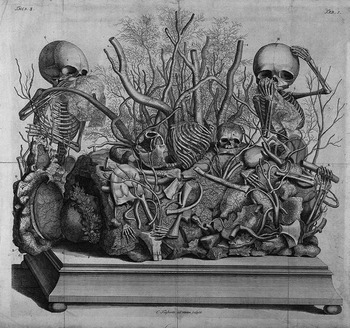
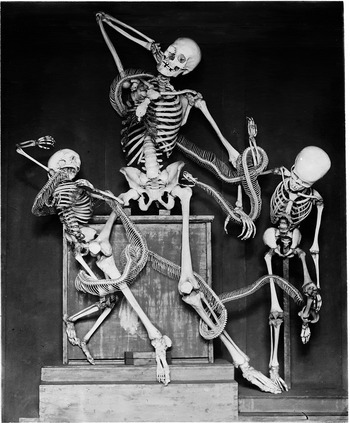
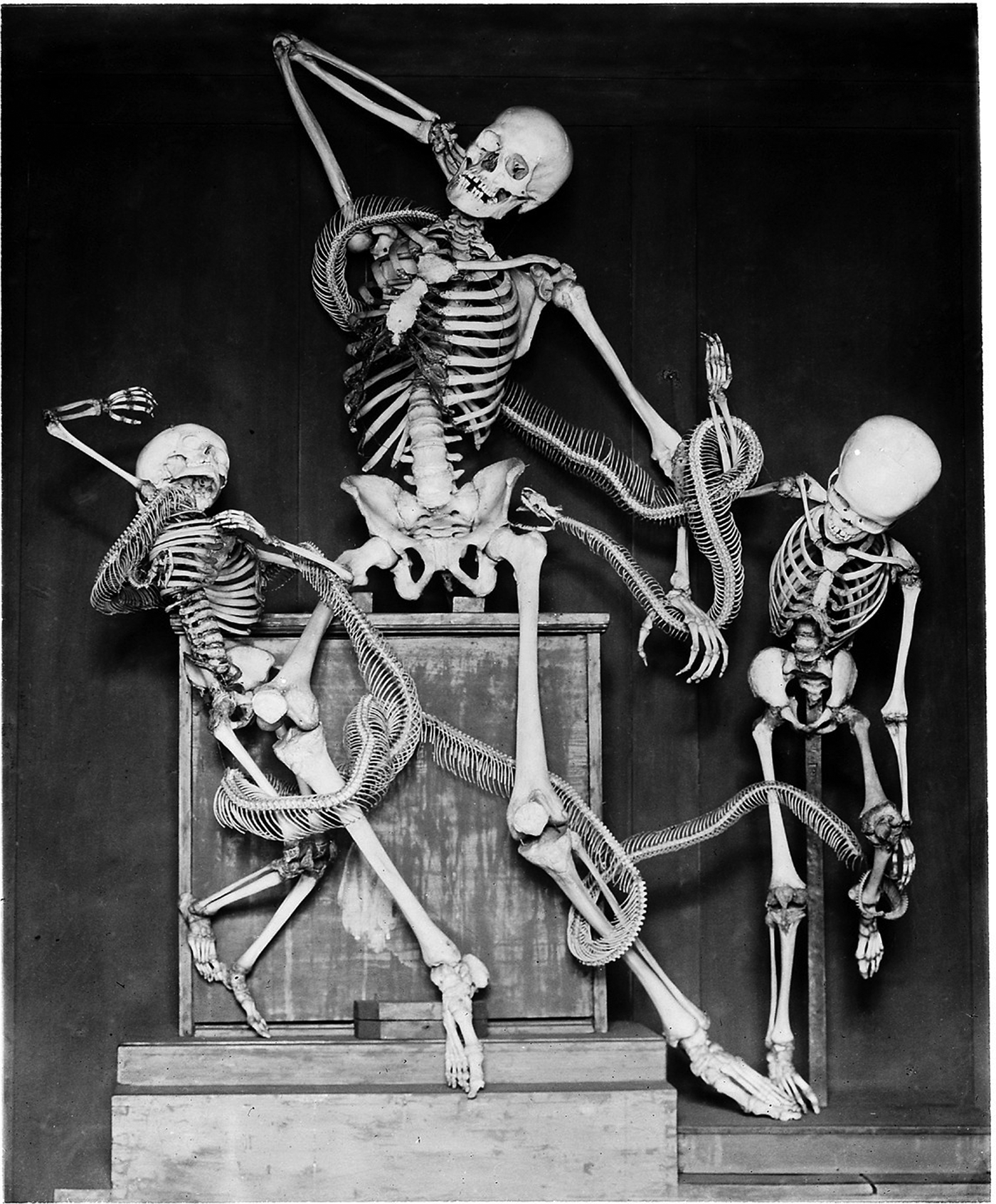
Although Hyrtl's tableaux have been lost, his textual description of the salamanders calls to mind the Dutch pioneer Frederik Ruysch's late seventeenth- and early eighteenth-century tableaux, which likewise narrativized anatomical preparations (Fig. 5). Ruysch combined osteological dry preparations, in this case of “weeping” infant skeletons, with vascular corrosion casts that stood in for trees and other branching botanical content. Hyrtl's osteological tableaux, such as the large-scale recreation of the Laocoön group seen in Fig. 6 (not on display at the World's Fair), can be read in the context of this earlier tradition, which, the art historian Julie V. Hansen has argued, produced “a new aesthetic of anatomy.”Footnote 37 Seamlessly fusing display culture with the representational strategies and iconography of vanitas art, Ruysch's and Hyrtl's tableaux transformed scientific objects into visually pleasing commodities with symbolic, connotative content.Footnote 38 Medical models thus became “anatomical artworks.”Footnote 39
Cornelius Huyberts, engraving of a tableau by Frederik Ruysch depicting two “weeping” fetal skeletons surrounded by trees and bones made of injected vessels (1709). Original image from Frederik Ruysch, Thesaurus anatomicus (Amsterdam, 1701–1716). Source: Wellcome Collection.

Josef Hyrtl, tableau of osteological preparations (three human skeletons with snake skeletons) representing Laocoön and his sons, ca. 1860, destroyed 1945. Photographer unknown. Photograph ca. 1929. Source: Wellcome Collection.
At the world's fairs, Hyrtl's corrosion casts and injection preparations attracted the “legitimate admiration” of fairgoers because of their strategic placement, vivid visual allure, and method of display—more akin to a department-store array than a museum vitrine. Referencing Hyrtl's Paris World's Fair display, the Wiener Medizinische Wochenschrift remarked that, “even those who take no immediate interest in such things,” such as “curious-minded nonspecialists from the uneducated classes,” were drawn to the anatomical models.Footnote 40 Hyrtl had apparently achieved his goal, if, as the anonymous reporter commented, the sight of injected lungs, livers, kidneys, and entire placentas—enough to arouse disgust in even the most cast-iron-stomached viewers—resulted not in revulsion, but in “silent wonder” at the time, craftsmanship, and expense dedicated to the fabrication of such preparations. They additionally offered a didactic clarity that, the reviewer claimed, almost completely broke down barriers to studying and understanding anatomy across social classes and educational levels.Footnote 41
Though it attracted lay viewers, the deliberately aesthetic appeal of Hyrtl's preparations sometimes piqued his fellow clinicians.Footnote 42 For example, the Wiener Medizinische Wochenschrift—which, just months before, had painted a picture of Hyrtl's Paris exhibition in the most glowing terms—later roundly criticized Hyrtl, accusing him essentially of intellectual and technical stagnation, while begrudging him the successful (and undeniably lucrative) spectacle of his anatomical artworks:
As far as the arrangement's splendor and dazzling astonishment for the laymen are concerned, Professor Hyrtl surely deserves first place, although the impartial critic must confess that no progress in the preparation method or in conservation anatomy is to be found in his specimens. … Laypeople, and most viewers are lay, will always admire the master craftsman of these fabrications and always grant them precedence over all other less colorful preparations.Footnote 43
In fact, the preparations’ artfulness and singularity attracted lay viewers and also appealed to patrician collectors. Hyrtl recalls, for example, that the head of the Ottoman military medical directorate, upon visiting the anatomist's museum, marveled: “But they are not anatomical preparations—they are bijoux.Footnote 44This notion of the medical specimen as decorative object was one that Hyrtl explicitly endorsed and even encouraged. The Bohemian-Austrian author Alfred Meißner, who had studied medicine with Hyrtl in Prague, remembered that his teacher was wont to insist proudly that even the most grotesque preparations should “grace the dressing table of every gentlewoman.”Footnote 45 One of Hyrtl's Viennese students, Emil Zuckerkandl, recalled his professor passing anatomical objects around the dining table at fancy dinner parties. The anatomist was captivated by the beauty of his own preparations, but not all the guests were apparently quite as delighted.Footnote 46 In a letter to the College of Physicians of Philadelphia, Hyrtl remarked with gratification (in somewhat stilted English) that, owing to their artistry and visual appeal, his corrosion casts at the 1873 World's Fair were “always surrounded by a crowd of wondering physicians, and many ladies, who showed the same interest for them.” In order to sell his preparations to the American institution, Hyrtl attempted to capitalize in this correspondence on the fact that there was a market beyond the museum and the university for his “flowers of technical anatomy.”Footnote 47
In 1873, just in advance of or concurrent with the World's Fair, Hyrtl released three new publications that, when considered together, reveal the strategy behind the calculated marketing mix for his preparations, which was directed at a diverse public sphere. First, Hyrtl self-published an inexpensive, small-format booklet that he sold at the exposition as an accompanying guide.Footnote 48 A contemporary reviewer for the Wiener Medizinische Wochenschrift noted the brochure's affordability, compactness, and comprehensibility, all of which combined to make it an ideal educational supplement to the display. By reading about the scientific objects in simplified terms while viewing them, fairgoers of all classes—at least those who could afford entry to the fair and the low cost of the booklet—were furnished with a more detailed understanding of the preparations on display.Footnote 49 In addition to addressing a lay audience, Hyrtl noted the value of the guide for specialists well-acquainted with the field of anatomy and likely already familiar with Hyrtl's preparations. Here, the booklet reverts to advertising language, stressing the presence of “many new and never-before-seen” items.Footnote 50
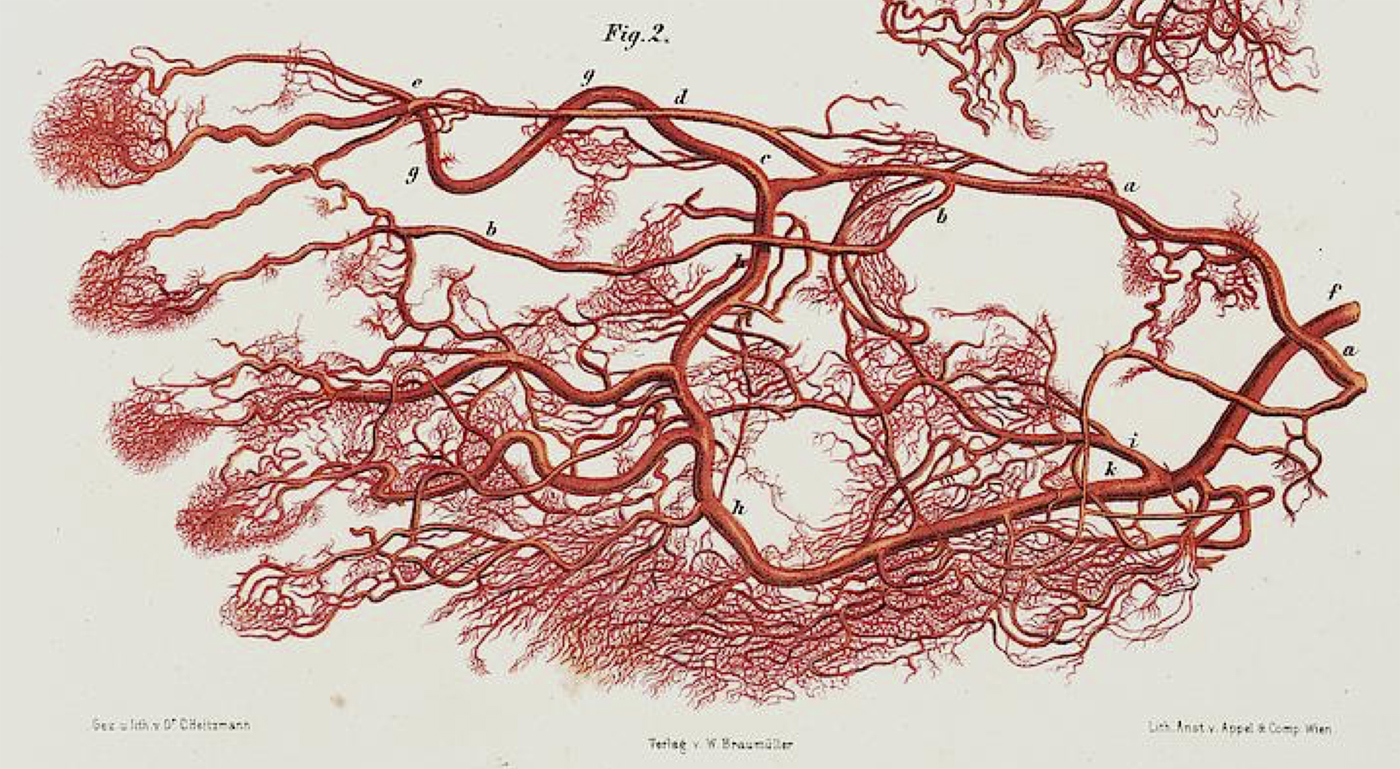
Second, Hyrtl authored an academic volume aimed at specialists that detailed the history and techniques of anatomical corrosion preparations.Footnote 51 Published in February 1873 by Wilhelm Braumüller, then the leading Viennese medical publisher, the volume was richly illustrated with vibrant chromolithographic plates, some of them full-page images, and nearly all of them painted directly from the 1873 World's Fair preparations.Footnote 52 Hyrtl enlisted the preeminent Austrian medical illustrator of the day, Carl Heitzmann (1836–1896), himself a physician and the “brush of the scientists.” Heitzmann secured Vienna's status as the global leader in medical illustration in the second half of the nineteenth century.Footnote 53 The illustrations were likely a key selling point of the volume, but Hyrtl interestingly claimed a fundamental aversion to illustrated anatomical atlases in his introduction to the book. He therefore dispensed with precisely those aesthetically appealing and pedagogically useful aspects of his three-dimensional preparations, namely, the color-coding of arterial and venous vascular structures.Footnote 54 This modeling feature was, according to Hyrtl, unquestionably an “impressive embellishment” that dramatically “elevates [the preparations’ beauty] to true splendor”—but it did not reflect empirical truth and can thus “lay no particular claim to scientific value.”Footnote 55 To Hyrtl's mind, “objective” textual commentary trumped the doubly aestheticized illustration of anatomical models when the target market for knowledge was comprised of specialists; “detailed description” in this case took precedence over “resplendent plates.”Footnote 56 The distinction between the inexpensive fairground guide and the academic book is clear in the description of the preparation of arteries of the human foot, which signifies arterial vascular structures with a distinctive red coloring (Fig. 7). The medical handbook details the arterial anatomy with utmost precision: the illustration of the corrosion cast is accompanied by a corresponding page-long medical description, rife with technical terminology. The fair guidebook, by contrast, reads simply: “Arteries of the foot. Striking array of short artery spirals at the tips of the toes.”Footnote 57 A more succinct description for lay audiences in the Prater is scarcely imaginable.
Carl Heitzmann, illustration of Josef Hyrtl's corrosion model of the arteries of the human foot, displayed at the 1873 World's Fair in Vienna. Source: Josef Hyrtl, Die Corrosions-Anatomie und ihre Ergebnisse (Vienna: Braumüller, 1873), Plate XII.
Finally, Hyrtl published a catalogue indexing all of his microscopic injection preparations available for purchase or trade.Footnote 58 Indeed, Hyrtl's reputation as the master of the injection technique was staked on these microscopic preparations, which were bought not only by local museums and medical collections in Vienna and Prague, but also by institutions from across the globe, from Stockholm to Philadelphia and Rio de Janiero.Footnote 59 Hyrtl's preparations were so desirable, in fact, that an obituarist saw fit to mention that Sultan Abdülmecid I had acquired, for a small fortune, a collection of injection preparations of the circulatory system for Istanbul's medical school, housed in the Galata Palace.Footnote 60 In his targeted marketing of “anatomical artworks” to potential clients and collectors through catalogue-based sales at the World's Fair and beyond, Hyrtl was thus participating in the global exchange of commodities, which was one of the overarching aims of the international exhibitions. But Hyrtl's preparations were more than just commodities: they contributed to the circulation of knowledge about anatomy at both a local level and in the global marketplace.Footnote 61 Like the preparations themselves, each of Hyrtl's three 1873 publications targeted for his preparations a discrete market segment of consumers: laypersons, educated specialists, and private collectors.
Education or Entertainment? An Anatomical Museum in the Wurstelprater
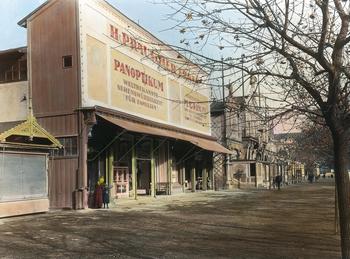
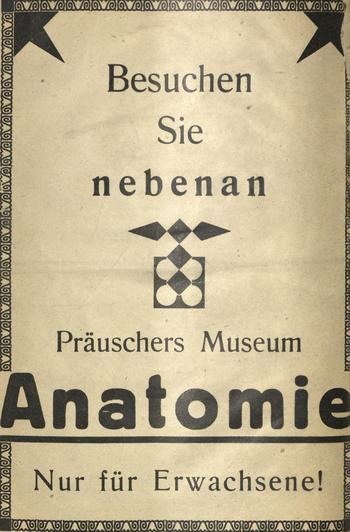
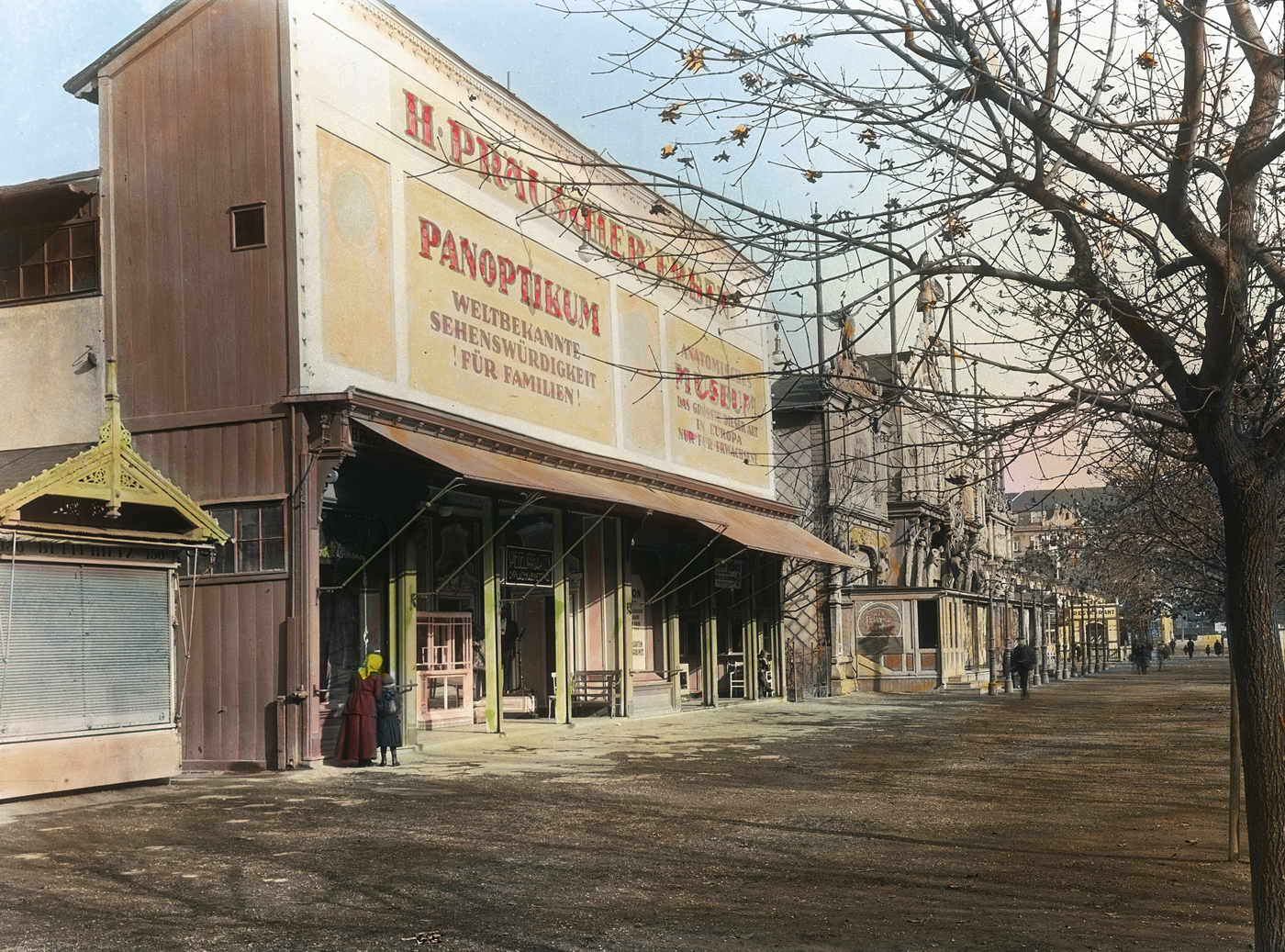
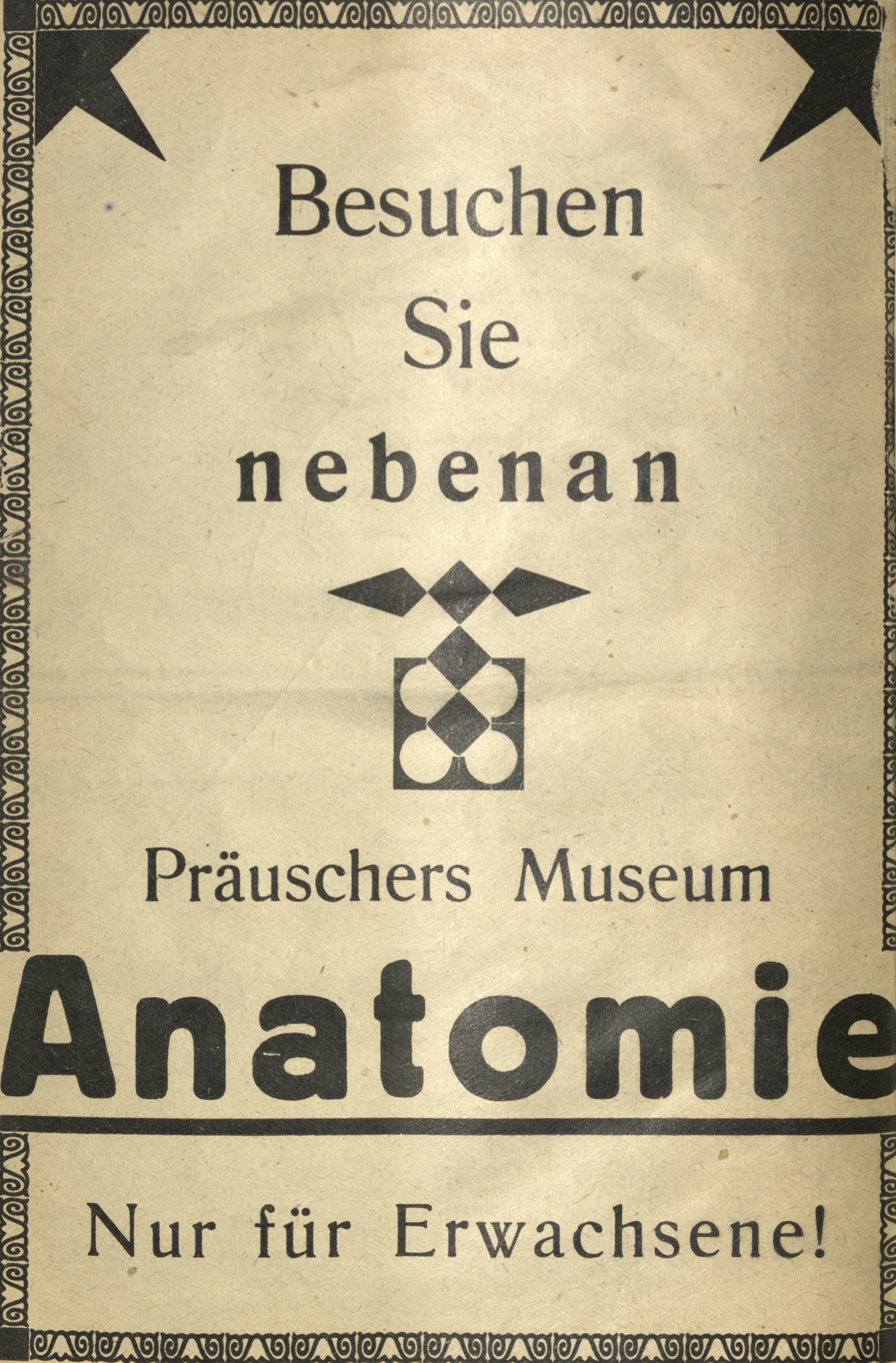
An 1889 advertisement from the Illustrirtes Wiener Extrablatt trumpeted: “Vienna's pride is its Prater, Präuscher's pride is his Prater booth. The public has the right to demand more than just the ordinary for its money! That's why Präuscher's Panopticum … causes a sensation with its spectacular exhibits.”Footnote 62 Just two years before the Vienna World's Fair, Hermann Präuscher, a Viennese lion tamer turned showman, opened the doors of his popular panopticum in the Wurstelprater in 1871.Footnote 63 It housed the typical fairground attractions, many of them “spectacular realities” of the kind described by Vanessa Schwartz: automatons, dioramas, wax figures, a miniature animal circus, a panorama, a laugh cabinet, a hall of mirrors, and a large-scale kaleidoscope.Footnote 64 What set Präuscher's establishment apart from other similar booths in the Wurstelprater amusement park was the Museum of Anatomy, Pathology, and Ethnology that the showman constructed right next door (Fig. 8). Equipped with a separate entrance marked “for adults only” (Fig. 9), this Menschenmuseum, as it was often called, was, by the late nineteenth century, the only such anatomical museum in Vienna not affiliated with a university, medical clinic, or other institution with a specialized, nonpublic instructional mission.
Präuscher's Panopticum, with the Anatomical Museum entrance on the right. Courtesy of Österreichisches Volkshochschularchiv (ÖVA), Vienna: Lichterbildsammlung Urania Wien, Schatulle 340: B 25, 37671, V 713.
“Visit Präuscher's Museum of Anatomy next door. For adults only!” Advertisement for Präuscher's Menschenmuseum. The back cover of this visitors’ guide to the Panopticum corresponded to the sign over the entrance. Source: Anon., Führer durch's Panopticum von H. Präuscher's Erben (Vienna: Verlag von H. Präuscher's Erben, n.d.).
In contrast to institutionalized anatomical collections, Präuscher's museum had a twofold mission: to offer the general fairground public a fundamental education in the basics of anatomy and pathology, and to turn a profit for its owner by attracting and entertaining the highest number of visitors. These goals overlapped, to a certain extent, with Hyrtl's display and marketing of anatomical preparations during the 1873 World's Fair. Whereas the anatomist Hyrtl borrowed marketing and staging strategies from the popular venue in which his preparations were displayed, the showman Präuscher drew freely on scientific rhetoric and academic discourse. In doing so, he managed both to educate a diverse fairgoing public, quenching their thirst for anatomical knowledge about the human body, and to capitalize monetarily on the late-imperial lust for spectacle and voyeurism. Explaining the mission of the museum, the introduction to Präuscher's guidebook states that he was compelled to create a museum that “puts on display scientific and artistic perfection in every regard.”Footnote 65 Here, three types of display converged: scientific, artistic, and spectacular.
The Menschenmuseum housed over eight hundred objects, more than some institutional anatomical museums of the time. As Siegfried Mattl has noted, there was little to differentiate many of Präuscher's objects from those in comparable contemporary university, scientific, and museum collections—such as Hyrtl's—that were produced for, collected, and traded on the institutional market.Footnote 66 Even a cursory glance at Präuscher's collection substantiates this claim. The first section was devoted to “natural preparations” and included a variety of anatomical preparation techniques, ranging from wet preparations and dry osteological preparations (skeletons) to twenty-two injection preparations and fifteen corrosion preparations.Footnote 67 Section two comprised so-called art preparations—ceroplastic models—documenting the stages of fetal and facial development, models of the genital anatomy and digestive tract, phrenological busts, flayed muscle groups, and a large disassemblable ocular model. The third section depicted pathological anatomical conditions in several media, including dry osteological preparations of bone fractures, comparative wet preparations of various healthy and diseased organs, as well as wax models of hermaphroditic genitalia. Finally, the “Extra-Cabinet”—scandalous enough to be housed in a separate room—contained wax moulages of venereal and syphilitic diseases, along with wax models of obstetrical procedures and congenital abnormalities of male and female genitalia.
The example of the “Extra-Cabinet” makes clear that Präuscher's point of reference for his anatomical museum was not merely Madame Tussaud's waxworks, but also highbrow institutional and museal collections.Footnote 68 The guidebook's introduction to the “Extra-Cabinet” revealed that the special room contained “the complete collection of venereal diseases of the Musée Dupuytren in Paris, whereby the various obstetrical operations, particularly the Caesarean section and the symphysiotomy, are highlighted as exceptional masterworks.”Footnote 69 The Musée Dupuytren, the Museum of Pathological Anatomy of the University of Paris's Medical Faculty, was founded in 1835 with the bequest of Guillaume Dupuytren, the eminent anatomist, surgeon, and professor. It is unknown whether Präuscher had an exact replica of the Musée Dupuytren's collection made especially for Vienna, or whether this was a case of advertising bait-and-switch, but what is evident is that the Viennese showman appealed to academic and institutional authority when convenient—especially, in this case, to lend the most prurient part of his Menschenmuseum an air of respectability.
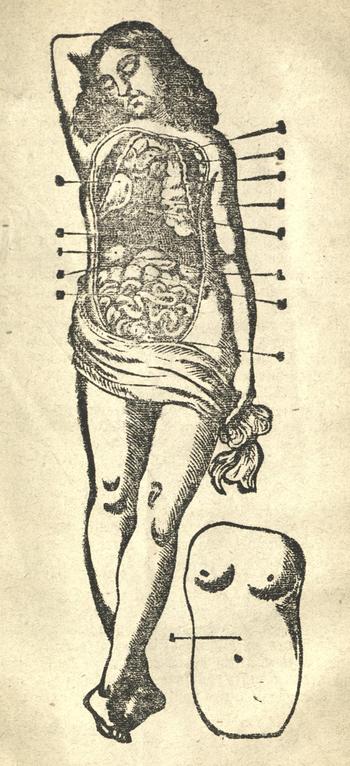
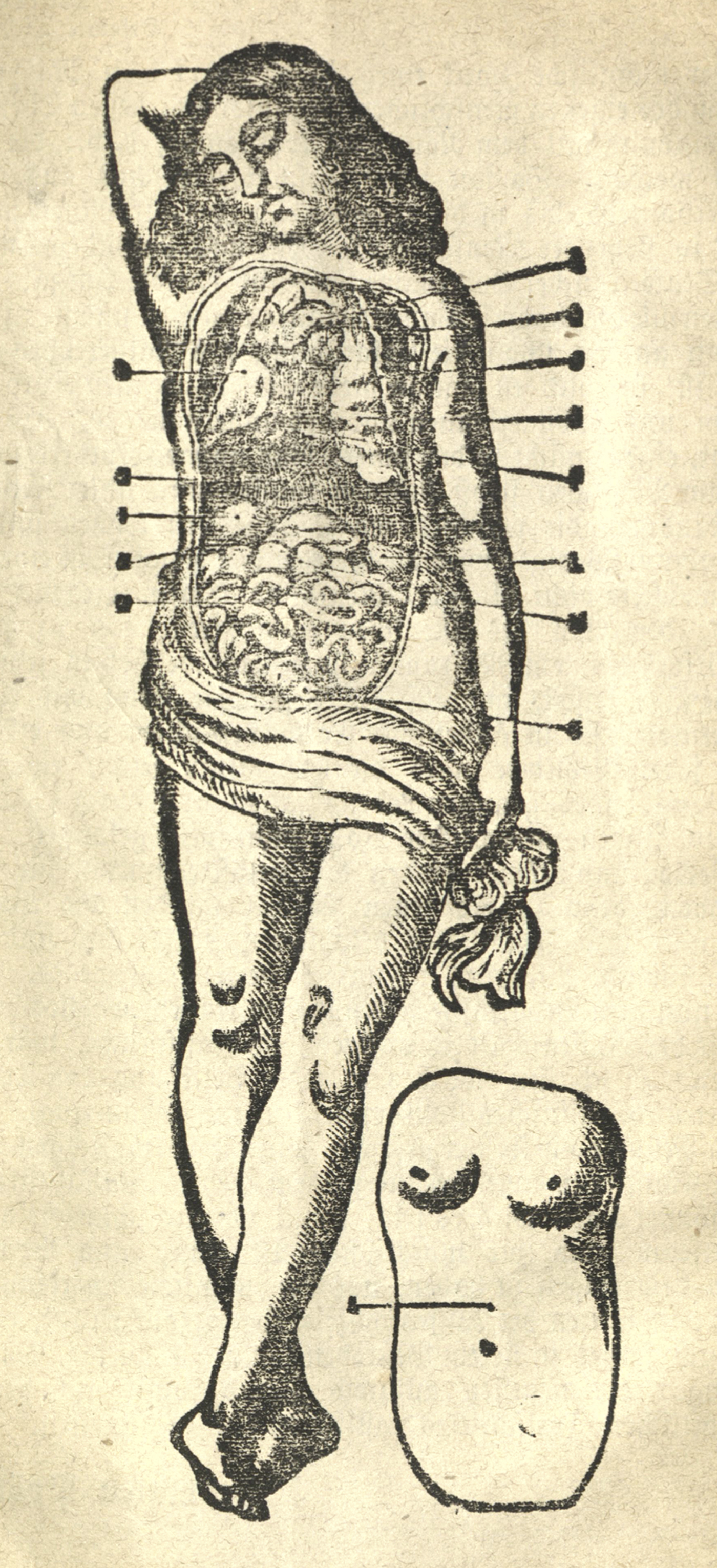
Although Präuscher's guidebook refers specifically to the Musée Dupuytren, similar Viennese collections were also touchstones, first and foremost the Josephinum's cabinet of anatomical-pathological preparations and its famous eighteenth-century Florentine anatomical wax models.Footnote 70 Indeed, among the crown jewels of Präuscher's museum were comparable life-sized anatomical models. “The Anatomical Apollo,” as he was called, was a life-sized male figure, fully “dissectable” into more than eighty discrete parts, including organs that could be taken out and replaced. “Two girls as corpses,” one pictured with her chest and abdomen opened to reveal the internal organs, looked like downmarket versions of the Josephinum's deluxe “Anatomical Venus.”Footnote 71 The aestheticized female cadaver was such a draw that a simplified illustration was included in the guidebook's front matter (Fig. 10).Footnote 72 The guidebook contained, moreover, a detailed textual description of the Venus's internal organs in didactic, yet comprehensible laypersons’ terminology. For explication of the more complex Apollo, however, the guidebook noted that “competent specialists” were on hand in the museum to explain the model “clearly and comprehensibly” to the public.Footnote 73 There appears to have been, in other words, a degree of interactivity among the displays, scientific experts (or purported specialists), and the audience—all centered on didacticized anatomy. In this manner, too, Präuscher's Menschenmuseum took cues from the missions of institutional collections.
Anatomical Venus from Präuscher's visitors’ guidebook. Source: Anon., Führer durch das anatomische, pathologische und ethnologische Museum (Dresden: Schulze, n.d.), 4.
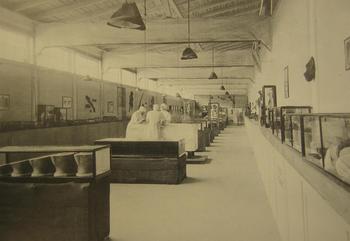
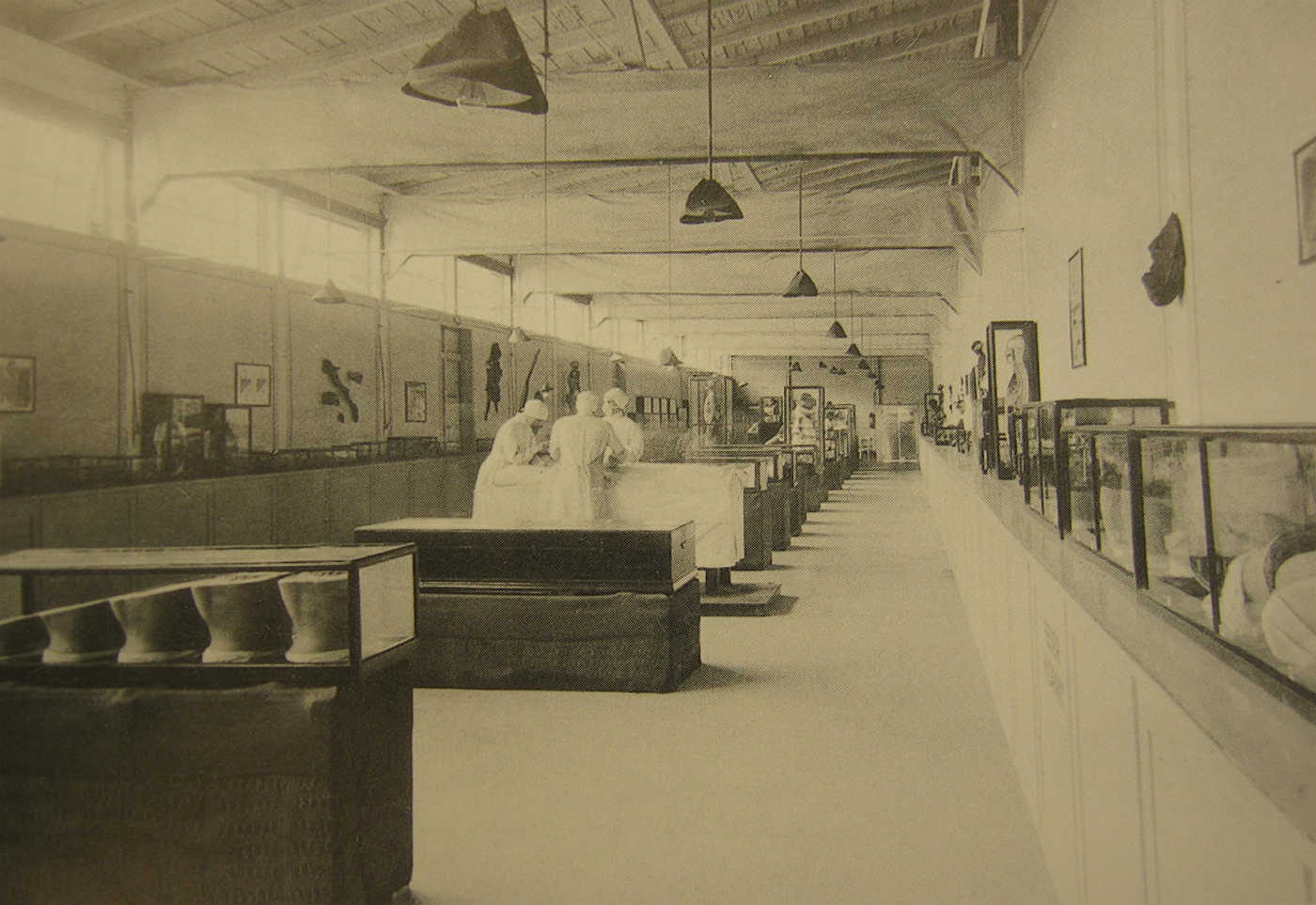
Präuscher further blurred the boundaries between science and spectacle with the exhibitionary principles he utilized in his Menschenmuseum. As one contemporary photograph shows (Fig. 11), the gallery room was clearly oriented toward museal institutional models such as those found in the Josephinum or the Museum of Natural History, which opened on Maria-Theresien-Platz in 1889, just shy of twenty years after Präuscher's anatomical museum. The gallery walls were lined with white cabinetry, atop which were arranged wood-framed, glass vitrines that housed displays of varying sizes. Wall space was reserved for additional hung objects and framed illustrations above some of the vitrines, as seen on the left of the photograph. The central vitrines were also of a height conducive to close-up viewing and individual study of the objects. The space's austere, sterile look was meant to evoke quiet contemplation and scientific objectivity. The overall clinical impression was further underscored in this image by the presence of three men, clad in hospital whites and surgical masks, hunched over a central vitrine in the image's middle ground, as if performing an operation. Overall, the exhibition gallery was arranged to give a decidedly neutral impression, free of the visual hubbub of the fairground just beyond the museum's walls. A glance into this exhibition space belies its amusement-park setting, even while contemporaneous advertising strategies (e.g., in the Illustrirtes Wiener Extrablatt advertisement) relied on rhetorical codes derived directly from carnival barkers. The organizational principles underlying the Menschenmuseum, though often lacking in strict systematicity and coherence, were clearly indebted to the descriptive taxonomic principles of highbrow museums and institutional collections, as well as to the staged and spectacular principles native to the fairground and panopticum.Footnote 74
Interior view of Präuscher's Menschenmuseum. Source: Siegfried Mattl, “Körperspektakel. Ein anatomisches-pathologisches und ethnologisches Museum im fin-de-siècle Wien,” Wiener Zeitschrift zur Geschichte der Neuzeit 4, no. 2 (2004): 50.
Präuscher's Menschenmuseum operated on a dual pedagogical premise. The anatomical models, specimens, and preparations on display were designed, on the one hand, to instruct a broad citizenry, of a nonspecialist and often working-class background, in the fundamentals of normal and pathological anatomy. The Kikeriki caricature referred to at the outset of this article implied that Präuscher's museum was a destination for youth eager to gain access to information about human sexuality. Despite the “for adults only” sign by the entry, children still managed to sneak in. As one journalist later recalled, “there, in this forbidden section, the wonders of human development, the mysteries of conception, and the origins of life became clear to us for the first time.”Footnote 75 On the other hand, the displays and guidebook worked in tandem to impart moralizing messages to ordinary visitors—often by articulating the ostensible physical effects of transgressing moral codes. Medical science, and pathological anatomy in particular, were increasingly mobilized to produce “salutary dread,” serving as both a moral deterrent and mode of social disciplining.Footnote 76 Präuscher claimed to be invested in the potential moral import of his museum, which informed, at least in part, how he structured his displays.Footnote 77 His collection provides two such examples.
In section three of the museum, devoted to “Human Pathological Conditions,” gastric anatomy was displayed as a warning about the dangers of alcoholism. The topic had achieved broad, international social relevance by the fin de siècle and was subject to heated debate. In Vienna, for example, a popular medical lecture series on temperance was held thirty times in the winter of 1898–1899 alone, for mixed-class audiences in venues across the city, to keep pace with demand.Footnote 78 The Eighth International Congress against Alcoholism convened in Vienna in 1901, declaring a veritable “schnapps plague” across the monarchy.Footnote 79 In Präuscher's museum, the bottom line was driven home by a wet preparation of a dissected healthy human stomach, contrasted with four wet preparations of diseased human stomachs in increasing stages of morbidity. Pointed language underscored the broader physiological manifestations of the disease, ranging from an inability to eat (“This man could tolerate only a few spoonfuls of soup”) to an inability to digest (“With such a high degree of inflammation, foodstuffs can no longer be digested, only disgorged, which causes intense pain”). The description of the final such gastric preparation showed the disease in its most advanced stage. The guidebook's text correspondingly contained a notable narrative shift. Rather than the descriptive language that characterized the other explanations, it employed an inclusive tone, appealing to the readers and viewers in the first-person plural: “The terrible destructions wrought by the unnatural consumption of spirits display themselves to us here with the complete destruction of the stomach.” The author of the guidebook was careful to note that such diseases only afflicted drinkers of hard liquors, and that “drinking beer can never result in such maladies.”Footnote 80 The aside was germane, not least because, for many, an afternoon in the Prater was apt to include a pint or three at one of the neighboring beer gardens. The museum thus struck a deliberate balance between a soothing tone and scare tactics—made manifest visually in human pathological anatomy—to heighten awareness of pressing public health issues, and to affect compliance with social mores regarding a disease widely viewed as a moral shortcoming.
The “Extra-Cabinet,” devoted largely to the display of pathologies of the human reproductive system, employed a similar strategy. In this context, pathological anatomy was again pressed into service to enforce conformity to moral codes. A series of wax models was devoted, for example, to “Illnesses Resulting from Onanism.”Footnote 81 The text accompanying the single model of male genitalia in this section warned visitors about the perceived civilizational implications of masturbation, exhorting: “The illnesses resulting [from onanism] occur more frequently the higher the level of civilization, but are present among young people of both sexes in all classes of people.”Footnote 82 Syphilis was likewise treated as both a medical and moral malady, and the overwhelming majority of the anatomical models in Präuscher's “Extra-Cabinet”—eighty in all—dealt with syphilis and other venereal diseases. Detailed models, often moulages, of various primary and secondary manifestations of sexually transmitted diseases were used to alarm and educate viewers in equal measure—even those who would not have had access to preeminent medical journals such as the Wiener Medizinische Wochenschrift, whose most frequent topic in 1901 was syphilis.Footnote 83 The setting for the medical models could hardly have been more apt, since the Prater, where the Menschenmuseum was located, was a notorious site for clandestine trysts and home to Vienna's leading “love market.”Footnote 84 In addition to the models of sexual symptomology on display at Präuscher's, new techniques of medical visualization were thematized as well: a cross-section wax model depicting the use of the vaginal speculum, for example, demonstrated how anatomical diagnosis was performed with the assistance of medical instruments, which were coming into ever-wider usage by the late nineteenth century.
Indeed, specere—“to look” or “to view”—is the Latin root for both “speculum” (literally, a mirror) and “spectacle.” Fin-de-siècle scientists and showmen such as Präuscher and Hyrtl turned the mirror on the public sphere when they presented cutting-edge anatomical knowledge to fairground audiences. By displaying scientific models and anatomical specimens in the contact zone, scientists and showmen confronted patrons with mediated “realities” of their own bodies. Whether amazing, enlightening, or disgust-inducing, the bodies displayed within the exhibitionary complex catered to people's desire to see others—and to know themselves.
“Know Thyself!” Anatomy as Epistemology and Global Commodity
Hyrtl's and Präuscher's enterprises reveal the many ways that the body as an anatomical object—and anatomical knowledge as such—became consumable wonders, spectacular realities, in Vienna's Prater in the late nineteenth century. Both the anatomist and the showman trafficked in edutainment, capitalizing on the reciprocal relationship between science and spectacle that the fairground uniquely facilitated. Further, as part of the exhibitionary complex, the World's Fair and the Menschenmuseum enabled the global circulation of medico-scientific objects and discourses far beyond the city on the Danube.
Hyrtl's “bibelots,” for example, were traded on the global market. Yet, their beauty was often their downfall, as the corrosion preparations’ intricacy and fine structures—precisely those aspects that contributed to their visual appeal—led to extreme fragility. This compelled Hyrtl to pioneer changes in both display and manufacturing. He first began rethinking the vertical display of the preparations and instead devised a simple mounting system to reduce weight strain.Footnote 85 Second, he innovated the application of a viscous, yet transparent, isinglass glue solution to the wax models.Footnote 86 This additional layer, when hardened to what Hyrtl called “a kind of natural skin,” greatly increased the preparations’ durability.Footnote 87 Such technical advances heightened the models’ mobility, allowing them to enter the global marketplace. In short, Hyrtl's corrosion preparations could leave Vienna and contribute to the worldwide circulation of medical knowledge, a goal in keeping with the mission of world's fairs over the centuries.
In the case of Präuscher's Menschenmuseum, portions of the museum guidebook made a transatlantic journey. Präuscher appears to have copied and translated word for word not only his museum's name, but also sections of a guide written for a similar American venture, Charles Kreutzberg's “European Anatomical, Pathological, and Ethnological Museum.” Kreutzberg's English-language guide reads:
It is not so easy to get a knowledge of the inner construction of our body, because we first have to become acquainted with and learn to designate the different organs, under guidance of a competent person, and only a few have the opportunity to study the construction of the human body in a dissecting-room, where man is often disgusted with his own image. The necessity of exhibiting a museum, which is satisfactory and in which everybody can view [the parts of the body] and distinguish them in an æsthetic form, is therefore obvious.Footnote 88
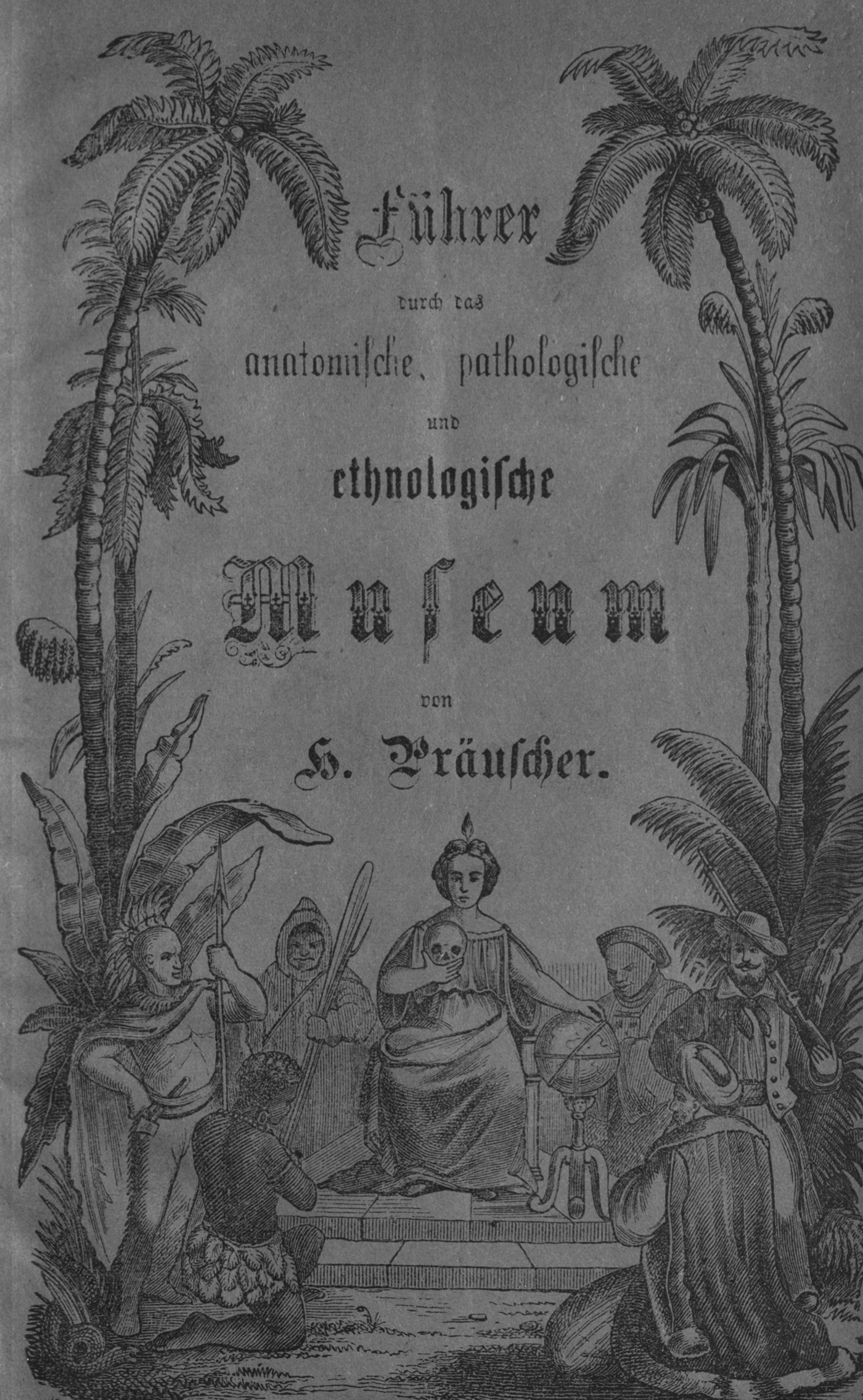
Präuscher's introduction adopted Kreutzberg's phrasing almost exactly. The proprietors both appealed to specialized scientific knowledge and claimed to democratize that knowledge, making it accessible to all in the interest of public edification. In fact, Präuscher shifted the Delphic axiom “Know thyself!” to center stage, employing this very phrase as the maxim for his guidebook. The cover of that same visitors’ guide depicted Athena, the goddess of wisdom, in its center: her left hand rests on a globe, and she holds a human skull in her right hand (Fig. 12). The path to knowledge of the world, she seems to say, is through anatomical knowledge of oneself and others.
Cover of visitors’ guidebook to Präuscher's Museum of Anatomy, Pathology, and Ethnology. Source: Anon., Führer durch das anatomische, pathologische und ethnologische Museum (Dresden: Schulze, n.d.).
Josef Hyrtl, whose anatomical textbook similarly contends that the Delphic maxim, γνῶθι σεαυτόν (know thyself), is humankind's most noble quest, clearly shared this epistemological pursuit: “the knowledge of the self, elevated to a science” through anatomical study.Footnote 89 If even basic instruction in anatomy were incorporated into “everyday life,” Hyrtl wonders—through inclusion in primary-school curricula, for example—“how much lunacy … would be avoided; how much peril for the health and life of individuals would be bypassed; how many absurd ideas about the use and abuse of life would be impossible?”Footnote 90 Such questions prefigured by decades the biopolitical reform initiatives of later anatomists, such as Julius Tandler (1869–1936), the famed Municipal Councilor for Welfare and Healthcare in the First Austrian Republic.
The impulse to increase accessibility to knowledge about human anatomy was part of a strong Viennese reform-oriented tradition. Hyrtl's queries in the mid-nineteenth century registered that current, a trend which only intensified toward the fin de siècle, giving rise to precisely those “children of the twentieth century” lampooned by Kikeriki in 1900. In fact, a direct line connects three generations of Viennese anatomists via Emil Zuckerkandl (1849–1910), who was Hyrtl's star student and who, in turn, became an esteemed mentor to Tandler. Tandler, giving a pragmatic answer to Hyrtl's questions, began targeting people—and especially women—of diverse social backgrounds for formal instruction in anatomy long before the imperial capital became known as “Red Vienna.” Mitzi, the assertive girl from the caricature discussed at the outset, would well have been among the scores who attended Zuckerkandl's and Tandler's public anatomy courses around the turn of the century. These were held at the University of Vienna's Anatomical Institute under the auspices of the Popular University Lectures (Volkstümliche Universitätsvorträge) series and at the Viennese People's Educational Center (Wiener Volksbildungsverein) between 1895 and 1914. They also extended to Tandler's “Anatomy, with Special Reference to the Fine Arts” courses, which often included live anatomical demonstrations by Zuckerkandl, and were instructed at the Art School for Women and Girls. Moreover, they were part of the affordable and successful, semester-long, public “Athenäum” courses for young women of all educational levels that Tandler taught year after year between 1900 and 1918.Footnote 91 Anatomy for all was part of a wider-scale social project of democratizing Das Wissen für Alle (Knowledge for All), the title of a popular scientific magazine first published in 1901 by Moritz Szeps (1835–1902), the editor-journalist father of the writer, intellectual, and salonnière Berta Zuckerkandl-Szeps (1864–1945)—and Emil Zuckerkandl's father-in-law. Such efforts bespoke an egalitarian politics of knowledge and expertise, which hinged, in large part, on reducing barriers to access. Location and locution were both key.
In the absence of the type of institutionalized public anatomical instruction Hyrtl espoused in the Gründerzeit, and which, under Tandler's watch, would become a central feature of interwar Viennese public health and welfare initiatives in the 1920s, the most accessible site imaginable for displays of human anatomy at the fin de siècle was arguably a contact zone like the Prater. There, people from all walks of life could pursue edification—or entertainment. At the amusement park, scientific knowledge was coupled with a healthy dose of wonder, either to emphasize aesthetically the marvels of the human body, or to make the harsh realities of corporeal life by turns morally salutary or dreadful. Both scientists and showmen strategically marketed anatomy to capitalize on the fairground's social diversity, as visualizing the human body became increasingly synonymous with knowing it.