



Introduction
Ebola virus disease (EVD) is a viral hemorrhagic fever caused by the Ebola virus (EV) that affects humans and other primates. It is a serious illness that can reach lethality rates of 50–90%. Human beings are infected by wild animals and the virus spreads by transmission from person to person, primarily by contact with blood, secretions, other body fluids, tissues or organs of persons who have developed symptoms of the disease or have died from it. The distribution area of EV coincides with the habitat of fruit bats of the family Pteropodidae, which could be the normal carrier of the virus in nature.
The incubation period is 2–21 days. Clinically it is characterized by sudden onset of fever, intense weakness and muscular pain, headache and throat irritation, followed by vomiting, diarrhea, rashes, liver and kidney dysfunction, and in some cases internal and external bleeding. In the final stage patients develop multiple organ failure that can lead to death. There is currently no specific cure or preventive treatment for this disease, though much research is being done in the field. EV was first detected in 1976 in two simultaneous outbreaks in Nzara in Sudan and in Yambuku, a village in the Democratic Republic of the Congo close to the Ebola River, which gave its name to the virus [World Health Organization (WHO, 2014)].
The 2014 epidemic in West Africa probably began in Guinea Conakry in late 2013 and spread to neighboring areas of Liberia and Sierra Leone. Because there was a risk of the disease spreading to other countries because of its virulence, the pattern of transmission and the fragility of the health system in the countries concerned, on 8 August 2014 the WHO declared the outbreak a public health emergency of international concern. A coordinated international response was considered necessary because the magnitude and complexity of the outbreak were unprecedented (Republic of Liberia, 2007; Falleh et al., Reference Falleh, Skrip, D’Harcourt and Gavani2015; WHO, 2015). Guinea Conakry, Liberia and Sierra Leone were the epicenter of the outbreak, but patients were diagnosed with the disease in seven other countries: Mali, Nigeria, Senegal, the United States, Spain, the United Kingdom and Italy.
The first case of EVD outside the African continent was caused by secondary transmission from an imported case in Spain (Rodríguez-Caravaca et al., Reference Rodríguez-Caravaca, Timermans, Parra-Ramírez, Domínguez-Hernández, Algora-Weber, Delado-Iribarren and Hermida-Gutiérrez2015) and gave rise to great social alarm and media coverage (Revuelta et al., Reference Revuelta, De Semir, Armengou, Cots, Gonzalo, Saladié and Sarukhan2015). The risk of importation and transmission of EV in the European Union is now considered minimal. The disease may be imported either by humanitarian workers or by travelers returning from affected areas. In both cases the risk is low because specific mechanisms of detection and control have been established. Protocols have also been established for reducing the risk of secondary transmission from an imported case (Ministry of Health, 2015).
Primary care (PC) is the first level of health care in Catalonia and in Spain and the ideal framework for promoting health and preventing and detecting disease. As PC is in direct contact with the community, it has a key role in detecting possible cases of EVD, initial management of the disease and identification of contacts (Arranz Izquierdo et al., Reference Arranz Izquierdo, Gutiérrez Pérez and Molero García2015). To meet this challenge, PC staff urgently needed to update their knowledge of relevant aspects of EVD and receive technical training to ensure protection of themselves, their colleagues and other patients. Furthermore, health education and awareness had to be fostered among the general public (Eiros Bouza and Pérez-Rubio, Reference Eiros Bouza and Pérez-Rubio2015). To this end, the health authorities and scientific societies drew up specific guidelines and protocols for PC (Health Department, 2014; SEMFyC, 2014) and many classroom and distance learning activities were organized to improve the training of all staff (SEMERGEN, 2014; SEMG, 2014). Cascade training was used PC centers: a few professionals of each team were trained and taught to train their teammates.
In view of the urgency of the situation, the great media coverage and the alarm created by the recent outbreak of EVD, we designed a study to determine how health professionals perceived measures aimed at addressing EVD in PC.
Materials and methods
Cross-sectional study
Questionnaire
Using Google Forms we designed an online questionnaire containing 22 questions, including single and multiple-response questions. The questionnaire is shown in Table 1. It was open from 1 February to 31 March 2015.
The questionnaire primary care and ebola disease

Participants
During the months of February and March 2015 the questionnaire entitled ‘Primary Care and Ebola Disease’ was distributed to all PC staff in Catalonia (Spain). It was sent by email using a ‘roots’ method, that is it was sent to the Catalan Society of Family and Community Medicine and the Catalan Association of Family and Community Nursing, who forwarded it to all their members. Each researcher also sent it to all their contacts and everyone was asked to collaborate by forwarding it to friends and acquaintances who met the criteria of being PC workers in Catalonia. It was also sent to the health authorities for distribution.
Whereas it could not guarantee the distribution of the questionnaire to 100% of the population who was aimed, the objective agreed was to achieve a response rate of 10%.
Statistical analysis
The answers were stored directly in the Google Forms response sheet. Statistical analysis was performed using SPSS 18.0. A χ 2 test was used for the hypothesis of independence between two categorical variables, followed by a Fisher test when the conditions were not met. A two-tailed confidence interval of 95% was used to test all the hypotheses.
Results
According to the 2013 figures (Health System Observatory of Catalonia, 2014), the 369 PC teams scattered throughout the country had a total workforce of 15 408. Of the total of 1563 respondents, 1223 (78.2%) were women and 340 (21.8%) were men; 68% were in the 36–55-year age range.
Assuming an ideal setting in which the survey reached 100% of PC staff in Catalonia, which cannot be guaranteed, the response rate was 10.1%. Table 2 shows the distribution of responses according to profession. Table 3 shows the distribution of the respondents according to health region and type of center. Table 4 shows the training and information on EVD provided by the centers and the training and information obtained by the respondents on their own initiative. Physicians responded that they had received less information (P=0.008) and had obtained more training and information on their own initiative (P=0.007) than the other professionals. Administrative staff had obtained less training information on their own initiative (P<0.0001) than the other.
Response rate according to profession
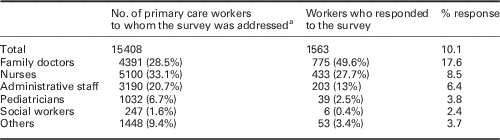
a According to the 2013 figures of the Health System Observatory of Catalonia (2014).
Distribution of respondents by health region and type of center
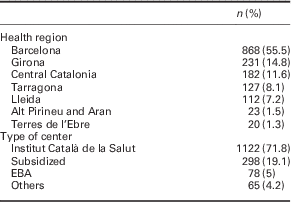
EBA=Entitats de Base Associativa (cooperative health centers)
Training and information provided by the center

a The respondents were able to choose multiple responses.
Regarding the information and training received, 80.1% of respondents considered that they had received enough, quite a lot or a lot and 75.6% considered that its quality was good or excellent.
Organization of the PC center: Of the respondents, 91.6% stated that a specific circuit had been organized at the center and that the room and the material to be used for a suspected case of EVD had been clearly identified; 46.2% that posters on the disease had been hung up in the center; 91.2% that basic protection kits (surgical caps, surgical masks, short nitrile gloves and waterproof gowns) had been prepared (5% did not know); 79.8% that individual protective equipment (surgical caps, goggles, FFP2 grade mask, short nitrile gloves, long latex gloves, coveralls and overboots) had been prepared (10.5% did not know); 77.4% that specific training in putting on and removing personal protective equipment had been carried out; and 63% that they had attended such training (3.9% did not know).
Table 5 shows the respondents’ subjective perception of the likelihood of a patient suspected of EVD presenting at the PC center, their confidence about dealing with it and the extent to which they were worried about it. Women worried more about the possibility of having to deal with a suspected case of EVD than men (P=0.0001).
Subjective perception

Clinical knowledge: Of the respondents, 442 (28.6%) responded correctly on the incubation period, 1287 (82.9%) on the mechanisms of transmission of the disease and 1400 (89.9%) on the clinical manifestations. In response to Question 22, a total of 772 (49.7%) chose the wrong answer that EVD is highly contagious and 761 (49%) chose the right answer that the fatality rate in Africa is 50–90%.
Table 6 shows the the distribution of the frequencies according to sex, age and type of staff and the Qui square analysis results (P-values).
Distribution of the frequencies according to sex, age and type of staff

ns*, no statistically significant differences.
Discussion
The EVD epidemic has raised awareness of the globalization of infectious diseases among the general public and health professionals (Trilla, Reference Trilla2014). This globalization is a challenge for health systems, which must improve and provide a coordinated response to possible future threats to public health (Dzau and Rodin, Reference Dzau and Rodin2015), such as the current Zika virus epidemic (WHO, 2016).
PC teams have responsibilities in international health alerts: early detection, early management of possible cases and monitoring and management of potential infection. As in many other infectious diseases, good coordination between health authorities, specialized hospital units, family doctors and other health professions is a key factor.
A literature search found no similar studies to compare the results. In our study, half the respondents were physicians: the fact that the study was conceived by physicians may have increased the dissemination and interest among this group. Half the respondents worked in urban areas. They had received training (mainly in the classroom) and information (mainly by email) and had sought training and information on their own initiative (especially on accredited national websites) and their evaluation of both the quantity and quality of the training and information received was good. Technology now plays an important role in the transmission of information (Gidado et al., Reference Gidado, Oladimeji, Roberts, Nguku, Nwangwu, Waziri, Shuaib, Oguntimehin, Musa, Nzuki, Nasidi, Adewuyi, Daniel, Olayinka, Odubanjo and Poggensee2015). However, the training was mostly in classrooms. Research is needed to compare the level of knowledge obtained through online training versus classroom training, taking into account the current trend of promoting self-directed learning skills (Monroe, Reference Monroe2016).
A study conducted in the North Metropolitan Area of Barcelona (Valerio et al., Reference Valerio, Pérez-Quílez, Roure, Fructuoso, Amilibia, Moreno, Sañudo, Bocanegra and Martínez-Cuevas2015) assessed knowledge of viral hemorrhagic fever among PC doctors and nurses before a trainer training workshop on EVD. The results (117 responses from 138 participants) indicated a low knowledge (78.6%), and having attended specific training was significantly and independently associated with having suitable knowledge (P<0.001); OR=8.6 (CI 95%: 3.199–23.623).
In most centers a specific circuit had been organized and the room and the material to be used for patients with suspected EVD had been identified. Basic protective equipment and personal protective equipment had been prepared, and specific training in their use had been given to the staff.
In analyzing the responses on subjective perception, 77% were worried about the possibility of having to deal with a patient with suspected EVD at the center, although they considered it not very likely, unlikely or highly unlikely and were confident of the action to be taken. As stated by Blaya-Novakova V (Blaya-Nováková et al., Reference Blaya-Nováková, Lópaz-Pérez, Méndez-Navas, Domínguez-Berjón and Astray-Mochales2015) ‘we have to keep in mind that physicians are not immune to experiencing fear in the face of EVD, that they may worry about the legal consequences of not detecting EVD in a patient or feel responsible for possibly exposing the rest of the healthcare team, other patients and ultimately even their own family to a severe disease.’ The mechanisms of infection and clinical manifestations were well known.
The main limitation was that we did not know the denominator for calculating the response rate. To minimize this limitation, we decided to work with the most optimistic hypothesis possible (the questionnaire reached 100% of the people to whom it was addressed). We also tried to minimize the non-response bias by mass emailing with the link to the questionnaire and a reminder half-way through the study period. A study of the perception of risk of EVD in the general German population (Rübsamen et al., Reference Rübsamen, Castell, Horn, Karch, Ott, Raupach-Rosin, Zoch, Krause and Mikolajczyk2015) through online questionnaires obtained a response rate of 9%.
In conclusion, the perception of PC staff in Catalonia who responded to the survey on EVD was that they had received training and information and that the centers had organized the specific circuit and the necessary equipment. The respondents considered it unlikely that a patient with suspected EVD would present at the PC and were aware of the action to be taken in such cases but they were worried about this possibility.
Careful, rigorous scientific training in international health issues at both undergraduate and graduate level is now essential to take on the new challenges of global health.



