

The beauty of Peter’s work is that he mapped what happened in the brain after birth. There were data on what happens before birth, but more happens after birth than we had ever imagined. It explains why no child can recollect memories before 2 years of age – there are too many connections; it is a cacophony and the symphony has not yet started.
Huda Zoghbi is an expert on the genetics of neurodevelopmental disease. Zoghbi and her research group uncovered the genetic basis of a classic postnatal neurodevelopmental disorder, Rett syndrome. It is a puzzling disorder in girls who develop normally for the first year of life or more – reaching milestones like walking and talking – and then undergo a regression at around one to two years of age. The developmental deterioration coincides with the timing when there is a switch from net synapse formation to synapse elimination. As a medical resident, Zoghbi became fascinated with understanding what is happening in Rett syndrome. Zoghbi initially described a cohort of girls published in the New England Journal of Medicine in 1985 and proposed a genetic etiology on the X chromosome [Reference Zoghbi, Percy and Glaze1]. Years later, after receiving training in genetics, Zoghbi returned to Rett syndrome and uncovered its genetic cause. Rett syndrome is an X-linked dominant disorder due to mutations in the methyl-CpG-binding protein 2 (MeCP2), which is encoded by the gene MeCP2 [Reference Amir, Van den Veyver and Wan2]. Zoghbi’s more recent work in mouse models has shown that the MeCP2 overabundance leads to increased synapse density and autistic-like behaviors, suggesting a dose-dependent effect of MeCP2 levels on outcome. This is in accordance with the finding that humans with gene duplications in the MeCP2 gene have autism spectrum disorder (referred to herein as autism). It is less clear if there is in fact a direct connection between MeCP2 and synaptic pruning. However, recent studies suggest that mutations in the MeCP2 gene may lead to age-related defects in synapse pruning in the first year of life. Indeed, work from the group of Beth Stevens has suggested that MeCP2 deficiency in mice weakens synapses, making them more susceptible to pruning and removal by microglial cells [Reference Schafer, Heller and Gunner3].
Peter Huttenlocher’s early work on synaptic pruning was largely observational or descriptive. During conversations in March 2019, Zoghbi said: “Observational science is important, but it is hard to get funded. Peter was ahead of the time – he made the human discovery before the disease part was in place.” She continued, “No one thought that the babies are born with the hardware largely intact, and the key process to development after birth is to refine synapses and select which ones will be functional. No one imagined it was at the root of so many disorders.” A key distinguishing feature of many neurodevelopmental disorders is that they are postnatal diseases, as compared to the neuronal migration disorders that have origin early in prenatal development. Neurodevelopmental disorders include autism and attention-deficit/hyperactivity disorder. Even diseases with later onset in adolescence or young adulthood, like schizophrenia, are now considered to be neurodevelopmental disorders. Increasing evidence suggests a link between aberrant synaptic pruning in childhood and neurodevelopmental disorders. But many gaps and challenges remain. Human brains are different from animal models and are difficult to study over time. The ability to image synapses in humans as children develop remains a major challenge. Zoghbi noted: “This requires a non-invasive way to look at connections, using synaptic tracers to quantify synapse numbers in living humans.”
Despite these challenges, growing evidence supports a connection between neurodevelopmental disease and defects in pruning, either too much or too little pruning, which impact brain circuitry in different regions of the brain. For example, with autism, there is evidence to suggest that there is a surplus of synapses that contribute to a “cacophony” in the brain. This affects normal development and social interactions, often with onset at the time of robust pruning, before three years of age. Autism is a heterogeneous disorder with different symptoms across patients; however, syndromic autism, like Rett syndrome, provides a way to get at the genetic basis for some types of autism. This type of progress has been essential to provide further insight into the connection between autism and synaptic pruning, by categorizing the different types of autism.
Evidence to support a defect in synaptic pruning in autism has been provided by observations of post-mortem brain samples, showing increased dendritic spine density in patients with autism. Some forms of autism are due to mutations in pathways that affect a protein kinase known as mammalian target of rapamycin (mTOR) [Reference Tang, Gudsnuk and Kuo4]. Mouse models of these gene variants also show a surplus of synapses, and this effect can be abrogated by inhibiting this pathway using a drug known as rapamycin, an immunosuppressant. Indeed, clinical trials are ongoing to test the effects of rapamycin on the development of autism in patients with tuberous sclerosis. It is an intriguing idea that increasing synaptic pruning early on may improve the prognosis in patients who will develop autism.
Schizophrenia is a neurodevelopmental disorder with a later onset than autism, after the most robust early synaptic pruning has occurred in young children. However, schizophrenia is thought to be a disorder associated with too much pruning in regions of the brain involved in higher cognitive functions. These regions are pruned later in development, with pruning continuing into adolescence and early adulthood, the time when many individuals are diagnosed with schizophrenia. It is also likely that schizophrenia is multifactorial, combining genetic susceptibility, environmental factors and a connectivity problem. Schizophrenia is unlike autism spectrum disorders, which have an early age of onset during a critical period of synapse elimination.
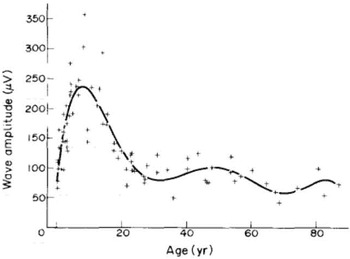
The idea that synaptic pruning may be part of schizophrenia was first proposed by the psychiatrist Irwin Feinberg. As noted in Chapter 9, Feinberg was a postdoctoral fellow in the same laboratory as Peter at the National Institutes of Health (NIH). They remained in contact after leaving NIH and Feinberg was influenced by Peter’s findings of developmental synaptic pruning. He was particularly intrigued by the data suggesting that synaptic pruning may extend through adolescence in regions of the brain associated with higher cognitive functions. For Feinberg, reading Peter’s previously mentioned landmark 1979 paper in Brain Research provided a clue to a problem that had puzzled him: Why was there regressive change in REM (rapid eye movement) sleep over adolescence? Feinberg had previously reported age-related changes in EEG sleep patterns with a biphasic dependence of EEG wave amplitude during sleep as a function of age [Reference Feinberg, Koresko and Heller5]. There was a peak in amplitude in childhood and a subsequent decline in adolescence and early adulthood (Figure 14.1), similar to the patterns in synapse elimination Peter reported in the frontal lobe during child development. The idea that all of this is happening at the same time helped Feinberg make the connection between sleep and synaptic pruning, and its potential role in schizophrenia.
EEG sleep patterns as a function of age. Note peak sleep wave amplitude in early childhood and reduction with age, reminiscent of the reduction of synapse number with age. From Feinberg I. Schizophrenia: Caused by a fault in programmed synaptic elimination during adolescence? J Psychiatr Res 1982; 17: 319–34.

As Feinberg went on to say during a conversation in May 2022, “sleep is deranged in schizophrenia – no characteristic sleep pattern – but it is disrupted.” In 1983, Feinberg hypothesized that schizophrenia is a defect in programmed synaptic elimination during adolescence. He published this idea in the Journal of Psychiatric Research [Reference Feinberg6]:
Converging evidence indicates that a profound reorganization of human brain function takes place during adolescence … . A reduction in cortical synaptic density has recently been observed and may account for all of these changes … . Such synaptic “pruning” may be analogous to the programmed elimination of neural elements in very early development. A defect in this maturational process may underlie those cases of schizophrenia that emerge during adolescence.
Feinberg hypothesized that these changes occur when there is a known reduction in brain metabolism and deep sleep during adolescence. Seth Cohen, a former trainee of Feinberg’s in Psychiatry at UCSF, wrote in an email in November 2018: “Your father’s work had a very significant influence on Dr. Feinberg‘s thinking.” Based on the observation of developmental synaptic elimination, Feinberg proposed that schizophrenia was, in essence, a disorder of synaptic pruning gone “awry.” It is possible that the wrong synapses are eliminated in schizophrenia, or that too many synapses are eliminated.
Feinberg’s hypothesis was largely ignored at the time. Decades later, work by Steve Carroll and Beth Stevens has suggested a genetic basis to support the pruning hypothesis in schizophrenia [Reference Sekar, Bialas and de Rivera H7]. This proposed relationship between schizophrenia and synapse elimination was, according to Feinberg, “ahead of its time and did not have a framework to exist in.” Feinberg went on: “There is resistance to new ideas in science without being backed up with data.” At that time, it was “all about dopamine in schizophrenia” – and there was not much interest in other ideas. This situation with schizophrenia is similar to that for the synaptic pruning discovery more broadly: a finding that was decades ahead of its time, and we are still learning the full extent of its meaning for normal development or disease.
I might have ignored it – but I knew Huttenlocher was a meticulous researcher, and it explained the change in sleep during this time – decrease in deep wave sleep during adolescence with massive changes of brain metabolic rate – profound reorganization of brain during adolescence. It made sense, cut back on the ones that are not successfully integrated. If you have such a massive change – it may sometimes be imperfect. If there are errors – too many or too few – mental illness may result. Age of onset of schizophrenia – often at the ends of adolescence and early 20s. Reduction in deep sleep – REM sleep in schizophrenia/reduction of prefrontal cortex of new membrane – whatever normally happens during adolescence is exaggerated in schizophrenia – there is more reduction.
Feinberg said his talk at the Society of Neuroscience meeting in the 1980s proposing the synaptic pruning hypothesis in schizophrenia seemed to have been largely ignored. However, the next day, another neuroscientist and “a bit of ‘a hustler,’ who worked in the field of synapse remodeling, raised a similar concept in his talk – as though it was his idea – even though he had never done anything in schizophrenia.” Feinberg was flabbergasted and said: “Now, I may have made more of an issue, but it just turned me off. This was someone who usurped other’s achievements – and I distrusted him. I just moved on.” This aspect of science – the element of competition and lack of generosity to colleagues – had significantly repelled both Peter and Feinberg so many years ago, as young scientists training at NIH. Their approach was to just move on and not raise a fuss. However, it is important to consider that the quieter, more modest scientists who think differently, like Peter and Irwin, are often overlooked or even ignored for years, and that this can slow down the pace of scientific breakthroughs and innovation. It may be productive to more explicitly train reticent scientists in skills such as scientific debate, networking and career advancement. It also is critical to recognize and promote different types of scientists or approaches that contribute in their own unique ways to pushing fields forward.
Thirty-five years after Feinberg first proposed a link between schizophrenia and abnormal synaptic pruning, genetic evidence has provided direct support for this idea. The findings involve the complement system made up of a few dozen plasma proteins, which work with the immune system to protect against infections and to remove dead cells and foreign material. Work from Steve Carroll’s laboratory at the Broad Institute and the Stevens Laboratory at Harvard has shown that the complement C4 gene is linked to schizophrenia risk (see also Chapter 17 on microglial cells and pruning) [Reference Sekar, Bialas and de Rivera H7]. They found an association between increased C4 expression and increased risk for schizophrenia. This work provided a possible explanation for the increase in synaptic pruning in schizophrenia through the action of microglia-mediated elimination, a process that is regulated by complement components. In addition to the genetic link, recent human post-mortem brain studies also support the hypothesis that synapses are over-pruned in schizophrenia. Golgi staining from autopsy samples show that individuals with schizophrenia have reduced dendritic spine density in the cerebral cortex as compared to age-matched controls [Reference van Berlekom, Muflihah and Snijders8]. Taken together, these studies provide a strong link between synaptic pruning gone awry and the development of schizophrenia. However, challenges remain before this theory gains full acceptance.
Although post-mortem studies are consistent with the “over-pruning hypothesis,” they provide only one snapshot in time. How do synapse number and function change in the same individual over time? How is this different in an adolescent child who goes on to develop schizophrenia? The challenge is to understand how synapses change over time during adolescence and how this is altered in individuals who end up developing schizophrenia. And, ultimately, to discover if interventions – drugs or other treatments – alter this pruning phenotype and treat schizophrenia.
The window into understanding synapses in the human brain has been improving with advances in brain imaging techniques. Previous imaging studies had shown increased cortical thinning in people who develop schizophrenia, also supporting the over-pruning hypothesis in schizophrenia [Reference Cannon, Chung and He9]. However, the advent of a more refined imaging of synapses using PET scanning is allowing even more insight into how synapses change in humans over time. The development of the PET tracer [Reference Sellgren, Gracias and Watmuff11C]UCB to image the synapse marker SV2A has been used to show that in patients with advanced schizophrenia there is reduced binding of the synapse marker, suggesting that these individuals have over-pruning of their synapses [Reference Onwordi, Halff and Whitehurst10]. There are caveats, however. It is unclear if this reduction represents actual pruning or if these synapses remain intact but are just less functional or less active. In addition, this work was done with patients with advanced disease, rather than new-onset schizophrenia. It is this challenge that physician scientist Jong Yoon, Professor at Stanford University, is grappling with.
In an interview with Jong Yoon in May 2022, he said that “Feinberg is usually very critical – but, with Peter, he was always very laudatory of Peter’s work.” Yoon said that looking at markers of synapses in patients provides a more “distal product to test the pruning hypothesis.” He is studying schizophrenia patients early in their disease course to address the chicken or egg question: what comes first – the disease or the over-pruning? In unpublished findings, Yoon has found a dramatic difference with excessive pruning early in schizophrenia – suggesting that it is an early step in disease pathogenesis. Yoon noted that usually there are messy results in schizophrenia research because schizophrenia is a heterogenous disorder – meaning many different underlying causes contribute to disease – including distinct genetic factors and environmental triggers. But with the pruning studies early in schizophrenia, “the results are clean and occur in wide regions of the brain.” This is an exciting advance that further implicates abnormal pruning in schizophrenia. The next step is to refine these studies – and look earlier before the onset of disease in families with a high risk for developing schizophrenia. And, ultimately, to intervene by treating patients with drugs that target pruning – complement inhibitors, for example, that alter the microglia-mediated elimination of synapses. Do these treatments alter synapses by brain imaging and alter the course of disease? Pharmaceutical companies have taken note. These types of interventions are in the works and have entered clinical trials for psychiatric disease.
Recent studies with human in vitro models (cells in a dish), using inducible pluripotent stem cells from patients with schizophrenia, also support the idea of increased complement-mediated synapse elimination by microglial cells [Reference Sellgren, Gracias and Watmuff11]. This provides a particularly useful tool for drug discovery, and in this recent work the authors found that the antibiotic minocycline reduces microglia-mediated synapse engulfment. In addition, based on medical record reviews, it has been found that patients treated with minocycline had a modest reduction in risk for developing schizophrenia. In any case, this type of human in vitro model will provide a powerful tool for future studies of synaptic pruning and how it is altered in specific diseases like schizophrenia.
The idea that aberrant synaptic pruning provides a potentially targetable pathology is in its infancy but also extremely exciting. The neurodevelopmental disorders span multiple disorders of childhood including autism and schizophrenia, which commonly arises in late adolescence or early adulthood. These are among the more prominent neurologic disorders in human medicine, but many questions remain. In the decades since the first discovery of synaptic pruning more questions than answers have emerged, challenging scientists to continue their hunt for new discoveries.