

Introduction: rock crystal and British prehistory
Rock crystal is a water-clear type of quartz, forming in both veins and as single ‘hyaline’ or ‘automorph’ crystals; however, in the UK it only forms as single- or double-ended hyaline crystals, usually with a hexagonal cross section. Whilst quartz is a common component of igneous, metamorphic and sedimentary rocks found across the UK, large water-clear quartz crystals are much rarer, only forming in specific geological conditions (Ballin Reference Ballin2008, 44–5; Cotterell Reference Cotterell2011). These are restricted to a number of localized areas, including Snowdonia, St David's Head and the area around Merthyr Tydfil in Wales, the area surrounding Tintagel, Cornwall, the Isle of Jura, locations in Argyle and Bute, Aberdeenshire and East Lothian, Scotland, and the Dingle Peninsular in Ireland (Cotterell Reference Cotterell2011; forthcoming; Griffiths Reference Griffiths2009; Lewis Reference Lewis1846; National Museum Wales n.d.). On the European mainland, rock crystal forms in veins, and crystals much larger than in the UK, which has provided raw materials for large and impressive artefacts, such as the enigmatic dagger and projectile points from Valencina de la Concepción in Seville, Spain (Morgado et al. Reference Morgado, Lozano, Sanjuán, Triviño, Odriozola, Irisarri and Flores2016).
Owing to the scarcity and size of native crystal material, the evidence for working it in the UK is perhaps less dramatic, but also under-reported; to date, there have been no published syntheses of rock crystal in British prehistory, and many examples are only presented within larger discussions of knapped stone, or other material assemblages. However, humanly worked rock crystal has been recovered from a small number of prehistoric sites across Britain and Ireland, many as single pieces, or very small assemblages (see Supplementary material 1; this is intended to be as comprehensive as current enquiry has permitted. However, the authors acknowledge that finds of this material could be more common than currently appreciated, and welcome reports of other instances which can be added). Aside from the two larger Mesolithic assemblages from the Isle of Jura (consisting of 273 and 146 pieces), the other larger assemblages date to the Neolithic. These focus on mortuary contexts, such as megalithic tombs at Achnacreebeag (Scotland), Parc le Breos (Wales) and Kilnagarns Lower (Ireland), and Early Neolithic timber structures in Ireland, Scotland and England. The association of rock crystal and timber houses is particularly apparent in Ireland, and the inclusion of this material in house foundation trenches has been suggested as potential foundation offerings (Smyth Reference Smyth2011), the most spectacular being a rock crystal leaf-shaped arrowhead being recovered from Ballyglass, Co. Mayo (Driscoll Reference Driscoll2010, 40; Smyth Reference Smyth2014).
This paper presents analysis and interpretation of a new assemblage of rock crystal from the Early Neolithic site of Dorstone Hill in Herefordshire. Totalling 337 pieces, this is one of, if not the largest assemblage of worked rock crystal within Britain and Ireland, offering an important opportunity to examine the working, use and treatment of rock crystal within a British Neolithic context. This analysis will focus on examining the technological process of working rock crystal, providing a detailed reduction sequence, which has been outlined for some continental assemblages (e.g. Fernández-Marchena & Ollé Reference Fernández-Marchena and Ollé2016 for Spanish material) but not yet established in British contexts, and a detailed examination of the use and deposition of rock crystal. Comparison to the flint assemblage from this site will highlight a number of differences in the methods of reduction, use and the selective deposition of rock crystal, most notably the apparent lack of tools or utilization, and the selective deposition of pieces with cremated bone deposits within negative features. The paper concludes with a consideration of why rock crystal may have been treated in these specific ways and the role it played within the lives of people at Dorstone Hill, and the new lines of enquiry that a focused study of rock crystal can open in the context of the Early Neolithic in Britain and Ireland.
Neolithic rock crystal at Dorstone Hill, Herefordshire
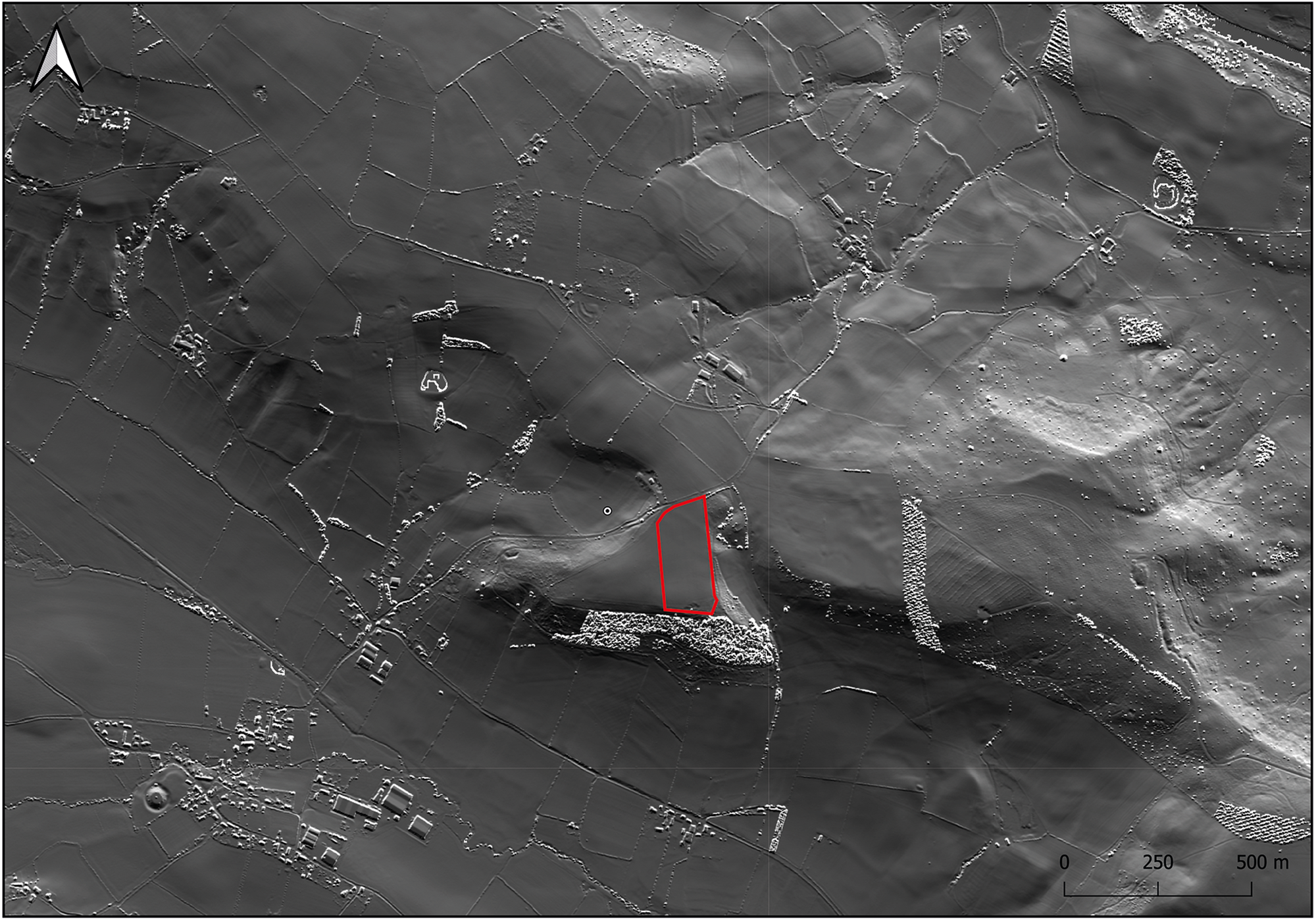
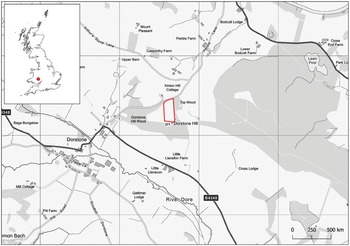
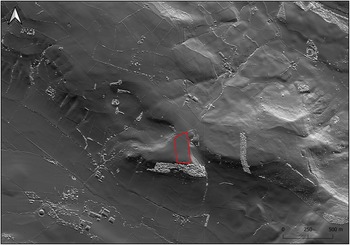
Dorstone Hill is a flat-topped eminence extending southward from the watershed ridge separating the valleys of the rivers Wye and Dore in southwest Herefordshire (Figs 1 & 2). Excavations undertaken here between 2011 and 2019 revealed a monumental Early Neolithic complex, including three timber halls, three long mounds and a causewayed enclosure (cf. Overton et al. Reference Overton, Ray, Thomas and Last2022; Ray & Thomas Reference Ray, Thomas, Barclay, Field and Leary2020). The three long mounds (hereafter referred to as the Eastern, Central and Western mounds) were laid end-to-end, and were each constructed of an outer stone cairn deposit, an intermediate earthen and turf deposit and an inner ‘core’ of intensely burnt daub containing large fragments of carbonized timber, which had been intentionally gathered into a rectangular shape.
Location of Dorstone Hill, with the field detailed in Figure 3 outlined in red. (Contains OS data © Crown copyright and database right 2020.)

LiDAR survey of Dorstone Hill, with the field detailed in Figure 3 outlined in red. (Contains DEFRA data © Crown copyright 2020.)
The burnt daub and timber core of the mounds represented parts of the collapsed superstructure of three large wooden buildings, the post-holes of which were uncovered beneath the mounds, again aligned end-to-end. The three buildings have produced a series of radiocarbon dates suggesting that they were constructed in the thirty-eighth or thirty-ninth centuries bc (cf. Ray & Thomas Reference Ray, Thomas, Barclay, Field and Leary2020, 109). The Western structure (beneath the Western mound) was comprised of a trapezoidal structure approximately 35×18 m in extent, with a distinct gully running along the axial line, and large load-bearing post-holes along the undisturbed northern side of the structure. The building beneath the central mound was different in construction, using both posts and possible parallel beam slots defining the sides of the building. The eastern building lacked substantial earthfast constructional evidence, having been built on bedrock, but the core of burnt daub was here exceptionally well defined, and contained an area of well-preserved carbonized planks, containing a series of small uprights set in sockets, which may have represented a suspended wooden floor.
Similar to the timber structures, each of the mounds was also architecturally distinct; the turf body of the Central mound was revetted by a wooden palisade set in a cut slot, and later capped by stone cairn material with a number of stone cists being inserted into the norther edge. The Western mound was contained by a stone wall, on to which a number of cellular buttresses were attached, to provide an overall trapezoidal shape in plan, echoing the shape of the structure beneath it. On the northern edge, an orthostatic chamber was set into the wall. Finally, the Eastern mound had no enclosing feature, but was covered by a cairn that was received by a terrace that had been cut along the northern side of the monument. At the eastern end, this mound covered a trough-like axial chamber that had been bracketed by two massive D-shaped post-holes. This linear mortuary structure had been contained within a U-shaped ditched enclosure and covered by a small mound, suggesting the building and mortuary structure beneath the Eastern mound were standing end-to-end before the long mound was constructed. The Eastern mound later received a series of intrusive features: four large pits that had been lined with sandstone blocks on to which had been placed fragments of cremated human and cattle bone, and a small cylindrical pit close to the site of the mortuary structure, containing a bifacial knife and two polished flint axes.
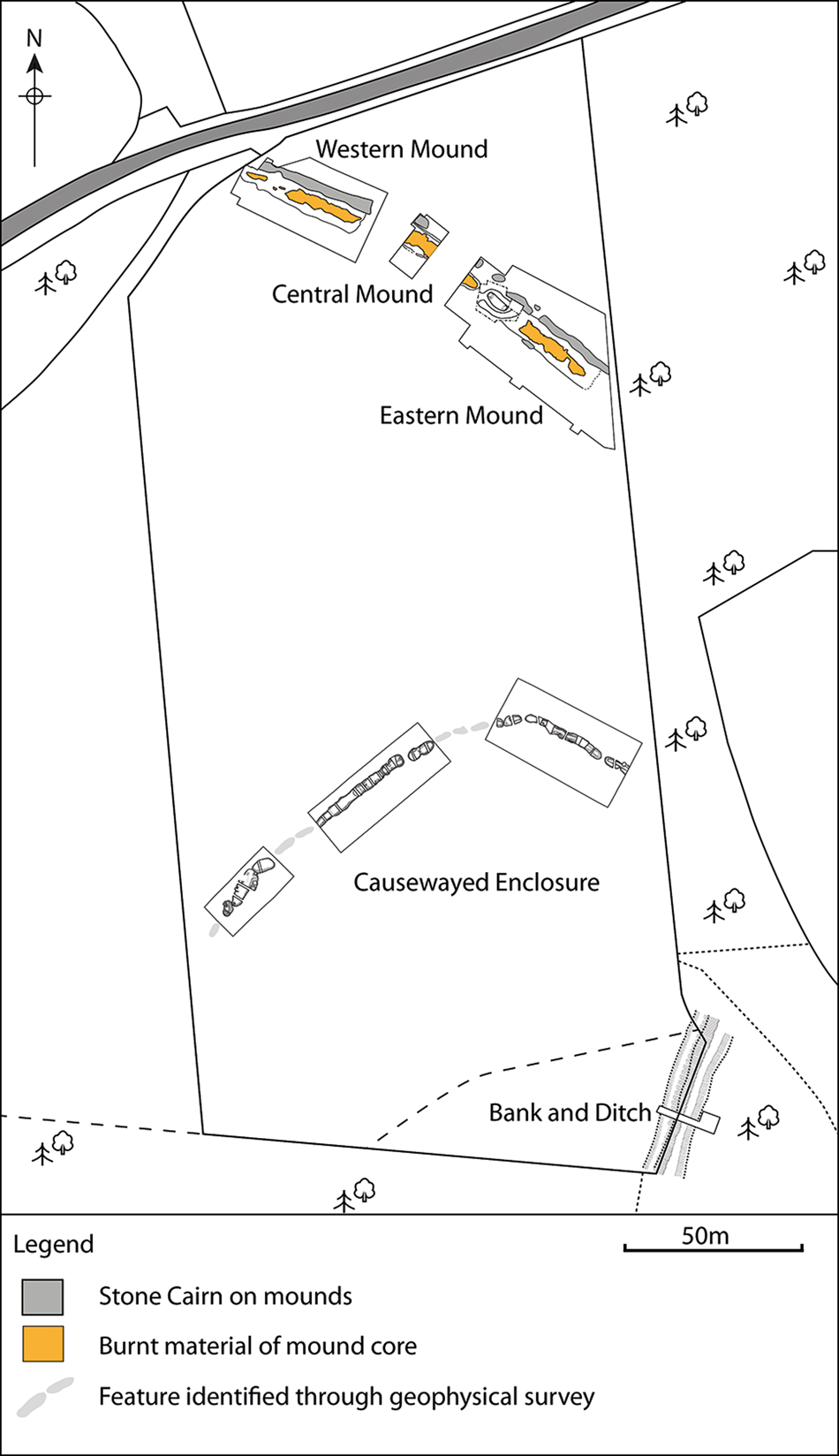
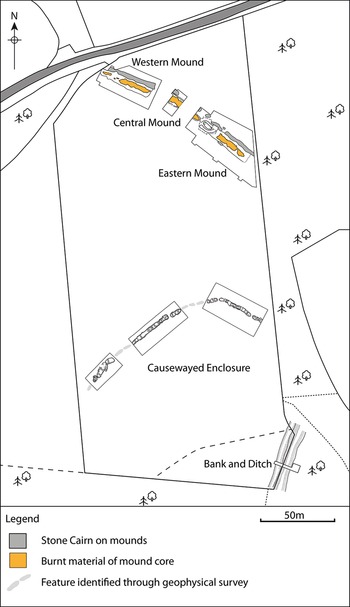
The remarkable complex of long mounds and buildings on Dorstone Hill was complemented by a single-circuit causewayed enclosure located on the tip of the hilltop overlooking the Golden Valley (Figs 3 & 4). The enclosure was approximately 150×120 m in extent, and its northeast side was flattened in plan, perhaps deliberately to run parallel with the long mounds. Excavations revealed the segmented ditches were subject to extensive re-cutting, including the removal of causeways to create more continuous lengths of ditch, and many small bowl-shaped cuts containing placed objects (including a concentration of large pottery sherds and animal bone). Radiocarbon evidence indicates deposition of one such concentration within the ditch dates to the thirty-seveth/thirty-sixth century bc (Overton et al. Reference Overton, Ray, Thomas and Last2022). Within the eastern edge of the causewayed enclosure a large two-phase bank-and-ditch earthwork divided off the south-east tip of the promontory; based on the artefacts recovered, these appear to date successively to the Iron Age and Roman periods.
Overall site plan of Dorstone Hill.
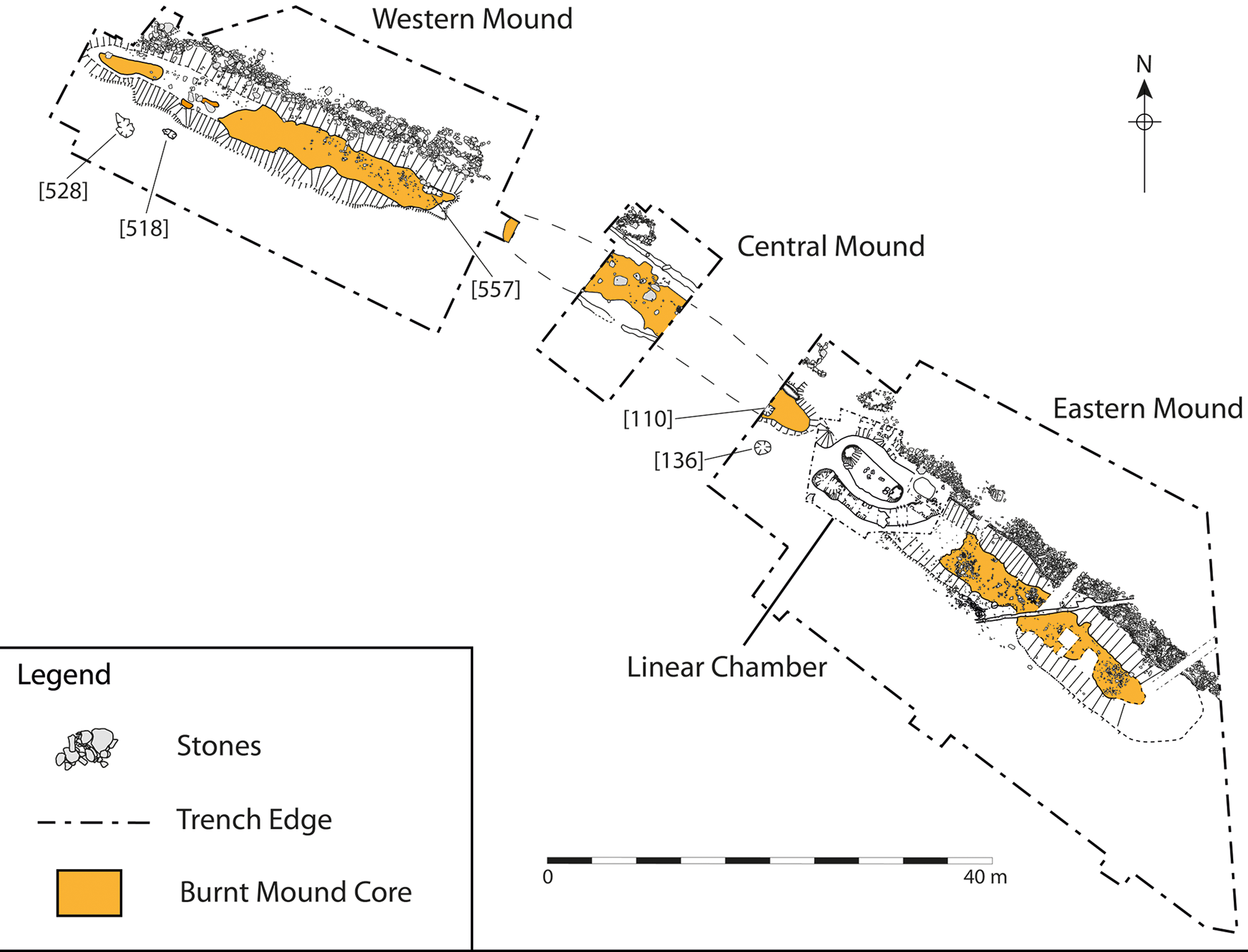
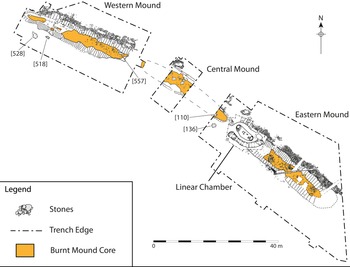
Detailed plan of Eastern, Central and Western mounds. Features discussed in the text are identified with cut numbers.
The rock crystal assemblage
During excavations at Dorstone Hill between 2011 and 2019, a total of 2686 pieces of chipped stone were recovered. Flint made up the majority of the assemblage (86.8 per cent); rock crystal comprised 12.5 per cent of the assemblage with a total of 337 pieces. There are also 18 examples of polished axes and axe flakes (0.7 per cent of the assemblage), both of flint and stone, which were probably acquired as finished objects. Petrological analysis is on-going; however, the flint axes are made of a type of flint usually associated with flint from primary geological contexts (e.g. mines), whie the others of volcanic rock probably originated in north Wales and Cumbria. Due to local geology, all raw materials used in the chipped-stone assemblage had to be imported to the site; the closest potential sources for flint is c. 20 km away (Elliot Reference Elliot2019).
Potential sources of rock crystals large enough to produce the artefacts at Dorstone (the largest removal being 34 mm long) are much further away than those for most of the potential flint sources. Geological specimens measuring in excess of 5cm in length have been recovered from Ogof Grisial (Crystal Cave) at St David's Head (Pembrokeshire) and multiple sites in Snowdonia, in north Wales (100 miles and 80 miles away from Dorstone Hill respectively, as the crow flies), with larger specimens up to 10 cm in length being recovered from Snowdonia. Both sources represent surface or close to the surface sources, which could feasibly have been accessible during the Neolithic (Cotterell Reference Cotterell2011; forthcoming; Griffiths Reference Griffiths2009; National Museum Wales n.d.). The South Wales coalfields around Merthyr Tydfil (c. 30 miles from Dorstone Hill) may be another potential source; however, known specimens are smaller (a maximum of 4 cm) and have been recovered recently as a result of industrial mining at depth (National Museum Wales n.d.), and may not have been a source easily accesible in the Neolithic. High-quality rock crystal has also been recovered from mines surrounding Tintagel, Cornwall (125 miles from Dorstone Hill) (Cotterell Reference Cotterellforthcoming), although these are subject to the same caveats as for the Merthyr samples. It is also possible the rock crystal originated from Ireland, Scotland or continental Europe (see introduction).
The techno-typological analysis of rock crystal artefacts is challenging, as the fracture characteristics of rock crystal are not identical to those of flint and chert (cf. Fernández-Marchena et al. Reference Fernández-Marchena, Ramón Rabuñal, Mateo-Lomba, Lombao, Hernando, Cueva-Temprana and Cazalla2020; Tardy et al. Reference Tardy, Vosges and Varoutsikos2016). Most pertinently, the anisotropic nature of rock crystal means that the energy from a blow may not travel evenly through the crystal (Fernández-Marchena & Ollé Reference Fernández-Marchena and Ollé2016; Rodríguez-Rellán Reference Rodríguez-Rellán2016), and the unique shape of the parent crystal also affects the reduction process. Therefore, while our approach is based on established recording systems for other types of lithic materials, some terminology has been adapted for the specific features of the rock crystal assemblage. The technological categorization that follows should be regarded as preliminary, pending experimental replication to understand better how rock crystal behaves when knapped or pressure-flaked.
For the purpose of this study, we recorded attributes of the crystal, included clarity, texture, inclusions and evidence for heat alteration, the techno-typological category of each artefact (according to conventional definitions with the addition of whole and partial crystal), the presence of visible modifications (e.g. edge retouch), as well as completeness and metric data. For the larger pieces we also recorded technological attributes including bulb type, striking platform type, platform edge treatment, termination type, dorsal scarring pattern, longitudinal profile and the presence of the natural edge of the crystal (where applicable). Those pieces exhibiting one or more crystal edges offered the potential to locate the specimen within the parent crystal. Where possible, specimens were recorded as ‘body’ faces along the length of the crystal (characterized by growth-lines orientated horizontally to the crystals longitudinal axis), ‘point’ faces at the tip, (lacking growth-lines), or ‘base’ faces (characterized by more complex formations where the crystal joins other crystals and/or the vein quartz substrate).
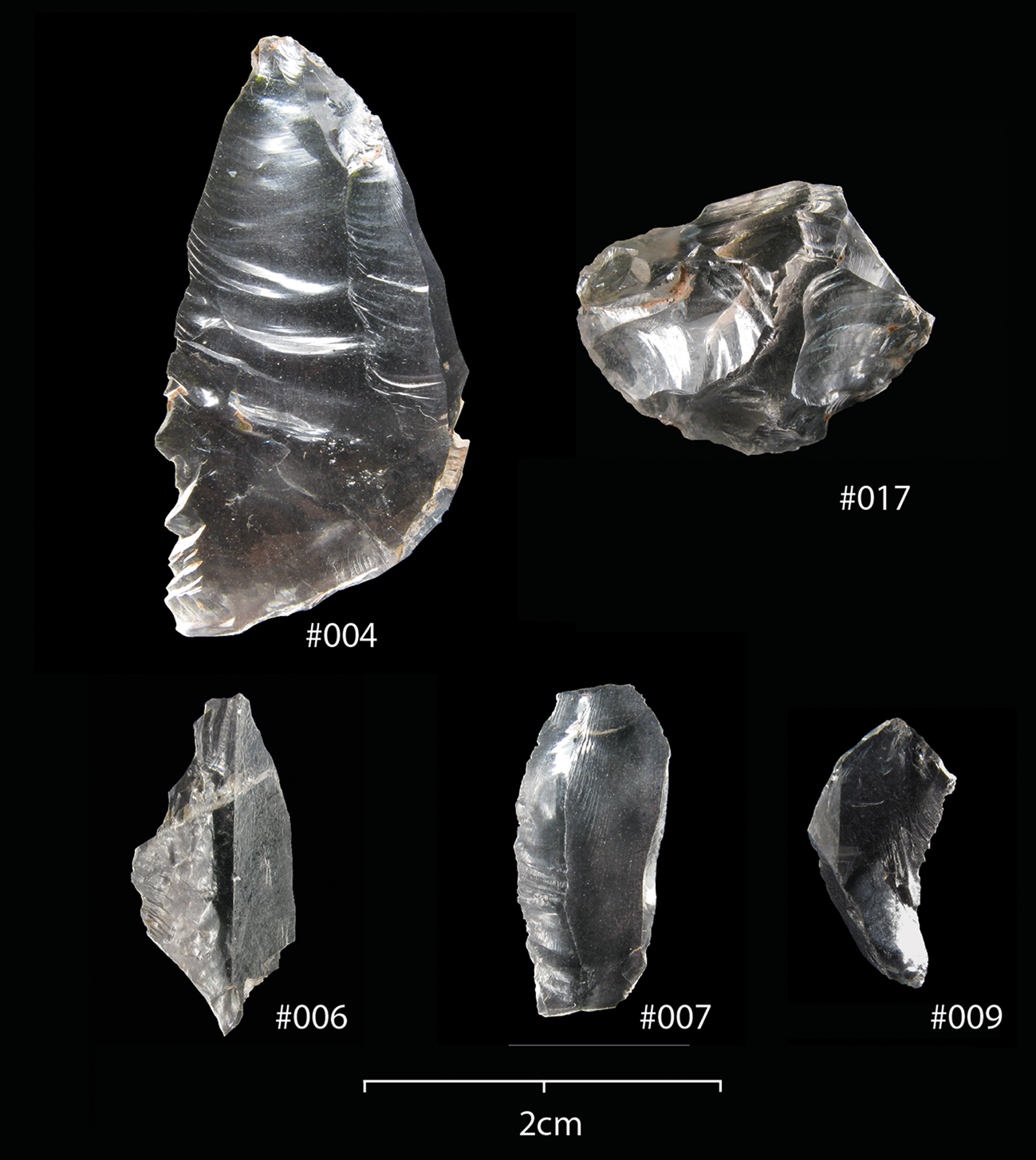
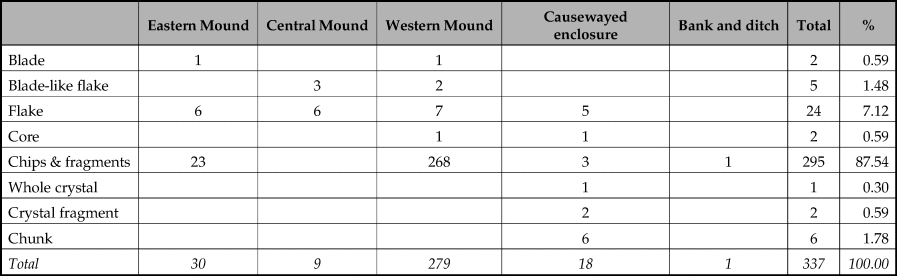
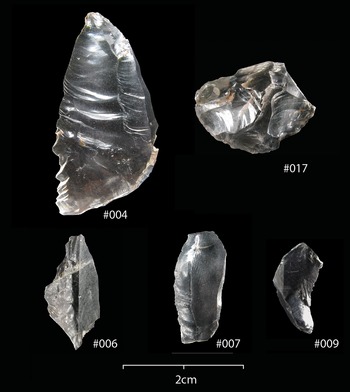
The breakdown by category (Table 1) indicates that complete rock crystals were being reduced at Dorstone Hill. A total of 60 pieces retained portions of the natural edge surface of the crystal (see Table 2 and discussion below), which are comparative to pieces retaining cortex in flint assemblages. These, combined with the presence of one complete crystal and two partial crystals, confirm that the material was being introduced to the site as whole crystals, which were then reduced on site. The larger removals (pieces over 10 mm) were divided into the conventional categories of blades, blade-like flakes and flakes, and the smaller removals (under 10 mm) were comprised of chips and flakes. The 31 larger removals represent 8.7 per cent of the total assemblage, or 73.8 per cent if we discount the smallest debitage. These larger removals range from 10 mm to 34 mm in length, and are mainly knapped from high-quality crystal, although some pieces show pronounced juddering/stepping towards the distal termination, which can be caused by areas of coarser crystal, and the anisotropy of the crystal (Tardy et al. Reference Tardy, Vosges and Varoutsikos2016, fig. 17). The smaller removals (chips and fragments), some of which are miniature versions of the larger flakes, are almost certainly the by-products of knapping, confirming reduction was being undertaken locally. The pieces comprising the smaller portion of this category are too small to be deliberately struck pieces, and seem to be a knapping by-product. No ‘cores’ in the traditional sense are present in the assemblage; however, two pieces have only negative scars and exhibit clear signs of multiple removals being taken from two faces in a systematic manner: these are the most convincing parent pieces, and have therefore been classified here as ‘cores’. The larger of these cores (#017, see Figure 5) measures 15×20 mm across one of its flaked surfaces, making it smaller than many of the blades/blade-like flakes/flakes, and both cores appear to at the end of their workability. The ‘bifacial’ nature of the reduction of these pieces could also indicate they were the intended product, especially given the small size and limited utility of the visible removals. Overall, the assemblage indicates the introduction of whole crystals to Dorstone hill, which were reduced, producing larger blades and flakes, smaller debitage and cores in the form of exhausted crystals.
Examples of larger pieces within the Dorstone Hill assemblage, including cores and pieces exhibiting crystal edges.
Overall quantities of rock crystal recovered from Dorstone Hill, divided by ‘type’ and area of the site.
All pieces exhibiting natural crystal edges, distributed by piece type, number of crystal edges visible for each piece and the position of the edges within the parent crystal structure. Note that all pieces under 10 mm are recorded in the ‘Chips & fragments’ category.

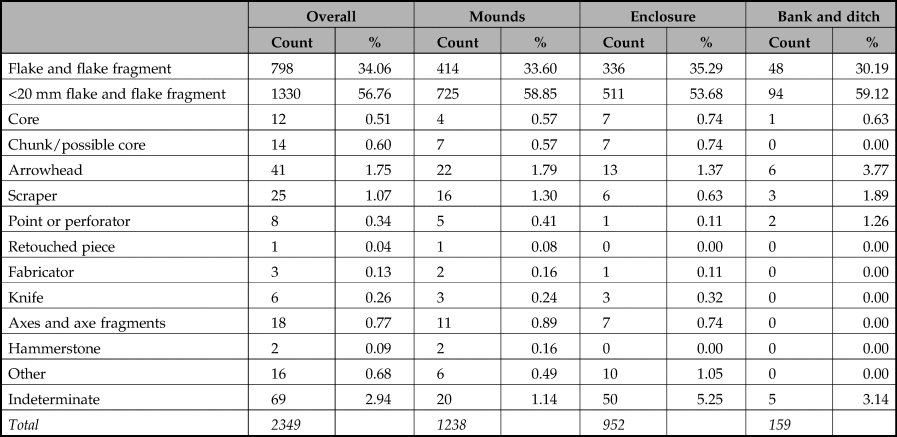
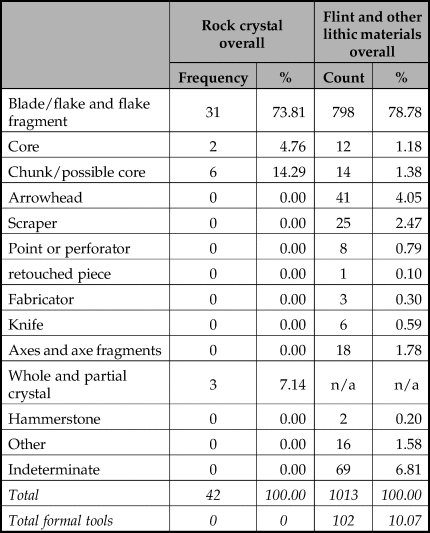
The flint assemblage, like the rock crystal, was largely dominated by small flakes, which, with the presence of cores, indicate flint was reduced on site, but also modified to create ‘formal’ tools (Table 3). After the removal of the smallest flake/flake fragment category, cores make up 1.8 per cent of the flint assemblage, but 4.7 per cent of the rock crystal assemblage, possibly indicating more on-site knapping of the latter. The two assemblages also contrast in the frequency of formal tools; a total of 102 formal tools were recovered from the Dorstone Hill sites, representing 4.4 per cent of the total assemblage, or 10.1 per cent after the removal of the smallest category of debitage (see Tables 3 & 4). In contrast, the rock crystal assemblage contained no formal tools, retouched pieces, or pieces with macroscopic edge-use, and the crystals continued to be reduced after the point at which the removals would have been a usable size. Among the flint, some of the formal tools, notably the axes, almost certainly arrived at the site as finished pieces; however, the scrapers, perforators, fabricators, knives and some of the arrowheads were made on larger flakes of the same dark grey flint that dominates the assemblage. Furthermore, the arrowheads of a different type of flint appear to be accompanied by debitage to suggest they, too, could have been made, or at least finished/repaired, on site. Therefore, while both flint and rock crystal were being brought to Dorstone Hill and reduced there, the rock crystal, transported from much greater distances, was not being used to make any formal tools, nor were the removals being used in any utilitarian way.
Overall quantities of chipped stone (all materials) from Dorstone Hill.
Comparison of rock crystal and flint and other lithic material assemblages (with smallest debitage category removed).
Working rock crystal at Dorstone Hill
The unique six-sided hyaline form of rock crystal affords the opportunity to establish a detailed sequence and directionality of crystal reduction at Dorstone Hill and as such provides the first detailed account of rock crystal reduction in a British or Irish context. A total of 60 specimens exhibited crystal edges (Table 2), with 33 of these specimens exhibiting only one face, and a further 27 exhibiting 2 or more faces. Given the specific morphology of the tip, body and base crystal faces (see above), it is possible to identify the specific faces in 28 of these pieces (Table 2). In a number of pieces, the crystal face morphology indicated the location of the piece more precisely within the parent crystal, allowing the reduction to be characterized further in a number of ways.
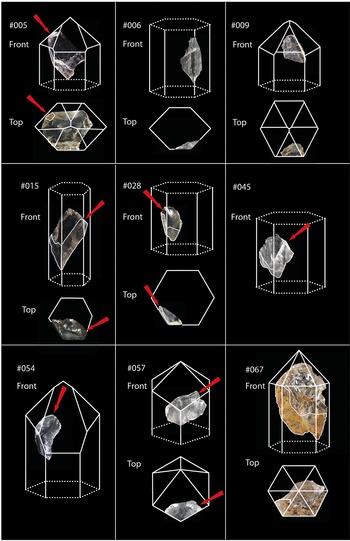
Firstly, a total of 14 pieces could be located precisely within the parent crystal (Table 6), which allowed the direction of crystal reduction to be established. When orientated within the crystal, 13 of these pieces had dorsal surfaces facing the crystal tip end, indicating a reduction sequence that began at the tip end, while a single specimen evidenced base-first reduction. The clearest examples of the tip-first reduction are two pieces which used platforms on the pyramidon to take a removal down the point faces (#009 and #054). A further three pieces (#005, #057 and #067) had been struck from platforms within the point area of the crystal, with the removals running down through the point-body boundary (see Figure 6). Finally, the larger of the two cores (#017) exhibits natural edge morphology to suggest it may be from the base of a crystal, indicating this is the exhausted remnant of a crystal reduced from the tip.
Pieces that evidence position within the crystal and direction of removal.
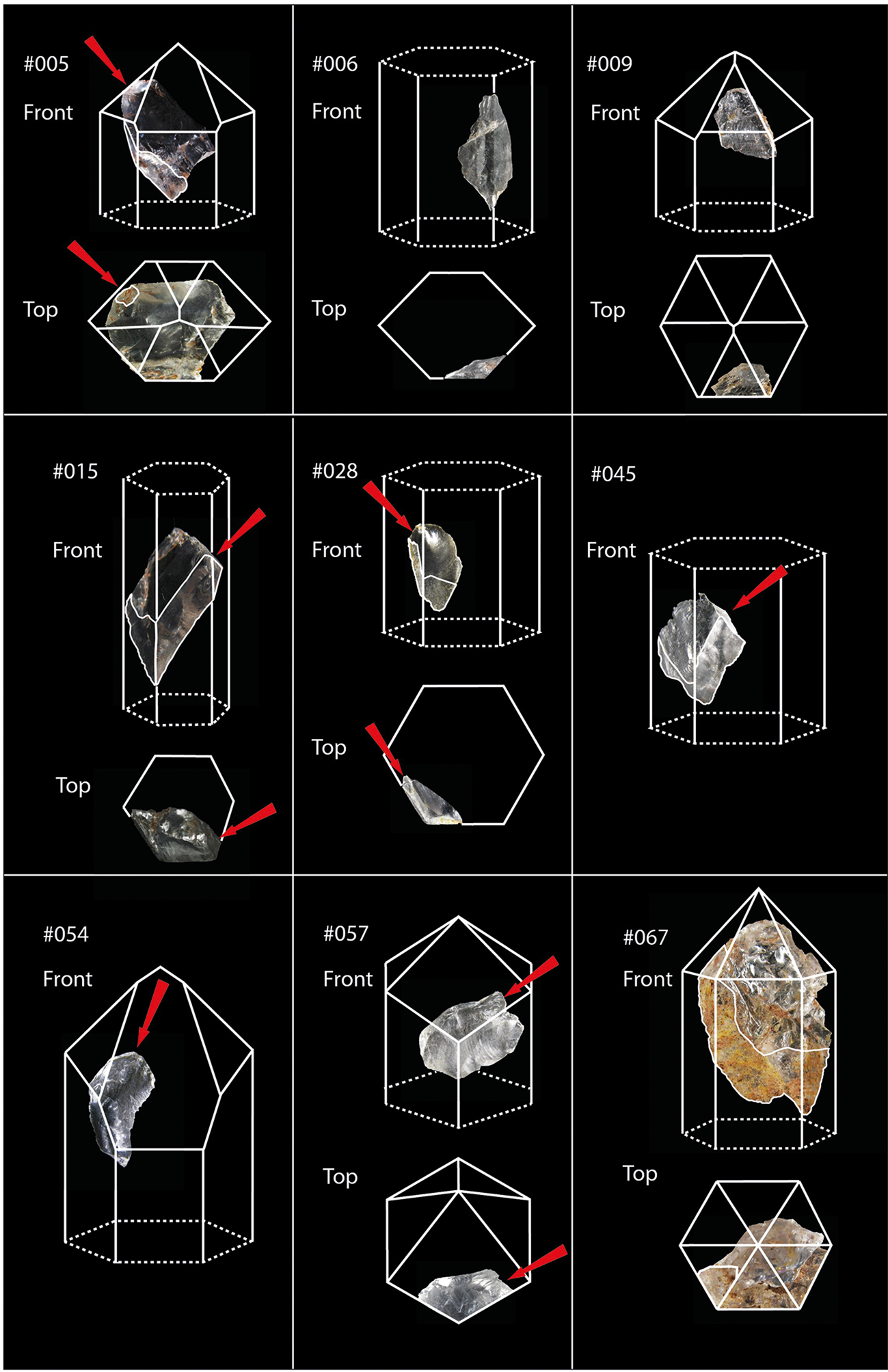
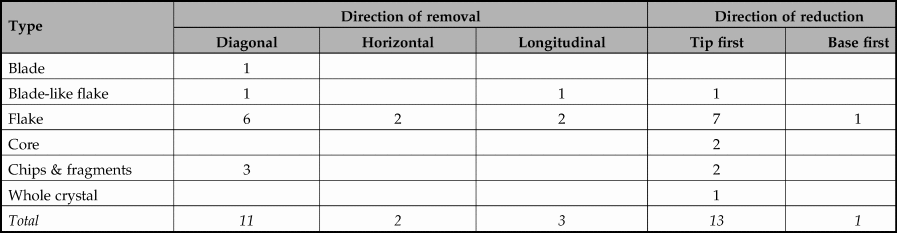
Secondly, 16 pieces, when orientated within the parent crystal, evidenced the direction of their removal (Table 5, Fig. 6). 11 were removed diagonally to the longitudinal axis of the parent crystal, two were removed horizontally and three were removed longitudinally. The vertical removals had at least one natural crystal surface, and appear to have been attempts to remove the outer edge of the crystal; these pieces exhibited a lower quality of crystal, which is most likely to be a product of the anisotropic nature of the material, inhibiting fracture along the longitudinal axis of the crystal (cf. Tardy et al. Reference Tardy, Vosges and Varoutsikos2016).
Quantification of pieces with direction of removal from the crystal (relative to the parent crystal longitudinal axis), and direction of crystal reduction identified.
Thirdly, of the 62 specimens exhibiting evidence of previous removals (Table 6), the majority (40) presented dorsal scarring characteristic of systematic reduction. Of these, 28 pieces exhibited evidence of systematic unidirectional reduction (use of the same platform for multiple previous removals), with lower numbers of pieces showing truncated scarring from other directions. Based on the attributes used to determine reduction strategies relating to flint, the nature of the bulbs of force suggests direct percussion, and their diffuse appearance might indicate the use of a soft hammer (Whittaker Reference Whittaker1994, 180, 187ff, fig. 8.8). This contrasts with other assemblages that have undergone detailed technological analysis from Spain and Greece (Rodríguez-Rellán Reference Rodríguez-Rellán2016; Tardy et al. Reference Tardy, Vosges and Varoutsikos2016), where the use of pressure techniques as well as direct percussion in working this material is documented. The striking platforms are narrow, and some have tiny remnants of crystal faces, indicating the use of the natural crystal edge as a platform. Distal terminations tend to be broken, but where surviving they often overshoot, following the inherent properties of the crystal; this tends to corroborate the use of a soft hammer as it is similar to that known to occur on thinning flakes in bifacial reduction (Whittaker Reference Whittaker1994).
Character of reduction process, distributed by piece ‘type’. Note that all pieces under 10 mm are recorded in the ‘chips and fragments’ category.

The evidence indicates a systematic and established process of crystal reduction at Dorstone Hill; the sequence began with whole crystals, which were reduced from the tip using the sub-90° angle of the pyramidon as a suitable platform. Once past the point region of the crystal, the body of the crystal was then reduced systematically by taking multiple removals primarily diagonally across the longitudinal axis of the crystal, with a smaller number of pieces being taken horizontally or vertically, the latter to remove the natural crystal edges. The full reduction sequence ended (in at least some cases), with an ‘exhausted’ crystal that took the form of a bifacially worked ‘core’ from the base of the crystal. The predominance of diagonal tip-first removals suggests that the knappers were familiar with the properties of the rock crystal, starting reduction from the isotropic pyramidon, before following the diagonal cleavage planes in the anisotropic body of the crystal (cf. Rodríguez Rellán 2016, fig. 1; Tardy et al. Reference Tardy, Vosges and Varoutsikos2016, fig. 15). This tip-first approach is generally similar to the method suggested by Fernández-Marchena and Ollé (Reference Fernández-Marchena and Ollé2016), where the crystal is ‘beheaded’ to create a platform from which bladelets would be struck by direct percussion using the facets of the crystal edge as guides; however, the Dorstone material differs in that it demonstrates reduction, as opposed to removal, of the tip, and diagonal reduction, as opposed to more longitudinal reduction for bladelets. The systematic reduction sequence of rock crystal contrasts with the reduction of flint at the site, which is more ad hoc in character, using both hard and soft hammer, including changes in orientation of the core during reduction. This more opportunistic approach may be the result of the small size of nodules being worked at the site; however, this too draws contrasts with the rock crystal, which was as small, if not smaller, yet worked in a systematic way.
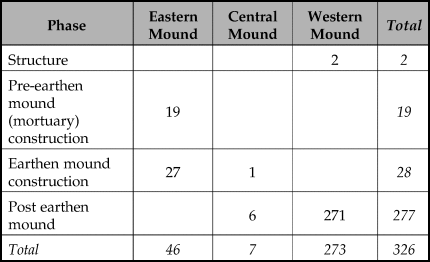
This systematic approach to working the material at Dorstone Hill is further reinforced by the distribution of the rock crystal across the multi-monument complex. Rock crystal was recovered across all three mounds, and the causewayed enclosure (Table 7), however, these are not all contemporary. The structural phases of the mounds have produced dates indicating construction in the thirty-ninth or thirty-eighth century bc (Ray & Thomas Reference Ray, Thomas, Barclay, Field and Leary2020, 109), and a new radiocarbon measurement (Table 8) from a post-mound pit on the southern edge of the western mound, sealed by eroding mound material, indicated the mounds were most likely constructed by the thirty-eighth or mid thirty-seventh century bc. This pit was notable for containing 267 rock crystal specimens from either an in situ knapping event, or a deliberate deposition of knapping debris probably from a single event (see discussion below). The causewayed enclosure has returned dates of 3770–3640 cal. bc for the earliest phase, and 3630–3530 cal. bc for the latest phase of activity (Overton et al. Reference Overton, Ray, Thomas and Last2022, 48). Rock crystal was recovered from secure contexts in the pre-mound, mound and post-mound phases (Table 7), and from primary and recut ditches in the causewayed enclosure, indicating a prolonged engagement with this material, potentially spanning the thirty-ninth to thirty-sixth centuries cal. bc.
Distribution of all rock crystal specimens in primary contexts within the Eastern, Central and Western mounds, divided by construction phase.
Radiocarbon measurement from western mound pit [518]. Calibrated using OxCal 4.4 IntCal 20 curve (Reimer et al. Reference Reimer, Austin and Bard2020).

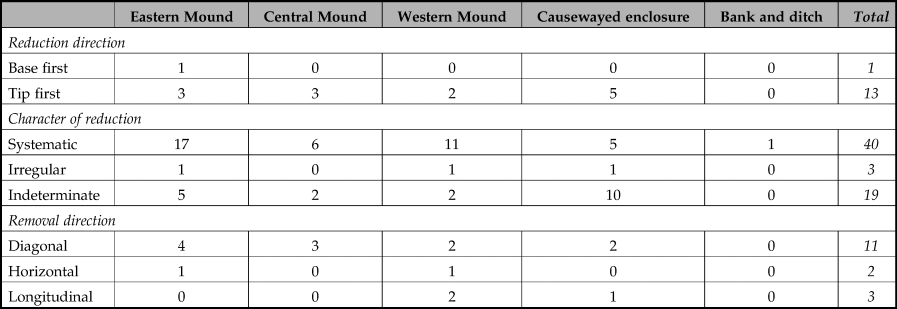
Given this temporal spread, the character of the assemblages are notably similar; flakes are the most frequent removal type, followed by blade-like flakes across the mounds and enclosure (Table 1). The only notable difference is the presence of whole crystals, partial crystals and ‘chunks’ at the causewayed enclosure, but not the mounds. These pieces, either complete crystals full of flaws, or small ancillary crystals probably removed from larger crystals prior to working, suggest materials may have been ‘tested’ at the enclosure prior to working, whereas ‘pre-tested’ crystals were introduced to the mounds. However, the presence of cores and large and small removals at both mounds and enclosure indicate this material was actively knapped at all four monuments. More significantly, when the reduction sequence is examined in more detail (Table 9), the tip-first systematic reduction, primarily focusing on diagonal removals, is present at all three mounds and the enclosure. This helps to confirm that this was an established and specific way of working this material, which persisted at Dorstone Hill for generations, and possibly centuries.
Summary of technological process within each monument sub-assemblage.
Taken all together, the technological analysis indicates a very specific and distinctive set of practices related to rock crystal at Dorstone Hill. While all knappable material had to be introduced to the site, the rock crystal was a rare exotic, transported over substantial distances. At the site both rock crystal and flint were reduced; however, in contrast to the ad hoc flint reduction, working rock crystal followed a systematic process, informed by knowledge of its material qualities. Furthermore, this approach to rock crystal persisted for many generations, an established way of working this material, which was transmitted across generations as a set of skills, knowledges and practices. The distances involved in moving this material to Dorstone, the skill and knowledge bound into this established and systematic tradition of working and the maintenance of this practice over generations are all the more striking given the fact that this material, in direct contrast to flint, appears not to have been used to make any artefacts or tools. It was the material, and the practice of working it, which was significant; the intention to combine the material, the site, and a particular way of working it, but with no ‘final product’, indicate it was the moment of working itself that was the intended outcome. This can be explored further by examining how the resultant pieces from these events were treated through deposition.
Deposition of rock crystal at Dorstone Hill
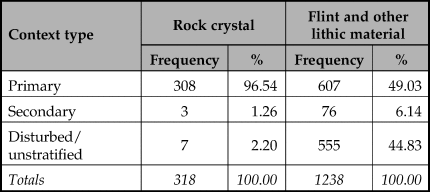
Of the 337 rock crystal specimens recovered from Dorstone Hill, the majority (318) were retrieved from within or very close to the three long mounds, while 18 came from the Causewayed Enclosure and a single specimen came from beneath an Iron Age/Roman earthwork (Table 1). In the Causewayed Enclosure, rock crystal was recovered from upper ditch fills, which could not be confidently identified as in situ, and most likely represented silting events which incorporated material from surface middens within the enclosure (cf. Overton et al. Reference Overton, Ray, Thomas and Last2022). Within the mounds, 96.54 per cent of the rock crystal recovered was recovered from primary contexts (Table 10), including pits dug along the southern edge and into the body of the Western and Central mounds, the ditch surrounding the mortuary enclosure, and within deposits making up the mound. The remainder were recovered from secondary contexts (1.26 per cent) and topsoil or disturbed contexts (2.20 per cent) relating to the bulldozing of the mounds in the twentieth century. In contrast, 49.03 per cent of the flint and other lithic artefacts were recovered from primary contexts in the mounds, including fills of pits, post-holes and deposits making up the mound structure, with 6.14 per cent from secondary contexts and 44.83 per cent topsoil or disturbed contexts. The higher proportion of flint and other lithic materials recovered from disturbed contexts is probably the result of more of these materials being deposited into the upstanding mound layers, which were later bulldozed.
Frequency of rock crystal and other lithic material from primary, secondary and disturbed contexts in the mounds.
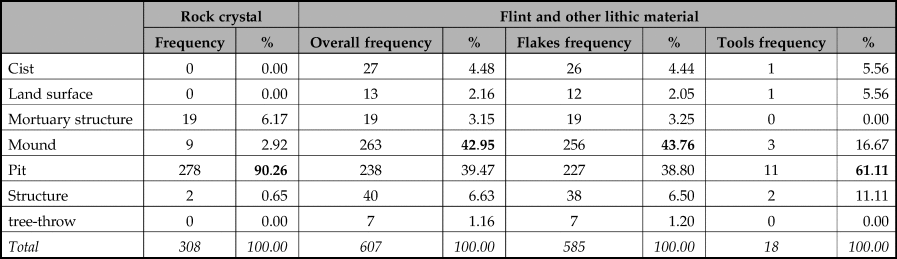
The distribution of rock crystal and lithics within primary contexts exhibits a number of important patterns relating to the specific depositional contexts of these materials. Both materials were recovered from structural post-holes, pits dug after the initial construction of the Western and Central earthen mounds ([518], [136] and [528]), pits dug into the top of the Western and Central mounds ([557] and [110]), the ditch surrounding the mortuary structure, and deposits forming the body of the earthen mounds (see Figure 4). Additionally, flint was recovered from buried soil beneath the mound, tree throws and a number of stone-lined cists cut into the mounds. The distribution of this material over the different features shows that rock crystal was overwhelmingly deposited within pits, whereas the majority of flint was deposited relatively equally across pits and mound deposits (Table 11: Overall frequency). Furthermore, when the flint assemblage is split into flakes and formal tools, over 60 per cent of formal tools are recovered from pits. This indicates that, while flakes were present across the site, formal tools were being intentionally selected for deposition in pits, a pattern echoed in the deposition of rock crystal (albeit even more strongly with the latter). It must be noted that while in situ contexts were sieved on site, using a 0.8 mm dry sieve, sediment samples from pit [518] were wet-sieved through a 0.05 mm mesh, which recovered large numbers of very small rock crystal and flint fragments (267 rock crystal and 175 flint). This has inflated the frequency of flint and rock crystal flakes/debitage from pits; with the [518] material removed, 60 per cent of the flint flakes are within mound deposits and 46 per cent of rock crystal is from the mortuary structure ditch, with a further 27 per cent from pits. However, even though the lack of wet-sieving across the site has led to a possible under-representation of micro-debitage across the site, it does not affect the recovery of much larger formal tools, indicating the focus of formal tools within pits is a genuine pattern, and not a product of recovery bias.
Distribution and frequency of rock crystal and other lithic material from primary contexts in the mounds.
The deposition of both rock crystal and formal tools made of flint and other lithic material is particularly associated with mortuary contexts, both in the form of graves and more broadly in reference to the long mounds. In pit [136], a cremation grave, five large flakes of rock crystal, including the largest pieces in the assemblage (#004) and a flake from the crystal tip (#009) (see Figure 5) were deposited alongside cremated bone, beneath a charred plank. The crystal and bone were accompanied by two flint leaf-shaped arrowheads, a transverse arrowhead, one flake from a greenstone polished axe, one scraper, one serrated flake (both flint) and 53 sherds of prehistoric pottery. In pit [518], another deposit of cremated bone was accompanied by a flint perforator, three rock crystal flakes, and 268 pieces of rock crystal and 175 pieces of flint micro-debitage (recovered through wet sieving). Further cremation deposits in pit [110] and within the mortuary structure ditch were also accompanied by rock crystal and a few flint flakes. Pits without cremated bone also contained notable material; pit [528] on the south edge of the Western mound contained a single rock crystal flake and six flint flakes, pit [557], cut through the Western mound into its burnt core, contained the largest rock crystal ‘core’, a flint scraper and three burnt chips, and pit [102], cut through the Eastern mound over the top of the mortuary structure, contained two polished axes and a bifacially flaked knife and debitage. These pits show the intentional selection of specific materials and artefacts, either as grave goods when associated with cremated bone, or as deposits venerating the mounds. Notably, rock crystal was selected as suitable for these deposits alongside other artefacts, even though it was not used or modified into tools. This further supports the interpretation that the material produced from knapping rock crystal was seen as significant in its own right and was perhaps the intended product from working (in contrast to flint, where the products were transformed into tools).
A number of these pits are also materially tied to moments of transformation. Multiple pits contained cremated remains, the product of dramatic and transformative processes; in the case of the mortuary chamber ditch, the rich charcoal and bone deposit was laid down directly before the chamber and ditch were backfilled and may be made up of the cremated remains of bodies taken out of the chamber before it was decommissioned. In pit [102], the knife was deposited alongside debitage which appears to be related to its production, suggesting this piece was made specifically for deposition. Pit [136] contained the fragments from breaking ceramic vessels and flaking of a polished stone axe. In pit [518], the micro-debitage of flint and rock crystal was the result of either knapping directly into the pit, or the deliberate collection and deposition of knapping debris, probably from a single event (cf. Kadowaki et al. Reference Kadowaki, Nagai, Nishiaki, Nieuwenhuyse, Bernbeck, Akkermans and Rogash2013, 154). This was deposited alongside large quantities of charcoal from a range of taxa; Corylus avellana (hazel), cf. Frangula alnus (alder buckthorn), Maloideae (apple, pear, hawthorn, service tree, rowan, whitebeam), Populus/Salix (poplar/willow), Quercus sp. (oak) and Sambucus nigra (elder). Notably, there was little oak and much of the charcoal derived from roundwood fragments of small diameter. This type of fuelwood would provide a relatively fast heat, typically used for domestic fires, but would not easily provide the high, sustained heat required for human cremation. The general paucity of oak is unusual, given that oak–hazel woodland was prevalent in the Dorstone area in the Neolithic and there is little evidence for significant woodland clearance until the Early Bronze Age (Garwood Reference Garwood and Watt2011). The charcoal from [518] came mostly from scrub or hedgerow taxa, which could have been sourced from the immediate environs of the site. Poplar, willow and alder buckthorn, however, favour wet ground habitats and are more likely to have come from the valley bottom. This combination of a range of species from a range of environs again suggests the intentional selection of materials; in later periods, certain woods have special associations: hazel and elder, for instance, have traditionally been used in England to ward off evil (Watts Reference Watts2007), and it is not inconceivable that the selection of wood for fuel in the Neolithic was neither purely accidental nor solely functional, but may have had symbolic meaning. Smoke and fire are associated with cleansing and purification rituals in many societies, with both the act of burning and the production of the ashes being significant (Chadwick Reference Chadwick2012; Kaliff Reference Kaliff and Insoll2011).
Therefore, rock crystal was one of a suite of materials being intentionally selected for deposition in pits and negative features across the mounds; these materials can be understood as votive or venerative ‘gifts’, but they were also significant as a result of the transformative events they were involved in before deposition. However, rock crystal should not be understood as interchangeable or synonymous with other selected materials and artefacts. In total, 95 per cent of rock crystal pieces were deposited in association with cremated bone deposits, in comparison to 35 per cent of flint flakes and 39 per cent of formal tools. This clearly demonstrates that rock crystal, over other materials, was being intentionally selected and deposited with cremated bone deposits, citing a specific link between this material, the transformative moments of working it, and the cremated remains of the dead.
The significance of rock crystal at Dorstone Hill, and Neolithic Britain and Ireland
At Dorstone Hill, people had a lasting association with rock crystal; it was transported large distances to the site, it was worked in a systematic manner that remained a feature of local practice for generations, yet it was not used in any utilitarian way. Instead, the products of knapping events were intentionally collected and deposited, alongside other notable materials and artefacts, in mortuary contexts. Here, we argue that the material's significance, which led to its specific treatment, related to its origin, its character, and subsequently its role in producing distinctive and memorable events at Dorstone Hill.
The rock crystal at Dorstone Hill could only have originated from a very limited number of sources, all of which are substantial distances away from the site. The most likely sources are Snowdonia in north Wales, or St David's Head in southwest Wales, although Cornwall and sources further afield remain a possibility (see The rock crystal assemblage section, above). However, the presence of rock crystal and early Neolithic timber buildings/halls at both Dorstone Hill and the northwest Welsh sites of Llandegai I and II, Parc Cybi and Llanfaethlu (see Supplementary material) suggest Snowdonia may be the most likely source (which can be tested in the future following recent sourcing studies: Hess Reference Hess, Cooney, Kelly, Mallia-Guest and Gilhooly2020; Sachanbiński et al. Reference Sachanbiński, Girulski and Bobak2008); whatever its origin, rock crystal would have been notable as an exotic at Dorstone Hill. However, exotics do not need to be understood as significant simply because of the distance between their source and the site from which they are recovered. Nyland (Reference Nyland2020) argues that materials, and in particular certain types of rock, including rock crystal, may have held a certain ‘charisma’, anchored in the landscape or place from which it was obtained. This is very similar to the idea that the distinctive blue-grey volcanic tuff from Great Langdale in the Lake District used to make Neolithic group VI polished stone axes (also recovered at Dorstone Hill) was perceived as powerful or significant, as a result of the dramatic and awe-inspiring landscape and towering rock faces from which it was quarried (Bradley & Edmonds Reference Bradley and Edmonds1993). Similarly, Fowler and Cummings (2003) suggest white quartz in Neolithic monuments in the Irish Sea region was significant due to its connections with water and its liminal or transformative character. Therefore, the subterranean caves, shimmering veins, mountainous surroundings or dramatic coastal headlands offered by Snowdonia (or perhaps St David's Head) can be thought of as conferring a dramatic flavour to rare and exotic rock crystal, which was subsequently treated as significant as a result of its association with specific, affective places.
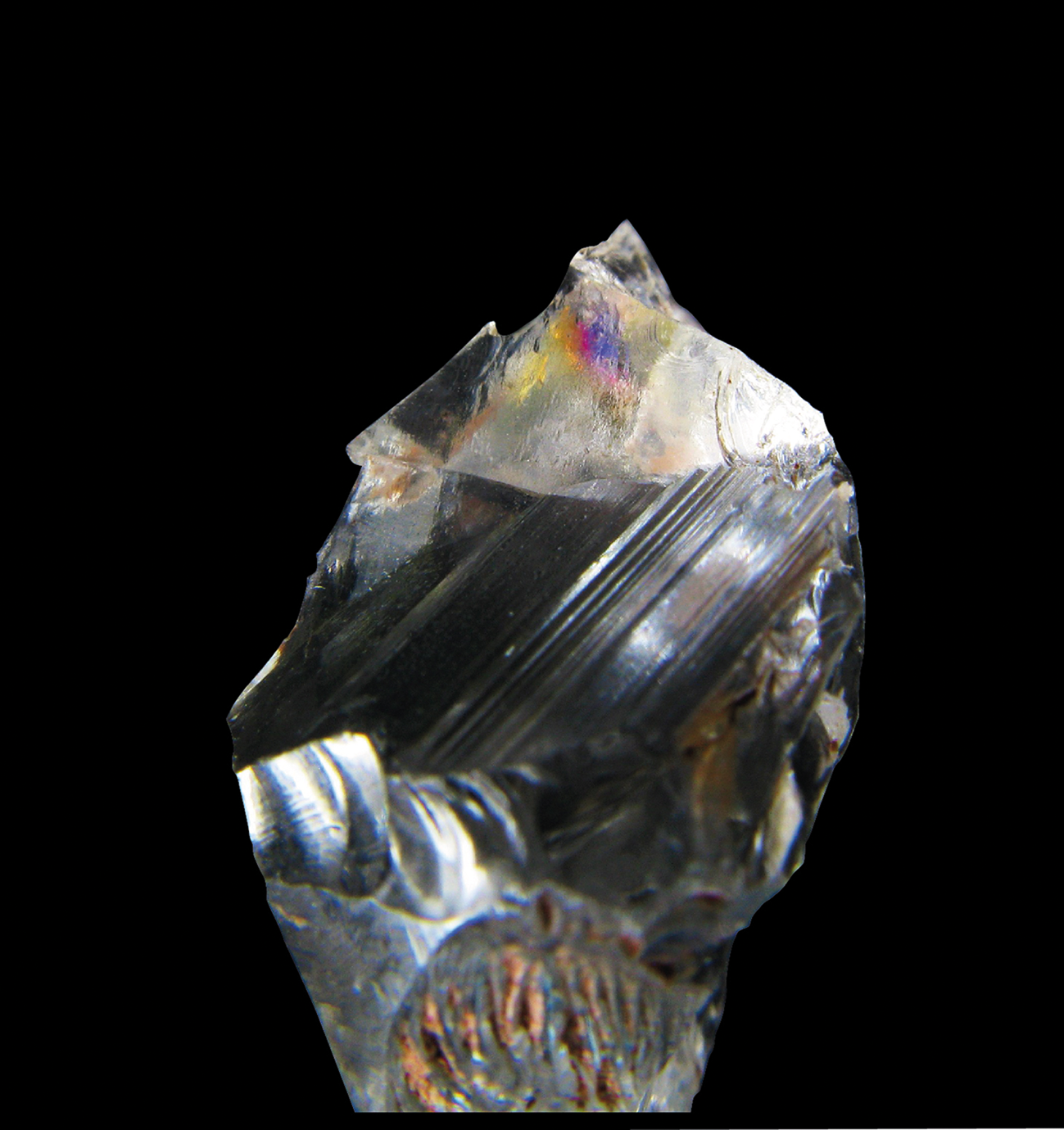
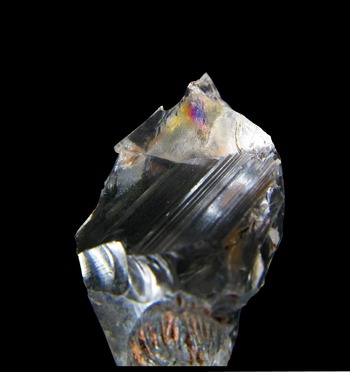
It has previously been noted by several authors that quartz may have been understood in British prehistoric contexts as important or significant in non-utilitarian terms, for its aesthetic, symbolic, totemic, or ontological value (Ballin Reference Ballin2008, 9, 44; Noble et al. Reference Noble, Greig and Millican2012, 144; Reynolds Reference Reynolds2009). As Kenney (Reference Kenney2008a: 24) has noted, in a world without glass, water-clear quartz crystals must have seemed like a remarkable material. Whole crystals also have refractive properties, splitting white light into its spectrum of constituent colours. On Jura, Ballin (Reference Ballin2008, 60) has suggested that quartz may have been valued for its reflective and refractive qualities over its use as a raw material for tools, while the presence of a quartz crystal at Achnacreebeag in association with ceramics with ‘rainbow’ motifs is suggested to make a direct reference to the refractive abilities of this material (Sheridan Reference Sheridan, Barclay, Field and Leary2020, 179; see also Cassen Reference Cassen, Boujot and Vaquero2000). At Dorstone Hill, the clarity and transparency would have made this material distinctive from other lithic materials, or solid materials in general. Specimen #017, the larger of the two cores, has a small internal structure within the crystal that, when rocked back and forth in the light, is illuminated by a rainbow flash (see Figure 7). A second piece, (#018), a flake full of micro-cracks, shimmers with dancing lines of rainbow as light hits the internal fracture planes within it. These add an extra dimension to the visually arresting character of this material; it may be no coincidence that both specimens were selected for depositions in pits [110] and [557], which cut through the mound into its burnt core. Furthermore, quartz is also triboluminescent, which means it emits lights when two pieces are rubbed or struck together (Whitley et al. Reference Whitley, Dorn, Simon, Rechtman and Whitley1999, 236), which has been argued to be a significant aspect of its use at other Neolithic sites (Reynolds Reference Reynolds2009). Tribological analysis offers a potential avenue to examine this further in future research (Stemp et al. Reference Stemp, Watson and Evans2016, inter alia). These characteristics would have made the working of rock crystal a highly distinctive and special event, in turn making the products, the flakes, the cores and the debitage, equally significant, not as ‘waste’, but as important in their own right.
Specimen #017, exhibiting the refractive qualities of a small internal structure within the crystal.
The distinctive and exotic character of rock crystal at Dorstone Hill would have made moments of working this material significant events; the technological and distribution evidence demonstrates that these events were undertaken in very specific ways, and deposition was almost always in mortuary contexts, with close association to the cremated remains of the dead. In a number of societies, quartz crystals play significant roles in peoples’ lives; Australian aboriginal groups understand rock crystal as ‘solidified light’, spiritually charged with power and associated with ancestral beings (Eliade Reference Eliade1967b, 177; Taçon Reference Taçon1991, 198). Animist groups in the Amazon consider quartz as ‘living rock’, with special healing properties (Reynolds Reference Reynolds2009, 154) and pre-Columbian groups placed a cosmological significance on it due to its light-capturing qualities (Mökkönen et al. Reference Mökkönen, Nordqvist and Herva2017; Nyland Reference Nyland2020). More significantly, a number of societies harness the distinctive characteristics of rock crystal within ritualized practices; several indigenous groups in California used quartz tools for rituals such as blood-letting or to cut the umbilical cord of newborns (Hess Reference Hess, Cooney, Kelly, Mallia-Guest and Gilhooly2020, 295; Kroeber Reference Kroeber1976, 45,), while the Luiseño and Chumash affix crystals to shafts to create ceremonial batons (Hess Reference Hess, Cooney, Kelly, Mallia-Guest and Gilhooly2020; Hudson & Blackburn Reference Hudson and Blackburn1986, 255; Kroeber Reference Kroeber1976, 45). The Hopi and Zuni of North America and the Tukano of South America harness the triboluminescence of quartz in rain ceremonies, banging crystals together to mimic lightning, or making rattles containing crystal fragments, which would flash, and even ignite their organic container, leading to an understanding of quartz as being alive (Ball Reference Ball1941, 31; Hess Reference Hess, Cooney, Kelly, Mallia-Guest and Gilhooly2020; Reichel-Dolmatoff Reference Reichel-Dolmatoff1997; Roediger Reference Roediger1941, 146). In Animist and Shamanic societies, such as the Yuman-speaking groups of the Colorado Valley and the Nuuchah-nulth of Vancouver Island, quartz crystals are linked to the transformation and powers of shamans (Drucker Reference Drucker1951, 169; Eliade Reference Eliade1967a, 233; Reference Eliade1967b, 162; Hess Reference Hess, Cooney, Kelly, Mallia-Guest and Gilhooly2020; Levi Reference Levi1978; Reynolds Reference Reynolds2009, 159).
This is not to argue that any of these are suitable parallels for Dorstone Hill in the British Neolithic, however, they do foreground the way that the unique properties of rock crystal can be harnessed to create distinctive moments or events. At Dorstone Hill, the working of this material, associated with dramatic places, and affording experiences of its unique transparent, refractive and triboluminescent properties, would act to disrupt everyday life, creating memorable moments for those in attendance (cf. Hamilakis Reference Hamilakis2014). The close association between rock crystal and cremated bone suggests that the distinctive crystal qualities were being employed by people at Dorstone Hill to mark the passing of individuals, or the transformation of bodies, binding the people present together through shared experience, and ensuring the deceased remained alive in the memories generated. Furthermore, the continued presence of rock crystal and Dorstone Hill over many generations, from the timber structures through to the causewayed enclosure, and the adherence to a specific way of working it, which became part of local practice or tradition, would have made rock crystal and the practice of working it a key aspect of local identity. The intentional deposition of rock crystal with the remains of the dead can be seen as a recognition of the shared identity that bound the living and the dead together through their knowledge and use of rock crystal at Dorstone Hill. Given the unsecure contexts of the material from the Causewayed Enclosure, it is difficult to gain a clear picture of how it was being used there; however, the technological evidence indicates the methods of working were continued, and the material remained an element of local identity.
The use and role of rock crystal more widely within Neolithic Britain and Ireland is a topic requiring much more research, and the significance of the material at Dorstone Hill is not suggested to be relevant per se to material at other sites. However, the distribution of Neolithic sites with rock crystal does show a concentration in northwest England, northwest Wales and Ireland, with a notable association with early Neolithic timber halls (see Supplementary data). While the connection between early Neolithic architecture and material culture has already been made between Irish and north Wales sites (e.g. Rees & Jones Reference Rees and Jones2015), the presence of both rock crystal and timber halls at Dorstone Hill may suggest this is a wider pattern in the west of Britain and Ireland, echoing the significant use of white quartz around the Irish Sea during the Neolithic outlined by Fowler and Cummings (Reference Fowler and Cummings2003). The identification by the authors of another relatively large rock crystal assemblage from a suspected longmound within 20 miles of Dorstone Hill, and the material from Parc le Breos chambered tomb (Whittle & Wysocki Reference Whittle and Wysocki1998, 145) indicate that Dorstone Hill is not an isolated example in this region. Given the rarity of rock crystal, the presence of a network of sites, including a number which are long distances from potential sources, offers a clear opportunity to explore the movements and connections of Neolithic groups in the west of Britain in the first centuries of the Neolithic. Furthermore, given the role that rock crystal played in the mortuary practices and identity at Dorstone Hill, studies of the ways in which rock crystal was worked, used and deposited at other sites would provide a more detailed understanding of the roles this material played in people's lives, and their local and regional identities during the start of the early Neolithic in Britain and Ireland.
Supplementary materials
Supplementary materials may be found at https://doi.org/10.1017/S0959774322000142
Acknowledgements
The authors would like to thank the Royal Archaeological Institute for providing funds to obtain the radiocarbon measurement presented in this paper, and Oliver Harris and Jim Leary for supporting this application. We would also like to thank all members of the Dorstone excavation team, including students from the Universities of Manchester, Cardiff and Leicester, our volunteers, and the local Dorstone community, without whom this project would not have been possible. Thanks also go to Tom Cotterell from the National Museum Wales for a number of informative discussions on rock crystal and a range of published and unpublished material, and to Stephen Poole for information regarding material from the Pennines. Finally, thanks to the editor, and two anonymous reviewers for their comments, which greatly improved the final version. All errors are our own.






 Open access

