


Introduction
Conceptual confusion in the social sciences – and certainly in political science – is a major source of difficulty in both theory and empirical analysis. The literature is replete with concepts that are applied inconsistently. This in turn influences the coherence of research and the cumulation of findings in the study of politics.Footnote 1
On one level, these problems may be seen as deriving from a straightforward failure to specify the relationship between “term” and “meaning,” involving confusion about concepts. Scholars are sometimes inconsistent in their own usage, or they simply fail to grasp the definitions employed by other researchers. These problems, in all likelihood, are not inherently irresolvable, although their resolution can be hindered by the sometimes surprising disregard for conceptual issues among some important social science methodologists.Footnote 2
Beyond this question of conceptual confusion, another issue must be addressed, that is, conceptual contestation. The strong normative valence associated with some concepts,Footnote 3 often combined with other considerations, motivates users to strongly prefer a particular meaning.Footnote 4 They may energetically defend their own usage, whereas others will contend that an alternative usage is correct – hence the idea of a contested concept. Examples of such concepts are democracy, justice, rule of law, citizenship, war, genocide, abortion, rape, and hate crime.
With the goal of addressing these issues, W. B. Gallie introduced the idea of “essentially contested concepts” in an essay of that title published in 1956.Footnote 5 This essay is the central focus of the present chapter. His ideas are likewise developed in “Art as an Essentially Contested Concept,”Footnote 6 published in the same year, and a few refinements in his arguments are included in his subsequent book, Philosophy and Historical Understanding.Footnote 7 Gallie offers an explicit definition, along with seven criteria for identifying, understanding, and reasoning about such concepts. He thereby provides a basis for exploring the connections between the normative focus of these concepts and a series of other characteristics.
According to Gallie’s definition, an essentially contested concept “inevitably involves endless disputes about their proper uses on the part of their users.” The seven criteria are identified throughout his essay with Roman numerals: (I) their appraisive character, (II) internal complexity, (III) diverse describability, (IV) openness, (V) reciprocal recognition of their contested character among contending parties, (VI) an original exemplar that anchors conceptual meaning, and (VII) progressive competition, through which greater coherence of conceptual usage can be achieved.
Gallie’s framework has attracted wide attention over the intervening decades. A substantial body of scholarship has sought to evaluate, apply, and frequently critique his approach, offering wide ranging evaluation of his overall idea and the seven criteria.Footnote 8
The objective of this chapter is to explore basic questions about Gallie’s contribution. Is his overall framework helpful in evaluating conceptual disputes? How useful are his criteria, and what are the interrelationships among them? How valuable are the insights that emerge when the framework is applied to particular concepts? Both Gallie himself, and subsequent commentaries on his contribution, have expressed concern that the approach can encourage a conceptual relativism that is undesirable and destructive. Does this in fact occur?
The answers to these questions underscore the abiding value of Gallie’s contribution. Notwithstanding important criticisms focused on parts of his framework, and notwithstanding some inconsistencies within the framework, it provides a major set of tools for understanding and analyzing concepts.
This chapter first presents a close examination of Gallie’s framework and the commentaries on it. The second part then considers the application of Gallie’s framework in two areas of research, involving the concept of democracy, as it has recently been employed in the comparative politics literature; and the “rule of law,” as it was evoked in legal debates over the 2000 presidential election in the US. These two extended examples provide an opportunity to examine on a more concrete basis the critiques and debates stimulated by Gallie’s approach.
A final introductory point should be underscored – one that must be evident to most readers, but that merits emphasis. This focus on the normative content of concepts should not be seen as a dramatic shift in relation to standard concerns of empirical social science. Rather, it reflects a frank recognition that research in the social sciences routinely has a normative component. Normative concerns are variously understood as playing a role in judgments about what themes are important, the corresponding choice of topics for study, the analytic framing of these topics, and the kind of evidence that is relevant in studying them. Analyzing Gallie and the debate on his framework provides an opportunity to reflect on the intersection of normative and empirical concerns in conventional political research.Footnote 9 In Table 10.1 at the end of this chapter, the arguments covered in the main body of the text are summarized schematically. In the table, observations made by the authors of this chapter are indicated by their initials, CHM.
| Overall Framing of Gallie’s Approach | |
|---|---|
| Gallie | Commentators |
| Goal. To provide a rigorous, systematic framework for analyzing contested concepts. |
|
Definition. Concepts that “inevitably involve endless disputes about their proper uses on the part of their users.”
|
|
| Hypothesis versus Framework. Refers to his approach as a hypothesis and an explanation. Also refers to “schematization” and to a set of “semiformal conditions.” |
|
| Domain. Exclusively concerned with the domain of scholarship. |
|
a “CHM” indicates the authors of this article: Collier, Hidalgo, and Maciuceanu.
| Gallie’s Seven Criteria | |
|---|---|
| Gallie | Commentators |
I. Appraisiveness. “Signifies or accredits some kind of valued achievement.” Term that refers to the concept is an “achievement word.”
|
|
| II. and III. Internal Complexity and Diverse Describability. These two criteria are tightly interrelated: internal complexity makes it likely that users will view/describe a concept in different ways. |
|
|
|
IV. Openness. Meaning is subject to periodic revision according to context.
|
|
V. Reciprocal Recognition. Contending parties recognize contestation and also their opponents’ use of the concept.
|
|
VI. Exemplars.Footnote b “Authority is acknowledged by all the contestant users.”
|
|
| Overall Framing of Gallie’s Approach | |
|---|---|
| Gallie | Commentators |
|
|
VII. Progressive Competition. Contestation might raise the “level of quality of arguments in the disputes of contestant parties.”
|
|
b The label in Gallie’s text is “original exemplar.” “Exemplars” is employed here and in the text to accommodate both the narrower and broader views, with the latter sometimes encompassing the idea of multiple exemplars.
Gallie’s Contribution: Overview and Commentaries
Overall Framing of Gallie’s Approach
Central to Gallie’s approach is his overall goal; his definition of essentially contested concepts; the question of whether his approach is a hypothesis or a framework; and the specific domain to which his framework should be applied.Goal. Gallie is quite explicit about his goal: he seeks to construct a more coherent and rational foundation for the discussion of complex concepts.
Since the Enlightenment a number of brilliant thinkers seem positively to have exulted in emphasizing the irrational elements in our thinking. My purpose in this paper has been to combat, and in some measure correct, this dangerous tendency.Footnote 10
He seeks to show:
in the case of an important group of concepts, how acceptance of a single method of approach – of a single explanatory hypothesis calling for some fairly rigid schematization – can give us enlightenment of a much needed kind.Footnote 11
Yet Gallie acknowledges risks, recognizing that “spokesmen of Reason have always brought peril as well as light to their hearers.”Footnote 12 Thus,
It may be complained that despite all its references to “reasonableness” … this paper is only a disguised betrayal of reason, a further contribution to … the new obscurantism.Footnote 13
Both the optimistic and pessimistic views have found resonance with commentators on Gallie. According to Newton Garver, “Gallie means to counter the prejudice, easily engendered by a simplistic empirical or scientific outlook, that any concept which cannot be clearly and unambiguously applied is bound to be confused. Essentially contested concepts are neither.” Rather, through his analysis, Gallie “seeks to provide order and structure to a particular sort of adversarial discourse.”Footnote 14
On the other hand, John N. Gray’s criticism is harsh: “It follows that any strong variant of an essential contestability thesis must precipitate its proponents into a radical (and probably self-defeating) skeptical nihilism.”Footnote 15 This approach “proffers a philosophically partisan understanding of the character of the dispute itself,” thereby being “deeply and radically nonneutral.”Footnote 16 Gray expresses concern about the “moral relativism” and “conceptual relativism” of Gallie’s approach.Footnote 17 “Gallie’s claim that concepts are essentially contested in virtue of their norm-invoking functions effectively precludes debates about these concepts from susceptibility to rational settlement.”Footnote 18
Barry Clarke’s critique is equally pointed the idea of essentially contested concepts does not move the discussion in a productive direction:
the notion of an essentially contested concept is radically mistaken. It is possible to make sense of the notion of an essentially contestable concept, but only at the cost of introducing a radical relativism into all discourse using such disputable concepts. Consequently, any one idiosyncratic usage of an essentially contestable concept would be as valid as any alternative idiosyncratic usage.Footnote 19
In our view, this concern with relativism is reasonable if concept analysis has the prescriptive goal of establishing unambiguous meanings. However, if the goal is to give a realistic account of complex concepts and their dynamic patterns of change, Gallie’s framework remains a benchmark in the development of alternative approaches to analyzing concepts.
Definition.
At one level, Gallie’s definition is brief and clear: essentially contested concepts “inevitably involve endless disputes about their proper uses on the part of their users.”Footnote 20 It is this definition per se, rather than any of the seven criteria, which explicitly states that the concepts are, in fact, contested.
Along with this concise formulation, Gallie introduces two additional elements that make the definition more complex, and that must be sorted out. First, he offers a distinction between concepts that are “contested,” as opposed to “contestable.”Footnote 21 With the latter, one might expect contestation, yet it is not occurring at the time the concept is analyzed. This outcome potentially reflects what will be discussed later as “decontestation,” and it complicates the task of distinguishing contested from noncontested concepts.
Some commentators on Gallie likewise employ the term “contestable,” and in one instance they intend the same distinction that Gallie introduces. In other instances, it is not clear that this is the case, but their labeling nonetheless points in the same direction and again suggests the difficulty of distinguishing contested from noncontested concepts.Footnote 22 To use one criterion from Gallie’s own framework, we would therefore argue that the category of “contested concepts” is “open.”
A second complicating element is that Gallie at one point refers to Criteria I to V as “establishing the formally defining conditions of essential contestedness.”Footnote 23 Yet, as will be demonstrated later in the discussion of specific concepts, these criteria may or may not be met even for concepts widely recognized as contested. We find it more productive to think of his criteria not as standing in a well-established definitional relationship to one another, but rather in a relationship that varies somewhat with the distinct constellations of features that characterize each concept.
In conjunction with these contrasting perspectives on definition, it is productive to ask, overall, how many concepts are encompassed in alternative understandings of Gallie’s idea of essentially contested concepts. Jeremy Waldron, on the one hand, expresses concern that “the use of this term has run wild.”Footnote 24 On the other hand, Gallie offers a surprisingly – indeed, unconvincingly – restricted list in one of his summary statements, where he excludes such major concepts as science, law, liberty, and government.Footnote 25 Between these extremes, we would reiterate that the category of essentially contested concepts is open, and that the application of Gallie’s definition and his framework should be governed by whether they yield useful insight into the concept at hand.
Hypothesis versus framework.
Up to this point the term “framework” has been used to characterize Gallie’s overall set of arguments. However, early in his article Gallie refers to his approach as an “explanatory hypothesis,”Footnote 26 and he employs different forms of the term “explain” as he summarizes his approach.Footnote 27 The assertion that Gallie offers a hypothesis is repeated by some authors who have discussed his contribution.Footnote 28
The idea of a hypothesis or explanation is certainly relevant in some respects. One can hypothesize that appraisiveness, internal complexity, and diverse describability partially explain the contestation of these concepts. However, the idea of a hypothesis may in part be misleading because it implies, overall, that Gallie’s approach is either right or wrong. It can also raise the expectation that all of his seven criteria should prove correct, both for the analysis of a particular concept and for analyzing concepts in general.
For this reason, it appears more productive to label Gallie’s set of ideas as an analytic framework – that is, a set of interrelated criteria that serve to illuminate important problems in understanding and analyzing concepts. Gallie elsewhere adopts similar terminology by calling his approach a set of “semi-formal conditions” and a “schematization.”Footnote 29 Like any framework or schematization, it should probably be judged by its overall utility, and not by whether one element or another appears to be correct – as would be suggested by the idea of a hypothesis. Indeed, it might be implausible to expect that all elements are salient or correct all of the time.
Domain. Gallie delimits the domain of his concerns, arguing that his discussion is focused on the role of essentially contested concepts in philosophical and scholarly thinking, and not in real-world politics.Footnote 30
Commentators, however, extend their focus beyond this domain to encompass the world of real politics. Waldron analyzes the “rule of law” as it emerged as an issue in the contested 2000 presidential election in the US.Footnote 31 Robert Grafstein views the political character of some concepts as crucial to understanding forms of contestation. Michael Freeden sees the domains of real politics and scholarship as tightly interrelated, but he also makes a key distinction between them: The prospects for resolving conceptual disputes, he believes, are greater in the latter. For present purposes, Gallie’s framework will be treated as relevant to both domains.Footnote 32
Gallie’s Seven Criteria
I. Appraisiveness.
An essentially contested concept “signifies or accredits some kind of valued achievement.”Footnote 33 As Gallie puts it, the term that refers to the concept is an “achievement word.”Footnote 34 And indeed, it is highly plausible that the positive normative valence attached to these concepts is important in spurring debates over their meaning. Two paradigmatic examples of this positive valence offered by Gallie are democracy and social justice. With regard to democracy, Gallie states that:
The concept of democracy which we are discussing is appraisive; indeed many would urge that during the last one hundred and fifty years it has steadily established itself as the appraisive political concept par excellence.Footnote 35
Most commentaries on Gallie do not dispute that the concepts under discussion are appraisive, yet they introduce three clarifications that usefully extend Gallie’s discussion. First, William Connolly underscores the fact that designating a political system as a democracy is both to “ascribe a value to it,” but also very crucially to describe it. Freeden makes this same point by observing that along with the complex issues of normative appraisal, essentially contested concepts do indeed refer to “brute facts.”Footnote 36 Second, appraisiveness encompasses not only positive valuation but also negative valuation, a point with which Gallie would probably not have disagreed, but that he simply failed to discuss.Footnote 37 Finally, for some major concepts the normative valence may be unclear and may depend on the theoretical framework employed, or on the specific context in which the concept is applied.Footnote 38
Beyond these specific arguments about appraisiveness, we would reiterate the observation made in the introduction. Working with Gallie’s framework does indeed present an opportunity to explore the normative component of political research, at the same time that this exploration is linked to a spectrum of other issues concerning the formation and application of concepts.
II. Internal complexity and III. Diverse describability.
These two criteria are tightly interrelated:Footnote 39 the internal complexity of a concept makes it plausible that different users may view, or describe, its meaning in different ways. In fact, this outcome may or may not occur – hence the label “describability,” rather than description. This distinction is parallel to the contrast drawn by Gallie (noted earlier) between contested and contestable.
Gallie summarizes these two criteria as follows. With an essentially contested concept, the “achievement must be of an internally complex character.” It includes a variety of possible components or features – although “its worth is attributed to it as a whole.” Further, the concept is “initially variously describable,” with the consequence that, a priori, “there is nothing absurd or contradictory” in the existence of alternative meanings.Footnote 40 Diverse describability may involve an exclusive emphasis on one or another facet of the concept. Alternatively, as Gallie points out, different facets may be emphasized to varying degrees, involving contrasting relative importance.Footnote 41
These two criteria, as with appraisiveness, are illustrated in reference to the concepts of social justice and democracy. Social justice is variously understood, according to Gallie, in terms of a liberal conception, concerned with individual freedoms; and what might be thought of as a social democratic conception, concerned with providing to the population “the necessities of a worthwhile human life, and the distribution of products to assure such a life.”Footnote 42 Like justice, democracy has multiple internal components. Three of those emphasized by Gallie are majority rule, equality in the right of all citizens “to attain positions of political leadership and responsibility,” and “the continuous, active participation of citizens in political life at all levels, i.e. … self-government.”Footnote 43 This internal complexity in turn makes it likely that different users of the concept will characterize – or describe it – in different ways.
Among the commentators, Grafstein explicitly endorses Criteria II and III as highly salient.Footnote 44 Some authors recognize their importance, but also emphasize that the salience of these criteria can be mitigated. Thus, as will be discussed in the next section, Christine Swanton maintains that it is possible to judge some meanings as better than others,Footnote 45 Norman S. Care offers the idea of “practical closure,”Footnote 46 and Freeden develops the idea of “decontestation.”Footnote 47 All of these could mitigate diverse describability. Nonetheless, there is little overall disagreement that this criterion (diverse describability), as well as Criterion II (internal complexity), are important.
We would underscore a further point about internal complexity. The claim that a concept is internally complex is meaningful only if the different components are indeed part of the same concept. The idea of a “cluster concept” is sometimes evoked to underscore the claim that these components do, in fact, belong together in a single concept. If, by contrast, the concept is “over aggregated” – that is, it brings together elements that are only loosely related to one another – then it is appropriate to “disaggregate” the concept, which may eliminate, or drastically reduce, internal complexity. The decision to carry out disaggregation is complex, and in the extended example provided later that is focused on the concept of democracy, we do not consider it justified. But in discussions of Gallie’s Criterion II (internal complexity), the possibility that one is working with an over-aggregated concept must be recognized.
IV. Openness.
Essentially contested concepts are viewed as open in their meaning, that is, subject to periodic revision in new situations. The “accredited achievement must be of a kind that admits of considerable modification in the light of changing circumstances; and such modification cannot be prescribed or predicted in advance.”Footnote 48 In discussing the openness associated with the concept of democracy, Gallie observes that
democratic targets will be raised or lowered as circumstances alter, and democratic achievements are always judged in the light of such alterations.Footnote 49
Further, Gallie discusses how advocates’ preferred conceptualization interacts with the changing context. Conceptual competitors must consider altered circumstances when defending their own version. New circumstances may be unfavorable to dominant conceptualizations, but advocates may effectively adapt to preserve their preferred conceptualization.Footnote 50
Most commentators on Gallie have affirmed the importance of openness. Regarding the overall significance of this criterion, Alasdair MacIntyre views openness or “essential incompleteness” as a key factor that produces essential contestability. Nonetheless, various commentators argue that openness may sometimes be superseded.Footnote 51 Norman Care points to the possibility of “practical closure,” or “temporary closure,” that may be achieved even in the absence of absolute, objective solutions to debates about concepts that are essentially contested. Even if practical closure does not preclude periodic revisions, it nevertheless suggests that “at least for a time,” openness can be partially overcome. Indeed, without such closure, we cannot “answer for ourselves certain of the basic questions about the character of our institutions and practices.”Footnote 52 Relatedly, Gray argues that taxonomies developed within well-defined scholarly frameworks may not be characterized by openness.Footnote 53
With the idea of “decontestation,” Freeden offers a valuable perspective on openness. Just as concepts can be contested, they can also be decontested, in that they achieve a stable meaning within a given framework. Freeden introduces this idea of decontestation in his analysis of “ideologies,” which can be understood both as constellations of ideas that are ideologies as conventionally found in the real world of politics, and also as interrelated systems of meaning that are the conceptual frames of scholarly usage.Footnote 54 Freeden carefully presents the idea of decontestation as an element within his approach to analyzing ideologies. Specifically,
ideologies need, after all, to straddle the worlds of political thought and political action, for one of their central functions is to link the two. The political sphere is primarily characterized by decision-making, and decision-making is an important form of decontesting a range of potential alternatives.Footnote 55
Beyond Freeden’s specific formulation, in discussions of contested concepts the idea of decontestation can usefully be understood in a broader sense as well, involving a variety of circumstances under which contestation may be reduced or mitigated. This broader usage will occasionally be followed later.
V. Reciprocal recognition.
This criterion presumes that contending parties acknowledge the concept’s contested character. To some extent, they recognize their adversaries’ use of the different facets of the concept – for example, of social justice and of democracy as discussed earlier – that guide their respective applications. Thus,
to use an essentially contested concept means to use it against other uses and to recognize that one’s own use of it has to be maintained against these other uses. Still more simply, to use an essentially contested concept means to use it both aggressively and defensively.Footnote 56
In subsequent commentaries, some scholars have accepted the idea of reciprocal recognition. Kenneth Smith finds that disputants may recognize and accept that they are using similar concepts in different ways, involving “mutually contested concepts,” rather than essentially contested concepts. Grafstein argues that the political character of certain concepts leads to an explicit contest among rival users.Footnote 57
Others, however, have questioned the relevance of this criterion. Freeden argues that it is irrelevant to essential contestedness, because analysts often employ concepts in a way that may simply differ from another usage, without framing their usage vis-à-vis an alternative meaning.Footnote 58 Proponents of a particular conceptualization may not explicitly acknowledge contending variants of the concept, thus violating this criterion. Rather than question a concept’s status as essentially contested, scholars seeking to apply Gallie’s framework should recognize that this criterion is not always pertinent.
VI. Exemplars.
The role of exemplars in Gallie’s framework has generated much confusion. This is due, in part, to his own terminology and to inconsistencies in his presentation. In fact, he employs this idea both narrowly – in the sense of an original exemplar – and broadly. To better encompass these diverse meanings, in this and subsequent sections we employ the label “exemplars,” recognizing that Gallie’s label in his own text is “original exemplar.”
In Gallie’s narrower understanding of exemplars, the contested concept is seen as anchored in an original exemplar whose “authority is acknowledged by all the contestant users.”Footnote 59 The link to the original exemplar plays a crucial role in allowing analysts to distinguish between essentially contested concepts and confused concepts. Confused concepts involve disagreements in which the same term refers to two different ideas. The original exemplar anchors the concept, and the issue is therefore not a simple matter of confusion, but rather contestation over the same concept. This idea of a specific exemplar is reinforced by his use of the singular article – that is, “an” exemplar – as if it were indeed one instance;Footnote 60 and also by his specific reference to the French Revolution.Footnote 61
Gallie also presents a broader understanding of exemplars. He notes the “internally complex and variously describable” nature of the exemplar, arguing “it is natural that different features in it should be differently weighted by different appraisers.” And to this he adds that “acceptance of the exemplar’s achievement must have that ‘open’ character which we have ascribed to every essentially contested concept.”Footnote 62 Thus, according to Gallie, an exemplar can assume many different forms, including “a number of historically independent but sufficiently similar traditions,” and he makes clear that “the vagueness of this tradition in no way affects its influence as an exemplar.”Footnote 63
Steven Lukes advances an understanding of exemplars that is parallel to Gallie’s broader framing, in that Lukes focuses on multiple, specific instances that constitute the concept’s common core. With regard to power, the concept he analyzes and describes as essentially contested, there are “standard cases of the possession and exercise of power about which all will agree.”Footnote 64 Lukes mentions several paradigmatic examples of power, including the rule of master over slaves, the political influence of US steel in the 1960s, and the fictional dystopia of Aldous Huxley’s Brave New World.Footnote 65
Critics who have focused on Gallie’s narrower framing of the exemplar have understandably expressed concern about his approach. Ernest Gellner, for instance, claims that “Gallie is, implicitly, betraying his own idea: he talks as if, behind each essentially contested concept, there was, hidden away in some platonic heaven, a noncontested, unambiguously defined and fully determinate concept or exemplar.”Footnote 66 Similarly, Freeden criticizes the narrow version of Gallie, arguing that “the postulation of such an exemplar is in effect inimical to the very notion of essential contestability, as it presumes an agreed or correct position from which deviations have occurred.”Footnote 67
Other authors in effect acknowledge Gallie’s broader understanding of the exemplar; but this leads them to express concern that if the exemplar is indeed internally complex, variously describable, and “open,” it is unlikely that all parties will acknowledge its authority.Footnote 68 It is therefore unclear how it functions as an exemplar. Whereas the challenge that basically focuses on the narrow understanding misses an important part of Gallie’s argument, this second critique is more telling.
A useful response is to return to Lukes’ view: The common core is centered on multiple, paradigmatic examples that do, in fact, anchor the concept. Correspondingly, as noted earlier, “exemplars” is used in the present article to label this component of Gallie’s argument.
VII. Progressive competition.
Gallie argues that a consequence of ongoing conceptual disputes “might be expected to be a marked raising of the level of quality of arguments in the disputes of the contestant parties.”Footnote 69 In fact, as with the role of exemplars just discussed, Gallie offers a narrower and a broader understanding of progressive competition. In the narrower version, this criterion specifically involves achieving more complete agreement about the original exemplar.Footnote 70 He thus focuses on whether “continuous competition … between contestant users of the concept … enables the original exemplar’s achievement to be sustained and/or developed in optimal fashion.”Footnote 71 Given the issues just raised about the original exemplar, the meaning of this stipulation is ambiguous.
The broader framing, which omits reference to the original exemplar, appears more promising.Footnote 72 Gallie admits that “a general principle may be unobtainable for deciding, in a manner that would or might conceivably win ultimate agreement, which of a number of contested uses of a given concept is its ‘best use.’” Nonetheless, “it may yet be possible to explain or show the rationality of a given individual’s continued use (or in the more dramatic case of conversion, his change of use) of the concept in question.”Footnote 73
Some commentators defend the idea of progressive competition. As noted earlier, N. Garver strongly praises Gallie for his effort to provide order and structure to a particular sort of adversarial discourse.Footnote 74 Swanton maintains that despite the internal complexity and diverse describability of contested concepts, it is in fact possible to judge some meanings as better than others, and hence possible to move beyond relativism.Footnote 75 Norman Care argues that practical closure benefits social inquiry, and he supports the view that achieving shared understandings of social science concepts does indeed contribute to conceptual coherence in research.Footnote 76 For Freeden, of course, decontestation occurs within specific ideologies or conceptual frameworks.Footnote 77
Ian Shapiro, while implicitly rejecting Gallie’s overall approach, does point to an avenue for the progressive clarification of concepts. Shapiro is concerned that Gallie’s framework can only produce endless conceptual debates. The focus should instead be on “substantive interdisciplinary knowledge” of the domains to which the concepts apply. For example, the concept of “freedom” must refer concretely to “enabling and restraining conditions” that shape the degree of latitude, or freedom, that individuals experience in their lives. Correspondingly, “many, if not most, of the politically charged questions about freedom” will be substantive, empirical ones that cannot be resolved without this interdisciplinary knowledge.Footnote 78 Progressive clarification – which is, to reiterate, the goal of Criterion VII – should be possible, but it requires attention to these empirical issues, and not simply to concept analysis.
By contrast, other scholars strongly question Gallie’s claim that conceptual disputes can lead to an improved quality of argumentation. They express concern that opposing positions may be poorly argued and outside the bounds of reasonable discussion. Eugene Garver writes that “there are some – perhaps too many – cases in which dignifying one’s opponent by treating opposition as competition over an essentially contested concept would be foolish. Charity in interpretation is not an unconditional duty.”Footnote 79 Garver goes on to quote Aristotle’s argument that addressing such opponents “can only result in a debased kind of discussion.”Footnote 80 Similarly, Freeden maintains that conceptual debates may be of poor quality and they may impoverish rather than enrich the contested concepts. Hence, these debates may be regressive and part of the concept’s meaning may be lost or abandoned.Footnote 81
Gray takes the discussion in a related but somewhat different direction, finding that a belief in progressive competition conflicts with the normative source of disputes, that is, the criterion of appraisiveness. For Gray, the strong normative resonance of essentially contested concepts results in divergent, intractable positions and values, precisely those not conducive to standardization or harmonization through continued debate.Footnote 82
We would add that whether progressive competition is possible and valuable must be assessed in part on the basis of concrete examples. In the extended example presented on the rule of law, there is some division among commentators, but Waldron makes a strong case that progressive competition has occurred. The extended discussion of democracy considers a related pattern of progressive cooperation among scholars. These examples illuminate Gallie’s Criterion VII, which on another level can and should also be evaluated in terms of more generic criteria.
Two Applications: Democracy and the Rule of Law
To place this discussion of Gallie’s framework on a more concrete basis, the following sections apply it to two examples: “democracy,” as it has been employed in the field of comparative politics in political science; and “rule of law,” as analyzed by legal theorist Jeremy Waldron, and specifically as employed in discussions of the legal crisis surrounding the 2000 US presidential election.Footnote 83 These examples illustrate the application of Gallie’s criteria, as well as the interplay between the views of scholars and of political actors.
The Comparative Politics Literature on Democracy
Research on democracy encompasses a large body of scholarship. Gallie provided detailed arguments as to why democracy is an essentially contested concept, and studies of democracy continue to demonstrate the relevance of his ideas.
Fitting the definition: An essentially contested concept? Gallie’s own discussion of democracy certainly suggests that it fits the category of an essentially contested concept, and there would appear to be little disagreement on this point. However, this opinion is not unanimous. One interesting dissent is presented in David Beetham’s outstanding book on Defining and Measuring Democracy. Focusing on alternative definitions, Beetham writes of the
enormous variety of such definitions in the literature of recent political theory, and the disagreement which has surrounded them. Some would even put democracy into the category of “essentially contested concepts” … In my judgment, the extent and significance of such disagreements has been greatly exaggerated.Footnote 84
Although this chapter of Beetham’s book is carefully argued, and though it is certainly possible for the idea of contested concepts to be overused,Footnote 85 we would question this assessment. A substantial degree of decontestation (in the broader sense) has occurred in current research on democracy, as will be emphasized later. Yet there has been great change in meaning and contestation over time, and there is no reason to assume that such contestation will not arise again in the future. Thus, as originally emphasized by Gallie, democracy appears to stand as a contested concept.
I. Appraisiveness.
Gallie was very much on target in calling democracy “the appraisive concept par excellence.”Footnote 86 Major works on democracy by Robert Dahl and Giovanni Sartori, as well as Guillermo O’Donnell and Philippe Schmitter,Footnote 87 begin with strong statements that a central motivation in studying democracy derives from its positive normative valence.Footnote 88 But the appraisal is not always positive. Huntington and Rosanvallon have convincingly traced the varying normative assessment of democracy, pointing to a negative valuation in the West during important parts of the nineteenth century and at key points in the twentieth century.Footnote 89
II. Internal complexity and III. Diverse describability.
As employed in the comparative politics literature, democracy meets Criteria II and III. The complexity of the concept comes out clearly, for example, in O’Donnell and Schmitter’s four dimensions of liberalization, encompassing (1) civil liberties; (2) democratization, in the specific sense of meaningful electoral competition with universal suffrage, and fair and open elections; (3) democratization of social institutions and economic processes; and (4) democratization in the sense of the extension to citizens of substantive benefits and entitlements.Footnote 90
In order to label different combinations of these four postulated dimensions, scholars often create new terms. Many have qualified the noun democracy, yielding a proliferation of “democracy with adjectives.”Footnote 91 In O’Donnell and Schmitter’s analysis, examples of democracy with adjectives that reflect these four dimensions include political democracy, limited political democracy, popular democracy, social democracy, and socialist democracy.Footnote 92
Analysis of these dimensions raises again the issue of disaggregation. How do we know that they are components of the same concept? Perhaps these are really four different phenomena that should be conceptualized separately; that is, the liberalization of national political regimes, the democratization of these regimes, the democratization of social institutions and economic processes at a more microlevel, and the extension to citizens of substantive benefits and entitlements. In the literature on national political regimes, it has certainly been argued that concepts may become more analytically useful when they are disaggregated.Footnote 93 Perhaps it is most productive to conceptualize these components separately, rather than as aspects of democracy.
We would argue that disaggregation is often useful, but this does not undermine Gallie’s overall argument as applied to the body of research under discussion here. This literature is indeed about democracy, and the scholars and political actors of concern here do indeed think of the struggles in which they are involved as being about democracy. Of course, this concept does have multiple components. Some components are emphasized more than others by certain authors, and some components may appear to be more or less relevant in particular contexts. But these are routinely conceptualized as facets of democracy.
IV. Openness.
Here again, as noted earlier, Gallie’s language is vivid: “democratic targets will be raised or lowered as circumstances alter, and democratic achievements are always judged in the light of such alterations.” In the field of comparative politics, carefully analyzing diverse conceptualizations of democracy across contexts, and establishing analytic equivalence, is a challenge of wide concern.
A central aspect of openness is change over time in the political, economic, and social systems being compared. The fundamental shifts in the meanings and normative valence of democracy in the West, traced by Rosanvallon and Huntington through the nineteenth and twentieth centuries, are substantially linked to the emergence over many decades of a middle class, the rise of industrial society, and the appearance of the working class as a major political actor. In the second half of the nineteenth century, for example, the term democracy was commonly used in characterizing regimes that maintained property requirements for voting, that did not encompass the working class in the electoral arena, and that – given exclusion of women from voting – certainly lacked universal suffrage.
Another example is the challenge of comparing democracy in the late nineteenth century and the latter part of the twentieth century. The specific arguments examined in Ruth Berins Collier’s study of the working-class role in democratic transitions and in Bruce Russett’s study of the democratic peace hypothesis undertake comparisons of democracies and democratic transitions in the two eras.Footnote 94 By the standard of the late twentieth century, there were no democracies in Europe in the late nineteenth century – in part because of the limited suffrage in the earlier period. Yet these scholars identify cases in this earlier period that are appropriate to include in the comparison, given the frameworks employed by these analysts. Rather than apply the same standard for democracy in both periods, these authors focus on whether a country is democratic by the norms of that historical period. Recognizing that empirically democracy has a different meaning in the two eras, they adapt their comparison accordingly.
Openness is also an issue in comparisons among countries. One example arises in the analysis of some Latin American regimes that might initially have been presumed democratic. However, owing to the continuing power of the military, the traditional oligarchy, or external economic and political actors, it appears that the elected government did not to a reasonable degree have authority to rule. In light of this issue, some scholars have revised their definition of democracy, establishing a new cut-point according to which these countries are not treated as such.Footnote 95
In all of these examples, “democratic targets” have indeed been adjusted to changed circumstances, to state this in Gallie’s own language.
V. Reciprocal recognition.
The relevance of this criterion is illustrated in both the political and scholarly domains. In the political sphere, a suggestive example is the debate between the government and the opposition in Pinochet’s Chile. Pinochet called Chile a “protected democracy,”Footnote 96 a label intended to characterize the Chilean regime as far less harsh than was widely believed. This label was obviously adopted in recognition of the larger debate on democracy at that time, in Latin America and beyond. By contrast, both domestic and international opponents of Pinochet (including the pope) referred to the regime as “dictatorship.”Footnote 97 Pinochet, in turn, strongly protested such descriptions. He “railed at critics who accused him of operating a ‘fascist dictatorship.’”Footnote 98
Later, with the end of the Pinochet period, some commentators were concerned that the military retained excessive influence, to a degree that impugned the democratic character of the new regime. Some employed Pinochet’s label, calling Chile a “protected democracy.”Footnote 99 Of course, Pinochet’s use of this term conveyed his view that between 1973 and 1990 Chile was closer to being a democracy than critics recognized. By contrast, in the post-1990 period, analysts used this same term to underscore their view that Chile was further from being a democracy than some commentators maintained. Notwithstanding the extreme conflict that characterized the Pinochet period, opponents were thus to some extent able to recognize their adversaries’ use of the concept.
In the sphere of scholarship, reciprocal recognition may be found in a context as obvious as book reviews. Reviews of O’Donnell and Schmitter’s volume debated their use of a procedural definition of democracy.Footnote 100 Arthur MacEwan raises standard concerns about alternative meanings of democracy, arguing that it is essential to develop a more complete conceptualization and analysis of the interconnections between political democracy, on the one hand, and economic and social democracy, on the other.Footnote 101 Daniel Levine points to similar themes, and further argues that the procedural conceptualization of democracy is too much influenced by a concern with promoting transitions to democracy, and insufficiently concerned with recognizing that the meaning of democracy depends centrally on the ideals and struggles of those who promote it.Footnote 102 Revisiting the O’Donnell–Schmitter text, it is evident that they had considered these alternative conceptualizations, but chose not to adopt them.Footnote 103 Thus, rather than talking past one another, these analysts are to some degree making choices among a mutually recognized set of alternatives.
VI. Exemplars.
The idea of exemplars, in its narrower version of the original exemplar discussed earlier, on occasion is relevant to the concept of democracy. Athenian democracy is evoked in discussions of the New England town meeting,Footnote 104 and in the current debate in the US on deliberative democracy.Footnote 105 At certain points in the evolution of French political thought, Athens has been a relevant exemplar, although much of the time it has not.Footnote 106
The widely discussed international diffusion of democracy certainly reflects the role of exemplars in the broader sense – although the impact of these exemplars must be demonstrated through careful empirical assessment.Footnote 107 The idea of “waves” of democracy illustrates a global version of this perspective.Footnote 108 On the other hand, many relevant exemplars have been proximate to the cases under consideration – temporally or spatially, or in terms of established patterns of international communication. Thus, presidential democracy in the US has certainly been an important exemplar in Latin America, as has British parliamentary democracy for many former British colonies.
Not only established democracies, but also transitions to democracy, can be exemplars. Schmitter, building on Laurence Whitehead’s analysis, observes that
The successful example of one country’s transition establishes it as a model to imitate and, once a given region is sufficiently saturated with this mode of political domination, pressure will mount to compel the remaining autocracies to conform to the newly established norm.Footnote 109
For instance, in Latin America in the 1980s, the prior democratization of Portugal, Spain, and Greece was certainly an inspiration. And one can find negative as well as positive exemplars. The difficult and prolonged democratic transition in Brazil, extending from the 1970s well into the 1980s, may have discouraged those promoting democratization in Argentina, and possibly also in Chile. Further, while many political actors in South America – as well as scholars concerned with the region – found much to admire in the Nicaraguan Revolution launched in 1979, they specifically did not see it as the appropriate model for South America. They were convinced that following the Nicaraguan path had a high likelihood of triggering a regression to the military authoritarianism from which they were trying to escape. For this reason, Nicaragua was a negative exemplar.
VII. Progressive cooperation as a variant of progressive competition.
Progressive competition entails the idea that reciprocal recognition among contending users of a concept may possibly lead to improving the quality of arguments. Among Gallie’s critics, this criterion has been met with substantial skepticism, with a number of commentators convinced it does not occur.
This section discusses a particular – and possibly more plausible – form that progressive competition may take, which we will call progressive cooperation. Within the democracy literature this pattern encompasses some sharp shifts in focus, but maintains continuity in analytic concerns on a broader level. In other words, there is sufficient continuity that the concept may be seen as decontested (in the broader sense), yet with important shifts in meaning and application. This is in effect a case of cooperation among successive scholars – of a kind commonly interpreted as reflecting progress in scholarship.
This trajectory of progressive cooperation may be seen as inaugurated with the idea of a procedural definition of democracy, introduced by Schumpeter. He criticizes what he calls the “classical doctrine of democracy” – based on the idea of the common good and the will of the people. He asserts that “there is no such thing as a uniquely determined common good,” and the idea of “the will of the people … vanishes into thin air.”Footnote 110 At a key point in the argument, he discusses major negative political consequences of these vague conceptions – consequences that were evident in the rise of totalitarian regimes in prior decades. As an alternative, he proposes a definition based on “competition for political leadership.” “The democratic method is that institutional arrangement for arriving at political decisions in which individuals acquire the power to decide by means of a competitive struggle for the people’s vote.”Footnote 111
In a subsequent step in this trajectory of progressive cooperation, Dahl makes a similar argument, although its components fit together in a different way. He considers the ideal situation of a regime that is “perfectly or almost completely responsive for all its citizens,”Footnote 112 which is in part parallel to Schumpeter’s idea of “the will of the people” as a criterion for democracy according to the classical theory. However, rather than simply delinking the term democracy from that meaning, Dahl proposes that this hypothetical, ideal situation be attached to the term democracy. He uses the term polyarchy in referring to his procedural definition – a definition that is far more elaborate and detailed than the one proposed by Schumpeter. Thus, Dahl provides a label that retains within his framework this ideal, if unattainable, form of democracy, while at the same time developing a more complete procedural definition. Indeed, this latter definition is sufficiently concrete and detailed that scholars have subsequently operationalized it as a cross-national measure of democracy.Footnote 113
In a further refinement within the procedural tradition, O’Donnell and Schmitter seek to map out the political alternatives open to potentially democratizing regimes in Latin America and Southern Europe in the 1970s and 1980s. They explore how different types of democracy can be understood in terms of their four dimensions noted earlier – two involving procedural issues and two involving substantive outcomes. Within this framework, they propose a particularly clear and usable typology based on these dimensions, advancing their analytic goal of privileging the procedural side of democracy by using the label “political democracy.”Footnote 114
A further step in this sequence has emerged following the period of initial transitions to democracy and corresponds to a widely held set of concerns with the quality and deepening of democracy. Within this body of work, O’Donnell acknowledges the importance of Dahl’s earlier procedural definition as a standard against which regimes should be judged. Yet he opens the discussion to a wider understanding of democracy, involving equality before the law and the protection of democratic citizenship under the rule of law. These can certainly be understood as democratic “procedures,” and in that sense they are squarely within the procedural tradition. At the same time, however, they are outcomes that the governments embedded within democratic regimes can produce through public policy.
The final step considered here, in this trajectory of progressive cooperation, concerns the distinction between access to power and the exercise of power. This distinction is intended to provide new leverage in analyzing issues of the democratic state and the rule of law just discussed. Sebastian Mazzuca suggests that the basic line of argument among these several authors focuses on access to power,Footnote 115 yet O’Donnell’s research on the rule of law under the democratic state is about the exercise of power. The idea of access to power fits extremely well within standard conceptions of procedural democracy. By contrast, Mazzuca proposes a very different conceptualization for the exercise of power, suggesting that it is better understood in terms of Weberian types of administration: that is, patrimonialism versus bureaucracy. He evokes this different analytic frame, which provides new leverage and brings into focus a distinct set of similarities and contrasts among countries. Thus, as part of this sequence of progressive cooperation, Mazzuca succeeds in capturing O’Donnell’s distinctive focus on the exercise of power – that indeed departs from standard procedural definitions – and successfully and productively places it in an alternative framework.
What has happened with this sequence of progressive cooperation? Within the framework of a basically decontested (in the broader sense) understanding of democracy, a sequence of scholars has produced a series of linked conceptualizations and insights. With each step, one can see varying combinations of a sharpening of analytic framing, a response to changing circumstances, and a shift in focus that to some degree takes the discussion in a new direction, while building on prior steps.
Waldron on The Rule of Law
Jeremy Waldron productively applies Gallie’s framework to the concept “rule of law.”Footnote 116 Provoked by the frequent invocation of this concept in the aftermath of the legal dispute over the 2000 American presidential election in Florida,Footnote 117 Waldron argues that Gallie’s framework is a “fruitful basis for approaching the analysis of the term.”Footnote 118 Echoing Gallie and the commentators on Gallie discussed earlier, Waldron views the concept’s appraisiveness and internal complexity as the root of its controversial character. Moreover, Waldron considers whether the rule of law as a concept is variously describable, is strongly rooted in exemplars, and exhibits progressive competition.Footnote 119
In addition to analyzing the conceptual debate about the rule of law within Gallie’s framework, Waldron suggests that the American legal system, as a set of institutions, functions in a way that corresponds to Gallie’s criteria. In Waldron’s words, the “law and legalism are inherently garrulous and self-reflective practices. It is part of law and the practice of law to reflect and wonder what law is.”Footnote 120 Correspondingly, the present discussion explores the contribution of Gallie’s framework not only to the analysis of this concept, but also to the actual functioning of the legal system.
This section explores Waldron’s assessment, incorporating into the discussion the analyses of several authors who address these same issues.Footnote 121
Fitting the definition: An essentially contested concept? Waldron’s assessment of this debate shows that the rule of law has two major components. He observes relative consensus over the basic juridical requirements for the rule of law, and considerable dispute over the broader institutional arrangements that help to ensure its achievement,Footnote 122 a distinction explored later. Thus, one component of the rule of law is not contested, and the other major component is contested. In this sense, the rule of law is definitely a contested concept.
I. Appraisiveness.
Waldron asserts that the rule of law “is clearly an appraisive concept: it is deployed by almost all of its users to enter a favorable evaluation of the regimes or situations to which it applies.”Footnote 123 In the Florida debate, participants with very different views justified their position by appealing to the rule of law, drawing on the highly positive valence of the concept. For example, when Florida Secretary of State Katherine Harris (a Republican) certified the controversial result in favor of George Bush (another Republican), she stated “the true victor in the Florida election is the Rule of Law.”Footnote 124 Reflecting a very different sentiment, Supreme Court Justice Stephen Breyer’s dissenting opinion argued that “although we may never know with complete certainty the identity of the winner of this year’s Presidential election, the identity of the loser is perfectly clear. It is the Nation’s confidence in the judge as an impartial guardian of the Rule of Law.”Footnote 125
While Waldron views the rule of law’s normative valence as positive, an alternative view may be formulated. Martin Krygier discusses the sharply contrasting viewpoint that the identity of power-holders is the key issue, with the rule of law functioning as an “ideological mystification” behind which the exercise of power may be hidden.Footnote 126 Within that framework, the rule of law could be negatively appraised. Whether one agrees with this perspective, it is clearly another instance in which the normative valence of the concept is dependent on alternative analytic framings.
II. Internal complexity and III. Diverse describability.
Both the basic juridical requirements for the rule of law, and the institutional arrangements that help ensure its achievement, are complex – as is made clear in the discussion of openness. Hence, Criterion II is met for both. However, as just noted, Waldron argues that these juridical requirements, while complex, are a matter of substantial consensus, such that the criterion of diverse describability is less relevant. By contrast, different actors have distinct views over the wider institutional arrangements that help to protect and implement these juridical procedures. For these institutional arrangements, complexity does yield diverse describability. For the rule of law, then, Criteria II and III do not coincide.
IV. Openness.
Waldron emphasizes that, within the context of the Anglo-American legal system, one component of the law is basically settled – that is, not open – whereas another component is subject to uncertainty and contestation in the context of the Florida election. He argues that important participants in the debate envisioned the rule of law as encompassing, on one level, a standard menu of juridical attributes that in principle characterize a well-functioning Anglo-American legal system.Footnote 127 According to one formulation of this standard menu, the rule of law should be (1) general, (2) publicly promulgated, (3) prospective, (4) intelligible, (5) consistent, (6) practicable, (7) not too frequently changeable, and (8) congruent with the behavior of the officials of a regime.Footnote 128 Although jurists differ on the exact content and wording of these attributes, Waldron views this aspect of law as basically settled and uncontested. Following the usage of Norman Care, it is subject to practical closure.Footnote 129
Waldron identifies a second and far less settled component of the law – the institutional task of “designing a political system in which the laws rule rather than men,”Footnote 130 that is, a system that will best realize and protect the basic juridical attributes just noted.Footnote 131 Correspondingly, contending advocates vociferously argue about basic, interconnected issues of constitutional design such as the separation of powers, the primacy of legislation as opposed to judicial supremacy, discretionary rule by judges, and the role of popular sovereignty.Footnote 132 According to Waldron, at this level, the rule of law is the “solution to a problem we’re not sure how to solve,” that is, the problem of crafting institutions so as to protect the eight juridical features just enumerated.Footnote 133 This aspect of law is far more open.
Events in 2000, according to Waldron, reflected four general areas of contestation about these institutional practices: (1) the exercise of official discretion by political actors, (2) the regulation of discretion by vague standards, (3) the parties’ reliance on the legal process, and (4) the role of courts in resolving political disputes.Footnote 134 In each area, opposing sides claimed that the rule of law would best be upheld by a set of institutional practices that they favored.
When debating the role of courts, for instance, some argued that the rule of law required that the controversy be resolved through the hierarchy of courts.Footnote 135 One example of this perspective is commentator Michael Kramer’s defense of Gore’s appeal to the court system. Kramer argues that “the way out of this chaos is through the Rule of Law,” and specifically that the Democrats should “use the courts as the courts are meant to be used – to resolve civilly [what are] otherwise intractable issues.”Footnote 136
The opposing side, in contrast, viewed the delay that could result from prolonged litigation as undermining the rule of law. This perspective is reflected in Republican advocate James Baker’s view that “at some point, the Rule of Law must prevail and the lawyers must go home.”Footnote 137 Baker’s comment points to a basic tension between two potentially opposing objectives in the legal system: formulating prompt decisions, which achieves finality under the law; as opposed to devoting sustained time and effort in an attempt to achieve full fidelity to the law.Footnote 138
Because the rule of law can encompass a host of attributes and institutional practices as discussed earlier, there exists ample basis for contestation. Each contender can legitimately advance contrasting understandings of the rule of law, given its internally complex character. In other words, both sides of the debate can claim allegiance to some important aspect of American legal practice and tradition, and they can defend their conceptualization on that basis. Thus, openness and its connection with contestation are clearly manifested in the events of 2000 in Florida.
V. Reciprocal recognition.
In legal contestation, a central concern of each side is to anticipate, understand, preempt, and respond to the position of the other side. Reciprocal recognition is a foundation of the legal process and is inherent to the kinds of contestation that occurred in Florida. Waldron himself never explicitly discusses reciprocal recognition, although he implicitly acknowledges its significance in legal debates. For example, he argues that “we imagine people advancing and defending (and criticizing and modifying) rival conceptions” of the rule of law.Footnote 139 The reciprocal recognition among rival conceptions is especially evident in the role of precedents in case law, to which we now turn.
VI. Exemplars.
Like many of the commentators, Waldron suggests that what is in effect the narrower understanding of an (original) exemplar is too limited and that the functioning of case law is founded on a wide range of precedents and exemplars. In his words, “the reference back to the achievement of an exemplar may be too narrow an account of what gives unity to a contested concept.”Footnote 140
Extending Waldron’s discussion of exemplars, we may observe that a central idea underlying the role of multiple exemplars in the American legal system is the idea of reasoning by analogy.Footnote 141 This refers to the tradition of reaching legal judgments by comparing a disputed instance with a prior instance in past cases or settled law, identifying similarities and differences, and deciding whether to treat the two instances the same.Footnote 142 As with the concerns raised about exemplars in Gallie’s framework, the issue arises as to whether this practice of employing case law (i.e., exemplars) in fact gives structure to legal reasoning. Of course, judges can potentially choose among conflicting precedents on self-interested or arbitrary grounds, suggesting that prior exemplars are not at all constraining. Critics of legal reasoning-by-analogy are concerned with precisely this problem, which is a major issue in legal scholarship.
VII. Progressive competition.
Waldron, unlike some of those who criticize the rule of law debate, argues that what appears to be conceptual disarray is actually evidence of a process that can lead to more analytically rigorous concepts.Footnote 143 He suggests that the debate over the concept in the aftermath of Florida forced rivals to carefully consider their understandings of the concept and to specify its meaning more adequately.
In particular, because the contenders had to reconcile their own understandings of the rule of law with complex legal debates over vote counting and the propriety of Supreme Court intervention, participants were forced to think systematically about the foundations of this concept.Footnote 144 Waldron describes this dynamic as follows:
someone who starts off convinced that the Rule of Law means that politicians must submit to the discipline of clear constitutional rules may be horrified when he hears someone else saying that the Rule of Law is actually promoted by people’s willingness to engage incessantly in litigation. But as the argument goes on, he may modify his position somewhat, or those who listen to the dispute may come away with a somewhat more complex position than either of the ones held by the two disputants – and as a result subsequent interventions by these or other parties may be more thoughtful and sophisticated.Footnote 145
In Waldron’s view, as a result of these controversies, legal theorists and practitioners have seriously reflected on the novel implications of the Florida debacle for the relationship between the rule of law and judicial power. The participant’s “understanding of the rule of law – or the difficulties associated with the rule of law – was in fact enriched and deepened in the context of partisan, perhaps even cynical invocations of the ideal in Florida.”Footnote 146
One set of commentaries on the Supreme Court decision agrees with Waldron, in that it points to subsequent reflection on the legal issues involved in the Florida crisis. Yet Gary Rosen, conservative writer and managing editor of the periodical Commentary, impugns the seriousness of this reflection, accusing conservative commentators of “hypocrisy”:Footnote 147 Although these commentators approved of the immediate decision in Bush v. Gore, they expressed grave misgivings about the court’s reasoning:
The most curious feature of the reaction to Bush v. Gore among conservatives has been the widespread agreement on two seemingly contradictory propositions: first, that the majority’s decision was a necessary vindication of the rule of law; second, that the equal-protection analysis upon which it relied was entirely unpersuasive. Thus, for Richard Lowry, the editor of National Review, the Supreme Court “had little choice but to overturn the Florida court,” though the “reasoning in its hasty per-curiam decision was so shabby, one can only conclude that the Court did the right thing for the wrong reason.” Robert H. Bork, writing in the New Criterion, also found “serious difficulties” with the Court’s reliance on the equal-protection clause. As he (like Justice Stevens before him) pointed out, disparities like those in the Florida recount “have always existed within states under our semi-chaotic election processes.”Footnote 148
This acceptance of seemingly contradictory propositions may be understood in two ways, one more optimistic regarding progressive competition, one more cynical. Regarding the former: given the idea expressed earlier by Baker – that the rule of law in part involves arriving at expeditious judicial decisions – the prompt Supreme Court decision reflects one important aspect of legality, that is, finality. At the same time, insights derived from the ongoing discussion among legal commentators of underlying legal principles shows a concern with the other facet of the rule of law – that is, fidelity. In this optimistic account, both of these priorities have been addressed.
A pessimistic interpretation vis-à-vis the idea of progressive competition would point to the fact that these conservatives “won,” given that in the midst of a severe electoral crisis, their preferred candidate became president, even though the decisive vote count in Florida could be (and was) readily challenged. This brings the discussion back to the idea that the partisan exercise of political power – through control over key public institutions in Florida and the majority position on the Supreme Court – rather than the rule of law, decided this case. It may simply reflect the triumph of partisanship over judicial coherence.
This pessimistic view is reflected in the commentary of prominent legal scholar Cass Sunstein, who reacted to Rosen’s article with the following observation:
For those who believe in the rule of law, it is more than disturbing to find that by far the best predictor of one’s attitude toward Bush v. Gore is whether one voted for Bush or for Gore … it is extremely disturbing to find that on the highly technical, even esoteric issues involved in the case, the attitudes of so many specialists – including journalists who follow the Court, political scientists, historians, law professors, and even judges – seem determined, almost all of the time, by their political preferences.Footnote 149
What inferences should be derived from this discussion? One possibility is that two major aspects of the rule of law – expeditious decisions vis-à-vis carefully reasoned decisions – are genuinely in conflict. This would call for deeper reflection on, and communication about, the rule of law – which could certainly be seen as progressive competition. Alternatively, corresponding to Sunstein’s argument, the outcome simply reflects the balance of political forces. In other words, all that mattered was who had more political power. This certainly does not involve progressive competition.
Optimistic conclusion?
On balance, Waldron finds that Gallie offers a valuable perspective for analyzing these legal issues, and in particular Waldron takes a positive view of the possibilities for progressive competition over the rule of law. The level of reflection that contestation provokes, he argues, is deepened when participants understand the implications of essential contestedness.Footnote 150 Theorists could benefit in several ways from understanding the source of contestedness, as well as its consequences. First, participants who in effect recognize essential contestedness in a conceptual debate might not needlessly worry about the proliferation of conflicting definitions because they would understand that these debates cannot be fully resolved. Second, they can closely scrutinize how these evolving debates reveal inconsistencies and ambiguities in existing conceptualizations. For Waldron, awareness of essential contestedness improves the efficiency of conceptual debates, in the sense that unrealistic attempts to settle intractable arguments will be less likely and the benefits produced by these disagreements will be more readily recognized.
By engaging with Gallie’s framework and applying it to the rule of law, Waldron seeks to show that pessimism regarding the analytical utility of this concept is unfounded.Footnote 151 The rule of law, he argues, is not an empty phrase. It has meaningful content, some of which is basically settled and some of which is still fiercely contested. The debate over its meaning has structure along the lines that Gallie suggested, and furthermore, this debate can be productive. There may be strong temptation to decry analytically “messy” formulations of the concept. But Waldron optimistically suggests that debates over the rule of law have probably improved users’ understanding of this concept.Footnote 152
Finally, Waldron argues that scholarly analysis focused on a concept like the rule of law can and should be connected with real-world usage. It must in part consider the practice of law and the functioning of legal institutions. He argues that “philosophical analysis of an important term cannot afford to distance itself too much from the use of the term on the streets: otherwise the analysis is not the analysis of anything interesting, from a political point of view.” Certainly, as in the Florida election, the “common usage of a loaded term like the ‘Rule of Law’ does not necessarily reflect careful philosophical analysis.” Yet good scholarly analysis can inform ordinary usage, and it certainly must take ordinary usage into account.Footnote 153
Conclusion
Gallie offers a framework for helping political scientists reason about complex concepts. His approach – including the broad themes that frame his discussion, as well as his seven criteria – is centrally addressed to political theorists. Yet it is equally useful for empirical researchers, perhaps especially as they address the normative component of their concepts and evaluate its relation to specific applications in their own work. Table 10.1 presents an overview of arguments about essentially contested concepts, encompassing Gallie’s own position on each point, the views expressed in published commentaries, and our own concluding observations (identified by “CHM”).
Among the themes that might be underscored by way of conclusion, we will reiterate one. Some critics of Gallie, and indeed Gallie himself, have raised concerns that his framework may promote conceptual relativism. We find it implausible, however, that the meaning of concepts is inherently fixed, and the expectation that they might be focuses attention in the wrong direction. Rather, we view Gallie’s framework as a needed warning against excessively emphatic claims about what a concept really means. For complex concepts, such claims are unhelpful. Gallie’s approach calls for humility in declarations about conceptual meaning; a concerted effort to keep discussion of concepts in the framework of reasoned discourse; and serious consideration of how to establish such a framework.
Introduction
Should scholars engaged in comparative research on democracy treat the distinction between democracy and nondemocracy as a dichotomy, or in terms of gradations? This recurring and much debated question has important implications for how research is organized, for how data are collected and analyzed, and for inferences about the causes and consequences of democracy. It also serves as a reminder that discussions of research design in political science must pay central attention to conceptual issues.
Among the authors who have advocated an approach based on grading and ranking, Bollen and Jackman argue that “democracy is always a matter of degree” and that treating it as dichotomous is a “flawed” practice (Reference Bollen and Jackman1989: 618, 612). A graded perspective is likewise adopted by Dahl, using the term polyarchy (Reference Dahl1971: 2, 8, 231–35; Reference Dahl1989: 241, 316–17), and later by Coppedge and Reinicke (Reference Coppedge and Reinicke1990). By contrast, Sartori finds that treating the distinction between democracy and nondemocracy in graded terms is an analytically “stultifying” exercise in “degreeism,” which misses the basic fact that political systems are “bounded wholes” (Reference Sartori1987: 184; also Reference Sartori1991: 248). Other scholars who have adopted a dichotomous approach include Linz (Reference Linz, Greenstein and Polsby1975: 184–85), Huntington (Reference Huntington1991: 11–12), and Geddes (Reference Geddes1999). Przeworski and collaborators have specifically rejected Bollen and Jackman’s argument as “confused” because it does not recognize that regimes “cannot be half-democratic: there is a natural zero point” (Alvarez et al. Reference Alvarez, Cheibub, Limongi and Przeworski1996: 21). Their position is especially striking because their larger project (Przeworski et al. Reference Przeworski, Alvarez, Cheibub and Limongi1996; Przeworski and Limongi Reference Przeworski and Limongi1997) is based on quantitative data and sophisticated forms of statistical analysis. Yet when it comes to measuring democracy versus nondemocracy, they select a dichotomy.
We see an interesting puzzle here. The choice of a dichotomy in effect places this distinction at what is traditionally viewed as the lowest level of measurement (Stevens Reference Stevens1946; Roberts Reference Roberts1976: 492–93). This choice thereby appears to underutilize more fine-grained information that may routinely be available about differences among regimes. Yet both Sartori and Przeworski and collaborators are convinced that this lowest level of measurement is more valid in conceptual terms. This puzzle points to a question: What, indeed, are the grounds for viewing this as a valid dichotomy, and not a “false dichotomy”?
This is an important question. First, quite apart from the scholars who are explicitly debating this choice, large numbers of qualitative researchers (on the one side) and quantitative researchers (on the other side) in effect take a position on this issue without ever directly addressing it. Second, this choice is important because it affects substantive findings of research on democracy. Although alternative dichotomous and graded measures are strongly correlated with one another (Alvarez et al. Reference Alvarez, Cheibub, Limongi and Przeworski1996: 21), Elkins (Reference Elkins1999) has shown that, in assessing the impact of regime type on the initiation of war, a graded measure reveals interesting incremental effects that would not be detected with a dichotomy. He likewise shows that, in studies of the effect of regime type on political stability, the use of a single cut-point can mask a relationship that emerges only if one looks at a different cut-point. Similarly, Coppedge (Reference Coppedge and Midlarsky1997: 181, 189–97) finds that in cross-national tests evaluating explanations for levels of polyarchy, different results emerge depending on which cut-point is employed in creating a dichotomous measure of polyarchy. Restricting the analysis to any single dichotomous cut-point can thus obscure potential findings.
Given that the findings of research can be influenced by these choices, it is important to examine the conceptual reasoning that justifies alternative approaches. However, somewhat surprisingly, recent methodological writing in political science provides insufficient guidance for dealing with such questions, and various contributors to recent debates on research design have called for greater attention to conceptual issues (Brady Reference Brady1995: 16–18; Collier Reference Collier1995: 463; Laitin Reference Laitin1995: 455–56; Munck Reference Munck1999).
This chapter examines the conceptual justifications that lead scholars to choose a dichotomous or graded approach. The first section, “Concept Formation and the Burden of Demonstration,” focuses on general methodological arguments about concept formation, dichotomies, and gradations. The second section, “Examples of Generic Justifications,” reviews examples of the generic justifications employed by prominent authors in the literature on democracy. The third section, “Toward More Specific Justifications,” considers more specific justifications, which we believe provide a better rationale for the choice between dichotomies and gradations.
In favoring these more specific justifications, we adopt a pragmatic position.Footnote 1 While recognizing that usage is shaped and constrained by the broader scholarly understanding of a concept’s meaning, we hold that specific methodological choices are often best understood and justified in light of the theoretical framework, analytic goals, and context of research involved in any particular study. As theory, goals, and context evolve, choices about concepts likewise may evolve.
To explicate our pragmatic approach, it is useful to identify two interrelated priorities that underlie this perspective. First, it rejects the idea that there is a single correct, or “best,” meaning for all concepts and views the search for a single best meaning as frequently being an unproductive enterprise. Second, this approach focuses on understanding how alternative meanings are connected with the specific goals and context of research. Thus, how scholars understand and operationalize a concept can and should depend in part on what they are going to do with it.
Our approach thus shares important concerns with the tradition of concept analysis that, in conjunction with a broad focus on the structure of meaning explores variations in concept usage among different authors and different schools of thought. This tradition is identified both with the field of political theory (Gallie Reference Gallie1956; Pitkin Reference Pitkin1967; Freeden Reference Freeden1996), and also with studies that draw directly or indirectly on Sartori’s (Reference Sartori and Sartori1984b: 40–42) methodology for the reconstruction of concepts. Examples of this latter approach include studies of consensus (Graham Reference Graham and Sartori1984), elite (Zannoni Reference Zannoni1978), ideology (Gerring Reference Gerring1997), political culture (Patrick Reference Patrick and Sartori1984), revolution (Kotowski Reference Kotowski and Sartori1984), and social movement (Diani Reference Diani1992). This tradition generally avoids preemptively ruling out particular meanings or usages, and instead focuses on understanding each usage in its own terms.
Our pragmatic approach also shares important concerns with the focus on “construct validity,” which is one central consideration in efforts by quantitative researchers in political science to evaluate choices about concepts and operationalization (Zeller and Carmines Reference Zeller and Carmines1980: 79–81). A central goal in assessments of construct validity is to evaluate whether a given operationalization of a concept, when used in testing a well-established hypothesis, yields results that are plausible and interesting in light of theoretical expectations regarding that hypothesis. With regard to the concept of democracy, Elkins (Reference Elkins1999) is an excellent example of this approach.
We share with the construct validity approach a concern with the details of how particular concepts are actually used in exploring specific research questions. However, in contrast to this approach, we address this concern in relation to a broader range of issues about how concepts are applied and understood in empirical research. For example, we consider the implications of treating democratization as a well-bounded “event” and the conceptual requirements for analyzing subtypes of democracy, as well as issues of the empirical distribution of cases and normative assessment that arise in specific contexts of research.
These questions of justifying choices about concepts are complex, and we wish to underscore two issues not addressed here. First, we take as given the procedural definition of democracy that has predominated in the recent comparative literature on democratization. The interesting question of dichotomies in relation to other definitions of democracy is not addressed. Second, if a scholar adopts gradations, a further choice concerns the choice of procedures for aggregating observations in scales.Footnote 2 This choice is crucial but is likewise beyond our focus.
Concept Formation and the Burden of Demonstration
This section explores two claims about dichotomies: (1) they are fundamental because concept formation is inherently based on classificatory reasoning; and (2) they can be justified through arguments about object concepts and bounded wholes. We conclude this section by considering where the burden of demonstration should lie in justifying a dichotomous or graded approach. For more than three decades, Sartori has been the scholar most centrally concerned with these issues.Footnote 3 Focusing on his views offers a productive way of exploring this debate, particularly because his position continues to be important in research on concept formation and on democracy (e.g., O’Kane Reference O’Kane1993: 170, 191; Vanhanen Reference Vanhanen1997: 40), and because, in a number of respects, it is parallel to the approach of Przeworski and collaborators discussed later.
Is Concept Formation Inherently Based on Classificatory Reasoning?
Central to Sartori’s view of concepts, as formulated in his classic article on “concept misformation” (Reference Sartori1970), is the argument that concept formation is inherently based on classification and that dichotomies are therefore fundamental to reasoning about concepts. We focus on two parts of Sartori’s argument. First, he suggests that the process of human reasoning that underlies concept formation involves thinking in terms of classification and cut-points. Thus, “human understanding – the way in which our mind works – requires cutoff points that basically correspond (in spite of all subsequent refinements) to the slices into which a natural or qualitative language happens to be divided” (Sartori Reference Sartori1970: 1038). Second, Sartori applies essentially the same argument to norms of scholarly inquiry. He states that “whatever their limits, classifications remain the requisite, if preliminary, condition for any scientific discourse” (Reference Sartori1970: 1040).
With regard to the first point, since the time of Sartori’s formulation of his position in 1970, a large body of research in linguistics, cognitive psychology, and cognitive science has yielded strong empirical evidence supporting a more multifaceted view of human cognition. Although classification is fundamental to human cognition, reasoning about gradations is likewise fundamental. Linguists employ terms such as cline, scale, and pragmatic scale to characterize graded understandings, and even prior to the full development of the contemporary field of cognitive linguistics, Lakoff’s (Reference Lakoff1973) work on “hedges” pointed to the complexity of gradations away from central instances of a concept that are established by the application of modifiers to nouns. Rosch (Reference Rosch, Rosch and Lloyd1978) provided an empirical demonstration of the centrality of prototypes (i.e., cases that are understood as exemplifying a concept) in conceptual reasoning, and of graded reasoning in relation to prototypes (see also Lakoff Reference Lakoff1987). It is further argued that, far from providing an unreliable and uncertain foundation for human cognition, a system of thought centrally organized around ideas of gradation is more stable, flexible, and reliable in the face of changing empirical reality (Taylor Reference Taylor1995: 53–54). Overall, we are convinced that viewing human understanding as fundamentally anchored in classification presents an incomplete picture that fails to capture the remarkable capacity of the mind to conceptualize different modes of gradation and different forms of the partial occurrence of any given phenomenon.
Sartori’s second point concerns norms of social science inquiry. Here we are likewise convinced that the reasoning about similarities and differences that underlies concept formation encompasses not only ideas about sharp contrasts and cut-points but also ideas about different forms of gradation and ordering. Both are fundamental to the conceptual work entailed in formal measurement theory. The axioms and conceptual reasoning that are a logical underpinning for measurement encompass simultaneously ideas about equal versus nonequal, which provide the foundation for categorization, and ideas about greater than versus less than, which provide the foundation for graded reasoning (Roberts Reference Roberts1976: 476–78; Michell Reference Michell1990: 166–70). Both are also fundamental to less formal procedures for reasoning about conceptualization and operationalization. The choice of an approach based on either classification or gradation in fact involves a complex process of simplifying the available information about the cases under consideration. Although the “output” of this choice is presented in terms of cut-points or gradations, the “input” routinely includes observations and intuitions both about sharply defined contrasts and about gradations.
This conclusion has an important implication for Sartori’s well-known argument that “concept formation stands prior to quantification” and that “the progress of quantification should lag – in whatever discipline – behind its qualitative and conceptual progress” (Reference Sartori1970: 1038). To the extent that Sartori is asserting that the process of assigning numbers to cases should be preceded by careful conceptual reasoning, he is correct. But it is important not to link this essential assertion to his other claim that classificatory reasoning based on cut-points is necessarily the first step in concept formation. We emphasize instead, following the argument made earlier, that such conceptual reasoning is specifically not limited to classificatory thinking.
Object Concepts and Bounded Wholes
Sartori (Reference Sartori1987: 182–85; Reference Sartori1993: 118–20) has subsequently developed a more flexible argument about dichotomies that focuses on “object concepts” and “bounded wholes.” He begins by distinguishing between “contraries” and “contradictories,” a distinction he uses in conjunction with an approach that explores the meaning of concepts by examining their opposites. Sartori states that in the case of conceptual oppositions that are contraries, intermediate positions exist. Examples are big versus small, hot versus cold, and rich versus poor. By contrast, in the case of oppositions that are contradictories, there is no intermediate possibility. The opposing concepts “are not only mutually exclusive but also exhaustively exclusive” (Reference Sartori1987: 182). Sartori’s formulation thus echoes the traditional idea in philosophical logic of the “excluded middle” (Honderich Reference Honderich1995: 256–57). He offers alive versus dead, married versus single, and biped versus quadruped as examples of contradictories, and he argues that democracy versus nondemocracy should be treated as a contradictory (Reference Sartori1987: 182–84). Sartori’s distinction represents a flexible approach in that it validates the use of graded comparisons in treating some conceptual oppositions, while underscoring the importance in other instances of the dichotomous treatment entailed in contradictories.
In discussing contraries and contradictories, Sartori (Reference Sartori1987: 182–85) utilizes a related distinction between “object concepts” and “property concepts.” This distinction, in effect, provides a rationale for treating certain concepts as contradictories and hence approaching them dichotomously. When a concept is construed as an object concept, then it designates what Sartori refers to as a type or an entity, and applying such a concept to empirical cases involves “identifying an entity” (Reference Sartori1987: 183). The type in question may be a complex phenomenon, such as a given form of political system. Sartori argues that such systems are constituted by multiple attributes, all of which must presumably be present for a case to be classified as an instance of the concept. Thus, it can be thought of as a bounded whole. When an object concept is applied to a particular case, one must establish, in dichotomous terms, whether or not the case corresponds to the concept. Sartori contrasts the idea of object concepts with a property concept approach, in which the concept is viewed as a characteristic that cases display to varying degrees and that hence calls for a graded treatment (Reference Sartori1987: 183–84; see also Reference Sartori, Sartori, Riggs and Teune1975: 28–29).
We wish to underscore two contributions of this approach. First, Sartori explicitly presents it as a flexible perspective that allows for alternative ways of approaching the logical treatment of concepts. Concept formation thus involves “deciding which logical treatment is appropriate for what purpose” (Reference Sartori1987: 185). Relatedly, he discusses how particular concepts are construed as being suitable for one or the other of these logical treatments (Reference Sartori1987: 183; see also Reference Sartori, Sartori, Riggs and Teune1975: 29). Choice is involved, and the choice could presumably be influenced by the goals of the investigator. We believe that this pragmatic emphasis on the goals of research takes the discussion in a good direction. Second, Sartori’s argument about object concepts is promising because it focuses attention on the idea of an interaction among the component attributes of democracy. In the third section (“Toward More Specific Justifications”), we address this interaction via the distinctively conceptual idea that each component attribute can potentially take on a different meaning, depending on the presence of other attributes.
At the same time, it is essential to sound a note of caution. We have a vivid label for the mistake of overstating the degree to which the attributes one seeks to conceptualize cohere as if they were like an object – this error is “reification.” We present two observations concerning the potential problem of reifying bounded wholes, one about what is involved in “naming” phenomena, the other about changing empirical knowledge and evolving scholarly usage.
The observation about naming concerns a tacit belief, or what cognitive scientists call a folk theory, that people routinely hold about concepts. It is widely believed that, in relation to many phenomena in the real world, it is possible to identify an inherently correct name or system of names. People believe it is possible to identify “the name of a thing, the one that tells what it ‘really is’” (Brown Reference Brown1958: 17; see also Lakoff Reference Lakoff1987: 9, 118–21). This tacit belief about naming has both an upside and a downside. On the upside, if a specific name is understood as designating what the phenomenon under discussion “really is,” the use of this name can facilitate communication and make it easier to remember the argument being presented. Indeed, if the analyst has in fact meaningfully summarized a complex body of information as consisting of two distinct types, this impressive analytic accomplishment deserves to be clearly communicated. On the downside, if a particular name resonates primarily owing to this tacit belief, rather than because it provides an analytically appropriate slicing of reality, then this name can become a slogan that is employed in a sloppy and uncritical manner, with serious risk of reification. One possible consequence could be that the idea of bounded wholes is uncritically embraced for the wrong reasons.
Our other basic observation about bounded wholes and reification is that in the face of changing social reality, shifting definitions of the subject matter, and evolving theoretical understanding and empirical knowledge, conceptualizations that initially serve to justify a dichotomy based on a particular cut-point can subsequently break down. This breakdown can be illustrated with some of Sartori’s examples of contradictories. Social change in recent decades has, in many different ways, surely made married versus single a more complex distinction. The scholar studying evolving social relationships and related political and legal debates must consider alternative cut-points in defining married versus single as a dichotomy. Evolution in medical technology has led to complex legal, ethical, and policy debates about the definition of alive versus dead, as well as to the introduction of intermediate concepts such as “brain dead.” It can be argued that for chimpanzees, the idea of both biped and quadruped is relevant. More broadly, in many domains of knowledge, what initially appeared to be clear distinctions sometimes break down and are reconceptualized. Zoology has seen a long history of distinctions that initially appeared clearcut but that subsequently were superseded (e.g., Gould Reference Gould1983). Overall, it can be argued that in a variety of disciplines, (1) dichotomies are of central importance, (2) the cut-points that establish dichotomies may evolve over time, and (3) scholars face an ongoing choice between retaining the use of dichotomies, based on these potentially evolving cut-points, or shifting to a graded approach that employs multiple cut-points.
Shifting the Burden of Demonstration
In light of these issues of changing social reality and evolving theoretical understanding, we suggest a pragmatic approach that places Sartori’s distinction between object and property concepts on firmer ground. We carry even further Sartori’s idea, noted earlier, of “deciding which logical treatment is appropriate for what purpose.” It may often be the case that Sartori’s distinctions provide a useful way to characterize a specific approach to the formulation and definition of a concept. Thus, a scholar may well develop a particular understanding and application that precludes intermediate alternatives, making it appropriate to view the concept as if it designated an object consisting of a set of interrelated parts, all of which are treated as definitionally necessary. On the other hand, the broad claim that a concept itself necessarily has object-like characteristics involving interrelated parts may be far more problematic.
Indeed, conceptual disputes are often only deepened when different groups of scholars involved in the dispute each treat their own particular approach as if it were a valid overall characterization of the concept. In her influential study of representation, Pitkin demonstrates how recognizing the multiple competing views of a concept, each of which mistakes its own “partial view” for the “complete structure,” can help us to understand and overcome conceptual confusion (Reference Pitkin1967: 10–11). A variety of other accounts of the complexity of concepts likewise supports this conclusion, including Gallie’s (Reference Gallie1956) discussion of the multifaceted structure of many important concepts, Lakoff’s (Reference Lakoff1987) theory of the cognitive models that provide complex sources of conceptual meaning, and Freeden’s (Reference Freeden1996: 60–67) view of conceptual “morphology,” in which the potential meaning of a concept encompasses a spectrum of “quasi-contingent” features. Hence, scholars should be cautious in claiming to have come up with a definitive interpretation of a concept’s meaning. It is more productive to establish an interpretation that is justified at least in part by its suitability to their immediate research goals and to the specific research tradition within which they are working.
This flexible, pragmatic approach shifts the burden of demonstration in justifying choices about concepts. Rather than treating the distinction between object concepts and property concepts as a permanent status, we understand this distinction as depending on the specific meanings and definitions that particular authors give to a concept, and on the goals and context of research.
Examples of Generic Justifications
We now consider justifications for gradations or dichotomies that have been advanced by prominent authors in the comparative literature on democracy and democratization. These authors focus most of their arguments on generic claims that the concept of democracy inherently requires one approach or the other. These examples suggest to us that this dispute is hard to resolve at the level of these generic claims, which is a further motivation for shifting the focus of justification to more specific arguments.
Justifying Gradations
Bollen and collaborators have strongly aligned themselves with the argument that the distinction between democracy and nondemocracy should be viewed in graded terms. Over a series of publications, Bollen (Reference Bollen1980, Reference Bollen1993; Bollen and Grandjean Reference Bollen and Grandjean1981; Bollen and Jackman Reference Bollen and Jackman1989; Bollen and Paxton Reference Bollen and Paxton2000) has developed graded measures that treat political democracy as a property that regimes display in varying degrees. He incorporates gradations into his definition, defining democracy as “the extent to which the political power of the elite is minimized and that of the nonelite is maximized” (Reference Bollen1980: 372; see also Reference Bollen1993: 1208).
Bollen defends his choice of a graded approach with the generic conceptual assertion that it is dictated by the concept of democracy. Bollen and Jackman describe the use of a dichotomy as “hard to justify” because the resulting measures fail to reflect the “inherently continuous nature of the concept of political democracy” (Reference Bollen and Jackman1989: 617, 612). Likewise, Bollen asserts that “the concept of political democracy is continuous” and hence we “unnecessarily compromise the concept by considering it a dichotomous phenomenon” (Reference Bollen1990: 13).
Bollen builds on this conceptual claim to make a further argument in favor of gradations based on a concern about measurement error (Reference Bollen1990: 14). He argues that, although both approaches introduce substantial measurement error because they fail to capture fully the continuous nature of political democracy, there are reasons to favor a graded approach. Bollen believes that “we can do better than dichotomous or three-point scales” and that a dichotomy is “crude” relative to the ordinal scales we can produce (Reference Bollen1990: 18). He favors scales with more than two or three categories because the “error introduced by analyzing ordinal indicators as if they were continuous generally is less, the greater the number of categories” (Reference Bollen1990: 18). His argument about error obviously depends on his conceptual argument, given that his assessment of the error entailed in ordinal versus dichotomous approaches focuses on how well they can capture a phenomenon he presumes to be continuous. Bollen specifically rules out statistical procedures that assume the underlying concept entails distinct categories. He considers them “not appropriate since the concept is continuous” (Reference Bollen1990: 18).
Dahl, in his influential writings on democracy, likewise incorporates gradations into his conceptualization and definition. He argues that “countries vary enormously in the extent to which their governments meet the criteria of the democratic process” (Reference Dahl1989: 233). In Polyarchy, he adopts a view of democracy that defines it in relation to an ideal type and thereby lays the foundation for his graded approach. Hence, as “one end of a scale, or a limiting state of affairs, it can (like a perfect vacuum) serve as a basis for estimating the degree to which various systems approach this theoretical limit” (Reference Dahl1971: 2).
Having used the term democracy to refer to this ideal, Dahl introduces the term polyarchy for discussing actual regimes. Following Dahl, Coppedge and Reinicke (Reference Coppedge and Reinicke1990) have employed Guttman scale analysis to operationalize a graded treatment of polyarchy, and Dahl’s preference for gradations is also reflected in his use of their scale (Reference Dahl1989: 241).
Dahl is quite clear about the inadequacy of a classificatory approach. His conceptualization of polyarchy focuses on contestation and inclusiveness. He states that “since a regime may be located, theoretically, anywhere in the space bounded by the two dimensions, it is at once obvious that our terminology for regimes is almost hopelessly inadequate, for it is a terminology invariably based upon classifying rather than ranking” (Reference Dahl1971: 6).
Obviously, Dahl and Bollen have both made outstanding contributions to the study of democracy. They offer carefully formulated definitions that incorporate a graded approach, and their use of the concept appropriately follows their own definitions. Yet establishing a definition based on gradations does not preclude the possibility that other scholars will employ conceptualizations and definitions based on a dichotomy, and it does not provide a basis for adjudicating the dispute over democracy and dichotomies.
Justifying a Dichotomy
Sartori argues that the distinction between democracy and nondemocracy should be treated as dichotomous (Reference Sartori1962: 150–52; Reference Sartori1987: 156, 182–85, 205–7; Reference Sartori1991: 248–49; Reference Sartori1993: 118–20). Hence, the essential initial task is to establish exhaustive and mutually exclusive categories of democracy and nondemocracy (Reference Sartori1987: 182–85). In Sartori’s view, approaches that treat the difference between democracy and nondemocracy as a matter of degree are fundamentally flawed. “What is completely missed by this degreeism, or continuism, is that political systems are systems, that is, bounded wholes characterized by constitutive mechanisms and principles that are either present (albeit imperfectly) or absent (albeit imperfectly)” (Reference Sartori1987: 184).
Sartori’s claim about bounded wholes might appear to state an empirical hypothesis according to how imperfectly these mechanisms and principles are present or absent. However, our reading of Sartori’s position is that he invokes empirical cases to illustrate a generic conceptual assertion that is treated as a necessarily valid claim about the concept of democracy, rather than to offer a validation of a potentially falsifiable claim. Sartori illustrates the need for dichotomies by pointing to sharp empirical differences – for example, between the US and the Soviet Union, and between regimes that are so harsh as to produce large numbers of political refugees and those that receive these refugees (Reference Sartori1987: 184, 185). In these examples, he does not focus on the problem of comparing intermediate cases, among which the idea of gradations of democracy might potentially be especially relevant. Thus, he does not appear to look for evidence that would call his bounded-whole thesis into question.
Despite his arguments against a gradation-based approach, Sartori does not preclude the use of gradations altogether but argues that such a treatment should be applied only to countries deemed democratic in terms of an initial dichotomy. Thus, “what makes democracy possible should not be mixed up with what makes democracy more democratic” (Sartori Reference Sartori1987: 156; emphasis in original). Sartori argues that both issues can be addressed in a single, integrated framework as long as the analyst follows a specific two-step procedure. First, regimes must be classified as democracies or nondemocracies. Then, only as a second step, a further set of criteria can be applied to those regimes deemed democratic by the initial dichotomy. Only with regard to these cases should we inquire as to how democratic they are (Reference Sartori1987: 182–83). Sartori asserts that “unless the two problems are treated in this order, the oxen may well wreck the cart rather than pull it” (Reference Sartori1987: 156).
Sartori does not propose his two-step procedure for all concepts but specifically for those conceptualized as bounded wholes. His assertion of the need for the two-step procedure hence presupposes his previous claim that democracy must be treated as a bounded whole. To be plausible, this two-step procedure would require a fuller elaboration of the bounded-whole idea and a defense of its appropriateness for a particular definition of democracy. In the third section (“Toward More Specific Justifications”), we suggest what such an elaboration and defense might look like.
Przeworski, Alvarez, Cheibub, and Limongi’s argument for their dichotomy is based both on a generic claim about how democracy should be conceptualized and on a more specific claim about measurement and the empirical distribution of cases (see the third section). Regarding the first claim, their definition of democracy requires the selection of the chief executive and the legislature through contested elections, the presence of more than one party, and the actual rotation of the incumbents out of office after a reasonable interval (Alvarez et al. Reference Alvarez, Cheibub, Limongi and Przeworski1996: 19). They argue that the graded approach is flawed because it fails to recognize that any regimes in which executive and legislative offices are not contested should not be considered democratic to any degree (Alvarez et al. Reference Alvarez, Cheibub, Limongi and Przeworski1996: 21; Przeworski et al. Reference Przeworski, Alvarez, Cheibub and Limongi1996: 52). To argue that there are borderline cases that call for a graded approach is, in their view, “ludicrous,” because in a carefully applied classification of regimes, the ambiguous status of a case can only reflect “bad rules” or “insufficient information” (Alvarez et al. Reference Alvarez, Cheibub, Limongi and Przeworski1996: 21–22). If a treatment of regimes fails to distinguish clearly democracies from nondemocracies, this does not undermine the attempt to apply a dichotomy; rather, it means that the scoring procedures need to be modified to remove the ambiguity.
Although Przeworski and collaborators thus make a broad claim about democracy, they go further than does Sartori in basing their justification on a specific understanding of the interaction among the attributes of democracy. Yet this justification still does not provide as complete an argument as we would like. For example, in our view it remains unclear why a regime that has competitive elections for the presidency, rotation in the presidential office, and more than one party – but lacks competitive elections for legislative office – is not at least partially democratic. This approach could also be helped by a specific justification of why each of the component attributes should be understood dichotomously, and not in terms of gradations.
Przeworski and collaborators do not rule out all graded comparisons among democracies but instead advocate the same two-step procedure as Sartori, with the first, dichotomous step essentially based on the idea of bounded wholes.
They argue that “while some regimes are more democratic than others, unless offices are contested, they should not be considered democratic. The analogy with the proverbial pregnancy is thus that while democracy can be more or less advanced, one cannot be half-democratic: there is a natural zero-point” (Alvarez et al. Reference Alvarez, Cheibub, Limongi and Przeworski1996: 21).
Przeworski and collaborators offer a criticism of Bollen and Jackman that explicitly challenges a basic assumption of gradation-based approaches. “Note that Bollen and Jackman (Reference Bollen and Jackman1989) are confused: it is one thing to argue that some democracies are more democratic than others and another to argue that democracy is a continuous feature over all regimes, that is, that one can distinguish the degree of ‘democracy’ for any pair of regimes” (Alvarez et al. Reference Alvarez, Cheibub, Limongi and Przeworski1996: 21; see also Przeworksi et al. Reference Przeworski, Alvarez, Cheibub and Limongi1996: 52).
For the purpose of comparing regimes that fall short of their standard, Przeworski and colleagues thus preclude the option of reasoning about them as partial democracies. Instead, they propose a separate conceptualization involving three dimensions of “dictatorship”: whether it is mobilizing or exclusionary, how many formal centers of power it has (executive, legislative, and parties), and whether it rules within a framework of law or in some more arbitrary manner (Alvarez et al. Reference Alvarez, Cheibub, Limongi and Przeworski1996: 16–19).
In principle, we are sympathetic to this two-step procedure. Nevertheless, it would be valuable to formulate a more sharply focused argument about why certain core attributes entailed in a particular definition must occur together if a regime is to be considered minimally democratic according to this definition. As with the arguments for gradations noted earlier, such an argument may support the choice made in a particular research project, yet it should not be interpreted as a generic prescription that applies across all conceptualizations of democracy.
Toward More Specific Justifications
We now turn to examples of justifications for dichotomies that are more specifically linked to the theoretical and analytic goals of the research and to the particular context being studied. We do not seek to cover all possible justifications but rather to illustrate some issues that arise in offering more specific justifications. An important counterpoint runs through the discussion. Although each of these justifications is initially meant to defend dichotomies, we find, in relation to each justification, a counter justification that favors the use of gradations.
A major goal of the literature considered here is to understand the causes and consequences of democracy. However, the goals most relevant to our discussion are more specific. We first consider the implications of two analytic concerns that have been central in much of the comparative literature on democracy, namely a focus on events and a focus on subtypes of democracy. We then examine justifications – based on the empirical distribution of cases and normative concerns – that we believe provide part of the underlying rationale for a dichotomous approach. Finally, we explore how the idea of bounded wholes could be more fully developed as a justification for a dichotomy, and we consider some implications of a concern with achieving sharper analytic differentiation.
Studying Events and Subtypes
Events. An important part of recent research on democratization is routinely called the “transitions literature” because of its concern with the event called a transition. The study of events has become an important focus in comparative social science (Abbott Reference Abbott1992; Griffin Reference Griffin1993; Sewell Reference Sewell and McDonald1996), and, as Riker (Reference Riker1957) demonstrated in his classic article on defining events, the analytically rigorous study of events requires establishing their boundaries in dichotomous terms. Correspondingly, O’Donnell and Schmitter (Reference O’Donnell and Schmitter1986: 6) define a transition as “the interval between one political regime and another” (see also Huntington Reference Huntington1991: 11). This definition in turn calls for a dichotomous approach that establishes the cut-point or threshold in relation to which the event of a transition to democracy is identified.
In studies based on complex comparisons across countries and over time, important problems can arise in establishing a threshold that meaningfully delimits the onset of democracy. Bollen and Jackman raise two concerns about such dichotomous treatments. First, they point to the difficulty of establishing conceptual equivalence among cases of democratization that occur in different historical contexts. This concern with equivalence centers on the fact that “the nature of political democracy (especially inclusiveness) has changed considerably over the past decades” (Reference Bollen and Jackman1989: 619; see also Markoff Reference Markoff1996: 4, 116–17). Second, for many cases, they question the feasibility of locating a point in time at which democracy, conceived dichotomously, began. They argue that “it is meaningless to claim that democracy was inaugurated in a given country on a single date,” and that “dating the inauguration of democracy conceived in binary terms is an inherently ambiguous task. In fact, it is an impossible task” (Reference Bollen and Jackman1989: 618, 619).
One plausible response to Bollen and Jackman’s first concern is to adopt a context-specific approach to conceptual equivalence. A central problem in establishing equivalence lies in the fact just noted, that the plausible agenda of “full” democratization has changed dramatically over time. What could be viewed as full democratization by the standards of an earlier period might be seen as incomplete democratization by later standards. For example, in the late twentieth century, universal suffrage and the protection of civil rights for the entire national population are routinely seen as essential features of democracy, whereas in the nineteenth century they were not (Huntington Reference Huntington1991: 7, 16). In light of this problem of equivalence, one solution is to compare regimes according to whether they have achieved full democratization in relation to the norms of the relevant time period (R. Collier Reference Collier1999: chap. 1; Russett Reference Russett1993: 15). This context-specific conceptualization allows for a dichotomous classification of cases distinguishing those that are fully democratized from those that are not.Footnote 4
The goal of conducting strong tests of hypotheses can provide a rationale for adopting this conceptualization, and hence for sticking with a dichotomy. Thus, the analyst may accept the standard of equivalence of full democratization according to the norms of the historical period, in part because it leads to the inclusion of what may be considered “inconvenient facts” (Weber Reference Weber, Gerth and Mills1958: 147) from the standpoint of a major hypothesis being entertained in the study. For example, Russett (Reference Russett1993: 15) wishes to include nineteenth-century cases in his tests of the democratic peace hypothesis because that inclusion pushes him to deal with a greater number of conflicts that could be interpreted as wars between democracies. Similarly, Ruth Berins Collier (Reference Collier1999: chap. 1) is skeptical about some arguments concerning the pivotal role of the working class in democratization, and to make her case, she wishes to include late nineteenth-and early twentieth-century cases that were the basis for classic arguments about the working class role.
A plausible response to Bollen and Jackman’s second concern, regarding the problem of establishing a single starting date for democracy, is to temper the idea of a strict dichotomy. Recognizing that important distinctions are lost by employing a single threshold (Paxton Reference Paxton1995, 4, 18–19), the analyst may focus on two or more successive thresholds, which potentially are crossed at widely separated dates. By conceptualizing democratization as a sequence of steps, rather than as a single event, this approach in effect introduces gradations. Examples are found in Rueschemeyer et al. (Reference Rueschemeyer, Stephens and Stephens1992: 160–62, 205, 304–08) and R. Collier (Reference Collier1999: chap. 1). This approach allows both the author and the reader to evaluate the implications of alternative thresholds for the findings of the analysis. Along these lines, Geddes’ comparative study of democratic transitions that have occurred since 1946 is another example of an analysis that reports the consequences of alternative thresholds (Reference Geddes1999: Table 1). We strongly endorse this practice.
Notwithstanding the importance of this concern about meaningful starting dates, we would reject a blanket pronouncement in favor of the universal use of gradations. Although Bollen and Jackman are correct to suggest that a focus on democratization as a single event is flawed for many cases, this does not imply that it is inapplicable in all cases. Those cases where democratization is an abrupt, rather than protracted, process might be adequately analyzed using a dichotomy that treats democratization as a single, well-bounded event.
Subtypes of Democracy. In some studies, the larger set of arguments advanced by the authors is concerned with assessing the causes or consequences of what may be called “classical” subtypes of democracy (Collier and Levitsky Reference Collier and Levitsky1997: 435). These subtypes are understood as corresponding to countries that are definitely democratic and that have some further differentiating attribute. The focus on these subtypes presupposes a concern with delimiting the set of democracies, within which the subtypes are differentiated.
A prominent example of this focus on subtypes is found in studies of the consequences for regime stability of parliamentary democracy, as opposed to presidential democracy (Stepan and Skach Reference Stepan and Skach1993; Linz and Valenzuela Reference Linz and Valenzuela1994; Sartori Reference Sartori1994). The inclusion of cases in this comparison strongly implies a dichotomous standard for establishing which countries are democratic and therefore can be considered instances, more specifically, of the parliamentary and presidential subtypes of democracy.
Another example is found in comparisons of what O’Donnell (Reference O’Donnell1994) has called “delegative democracies,” that is, regimes with strong presidencies in which the “horizontal accountability” of the executive to the legislature is attenuated. O’Donnell is convinced that among democracies, this delegative pattern has the consequence of eroding political institutionalization. He specifically defines delegative democracies as regimes that are above a basic threshold of democracy (Reference O’Donnell1994: 56). Hence, inclusion in the set of delegative democracy assumes inclusion in a larger, dichotomously defined set of democratic countries. Still another example is found in the democratic peace literature, which explores the effect of national regime types on the likelihood that countries will go to war with one another. Elman (Reference Elman1997) argues that political scientists need to specify the democratic peace hypothesis more carefully by looking at the consequences of particular types of democracy for international conflict behavior, and she likewise focuses on the parliamentary and presidential subtypes. Her analysis, like O’Donnell’s, is specifically concerned with understanding a set of countries that are democratic.Footnote 5
Research questions conceptualized in terms of democratic subtypes may appear to require a dichotomous approach, yet, as with events, an alternative is available. These studies could ask, for example, whether the consequences of a presidential versus parliamentary organization of legislative–executive relations vary according to the degree of democracy, with different patterns emerging in borderline cases as opposed to cases that fully meet some accepted standard for democracy. This is a distinct, but certainly related, question. Delegative democracy could be analyzed in the same way. This graded approach is in fact followed in Shugart’s study, which seeks to explain the emergence of parliamentarism versus presidentialism. At one point in the analysis he looks at the strength of one explanatory factor among both (1) countries that are either semidemocracies or democracies and (2) countries that are specifically democracies (Shugart Reference Shugart1999: Table 5). Shugart thus moves away from the underlying notion of democracy as a well-bounded type by conceptualizing it in graded terms.
In their writing on delegative democracy, democratic peace, and parliamentarism versus presidentialism, Stepan and Skach (Reference Stepan and Skach1993: 3), O’Donnell (Reference O’Donnell1994: 56), and Elman (Reference Elman1997) are quite specific in stating that they are concerned with regimes that are democracies. This focus clearly depends on a prior dichotomous understanding of democracy as a type. The question then becomes, how does one justify the choice between this dichotomous understanding and a graded alternative?
Underlying Justifications
We are convinced that these choices about the study of events and subtypes often rest on underlying assumptions regarding the empirical distribution of cases and normative judgments. By recognizing these assumptions and defending them, scholars could provide better justifications for these choices.
Empirical Distribution of Cases. One of the important ways in which the context of research affects choices about concepts involves the empirical distribution of the cases being studied. In a given context, scholars may observe a gap between democracy and nondemocracy, either across national units or over time within a given country, with observed cases generally either possessing or lacking most of the defining attributes of democracy. Given this gap, a dichotomy may provide an adequate summary of the empirical contrasts among cases. The use of a dichotomy in this context is not a conceptual assertion that rejects a graded approach as inherently flawed. On the contrary, the empirical hypothesis that regimes do cluster in this manner must be evaluated within a graded approach that can assess whether a gap exists. Thus, by looking for gradations, scholars may justify the conclusion that, for a given context, a dichotomy is good enough.
The idea of an empirical gap between democratic and nondemocratic regimes was of great importance to the recent literature on democratization, which was routinely concerned with relatively dramatic shifts in which many attributes of regimes changed in a relatively short span of time.
Correspondingly, this literature made extensive use of a dichotomous conception of democracy/nondemocracy and of the idea of a regime transition as a well-bounded event.
Arguments about the empirical distribution of cases have also been used to justify a dichotomous approach, based on a concern with measurement error. Przeworski and collaborators argue that a “more refined classification will have a smaller error” if the distribution of cases is unimodal and approximately symmetric, whereas “there is less measurement error when a dichotomous scale is used” if cases are uniformly distributed (Alvarez et al. Reference Alvarez, Cheibub, Limongi and Przeworski1996: 31). Furthermore, if the distribution is “u-shaped,” as they suggest the distribution of democracy versus nondemocracy tends to be, then the advantage of a dichotomy in terms of reducing error is even greater than it is for a uniform distribution (Alvarez et al. Reference Alvarez, Cheibub, Limongi and Przeworski1996: 31). Although Elkins (Reference Elkins1999) has raised questions about the way these authors treat error, this unquestionably is an argument in which the criterion of justification focuses on the empirical distribution of cases.
If the choice of a dichotomy can be justified on the basis of the empirical distribution of cases, then a change in this distribution can lead to a different choice. Huntington’s Third Wave treated democracy as dichotomous, though he noted a few intermediate cases (Reference Huntington1991: 12). Yet in a later article, he observes that “as formal democratic institutions are adopted by more and more diverse societies, democracy itself is becoming more differentiated.” He therefore sees the need to focus on a “democratic–nondemocratic continuum,” on which one finds “a growing number of countries somewhere in the middle” (Huntington Reference Huntington1996: 10). Diamond makes the same argument with reference to Latin America, where he finds that the shift toward democracy has made it “more fruitful to view democracy as a spectrum, with a range of variation in degree and form.” Owing to this changing empirical reality, treating democracy as something “merely present or absent” has become “a sterile perspective” (Diamond Reference Diamond and Farer1996: 53). More recently, on the basis of a worldwide comparison of regimes, Diamond (Reference Diamond1999: Table 2.4) shows that the proportion of intermediate cases has doubled between 1990 and 1997.
Although information about the empirical distribution of cases should play an important role in choices about dichotomies versus gradations, it should not be taken as the sole determinant of all such choices. It needs to be balanced against the potential value of sharp analytic distinctions, such as those offered by the classical subtypes discussed earlier, and against normative concerns that we discuss in the next section. In sum, we argue that although a graded approach is needed to adequately capture a highly uniform distribution, for more discontinuous distributions the choice between dichotomies and gradations remains open, and the various other considerations discussed throughout this chapter may play a decisive role.
Finally, in certain limited situations, a dichotomy may be justifiable regardless of the empirical distribution of cases. For example, in exploring certain research questions, the analyst’s treatment of democracy vis-à-vis nondemocracy may need to reflect the viewpoint of the individuals who are being studied. With such an actor-defined, emic approach to differentiating among regimes, a dichotomy would be justifiable independently of the empirical distribution of cases, provided that the actors whose behavior is being examined do in fact think of the world in terms of a democracy/nondemocracy dichotomy.Footnote 6 Starr’s recent discussion of the democratic peace hypothesis provides an example of such an argument. He interprets the causal mechanism at work in the hypothesis as including the idea that “each side must understand that the other is a democracy” (emphasis in original). Hence, Starr argues that analysts can best evaluate this hypothesis if they establish a “threshold point” above which the relevant political actors in other nations view a given country as democratic (Reference Starr1997: 129–30). In specific instances, such an approach may not always win universal agreement, yet in principle it is an appropriate justification.
Normative Evaluation. Normative concerns play an important role in comparative research on democracy (Dahl Reference Dahl1971: chap. 2; Sartori Reference Sartori1987: 7–8), and these concerns can provide another source of justification for a dichotomous or graded approach. Indeed, it appears likely that normative concerns lurk behind many arguments in favor of dichotomies, even though they are not made explicit. Although the idea of a fact–value distinction remains a familiar point of reference for many social scientists, we must recognize that the general choice of research topics, and more specific choices concerning what outcomes are explained and how they are conceptualized, routinely have a normative component. A study tends to be viewed as more important if it seeks to explain a humanly important outcome, and viewing an outcome as humanly important involves normative appraisal.
An example of a study that is careful and self-conscious in explicating the normative criteria that can underlie the choice of a dichotomy is the summary volume by O’Donnell and Schmitter (Reference O’Donnell and Schmitter1986) in the Transitions from Authoritarian Rule series. Their point of departure was explicitly normative (Reference O’Donnell and Schmitter1986: 5, 11, 13) and was formulated in light of the political and social parameters, as of the 1980s, faced by the Latin American and Southern European countries with which they were concerned. Given these parameters, the authors were convinced that a plausible target for advocates of regime transitions was a “procedural minimum” version of democracy that encompassed free and fair elections, universal suffrage, and broad protection of political and civil liberties. They labeled this constellation of features “political democracy” (Reference O’Donnell and Schmitter1986: 8, 13),Footnote 7 and they employed a dichotomous distinction to establish it as a democratic target. In establishing this target, they were deliberately positioning themselves in relation to scholars and political actors who aimed at a lower or higher standard.
Although normative concerns may lead scholars to adopt a dichotomous treatment and may serve to justify the choice of a particular cut-point, similar concerns can also motivate a graded approach. In Democracy and Its Critics, Dahl expresses concern that in the evaluation of regimes, a dichotomous approach may “impose upon the moral and empirical complexities of the world a false Manichean orderliness” (Reference Dahl1989: 316). A dichotomy is “empirically misleading” because it overlooks the fact that “countries below a reasonable threshold for full polyarchy are of extraordinary variety.” As a consequence, such an approach is “morally inadequate and likely to lead to inept policies” (Reference Dahl1989: 316). Dahl’s concern for flexibility and subtlety in normative appraisal is further reflected in his suggestion that such appraisal needs “to make judgments about the dynamics of change, and particularly the direction and rate of change,” because “even highly repressive regimes are not morally and empirically equivalent if their dynamics of change are radically different” (Reference Dahl1989: 316).
These two perspectives on normative evaluation reflect the different purpose of the authors. O’Donnell and Schmitter were writing in the midst of a dramatic, worldwide episode of democratization. They sought to identify what they saw as appropriate targets (neither too low nor too high) at which political actors should aim in pursuing democratization within this context. By contrast, Dahl is making a more general statement about normative evaluation that is not embedded in a specific historical episode, and hence his more flexible approach is also appropriate.
Further Issues of Justification
Developing the Idea of Bounded Wholes. Given the emphasis on bounded wholes in the conceptual discussions reviewed in the first two sections of this chapter, it is somewhat surprising that we have not found what we consider fully elaborated versions of this potential justification for a dichotomous, type-based conceptualization of democracy. We seek here to develop the notion of bounded wholes by focusing on conceptual interaction among the defining attributes of democracy.Footnote 8 Specifically, we explore the argument that if each component attribute within the definition is to be meaningfully understood as reflecting an aspect of democracy, then the other attributes must also be present. It seems likely that if such an argument is to be effective, it would not be a generic argument about democracy but rather would be tied to a specific definition based on a particular set of component attributes, and potentially also a specific context of analysis.
Although we have not encountered examples of full conceptual justifications along these lines, we have found partial examples in which authors do consider this kind of interaction among certain attributes of democracy. Specifically, they assert that the meaning of some defining attributes of democracy is changed if an additional attribute is not present. Thus, a “negative score” on one key attribute in effect cancels the meaning of a “democratic score” on others. Whereas the bounded whole criterion entails the expectation that all of the attributes are interrelated in this manner, this more limited thesis holds that the score on one of the attributes affects the meaning of the others. Thus, the arguments presented in this section are not in themselves full justifications for a dichotomy, but they are an example of the kind of conceptual reasoning that, if applied to all defining attributes, could provide such a justification.Footnote 9
One example is found in discussions of “electoralism” (Karl Reference Karl, Drake and Silva1986). This term is applied to regimes that hold elections in which substantial competition occurs, with uncertain electoral outcomes, yet where widespread violations of civil liberties continue to be a fundamental feature of political life. Various analysts argue that the electoral arena should not be seen as genuinely competitive and uncertain if civil liberties are not respected. Thus, one finds an interaction among these attributes of democracy, in that the absence of civil liberties specifically cancels the interpretation of the other attributes as being democratic.
Another example is found in discussions of the problem that some “democratically” elected governments lack effective power to govern.Footnote 10 In several Latin American countries, one legacy of authoritarian rule has been the persistence of “reserved domains” of military power over which elected governments have little or no authority (Valenzuela Reference Valenzuela, Mainwaring, O’Donnell and Valenzuela1992: 70). Hence, despite free or relatively free elections, civilian governments in these countries are seen by some analysts as lacking effective power to rule. In light of these authoritarian legacies, and often in response to claims that these countries are “democratic” because they have held free elections, some scholars sought to modify the definition of democracy by specifying as an explicit criterion that the elected government must have a reasonable degree of effective power. With this revised approach, some scholars have excluded countries such as El Salvador and Chile, during certain periods, from the set of cases classified as democracies, even though they held relatively free elections (Karl Reference Karl1990: 2; Valenzuela Reference Valenzuela, Mainwaring, O’Donnell and Valenzuela1992: 70; Loveman Reference Loveman1994: 108–13). This revised definition has received substantial acceptance (Huntington Reference Huntington1991: 10; Markoff Reference Markoff1996: 102–4), although there has not been full agreement on the treatment of specific cases (Rabkin Reference Rabkin1992: 165).
In the context of our discussion of the conceptual reasoning that could provide a full justification of a dichotomous approach, the point here is as follows: In cases where the elected government lacks effective power to rule, it is not valid to treat the other defining attributes of democracy (e.g., competitive elections) as meaningfully measuring the presence of democracy. The absence of effective power to rule does not merely make countries somewhat less democratic; it undermines the meaningfulness of the other defining attributes of democracy.
If the search for interactions among attributes is to be convincing, it is important that, in principle, the investigator be able to find negative cases, that is, instances in which such a conceptual interaction might be found but is not. An example appears in the debate over the observation that in many new democracies, elected presidents at times make extensive use of decree power, circumvent democratic institutions such as the legislature and political parties, and govern in a plebiscitarian manner that is seen as having strong authoritarian undercurrents. Such tendencies are addressed by definitions of democracy that include checks on executive power and hence exclude cases of weakly constrained presidentialism (Schmitter and Karl Reference Schmitter and Karl1991: 76, 87; Ball Reference Ball1994: 45–46).
However, this innovation has not been widely adopted. In this example, a crucial point is that these presidents are elected leaders. Hence, it might be appropriate to treat these regimes as meeting a minimal standard for democracy and to avoid any further adjustment in the definition – as long as they maintain presidential elections, a more or less viable legislature, and a general respect for civil liberties, and as long as opposition parties are not banned or dissolved. Scholars have considered the option of viewing the weakness of checks on executive power as invalidating the democratic characterization of these regimes, but instead they have concluded that it represented additional useful information about regimes that should be considered democratic (O’Donnell Reference O’Donnell1994: 56).
This discussion of checks on executive power is a useful negative example, in which scholars conclude that the absence of one attribute does not invalidate or diminish the meaning of other attributes in relation to the concept of democracy. Scholars concerned with refuting a bounded-whole approach could usefully devote more attention to making such arguments about the absence of this specific kind of interaction among attributes. Rather than endorsing or rejecting the bounded-whole approach in general terms, we urge scholars to carefully address themselves to the attributes of a particular definition of democracy, and to ask whether all the attributes display the kind of conceptual interaction that we have explored.
Sharper Differentiation. Achieving sharper, more fine-grained differentiation is an important goal in the comparative analysis of democracy, and a standard view of the advantages of a graded, as opposed to dichotomous, approach is that it more effectively promotes this goal. The practice of giving explicit names to categories that group together similar cases is also a means of pinpointing and differentiating crucial attributes of regimes. In this section, we explore two strategies that pursue the goal of sharper differentiation by combining gradations with named categories.
First, with an ordinal scale based on a limited number of categories, names can be given to the categories. An example is Dahl’s adaptation of the Coppedge-Reinicke scale of polyarchy. Dahl applies to the marginally democratic categories in this scale such names as “dominant party regimes” and “multiparty nondemocratic regimes” (Dahl Reference Dahl1989: 241). Diamond (Reference Diamond and Farer1996: 57) offers a similar ordinal scale, based on Freedom House data, in which the categories have names such as “partially illiberal democracy” and “semicompetitive authoritarian.” To the extent that these names meaningfully identify important empirical differences among the categories, this form of the scale may convey more information than does the scale without the names. For example, Dahl’s label “multiparty nondemocratic regime” conveys more information about the cases in this category than would a simple numerical score on his scale. He thus adds, in relation to the ordinal idea of “more or less,” sharper differentiation concerning “more of what.”
A second combined strategy that achieves sharper differentiation begins on the side of categories but incorporates the idea of gradations. As Collier and Levitsky (Reference Collier and Levitsky1997: 437–42) have shown, in the names of “diminished subtypes” such as semidemocracy, the adjective serves to cancel part of the meaning of democracy, creating a type that is less than fully democratic by whatever definition the author is using but that still retains some attributes of democracy. The subtype thus expresses the idea of a gradation away from democracy.
The use of diminished subtypes presents an interesting alternative to employing an ordinal scale. Consider, for example, three diminished subtypes formed in relation to standard procedural definitions of democracy, which routinely include universal suffrage, fully contested elections, and civil liberties. In relation to that definition, one finds diminished subtypes that characterize cases as missing one of these attributes. Thus, “male democracy” is used for cases that lack women’s suffrage; “controlled democracy” is used for cases with some important limitation on contestation, such as the banning of one political party; and “illiberal democracy” is used for cases where civil liberties are attenuated (Collier and Levitsky Reference Collier and Levitsky1997: 440). With each of these subtypes, one attribute is missing, but other attributes in this procedural definition remain present.
Consider how this same information would be conveyed using an additive scale of zero to three, based on the sum of a dichotomous (zero–one) version of these three component attributes. With the alternative configurations of attributes that correspond to these three diminished subtypes, the score in all three instances would be a two, conveying no information about which attribute is lacking. By contrast, if diminished subtypes are carefully employed, that information is clearly conveyed in the names of the subtypes. In this case, the concern with sharper differentiation parallels a concern, expressed by Gleditsch and Ward (Reference Gleditsch and Ward1997: 381) in their recent assessment of the Polity III data, that the use of aggregated scales can divert attention from important insights that emerge at a more disaggregated level. In sum, in relation to the idea of “more or less,” diminished subtypes convey sharper, more disaggregated differentiation regarding “less of what.”
However, along with this advantage, scholars should note a downside: This approach can encourage an undesirable proliferation of subtypes. If this occurs, the potential gains in sharper differentiation could be canceled by the conceptual confusion that may result.
Conclusion
The debate on democracy and dichotomies raises basic issues, faced by both qualitative and quantitative researchers, concerning appropriate standards for justifying choices about the formation and application of concepts. We have argued that justifications for the use of a dichotomous or graded approach are most productive when they focus on specific arguments about the goals and context of research. Throughout the discussion, a counterpoint emerged in which arguments that initially appeared to favor a dichotomy could, with modification, be compatible with, or even require, the use of gradations. This counterpoint reinforces our conviction that justifications should be as specific as possible, and that scholars should recognize that conceptual choices may prove more ambiguous than they initially appear.
We have shown that decisions about gradations versus dichotomies are often built into the framing of research questions. Research that focuses on democratization as a well-bounded event and on classical subtypes of democracy favors dichotomies. However, alternative ways of viewing events and subtypes are also available that allow for the introduction of graded notions. In relation to these conceptual choices, we hold that, although gradations are necessary in certain contexts, in other contexts the empirical distribution of cases or normative concerns may justify a dichotomy. Justifications based on the conceptualization of regimes as bounded wholes are also promising but have not been adequately developed. Finally, our discussion of the goal of sharper differentiation points to the value of combining gradations with named categories.
Our pragmatic approach, which recognizes that concepts, definitions, and operationalization may evolve with changes in the goals and context of research, should not be seen as neglecting an essential concern with standardization and rigor. We certainly do not favor an “epistemological anarchism” in which “anything goes” (Feyerabend Reference Feyerabend1973). Rather, the specific goals of standardization and rigor are most productively pursued in conjunction with a realistic focus on how other goals influence the use and application of concepts. For certain concepts, it is not plausible, and may even be counterproductive, to assume that the accumulation of knowledge requires that all scholars adopt a standardized meaning. Instead, for such concepts, it is more realistic to aim for an accumulation of knowledge grounded in mutual comprehension among scholars who self-consciously recognize their conceptual decisions as real choices. Thus, they are choices from a range of alternatives, which, although they are justified in light of certain context-specific criteria, still allow the scholar to recognize the validity of other decisions in other contexts.
The concept of “corporatism” has recently emerged as a central point of reference in research on interest representation. More broadly, this concept has played a central role in the renewed effort to discover more adequate ways of conceptualizing alternative patterns of state–society relations and alternative modes of political domination. Scholars concerned with various world regions have called attention to the tendency toward a corporative ordering of interest politics and of state–society relations around noncompeting groups that are officially sanctioned, closely supervised, and often subsidized by the state.
Corporatism has received particularly widespread attention in analyses of the relationship between the state and organized labor in Latin America. It is argued that Latin American governments have commonly sought to exercise control over labor movements and that within this context of control, the concept of corporatism captures an important aspect of the network of hierarchical relationships through which labor organizations come to be dependent upon and penetrated by the state.Footnote 1
This focus on corporatism provides an important alternative to earlier pluralist perspectives in that it takes as a starting point the role of the state in shaping interest representation. Yet a closer examination of the contexts in which corporative patterns of state–labor relations have emerged in Latin America reveals such a diversity of political relationships and of goals on the part of elites who introduce corporative provisions that it seems reasonable to ask whether all these cases should be grouped under a single concept. While the concept of corporatism may be valuable as a first approximation, it appears to miss much of the give and take of politics.
We propose here a new approach to conceptualizing corporative patterns of state–group relations that will make it possible to deal more adequately with this diversity of power relationships. This approach provides a better basis for analyzing contrasting patterns of state–group relations – including both differences among countries and patterns of change within countries. Though our immediate empirical referent is the relationship between the state and organized labor in Latin America, this modified conceptualization may be extended to the analysis of other types of groups and other regional contexts.
Corporatism
The term “corporatism” has been applied to a wide variety of phenomena, including modes of political participation, types of political action, ideologies, and broad cultural traditions (Rogowski and Wasserspring Reference Rogowski and Wasserspring1971; Wiarda Reference Wiarda1974; Palmer and Middlebrook Reference Palmer, Jay Middlebrook and Chaplin1976).Footnote 2 At the same time, there has emerged a common usage in which systems of interest representation – and more specifically, different patterns of state–group relations – are the central issue. Drawing on the shared usage in this literature,Footnote 3 one may define a system of state–group relations as corporative to the degree that there is (l) state structuring of groups that seeks to produce a system of officially sanctioned, noncompetitive, compulsory interest associations; (2) state subsidy of these groups; and (3) state-imposed constraints on demand-making, leadership, and internal governance.Footnote 4 Corporatism is thus a nonpluralist system of group representation. In contrast to the pattern of interest politics based on autonomous, competing groups and to the total suppression of groups, in the case of corporatism the state encourages the formation of a limited number of officially recognized, noncompeting, state-supervised groups.
This usage has been particularly common in research on state–labor relations in Latin America. Analysts have frequently viewed these relations as involving corporatism, with a widespread use of corporative mechanisms by the state to shape and control labor organizations.Footnote 5 And while there are unquestionably important periods in which state–labor relations in Latin America involve outright repression, as well as a very few cases of a fair degree of pluralism, one may accurately characterize the predominant pattern during much of the twentieth century as corporative.
At the same time, we have argued elsewhere that in Latin America, corporative patterns of state intervention in organized labor have been introduced in the context of a striking diversity of power relationships and policy goals. Corporative provisions have been used in some cases to strengthen the position of workers and unions in relation to employers, whereas in others they have been used to weaken their position. Corporative provisions have sometimes been used by political parties to win workers’ support, and at other times to insulate workers’ associations from involvement with parties as a means of restricting their political power. In some contexts, members of the military elite have seized the government and used corporative provisions to aid labor organizations and mobilize their support, whereas in others, such elites have used these provisions to control labor sharply. Corporative provisions have been promoted by an extraordinary spectrum of governments, ranging from repressive, right-wing governments, through “populist” governments such as the Cárdenas government in Mexico and the first Perón government in Argentina, to Castro’s Cuba (Wiarda Reference Wiarda1974: 4; Collier and Collier Reference Collier, Collier and Malloy1977).
These observations suggest that the concept of corporatism may apply to so many different cases that it often tells one little or nothing. If such a diversity of cases can be found even within just one world region and considering only the relationship between the state and one class group, organized labor, perhaps this concept simply casts too broad a net to be useful.
This problem can be addressed by treating corporatism explicitly as a dimension along which cases may be arrayed. Since “real pluralism” may be relatively rare in the contemporary world, there may be a tendency to find corporatism almost everywhere. But, in fact, systems of interest representation are not identical everywhere; there are major differences in the degree of structuring, subsidy, and constraints introduced by the state. Corporative patterns of state intervention, like pluralism, should thus not be conceived narrowly as either present or absent, but rather as a variable that may assume different values; that is, as a phenomenon that may be present to varying degrees.
Aside from considering corporatism as a continuum, one can approach the very different political contexts in which it appears by disaggregating the concept and considering the different components of corporatism. Since few countries have the full complement of corporative provisions typically identified in the literature on this topic, perhaps different combinations of provisions appear in these different contexts. Though at a high level of aggregation these cases may all be corporative, at a more disaggregated level there may be striking differences among them, as they may consist of quite a few combinations of components.
Inducements versus Constraints
As a first step toward disaggregating corporatism, one may note that some corporative provisions bestow advantages upon the labor organizations that receive them, whereas others do not. The structuring of group representation through provisions that provide for such things as official recognition, monopoly of representation, and compulsory membership – as well as the subsidy of groups – provide important organizational benefits. In this sense these provisions are quite distinct from the constraints, which directly control labor organizations and labor leaders.
The argument that structuring and subsidy are benefits is supported by analysts of political organizations, who suggest that these provisions do in fact address basic organizational needs of labor unions (Bendix Reference Bendix1964: 80–97; Olson Reference Olson1971: chap. 3; Wilson Reference Wilson1973: chap. 3). These include the need to compete successfully with rival groups that seek to represent the same constituency; the need to be recognized as the legitimate representative of their constituency in their dealings with other sectors of society; the need to recruit and retain members; and the need for stable sources of income. Because structuring and subsidy help to meet these needs, they confer significant advantages on the organizations that receive them.
Though structuring and subsidy thus provide important organizational benefits, one must understand the political context in which these provisions appear in order to interpret their significance. Corporative policies toward organized labor in Latin America have been introduced from above by elites, acting through the state, who have used these policies to help them pursue a variety of goals – involving an effort to shape the behavior of the labor movement and/or to win its political support. It therefore seems appropriate, within the Latin American setting, to view structuring and subsidy not simply as benefits but as inducements through which the elite attempts to motivate organized labor to support the state, to cooperate with its goals, and to accept the constraints it imposes. In this context, corporatism may thus be viewed as involving an interplay between inducements and constraints.
This idea of an interplay between inducements and constraints is consistent with standard discussions of the dialectical nature of state–labor relations in Latin America. Goodman (Reference Goodman, Davis and Wolf Goodman1972: 232) has interpreted Latin American labor law, the most important formal expression of the relationship between the state and organized labor, as containing both a “carrot and a stick” for labor. Spalding (Reference Spalding1972: 211) has analyzed the tendency of the state and elite groups in Latin America to “seduce and control” organized labor. The terminology employed in a standard manual of labor relations in the US suggests that the inducement/constraint distinction is salient outside Latin America as well. This manual contrasts provisions in labor law that involve “labor sweeteners” sought by unions with those involving “restrictions” on unions sought by employers (Bureau of National Affairs 1972: 4).
More broadly, Schmitter (Reference Schmitter1974: 92) hinted at this distinction when he suggested, without elaboration, that corporative provisions that we have referred to as constraints may be accepted by groups “in exchange for” the types of provisions we have identified as involving the structuring of groups.
Though one can thus distinguish between inducements and constraints, it is important to emphasize that these are not diametrically opposed phenomena. Analysts of power and influence such as Lasswell and Kaplan (Reference Lasswell and Kaplan1950: 97–98) and Gamson (Reference Gamson1968) distinguish between inducements and constraints, but view both as mechanisms that serve to influence behavior. Constraints are seen as producing compliance by the application, or threat of application, of negative sanctions or “disadvantages.” Inducements, by contrast, involve the application of “advantages” (Gamson Reference Gamson1968: 74–77). In this literature, inducements are also viewed as mechanisms of cooptation. As such, though they involve “advantages,” they also lead to social control.
This dual nature of inducements is evident in the specific mechanisms of structuring and subsidy discussed earlier. These inducements may, like the constraints, ultimately lead to state penetration and domination of labor organizations, for at least three reasons. First, an inducement such as monopoly of representation is by its nature offered to some labor organizations and withheld from others. This provision has commonly been used in Latin America to undermine radical unions and to promote those favored by the government (Silverman Reference Silverman1967: 137–54; Kenworthy Reference Kenworthy1970: 159–60; Harding Reference Harding1973: 71). Second, unions receiving inducements must commonly meet various formal requirements in order to receive them. Finally, the granting of official recognition, monopoly of representation, compulsory membership, or subsidy by the state may make the leadership dependent on the state, rather than on union members, for the union’s legitimacy and viability. This dependency accelerates the tendency for labor leadership to become an oligarchy less responsive to the needs of workers than to the concerns of state agencies or the political elite with which the leaders interact. This dual nature of the inducements explains why high levels of inducements, as well as of constraints, are often instituted by elite actors whose goal is to produce a docile, controlled labor movement.
If both inducements and constraints ultimately lead to control, it remains to be demonstrated that labor organizations do indeed desire to receive the inducements – that these provisions in fact induce labor organizations to cooperate with the state and to accept the constraints. A preliminary examination of the evidence suggests that this often occurs.
A Look at Some Examples
Evidence can often be found at the time of the enactment of a country’s first major law that provides a basis for legalizing unions and that commonly includes a number of inducements and constraints for the unions that become legally incorporated. An important example is found in Argentina. The dominant sector of the Argentine labor movement initially rejected Juan Perón’s initiatives to gain the cooperation and support of the labor movement in the 1940s. Only when Perón began to adopt the program of this sector of the movement, that is, to support the organizational goals of labor as well as their substantive demands on bread and butter issues – in part through a labor law that placed heavy emphasis on inducements – did major sectors of the labor movement begin to accept his offers of cooperation (Silverman Reference Silverman1967: 134–35).
In Mexico the reaction of labor to the first national labor law in 1931 again reflected the dual nature of the law, encompassing both inducements and constraints. Labor leaders objected to certain constraints – the provisions for federal supervision of their records, finances, and membership lists – whereas they accepted the provisions for the recognition of unions – defined here as an inducement. Furthermore, they were dissatisfied over the absence of a provision that is clearly an inducement – compulsory membership (Clark Reference Clark1934: 215; Harker Reference Harker1937: 96).
The debate within the labor movement concerning the passage of the 1924 labor law in Chile reflects this same pattern. The dominant Marxist sector of the labor movement generally accepted the new system, arguing that it had to “use all the social legislation of the capitalist state to fight capitalism itself” (Morris Reference Morris1966: 246). The debate within the labor movement showed that though this sector opposed the constraints contained in the law, it was clearly attracted by the law’s provisions that would help it to extend its organization to new economic sectors and would allow it to receive a state-administered financial subsidy derived from profit-sharing. The inducements contained in the law were thus sufficient to motivate the dominant sector of the labor movement to cooperate with the state.
The 1924 Chilean law is useful for underlining another point as well. Though the inducements offered by the state have often been sufficient to win the cooperation of labor, this has not always been the case. Historically, the anarchists were acutely aware not only of the costs of the constraints that accompany the inducements, but also of the tendency of the inducements themselves to lead to social control. Thus, following the traditional anarchist position regarding the risks of cooptation arising from collaboration with the state, the anarchist sector of the Chilean labor movement rejected the 1924 law completely.
Another example is the 1943 law in Argentina, which was widely opposed by organized labor. At that point, the state was not willing to extend sufficient inducements to win the cooperation of labor, which rejected the constraints. It is noteworthy that the Peronist law of 1945 (noted earlier) provided the necessary level of inducements and was accepted by organized labor, despite its similarly high level of constraints.
These examples suggest that while some groups will resist these inducements, the inducements have, in fact, often served to win the cooperation of labor groups and to persuade them to accept the constraints. Furthermore, the distinction between inducements and constraints is not an analytic point of concern only to social scientists, but rather a vital political issue in the history of state–labor relations in Latin America.
An Operationalization of Inducements and Constraints
Do inducements and constraints occur in distinct patterns in different political contexts? If so, does the analysis of these patterns contribute to understanding the different settings in which corporatism has appeared? To address these questions, we must focus in greater detail on specific corporative provisions that have typically characterized state–labor relations in Latin America.
In the context of state–labor relations, inducements and constraints of course take many forms – including bribery and overt repression. Yet many important inducements and constraints – such as those conventionally referred to in conceptual discussions of corporatism – are found in labor law, which will be used here as a basis for illustrating the interplay between these two dimensions. We hardly need emphasize that law does not, by itself, reflect the full reality of state intervention in labor organizations or labor relations. Laws may not be applied, or they may be applied differentially.
Yet law is important. It is commonly asserted by specialists in organized labor in Latin America that labor law is indeed one of the crucial factors that shape labor movements.Footnote 6 Furthermore, the adoption of laws is a major step in the decision process through which state intervention in labor representation crystallizes. Labor law is a highly visible and concrete policy statement around which political battles are fought, won, and lost, and around which political support is attracted, granted, and withheld. Perhaps especially for the years in which labor law is promulgated or modified, law thus provides a valuable point of reference for analyzing the larger political context. Of course, one must be cautious in using an older law that has been left on the books as a basis for interpreting the politics of a subsequent period. We therefore focus particularly on the years in which laws are adopted – though in some cases, as in the interpretation most notably of Mexico, long periods of stability of law do point to an important continuity in the political context. Despite this caveat, however, law provides a useful source of data for the comparative analysis of the different approaches to shaping labor organizations and labor relations that are grouped together by policy makers in this crucial phase of the policy process. For the analyst concerned with whether different patterns of inducements and constraints appear in different political contexts, law thus represents a valuable source of data.
In order to apply the inducement–constraint distinction in a comparative/longitudinal analysis of state–labor relations, we scored a series of legal provisions corresponding to the different elements in standard definitions of corporatism discussed earlier for twenty Latin American countries for each year over the period 1901 to 1975.Footnote 7 Under the heading of inducements, the scoring focused on provisions regarding registration, right of combination, monopoly of representation, compulsory membership, and subsidy of unions. The heading of constraints included provisions regulating collective bargaining and strikes, other controls on demand-making, controls on leadership, and provisions for state monitoring and intervention in internal union affairs. While these provisions obviously do not include all inducements and constraints that may appear in labor law, they represent a constructive starting point for analyzing this distinction.Footnote 8 Statistical analysis of these provisions indicated that it was appropriate to group them into two overall scales that reflected the degree to which inducements and constraints were present in the labor legislation of each country. These scales are used as the basis of the analysis presented later. Appendices 12.1 and 12.2 explain the scoring of these legal provisions and the construction of the scales. Given the time span of the dataset, the following discussion is focused on the period up to 1975.
Patterns of change in inducements and constraints, 1901–1975.
Figure 12.1 Long description
Each graph in the figure shows a fluctuating line, indicating shifts in inducements and constraints over time. Argentina: The line rises and falls multiple times between 1912 and 1975. It starts low, peaks in 1943–1945, drops in 1955–1956, then rises again in 1958, 1962, and 1966. A final shift appears in 1975. Brazil: The line starts low in 1907, rising in 1928 and 1931. It fluctuates between 1932 and 1937, peaks in 1943–1945, stabilizes in 1952, and shifts again in 1967.
Inducements and constraints in selected major laws.
Figure 12.2 Long description
The countries represented on the scatter plot include Brazil (1931,1943), Chile (1924,1948), Colombia (1931,1944), Venezuela (1936,1947), Argentina (1945), and Mexico (1931). The image is a scatter plot with a 2-axis grid, where Colombia (1931), Brazil (1931), Venezuela (1936), and Chile (1924) are plotted enclosed together in the left center. Argentina (1945) and Mexico (1931) are plotted enclosed in the center slightly right below Venezuela (1947) and Colombia (1944), which are also together. Brazil (1943) and Chile (1948) are confined together on the right upper side of the plot.
Contrasting Patterns of Change. The distinct patterns of change in inducements and constraints in Figure 12.1 provide a useful starting point for exploring the relationship between these dimensions and the larger political context. In Argentina, for instance, one finds a volatile pattern of change that reflects frequent shifts in the coalitional position of organized labor – as well as, overall, a relatively greater emphasis on inducements in relation to constraints.Footnote 9 The dramatic shift to a high level of inducements in 1945 has already been noted. The context of this shift was the effort by Perón to gain the support of the large, well-established, and autonomous Argentine labor movement as he attempted to rise from a subordinate position within the military government that came to power in 1943. With the help of labor support, he was elected president in 1946. One of Perón’s most visible acts in his attempt to court labor was the abrogation of the unpopular 1943 law, which was heavily oriented toward constraints. In 1945, a Peronist labor law was introduced, which included a similar level of constraints but which attracted overwhelming labor support in part because of the high level of inducements. Though Perón’s most prolabor period might be said to have ended in 1946 and though Perón became increasingly preoccupied with curbing labor and its demands as early as 1948–49, this policy shift proved quite difficult, since he remained heavily dependent on labor support. This combination of dependence on labor and concern with restraining its demands is reflected in the more “balanced” addition to labor law in 1953. The years following the ouster of Perón in 1955 were characterized by ongoing shifts in labor law that correspond to changes in the political context. For instance, in 1956, the anti-Peronist government that sought to undermine the dominant Peronist segment of the labor movement added constraints and dropped inducements. In 1958, inducements increased and constraints decreased as Peronists bargained with Frondizi over the terms under which they would grant him their electoral support.
The relationship between the state and organized labor in Brazil was different from that in Argentina, and a distinct pattern of labor law has evolved.Footnote 10 Organized labor was relatively weak in Brazil and played a marginal role in the rise to power of Vargas in 1930. In fact, a major concern of the leaders of the “Revolution” of 1930, which brought Vargas to power, was to preempt the emerging labor movement and the “Bolshevik threat” that its connection with the Communist party seemed to imply. Once in power, Vargas sought to dismantle this labor movement and replace it with a state-controlled system of labor representation. Though his labor and welfare policies eventually won him the support of much of the working class, Vargas was not dependent on the working class for political support in the way Perón was in Argentina. Correspondingly, in the framework of a more full-blown corporatist system, Brazil moved to high levels of both inducements and constraints.
Within this overall pattern, there are interesting short-term changes in Brazil. The rise in influence of anti-corporative, liberal groups in the mid 1930s is reflected in a brief reduction in the level of inducements. The earlier level was restored in 1937, and by 1939, under the explicitly corporatist Estado Novo (New State), Brazil moved to an even higher level of both inducements and constraints. By 1943 the Estado Novo was on the defensive and Vargas began laying the groundwork for the more active electoral support that he would need with the introduction of competitive politics after 1945. At this point he assumed a more populist stance, sponsored a political party to mobilize labor support, and introduced a more inducement-oriented labor law. The period following the fall of the Estado Novo in 1945 was characterized by shifting power relationships, which produced, as in Argentina, a “circular” pattern of change in law as provisions for inducements and constraints were promulgated and abrogated. For instance, after the fall of Vargas in 1945, there was a brief reduction of inducements as the new government sought to undermine the dominant sector of the labor movement, which was linked politically to Vargas. These provisions were restored within a few months in the face of protests from labor leaders.
The link between the larger political context and the pattern of inducements and constraints is clear in other cases as well. In Mexico, the labor movement had since an early phase of the Mexican Revolution been an important, though coopted, actor within the dominant national coalition (Brandenburg Reference Brandenburg1964; Everett Reference Everett1967; Stevens Reference Stevens1974; Purcell Reference Purcell1975). Correspondingly, the first major national labor law in 1931 placed heavy emphasis on inducements. Subsequently, labor law, like the dominant political coalition itself, was relatively stable over many years.
The clearest case of a separate elaboration of constraints and inducements and of a dramatic “right-angled” shift from one to the other is Peru. Until the late 1950s, Peruvian labor law had been shaped by a series of conservative governments concerned with curbing the powerful, labor-based APRA party. Labor law was heavily oriented toward constraints, and the 1950 law in Peru was nearer the “high constraint/low inducement” corner of the diagram than any other labor law in Latin America.Footnote 11 Starting in 1957, after APRA entered into an alliance with the Peruvian elite, there occurred a series of increases in inducements, with little further increase in constraints. Another case of a particularly dramatic shift to the inducement side is Panama, which until the 1970s had a constraint-oriented law. In 1971 the populist/nationalist government of Torrijos made a strong appeal for labor support,Footnote 12 and promulgated a law that decreased the level of constraints at the same time that it increased inducement provisions to a level as high as any in Latin America.
Chile is well known for the emergence of a powerful political left that enjoyed crucial support from the working class. However, the standard interpretation of the earlier history of state–labor relations emphasizes the preemptive, cooptive role of the state in attempting to create a weak, dependent labor movement (Morris Reference Morris1966; Peppe Reference Peppe1971; Angell Reference Angell1972; Valenzuela Reference Valenzuela, Valenzuela and Valenzuela1976). Correspondingly, Chile – like Brazil – followed in this earlier period a relatively balanced pattern of inducements and constraints and moved to a high level of each. In 1973, with the fall of Allende and the onset of the violently antilabor policies of the military government, the existing system of inducements and constraints was superseded by a state of siege and a variety of other legal and extralegal measures. Chile shifted to a system that predominantly involved repression, with little use of cooptation during the first years of military rule (ILO 1975). This in effect involves an extreme movement upward and to the left in the diagram. Another example of a dramatic shift of this type is Uruguay. After many years as the most pluralistic system in Latin America with few legal provisions relating to labor organizations, Uruguay adopted in 1973, in the midst of a severe political crisis, a law that had a rough balance of inducements and constraints within the framework of a relatively low overall level of corporatism. However, state–labor relations had in fact been governed almost continuously during the violently antilabor period after 1968 by the legal framework of a state of siege (Handelman Reference Handelman1977: 11).
A Further Comparative Perspective. The comparison of major laws in Argentina, Brazil, Chile, Colombia, Mexico, and Venezuela sheds further light on the relationship between the larger political context and different patterns of inducements and constraints.Footnote 13 Four of these laws (1924 in Chile, 1931 in Brazil and Colombia, and 1936 in Venezuela) were for each country the first major legislation that legalized the trade union movement. These laws were adopted by governments that might be called “conservative modernizers.” In these cases, a multiclass, modernizing coalition came to power, but organized labor did not play a critical role in building the coalition or providing support for it. Instead, the coalition derived its legitimacy largely from other sources. These labor laws tended to be the vehicle through which the government addressed the “social question.” These governments sought to limit the radicalization of the working class by addressing themselves to the worst abuses to which it was subjected and by seeking to integrate labor into the established order within a framework of substantial emphasis on constraints. This grouping includes the laws promulgated under the Liberal party in Colombia, which in 1930 came to power after a long period of Conservative party rule; López Contreras in Venezuela, who came to power after Gómez’s repressive, dictatorial rule; Vargas in Brazil and Alessandri in Chile, both of whom came to power at a point when traditional oligarchic rule had broken down and become discredited.
These four laws did not contain as many provisions for either inducements or constraints as the later laws, and like many early laws placed a greater relative emphasis on constraints than on inducements. Hence, they are located above (i.e., on the constraint side of) the hypothetical line of relative “balance” in Figure 12.2 (see note at bottom of figure).
The second group of cases involving the first major law includes Colombia and Venezuela at a subsequent point in time (1944 and 1946, respectively). Here the labor movement was also weak, but the activation of labor played a more central role in legitimating the ruling coalition. These “populist” coalitions were put together from above by Acción Democrática in Venezuela and the prolabor wing of the Liberal party in Colombia. Both of these parties sought to create and mobilize an organized labor sector, and both were dependent on labor as an essential support group for the government. Correspondingly, the new laws in both countries involved primarily the addition of new inducements, and both countries moved from their earlier position in Figure 12.2 over to the “balance” line, reflecting a greater relative emphasis on inducements in relation to constraints. At the same time that adding inducements is consistent with the greater dependence of these governments on labor, their level of constraints is consistent with the fact that these are far from radical, labor-dominated governments. Rather, they were multiclass coalitions dominated by middle-sector groups that needed the support of labor.
The most inducement-oriented group includes Argentina and Mexico, the two countries that had the strongest labor movements when the major laws were promulgated. While the populists in Colombia and Venezuela were trying to create a labor movement that would form a support group for the party, in Mexico and Argentina the task was to gain or sustain the support of an already existing and relatively powerful labor movement. The early political strength of organized labor in Mexico grew out of the role of the Red Battalions in the Mexican Revolution, the ideology and expectations that derived from the 1917 Constitution, and the subsequent role of labor as a major, though coopted, support group for the early revolutionary governments. The strength of Argentine labor derived from quite different sources. In this case, the major law came late – both chronologically and, even more so, relative to the level of industrialization. As a result, when Perón appeared on the scene, he faced a labor movement that, though subjected to repression, had for many years been developing autonomous associations. Correspondingly, the legal relationships that emerged in these contexts in which organized labor was relatively strong were different from those in the other four countries. One finds relatively low levels of constraints and high levels of inducements.
The final group includes Brazil and Chile, which started out – along with Venezuela and Colombia – in the group of conservative modernizers. Unlike these latter two countries, however, Brazil and Chile did not subsequently have comparable populist periods in the 1940s.Footnote 14 Instead, they continued and further elaborated their earlier efforts to coopt and control the labor movement. Correspondingly, in terms of both inducements and constraints, Brazil and Chile had by the 1940s moved to the highest levels in the region.
Identifying Patterns. On the basis of these findings, it is possible to identify recurring patterns in the relationship between the political context and different combinations of inducements and constraints. Salient features of the political context include the degree of elite concern with winning the political support of organized labor, the degree of concern with controlling labor, and the strength and autonomy of the labor movement.
It appears that a higher level of inducements and a lower level of constraints tend to occur in contexts where the government seeks to gain or retain the political support of labor and in which unions are relatively powerful and/or autonomous. In these cases, labor has a greater capacity to resist the imposition of constraints and/or the state has a greater need to extend inducements in order to gain the support and cooperation of labor.
A higher level of both inducements and constraints is more likely where the government is less concerned with gaining labor’s support and more concerned with controlling labor through creating organizationally viable unions that are coopted by and dependent on the state. This is often done to preempt the emergence of autonomous unions that are not dependent on the state.
A higher level of constraints combined with a lower level of inducements tends to appear, not surprisingly, in contexts where the primary concern of the government is with control, to such an extent that it does not seek even the passive support from organized labor that it may receive in the other cases and does not mind risking the outright opposition of labor. Rather than relying on cooptation, this control is based primarily on direct constraints on unions and is backed by considerable force and repression. This pattern is seen in contexts where labor is strong, as when an extremely antilabor government attempts to deactivate and impose severe controls on a highly developed labor movement.
Most cases do not, of course, fall at the extreme values of either dimension. For the numerous intermediate cases, however, this discussion of patterns nonetheless has pointed to some of the underlying issues that lead countries to position themselves at different points along the dimensions.
In summary, whether one considers patterns of change within countries or comparisons across countries, one may reasonably argue that there is an important relationship between different patterns of inducements and constraints and different political contexts. Whereas with a unitary concept one could only note changes in the overall level of corporatism, this disaggregated approach permits more differentiated observations and comparisons concerning what the government is doing and what is happening to organized labor.
Conceptualizing State–Society Relationships
We have suggested that recent discussions of corporatism have played a central role in the renewed effort to discover more adequate ways of conceptualizing alternative patterns of state–society relations. How does a focus on inducements and constraints contribute to this larger effort?
First, this focus has the advantage of being interactive, of pointing to an implicit or explicit bargain or transaction that is struck at a particular time, reflecting the existing constellation of power relationships and the goals of relevant actors. This idea of a bargain is not intended to imply that the corporatized group, such as labor, is always actively involved in a formal process of bargaining. In many cases, labor is only a passive participant, and the degree to which labor is actively involved is indeed one of the factors that affects the balance that is struck between inducements and constraints.
Second, this interactive approach is dynamic in that it encourages the analyst to look for patterns of change over time. Once one has conceptualized state–group relations in terms of a bargain or transaction that reflects the existing configuration of power relationships and political goals, it becomes obvious that the terms of the bargain may be renegotiated. This tendency is well illustrated by the volatile pattern of change in inducements and constraints in Argentina noted earlier.
Third, because the political role of organized labor has been treated as a central issue in efforts to develop broad typologies of national political systems in Latin America, the distinction between inducements and constraints can make a useful contribution to refining these typologies. For instance, authors such as O’Donnell (Reference O’Donnell1973, Reference O’Donnell1978) argue that the repressive authoritarian governments that emerged in the industrially more advanced countries of Latin America represent a new type of political system – referred to as “bureaucratic-authoritarian.” These systems are seen as involving a complex constellation of characteristics, including the political and economic “exclusion” of organized labor, that is, the exercise of strong control over the organizations and the income of this sector.
Subsequent studies have suggested that while the concept of bureaucratic-authoritarianism made a major contribution, a more adequate analysis can be achieved if this concept is disaggregated and important variations among its component elements are examined separately (D. Collier Reference Collier1978; Cardoso Reference Cardoso and Collier1979; Kaufman Reference Kaufman and Collier1979). The distinction between inducements and constraints provides a useful starting point for carrying out a disaggregated analysis of a crucial feature of bureaucratic-authoritarianism: the approach adopted for controlling organized labor. This may be illustrated through a comparative discussion of four cases – Brazil, Mexico, Chile, and Uruguay – which have been identified as bureaucratic-authoritarian.
In Brazil, the high-inducements/high-constraints pattern persisted. That is to say, the state exercised sharp control over labor organizations, in important measure through attempting to maintain organizationally viable unions that were coopted by and dependent on the state – but that were of virtually no importance as coalition partners for the government. Though important periods of worker protest in both the late 1960s and late 1970s threatened this system of control, it was the predominant approach in the post-1964 bureaucratic-authoritarian period (Erickson Reference Erickson1977).
Mexico was likewise characterized as bureaucratic-authoritarian (O’Donnell Reference O’Donnell1978), yet the distinct pattern of inducements and constraints in Mexico noted in Figure 12.2 persisted through a substantial part of the twentieth century. Wage policy was exclusionary – as reflected in the decline in the real income of workers after 1976. Yet in contrast to Brazil, organized labor remained a crucial partner in the dominant coalition. In exchange for this support, major organizational inducements were extended to labor leaders – for instance, in the post-1976 period – in order to secure cooperation with the wage policies.Footnote 15 Thus, the Mexican system was characterized as involving “two carrots, then a stick” (Smith Reference Smith1979: 57). In Chile and Uruguay, one found a still different pattern, involving a system of pure constraints. Here, the existing labor organizations played no role in the support coalition of bureaucratic-authoritarianism, and there was virtually no reliance – at least in the initial period of military rule – on an effort to maintain a system of organizationally viable, coopted unions.
Different combinations of inducements and constraints were thus found in these countries, and the analysis of the relationship between these two dimensions helps to bring into focus important differences in the pattern of state–labor relations among these four cases. The analysis of differences such as these can play a useful role in achieving a more adequate description and dynamic analysis of the emergence and evolution of “bureaucratic-authoritarianism.”
Yet another issue concerns whether this distinction between inducements and constraints may be applied to the relationship between the state and other types of groups. In light of O’Donnell’s (Reference O’Donnell and Malloy1977) important argument that corporatism is “segmental,” in the sense that it means different things for different class groups, this issue merits attention here. Certain aspects of structuring and subsidy are, of course, especially salient to labor organizations, and one should not assume that the particular inducements considered in this chapter will be equally relevant to all types of groups. For instance, given the economic position of labor unions in society and the organizational requirements for effectively engaging in strikes and collective bargaining, such provisions as subsidy, monopoly of representation, and compulsory membership may be far more relevant to unions than to groups such as business associations. However, though the particular inducements – and constraints – relevant to other types of associations may vary, it seems likely that at a more generic level, the perspective of viewing state–group relations in terms of an interplay between inducements and constraints will be relevant for other types of groups as well.
Finally, though initially formulated with reference to Latin America, this focus on inducements and constraints can contribute to the broader comparative analysis of different patterns of state–society relations. This broader application may be illustrated by examining the relationship between the inducements–constraints distinction and Schmitter’s (Reference Schmitter1974, Reference Schmitter1977) distinction between “state” corporatism and “societal” corporatism. He argues that the Latin American cases considered in this chapter, and more generally other cases of corporatism in the Third World and Southern Europe, involve state corporatism, in that the corporatized groups “are created by and kept as auxiliary and dependent organs of the state which founds its legitimacy and effective functioning on other bases” (Schmitter Reference Schmitter1974: 102–03). Schmitter uses the expression societal corporatism, by contrast, to describe systems of post-pluralist interest representation in advanced industrial societies in which corporative patterns of state–group relations emerged in contexts in which “the legitimacy and functioning of the state [are] primarily or exclusively dependent on the activity” of the corporatized groups. In the first case, interest associations are thus “dependent and penetrated”; in the second case, they are “autonomous and penetrative” (102–03).Footnote 16
The distinction between state and societal corporatism involves the same issues of power relationships and bases of political support that we have used as a basis for distinguishing among Latin American cases. Hence, while as a first approximation it seems appropriate to characterize state–labor relations in Latin America as involving state corporatism, it is useful to go beyond this assertion and treat the distinction between state and societal corporatism not as a dichotomy but as a continuum, with some of the Latin American cases located at least partway along this continuum toward societal corporatism. While Brazil stands out as one of the clearest cases of state corporatism, the discussion of the interplay between control and support in Argentina and Mexico suggest that these cases, at least during certain periods, are nearer to the middle of a state–society continuum.
As one moves beyond the variations within Latin America to contexts that involve more nearly pure cases of societal corporatism, one might expect greater emphasis on inducements and less on constraints, since these would be settings in which the state was more dependent on the corporatized groups. These are commonly situations in which the state ratifies patterns of noncompetitive interest representation that emerged “from below” involving strong, autonomous interest groups. In Europe, a major inducement that has appeared in such cases has been the opportunity for certain groups to be represented on functionally organized, semipublic entities such as wage-price councils and economic planning boards.Footnote 17 This contrast between the patterns of inducements and constraints that one might expect in hypothetically “pure” cases of state and societal corporatism is reflected in the right side of Figure 12.3.
Hypothetical relationship between inducements–constraints distinction and broad types of group representation.
Figure 12.3 Long description
The vertical axis represents “Constraints” ranging from low to high, while the horizontal axis indicates “Inducements,” also ranging from low to high. In the upper left corner, “Repression” is noted, while the upper right corner contains “State Corporatism.” The lower left corner features “Absence of interest associations, pluralism, or ‘spontaneous’ corporatism,” and the lower right corner states “Societal Corporatism.”
The left side of Figure 12.3 suggests the hypothetical relationship between the other two combinations of “extreme” values of inducements and constraints and other types of group representation. High levels of constraints and low levels of inducements by definition involve a situation of outright control or repression of groups – cases of which have already been noted. Low levels of inducements and constraints involve contexts in which the state does not attempt to shape interest politics through these kinds of provisions aimed at interest associations. This pattern may correspond to situations in which interest associations do not exist, to pluralism, or to situations in which pluralism may have been eroded “from below” through the oligarchic tendencies of group interaction but in which the state has not become involved in ratifying or reinforcing this erosion of pluralism. This is a substantial “residual category,” which reflects the obvious fact that a focus on inducements and constraints does not allow one to distinguish among all different patterns of group representation. This focus does, however, provide a useful perspective for looking at variations in the state role in group representation.
In addition to stressing the utility of the distinction between inducements and constraints, we should note the limitations of this perspective as it has been presented here. First, the particular operationalization we have proposed is not intended to encompass all of the inducements and constraints formalized in labor law – not to mention those found in other areas of law or those not embodied in law at all. The purpose of this operationalization is to show that there are certain recurring patterns of inducements and constraints. The particular scoring employed here is not intended to be a definitive assessment of these two dimensions.
Second, the analysis has focused on two crucial actors – the state and labor organizations. Obviously, other actors are closely involved in the interplay of inducements and constraints that we have analyzed – most immediately the workers themselves (as opposed to labor organizations) and employers. What is ultimately called for is a more complex analysis that encompasses all four of these actors. Thus, in one context, the state may extend important benefits to labor organizations to strengthen the position of these organizations and of workers vis-à-vis employers. In another context, both the state and employers may extend inducements to labor organizations in order to secure their aid in enforcing regressive income policies on the workers. At this level, highly complex relationships may be involved. The goal of the present analysis has simply been to propose a conceptual distinction that will make it easier to analyze these more complex patterns.
Finally, this attempt to conceptualize more adequately different patterns of state–society relations is a building block in a larger analytic effort in another sense as well. A more sharply focused description of these relationships should ultimately contribute to a more adequate explanation of differences among countries and change over time within countries. It should help to address questions such as: Why is the pattern of state–labor relations that emerges at the time of the initial “incorporation” of organized labor sustained over many years in some countries, whereas in others it is not? Why have such different systems of labor control emerged in the context of “bureaucratic-authoritarianism,” and what are the implications of these different systems of control for the ability of labor to achieve a more favorable distribution of political power and economic resources?
The answers to these questions can help us to understand certain anomalies in the long-term patterns of change. For instance, Figure 12.2 pointed to similarities in patterns of inducements and constraints at an earlier point in the twentieth century between Argentina and Mexico, on the one hand, and Brazil and Chile, on the other. Yet in a later period, if one examines the degree to which different countries have well-institutionalized systems of labor control, there appears to be a significant regrouping of cases. It might be argued that Mexico and Brazil subsequently had more institutionalized systems of control, whereas Argentina and Chile had less well-institutionalized systems of control. How does one explain this shift? What are the “transformation rules” that account for these changing patterns? The analysis of inducements and constraints will have proved useful if it can help to address questions such as these.
Beyond a Contested Concept
Is genocide a useful social science concept? Like other core concepts, genocide is contested in the classic way that W. B. Gallie (Reference Gallie1955) described: a normatively charged concept that is multidimensional. Many contested concepts signal a positive valence. To be a democracy is a good thing. To be a work of art is, generally, admirable. “Genocide,” of course, flies in the other direction. Assigning the term to a case communicates something quite terrible. To invoke genocide is to denigrate, to equate with evil. Many activists, scholars, and politicians invoke the term with that imperative in mind. To be sure, sometimes the concept is employed for a normatively more desirable end. Nationalists sometimes claim their people suffered genocide to boost their case for a nation-state; that is, they seek to gain recognition and establish group boundaries based on an enormous harm having been committed against them. With both the negative and the positive valence, and this is the point, the normative stakes of the concept are immense, and that is one reason for contestation. Genocide is not a value-neutral term; it is an exemplar of a contested concept (Straus Reference Straus2001).
The importance of the normative dimensions of concepts is showcased in multiple excellent analyses of concepts and measurement (Collier, Hidalgo, and Maciuceanu Reference Collier, Daniel Hidalgo and Olivia Maciuceanu2006; Goertz Reference Goertz2020).Footnote 1 Many scholars live with and manage both normative and multidimensional qualities in their concepts. Democracy is a contested concept, as is the state. Yet scholars find ways to work productively with these and many other core concepts in the social sciences. The same could be true for genocide. Scholars could agree to disagree. They could specify their usage, identify the characteristics, recognize the normative aspects, and apply their chosen definition to cases. In other words, were the conceptual challenges limited to these dimensions, “genocide” would have an easier life in the social sciences than it currently does.
But genocide has an additional barrier – two really – which limit its utility in the social sciences. The issue is the intersection with the law and how an international legal standard shapes the concept used in nonlegal domains of research. This specificity – of potential limits legal constructs place on nonlegal research – has received less attention in the scholarship on conceptualization and measurement, and hence that specificity is the focus of this chapter. My argument, in short, is that (1) academic scholarship on genocide generally defers to a legal standard and (2) the legal definition, while arguably appropriate for legal and political applications, is inherently problematic for the core social scientific enterprise of using concepts to distinguish between different types of empirical phenomena.
The issue at stake pertains to, but goes beyond, the question of using concepts across multiple communities. Activists marshal concepts for different purposes than scholars do. Concepts in the popular domain often have loose meanings that resist scholars’ efforts to make their terms precise. The same is true for concepts used in legal and scholarly domains. The legal definition of a child might be different from a scholarly one. These problems are manageable. The specificity of the problem for genocide is that the legal definition dominates academic scholarship and that the legal definition is problematic for the purpose of making careful, logically consistent distinctions between patterns of action in the world.
Many scholars of genocide know this. Yet some insist on the legal definition because it remains the principal tool for prevention and accountability. Further, the legal definition is beholden to a history that many scholars want to respect, namely the history of the Holocaust. Relatedly, they do not wish to move away from the legal definition because they do not want to dilute the political progress represented in an international treaty criminalizing genocide and committing states to its prevention and punishment. In other words, scholars have in mind a normative purpose for the use of the concept: it is a practical tool for accountability and prevention, and the concept achieved rare consensus in that states agreed in 1948 on an international treaty to outlaw genocide. Understandably, scholars want to respect that political reality, and so they wish to maintain consistency in working with a legally codified concept.
Other scholars effectively throw up their hands and argue that genocide is too conceptually flawed for scholarship, and they advocate for the adoption of other terms. There are many in use, such as “mass killing,” “mass homicide,” “mass atrocity,” “crimes against humanity,” and “democide.” As with the adherence to the legal concept, this position is also understandable. If the concept of genocide is flawed for research purposes and is primarily a legal concept applied both in courts and politics, why not chart a different conceptual terrain so as to be precise and specific to the research enterprise at hand?
In this chapter, building on previous work (Straus Reference Straus2001, Reference Straus2015, Reference Straus2022), I argue that genocide is a useful social science concept because it accurately describes a specific phenomenon in the world and that alternative concepts, while good umbrella concepts or concepts that are part of genocide’s semantic field, do not capture the specificity of the empirical phenomenon that genocide describes. In short, the concept of genocide should be retained, but clearly distinguished from its legal homonym.
Background
Before the 1940s, genocide was a crime without a name, as Winston Churchill famously said (Waller Reference Waller, Anderton and Brauer2016). That is, genocide existed across centuries, but there was not yet a word to characterize the phenomenon. The change came in the 1940s from Raphael Lemkin, a Polish jurist who fled the Holocaust and meticulously documented Nazi atrocities (Irvin-Erickson Reference Irvin-Erickson2017). Lemkin combined the Greek word genos, indicating kin, nation, and descent group, and the Latin cide, indicating killing. For Lemkin, genocide was “the destruction of a nation or an ethnic group” and “a coordinated plan of different actions aiming at the destruction of the essential foundations of the life of national groups, with the aim of annihilating the groups themselves” (Lemkin Reference Lemkin1944: 79). The core meaning of genocide for Lemkin, reflected in the term’s etymology, is intentional group destruction, in particular groups that have some purported descent-based attributes (genos groups).
Lemkin believed in the power of the law to create political change. In the wake of the Holocaust, he lobbied tirelessly to include genocide in the indictments of former Nazi officials at the International Military Tribunal in Nuremberg. He also pushed the newly formed United Nations to create an international treaty that would criminalize genocide and commit states to preventing it (Power Reference Power2022; Irvin-Erickson Reference Irvin-Erickson2017). The result of the latter is the 1948 United Nations Convention on the Prevention and Punishment of the Crime of Genocide, one of the earliest human rights treaties.
From a political viewpoint, and from Lemkin’s in particular, the Convention is a remarkable achievement. For the first time, genocide was codified as an international crime; the Convention further obligates state parties to “undertake to prevent and to punish” the crime, which, while complicated – and not the subject of this chapter – is a mandate for marshaling the law to hold perpetrators accountable and a mandate for taking action to stop genocide. Today, 153 countries have ratified the Convention. It remains a core human rights treaty and a standard for mobilizing actors in international politics to act to prevent and punish genocide. The Convention has been the foundation for multiple, high-level indictments of war criminals since the 1990s, and the definition was incorporated into the 1998 Rome Statute, the international treaty that establishes the International Criminal Court (ICC), which is the preeminent international criminal tribunal today and the only permanent, standing one.
The definition of genocide embedded in that Convention subsequently became the benchmark for determining whether a pattern of violence is genocide. While many scholars recognize limitations to that definition, most default to the Convention as the consensus definition that also creates the foundation for legal and political action to halt and account for the crime. However, while there may be some good legal reasons for defining genocide the way it is in the Convention, the definition remains problematic for identifying a logically consistent pattern of action that scholars may call “genocide,” to be distinguished from other forms of violence. The definition is inherently limited for a basic, Sartorian social scientific purpose of conceptualization: to isolate characteristics that allow for classification of phenomena.
The Convention Definition and Its Problems
The wording of any international treaty is the product of political negotiations. The Genocide Convention is no exception. Between 1946 and 1948, delegates from states haggled over the precise language that would be embodied in a final legal document (Schabas Reference Schabas2000). Lemkin was part of these discussions, and while he had his own preferences, he was also a pragmatist who above all sought an international law against the crime of genocide (Irvin-Erickson Reference Irvin-Erickson2017).
While there are many dimensions to underline in this negotiation process, I point to one example to demonstrate how the outcome language was a political product. What kinds of groups should be included in the definition of genocide? If genocide is directed against groups, should it be all groups included in the definition? Should it be ethnic and religious groups? Political, associational, gender, and regional groups? Or any group with descent-based qualities, according to the perpetrator committing the violence? This is not an idle question, in that the answer directly shapes which cases the term will be applied to – and thus ultimately the universe of cases that are considered genocide or not.
There are different possible answers to the question based on scholarly analysis. But in the end the Convention definition reflects the compromises made in the drafting process. Most relevant to this discussion, the Soviet Union opposed the inclusion of political groups in the definition. The Soviet Union had a history of political persecution against dissidents, landowners, and others; it further sought to distinguish itself from fascist states. Thus, the Soviet Union fought and succeeded in limiting the targets of genocide to four identity-based categories, specifically national, ethnic, racial, and religious groups (Weiss-Wendt Reference Weiss-Wendt2017). The point is that the definition adopted reflects politics and negotiations.
According to the Convention, genocide is “the intent to destroy, in whole or in part, a national, ethnic, racial, or religious group, as such.” Further, genocide may be instantiated by the following acts against members of these four groups: (1) killing members of the group; (2) causing serious bodily or mental harm to the group; (3) deliberately inflicting on the group conditions of life calculated to bring about its physical destruction in whole or in part; (4) imposing measures intended to prevent births within the group; or (5) forcibly transferring children of the group to another group.
There are several problems with this definition. First, as noted, the legal definition restricts genocide only to four groups. One could oppose the listing of these four groups on constructivist grounds: They are artificial constructs, not real descent-based groups. Scholars have countered that what matters for genocide is how perpetrators construct groups (Chalk and Jonassohn Reference Chalk and Jonassohn1991). I seek to underline a different problem: Limiting genocide to these four groups leads to measurement error. One could have the exact same character and level of violence – a mass campaign of violence aimed at destroying the groups – in two countries, yet in one country the legal criteria for genocide would be met while in the other they would not be. In country A, the violence might be directed at a political group (e.g., Communist party supporters in Indonesia in 1965) while in country B the violence was directed against an ethnic group (e.g., Tutsis in Rwanda in 1994). Under the UN Convention, in country A the violence would not be considered genocide because political groups are not a protected category, while in country B it could be.
The same could be true for a group connected by gender, sexuality, hair color, or economic class. Under the Convention, even if there was an effort to destroy these groups, a campaign of mass violence against groups that ostensibly had a foundation in gender, sexuality, physiognomy, or economic status would not be considered genocide. If one considers genocide to be a type of violence aimed at the destruction of groups, then the Convention provides an overly restrictive standard by which to identify cases of that type of violence.
Second, the legal definition is capacious as to what counts as group destruction. The legal definition identifies genocide as the destruction of groups “in part” that may be evidenced by causing serious bodily or mental harm, imposing measures to prevent births, or forcibly transferring children. Partial destruction of a group is inherently ambiguous. How much of a group must be destroyed to count as genocide? One percent, 10 percent, more than 50 percent? There is no guidance on this question in the Convention definition. In some international jurisprudence in the past few decades, that question has been addressed, and an important standard of “substantial” destruction has been put forth. Even so, that standard is still vague. How much destruction counts as substantial destruction?
More problematically, and the issue I wish to underline here, the inclusion of physical harm, mental harm, birth prevention, and child transfer means that genocide may take place, according to the Convention, even if no physical killing takes place. According to the Convention, should a part of a group’s children be forcibly transferred or forcibly sterilized, as part of an intent to destroy a substantial part of a group, that would constitute genocide. Contrast forcible transfer of children with a mass campaign of murderous violence and forced removal, such as the Rohingya in Myanmar experienced in the 2010s or the Armenians experienced in the Ottoman Empire in 1915. These are, I would submit, sufficiently dissimilar patterns of action to warrant different terms to describe them.
In short, the legal definition of genocide is not a definition that allows scholars to make conceptually consistent distinctions among empirical cases. On the one hand, the legal concept of genocide is too narrow in that it covers only four groups, leading to arbitrary distinctions between otherwise similar cases. On the other hand, the legal concept is too capacious, including a broad range of very different acts. Under the law, a state could attempt to eliminate a million members of a political party, along with their families, but that would not be genocide because political groups are not a protected category in the law. By contrast, forcibly transferring several thousand children from one ethnic group to another as part of an effort to destroy a group’s presence and culture, with no death, could be construed as genocide.
Empirical Implications
In this chapter, I make no claim on the legal utility of the Convention definition. I see value in a broad, inclusive definition of the acts that constitute genocide as a foundation for criminal accountability, and I respect that the final language of the Convention was the consensus that could be achieved in the mid 1940s. One big challenge for the legal application of genocide is to prove the intent to destroy, or what legal scholars consider the mens rea, or mental element of genocide. High-level perpetrators are not usually transparent in their intent to destroy populations. But still the idea that “intent to destroy” is what distinguishes genocide makes sense, given the etymology and original meaning of the term. The problem that troubles me and that drives this chapter is how, when applied to patterns of violence in the world, the legal definition of genocide is not a good guide for putting like things together.
Consider some recent cases. The 2015 Truth and Reconciliation Commission of Canada, in an extensive report on the Indian Residential School program from the nineteenth and twentieth centuries, concluded that the program amounted to “cultural genocide,” which may “be deemed an act of genocide” under the Genocide Convention (TRCC 2015: 202). The cited article of the Convention concerns the forcible transfer of children from one group to another (TRCC 2015). This program entailed the mandatory education of Indigenous Persons at Canadian schools in order to destroy the connections to their culture and to identify with a Canadian, European-derived system of values; the program did not involve systematic murder of individuals on the basis of their group identity.
In recent years, China has imprisoned more than a million Turkic-speaking Chinese citizens in the Xinjiang province, mostly ethnic Uighurs. The government has imposed additional restrictions on religious expression and forcibly implanted birth control devices in detained Muslim women. Officials have allegedly engaged in torture and sexual violence against those in detention. This is a case of systematic oppression and cultural destruction, similar to the experience of First Nations people in Canada in the boarding school program. The US, first under Donald Trump and then under Joseph Biden, concluded that this is a case of genocide (US Department of State 2021). In a careful exposition, Beth van Schaack (Reference Van Schaack2021), a major legal scholar in the field who served as a top human rights official in the Biden administration, supported the rationale for the determination, focusing in particular on coerced sterilization as evidence of the constitutive act of preventing births in a protected group, even in the absence of killing.
Ukrainian President Volodomyr Zelensky has accused Russia of committing genocide in its invasion of Ukraine, starting from the first days of the war in February 2022. His government brought a case on that charge to the International Court of Justice (ICJ).Footnote 2 Many officials in multiple states, in particular leaders who back Ukraine in the war, have endorsed this claim. So have scholars. In an independent report, drawing heavily on the terms of the Convention, some thirty scholars and experts concluded there were “reasonable grounds” to conclude Russia was committing genocide in Ukraine through the denial of Ukrainian identity, among other things, and a pattern of violence that was consistent with the constitutive acts of genocide (New Lines Institute 2022). Prominent scholars, such as Timothy Snyder – a historian of the region and one of the experts contributing to the report – have consistently and publicly made similar cases, again citing the Convention. In one exposition on the subject, Snyder (Reference Snyder2022) argued that each of the five acts has occurred in the war and that each is enough to constitute genocide, including the forcible transfer of children, the prevention of their birth, and mental harm.
How many civilians have died in Ukraine is unclear as of May 2024, and while future evidence may indicate otherwise, I would say that the overall goal of violence is military victory and territorial conquest, with the punishment of civilians as a coercive measure to achieve those ends.Footnote 3 The purpose is not to destroy the group, if destruction means physical destruction. The claims of genocide represent thus another example where scholars use a legal definition to frame a case but where the pattern of violence is quite different from other cases of group-destructive violence.
Contrast these claims with the trials to prosecute the last living leaders of the Khmer Rouge in Cambodia. From 1975 to 1979, the Khmer Rouge ushered in a massive, violent transformation of society, economy, and state that resulted in 1.5 to 2 million civilian deaths. That sum amounts to some 20 percent of the Cambodian population at the time. The Extraordinary Chambers in the Courts of Cambodia, an ad-hoc hybrid court, established in the early 2000s as part of a wave of international criminal justice mechanisms, launched a series of indictments to prosecute the crimes of the Khmer Rouge. The most significant trials were of Khieu Samphan and Ieng Sary, the two highest-ranking living leaders. In the end, the prosecutors could not make the case for genocide for the hundreds of thousands of lives lost through agricultural collectivization, murder, and torture because the targets were not a separate ethnic, racial, national, or religious group. That massive campaign of violence, which was nonetheless targeted at some groups, was classified as “crimes against humanity.” In the end, prosecutors developed a secondary case, focusing a genocide charge around the specific treatment of ethnic and religious minorities in the country.
In short, while the legal concept of genocide has traction in law and in criminal cases, it does not provide a rigorous social science definition of genocide as a specific type of violence. In the legal definition, the magnitude of lethal violence does not matter. In some cases (such as the Canadian boarding school or Xinjiang examples), the number of deaths may be relatively small yet the legal definition allows the cases to be construed as genocide. By contrast, in Cambodia, despite hundreds of thousands of deaths, the case is not legally genocide. In the Cambodia case, a campaign of mass violence against a political group was not considered genocide because political groups are not protected in the Convention.
Perhaps one could argue that a minimal definition of genocide could be derived from the Convention, which could be the foundation for scholarly consensus. However, the Convention does not really provide a guidepost for that. On the one hand, as the Canadian case shows, the Convention definition may be used to describe cases of forced assimilation even in the absence of homicide. The same is largely true for Xinjiang, with the added forms of mass identity-based detention and some forced sterilization. But homicide is not a chief pattern of violence. By contrast, mass homicide, as the Cambodian case illustrates, is not genocide. In other words, it is not clear what a minimal conception of genocide would be, based on the Convention definition.
This raises the question of what the semantic field for genocide is. Is genocide a case of intergroup relations instantiated by efforts to eradicate a group’s identity through certain means? Or is genocide a case of political violence instantiated by the attempted physical destruction of certain groups? These are quite different conceptions of the underlying phenomenon. The Convention definition lends itself to both.
Again, the law itself is not the problem – or not the problem to which I am pointing. I have no beat on whether a narrow or broad concept of genocide is useful for constructing legal cases. I also think legal concepts can be useful social science guides. Consider a refugee. In international law, a refugee is someone who is forced from their home and crosses an international border. An internally displaced person (IDP) is someone who is forced from their home and remains in their country of residence. That distinction is tractable and often used in social science research (e.g., Abdelaaty Reference Abdelaaty2021). A scholar may be interested in forced migration, of which refugees and IDPs represent two types. There is internal consistency to these concepts, which in turn are measurable.
But in other domains, social scientists take their distance from legal concepts. While there is no international terrorism convention, United Nations documents and resolutions have codified a concept of terrorism. There are also state definitions of terrorism, such as the US State Department’s definition. Yet most scholars of terrorism recognize these as flawed, politicized definitions of the underlying concept, and they seek to establish their own (e.g., Hoffman Reference Hoffman2006; Richardson Reference Richardson2006). Crimes against humanity is an analog to genocide. Defined in the Rome Statute that establishes the ICC, crimes against humanity generally refers to a broad array of acts of systematic or widespread violence against civilians, including murder, enslavement, torture, deportation, imprisonment, rape, sexual slavery, apartheid, enforced disappearances, and more. To my knowledge, there is no social science research agenda on crimes against humanity as such – the empirical space is so vast, covering so many different patterns of violence, that the concept has not had much traction in the social sciences.
For genocide studies, the problem is that the law takes precedence in social science debates. The Genocide Convention ultimately is the touchstone to which most scholars revert when they wish to settle the knotty question of what genocide is. They do so, at least in part, because of a reluctance to separate the normative imperative of “stop genocide,” “never again,” and “end impunity” from the scholarly imperative of inquiring what genocide is and what drives it. The Convention is an instrument that both encapsulates the enormous normative imperative and stakes, while also providing a definition.
An Intractable Muddle?
What to do? Some scholars have become so frustrated with the concept of genocide, as articulated in the Convention, that they advocate replacing the term. In his influential political science research, Ben Valentino (Reference Valentino2004) has argued that “mass killing,” which denotes a threshold of civilians killed over a period of time, is both more measurable and quantifiable than “genocide.” The concept of mass killing avoids the problem of which groups are the targets of genocide; it avoids the problem of having to measure “intent to destroy;” and it avoids the problem of measuring group destruction. It is a logical solution.
Dirk Moses (Reference Moses2021), the longtime editor of the Journal of Genocide Research, recently published a major broadside against the concept, arguing for replacing it with another idea. His solution is to replace genocide with the concept of “permanent security,” or the idea that at root genocide is a form of states seeking to have permanent security, which leads them to mass civilian destruction. This idea seems to confuse the definition of the concept with that which drives the outcome, but nonetheless Moses is a prominent scholar in the field and his book has generated a lot of attention.
In other words, one solution to the problems identified in this chapter is to shunt away the concept of genocide, given its legal foundation and political baggage. That position is logically defensible.
Another possible solution is to seek another concept that would have greater coherence in its application to a set of phenomena in the world. The leading candidate in the policy world is “mass atrocities,” which combines genocide, war crimes, and crimes against humanity. Again, from a legal and normative perspective, this capacious understanding of the range of possible criminal acts of heinous violence makes sense, encompassing what some call “atrocity crimes.” Yet from the point of view of using concepts to delineate discrete phenomena, mass atrocities is too broad.
To my mind, these kinds of solutions are unsatisfying. Genocide – as the systematic attempt to destroy groups – is an empirical phenomenon. There are times when governments or prevailing authorities seek to eradicate groups from the territory they control. Mass killing is not specific enough to describe this attempt to destroy groups. Nor for that matter is permanent security. And mass atrocities is too broad – there are many different acts of violence under the umbrella of mass atrocity or crimes against humanity. Both mass killing and mass atrocity are part of the semantic field to which genocide belongs, and genocide may be seen as one type of mass killing or mass atrocity. But genocide is distinct from these concepts, and genocide exists in the world. It is a real empirical phenomenon. So we should not, to my mind, give up on the concept.
A Social Scientific Conceptualization of Genocide
What, then, is a social scientific conceptualization of genocide? To return to the etymology and Lemkin’s original formulation, genocide is the systematic attempt to destroy groups, in particular groups affiliated by kinship, whether imagined or not.
I contend (Straus Reference Straus2015) that the concept of genocide may be decomposed into three key dimensions of violence, namely, that the violence is:
(1) Mass or “large-scale” violence, which can be further decomposed to mean that the violence takes place over time and across space, is systematic and organized, and targets large numbers of victims under a perpetrator’s territorial control;
(2) “Group-selective,” meaning that noncombatants are selected into violence on the basis of their ostensible group membership, no matter what kind of groups; and
(3) Oriented toward the destruction of groups, meaning that the goal, purpose, and intent of the organized violence – its logic – is to eliminate groups from areas under the perpetrator’s control.
Genocide is thus a type of “mass categorical violence,” which itself is an extreme case of violence and an extreme case of group-selective (identity-based or categorical) discrimination. The specificity of genocide lies in an effort at group destruction as one type of mass categorical violence. These distinctions require us to define violence, group-selective discrimination, and group destruction. The first two have more straightforward answers; the last is more complex.
Conventionally in political science, “violence” implies deliberate, direct harm to noncombatants, often measured as homicide or other forms of physical harm and violation, such as rape (Kalyvas Reference Kalyvas2006; Wood Reference Wood2009). So large-scale violence is direct physical harm against civilians on a massive scale.
Such violence may take two forms. First, with group-selective violence, the targets of violence are identified on the basis of their purported group membership. Genocide is thus not “indiscriminate” violence, as perpetrators distinguish among populations to identify particular targets. They discriminate. Second, the violence is also not individually selective, meaning that perpetrators do not select particular people (i.e., leaders, politicians, journalists, denouncers, spies, and so forth) to kill. In the political violence literature, stemming from Stathis Kalyvas’ foundational work, those are the two main categories of violence. Genocide is a third type of violence, indicating violence directed against groups (see also Steele Reference Steele2017).
What constitutes group destruction? This remains a key question, and the most difficult. Does a group need to be destroyed physically? How much group destruction merits the label, with the recognition that every single person is never destroyed? I think that this dimension of genocide should be inferred from the pattern of action and is conditional on there being large-scale, group-selective violence against civilians. That is, one should seek to determine a logic of violence, according to the perpetrators, as to whether they are seeking to eliminate a specific population from a territory. Are they looking to eradicate present and future populations? Is the violence coercive and communicative, meaning that it sends a message and is meant to change behavior? Coercive or communicative violence is not, to my mind, genocide, as genocide is about group destruction, not changing group behavior. These are not obvious distinctions, but they are a guide for scholars who seek to identify different patterns of violence.
Conclusion: A Conceptual Field of Homonyms
Can scholars of a phenomenon call the thing the same name as that which animates the law and policy, even if the legal name has a different meaning from the scholarly one? Absolutely. That is the nature of technical language, which is the foundation for concept formation in the social sciences and beyond.
Is it naïve to think that scholars will abandon the public, political conceptual field in order to insist on a concept that is analytically coherent? Yes. And yet such a move is needed when the law so crowds – and confuses – a social scientific conceptual space. For genocide, such a move might seem difficult because the gravity of the violence is so enormous. Scholars cannot turn their back on the normative demands of the concept, and yet if one is to treat genocide as a social science concept, scholars must at least suspend the legal and political aspects in order to insist on a specific type of violence to study.
In short, I am not advocating for a change to the legal concept of genocide but rather for the need for an adjacent social science space that departs from the legal concept. Maybe the legal and social science concepts of genocide are not quite full homonyms – they have the same origin – but they can and should have different definitions and meanings.
Postscript: War in the Middle East – an Interim Assessment
This chapter was drafted before the violent attack by the Palestinian movement Hamas of October 7, 2023, on Israel and before Israel’s brutal war waged in Gaza thereafter. Hamas fighters massacred some 1,200 Israelis, mostly civilians, and kidnapped another 250. Israel’s bombing campaign and land incursions have resulted in at least 35,000 Gazan deaths, the majority civilians. As of this writing (May 2024), famine looms in Gaza, and the end game is unclear. The war persists, hence this postscript may be considered an “interim report” on the ongoing situation. The purpose is not to offer a final judgment about whether genocide is or is not being committed. At this time, it is too early to know, in my view. Rather, the chapter offers a historical slice on how, as of May 2024, the concept of genocide has shaped the discussion of the war and how such usage relates to the arguments in this chapter.
The concept of genocide has been widely employed in public and private conversations about the ongoing violence. The most common application is to accuse Israel of committing genocide in Gaza, though some label Hamas’ goals as being inherently genocidal – in part because the organization calls for the destruction of Israel. Further, the October 7 attacks singled out Jews and massacred them, hence the attack had genocidal elements – of group-selective, systematic killing of civilians. Whether each actor is committing genocide is complex, and a full analysis is beyond the scope of this Postscript. Nonetheless, I seek to draw out a few points in light of the chapter’s analysis.
Overall, the conflict has demonstrated, once again, how powerful and problematic the concept remains. For many, who used the term in relation to Gaza, “genocide” conveyed the horrors of violence. The concept also became a litmus test to signal where one stands on the conflict. At the same time, the term became central to international legal measures to try to restrain Israel from committing further extensive violence against civilians; these legal measures in turn provoked furious responses from Israel and some of its supporters. In short, as in other ongoing violent conflicts, “genocide” has been a central site of and for contestation, which among other things demonstrates how hard a life this concept has as a social science term to designate a specific type of violence.
During the first eight months of this conflict, one can observe these competing objectives in the use of the concept. To many people, “genocide” has clearly meant something akin to “a massive, horrible atrocity” that should be condemned in the strongest possible manner. This meaning reflects the concept’s central normative dimension: genocide stands in for rendering judgment on large-scale, unacceptable violence that inflicts massive pain and destruction on human beings. A good example is a piece by a Gaza-based doctor in The Lancet, a British medical journal, which catalogs the violence and civilian suffering in Gaza – but with no effort to sustain an argument about intentional group destruction. The essay is called “Stop the Gaza Genocide Immediately” (Abu Salmiya Reference Abu Salmiya2024).
Many activists, protestors, and some politicians have adopted this framework. On college campuses across the US, and internationally, many protestors brandished signs that read “Stop the Genocide” in Gaza; for his support of Israel, US President Joseph Biden has been frequently and publicly accused of aiding and abetting genocide. Many activists have called him “Genocide Joe.” Sometimes the use – or not – of the term has served to divide critics from one another. Those who insisted on the term refused to relinquish or temper it; those who were critical of the civilian casualties but nonetheless thought genocide was inappropriate to describe the violence were dismissed as being too soft on Israel. The term itself was the pivot for disagreement. The term was also found in the language of diplomacy. In breaking ties with Israel, for example, Colombia denounced the “genocide” in Gaza, and Colombia was not alone in such language (Suárez Reference Suárez2024). In these examples, “genocide” has served as a label by which to denounce atrocity and a signal of where one stood politically on the conflict.
On the legal side, in December 2023, South Africa filed a case against Israel at the ICJ, claiming that Israel was committing genocide and hence violating the Genocide Convention. South Africa asked the ICJ to intervene to order a ceasefire, among other requested provisional measures. Many states around the world voiced support for the case, and several have intervened directly at the court on behalf of South Africa. Acting with unusual alacrity, the court issued Provisional Measures in January 2024, indicating that Israel had a duty not to commit genocide, but refused to require a ceasefire. A later ICJ decision in May 2024 ordered Israel to halt its offensive in Rafah, where more than a million Palestinians had congregated. At this stage, these rulings appear not to have constrained Israel, and the ICJ has not ruled whether genocide is occurring; rather, it has ruled that Israel has an obligation under the convention to prevent genocide, and the court’s provisional measures have been taken with that purpose in mind.
The crux of the South Africa petition to the court was that senior Israeli leaders had shown an “intent to destroy” Palestinians when blaming them collectively for the Hamas attack, referring to them as animals and promising to withhold food, water, and electricity – which were crucial as means of survival. This mens rea, or mental state indicating the intent to destroy, was matched by a number of acts specified in the convention, including killing and committing serious physical harm against Palestinians, as well as mass expulsion and denial of food, shelter, water, and medical care.Footnote 4
Israel furiously rejected the claim. Its leaders argued that their military objective is to destroy Hamas, not the Palestinian population; that Israel follows international law; that Israel has a right to defend itself; and that civilian casualties are, in part, because Hamas combatants hide where civilians are present. The genocide accusation seems to have particularly rankled. Israel’s President Izaac Herzog, for example, called South Africa’s case a “blood libel” against Israel (Times of Israel 2024). Speaking before the court some months later, Israel’s Deputy Attorney General called South Africa’s case “scandalous.”Footnote 5
These examples demonstrate again that the genocide debate is intensely charged, in normative, political, and legal ways. The discussion is not a value-neutral one about the merits of whether the pattern of violence amounts to genocide.Footnote 6 Nor should it be. But that context makes the research assessment challenging – in two ways. First, what is the register for applying the concept? Is the concept used to signal the occurrence of a horrible, massive, unacceptable atrocity? Is the concept used to satisfy the specificity of the definition in the United Nations Convention? Or is the operative question: Does the pattern of violence amount to a systematic effort to destroy a population? The answers to these questions should establish whether or not the concept of genocide should be used.
One important suggestion for navigating these issues, then, is that for a particular speaker who seeks to make a claim about whether genocide is used, the rhetorical purpose should be clear. Second, the stakes are so high that a reasoned discussion is particularly difficult. The Israel–Gaza war lays bare these challenges, yet the problem is one that consistently recurs.
Again, one solution is to say that this concept is not appropriate for use in the social sciences. The term is too normatively charged, too legally codified, too political. That conclusion would be unfortunate, in my view, because there is a distinctive form of violence out there in which states or other authorities seek to destroy groups.
In terms of judging, from a social science perspective, whether Israel’s actions amount to genocide, we do not yet have enough information to reach a firm conclusion, in my view, as of this date. The pattern of action could amount to genocide, but it also could amount to an effort to destroy Hamas, accompanied by excessive civilian casualties, including war crimes and crimes against humanity. There are likely different currents in the Israeli state, and which view will prevail – rid Gaza of Palestinians and destroy the population so they never return, or defang Hamas and control the population so another October 7 does not happen – is not yet clear. Much will depend on how the war plays out and what happens after the war. In other words, genocide is a possible outcome, but not an inevitable one. For South Africa and others who invoke the term, that may be the point: make the claim in order to ensure it does not happen – accuse Israel as a way to “prevent” genocide, which is one of the goals of the Convention. But that political and normative objective, in this case via a judicial intervention, is distinct from how a scholar might approach the subject when using the term to classify political violence.
There are no easy answers to these problems. The complications in applying the term resurface in case after case – for recent examples, in Sudan, Ethiopia, Myanmar, China, and Russia – and the same is likely to be true in the future. Some will invoke genocide to denounce atrocity; some will invoke genocide to get a court to intervene, either in an interstate context such as the ICJ or a criminal context such as the ICC; some will invoke genocide to lambast political enemies or refrain from invoking it to protect political allies; and some will invoke it to distinguish the pattern of action from indiscriminate or small-scale political violence. These tensions will not disappear.
Given how ethically charged the concept is, and given these divergent usages, reasonable people find the term unhelpful. After a recent panel where we both spoke about the conflict in the Middle East, a well-known legal scholar remarked to me that he wished the term could just be dropped, as it confuses and inflames more than it clarifies. As I have argued, I think that is an unfortunate recommendation because the term is meaningful and specific and designates a particular type of violence. Yet those who insist on using the term should be prepared, time and again, for the kinds of disagreements that, as the Gaza war demonstrates, seem to be the rule rather than the exception.
Concepts are the building blocks by which we make sense of the social world. Although they reflect the world, they also impose order on that world. Why do some words evoke endless head-scratching, efforts at definition, and debate, while others seem to be self-evident?
Conceptual disagreement is inseparable from, and perhaps necessary for, scholarship. It has been an explicit and central component of fields such as analytic philosophy in the twentieth century, but simmers in the background in other fields. A major step forward occurred in 1956, when W. B. Gallie (Reference Gallie1956) published a foundational article identifying some concepts as “essentially contested.” In the intervening decades, this article has been cited over 6,000 times, and a sizable literature has developed centered on concepts such as democracy, justice, and power that seem to resist authoritative definition (Collier, Hidalgo, and Maciuceanu Reference Collier, Daniel Hidalgo and Olivia Maciuceanu2006).Footnote 1 Contestation is what motivates writers such as David Collier and Giovanni Sartori to take concept analysis seriously.
To many observers, concept ambiguity in social science is problematic. If scholars disagree on what democracy means, it is difficult to cumulate knowledge on the subject, for concepts are the categories by which we classify phenomena and organize research. In this spirit, strategies have been proposed to generate greater clarity and consistency in the conceptual world, variously referred to as concept formation or concept reconstruction.Footnote 2 Others appear to be less concerned with conceptual shiftiness. Just as there is conflict about democracy, so there must be conflict over the word democracy. Conflicting meanings within ordinary language cannot help but reverberate in scientific language, because the latter is never entirely removed from everyday speech.Footnote 3
Regardless of perspective, most commentators find conceptual contestation interesting and important. Yet no attempt has been made to measure the degree of conceptual disagreement that exists or to compile a list of concepts identified as essentially contested. It is unclear how one might distinguish contested from uncontested concepts or test propositions about the causes of contestation. The concept of a contested concept is itself contested.
Measurement is important if scholarship on conceptual contestation is to proceed systematically. Although authors may have an intuitive sense of how contested their own terminological terrain is, they probably do not have a good sense of how “their” concepts compare and contrast with others. After all, contestation is relative, and without an overview of the terrain, it is impossible to make such judgments or to inquire into the (systematic) sources of contestation.
This chapter represents an effort to treat concepts as units of analysis in a large-N study, an approach that is increasingly common with the digital tools of natural language analysis. We begin by introducing an approach to measuring conceptual contestation (as a continuous rather than binary concept) within social science. Next, we explore four factors that may help to explain variation in conceptual contestation: value, abstraction, normativity, and discipline. The concluding section identifies a path for future research.
A Measure of Conceptual Contestation
A concept consists of a term, a definition (intension), and a set of referents (extension). Contested concepts, according to Gallie, are characterized by “endless disputes about their proper uses” (Reference Gallie1956: 169). For present purposes, contestation will be understood as a situation in which the same term is employed in different ways, creating the potential for confusion.Footnote 4
With this understanding, we turn to the problem at hand: How can the notion of conceptual contestation be made empirically tractable. How might we know when a concept’s meaning is disputed?
Population and Sample
A first step is to identify a population of concepts that is potentially subject to the dynamic of contestation. Although scope conditions are not explicit, we infer from work on contested concepts that the intended population extends to common nouns that seek to identify phenomena “out there” in the world of human attitudes and behavior. Democracy is prototypical in these discussions, but one might also include institution, clientelism,Footnote 5 corporatism,Footnote 6 or populism. Purely methodological concepts (e.g., randomization) or philosophical concepts (e.g., consequentialism), as well as proper nouns and other parts of speech (adjectives, adverbs, verbs, articles), are therefore excluded. We restrict our purview to social science, though contestation arguably extends across fields.
To identify a sample of such concepts, we canvas several recent encyclopedias of social science (Kuper Reference Kuper2004; Kurian Reference Kurian2010), retaining only those terms that satisfy the foregoing desiderata. One might easily extend this canvas to additional reference works. However, we do not believe that this would yield many additional concepts, since there is a high degree of overlap across lexicons. Nor is there any reason to anticipate that a larger sample of concepts would render different underlying patterns.
The result of our canvas is a set of 383 nouns that are widely employed across the social sciences (see Table 14.A.1 in the Online Appendix).
Identifying Contestation
We can envision several approaches to identify degrees of contestation across these concepts. One could examine stated definitions of concepts for multiple or competing meanings. Alternatively, one might compare the phenomenal realm that corresponds to rival definitions of a concept. Variation in the categorization of cases according to the same concept might indicate a low level of conceptual agreement.
A third approach is to enlist algorithms for textual analysis (Grimmer and Stewart Reference Grimmer and Stewart2013) to analyze conceptual contestation. Such analysis requires a comprehensive database of texts to analyze. Such databases (e.g., Google Books, JSTOR, Scopus, Web of Science [WS]), however, are not open source and thus can only be accessed through the bespoke search engines that each database provides. Among these data sources, WS offers several analytic advantages in terms of coverage and search fields. One can conduct finely honed queries with Boolean operators across published articles from across the academic world, which number 171 million records from 1900 to the present. Although WS omits most conference papers, doctoral dissertations, master’s theses, books, book chapters, and work published in languages other than English, it encompasses all International Scientific Indexing (ISI) journals and thus seems adequate for our purpose. We do not anticipate that patterns of conceptual contestation would differ across a larger corpus.Footnote 7
To identify the presence of conceptual contestation, we search WS for phrases that indicate issues of conceptualization with respect to a given concept (X).Footnote 8 Such phrases include “concept of X,” “conception of X,” “meaning of X,” or “definition of X.” All of these locutions suggest that issues of conceptualization demand scholarly attention and are likely nontrivial and nonobvious. Although “concept of X” et al. are proxies, we believe they are pretty good proxies for the phenomena of interest. The number of articles in WS with at least one of these phrases may therefore be regarded as a plausible measure of conceptual disputation.
An advantage of this approach is that it casts a fairly wide net, encompassing the views and opinions of any researcher, not just those preoccupied with concepts. Search results should include conceptual papers focused explicitly on the meaning of X, along with empirically focused articles that confront challenges of terminological ambiguity. Our unit of analysis is the article, which avoids overcounting multiple occurrences of a phrase in the same article.
We find that variations in the structure of the query are not very consequential. For example, dropping one of the query phrases results in only a slight attenuation of the yield since many articles include more than one query string and thus remain in the search results. Results are therefore highly robust. Likewise, adding additional query phrases (e.g., “conceptualization of X,” “understanding of X”) has little impact on our results since most of these instances are already captured by other query phrases.
Variations in the grammatical form of the term are sometimes consequential for a particular concept. Here, one must pay close attention to how usage and meaning vary across cognates, for example, republic, republics, republican, republicans, republicanism. It seems clear that republic and republican can be different concepts, warranting separate queries. So, republicanism is preferred to republican, as republican returns many false positives associated with the American Republican Party. In our process, we explore plausible cognates, giving preference to those that maximize search results without introducing error. However, since most concepts have a dominant cognate, these sorts of judgments are impactful only for a small number of concepts and have little impact on aggregate results.
We might have chosen to measure contestation as the share of mentions of X that are contested, in order to account for a concept’s prevalence. However, this approach presents its own measurement problems. Consider rarely used terms (in English) such as autogolpe or commodity stabilization schemes. Because of their unfamiliarity, they are more likely to be defined and thus will be picked up by our proxy measure of conceptual contestation even though they are not contested. Likewise, ubiquitous terms such as democracy or justice may be used without attention to conceptualization where they are employed peripherally. (Only key terms in an article justify an excursus into definition.) Accordingly, we measure conceptual contestation as absolute counts, rather than as relative frequencies. We recognize that the measure may incorporate the prevalence of a concept to some degree.
Since our focus is on social science, we discard results from any non-social science discipline that appear in the top five disciplines identified by each search. Although a small number of results from non–social science disciplines are inevitable – after all, the distinction among fields is not crystal clear – it is not great enough to impact aggregate search results reported for each term.
Data Description
Histograms of the counts produced by queries across all terms listed in Table 14.A.1 are displayed in Figure 14.1, with the linear scale in the left panel and the logged scale in the right panel. (Prior to logarithmic transformation, we add 1 to the scale.) As is common with bounded scales, the modal outcome is 0. In these cases (nearly 10 percent of the sample), no article in the entire WS database contains any of the four locutions regarded as proxies for conceptual contestation. We regard these terms as uncontested. The distribution skews to the right, which suggests that a smaller number of terms are continually and repeatedly contested. We regard these terms as highly contested.
Histogram of contestation.

However, we find no obvious discontinuity in the distribution that would suggest a qualitative distinction between terms that are weakly and strongly contested. Accordingly, we regard contestation as a matter of degree, a continuous scale. (All 383 terms in the sample are maintained in subsequent analyses.)
Looking across our sample, we find that articles indicating signs of conceptual contestation comprise a small portion of the total mentions of a subject. For every thousand articles mentioning X in WS, six (on average) refer to the concept, conception, meaning, or definition of X. This conforms to our intuitive notion of the subject: most social science research is empirical, and only a small number of published papers devote substantial attention to matters of conceptualization.
Validity
We turn now to a consideration of measurement validity, along the lines that Adcock and Collier have sketched.Footnote 9 Convergent validity cannot be assessed, as there is no extant measure of conceptual contestation to serve as a reference point. In this setting, face validity must suffice (though one might also assess causal validity by the patterns revealed in the next section).
To explore the matter, let us consider the concepts that form the long right tail in Figure 14.1. Those with a score of over 300 include community, creativity, culture, democracy, development, education, family, gender, human rights, justice, leadership, learning, market, participation, politics, power, race, rationality, religion, representation, social capital, sovereignty, the state, trust, and violence. As it happens, these concepts are frequently perceived in the literature as contested, a judgment that resonates with our own intuitions and, we imagine, with the intuitions of many readers. We regard this as a strong signal of face validity.
To provide a more systematic test, we drew fifty concepts randomly from our sample. These were presented to a panel of five political scientists who have written about concepts (and thus are versed in the notion of contestedness) but had no knowledge of our project. We asked each expert to code the degree of contestation that they associate with that concept on a 1 to 7 scale. After combining these ratings into a single estimate with an item response theory (IRT) model, we find a modest but highly significant positive correlation (Pearson’s r = 0.48). (For further details, see Online Appendix B). This also bolsters our assumption that our proxy is measuring what we intend it to, albeit with some noise.
In a final validity test, we identified a stratified random sample of ten terms from our sample of 383, displayed in Table 14.1. Of these ten, we chose five randomly from among those appearing to have elicited little or no contestation (a score of 0 on our WS query-based measure), and five terms from among those that elicited a great deal of contestation (over 500 hits on our query-based measure). For each term, we randomly chose five articles employing that term, using the WS query (see Online Appendix E). We classified the degree of semantic inconsistency across the five articles in a four-part ordinal scale: 1 = strongly consistent, 2 = weakly consistent, 3 = inconsistent, and 4 = strongly inconsistent. See Table 14.1.
| Contestation score | Semantic inconsistency | Meaning(s) | ||
|---|---|---|---|---|
| Low contestationa | 0 | 1.2 | ||
| Arms race | 0 | 1 | Competition between nations for superiority in the development and accumulation of weapons. | |
| Caucus | 0 | 2 | A meeting at which local members of a political party register their preference among candidates running for office or select delegates to attend a convention. A conference of members of a legislative body who belong to a particular party or faction. | |
| Isolationism | 0 | 1 | A policy of remaining apart from the affairs or interests of other groups, especially the political affairs of other countries. | |
| Martial law | 0 | 1 | Military government, involving the suspension of ordinary law | |
| Stagflation | 0 | 1 | Persistent high inflation combined with high unemployment and stagnant demand in a country’s economy. | |
| High contestationa | 945 | 3.4 | ||
| Citizenship | 804 | 4 | Generally, the position or status of being a citizen of a particular country. However, more specific attributes corresponding to different concepts of citizenship differ (e.g., responsive, active, dual, flexible, fungible, fragile, reparative). | |
| Community | 1302 | 3 | (1) A group of people living in the same place or having a particular characteristic in common. (2) A feeling of fellowship with others, as a result of sharing common attitudes, interests, and goals. | |
| Gender | 753 | 2 | The male sex or the female sex, especially when considered with reference to social and cultural differences rather than biological ones, or one of a range of other identities that do not correspond to established ideas of male and female. | |
| Justice | 907 | 4 | Generally, a just, impartial, or fair behavior or treatment. However, more specific attributes differ (e.g., sustainable, distributive, restorative, procedural, social, institutional, spatial). | |
| Power | 959 | 4 | Generally, the capacity or ability to direct or influence the behavior of others or the course of events. However, specific concepts of power invoke various features of the concept (e.g., soft, hard, structural, power-over, power-in, power-with). | |
aScores in this row represent averages across the category.
This coding exercise seems to confirm that terms identified as having low contestation in our query-based methodology call forth much less semantic disagreement. The mean score for low-contestation terms in Table 14.1 is 1.2 while the mean score for high contestation terms is 3.4. This final validity test is thus in sync with other tests (discussed earlier), offering further reassurance that we are measuring what we purport to measure.
Explanations
Why are some concepts more contested than others?
We focus on four characteristics of concepts that may shed light on varying levels of contestation: scholarly value, abstraction, normativity, and discipline. After introducing the rationale for each factor and its operationalization, we conduct an analysis in which these variables are employed as predictors.
Value
A common-sense explanation for why some terms are more contested than others lies in the fact that some terms are more valuable than others, that is, more useful for the work of social science. Arguably, overall interest in a concept drives the market for discussions of conceptualization. The more valuable a term, the greater the need for explications of its meaning.
This seems reasonable from the point of view of the production of knowledge since the definition of well-traveled concepts matters more than the definition of poorly traveled concepts. If we get commonly used concepts wrong or we neglect to note important ambiguities, a large literature is affected. Conceptual muddles are less impactful where the literature is less extensive.
To measure overall value, we conducted a query of WS centered on the number of social science articles that mention X (in any context). Terms that are more prevalent – receiving more overall hits – are assumed to be of greater value to social science. Because of its highly skewed distribution, we employ the logarithmic transformation of this variable in the analyses that follow.
Importantly, including this variable helps us to account for elements of concept prevalence that might have confounded our counts of conceptual disagreement, though as we suggest above the two are not perfectly correlated. An article that registers a term as contested will also register that same term as valuable. However, the rate of contestation is so small (6/1,000, on average, as noted) that it does not raise concerns about circularity between inputs and outputs in the analyses that follow. Indeed, model-fit statistics are nearly identical if overall mentions are purged of conceptual mentions. Moreover, the fact that attention to conceptualization is minuscule as a share of total mentions suggests that the tail is not wagging the dog. Authors are not driven to write articles about X because X is contested.
Another potential objection to our measure of conceptual value is that correlations might be driven by stochastic processes. Specifically, total mentions of X may be associated with conceptualizations of X because – for unknown reasons – a certain share of studies of a given concept will focus on matters of conceptualization. We think it more plausible to suppose that if there is a correlation between mentions of X and conceptualizations of X, it is the product of a causal relationship, and the most likely cause appears to be overall interest in X as a conceptual vehicle, as argued.
Abstraction
What makes a concept difficult to define is, arguably, its indistinct relationship to the things in the world it purports to describe. Ambiguity increases as the distance between term and referents increases, that is, as it becomes more abstract.
By abstraction, we mean (1) that a concept has a large scope (extension), and (2) that many intermediary concepts lie “beneath” it (in a taxonomic sense). For example, democracy applies to a wide range of phenomena (e.g., countries, cities, school boards, games, families) and sits above lower-order concepts such as participation and turnout that may be, by virtue of their greater concreteness, less prone to contestation.
Granted, concepts lying at the very top of a ladder of abstraction such as phenomena or entities are not always hotly contested. We surmise that this is because concepts at an extremely high level of abstraction hold very little interest for social scientists – or anyone else, for that matter. They are uncontested because no one cares to contest them: There is nothing at stake. Because of their trivial status, these sorts of terms are unlikely to become fodder for specialized social-science definitions, falling outside our population of interest. With this caveat, it seems reasonable to suppose a monotonic relationship between abstraction and contestation.
To measure abstraction, we enlisted six independent raters, who coded each term in Table 14.A.1 along a five-point scale. We then combined these codings through an IRT model to produce an interval scale, as described in Online Appendix C.
Normativity
What makes a concept contested is not simply its level of abstraction but also its normative valence, which Gallie (Reference Gallie1956) refers to as “appraisive.” If a concept has a strong positive or negative valence, we may expect people – lay speakers as well as scholars – to fight over its meaning.
Some will want to expand the meaning of X so that it applies to new phenomena not originally envisioned as part of its extension. For example, concepts with positive valence such as human rights, which originally referred to a small set of basic rights, have been applied to all sorts of phenomena – education, employment, even democracy – that were not envisioned by early users of the term. The same expansion of meaning occurs with concepts carrying a negative valence such as fascism or genocide.Footnote 10 Since not everyone adopts these semantic expansions, there is plenty of ground for contestation.
Note also that control over meaning may have important policy repercussions. Whoever defines the meaning of human rights, fascism, and genocide may affect the attitudes of citizens and the actions of governments across the world. This feature of normatively charged words may also fuel conceptual contestation.
As with abstraction, normativity is measured in an ordinal fashion relying on codings by six independent raters, which are combined through an IRT model to produce an interval scale (see Online Appendix C).
Discipline
Plausibly, some disciplines are more preoccupied with matters of conceptualization than others are. Indeed, the tradition of “concept studies” referenced at the outset is dominated by anthropologists, linguists, philosophers, political scientists, and sociologists (along with those from cognate fields such as communications and law). These same fields are often taught through key concepts, which are thought to provide a useful overview of the subject. In other fields, a “conceptual” approach to knowledge would be regarded as heterodox, or the important terms would pertain to methodology or pure theory and thus fall outside our purview. This suggests that there might be something about certain fields that lends itself to conceptual contestation.
To test this proposition, we code each concept in our dataset according to its home turf, classified as anthropology/archaeology, economics/business, political science/law, psychology/education, or sociology/demography. In cases where a concept is employed regularly across several of these disciplinary classifications, it is coded accordingly, though most concepts are judged to have a single disciplinary home.
Analysis
Having stated four hypotheses about the sources of conceptual contestation, we are now in a position to test their impact. Since the outcome of interest – our proxy measure of conceptual contestation – is strongly right-skewed, we employ the logarithmic transformation in the following tests (illustrated in the right pane of Figure 14.1). This measure is regressed against variables measuring value, abstraction, normativity, and discipline, as described. Benchmark analyses, shown in Table 14.2, use linear models with robust standard errors. Online Appendix A displays descriptive statistics (Table 14.A.2) and intercorrelations (Table 14.A.3).
| Model 1 | Model 2 | Model 3 | Model 4 | Model 5 | |
|---|---|---|---|---|---|
| Concept characteristics | |||||
| Value | 0.635Footnote *** (260.209) | 0.543Footnote *** (18.518) | 0.532Footnote *** (15.514) | ||
| Abstraction | 0.820Footnote ***(15.177) | 00.304Footnote ***(6.090) | 0.307Footnote ***(6.168) | ||
| Normativity | 0.181Footnote ***(2.797) | 00.189Footnote ***(5.140) | 0.179Footnote ***(4.369) | ||
| Disciplines | |||||
| Anthropology/archaeology | −0.095 | ||||
| (−0.435) | |||||
| Economics/business | −0.333Footnote ** | ||||
| (−2.516) | |||||
| Political science/law | −0.110 | ||||
| (−0.713) | |||||
| Psychology/education | 0.016 | ||||
| (0.088) | |||||
| Sociology/demography | 0.138 | ||||
| (1.234) | |||||
| R2 | 0.653 | 0.361 | 0.0185 | 00.712 | 0.719 |
Notes:
Outcome: conceptual contestation (log). Constant not shown. N = 383.
Estimator : ordinary least squares, t statistics in parentheses, robust standard errors.
*** p < 0.01, **p < 0.05, *p < 0.10
Value is evidently a very strong predictor of conceptual contestation, accounting for nearly two-thirds of the variance in Model 1 and robust in all specifications. Abstraction is also a fairly strong predictor, though its impact diminishes when value is included in the specification. (The two variables are positively correlated: Pearson’s r = 0.59.) Normativity explains little variance on its own but is highly robust in all specifications.
Thus, three core characteristics of concepts explain over 70 percent of the variability in contestation, as shown in Model 4. It is difficult to assess their relative contribution because interrelationships among these three factors are ambiguous. Plausibly, value is endogenous to abstraction and normativity; if so, estimates in Model 4 are biased upward for the former and downward for the latter.
Interestingly, disciplines add little to the benchmark model, as registered by total model fit, which is virtually indistinguishable across Models 4 and 5. Among disciplines, economists appear to be somewhat less interested in conceptual matters. This fits with our priors, but it is not an especially strong relationship. (Note that because codings for disciplines are not mutually exclusive, collinearity is reduced, and it is therefore possible to include all five dummy variables together in a single model. Results for these variables when tested individually are very similar to those reported in Table 14.2.)
We should acknowledge the possibility that other factors, untested here, are at work. That said, many features commonly associated with contestation such as openness, complexity/multidimensionality, and acknowledgment of competing views are difficult to distinguish from contestation itself. Indeed, they are often presented as definitional rather than explanatory.
Importantly, all of the chosen regressors in Table 14.2 are subject to caveats if viewed as playing a causal role. Note that the data-generating process is difficult to reconstruct and variables of theoretical interest are of uncertain exogeneity, as discussed in Online Appendix D. Yet, even if regarded as descriptive, patterns illustrated in Table 14.2 are nonetheless informative.
Conclusion
We have taken a broad and empirical approach to understanding the extent and explanations of conceptual disagreement. In doing so, we have chosen to focus on a few aspects of an extraordinarily complex subject. We have flattened it out, so to speak, leaving aside many of the nuanced insights and interpretations pertaining to specific subfields, methodologies, writers, theories, time periods, and concepts generated by the large field of studies focused on the history and meaning of concepts (referenced at the outset).
Our intention is not to replace this traditional approach to concepts but rather to complement it. Insofar as conceptual contestation is worthy of commentary, it is also worthy of systematic measurement. Through careful measurement we may gain a better grasp of what we are talking about when we say a concept is contested, and a better sense of the sources and implications of that contestation.
After introducing our approach to measurement, we turned our attention to four potential sources of conceptual contestation: value, abstraction, normativity, and discipline. The first three factors appear to explain most of the variability in conceptual contestation. “Little” concepts – those that are less valuable for the work of social science, less abstract, and less inflected by normative concerns – generate less confusion than “big” concepts.
Arguably, little concepts also do less work, or less important work. Important theories are often framed with contested concepts. This is a reminder of the integral role big concepts play in the conduct of social science.
We believe that an empirical investigation into concepts, such as the one pursued here, may be fruitful for addressing many additional questions. For example, are social sciences (at large) more enmeshed in conceptual debates than the natural sciences? Are conceptual papers more likely to appear in certain journals within each discipline? Is there an association between qualitative work and preoccupation with conceptualization? Is there a trade-off between conceptualization and measurement? Do patterns in ordinary language mimic those in the specialized language area of social science?
For these questions and many others, the methodology set forth in this study offers an empirical handle. There is a lot we can learn about the changing shape of the social science universe through focused queries using platforms such as WS, Scopus, Google Scholar, Semantic Scholar, and OpenAlex, which was launched in 2022.Footnote 11 For insight into everyday language, platforms such as Google Books beckon. Eventually, digital semantics may provide more precise measures of conceptual disputation,Footnote 12 and causal relationships may be investigated with experiments and natural experiments (see Online Appendix D). In the coming years, we envision an expansive research agenda that builds upon the classic texts of concept analysis, as we have done in this modest study.
“Hybrid regimes” – part democracy, part autocracy – have had something of a moment in political science in recent years. The popularity of the concept is understandable, given the multiple ways that democracies seem to be backsliding. Nevertheless, the hybrid category presents some real conceptual challenges, since two such regimes can exhibit an entirely different mix of attributes from democracy and autocracy. As it happens, this mismatch is a common problem with multidimensional concepts such as democracy. The simple solution to the problem – disaggregating into component dimensions – solves a number of analytic problems and reinforces the meaning of the higher-order concept. Disaggregating is perhaps implicit in some of the strategies stressed elsewhere in this volume regarding conceptualization across contexts and the use of broader and narrower variants of concepts.Footnote 1 Still, the particular problem of working with multidimensional concepts deserves special focus.
It merits emphasis that building complex concepts is a common and valuable strategy of conventional social science. An interesting concept, such as “populism,” might be interesting precisely because it collects a colorful “syndrome” of multiple, uncorrelated characteristics. Aggregation is likewise seen in standard scaling methods that bring together a number of component attributes to measure a given concept. Integrating disparate components is an understandable measurement approach, since scholars want to represent the full meaning of the concept in their instrument. But if these components are orthogonal to one another, cases can be co-classified but still be quite different from one another. The intervention here is to highlight the value gained from moving in the opposite direction – disaggregation.
Awkward Cases
We have more good concepts in political science than is sometimes appreciated. Yet good concepts do not always yield good analysis. What do I mean by “good” concepts? These are concepts for which there is substantial consensus over the key underlying dimensions and for which serious efforts at measurement and validation of measures have been undertaken. But at the same time there are signs that the concepts are not quite ready for theory-building prime time. The problem may be the lumping of dissimilar cases into shared categories or that good measurement may occur over only part of the distribution of cases.
A traditional reaction to this state of affairs might be to abandon the concept as hopelessly multifaceted or to reconceptualize it in some foundational way. But there is often a better strategy, especially keeping in mind we are focused on concepts around which there is substantial consensus and resonance – which likely exists for good reason. However, here is where disaggregation can come in – a conceptual tool strikingly exemplified with the publication of Ruth Berins Collier and David Collier’s (Reference Collier and Collier1979) work on corporatism.
How does this work? The Colliers did not begin with a disagreement about what corporatism was: “a non-pluralist system of group representation … [through] a limited number of officially recognized, non-competing, state-supervised groups” (Reference Collier and Collier1979: 968). The problem, however, was that to one degree or another, corporative-style institutions had been imposed in myriad, often politically very dissimilar, contexts (D. Collier and R. B. Collier Reference Collier, Collier and Malloy1977). The consequence, they contended, was “that the concept of corporatism may apply to so many different cases that it often tells one little or nothing” (Reference Collier and Collier1979: 968).
Their response was to disaggregate the concept along two critical lines: inducements to participation in the institutional structure, and constraints on the permitted range of actions, demands, or representational claims. This took a useful concept – corporatism – and allowed the sorting of empirical cases into causally similar categories. Corporative systems such as Argentina during Juan Perón’s postwar government and Mexico during Lázaro Cárdenas’ presidency in the 1930s provided powerful inducements to organized labor’s participation in the representation system, and these were useful for the stabilization of the regime through the mechanism of mass political support. By contrast, constraints were essential to operation of corporatist institutions (often in structure similar to those noted earlier) in, for example, the Brazilian bureaucratic authoritarian regime. Here the goal was to use corporatist institutions to demobilize workers rather than engage them so as to build support. Subsequently, in the post-authoritarian era in Brazil the same “constraining” institutions paradoxically laid the foundation for mobilization, once the government reduced their repressive function (see Houtzager and Kurtz Reference Houtzager and Kurtz2000).
Of course, the point here is not about corporatism but instead about disaggregation. The absolutely crucial theoretical move was to recognize that corporatism was a vivid and useful concept as it had been defined, but to be analytically useful, it would have to be understood in terms of its disaggregated components. This is a lesson that more scholars should learn.
“Middle Cases”
Consider the political science usage of the term “democracy.” This concept has been subject to extensive scrutiny at a minimum since Robert Dahl (Reference Dahl1971), and quite probably since Aristotle and Plato. Yet in modern usage, we find widespread agreement that two dimensions crucially define this concept: participation and contestation – or, for some, accountability (Dahl Reference Dahl1971: 2–5).Footnote 2 Since that time, these twin dimensions have come to dominate mainstream understandings of the concept, and indeed they form a benchmark against which various “diminished” subtypes of democracy could be defined (Collier and Levitsky Reference Collier and Levitsky1997).Footnote 3
This basic definition has also spawned rigorous efforts to measure the concept. These have included the long-standing Polity approach (Marshall Reference Marshall2020), the dichotomous coding of Przeworski (Reference Przeworski2000), and the more recent metrics of V-Dem (Coppedge et al. Reference Coppedge, Gerring and Knutsen2024). The first and last have, quite laudably, also emphasized the measurement of democracy, giving scholars the ability to work directly with distinct dimensions or to pursue their own aggregation strategies.
These metrics have generally worked quite well. Each of the antipodes they define – democracy and authoritarianism (the latter is also referred to as autocracy) – generally produces coding that has face validity and is uncontroversial. Yet this is not true of the entire distribution of cases.
Unfortunately, as I noted earlier, cases in the middle are challenging. Scholars of partial democracies have been far less attuned to the dimensional character of democracy/authoritarianism, and this has, as a consequence, produced a potentially confusing literature on what have come to be called, variously, “hybrid regimes,” “anocracies,” or various “diminished” subtypes of democracy. In practice, as scholars recognized that these middle cases were distinct from both autocracy and democracy, instead of giving them a firm conceptual footing, they used this measurement positioning to mark out the new conceptual category. For example, anocracy is defined (Vreeland Reference Vreeland2008) in many instances as the middle range (usually -5 to +5) on the Polity measure of political regime (e.g., Fearon and Laitin Reference Fearon and Laitin2003). They are not wrong that these cases are different from democracy and autocracy, but they err when they understand this simply in terms of being in the middle of a continuum.
However well defined the endpoints of democracy and autocracy are, the implicit assumption is that there is a set of shared characteristics about regimes “in the middle.” But this is a coding based not on a positive conceptual foundation but rather on a double residual (not too democratic, not too autocratic). In practice, however, in a multidimensional conceptual space there are quite different ways to come to this middle score. This leads to problems of awkward conceptual fit for this part of the distribution of political regimes – in a way similar to the earlier example of corporatism.
How could disaggregation help? As we saw with corporatism, the key insight is that the dimensions underlying a concept may well not covary. This lack of covariance in the “middle cases” can be the cause of seemingly awkward categorization. Consider the so-called anocracies. These could in principle be equally composed of regimes with relatively strong and broad participation but constrained contestation. One could think of the long-lived Mexican regime under PRI dominance and contemporary Iran as examples. Similarly, a regime that had quite limited suffrage but relatively strong contestation among parties in the enfranchised group might be similarly scored. This grouping would include European states before suffrage expansions, the US of the Jim Crow era, and perhaps late-stage apartheid South Africa.
Yet crucially, the political dynamics characterizing such regimes are likely different, and when treated as homogeneous because of similar aggregate scores, this may defeat attempts to properly assess causal theory. Disaggregation is called for.
Measurement Validity
A further place where the benefits of disaggregation have been underappreciated is in the world of measurement validity. A lot of effort has gone into measuring important concepts, with much of the focus concerning strategies for aggregating a large number of alternative metrics (often containing substantial error) into a composite of better quality and lower error.
However, these measures are often provided as public goods – which is a fundamental boon to scientific advance but also raises the inevitable challenge of trying to use measures developed for one context in a way that is appropriate for another context. My contention here is that disaggregation can be a useful check on whether such metrics are appropriate for the particular question under examination. Too often, I would suggest, they are not entirely appropriate, leading to conceptual overlap with outcomes of interest or measurement biases that are unwittingly compounded in aggregation.
Tautology
Here I return to the concept of democracy, as measured through the Polity dataset, and to anocracy. The issue is once again with the troubling “middle cases” – only now the problem is one of measurement, not of conceptualization. This is best seen by examining the on-the-ground usage of the data. As an example, a large literature has developed, contending that these anocracies (middle political regimes on the Polity scale) are more prone to civil conflict than either democracies or autocracies (for an overview, see Jones and Lupu Reference Jones and Lupu2018). There are plenty of prima facie reasons to expect that such regimes might indeed face more civil conflict, insofar as they cannot avoid conflict, either through democracy’s conflict-mitigation mechanisms or by fully employing autocratic tools of repressive control.
But here, a prominent effort to disaggregate the concept shows how measurement choices that are perfectly understandable in principle become problematic in practice when used without sufficient caution. James Vreeland shows how a definition of anocracy, based on the Polity scale, contains a problematic contribution to its measure of one dimension: contestation. Vreeland (Reference Vreeland2008: 402) shows that key components of the aggregate measure of democracy include inputs based on the degree of factionalism, and he notes that “for these variables, however, observations are coded in the middle when political participation is factional, [defined as] a situation where political competition between groups is ‘intense, hostile, and frequently violent.’” But, of course, this becomes all but tautological when the aggregate measure is used to explain civil conflict. Vreeland demonstrates this by showing the absence of a relationship between anocracy and conflict, once the problematic dimension is purged of tautology.
Concluding Observation: Granularity
This discussion has suggested that valuable analytic leverage can be gained through careful use of disaggregation. The backdrop was the observation that established modalities of concept formation and scaling often push scholars in the direction of higher levels of aggregation. Moving in the opposite direction can be valuable.
I conclude by returning to the V-Dem Project. This major research initiative pulls scholars in a direction closely related to the idea of disaggregation. The project is well known for its effort to achieve a greater degree of “granularity” in measures of democracy. These scholars have adopted a highly disaggregated approach, on the grounds that (1) this kind of fine-grained, granular measurement is essential, given the complex subject matter; and (2) users of the dataset produced by the project should make their own choices about the degree and form of disaggregation that is useful for their own research. Granularity, along with disaggregation, should be a key idea in the literature.





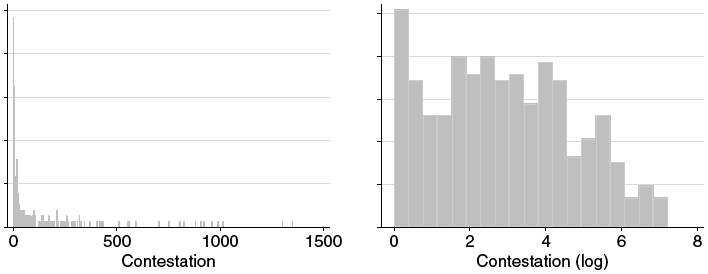

 Open access