

2.1 The Biophysical Geography and Natural History of Europe
Whilst it is only possible to provide a brief account of the natural history of Europe here, this section aims to provide some important context for the approaches that have been taken to nature conservation. It mainly summarises the biophysical influences on ecosystems, and the impacts of humans on them up to about 40 years ago, as more recent events are covered in the national chapters. This is primarily drawn from the following sources: Polunin and Walters (Reference Polunin and Walters1985), Tucker and Evans (Reference Tucker and Evans1997), Ellenberg (Reference Ellenberg2009), Veen et al. (Reference Veen, Jefferson, de Smidt and v. d. Straaten2009), Blondel et al. (Reference Blondel, Aronson, Bodiou and Boeuf2010) and BirdLife International (2017a).
2.1.1 Biogeographical Regions and Their Characteristics
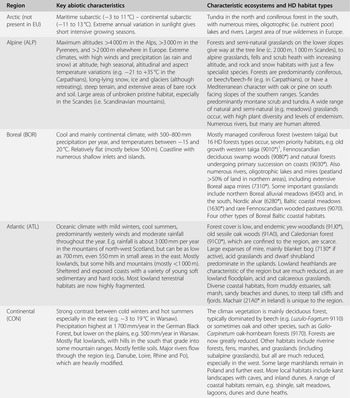
Europe has a relatively diverse range of ecosystems and habitats, primarily as a result of its varied topography, geology and climate, as well as some historical impacts of human activities. An important influence on ecosystems in western Europe is the relatively warm oceanic waters that result from the north Atlantic current, which keep winter temperatures much higher than other areas of the world at a similar latitude. Thus the climate ranges from subtropical in parts of the Iberian Peninsula and around the Mediterranean to subpolar in the north-east of Norway and northern Russia. This underlying climatic pattern is then further modified by the continent’s topography, especially its high mountain ranges but also its lowland plains. These climatic and other physical combinations give rise to 11 terrestrial biogeographical regions in Europe, as defined by the European Commission and the Council of Europe for nature conservation purposes (Roekaerts, Reference Roekaerts2002), with the 2016 version shown in Figure 2.1. It is noteworthy that the Alpine region represents areas with similar characteristics, rather than a geographical region centred on the Alps. It therefore also includes the Pyrenees, Apennines, Carpathians, Dinaric Alps, Balkans and Rhodopes, as well as the Urals and the Caucasus mountains on the border of Europe. The nine biogeographical regions that are relevant to this book are summarised in Table 2.1. A more detailed statistically derived stratification for Europe based on biogeophysical attributes has been produced by Metzger et al. (Reference Metzger, Shkaruba, Jongman and Bunce2012).
Terrestrial biogeographical regions in Europe.
Note. The Anatolian and Arctic biogeographical regions do not occur within the EU.

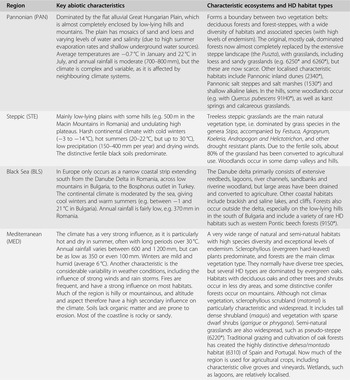
Note. The Anatolian biogeographical region does not occur in Europe, and the Macaronesian region is not covered in this book.
The marine waters covered in this book comprise the European parts of the Atlantic, Baltic Sea, Black Sea and Mediterranean Sea. In particular, they cover the marine regions and subregions as defined by the Marine Strategy Framework Directive (MSFD), as shown in Figure 2.2, with the exception of the Macaronesian subregion of the North-East Atlantic. MSFD region boundaries are, to the extent possible, harmonised with other EU legislation where maritime boundaries are of relevance, and specifically the biogeographical regions of the Nature Directives. This book mainly refers to the EU-28 waters that have been defined as the Atlantic (MATL), Baltic Sea (MBAL), Black Sea (MBLS) and Mediterranean Sea (MMED) marine regions, for the purposes of implementing the Nature Directives. In this respect, the Atlantic region comprises the following MSFD subregions: the Greater North Sea (including the Kattegat and English Channel), Celtic Seas, and the Bay of Biscay and Iberian Coast. Macaronesian waters are treated as a separate marine region under the Nature Directives.
Marine regions and subregions in the EU based on the Marine Strategy Framework Directive.
Note. The marine region boundaries are indicative only and do not imply any legal status. The Marine Atlantic region, as referred to in this book and used for HD Article 17 reporting, comprises three MSFD subregions: the Celtic Seas, Greater North Sea (including the Kattegat and the English Channel) and the Bay of Biscay and the Iberian Coast.

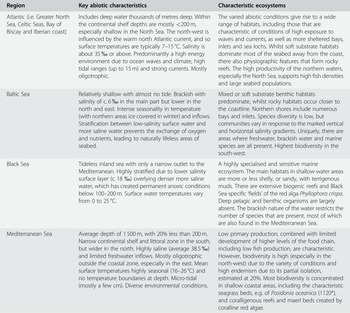
As summarised in Table 2.2, these marine regions differ considerably in their biophysical properties such as their depth, tides, currents, exposure to ocean waves and wind, salinity and nutrient levels. These diverse properties in turn give rise to varying habitats and species communities. It should be noted that most HD Annex I marine habitats are only very broadly differentiated, and therefore most occur in all marine biogeographical regions. As listing them would be of little value, most are not referred to in Table 2.2. It is particularly noteworthy that the Mediterranean Sea is considered to be a biodiversity ‘hotspot’ as it has high species diversity for a temperate sea (Coll et al., Reference Coll, Piroddi and Steenbeek2010).
2.1.2 The Legacy of the Last Ice Age
The flora and fauna of Europe have been profoundly affected by the glacial episodes that occurred over the Quaternary period, the most recent of which commenced about 110 000 years ago, with its maximum extension occurring about 20 000 years ago. The ice covered all of Scandinavia and the Baltic States and extended south to Poland and northern Germany, but no further south-west than western Denmark. In the Alps, ice extended down to the plains. The island of Ireland was mostly covered with ice, as were the northern three-quarters of Great Britain. As the sea-level was about 100 m lower than now, Great Britain and Ireland were connected by dry land to what is currently continental Europe. To the south, most of the rest of Europe was covered in steppe and tundra, with wooded tundra or forest steppe, mainly in Iberia and to the south and south-east of the Alps. Mixed woodland was mainly confined to southern Italy, Greece and Mediterranean islands and the eastern Black Sea coast, but no woodland communities now present in central Europe were able to survive (Ellenberg, Reference Ellenberg2009).
With the warming of the climate and retreat of the ice about 10 000 years ago, surviving plants and animals moved north, recolonising some of their former areas. Following a succession of forest types, by 8 000–5 000 BP broad-leaved forests are thought to have become the climax vegetation across most of lowland temperate Europe. Traditionally it has been thought that this landscape was predominately closed-canopy forest, and that open habitats were limited to localised areas (e.g. too wet, dry, rocky or unstable). Open areas may also have been maintained by herbivores after fires or storms, but grazing animals did not create them by themselves.
More recently it has been suggested by Vera (Reference Vera2000) that in prehistoric times broad-leaved forests were more open than this, due to the activity of large herbivores, including deer, bison (Bison spp.), Beaver (Castor fiber), Wild Boar (Sus scrofa) and the now extinct Aurochs (Bos primigenius) and Tarpan/Eurasian Wild Horse (Equus ferus ferus). He has proposed that they created a half-open landscape with a cyclic shifting mosaic of scrub, closed-canopy stands (groves), degenerating groves and open ground with scattered trees and scrub. Some have suggested that these areas would have been similar to some pastoral woodlands in Europe today (e.g. the New Forest in the UK or dehesa in Spain).
Whilst the presence of half-open wood pasture is not supported by evidence (e.g. Svenning, Reference Svenning2002; Hodder et al., Reference Hodder, Bullock, Buckland and Kirby2005; Mitchell, Reference Mitchell2005), it is now generally accepted that large herbivores probably affected forest structure more than previously thought, and that mixed landscapes occurred to some degree. However, this would have varied according to local conditions and the influence of other interacting disturbances, such as fire or floods. Vera’s ideas have also triggered debate on whether conservation objectives should be based on a different, prehistoric landscape model and more naturalistic grazing as, for example, pioneered at Oostvaardersplassen in the Netherlands (see Chapter 23).
The Ice Age has had lasting impacts on the distribution and diversity of natural vegetation and associated animal communities across most of Europe. Compared to similar areas in North America and eastern Asia, Europe has fewer plants, especially trees, due to their wide extermination and the presence of the Mediterranean Sea, which has acted as a barrier to recolonisation (Ellenberg, Reference Ellenberg2009). European mountain ranges that are predominantly aligned west–east (i.e. Pyrenees, Alps and Carpathians) also had a similar effect, creating barriers that hindered species’ southward retreat and then northward recolonisation. The diversity of native species in Great Britain and Ireland remains lower than on the continent, because some species were unable to return before the sea-level rose again and separated Ireland from Great Britain, and then Great Britain from the continent about 7 500 years ago. However, in some parts of Europe, plant and animal populations survived the last glacial periods in isolated refuges of suitable climate and habitat, and have evolved into new subspecies, thereby increasing biodiversity.
As the Mediterranean area escaped the worst impacts of the last Ice Age, much of its vegetation remained. Moreover, the region’s natural vegetation is also highly diverse as a result of its geological history, diverse biophysical conditions and location at the intersection of three major landmasses. Approximately 25 000 species of flowering plants and ferns occur (including in non-European areas), compared with 6 000 species in non-Mediterranean Europe (Quézel, Reference Quézel and Gómez-Campo1985). Furthermore, more than half of the plants of the Mediterranean basin are endemic, comprising 80% of the European total (Gomez-Campo, Reference Gomez-Campo1985). Consequently, in spite of profound human impacts (described later), the region is still considered to be a global biodiversity hotspot (Mittermeier et al., Reference Mittermeier, Robles-Gil and Hoffmann2004).
2.2 The Impacts of Human Activities on Biodiversity in Europe
2.2.1 Early Impacts and the Creation of Semi-natural Ecosystems and Cultural Landscapes
Since the arrival of humankind, European ecosystems and their species have been increasingly influenced by human activities, especially within the Mediterranean basin. This first became significant as the Neolithic agricultural transition spread from the south-east about 8 000 BP, arriving in the north-west around 5 000 BP (Isern et al., Reference Isern, Fort and Vander Linden2012). Settlements were established and agriculture developed with the domestication of crops and livestock and the creation of wood pastures. More widespread clearance of forest for the creation of pastures, meadows and cropland occurred from the Iron Age. In some parts of north-west Europe, the grazing and repeated burning of forest combined with turf cutting, and resultant leaching of exposed soils in heavy rainfall areas, created and maintained extensive heathlands. Forest clearance, and a change in climate to wetter and cooler conditions around 2 500 years ago, also led to an increase in mires.
Hunting also had indirect impacts on ecosystems, through its effects on the populations of large herbivores and the extinction of some, such as the Aurochs. Domestic livestock may have replaced the ecological functions of some natural herbivores, as woodland pasturing was widespread until about the nineteenth century, but there were some gaps in grazing niches. To protect livestock, large carnivores such as the Wolf (Canis lupus) and Brown Bear (Ursus arctos) were exterminated in many countries, with knock-on impacts on their prey species and ecosystems.
Although forests and other natural habitats declined as early farming spread, the new and diverse semi-natural habitats, and their novel species communities, probably increased overall biodiversity (Pons and Quézel, Reference Pons, Quézel and 39Gómez-Campo1985; Ellenberg, Reference Ellenberg2009). Diverse cultural landscapes were also created, as varied intertwined farming and cultural practices developed (Oppermann and Paracchini, Reference Oppermann, Paracchini, Oppermann, Beaufoy and Jones2012). As these diverse semi-natural agricultural systems evolved, so too did their vegetation and associated animal communities. New cropping systems and types of grasslands were formed, some in relatively modern times, such as litter meadows in the Alps in the nineteenth century (Poschlod et al., Reference Poschlod, Baumann, Karlik, Veen, Jefferson, de Smidt and Straaten2009). Between the seventeenth and nineteenth centuries, major landscape changes widely occurred as a result of the enclosure of areas of common land. This gave rise to ‘bocage’ type landscapes with hedges and other field boundaries, as well as laws prohibiting forest grazing (Künster and Keenleyside, Reference Künster, Keenleyside, Veen, Jefferson, de Smidt and Straaten2009).
2.2.2 The Industrial and Agricultural Revolutions – up to 1980
It is no exaggeration to say that the industrial revolution, which started in the late eighteenth century, and the later agricultural revolution have led to profound impacts on Europe’s nature. The most significant and widespread have been changes in land use and management, particularly in agricultural systems. According to Jepsen et al. (Reference Jepsen, Kuemmerle and Müller2015), these were the result of three main drivers – technological, economic and institutional (e.g. land reforms) – and gave rise to similar stages of agricultural expansion, intensification and eventual industrialisation. However, the specific drivers and timing of these varied between countries, with initial intensification starting around 1850 in some (e.g. Belgium, West Germany and the Netherlands) as a result of the invention of the clay drain pipe, early machinery, the availability of some fertilisers, and railways increasing access to urban markets. By 1900, most of Europe was undergoing such initial intensification, the main exceptions being parts of Spain, Portugal and Italy.
Almost simultaneous major changes occurred across Europe from about 1945, as a result of World War II and the subsequent need to increase food production, which coincided with increased availability of mineral fertilisers, machinery and the use of irrigation. In most of Western Europe this resulted in further intensification, crop specialisation and large-scale farming (Potter, Reference Potter, Pain and Pienkowski1997), a period that is referred to as the industrialisation of farming by Jepsen et al. These developments were also supported by the establishment of the European Economic Community and its Common Agricultural Policy (CAP) in 1957. The CAP aimed to increase productivity, including by stabilising market prices and providing subsidies, which were initially linked to production, and grants to expand agricultural land and intensify management practices. Similar agricultural industrialisation occurred over much of the Eastern Bloc countries, driven by the political process of collectivisation (Jepsen et al., Reference Jepsen, Kuemmerle and Müller2015). However, as described in the country chapters, some mountain regions and other areas were less affected.
Much of the expansion of agriculture was at the expense of natural and semi-natural habitats (Baldock, Reference Baldock1990). For centuries, wetlands, especially peatlands, were targeted for drainage and conversion to agriculture, resulting in two-thirds being lost across Europe between 1900 and the mid-1980s (European Commission, 1995). Large areas of heathland and Mediterranean shrublands were converted to arable or permanent crops.
Agricultural intensification has followed similar pathways across Europe, especially in the west, but more slowly and less consistently in central and eastern Europe (e.g. Stoate et al., Reference Stoate, Boatman, Borralho, Carvalho, de Snoo and Eden2001, Reference Stoate, Báldi and Beja2009, Tryjanowski et al., Reference Tryjanowski, Hartel and Báldi2011; Kuemmerle et al., Reference Kuemmerle, Levers and Erb2016). Within grasslands, many of those that were wet were drained, and the use of nitrogenous fertilisers became common where it was possible to apply them using machinery, allowing increases in grazing intensity. To make best use of the fertiliser, grasslands have also been increasingly reseeded with high-yielding rye-grass cultivars (e.g. Lolium perenne), creating taller and denser species-poor swards. These reseeded grasslands are subject to higher grazing densities and/or conversion from hay fields to silage crops that are cut several times and earlier in the year than hay.
Industrial large-scale specialised crop production also resulted from increased usage of fertilisers, herbicides and other pesticides. This led to denser crops, reduced crop rotations, the near disappearance of fallow in the landscape and the removal of hedgerows and other field boundaries to create larger fields. Some pesticides had severe direct toxic effects on non-target species, in particular birds of prey, the most notorious being DDTFootnote 2 from the 1950s, until national bans started in the late 1970s. Since then, the main impacts of herbicides and pesticides have been their disruption of food webs, such as declines in broad-leaved weeds and invertebrates.
In contrast to the dominant trends of agricultural expansion and intensification, agriculture has been abandoned in some areas. This has mainly affected areas with poor and remote agricultural land, especially in the hills and mountains of southern and eastern Europe (Pointereau et al., Reference Pointereau, Coulon and Girard2008; Keenleyside and Tucker, Reference Keenleyside and Tucker2010). This has had varying, but probably mostly detrimental, impacts on biodiversity so far (as well as declines in cultural landscapes, rural traditions and communities). On the one hand, abandonment has reduced human disturbance and increased scrub and forest habitat area and connectivity, to the benefit of some species such as large carnivores. On the other hand, abandonment has led to substantial declines in biodiverse semi-natural grasslands, shrublands and other open habitats, and their associated threatened species. According to a global review of studies of agricultural abandonment, in Europe the impacts were reported as negative in 65% of studies, whilst they were considered to be positive in only 6% (Queiroz et al., Reference Queiroz, Beilin, Folke and Lindborg2014). For example, in the Alps, whilst pastoral abandonment may increase bird diversity, this is to the benefit of common species whilst it is detrimental for the more specialist and threatened grassland specialists (Laiolo et al., Reference Laiolo, Dondero, Ciliento and Rolando2004). A broader study in Sweden of fungi, vascular plants and insects (Lepidoptera, Coleoptera and Hymenoptera) suggested that abandonment of traditional management in agricultural landscapes would lead to extinction rates two or three orders of magnitude higher than global background rates (Eriksson, Reference Eriksson2021). A further problem is that, whilst the abandonment of some areas could be beneficial in the long term, producing high biodiversity habitats, abandoned areas have often been targeted for forest plantations (and bioenergy crops more recently).
The planting of forests for timber production began at the end of the nineteenth century and was widespread across Europe in the 50 years following World War II, increasing forest cover by 30% in western Europe, 20% in central and eastern Europe, and 10% in the south (Gold, Reference Gold2003). This was often concentrated in the uplands or in other areas that were unfavourable for agriculture, such as on dunes, shrubland, heathland and drained peatland. Large areas of valuable natural and semi-natural habitat were lost in the process, often replaced with even-aged forest monocultures of low biodiversity value. Furthermore, in many cases plantations consist of non-native trees, most commonly conifers (especially species of Pinus, as well as Pseudotsuga, Picea and Larix), poplars (Populus hybrids) and Australian eucalyptus species. These trees typically support very few native species, and so result in a very simple and species-poor ecosystem.
Within ancient forests, traditional uses such as pasturage, pollarding, charcoal production and coppicing have been largely replaced by forest management for timber. This led to a change in woodland structure, with taller mature trees and a closed canopy. Since then there has been a trend towards increasingly intensive forest management over much of Europe. Thus, forests that are commercially managed have been drained, thinned, cleared of deadwood, clear-cut over large areas and replanted. This has resulted in biodiversity losses, as biodiversity declines considerably with increasing management intensity (Sing et al., Reference Sing, Metzger, Paterson and Duncan2018).
Physical changes to other ecosystems have included the creation of reservoirs for water storage or hydropower, widespread canalisation of lowland rivers (for river transportation and flood protection), reduced water levels in wetlands due to abstraction (often for agriculture), and construction of coastal flood defences (with resulting losses of intertidal habitat).
Alien species have had important influences on terrestrial and marine species, communities and ecosystems since humans settled across Europe and started introducing new species, such as for food, materials or sport. This has accelerated since the beginning of the twentieth century, due to increasing intentional imports of plants and animals (such as for horticulture and the pet trade) and accidental introductions associated with increasing international travel and trade. Many alien species have not spread widely or had noticeable detrimental effects on native species, or other aspects of the environment. However, a substantial proportion have become invasive and had significant environmental impacts; these are hereafter referred to as invasive alien species (IAS).Footnote 3 Detrimental impacts have included competing with or consuming native species, spreading disease, causing genetic changes through interbreeding, and disrupting food webs and the physical environment (Scalera et al., Reference Scalera, Genovesi, Essl and Rabitsch2012).
Pollution has affected most ecosystems since the beginning of the industrial revolution, particularly in the most densely populated and industrialised areas of western and eastern Europe. The most severe and widespread biodiversity impacts have generally resulted from nutrient enrichment, that is, eutrophication (e.g. Galloway et al., Reference Galloway, Dentener and Capone2004; Fowler et al., Reference Fowler, Coyle and Skiba2013), and ecosystem acidification (e.g. Schöpp et al., Reference Schöpp, Posch, Mylona and Johansson2003). Apart from in upland areas, a high proportion of rivers and lakes have been affected by eutrophication, primarily from increases in phosphorus, with the main sources being silty agricultural run-off, sewage and industrial effluent. Whilst eutrophication impacts are complex, low nutrient enrichment levels generally lead to increases in submerged plants, which increases the productivity of the ecosystem, benefiting some fish and birds. At higher levels, major changes in the ecosystem and its species result as algae tend to proliferate and submerged plants die out due to the reduced light levels. At very high levels, algal blooms can lead to oxygen depletion and the death of fish and other animals. Eutrophication impacts can be long-lasting and difficult to reverse where nutrient-rich sediments have built up.
Air pollution increased substantially due to the growth of industry and cities, and their use of coal, and later the invention of the internal combustion engine and the industrialisation of agriculture. This has led to major changes in the physiochemical conditions of sensitive terrestrial and aquatic ecosystems, and impacts on their species, across much of Europe (Stevens et al., Reference Stevens, Bell and Brimblecombe2020). High concentrations of some pollutants in the air, such as sulphur dioxide, have caused the widespread destruction of lichen communities since the nineteenth century. Changes have also resulted from the deposition of air pollutants dissolved in rain or snow. This deposition, colloquially termed ‘acid rain’, acidifies the soil or water (if the dissolved pollutants are sulphur dioxide, nitrogen oxides or ammonia), as well as causing eutrophication through nitrogen enrichment (if the dissolved pollutants are nitrogen oxides or ammonia).
Sensitive ecosystems, such as rivers and lakes, have been significantly affected by acidification in many parts of Europe since the 1950s, especially in regions where the soils and rocks have a low buffering capacity, such as much of Fennoscandia. This resulted in wide-ranging impacts on the ecosystems and their species, including declines in species diversity and acid-sensitive groups (e.g. molluscs and amphipods) leading to massive declines in fish diversity and numbers (Muniz, Reference Muniz1990). Acid rain also led to the decline of coniferous forests in some mountain areas in central Europe, particularly in the Czech Republic, Germany, Poland and Slovakia (Stanners and Bourdeau, Reference Stanners and Bourdeau1995). Eutrophication has mainly affected naturally low-nutrient ecosystems on acidic soils, such as mires, acid grasslands and heathlands, especially when close to areas with high livestock densities as they are a prime source of ammonia emissions (e.g. Bobbink et al., Reference Bobbink, Hicks and Galloway2010; Sutton et al., Reference Sutton, Howard and Erisman2011). Typically, the biodiversity value of exposed vegetation declines as the characteristic specialist species tend to be sensitive to the pollutants and outcompeted by more competitive species, such as grasses. Consequently, eutrophication is one of the most widespread and significant threats to plant species richness in natural and semi-natural ecosystems (Stevens et al., Reference Stevens, Dupré, Dorland, Gaudnik, Gowing and Bleeker2010).
Whilst not as obvious as on land, human actions have had major impacts on the structure, properties and species communities of marine ecosystems. Most have been profoundly affected by overfishing, which has occurred historically in all EU regional seas (Jackson et al., Reference Jackson, Kirby and Berger2001). This has changed marine food webs, affecting species composition and abundance, and incidental catches of non-target species have increased the magnitude of such changes. For example, the depletion of lower trophic level species such as sand-eels, sardines and herring can result in declines in upper trophic level predators such as larger fishes, seabirds and marine mammals. Furthermore, intensive bottom-trawling and dredging for shellfish regularly disturbs large areas of seabed and damages sensitive habitats such as biogenic reefs, which can then take many years to recover, if at all (EEA, 2015). Some fish species, birds and cetaceans have also been affected by high levels of by-catch.
All seas have also been altered by pollution, especially the semi-enclosed Black and Baltic Seas, and parts of the North Sea, which have been heavily affected by eutrophication (e.g. increasing oxygen depletion, algal blooms and the death of fish and benthic fauna). In the marine environment, this mainly results from nitrogen enrichment (or phosphate in low-salinity waters), the main sources being sewage, agricultural run-off and atmospheric pollution. The other main pollutants have been synthetic organic compounds such as polychlorinated biphenyls (PCBs) (which have built up to levels that have harmed some species such as marine mammals and seabirds), oil, litter and, to a lesser extent, heavy metals (Stanners and Bourdeau, Reference Stanners and Bourdeau1995).
2.2.3 The Situation since 1980
This book mainly focusses on nature conservation over the last 40 years, and the most recent decades in particular. Therefore, these periods are examined in more detail in the national chapters, and a brief overview is presented here to highlight the most widespread and severe pressures. Importantly, the main pressures on biodiversity have changed with time, and conservation strategies have therefore had to adjust accordingly. Much of the text in this section is based on the 2010 Biodiversity Baseline (EEA, 2010) and six EEA European Environment – State and Outlook reports produced since 1995, especially the most recent (EEA, 2019) but also starting with the first, known as the Dobříš Assessment of Europe’s Environment (Stanners and Bourdeau, Reference Stanners and Bourdeau1995). In addition, the text draws from some chapters from the International Panel on Biodiversity and Ecosystem Services (IPBES) regional assessment report for Europe and Central Asia (Rounsevell et al., Reference Rounsevell, Fischer, Boeraeve, Rounsevell, Fischer, Torre-Marin Rando and Mader2018; Visconti et al., Reference Visconti, Elias, Sousa Pinto, Rounsevell, Fischer, Torre-Marin Rando and Mader2018). Additional sources for marine pressures include EEA (2015), Gubbay et al. (Reference Gubbay, Sanders and Haynes2016) and Vaughan et al. (Reference Vaughan, Korpinen, Nygård, Andersen, Murray and Kallenbach2019).
A particularly important change is that the overall expansion of agricultural area has largely stopped, as a result of the productivity increases resulting from intensification, socio-economic changes and increasing imports of some foods and other commodities. CORINE land cover (CLC) data indicate that net changes in land cover have been mostly very small. In 27 European countries (and Turkey), between 1990 and 2000, there were annual declines of 0.04% for both cropland and pastures, 0.05% for semi-natural vegetation and 0.07% for wetlands (EEA, 2017b). The rate of forest expansion also slowed, resulting in a net annual increase of just 0.02%, in part as a result of agricultural abandonment and natural regeneration. The main changes in land cover resulted from the expansion of housing, industry and infrastructure (i.e. artificial areas), which increased by 0.5% per year.
More complete European CLC data are available for 2000 to 2018, and these are summarised in Table 2.3 (excluding Turkey in this case). For a more detailed analysis by the EEA, see Petersen et al. (Reference Petersen, Desaulty, Ivits, Mancosu, Milego and King2021). Some CLC trends were similar to the 1990–2000 period, including the relatively small net declines in agricultural land (although less so on cropland outside the EU). The rate of wetland loss declined further, to be probably stable. According to the CLC data in Table 2.3, there was a small decline in forest area. However, EEA analysis suggests it has been stable (Petersen et al., Reference Petersen, Desaulty, Ivits, Mancosu, Milego and King2021), and a Forest Europe (2020) analysis has indicated an ongoing small increase in the area of forest and other wooded land of 0.3% per year for Europe over 1990–2020. These discrepancies may be due to differences in the way in which forest, transitional woodland and scrubland are categorised.
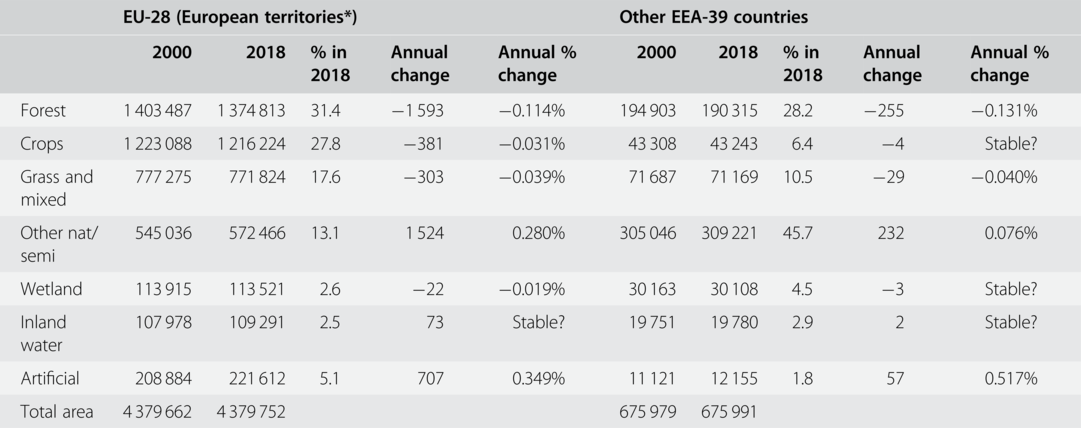
Note. * EU European territories exclude those in the Macaronesian biogeographical region. The other EEA countries covered are: Albania, Bosnia and Herzegovina, Iceland, Kosovo, Liechtenstein, Montenegro, North Macedonia, Norway, Serbia and Switzerland. ‘Grass and mixed’ comprises pastures and heterogeneous agricultural areas. ‘Other nat/semi’ are other natural and semi-natural habitats, and mostly comprise scrub and shrubland, but also sparsely vegetated areas, moorland and heathland, and natural grasslands. ‘Wetland’ includes inland and coastal. ‘Stable?’ indicates that the scale of change is insufficient to be certain of trends according to the thresholds used by Petersen et al. (Reference Petersen, Desaulty, Ivits, Mancosu, Milego and King2021).
The area of combined CLC categories for ‘other natural and seminatural’ increased slightly, mainly in the EU. More detailed analysis of CLC data shows that this was probably partly due to further agricultural abandonment, as there was an increase in transitional woodland-shrubland of nearly 11% over the same period in the EEA-39 (Petersen et al., Reference Petersen, Desaulty, Ivits, Mancosu, Milego and King2021). The same study shows that, over the same time, there were small declines in sclerophyllous vegetation (−2%), natural/semi-natural grassland (−0.7%) and moors and heathland (−0.4%). However, it is important to note that these statistics do not capture all losses of semi-natural habitats, as many will be too subtle and/or small-scale to be detected using CORINE remote sensing methods and classes.
The growth of urban areas, infrastructure and other artificial areas continued at a similar rate to the 1990–2000 period. Although the area converted is relatively small, the losses can be considered permanent and often targeted areas of low agricultural value. Thus, impacts have tended to be disproportionately high on semi-natural habitats and species. Urban sprawl and the spread of roads and other infrastructure in the countryside have also contributed to further habitat fragmentation and increased human disturbance of wildlife.
Although farmland use has not expanded in most parts of Europe, widespread major impacts have continued from previous and further agricultural improvements and intensification, especially in western Europe. Most semi-natural grasslands have been lost through fertilisation and other agricultural improvements, and now a high proportion of lowland grasslands are temporary sown-grass monocultures. This has led to the almost complete loss of lowland hay fields, and declines in pastures, as livestock are now often kept in stockyards for most, or even all, of the year. The total area of grasslands has also decreased as they have been converted to crops for human food, livestock feed (e.g. maize) or, in recent decades, bioenergy. Low-intensity arable crops, which had relatively high levels of biodiversity, have also almost completely disappeared, apart from in parts of Iberia and eastern Europe (Hoffmann, Reference Hoffmann, Oppermann, Beaufoy and Jones2012). Within intensive cropland the rate of intensification may have declined, but new biodiversity impacts have arisen. Most notably, neonicotinoid insecticides have been found to have widespread chronic impacts upon invertebrates, especially bees and other pollinators, and aquatic insects, which appear to be especially susceptible (Hladik et al., Reference Hladik, Main and Goulson2018). Farming has also become more specialised, such that mixed farming is much less common. Over much of lowland Europe, these changes in farming have resulted in a strong decline in landscape diversity, with scarce and fragmented patches of remaining semi-natural vegetation (Jongman, Reference Jongman2002).
The lasting compounded impact of all these agricultural improvements has been the widespread impoverishment of wildlife in European agricultural landscapes, especially in the West, as the biodiversity value of habitats decreases in proportion to its degree of modification. The decline in semi-natural components in the landscape has been particularly detrimental, as they contribute most to overall species richness (Hoffmann et al., Reference Hoffmann, Kretschmer and Pfeffer2000, cited in Billeter et al., Reference Billeter, Liira and Bailey2008; Oppermann and Hoffmann, Reference Oppermann, Hoffmann, Oppermann, Beaufoy and Jones2012).
Evidence of the biodiversity impacts of this progressive intensification of agriculture comes from long-term monitoring of birds that has revealed substantial declines in farmland bird populations (Figure 2.3). Between 1980 and 2000 the European farmland bird index fell by 53%. Whilst the rate of decline has since slowed, the index decreased by another 11% by 2019. Analysis of the bird trend data by Donald et al. (Reference Donald, Green and Heath2001, Reference Donald, Sanderson, Burfield and van Bommel2006) revealed that the declines were closely associated with indicators of agricultural intensification. The authors also noted in 2001 that declines and intensification had been highest in the EU at the time, and therefore predicted similar agricultural trends and resulting bird declines in countries joining the EU.
Common bird indicator values for farmland and forest species in Europe.
Notes. 1980 base year. Based on 28 countries’ data. See the PanEuropean Common Bird Monitoring Scheme for methods, and included countries and indicator species (https://pecbms.info/trends-and-indicators/).

For some time, there have been growing concerns in the EU over the environmental impacts of agriculture and the need to address overproduction; in the 1990s this unease stimulated a process of gradual changes towards a more sustainable CAP (Robson, Reference Robson, Pain and Pienkowski1997; Jepsen et al., Reference Jepsen, Kuemmerle and Müller2015). These changes included the replacement of most production-based subsidies with area-based subsidies, and the introduction of environmental support measures, as described further in Section 4.3 and online Annex 3.Footnote 5
In the former Eastern Bloc, around 1990, more sudden and very different changes occurred in agriculture. These were a result of the collapse of communism, and led to state farms and collectives being dissolved, with the land distributed to private owners. This initially resulted in two diverging effects on land use. Much of the land was subject to commercialisation and agricultural intensification, especially where bought up by large agri-companies. In contrast, elsewhere de-intensification occurred, or even abandonment where the new owners were absent or uninterested in farming. For a while a large proportion of former farmland remained unused for agriculture, estimated to be 15–20% of cropland in Slovakia, Poland and Ukraine (Keenleyside and Tucker, Reference Keenleyside and Tucker2010).
In more recent decades, the region has been characterised by rapid economic and social development and urbanisation, especially in countries that have joined the EU, such that they increasingly resemble those in Western Europe (Rounsevell et al., Reference Rounsevell, Fischer, Boeraeve, Rounsevell, Fischer, Torre-Marin Rando and Mader2018). Whilst semi-natural habitats and biodiversity levels had been much higher in Eastern Europe, especially in agricultural areas that had escaped collectivisation (Tryjanowski et al., Reference Tryjanowski, Hartel and Báldi2011), this difference has been gradually reduced. Despite the CAP’s environmental reforms, agricultural intensification and industrialisation, with associated biodiversity declines, have continued over the EU, and especially in new Member States, as the CAP and other EU support measures have helped them ‘catch up’. Evidence of this comes from bird monitoring in the Czech Republic, where EU accession was followed by increases in agricultural intensification that correlated with steep declines in bird populations (Reif and Vermouzek, Reference Reif and Vermouzek2019), as predicted by Donald et al. (Reference Donald, Green and Heath2001).
Economic growth in the former Eastern Bloc has also led to the loss of some remaining wetlands and other semi-natural habitats, particularly along the coasts as these have been the focus of many tourist developments. This has long been the case in much of western and southern Europe, where recreational pressures have damaged coastal habitats and resulted in declines in sensitive species such as beach-nesting birds and turtles.
Within forests the main biodiversity impacts over the last 40 years have resulted from forestry management, as about 80% of forest area is available for wood supply. This supply has been primarily used for timber and pulp, but increasingly for fuelwood, which in 2018 accounted for 22% of roundwood use (EEA, 2019). At its most intensive, forest management has included the conversion of semi-natural forest to even-aged plantations, with profound ecosystem changes and biodiversity losses. Calculation of the proportion of European forests that is intensively managed plantations (including from afforestation) is difficult as it depends on the interpretation of definitions. The EEA (2016) estimated that plantations constitute 9% of forest area in the EEA-39 countries (based on FAO 2015 data), whilst a much lower estimate of 3.8% is given for the larger area assessed by Forest Europe (2020).Footnote 6 It should be noted that these estimates exclude planted forests that have not been subject to forestry operations for a long time. It is arguable whether this is justified, as such forests are still likely to be dense monocultures with a highly artificial even-aged structure.
About half of plantations are dominated by introduced species (as described earlier). However, the overall proportion of forest dominated by introduced tree species is much larger: estimated to be 31% according to Forest Europe (2020) for 31 European countries, and as much as 48% for the EU-28 and 41% for the EEA-39.
Most of Europe’s forest is now considered to be semi-naturalFootnote 7: estimated to be 87% by the EEA (2016) and as much as 94% by Forest Europe (2020). However, these figures seem to be overestimates given the proportion of forest that is dominated by non-native species. Furthermore, 60% of forests in Europe are even-aged, and the proportion of old forests (>100 years) has decreased substantially in some northern and western EEA countries (EEA, 2016). These are all signs that the majority of so-called semi-natural forests have in fact been relatively intensively managed, with the resulting biodiversity impacts discussed earlier (Sing et al., Reference Sing, Metzger, Paterson and Duncan2018). In recent years more sustainable forest management practices have been widely adopted, and there are some indications of slight improvements in the ecological condition of forests, such as small increases in deadwood, which is of particular importance for biodiversity (EEA, 2016; Forest Europe, 2020). The common forest bird indicator has also increased slightly since 2009 (see Figure 2.3). Nevertheless, most ‘semi-natural’ forest ecosystems are far below their potential biodiversity value, and thus need more ambitious environmentally sensitive forestry practices to increase their naturalness and undisturbed areas.
In contrast to most forests, some semi-natural forest areas have suffered from neglect following the abandonment of some traditional forms of forestry (e.g. coppicing), leading to forests with low structural diversity. High population densities of deer in some countries have resulted in little tree regeneration. Forests are also increasingly being affected by climate change, including increased temperatures, droughts, fires and extreme weather events. These effects are reducing forest ecosystem condition and resilience to pests, diseases and IAS.
Some reductions in air pollution have occurred across much of Europe, most notably sulphur with rapid substantial declines in deposition since the 1970s (Fowler et al., Reference Fowler, Smith and Muller2007). Nevertheless, the deposition of airborne nitrogen across Europe as a whole only declined slightly between 1980 and 2003 (Fagerli and Aas, Reference Fagerli and Aas2008). As a result, in 2005, 67% of European ecosystems and 78% of Natura 2000 sites were exposed to nitrogen deposition exceeding their critical loadsFootnote 8 (EEA, 2019). More recent data indicate that ammonia emissions from agriculture only slightly decreased between 2000 and 2013, and then increased by about 3% by 2017 (EEA, 2019). However, ammonia emission levels vary greatly between countries, being highest in those with high-density intensive livestock production (e.g. see the Netherlands, Chapter 23).
Some progress has been made in tackling water pollution and other pressures on rivers, lakes and other wetlands, in part driven by better technology but also EU policies and legislation (described in Section 4.3). The main improvements have been in relation to point sources of pollution (e.g. sewage and industrial discharges) and nitrogen surpluses from agriculture. Despite these improvements, by 2018 only 40% of Europe’s surface water bodies had achieved a good ecological status and wetlands remained widely degraded (EEA, 2018, 2019). The main pressures constraining further improvements are diffuse pollution, water abstraction (although it has declined) and hydromorphological changes, such as dams or river channel re-engineering. Over recent decades, an increasing pressure on rivers has been the growth in hydropower, and especially the cumulative effects of micro-hydro schemes on river hydrology and migratory fish (European Commission, 2018a).
Another biodiversity pressure that has particularly affected wetland species has been the poisoning of birds, and sometimes other animals, from the use of lead ammunition for hunting (Watson et al., Reference Watson, Fuller, Pokras and Hunt2009). This primarily affects waterbirds that ingest some of the large amounts of lead shot that are now in the environment as a result of the use of shotguns. As a result of this it has been estimated that approximately one million wildfowl (representing 17 different species) or 8.7% of the total population may die every winter from lead poisoning caused by ingestion of lead gunshot in Europe (Mateo, Reference Mateo, Watson, Fuller, Pokras and Hunt2009). Predators and scavengers, such as eagles and vultures, may also suffer secondary poisoning if they consume the flesh of animals that have been killed or wounded with lead shot or bullets.
In the marine environment, the main human impacts on ecosystems since 1980 have continued to be from fisheries and pollution, although the pressures have declined in some areas. Decreased fishing pressure in the north-east Atlantic Ocean and the Baltic Sea in recent years has led to signs of recovery of many stocks, but overfishing has continued in the Mediterranean and Black Seas (EEA, 2019). Furthermore, by-catch of non-target fish, seabirds and marine mammals remains of concern, and intensive fishing activities frequently continue to affect benthic habitats in many areas. This has been revealed by a spatial analysis of fishing activities, which found that, in sixFootnote 9 out of nine studied areas in Europe, more than 25% of the seabed was trawled each year (Amoroso et al., Reference Amoroso, Pitcher and Rijnsdorp2018).
Some marine pollutants have declined locally, particularly from point sources but less so from diffuse sources, which primarily come from agriculture. Despite the reductions in nitrogen and phosphate pollution, the Black Sea and Baltic Sea remain eutrophic. Some toxic contaminants have remained at high levels, such as certain heavy metals and PCBs (despite being banned decades ago), and marine litter levels have increased. The PCB levels are of particular concern, as they accumulate in high-level predators, and there is evidence that they are threatening the survival of the Killer Whale (Orcinus orca) in parts of the region (Desforges et al., Reference Desforges, Hall and McConnell2018).
Marine ecosystems have been historically affected by IAS, many of which arrived attached to ships or in their ballast water, whilst some were deliberately introduced, such as the Pacific Oyster (Magallana gigas). In recent decades there has been a noticeable acceleration in the occurrence of IAS in European seas (EEA, 2015), and these are increasingly affecting marine ecosystems, especially in the Black Sea and the Mediterranean Sea. Whilst the impacts of many IAS are uncertain, some have led to obvious ecosystem changes. Perhaps the most serious change arose from the predatory comb jelly Mnemiopsis leidyi, which became super-abundant in the Black Sea in the 1980s. In combination with over-fishing pressures, this disrupted the food web sufficiently to trigger a regime change in the ecosystem,Footnote 10 with a collapse in fish stocks (Möllmann and Diekmann, Reference Möllmann, Diekmann, Woodward, Jacob and O’Gorman2012). Since then, its population has declined and predation by another alien comb jelly species, Beroe ovata, which arrived in 1999, has meant that the Black Sea ecosystem shows signs of recovery (Vaughan et al., Reference Vaughan, Korpinen, Nygård, Andersen, Murray and Kallenbach2019). The number and impacts of IAS are still increasing on land, as well as in the sea, despite increased legal and social responses in recent years (Rabitsch et al., Reference Rabitsch, Genovesi, Scalera, Biała, Josefsson and Essl2016).
The direct effects of climate change (e.g. increases in temperatures, changes in precipitation, and increases in extreme weather events) and indirect effects of human responses (e.g. renewable energy and infrastructure to mitigate impacts such as flood defences) have become much more significant over recent decades. The sea has also become more acidic as a result of increasing carbon dioxide concentrations in the atmosphere. In European seas, observed ecosystem impacts have included changes in species distributions and the timing of biological events. Such changes have added to the other existing pressures, including over-fishing and eutrophication, and led to regime shifts in the Baltic, Mediterranean and north-east Atlantic Seas at the end of the 1980s/early 1990s (Möllmann and Diekmann, Reference Möllmann, Diekmann, Woodward, Jacob and O’Gorman2012; EEA, 2015).
Terrestrial impacts of climate change have mostly not been so severe, but there is evidence of growing disruption of ecosystems in Europe by increasing temperatures, changing rainfall patterns, droughts, fires, flooding, other extreme weather events and sea-level rise (EEA, 2017c; IPCC, 2021). In freshwater lakes and streams, higher water temperatures and darkening of water colour or ‘browning’ by elevated concentrations of dissolved organic carbon may lead to serious ecosystem impacts (e.g. Weyhenmeyer et al., Reference Weyhenmeyer, Müller, Norman and Tranvik2016). These climate effects, and the knock-on complex impacts on species interactions, are already leading to changes in species distribution and declines in some vulnerable species (Hickling et al., Reference Hickling, Roy, Hill, Fox and Thomas2006; Ockendon et al., Reference Ockendon, Baker and Carr2014; Martay et al., Reference Martay, Brewer and Elston2017). Such impacts can be confidently expected to increase due to the further climate changes that are already inevitable from greenhouse gas emissions so far. In fact, Europe is expected to be especially affected as temperatures in Europe are predicted to continue increasing faster than the global average all through the twenty-first century under all scenarios (IPCC, 2021). However, the severity and nature of the impacts will vary regionally, with the highest temperature increases in north-eastern Europe and Scandinavia during winter, and in southern Europe in summer (Jacob et al., Reference Jacob, Petersen and Eggert2014).
2.3 Europe’s Remaining Biodiversity and Its Priority Conservation Needs
2.3.1 What Is Left and Where Is It?
To place the following section and country chapters in context, Figure 2.4 indicates the proportion of each EEA-39 country that comprises forests, wetlands, other semi-natural habitats (e.g. natural grasslands, heathlands, shrublands and rocky habitats), agricultural land and artificial areas, based on CLC data. This has been ordered in relation to the proportion of ‘other semi-natural habitats’, as these are of particular importance for biodiversity in most countries. As further discussed below, a high proportion of forest habitat is also considered to be semi-natural, as are some areas of agricultural land, but it is not possible to separate them out using CLC data.
Proportional land cover in European countries in 2018 according to CORINE land cover classes.
Key. OSN = other seminatural (e.g. shrublands, rocky habitats); FOR = forests; AGR = agricultural habitats; WET = inland and coastal wetlands and inland water bodies; ART = artificial areas (see Table 1.1 for details). Covers EEA-39 countries other than Turkey, and excludes areas within the Macaronesian biogeographical region.

No ecosystem in Europe is pristine; all are affected by the legacy of past human actions (e.g. extinction of key species, drainage and eutrophication) and ongoing modern day pollution (nutrients, toxins and plastic, etc.). Nevertheless, despite the profound changes to ecosystems and landscapes, described in Section 2.2, Europe retains a relatively high diversity of habitats and associated species (especially in the Mediterranean region). Extensive areas of some near-natural ecosystemsFootnote 11 remain, such as some rivers, lakes, tundra, mires, grasslands, karst features and caves, cliffs, screes, dunes, salt marshes, mudflats, beaches and diverse benthic habitats – although many of these are remnants that are mostly confined to remote northern latitudes, high mountains and offshore marine areas. Some near-natural forests also occur, but they form a tiny proportion of Europe’s forest area and are mainly confined to the Boreal region, as well as mountains in central and eastern Europe. According to the EEA (2016) and Forest Europe (2020), such undisturbed forestsFootnote 12 have been estimated to comprise just 2% of European forests. Sabatini et al. (Reference Sabatini, Burrascano and Keeton2018) attempted to map equivalent areas of primary forestFootnote 13 across Europe (excluding Russia), but the mapped areas amounted to only 0.7% of forest area due to knowledge gaps.
Over most of Europe, terrestrial biodiversity-rich areas are now mainly associated with semi-natural habitats, the most extensive of which are forests. As discussed earlier, the EEA and Forest Europe consider that the majority of forest in Europe is ‘semi-natural’, although this is based on a very broad interpretation of the term. Whilst forest is the climax vegetation that would occur in most lowland areas, few such semi-natural forests closely resemble their equivalent natural communities in species composition and structure, because most are managed for forestry. Nevertheless, forest habitat types of high intrinsic nature importance remain, including 81 habitat types listed in HD Annex I (i.e. 35%). These cover 491 900 km2, which is about 27% of the EU forest area (EEA, 2020b).Footnote 14
HD forests support a high diversity of species, a large proportion of which are of high conservation importance, as many are habitat specialists, endemic, rare or otherwise threatened. HD Annex II species that are dependent on forest habitats include the iconic Brown Bear, Wolf, Eurasian Lynx (Lynx lynx) and Wolverine (Gulo gulo), which have recovered much of their range in recent decades (for reasons described in several chapters). Europe is alone in the world in having increasing populations of large carnivores that are not confined to protected areas, and are sharing the same land as people (Chapron et al., Reference Chapron, Kaczensky and Linnell2014).
Most of the other remaining biodiverse semi-natural habitats are the grasslands, heathlands, Mediterranean shrublands and pastoral woodlands that are the result of traditional low-intensity farming. These are often complex labour-intensive farming systems using livestock breeds, crop types and husbandry practices that are highly adapted to local soils, vegetation and climate. Among extensive pastoral systems of high conservation, some are of particular scientific interest because to some extent they mimic natural grassland ecosystems that were formerly present and maintained by wild native herbivores. It has been suggested that species in these landscapes reflect a species pool from Pleistocene herbivore-structured environments, which, after the extinction of the Pleistocene mega-fauna, was rescued by the introduction of pre-historic agriculture (Eriksson, Reference Eriksson2021).
Semi-natural grasslands and some other habitats also often have very high levels of small-scale species diversity. In fact, according to Wilson et al. (Reference Wilson, Peet, Dengler and Pärtel2012), pastoral woodlands in Estonia and some semi-natural grasslands in eastern central Europe have amongst the highest levels of small-scale species richness in the world (e.g. shoots of 43 species over 0.1 m2 in an area of semi-dry basiphilous grassland in Romania). Of Europe’s endemic vascular plants, 18% are bound to grassland habitats, which is nearly twice as many as in forests, despite the latter covering a much greater area (Hobohm and Bruchmann, Reference Hobohm and Bruchmann2009, cited in Habel et al., Reference Habel, Dengler, Janisova, Török, Wellstein and Wiezik2013). Semi-natural grasslands are also very important for a wide range of associated animal species, for example hosting 88% of European butterflies, although the proportion of endemics is low (Wallis DeVries and van Swaay, Reference Wallis DeVries, van Swaay, Veen, Jefferson, de Smidt and Straaten2009).
As a result of their high biodiversity value, and because many are now scarce and/or declining, most semi-natural agricultural habitats in the EU are listed in HD Annex I, and many associated species are listed in HD Annex II or BD Annex I. In fact 58 HD Annex I habitats (about 30%) are considered to be key farmland habitats because they are dependent on, or associated with, extensive agricultural practices (European Commission, 2018b). HD Annex II includes 197 species or subspecies that are associated with agro-ecosystems or grassland ecosystems, and 62 BD Annex I birds are considered to be key farmland species.
The nature conservation and cultural importance of the farming systems that maintain semi-natural habitats and their associated ‘cultural landscapes’ is now generally recognised. To highlight their biodiversity importance, the term High Nature Value (HNV) farming was coined by Baldock et al. (Reference Baldock, Beaufoy, Bennett and Clark1993). This concept has been widely adopted, incorporated into EU policy and further developed, including for forests (e.g. IEEP, 2007). Three types of HNV farmland are now recognised (Paracchini et al., Reference Paracchini, Petersen, Hoogeveen, Bamps, Burfield and van Swaay2008):
Type 1: Farmland with a high proportion of semi-natural vegetation.
Type 2: Farmland with a mosaic of low-intensity agriculture and natural and structural elements, such as field margins, hedgerows, stone walls, patches of woodland or scrub, small rivers, etc.
Type 3: Farmland supporting rare species or a high proportion of European or world populations.
Type 1 HNV farmland comprises a wide range of habitats (many of which are HD Annex I habitats), including coastal, floodplain, steppic and alpine meadows and pastures, heathlands, sclerophyllous scrub (matorral) and wood pastures. As well as including mixed low-intensity farmland with hedges and woods, etc., Type 2 also includes extensive open dry croplands with traditional rotations and grazed stubbles, which are now scarce. Such habitats have diverse plant and invertebrate communities, and are especially important for steppe birds, such as the globally Vulnerable Great Bustard (Otis tarda) (Bota et al., Reference Bota, Morales, Mañosa and Camprodon2005). Type 2 HNV may also include traditional orchards, vineyards and olive groves, when they retain large old trees and a semi-natural understory that is extensively grazed by livestock. More detailed descriptions and examples are provided in Oppermann et al. (Reference Oppermann, Hoffmann, Oppermann, Beaufoy and Jones2012). In reality, the HNV types are not mutually exclusive. It should also be noted that Type 3 HNV farmland often includes more intensive farmland. For example, conventionally farmed cropland on the Black Sea coast is an important feeding ground for wintering Red-Breasted Geese (Branta ruficollis), another globally vulnerable species.
Mapping and quantifying HNV farmland is difficult in practice, as the different types are rather subjectively and loosely defined (especially Type 2) and the necessary datasets are currently lacking. Nevertheless, mapping has been carried out biannually in Germany since 2009 in sample areas, to monitor HNV extent (Benzler et al., Reference Benzler, Fuchs and Hünig2015). Predictive maps of the likelihood of HNV farmland across Europe have been produced by the EEA using CLC, farming and biodiversity data (Paracchini et al., Reference Paracchini, Petersen, Hoogeveen, Bamps, Burfield and van Swaay2008), the latest update being produced using CLC 2006 data (Schwaiger et al., Reference Schwaiger, Banko, Brodsky and van Doorn2012). According to its estimates for each country, over the EU-28 excluding Greece (due to data gaps), the HNV area was estimated to be 787 517 km2, which is about 34% of the agricultural area. HNV farmland in the other EEA-39 amounted to 124 925 km2, which is about 66% of the agricultural area based on CLC data and the HNV map. This high proportion is mainly due to the predicted large HNV areas in Iceland and Norway. As the study notes, care should be taken in interpreting the estimates due to data gaps and limitations. It should also be borne in mind that the methods and data are best able to predict Type 1 HNV, and Type 3 only for some species groups. Type 2 HNV is only indirectly predicted and is possibly underestimated.
A more recent study by Keenleyside et al. (Reference Keenleyside, Beaufoy, Tucker and Jones2014) compiled the best available national estimates, both minimum and maximum, of HNV farmland extent in each of the EU-28 Member States. The authors did not provide overall totals for the EU, as they felt the estimates were too variable and uncertain. This seems overly cautious as the national estimates are probably at least as reliable as the predictions by the EEA for most countries, and where this is not the case then the EEA data are used. Adding the EU-28 estimates (which omit Malta) gives minimum and maximum total HNV areas of 579 047 km2 and 827 790 km2, which equate to 25% and 36% of the agricultural area estimated by the EEA. Thus, both sets of estimates are reasonably close, which gives some reassurance that they provide useful indications of HNV area, although both have similar limitations especially regarding Type 2 HNV farming.
Building on initial concepts by IEEP (2007), the EEA (2014) has defined HNV forest as ‘an area covered by forests or other wooded lands having a current ecosystem state similar to its natural state.’ The EEA has also carried out exploratory studies to identify and map HNV forest and develop a related European-level forest naturalness indicator. However, HNV forest areas have yet to be mapped or quantified at an EU or wider scale.
Rivers, lakes, lagoons, mudflats, salt marshes, mires, fens and other wetlands remain relatively common and extensive over much of Europe, especially in the north and west. They make up about 5% of the EU’s area and 7% of other countries in the EEA-39 (Table 2.3). Whilst most have been modified by humans and remain polluted (especially nutrient enrichment), they still provide essential habitat for a wide range of species, some of which are rare, and/or endemic to isolated water bodies. Wetlands are also very productive habitats and therefore often support huge numbers of particular species of invertebrates, fish and waterbirds. Furthermore, most of the larger sites, such as the Volga Delta, Danube Delta and Waddenzee, are also of crucial importance as migratory staging posts and wintering areas for birds (Heath and Evans, Reference Heath and Evans2000).
As described earlier, most of Europe’s seas show severe impacts from the effects of fishing, pollution and other pressures. Despite this, due to their variety of biophysical conditions, they still retain a wide range of marine habitats (although they are only broadly categorised in the Habitats Directive) such as rocky shores, shallow seagrass and kelp beds, dynamic sandbanks and biogenic reefs. These in turn support a high diversity of species, especially in the Mediterranean, where there is also a high proportion of endemics, and a number of rare species including turtles and the endangered Mediterranean Monk Seal (Monachus monachus). Part of the north-east Atlantic is also characterised by its very high productivity, which in turn supports large numbers of seabirds and sea mammals, including high proportions of the global population of certain species, such as the Manx Shearwater (Puffinus puffinus) and Grey Seal (Halichoerus grypus). Cetacean numbers remain depleted from past hunting, but they are increasing and a diverse range of species occur, including the largest animal on the planet – the globally Endangered Blue Whale (Balaenoptera musculus).
2.3.2 Species’ Distribution Patterns and Concentrations of Species of High Conservation Concern
To provide contextual information for the later chapters, it is useful to know the relative importance of each country with respect to its species richness, especially in relation to those of high conservation concern at a European level. Ideally this should draw on comprehensive lists using consistent criteria that cover all (or at least most) species groups, and each European country. Unfortunately, such compiled information is not available for most species groups across all European countries, but it is possible to get an indication of the importance of each country with respect to bird species richness and Species of European Conservation Concern (SPEC) that have been identified by BirdLife International, most recently in 2015. SPECs include species that, according to IUCN Red List criteria, are threatened (i.e. Critically Endangered, Endangered or Vulnerable) or Near Threatened globally and/or in Europe (BirdLife International, 2015). They also include species that are moderately declining or depleted. Table 2.4 indicates the number of species and SPECs that occur in each country. It should be noted that the list of globally threatened species has since been updated, a new Red List has been published (BirdLife International, 2021) and SPECs are to be revised. However, these updates are not likely to alter substantially the broad pattern of bird species conservation importance across Europe.
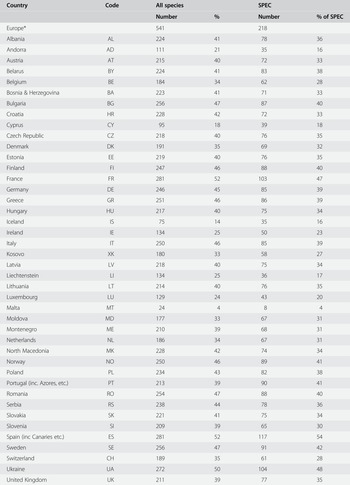
Note. * Europe here includes European Russia, all of Turkey, and the Caucasus.
There is an obvious tendency for large countries, most notably the Ukraine, France and Spain, to have the most species and SPECs. This is not surprising as it reflects the general species richness area relationship that has been widely observed in nature (e.g. Rosenzweig, Reference Rosenzweig1995). One reason for this relationship is the tendency for large areas to have greater variation in their abiotic conditions and habitats. To explore this further, and to show which countries have disproportionately high species richness, Figure 2.5 plots the number of species in relation to the terrestrial area of the country. Each country’s marine area has not been included as a very small proportion of bird species spend all their time at sea other than at their nest site.
The number of bird species that occur in each European country in relation to the country’s terrestrial area.
Notes. See Table 2.4 for country codes. R2 for the logarithmic curve = 0.593.

The graph confirms that there is a clear relationship between species richness and the area of the country, which is best described by the logarithmic curve. Thus, countries that are above the curve can be said to be particularly species rich, for example, as a result of their particularly high geological, topographical or climatic diversity and relatively low levels of human impact. This indicates that Ukraine, and especially France and Spain, are not just species rich because of their size. Other countries that are particularly rich in birds for their size include Bulgaria, Greece, Serbia and Romania. In contrast, the UK, Ireland and Iceland are notably species poor for their size. For the UK, and especially Ireland, this is partly due to their isolation since the Ice Age, as discussed earlier. For instance, Ireland lacks some birds with short dispersal distances, including the Tawny Owl (Strix aluco) and three out of four woodpeckers that occur in Great Britain. As well as being absent from Ireland, some other woodpeckers that occur close by on the continent are lacking in Great Britain, such as Black Woodpecker (Dryocopus martius). Similar results to those shown in Figure 2.5 are obtained if the numbers of SPECs are plotted against the area of the country.
More detailed information on species richness and the distribution of SPECs is available from the maps in the second European Breeding Bird Atlas (Keller et al., Reference Keller, Herrando and Voříšek2020). There is clearly a high level of coincidence between areas with high overall species richness and the number of SPECs, with concentrations of both in southern Sweden, southern Finland, the Baltic States, Belarus, Poland, Bulgaria, south-east Romania and parts of Spain.
Although such detailed Europe-wide distribution information is not available for many other taxa than birds, areas of high conservation importance with respect to species richness, European endemics and threatened species have been mapped for a number of species groups as part of the preparation of European Red Lists. Summaries of such information are therefore presented in Table 2.5, primarily to highlight the varying conservation importance of the groups and the areas of particular importance for them. Whilst some Red Lists are now rather old, and some have been partly revised (Table 2, Neubert et al., Reference Neubert, Seddon and Allen2019), the distribution patterns of interest here are unlikely to have changed since they were produced. Some higher plant Red List results are not included in the table as they focussed on selected groups that would not provide a broadly representative picture as required here. Besides, plant diversity in Europe has been more broadly studied, and 24 centres of diversity identified, of which nine occur within the Iberian Peninsula and 14 are mountain ranges (e.g. the Alps, Pyrenees, Troodos Mountains and Carpathians) (WWF and IUCN 1994, cited in Bilz et al., Reference Bilz, Kell, Maxted and Lansdown2011).
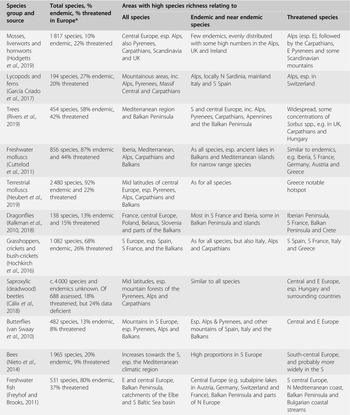
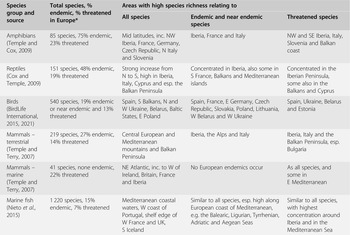
Notes. * Europe here includes the Canaries, Azores and Madeira, European Russia, Armenia, Azerbaijan, Georgia and all of Turkey. Distribution information on areas outside the scope of this book in Russia, Turkey and the Caucasus is not included in the table. Species totals generally refer to native or naturalised species in Europe before 1500 CE. Threat assessments exclude ‘Not Applicable’ species (e.g. non-native), which are normally a small proportion unless indicated. % threatened assumes that the same proportion of Data Deficient species are threatened.
For many species groups there is an obvious geographical gradient, with species richness increasing from north to south, such that Iberia, the Mediterranean region and the Balkans are particularly species rich (e.g. for trees, grasshoppers, etc., bees and reptiles). However, for some others, mid latitudes in central and eastern Europe tend to have the highest species richness (e.g. dragonflies, freshwater fish and amphibians). Mountains also have a marked influence on these patterns, being, for example, particularly rich in species of ferns, butterflies and mammals. Marine fish and mammals contrast in their species richness patterns: the Mediterranean is particularly rich in fish, whilst most European marine mammals are found along the continental shelf of the north-east Atlantic.
Endemics often show similar patterns to overall species richness, but tend to be more concentrated in the glacial refugia of the Mediterranean, as well as mountains and islands, where their isolation has led to speciation. Whilst it is not always apparent from the Red List maps of concentrations of endemics, many islands have their own endemic forms of some more widely distributed species. Although not covered in this book and Table 2.5, the Macaronesian islands and seas are particularly important for endemic species. Threatened species tend to have more concentrated distributions, typically where high species richness and endemism coincide with intense land use change and other human developments over recent decades (e.g. in Iberia, the Mediterranean and Black Sea coasts and the Alps).
This brief analysis reveals that, although there are obvious patterns in spatial biodiversity importance, and similarities amongst some species groups, there are also significant complex variations. Hence, it is necessary for conservation strategies and targeting to understand and take these variations into account, and not be focussed on a few selected and well-studied species groups.
For the EU-28 countries, it is possible to assess their importance more formally with respect to the species identified in the Nature Directives as requiring conservation measures, as listed in BD Annex I and HD Annexes II and/or IV or V. The proportions of the species in BD Annex I, and the combined HD Annexes, that occur in each EU-28 Member State are indicated in Figure 2.6. Both sets of Annex listed species show a rather similar pattern to the bird SPECs (Table 2.4), including a clear species–area relationship. A relatively large proportion also occur in areas with generally high levels of species richness and endemism: thus particularly around the Mediterranean and elsewhere in south-east Europe. For instance, it is noticeable that Greece and Italy have the highest number of Annex listed species, despite not being the largest EU countries. These results are similar to those found in a Red List assessment of plants protected by the Habitats Directive, Bern Convention and CITES, which revealed concentrations of the species within Iberia, France and the Balkan Peninsula (Bilz et al., Reference Bilz, Kell, Maxted and Lansdown2011).
The percentages of HD species and BD Annex I species that are native and occur regularly in the European part of each EU Member State.
Notes. HD species are ‘species of Community interest’ listed in HD Annexes II and/or IV or V. HD species occurring in the Macaronesian terrestrial and marine regions are excluded. UK data exclude species only occurring in Gibraltar.

It should be borne in mind that levels of conservation importance may vary considerably within countries. This is apparent from inspection of the smaller-scale bird atlas data, which reveals, for example, that large areas of Italy and Greece have relatively low numbers of Annex I birds (Keller et al., Reference Keller, Herrando and Voříšek2020).
As EU conservation priorities for species are closely linked to the Annexes, it should be borne in mind that they are neither comprehensive nor based on clear consistent scientific criteria. As a result, they are uneven in their taxonomic and geographical representation. HD Annex II is notable for being dominated by higher plants and including very few invertebrates. Furthermore, the selection of birds for inclusion in Annex I was politically influenced, and the list is now very old. Although the species Annexes were expanded as Member States joined the EU, they have not been adjusted in response to changes in the status of species over the years.
In response to these problems, some scientists have suggested that the Annexes should be updated (e.g. Hochkirch et al., Reference Hochkirch, Schmitt and Beninde2013). This is a complex and controversial issue and cannot be adequately discussed here, but it was concluded during the Fitness Check of the Nature Directives that updating them now would be counter-productive (European Commission, 2016). This is because updating the Annexes would be a distraction when the priority is to protect and manage better the protected areas that have been designated. Furthermore, Natura 2000 sites have been found to protect a high proportion of other species besides those listed in the Annexes for which the sites were designated (Milieu et al., 2016), particularly in the case of butterflies, plants and birds (van der Sluis et al., Reference van der Sluis, Foppen, Gillings and Jones-Walters2016).
2.3.3 The Implications for Nature Conservation Approaches and Priorities
The fact that much of Europe’s remaining terrestrial biodiversity is associated with semi-natural habitats that have been created and maintained by human activities has fundamental implications for the way nature conservation is carried out. In particular, it means that the conservation of many important threatened habitats usually depends on continuing the key human activities that created them. Many species are also reliant on habitat manipulation (Luoto et al., Reference Luoto, Pykälä and Kuussaari2003), including for many threatened species, a high proportion of which are dependent on open habitats and mosaics. Thus a considerable amount of effort in Europe goes into maintaining HNV farming systems for biodiversity. This contrasts with many other parts of the world where the main nature conservation aim is to minimise human influences and allow nature to look after itself. The latter is more applicable to the marine environment in Europe, where the principal priorities are to reduce pollution, the various impacts of fishing and IAS.
In recent years there have been calls from some conservationists for fewer interventions within terrestrial ecosystems, allowing instead natural processes to become predominant in greater areas, through rewilding.Footnote 15 This is often with the associated aims of re-establishing native keystone species, such as Beavers and large herbivores and carnivores. In practice, rewilding, as well as ‘traditional’ nature conservation, normally requires interventions to maintain biodiversity, which is highly dependent on habitat mosaics of various scales created by succession and disturbance processes. Hence, intervention and rewilding are actually complementary nature conservation approaches (Van Meerbeek et al., Reference Van Meerbeek, Muys, Schowanek and Svenning2019; Fuller and Gilroy, Reference Fuller and Gilroy2021). Most obviously and frequently, rewilding requires some grazing and browsing of the vegetation. Therefore, low-intensity livestock farming takes place, using appropriate ancient hardy breeds, as the former wild herbivores are normally absent. Interventions are also sometimes needed to address the legacy of past detrimental impacts, before natural processes can be allowed to become predominant. Forests represent a widespread example, as many managed forests have low structural and species diversity. Therefore, some felling and selective planting is needed to improve their naturalness and biodiversity, at least in the short term. Many highly eutrophicated wetlands require removal of the accumulated nutrients before they can return to their previous natural regime. Over the longer term, conservation interventions are usually required to address ongoing pressures, such as those from further nutrient pollution and colonisation of IAS.
Over recent decades, there has been little need to proactively promote rewilding over much of Europe as it has been occurring incidentally as a result of agricultural abandonment, especially in mountainous areas and other remote regions. This has had some conservation benefits, including contributing to the recovery of populations of large carnivores, but has probably been mostly detrimental for HD habitats and associated specialist threatened species. Whilst more rewilding of agricultural land could be beneficial if judiciously targeted, the higher priority has been to avoid large-scale agricultural abandonment of HNV farmland as it would lead to substantial losses of biodiversity as well as unique cultural landscapes. Given ongoing rural socio-economic trends, priorities in most of Europe continue to be conserve semi-natural habitats and the HNV systems that maintain them – protecting them from abandonment or conversion to more intensive farming systems, forest plantations, bioenergy crops, solar parks or other uses.
Another important consideration is the fact that remaining natural and semi-natural habitats, outside high mountains and remote northern areas, are highly fragmented in most parts of Europe, especially in densely populated western and central areas (EEA-FOEN, 2011). This fragmentation is partly a result of habitat change, as natural and semi-natural habitat patches have become surrounded by inhospitable areas in the landscape. Fragmentation also results from artificial barriers to movement, such as transport infrastructure or dams on rivers. Fragmentation impacts depend on their context and the habitats and species in question; some fragmentation can be beneficial (Fahrig, Reference Fahrig2017; Fahrig et al., Reference Fahrig, Arroyo-Rodríguez and Bennett2019). More frequently, fragmentation is considered to be detrimental, as it disrupts ecosystem processes, reduces habitat quality, increases disturbance levels and external pressures, constrains species movements across the landscape and increases the risk of local extinctions of small populations of species (EEA-FOEN, 2011; Haddad et al., Reference Haddad, Brudvig and Clobert2015; Fletcher et al., Reference Fletcher, Didham and Banks-Leite2018). As a result, it also exacerbates the impacts of other pressures and constrains the ability of species to adapt to climate change (Opdam and Wascher, Reference Opdam and Wascher2004)
To tackle losses and fragmentation of habitats, the first priority has been to conserve what is left, especially of the most depleted natural and semi-natural habitats, through effective protection and management. Relatively small patches of poor habitat also need to be maintained where they have important landscape-scale connectivity functions. Secondly, ecosystem/habitat restoration has been increasingly necessary over recent decades, to maintain ecological processes and the viability of small and isolated species populations. At the same time, restoration can increase connectivity, also helping to maintain the viability of meta-populations (Hanski, Reference Hanski1999) as well as species movements where necessary, between important patches of habitat within a wider network (Crick et al., Reference Crick, Crosher and Mainstone2020).
In addition to ecosystem/habitat measures, specific additional actions are also sometimes required to conserve threatened species. In this respect, it is necessary to bear in mind that there are indications of a substantial extinction debt among European species of various taxonomic groups. As found by Dullinger et al. (Reference Dullinger, Essi and Rabitsch2013), the national Red Lists for 22 countries reflected past pressures from the early and mid, rather than the late twentieth century. Thus, lags in impacts on threatened species need to be taken into account when establishing species conservation strategies and priorities. Whilst such threatened species persist, previous pressures and declines that would otherwise lead to extinction can be reversed if relevant measures are taken rather than just maintaining the status quo (Kuussaari et al., Reference Kuussaari, Bommarco and Heikkinen2009; Krauss et al., Reference Krauss, Bommarco and Guardiola2010).
At present, most of Europe is dominated by highly modified or completely artificial habitats, including intensively managed forests and farmland, and cities and other human created habitats. Whilst these have a greatly impoverished biodiversity, dominated by common and generalist species, they still merit conservation and enhancement where this is possible. Indeed, their species are the most often encountered and enjoyed by people and are therefore particularly valued for aesthetic, educational, recreational and other cultural reasons. More fundamentally, it is now widely recognised that biodiversity both underpins and forms ecosystem services that provide a wide range of essential social, health and economic benefits for humankind (MEA, 2005; TEEB, Reference Kumar2012; IPBES, Reference Brondizio, Settele, Díaz and Ngo2019; Dasgupta, Reference Dasgupta2021). Thus, to use the current terminology, all ecosystems, habitats and species are key components of natural capital that need to be valued and maintained (Barbier, Reference Barbier2011; Helm, Reference Helm2015).
From the preceding analysis it is clear that nature conservation in Europe has had broad and evolving objectives and multiple challenges. It has been necessary to give precedence to the many species and unique habitats that are threatened, giving priority according to scale (i.e. preventing global extinctions first) and the biogeographical importance of the population/area concerned. However, nature conservation has increasingly also needed to encompass all ecosystems and native species, conserving and restoring biodiversity in the wider countryside and urban areas. Tackling these differing objectives has required a variety of approaches and interacting measures, which are described in the next two chapters.


