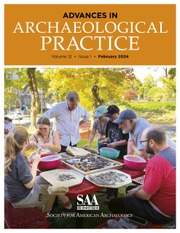


Wicuhketuwakonol (https://pmportal.org/dictionary/wicuhketuwakon) is the Passamaquoddy word for helping others, and this is at the core of our approach to service (Language Keepers and Passamaquoddy-Maliseet Dictionary Project 2006). Wicuhketuwakonol comes from a sense of responsibility for the well-being of all, and it is more complex than a simple act of providing assistance, resources, or aid. It is rooted in the notion that struggle for anyone is a collective experience and has broad social implications, both in terms of present-day peoples and those in the future. Approaching archaeological service from this perspective requires a broad awareness of the needs of the community being served, and this awareness emerges through relationship building and maintenance—or what Lakota scholar Nick Estes (Reference Estes2019:15, 19, 58–60) calls being a “good relation.”
In North American archaeology, practitioners have historically operated from a place of privilege, assuming the right to research and document past Indigenous lifeways without consulting with descendant communities or considering their needs or rights. Theoretical and methodological shifts in the discipline over the last two decades have heightened awareness of this problem. Research designed using Indigenous archaeologies approaches (Atalay Reference Atalay2006; Marek-Martinez Reference Marek-Martinez2016; Murray Reference Murray2011; Nicholas and Andrews Reference Nicholas and Andrews1997; Wadsworth et al. Reference Wadsworth and Kisha Supernant2021) and descendant community engagement (Armstrong-Fumero and Gutiérrez Reference Armstrong-Fumero, Gutiérrez, Lydon and Rizvi2010; Atalay Reference Atalay2012; Douglass Reference Douglass2020) are becoming more commonplace. Additionally, the cadre of Indigenous people leading archaeological research and serving in influential positions in communities, governments, and the academy is increasing, thus bringing new perspectives and approaches to the discipline (Marshall Reference Marshall2021; Nicholas Reference Nicholas2010). These shifts, and the archaeological approaches they inspire, provide scaffolding for a more respectful, just, and equitable discipline—themes central to an advancing a critical Indigenous studies movement in academia (Goeman Reference Goeman2013; Moreton-Robinson Reference Moreton-Robinson and Moreton-Robinson2004, Reference Moreton-Robinson and Moreton-Robinson2016; O'Brien Reference O'Brien2010).
Despite these advancements toward equity, inclusion, and community engagement, additional efforts are needed to leverage archaeology to confront the contemporary challenges Indigenous communities face. People, institutions, and programs across the profession have benefited from the opportunity to conduct archaeological research on Indigenous heritage spaces and past lifeways. As archaeologists, we have a moral obligation to serve the communities whose heritage is at the heart of our work and to approach archaeology as a service, not a right.
In this article, we present a case study from Peskotomuhkatik (Passamaquoddy homeland; now known as Eastern Maine), where service to community is foundational to the research design, teaching, and outreach.Footnote 1 It involves a multifaceted collaboration between the Passamaquoddy Nation, the University of Maine (UMaine), and Maine Coast Heritage Trust (MCHT; a land conservation organization) to address key Indigenous values related to climate change resilience and language preservation through Indigenous archaeology. This model is enacted in a field school setting, where we investigate the interplay between Passamaquoddy people, the coastal environment, and their cultural connections to land and water over a 3,000-year period. We share this program as a blueprint for others seeking to use archaeology to serve descendant communities in ways that address the contemporary challenges they face.
CASE STUDY OVERVIEW
This case study is located in the northeastern United States near the Maine/Canada border (Figure 1). An estimated 2,000 Indigenous shell-bearing sites (mounds, heaps, middens; Claassen Reference Claassen1991) have been documented in Maine representing, at minimum, 5,000 years of Indigenous families occupying the coastline. These sites often exist on the coastal margin near the littoral zone making them vulnerable to erosion, which is exacerbated by climate change–related sea-level rise. Sea level has risen 0.3–0.4 m in the Gulf of Maine since AD 1800 (Gehrels et al. Reference Gehrels, Belknap, Black and Newnham2002), making shell heap sites along the coast of Maine especially susceptible to damage and loss. Increasing storm intensity and frequency, and irregular freeze–thaw cycles also threaten coastal communities and heritage sites (Chisholm et al. Reference Chisholm, Talbot, Appleby, Tam and Rong2021).
Map showing project location and Passamaquoddy reservations. (Map by Bonnie Newsom.)

For the Passamaquoddy and other Indigenous communities living in these regions, coastal shell-bearing sites are remnants of a built heritage that evoke cultural connections to place. Climate change impacts disrupt existing cultural connections and the potential for future connections between Passamaquoddy people, heritage places, and their Ancestors. In addition, these places are rarely afforded the same stewardship attention as the built heritage of settler societies located within the same regions (e.g., lighthouses, forts, historic homes). Marginalization of coastal shell-bearing sites renders Indigenous histories and connections to place socially invisible and contributes to the historic and systemic erasure of Indigenous peoples from the land, waters, and historical narratives.
As Wildcat (Reference Wildcat, Maldonado, Colombi and Pandya2013:510) notes, Indigenous communities are particularly vulnerable to climate change loss and damage for multiple reasons. They are culturally connected to places long term and across generations; they are often intimately related to natural resources that are especially sensitive to climate shifts (e.g., marine and freshwater resources); and they face systemic social, economic, and political marginalization, making it challenging to mobilize resources to address climate change impacts or influence policy. The Indigenous peoples in Maine, particularly the Passamaquoddy people, are no exception given that climate change impacts their coastal homelands and heritage spaces in disproportionate ways.
Threats to the culture and heritage of the Passamaquoddy people are not limited to climate change impacts on coastal sites. The Passamaquoddy community is also struggling to overcome the effects of linguistic genocide (Jacob Reference Jacob, James Jacob, Cheng and Porter2015) associated with colonization. Language is critical to preserving Passamaquoddy identity, knowledges, and culture, but it is extremely fragile. The Passamaquoddy language is on UNESCO's (Moseley Reference Moseley2010, Reference Moseley, Derhemi and Moseley2023) and Ethnologue's (Eberhard et al. Reference Eberhard, Simons and Fennig2023) endangered language lists, and it is estimated that fewer than 500 fluent speakers of Passamaquoddy exist today (Passamaquoddy Peoples’ Knowledge Portal 2023). Most speakers are over 60 years old (Golla et al. Reference Golla, Goddard, Campbell, Mithun, Mixco, Moseley and Asher2008), and opportunities for in-home, intergenerational language learning are diminishing, creating an urgency around efforts to address the problem.
Given these issues, the Northeast archaeology program at UMaine has instituted a research agenda and archaeological practice focused on endangered coastal shell-bearing sites, language preservation, and community engagement. We apply Indigenous archaeologies approaches to the research design and implementation. Indigenous archaeology—which Nicholas and Andrews (Reference Nicholas and Andrews1997:3) define as research with, for, and by Indigenous peoples—prioritizes Indigenous values and agendas (Watkins Reference Watkins2000; Wobst Reference Wobst, Smith and Martin Wobst2005) and strives to dismantle Eurocentric approaches to archaeology that violate Indigenous rights over heritage (Atalay Reference Atalay2012; Nicholas Reference Nicholas2008).
Multiple scholars have advanced the theoretical and methodological development of Indigenous archaeologies by articulating its diverse facets and applications. For example, Atalay (Reference Atalay2006), Cipolla and Quinn (Reference Cipolla and Quinn2016), Colwell (Reference Colwell2016), and Smith and colleagues (Reference Smith, Jackson, Ralph, Brown, Rankin and Community2021) advocate for community-based archaeology, whereby Indigenous communities participate in the fieldwork and other phases of the research process, including research design, interpretation, data management, and outreach. Similarly, Nicholas (Reference Nicholas2008) contends that Indigenous archaeologies approaches acknowledge that archaeological practice has been a colonialist endeavor and that alternative approaches are needed to empower Indigenous peoples with respect to their own pasts.
This case study is aligned with Indigenous archaeologies philosophies and uses a service-based approach to not only address contemporary problems but to also push back on established norms in archaeology that privilege non-Indigenous authorities over Indigenous heritage. It also redresses the erasure of Indigenous peoples in archaeological practice and Maine's colonial history. Importantly, it serves the Passamaquoddy community by developing research products that help mitigate heritage site loss and support their language preservation efforts.
RELATIONSHIP FRAMEWORK
Relationship frameworks for collaborative archaeology are idiosyncratic to a particular context, and the relationships among the project partners are a key contributor to the success of the research program discussed here. Good relations require trust, reciprocity, communication, and respect for one another even in times of disagreement. In short, people treat each other like kin. These types of relationships require time to develop, especially for individuals from outside of the community, and they have to be desired by all involved. Therefore, being involved in and supporting communities outside the scope of a research project is paramount to establishing good relations. This often requires going beyond the parameters established by academia, or those needed to fulfill broader impacts funding requirements, and this should continue after a project has finished.
The relationship between the Passamaquoddy Nation, UMaine Anthropology, and MCHT emerged from a professional relationship between Donald Soctomah, the Passamaquoddy Tribal Historic Preservation Officer (THPO), and UMaine archaeologist Brian Robinson. In 2008, Robinson and Soctomah collaborated on a UMaine archaeological field school that focused on the relationship between Passamaquoddy ancestral petroglyphs and the archaeological sites around Machias Bay in Eastern Maine (Robinson and Neuman Reference Robinson and Neuman2009). The partners worked closely with MCHT as the holder of conservation easements in the area where many Passamaquoddy heritage sites occur. This initiative inspired subsequent archaeological research in the region, and the relationship became foundational to Robinson's research agenda, the Passamaquoddy's cultural and historic preservation goals, and MCHT's stewardship responsibilities.
Following the untimely passing of Brian Robinson in 2016, Bonnie Newsom joined the UMaine faculty as their Northeast archaeologist. She and Soctomah had an existing long-term relationship through their work together as Penobscot and Passamaquoddy THPOs, respectively. This relationship enabled the two to continue to partner on the Machias Bay archaeological research and made for a relatively seamless transition to a new principal investigator (PI) for the field school and an enhanced research agenda that integrated Passamaquoddy language preservation into the project. MCHT and the local landowners continue as partners and site stewards as well.
Communication, respect, and partner accountability are at the core of these relationships. Ideas and decisions about research directions, student projects, publications, and data use are shared among project partners, and priority is given to Passamaquoddy needs and values. Soctomah, in his role as THPO, serves as a conduit for information flow and engagement activities between the Passamaquoddy community at large and UMaine archaeology students and faculty. He also aids in interpretations of sites and materials, reviews research, and provides guidance on research topics and directions.
THE PASSAMAQUODDY PEOPLE (PESKOTOMUHKAT, “ONE WHO SPEARS POLLOCK”)
The Passamaquoddy people are the easternmost Indigenous community in the United States and one of four federally recognized tribes in Maine. Collectively, Native peoples in Maine refer to themselves as Wabanaki, which translates to “People of First Light.” The traditional homelands of Wabanaki peoples encompass northern New England and parts of eastern Canada. Today, the Passamaquoddy have a population of roughly 3,600. Their ancestral homeland includes eastern Maine and New Brunswick, Canada. Today, they have two US reservations near the US/Canada border (Figure 1), and a Canadian Passamaquoddy band lives across the border in New Brunswick (Passamaquoddy Peoples’ Knowledge Portal 2023).
The Passamaquoddy people have strong cultural preservation efforts underway focusing heavily on language, climate change, and heritage. They have enacted a robust language nourishment program and are proactive in climate change planning and policy implementation, particularly in their forestry and blueberry-growing operations (Bowman Reference Bowman2022; US Department of the Interior 2022). Because of their ancestral and cultural ties to the coast, their involvement in preservation of coastal heritage spaces is strong (Cassidy Reference Cassidy2006). Their collaboration with the UMaine Department of Anthropology on the archaeology of the Machias Bay area has been ongoing since 2008, with eight seasons of data-recovery excavations and two reconnaissance surveys. These efforts align with their climate change– and cultural preservation–related goals.
A COLLABORATIVE COASTAL FIELD SCHOOL
The case study discussed here focuses on the Passamaquoddy heritage site referred to as Holmes Point West (HPW; Site #62-8 in the Maine site designation system), a shell-bearing archaeological site in Machias Bay, Maine (Figure 1). The site is located within Passamaquoddy ancestral territory and occurs on a coastal point of land that is experiencing severe erosion (Figure 2). The Passamaquoddy community has taken a strong role in stewardship and engagement with this and other sites in the Machias Bay area.
Image of erosion at the Holmes Point West Site. (Photograph by Ian Johnston.)

UMaine supports the Passamaquoddy Nation in their language and climate change agendas through a four-week summer field school course and complementary graduate and undergraduate archaeological research projects. The research program is funded through an internal UMaine Maine Academic Prominence Initiative (MAPI) grant designed to support student research experiences and innovative projects across disciplines (Neuman Reference Neuman2010). Students are selected to participate based on academic interests and performance. Indigenous students within the UMaine system are given priority placement.
MAPI funding covers student expenses associated with attending the field school, including in-state undergraduate tuition, room and board, and transportation to and from the site. This is one of a handful of field schools (globally) that covers these types of costs for students. Flewellen and colleagues (Reference Flewellen, Odewale, Dunnavant, Jones and White2022:162, 164–165) note that the high cost of field schools is often a barrier to participation, especially for students from marginalized communities. According to the Institute of Field Research, on average, participating in an archaeological field school costs approximately $4,300 just for attendance (Flewellen et al. Reference Flewellen, Odewale, Dunnavant, Jones and White2022:162, 164–165; Heath-Stout and Hannigan Reference Heath-Stout and Hannigan2020). MAPI funding provides students opportunities to gain field experience that includes community engagement, which prepares them well for archaeology's future.
Graduate assistantships and research projects undertaken by faculty and undergraduate students are also supported by MAPI. This aspect of the program generates publications and products that serve multiple purposes: (1) to uphold the accountability to pursue research topics important to the Passamaquoddy, (2) to offer publication opportunities to students and community partners as lead and coauthors, and (3) to publish archaeological data in a timely manner (Kintigh Reference Kintigh1996; SAA Principle No. 6: Public Reporting and Publication).
Perhaps one of the most valuable features of the field school is the opportunity for students to interact with and learn from Wabanaki representatives. UMaine provides honoraria for Wabanaki community members and other guests to participate in the field school in various ways (e.g., guest speakers, language specialists, spiritual leaders, fieldwork participants). Past Wabanaki representatives have presented on topics such as repatriation, petroglyphs, flintknapping, Wabanaki history, and their own archaeological experiences. A more personal interaction occurs between Wabanaki participants and students through shared meals and fieldwork. This provides an informal opportunity for cross-cultural knowledge sharing, relationship building, and dialogue. Additionally, all field school lessons and activities are open to Wabanaki involvement, and the syllabus is shared with the Passamaquoddy THPO for review and input. The syllabus is also shared with the three other Wabanaki THPOs to inform them of the schedule and encourage participation. Evening activities, such as cataloging and organizing collections, ceramic manufacture, flintknapping, or storytelling, are open for community representatives, providing another opportunity for knowledge exchange. Wabanaki involvement in the field school is not overly scripted, and participants choose how to be involved and what to share.
As a field school model, the HPW course contributes to a growing trend in inclusive and collaborative archaeological practice in the northeastern United States and beyond (Kerber Reference Kerber2006; Silliman Reference Silliman2008; Smith et al. Reference Smith, Jackson, Ralph, Brown, Rankin and Community2021). These types of initiatives are well positioned to serve descendant communities and make meaningful change for them through archaeology. Additionally, as training opportunities for future archaeologists, they support advances in equitable and multivocal archaeological practice.
THE FIELD SCHOOL SETTING: THE HOLMES POINT WEST SITE
Holmes Point West (HPW) is coastally situated within a dynamic tidal environment and sits adjacent to a productive clam flat. It has a sloped hillside and eroding south and west faces. The site hosts a relatively thin shell deposit (~30 cm), which, when combined with evidence of extreme erosion, suggests that what exists of the site currently is the remaining margin of a once larger shell heap (Bird Reference Bird2017).
The site is part of a cultural landscape that includes over 50 known archaeological sites (Maine Historic Preservation Commission 2022)—most of which are shell heaps dating to the last 3,000 years. This landscape is enriched by one of the largest concentrations of Indigenous petroglyphs in the eastern United States, consisting of both animal and human motifs carved into exposed bedrock. MCHT holds a conservation easement on the parcel and monitors the site regularly as part of its conservation responsibilities. The site was selected as a service project for several reasons, including its proximity and association with petroglyph concentrations, its vulnerability due to the high risk of erosion linked to a changing climate, and its having been previously surveyed by UMaine archaeologists in 1973, offering the potential to monitor long-term change.
Petroglyphs occur in multiple places near the HPW site and represent mnemonic devices, communication tools, spiritual messages, or artistic renderings made by the Ancestors of the Passamaquoddy people (Figures 3 and 4). For this reason, the Passamaquoddy people have been dedicated and emphatic stewards of the Machias Bay petroglyphs. In fact, after a tremendous effort, they reacquired “ownership of” or responsibility for Amalhuwikhasutik (“place of the special messages or fancy drawings”), a parcel of land across the Bay from the HPW site where bedrock panels of numerous petroglyphs exist. The land was transferred to them through an agreement with MCHT in 2006 (Cassidy Reference Cassidy2006), and this event inspired an ongoing relationship between the Passamaquoddy, MCHT, and UMaine that is centered on the connections between the petroglyphs and the archaeological sites in the Machias Bay region.
Machias Bay petroglyph image—human motif. (Photograph by Donald Soctomah.)

Machias Bay petroglyph image. (Photograph by Donald Soctomah.)

Like many Indigenous shell-heap sites in Maine, the HPW site preserves a rich assemblage of cultural materials representing a small Archaic period component in addition to well-represented Woodland (Ceramic) and Historic period components. Stone and bone tools, diagnostic ceramics, and flora and fauna are well preserved here due to the presence of Mya arenaria (soft-shell clam) shells, which reduce the acidic effects of Maine soils.
Archaeological evidence of settler encroachment on Passamaquoddy homelands is present at the site and includes both French and English historic material culture. Remnants of a seventeenth-century Saint-Onge French pot and an eighteenth-century white salt-glazed English chamber pot were recovered from the site, as were rose-head and hand-cut nails, lead bullets and shot, brick, pipe bowls and stems, historic glass, and European ballast flint (Bird Reference Bird2017). Presently, it is unclear if these artifacts were used on-site by Passamaquoddy who acquired them through trade with European explorers in the 1600s, or from the onset of colonization in the 1700s when the area was settled by Europeans.
Although European artifacts at the HPW site may be explained as the result of trade, they may in fact represent Wabanaki command of and connection to the waters in the seventeenth and eighteenth centuries. As Bahar (Reference Bahar2019:219) points out, Wabanaki individuals exercised their inherent sovereignty over Indigenous spaces, including coastal resources. Through Wabanaki command of sailing vessels (such as their ocean-going canoes) and through the adoption of European sailing ships (such as schooners, sloops, and ketches), they succeeded in impeding settler colonialism in their lands and waters for centuries. Indeed, their mastery of the sea made them both a viable ally and direct threat to French and English colonial powers and their vassals, including fishermen, merchants, and settlers. When European settlers reneged on their promises, Wabanaki extended their right to governance over their terrestrial and marine-based territories by enacting taxing raids on English settlements and their oceanic fishing industries. If Wabanaki mariners utilized Machias as a stop-off point, some of the artifacts found during subsequent HPW excavations may not necessarily represent European invasion but rather Wabanaki attempts to maintain sovereignty and the adoption of items that aided Wabanaki peoples or were integrated into Wabanaki society.
Contextualizing European material culture recovered from the HPW site from the vantage point of the Passamaquoddy people adds to the service mission of this research program. It acknowledges the diversity of the site's storyscape (Kaufman Reference Kaufman2009) and confronts the historic erasure of Indigenous peoples from the postcolonization historical narrative. Multiple scholars have shown that Indigenous connections to place do not terminate with European colonization, and the postcolonial archaeological record reflects dynamic relationships to place and complex entanglements among peoples (Lightfoot and Gonzalez Reference Lightfoot and Gonzalez2018; Mrozowski and Gould Reference Mrozowski and Rae Gould2019; Silliman Reference Silliman2005).
Research centered on exploring past Indigenous lifeways serves Passamaquoddy interests, and collaboration related to this research has evolved with PIs. Under current practices, the PI and THPO communicate about new student research interests, and the THPO determines whether or not the line of research is appropriate. The PI works directly with the student to shape the research in ways that intersect with community needs and values. Direct interactions between students and the Passamaquoddy THPO or community members varies. Students may consult with the Passamaquoddy THPO or other community members on particular aspects of the research, and they may give community talks or create posters for the community museum. It is not feasible or appropriate to expect the THPO or community members to be continually responsive to multiple students throughout their research journey at UMaine. The PI's role is to guide the student through the engagement process and determine appropriate engagement procedures in collaboration with the THPO.
Wabanaki involvement in the research program promotes two-eyed seeing methodologies (Bartlett et al. Reference Bartlett, Marshall and Marshall2012; Reid et al. Reference Reid, Eckert, Lane, Young, Hinch, Darimont, Cooke, Ban and Marshall2021), which move research beyond extractive approaches to collaborative knowledge production that integrates Indigenous science and Western science knowledges equitably. According to Barltett and colleagues (Reference Bartlett, Marshall and Marshall2012:335), the concept of two-eyed seeing is attributed to Mi'kmaw Elder Albert Marshall, who described it as “learning to see from one eye with the strengths of Indigenous knowledges and ways of knowing, and from the other eye with the strengths of mainstream knowledges and ways of knowing, and to use both these eyes together, for the benefit of all.” Two-eyed seeing is a pluralistic approach that positions Indigenous ways of knowing in a place of equity with Western science.
The two-eyed seeing approach has gained momentum across the spectrum of disciplines (Abu et al. Reference Abu, Reed and Jardine2020; Hall et al. Reference Hall, Dell, Fornssler, Hopkins, Mushquash and Rowan2015; Marshall et al. Reference Marshall, Marshall, Bartlett, Greenwood, Leeuw and Lindsay2015; McKeon Reference McKeon2012) and is similar to Atalay's (Reference Atalay2012) Anishinabe concept of “braiding knowledge,” a theme that inspired a session at the 2019 Society for American Archaeology meeting in Albuquerque, New Mexico (Clark et al. Reference Clark, McAnany and Atalay2019). Both approaches deconstruct platforms that elevate Western science knowledge production above other forms of knowledge.
Graduate and undergraduate research projects completed for this site involve varying levels of community engagement. All research products are provided to the Passamaquoddy THPO for distribution and use within the community as appropriate. The THPO routinely supports students through knowledge sharing. These studies document diverse aspects of past Passamaquoddy life at HPW and serve as information sources for Passamaquoddy people. They include a feature analysis (Omand Reference Omand2010), a faunal study (Ingraham Reference Ingraham2011), an exploration of gravel house floors (Hrynick and Robinson Reference Hrynick and Robinson2012), a spatial analysis (Bird Reference Bird2017), a seasonality analysis (Blackwood Reference Blackwood2019), a canine dietary analysis (Mann Reference Mann2021), and a petroglyph reanalysis (McGrath Reference McGrath2023).
Faculty and student collaborations on topics such as animal symbolism, palynology, and ceramics complement these studies (Hatch et al. Reference Hatch, Blackwood, Nurse and Robinson2014; Lamb Reference Lamb2017; Newsom and James Reference Newsom and James2019; Robinson and Heller Reference Robinson, and A and Heller2017). Collectively, these studies contribute to a holistic account of past Passamaquoddy life at HPW, help reconnect Passamaquoddy people to their past, and preserve information about the site for future generations.
Unfortunately, heritage loss and damage are occurring rapidly at this location through shoreline erosion; Passamaquoddy cultural material and paleoenvironmental data are washed away annually. Although erosion information is anecdotal at present, the landowner suggests that the parcel has experienced roughly 10 m of loss over the last 40 years. Erosion and its effects on the site will likely accelerate as climate change impacts intensify. Additionally, petroglyphs located adjacent to the site are experiencing cracking and erosion from intense wave activity and irregular freeze–thaw activity (Bird Reference Bird2017).
In addition to climate change impacts, contemporary clam harvesting at the adjacent mud flats expose the site and petroglyphs to additional threats of looting and vandalism. Recently, clammers have been encroaching on the clam flats next to the petroglyph panels as they vie for increasingly limited harvesting.
Given the vulnerability of the HPW site as a Passamaquoddy heritage resource, the research projects described above, as well as future studies, not only preserve information but also contribute to the narrative of Passamaquoddy pasts. Because the studies are not determined by one individual's research agenda, they generate knowledge across the spectrum of topics related to Passamaquoddy identity and ancestral lifeways.
INSPIRING A SERVICE ETHIC IN STUDENTS
The HPW field school is unique and multifaceted. It exemplifies Indigenous archaeologies methodologies and strives to adhere to the Passamaquoddy concept of Wicuhketuwakonol (“helping others”). Well-established relationships are crucial for this type of collaboration to be successful, mutually beneficial, and guided by Indigenous priorities. The field school is a community-engaged student learning experience designed to train students in archaeological fieldwork as a form of service to Indigenous peoples. The program entails direct collaboration with, and a research agenda informed by, the Passamaquoddy Nation with the following goals: develop student awareness of Wabanaki heritage through multivocal perspectives as defined by Atalay (Reference Atalay2012); provide students with conventional training in archaeological fieldwork methods; develop understandings of Indigenous archaeologies theory and methodologies; and support Indigenous agendas through archaeology, collaboration, and service. Throughout the field school, we emphasize the value of knowledge coproduction and provide students and community participants opportunities to explore the site from multiple perspectives.
Similar to the research projects described above, the field school structure facilitates opportunities for two-eyed seeing to occur in multiple ways. For example, an elder opens the field school with a smudging ceremony that connects participants to the place and Ancestors in a spiritual way before the removal of any topsoil. This establishes a humanistic and contemporary tone for the fieldwork. By participating in this opening, students come to understand the deep spiritual connections between past and present peoples and their relationship to place. Through this process, students are inspired to engage with the site and ancestral materials more carefully and conscientiously than they may have otherwise done.
The field school programming includes Passamaquoddy elders, who share their knowledge with students on how to approach the site in culturally appropriate ways. Elders remind students that the artifacts with which students work were created by Passamaquoddy Ancestors, who are paying close attention to how things are being conducted. This encourages them to think beyond Western science approaches and apply “two-eyed” thinking to their fieldwork experiences (Bartlett et al. Reference Bartlett, Marshall and Marshall2012; Reid et al. Reference Reid, Eckert, Lane, Young, Hinch, Darimont, Cooke, Ban and Marshall2021). The spiritual connections between past and present peoples, so essential to many Indigenous communities, become prominent in the fieldwork and overall coursework.
The value of a “two-eyed” seeing approach is also exemplified in Soctomah and Robinson's collaborative research on seals (Ingraham et al. Reference Ingraham, Robinson, Sobolik and Sky Heller2016:92; Soctomah and Robinson Reference Soctomah and Robinson.2010). In this project, the identification of seal remains at the site inspired Soctomah to initiate an oral history project with Passamaquoddy students and seal-hunting families. This process enhanced community knowledge of the Passamaquoddy seal-hunting tradition and contributed to a broader knowledge of past Passamaquoddy/seal relationships.
More recently, McGrath (Reference McGrath2023) and Soctomah collaborated on a reanalysis of petroglyphs in Machias Bay. Past analyses of petroglyphs were largely non-Indigenous interpretations based on conventional anthropological approaches, with little input from Passamaquoddy people. McGrath (Reference McGrath2023) worked with Soctomah to devise a research question that applied updated methods for petroglyph studies. Their aim was to analyze petroglyphs to explore petroglyph styles in connection to the Little Ice Age.
One of the most important aspects of the field school is the integration of Passamaquoddy language into the student learning process, site interpretation, and community service. This component provides opportunities for both knowledge exchange and service through language preservation. Jacob (Reference Jacob, James Jacob, Cheng and Porter2015) proposes four strategies for overcoming linguistic genocide, three of which are relevant to the HPW field school. They include governmental support, Indigenous peoples’ involvement, and leveraging new technologies for language learning. With regard to governmental support, as a state institution, the UMaine system is well positioned to help prevent the extinction of Wabanaki languages. Current efforts within the UMaine system that support language preservation include offering coursework and instruction in the Passamaquoddy language at multiple campuses, integrating the Penobscot language on campus signage, and speaker/faculty publication collaborations (Dana et al. Reference Dana, Lukens and Quinn2021). The Passamaquoddy language focus at the HPW field school serves as another means for the UMaine system to support language preservation while creating opportunities to blend Indigenous knowledges with Western science.
Passamaquoddy words that describe or label artifacts/sites help reveal embedded meanings inherent in the language of Passamaquoddy Ancestors. For example, literal translations in Passamaquoddy such as that for “beaver” (quapit, “red tooth”) or paper (pilasq, “new-growth birch bark”) reveal descriptive nuances in the language that are important for understanding past lifeways, perspectives on other species, and worldviews; however, these are routinely neglected through Eurocentric approaches that favor archaeological terminology and dominant languages over Indigenous ones.
Student learning and knowledge exchange among participants surpass basic language structure and terminology. Passamaquoddy speakers Dwayne Tomah in 2019 and Newell Lewey in 2022 shared their perspectives on concepts such as respect (kcitomitahatom) and sacredness (kcitposu) with field school students (Figure 5). Conversations on topics such as these help to convey Passamaquoddy worldviews and values, and they also situate the site and cultural materials within a contemporary context. As students and speakers work together, cultural materials and places are connected to stories and phrases that move students beyond simple interpretations of objects to complex interpretations of relationality between individuals, communities, places, and material culture. Conversely, speakers enhance their vocabularies and knowledge of the past through engagement with the students, the place, and the material culture.
Passamaquoddy-speaker Dwayne Tomah with UMaine field school students. (Photograph by Bonnie Newsom.)

During the most recent two field schools, we integrated student assignments that align with Jacob's (Reference Jacob, James Jacob, Cheng and Porter2015) language preservation strategy, which is centered on leveraging technology. Students use their experiences with speakers and other Wabanaki participants to create digital language-learning tools for the Passamaquoddy community. Field school students have produced language learning videos and digital flash cards that are archaeology-themed and incorporate Passamaquoddy audio, video, and related imagery (https://passamaquoddypeople.com/collection/archaeology). The end result is a bundle of digital resources that the Passamaquoddy community can use in their language program, or however they deem appropriate. This activity reinforces the service-based philosophies of the field school and provides students with a way to “give back” to the Passamaquoddy community for the opportunity to participate in a field school centered on Passamaquoddy heritage. Other cross-cultural experiences integrated into the field school program include visits from tribal and nontribal school groups, tours of the Passamaquoddy and other relevant museums, and hands-on experiences in flintknapping and ceramics manufacture. Collectively, these activities contribute to our “two-eyed seeing” goals by bringing people together around topics related to culture, archaeology, and heritage.
PASSAMAQUODDY RESILIENCE AND CLIMATE CHANGE
Despite the significant impacts of climate change on their ancestral lands, the Passamaquoddy people transform this loss into resilience. Wong-Parodi and colleagues (Reference Wong-Parodi, Fischhoff and Strauss2015:1) have defined this concept: “resilience includes the ability to acquire new capabilities, perhaps emerging stronger from the struggle.” Heritage loss and damage are part of the Passamaquoddy's climate change struggle, and under current and predicted climate conditions, we cannot protect the HPW site, surrounding sites, or the petroglyphs from the damaging impacts and consequences of climate change. But collectively, we can learn from the Ancestors’ experiences and come to understand better how they navigated life in this space through time and a changing physical environment. As partners in heritage preservation, we can support the Passamaquoddy's efforts to pass their stories on to the next generations. This is resilience in the face of struggle as the Passamaquoddy culture and language become strengthened through this process. It is how knowledge is protected and transferred for millennia, whether it be through pecked image, material culture, or spoken word. Erosional processes will lead to total site loss in the coming years, but Passamaquoddy resilience emerges through a stronger language and reclaimed connections to—and knowledge of—ancestral spaces and lifeways.
The University of Maine / Passamaquoddy field school partnership blends two fragile cultural resources together—language and archaeological heritage—to transform climate change loss and damage into something that can strengthen the Passamaquoddy community. This happens in the following ways: (1) strengthening cultural identity and continuity by connecting present peoples with their ancestral pasts; (2) confronting climate change–related heritage loss and transforming it into something that benefits communities; (3) deconstructing erased connections to place resulting from colonization efforts that intentionally, physically, socially, economically, and politically distance Indigenous peoples from heritage spaces; (4) integrating lessons from the Ancestors—which may relate to climate change, engagement with nonhuman relatives, sustainable lifeways, and ceremony—into contemporary community knowledges; and (5) bringing Passamaquoddy perspectives, needs, and knowledges to the forefront of archaeological inquiry and interpretation.
CONCLUSION
The research program discussed here builds on the foundations established by early advocates for Indigenous archaeologies approaches to research. As an Indigenous heritage space, the HPW site documents Passamaquoddy engagement with Machias Bay and reinforces the community's cultural connections to a landscape where settler culture has muted its presence for the past several centuries. Maine has a marked history of attempting to erase Indigenous connections to place in an effort to undermine tribal sovereignty. Challenges linked to land, heritage, and water rights are ongoing, and language loss and climate change add another layer to those challenges. The archaeological evidence from the Machias Bay area demonstrates the adaptability and resilience of Passamaquoddy Ancestors through their continued use of this space for millennia despite settler encroachment and changing climates. Passamaquoddy connections to this place are evident not only in the persistence of the petroglyphs and archaeological materials but also in the sustained effort of the Passamaquoddy Nation to maintain connections to this landscape through partnerships, education, and advocacy for preservation. This type of participation in archaeological research showcases Indigenous agency in responding to climate change impacts and inspires the deployment of Indigenous archaeologies frameworks to support resilience to climate change impacts on heritage.
Importantly, this case study and others like it exemplify the utility and value of community-engaged collaborative research for teaching the next generation of archaeologists and transforming archaeological practice in ways that make a substantive impact on the lives of contemporary Indigenous peoples.
Acknowledgments
With gratitude, we acknowledge the Ancestors of the Passamaquoddy and other Wabanaki Nations for gifting us with much to learn from. We are appreciative of the ongoing support of this project by UMaine through the Maine Academic Prominence Initiative. The community partners who participate in and guide our program are vital to the program's success, specifically Passamaquoddy speakers Dwayne Tomah and Newell Lewey, who have shared their words and thoughts with field school students with grace and generosity. Maine Coast Heritage Trust and the property owners are dedicated stewards of the Holmes Point West site, and we are grateful for their enthusiastic support. We also acknowledge Dr. Lisa Neuman and the late Dr. Brian Robinson, whose collaborative efforts initiated and sustained this important work, and for Brian's unrelenting passion that inspired a new generation of archaeologists. Finally, we thank Abby Mann for her assistance with this article, and all of the former and current students whose work contributes to the evolving story of past Passamaquoddy lifeways in the Machias Bay region. No permits were required for the work described here. We accept full responsibility for errors or omissions.
Funding Statement
Financial support for this project and manuscript was provided by the University of Maine Academic Prominence Initiative.
Data Availability Statement
Information and records (digital and hard copy) from the archaeology field school are on file at the University of Maine Department of Anthropology, South Stevens Hall, University of Maine. Consultation with the Passamaquoddy Tribal Historic Preservation Office is required for all data requests.
Competing Interests
The authors declare none.


 Open access

