3 - “Ready to Die for Liberty”
Expanding the Boundaries of Freedom
Published online by Cambridge University Press: 05 July 2014

Summary
They Know Everything that Happens
Blacks throughout the country – North and South, free and enslaved – rejoiced as word of the preliminary Emancipation Proclamation spread. Despite its limited nature, it was astonishing to see such a document coming from a president who had once supported a constitutional amendment guaranteeing slavery forever. In little more than a year, blacks had forced Lincoln and the country further toward the right side of history. They still had some way to go, but black folk would continue pointing the way. The Emancipation Proclamation may have been signed with Lincoln’s pen, but blacks were its author. They would take ownership of the document and make it much more than it was. Within days of the preliminary Proclamation’s announcement on September 22, slaves were escaping to Union lines and claiming its promise of freedom months before it went into effect. The editors of the New York Times wrote on September 28 that there must surely be “a far more rapid and secret diffusing of intelligence and news through the plantations than was ever dreamed of at the North.”
On January 1, 1863, at prayer meetings across the South and mass meetings across the North, blacks and their white abolitionist allies celebrated the day of “Jubilee.” A huge crowd packed Boston’s Music Hall for a celebratory concert. At nearby Tremont Temple, there were three meetings that day – morning, afternoon, and evening – all of which packed the house. Among the speakers were black abolitionists William Wells Brown, John Rock, and Frederick Douglass. William C. Nell – journalist, author, and, as a Boston postal clerk, the first black ever to serve in the federal civil service – spoke of the day as a turning point in the lives of enslaved Americans. “New Year’s day – proverbially known throughout the South as ‘Heart-Break Day,’ from the trials and horrors peculiar to sales and separations of parents and children, husbands and wives – by this Proclamation is henceforth invested with new significance and imperishable glory in the calendar of time.”
Information
- Type
- Chapter
- Information
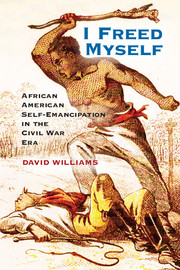
- I Freed MyselfAfrican American Self-Emancipation in the Civil War Era, pp. 114 - 160Publisher: Cambridge University PressPrint publication year: 2014
References
Boston Evening Transcript, January 2, 1863
Liberator, January 16, 1863
and , eds., William Cooper Nell, Nineteenth-Century African American Abolitionist, Historian, Integrationist: Selected Writings from 1832–1874 (Baltimore: Black Classic Press, 2002)
Douglass’ Monthly, March 1863
Springfield (Mass.) Daily Republican, May 4, 1861
, January 14, 1863, American Missionary Association Archives, Tulane University, in et al., Black Abolitionist Papers, 5: 173Google Scholar
[commanding, First Division, Sixteenth Army Corps] to [Headquarters, Sixteenth Army Corps], March 27, 1863, in et al., Destruction of Slavery, 303
New York Times, October 23, 1862
, ed., “An Editor Looks at Early-Day Kansas: The Letters of Charles Monroe Chase,” Kansas Historical Quarterly 26 (1960): 136
, trans., Missouri Ordeal, 1862–1864: Diaries of Willard Hall Mendenhall (Newhall, Calif.: C. Boyer, 1985), 132–33Google Scholar
to [commanding, Sixteenth Army Corps], June [?] 1863, in et al., Destruction of Slavery, 584–85
[civilian recruiting agent] to [superintendent of black recruitment in Maryland], August 19, 1863, in et al., Black Military Experience, 204
[commanding, camp of instruction at Benton Barracks, Missouri] to [Headquarters, St. Louis District], May 28, 1863, in et al., eds., Freedom: A Documentary History of Emancipation, 1861–1867, series 1, vol. 2, The Wartime Genesis of Free Labor: The Upper South (Cambridge: Cambridge University Press, 1993), 570Google Scholar
to , November 19, 1862, Collection, University of Michigan, in , The Private Civil War: Popular Thought during the Sectional Conflict (Baton Rouge: Louisiana State University Press, 1988), 39–40Google Scholar
, Jersey Blue: Civil War Politics in New Jersey, 1854–1865 (New Brunswick, N.J.: Rutgers University Press, 1995), 218–19Google Scholar
to , February 2, 1863, Thomas W. Sweeny Papers, Huntington Library, San Marino, Calif., in , What They Fought For, 1861–1865 (New York: Anchor Books, 1995), 63Google Scholar
Kittanning (Penn.) Mentor, August 26, 1863
to and , July 31, 1862, William T. Pippey Papers, Duke University, in , Private Civil War, 41
to cousin Mary, May 31, 1864, New York Eighty-first Infantry Folder, United States Army Military History Institute, in , Civil War Soldiers (New York: Viking, 1988), 14Google Scholar
, Desertion during the Civil War (Lincoln: University of Nebraska Press, 1998), 145, 151Google Scholar
, A People’s History of the Civil War: Struggles for the Meaning of Freedom (New York: New Press, 2005), 253–83Google Scholar
, The Devil’s Own Work: The Civil War Draft Riots and the Fight to Reconstruct America (New York: Walker and Co., 2005)Google Scholar
, “‘Pretty Damned Warm Times’: The 1864 Charleston Riot and the ‘Inalienable Right of Revolution,’” Illinois Historical Journal 89 (1996): 99–116Google Scholar
, The New York Draft Riots: Their Significance for American Society and Politics in the Age of the Civil War (New York: Oxford University Press, 1990)Google Scholar
, The Armies of the Streets: The New York City Draft Riots of 1863 (Lexington: University Press of Kentucky, 1974)Google Scholar
Liberator, March 13, 1863
Detroit Free Press, March 7, 1863
Philadelphia Inquirer, July 7, 1863
New York Evening Post in Liberator, April 17, 1863
New York Principia in Douglass’ Monthly, June 1863
, The Rising Sun; or, Antecedents and Advancement of the Colored Race (Boston: A. G. Brown and Co., 1874), 385Google Scholar
Broadside entitled “Men of Color, To Arms!” (Rochester, N.Y.), March 21, 1863, in , Life and Writings of Frederick Douglass, 3: 319z
[Headquarters, Department of the Gulf] to [commanding defenses of New Orleans], August 15, 1864, in et al., Black Military Experience, 164
Department of the South, August 16, 1864, Official Records, series 3, vol. 4, 621
Boston Commonwealth, February 21, 1863
, Four Brothers in Blue: or Sunshine and Shadows of the War of the Rebellion, a Story of the Great War from Bull Run to Appomattox (1913; reprint, Austin: University of Texas Press, 1978), 89–90Google Scholar
, ed., With Sherman to the Sea: The Civil War Letters, Diaries, and Reminiscences of Theodore F. Upson (Bloomington: Indiana University Press, 1958), 135
et al., Black Abolitionist Papers, 5: 136 n. 4; to , January 14, 1863
Report of [plantation superintendent, St. Helena Island, S.C.], March 18, 1862, in et al., Lower South, 166–68
, The Story the Soldiers Wouldn’t Tell: Sex in the Civil War (Mechanicsburg, Penn.: Stackpole Books, 1994), 124–25Google Scholar
, “The Context of Freedom: Georgia’s Slaves during the Civil War,” Georgia Historical Quarterly 58 (1974): 85Google Scholar
, The March to the Sea and Beyond: Sherman’s Troops in the Savannah and Carolinas Campaigns (New York: New York University Press, 1985), 64Google Scholar
to sister, July 16, 1862, Felix Brannigan Papers, Library of Congress, in , Private Civil War, 93
to , March 16, 1863, Josiah Collins Papers, North Carolina Division of Archives and History, Raleigh, in , War of Another Kind: A Southern Community in the Great Rebellion (New York: Oxford University Press, 1990), 173Google Scholar
to My Dear Companion [Mary Delphany Allen], January 8, 1863, in “Civil War Letters of Amory K. Allen,” Indiana Magazine of History 31 (1935): 361Google Scholar
, What This Cruel War Was Over: Soldiers, Slavery, and the Civil War (New York: Alfred A. Knopf, 2007)Google Scholar
Douglass’ Monthly, March 1863
, Joint Resolutions, April 30–May 1, 1863, Official Records, series 2, vol. 5, 940–41
, November 14, 1863, Official Records, series 3, vol. 3, 1034–36
et al., Black Military Experience, 213–14; Endorsement by Birney [superintendent of black recruitment in Maryland], January 28, 1864
, February 1, 1864, in et al., Black Military Experience, 253–54
et al. to , August 1864, in et al., Destruction of Slavery, 601
[surveyor of customs at Evansville, Ind.] to Sec. of the Treasury , October 10, 1864, in et al., Upper South, 680
[investigating officer] to [commanding, Department of the Missouri], February 17, 1864, in et al., Black Military Experience, 240–41
Cincinnati Commercial in Washington National Daily Intelligencer, April 24, 1863
to Gov. [William Sprague] of Rhode Island, January 15, 1863, Official Records, series 3, vol. 3, 16
Weekly Anglo-African, February 28, 1863;
Boston Press and Post, March 30, 1863;
Liberator, February 27, 1863
, More Than Freedom: Fighting for Black Citizenship in a White Republic, 1829–1889 (New York: Penguin Press, 2012), 2–3,Google Scholar
, May 22, 1863, Official Records, series 3, vol. 3, 215–16
Liberator, October 7, 1864;
to [recruiter], July 30, 1864, in et al., Black Military Experience, 110–111
to , April 26, 1863, William Techumseh Sherman Papers, Library of Congress, in , Free But Not Equal: The Midwest and the Negro during the Civil War (Chicago: University of Chicago Press, 1969), 101Google ScholarPubMed
to [December 1864], and to “Dear Friends at Home,” December 18, 1864, Benjamin Densmore Family Papers, Minnesota Historical Society, in , Campfires of Freedom, 39Google Scholar
to Brig. Gen. , February 1, 1863, Official Records, series 1, vol. 14, 195–98
, Bearing Arms in the Twenty-Seventh Massachusetts Regiment of Volunteer Infantry During the Civil War, 1861–1865 (Boston: Wright and Potter, 1883), 168–69Google Scholar
Unsigned to My Dear Friend [and] Pre. [Lincoln], August 1864, in Berlin et al., Black Military Experience, 501
, Incidents and Anecdotes of the Civil War (New York: D. Appleton and Co., 1885), 90–91Google Scholar
, The Port Hudson Campaign, 1862–1863 (Baton Rouge: Louisiana State University Press, 1963)Google Scholar
Brig. Gen. [commanding, District of Northeast Louisiana] to [Headquarters, Department of the Tennessee], June 12, 1863, in Berlin et al., Black Military Experience, 533
to aunt, June 10, 1863, Official Records, series 3, vol. 3, 452–53
[special commissioner, War Department] to , June 22, 1863, Official Records, series 1, vol. 24, part 1, 105–106
, On the Altar of Freedom: A Black Soldier’s Civil War Letters from the Front, ed. (Amherst: University of Massachusetts Press, 1991), 36–39Google Scholar
, ed., A Grand Army of Black Men: Letters from African-American Soldiers in the Union Army, 1861–1865 (Cambridge: Cambridge University Press, 1992)CrossRef
, One Gallant Rush: Robert Gould Shaw and His Brave Black Regiment (New York: St. Martin’s Press, 1965), 137–141Google Scholar
, “Three Months Around Charleston Bar; or The Great Siege as We Saw It,” United States Service Magazine 1 (1864): 282Google Scholar
to mother, August 12, 1863, in , ed., “The Civil War Letters of an Iowa Family,” Annals of Iowa 39 (1969): 582;Google Scholar
Frank Leslie’s Illustrated Newspaper, July 9, 1864;
, History of Pennsylvania Volunteers, 1861–5 (Harrisburg: B. Singerly, 1871), 5: 991–92Google Scholar
Col. [commissioner for the organization of black troops in middle and east Tennessee] to Capt. [Headquarters, Tennessee Black Troops], December 21, 1864, in Berlin et al., Black Military Experience, 560–62
Excerpt from testimony of , special correspondent of the New York Times, before the American Freedmen’s Inquiry Commission [February ? 1864], in Berlin et al., Black Military Experience, 534–36
[commanding a black brigade] to Capt. [Headquarters, Fourth Division, Ninth Army Corps], July 31, 1864
[commanding a Confederate brigade] to [assistant adjutant and inspector general], June 8, 1863, Official Records, series 1, vol. 24, part 2, 467
, ed., Thomas Morris Chester, Black Civil War Correspondent: His Dispatches from the Virginia Front (Baton Rouge: Louisiana State University Press, 1989), 115
[Union naval officer] to Adm. [commanding, Mississippi Squadron], June 16, 1863
[commanding, Alabama Confederate regiment] to [Headquarters, Confederate District of the Gulf], November 8, 1862, in et al., Black Military Experience, 570–71
, “‘We Cannot Treat Negroes … as Prisoners of War’: Racial Atrocities and Reprisals in Civil War Arkansas,” in , ed., Black Flag Over Dixie: Racial Atrocities and Reprisals in the Civil War (Carbondale: Southern Illinois University Press, 2004), 141;Google Scholar
[First Kansas Colored Infantry Regiment] to [assistant adjutant-general], April 24, 1864, Official Records, series 1, vol. 34, part 1, 746
[superintendent of the organization of Kentucky black troops] to , October 20, 1864, in et al., Black Military Experience, 558
and , eds., “Fort Pillow Revisited: New Evidence about an Old Controversy,” Civil War History 28 (1982): 299;CrossRef
, Fort Pillow, a Civil War Massacre, and Public Memory (Baton Rouge: Louisiana State University Press, 2005)Google Scholar
, January 30, 1865, Official Records, series 2, vol. 8, 153
, Eighteen Months a Prisoner Under the Rebel Flag (Lovington, Ill.: n.p., 1880), 26–27;Google Scholar
, Portals to Hell: Military Prisons of the Civil War (Mechanicsburg, Penn.: Stackpole Books, 1997), 108Google Scholar
Colored [soldier] to [Edwin M. Stanton], January 21, 1865, in et al., Black Military Experience, 646–47
Unsigned to Sir [unidentified Washington official], August 20, 1864, in Berlin et al., Black Military Experience, 640–41
, Intensely Human: The Health of the Black Soldier in the American Civil War (Baltimore: Johns Hopkins University Press, 2008), 11Google Scholar
Christian Recorder, May 21, 1864
[commanding, Fifty-Fourth Massachusetts Volunteers] to , November 23, 1863, in et al., Black Military Experience, 387
to brother ., July 1, 1863, in , ed., Blue-Eyed Child of Fortune: The Civil War Letters of Colonel Robert Gould Shaw (Athens: University of Georgia Press, 1992), 367–68;Google Scholar
Christian Recorder, July 30, 1864
et al. to President of the United States, July 16, 1864, in et al., Black Military Experience, 401–402
, The Fourteenth Regiment Rhode Island Heavy Artillery (Colored) in the War to Preserve the Union, 1861–1865 (Providence, R.I.: Snow and Farnham, 1898), 66;Google Scholar
Statutes at Large, Treaties, and Proclamations of the United States of America (Boston: Little, Brown, and Company, 1866), 13: 129–30;
, History of the Fifty-Fourth Regiment of Massachusetts Volunteer Infantry, 1863–1865, second ed. (Boston: Boston Book Company, 1894), 220–21Google Scholar
to , April 7, 1864, in Quarles, Negro in the Civil War, 204–205
to , July 3, 1863, in , Blue-Eyed Child of Fortune, 369
Revised United States Army Regulations of 1861 (Washington, D.C.: Government Printing Office, 1863), 9;
to [commanding defenses of New Orleans], December 6, 1864, in Berlin et al., Black Military Experience, 456
Christian Recorder, May 30, 1863
Anglo-African, February 13, 1864
, First Organization of Colored Troops in the State of New York to Aid in Suppressing the Slaveholders’ Rebellion (New York: New York Association for Colored Volunteers, 1864), 15–18;Google Scholar
New York Times, March 7, 1864
to parents, January 16, 1863, Glazier Papers, Huntington Library, in McPherson, What They Fought For, 57
to , April 1, 1865, in Berlin et al., Black Military Experience, 563–65
Black Military Experience, 612, 613; General Order No. 31, Headquarters, Sixty-Second Regiment, USCT, July 3, 1864, in ., 617
, Florida Narratives, 360; [military gov. of N.C.] to [commanding, Department of North Carolina], January 20, 1864, in et al., Destruction of Slavery, 87–88
[western Kentucky Unionist] to Hon. Lush. [Lucian, often misspelled Lucien] [Kentucky congressman], February 1864, in et al., Black Military Experience, 255
to , September 3, 1864, in et al., Black Military Experience, 690
Christian Recorder, May 28, 1864
, , and , eds., Remembering Slavery: African Americans Talk about Their Personal Experiences of Slavery and Freedom (New York: New Press, 1998), 255–56
Brig. Gen. [post commander], Circular, Camp Nelson, Kentucky, July 6, 1864, in Berlin et al., Upper South, 672
, November 26, 1864, in Berlin et al., Black Military Experience, 269–71
, “Camp Nelson, Kentucky, During the Civil War: Cradle of Liberty or Refugee Death Camp?” Filson Club History Quarterly 63 (1989): 448Google ScholarPubMed
, Sick from Freedom: African-American Illness and Suffering during the Civil War and Reconstruction (New York: Oxford University Press, 2012)CrossRefGoogle Scholar
Accessibility standard: Unknown
Why this information is here
This section outlines the accessibility features of this content - including support for screen readers, full keyboard navigation and high-contrast display options. This may not be relevant for you.Accessibility Information
Accessibility compliance for the PDF of this chapter is currently unknown
and may be updated in the future.