




Over the past seventy-five years, the Ogallala Aquifer has become the “epicenter of global aquifer depletion.”Footnote 1 Following a well-documented surge in groundwater extraction for irrigation farming in the 1950s, water from the Ogallala, which sits beneath much of the Great Plains of the United States, has been extracted at unsparing rates. As the water-bearing subterranean formations that comprise the aquifer sit well below the surface and are bound by a series of densely packed layers of clay that prevent rain and other forms of seepage from replenishing them, these rates of extraction have severely exhausted what was once the largest freshwater aquifer in the United States. Governed by state laws that legislate groundwater extraction via the rule of capture, a legal regime that effectively turns water into a private commodity, farmers are forced to navigate the intense pressure to keep up within a relentless global agricultural market while enacting piecemeal conservation measures to try and mitigate their rapidly lowering water tables.Footnote 2
As new generations of Plains farmers continue to cope with a system of governance that places the burden of managing the aquifer onto individual property holders, it is imperative to explore the historical roots of this overextraction crisis. The terms of groundwater extraction in the region were set long before the irrigation boom of the 1950s as part of an effort to save floundering land speculation schemes in the early twentieth century. Saddled with vast acreages from poor speculative deals, real estate companies sought to raise the value of their otherwise-cheap plots by alluring prospective farmers to buy into a fantasy that tapping the Ogallala would not only enable a radical transformation of the environment, but also would allow them to establish a new and isolated oasis for white male farmers. Amid an agrarian economy that was rapidly diversifying and beholden to large corporate entities, boosters leveraged the aquifers’ diffused and ready-made structure to establish a core understanding about individualism and groundwater that has persisted into contemporary modes of governance. By shifting focus onto the networks of capital and credit that first appealed to such groundwater fantasies and tracing how these logics persisted as depletion emerged as a concern, this essay shows how historically constructed power relations and capitalist logics have precluded the enactment of effective conservation interventions within groundwater governance.
No less than the pumps that delivered water to the surface, the camera served as a critical instrument for embedding groundwater within the socioeconomic networks that organized settlement across the Southern Plains. By the early twentieth century, the southern portions of the Great Plains were only sparsely inhabited. The winds in this region are harsh, the summers are hot, the rains are unpredictable, and the few rivers that run through the territory are flat and ill-suited to supporting substantial demands. Speculators found what they hoped would finally be their salvation beneath the surface. Beginning in the 1910s, word began to spread that a vast and mysterious sheet of water sat beneath much of the Plains. However, awareness of this subterranean resource on its own was insufficient. Land boosters needed to convince potential buyers to bypass more-established farming communities and take up a still-to-this-point-experimental water procurement strategy. Capturing photographs of highly pressurized water extraction was a key aspect of this marketing effort. Groundwater was shown to be abundant and available in powerful streams that resembled the flow of a raging river. Yet instead of waiting for water to be apportioned and diverted via state-managed canals and aqueducts, at least boosters argued, groundwater enabled property owners to control their own destiny. Photography rendered this alternative hydraulic relationship through an explicit and hypermasculine visual language. In place of the Edenic aesthetic that framed many early irrigation projects in the U.S. West, which often used angelic and female figures to represent the lush potential of the western landscape, images of groundwater extraction in the Southern Plains emphasized motifs of masculine control and authority.Footnote 3 Yet, at the same time, boosters sought to sell an especially refined version of this frontier ethos. Shifting from images of the wild west, where cowboys ran wild and oil uncontrollably gushed out of the surface, early images illustrated how groundwater extraction would be a civilized affair (Figure 1).Footnote 4
Source: “Dr. Bradford Knapp,” Winston Reeves studio photograph collection, 2.5.11.4.2, Southwest Collections, Texas Tech University, Lubbock, TX [SWC].

Over time, this groundwater iconography evolved in relation to material constraints imposed by the aquifer. Whereas early photographs showcased seemingly unending and powerful streams surrounded by well-attired white male settlers and their families, later images were produced as part of technical showcases and more consistently zeroed in on the single male farmer. While these photographs gestured to the importance of water conservation, inherited notions of masculinity, race, and individualism remained at their foreground. Scholarship on the visual history of extraction in the United States has provided an important framework for thinking about the ways that the materiality of resource extraction and publics intersect through the production and circulation of films and images. However, this work has largely centered on the formation of a national petroculture, unpacking the ways these representations have shaped and responded to the public’s concerns about its energy infrastructures.Footnote 5 This essay is instead interested in how photographs helped create a façade through which a vast network of bankers, political lobbyists, land developers, and other wealthy entrepreneurs were able to profit from surging real estate values and water pump installations. Over time, this visual logic coalesced into a “sociotechnical imaginary,” or a collective belief in the landowner as proper steward for this resource, that has stymied the possibility for more sustainable groundwater development measures.Footnote 6
While this essay examines shifts that occurred within the frame, it is equally interested in what was left out. As Walter Johnson has argued, the making of the U.S. West has been held up through practices of anti-Black erasure.Footnote 7 The settling of places like Western Kansas and the Texas Panhandle were no different. While the labor of emancipated African Americans and ethnic Mexicans was vital to transforming these environments into formidable agricultural landscapes, practices of segregation and exclusion were used to frame these migrants as temporary, expendable, and foreign to these spaces.Footnote 8 To counter this exclusionary frame, this essay interweaves close readings of other archival materials to show how the camera’s focus actively occluded the diverse histories of work and migration that, in fact, drove the region’s irrigation economy. Recent works on extractive regimes have highlighted the pivotal role of photography in counter-documentary practices, showing how cameras can be used to shift the center of the frame onto the places and people that have been marginalized by extractive practices.Footnote 9 This essay builds on this strand of scholarship by tracing how staged extraction photographs enacted those boundaries in the first place, setting limits around who can and cannot be considered a stakeholder in the development of natural resources.Footnote 10
The Underground Discovery
Whereas most accounts of the history of the Ogallala center on the upsurge of irrigation that unfolded in the 1950s, the aquifer’s development began during the turn of the twentieth century, amid a series of unusually rainy years. During that period, financiers and speculators were convinced by the abundance of rainwater to purchase thousands of acres throughout the Southern Plains, an area that includes the Texas and Oklahoma Panhandles, the eastern edge of Colorado, and Western Kansas. As the rains continued each season, speculators tried to resell this land as small family farm plots by setting up promotion companies to convince Midwesterners and Southerners to test their luck in this former cattle country. Amid this wet cycle that ran from 1895 to 1906, thousands of white families were convinced by these companies and migrated to the region. Taking on mortgages, they set up what are known as dryland farms that relied only on rainfall to water their crops. As is common in the Southern Plains, however, the rains dissipated and this time the farmers went with them. By 1910, almost all of the tracts that had been leased were abandoned, leaving speculators burdened with uncultivable and unsellable land.Footnote 11 In need of a new strategy that could lure buyers back to the Plains, speculators began to draw on the mysterious subsurface water reserves beneath them.
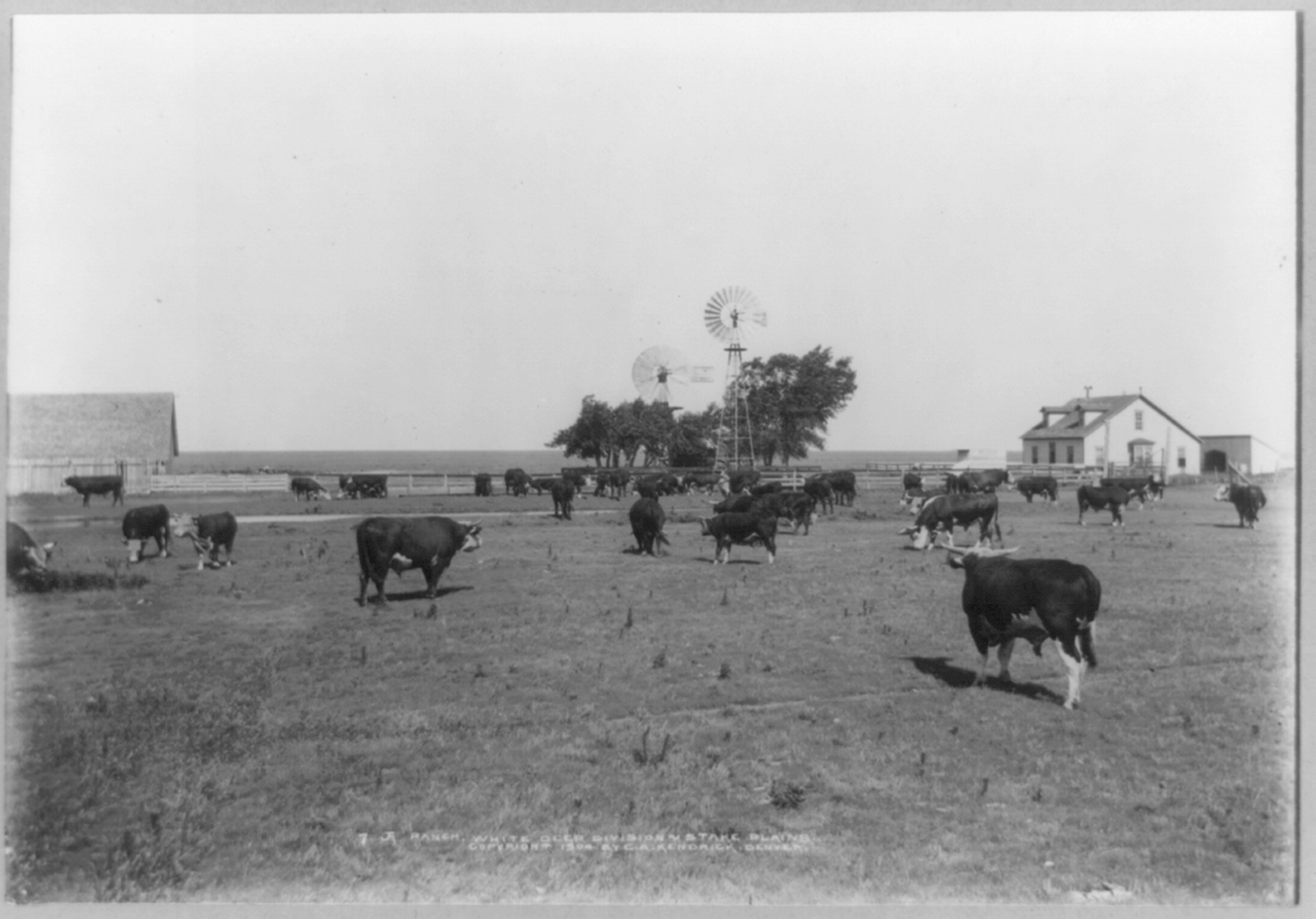
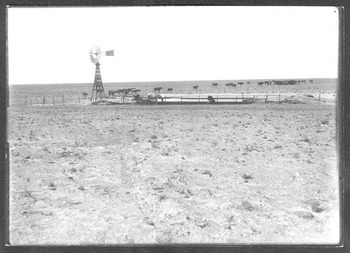
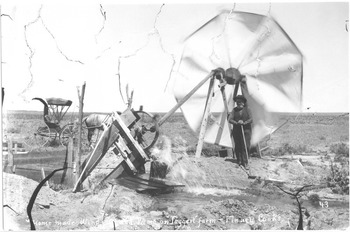
Prior to this point, extraction from the Ogallala came via windmills that had been set up as part of the expansion of the region’s ranching economy during the latter decades of the nineteenth century. While these operations were centered around lakes, rivers, and creeks, some settlers supplemented their water resources by using the region’s intense wind patterns to raise groundwater (Figure 2). A few ranchers, for instance, experimented with devices that pooled groundwater into large tanks to be used for themselves and their herds (Figure 3). Footnote 12 Through windmills, ranchers learned that significant (seemingly endless) amounts of water sat beneath their feet, but few had the means or the inclination to tap subsurface water in any sizeable way. Unlike many groundwater resources, which sit just below the surface, the Ogallala is a deeply buried aquifer. In some parts of the region, water-bearing formations do not begin until as much as fifty feet beneath the surface. Tapping such depths for anything beyond subsistence needs required pumping technologies that possessed amounts of energy that far exceeded the windmill (Figure 4).
Source: W. D. Harper, JA Ranch, White Deer Division, Stake Plains. Texas, ca. 1904. https://www.loc.gov/item/90707915/.
Animals watering, Finney County, KS, between 1890 and 1900. Source: Kansas Historical Society, Topeka, KS [KSHS].

Homemade windmill and pump on the Taggart Farm, Irrigation Scenes, Finney County, Kansas, between 1890 and 1900. Source: KSHS.

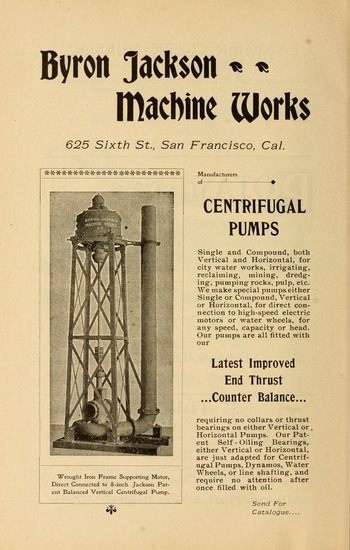
One of the first to take up the prospect of mining the Ogallala was D. L. McDonald. A former car salesman and engineer, McDonald had been convinced by an Ohio-based investment firm to relocate to the Panhandle in the early 1900s and manage its land colonization project by promoting it among midwestern farmers. Amidst the 1910 drought, the promoter opportunely traveled to Portales, New Mexico, to inquire about a potential real estate sale. After departing the train, however, McDonald stumbled upon a local exhibition that displayed a mechanically powered pump that could produce over 1,000 gallons of water per minute from beneath the ground. What made this specific device intriguing to him was its use of a vertical turbine. The more prevalent horizontal design for making use of centrifugal pumps required an angled pulley system to connect the pump and engine. This limited the depth to which prospective irrigators could access water and necessitated clearing out a large, and often dangerous, pit around the device to access deeper reserves of water. The vertical structure, however, enabled the pump to be connected to the engine at a perpendicular angle and thus allowed access to much deeper reserves of groundwater (Figure 5).Footnote 13 For speculators like McDonald, this new system presented a potential way of accessing deep groundwater. On his way back to the Panhandle, McDonald began to imagine replacing the thousands of windmills strewn throughout the landscape with vertical mechanical pumps.Footnote 14
Early advertisement for vertical pump. Source: Edward J. Wickson, The California fruits and how to grow them. A manual of methods which have yielded greatest success: with lists of varieties best adopted to the different districts of the state (San Francisco, 1900), 482, https://www.loc.gov/item/99005150/.

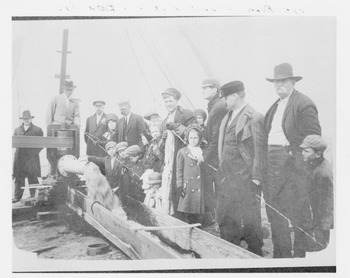
Interest in vertical turbine pumps quickly grew among Plains boosters. In 1910, a year after stumbling upon the Portales display, McDonald, with support from the Hereford Commercial Club, a group of landowners and bankers based in a small ranching town in the western part of the Panhandle, completed the installation of the first well in the region. Within the next few years, similar clubs in Lubbock, Hale Center, and Plainview, Texas, successfully drove water wells.Footnote 15 As quickly as water was brought to the surface, landowners began ascribing meaning and value to these miraculous streams. One headline from a county newspaper declared the drilling and success of the Plainview test well to be “the greatest discovery since the time of Columbus.”Footnote 16 Situating the discovery of groundwater in this way shifted the perspective away from the real estate crisis landholders were facing and instead positioned groundwater development as part of a broader civilizing mission. In rather explicit language, one writer made this clear: “now the finger [the pump] of progressive man has been plunged in its [aquifers’] virgin depths, and the importance of the discovery can hardly be estimated.”Footnote 17 Boosters built further interest by hosting field days, where experts in irrigation and engineering would give talks, with centrifugal devices pumping gallons upon gallons (the scale of which seemed to rise with every printing of a new paper edition) in the background for spectators to see. Above all, the discourse around these early wells focused on the certainty and stability that they could provide for farmers. One article described how farmers could now be “insured” against the precarities of the Southern Plains climate by “an ocean underneath.” This “glorious sense of security” was vital to turning these otherwise fledgling property tracts into sites that could mean “million$ to farmers.”Footnote 18 Finally, water developers paid to have photographs taken of their discovery (Figure 6). As is preserved in Figure 6, which captures the first groundwater well drilled in Lubbock County, early photographs were carefully staged to emphasize water abundance. However, by surrounding the active pump with members of the collective that financed its installation, the speculators also positioned these extractive devices as conduits for power, profits, and control. They further reinforced the notion that pumps were fertile appendages by interspersing finely adorned women and children throughout the visual frame.
Source: “First Irrigation Well,” Lubbock History, Southwest Collection Photograph Collection, SWCPC57(I)-E24.2, SWC.

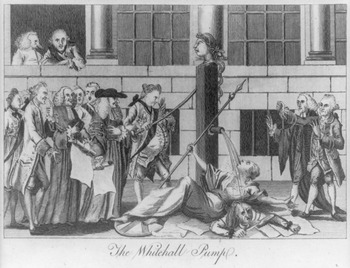
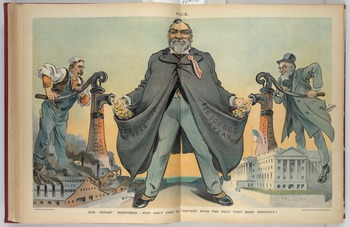
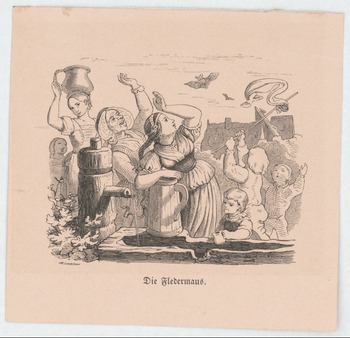
Plains boosters were not the first to render pumps in such ways. In the three drawings below, water pumps are used as technologies that carry not only water but also assertions about political and economic control. In the first image, a pump with a sculpture of King George’s head on top of it is shown proudly disbursing a stream of water onto two individuals, representing the civilized British empire and the savage Americans, who are lying on the ground (Figure 7). The powerful stream reflects the unyielding power administered by the crown. In the second image, a sketch of Andrew Carnegie stands between two pumps being operated by individuals meant to represent private industry and the government. Both pumps, respectively labeled “legitimate business” and “protective tariffs,” funnel streams of cash into the cartoonish figure’s pockets (Figure 8). Whereas Figures 5 and 6 play with the idea of the pump as a conduit for political and financial power, Figure 7 uses a pump to cohere patriarchal notions about everyday social experiences. For instance, in this engraving from a book of German fables, titled simply “the bat,” a group of women are being attacked by bats while they attempt to perform their daily duty of filling water buckets. As they are waving their hands in the air in a helpless manner, a group of young boys is shown protecting them by beating the bats away with sticks. Here, the pump plays a more passive role as an important gathering place where such a story can unfold (Figure 9). In these different representations, pumps act as more than just arbiters of resources; they also act as sites where sociopolitical structures are instantiated.
Source: “The Whitehall pump” (1774), https://www.loc.gov/item/2004672697/.

Source: Udo J. Keppler, “Our ‘infant’ industries—why can’t they be content with the half they make honestly?” (New York, 1900), J. Ottmann Lith. Co., Puck Bldg., https://www.loc.gov/item/2010651249/.

Source: Ludwig Richter and John Allanson, Die Fledermaus (1846), Photograph, https://www.loc.gov/item/2017658532/.

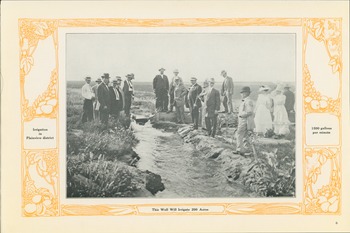
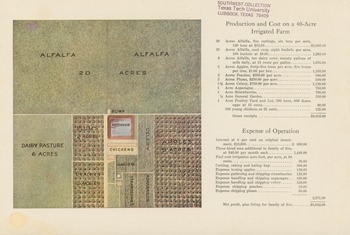
The first photographs that emerged as part of the Southern Plains promotional schemes reveal a similar understanding of the social benefits of this technology. Pumps were devices that manifested water but also allowed men and women to raise families in this remote and formerly unsettled region. Such ideas were crystallized in the photographs taken for a promotional pamphlet by the Texas Land and Development Company (TL&D). Unlike many speculating firms, the TL&D had purchased 61,000 acres of Plains property in 1911 with the specific intention to raise their value by reselling them as irrigated plots. By 1915, TL&D had drilled 127 irrigation wells on their property, accounting for over 80% of the existing pumps in the region. They then set out to sell these plots in forty-acre sections at a rate of $250 per acre, a $225/acre markup from what they had originally paid for the land.Footnote 19 At the center of their marketing campaign was the idea that tapping the Ogallala would provide an excess of water and security for farmers and their families. In each of the three images, the TL&D ensured that the subsurface water was visible to prospective buyers by featuring artificial lakes, streams, and floodways. In the photos, these waterways are overseen by exclusively white men, women, and children. Further affirming the idea that pumps enabled the Panhandle to evolve from a region dominated by rugged cowboys and dust storms to a more advanced stage of civilization, men wear coats and ties, while women are often adorned in white, crisp dresses, seemingly unhampered by the region’s harsh elements (Figures 10–12). Such ideas were crystallized at the end of the pamphlet in a sketch that shows an imagined idyllic mixed-use farm. Complete with an apple orchard, feed grains, and dairy pastures, at the center of the sketch is a pump and water reservoir (Figure 13).
Source: Texas Land and Development Co., “60,000 Acres, Irrigated Farms,” 1913, Southwest Collection Land Promotionals Collection, SWC.

Source: Texas Land and Development Co., “60,000 Acres, Irrigated Farms,” 1913, Southwest Collection Land Promotionals Collection, SWC.

Source: Texas Land and Development Co., “60,000 Acres, Irrigated Farms,” 1913, Southwest Collection Land Promotionals Collection, SWC.

Source: Texas Land and Development Co., “60,000 Acres, Irrigated Farms,” 1913, Southwest Collection Land Promotionals Collection, SWC.

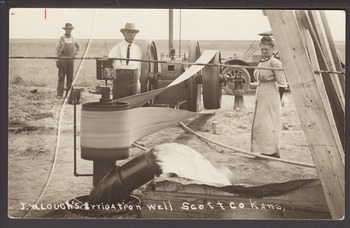
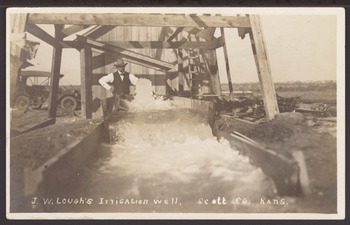
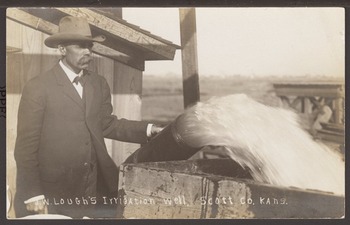
Over time, this reproductive logic morphed into a visual language that more clearly foregrounded water pumps as arteries of a uniquely individualistic articulation of U.S. settler power. Unlike other colonizing schemes, which depended on negotiating with state bodies to apportion water from dams or rivers, Plains farmers could pump water on their own schedule. An advertisement placed in newspapers in Denver, Colorado; Chicago, Illinois; and Kansas City, Missouri, by the TL&D wrote that water pumps were capable of sprouting “little empires.” In an editorial, they described how these “little empires,” which were to be occupied by “the most independent person on earth,” would be led by the male farmer, who was the “sole monarch (Perhaps, though, we had better pay tribute to his wife who is the very important Queen of the Realm).”Footnote 20 Such sentiments of individualism were increasingly mirrored visually. This is evident in a photograph series taken on the Lough farm in Southwest Kansas between 1910 and 1919. The images, which were turned into postcards, show how homesteaders, who had successfully installed a water pump on their farm, were using it to raise robust acreage of alfalfa.Footnote 21 Like other photographs from the period, Figure 14 foregrounds Lough and his wife, in elegant country garments, overseeing the pump while a workman in dusty overalls stands in the distant background (Figure 14). However, in two other images from the same photoshoot, Lough’s wife and the worker are removed from the frame. In Figures 15 and 16, Lough stands alone, above the pump, resting his hand on the active device as water spews outward (Figures 15 and 16). This pose by Lough, and its explicit iconography, is the visual form that would have the most lasting impact in the years that followed.
Source: J.W. Lough Farm, 1910 and 1919, KSHS.

Source: J.W. Lough Farm, 1910 and 1919, KSHS.

Source: J.W. Lough Farm, 1910 and 1919, KSHS.

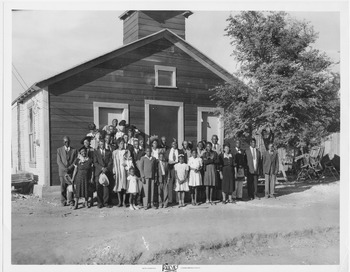
In postcards and other promotional paraphernalia, boosters crafted a vision of a racially insulated region dominated by individual stewards. Visitors and readers were invited to imagine a world of flowing water and bountiful crops that would, most importantly, allow them to escape the more diverse populations of more established areas elsewhere in the United States. Referred to as “white man’s country,” this wave of promotional materials was explicit in stating that these irrigated farmsteads were exclusively available to white families, and that this was one of their greatest appeals. West Texas farms were presented not as opportunities to recreate the conditions of elsewhere, but rather to escape them. Countering one article published in Ohio warning potential migrants of the dangers of the west, the Hale County Herald editorial staff argued that such immigration “has done more to heal the sores of the Civil War” than anything else.Footnote 22 Moreover, they claimed, because of this racial isolation, the Panhandle did not have “a portion of the crime” as they did in this “cultured county” in Ohio. One testimonial from a land promotional pamphlet proudly declared, “I never could understand why men want to live in the big cities and starve their families when they can come out here and live like white people and have all they want.”Footnote 23 While paraphernalia and newspapers of the time largely tell an idyllic story of a racial oasis, the realities of pump irrigation in the 1910s were far murkier. In fact, the more water that was pumped from the aquifer, the more diverse the Southern Plains became. By the late 1910s, Plains farmers were desperately pursuing Black cotton workers to help harvest their crops.Footnote 24 Precluded from owning rural land, and thus having a direct stake in the aquifer, Black community development was instead concentrated in cities like Lubbock, Texas. In these urban outposts, community members built durable infrastructures of schools, hospitals, churches, and apartments that could help sustain migrant farmworkers as they navigated the precarious, seasonal, and often dangerous jobs available within this emergent farming complex (Figure 17).Footnote 25
Source: “Members of an unidentified African American church,” Winston Reeves Studio Photograph Collection, 27P.1.8.1.1, SWC.

While this diverse farming economy slowly began to grow, pumps played only a limited role in its development. As one land developer suggested in a telling moment, pumps were just needed to “make a good show”—they were not necessarily intended to be part of the everyday operations of farming life.Footnote 26 It was only once the land was sold that the burden of installing and maintaining this expensive and rudimentary technology would be revealed to the prospective farmer. As Roland Lloyd, one such tenant farmer, recounted, he would often be forced to spend an entire day’s work just on the machine’s engine. Even when he was able to get it in operation, because of the pump’s temperamental structure, it required constant supervision.Footnote 27 Due to these circumstances, by the start of the First World War, initial interest in pump irrigation had died down and most speculators focused on renting out non-irrigated farmsteads instead. Although the excitement over groundwater pumping did not relieve developers from their investments in Plains property, these encounters with the Ogallala reveal the networks of capital that initially tethered the aquifer to a gendered and racialized logic.
Reckoning with Depletion
In the years that followed, speculators slowly began to turn the fantasy of groundwater irrigation into a reality. By the late 1930s, there were over 1,000 turbine pumps throughout the Southern Plains. Footnote 28 While the operation of these pumps uncovered the tremendous depths of the Ogallala, they also made it clear that intensive extraction would lower the water table. Rather than allowing depletion to be marshalled as a threat that necessitated regulation or government oversight, irrigation boosters in the Southern Plains embraced the aquifer’s limits as part of their rightful burden as landowners. By the late 1940s, as the number of operational pumps grew exponentially and concerns about depletion intensified, the iconography of the Ogallala adapted to foreground conservation. Whereas photographs from the 1910s highlighted raging streams of groundwater surrounded by well-dressed families, by the 1940s, photographs were focused on controlled water flows, highly technical pumps, and working men. While the outfits and water showcases in these images shifted, the camera continued to play an active role in erasing the labor that was necessary to adopt conservation-oriented approaches to irrigation farming. The result was a visual representation that framed depletion as an issue that only impacted individual landowners and could only be resolved by them.
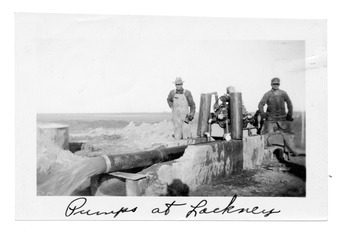
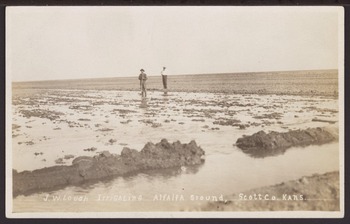
Early-twentieth-century groundwater mining was a wasteful affair. In Figure 18, an image taken in the mid-1930s that was collected as part of an inquiry into the development of irrigation farming by a U.S. representative, two men take a powerful pose with their arms planted on their sides as they surround the pump. As later images will attest, this photograph represents the start of a shift from previous iterations of pump iconography, which exemplified notions of civility through fine clothing and the inclusion of women and children within the frame. Here, the men are wearing work outfits, such as overalls and protective gloves, suggesting that they are playing a more active role in controlling the extraction of water than in previous iterations (Figure 18). A closer look at this image brings light to a different issue: water waste. As the pump powerfully spews out water, trails of runoff can be seen filtering down the side of the machine. More than just losses from pumping itself, irrigation farming was susceptible to a tremendous amount of water loss. While traditional ditch and flood approaches are common irrigation strategies, they waste precious amounts of water.Footnote 29 While ditch systems are relatively easy to construct and maintain, they depend on pooling water into large reserves that can then be filtered throughout the farm over a long period of time (Figure 19). In the Southern Plains, where temperatures during the late spring and summer water periods can surge past 100 degrees Fahrenheit, the water suffered from severe evaporation as well as seepage (Figure 20). As one Texas Tech report revealed in 1955, upwards of 20 percent of the water pumped for ditch irrigation in the region was being lost to seepage and evaporation (Figure 21).Footnote 30 For land dealers, who remained in control of the majority of this property, the combined awareness of depletion and the losses incurred through irrigation ultimately threatened their prospective real estate bubble before it had even properly materialized.
Source: “Pump at Lockney,” undated, folder 2, box 489, George H. Mahon Papers, 1887-1989 and undated, SWC.

Source: J.W. Lough Farm, 1910 and 1919, KSHS.

Source: Russell Lee, Mr. Johnson, FSA Farm Security Administration client with part interest in cooperative well, irrigating his fields near Syracuse, Kansas (Syracuse, Kansas, Aug. 1939), https://www.loc.gov/item/2017740873/.

Source: “A Children’s Irrigation Well,” Lubbock Pictorial Collection, SWC.

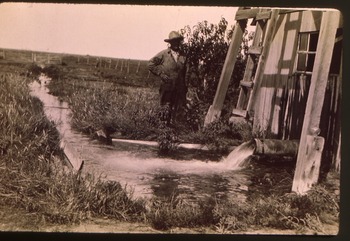
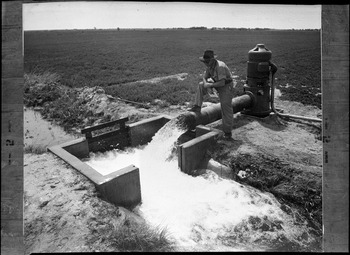
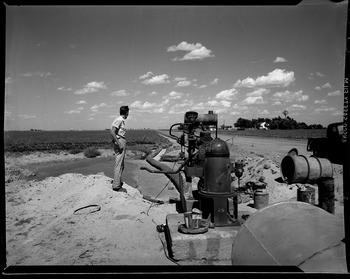
As early as 1948, irrigators began to experiment with ways to limit their water losses. Farmers’ primary solution was the installation and use of concrete pipes. These materials were cheap, easy to access, and extremely effective at protecting aboveground water.Footnote 31 Whereas images as late as the 1930s featured powerful, uncontrolled streams, images in the late 1940s illustrated a tamer aquifer expertly orchestrated by rugged individuals. In Figure 22, water is being pumped into a contained area so as to prevent seepage. The man standing above the device is shown to be taking an active role in the process, with his gaze directed toward where the water is being funneled (Figure 22). In Figure 23, water is invisible. Instead, it is nested within a fully contained system of canvas piping, hidden from the elements until the moment it comes into contact with a crop row (Figure 23). Again, the man in the frame is looking down at the piping network, which is carrying water toward a vast series of lush crop rows stretching to the horizon. Gone are the suits, families, and overly suggestive reproductive iconography of earlier pump photographs. Instead, these modernized iterations showcased a more technical and precise form of groundwater extraction. Despite these modern revisions to visual representations of the Ogallala, the men in the photographs use their body language and positioning to continue to assert dominance over these systems of extraction.
Source: Irrigation water running, 1950, Winston Reeves Studio Photograph Collection, 53P.3.4.1.1, SWC.

Source: “Irrigation Farmer,” Winston Reeves Studio Photograph Collection, 6.5.2.1.1, SWC.

Transitioning from ditch to pipe irrigation required significantly more labor. Whereas ditch operations could be managed by a farmer and a few others, pipe systems required a substantial crew of “pipe movers” to manage the flow of water throughout a farm. Such demanding work required intimate knowledge of the soil, water, climate, and crops, and a firm handle on an array of machines, such as pumps, pipes, tractors, and trucks. It was also intense. Irrigators needed to be available for shifts that could run as long as twelve hours and go as many as seven days a week. On top of all this, pipe irrigation required workers to be available outside the standard circulation of migratory laborers, which generally saw a large influx of workers come to the region for the fall harvest but then return to areas closer to their homes further south and east.Footnote 32 Transitioning to pipes thus also presented the possibility that a full-scale embrace of irrigation would mean accepting the more permanent presence of farm laborers, the majority of whom came from either African American communities in East Texas or Mexicano/a communities in South Texas and Mexico.Footnote 33
White landowners remained vehemently resistant to making such accommodations. Instead, throughout the 1950s, Southern Plains irrigators fought to exploit a loophole in the highly controversial transnational guestworker agreement known as the Bracero program. Through what was known as the “specials” initiatives, growers were able to recontract the same Mexican guestworkers on a recurrent basis without having to increase their pay for working specialized jobs. Unlike traditional Bracero contracts, which would randomly place workers with farms and only on short-term contracts, this alternative arrangement ensured that farmers could reliably and cheaply access workers, while also training those employees on more complex farm tasks such as pipe irrigation.Footnote 34 The advent of this initiative allowed farmers to bypass the domestic labor market. This move crucially preserved the notion of the Plains as white man’s country, while also ensuring farmers had access to a highly skilled yet low-paid irrigation workforce. Incorporating a conservation-oriented approach to groundwater irrigation depended as much on the certainty of this captive workshare agreement as it did on the security provided by the aquifer.Footnote 35
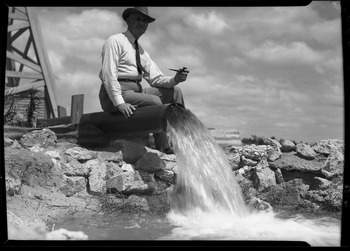
The early 1950s marked a moment of remarkable irrigation expansion. Two thousand five hundred pumps were drilled on Southern Plains farms in 1951 alone. By 1954, the number of active pumps in the region had ballooned past 18,000. Footnote 36 At the same time, each of these pumps was attached to thousands of miles of concrete and plastic piping, managed by upwards of five thousand Bracero “special” employees.Footnote 37 Yet attention to the complexities in the racial dynamics of this transition to pipe irrigation have almost entirely been eliminated from view. Life in the Southern Plains amid this irrigation boom inspired a number of photographers, who sought to document the rapid social and environmental changes coinciding with this agricultural expansion. Winston Reeve, for instance, a prolific photographer in the 1940s and 1950s, took over 13,000 pictures. Some were for commercial purposes and others were taken purely for public documentation. These included aerial photographs of football stadiums and close-up pictures of farm equipment like tractors, social gatherings, and wildlife. Amid this vast collection, however, there are no photographs of braceros carrying pipes or working on pump machines. When it came to documenting groundwater, Reeve’s photographs (Figures 1, 21, and 22) instead followed a well-rehearsed and consistent pattern. Alongside many others, he joined a wider chorus propagating a visual frame that emphasized masculinity, whiteness, and individual autonomy.
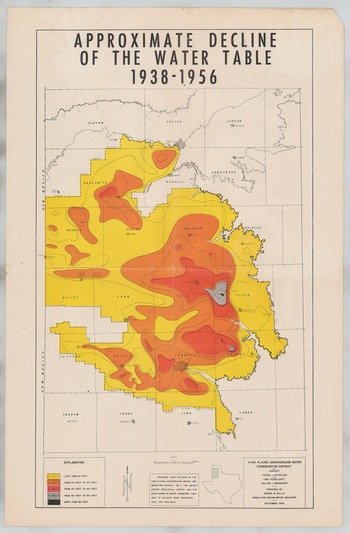
Based on the passing of legislation in the 1940s, landowner rights to the Ogallala were functionally cemented in both Kansas and Texas. In both states, groundwater fell under the administration of conservation districts, which, in theory, can proscribe restrictions on extraction rates or force users to adopt water-saving measures. However, in these states, landowners occupy central positions of authority within these districts. They not only are the only voting members, but they are the only ones who can hold office. Through these positions, landowners crucially are in charge of the making and dissemination of scientific research and the enactment of any conservation proscriptions or restrictions that might (or might not) follow from them.Footnote 38 Alongside the emergence of these conservation districts, the photographic representation of the aquifer has largely fallen in favor of a more cartographic register. Maps, produced via collaborations between state-funded engineers and local landowners, initially focused on mapping potential sources of subsurface real estate value. But, over time, these surveying efforts have shifted toward narrating the slowly unfolding crisis of depletion (Figure 24). Yet even as water slipped out of the photographic frame, the aboveground social relations rendered through them did not disappear. Rather, they became sedimented in the structures of governance and history. The role of the landowner no longer needed to be made explicit.
Source: “Approximate Decline of the Water Table, 1938-1956,” High Plains Underground Water Conservation District, Sept. 1956, Dave Sherrill Papers, SWC.

Conclusion
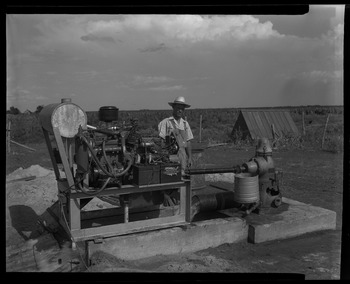
In his landmark study of the rise of irrigation farming in the Southern Plains, Donald Green gave the techno-oriented class of farmers to emerge out of the 1950s the title of “Pump Irrigator.” “Dependent upon technology, shod in rubber boots rather than buckskin, and carrying a shovel rather than a rifle,” such pump irrigators have, over the course of the twentieth century, become the central heartbeat of the Southern Plains agricultural economy (Figure 25).Footnote 39 Tapping into the Ogallala Aquifer, this class of farmers used centrifugal vertical pumps to carry water in ways that would radically alter the Plains environment, turning it from a desolate rangeland to an oasis of industrial farming. They have remained in this central position amid the formation of the widely recognized depletion crisis.
Source: Irrigation Pump, Winston Reeves Studio Photograph Collection, 6.4.1.1, SWC.

Yet the farmers Green identifies did not materialize in a vacuum. While images are not the only way to document the origins of the Southern Plains irrigation boom, taken collectively they represent how over a sixty-year period, the Ogallala cohered a consistent racialized and gendered form of environmental subjectivity. In doing so, the images help to explain the rhetoric of entitlement to groundwater expressed in contemporary groundwater discourse. As important, the photographs call attention to what and who is absent from that discourse. The subjective framework built through these photographs actively erases the far more diverse community of people who were and remain crucial actors in making water flow from beneath the ground. Addressing the question of depletion management might well begin with reimagining the frame of our understanding of the problem.




 Open access

