





Impact statement
Plastic pollution represents one of the most pressing environmental challenges confronting the Horn of Africa, a region experiencing rapid urbanization alongside severe governance constraints. This study offers the first systematic comparative evaluation of plastic waste management policies across Ethiopia, Eritrea, Somalia, and Djibouti, four countries that share geographic and socioeconomic characteristics yet differ substantially in how they design and enforce environmental regulation. The findings reveal that governance structure and institutional capacity are the primary determinants of policy effectiveness, not the ambition of the legislation itself. Ethiopia’s federal coordination model and lifecycle-based strategy provide a replicable blueprint for the region, while Somalia’s post-conflict fragmentation and Eritrea’s restricted information environment illustrate how political context shapes implementation outcomes. By identifying common barriers to weak enforcement, inadequate infrastructure, informal market dominance, and dependence on international donors, and by connecting national experiences to international conventions such as MARPOL and the Basel Convention, this study offers concrete pathways for regional policy harmonization. The work is particularly timely given the ongoing global negotiations on a plastics treaty and the region’s vulnerability to marine plastic pollution along the Red Sea and Indian Ocean coastlines. Policymakers, development partners, and regional bodies such as IGAD will find actionable insights on extended producer responsibility design, enforcement reform, and circular economy transitions suited to low-capacity contexts.
Introduction
The global plastic pollution crisis has reached unprecedented levels, with annual plastic production exceeding 400 million tons. Of these, ~36% become waste within the same year (Yang et al., Reference Yang, Hu and Tan2025). This escalating crisis poses a significant threat to ecosystems, human health and the global economy. The rise of single-use plastics, inadequate waste management infrastructure and limited recycling capabilities has created a perfect storm of environmental degradation, disproportionately affecting developing nations (Yan et al., Reference Yan, Cordier and Uehara2024).
Africa plays a significant role in global plastic consumption patterns while also experiencing the harsh realities of plastic pollution’s environmental and health consequences (Jambeck et al., Reference Jambeck, Hardesty, Brooks, Friend, Teleki, Fabres, Beaudoin, Bamba, Francis, Ribbink, Baleta, Bouwman, Knox and Wilcox2018). The continent generates ~17 million tons of plastic waste annually, with projections suggesting that this could triple by 2040 if current trends continue unchecked (Ayeleru et al., Reference Ayeleru, Dlova, Akinribide, Ntuli, Kupolati, Marina, Blencowe and Olubambi2020; Okeke et al., Reference Okeke, Olagbaju, Okoye, Addey, Chukwudozie, Okoro, Deme, Ewusi-Mensah, Igun, Ejeromedoghene, Odii, Oderinde, Iloh and Abesa2022; Moyen Massa and Archodoulaki, Reference Moyen Massa and Archodoulaki2024). The environmental and socioeconomic impacts are particularly severe in coastal regions, where plastic pollution threatens marine biodiversity, the fishing industry and the tourism sector, which millions rely on for their livelihoods (Dube and Okuthe, Reference Dube and Okuthe2024). In response, various policy measures have been adopted across African nations, ranging from comprehensive bans on single-use plastics to circular economy frameworks (Carlos Bezerra et al., Reference Carlos Bezerra, Walker, Clayton and Adam2021). However, the effectiveness of these policies varies based on governance capacity, economic conditions and implementation strategies (Omondi & Asari, Reference Omondi and Asari2024).
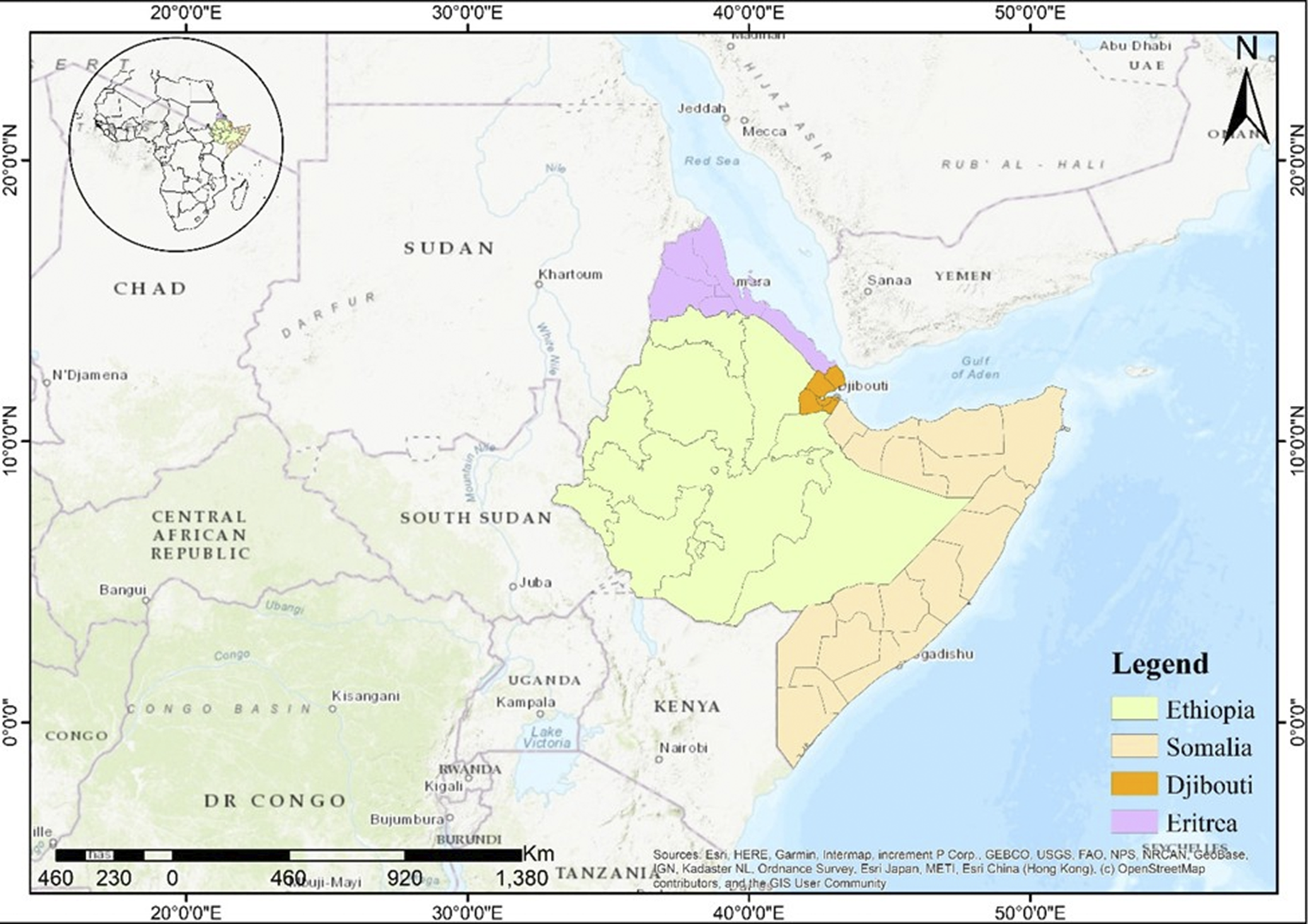
The Horn of Africa (HoA), which includes Ethiopia, Eritrea, Somalia and Djibouti (Figure 1), presents a critical case for studying plastic waste management policy, implementation and challenges facing it because of its strategic location, such as in shipping routes and rapid urbanization, which drives increasing plastic waste generation. Cities such as Addis Ababa, Mogadishu and Djibouti City face challenges related to growing municipal solid waste, while the region’s proximity to the Red Sea and Indian Ocean heightens the risk of marine plastic pollution, making effective policies a priority at both local and global levels.
Map of the Horn of Africa countries.

Figure 1. Long description
A geographical map focuses on East Africa. The central highlighted area is Ethiopia, colored light green. To the North of Ethiopia is Eritrea, colored purple, bordering the Red Sea. To the Northeast is Djibouti, colored orange, situated on the Gulf of Aden. To the East and South of Ethiopia is Somalia, colored light tan, with a long coastline along the Indian Ocean. Surrounding non-highlighted countries include Sudan and South Sudan to the West, Kenya to the South, and Yemen across the Red Sea to the Northeast.
* Top-Left: A circular inset map shows the entire continent of Africa with the Horn of Africa region highlighted in green.
* Bottom-Right: A legend identifies the colors: light green for Ethiopia, light tan for Somalia, orange for Djibouti, and purple for Eritrea.
* Bottom-Left: A scale bar indicates distances in kilometers up to 1,380 K M.
* Top-Right: A North arrow points upward.
* Borders: The map includes latitude and longitude grid lines, with 10 degrees North and 40 degrees East intersecting near the center of Ethiopia.
The diversity in governance systems, ranging from Ethiopia’s federal structure to Somalia’s fragmented institutional framework, combined with differing economic conditions, creates a complex landscape for plastic waste management across the Horn of Africa. These variations influence not only policy formulation but also enforcement capacity and environmental outcomes. Despite the increasing adoption of regulatory and strategic frameworks, significant gaps persist between policy design and implementation, limiting their overall effectiveness. Moreover, existing studies remain fragmented and insufficient to provide a comparative and regionally integrated understanding of policy performance in the HoA. Therefore, the primary purpose of this study is to systematically evaluate plastic waste management policies across Ethiopia, Eritrea, Somalia and Djibouti, with a focus on their design, implementation mechanisms and observed outcomes. The significance of this study lies in its comparative regional approach, which provides critical insights into common challenges, identifies best practices and highlights opportunities for policy harmonization and transboundary cooperation. By addressing these gaps, the study contributes to the advancement of evidence-based policy development and supports more effective and coordinated responses to plastic pollution in the region.
Methodology
A comprehensive literature search was conducted using the country’s environmental policy repository webpages, such as the Federal democratic republic of Ethiopia Environmental Protection Authority (FDRE-EPA), as the authorities’ working papers or guideline deposited, and national policy and proclamation archives like “Federal Negarit Gazeta” of Ethiopia. Also, scientific databases, including Google Scholar, Scopus and the Web of Science, were used for scientific paper retrieval. The search strategy employed key terms including “plastic bag ban Africa,” “single-use plastic regulation HoA,” “solid waste management/Ethiopia/Eritrea/Somalia/Djibouti,” “extended producer responsibility Africa,” “plastic waste policy enforcement sub-Saharan Africa,” “marine litter East Africa” and “circular economy developing countries.” National policies and proclamations were included because of their relevance and potential contribution to the study. A comparative analysis of Ethiopia, Eritrea, Somalia and Djibouti was made. The study adopts a Most Similar Systems Design (MSSD), which capitalizes on the shared characteristics of these countries, including geographic proximity, common development challenges and comparable governance contexts. MSSD is used for comparative evaluation in case-based research, such as countries, regions, organizations or communities that are quite similar in many aspects but differ in the outcome being studied. The analysis explored how variations in specific factors, including policy design, institutional arrangements and implementation approaches, lead to different outcomes. The study’s design incorporates methods within a structured analytical framework that facilitates both within-case analysis of individual countries and cross-case comparisons of patterns, practices and outcomes.
Case study of plastic policy implementation practices in Horn of Africa countries
Ethiopia, Eritrea, Somalia and Djibouti are at different stages in tackling plastic pollution and strengthening solid waste management, but they face many shared challenges. Ethiopia has the most comprehensive policy framework, starting from the Environmental Policy in 1997, the Solid Waste Management Proclamation in 2007, to the recent National Plastic Strategy Action Plan 2024, and the recent single-use plastic bag bans (FDRE-EPA, 2024; FDRE, 2025). Despite strong policy direction, enforcement, financing and data systems, inadequate alternatives and recycling infrastructure need strong attention. Current priorities focus on scaling circular economy initiatives, engaging the private sector and improving monitoring of plastic leakage. Relatively, Eritrea has been implementing plastic control measures by focusing on restrictions and administrative measures, including limits on plastic bag use and import controls. Even though municipal solid infrastructure is still limited, Eritrea has a more centralized enforcement mechanism, allowing them for a quicker policy directive. The country has a general environmental framework with environmental assessment requirements for development projects. However, Eritrea does not yet have a highly detailed or publicly structured national plastic strategy and action plan comparable to those of other African countries such as Kenya and Ethiopia. This could make the country vulnerable to marine plastic pollution along its coastline, with limited monitoring systems for marine litter and plastic leakage and recycling capacity. On the other hand, Somalia’s plastic governance is recent and shaped by post-conflict institutional limits, and Djibouti restructured its environmental institutions and launched marine litter pilot projects. In Somalia, there is the National Environmental Policy, and NDCs include a plastic bag ban, where implementation relies on federal directives and awareness campaigns, but enforcement is constrained by porous borders, informal imports and limited municipal infrastructure. The Djibouti environmental policy framework includes EIA processes and alignment with MARPOL, but limited municipal coverage, weak enforcement in coastal areas and a small recycling market increase vulnerability to marine plastic leakage. Priorities include port enforcement, coastal clean-ups, regional cooperation and development of circular economy hubs. Across the four countries, implementation faces similar barriers, although to different extents. Weak enforcement, poor coordination among institutions, limited infrastructure and low recycling capacity continue to slow progress. Countries with stronger governance systems have moved further ahead, but lasting results will depend on consistent political commitment, stronger institutions, better data and monitoring systems and closer regional cooperation.
Ethiopia
Ethiopia has established one of the most comprehensive plastic waste management policy frameworks in the Horn of Africa, reflecting its broader environmental priorities and federal governance structure (FDRE-EPA, 2024; Aragaw and Hirpe, Reference Aragaw and Hirpe2025). This policy framework integrates national strategic planning with regulatory instruments and implementation guidelines that address multiple aspects of plastic waste management. The National Plastic Strategy and Action Plan serve as the overarching framework incorporated within Ethiopia’s wider environmental and climate change strategies. Developed through multi-stakeholder consultations, the strategy sets medium-term targets for waste reduction, recycling capacity enhancement and alternative product promotion. It builds on earlier legal instruments, including the environmental policy of 1997 and Solid Waste Management Proclamation No. 513/2007, which cover waste collection, recycling and safe disposal (Gebrekidan et al., Reference Gebrekidan, Weldemariam, Hidru, Gebremedhin and Weldemariam2024). The plan explicitly connects plastic waste management to broader development goals such as job creation, urban sanitation improvement and environmental protection.
This strategy employs a life cycle approach to plastic waste management, addressing the phases of production, consumption, waste generation, collection, treatment and disposal. This comprehensive perspective distinguishes Ethiopia’s approach from the single-intervention policies of other regional countries. The framework includes provisions for extended producer responsibility; however, implementation is currently limited by administrative capacity constraints (Muposhi et al., Reference Muposhi, Mpinganjira and Wait2022). The Single-Use Plastic Bag Ban represents the most visible aspect of Ethiopia’s policy framework (UNEP, 2018). Initially implemented in 2018 for the capital region and later expanded nationally, the ban targets plastic bags under 30 μm in thickness used for carrying goods (Aragaw, Reference Aragaw2025). The regulation includes specific exemptions for medical applications, industrial packaging and agricultural uses, aiming to balance environmental goals with economic practicality and feasibility.
The legal foundation for the ban is rooted in Ethiopia’s environmental protection framework, specifically the Environmental Pollution Control Proclamation and its associated regulations. Implementation responsibilities are shared among federal and regional environmental protection agencies, which creates complex coordination challenges but also allows for local adaptations. Enforcement mechanisms include fines ranging from 2000 to 5000 Ethiopian Birr for violations, with higher penalties for repeat and commercial-scale offenses (Aragaw and Hirpe, Reference Aragaw and Hirpe2025; FDRE, 2025). The regulation also provides for the suspension or revocation of business licenses for persistent violators, although the application of these measures varies across regions (Jalleta and Tianbao, Reference Jalleta and Tianbao2022).
Related environmental legislation supports plastic waste management through broader environmental protection and waste management. The Solid Waste Management Proclamation establishes principles for waste minimization, segregation and treatment, facilitating plastic-specific interventions. Urban development policies increasingly mandate waste management planning that addresses plastic waste. Additionally, Ethiopia’s climate change strategy includes plastic waste management as a component of its adaptation and mitigation efforts, recognizing the connection between waste management and greenhouse gas emissions.
Eritrea
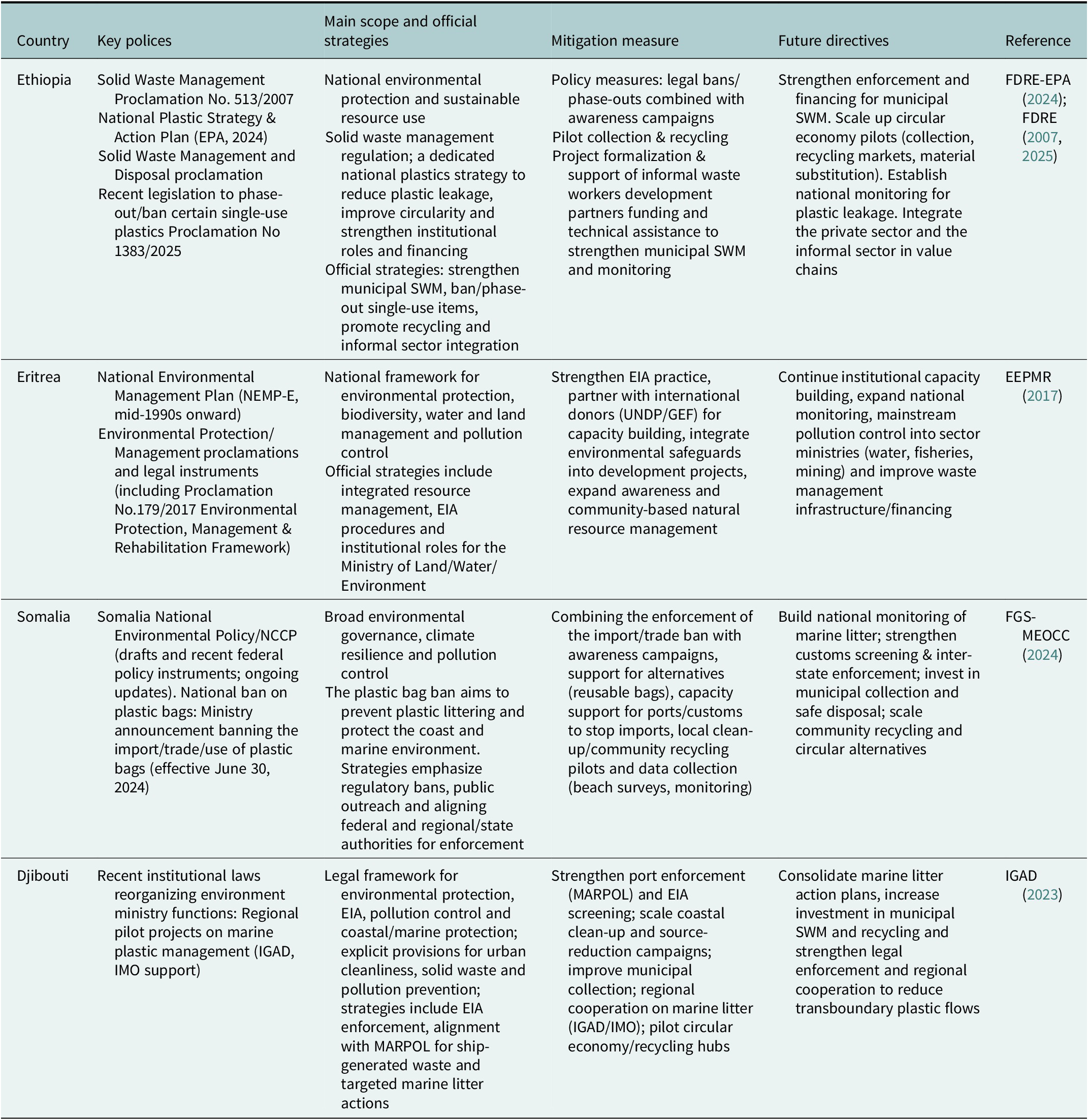
Eritrea has enacted measures to ban the manufacture, importation, sale and use of plastic bags through Proclamation No. 165/2005, which has been reinforced by subsequent environmental laws (Yebiyo, Reference Yebiyo2023). More recent proclamations, including the Environment Protection, Management and Rehabilitation Proclamation No. 179/2017 and related national environmental plans, provide a broader regulatory framework for waste management and pollution control (EEPMR, 2017). This policy framework operates within the context of broader environmental protection legislation while adapting to Eritrea’s unique political and economic landscape (Table 1). The Single-Use Plastic Bag Ban serves as the cornerstone of Eritrea’s plastic waste management policy, which is part of broader environmental protection measures (Amahazion, Reference Amahazion2024). The ban targets single-use plastic bags that fall below specified thickness levels, aligning with regional practices but featuring distinct implementation methods that reflect Eritrea’s centralized governance system.
Summary of national policies, implementation practices, challenges, mitigation measures and future direction

Table 1. Long description
The table contains six columns and four rows of data.
* Ethiopia: Key policies include Solid Waste Management Proclamation No. 513/2007, National Plastic Strategy and Action Plan (E P A, 2024), and Proclamation No. 1383/2025 to phase out single-use plastics. Strategies focus on municipal S W M, circularity, and informal sector integration. Mitigation involves legal bans and awareness campaigns. Future directives aim to scale circular economy pilots and establish national monitoring.
* Eritrea: Governed by the National Environmental Management Plan (N E M P - E) and Proclamation No. 179/2017. Strategies include integrated resource management and E I A procedures. Mitigation focuses on E I A practice and international partnerships (U N D P / G E F). Future directives include mainstreaming pollution control into water, fisheries, and mining sectors.
* Somalia: Policies include the National Environmental Policy and a 2024 ban on plastic bags. Strategies emphasize regulatory bans and coastal protection. Mitigation involves customs enforcement and support for reusable alternatives. Future directives focus on inter-state enforcement and municipal collection investment.
* Djibouti: Policies involve institutional laws for environment ministry reorganization and I G A D / I M O regional pilots. Strategies align with M A R P O L for ship-generated waste. Mitigation includes port enforcement and coastal clean-ups. Future directives aim to consolidate marine litter action plans and reduce transboundary plastic flows.
Eritrea’s approach to plastic waste management is shaped by its governance model, characterized by centralized state control, principles of self-reliance and limited international engagement (Negash, 2025). The policy was developed through internal government processes with minimal external consultation, consistent with the country’s overall approach to policy development across various sectors. The legal framework for the plastic bag ban is incorporated within Eritrea’s environmental protection proclamation, which comprehensively addresses environmental issues, including waste management, pollution control and natural resource protection (UNDP, 2020). This integration ensures policy coherence but may limit attention to the challenges and opportunities related to plastic waste management. Implementation timelines and phasing reflect the government’s capacity to manage transitions while minimizing economic disruption. The government adopted a gradual approach, prioritizing urban areas and formal businesses before extending the ban to rural regions and the informal sector. However, detailed information on specific timelines remains limited due to restricted access.
Somalia
Following the 1992 Rio Earth Summit, countries made a concerted effort to enact environmental laws. Somalia, Botswana and South Sudan are the only three African nations without an environmental legal framework as of 10 August 2023 (LAC, 2024). Recently, Somalia has undergone a number of important improvements. Several draft environmental laws and policies have been proposed, such as “The Draft Environmental Protection and Management Bills” in 2023 (LAC, 2024). In 2024, the Ministry of Environment and Climate Change in Somalia announced a nationwide ban on the production, importation and distribution of single-use plastic bags, framing this measure as part of a regional effort to combat plastic pollution (FGS-MEOCC, 2024). However, the enforcement of this ban has been inconsistent, with plastic bags still appearing in markets and coastal areas, resulting in immediate needs, including customs control, basic waste collection systems and marine litter monitoring. Authorities occasionally conduct raids and confiscate bags, but these efforts are sporadic and lack sustained follow-up. The policy development process reflects the broader challenges of rebuilding governance in post-conflict contexts. While international partners and business actors provided technical input during the drafting phase, civil society participation was limited because of institutional capacity constraints and competing national priorities (Hussein, Reference Hussein2023; Mourad, Reference Mourad2023). This ban is part of Somalia’s emerging environmental governance framework, which is evolving alongside state building and institutional reform. Although federal legislation incorporates feedback from Federal Member States, coordination and uniform implementation remain weak. The regulation is informed by international best practices and regional initiatives aimed at mitigating urban and marine plastic pollution, including penalties such as fines and restrictions on business licenses; however, procedural guidelines are still under development in several regions (FGS-MEOCC, 2024). Implementation varies within the federal structure, as the national government sets the overall policy direction, while Member States decide on enforcement methods, leading to uneven progress. Some regions took proactive measures earlier: Somaliland introduced bans in the mid-2000s, and Puntland developed formal solid-waste policies between 2013 and 2016, resulting in different enforcement pathways and a lack of alignment with federal actions (ACTED, 2023).
Djibouti
Djibouti has implemented measures to limit non-biodegradable plastic bags and other single-use plastic products, considering the country’s service-oriented economy, strategic geographic position and relatively stable governance structure (Knoblauch and Mederake, Reference Knoblauch and Mederake2021; Naidoo and Dixon, Reference Naidoo and Dixon2024). The policy framework addresses both domestic environmental concerns and international influences, given Djibouti’s role as a regional trade and logistics hub. Current Waste Management Policies incorporate plastic waste within broader municipal solid waste management frameworks rather than through comprehensive plastic-specific legislation. Djibouti’s waste management policies primarily rely on municipal regulations and urban planning provisions that govern waste collection, disposal and treatment across all waste categories, including plastics (IGAD, 2023). Recent master planning efforts for waste management, such as the City of Djibouti master plan (2022–2035), aim to establish formal solid waste systems and create recycling opportunities (ASF Consulting, 2022). Policy discussions have recently focused on restrictions on plastic bags and regulations for single-use plastics; however, implementation timelines and specific provisions are still under development. Additionally, environmental impact assessments of major development projects increasingly consider plastic waste, particularly those affecting marine environments (Table 1). This shift reflects a growing awareness of the impact of plastic pollution on marine ecosystems, which are vital for Djibouti’s fishing industry and coastal tourism potential (Greenpeace Africa, 2020).
Implementation practices
The implementation of plastic waste management policies in Ethiopia, Somalia, Eritrea and Djibouti highlights how governance structures, institutional capacity and socioeconomic priorities influence the execution of environmental policies. Ethiopia, rollout of the National Plastic Strategy actions (policy guidance, stakeholder consultations and pilot collection/recycling initiatives) enforcement under Solid Waste Proclamation (permits and responsibilities) and the enacted Solid Waste Management and Disposal Proclamation No. 1383/2025, which was gazette in the Federal Negarit Gazeta and entered into force in 2025, introducing a nationwide ban on single-use plastic bags and establishing updated penalties for violations (FDRE, 2025). Ethiopia’s strategy combines regulatory enforcement with development-oriented initiatives, reflecting the developmental state model and federal governance system. The Federal Environmental Protection Authority (FEPA) offers overarching policy guidance, whereas regional agencies carry out local enforcement. This structure facilitates regional adaptation but leads to inconsistencies in coordination. Urban areas, particularly Addis Ababa, have stronger enforcement capabilities through dedicated inspection teams and collaboration with business associations. In contrast, rural enforcement is weak because of limited resources. Ethiopia prioritizes stakeholder engagement and awareness over punitive measures, promoting voluntary compliance through educational campaigns and partnerships with private actors (van der Veen and Betke, Reference van der Veen and Betke2019). A distinctive aspect of Ethiopia’s approach is the integration of plastic waste management into development programs, linking waste initiatives to job creation, youth empowerment and poverty reduction. For instance, EU-IOM-funded programs in Dire Dawa illustrate this strategy by supporting youth employment and recycling enterprises (EU-IOM, 2022). Furthermore, the government has begun mapping the informal sector’s role in waste collection to better integrate these actors into the formal value chain. In contrast, rural enforcement is weak because of limited resources.
Eritrea focuses on implementation via the Department of Environment (Ministry structures): EIA requirements, protected areas planning, biodiversity action plans and project-level environmental management plans. Select rehabilitation and conservation projects carried out with UN/GEF/partners. Eritrea adopts a centralized, state-led approach characterized by strict administrative enforcement within a unitary governance framework. Implementation follows national policies and is executed by local administrators according to standardized procedures, emphasizing compliance and uniformity over stakeholder negotiation. Despite limited resources, Eritrea achieves relatively consistent enforcement where the government presence is strong, specifically in urban centers such as Asmara and along major commercial corridors where government inspectors and administrators operate with greater frequency and institutional support (Yebiyo, Reference Yebiyo2023; Amahazion, Reference Amahazion2024). Community mobilization occurs through mass organizations, such as women’s and youth associations, reflecting the country’s broader ideology of collective responsibility (Amahazion, Reference Amahazion2024). The promotion of local alternatives, such as cloth bags and baskets, aligns with the government’s self-reliance policy, although limited industrial capacity restricts large-scale substitution (Yebiyo, Reference Yebiyo2023). Engagement with civil society is minimal due to the restricted space for non-state actors. While the state maintains a centralized approach, much of the domestic distribution of these alternatives occurs through informal local markets.
The Central MOECC issued announcements and coordinated with the federal member states of Somalia. Public awareness drives were conducted. Some coastal cleanups and local NGO/youth group activities were organized. Early-stage enforcement was initiated in urban markets. Somalia’s policy implementation reflects the challenges of a fragile state marked by security issues, limited capacity and decentralized governance (Mourad, Reference Mourad2023). Enforcement relies on regional and local authorities, resulting in uneven implementation, stronger in Mogadishu and regional capitals but minimal in rural or conflict-affected areas. Given the dominance of the informal economy, enforcement primarily targets formal markets, leaving the informal sector largely unregulated. Security risks and resource scarcity hinder consistent implementation. Coordination between the government and the private sector occurs mainly through business associations, such as the Somali Chamber of Commerce, although informal actors often fall outside these networks. Community engagement is facilitated by traditional leaders, religious figures and NGOs, who share information through radio, mosques and community meetings, emphasizing the religious values of stewardship. International organizations play crucial roles in financing and implementing outreach programs.
Djibouti focuses on implementation through the Ministry of Environment and the Direction Régionale de l’Environnement et du Développement Durable (DEDD): EIA procedures, permitting, municipal waste codes for Djibouti City, pilots on coastal plastic management and international cooperation on MARPOL enforcement for ships. Djibouti’s small size and centralized governance facilitate coordination but also create a heavy dependence on international partnerships for financing and technical support to achieve the SDGs. Plastic waste management primarily relies on municipal waste collection systems concentrated in Djibouti City, where most of the population lives (IGAD, 2023). However, municipalities face operational challenges, such as equipment shortages and funding gaps. Public–private partnerships (PPPs) enhance government capacity, with international waste firms participating in urban waste management. Djibouti’s collaboration with donor-supported programs, notably from the EU and World Bank, strengthens institutional capacity and infrastructure, although plastic recycling remains limited. International environmental cooperation, particularly concerning marine plastic pollution, shapes national policy directions. Current efforts include attempts to register informal waste pickers operating near the Douda landfill to improve municipal oversight.
Challenges and limitations
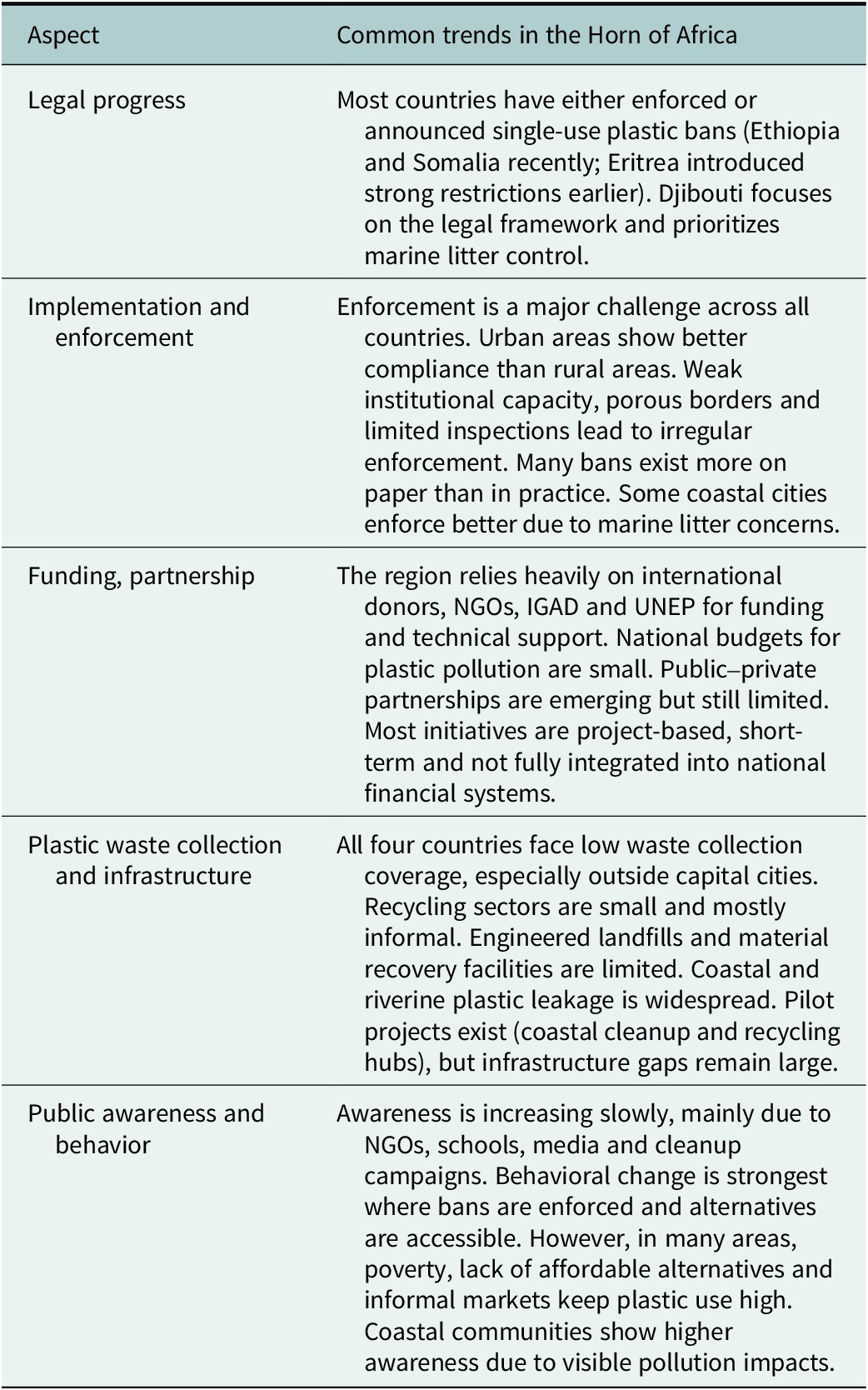
The implementation of plastic waste management policies across the Horn of Africa is influenced by distinct governance challenges. In Ethiopia, the federal-regional divide creates a “coordination gap,” where local enforcement often contradicts national directives. In Somalia, fragmented authority between federal and regional levels results in sporadic and uneven policy application. Across all four nations, a primary challenge is the “informal sector” dominance. In Ethiopia and Somalia, the vast majority of plastic trade occurs through unregulated channels that bypass formal taxes and environmental standards. In Djibouti and Eritrea, the lack of formal mechanisms to engage these actors leads to a parallel waste economy that is difficult to monitor. A critical limitation is the heavy “dependence on international partners.” Djibouti’s waste infrastructure is almost entirely contingent on donor financing, creating sustainability risks if funding shifts. Similarly, Somalia’s reliance on NGOs for awareness programs stems from a lack of state municipal financing. Limited municipal SWM coverage and a lack of baseline data on plastic leakage prevent evidence-based policy adjustments. In Eritrea, restricted access to information and minimal international cooperation further impede the ability to evaluate policy effectiveness. In Somalia, security risks and conflict-affected areas create “no-go” zones for environmental inspectors. Furthermore, porous borders across the region allow for informal import channels that undermine national plastic bans (Table 2).
Summary of common regional trends in the Horn of Africa related to legal progress, enforcement capacity, funding mechanisms, waste management infrastructure and public awareness of plastic pollution
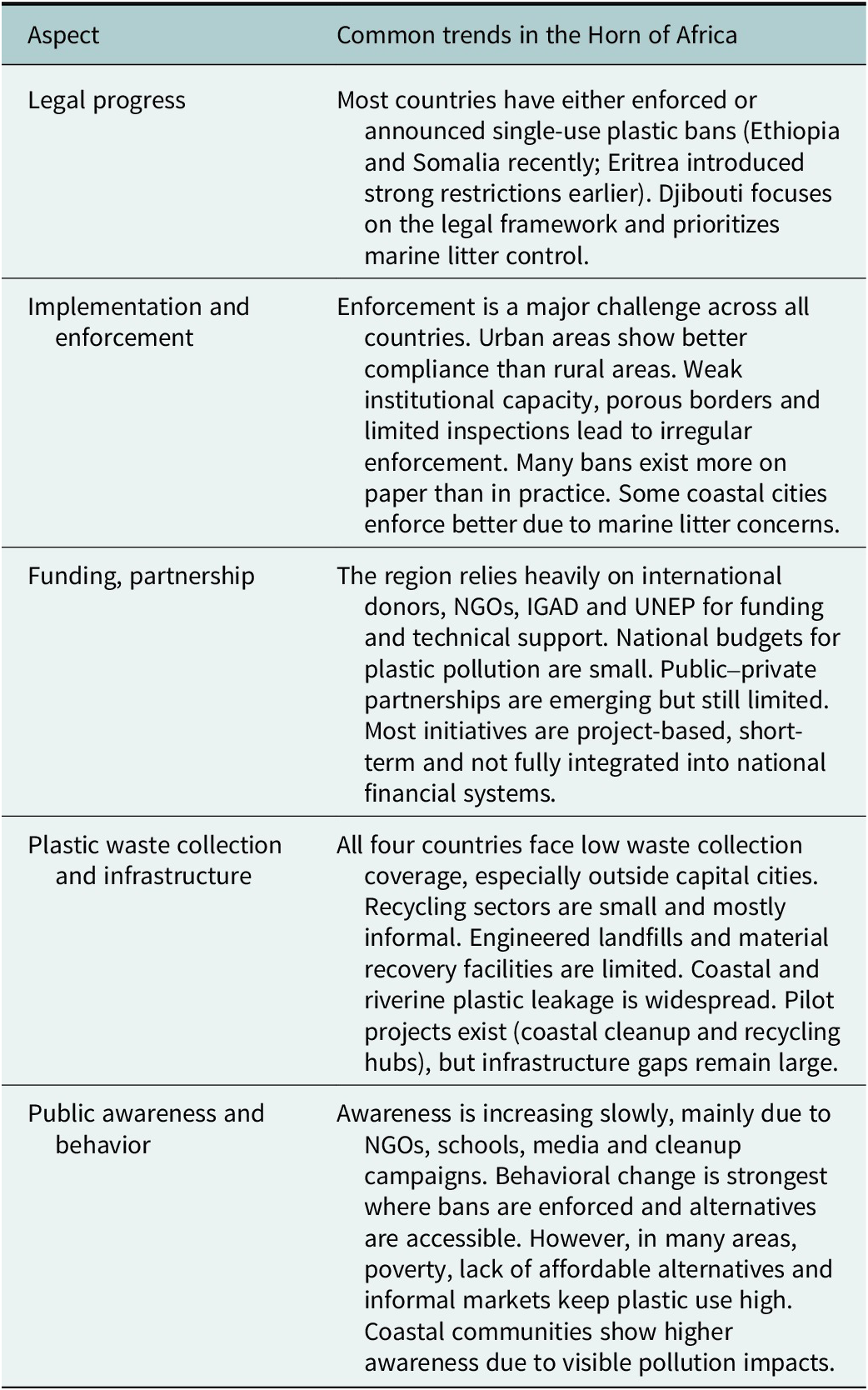
Table 2. Long description
The table consists of two columns: Aspect and Common trends in the Horn of Africa.
* Legal progress: Most countries have enforced or announced single-use plastic bans, including Ethiopia, Somalia, and Eritrea. Djibouti focuses on legal frameworks and marine litter control.
* Implementation and enforcement: Enforcement is a major challenge. Compliance is higher in urban areas than rural ones. Weak institutional capacity, porous borders, and limited inspections lead to irregular enforcement, with many bans existing only on paper.
* Funding, partnership: The region relies heavily on international donors, N G Os, I G A D, and U N E P. National budgets are small, and public-private partnerships are limited and project-based.
* Plastic waste collection and infrastructure: Low waste collection coverage exists outside capital cities. Recycling sectors are small and informal. Engineered landfills are limited, leading to widespread coastal and riverine plastic leakage.
* Public awareness and behavior: Awareness is increasing via N G Os, schools, and media. Behavioral change is strongest where alternatives are accessible, though poverty and informal markets sustain high plastic use in many areas.
International conventions, regional cooperation and interstate commerce
Several international conventions directly relevant to plastic waste management apply to the Horn of Africa countries, though ratification and implementation levels vary significantly. The International Convention for the Prevention of Pollution from Ships (MARPOL), specifically Annex V governing garbage from ships, is particularly significant given the region’s extensive coastlines along the Red Sea, Gulf of Aden and Indian Ocean (Chang, Reference Chang2025). Djibouti, as a major transit hub processing millions of tonnes of cargo annually through its port, has formal MARPOL commitments that are reflected in its environmental impact assessment procedures and coastal management pilot projects (IGAD, 2023). Somalia and Eritrea have limited engagement with MARPOL enforcement, although the risk of marine plastic leakage from their coastlines is substantial given proximity to major shipping lanes (Farrelly and Chitaka, Reference Farrelly and Chitaka2020). The Basel Convention’s 2019 plastic waste amendments, which classify contaminated and mixed plastic waste as hazardous and require prior informed consent for transboundary movement, have implications for all four countries regarding imported plastics and waste trade (Ahmed, Reference Ahmed2020).
At the regional level, the Intergovernmental Authority on Development (IGAD) has begun to engage with plastic waste as a shared environmental challenge, particularly through the IGAD-supported Djibouti coastal cities marine plastic management pilot (IGAD, 2023). However, no binding regional agreement on plastic governance currently exists for the HoA, in contrast to the East African Community (EAC), which has developed guidelines on polyethylene materials commerce applicable to EAC member states. The absence of such a framework leaves the region without a coordinating mechanism for harmonizing import bans, enforcement standards and cross-border plastic waste trade. Shared water bodies, including the Jubba-Shabeelle river basin linking Ethiopia and Somalia and coastal marine areas managed under the Nairobi Convention on the Protection, Management and Development of the Marine and Coastal Environment of the Eastern African Region, represent potential entry points for regional plastic governance (Moyen Massa and Archodoulaki, Reference Moyen Massa and Archodoulaki2024). Ethiopia and Somalia are both parties to the Nairobi Convention, which could serve as a legal basis for coordinating coastal plastic monitoring and marine litter action plans. Regarding imports and interstate commerce, all four countries face the challenge that most plastic products, including single-use bags, are imported rather than produced domestically, making import controls a critical but difficult enforcement lever. Ethiopia’s federal customs authority has been designated as a key implementation partner for Proclamation No. 1383/2025, including seizure of noncompliant products at border crossings. Somalia’s porous land borders with Ethiopia and Eritrea’s state-controlled import system allow for tighter control of plastic imports as part of a broader import substitution policy, though it also limits economic diversification (Moyen Massa and Archodoulaki, Reference Moyen Massa and Archodoulaki2024).
Recommendation and future perspective
Future progress in plastic waste management across the Horn of Africa depends on establishing stronger policy frameworks, enhancing enforcement and coordinating institutional responsibility. Country-specific and regional recommendations are as follows. For Ethiopia, the priority should be to consolidate the gains of Proclamation No. 1383/2025 by closing the enforcement gap between urban and rural areas, operationalizing the Extended Producer Responsibility (EPR) provisions through binding regulations that require producers and importers to finance collection and recycling, and establishing a national monitoring system for plastic leakage into the Awash and Blue Nile River systems. For Somalia, the most urgent actions are strengthening customs capacity to prevent the illegal importation of banned plastic bags across the porous borders with Ethiopia and Kenya, building a functional federal-state enforcement coordination mechanism, and investing in basic municipal waste collection infrastructure in Mogadishu and regional capitals before attempting broader policy measures. For Eritrea, the recommendations are to improve transparency in enforcement data and reporting, develop a formal National Plastic Strategy and Action Plan comparable to Ethiopia’s 2024 roadmap and expand marine litter monitoring along the Red Sea coastline to create a baseline for policy evaluation. For Djibouti, the key priority is to transition from donor-dependent project-based interventions to sustainable domestic financing mechanisms for waste management, strengthen MARPOL enforcement at the Port of Djibouti, one of Africa’s busiest, and develop a coastal plastic waste monitoring program covering the Gulf of Tadjoura. Across all four countries, EPR system design should be harmonized at the regional level through IGAD, and informal waste pickers should be formally integrated into waste management value chains as a social protection and efficiency measure. Increased investment in recycling infrastructure through public–private partnerships (PPPs) will enable source separation, expand material recovery facilities and stimulate local recycling enterprises. At the societal level, sustained education and behavior change programs will encourage responsible consumption habits and the adoption of biodegradable and reusable packaging options. Looking ahead, the region has strong potential to transition into a circular economy, where plastic waste becomes a valuable resource and innovative solutions, such as biodegradable packaging produced from agricultural residues, create new economic opportunities. Strengthened regional collaboration on data sharing, harmonized regulations and joint initiatives aligned with global efforts will further support the standardization of actions. It is strongly recommended that the government integrate good governance, private-sector innovation, and active community participation. Horn of African countries can significantly reduce plastic pollution while unlocking long-term environmental and economic benefits.
Conclusion
Plastic waste management in the Horn of Africa countries is still in its early stages. This situation is characterized by fragmented policy frameworks, inconsistent enforcement and limited waste collection, recycling and monitoring infrastructure. Although Ethiopia and Djibouti have implemented policy measures such as bans on single-use plastic bags and concepts like extended producer responsibility (EPR), the execution of these policies faces challenges. This includes low community awareness, low institutional capacity, unclear mandates among government bodies, weak engagement from the private sector and inadequate funding. In contrast, Somalia and Eritrea lack comprehensive policies specifically addressing plastic waste owing to governance instability and limited environmental regulatory structures. Common challenges across the region include informal and inefficient waste management systems, insufficient recycling industries, a lack of data on plastic generation and leakage and low public awareness of the issue. Despite these challenges, there are opportunities for improvement, including emerging regional cooperation, increasing global funding for circular economy initiatives and growing interest from the private sector in recycling and upcycling technology.
Open peer review
To view the open peer review materials for this article, please visit http://doi.org/10.1017/plc.2026.10056.
Data availability statement
All data are included in the manuscript in terms of figures or tables.
Acknowledgments
The authors would like to acknowledge the affiliated institutions and universities for their access to resources. Additionally, the authors would also like to acknowledge organizations in the country, or NGOs, for their environmental policy documents, working documents or reports, and researchers and policy analysts who provided insights into practices, limitations or challenges.
Author contribution
Conceptualization: T.A.A. Formal analysis: M.G.G. and T.A.A. Investigation: M.G.G. and T.A.A. Methodology: M.G.G. and T.A.A. Validation: M.G.G., B.T. and T.A.A. Visualization: M.G.G., B.T. and T.A.A. Writing – original draft: M.G.G. and T.A.A. Writing – review and editing: B.T. and T.A.A.
Competing interests
The authors declare that they have no conflicts of interest.
Financial support
This research received no specific grants from any funding agency, commercial or not-for-profit sectors.
Ethics and approvals
This study used only publicly available documents and published literature, with no involvement of human or animal subjects, so ethical approval was not required.

 Open access


Comments
Cover letter
Dear Editors,
I am pleased to submit our manuscript entitled “Plastic Waste Management in Horn of African Countries: A Comparative Evaluation of Policies, Practices, Challenges, and Limitations” for consideration in Cambridge Prisms: Plastics.
This study provides a comparative assessment of plastic waste management governance in the Horn of Africa countries, namely: Ethiopia, Eritrea, Somalia, and Djibouti. While these countries share similar socioeconomic and geographic contexts, their governance structures and institutional capacities differ substantially. Our analysis shows how these differences shape policy design, enforcement, and overall effectiveness. The manuscript examines national plastic bans, Extended Producer Responsibility (EPR) frameworks, centralized and decentralized regulatory systems in the countries, and the role of donor-supported systems. It also identifies common regional barriers, including weak enforcement, fragmented mandates, infrastructure limitations, and uneven implementation between rural and urban areas.
Beyond comparison, the paper offers a regional perspective on harmonizing plastic governance in the Horn of Africa. It highlights opportunities for strengthened legislation, EPR expansion, improved coordination, and a transition toward circular economy approaches. Given the growing global attention to plastics governance in low- and middle-income countries, we believe this work contributes valuable empirical and policy-relevant insights aligned with the interdisciplinary scope of Cambridge Prisms: Plastics.
This manuscript has not been published elsewhere and is not under consideration by any other journal. All authors have approved the submission and have no conflicts of interest to declare.
Thank you for considering our manuscript. We appreciate your time and look forward to your response.
Sincerely,
Tadele Assefa Aragaw, PhD
(on behalf of all co-authors)